


3717 Results
Form:
books
books
Actions:
Price:
$60.00
(available to order)
Summary:
At first sight, reality appears chaotic and anarchic. If events have any kind of logic to them, it lies well hidden behind an overlay of banality so thick as to make it invisible. And yet, at certain exceptional moments, life slackens and reveals itself. The automaton allows its innards be glimpsed, and its mechanism becomes momentarily evident as the logic of chaos. In(...)
$60.00
(available to order)
Summary:
At first sight, reality appears chaotic and anarchic. If events have any kind of logic to them, it lies well hidden behind an overlay of banality so thick as to make it invisible. And yet, at certain exceptional moments, life slackens and reveals itself. The automaton allows its innards be glimpsed, and its mechanism becomes momentarily evident as the logic of chaos. In(...)
Title:
Ricardo Cases: el porqué de las naranjas
Actions:
Price:
$60.00
(available to order)
Summary:
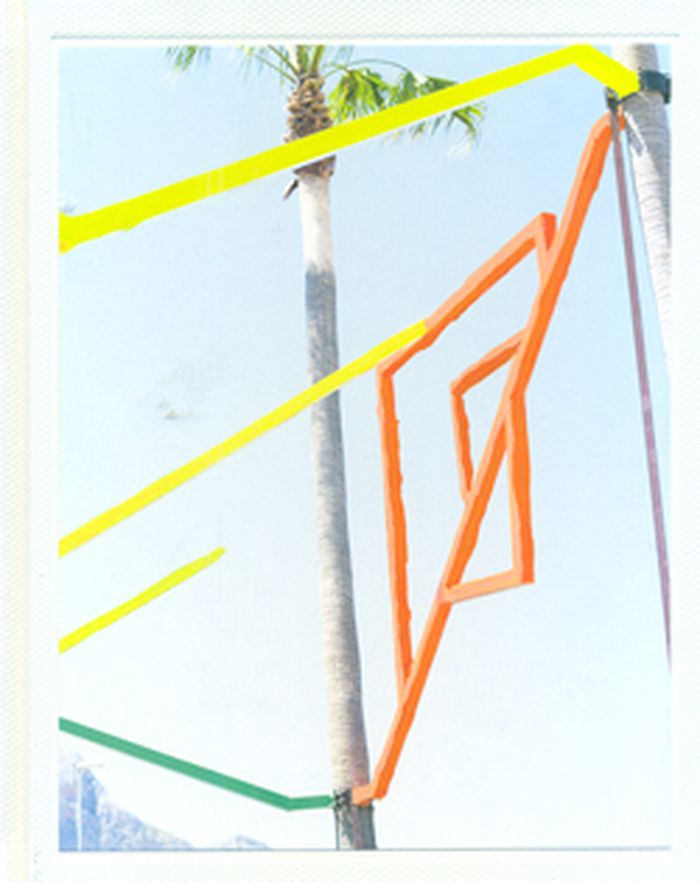
At first sight, reality appears chaotic and anarchic. If events have any kind of logic to them, it lies well hidden behind an overlay of banality so thick as to make it invisible. And yet, at certain exceptional moments, life slackens and reveals itself. The automaton allows its innards be glimpsed, and its mechanism becomes momentarily evident as the logic of chaos. In his new work, El porqué de la naranjas, Spanish photographer Ricardo Cases does not document the surface symptoms of reality, but instead renders the non-visible, the mechanistic. In his immediate surroundings – the fertile region of Levante in Spain – the photographer reveals ephemeral moments that might otherwise go unnoticed. Out on the streets he sets out to make visible the laws that regulate the universe, hunting down the elementary participles in the same vein as a nuclear physicist attempting to identify the Higgs particle. Cases uses the landscape as a laboratory, a place where these mechanisms can manifest themselves freely. The work is not a portrait of Levante itself, but of the spirit of Levante, and thus of the spirit of Spain as a whole.
Ricardo Cases: el porqué de las naranjas
Actions:
Price:
$60.00
(available to order)
Summary:
At first sight, reality appears chaotic and anarchic. If events have any kind of logic to them, it lies well hidden behind an overlay of banality so thick as to make it invisible. And yet, at certain exceptional moments, life slackens and reveals itself. The automaton allows its innards be glimpsed, and its mechanism becomes momentarily evident as the logic of chaos. In his new work, El porqué de la naranjas, Spanish photographer Ricardo Cases does not document the surface symptoms of reality, but instead renders the non-visible, the mechanistic. In his immediate surroundings – the fertile region of Levante in Spain – the photographer reveals ephemeral moments that might otherwise go unnoticed. Out on the streets he sets out to make visible the laws that regulate the universe, hunting down the elementary participles in the same vein as a nuclear physicist attempting to identify the Higgs particle. Cases uses the landscape as a laboratory, a place where these mechanisms can manifest themselves freely. The work is not a portrait of Levante itself, but of the spirit of Levante, and thus of the spirit of Spain as a whole.
Form:
books
books
Publication:
November 2014
November 2014
Subject:
Photography monographs
Photography monographs
Form:
books
books
Title:
The first moderns : profiles in the origins of twentieth-century thought / William R. Everdell.
The first moderns : profiles in the origins of twentieth-century thought / William R. Everdell.
Actions:
Holdings:
Description:
xi, 501 pages ; 23 cm
Description:
xi, 501 pages ; 23 cm
Author:
Subject:
Publication:
Chicago : University of Chicago Press, ©1997.
Chicago : University of Chicago Press, ©1997.
Title:
The first moderns : profiles in the origins of twentieth-century thought / William R. Everdell.
Actions:
Holdings:
Description:
xi, 501 pages ; 23 cm
The first moderns : profiles in the origins of twentieth-century thought / William R. Everdell.
Actions:
Holdings:
Description:
xi, 501 pages ; 23 cm
Form:
books
books
Publication:
Chicago : University of Chicago Press, ©1997.
Chicago : University of Chicago Press, ©1997.
Author:
Subject:
Form:
books
books
Price:
$56.50
(available to order)
Summary:
In an effort to create a secure urban environment in which residents can work, live, and prosper with minimal disruption, New York and London established a network of laws, policing, and municipal government in the nineteenth century aimed at building the confidence of the citizenry and creating stability for economic growth. At the same time, these two world cities(...)
$56.50
(available to order)
Summary:
In an effort to create a secure urban environment in which residents can work, live, and prosper with minimal disruption, New York and London established a network of laws, policing, and municipal government in the nineteenth century aimed at building the confidence of the citizenry and creating stability for economic growth. At the same time, these two world cities(...)
Title:
Triumph of order, democracy and public space in New York and London
Actions:
Price:
$56.50
(available to order)
Summary:
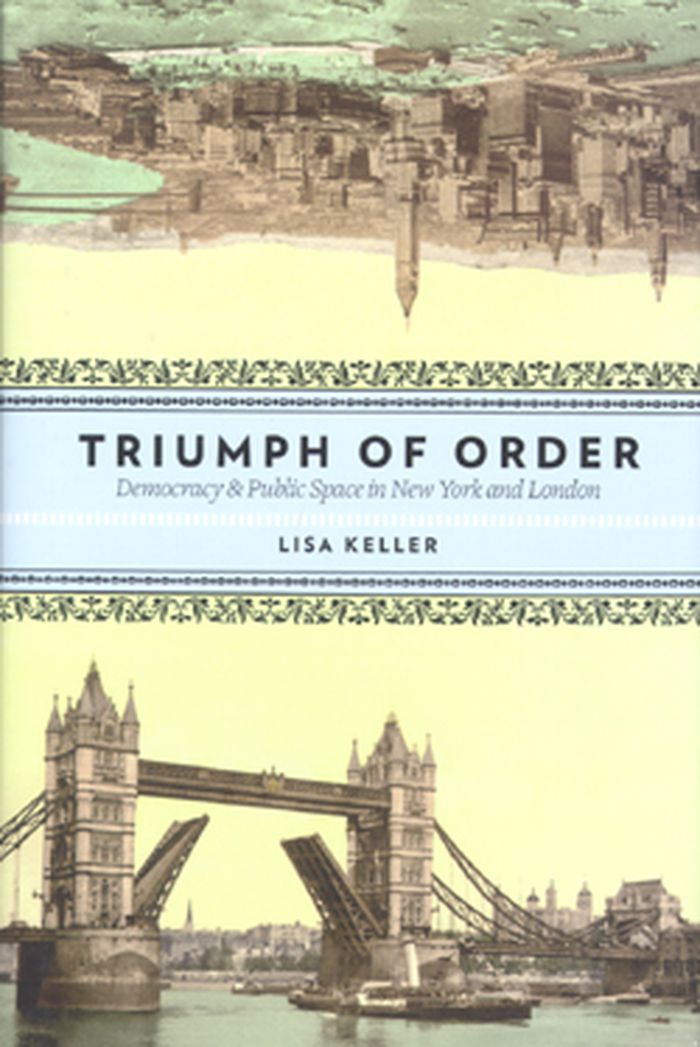
In an effort to create a secure urban environment in which residents can work, live, and prosper with minimal disruption, New York and London established a network of laws, policing, and municipal government in the nineteenth century aimed at building the confidence of the citizenry and creating stability for economic growth. At the same time, these two world cities attempted to maintain an expansive level of free speech and assembly, concepts deeply ingrained in both national cultures. As democracy expanded in tandem with the size of the cities themselves, the two goals clashed, resulting in tensions over their compatibility. The results of this clash continue to resonate in our society today. Treating nineteenth-century London and New York as case studies, Lisa Keller examines the critical development of sanctioned free speech, controlled public assembly, new urban regulations, and the quelling of riots, all in the name of a proper regard for order. Drawing on rich archival sources that include the unpublished correspondence of government officials and ordinary citizens, Keller paints an intimate portrait of daily life in these two cities and the intricacies of their emerging bureaucracies. She finds that New York eventually settled on a policy of preempting disruption before it occurred, while London chose a path of greater tolerance toward street activities.
Triumph of order, democracy and public space in New York and London
Actions:
Price:
$56.50
(available to order)
Summary:
In an effort to create a secure urban environment in which residents can work, live, and prosper with minimal disruption, New York and London established a network of laws, policing, and municipal government in the nineteenth century aimed at building the confidence of the citizenry and creating stability for economic growth. At the same time, these two world cities attempted to maintain an expansive level of free speech and assembly, concepts deeply ingrained in both national cultures. As democracy expanded in tandem with the size of the cities themselves, the two goals clashed, resulting in tensions over their compatibility. The results of this clash continue to resonate in our society today. Treating nineteenth-century London and New York as case studies, Lisa Keller examines the critical development of sanctioned free speech, controlled public assembly, new urban regulations, and the quelling of riots, all in the name of a proper regard for order. Drawing on rich archival sources that include the unpublished correspondence of government officials and ordinary citizens, Keller paints an intimate portrait of daily life in these two cities and the intricacies of their emerging bureaucracies. She finds that New York eventually settled on a policy of preempting disruption before it occurred, while London chose a path of greater tolerance toward street activities.
Form:
books
books
Publication:
November 2008, New -York
November 2008, New -York
Subject:
Urban Theory
Urban Theory
Form:
books
books
Price:
$25.00
(available to order)
Summary:
Encampments occupied by unhoused and precariously sheltered people have proliferated in recent years in cities and towns across Canada. While right-to-housing legislation and other rights protections exist on paper, their minimal legal force has left municipalities mostly free to use policing and bylaw enforcement to remove encampments from public spaces. The result is(...)
$25.00
(available to order)
Summary:
Encampments occupied by unhoused and precariously sheltered people have proliferated in recent years in cities and towns across Canada. While right-to-housing legislation and other rights protections exist on paper, their minimal legal force has left municipalities mostly free to use policing and bylaw enforcement to remove encampments from public spaces. The result is(...)
Title:
The bylaw state: Encampment evictions and the struggle for public space
Actions:
Price:
$25.00
(available to order)
Summary:
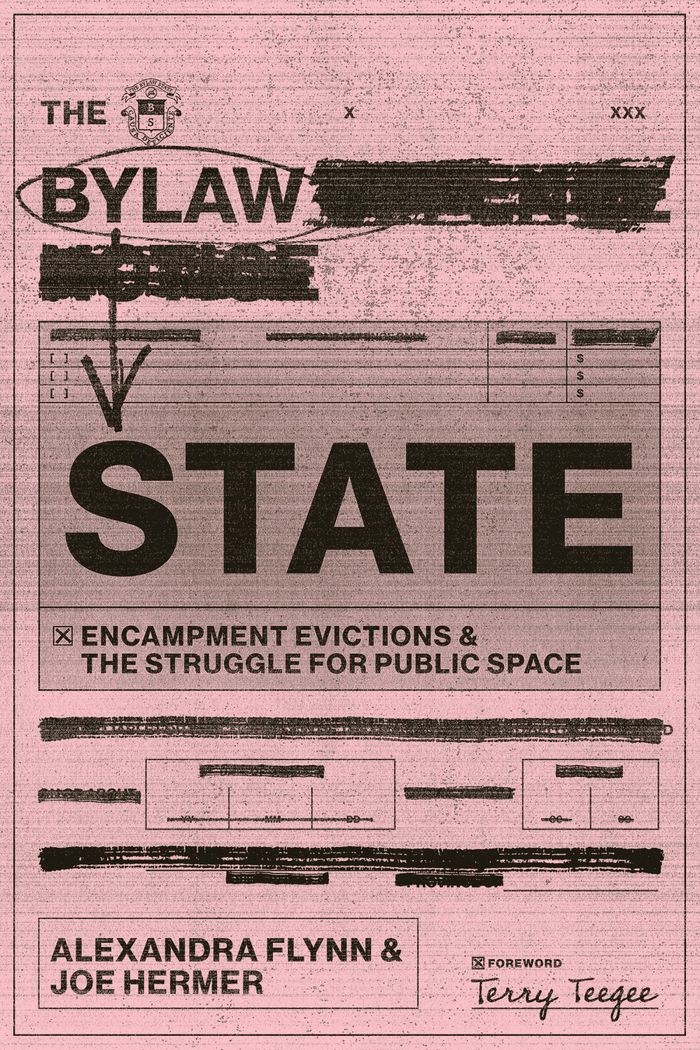
Encampments occupied by unhoused and precariously sheltered people have proliferated in recent years in cities and towns across Canada. While right-to-housing legislation and other rights protections exist on paper, their minimal legal force has left municipalities mostly free to use policing and bylaw enforcement to remove encampments from public spaces. The result is unnoticed but devastating violence against highly vulnerable people who have no choice but to survive in public spaces. Anti-encampment bylaws raise the question of what legal and moral rights unhoused people have to live in public space. ''The Bylaw State'' shows that bylaws are powerful municipal instruments. Far from being innocuous laws enforced by municipal workers, bylaws have quietly emerged over the last two decades as the method of governing homelessness in Canada. Case studies in Prince George and Vancouver demonstrate the extraordinary expansion of municipal bylaws and the place of courts in defending the legal rights of homeless people to take up public space. Legal scholar Alexandra Flynn and sociologist Joe Hermer explain how municipalities create an exclusionary ideal of public space through evictions and banishment, and they make a powerful case for a more inclusive approach that protects people not just spaces.
The bylaw state: Encampment evictions and the struggle for public space
Actions:
Price:
$25.00
(available to order)
Summary:
Encampments occupied by unhoused and precariously sheltered people have proliferated in recent years in cities and towns across Canada. While right-to-housing legislation and other rights protections exist on paper, their minimal legal force has left municipalities mostly free to use policing and bylaw enforcement to remove encampments from public spaces. The result is unnoticed but devastating violence against highly vulnerable people who have no choice but to survive in public spaces. Anti-encampment bylaws raise the question of what legal and moral rights unhoused people have to live in public space. ''The Bylaw State'' shows that bylaws are powerful municipal instruments. Far from being innocuous laws enforced by municipal workers, bylaws have quietly emerged over the last two decades as the method of governing homelessness in Canada. Case studies in Prince George and Vancouver demonstrate the extraordinary expansion of municipal bylaws and the place of courts in defending the legal rights of homeless people to take up public space. Legal scholar Alexandra Flynn and sociologist Joe Hermer explain how municipalities create an exclusionary ideal of public space through evictions and banishment, and they make a powerful case for a more inclusive approach that protects people not just spaces.
Form:
books
books
Publication:
April 2026
April 2026
Subject:
Humans and cities
Humans and cities
Form:
books
books
Actions:
Price:
$31.95
(available to order)
Summary:
The ugly buildings that characterize the modern landscape are inferior not only to the great cathedrals of medieval Europe and the temples of ancient Egypt and Greece, but even to lesser buildings of the more recent past. The great masterworks of our ancestors spoke to humanity’s higher nature. Architect Herbert Bangs reveals how today’s dysfunctional buildings bring out(...)
$31.95
(available to order)
Summary:
The ugly buildings that characterize the modern landscape are inferior not only to the great cathedrals of medieval Europe and the temples of ancient Egypt and Greece, but even to lesser buildings of the more recent past. The great masterworks of our ancestors spoke to humanity’s higher nature. Architect Herbert Bangs reveals how today’s dysfunctional buildings bring out(...)
Subject:
Commercial interiors, Building types
Commercial interiors, Building types
Publication:
January 2007, Rochester
January 2007, Rochester
Title:
The return of sacred architecture : the golden ratio and the end of modernism
Actions:
Price:
$31.95
(available to order)
Summary:
The ugly buildings that characterize the modern landscape are inferior not only to the great cathedrals of medieval Europe and the temples of ancient Egypt and Greece, but even to lesser buildings of the more recent past. The great masterworks of our ancestors spoke to humanity’s higher nature. Architect Herbert Bangs reveals how today’s dysfunctional buildings bring out the worst in humanity, reinforcing that which is most base within us. He shows how, through the ancient laws of proportion and number, architecture once expressed the harmonious relationship between man and the cosmos. In early times, the architect worked within a sacred and esoteric tradition of creating structures through which human beings could gain insight into the nature of the divine reality. Today, that tradition has been abandoned in favor of narrowly defined utilitarian principles of efficiency and economy. In The Return of Sacred Architecture, Bangs provides the key to freeing architecture from the crude functionality of the twentieth century: the architects of the modern human landscape must find the deep-felt connection to the cosmos that guided the inner lives of those who built the temples of the past. The form of their buildings will then reflect the sacred patterns of geometry and proportion and bring forth greater harmony in the world.
The return of sacred architecture : the golden ratio and the end of modernism
Actions:
Price:
$31.95
(available to order)
Summary:
The ugly buildings that characterize the modern landscape are inferior not only to the great cathedrals of medieval Europe and the temples of ancient Egypt and Greece, but even to lesser buildings of the more recent past. The great masterworks of our ancestors spoke to humanity’s higher nature. Architect Herbert Bangs reveals how today’s dysfunctional buildings bring out the worst in humanity, reinforcing that which is most base within us. He shows how, through the ancient laws of proportion and number, architecture once expressed the harmonious relationship between man and the cosmos. In early times, the architect worked within a sacred and esoteric tradition of creating structures through which human beings could gain insight into the nature of the divine reality. Today, that tradition has been abandoned in favor of narrowly defined utilitarian principles of efficiency and economy. In The Return of Sacred Architecture, Bangs provides the key to freeing architecture from the crude functionality of the twentieth century: the architects of the modern human landscape must find the deep-felt connection to the cosmos that guided the inner lives of those who built the temples of the past. The form of their buildings will then reflect the sacred patterns of geometry and proportion and bring forth greater harmony in the world.
Form:
books
books
Publication:
January 2007, Rochester
January 2007, Rochester
Subject:
Commercial interiors, Building types
Commercial interiors, Building types
Form:
books
books
Actions:
Price:
$58.00
(available to order)
Summary:
Reading architecture through the history of hospitals offers a tool for unlocking the elemental principles of architecture and the intractable laws of human and social conditions that architecture serves in each of our lives. This book encounters brilliant and visionary designers who were hospital architects but also systems designers, driven by the aim of social change.(...)
$58.00
(available to order)
Summary:
Reading architecture through the history of hospitals offers a tool for unlocking the elemental principles of architecture and the intractable laws of human and social conditions that architecture serves in each of our lives. This book encounters brilliant and visionary designers who were hospital architects but also systems designers, driven by the aim of social change.(...)
Subject:
Commercial interiors, Building types
Commercial interiors, Building types
Publication:
November 2021
November 2021
Title:
The architecture of health: hospital design and the construction of dignity
Actions:
Price:
$58.00
(available to order)
Summary:
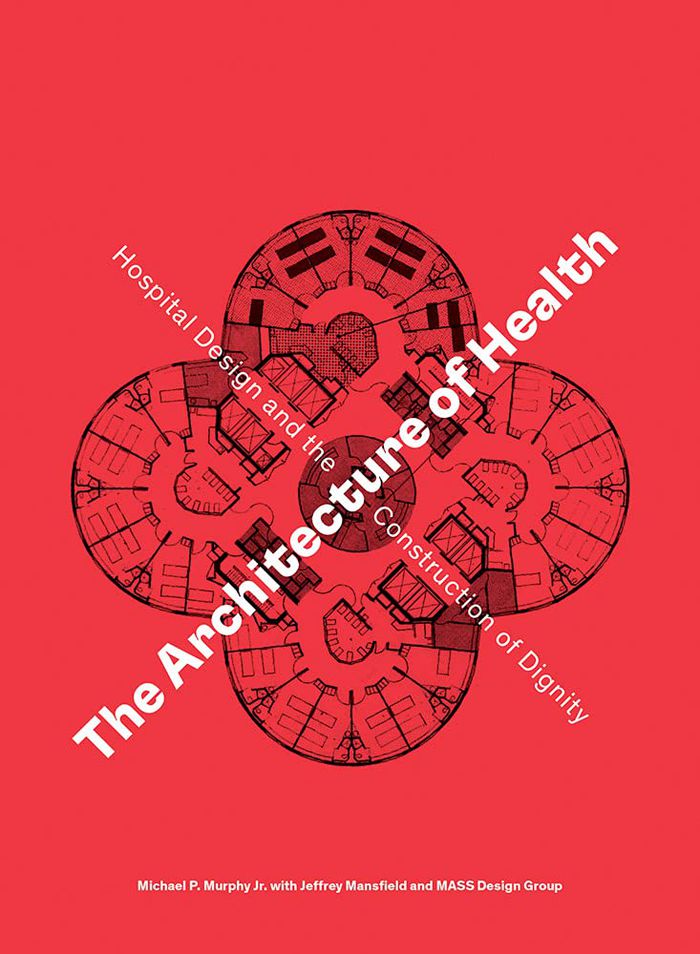
Reading architecture through the history of hospitals offers a tool for unlocking the elemental principles of architecture and the intractable laws of human and social conditions that architecture serves in each of our lives. This book encounters brilliant and visionary designers who were hospital architects but also systems designers, driven by the aim of social change. They faced the contradictions of health care in their time and found innovative ways to solve for specific medical dilemmas. Designers and professionals such as Filarete, Lluís Domènech i Montaner, Albert Schweitzer, Gordon Friesen, E. Todd Wheeler and Eberhard Zeidler are studied here, while the medical spaces of more widely known architects such as Isambard Brunel, Aalvar Aalto, Le Corbusier, Louis Kahn and Paul Rudolph also help inform this history. All these characters were polymaths and provocateurs, but none quite summarizes this history more succinctly than Florence Nightingale, who, in laying out her guidelines for ward design in 1859, shows how the design of a medical facility can influence an entire political and social order. ''The architecture of health'' charts historical epidemics alongside modern and contemporary architectural transformations in service of medicine, health and habitation, exploring how infrastructure facilitates healing and architecture’s greater role in constructing our societies.
The architecture of health: hospital design and the construction of dignity
Actions:
Price:
$58.00
(available to order)
Summary:
Reading architecture through the history of hospitals offers a tool for unlocking the elemental principles of architecture and the intractable laws of human and social conditions that architecture serves in each of our lives. This book encounters brilliant and visionary designers who were hospital architects but also systems designers, driven by the aim of social change. They faced the contradictions of health care in their time and found innovative ways to solve for specific medical dilemmas. Designers and professionals such as Filarete, Lluís Domènech i Montaner, Albert Schweitzer, Gordon Friesen, E. Todd Wheeler and Eberhard Zeidler are studied here, while the medical spaces of more widely known architects such as Isambard Brunel, Aalvar Aalto, Le Corbusier, Louis Kahn and Paul Rudolph also help inform this history. All these characters were polymaths and provocateurs, but none quite summarizes this history more succinctly than Florence Nightingale, who, in laying out her guidelines for ward design in 1859, shows how the design of a medical facility can influence an entire political and social order. ''The architecture of health'' charts historical epidemics alongside modern and contemporary architectural transformations in service of medicine, health and habitation, exploring how infrastructure facilitates healing and architecture’s greater role in constructing our societies.
Form:
books
books
Publication:
November 2021
November 2021
Subject:
Commercial interiors, Building types
Commercial interiors, Building types
Form:
books
books
Title:
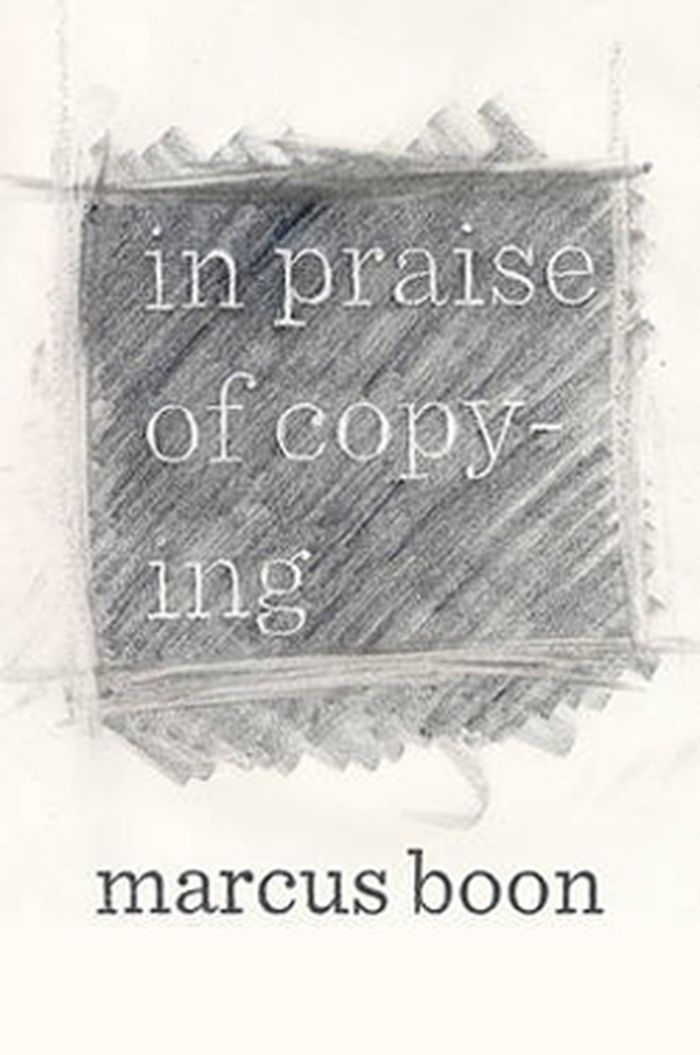
In praise of copying
In praise of copying
Actions:
Price:
$29.95
(available to order)
Summary:
This book is devoted to a deceptively simple but original argument: that copying is an essential part of being human, that the ability to copy is worthy of celebration, and that, without recognizing how integral copying is to being human, we cannot understand ourselves or the world we live in. In spite of the laws, stigmas, and anxieties attached to it, the word(...)
$29.95
(available to order)
Summary:
This book is devoted to a deceptively simple but original argument: that copying is an essential part of being human, that the ability to copy is worthy of celebration, and that, without recognizing how integral copying is to being human, we cannot understand ourselves or the world we live in. In spite of the laws, stigmas, and anxieties attached to it, the word(...)
Title:
In praise of copying
Actions:
Price:
$29.95
(available to order)
Summary:
This book is devoted to a deceptively simple but original argument: that copying is an essential part of being human, that the ability to copy is worthy of celebration, and that, without recognizing how integral copying is to being human, we cannot understand ourselves or the world we live in. In spite of the laws, stigmas, and anxieties attached to it, the word “copying” permeates contemporary culture, shaping discourse on issues from hip hop to digitization to gender reassignment, and is particularly crucial in legal debates concerning intellectual property and copyright. Yet as a philosophical concept, copying remains poorly understood. Working comparatively across cultures and times, Marcus Boon undertakes an examination of what this word means—historically, culturally, philosophically—and why it fills us with fear and fascination. He argues that the dominant legal-political structures that define copying today obscure much broader processes of imitation that have constituted human communities for ages and continue to shape various subcultures today. Drawing on contemporary art, music and film, the history of aesthetics, critical theory, and Buddhist philosophy and practice, In Praise of Copying seeks to show how and why copying works, what the sources of its power are, and the political stakes of renegotiating the way we value copying in the age of globalization.
In praise of copying
Actions:
Price:
$29.95
(available to order)
Summary:
This book is devoted to a deceptively simple but original argument: that copying is an essential part of being human, that the ability to copy is worthy of celebration, and that, without recognizing how integral copying is to being human, we cannot understand ourselves or the world we live in. In spite of the laws, stigmas, and anxieties attached to it, the word “copying” permeates contemporary culture, shaping discourse on issues from hip hop to digitization to gender reassignment, and is particularly crucial in legal debates concerning intellectual property and copyright. Yet as a philosophical concept, copying remains poorly understood. Working comparatively across cultures and times, Marcus Boon undertakes an examination of what this word means—historically, culturally, philosophically—and why it fills us with fear and fascination. He argues that the dominant legal-political structures that define copying today obscure much broader processes of imitation that have constituted human communities for ages and continue to shape various subcultures today. Drawing on contemporary art, music and film, the history of aesthetics, critical theory, and Buddhist philosophy and practice, In Praise of Copying seeks to show how and why copying works, what the sources of its power are, and the political stakes of renegotiating the way we value copying in the age of globalization.
Form:
books
books
Publication:
October 2010
October 2010
Subject:
Critical Theory
Critical Theory
Form:
books
books
Title:
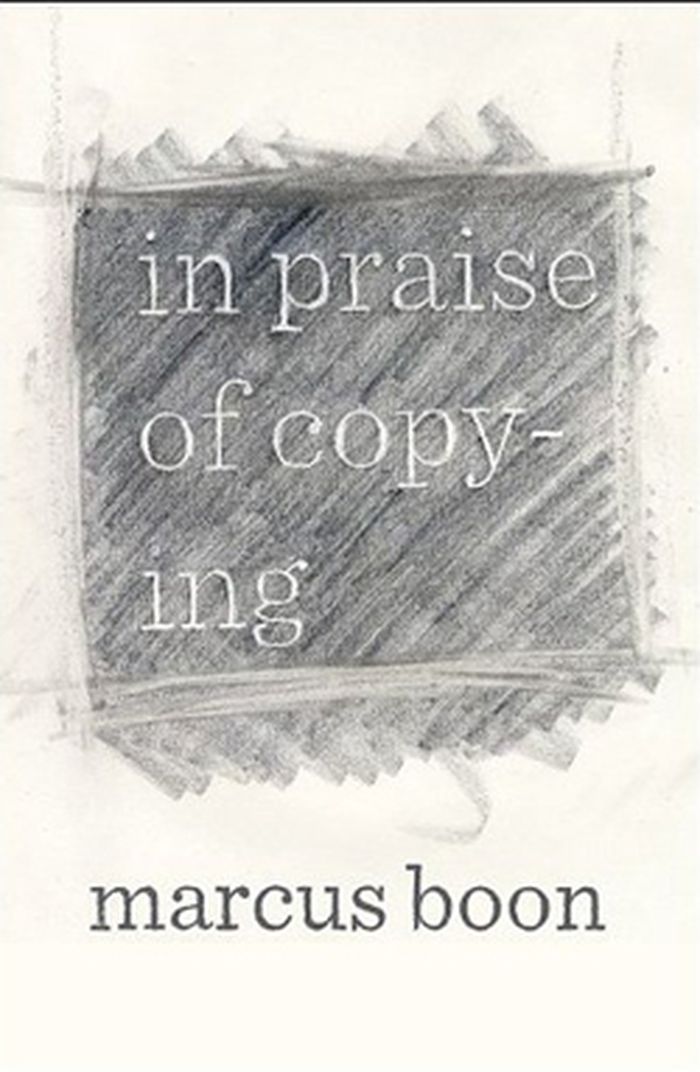
In praise of copying
In praise of copying
Actions:
Price:
$24.95
(available to order)
Summary:
This book is devoted to a deceptively simple but original argument : that copying is an essential part of being human, that the ability to copy is worthy of celebration, and that, without recognizing how integral copying is to being human, we cannot understand ourselves or the world we live in. In spite of the laws, stigmas, and anxieties attached to it, the word(...)
$24.95
(available to order)
Summary:
This book is devoted to a deceptively simple but original argument : that copying is an essential part of being human, that the ability to copy is worthy of celebration, and that, without recognizing how integral copying is to being human, we cannot understand ourselves or the world we live in. In spite of the laws, stigmas, and anxieties attached to it, the word(...)
Title:
In praise of copying
Actions:
Price:
$24.95
(available to order)
Summary:
This book is devoted to a deceptively simple but original argument : that copying is an essential part of being human, that the ability to copy is worthy of celebration, and that, without recognizing how integral copying is to being human, we cannot understand ourselves or the world we live in. In spite of the laws, stigmas, and anxieties attached to it, the word “copying” permeates contemporary culture, shaping discourse on issues from hip hop to digitization to gender reassignment, and is particularly crucial in legal debates concerning intellectual property and copyright. Yet as a philosophical concept, copying remains poorly understood. Working comparatively across cultures and times, Marcus Boon undertakes an examination of what this word means — historically, culturally, philosophically — and why it fills us with fear and fascination. He argues that the dominant legal-political structures that define copying today obscure much broader processes of imitation that have constituted human communities for ages and continue to shape various subcultures today. Drawing on contemporary art, music and film, the history of aesthetics, critical theory, and Buddhist philosophy and practice, In Praise of Copying seeks to show how and why copying works, what the sources of its power are, and the political stakes of renegotiating the way we value copying in the age of globalization.
In praise of copying
Actions:
Price:
$24.95
(available to order)
Summary:
This book is devoted to a deceptively simple but original argument : that copying is an essential part of being human, that the ability to copy is worthy of celebration, and that, without recognizing how integral copying is to being human, we cannot understand ourselves or the world we live in. In spite of the laws, stigmas, and anxieties attached to it, the word “copying” permeates contemporary culture, shaping discourse on issues from hip hop to digitization to gender reassignment, and is particularly crucial in legal debates concerning intellectual property and copyright. Yet as a philosophical concept, copying remains poorly understood. Working comparatively across cultures and times, Marcus Boon undertakes an examination of what this word means — historically, culturally, philosophically — and why it fills us with fear and fascination. He argues that the dominant legal-political structures that define copying today obscure much broader processes of imitation that have constituted human communities for ages and continue to shape various subcultures today. Drawing on contemporary art, music and film, the history of aesthetics, critical theory, and Buddhist philosophy and practice, In Praise of Copying seeks to show how and why copying works, what the sources of its power are, and the political stakes of renegotiating the way we value copying in the age of globalization.
Form:
books
books
Publication:
March 2013
March 2013
Subject:
Critical Theory
Critical Theory
Form:
books
books
Holdings:
Description:
xviii, 608 pages : illustrations ; 26 cm
Description:
xviii, 608 pages : illustrations ; 26 cm
Author:
Subject:
Publication:
London ; New York : Routledge, 2000.
London ; New York : Routledge, 2000.
Title:
The city reader / edited by Richard T. LeGates and Frederic Stout.
Actions:
Holdings:
Description:
xviii, 608 pages : illustrations ; 26 cm
The city reader / edited by Richard T. LeGates and Frederic Stout.
Actions:
Holdings:
Description:
xviii, 608 pages : illustrations ; 26 cm
Form:
books
books
Publication:
London ; New York : Routledge, 2000.
London ; New York : Routledge, 2000.
Author:
Subject:
Form:
books
books
Actions:
Price:
$99.95
(available to order)
Summary:
For decades Frederick Law Olmsted (1822–1903) designed parks and park systems across the United States, leaving an enduring legacy of designed public space that is enjoyed, studied, and protected today. His plans and professional correspondence offer a rich source for understanding his remarkable contribution to the quality of urban life in this country and the(...)
$99.95
(available to order)
Summary:
For decades Frederick Law Olmsted (1822–1903) designed parks and park systems across the United States, leaving an enduring legacy of designed public space that is enjoyed, studied, and protected today. His plans and professional correspondence offer a rich source for understanding his remarkable contribution to the quality of urban life in this country and the(...)
Subject:
Landscape Architecture, Monographs
Landscape Architecture, Monographs
Publication:
October 2006, Baltimore
October 2006, Baltimore
Title:
The papers of Frederick Law Olmsted : volume VII, parks, politics, and patronage 1874-1882
Actions:
Price:
$99.95
(available to order)
Summary:
For decades Frederick Law Olmsted (1822–1903) designed parks and park systems across the United States, leaving an enduring legacy of designed public space that is enjoyed, studied, and protected today. His plans and professional correspondence offer a rich source for understanding his remarkable contribution to the quality of urban life in this country and the development of the profession of landscape architecture. Olmsted's writings also provide a unique record of society and politics in post–Civil War America. Historians, landscape architects, conservationists, city planners, and citizens’ groups continue to turn to Olmsted for inspiration in their planning and protection of public open space in our cities. This latest and seventh volume of the Papers of Frederick Law Olmsted presents the record of his last years of residence in New York City. It includes reports on the design of Riverside and Morningside parks and Tompkins Square in Manhattan, as well as his comprehensive plan for the street system and rapid transit routes of the Bronx. It records his continuing work on Central Park and presents his final retrospective statement, “The Spoils of the Park.” In addition, volume seven contains an annotated version of the journal in which Olmsted recorded instances of political maneuvering and patronage politics in the years before his dismissal from the New York parks department in 1878. Later documents chronicle the early stages of his planning of the Boston park system—the Back Bay Fens, Arnold Arboretum, and Riverway. Other major commissions, each with its own political complications, were the grounds of the U.S. Capitol, the completion of the new state capitol in Albany, the designing of a park on Mount Royal in Montreal, and construction of the park system of Buffalo, New York. The volume also presents Olmsted’s commentary on issues of the times including federal Reconstruction policy and civil-service reform. The Olmsted Papers project is supported by the National Endowment for the Humanities, the National Historical Publications and Records Commission, the National Trust for the Humanities, the National Association for Olmsted Parks, as well as private foundations and individuals.
The papers of Frederick Law Olmsted : volume VII, parks, politics, and patronage 1874-1882
Actions:
Price:
$99.95
(available to order)
Summary:
For decades Frederick Law Olmsted (1822–1903) designed parks and park systems across the United States, leaving an enduring legacy of designed public space that is enjoyed, studied, and protected today. His plans and professional correspondence offer a rich source for understanding his remarkable contribution to the quality of urban life in this country and the development of the profession of landscape architecture. Olmsted's writings also provide a unique record of society and politics in post–Civil War America. Historians, landscape architects, conservationists, city planners, and citizens’ groups continue to turn to Olmsted for inspiration in their planning and protection of public open space in our cities. This latest and seventh volume of the Papers of Frederick Law Olmsted presents the record of his last years of residence in New York City. It includes reports on the design of Riverside and Morningside parks and Tompkins Square in Manhattan, as well as his comprehensive plan for the street system and rapid transit routes of the Bronx. It records his continuing work on Central Park and presents his final retrospective statement, “The Spoils of the Park.” In addition, volume seven contains an annotated version of the journal in which Olmsted recorded instances of political maneuvering and patronage politics in the years before his dismissal from the New York parks department in 1878. Later documents chronicle the early stages of his planning of the Boston park system—the Back Bay Fens, Arnold Arboretum, and Riverway. Other major commissions, each with its own political complications, were the grounds of the U.S. Capitol, the completion of the new state capitol in Albany, the designing of a park on Mount Royal in Montreal, and construction of the park system of Buffalo, New York. The volume also presents Olmsted’s commentary on issues of the times including federal Reconstruction policy and civil-service reform. The Olmsted Papers project is supported by the National Endowment for the Humanities, the National Historical Publications and Records Commission, the National Trust for the Humanities, the National Association for Olmsted Parks, as well as private foundations and individuals.
Form:
books
books
Publication:
October 2006, Baltimore
October 2006, Baltimore
Subject:
Landscape Architecture, Monographs
Landscape Architecture, Monographs


