


443 Results
Form:
books
books
Actions:
Price:
$20.00
(available to order)
Summary:
The Second World War came hard on the heels of a devastating Depression in which families struggled to survive. Life on the Home Front paints a poignant portrait of a city coping with the demandsof war. Montrealers, along with other Canadians, were being asked for more sacrifice but this time it would include sending their sons, brothers, fathers and husbands off to war.(...)
$20.00
(available to order)
Summary:
The Second World War came hard on the heels of a devastating Depression in which families struggled to survive. Life on the Home Front paints a poignant portrait of a city coping with the demandsof war. Montrealers, along with other Canadians, were being asked for more sacrifice but this time it would include sending their sons, brothers, fathers and husbands off to war.(...)
Title:
Life on the home front: Montreal 1939-1945
Actions:
Price:
$20.00
(available to order)
Summary:
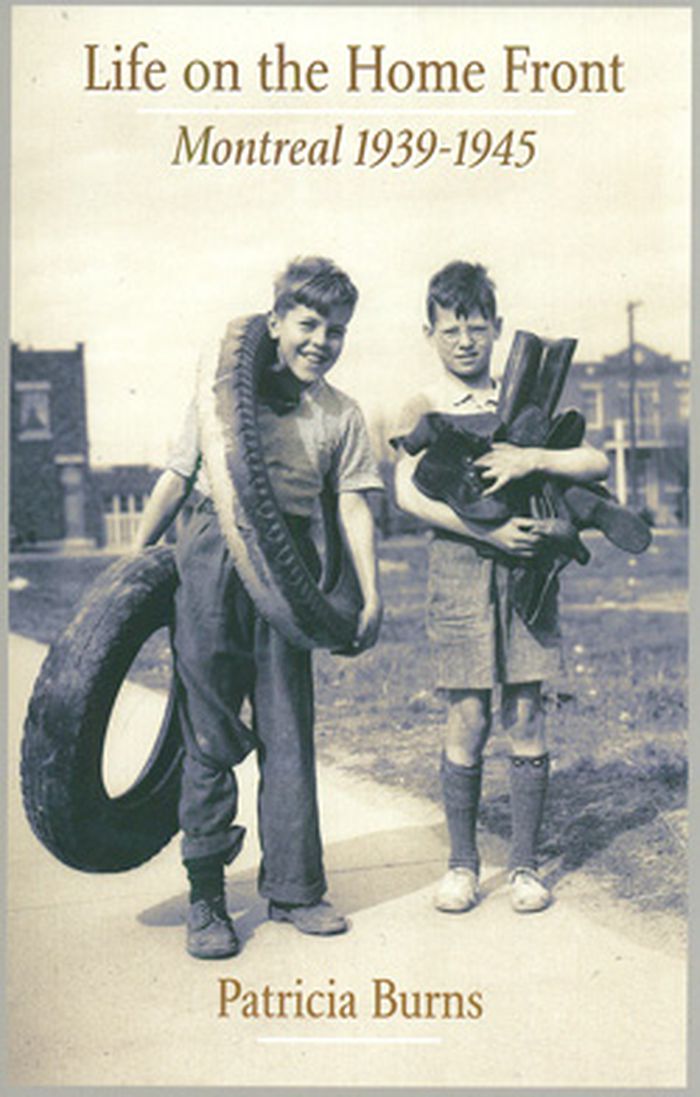
The Second World War came hard on the heels of a devastating Depression in which families struggled to survive. Life on the Home Front paints a poignant portrait of a city coping with the demandsof war. Montrealers, along with other Canadians, were being asked for more sacrifice but this time it would include sending their sons, brothers, fathers and husbands off to war. Montrealers had to “Use it Up, Wear it Out, Make it Do, and Do Without” as one slogan cautioned, and this they did. Many women went to work for the firsttime and often enjoyed the heady success of doing “a man’s job” and earning a regular salary. Life on the Home Front describes how dissent was also an ever-present reality. Montreal was often awash with anti-war banners and angry speeches which kept the police and journalists busy. Prime Minister William Lyon Mackenzie King had to walk a fine line in keeping the country together and united at a time of grave crisis.
Life on the home front: Montreal 1939-1945
Actions:
Price:
$20.00
(available to order)
Summary:
The Second World War came hard on the heels of a devastating Depression in which families struggled to survive. Life on the Home Front paints a poignant portrait of a city coping with the demandsof war. Montrealers, along with other Canadians, were being asked for more sacrifice but this time it would include sending their sons, brothers, fathers and husbands off to war. Montrealers had to “Use it Up, Wear it Out, Make it Do, and Do Without” as one slogan cautioned, and this they did. Many women went to work for the firsttime and often enjoyed the heady success of doing “a man’s job” and earning a regular salary. Life on the Home Front describes how dissent was also an ever-present reality. Montreal was often awash with anti-war banners and angry speeches which kept the police and journalists busy. Prime Minister William Lyon Mackenzie King had to walk a fine line in keeping the country together and united at a time of grave crisis.
Form:
books
books
Publication:
November 2012
November 2012
Subject:
Architecture de Montréal
Architecture de Montréal
Form:
books
books
Actions:
Price:
$29.95
(available to order)
Summary:
A groundbreaking study of urban sprawl in Calgary after the Second World War. The interactions of land developers and the local government influenced how the pattern grew: developers met market demands and optimized profits by building houses as efficiently as possible, while the City had to consider wider planning constraints and infrastructure costs. Foran examines the(...)
$29.95
(available to order)
Summary:
A groundbreaking study of urban sprawl in Calgary after the Second World War. The interactions of land developers and the local government influenced how the pattern grew: developers met market demands and optimized profits by building houses as efficiently as possible, while the City had to consider wider planning constraints and infrastructure costs. Foran examines the(...)
Title:
Expansive discourses: urban sprawl in Calgary 1945-1978
Actions:
Price:
$29.95
(available to order)
Summary:
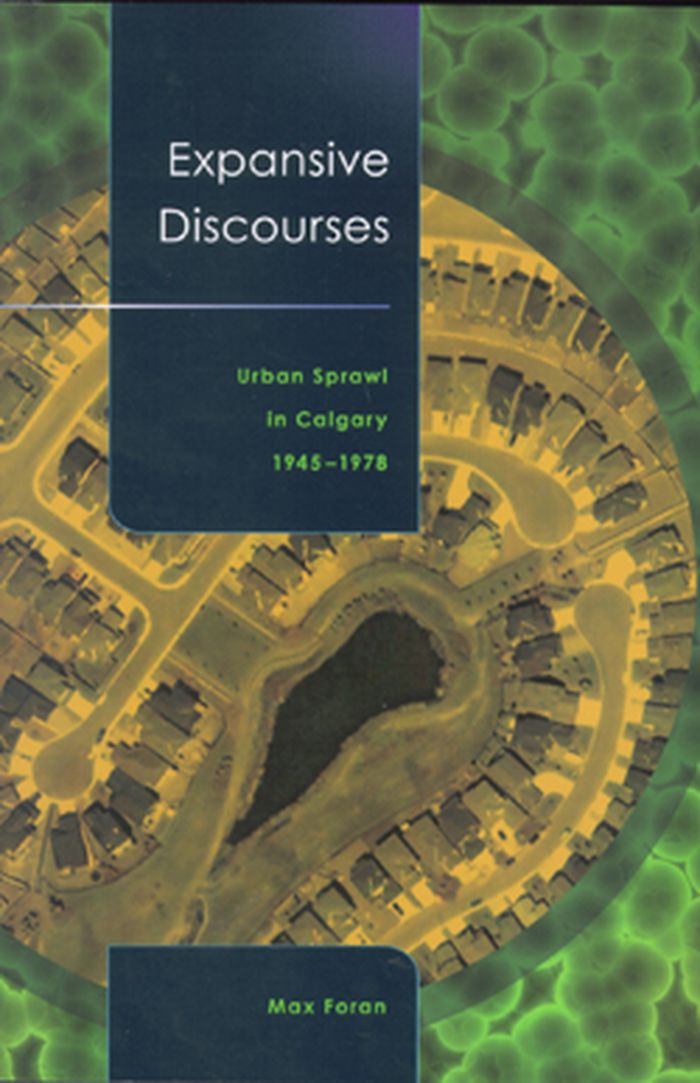
A groundbreaking study of urban sprawl in Calgary after the Second World War. The interactions of land developers and the local government influenced how the pattern grew: developers met market demands and optimized profits by building houses as efficiently as possible, while the City had to consider wider planning constraints and infrastructure costs. Foran examines the complexity of their interactions from a historical perspective, why each party acted as it did, and where each can be criticized.
Expansive discourses: urban sprawl in Calgary 1945-1978
Actions:
Price:
$29.95
(available to order)
Summary:
A groundbreaking study of urban sprawl in Calgary after the Second World War. The interactions of land developers and the local government influenced how the pattern grew: developers met market demands and optimized profits by building houses as efficiently as possible, while the City had to consider wider planning constraints and infrastructure costs. Foran examines the complexity of their interactions from a historical perspective, why each party acted as it did, and where each can be criticized.
Form:
books
books
Publication:
November 2008, Edmonton
November 2008, Edmonton
Subject:
Architecture in Canada
Architecture in Canada
Form:
books
books
Actions:
Price:
$34.95
(available to order)
Summary:
Born in 1925 in Nieder-Mois/Schlesien, the graphic artist Hans Hillmann is one of Germany’s most important poster designers and illustrators. With his posters after the Second World War, he was one of the first to be honored with the most important graphic design awards, including the Grand-Prix-Toulouse-Lautrec/Paris. As a professor of graphic design whose teaching(...)
$34.95
(available to order)
Summary:
Born in 1925 in Nieder-Mois/Schlesien, the graphic artist Hans Hillmann is one of Germany’s most important poster designers and illustrators. With his posters after the Second World War, he was one of the first to be honored with the most important graphic design awards, including the Grand-Prix-Toulouse-Lautrec/Paris. As a professor of graphic design whose teaching(...)
Title:
Hans Hillman: the visual works
Actions:
Price:
$34.95
(available to order)
Summary:
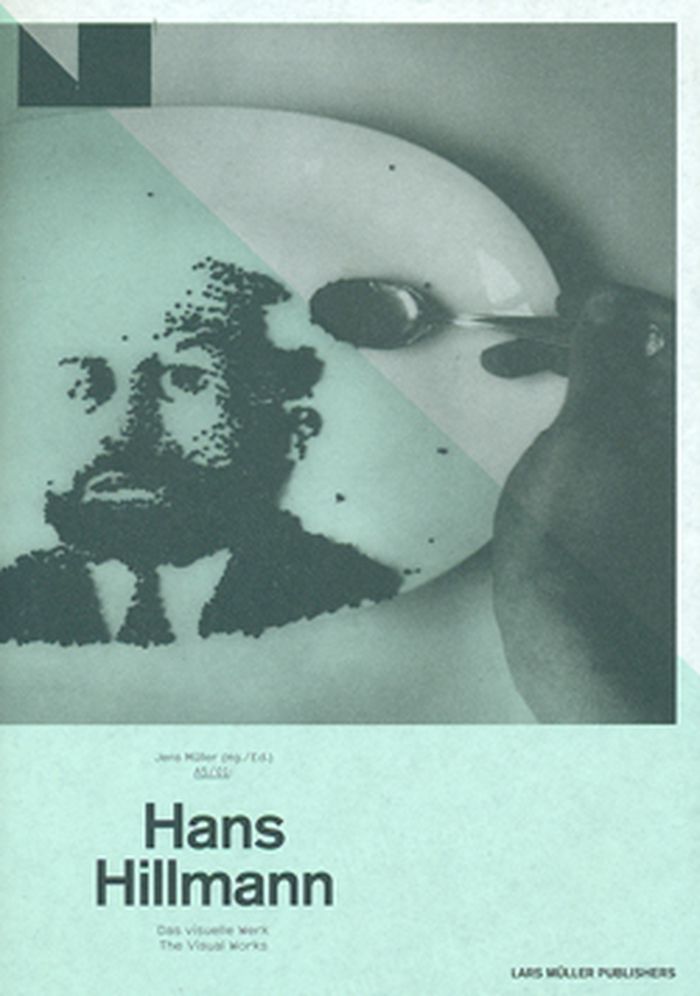
Born in 1925 in Nieder-Mois/Schlesien, the graphic artist Hans Hillmann is one of Germany’s most important poster designers and illustrators. With his posters after the Second World War, he was one of the first to be honored with the most important graphic design awards, including the Grand-Prix-Toulouse-Lautrec/Paris. As a professor of graphic design whose teaching career spanned more than thirty years, he had a formative influence on entire generations of designers.
Hans Hillman: the visual works
Actions:
Price:
$34.95
(available to order)
Summary:
Born in 1925 in Nieder-Mois/Schlesien, the graphic artist Hans Hillmann is one of Germany’s most important poster designers and illustrators. With his posters after the Second World War, he was one of the first to be honored with the most important graphic design awards, including the Grand-Prix-Toulouse-Lautrec/Paris. As a professor of graphic design whose teaching career spanned more than thirty years, he had a formative influence on entire generations of designers.
Form:
books
books
Publication:
November 2009
November 2009
Subject:
Graphic Designers, Monographs
Graphic Designers, Monographs
Form:
books
books
Actions:
Price:
$119.00
(available to order)
Summary:
The work of Rudolf Schwarz (1897–1961) allows a deeper understanding of post-war German architecture, representing the product of a continuous European architectural and intellectual practice that bridged the Second World War. Known especially for his churches, Schwarz is perhaps best remembered for his significant contributions to the reconstruction of Cologne. This book(...)
$119.00
(available to order)
Summary:
The work of Rudolf Schwarz (1897–1961) allows a deeper understanding of post-war German architecture, representing the product of a continuous European architectural and intellectual practice that bridged the Second World War. Known especially for his churches, Schwarz is perhaps best remembered for his significant contributions to the reconstruction of Cologne. This book(...)
Title:
Rudolf Schwarz and the monumental order of things
Actions:
Price:
$119.00
(available to order)
Summary:
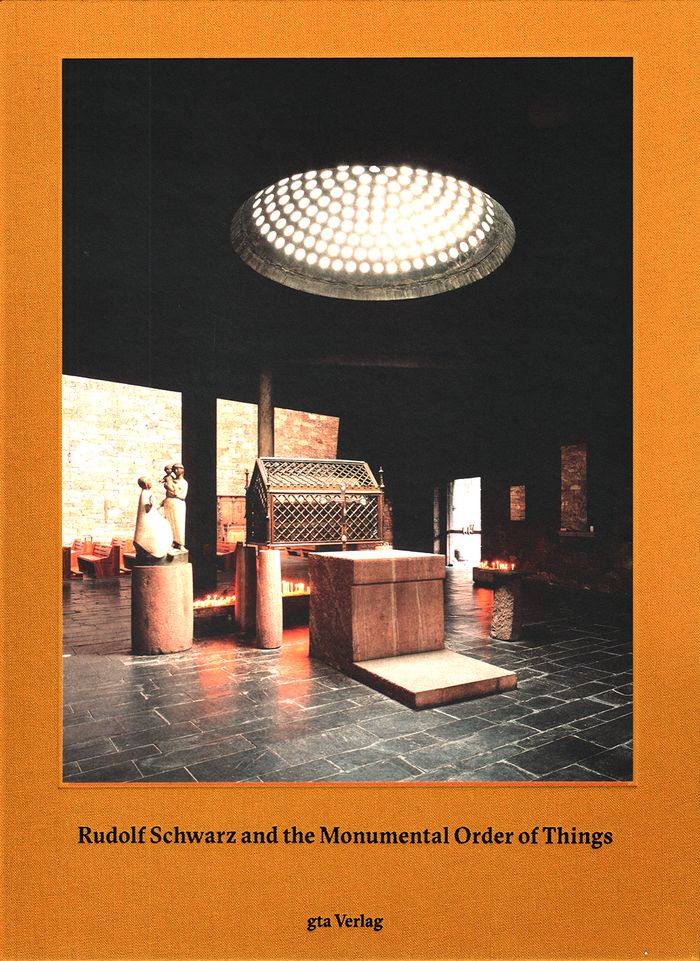
The work of Rudolf Schwarz (1897–1961) allows a deeper understanding of post-war German architecture, representing the product of a continuous European architectural and intellectual practice that bridged the Second World War. Known especially for his churches, Schwarz is perhaps best remembered for his significant contributions to the reconstruction of Cologne. This book examines nine of his religious and secular buildings in the Rhineland, which are presented through new survey drawings and photographs. These are accompanied by Schwarz’s project descriptions and his lecture “Architecture of Our Times” from 1958, which contextualizes his approach. Essays by Wolfgang Pehnt and an interview with Schwarz’s wife, the architect Maria Schwarz, provide further insight into this complex oeuvre.
Rudolf Schwarz and the monumental order of things
Actions:
Price:
$119.00
(available to order)
Summary:
The work of Rudolf Schwarz (1897–1961) allows a deeper understanding of post-war German architecture, representing the product of a continuous European architectural and intellectual practice that bridged the Second World War. Known especially for his churches, Schwarz is perhaps best remembered for his significant contributions to the reconstruction of Cologne. This book examines nine of his religious and secular buildings in the Rhineland, which are presented through new survey drawings and photographs. These are accompanied by Schwarz’s project descriptions and his lecture “Architecture of Our Times” from 1958, which contextualizes his approach. Essays by Wolfgang Pehnt and an interview with Schwarz’s wife, the architect Maria Schwarz, provide further insight into this complex oeuvre.
Form:
books
books
Publication:
February 2018
February 2018
Subject:
Architecture Monographs
Architecture Monographs
Form:
books
books
Actions:
Price:
$62.00
(available to order)
Summary:
From the chaos of the First World War to the ravages of the Second, from the Great Depression to the rise of consumer culture, artists we call "modern" faced the challenge of responding imaginatively to utterly new circumstances of life. Original thought, startling artistic techniques, and new attitudes to experimentation were required to produce exceptional and timely(...)
$62.00
(available to order)
Summary:
From the chaos of the First World War to the ravages of the Second, from the Great Depression to the rise of consumer culture, artists we call "modern" faced the challenge of responding imaginatively to utterly new circumstances of life. Original thought, startling artistic techniques, and new attitudes to experimentation were required to produce exceptional and timely(...)
Title:
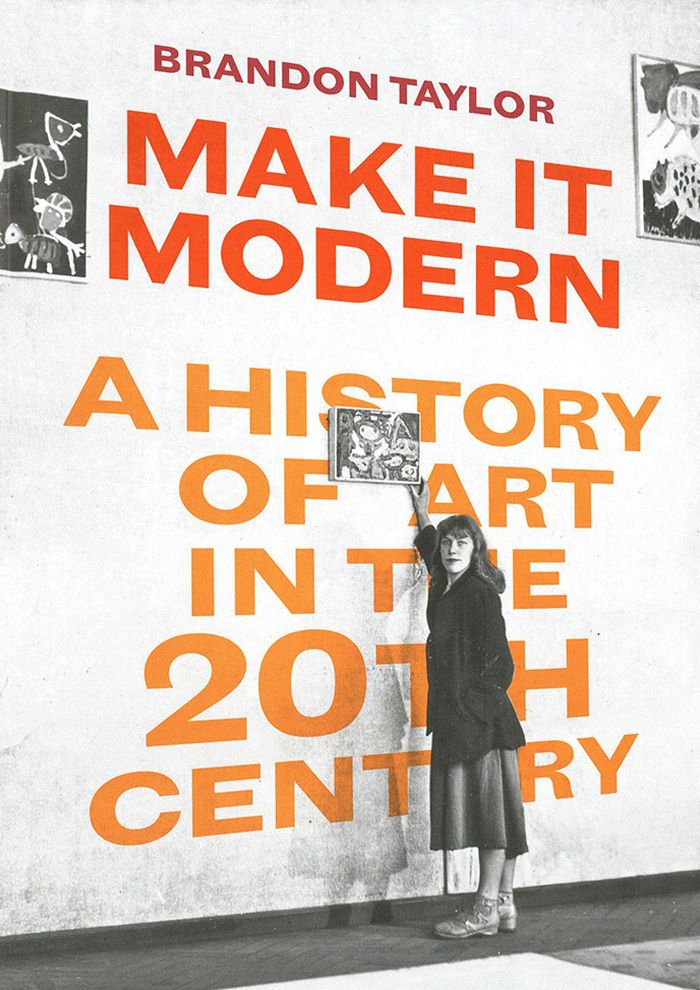
Make it modern: A history of art in the 20th century
Actions:
Price:
$62.00
(available to order)
Summary:
From the chaos of the First World War to the ravages of the Second, from the Great Depression to the rise of consumer culture, artists we call "modern" faced the challenge of responding imaginatively to utterly new circumstances of life. Original thought, startling artistic techniques, and new attitudes to experimentation were required to produce exceptional and timely work. This volume guides the reader through the art of the modern world. Works of celebrated artists, from Pablo Picasso and Wassily Kandinsky to Frida Kahlo, Jackson Pollock, and Yayoi Kusama, alongside a panoply of undervalued or less-known figures, populate this decade-by-decade narrative.
Make it modern: A history of art in the 20th century
Actions:
Price:
$62.00
(available to order)
Summary:
From the chaos of the First World War to the ravages of the Second, from the Great Depression to the rise of consumer culture, artists we call "modern" faced the challenge of responding imaginatively to utterly new circumstances of life. Original thought, startling artistic techniques, and new attitudes to experimentation were required to produce exceptional and timely work. This volume guides the reader through the art of the modern world. Works of celebrated artists, from Pablo Picasso and Wassily Kandinsky to Frida Kahlo, Jackson Pollock, and Yayoi Kusama, alongside a panoply of undervalued or less-known figures, populate this decade-by-decade narrative.
Form:
books
books
Publication:
September 2022
September 2022
Subject:
Art Theory
Art Theory
Form:
books
books
Title:
The U.N. building
The U.N. building
Actions:
Price:
$60.00
(available to order)
Summary:
When it was completed in 1952 along New York's East River, The United Nations Building stood as a symbol of world humanitarianism, a beacon of unity after the Second World War. More than 50 years on, the 39-story building is regarded as one of the pinnacles of mid-century modernism. Its magnificent public spaces and assembly halls, as well as its impressive collection(...)
$60.00
(available to order)
Summary:
When it was completed in 1952 along New York's East River, The United Nations Building stood as a symbol of world humanitarianism, a beacon of unity after the Second World War. More than 50 years on, the 39-story building is regarded as one of the pinnacles of mid-century modernism. Its magnificent public spaces and assembly halls, as well as its impressive collection(...)
Subject:
Commercial interiors, Building types
Commercial interiors, Building types
Publication:
October 2005, New York
October 2005, New York
Title:
The U.N. building
Actions:
Price:
$60.00
(available to order)
Summary:
When it was completed in 1952 along New York's East River, The United Nations Building stood as a symbol of world humanitarianism, a beacon of unity after the Second World War. More than 50 years on, the 39-story building is regarded as one of the pinnacles of mid-century modernism. Its magnificent public spaces and assembly halls, as well as its impressive collection of art by Chagall, Henry Moore and many others make it one of the most visited sites in New York. On the celebration of the United Nations' 60th anniversary, and before a long period of renovation, this book presents a portrait of this fascinating building.
The U.N. building
Actions:
Price:
$60.00
(available to order)
Summary:
When it was completed in 1952 along New York's East River, The United Nations Building stood as a symbol of world humanitarianism, a beacon of unity after the Second World War. More than 50 years on, the 39-story building is regarded as one of the pinnacles of mid-century modernism. Its magnificent public spaces and assembly halls, as well as its impressive collection of art by Chagall, Henry Moore and many others make it one of the most visited sites in New York. On the celebration of the United Nations' 60th anniversary, and before a long period of renovation, this book presents a portrait of this fascinating building.
Form:
books
books
Publication:
October 2005, New York
October 2005, New York
Subject:
Commercial interiors, Building types
Commercial interiors, Building types
Form:
books
books
Price:
$72.95
(available in store)
Summary:
At a moment when the world is facing the world’s largest refugee and migration crisis since the Second World War, Incoming by Irish artist and Deutsche Börse Photography Prize winner Richard Mosse deals with the major humanitarian and political plight of our time, the displacement of millions due to war, persecution and climate change. With illuminating texts by Mosse and(...)
$72.95
(available in store)
Summary:
At a moment when the world is facing the world’s largest refugee and migration crisis since the Second World War, Incoming by Irish artist and Deutsche Börse Photography Prize winner Richard Mosse deals with the major humanitarian and political plight of our time, the displacement of millions due to war, persecution and climate change. With illuminating texts by Mosse and(...)
Title:
Incoming
Actions:
Price:
$72.95
(available in store)
Summary:
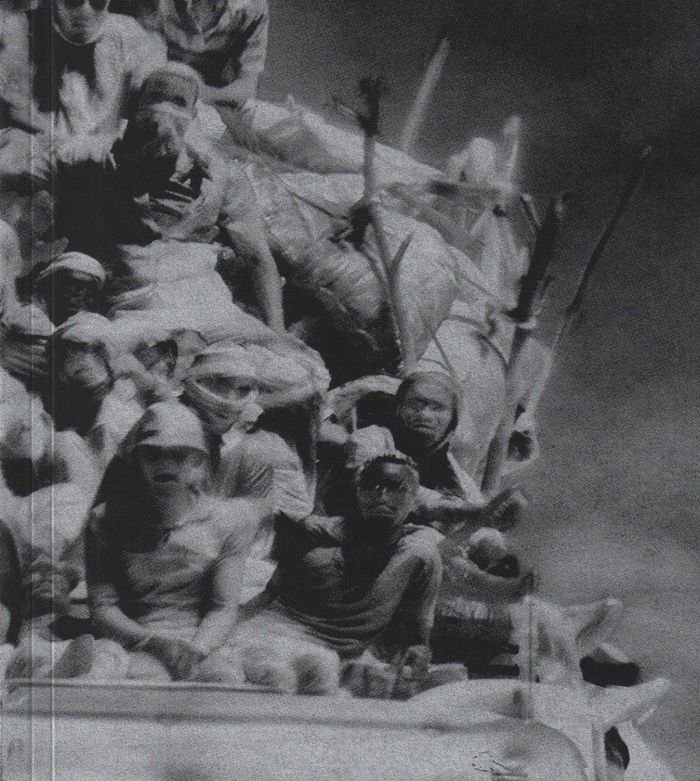
At a moment when the world is facing the world’s largest refugee and migration crisis since the Second World War, Incoming by Irish artist and Deutsche Börse Photography Prize winner Richard Mosse deals with the major humanitarian and political plight of our time, the displacement of millions due to war, persecution and climate change. With illuminating texts by Mosse and the philosopher Giorgio Agamben, the 576-page book combines film stills from the artist’s latest video work made in collaboration with electronic composer Ben Frost and cinematographer Trevor Tweeten – a haunting and searing multi-channel film installation, accompanied by a visceral soundtrack. Journeys made by refugees and migrants across the Middle East, North Africa, and Europe are captured with a new weapons-grade surveillance technology that can detect the human body from 30.3km. Blind to skin colour, this camera technology registers only the contours of relative heat difference within a given scene, foregrounding the fragile human body’s struggle for survival in hostile environments.
Incoming
Actions:
Price:
$72.95
(available in store)
Summary:
At a moment when the world is facing the world’s largest refugee and migration crisis since the Second World War, Incoming by Irish artist and Deutsche Börse Photography Prize winner Richard Mosse deals with the major humanitarian and political plight of our time, the displacement of millions due to war, persecution and climate change. With illuminating texts by Mosse and the philosopher Giorgio Agamben, the 576-page book combines film stills from the artist’s latest video work made in collaboration with electronic composer Ben Frost and cinematographer Trevor Tweeten – a haunting and searing multi-channel film installation, accompanied by a visceral soundtrack. Journeys made by refugees and migrants across the Middle East, North Africa, and Europe are captured with a new weapons-grade surveillance technology that can detect the human body from 30.3km. Blind to skin colour, this camera technology registers only the contours of relative heat difference within a given scene, foregrounding the fragile human body’s struggle for survival in hostile environments.
Form:
books
books
Publication:
February 2017
February 2017
Subject:
Photography monographs
Photography monographs
Form:
books
books
Price:
$22.95
(available to order)
Summary:
For the insatiably curious and ardent Europhile Stefan Zweig, travel was both a necessary cultural education and a personal balm for the depression he experienced when rooted in one place for too long. He spent much of his life weaving between the countries of Europe, visiting authors and friends, exploring the continent in the heyday of international rail(...)
$22.95
(available to order)
Summary:
For the insatiably curious and ardent Europhile Stefan Zweig, travel was both a necessary cultural education and a personal balm for the depression he experienced when rooted in one place for too long. He spent much of his life weaving between the countries of Europe, visiting authors and friends, exploring the continent in the heyday of international rail(...)
Title:
Journeys
Actions:
Price:
$22.95
(available to order)
Summary:
For the insatiably curious and ardent Europhile Stefan Zweig, travel was both a necessary cultural education and a personal balm for the depression he experienced when rooted in one place for too long. He spent much of his life weaving between the countries of Europe, visiting authors and friends, exploring the continent in the heyday of international rail travel. Comprising a lifetime’s observations on Zweig’s travels in Europe, this collection can be dipped into or savoured at length, and paints a rich and sensitive picture of Europe before the Second World War.
Journeys
Actions:
Price:
$22.95
(available to order)
Summary:
For the insatiably curious and ardent Europhile Stefan Zweig, travel was both a necessary cultural education and a personal balm for the depression he experienced when rooted in one place for too long. He spent much of his life weaving between the countries of Europe, visiting authors and friends, exploring the continent in the heyday of international rail travel. Comprising a lifetime’s observations on Zweig’s travels in Europe, this collection can be dipped into or savoured at length, and paints a rich and sensitive picture of Europe before the Second World War.
Form:
books
books
Publication:
March 2019
March 2019
Subject:
Journeys
Journeys
Form:
books
books
Title:
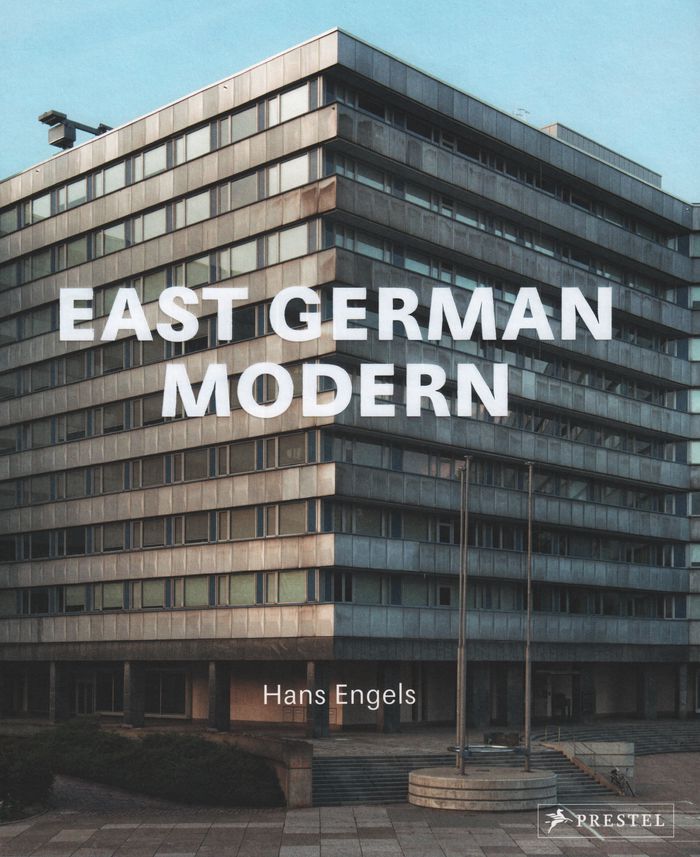
East German modern
East German modern
Actions:
Price:
$66.00
(available to order)
Summary:
The buildings constructed in East Germany after the Second World War are often dismissed as drab, Soviet-style, prefabricated blocks of cement. But the architecture of the German Democratic Republic was created with an eye toward modernity and efficiency, and heralded the birth of a new country and a new economic and social system. Hans Engels has traveled throughout(...)
$66.00
(available to order)
Summary:
The buildings constructed in East Germany after the Second World War are often dismissed as drab, Soviet-style, prefabricated blocks of cement. But the architecture of the German Democratic Republic was created with an eye toward modernity and efficiency, and heralded the birth of a new country and a new economic and social system. Hans Engels has traveled throughout(...)
Title:
East German modern
Actions:
Price:
$66.00
(available to order)
Summary:
The buildings constructed in East Germany after the Second World War are often dismissed as drab, Soviet-style, prefabricated blocks of cement. But the architecture of the German Democratic Republic was created with an eye toward modernity and efficiency, and heralded the birth of a new country and a new economic and social system. Hans Engels has traveled throughout East Germany to photograph iconic modernist buildings that survived demolition. From movie theaters, high-rises, and restaurants to museums, convention centers, and transit stations, these buildings have all stood the test of time.
East German modern
Actions:
Price:
$66.00
(available to order)
Summary:
The buildings constructed in East Germany after the Second World War are often dismissed as drab, Soviet-style, prefabricated blocks of cement. But the architecture of the German Democratic Republic was created with an eye toward modernity and efficiency, and heralded the birth of a new country and a new economic and social system. Hans Engels has traveled throughout East Germany to photograph iconic modernist buildings that survived demolition. From movie theaters, high-rises, and restaurants to museums, convention centers, and transit stations, these buildings have all stood the test of time.
Form:
books
books
Publication:
September 2019
September 2019
Subject:
Modernism
Modernism
Form:
books
books

Actions:
Price:
$40.00
(available to order)
Summary:
The art of Alice Neel (1900-1984) distinguished itself from that of her American contemporaries by the special intimacy of its style, in which her drawing practice was a decisive factor. Though somewhat less known than her paintings, Neel's drawings and watercolors articulate an array of influences--German Expressionist and Neue Sachlichkeit painting, the Ashcan School,(...)
$40.00
(available to order)
Summary:
The art of Alice Neel (1900-1984) distinguished itself from that of her American contemporaries by the special intimacy of its style, in which her drawing practice was a decisive factor. Though somewhat less known than her paintings, Neel's drawings and watercolors articulate an array of influences--German Expressionist and Neue Sachlichkeit painting, the Ashcan School,(...)
Title:
Alice Neel: intimate relations
Actions:
Price:
$40.00
(available to order)
Summary:
The art of Alice Neel (1900-1984) distinguished itself from that of her American contemporaries by the special intimacy of its style, in which her drawing practice was a decisive factor. Though somewhat less known than her paintings, Neel's drawings and watercolors articulate an array of influences--German Expressionist and Neue Sachlichkeit painting, the Ashcan School, an early sojourn in Cuba--that accompanied her through her tentative beginnings in the mid-1920s through to the maturity of her art after the Second World War, when she found room to accommodate abstraction and Pop art.
Alice Neel: intimate relations
Actions:
Price:
$40.00
(available to order)
Summary:
The art of Alice Neel (1900-1984) distinguished itself from that of her American contemporaries by the special intimacy of its style, in which her drawing practice was a decisive factor. Though somewhat less known than her paintings, Neel's drawings and watercolors articulate an array of influences--German Expressionist and Neue Sachlichkeit painting, the Ashcan School, an early sojourn in Cuba--that accompanied her through her tentative beginnings in the mid-1920s through to the maturity of her art after the Second World War, when she found room to accommodate abstraction and Pop art.
Form:
books
books
Publication:
February 2014
February 2014
Subject:
Contemporary Art Monographs
Contemporary Art Monographs


