


11284 Results
Level of archival description:
Project
Project
Actions:
Reference number:
AP178.S1.1998.PR05
Description:
This project series documents the Nova Sede do Banco Nacional de Cabo Verde in Cabo Verde. While the records were held in the office’s archives this project was assigned the number 100/90. The office assigned the date 1998 to this project. The bank headquarter is divided into three volumes. Due to the high humidity level of the area, special efforts were put into the design of the air conditioning system. There are four different entrances, one for the public to access the main meeting rooms, one for the employees that is linked to the basement parking, one for the treasury, and one for visitors to the museum, auditorium, or the bar. To this day, the headquarter is still in construction. Documenting this project are plans, details, technical drawings, and mechanical drawings. Textual material includes correspondence, project documentation, technical and mechanical specifications. Photographic material documents the project site.
AP178.S1.1998.PR05
Description:
This project series documents the Nova Sede do Banco Nacional de Cabo Verde in Cabo Verde. While the records were held in the office’s archives this project was assigned the number 100/90. The office assigned the date 1998 to this project. The bank headquarter is divided into three volumes. Due to the high humidity level of the area, special efforts were put into the design of the air conditioning system. There are four different entrances, one for the public to access the main meeting rooms, one for the employees that is linked to the basement parking, one for the treasury, and one for visitors to the museum, auditorium, or the bar. To this day, the headquarter is still in construction. Documenting this project are plans, details, technical drawings, and mechanical drawings. Textual material includes correspondence, project documentation, technical and mechanical specifications. Photographic material documents the project site.
People:
Date:
1998-2001
1998-2001
Title:
Nova Sede do Banco Nacional de Cabo Verde [Headquarters, National Bank of Cape Verde], Cape Verde (1998)
Actions:
AP178.S1.1998.PR05
Description:
This project series documents the Nova Sede do Banco Nacional de Cabo Verde in Cabo Verde. While the records were held in the office’s archives this project was assigned the number 100/90. The office assigned the date 1998 to this project. The bank headquarter is divided into three volumes. Due to the high humidity level of the area, special efforts were put into the design of the air conditioning system. There are four different entrances, one for the public to access the main meeting rooms, one for the employees that is linked to the basement parking, one for the treasury, and one for visitors to the museum, auditorium, or the bar. To this day, the headquarter is still in construction. Documenting this project are plans, details, technical drawings, and mechanical drawings. Textual material includes correspondence, project documentation, technical and mechanical specifications. Photographic material documents the project site.
Nova Sede do Banco Nacional de Cabo Verde [Headquarters, National Bank of Cape Verde], Cape Verde (1998)
Actions:
AP178.S1.1998.PR05
Description:
This project series documents the Nova Sede do Banco Nacional de Cabo Verde in Cabo Verde. While the records were held in the office’s archives this project was assigned the number 100/90. The office assigned the date 1998 to this project. The bank headquarter is divided into three volumes. Due to the high humidity level of the area, special efforts were put into the design of the air conditioning system. There are four different entrances, one for the public to access the main meeting rooms, one for the employees that is linked to the basement parking, one for the treasury, and one for visitors to the museum, auditorium, or the bar. To this day, the headquarter is still in construction. Documenting this project are plans, details, technical drawings, and mechanical drawings. Textual material includes correspondence, project documentation, technical and mechanical specifications. Photographic material documents the project site.
Level of archival description:
Project
Project
Date:
1998-2001
1998-2001
People:
Form:
drawings
drawings
Actions:
Reference number:
AP046.S1.1983.PR02.016
Description:
This file includes reprographic copies of National Harbours Board maps of the Old Port and St. Lawrence River spanning from 1939 to 1986. From the Archive of the Old Port of Montréal.
AP046.S1.1983.PR02.016
Description:
This file includes reprographic copies of National Harbours Board maps of the Old Port and St. Lawrence River spanning from 1939 to 1986. From the Archive of the Old Port of Montréal.
People:
Date:
1983-1992
1983-1992
Title:
Historical maps, Old Port of Montreal Master Plan, Montréal, Québec
Actions:
AP046.S1.1983.PR02.016
Description:
This file includes reprographic copies of National Harbours Board maps of the Old Port and St. Lawrence River spanning from 1939 to 1986. From the Archive of the Old Port of Montréal.
Historical maps, Old Port of Montreal Master Plan, Montréal, Québec
Actions:
AP046.S1.1983.PR02.016
Description:
This file includes reprographic copies of National Harbours Board maps of the Old Port and St. Lawrence River spanning from 1939 to 1986. From the Archive of the Old Port of Montréal.
Form:
drawings
drawings
Date:
1983-1992
1983-1992
People:
Level of archival description:
Project
Project
Reference number:
AP178.S1.1965.PR01
Description:
This project series documents the submission for Siza's CODA (Concurso para a Obtenção do Diploma de Arquitecto), for which he submitted his project Casa Rui Feijó in Caminha, Portugal. While the records were held in the office’s archives this project was assigned the number [17]/60. The office assigned the date 1965 to this project. CODA is the final step for students to obtain their architecture degree. Siza used his preliminary work for the Casa Rui Feijó to develop his submission for his CODA. This project is a vacation house with three bedrooms, a bathroom, kitchen, living room, service bedroom, exterior annex, garage, lounge and terrace. The original project for the home is also described in this fonds (see project series AP178.S1.1963.PR01). Documenting this project are plans and elevations. Also included are a small number of photographs and some project documentation.
AP178.S1.1965.PR01
Description:
This project series documents the submission for Siza's CODA (Concurso para a Obtenção do Diploma de Arquitecto), for which he submitted his project Casa Rui Feijó in Caminha, Portugal. While the records were held in the office’s archives this project was assigned the number [17]/60. The office assigned the date 1965 to this project. CODA is the final step for students to obtain their architecture degree. Siza used his preliminary work for the Casa Rui Feijó to develop his submission for his CODA. This project is a vacation house with three bedrooms, a bathroom, kitchen, living room, service bedroom, exterior annex, garage, lounge and terrace. The original project for the home is also described in this fonds (see project series AP178.S1.1963.PR01). Documenting this project are plans and elevations. Also included are a small number of photographs and some project documentation.
People:
Date:
1965
1965
Title:
CODA (Casa Rui Feijó) [Competition for Obtaining the Diploma of Architecture (Rui Feijó house)], Moledo do Minho, Caminha, Portugal (1965)
Actions:
AP178.S1.1965.PR01
Description:
This project series documents the submission for Siza's CODA (Concurso para a Obtenção do Diploma de Arquitecto), for which he submitted his project Casa Rui Feijó in Caminha, Portugal. While the records were held in the office’s archives this project was assigned the number [17]/60. The office assigned the date 1965 to this project. CODA is the final step for students to obtain their architecture degree. Siza used his preliminary work for the Casa Rui Feijó to develop his submission for his CODA. This project is a vacation house with three bedrooms, a bathroom, kitchen, living room, service bedroom, exterior annex, garage, lounge and terrace. The original project for the home is also described in this fonds (see project series AP178.S1.1963.PR01). Documenting this project are plans and elevations. Also included are a small number of photographs and some project documentation.
CODA (Casa Rui Feijó) [Competition for Obtaining the Diploma of Architecture (Rui Feijó house)], Moledo do Minho, Caminha, Portugal (1965)
Actions:
AP178.S1.1965.PR01
Description:
This project series documents the submission for Siza's CODA (Concurso para a Obtenção do Diploma de Arquitecto), for which he submitted his project Casa Rui Feijó in Caminha, Portugal. While the records were held in the office’s archives this project was assigned the number [17]/60. The office assigned the date 1965 to this project. CODA is the final step for students to obtain their architecture degree. Siza used his preliminary work for the Casa Rui Feijó to develop his submission for his CODA. This project is a vacation house with three bedrooms, a bathroom, kitchen, living room, service bedroom, exterior annex, garage, lounge and terrace. The original project for the home is also described in this fonds (see project series AP178.S1.1963.PR01). Documenting this project are plans and elevations. Also included are a small number of photographs and some project documentation.
Level of archival description:
Project
Project
Date:
1965
1965
People:
Level of archival description:
Project
Project
Reference number:
AP178.S1.1990.PR10
Description:
This project series documents the Edifício de Escritórios Ferreira de Castro in Oliveira de Azeméis, Portugal. While the records were held in the office’s archives this project was assigned the number 8/90. The office assigned the dates 1990-1995 to this project. The project consisted of the transformation of the building into commerical and office spaces. The structure of the existing building was kept. The project included renovations to the structure, stairs, ventilation and lighting. A feasibility study to convert this building into a hotel was also conducted by Siza for another client (see project series AP178.S1.1989.PR06). Documenting the project are drawings and photographic materials dating from 1990-2012. The drawings include plans, elevations, sections, details, perspectives and axonometric drawings. The photographic materials consist of slides, photos and negatives showing the original building, model, construction work and finished project.
AP178.S1.1990.PR10
Description:
This project series documents the Edifício de Escritórios Ferreira de Castro in Oliveira de Azeméis, Portugal. While the records were held in the office’s archives this project was assigned the number 8/90. The office assigned the dates 1990-1995 to this project. The project consisted of the transformation of the building into commerical and office spaces. The structure of the existing building was kept. The project included renovations to the structure, stairs, ventilation and lighting. A feasibility study to convert this building into a hotel was also conducted by Siza for another client (see project series AP178.S1.1989.PR06). Documenting the project are drawings and photographic materials dating from 1990-2012. The drawings include plans, elevations, sections, details, perspectives and axonometric drawings. The photographic materials consist of slides, photos and negatives showing the original building, model, construction work and finished project.
People:
Date:
1990-2012
1990-2012
Title:
Edifício de Escritórios Ferreira de Castro [Ferreira de Castro Office Building], Oliveira de Azeméis, Portugal (1990-1995)
Actions:
AP178.S1.1990.PR10
Description:
This project series documents the Edifício de Escritórios Ferreira de Castro in Oliveira de Azeméis, Portugal. While the records were held in the office’s archives this project was assigned the number 8/90. The office assigned the dates 1990-1995 to this project. The project consisted of the transformation of the building into commerical and office spaces. The structure of the existing building was kept. The project included renovations to the structure, stairs, ventilation and lighting. A feasibility study to convert this building into a hotel was also conducted by Siza for another client (see project series AP178.S1.1989.PR06). Documenting the project are drawings and photographic materials dating from 1990-2012. The drawings include plans, elevations, sections, details, perspectives and axonometric drawings. The photographic materials consist of slides, photos and negatives showing the original building, model, construction work and finished project.
Edifício de Escritórios Ferreira de Castro [Ferreira de Castro Office Building], Oliveira de Azeméis, Portugal (1990-1995)
Actions:
AP178.S1.1990.PR10
Description:
This project series documents the Edifício de Escritórios Ferreira de Castro in Oliveira de Azeméis, Portugal. While the records were held in the office’s archives this project was assigned the number 8/90. The office assigned the dates 1990-1995 to this project. The project consisted of the transformation of the building into commerical and office spaces. The structure of the existing building was kept. The project included renovations to the structure, stairs, ventilation and lighting. A feasibility study to convert this building into a hotel was also conducted by Siza for another client (see project series AP178.S1.1989.PR06). Documenting the project are drawings and photographic materials dating from 1990-2012. The drawings include plans, elevations, sections, details, perspectives and axonometric drawings. The photographic materials consist of slides, photos and negatives showing the original building, model, construction work and finished project.
Level of archival description:
Project
Project
Date:
1990-2012
1990-2012
People:
Level of archival description:
Project
Project
Reference number:
AP178.S1.1976.PR02
Description:
This project series documents the Parcelas 191 e 192 in Porto, Portugal. While the records were held in the office’s archives this project was assigned the number 34/70. The office assigned the date 1976 for this project. The Comissariado para a Renovação Urbana da Área de Ribeira/Barredo was an organization responsible for the rehabilitation of the historic district of Porto. Alvaro Siza was selected to study the area and to propose architectural solutions for the Mercado da Ribeira (see project series AP178.S1.1976.PR01 in this fonds) Parcelas 191 e 192, and Largo da Lada (see project series AP178.S1.1976.PR03 in this fonds). For this project, Siza worked on two houses. Special attention was paid to the windows. This project was realized. Drawings include studies, elevations, sections and working drawings. Textual materials include project documentation. Photographic materials include photographs of drawings.
AP178.S1.1976.PR02
Description:
This project series documents the Parcelas 191 e 192 in Porto, Portugal. While the records were held in the office’s archives this project was assigned the number 34/70. The office assigned the date 1976 for this project. The Comissariado para a Renovação Urbana da Área de Ribeira/Barredo was an organization responsible for the rehabilitation of the historic district of Porto. Alvaro Siza was selected to study the area and to propose architectural solutions for the Mercado da Ribeira (see project series AP178.S1.1976.PR01 in this fonds) Parcelas 191 e 192, and Largo da Lada (see project series AP178.S1.1976.PR03 in this fonds). For this project, Siza worked on two houses. Special attention was paid to the windows. This project was realized. Drawings include studies, elevations, sections and working drawings. Textual materials include project documentation. Photographic materials include photographs of drawings.
People:
Date:
1962-1974
1962-1974
Title:
Parcelas 191 e 192 [Plots 191 and 192], Porto, Portugal (1976)
Actions:
AP178.S1.1976.PR02
Description:
This project series documents the Parcelas 191 e 192 in Porto, Portugal. While the records were held in the office’s archives this project was assigned the number 34/70. The office assigned the date 1976 for this project. The Comissariado para a Renovação Urbana da Área de Ribeira/Barredo was an organization responsible for the rehabilitation of the historic district of Porto. Alvaro Siza was selected to study the area and to propose architectural solutions for the Mercado da Ribeira (see project series AP178.S1.1976.PR01 in this fonds) Parcelas 191 e 192, and Largo da Lada (see project series AP178.S1.1976.PR03 in this fonds). For this project, Siza worked on two houses. Special attention was paid to the windows. This project was realized. Drawings include studies, elevations, sections and working drawings. Textual materials include project documentation. Photographic materials include photographs of drawings.
Parcelas 191 e 192 [Plots 191 and 192], Porto, Portugal (1976)
Actions:
AP178.S1.1976.PR02
Description:
This project series documents the Parcelas 191 e 192 in Porto, Portugal. While the records were held in the office’s archives this project was assigned the number 34/70. The office assigned the date 1976 for this project. The Comissariado para a Renovação Urbana da Área de Ribeira/Barredo was an organization responsible for the rehabilitation of the historic district of Porto. Alvaro Siza was selected to study the area and to propose architectural solutions for the Mercado da Ribeira (see project series AP178.S1.1976.PR01 in this fonds) Parcelas 191 e 192, and Largo da Lada (see project series AP178.S1.1976.PR03 in this fonds). For this project, Siza worked on two houses. Special attention was paid to the windows. This project was realized. Drawings include studies, elevations, sections and working drawings. Textual materials include project documentation. Photographic materials include photographs of drawings.
Level of archival description:
Project
Project
Date:
1962-1974
1962-1974
People:
Form:
exhibitions
exhibitions
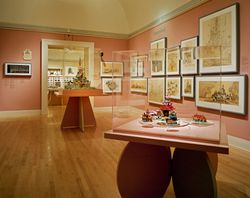
Description:
Disneyland, with its far-flung colonies in Florida, Japan, and France, is a key symbol of contemporary American culture that has been both celebrated and attacked as the ultimate embodiment of consumer society, of simulation and pastiche, of the blurring of distinctions between reality and mass-media imagery. The Architecture of Reassurance: Designing the Disney Theme(...)
Disneyland, with its far-flung colonies in Florida, Japan, and France, is a key symbol of contemporary American culture that has been both celebrated and attacked as the ultimate embodiment of consumer society, of simulation and pastiche, of the blurring of distinctions between reality and mass-media imagery. The Architecture of Reassurance: Designing the Disney Theme(...)
Location:
Main galleries
Main galleries
Date:
17 June 1997 to 28 September 1997
17 June 1997 to 28 September 1997
Title:
The Architecture of Reassurance: Designing the Disney Theme Parks
Actions:
Description:
Disneyland, with its far-flung colonies in Florida, Japan, and France, is a key symbol of contemporary American culture that has been both celebrated and attacked as the ultimate embodiment of consumer society, of simulation and pastiche, of the blurring of distinctions between reality and mass-media imagery. The Architecture of Reassurance: Designing the Disney Theme(...)
The Architecture of Reassurance: Designing the Disney Theme Parks
Actions:
Description:
Disneyland, with its far-flung colonies in Florida, Japan, and France, is a key symbol of contemporary American culture that has been both celebrated and attacked as the ultimate embodiment of consumer society, of simulation and pastiche, of the blurring of distinctions between reality and mass-media imagery. The Architecture of Reassurance: Designing the Disney Theme(...)
Form:
exhibitions
exhibitions
Date:
17 June 1997 to
28 September 1997
17 June 1997 to
28 September 1997
Location:
Main galleries
Main galleries
Level of archival description:
Project
Project
Reference number:
AP178.S1.1997.PR02
Description:
This project series documents the Nova Cervejaria in the Chiado district in Lisbon, Portugal. While the records were held in the office’s archives this project was assigned the number 82/90. The office assigned the date 1997 to this project. The project consisted of a two-storey restaurant and brewery in the existing Castro e Melo building (also identified as Edifìcio 8/9) on Rua Nova do Almada. The design also included a basement level where the offices and service areas were to be located. This project is documented through reprographic copies of drawings and textual records dating from 1994-1997. The drawings consist of studies, floor plans and sections, while the textual records show correspondence and permit documents. Siza also built the Castro e Melo building (see project subseries AP178.1988.PR07.SS4 in this fonds) as part of the Reconstruction of Chiado project that began in 1988.
AP178.S1.1997.PR02
Description:
This project series documents the Nova Cervejaria in the Chiado district in Lisbon, Portugal. While the records were held in the office’s archives this project was assigned the number 82/90. The office assigned the date 1997 to this project. The project consisted of a two-storey restaurant and brewery in the existing Castro e Melo building (also identified as Edifìcio 8/9) on Rua Nova do Almada. The design also included a basement level where the offices and service areas were to be located. This project is documented through reprographic copies of drawings and textual records dating from 1994-1997. The drawings consist of studies, floor plans and sections, while the textual records show correspondence and permit documents. Siza also built the Castro e Melo building (see project subseries AP178.1988.PR07.SS4 in this fonds) as part of the Reconstruction of Chiado project that began in 1988.
People:
Date:
1994-1997
1994-1997
Title:
Nova Cervejaria [New brewery], Chiado, Lisbon, Portugal, (1997)
Actions:
AP178.S1.1997.PR02
Description:
This project series documents the Nova Cervejaria in the Chiado district in Lisbon, Portugal. While the records were held in the office’s archives this project was assigned the number 82/90. The office assigned the date 1997 to this project. The project consisted of a two-storey restaurant and brewery in the existing Castro e Melo building (also identified as Edifìcio 8/9) on Rua Nova do Almada. The design also included a basement level where the offices and service areas were to be located. This project is documented through reprographic copies of drawings and textual records dating from 1994-1997. The drawings consist of studies, floor plans and sections, while the textual records show correspondence and permit documents. Siza also built the Castro e Melo building (see project subseries AP178.1988.PR07.SS4 in this fonds) as part of the Reconstruction of Chiado project that began in 1988.
Nova Cervejaria [New brewery], Chiado, Lisbon, Portugal, (1997)
Actions:
AP178.S1.1997.PR02
Description:
This project series documents the Nova Cervejaria in the Chiado district in Lisbon, Portugal. While the records were held in the office’s archives this project was assigned the number 82/90. The office assigned the date 1997 to this project. The project consisted of a two-storey restaurant and brewery in the existing Castro e Melo building (also identified as Edifìcio 8/9) on Rua Nova do Almada. The design also included a basement level where the offices and service areas were to be located. This project is documented through reprographic copies of drawings and textual records dating from 1994-1997. The drawings consist of studies, floor plans and sections, while the textual records show correspondence and permit documents. Siza also built the Castro e Melo building (see project subseries AP178.1988.PR07.SS4 in this fonds) as part of the Reconstruction of Chiado project that began in 1988.
Level of archival description:
Project
Project
Date:
1994-1997
1994-1997
People:
Level of archival description:
Sub-series
Sub-series
Reference number:
AP178.S1.1998.PR03.SS1
Description:
This project subseries documents the Edifício Zaida Habitação e Comércio. While the records were held in the office’s archives this project was assigned the number 98/90 A. The office assigned the dates 1998-2006 to this. This project was phase 1 of the larger project to redevelop three parcels of land that faced the Plaza Puerta Real. This part of the project consisted of the construction of a new six storey building where the nineteenth century Zaida Hotel had previously stood. Documenting this project subseries are drawings, textual records and photographic materials dating from 1989-2006. The materials in this project subseries include documentation for the entire project including the intial proposal sent by Granada City Council, planning and contract documentation, supplier catalogues, correspondence and photographs of the site and finished work. The drawings highlight this specific project subseries through sketches, plans and structural and mechanical drawings.
AP178.S1.1998.PR03.SS1
Description:
This project subseries documents the Edifício Zaida Habitação e Comércio. While the records were held in the office’s archives this project was assigned the number 98/90 A. The office assigned the dates 1998-2006 to this. This project was phase 1 of the larger project to redevelop three parcels of land that faced the Plaza Puerta Real. This part of the project consisted of the construction of a new six storey building where the nineteenth century Zaida Hotel had previously stood. Documenting this project subseries are drawings, textual records and photographic materials dating from 1989-2006. The materials in this project subseries include documentation for the entire project including the intial proposal sent by Granada City Council, planning and contract documentation, supplier catalogues, correspondence and photographs of the site and finished work. The drawings highlight this specific project subseries through sketches, plans and structural and mechanical drawings.
People:
Date:
1989-2006
1989-2006
Title:
Edifício Zaida, Habitação e Comércio [Zaida Building, housing and commerce], Granada, Spain (1998-2006)
Actions:
AP178.S1.1998.PR03.SS1
Description:
This project subseries documents the Edifício Zaida Habitação e Comércio. While the records were held in the office’s archives this project was assigned the number 98/90 A. The office assigned the dates 1998-2006 to this. This project was phase 1 of the larger project to redevelop three parcels of land that faced the Plaza Puerta Real. This part of the project consisted of the construction of a new six storey building where the nineteenth century Zaida Hotel had previously stood. Documenting this project subseries are drawings, textual records and photographic materials dating from 1989-2006. The materials in this project subseries include documentation for the entire project including the intial proposal sent by Granada City Council, planning and contract documentation, supplier catalogues, correspondence and photographs of the site and finished work. The drawings highlight this specific project subseries through sketches, plans and structural and mechanical drawings.
Edifício Zaida, Habitação e Comércio [Zaida Building, housing and commerce], Granada, Spain (1998-2006)
Actions:
AP178.S1.1998.PR03.SS1
Description:
This project subseries documents the Edifício Zaida Habitação e Comércio. While the records were held in the office’s archives this project was assigned the number 98/90 A. The office assigned the dates 1998-2006 to this. This project was phase 1 of the larger project to redevelop three parcels of land that faced the Plaza Puerta Real. This part of the project consisted of the construction of a new six storey building where the nineteenth century Zaida Hotel had previously stood. Documenting this project subseries are drawings, textual records and photographic materials dating from 1989-2006. The materials in this project subseries include documentation for the entire project including the intial proposal sent by Granada City Council, planning and contract documentation, supplier catalogues, correspondence and photographs of the site and finished work. The drawings highlight this specific project subseries through sketches, plans and structural and mechanical drawings.
Level of archival description:
Project
Project
Date:
1989-2006
1989-2006
People:
Level of archival description:
Project
Project
Actions:
Reference number:
AP178.S1.2001.PR07
Description:
This project series documents the Faculdade Ciências da Educação do C. Univ. de Cappont in Lérida, Spain. While the records were held in the office’s archives this project was assigned the number 35/00 The office assigned the date 2001 for this project. The project is located on the northeast side of the campus of Cappont University. The upper floors are L-shaped while the ground floor is U-shaped, creating a separation from the library to the rest of the building. The ground floor is mainly for administration and management. The three upper floors are a series of repetitive spaces for the different departments and classrooms. The facade is made of three motorized vertical louvers that control the lighting into the building. Documenting this project are plans, working drawings, technical drawings, and structural drawings. Textual material includes project documentation and correspondence. Photographic material documents the project site and construction work.
AP178.S1.2001.PR07
Description:
This project series documents the Faculdade Ciências da Educação do C. Univ. de Cappont in Lérida, Spain. While the records were held in the office’s archives this project was assigned the number 35/00 The office assigned the date 2001 for this project. The project is located on the northeast side of the campus of Cappont University. The upper floors are L-shaped while the ground floor is U-shaped, creating a separation from the library to the rest of the building. The ground floor is mainly for administration and management. The three upper floors are a series of repetitive spaces for the different departments and classrooms. The facade is made of three motorized vertical louvers that control the lighting into the building. Documenting this project are plans, working drawings, technical drawings, and structural drawings. Textual material includes project documentation and correspondence. Photographic material documents the project site and construction work.
People:
Date:
2001-2007
2001-2007
Title:
Faculdade Ciências da Educação do C. Univ. de Cappont [Faculty of education sciences, Cappont University], Lérida, Spain (2001)
Actions:
AP178.S1.2001.PR07
Description:
This project series documents the Faculdade Ciências da Educação do C. Univ. de Cappont in Lérida, Spain. While the records were held in the office’s archives this project was assigned the number 35/00 The office assigned the date 2001 for this project. The project is located on the northeast side of the campus of Cappont University. The upper floors are L-shaped while the ground floor is U-shaped, creating a separation from the library to the rest of the building. The ground floor is mainly for administration and management. The three upper floors are a series of repetitive spaces for the different departments and classrooms. The facade is made of three motorized vertical louvers that control the lighting into the building. Documenting this project are plans, working drawings, technical drawings, and structural drawings. Textual material includes project documentation and correspondence. Photographic material documents the project site and construction work.
Faculdade Ciências da Educação do C. Univ. de Cappont [Faculty of education sciences, Cappont University], Lérida, Spain (2001)
Actions:
AP178.S1.2001.PR07
Description:
This project series documents the Faculdade Ciências da Educação do C. Univ. de Cappont in Lérida, Spain. While the records were held in the office’s archives this project was assigned the number 35/00 The office assigned the date 2001 for this project. The project is located on the northeast side of the campus of Cappont University. The upper floors are L-shaped while the ground floor is U-shaped, creating a separation from the library to the rest of the building. The ground floor is mainly for administration and management. The three upper floors are a series of repetitive spaces for the different departments and classrooms. The facade is made of three motorized vertical louvers that control the lighting into the building. Documenting this project are plans, working drawings, technical drawings, and structural drawings. Textual material includes project documentation and correspondence. Photographic material documents the project site and construction work.
Level of archival description:
Project
Project
Date:
2001-2007
2001-2007
People:
Form:
research
research
Actions:
Description:
The CCA Virtual Fellowship Program supports our long-term investment in thinking through how already digitized and accessible CCA Collection material can generate new historical configurations, timely interpretations, and a broader reach within architectural research.
The CCA Virtual Fellowship Program supports our long-term investment in thinking through how already digitized and accessible CCA Collection material can generate new historical configurations, timely interpretations, and a broader reach within architectural research.
Keyword(s):
virtual fellowship program, Nokubekezela Mchunu, Wafa Ali, Papers that Remain, post-custodial archives, Africa
virtual fellowship program, Nokubekezela Mchunu, Wafa Ali, Papers that Remain, post-custodial archives, Africa
Date:
1 March 2022 to 23 December 2022
1 March 2022 to 23 December 2022
Title:
CCA Virtual Fellowship Program 2022
Actions:
Description:
The CCA Virtual Fellowship Program supports our long-term investment in thinking through how already digitized and accessible CCA Collection material can generate new historical configurations, timely interpretations, and a broader reach within architectural research.
CCA Virtual Fellowship Program 2022
Actions:
Description:
The CCA Virtual Fellowship Program supports our long-term investment in thinking through how already digitized and accessible CCA Collection material can generate new historical configurations, timely interpretations, and a broader reach within architectural research.
Form:
research
research
Date:
1 March 2022 to
23 December 2022
1 March 2022 to
23 December 2022


