


502 Results
Form:
books
books
Actions:
Price:
$67.50
(available to order)
Summary:
What “really constitutes an architectural atmosphere,” Peter Zumthor says, is “this singular density and mood, this feeling of presence, well-being, harmony, beauty ... under whose spell I experience what I otherwise would not experience in precisely this way.” In nine short, illustrated chapters framed as a process of self-observation, Peter Zumthor describes what he has(...)
$67.50
(available to order)
Summary:
What “really constitutes an architectural atmosphere,” Peter Zumthor says, is “this singular density and mood, this feeling of presence, well-being, harmony, beauty ... under whose spell I experience what I otherwise would not experience in precisely this way.” In nine short, illustrated chapters framed as a process of self-observation, Peter Zumthor describes what he has(...)
Title:
Peter Zumthor : atmospheres : architectural environments - surrounding objects
Actions:
Price:
$67.50
(available to order)
Summary:
What “really constitutes an architectural atmosphere,” Peter Zumthor says, is “this singular density and mood, this feeling of presence, well-being, harmony, beauty ... under whose spell I experience what I otherwise would not experience in precisely this way.” In nine short, illustrated chapters framed as a process of self-observation, Peter Zumthor describes what he has on his mind as he sets about creating the atmosphere of his houses. Images of spaces and buildings that affect him are every bit as important as particular pieces of music or books that inspire him. From the composition and “presence” of the materials to the handling of proportions and the effect of light, this poetics of architecture enables the reader to recapitulate what really matters in the process of house design.
Peter Zumthor : atmospheres : architectural environments - surrounding objects
Actions:
Price:
$67.50
(available to order)
Summary:
What “really constitutes an architectural atmosphere,” Peter Zumthor says, is “this singular density and mood, this feeling of presence, well-being, harmony, beauty ... under whose spell I experience what I otherwise would not experience in precisely this way.” In nine short, illustrated chapters framed as a process of self-observation, Peter Zumthor describes what he has on his mind as he sets about creating the atmosphere of his houses. Images of spaces and buildings that affect him are every bit as important as particular pieces of music or books that inspire him. From the composition and “presence” of the materials to the handling of proportions and the effect of light, this poetics of architecture enables the reader to recapitulate what really matters in the process of house design.
Form:
books
books
Publication:
February 2006, Basel
February 2006, Basel
Subject:
Architecture Monographs
Architecture Monographs
Form:
books
books
Actions:
Price:
$53.99
(available to order)
Summary:
This book applauds the union of architecture and engineering both today and throughout the history of building and construction. The relationship between the two fields is multifaceted. Some architects may have had an engineering background, and some engineers have experience of architecture. Some unacknowledged engineers have stood modestly behind great architects,(...)
$53.99
(available to order)
Summary:
This book applauds the union of architecture and engineering both today and throughout the history of building and construction. The relationship between the two fields is multifaceted. Some architects may have had an engineering background, and some engineers have experience of architecture. Some unacknowledged engineers have stood modestly behind great architects,(...)
Title:
Architects + engineers = structures
Actions:
Price:
$53.99
(available to order)
Summary:
This book applauds the union of architecture and engineering both today and throughout the history of building and construction. The relationship between the two fields is multifaceted. Some architects may have had an engineering background, and some engineers have experience of architecture. Some unacknowledged engineers have stood modestly behind great architects, and a number of architects have been encouraged and supported by their engineer-collaborators in designing structures that appear to defy gravity. "Architects + engineers = structures" focuses on the ideal: on a cohesive building design team where the members contribute equally, resulting in unique and exceptional designs. These are architects and engineers who entice beauty into buildings not just with lines on paper and calculations but with intuition, innovation and feeling for the needs of people, materials, strength, proportion, lightness and elegance.
Architects + engineers = structures
Actions:
Price:
$53.99
(available to order)
Summary:
This book applauds the union of architecture and engineering both today and throughout the history of building and construction. The relationship between the two fields is multifaceted. Some architects may have had an engineering background, and some engineers have experience of architecture. Some unacknowledged engineers have stood modestly behind great architects, and a number of architects have been encouraged and supported by their engineer-collaborators in designing structures that appear to defy gravity. "Architects + engineers = structures" focuses on the ideal: on a cohesive building design team where the members contribute equally, resulting in unique and exceptional designs. These are architects and engineers who entice beauty into buildings not just with lines on paper and calculations but with intuition, innovation and feeling for the needs of people, materials, strength, proportion, lightness and elegance.
Form:
books
books
Publication:
May 2002, Chichester
May 2002, Chichester
Subject:
Engineering Structures
Engineering Structures
Form:
books
books
Actions:
Price:
$33.95
(available to order)
Summary:
''Come Closer: The Biennale Reader,'' published on the occasion of the inaugural Prague biennale, considers the present via counter-hegemonic readings of the past. The book explores various perspectives of class, race, and gender differences in post-socialist states, past and present. In societies today that can seem fragmented, alienated, and sealed-off, a feeling of(...)
$33.95
(available to order)
Summary:
''Come Closer: The Biennale Reader,'' published on the occasion of the inaugural Prague biennale, considers the present via counter-hegemonic readings of the past. The book explores various perspectives of class, race, and gender differences in post-socialist states, past and present. In societies today that can seem fragmented, alienated, and sealed-off, a feeling of(...)
Title:
Come closer: the Biennale reader
Actions:
Price:
$33.95
(available to order)
Summary:
''Come Closer: The Biennale Reader,'' published on the occasion of the inaugural Prague biennale, considers the present via counter-hegemonic readings of the past. The book explores various perspectives of class, race, and gender differences in post-socialist states, past and present. In societies today that can seem fragmented, alienated, and sealed-off, a feeling of "us" and "them" can potentially emerge. The reliance on a common language to bring people closer often does the opposite, leading to feelings of contempt, anxiety, and fear. By drawing attention to themes of intimacy, care, and empathy, the contributions in this book search for new types of communication that can bring people together. Like language, art can be used to mediate these differences, and to examine issues relating to how people coexist in society.
Come closer: the Biennale reader
Actions:
Price:
$33.95
(available to order)
Summary:
''Come Closer: The Biennale Reader,'' published on the occasion of the inaugural Prague biennale, considers the present via counter-hegemonic readings of the past. The book explores various perspectives of class, race, and gender differences in post-socialist states, past and present. In societies today that can seem fragmented, alienated, and sealed-off, a feeling of "us" and "them" can potentially emerge. The reliance on a common language to bring people closer often does the opposite, leading to feelings of contempt, anxiety, and fear. By drawing attention to themes of intimacy, care, and empathy, the contributions in this book search for new types of communication that can bring people together. Like language, art can be used to mediate these differences, and to examine issues relating to how people coexist in society.
Form:
books
books
Publication:
February 2021
February 2021
Subject:
Art Theory
Art Theory
Form:
books
books
Actions:
Price:
$92.00
(available to order)
Summary:
Digitalization is one of the elements of our modern world. While it is true we enjoy the benefits brought to our society by modern technology, we are beginning to rediscover the value of handmade effects and elements in design, advertising, and products. Inspired by the recent "healing boom" in Japan and the simple, modern designs in Europe, promotions, advertisements(...)
$92.00
(available to order)
Summary:
Digitalization is one of the elements of our modern world. While it is true we enjoy the benefits brought to our society by modern technology, we are beginning to rediscover the value of handmade effects and elements in design, advertising, and products. Inspired by the recent "healing boom" in Japan and the simple, modern designs in Europe, promotions, advertisements(...)
Title:
By hand: handmade elements in graphic design
Actions:
Price:
$92.00
(available to order)
Summary:
Digitalization is one of the elements of our modern world. While it is true we enjoy the benefits brought to our society by modern technology, we are beginning to rediscover the value of handmade effects and elements in design, advertising, and products. Inspired by the recent "healing boom" in Japan and the simple, modern designs in Europe, promotions, advertisements and/or graphic tools of trendy shops are using a homemade feeling in graphic design. Featuring many examples of "handmade elements" —designs that look as if they are hand drawn; homey collages with photographs, papers, and fabrics; warm and cozy designs with handwritten fonts or typographic letters; and old and weathered designs using rustic effects—By Hand is loaded with designs for posters, direct mails, flyers, shop tools, and more.
By hand: handmade elements in graphic design
Actions:
Price:
$92.00
(available to order)
Summary:
Digitalization is one of the elements of our modern world. While it is true we enjoy the benefits brought to our society by modern technology, we are beginning to rediscover the value of handmade effects and elements in design, advertising, and products. Inspired by the recent "healing boom" in Japan and the simple, modern designs in Europe, promotions, advertisements and/or graphic tools of trendy shops are using a homemade feeling in graphic design. Featuring many examples of "handmade elements" —designs that look as if they are hand drawn; homey collages with photographs, papers, and fabrics; warm and cozy designs with handwritten fonts or typographic letters; and old and weathered designs using rustic effects—By Hand is loaded with designs for posters, direct mails, flyers, shop tools, and more.
Form:
books
books
Publication:
May 2010
May 2010
Subject:
Graphic Design and Typography
Graphic Design and Typography
Form:
books
books
Actions:
Price:
$126.00
(available to order)
Summary:
Between 2007 and 2009, Chancel made several visits to the United Arab Emirates, and found a country overwhelming in its architectural giganticism and astounding in its determination to domesticate a hostile environment. The resultant feeling of artifice is ubiquitous: the desert grows green, seawater is desalinated and new islands rise out of the sea. Moving from one(...)
$126.00
(available to order)
Summary:
Between 2007 and 2009, Chancel made several visits to the United Arab Emirates, and found a country overwhelming in its architectural giganticism and astounding in its determination to domesticate a hostile environment. The resultant feeling of artifice is ubiquitous: the desert grows green, seawater is desalinated and new islands rise out of the sea. Moving from one(...)
Title:
Philippe Chancel: desert spirit
Actions:
Price:
$126.00
(available to order)
Summary:
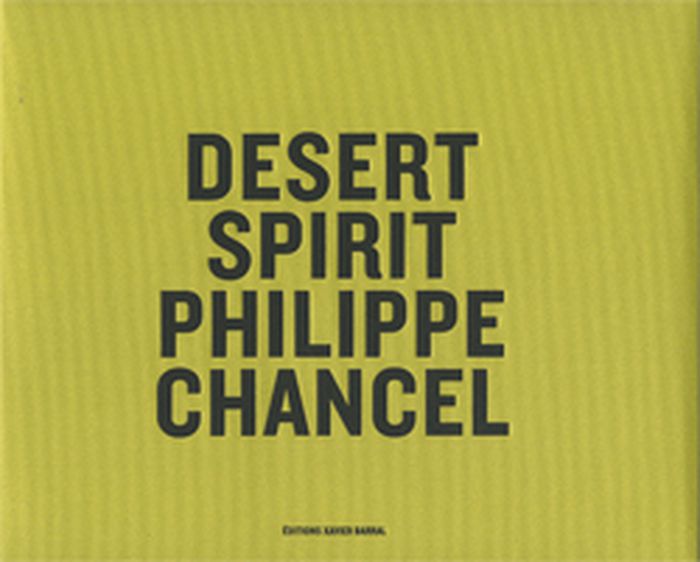
Between 2007 and 2009, Chancel made several visits to the United Arab Emirates, and found a country overwhelming in its architectural giganticism and astounding in its determination to domesticate a hostile environment. The resultant feeling of artifice is ubiquitous: the desert grows green, seawater is desalinated and new islands rise out of the sea. Moving from one air-conditioned space to another, from apartment to limousine, from limousine to shopping mall, from shopping mall to theme park, Chancel found irresistible pictures to take at every turn. Under his gaze, the United Arab Emirates is laid bare as the realization of the consumer society ideal, in which humans exist in a wholly manmade domain. With his characteristic frontal, distanced framing, devoid of judgment and emotion, Chancel portrays a country that is at once baffling and fascinating.
Philippe Chancel: desert spirit
Actions:
Price:
$126.00
(available to order)
Summary:
Between 2007 and 2009, Chancel made several visits to the United Arab Emirates, and found a country overwhelming in its architectural giganticism and astounding in its determination to domesticate a hostile environment. The resultant feeling of artifice is ubiquitous: the desert grows green, seawater is desalinated and new islands rise out of the sea. Moving from one air-conditioned space to another, from apartment to limousine, from limousine to shopping mall, from shopping mall to theme park, Chancel found irresistible pictures to take at every turn. Under his gaze, the United Arab Emirates is laid bare as the realization of the consumer society ideal, in which humans exist in a wholly manmade domain. With his characteristic frontal, distanced framing, devoid of judgment and emotion, Chancel portrays a country that is at once baffling and fascinating.
Form:
books
books
Publication:
August 2010
August 2010
Subject:
Photography monographs
Photography monographs
Form:
books
books
Actions:
Subject:
Publication:
onestar press Fälth & Hässler 2008
onestar press Fälth & Hässler 2008
Form:
books
books
Publication:
onestar press Fälth & Hässler 2008
onestar press Fälth & Hässler 2008
Subject:
Form:
books
books
Actions:
Price:
$24.00
(available to order)
Summary:
"Room for thought" is an illuminating collection of twenty-one essays by Avi Friedman. The essays are about the points where design touches life and the big and small things that make us appreciate, or become disconnected from, our homes and neighborhoods. Drawing on his experiences as an architect, planner, world traveler, and educator, Friedman delves into issues(...)
$24.00
(available to order)
Summary:
"Room for thought" is an illuminating collection of twenty-one essays by Avi Friedman. The essays are about the points where design touches life and the big and small things that make us appreciate, or become disconnected from, our homes and neighborhoods. Drawing on his experiences as an architect, planner, world traveler, and educator, Friedman delves into issues(...)
Title:
Room for thought : rethinking home and community design
Actions:
Price:
$24.00
(available to order)
Summary:
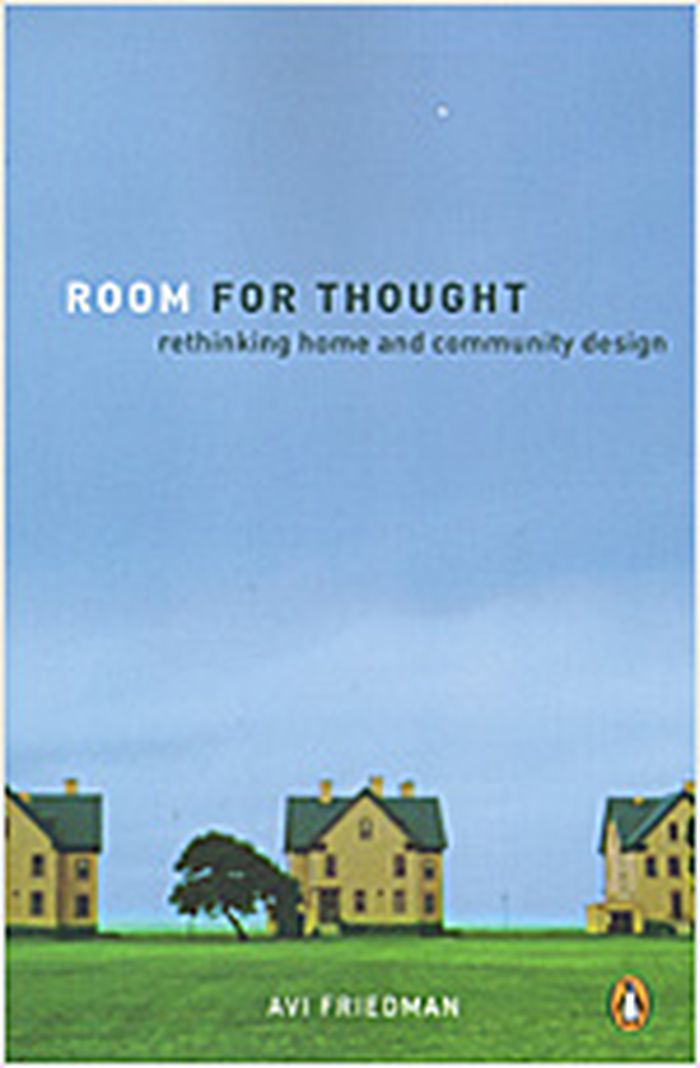
"Room for thought" is an illuminating collection of twenty-one essays by Avi Friedman. The essays are about the points where design touches life and the big and small things that make us appreciate, or become disconnected from, our homes and neighborhoods. Drawing on his experiences as an architect, planner, world traveler, and educator, Friedman delves into issues such as the North American obsession with monster homes, the impact of scale on the feeling of comfort in our communities, environmental concerns such as deforestation, innovative recycling methods in building materials, the booming do-it-yourself industry, the decline of craftsmanship, and the role of good design in bringing families together. Written with Friedman's trademark flair, "Room for thought" offers a compelling vision of the influence of design on our everyday lives from one of the world's most innovative thinkers.
Room for thought : rethinking home and community design
Actions:
Price:
$24.00
(available to order)
Summary:
"Room for thought" is an illuminating collection of twenty-one essays by Avi Friedman. The essays are about the points where design touches life and the big and small things that make us appreciate, or become disconnected from, our homes and neighborhoods. Drawing on his experiences as an architect, planner, world traveler, and educator, Friedman delves into issues such as the North American obsession with monster homes, the impact of scale on the feeling of comfort in our communities, environmental concerns such as deforestation, innovative recycling methods in building materials, the booming do-it-yourself industry, the decline of craftsmanship, and the role of good design in bringing families together. Written with Friedman's trademark flair, "Room for thought" offers a compelling vision of the influence of design on our everyday lives from one of the world's most innovative thinkers.
Form:
books
books
Publication:
December 2005, New York
December 2005, New York
Subject:
Architectural Theory
Architectural Theory
Form:
books
books

Title:
Imperfect solidarities
Imperfect solidarities
Actions:
Price:
$24.95
(available to order)
Summary:
Can empathy deliver political change? Does art that elicits emotional identification with others take us where we need to go? In ''Imperfect Solidarities'', writer and art historian Aruna D’Souza offers observations pulled from current events as well as contemporary art that suggest that a feeling of understanding or closeness based on emotion is an imperfect ground for(...)
$24.95
(available to order)
Summary:
Can empathy deliver political change? Does art that elicits emotional identification with others take us where we need to go? In ''Imperfect Solidarities'', writer and art historian Aruna D’Souza offers observations pulled from current events as well as contemporary art that suggest that a feeling of understanding or closeness based on emotion is an imperfect ground for(...)
Title:
Imperfect solidarities
Actions:
Price:
$24.95
(available to order)
Summary:
Can empathy deliver political change? Does art that elicits emotional identification with others take us where we need to go? In ''Imperfect Solidarities'', writer and art historian Aruna D’Souza offers observations pulled from current events as well as contemporary art that suggest that a feeling of understanding or closeness based on emotion is an imperfect ground for solidarity. Empathy—and its correlate, love—is a distraction from the hard work that needs to be done to achieve justice. Rather, D’Souza contends, we need to imagine a form of political solidarity that is not based on empathy, but on the much more difficult obligation of care. When we can respect the unknowability of the other and still care for and with them, without translating ourselves into their terms, perhaps we will fare better at building political bridges.
Imperfect solidarities
Actions:
Price:
$24.95
(available to order)
Summary:
Can empathy deliver political change? Does art that elicits emotional identification with others take us where we need to go? In ''Imperfect Solidarities'', writer and art historian Aruna D’Souza offers observations pulled from current events as well as contemporary art that suggest that a feeling of understanding or closeness based on emotion is an imperfect ground for solidarity. Empathy—and its correlate, love—is a distraction from the hard work that needs to be done to achieve justice. Rather, D’Souza contends, we need to imagine a form of political solidarity that is not based on empathy, but on the much more difficult obligation of care. When we can respect the unknowability of the other and still care for and with them, without translating ourselves into their terms, perhaps we will fare better at building political bridges.
Form:
books
books
Publication:
August 2024
August 2024
Subject:
Art Theory
Art Theory
Form:
books
books
Actions:
Price:
$46.00
(available to order)
Summary:
'Feeling of uselessness: what are we doing here? We just walk around, take pictures randomly, try to get an image of the place where we are staying: but we seem to be lacking the whole meaning of it. The idea of making a map (not 'mapping', which seems to have been an infectious term in esthetical practices throughout the last ten years) was happily adopted, but probably(...)
$46.00
(available to order)
Summary:
'Feeling of uselessness: what are we doing here? We just walk around, take pictures randomly, try to get an image of the place where we are staying: but we seem to be lacking the whole meaning of it. The idea of making a map (not 'mapping', which seems to have been an infectious term in esthetical practices throughout the last ten years) was happily adopted, but probably(...)
Title:
gruppo A12: N33° 51.917' E130° 47.808'
Actions:
Price:
$46.00
(available to order)
Summary:
'Feeling of uselessness: what are we doing here? We just walk around, take pictures randomly, try to get an image of the place where we are staying: but we seem to be lacking the whole meaning of it. The idea of making a map (not 'mapping', which seems to have been an infectious term in esthetical practices throughout the last ten years) was happily adopted, but probably not sufficiently questioned before coming here. Maps are everywhere in Kitakyushu; we cannot avoid coming across them constantly, so the whole trick of imitating ancient explorers and geographers has soon vanished. We are experimenting while doing. The final result, if there will be any, will address issues of representation: it will be unfinished, rough and raw. We should go farther. Maybe the ones, who will come after us, can do so.'
gruppo A12: N33° 51.917' E130° 47.808'
Actions:
Price:
$46.00
(available to order)
Summary:
'Feeling of uselessness: what are we doing here? We just walk around, take pictures randomly, try to get an image of the place where we are staying: but we seem to be lacking the whole meaning of it. The idea of making a map (not 'mapping', which seems to have been an infectious term in esthetical practices throughout the last ten years) was happily adopted, but probably not sufficiently questioned before coming here. Maps are everywhere in Kitakyushu; we cannot avoid coming across them constantly, so the whole trick of imitating ancient explorers and geographers has soon vanished. We are experimenting while doing. The final result, if there will be any, will address issues of representation: it will be unfinished, rough and raw. We should go farther. Maybe the ones, who will come after us, can do so.'
Form:
books
books
Publication:
April 2002, Kitakyushu
April 2002, Kitakyushu
Subject:
Contemporary Art Monographs
Contemporary Art Monographs
Form:
books
books
Actions:
Price:
$108.00
(available to order)
Summary:
Amsterdam-based landscape architect Michael van Gessel has been working with, rather than against, nature for the past three decades. He expresses his ethos by quoting the English author and landscape architect Joseph Spence: "Respect for the past, combined with a curiosity for what is and a feeling for what could be. This is the dynamo that starts the engine of the(...)
$108.00
(available to order)
Summary:
Amsterdam-based landscape architect Michael van Gessel has been working with, rather than against, nature for the past three decades. He expresses his ethos by quoting the English author and landscape architect Joseph Spence: "Respect for the past, combined with a curiosity for what is and a feeling for what could be. This is the dynamo that starts the engine of the(...)
Subject:
Landscape Architecture, Monographs
Landscape Architecture, Monographs
Publication:
September 2008, Rotterdam
September 2008, Rotterdam
Title:
Michael Van Gessel: Landscape Architect: Invisible work
Actions:
Price:
$108.00
(available to order)
Summary:
Amsterdam-based landscape architect Michael van Gessel has been working with, rather than against, nature for the past three decades. He expresses his ethos by quoting the English author and landscape architect Joseph Spence: "Respect for the past, combined with a curiosity for what is and a feeling for what could be. This is the dynamo that starts the engine of the design." Accordingly, van Gessel embraces a diversity of projects, from private gardens to urban planning. He supervised the renovation of Amsterdam's Vondel Park, drew up the master plan to restore the landscaping around Utretch's Castle De Haar and managed to integrate the inner courtyards of the Ministry of Agriculture in The Hague into the urban fabric. This comprehensive volume places van Gessel's myriad approaches into context and illuminates his pivotal role in the formation of contemporary Dutch landscape architecture.
Michael Van Gessel: Landscape Architect: Invisible work
Actions:
Price:
$108.00
(available to order)
Summary:
Amsterdam-based landscape architect Michael van Gessel has been working with, rather than against, nature for the past three decades. He expresses his ethos by quoting the English author and landscape architect Joseph Spence: "Respect for the past, combined with a curiosity for what is and a feeling for what could be. This is the dynamo that starts the engine of the design." Accordingly, van Gessel embraces a diversity of projects, from private gardens to urban planning. He supervised the renovation of Amsterdam's Vondel Park, drew up the master plan to restore the landscaping around Utretch's Castle De Haar and managed to integrate the inner courtyards of the Ministry of Agriculture in The Hague into the urban fabric. This comprehensive volume places van Gessel's myriad approaches into context and illuminates his pivotal role in the formation of contemporary Dutch landscape architecture.
Form:
books
books
Publication:
September 2008, Rotterdam
September 2008, Rotterdam
Subject:
Landscape Architecture, Monographs
Landscape Architecture, Monographs


