


409 Results
Form:
books
books
Actions:
Holdings:
Description:
x, 141 pages, 1 folded leaf of plates : illustrations (some color) ; 24 cm.
Description:
x, 141 pages, 1 folded leaf of plates : illustrations (some color) ; 24 cm.
Subject:
- Westminster Abbey Congresses.,
- Westminster Abbey. Congresses.,
- Westminster Abbey Congrès.,
- Westminster Abbey,
- Westminster Abbey London,
- Mosaic floors England Westminster (London) Congresses.,
- Cosmati work England Westminster (London) Congresses.,
- Decoration and ornament, Medieval England Westminster (London) Congresses.,
- Planchers en mosaïque Angleterre Westminster (London) Congrès.,
- Décoration et ornement médiévaux Angleterre Westminister (London),
- Cosmati work,
- Decoration and ornament, Medieval,
- Mosaic floors,
- Cosmaten,
- Fußbodenmosaik,
- Mozaïekvloeren.,
- Cosmatenwerk.,
- London Westminster Abbey.,
- Westminster abbey,
- Cosmati pavements,
- Congress,
- Kongress London 1998.,
- Conference papers (document genres),
- proceedings (reports),
- Conference papers and proceedings,
- Actes de congrès.
(See more)
Publication:
Aldershot, Hants, England ; Burlington, VT : Ashgate, ©2002.
Aldershot, Hants, England ; Burlington, VT : Ashgate, ©2002.
Title:
Westminster Abbey : the Cosmati pavements / edited by Lindy Grant and Richard Mortimer.
Actions:
Holdings:
Description:
x, 141 pages, 1 folded leaf of plates : illustrations (some color) ; 24 cm.
Westminster Abbey : the Cosmati pavements / edited by Lindy Grant and Richard Mortimer.
Actions:
Holdings:
Description:
x, 141 pages, 1 folded leaf of plates : illustrations (some color) ; 24 cm.
Form:
books
books
Publication:
Aldershot, Hants, England ; Burlington, VT : Ashgate, ©2002.
Aldershot, Hants, England ; Burlington, VT : Ashgate, ©2002.
Subject:
- Westminster Abbey Congresses.,
- Westminster Abbey. Congresses.,
- Westminster Abbey Congrès.,
- Westminster Abbey,
- Westminster Abbey London,
- Mosaic floors England Westminster (London) Congresses.,
- Cosmati work England Westminster (London) Congresses.,
- Decoration and ornament, Medieval England Westminster (London) Congresses.,
- Planchers en mosaïque Angleterre Westminster (London) Congrès.,
- Décoration et ornement médiévaux Angleterre Westminister (London),
- Cosmati work,
- Decoration and ornament, Medieval,
- Mosaic floors,
- Cosmaten,
- Fußbodenmosaik,
- Mozaïekvloeren.,
- Cosmatenwerk.,
- London Westminster Abbey.,
- Westminster abbey,
- Cosmati pavements,
- Congress,
- Kongress London 1998.,
- Conference papers (document genres),
- proceedings (reports),
- Conference papers and proceedings,
- Actes de congrès.
(See more)
Form:
books
books
Actions:
Holdings:
Description:
227 pages : illustrations (some color), portraits (some color) ; 25 cm
Description:
227 pages : illustrations (some color), portraits (some color) ; 25 cm
Subject:
Publication:
Barcelona : Ediciones Polígrafa, [2016]
Barcelona : Ediciones Polígrafa, [2016]
Title:
Gordon Matta-Clark : experience becomes the object = Gordon Matta-Clark : la experiencia se convierte en objeto / editor, Pedro Donoso ; reflections, Caroline Goodden [and 4 others] ; dialogues, Carmen Beuchat [and 9 others].
Actions:
Holdings:
Description:
227 pages : illustrations (some color), portraits (some color) ; 25 cm
Gordon Matta-Clark : experience becomes the object = Gordon Matta-Clark : la experiencia se convierte en objeto / editor, Pedro Donoso ; reflections, Caroline Goodden [and 4 others] ; dialogues, Carmen Beuchat [and 9 others].
Actions:
Holdings:
Description:
227 pages : illustrations (some color), portraits (some color) ; 25 cm
Form:
books
books
Publication:
Barcelona : Ediciones Polígrafa, [2016]
Barcelona : Ediciones Polígrafa, [2016]
Form:
books
books
Actions:
Holdings:
Description:
218 pages : color illustrations ; 29 cm
Description:
218 pages : color illustrations ; 29 cm
Subject:
Publication:
Salenstein : Braun, 2020., ©2020
Salenstein : Braun, 2020., ©2020
Title:
Wood works : sustainability, versatility, stability / Chris van Uffelen.
Actions:
Holdings:
Description:
218 pages : color illustrations ; 29 cm
Wood works : sustainability, versatility, stability / Chris van Uffelen.
Actions:
Holdings:
Description:
218 pages : color illustrations ; 29 cm
Form:
books
books
Publication:
Salenstein : Braun, 2020., ©2020
Salenstein : Braun, 2020., ©2020
Form:
books
books
Actions:
Price:
$28.95
(available to order)
Summary:
Stuff, the hoard of minor objects which have shed their commodity glamor but which we refuse to recycle, flashes up in fiction, films and photographs as alluring, unruly reminder of how people and matter are intertwined. Stuff is modern materiality out of bounds that refuses to be contained by the western semiotic system. It declines its role as the eternal sidekick of(...)
$28.95
(available to order)
Summary:
Stuff, the hoard of minor objects which have shed their commodity glamor but which we refuse to recycle, flashes up in fiction, films and photographs as alluring, unruly reminder of how people and matter are intertwined. Stuff is modern materiality out of bounds that refuses to be contained by the western semiotic system. It declines its role as the eternal sidekick of(...)
Title:
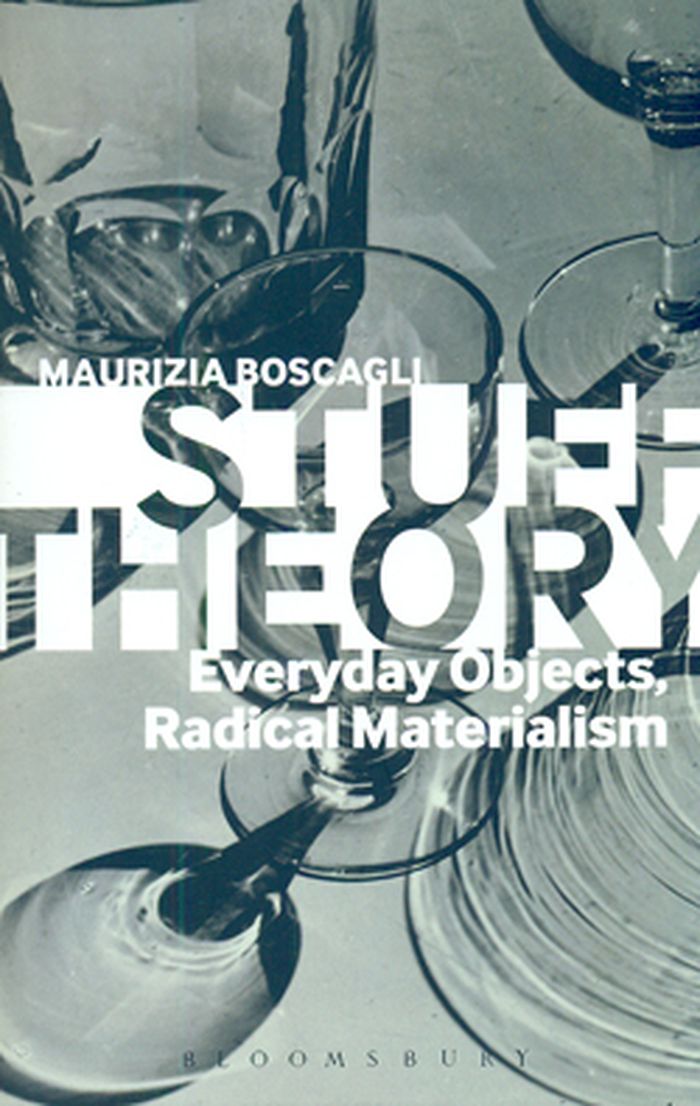
Stuff theory: everyday objects, radical materialism
Actions:
Price:
$28.95
(available to order)
Summary:
Stuff, the hoard of minor objects which have shed their commodity glamor but which we refuse to recycle, flashes up in fiction, films and photographs as alluring, unruly reminder of how people and matter are intertwined. Stuff is modern materiality out of bounds that refuses to be contained by the western semiotic system. It declines its role as the eternal sidekick of the subject, and thus is the ideal basis for a counter-narrative of materiality in flux. Can such a narrative, developed by the new materialism, reinvigorate the classical materialist account of human alienation from commodities under capital? By shifting the discussion of materiality toward the aesthetic and the everyday, the book both embraces and challenges the project of new materialism. It argues that matter has a politics, and that its new plasticity offers a continued possibility of critique.
Stuff theory: everyday objects, radical materialism
Actions:
Price:
$28.95
(available to order)
Summary:
Stuff, the hoard of minor objects which have shed their commodity glamor but which we refuse to recycle, flashes up in fiction, films and photographs as alluring, unruly reminder of how people and matter are intertwined. Stuff is modern materiality out of bounds that refuses to be contained by the western semiotic system. It declines its role as the eternal sidekick of the subject, and thus is the ideal basis for a counter-narrative of materiality in flux. Can such a narrative, developed by the new materialism, reinvigorate the classical materialist account of human alienation from commodities under capital? By shifting the discussion of materiality toward the aesthetic and the everyday, the book both embraces and challenges the project of new materialism. It argues that matter has a politics, and that its new plasticity offers a continued possibility of critique.
Form:
books
books
Publication:
April 2014
April 2014
Subject:
Design Theory
Design Theory
Form:
books
books
Actions:
Holdings:
Description:
271 pages : illustrations (chiefly color) ; 31 cm
Description:
271 pages : illustrations (chiefly color) ; 31 cm
Author:
Subject:
Publication:
München : Schirmer Mosel, 2012.
München : Schirmer Mosel, 2012.
Title:
Thomas Ruff : works 1979-2011 / mit Texten von Okwui Enwezor, Thomas Weski, Valeria Liebermann ; [Übersetzungen aus dem Englischen, Matthias Wolf ; Übersetzungen ins Englische, Jeremy Gaines].
Actions:
Holdings:
Description:
271 pages : illustrations (chiefly color) ; 31 cm
Thomas Ruff : works 1979-2011 / mit Texten von Okwui Enwezor, Thomas Weski, Valeria Liebermann ; [Übersetzungen aus dem Englischen, Matthias Wolf ; Übersetzungen ins Englische, Jeremy Gaines].
Actions:
Holdings:
Description:
271 pages : illustrations (chiefly color) ; 31 cm
Form:
books
books
Publication:
München : Schirmer Mosel, 2012.
München : Schirmer Mosel, 2012.
Subject:
Form:
books
books
Actions:
Holdings:
Description:
324 pages : illustrations (some color), maps ; 25 cm
Description:
324 pages : illustrations (some color), maps ; 25 cm
Subject:
- Azraq (Refugee camp),
- Refugees Jordan Social conditions.,
- Refugee camps Jordan.,
- Material culture.,
- Art and design.,
- Réfugiés Jordanie Conditions sociales.,
- Camps de réfugiés Jordanie.,
- Culture matérielle.,
- Art et design.,
- material culture (discipline),
- Refugee camps,
- Refugees Social conditions,
- Jordan
(See more)
Publication:
Cambridge : The MIT Press, [2021], ©2021
Cambridge : The MIT Press, [2021], ©2021
Title:
Design to live : everyday inventions from a refugee camp / edited by Azra Aksamija, Raafat Majzoub, and Melina Philippou.
Actions:
Holdings:
Description:
324 pages : illustrations (some color), maps ; 25 cm
Design to live : everyday inventions from a refugee camp / edited by Azra Aksamija, Raafat Majzoub, and Melina Philippou.
Actions:
Holdings:
Description:
324 pages : illustrations (some color), maps ; 25 cm
Form:
books
books
Publication:
Cambridge : The MIT Press, [2021], ©2021
Cambridge : The MIT Press, [2021], ©2021
Subject:
- Azraq (Refugee camp),
- Refugees Jordan Social conditions.,
- Refugee camps Jordan.,
- Material culture.,
- Art and design.,
- Réfugiés Jordanie Conditions sociales.,
- Camps de réfugiés Jordanie.,
- Culture matérielle.,
- Art et design.,
- material culture (discipline),
- Refugee camps,
- Refugees Social conditions,
- Jordan
(See more)
Form:
books
books
Actions:
Price:
$21.48
(available to order)
Summary:
This issue of Harvard Design Magazine investigates and unpacks the contents, containers, and systems of storage that organize our world. Storage is the aggregation and containment of the material and immaterial stuff of culture; but also the safeguarding—or hoarding—of energy and tools for some imagined future purpose. How does all this stuff mask or overcompensate for(...)
$21.48
(available to order)
Summary:
This issue of Harvard Design Magazine investigates and unpacks the contents, containers, and systems of storage that organize our world. Storage is the aggregation and containment of the material and immaterial stuff of culture; but also the safeguarding—or hoarding—of energy and tools for some imagined future purpose. How does all this stuff mask or overcompensate for(...)
Title:
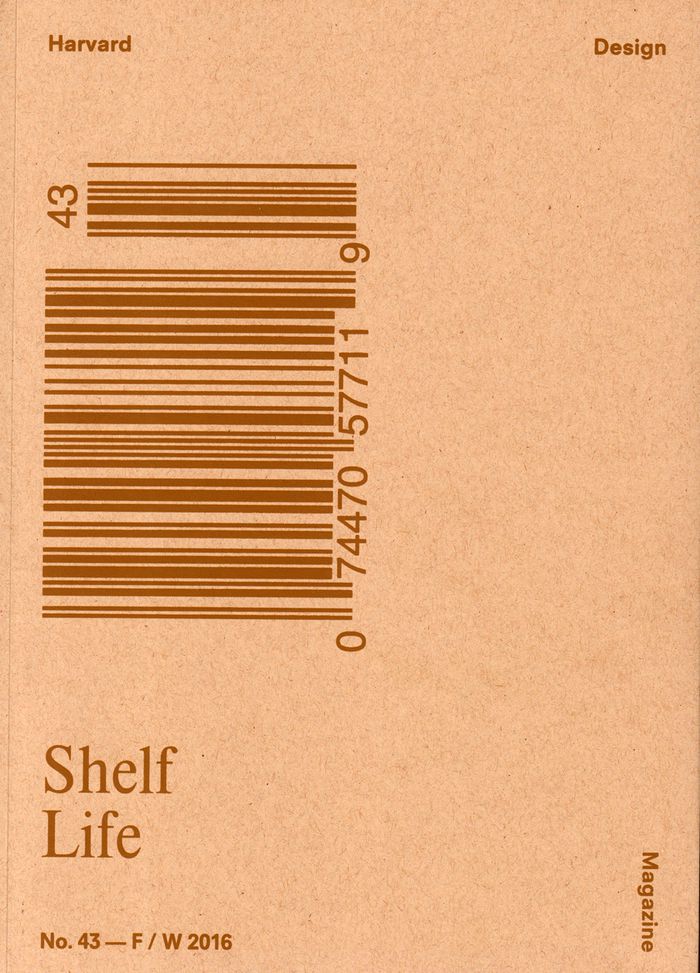
Harvard Design magazine 43: shelf life
Actions:
Price:
$21.48
(available to order)
Summary:
This issue of Harvard Design Magazine investigates and unpacks the contents, containers, and systems of storage that organize our world. Storage is the aggregation and containment of the material and immaterial stuff of culture; but also the safeguarding—or hoarding—of energy and tools for some imagined future purpose. How does all this stuff mask or overcompensate for economic and ecological bankruptcy? Is storage about greed or need? Storage, perhaps, is everything we can live without but insist on living with. "Shelf Life" explores what’s inside the box (shed, tank, urn, vault, crypt, crate, case, pot, bag, vat, morgue, safe, bin, archive, warehouse, cabinet, cellar, cemetery, depository, locker, freezer, landfill, library). Even as we attempt to reduce and recycle, the stuff that we dispose of also needs to be stored. Where do we put it? Our planet is now a saturated receptacle. This warehouse is full, and we’re all inside it.
Harvard Design magazine 43: shelf life
Actions:
Price:
$21.48
(available to order)
Summary:
This issue of Harvard Design Magazine investigates and unpacks the contents, containers, and systems of storage that organize our world. Storage is the aggregation and containment of the material and immaterial stuff of culture; but also the safeguarding—or hoarding—of energy and tools for some imagined future purpose. How does all this stuff mask or overcompensate for economic and ecological bankruptcy? Is storage about greed or need? Storage, perhaps, is everything we can live without but insist on living with. "Shelf Life" explores what’s inside the box (shed, tank, urn, vault, crypt, crate, case, pot, bag, vat, morgue, safe, bin, archive, warehouse, cabinet, cellar, cemetery, depository, locker, freezer, landfill, library). Even as we attempt to reduce and recycle, the stuff that we dispose of also needs to be stored. Where do we put it? Our planet is now a saturated receptacle. This warehouse is full, and we’re all inside it.
Form:
books
books
Publication:
January 2017
January 2017
Subject:
Magazines
Magazines
Form:
books
books
Holdings:
Description:
167 pages : illustrations (some color), plans ; 28 cm
Description:
167 pages : illustrations (some color), plans ; 28 cm
Author:
Subject:
Publication:
Santiago de Chile : Constructo, 2012.
Santiago de Chile : Constructo, 2012.
Title:
YAP_Constructo 2010_2012 / Jeannette Plaut, Marcelo Sarovic.
Actions:
Holdings:
Description:
167 pages : illustrations (some color), plans ; 28 cm
YAP_Constructo 2010_2012 / Jeannette Plaut, Marcelo Sarovic.
Actions:
Holdings:
Description:
167 pages : illustrations (some color), plans ; 28 cm
Form:
books
books
Publication:
Santiago de Chile : Constructo, 2012.
Santiago de Chile : Constructo, 2012.
Form:
video
video
Actions:
Description:
1 online resource.
Author:
Subject:
Publication:
[Place of publication not identified] : Center for Experimental Lectures, 2022.
[Place of publication not identified] : Center for Experimental Lectures, 2022.
Form:
video
video
Publication:
[Place of publication not identified] : Center for Experimental Lectures, 2022.
[Place of publication not identified] : Center for Experimental Lectures, 2022.
Form:
books
books
Holdings:
Description:
230 pages : color illustrations ; 28 cm
Description:
230 pages : color illustrations ; 28 cm
Subject:
- Smith, Ken, 1953- Aesthetics.,
- Smith, Ken, 1953-,
- Smith, Ken Landschaftsarchitekt.,
- Landscape architecture New York (State) New York.,
- Architecture du paysage New York (État) New York.,
- Aesthetics.,
- Landscape architecture.,
- Landschaftsplanung,
- Landskapsarkitekter Förenta staterna 1990-talet 2000-talet.,
- Landskapsarkitektur New York 1990-talet 2000-talet.,
- New York (State) New York.
(See more)
Publication:
New York : Monacelli Press, ©2009.
New York : Monacelli Press, ©2009.
Title:
Ken Smith : landscape architect / introduction by John Beardsley.
Actions:
Holdings:
Description:
230 pages : color illustrations ; 28 cm
Ken Smith : landscape architect / introduction by John Beardsley.
Actions:
Holdings:
Description:
230 pages : color illustrations ; 28 cm
Form:
books
books
Publication:
New York : Monacelli Press, ©2009.
New York : Monacelli Press, ©2009.
Subject:
- Smith, Ken, 1953- Aesthetics.,
- Smith, Ken, 1953-,
- Smith, Ken Landschaftsarchitekt.,
- Landscape architecture New York (State) New York.,
- Architecture du paysage New York (État) New York.,
- Aesthetics.,
- Landscape architecture.,
- Landschaftsplanung,
- Landskapsarkitekter Förenta staterna 1990-talet 2000-talet.,
- Landskapsarkitektur New York 1990-talet 2000-talet.,
- New York (State) New York.
(See more)


