


3820 Results
Form:
books
books
Actions:
Price:
$24.00
(available to order)
Summary:
On January 31, 2008, Swiss curator, critic and historian Hans Ulrich Obrist conducted a "marathon" of conversations in Beijing, after the example of his famous Serpentine Gallery marathons. This marathon called on artists, cultural producers and media practitioners to discuss the post-Olympic state of the city. Participants included internationally renowned artists Ai(...)
$24.00
(available to order)
Summary:
On January 31, 2008, Swiss curator, critic and historian Hans Ulrich Obrist conducted a "marathon" of conversations in Beijing, after the example of his famous Serpentine Gallery marathons. This marathon called on artists, cultural producers and media practitioners to discuss the post-Olympic state of the city. Participants included internationally renowned artists Ai(...)
Title:
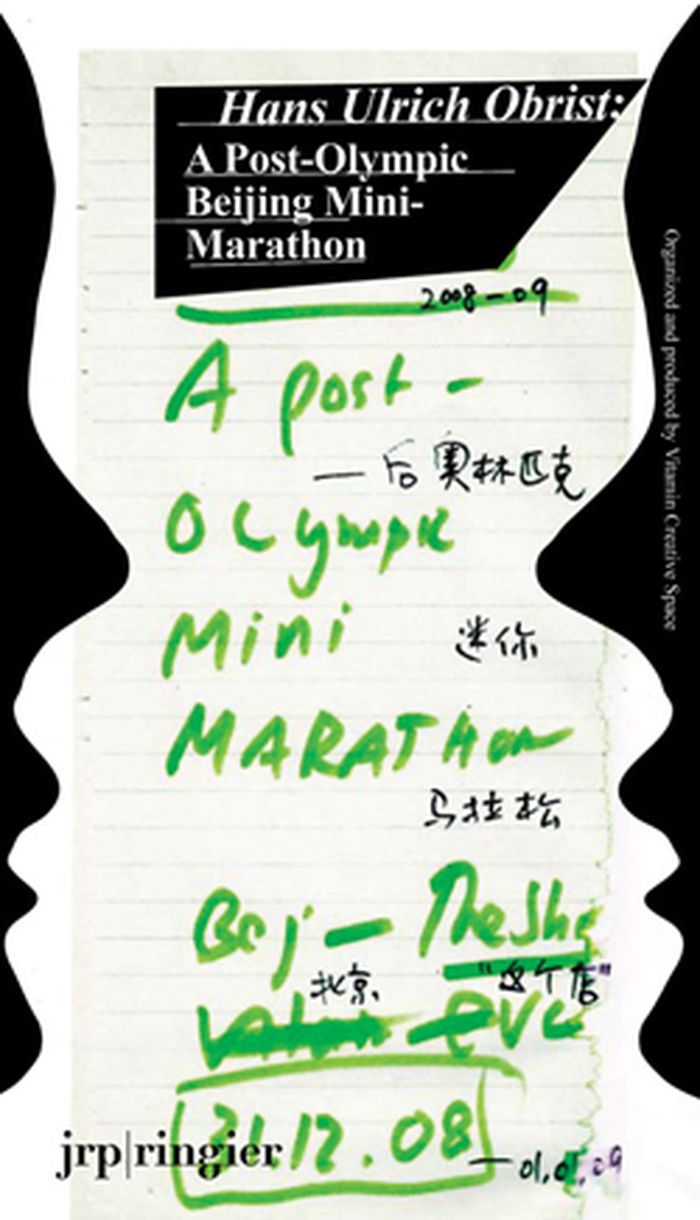
Hans Ulrich Obrist : a post-Olympic Beijing mini-marathon
Actions:
Price:
$24.00
(available to order)
Summary:
On January 31, 2008, Swiss curator, critic and historian Hans Ulrich Obrist conducted a "marathon" of conversations in Beijing, after the example of his famous Serpentine Gallery marathons. This marathon called on artists, cultural producers and media practitioners to discuss the post-Olympic state of the city. Participants included internationally renowned artists Ai Weiwei and Cao Fei, writer and publisher Hung Huang, fashion designer Zhang Da and many others. Topics discussed included everyday life in contemporary Chinese society, the impact of the Olympic Games and the role of the internet in daily life.
Hans Ulrich Obrist : a post-Olympic Beijing mini-marathon
Actions:
Price:
$24.00
(available to order)
Summary:
On January 31, 2008, Swiss curator, critic and historian Hans Ulrich Obrist conducted a "marathon" of conversations in Beijing, after the example of his famous Serpentine Gallery marathons. This marathon called on artists, cultural producers and media practitioners to discuss the post-Olympic state of the city. Participants included internationally renowned artists Ai Weiwei and Cao Fei, writer and publisher Hung Huang, fashion designer Zhang Da and many others. Topics discussed included everyday life in contemporary Chinese society, the impact of the Olympic Games and the role of the internet in daily life.
Form:
books
books
Publication:
September 2010
September 2010
Subject:
Art Theory
Art Theory
Form:
books
books
Title:
Urban reader 3
Urban reader 3
Actions:
Price:
$48.50
(available in store)
Summary:
The third volume in the series of urban readers centres around the term synergy and uses the internet as an artificial urban space connecting the makers and the contributors. This issue is team work. People who live in different cities, countries, and even continents work together without meeting in person. Synergies exist when different elements interact and(...)
$48.50
(available in store)
Summary:
The third volume in the series of urban readers centres around the term synergy and uses the internet as an artificial urban space connecting the makers and the contributors. This issue is team work. People who live in different cities, countries, and even continents work together without meeting in person. Synergies exist when different elements interact and(...)
Publication:
December 2012
December 2012
Title:
Urban reader 3
Actions:
Price:
$48.50
(available in store)
Summary:
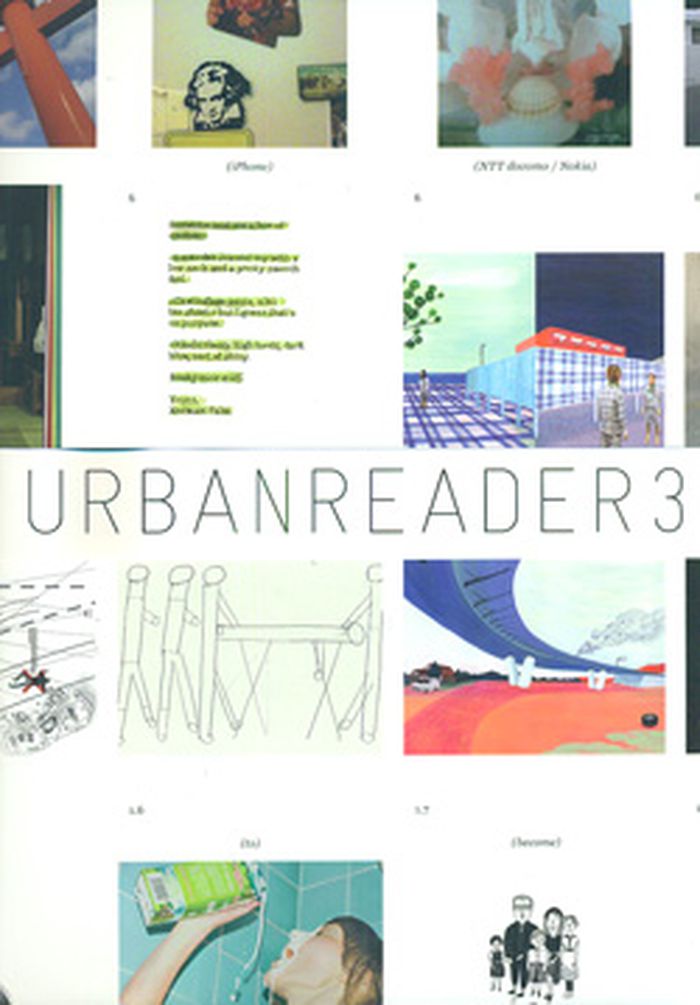
The third volume in the series of urban readers centres around the term synergy and uses the internet as an artificial urban space connecting the makers and the contributors. This issue is team work. People who live in different cities, countries, and even continents work together without meeting in person. Synergies exist when different elements interact and produce a result that any individual part could not achieve alone. This book, as a combined whole aims at supporting the assumption that the generated synergy is more than just the sum of its parts.
Urban reader 3
Actions:
Price:
$48.50
(available in store)
Summary:
The third volume in the series of urban readers centres around the term synergy and uses the internet as an artificial urban space connecting the makers and the contributors. This issue is team work. People who live in different cities, countries, and even continents work together without meeting in person. Synergies exist when different elements interact and produce a result that any individual part could not achieve alone. This book, as a combined whole aims at supporting the assumption that the generated synergy is more than just the sum of its parts.
Form:
books
books
Publication:
December 2012
December 2012
Form:
books
books
Actions:
Price:
$84.95
(available to order)
Summary:
Au long des 256 pages qui composent cet ouvrage, ce sont près de 1500 photographies, patiemment collectées sur Internet et classées selon des critères rudimentaires de géométrie (cercle, carré, triangle, polygone) ou d’état (chantier, achevé, abandon ou ruine) qui se combinent et se succèdent sans interruption. Ouvrant sur une série de constructions sphériques, comme(...)
$84.95
(available to order)
Summary:
Au long des 256 pages qui composent cet ouvrage, ce sont près de 1500 photographies, patiemment collectées sur Internet et classées selon des critères rudimentaires de géométrie (cercle, carré, triangle, polygone) ou d’état (chantier, achevé, abandon ou ruine) qui se combinent et se succèdent sans interruption. Ouvrant sur une série de constructions sphériques, comme(...)
Title:
Éric Tabuchi : Atlas of forms
Actions:
Price:
$84.95
(available to order)
Summary:
Au long des 256 pages qui composent cet ouvrage, ce sont près de 1500 photographies, patiemment collectées sur Internet et classées selon des critères rudimentaires de géométrie (cercle, carré, triangle, polygone) ou d’état (chantier, achevé, abandon ou ruine) qui se combinent et se succèdent sans interruption. Ouvrant sur une série de constructions sphériques, comme s'il s'agissait du chantier des mondes, pour se conclure sur l’image d’un bunker renversé, c’est à une longue divagation, une sorte de mélopée hypnotique avec ses récurrences et ses variantes, ses répétitions et ses ruptures, ses harmonies et ses dissonances que ce livre vous invite. Plus qu’un ouvrage sur l’architecture ou la photographie, Atlas of Forms est d’abord un éloge de la diversité, de toutes les diversités. / Within its 256 pages, are nearly 1500 photographs patiently collected from the Internet and classified according to the rudimentary criteria of geometry (circle, square, triangle, polygon) and their current state (construction site, completed, abandoned or in ruins). These categories mix and mingle without interruption. Opening with a series of spherical structures, like small worlds under construction, and concluding with an image of an overturned bunker, this book proposes a long meandering, a sort of hypnotic chant with its recurrences and variants, its repetitions and ruptures, its harmonies and dissonances. More than a volume on architecture or photography, "Atlas of Forms" is primarily an elegy to diversity, every forms of diversity.
Éric Tabuchi : Atlas of forms
Actions:
Price:
$84.95
(available to order)
Summary:
Au long des 256 pages qui composent cet ouvrage, ce sont près de 1500 photographies, patiemment collectées sur Internet et classées selon des critères rudimentaires de géométrie (cercle, carré, triangle, polygone) ou d’état (chantier, achevé, abandon ou ruine) qui se combinent et se succèdent sans interruption. Ouvrant sur une série de constructions sphériques, comme s'il s'agissait du chantier des mondes, pour se conclure sur l’image d’un bunker renversé, c’est à une longue divagation, une sorte de mélopée hypnotique avec ses récurrences et ses variantes, ses répétitions et ses ruptures, ses harmonies et ses dissonances que ce livre vous invite. Plus qu’un ouvrage sur l’architecture ou la photographie, Atlas of Forms est d’abord un éloge de la diversité, de toutes les diversités. / Within its 256 pages, are nearly 1500 photographs patiently collected from the Internet and classified according to the rudimentary criteria of geometry (circle, square, triangle, polygon) and their current state (construction site, completed, abandoned or in ruins). These categories mix and mingle without interruption. Opening with a series of spherical structures, like small worlds under construction, and concluding with an image of an overturned bunker, this book proposes a long meandering, a sort of hypnotic chant with its recurrences and variants, its repetitions and ruptures, its harmonies and dissonances. More than a volume on architecture or photography, "Atlas of Forms" is primarily an elegy to diversity, every forms of diversity.
Form:
books
books
Publication:
November 2017
November 2017
Subject:
Photography monographs
Photography monographs
Form:
books
books
Actions:
Price:
$65.95
(available in store)
Summary:
''In visible presence'' explores the photographic images' singular power to capture a fleeting moment by approaching them as points of contestation and possibility. Drawing on over a decade of fieldwork and interviews, as well as internet ethnography, media analysis, and case studies,''In visible presence'' offers a rich account of the role of family photography in(...)
$65.95
(available in store)
Summary:
''In visible presence'' explores the photographic images' singular power to capture a fleeting moment by approaching them as points of contestation and possibility. Drawing on over a decade of fieldwork and interviews, as well as internet ethnography, media analysis, and case studies,''In visible presence'' offers a rich account of the role of family photography in(...)
Title:
In visible presence: Soviet afterlives in family photos
Actions:
Price:
$65.95
(available in store)
Summary:
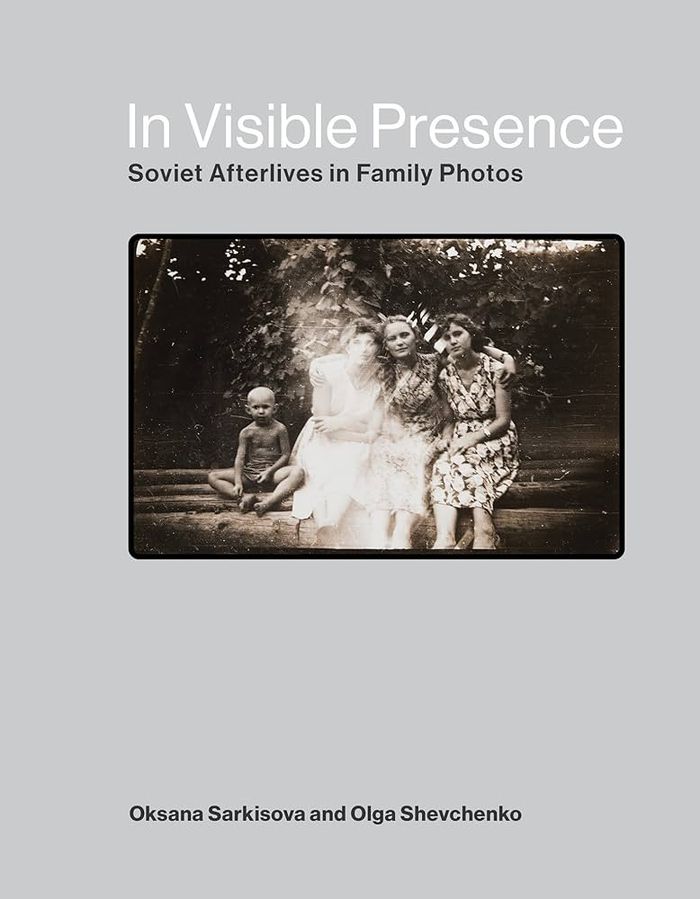
''In visible presence'' explores the photographic images' singular power to capture a fleeting moment by approaching them as points of contestation and possibility. Drawing on over a decade of fieldwork and interviews, as well as internet ethnography, media analysis, and case studies,''In visible presence'' offers a rich account of the role of family photography in creating communities of affect, enabling nostalgic longings, and processing memories of suffering, violence, and hardship. Together these photos evoke youthful aspirations, dashed hopes, and moral compromises, as well as the long legacy of silence that was passed down from grandparents to parents to children.
In visible presence: Soviet afterlives in family photos
Actions:
Price:
$65.95
(available in store)
Summary:
''In visible presence'' explores the photographic images' singular power to capture a fleeting moment by approaching them as points of contestation and possibility. Drawing on over a decade of fieldwork and interviews, as well as internet ethnography, media analysis, and case studies,''In visible presence'' offers a rich account of the role of family photography in creating communities of affect, enabling nostalgic longings, and processing memories of suffering, violence, and hardship. Together these photos evoke youthful aspirations, dashed hopes, and moral compromises, as well as the long legacy of silence that was passed down from grandparents to parents to children.
Form:
books
books
Publication:
October 2023
October 2023
Subject:
Theory of Photography
Theory of Photography
Form:
books
books
Actions:
Price:
$54.00
(available to order)
Summary:
Video (television, film, the moving image generally) is today's most popular information medium. Two-thirds of the world's internet traffic is video. Americans get their news and information more often from screens and speakers than through any other means. "The moving image" is the first authoritative account of how we have arrived here, together with the first(...)
$54.00
(available to order)
Summary:
Video (television, film, the moving image generally) is today's most popular information medium. Two-thirds of the world's internet traffic is video. Americans get their news and information more often from screens and speakers than through any other means. "The moving image" is the first authoritative account of how we have arrived here, together with the first(...)
Title:
The moving image: A user's manual
Actions:
Price:
$54.00
(available to order)
Summary:
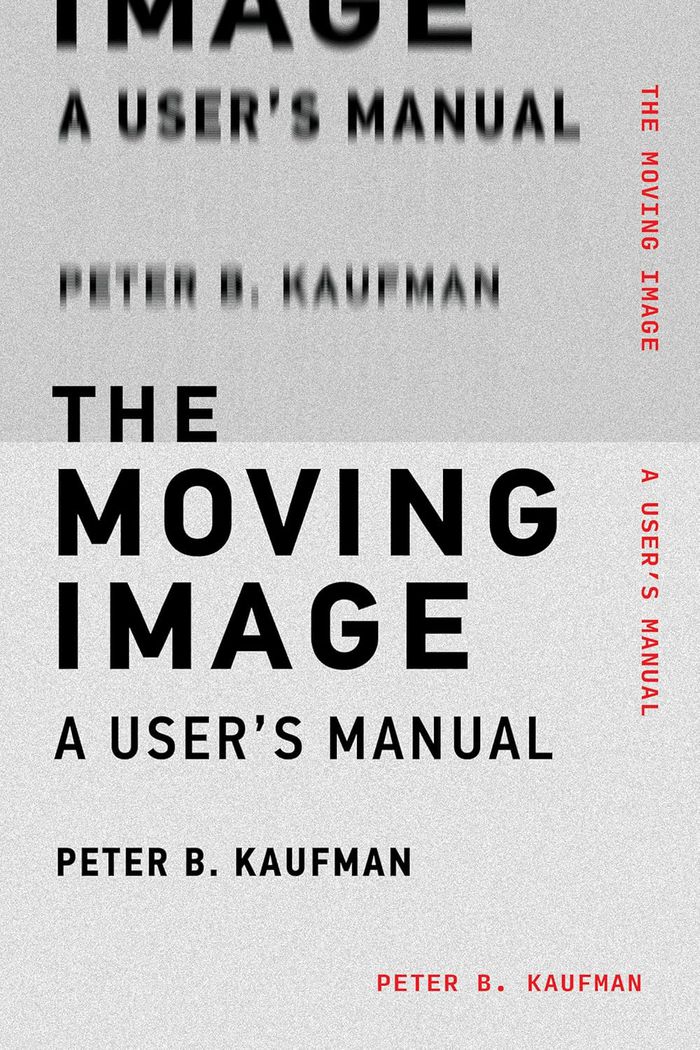
Video (television, film, the moving image generally) is today's most popular information medium. Two-thirds of the world's internet traffic is video. Americans get their news and information more often from screens and speakers than through any other means. "The moving image" is the first authoritative account of how we have arrived here, together with the first definitive manual to help writers, educators, and publishers use video more effectively. Drawing on decades as an educator, publisher, and producer, MIT's Peter Kaufman presents new tools, best practices, and community resources for integrating film and sound into media that matters.
The moving image: A user's manual
Actions:
Price:
$54.00
(available to order)
Summary:
Video (television, film, the moving image generally) is today's most popular information medium. Two-thirds of the world's internet traffic is video. Americans get their news and information more often from screens and speakers than through any other means. "The moving image" is the first authoritative account of how we have arrived here, together with the first definitive manual to help writers, educators, and publishers use video more effectively. Drawing on decades as an educator, publisher, and producer, MIT's Peter Kaufman presents new tools, best practices, and community resources for integrating film and sound into media that matters.
Form:
books
books
Publication:
February 2025
February 2025
Subject:
Architecture and Film, Set Design
Architecture and Film, Set Design
Form:
books
books
Title:
Architecture 2000 and beyond
Architecture 2000 and beyond
Actions:
Price:
$44.95
(available to order)
Summary:
This classic of prediction, written in 1969, has now been brought up-to-date, the prophecies judged, and the omens extended to 2030. The success rate of Jencks' forecasts and his method of combining expert prediction with structural analysis make this book an important contribution to the art of conjecture. Not only did he predict a series of innovations that(...)
$44.95
(available to order)
Summary:
This classic of prediction, written in 1969, has now been brought up-to-date, the prophecies judged, and the omens extended to 2030. The success rate of Jencks' forecasts and his method of combining expert prediction with structural analysis make this book an important contribution to the art of conjecture. Not only did he predict a series of innovations that(...)
Subject:
Architecture since 1900, Europe
Architecture since 1900, Europe
Publication:
August 2000, Chichester
August 2000, Chichester
Title:
Architecture 2000 and beyond
Actions:
Price:
$44.95
(available to order)
Summary:
This classic of prediction, written in 1969, has now been brought up-to-date, the prophecies judged, and the omens extended to 2030. The success rate of Jencks' forecasts and his method of combining expert prediction with structural analysis make this book an important contribution to the art of conjecture. Not only did he predict a series of innovations that have changed the world, such as the Internet, but he identified six main architectural traditions that continuously transform over time. This provides a method of gauging what are likely to be the future movements in architecture, a useful and fascinating tool for speculation.
Architecture 2000 and beyond
Actions:
Price:
$44.95
(available to order)
Summary:
This classic of prediction, written in 1969, has now been brought up-to-date, the prophecies judged, and the omens extended to 2030. The success rate of Jencks' forecasts and his method of combining expert prediction with structural analysis make this book an important contribution to the art of conjecture. Not only did he predict a series of innovations that have changed the world, such as the Internet, but he identified six main architectural traditions that continuously transform over time. This provides a method of gauging what are likely to be the future movements in architecture, a useful and fascinating tool for speculation.
Form:
books
books
Publication:
August 2000, Chichester
August 2000, Chichester
Subject:
Architecture since 1900, Europe
Architecture since 1900, Europe
Form:
books
books
Actions:
Price:
$88.00
(available to order)
Summary:
No other region of the world currently has such a high concentration of top-quality graphic design as Switzerland. Traditionally understated, Swiss design is now creating an international sensation as young designers successfully combine radical approaches to design with unerring lightness of touch, craftsmanship and attention to detail. Their use of forms is often(...)
$88.00
(available to order)
Summary:
No other region of the world currently has such a high concentration of top-quality graphic design as Switzerland. Traditionally understated, Swiss design is now creating an international sensation as young designers successfully combine radical approaches to design with unerring lightness of touch, craftsmanship and attention to detail. Their use of forms is often(...)
Subject:
Graphic Designers, Monographs
Graphic Designers, Monographs
Publication:
May 2001, Basel
May 2001, Basel
Title:
Benzin : young Swiss graphic design
Actions:
Price:
$88.00
(available to order)
Summary:
No other region of the world currently has such a high concentration of top-quality graphic design as Switzerland. Traditionally understated, Swiss design is now creating an international sensation as young designers successfully combine radical approaches to design with unerring lightness of touch, craftsmanship and attention to detail. Their use of forms is often reduced, which also meets the standards for use on the Internet and enhances the international reputation of Swiss design. "Benzin" reviews the work of the most talented of the younger generation of Swiss designers. The book strikingly shows how local scenes can shape developments in design despite globalisation.
Benzin : young Swiss graphic design
Actions:
Price:
$88.00
(available to order)
Summary:
No other region of the world currently has such a high concentration of top-quality graphic design as Switzerland. Traditionally understated, Swiss design is now creating an international sensation as young designers successfully combine radical approaches to design with unerring lightness of touch, craftsmanship and attention to detail. Their use of forms is often reduced, which also meets the standards for use on the Internet and enhances the international reputation of Swiss design. "Benzin" reviews the work of the most talented of the younger generation of Swiss designers. The book strikingly shows how local scenes can shape developments in design despite globalisation.
Form:
books
books
Publication:
May 2001, Basel
May 2001, Basel
Subject:
Graphic Designers, Monographs
Graphic Designers, Monographs
Form:
books
books
Title:
Hito Steyerl
Hito Steyerl
Actions:
Price:
$54.00
(available to order)
Summary:
Artist, filmmaker, and writer Hito Steyerl is an acute observer and interpreter of globalized and digital cultures. This book examines three of Steyerl's large-scale works--"Hell Yeah We Fuck Die" (2016), "ExtraSpaceCraft" (2016), and "Liquidity Inc." (2014)--as well as other iconic works from the last 15 years. These essayistic documentary films blend personal with(...)
$54.00
(available to order)
Summary:
Artist, filmmaker, and writer Hito Steyerl is an acute observer and interpreter of globalized and digital cultures. This book examines three of Steyerl's large-scale works--"Hell Yeah We Fuck Die" (2016), "ExtraSpaceCraft" (2016), and "Liquidity Inc." (2014)--as well as other iconic works from the last 15 years. These essayistic documentary films blend personal with(...)
Title:
Hito Steyerl
Actions:
Price:
$54.00
(available to order)
Summary:
Artist, filmmaker, and writer Hito Steyerl is an acute observer and interpreter of globalized and digital cultures. This book examines three of Steyerl's large-scale works--"Hell Yeah We Fuck Die" (2016), "ExtraSpaceCraft" (2016), and "Liquidity Inc." (2014)--as well as other iconic works from the last 15 years. These essayistic documentary films blend personal with political and satire with seriousness. Her artworks and writings are inspired by her investigations of the impact of the internet and new technologies on our lives and are critical of the various forms of control and surveillance, as well as militarization and cultural globalization.
Hito Steyerl
Actions:
Price:
$54.00
(available to order)
Summary:
Artist, filmmaker, and writer Hito Steyerl is an acute observer and interpreter of globalized and digital cultures. This book examines three of Steyerl's large-scale works--"Hell Yeah We Fuck Die" (2016), "ExtraSpaceCraft" (2016), and "Liquidity Inc." (2014)--as well as other iconic works from the last 15 years. These essayistic documentary films blend personal with political and satire with seriousness. Her artworks and writings are inspired by her investigations of the impact of the internet and new technologies on our lives and are critical of the various forms of control and surveillance, as well as militarization and cultural globalization.
Form:
books
books
Publication:
November 2019
November 2019
Subject:
Contemporary Art Monographs
Contemporary Art Monographs
Form:
journals and magazines
journals and magazines
Title:
Monu 31: After life urbanism
Monu 31: After life urbanism
Actions:
Price:
$30.00
(available to order)
Summary:
New urban challenges and phenomena are emerging from recent changes in our society related to death and its consequences for cities and buildings. “After Life Urbanism” addresses the reengagement and coexistence with life and death, exploring what impacts such transformations might have in terms of spatial, cultural, social, environmental, and economic aspects. The topic(...)
$30.00
(available to order)
Summary:
New urban challenges and phenomena are emerging from recent changes in our society related to death and its consequences for cities and buildings. “After Life Urbanism” addresses the reengagement and coexistence with life and death, exploring what impacts such transformations might have in terms of spatial, cultural, social, environmental, and economic aspects. The topic(...)
Title:
Monu 31: After life urbanism
Actions:
Price:
$30.00
(available to order)
Summary:
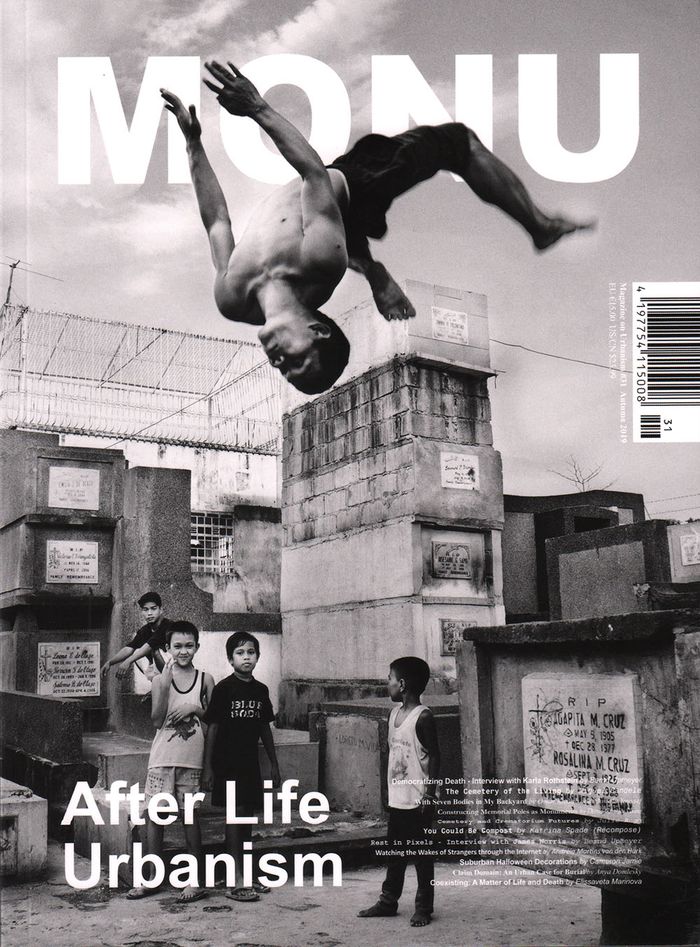
New urban challenges and phenomena are emerging from recent changes in our society related to death and its consequences for cities and buildings. “After Life Urbanism” addresses the reengagement and coexistence with life and death, exploring what impacts such transformations might have in terms of spatial, cultural, social, environmental, and economic aspects. The topic includes a case for urban burial by Anya Domlesky, Miguel Candela’s images of families living in Manila’s cemeteries, life planning software developed by James Norris, Cameron Jamie’s photos of suburban Halloween decorations, virtual wakes on the internet, an interview with Karla Rothstein, and more.
Monu 31: After life urbanism
Actions:
Price:
$30.00
(available to order)
Summary:
New urban challenges and phenomena are emerging from recent changes in our society related to death and its consequences for cities and buildings. “After Life Urbanism” addresses the reengagement and coexistence with life and death, exploring what impacts such transformations might have in terms of spatial, cultural, social, environmental, and economic aspects. The topic includes a case for urban burial by Anya Domlesky, Miguel Candela’s images of families living in Manila’s cemeteries, life planning software developed by James Norris, Cameron Jamie’s photos of suburban Halloween decorations, virtual wakes on the internet, an interview with Karla Rothstein, and more.
Form:
journals and magazines
journals and magazines
Publication:
December 2019
December 2019
Subject:
Magazines
Magazines
Form:
books
books
Actions:
Price:
$45.00
(available to order)
Summary:
L'ère post-photographique se caractérise par le massification des images de même que par leur circulation et leur disponibilité sur Internet. Aux fractures ontologiques que la technologie numérique fait subir à la photographie s'ajoutent des mutations profondes de ses valeurs sociales et fonctionnelles. La culture visuelle post-photographique est ainsi marquée, d'un côté,(...)
$45.00
(available to order)
Summary:
L'ère post-photographique se caractérise par le massification des images de même que par leur circulation et leur disponibilité sur Internet. Aux fractures ontologiques que la technologie numérique fait subir à la photographie s'ajoutent des mutations profondes de ses valeurs sociales et fonctionnelles. La culture visuelle post-photographique est ainsi marquée, d'un côté,(...)
Title:
La condition post-photographique
Actions:
Price:
$45.00
(available to order)
Summary:
L'ère post-photographique se caractérise par le massification des images de même que par leur circulation et leur disponibilité sur Internet. Aux fractures ontologiques que la technologie numérique fait subir à la photographie s'ajoutent des mutations profondes de ses valeurs sociales et fonctionnelles. La culture visuelle post-photographique est ainsi marquée, d'un côté, par une virulente remise en question de la notion d'auteur et, de l'autre, par la légitimation des pratiques appropriationistes. Dans ce nouveau contexte, La condition post-photographique nous invite à nous interroger sur la nature de la création et sur les critères de l'«artisticité».
La condition post-photographique
Actions:
Price:
$45.00
(available to order)
Summary:
L'ère post-photographique se caractérise par le massification des images de même que par leur circulation et leur disponibilité sur Internet. Aux fractures ontologiques que la technologie numérique fait subir à la photographie s'ajoutent des mutations profondes de ses valeurs sociales et fonctionnelles. La culture visuelle post-photographique est ainsi marquée, d'un côté, par une virulente remise en question de la notion d'auteur et, de l'autre, par la légitimation des pratiques appropriationistes. Dans ce nouveau contexte, La condition post-photographique nous invite à nous interroger sur la nature de la création et sur les critères de l'«artisticité».
Form:
books
books
Publication:
December 2015
December 2015


