


3717 Results
Form:
books
books
Title:
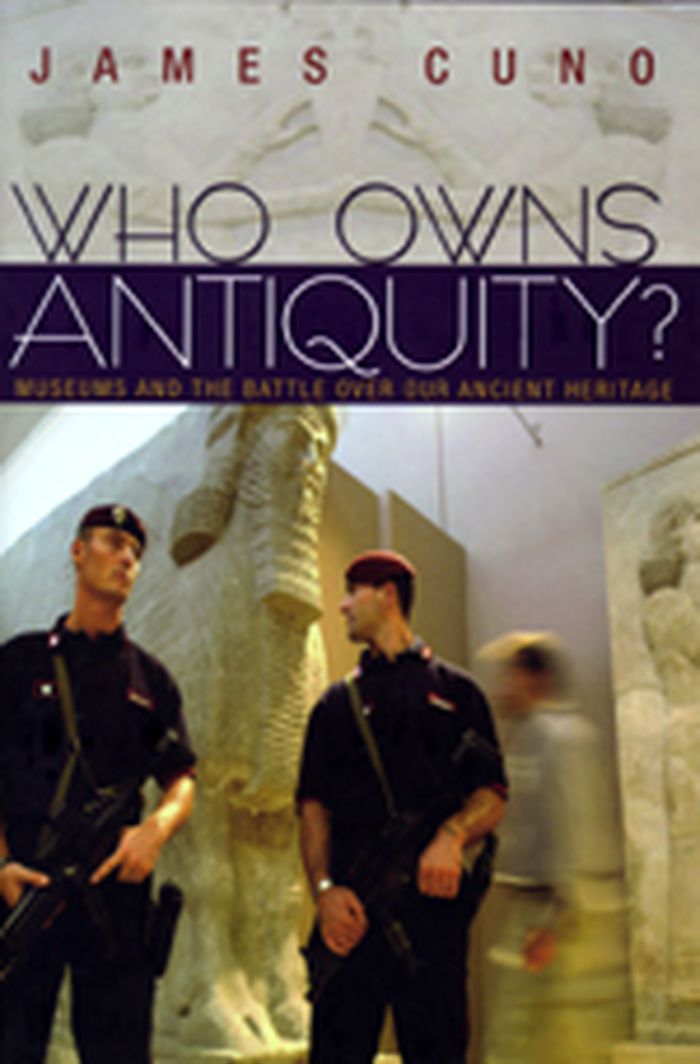
Who owns antiquity?
Who owns antiquity?
Actions:
Price:
$24.95
(available to order)
Summary:
Whether antiquities should be returned to the countries where they were found is one of the most urgent and controversial issues in the art world today, and it has pitted museums, private collectors, and dealers against source countries, archaeologists, and academics. Maintaining that the acquisition of undocumented antiquities by museums encourages the looting of(...)
$24.95
(available to order)
Summary:
Whether antiquities should be returned to the countries where they were found is one of the most urgent and controversial issues in the art world today, and it has pitted museums, private collectors, and dealers against source countries, archaeologists, and academics. Maintaining that the acquisition of undocumented antiquities by museums encourages the looting of(...)
Title:
Who owns antiquity?
Actions:
Price:
$24.95
(available to order)
Summary:
Whether antiquities should be returned to the countries where they were found is one of the most urgent and controversial issues in the art world today, and it has pitted museums, private collectors, and dealers against source countries, archaeologists, and academics. Maintaining that the acquisition of undocumented antiquities by museums encourages the looting of archaeological sites, countries such as Italy, Greece, Egypt, Turkey, and China have claimed ancient artifacts as state property, called for their return from museums around the world, and passed laws against their future export. But in Who Owns Antiquity?, one of the world's leading museum directors vigorously challenges this nationalistic position, arguing that it is damaging and often disingenuous. "Antiquities," James Cuno argues, "are the cultural property of all humankind," "evidence of the world's ancient past and not that of a particular modern nation. They comprise antiquity, and antiquity knows no borders." Cuno argues that nationalistic retention and reclamation policies impede common access to this common heritage and encourage a dubious and dangerous politicization of antiquities--and of culture itself. Antiquities need to be protected from looting but also from nationalistic identity politics. To do this, Cuno calls for measures to broaden rather than restrict international access to antiquities. He advocates restoration of the system under which source countries would share newly discovered artifacts in exchange for archaeological help, and he argues that museums should again be allowed reasonable ways to acquire undocumented antiquities. The first extended defense of the side of museums in the struggle over antiquities, Who Owns Antiquity? is sure to be as important as it is controversial.
Who owns antiquity?
Actions:
Price:
$24.95
(available to order)
Summary:
Whether antiquities should be returned to the countries where they were found is one of the most urgent and controversial issues in the art world today, and it has pitted museums, private collectors, and dealers against source countries, archaeologists, and academics. Maintaining that the acquisition of undocumented antiquities by museums encourages the looting of archaeological sites, countries such as Italy, Greece, Egypt, Turkey, and China have claimed ancient artifacts as state property, called for their return from museums around the world, and passed laws against their future export. But in Who Owns Antiquity?, one of the world's leading museum directors vigorously challenges this nationalistic position, arguing that it is damaging and often disingenuous. "Antiquities," James Cuno argues, "are the cultural property of all humankind," "evidence of the world's ancient past and not that of a particular modern nation. They comprise antiquity, and antiquity knows no borders." Cuno argues that nationalistic retention and reclamation policies impede common access to this common heritage and encourage a dubious and dangerous politicization of antiquities--and of culture itself. Antiquities need to be protected from looting but also from nationalistic identity politics. To do this, Cuno calls for measures to broaden rather than restrict international access to antiquities. He advocates restoration of the system under which source countries would share newly discovered artifacts in exchange for archaeological help, and he argues that museums should again be allowed reasonable ways to acquire undocumented antiquities. The first extended defense of the side of museums in the struggle over antiquities, Who Owns Antiquity? is sure to be as important as it is controversial.
Form:
books
books
Publication:
May 2008, Princeton, Oxford
May 2008, Princeton, Oxford
Subject:
Museology
Museology
Form:
journals and magazines
journals and magazines
Title:
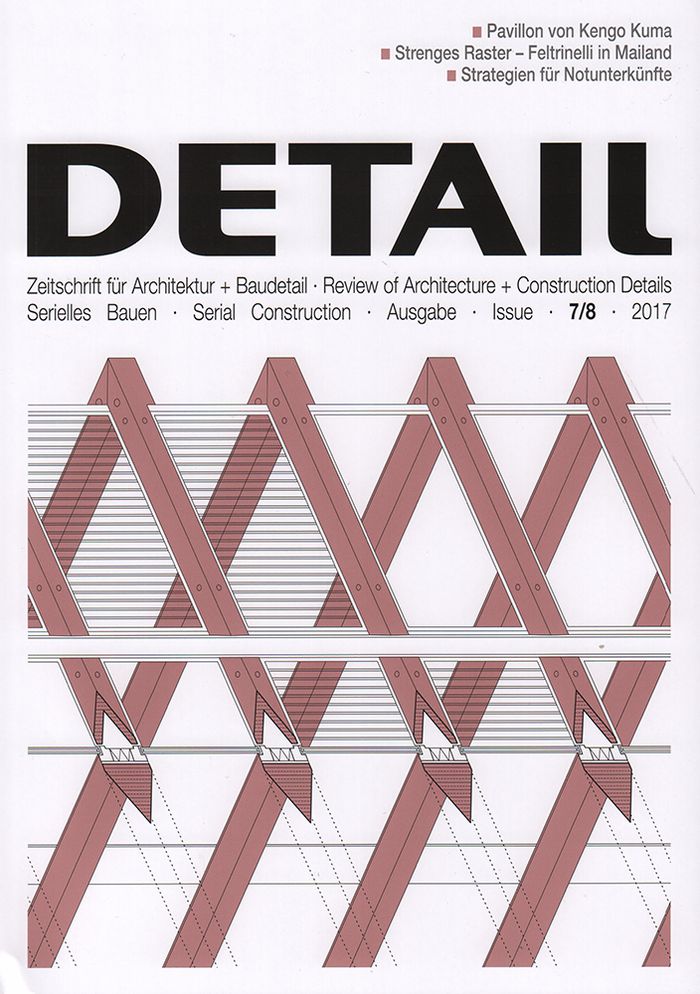
Detail 7/8 2017
Detail 7/8 2017
Actions:
Price:
$32.95
(available to order)
Summary:
The laws of the series. In the 1920s, a group of architects in Milan came together to form a movement that would later be known as Razionalismo. Architecture, they were convinced, must adhere to the rules of reason. They propagated the notion of “pure rhythm”, which was reflected in the repetition of individual elements as a fundamental design principle. Today, the(...)
$32.95
(available to order)
Summary:
The laws of the series. In the 1920s, a group of architects in Milan came together to form a movement that would later be known as Razionalismo. Architecture, they were convinced, must adhere to the rules of reason. They propagated the notion of “pure rhythm”, which was reflected in the repetition of individual elements as a fundamental design principle. Today, the(...)
Title:
Detail 7/8 2017
Actions:
Price:
$32.95
(available to order)
Summary:
The laws of the series. In the 1920s, a group of architects in Milan came together to form a movement that would later be known as Razionalismo. Architecture, they were convinced, must adhere to the rules of reason. They propagated the notion of “pure rhythm”, which was reflected in the repetition of individual elements as a fundamental design principle. Today, the relevance of serial production methods in architecture reach far beyond their significance at the time of Razionalismo. Repetitive structures can not only be found characterising the aesthetic appearance of buildings, they often play a decisive role in complex planning and construction processes, such as in the combination of individual modules or other industrially prefabricated elements. In our July/August issue, we present contemporary buildings that embrace the notion of the series in a variety of ways. For our Documentation section, Burkhard Franke explores examples in which aspects of repetition is used both as a design element and with respect to construction methodologies. A new social housing project by Florian Nagler in Munich, for instance, is a hybrid construction made with prefabricated wood elements. Meanwhile, a student housing complex in Berlin that Holzer Kobler Architekturen built using shipping containers resist any sense of monotony despite their stacked arrangement. For the exemplary French social housing buildings by Poggi & More near Bordeaux and by PPA architectures in Toulouse, modular components likewise contributed to the reduction of construction costs. Are buildings produced according to serial fabrication methods invariably cost effective? In our Technology feature, Frank Kaltenbach has compiled an overview of recent solutions in refugee housing. The majority of them needed to be built within a short time period and under high budgetary constraints. The ways in which serial production methods seem to be predestined for such demanding projects can be discovered in this issue.
Detail 7/8 2017
Actions:
Price:
$32.95
(available to order)
Summary:
The laws of the series. In the 1920s, a group of architects in Milan came together to form a movement that would later be known as Razionalismo. Architecture, they were convinced, must adhere to the rules of reason. They propagated the notion of “pure rhythm”, which was reflected in the repetition of individual elements as a fundamental design principle. Today, the relevance of serial production methods in architecture reach far beyond their significance at the time of Razionalismo. Repetitive structures can not only be found characterising the aesthetic appearance of buildings, they often play a decisive role in complex planning and construction processes, such as in the combination of individual modules or other industrially prefabricated elements. In our July/August issue, we present contemporary buildings that embrace the notion of the series in a variety of ways. For our Documentation section, Burkhard Franke explores examples in which aspects of repetition is used both as a design element and with respect to construction methodologies. A new social housing project by Florian Nagler in Munich, for instance, is a hybrid construction made with prefabricated wood elements. Meanwhile, a student housing complex in Berlin that Holzer Kobler Architekturen built using shipping containers resist any sense of monotony despite their stacked arrangement. For the exemplary French social housing buildings by Poggi & More near Bordeaux and by PPA architectures in Toulouse, modular components likewise contributed to the reduction of construction costs. Are buildings produced according to serial fabrication methods invariably cost effective? In our Technology feature, Frank Kaltenbach has compiled an overview of recent solutions in refugee housing. The majority of them needed to be built within a short time period and under high budgetary constraints. The ways in which serial production methods seem to be predestined for such demanding projects can be discovered in this issue.
Form:
journals and magazines
journals and magazines
Publication:
July 2017
July 2017
Subject:
Magazines
Magazines
Form:
books
books
Actions:
Price:
$58.00
(available to order)
Summary:
Frederick Law Olmsted (1822–1903) is most often remembered as America’s preeminent landscape architect, a profession he named, helped to define, and elevated into an art form in beloved parks and public spaces. Gathering over 100 items—letters, travel sketches, newspaper articles, essays, editorials, design proposals, official reports, and autobiographical(...)
$58.00
(available to order)
Summary:
Frederick Law Olmsted (1822–1903) is most often remembered as America’s preeminent landscape architect, a profession he named, helped to define, and elevated into an art form in beloved parks and public spaces. Gathering over 100 items—letters, travel sketches, newspaper articles, essays, editorials, design proposals, official reports, and autobiographical(...)
Subject:
Landscape Architecture, Monographs
Landscape Architecture, Monographs
Publication:
December 2015
December 2015
Title:
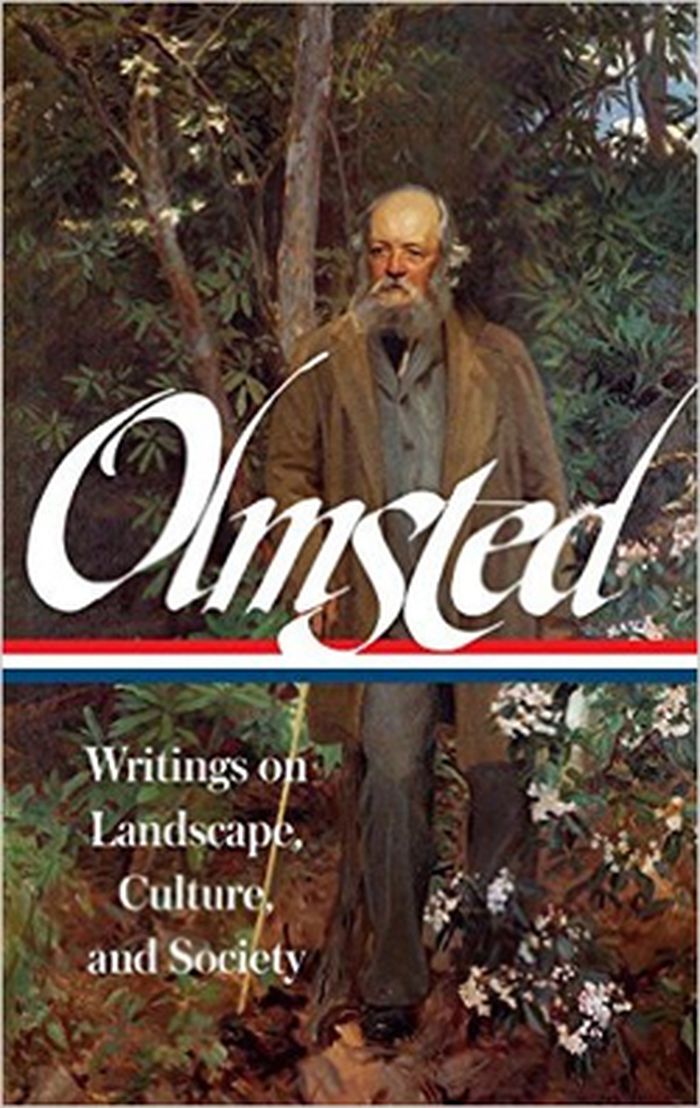
Olmstead: writings on landscape, culture and society
Actions:
Price:
$58.00
(available to order)
Summary:
Frederick Law Olmsted (1822–1903) is most often remembered as America’s preeminent landscape architect, a profession he named, helped to define, and elevated into an art form in beloved parks and public spaces. Gathering over 100 items—letters, travel sketches, newspaper articles, essays, editorials, design proposals, official reports, and autobiographical reminiscences—this volume charts the emergence and development of Olmsted’s vision of restorative public green spaces as an antidote to the debilitating pressures of urbanization and modern life.
Olmstead: writings on landscape, culture and society
Actions:
Price:
$58.00
(available to order)
Summary:
Frederick Law Olmsted (1822–1903) is most often remembered as America’s preeminent landscape architect, a profession he named, helped to define, and elevated into an art form in beloved parks and public spaces. Gathering over 100 items—letters, travel sketches, newspaper articles, essays, editorials, design proposals, official reports, and autobiographical reminiscences—this volume charts the emergence and development of Olmsted’s vision of restorative public green spaces as an antidote to the debilitating pressures of urbanization and modern life.
Form:
books
books
Publication:
December 2015
December 2015
Subject:
Landscape Architecture, Monographs
Landscape Architecture, Monographs
Form:
books
books
Actions:
Price:
$17.95
(available to order)
Summary:
Frederick Law Olmsted (1822-1903) designed New York City's Central Park, Brooklyn's Prospect Park, Chicago's South Park and Jackson Park, Montreal's Mount Royal Park, the park systems of Boston and Buffalo, and many others. But Olmsted's concerns extended beyond the hills and lakes, the flora and fauna of the park: he also designed parkways and neighborhoods, reshaping(...)
$17.95
(available to order)
Summary:
Frederick Law Olmsted (1822-1903) designed New York City's Central Park, Brooklyn's Prospect Park, Chicago's South Park and Jackson Park, Montreal's Mount Royal Park, the park systems of Boston and Buffalo, and many others. But Olmsted's concerns extended beyond the hills and lakes, the flora and fauna of the park: he also designed parkways and neighborhoods, reshaping(...)
Title:
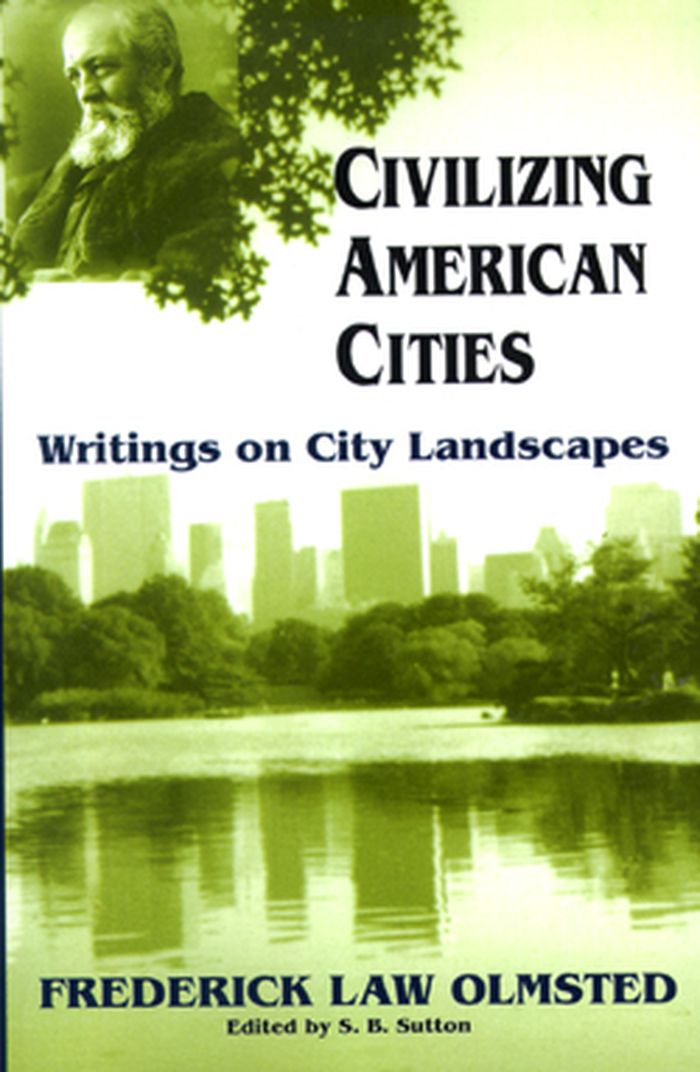
Civilizing american cities: writings on city landscapes
Actions:
Price:
$17.95
(available to order)
Summary:
Frederick Law Olmsted (1822-1903) designed New York City's Central Park, Brooklyn's Prospect Park, Chicago's South Park and Jackson Park, Montreal's Mount Royal Park, the park systems of Boston and Buffalo, and many others. But Olmsted's concerns extended beyond the hills and lakes, the flora and fauna of the park: he also designed parkways and neighborhoods, reshaping cities around their parks. He thus reinvented the American urban landscape as a democratic outdoor setting that encouraged a new kind of participation in city life. Olmsted was one of the most gifted of American writers of his generation: prior to designing Central Park, he had written five important books, including The Cotton Kingdom (an account of his travels in the slave states, also available from Da Capo Press); and his writings on American landscapes are unfailingly lively, eloquent, and passionate. Civilizing American Cities collects Olmsted's plans for New York, San Francisco, Buffalo, Montreal, Chicago, and Boston; his suburban plans for Berkeley, California and Riverside, Illinois; and a generous helping of his writings on urban landscape in general. These selections, expertly edited and introduced, are not only enjoyable but essential reading for anyone interested in the history - and the future - of America's cities.
Civilizing american cities: writings on city landscapes
Actions:
Price:
$17.95
(available to order)
Summary:
Frederick Law Olmsted (1822-1903) designed New York City's Central Park, Brooklyn's Prospect Park, Chicago's South Park and Jackson Park, Montreal's Mount Royal Park, the park systems of Boston and Buffalo, and many others. But Olmsted's concerns extended beyond the hills and lakes, the flora and fauna of the park: he also designed parkways and neighborhoods, reshaping cities around their parks. He thus reinvented the American urban landscape as a democratic outdoor setting that encouraged a new kind of participation in city life. Olmsted was one of the most gifted of American writers of his generation: prior to designing Central Park, he had written five important books, including The Cotton Kingdom (an account of his travels in the slave states, also available from Da Capo Press); and his writings on American landscapes are unfailingly lively, eloquent, and passionate. Civilizing American Cities collects Olmsted's plans for New York, San Francisco, Buffalo, Montreal, Chicago, and Boston; his suburban plans for Berkeley, California and Riverside, Illinois; and a generous helping of his writings on urban landscape in general. These selections, expertly edited and introduced, are not only enjoyable but essential reading for anyone interested in the history - and the future - of America's cities.
Form:
books
books
Publication:
January 1900, New York
January 1900, New York
Subject:
Gardens
Gardens
Form:
books
books
Actions:
Price:
$49.95
(available to order)
Summary:
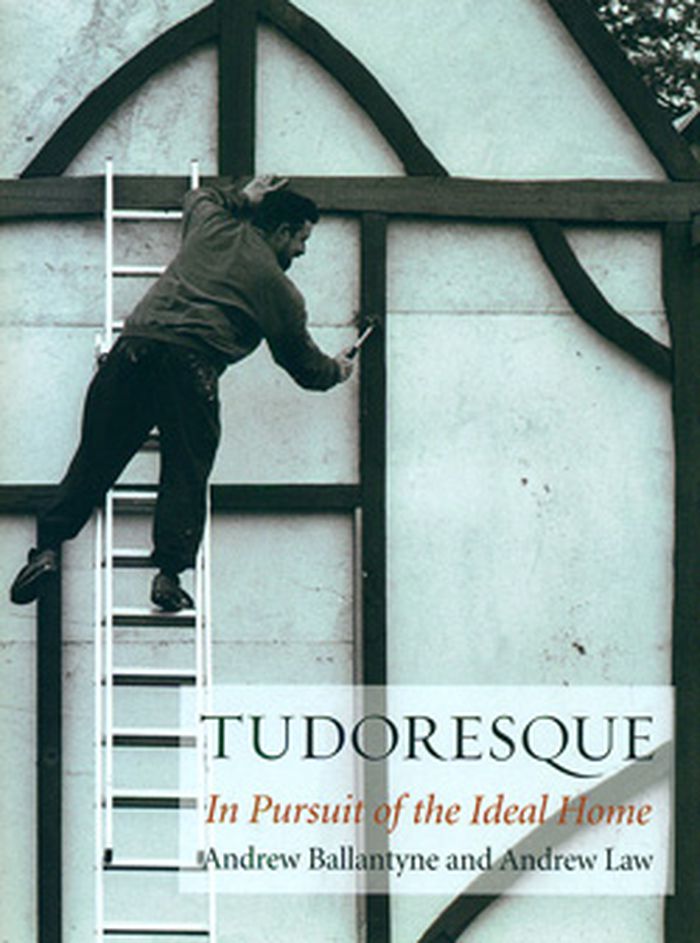
Tudoresque is an insightful book that explores the origin of the style, tracing its roots to the antiquarian enthusiasms of the eighteenth century.Andrew Ballantyne and Andrew Law give a perceptive, knowledgeable history of Tudor-style architecture.
$49.95
(available to order)
Summary:
Tudoresque is an insightful book that explores the origin of the style, tracing its roots to the antiquarian enthusiasms of the eighteenth century.Andrew Ballantyne and Andrew Law give a perceptive, knowledgeable history of Tudor-style architecture.
Publication:
June 2011
June 2011
Title:
Tudoresque: In pursuit of the ideal home
Actions:
Price:
$49.95
(available to order)
Summary:
Tudoresque is an insightful book that explores the origin of the style, tracing its roots to the antiquarian enthusiasms of the eighteenth century.Andrew Ballantyne and Andrew Law give a perceptive, knowledgeable history of Tudor-style architecture.
Tudoresque: In pursuit of the ideal home
Actions:
Price:
$49.95
(available to order)
Summary:
Tudoresque is an insightful book that explores the origin of the style, tracing its roots to the antiquarian enthusiasms of the eighteenth century.Andrew Ballantyne and Andrew Law give a perceptive, knowledgeable history of Tudor-style architecture.
Form:
books
books
Publication:
June 2011
June 2011
Form:
audio
audio
Title:
Falsetto.
Falsetto.
Actions:
Description:
1 online resource.
Author:
Subject:
Publication:
[Place of publication not identified] : Lateral Addition, 2017.
[Place of publication not identified] : Lateral Addition, 2017.
Form:
audio
audio
Publication:
[Place of publication not identified] : Lateral Addition, 2017.
[Place of publication not identified] : Lateral Addition, 2017.
Author:
Subject:
Form:
journals and magazines
journals and magazines
Actions:
Description:
1 online resource
Author:
Subject:
Publication:
Baltimore, Md. : American Political Science Association, 1906-, New York, NY : Cambridge University Press
Baltimore, Md. : American Political Science Association, 1906-, New York, NY : Cambridge University Press
Form:
journals and magazines
journals and magazines
Publication:
Baltimore, Md. : American Political Science Association, 1906-, New York, NY : Cambridge University Press
Baltimore, Md. : American Political Science Association, 1906-, New York, NY : Cambridge University Press
Author:
Subject:


