


3836 Results
Form:
books
books
Actions:
Price:
$94.00
(available to order)
Summary:
On the occasion of the exhibition "Archilab 2006" dedicated to the Japenese architecture and entitled "Nested in the city", Hyx publish the catalog of the exhibition in french and english version. They present all the projects of thirty invited architects and a set of critical texts which put in perspective the stakes and the subjects of the exhibition. More than any(...)
$94.00
(available to order)
Summary:
On the occasion of the exhibition "Archilab 2006" dedicated to the Japenese architecture and entitled "Nested in the city", Hyx publish the catalog of the exhibition in french and english version. They present all the projects of thirty invited architects and a set of critical texts which put in perspective the stakes and the subjects of the exhibition. More than any(...)
Publication:
October 2006, Orléans
October 2006, Orléans
Title:
Archilab Japan, Orléans 2006 : nested in the city
Actions:
Price:
$94.00
(available to order)
Summary:
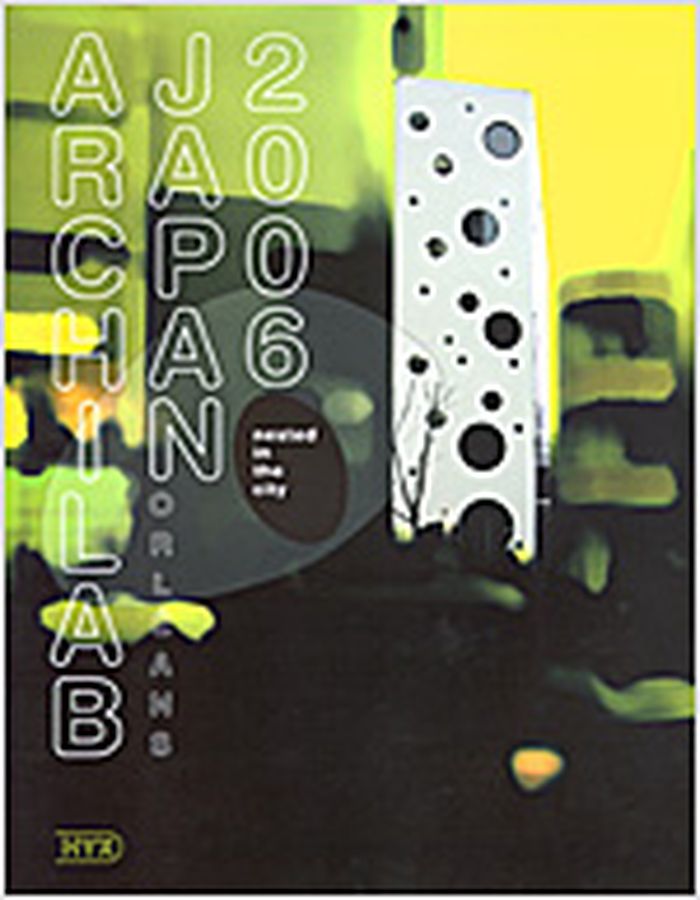
On the occasion of the exhibition "Archilab 2006" dedicated to the Japenese architecture and entitled "Nested in the city", Hyx publish the catalog of the exhibition in french and english version. They present all the projects of thirty invited architects and a set of critical texts which put in perspective the stakes and the subjects of the exhibition. More than any other country, Japan was interested at home, the space domesticates being perceived as a space privileging the thought. Hundred of projects presented in the catalog are built for the greater part. Selected by both curators (Akira Suzuki and Mariko Terada), they offer us a panorama of this architects' new generation which began in the 1990s. The most famous in France are doubtless Shigeru Ban presented to Archilab in 1999 and which was the first one to make approve tubes cardboard as support of his houses and also Kasujo Sejima who saw confiding with Ryue Nishizawa the construction of the Museum of the Louvre to Lens. Symbolic Bow Wow workshop is the Leader of this new generation. After the economic crisis of the end of the 90s, the construction of public establishments of average dimension and the competitions of architecture rarefied. The house thus becomes the space of creation privileged for these architects. That's why, in Tokyo, Jun Aoki, Kazuyo Sejima, Ryue Nishizawa, Takaharu and Yui Tezuka, Mitsuhiko Sato, Taira Nishizawa, Masao Koizumi, Yasuhiro Yamashita, Mikio Tai, Yuki Ishiguro, conceive small houses which embody the way of life of their inhabitants and maybe our future today.
Archilab Japan, Orléans 2006 : nested in the city
Actions:
Price:
$94.00
(available to order)
Summary:
On the occasion of the exhibition "Archilab 2006" dedicated to the Japenese architecture and entitled "Nested in the city", Hyx publish the catalog of the exhibition in french and english version. They present all the projects of thirty invited architects and a set of critical texts which put in perspective the stakes and the subjects of the exhibition. More than any other country, Japan was interested at home, the space domesticates being perceived as a space privileging the thought. Hundred of projects presented in the catalog are built for the greater part. Selected by both curators (Akira Suzuki and Mariko Terada), they offer us a panorama of this architects' new generation which began in the 1990s. The most famous in France are doubtless Shigeru Ban presented to Archilab in 1999 and which was the first one to make approve tubes cardboard as support of his houses and also Kasujo Sejima who saw confiding with Ryue Nishizawa the construction of the Museum of the Louvre to Lens. Symbolic Bow Wow workshop is the Leader of this new generation. After the economic crisis of the end of the 90s, the construction of public establishments of average dimension and the competitions of architecture rarefied. The house thus becomes the space of creation privileged for these architects. That's why, in Tokyo, Jun Aoki, Kazuyo Sejima, Ryue Nishizawa, Takaharu and Yui Tezuka, Mitsuhiko Sato, Taira Nishizawa, Masao Koizumi, Yasuhiro Yamashita, Mikio Tai, Yuki Ishiguro, conceive small houses which embody the way of life of their inhabitants and maybe our future today.
Form:
books
books
Publication:
October 2006, Orléans
October 2006, Orléans
Form:
books
books
Price:
$49.95
(available to order)
Summary:
"Last Landscapes" is an exploration of the cult and celebration of death, loss and memory. It traces the history and design of burial places throughout Europe and the USA, ranging from the picturesque tradition of the village churchyard to tightly packed ‘cities of the dead’, such as the Jewish Cemetery in Prague and Père Lachaise in Paris. Other landscapes that feature(...)
$49.95
(available to order)
Summary:
"Last Landscapes" is an exploration of the cult and celebration of death, loss and memory. It traces the history and design of burial places throughout Europe and the USA, ranging from the picturesque tradition of the village churchyard to tightly packed ‘cities of the dead’, such as the Jewish Cemetery in Prague and Père Lachaise in Paris. Other landscapes that feature(...)
Title:
Last landscapes : the architecture of the cemetery in the west
Actions:
Price:
$49.95
(available to order)
Summary:
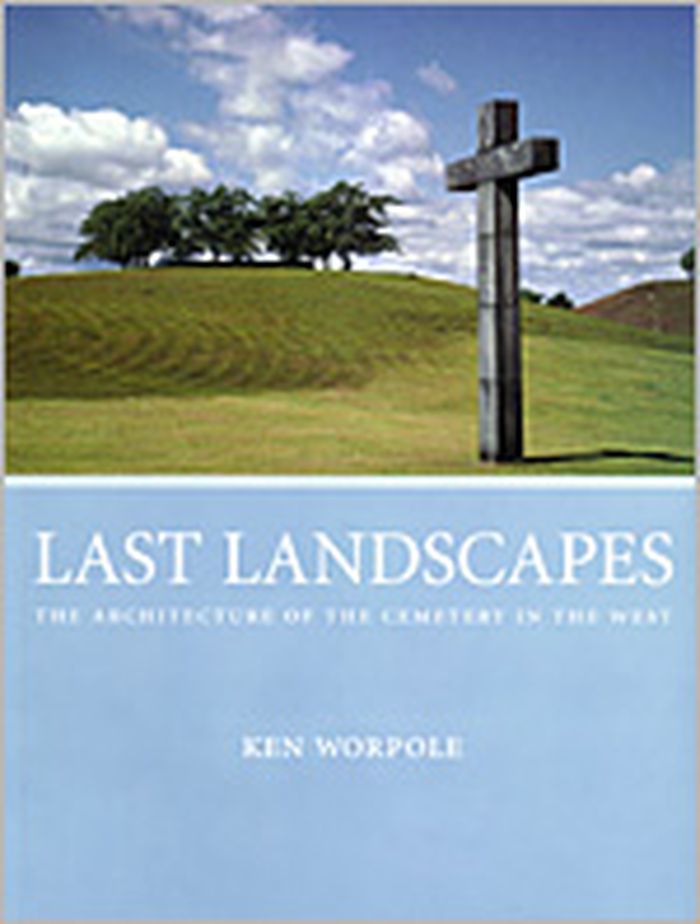
"Last Landscapes" is an exploration of the cult and celebration of death, loss and memory. It traces the history and design of burial places throughout Europe and the USA, ranging from the picturesque tradition of the village churchyard to tightly packed ‘cities of the dead’, such as the Jewish Cemetery in Prague and Père Lachaise in Paris. Other landscapes that feature in this book include the war cemeteries of northern France, Viking burial islands in central Sweden, Etruscan tombs and early Christian catacombs in Italy, the 17th-century Portuguese–Jewish cemetery 'Beth Haim' at Ouderkerk in the Netherlands, Forest Lawns in California, Derek Jarman’s garden in Kent and the Stockholm Woodland Cemetery. It is a fact that architecture ‘began with the tomb', yet, as Ken Worpole shows us in Last Landscapes, many historic cemeteries have been demolished or abandoned in recent times (notably the case with Jewish cemeteries in Eastern Europe), and there has been an increasing loss of inscription and memorialization in the modern urban cemetery. Too often cemeteries today are both poorly designed and physically and culturally marginalized. Worse, cremation denies a full architectural response to the mystery and solemnity of death. The author explores how modes of disposal – burial, cremation, inhumation in mausoleums and wall tombs – vary across Europe and North America, according to religious and other cultural influences. And Last Landscapes raises profound questions as to how, in an age of mass cremation, architects and landscape designers might create meaningful structures and settings in the absence of a body, since for most of history the human body itself has provided the fundamental structural scale. This evocative book also contemplates other forms of memorialization within modern societies, from sculptures to parks, most notably the extraordinary Duisberg Park, set in a former giant steelworks in Germany’s Ruhr Valley.
Last landscapes : the architecture of the cemetery in the west
Actions:
Price:
$49.95
(available to order)
Summary:
"Last Landscapes" is an exploration of the cult and celebration of death, loss and memory. It traces the history and design of burial places throughout Europe and the USA, ranging from the picturesque tradition of the village churchyard to tightly packed ‘cities of the dead’, such as the Jewish Cemetery in Prague and Père Lachaise in Paris. Other landscapes that feature in this book include the war cemeteries of northern France, Viking burial islands in central Sweden, Etruscan tombs and early Christian catacombs in Italy, the 17th-century Portuguese–Jewish cemetery 'Beth Haim' at Ouderkerk in the Netherlands, Forest Lawns in California, Derek Jarman’s garden in Kent and the Stockholm Woodland Cemetery. It is a fact that architecture ‘began with the tomb', yet, as Ken Worpole shows us in Last Landscapes, many historic cemeteries have been demolished or abandoned in recent times (notably the case with Jewish cemeteries in Eastern Europe), and there has been an increasing loss of inscription and memorialization in the modern urban cemetery. Too often cemeteries today are both poorly designed and physically and culturally marginalized. Worse, cremation denies a full architectural response to the mystery and solemnity of death. The author explores how modes of disposal – burial, cremation, inhumation in mausoleums and wall tombs – vary across Europe and North America, according to religious and other cultural influences. And Last Landscapes raises profound questions as to how, in an age of mass cremation, architects and landscape designers might create meaningful structures and settings in the absence of a body, since for most of history the human body itself has provided the fundamental structural scale. This evocative book also contemplates other forms of memorialization within modern societies, from sculptures to parks, most notably the extraordinary Duisberg Park, set in a former giant steelworks in Germany’s Ruhr Valley.
Form:
books
books
Publication:
June 2003, London
June 2003, London
Subject:
Gardens
Gardens
Form:
books
books
Actions:
Price:
$65.95
(available to order)
Summary:
Planting design is, rather obviously, a complex topic, spanning as it does art, science, social need, and morality?especially during these days of increasing planetary environmental threat. Although certainly not denying the importance of scientifically appropriate practices, the symposium “The Aesthetics of [Contemporary] Planting Design” addressed planting design today,(...)
$65.95
(available to order)
Summary:
Planting design is, rather obviously, a complex topic, spanning as it does art, science, social need, and morality?especially during these days of increasing planetary environmental threat. Although certainly not denying the importance of scientifically appropriate practices, the symposium “The Aesthetics of [Contemporary] Planting Design” addressed planting design today,(...)
Title:
The aesthetics of contemporary planting design
Actions:
Price:
$65.95
(available to order)
Summary:
Planting design is, rather obviously, a complex topic, spanning as it does art, science, social need, and morality?especially during these days of increasing planetary environmental threat. Although certainly not denying the importance of scientifically appropriate practices, the symposium “The Aesthetics of [Contemporary] Planting Design” addressed planting design today, proposing a renewed concern for the cultural and aesthetic aspects of the landscapes that result. This book, which has been developed from the original presentations at the symposium, presents the thoughts of a select international group of landscape architects and historians who discuss the subject of planting design through the lens of their own work as well as the work of others, both contemporary and historical. They suggest that, as in real estate, the most important factor in selecting plants is “location, location, location.” Certainly the Californian situation is far more forgiving than the aridity and other restrictive environmental conditions endemic to the Sonoran desert, or the frost and short growing seasons of Nordic lands that direct Scandinavian landscape architects to rely on native birches, pines, rowan, and moss. Most of us would agree that there are plants sensible for each climatic zone. Addressing environmental conditions is but the first step in the equation, however. There are also the issues of combination and composition.
The aesthetics of contemporary planting design
Actions:
Price:
$65.95
(available to order)
Summary:
Planting design is, rather obviously, a complex topic, spanning as it does art, science, social need, and morality?especially during these days of increasing planetary environmental threat. Although certainly not denying the importance of scientifically appropriate practices, the symposium “The Aesthetics of [Contemporary] Planting Design” addressed planting design today, proposing a renewed concern for the cultural and aesthetic aspects of the landscapes that result. This book, which has been developed from the original presentations at the symposium, presents the thoughts of a select international group of landscape architects and historians who discuss the subject of planting design through the lens of their own work as well as the work of others, both contemporary and historical. They suggest that, as in real estate, the most important factor in selecting plants is “location, location, location.” Certainly the Californian situation is far more forgiving than the aridity and other restrictive environmental conditions endemic to the Sonoran desert, or the frost and short growing seasons of Nordic lands that direct Scandinavian landscape architects to rely on native birches, pines, rowan, and moss. Most of us would agree that there are plants sensible for each climatic zone. Addressing environmental conditions is but the first step in the equation, however. There are also the issues of combination and composition.
Form:
books
books
Publication:
September 2021
September 2021
Subject:
Gardens
Gardens
Form:
books
books
Price:
$51.50
(available in store)
Summary:
The city of Homs, like so many places in Syria, has suffered mass destruction since the war began in 2011. So far, the architectural response to the crisis has focused on ''cultural heritage'', ancient architecture, and the external displacement of refugees, often neglecting the everyday lives of Syrians and the buildings that make up their homes and communities. In(...)
$51.50
(available in store)
Summary:
The city of Homs, like so many places in Syria, has suffered mass destruction since the war began in 2011. So far, the architectural response to the crisis has focused on ''cultural heritage'', ancient architecture, and the external displacement of refugees, often neglecting the everyday lives of Syrians and the buildings that make up their homes and communities. In(...)
Title:
Domicide: Architecture, war and the destruction of home in Syria
Actions:
Price:
$51.50
(available in store)
Summary:
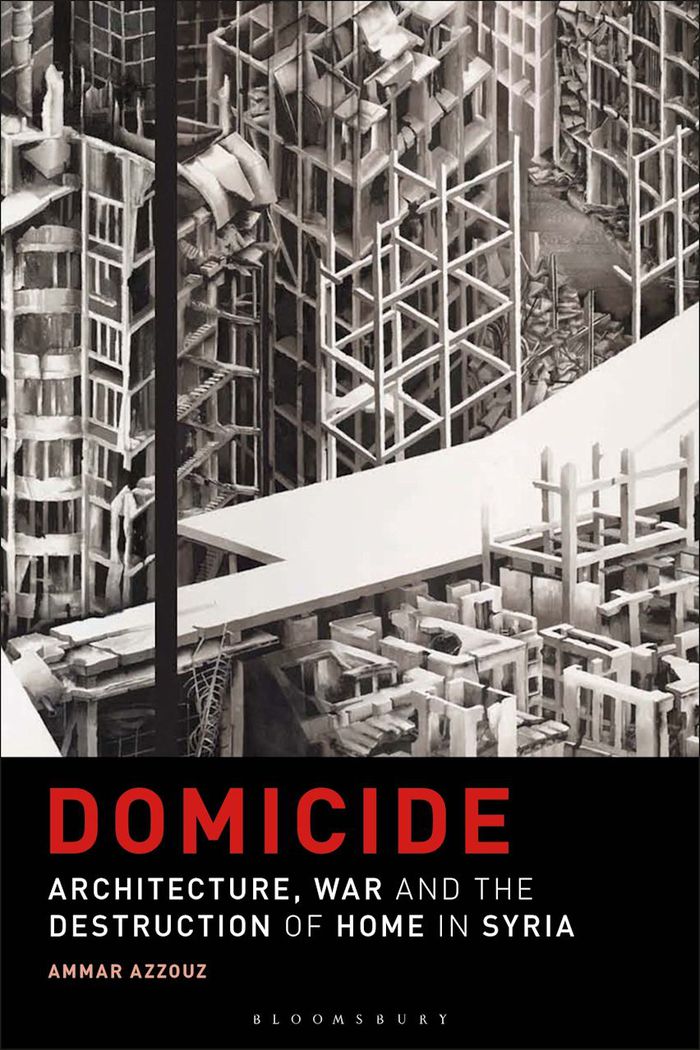
The city of Homs, like so many places in Syria, has suffered mass destruction since the war began in 2011. So far, the architectural response to the crisis has focused on ''cultural heritage'', ancient architecture, and the external displacement of refugees, often neglecting the everyday lives of Syrians and the buildings that make up their homes and communities. In ''Domicide'', Ammar Azzouz uses the notion of the 'home' to address the destruction in cities like Homs, the displacement of Syrian people both externally and internally, and to explore how cities can be rebuilt without causing further damage to the communities that live there. Drawing on interviews with those working in the built environment professions, both inside and outside of Syria, but also Syrians from other backgrounds who have become architects in their own way as they were forced to repair and rebuild their homes by themselves, Domicide offers fresh insight into the role of the architect during time of war, and explores how the future reconstruction of cities should mirror the wants and needs, the traditions and ways of living, of local communities. Focusing on Homs but offering a blueprint for other urban areas of conflict across Syria and the wider world, the book is essential reading for researchers in architecture, urban planning, heritage studies and conflict studies.
Domicide: Architecture, war and the destruction of home in Syria
Actions:
Price:
$51.50
(available in store)
Summary:
The city of Homs, like so many places in Syria, has suffered mass destruction since the war began in 2011. So far, the architectural response to the crisis has focused on ''cultural heritage'', ancient architecture, and the external displacement of refugees, often neglecting the everyday lives of Syrians and the buildings that make up their homes and communities. In ''Domicide'', Ammar Azzouz uses the notion of the 'home' to address the destruction in cities like Homs, the displacement of Syrian people both externally and internally, and to explore how cities can be rebuilt without causing further damage to the communities that live there. Drawing on interviews with those working in the built environment professions, both inside and outside of Syria, but also Syrians from other backgrounds who have become architects in their own way as they were forced to repair and rebuild their homes by themselves, Domicide offers fresh insight into the role of the architect during time of war, and explores how the future reconstruction of cities should mirror the wants and needs, the traditions and ways of living, of local communities. Focusing on Homs but offering a blueprint for other urban areas of conflict across Syria and the wider world, the book is essential reading for researchers in architecture, urban planning, heritage studies and conflict studies.
Form:
books
books
Publication:
January 2025
January 2025
Subject:
Architectural Theory
Architectural Theory
Form:
books
books
Actions:
Price:
$50.00
(available to order)
Summary:
"The Eyes of the Skin" has become a classic of architectural theory and consists of two extended essays. The first surveys the historical development of the ocular-centric paradigm in western culture since the Greeks and its impact on the experience of the world and the nature of architecture. The second examines the role of the other senses in authentic architectural(...)
$50.00
(available to order)
Summary:
"The Eyes of the Skin" has become a classic of architectural theory and consists of two extended essays. The first surveys the historical development of the ocular-centric paradigm in western culture since the Greeks and its impact on the experience of the world and the nature of architecture. The second examines the role of the other senses in authentic architectural(...)
Title:
The eyes of the skin : architecture and the senses
Actions:
Price:
$50.00
(available to order)
Summary:
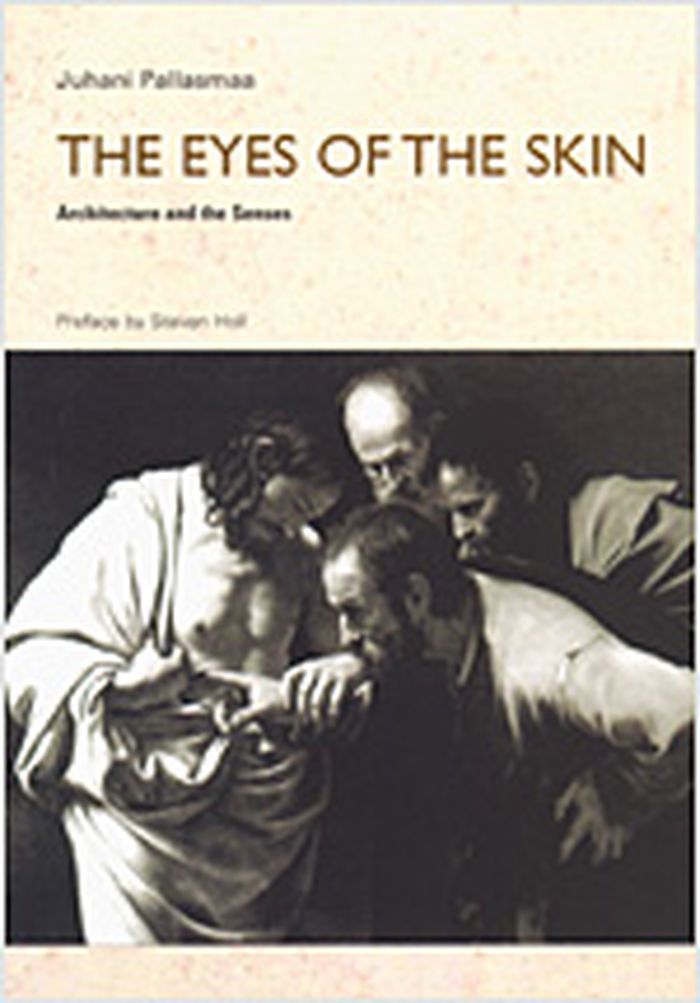
"The Eyes of the Skin" has become a classic of architectural theory and consists of two extended essays. The first surveys the historical development of the ocular-centric paradigm in western culture since the Greeks and its impact on the experience of the world and the nature of architecture. The second examines the role of the other senses in authentic architectural experiences, and points the way towards a multi-sensory architecture which facilitates a sense of belonging and integration. Since the book's first publication, interest in the role of the body and the senses has been emerging in both architectural philosophy and teaching. This new, revised and extended edition of this seminal work will not only inspire architects and students to design more holistic architecture, but will enrich the general reader's perception of the world around them. Preface by Steven Holl.
The eyes of the skin : architecture and the senses
Actions:
Price:
$50.00
(available to order)
Summary:
"The Eyes of the Skin" has become a classic of architectural theory and consists of two extended essays. The first surveys the historical development of the ocular-centric paradigm in western culture since the Greeks and its impact on the experience of the world and the nature of architecture. The second examines the role of the other senses in authentic architectural experiences, and points the way towards a multi-sensory architecture which facilitates a sense of belonging and integration. Since the book's first publication, interest in the role of the body and the senses has been emerging in both architectural philosophy and teaching. This new, revised and extended edition of this seminal work will not only inspire architects and students to design more holistic architecture, but will enrich the general reader's perception of the world around them. Preface by Steven Holl.
Form:
books
books
Publication:
April 2005, Chichester, England
April 2005, Chichester, England
Subject:
Architectural Theory
Architectural Theory
Form:
books
books
Actions:
Price:
$45.00
(available to order)
Summary:
"The ecological engineer" is a new book series that celebrates the most innovative engineers in North America and the practices and principles that they use to produce structures, systems and technologies, in a way that embraces the emerging philosophy of sustainable design. Organized into three critical sections – practice, principles and projects – the book provides a(...)
$45.00
(available to order)
Summary:
"The ecological engineer" is a new book series that celebrates the most innovative engineers in North America and the practices and principles that they use to produce structures, systems and technologies, in a way that embraces the emerging philosophy of sustainable design. Organized into three critical sections – practice, principles and projects – the book provides a(...)
Subject:
Green Architecture
Green Architecture
Publication:
October 2005, Kansas City
October 2005, Kansas City
Title:
The ecological engineer, volume one : keen engineering
Actions:
Price:
$45.00
(available to order)
Summary:
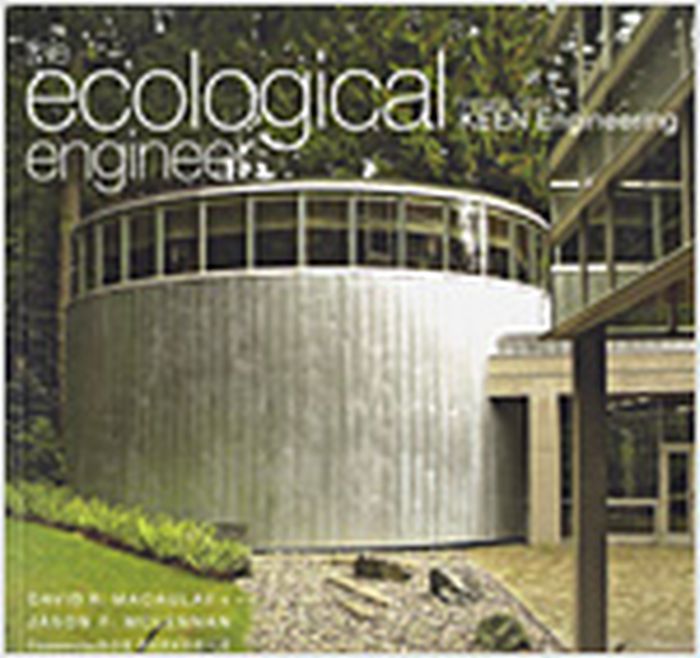
"The ecological engineer" is a new book series that celebrates the most innovative engineers in North America and the practices and principles that they use to produce structures, systems and technologies, in a way that embraces the emerging philosophy of sustainable design. Organized into three critical sections – practice, principles and projects – the book provides a valuable resource and touchstone for engineers, architects and other building professionals who hope to embrace an ethic that is responsible to both people and the environment. "Volume one: keen engineering" focuses on the work of one of the sustainable MEP firms in North America – KEEN Engineering. As mechanical, electrical and plumbing engineers who work on projects all over the continent, they have consistently been inspiring on multiple levels – as a company, as individuals and just by the sheer volume and quality of their work.
The ecological engineer, volume one : keen engineering
Actions:
Price:
$45.00
(available to order)
Summary:
"The ecological engineer" is a new book series that celebrates the most innovative engineers in North America and the practices and principles that they use to produce structures, systems and technologies, in a way that embraces the emerging philosophy of sustainable design. Organized into three critical sections – practice, principles and projects – the book provides a valuable resource and touchstone for engineers, architects and other building professionals who hope to embrace an ethic that is responsible to both people and the environment. "Volume one: keen engineering" focuses on the work of one of the sustainable MEP firms in North America – KEEN Engineering. As mechanical, electrical and plumbing engineers who work on projects all over the continent, they have consistently been inspiring on multiple levels – as a company, as individuals and just by the sheer volume and quality of their work.
Form:
books
books
Publication:
October 2005, Kansas City
October 2005, Kansas City
Subject:
Green Architecture
Green Architecture
Form:
books
books
Title:
A-Frame: New concept
A-Frame: New concept
Actions:
Price:
$41.95
(available in store)
Summary:
A-Frame constructions emerged in the mid-20th century and have been forgotten for decades. In recent years we are seeing how the spirit of A-Frame style houses is gradually being revived by avant-garde architects who have adapted this approach to more modern times. It is not uncommon nowadays to find examples of modern houses with A-Frame architecture as a hallmark in(...)
$41.95
(available in store)
Summary:
A-Frame constructions emerged in the mid-20th century and have been forgotten for decades. In recent years we are seeing how the spirit of A-Frame style houses is gradually being revived by avant-garde architects who have adapted this approach to more modern times. It is not uncommon nowadays to find examples of modern houses with A-Frame architecture as a hallmark in(...)
Title:
A-Frame: New concept
Actions:
Price:
$41.95
(available in store)
Summary:
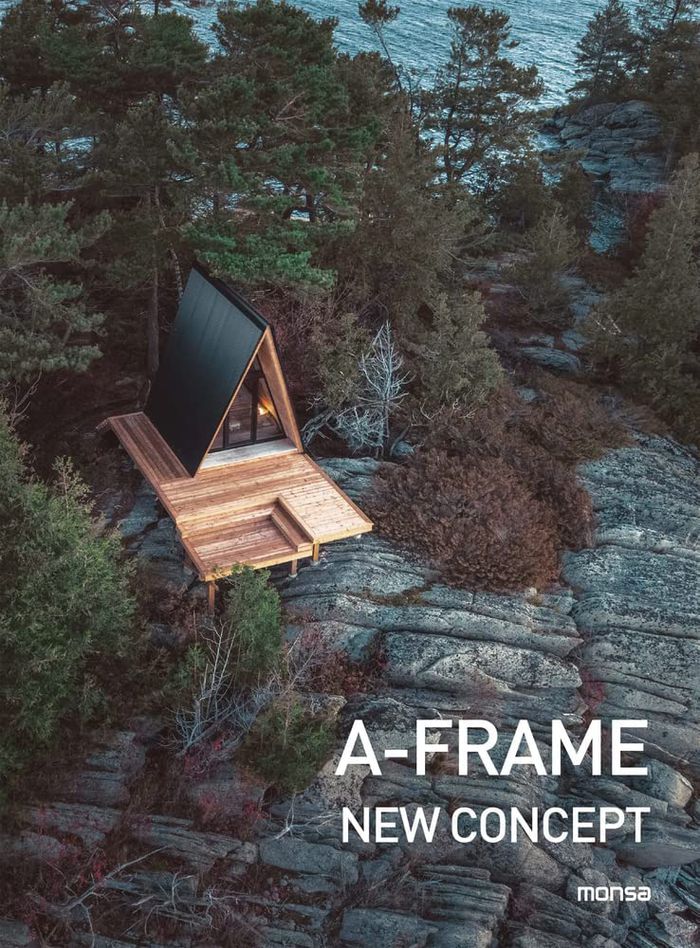
A-Frame constructions emerged in the mid-20th century and have been forgotten for decades. In recent years we are seeing how the spirit of A-Frame style houses is gradually being revived by avant-garde architects who have adapted this approach to more modern times. It is not uncommon nowadays to find examples of modern houses with A-Frame architecture as a hallmark in leading design magazines. This type of construction stands out for its structural simplicity, which in most cases reduces costs, and also for its great capacity for thermal and acoustic insulation, greater speed of construction, elimination of the need for columns, greater strength and structural consistency, among many other benefits. A-Frame homes have a better environmental impact due to energy savings in both construction and utility costs, not to mention a smaller carbon footprint for the environment.
A-Frame: New concept
Actions:
Price:
$41.95
(available in store)
Summary:
A-Frame constructions emerged in the mid-20th century and have been forgotten for decades. In recent years we are seeing how the spirit of A-Frame style houses is gradually being revived by avant-garde architects who have adapted this approach to more modern times. It is not uncommon nowadays to find examples of modern houses with A-Frame architecture as a hallmark in leading design magazines. This type of construction stands out for its structural simplicity, which in most cases reduces costs, and also for its great capacity for thermal and acoustic insulation, greater speed of construction, elimination of the need for columns, greater strength and structural consistency, among many other benefits. A-Frame homes have a better environmental impact due to energy savings in both construction and utility costs, not to mention a smaller carbon footprint for the environment.
Form:
books
books
Publication:
January 2024
January 2024
Subject:
Residential Architecture
Residential Architecture
Form:
books
books
Price:
$57.00
(available to order)
Summary:
In 2006, Amsterdam's 66 East: Centre for Urban Culture organized a project in which artists and architects--including Theo Baart, Bas Princen, Ralph Kämena, Jannes Linders, Jeroen Musch and Hans Werlemann--examined Amsterdam's predominately Arabic and Turkish neighborhood, Indische Buurt, which had recently become home to studios and offices for the creative sector, often(...)
$57.00
(available to order)
Summary:
In 2006, Amsterdam's 66 East: Centre for Urban Culture organized a project in which artists and architects--including Theo Baart, Bas Princen, Ralph Kämena, Jannes Linders, Jeroen Musch and Hans Werlemann--examined Amsterdam's predominately Arabic and Turkish neighborhood, Indische Buurt, which had recently become home to studios and offices for the creative sector, often(...)
Title:
Houses in transformation: interventions in European gentrification
Actions:
Price:
$57.00
(available to order)
Summary:
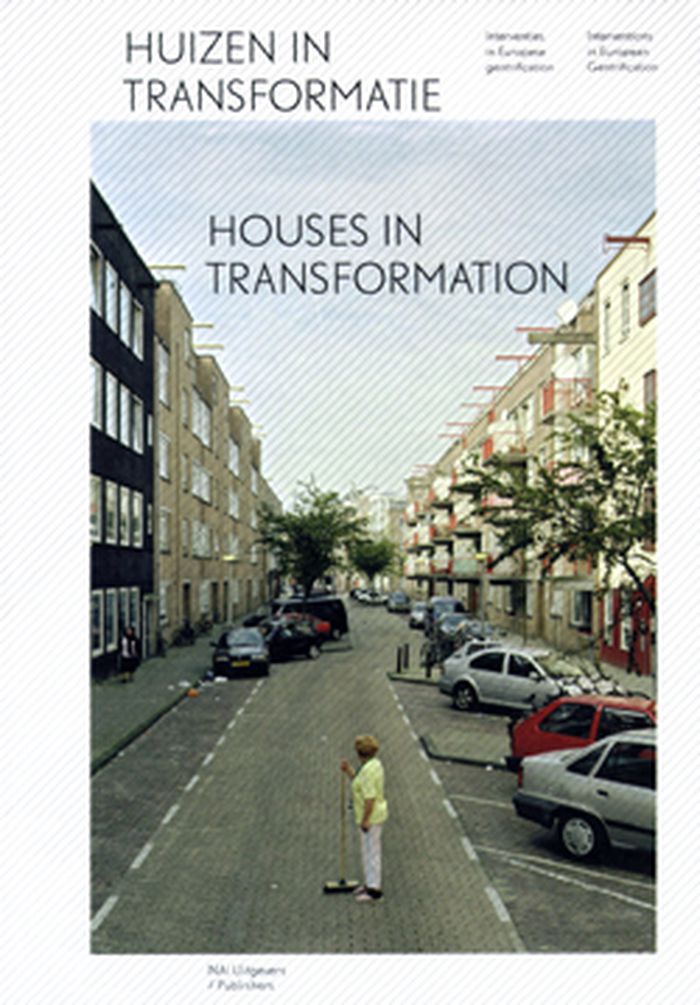
In 2006, Amsterdam's 66 East: Centre for Urban Culture organized a project in which artists and architects--including Theo Baart, Bas Princen, Ralph Kämena, Jannes Linders, Jeroen Musch and Hans Werlemann--examined Amsterdam's predominately Arabic and Turkish neighborhood, Indische Buurt, which had recently become home to studios and offices for the creative sector, often seen as the first step in gentrification. Adopting strategies ranging from critical commentary to activist intervention, the project and subsequent exhibition, Houses of Transformation, posits creative alternatives for urban planners, developers and administrators in responding to the inevitable and ongoing problems of urban renewal. This volume documents these strategies and proposals, while also casting a critical eye on similar neighborhoods in other European cities--including Barcelona, Berlin, Budapest, Brussels and London--putting the unique issues of Dutch gentrification into a larger perspective
Houses in transformation: interventions in European gentrification
Actions:
Price:
$57.00
(available to order)
Summary:
In 2006, Amsterdam's 66 East: Centre for Urban Culture organized a project in which artists and architects--including Theo Baart, Bas Princen, Ralph Kämena, Jannes Linders, Jeroen Musch and Hans Werlemann--examined Amsterdam's predominately Arabic and Turkish neighborhood, Indische Buurt, which had recently become home to studios and offices for the creative sector, often seen as the first step in gentrification. Adopting strategies ranging from critical commentary to activist intervention, the project and subsequent exhibition, Houses of Transformation, posits creative alternatives for urban planners, developers and administrators in responding to the inevitable and ongoing problems of urban renewal. This volume documents these strategies and proposals, while also casting a critical eye on similar neighborhoods in other European cities--including Barcelona, Berlin, Budapest, Brussels and London--putting the unique issues of Dutch gentrification into a larger perspective
Form:
books
books
Publication:
December 2008, Rotterdam
December 2008, Rotterdam
Subject:
Urban Theory
Urban Theory
Form:
books
books
Actions:
Price:
$81.00
(available to order)
Summary:
Charlotte Perriand (1903-1999) was a pioneer of modern design in France during the twentieth century. Her avant-garde vision was expressed in color, organic forms, and streamlined functionality, elements which are still at the heart of contemporary design today. Her furnishings were created from aluminum, rubber, chrome, leather, bamboo, and above all, wood; their appeal(...)
$81.00
(available to order)
Summary:
Charlotte Perriand (1903-1999) was a pioneer of modern design in France during the twentieth century. Her avant-garde vision was expressed in color, organic forms, and streamlined functionality, elements which are still at the heart of contemporary design today. Her furnishings were created from aluminum, rubber, chrome, leather, bamboo, and above all, wood; their appeal(...)
Title:
Charlotte Perriand: inventing a new world
Actions:
Price:
$81.00
(available to order)
Summary:
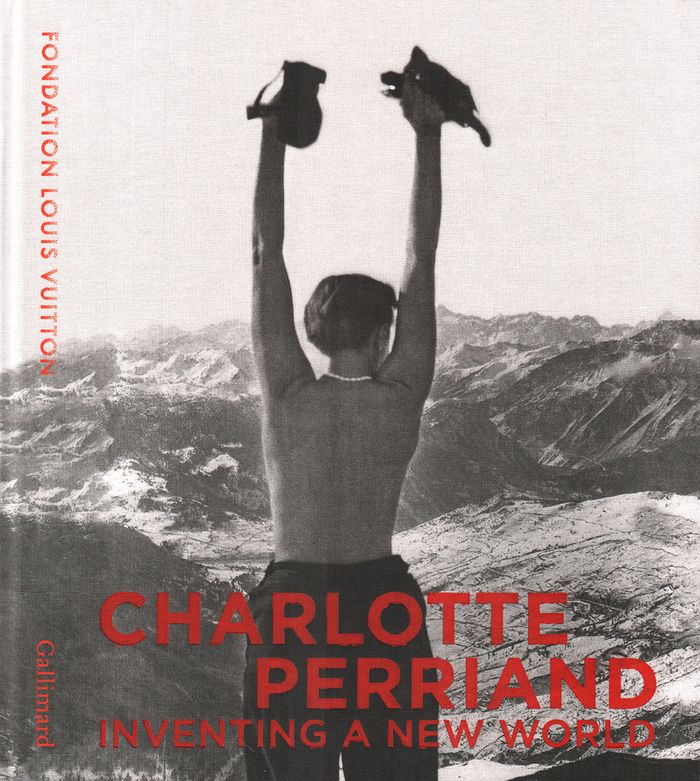
Charlotte Perriand (1903-1999) was a pioneer of modern design in France during the twentieth century. Her avant-garde vision was expressed in color, organic forms, and streamlined functionality, elements which are still at the heart of contemporary design today. Her furnishings were created from aluminum, rubber, chrome, leather, bamboo, and above all, wood; their appeal is timeless. This lavishly illustrated book, accompanying a major retrospective at the Louis Vuitton Foundation in Paris, explores how much in the vanguard she was in her use of materials, in her social and political awareness, and in her collaborations with artists, architects, and other designers. The show presents a global vision of her creativity, talent, and inventiveness, exploring her commitment to women and to a humanist design ethos that took into account the middle and working classes with an emphasis on rationalizing costs and space.
Charlotte Perriand: inventing a new world
Actions:
Price:
$81.00
(available to order)
Summary:
Charlotte Perriand (1903-1999) was a pioneer of modern design in France during the twentieth century. Her avant-garde vision was expressed in color, organic forms, and streamlined functionality, elements which are still at the heart of contemporary design today. Her furnishings were created from aluminum, rubber, chrome, leather, bamboo, and above all, wood; their appeal is timeless. This lavishly illustrated book, accompanying a major retrospective at the Louis Vuitton Foundation in Paris, explores how much in the vanguard she was in her use of materials, in her social and political awareness, and in her collaborations with artists, architects, and other designers. The show presents a global vision of her creativity, talent, and inventiveness, exploring her commitment to women and to a humanist design ethos that took into account the middle and working classes with an emphasis on rationalizing costs and space.
Form:
books
books
Publication:
November 2019
November 2019
Subject:
Design Monographs
Design Monographs
Form:
books
books
Actions:
Price:
$32.95
(available to order)
Summary:
How do contemporary design practices engage with political and societal issues? Can design realize ideas that lead to significant change? Where would the change happen: in the design studio, on the factory floor, in exhibition settings or on the street? Some of the design world’s greatest practitioners, including architects, came together for a multi-faceted, three-year(...)
$32.95
(available to order)
Summary:
How do contemporary design practices engage with political and societal issues? Can design realize ideas that lead to significant change? Where would the change happen: in the design studio, on the factory floor, in exhibition settings or on the street? Some of the design world’s greatest practitioners, including architects, came together for a multi-faceted, three-year(...)
Title:
Design act: socially and politically engaged design today
Actions:
Price:
$32.95
(available to order)
Summary:
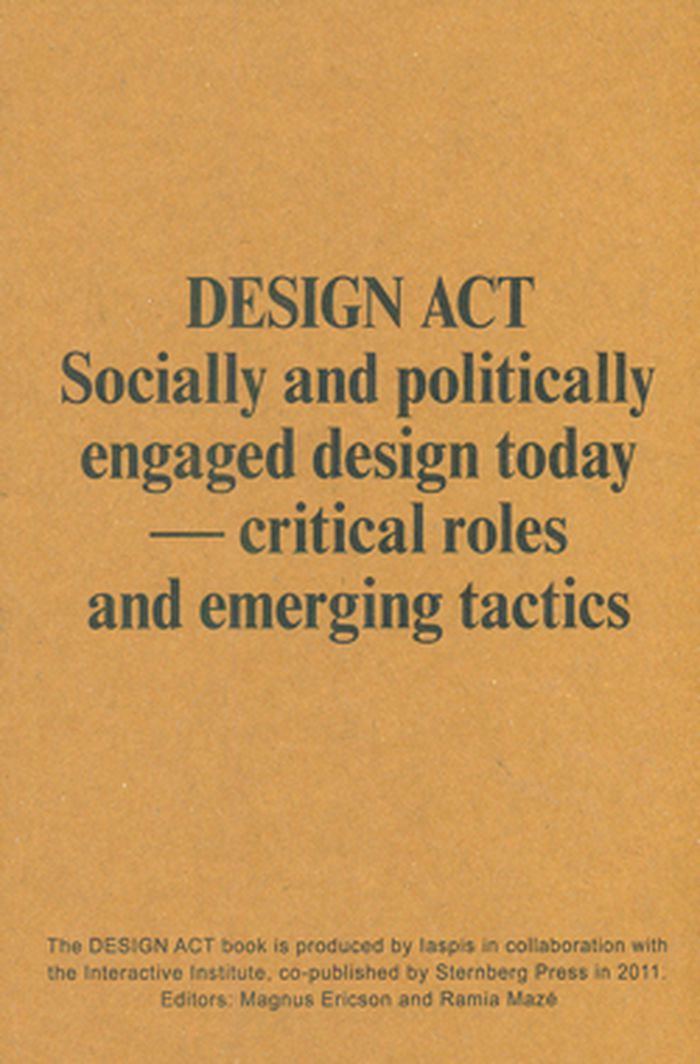
How do contemporary design practices engage with political and societal issues? Can design realize ideas that lead to significant change? Where would the change happen: in the design studio, on the factory floor, in exhibition settings or on the street? Some of the design world’s greatest practitioners, including architects, came together for a multi-faceted, three-year project sponsored by Iaspis. This book, the project’s culmination, comprises texts, interviews, drawings and other artwork in three sections: WHAT brings together contemporary and historical writings; HOW analyzes common issues and emerging tactics within socially and politically engaged design; and WHERE offers a broad perspective on new forms of design practice. Featuring facsimiles of 36 projects from the Design Act archive, this rich book is a must-have for designers who care about their role in the wider world.
Design act: socially and politically engaged design today
Actions:
Price:
$32.95
(available to order)
Summary:
How do contemporary design practices engage with political and societal issues? Can design realize ideas that lead to significant change? Where would the change happen: in the design studio, on the factory floor, in exhibition settings or on the street? Some of the design world’s greatest practitioners, including architects, came together for a multi-faceted, three-year project sponsored by Iaspis. This book, the project’s culmination, comprises texts, interviews, drawings and other artwork in three sections: WHAT brings together contemporary and historical writings; HOW analyzes common issues and emerging tactics within socially and politically engaged design; and WHERE offers a broad perspective on new forms of design practice. Featuring facsimiles of 36 projects from the Design Act archive, this rich book is a must-have for designers who care about their role in the wider world.
Form:
books
books
Publication:
April 2012
April 2012
Subject:
Design Theory
Design Theory


