


10583 Results
Form:
books
books
Title:
L'homme et la ville
L'homme et la ville
Actions:
Price:
$12.95
(available to order)
Summary:
La finalité de toute structure vivante est de maintenir cette structure : un groupe social représente une structure vivante d'un certain niveau de complexité. Henri Laborit démontre que la ville est l'un des moyens utilisés par tout groupe social pour maintenir sa structure. En effet, l'Homme qui, jusqu'à une époque récente, n'a découvert que la physique et l'a utilisée(...)
$12.95
(available to order)
Summary:
La finalité de toute structure vivante est de maintenir cette structure : un groupe social représente une structure vivante d'un certain niveau de complexité. Henri Laborit démontre que la ville est l'un des moyens utilisés par tout groupe social pour maintenir sa structure. En effet, l'Homme qui, jusqu'à une époque récente, n'a découvert que la physique et l'a utilisée(...)
Title:
L'homme et la ville
Actions:
Price:
$12.95
(available to order)
Summary:
La finalité de toute structure vivante est de maintenir cette structure : un groupe social représente une structure vivante d'un certain niveau de complexité. Henri Laborit démontre que la ville est l'un des moyens utilisés par tout groupe social pour maintenir sa structure. En effet, l'Homme qui, jusqu'à une époque récente, n'a découvert que la physique et l'a utilisée pour accroître sa puissance technique permettant la domination de certains individus ou de certains groupes humains sur d'autres (le plus souvent par l'intermédiaire du profit) a utilisé la ville dans ce même but. Tout y est fait pour assurer la défense de la propriété des objets, des êtres, des moyens de production, des niveaux hiérarchiques. La destruction progressive de l'environnement et la disparition de l'espèce humaine auxquelle peut aboutir ce type de comportement de puissance fonderont peut-être la grande crainte qui conduira l'homme à transformer par cela même la finalité des groupes sociaux au seul «profit» de l'espèce humaine. La participation de la ville à l'ensemble de cette évolution montre que l'urbanisme n'est pas seulement un problème de spécialiste : c'est le problème de la vie humaine dans son ensemble qui est posé.
L'homme et la ville
Actions:
Price:
$12.95
(available to order)
Summary:
La finalité de toute structure vivante est de maintenir cette structure : un groupe social représente une structure vivante d'un certain niveau de complexité. Henri Laborit démontre que la ville est l'un des moyens utilisés par tout groupe social pour maintenir sa structure. En effet, l'Homme qui, jusqu'à une époque récente, n'a découvert que la physique et l'a utilisée pour accroître sa puissance technique permettant la domination de certains individus ou de certains groupes humains sur d'autres (le plus souvent par l'intermédiaire du profit) a utilisé la ville dans ce même but. Tout y est fait pour assurer la défense de la propriété des objets, des êtres, des moyens de production, des niveaux hiérarchiques. La destruction progressive de l'environnement et la disparition de l'espèce humaine auxquelle peut aboutir ce type de comportement de puissance fonderont peut-être la grande crainte qui conduira l'homme à transformer par cela même la finalité des groupes sociaux au seul «profit» de l'espèce humaine. La participation de la ville à l'ensemble de cette évolution montre que l'urbanisme n'est pas seulement un problème de spécialiste : c'est le problème de la vie humaine dans son ensemble qui est posé.
Form:
books
books
Publication:
January 1999, Paris
January 1999, Paris
Subject:
Urban Theory
Urban Theory
Form:
books
books

Actions:
Price:
$48.00
(available to order)
Summary:
15 years after the fall of the Berlin Wall and six years after the end of the war in Kosovo, Eastern Europeans still have astoundingly little understanding of the everyday life of their neighbors. Leap into the City counters this sad reality with intelligence from artists, theoreticians, journalists and other cultural actors, all of whom start from the conviction that art(...)
$48.00
(available to order)
Summary:
15 years after the fall of the Berlin Wall and six years after the end of the war in Kosovo, Eastern Europeans still have astoundingly little understanding of the everyday life of their neighbors. Leap into the City counters this sad reality with intelligence from artists, theoreticians, journalists and other cultural actors, all of whom start from the conviction that art(...)
Title:
Leap into the city : cultural positions, political conditions. Seven scenes from Europe
Actions:
Price:
$48.00
(available to order)
Summary:
15 years after the fall of the Berlin Wall and six years after the end of the war in Kosovo, Eastern Europeans still have astoundingly little understanding of the everyday life of their neighbors. Leap into the City counters this sad reality with intelligence from artists, theoreticians, journalists and other cultural actors, all of whom start from the conviction that art and culture form the vital center of a society. In essays and reportage, in literary texts and artistic contributions, they take positions on current issues, pose new questions, and so portray a subjective tableau of their cities, the cultural scenes, and the public realms.~Seven cities are presented in as many chapters. Each begins with a specific artistic work, and each concludes with an essay whose theme points beyond the local context. How are the new elites facing up to the wars of the recent past and their consequences? Who is bringing the Communist era to the museum? How is the European Union securing its external borders, and who is the Protectorate in the former Yugoslavia actually protecting? The publication provides insights into a European present that is determined by numerous factors and yet has at least three things in common: a Socialist past, the experience of radical social reconstruction and the task of establishing a democratic political culture.
Leap into the city : cultural positions, political conditions. Seven scenes from Europe
Actions:
Price:
$48.00
(available to order)
Summary:
15 years after the fall of the Berlin Wall and six years after the end of the war in Kosovo, Eastern Europeans still have astoundingly little understanding of the everyday life of their neighbors. Leap into the City counters this sad reality with intelligence from artists, theoreticians, journalists and other cultural actors, all of whom start from the conviction that art and culture form the vital center of a society. In essays and reportage, in literary texts and artistic contributions, they take positions on current issues, pose new questions, and so portray a subjective tableau of their cities, the cultural scenes, and the public realms.~Seven cities are presented in as many chapters. Each begins with a specific artistic work, and each concludes with an essay whose theme points beyond the local context. How are the new elites facing up to the wars of the recent past and their consequences? Who is bringing the Communist era to the museum? How is the European Union securing its external borders, and who is the Protectorate in the former Yugoslavia actually protecting? The publication provides insights into a European present that is determined by numerous factors and yet has at least three things in common: a Socialist past, the experience of radical social reconstruction and the task of establishing a democratic political culture.
Form:
books
books
Publication:
August 2006, Cologne
August 2006, Cologne
Subject:
Urban Theory
Urban Theory
Form:
books
books
Price:
$38.95
(available to order)
Summary:
Conceived and directed by Emilio Ambasz. With essays by Jean Baudrillard, Manuel Castells, Gillo Dorfles, Ronald Dworkin, Umberto Eco, Erich Jantsch, Suzanne Keller, Gyorgy Kepes, Richard L. Meier, Martin Pawley, Octavio Paz, Anatol Rapoport, Meyer Schapiro, Carl Schorske and Jivan Tabibian, among others. With foreword by Terrance Riley. In January of 1972, The Museum(...)
$38.95
(available to order)
Summary:
Conceived and directed by Emilio Ambasz. With essays by Jean Baudrillard, Manuel Castells, Gillo Dorfles, Ronald Dworkin, Umberto Eco, Erich Jantsch, Suzanne Keller, Gyorgy Kepes, Richard L. Meier, Martin Pawley, Octavio Paz, Anatol Rapoport, Meyer Schapiro, Carl Schorske and Jivan Tabibian, among others. With foreword by Terrance Riley. In January of 1972, The Museum(...)
Title:
The universitas project : solutions for a post-technological society
Actions:
Price:
$38.95
(available to order)
Summary:
Conceived and directed by Emilio Ambasz. With essays by Jean Baudrillard, Manuel Castells, Gillo Dorfles, Ronald Dworkin, Umberto Eco, Erich Jantsch, Suzanne Keller, Gyorgy Kepes, Richard L. Meier, Martin Pawley, Octavio Paz, Anatol Rapoport, Meyer Schapiro, Carl Schorske and Jivan Tabibian, among others. With foreword by Terrance Riley. In January of 1972, The Museum of Modern Art hosted "The universitas project," a two-day conference sponsored by the Museum’s International Council and the Institute for Architecture and Urban Studies. The participants, from a wide range of scholarly and artistic disciplines, engaged in a multidisciplinary debate on the future of design and design institutions in the postindustrial era. The project was originally described as "a critical and prospective inquiry into the relation of man to the natural and the sociocultural environment...specifically planned to explore the possibility of establishing in the United States a new type of institution centered around the task of evaluating and designing the man-made milieu." This volume publishes in their entirety the various components of the conference : the working papers that set the terms of the debate; the essays submitted by the invitees; the proceedings of the symposia responding to the papers; and the postscripts provided by the participants after the event.
The universitas project : solutions for a post-technological society
Actions:
Price:
$38.95
(available to order)
Summary:
Conceived and directed by Emilio Ambasz. With essays by Jean Baudrillard, Manuel Castells, Gillo Dorfles, Ronald Dworkin, Umberto Eco, Erich Jantsch, Suzanne Keller, Gyorgy Kepes, Richard L. Meier, Martin Pawley, Octavio Paz, Anatol Rapoport, Meyer Schapiro, Carl Schorske and Jivan Tabibian, among others. With foreword by Terrance Riley. In January of 1972, The Museum of Modern Art hosted "The universitas project," a two-day conference sponsored by the Museum’s International Council and the Institute for Architecture and Urban Studies. The participants, from a wide range of scholarly and artistic disciplines, engaged in a multidisciplinary debate on the future of design and design institutions in the postindustrial era. The project was originally described as "a critical and prospective inquiry into the relation of man to the natural and the sociocultural environment...specifically planned to explore the possibility of establishing in the United States a new type of institution centered around the task of evaluating and designing the man-made milieu." This volume publishes in their entirety the various components of the conference : the working papers that set the terms of the debate; the essays submitted by the invitees; the proceedings of the symposia responding to the papers; and the postscripts provided by the participants after the event.
Form:
books
books
Publication:
August 2006, New York
August 2006, New York
Subject:
Architectural Theory
Architectural Theory
Form:
books
books
Actions:
Price:
$34.99
(available to order)
Summary:
Author Alain de Botton considers how our private homes and public edifices influence how we feel, and how we could build dwellings in which we would stand a better chance of happiness. In this look at how we shape, and are shaped by, our surroundings, Alain de Botton applies Stendhal’s motto that “Beauty is the promise of happiness” to the spaces we inhabit daily. Why(...)
$34.99
(available to order)
Summary:
Author Alain de Botton considers how our private homes and public edifices influence how we feel, and how we could build dwellings in which we would stand a better chance of happiness. In this look at how we shape, and are shaped by, our surroundings, Alain de Botton applies Stendhal’s motto that “Beauty is the promise of happiness” to the spaces we inhabit daily. Why(...)
Title:
The architecture of happiness
Actions:
Price:
$34.99
(available to order)
Summary:
Author Alain de Botton considers how our private homes and public edifices influence how we feel, and how we could build dwellings in which we would stand a better chance of happiness. In this look at how we shape, and are shaped by, our surroundings, Alain de Botton applies Stendhal’s motto that “Beauty is the promise of happiness” to the spaces we inhabit daily. Why should we pay attention to what architecture has to say to us? de Botton asks. de Botton traces how human needs and desires have been served by styles of architecture, from stately Classical to minimalist Modern, arguing that the stylistic choices of a society can represent both its cherished ideals and the qualities it desperately lacks. On an individual level, de Botton has deep sympathy for our need to see our selves reflected in our surroundings; he demonstrates how buildings — just like friends — can serve as guardians of our identity. Worrying about the shape of our sofa or the colour of our walls might seem self-indulgent, but de Botton considers the hopes and fears we have for our homes at a new level of depth and insight. When shopping for furniture or remodelling the kitchen, we don’t just consider functionality but also the major questions of aesthetics and the philosophy of art: What is beauty? Can beautiful surroundings make us good? Can beauty bring happiness? The buildings we find beautiful, de Botton concludes, are those that represent our ideas of a meaningful life.
The architecture of happiness
Actions:
Price:
$34.99
(available to order)
Summary:
Author Alain de Botton considers how our private homes and public edifices influence how we feel, and how we could build dwellings in which we would stand a better chance of happiness. In this look at how we shape, and are shaped by, our surroundings, Alain de Botton applies Stendhal’s motto that “Beauty is the promise of happiness” to the spaces we inhabit daily. Why should we pay attention to what architecture has to say to us? de Botton asks. de Botton traces how human needs and desires have been served by styles of architecture, from stately Classical to minimalist Modern, arguing that the stylistic choices of a society can represent both its cherished ideals and the qualities it desperately lacks. On an individual level, de Botton has deep sympathy for our need to see our selves reflected in our surroundings; he demonstrates how buildings — just like friends — can serve as guardians of our identity. Worrying about the shape of our sofa or the colour of our walls might seem self-indulgent, but de Botton considers the hopes and fears we have for our homes at a new level of depth and insight. When shopping for furniture or remodelling the kitchen, we don’t just consider functionality but also the major questions of aesthetics and the philosophy of art: What is beauty? Can beautiful surroundings make us good? Can beauty bring happiness? The buildings we find beautiful, de Botton concludes, are those that represent our ideas of a meaningful life.
Form:
books
books
Publication:
September 2006, Toronto
September 2006, Toronto
Subject:
Architectural Theory
Architectural Theory
Form:
books
books
Actions:
Price:
$22.95
(available in store)
Summary:
Alain de Botton considers how our private homes and public edifices influence how we feel, and how we could build dwellings in which we would stand a better chance of happiness. In this look at how we shape, and are shaped by, our surroundings, Alain de Botton applies Stendhal’s motto that "Beauty is the promise of happiness" to the spaces we inhabit daily. Why should we(...)
$22.95
(available in store)
Summary:
Alain de Botton considers how our private homes and public edifices influence how we feel, and how we could build dwellings in which we would stand a better chance of happiness. In this look at how we shape, and are shaped by, our surroundings, Alain de Botton applies Stendhal’s motto that "Beauty is the promise of happiness" to the spaces we inhabit daily. Why should we(...)
Title:
The architecture of happiness
Actions:
Price:
$22.95
(available in store)
Summary:
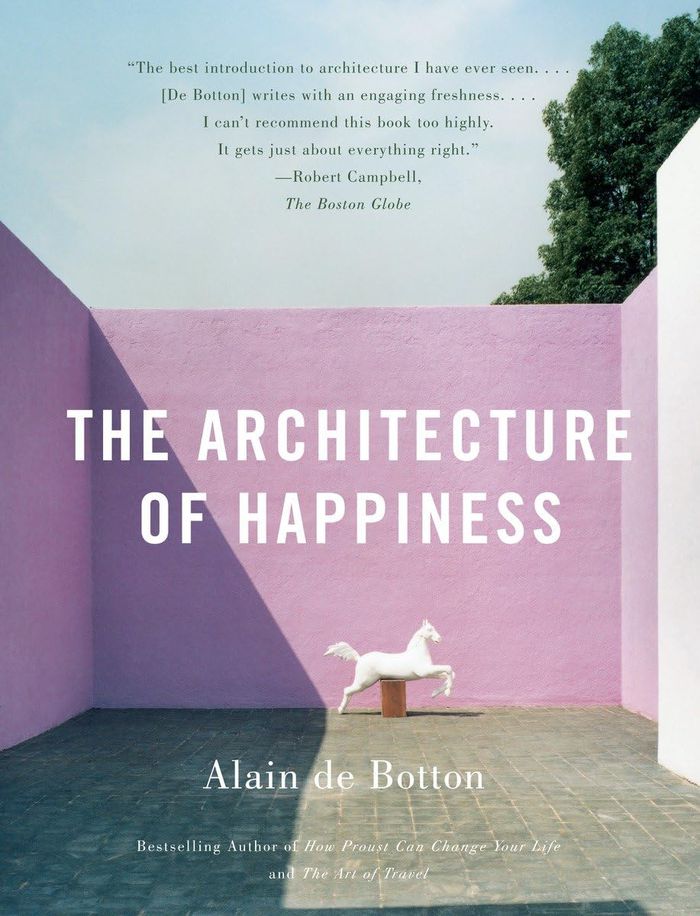
Alain de Botton considers how our private homes and public edifices influence how we feel, and how we could build dwellings in which we would stand a better chance of happiness. In this look at how we shape, and are shaped by, our surroundings, Alain de Botton applies Stendhal’s motto that "Beauty is the promise of happiness" to the spaces we inhabit daily. Why should we pay attention to what architecture has to say to us? de Botton asks. With his trademark lucidity and humour, de Botton traces how human needs and desires have been served by styles of architecture, from stately Classical to minimalist Modern, arguing that the stylistic choices of a society can represent both its cherished ideals and the qualities it desperately lacks. On an individual level, de Botton has deep sympathy for our need to see our selves reflected in our surroundings; he demonstrates with great wisdom how buildings — just like friends — can serve as guardians of our identity.
The architecture of happiness
Actions:
Price:
$22.95
(available in store)
Summary:
Alain de Botton considers how our private homes and public edifices influence how we feel, and how we could build dwellings in which we would stand a better chance of happiness. In this look at how we shape, and are shaped by, our surroundings, Alain de Botton applies Stendhal’s motto that "Beauty is the promise of happiness" to the spaces we inhabit daily. Why should we pay attention to what architecture has to say to us? de Botton asks. With his trademark lucidity and humour, de Botton traces how human needs and desires have been served by styles of architecture, from stately Classical to minimalist Modern, arguing that the stylistic choices of a society can represent both its cherished ideals and the qualities it desperately lacks. On an individual level, de Botton has deep sympathy for our need to see our selves reflected in our surroundings; he demonstrates with great wisdom how buildings — just like friends — can serve as guardians of our identity.
Form:
books
books
Publication:
April 2008
April 2008
Subject:
Architectural Theory
Architectural Theory
Form:
books
books
Title:
Notes for those beginning the discipline of architecture alternate ending 1 : the glimmering noise
Notes for those beginning the discipline of architecture alternate ending 1 : the glimmering noise
Actions:
Price:
$22.95
(available to order)
Summary:
Michael Meredith hits hard with his first publication in the form of a Manifesto on architecture but the theme crosses into all design related professions.
$22.95
(available to order)
Summary:
Michael Meredith hits hard with his first publication in the form of a Manifesto on architecture but the theme crosses into all design related professions.
Title:
Notes for those beginning the discipline of architecture alternate ending 1 : the glimmering noise
Actions:
Price:
$22.95
(available to order)
Summary:
Michael Meredith hits hard with his first publication in the form of a Manifesto on architecture but the theme crosses into all design related professions.
Notes for those beginning the discipline of architecture alternate ending 1 : the glimmering noise
Actions:
Price:
$22.95
(available to order)
Summary:
Michael Meredith hits hard with his first publication in the form of a Manifesto on architecture but the theme crosses into all design related professions.
Form:
books
books
Publication:
January 2007
January 2007
Subject:
Architectural Theory
Architectural Theory
Form:
books
books
Actions:
Price:
$39.95
(available to order)
Summary:
People want a better quality of life now, genuine environmental responsibility, and local control over their own futures. "The urban village" is a seminal intellectual and practical contribution to the construction of such possibilities. It introduces new ideas, like territorial patrimony, and sustainable, local-level autonomous development, describing both the(...)
$39.95
(available to order)
Summary:
People want a better quality of life now, genuine environmental responsibility, and local control over their own futures. "The urban village" is a seminal intellectual and practical contribution to the construction of such possibilities. It introduces new ideas, like territorial patrimony, and sustainable, local-level autonomous development, describing both the(...)
Title:
The urban village : a charter for democracy and local self-sustainable development
Actions:
Price:
$39.95
(available to order)
Summary:
People want a better quality of life now, genuine environmental responsibility, and local control over their own futures. "The urban village" is a seminal intellectual and practical contribution to the construction of such possibilities. It introduces new ideas, like territorial patrimony, and sustainable, local-level autonomous development, describing both the methodological aspects and the visionary, alternative communities which could become possible. Professor Magnaghi sees these as being profoundly democratic, environmentally sustainable, and embodying sufficient local economic strength to resist globalization. Another potential gain would be an increase in social well-being as measured by the quality of life, solidarity, and the development of non-commercial caring relations.
The urban village : a charter for democracy and local self-sustainable development
Actions:
Price:
$39.95
(available to order)
Summary:
People want a better quality of life now, genuine environmental responsibility, and local control over their own futures. "The urban village" is a seminal intellectual and practical contribution to the construction of such possibilities. It introduces new ideas, like territorial patrimony, and sustainable, local-level autonomous development, describing both the methodological aspects and the visionary, alternative communities which could become possible. Professor Magnaghi sees these as being profoundly democratic, environmentally sustainable, and embodying sufficient local economic strength to resist globalization. Another potential gain would be an increase in social well-being as measured by the quality of life, solidarity, and the development of non-commercial caring relations.
Form:
books
books
Publication:
December 2005, London, New York
December 2005, London, New York
Subject:
Urban Theory
Urban Theory
Form:
books
books
Actions:
Price:
$37.95
(available to order)
Summary:
Cet ouvrage propose quatorze portraits et réflexions sur des architectes de renom que l'auteur a eu le privilège de rencontrer et de côtoyer. Mêlant les réflexions générales sur leurs œuvres à ses souvenirs et impressions personnelles, il offre un livre à la fois savant et vivant, construit et habité, qui restitue les débats, visions et réalisations des années 1952 à 2005.
$37.95
(available to order)
Summary:
Cet ouvrage propose quatorze portraits et réflexions sur des architectes de renom que l'auteur a eu le privilège de rencontrer et de côtoyer. Mêlant les réflexions générales sur leurs œuvres à ses souvenirs et impressions personnelles, il offre un livre à la fois savant et vivant, construit et habité, qui restitue les débats, visions et réalisations des années 1952 à 2005.
Title:
Réfléchissements : rencontres d'architectes
Actions:
Price:
$37.95
(available to order)
Summary:
Cet ouvrage propose quatorze portraits et réflexions sur des architectes de renom que l'auteur a eu le privilège de rencontrer et de côtoyer. Mêlant les réflexions générales sur leurs œuvres à ses souvenirs et impressions personnelles, il offre un livre à la fois savant et vivant, construit et habité, qui restitue les débats, visions et réalisations des années 1952 à 2005.
Réfléchissements : rencontres d'architectes
Actions:
Price:
$37.95
(available to order)
Summary:
Cet ouvrage propose quatorze portraits et réflexions sur des architectes de renom que l'auteur a eu le privilège de rencontrer et de côtoyer. Mêlant les réflexions générales sur leurs œuvres à ses souvenirs et impressions personnelles, il offre un livre à la fois savant et vivant, construit et habité, qui restitue les débats, visions et réalisations des années 1952 à 2005.
Form:
books
books
Publication:
November 2006, Gollion
November 2006, Gollion
Subject:
Architectural Theory
Architectural Theory
Form:
books
books
Actions:
Price:
$54.95
(available in store)
Summary:
Cet ouvrage exauce enfin le vœu de Le Corbusier de voir éditées les six conférences qu'il prononça à Rio de Janeiro en août 1936. Après les dix conférences de Buenos Aires, en 1929, publiées dans Précisions sur un état présent de l'architecture et de l'urbanisme (1930), cet inédit est le deuxième recueil de conférences de l'architecte. Et, comme ce fut le cas à Alger,(...)
$54.95
(available in store)
Summary:
Cet ouvrage exauce enfin le vœu de Le Corbusier de voir éditées les six conférences qu'il prononça à Rio de Janeiro en août 1936. Après les dix conférences de Buenos Aires, en 1929, publiées dans Précisions sur un état présent de l'architecture et de l'urbanisme (1930), cet inédit est le deuxième recueil de conférences de l'architecte. Et, comme ce fut le cas à Alger,(...)
Title:
Le Corbusier : conférences de Rio - 1936
Actions:
Price:
$54.95
(available in store)
Summary:
Cet ouvrage exauce enfin le vœu de Le Corbusier de voir éditées les six conférences qu'il prononça à Rio de Janeiro en août 1936. Après les dix conférences de Buenos Aires, en 1929, publiées dans Précisions sur un état présent de l'architecture et de l'urbanisme (1930), cet inédit est le deuxième recueil de conférences de l'architecte. Et, comme ce fut le cas à Alger, Moscou, Bruxelles, Athènes, Paris, Stockholm, Rome, Buenos Aires, São Paulo ou Montevideo, ces conférences jouèrent un rôle central dans la propagation de ses idées sur l'architecture et l'urbanisme. L'importance de ce recueil tient au fait qu'il permet de mesurer le chemin parcouru par Le Corbusier entre 1929 et 1936, l'évolution de sa " technique " de conférencier - comme il la nomme - et celle de ses idées au cours de ces années particulièrement critiques pour l'Europe et pour le monde. Enfin, à travers les propos transcrits, la reproduction des dessins et des projections, on peut non seulement suivre la manière dont Le Corbusier transmettait son message, mais aussi reconstituer le temps et le rythme des conférences, les commentaires qu'il improvisait en restituent l'ambiance et les moments d'intensité.
Le Corbusier : conférences de Rio - 1936
Actions:
Price:
$54.95
(available in store)
Summary:
Cet ouvrage exauce enfin le vœu de Le Corbusier de voir éditées les six conférences qu'il prononça à Rio de Janeiro en août 1936. Après les dix conférences de Buenos Aires, en 1929, publiées dans Précisions sur un état présent de l'architecture et de l'urbanisme (1930), cet inédit est le deuxième recueil de conférences de l'architecte. Et, comme ce fut le cas à Alger, Moscou, Bruxelles, Athènes, Paris, Stockholm, Rome, Buenos Aires, São Paulo ou Montevideo, ces conférences jouèrent un rôle central dans la propagation de ses idées sur l'architecture et l'urbanisme. L'importance de ce recueil tient au fait qu'il permet de mesurer le chemin parcouru par Le Corbusier entre 1929 et 1936, l'évolution de sa " technique " de conférencier - comme il la nomme - et celle de ses idées au cours de ces années particulièrement critiques pour l'Europe et pour le monde. Enfin, à travers les propos transcrits, la reproduction des dessins et des projections, on peut non seulement suivre la manière dont Le Corbusier transmettait son message, mais aussi reconstituer le temps et le rythme des conférences, les commentaires qu'il improvisait en restituent l'ambiance et les moments d'intensité.
Form:
books
books
Publication:
September 2006, Paris
September 2006, Paris
Subject:
Architectural Theory
Architectural Theory
Form:
books
books
Actions:
Price:
$59.95
(available to order)
Summary:
This anthology brings together the best papers from the first ten years of "The Journal of Architecture", published together for the first time in a single volume. Covering a wide range of topics of central importance to architecture today, the papers also address the related topics to which architecture and architectural studies are inextricably linked. The invited(...)
$59.95
(available to order)
Summary:
This anthology brings together the best papers from the first ten years of "The Journal of Architecture", published together for the first time in a single volume. Covering a wide range of topics of central importance to architecture today, the papers also address the related topics to which architecture and architectural studies are inextricably linked. The invited(...)
Subject:
Architectural Theory
Architectural Theory
Publication:
August 2006, London, New York
August 2006, London, New York
Title:
Narrating architecture : a retrospective anthology
Actions:
Price:
$59.95
(available to order)
Summary:
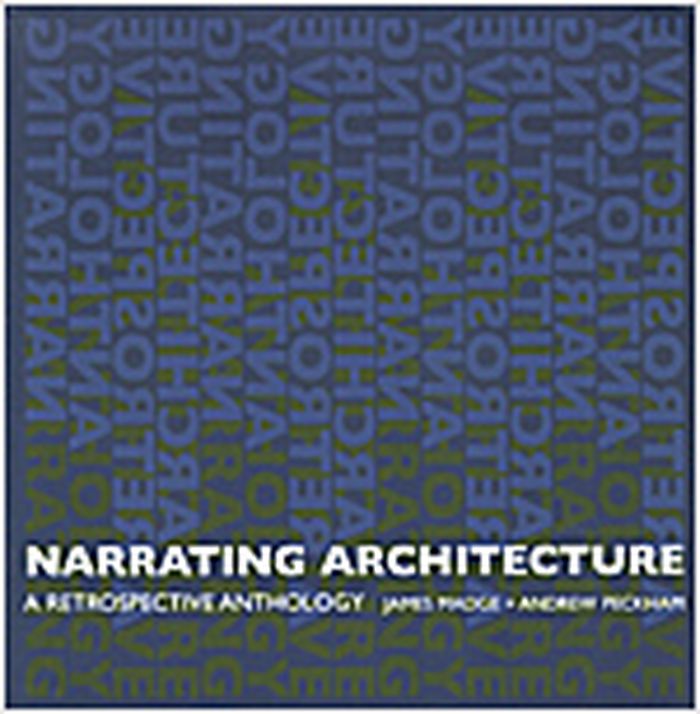
This anthology brings together the best papers from the first ten years of "The Journal of Architecture", published together for the first time in a single volume. Covering a wide range of topics of central importance to architecture today, the papers also address the related topics to which architecture and architectural studies are inextricably linked. The invited authors draw on sociology, philosophy, cultural studies and the sciences to round out the collection and highlight the breadth and vitality of modern architectural studies, offering perspectives from different disciplines as well as different corners of the globe.
Narrating architecture : a retrospective anthology
Actions:
Price:
$59.95
(available to order)
Summary:
This anthology brings together the best papers from the first ten years of "The Journal of Architecture", published together for the first time in a single volume. Covering a wide range of topics of central importance to architecture today, the papers also address the related topics to which architecture and architectural studies are inextricably linked. The invited authors draw on sociology, philosophy, cultural studies and the sciences to round out the collection and highlight the breadth and vitality of modern architectural studies, offering perspectives from different disciplines as well as different corners of the globe.
Form:
books
books
Publication:
August 2006, London, New York
August 2006, London, New York
Subject:
Architectural Theory
Architectural Theory


