


5161 Results
Level of archival description:
Series
Series
Actions:
Reference number:
AP193.S1
Description:
Series 1, Water Flux and Scrambled Flat, 2002-2010, documents the conception and evolution of a project that was originally a farm building and later became a geology and glaciology museum and research center focused on the Swiss Alps. The project was never realized. R&Sie(n) conceptualized Scrambled Flat as an experimental farm. The project goal was to reconcile European Union’s agricultural regulations, imposing a separation between animal and human living, to the community of Évolène traditional way of living, contiguously with animals, benefiting from the resources they offer. As conceived, Scrambled Flat creates an environment where fluidity between the existence of the animals and the humans is materialized. The size of the form is also adapted from a typical local rural house and exploits the heat of the animals and the insulation of the hay. For this project, R&Sie(n) approached the mayor of the community with the design proposition. The mayor then called for a competition, while also changing the program to an ecology museum and research center illustrating the local effects of global warming and the thawing of the Alps. R&Sie(n) won the competition with Water Flux, a reinterpretation of Scrambled Flat. The project was intended to uncover and exorcise the anxieties of ecological disaster, and the principle of flux related to seasonal change and, more broadly, climate change. The firm designed rooms that reproduce the geological and meteorological environment of the high mountains making it visible and experimental, offering refrigerated spaces for art installations and scientific demonstrations. The concept was also to build with the use of new technologies such as digital modelling, point scanning, and computer numerical control (CNC), combined with ancient local knowledge of knocking on trees to decide which specific pines have the best wood for construction. The building is designed to be constructed with local lamellar wood milled by nearby CNC. The resulting parts would be used for the structure, the insulation, the waterproofing and both the interior and exterior finishes. The design includes a grille wrapping the building, reproducing the profile of traditional houses and enclosure and making it possible to hold the snow inside a typo-morphological imprint. Therefore, the transformable envelope of the building reacts to the rhythm of the seasons. In the winter, the structure would appear like a solid cut-out of ice and snow, with cavities similar to those found in glaciers. In the summer, it would resemble piles of stones used in these areas to make borders. A small pool would collect rainwater and supply it to an interior artificial snowmaking system designed for the gallery. Transformation of the water is an integral part of the design. The records contain images of plans, sections, details for the structure of the façade, renderings, plans of the engineered structure, and photographs documenting the conception of the models with the CNC machinery. The Rhino 3D modelling files are also part of the records along with AutoCAD models and a video documenting the process. The records contain two physical models: a smaller polymer model at 1:20 scale representing the whole structure of the building, and a larger 1:1 latch wood fragment representing detail of the structure in its integrality.
AP193.S1
Description:
Series 1, Water Flux and Scrambled Flat, 2002-2010, documents the conception and evolution of a project that was originally a farm building and later became a geology and glaciology museum and research center focused on the Swiss Alps. The project was never realized. R&Sie(n) conceptualized Scrambled Flat as an experimental farm. The project goal was to reconcile European Union’s agricultural regulations, imposing a separation between animal and human living, to the community of Évolène traditional way of living, contiguously with animals, benefiting from the resources they offer. As conceived, Scrambled Flat creates an environment where fluidity between the existence of the animals and the humans is materialized. The size of the form is also adapted from a typical local rural house and exploits the heat of the animals and the insulation of the hay. For this project, R&Sie(n) approached the mayor of the community with the design proposition. The mayor then called for a competition, while also changing the program to an ecology museum and research center illustrating the local effects of global warming and the thawing of the Alps. R&Sie(n) won the competition with Water Flux, a reinterpretation of Scrambled Flat. The project was intended to uncover and exorcise the anxieties of ecological disaster, and the principle of flux related to seasonal change and, more broadly, climate change. The firm designed rooms that reproduce the geological and meteorological environment of the high mountains making it visible and experimental, offering refrigerated spaces for art installations and scientific demonstrations. The concept was also to build with the use of new technologies such as digital modelling, point scanning, and computer numerical control (CNC), combined with ancient local knowledge of knocking on trees to decide which specific pines have the best wood for construction. The building is designed to be constructed with local lamellar wood milled by nearby CNC. The resulting parts would be used for the structure, the insulation, the waterproofing and both the interior and exterior finishes. The design includes a grille wrapping the building, reproducing the profile of traditional houses and enclosure and making it possible to hold the snow inside a typo-morphological imprint. Therefore, the transformable envelope of the building reacts to the rhythm of the seasons. In the winter, the structure would appear like a solid cut-out of ice and snow, with cavities similar to those found in glaciers. In the summer, it would resemble piles of stones used in these areas to make borders. A small pool would collect rainwater and supply it to an interior artificial snowmaking system designed for the gallery. Transformation of the water is an integral part of the design. The records contain images of plans, sections, details for the structure of the façade, renderings, plans of the engineered structure, and photographs documenting the conception of the models with the CNC machinery. The Rhino 3D modelling files are also part of the records along with AutoCAD models and a video documenting the process. The records contain two physical models: a smaller polymer model at 1:20 scale representing the whole structure of the building, and a larger 1:1 latch wood fragment representing detail of the structure in its integrality.
People:
Date:
2002-2010
2002-2010
Title:
Water Flux and Scrambled Flat
Actions:
AP193.S1
Description:
Series 1, Water Flux and Scrambled Flat, 2002-2010, documents the conception and evolution of a project that was originally a farm building and later became a geology and glaciology museum and research center focused on the Swiss Alps. The project was never realized. R&Sie(n) conceptualized Scrambled Flat as an experimental farm. The project goal was to reconcile European Union’s agricultural regulations, imposing a separation between animal and human living, to the community of Évolène traditional way of living, contiguously with animals, benefiting from the resources they offer. As conceived, Scrambled Flat creates an environment where fluidity between the existence of the animals and the humans is materialized. The size of the form is also adapted from a typical local rural house and exploits the heat of the animals and the insulation of the hay. For this project, R&Sie(n) approached the mayor of the community with the design proposition. The mayor then called for a competition, while also changing the program to an ecology museum and research center illustrating the local effects of global warming and the thawing of the Alps. R&Sie(n) won the competition with Water Flux, a reinterpretation of Scrambled Flat. The project was intended to uncover and exorcise the anxieties of ecological disaster, and the principle of flux related to seasonal change and, more broadly, climate change. The firm designed rooms that reproduce the geological and meteorological environment of the high mountains making it visible and experimental, offering refrigerated spaces for art installations and scientific demonstrations. The concept was also to build with the use of new technologies such as digital modelling, point scanning, and computer numerical control (CNC), combined with ancient local knowledge of knocking on trees to decide which specific pines have the best wood for construction. The building is designed to be constructed with local lamellar wood milled by nearby CNC. The resulting parts would be used for the structure, the insulation, the waterproofing and both the interior and exterior finishes. The design includes a grille wrapping the building, reproducing the profile of traditional houses and enclosure and making it possible to hold the snow inside a typo-morphological imprint. Therefore, the transformable envelope of the building reacts to the rhythm of the seasons. In the winter, the structure would appear like a solid cut-out of ice and snow, with cavities similar to those found in glaciers. In the summer, it would resemble piles of stones used in these areas to make borders. A small pool would collect rainwater and supply it to an interior artificial snowmaking system designed for the gallery. Transformation of the water is an integral part of the design. The records contain images of plans, sections, details for the structure of the façade, renderings, plans of the engineered structure, and photographs documenting the conception of the models with the CNC machinery. The Rhino 3D modelling files are also part of the records along with AutoCAD models and a video documenting the process. The records contain two physical models: a smaller polymer model at 1:20 scale representing the whole structure of the building, and a larger 1:1 latch wood fragment representing detail of the structure in its integrality.
Water Flux and Scrambled Flat
Actions:
AP193.S1
Description:
Series 1, Water Flux and Scrambled Flat, 2002-2010, documents the conception and evolution of a project that was originally a farm building and later became a geology and glaciology museum and research center focused on the Swiss Alps. The project was never realized. R&Sie(n) conceptualized Scrambled Flat as an experimental farm. The project goal was to reconcile European Union’s agricultural regulations, imposing a separation between animal and human living, to the community of Évolène traditional way of living, contiguously with animals, benefiting from the resources they offer. As conceived, Scrambled Flat creates an environment where fluidity between the existence of the animals and the humans is materialized. The size of the form is also adapted from a typical local rural house and exploits the heat of the animals and the insulation of the hay. For this project, R&Sie(n) approached the mayor of the community with the design proposition. The mayor then called for a competition, while also changing the program to an ecology museum and research center illustrating the local effects of global warming and the thawing of the Alps. R&Sie(n) won the competition with Water Flux, a reinterpretation of Scrambled Flat. The project was intended to uncover and exorcise the anxieties of ecological disaster, and the principle of flux related to seasonal change and, more broadly, climate change. The firm designed rooms that reproduce the geological and meteorological environment of the high mountains making it visible and experimental, offering refrigerated spaces for art installations and scientific demonstrations. The concept was also to build with the use of new technologies such as digital modelling, point scanning, and computer numerical control (CNC), combined with ancient local knowledge of knocking on trees to decide which specific pines have the best wood for construction. The building is designed to be constructed with local lamellar wood milled by nearby CNC. The resulting parts would be used for the structure, the insulation, the waterproofing and both the interior and exterior finishes. The design includes a grille wrapping the building, reproducing the profile of traditional houses and enclosure and making it possible to hold the snow inside a typo-morphological imprint. Therefore, the transformable envelope of the building reacts to the rhythm of the seasons. In the winter, the structure would appear like a solid cut-out of ice and snow, with cavities similar to those found in glaciers. In the summer, it would resemble piles of stones used in these areas to make borders. A small pool would collect rainwater and supply it to an interior artificial snowmaking system designed for the gallery. Transformation of the water is an integral part of the design. The records contain images of plans, sections, details for the structure of the façade, renderings, plans of the engineered structure, and photographs documenting the conception of the models with the CNC machinery. The Rhino 3D modelling files are also part of the records along with AutoCAD models and a video documenting the process. The records contain two physical models: a smaller polymer model at 1:20 scale representing the whole structure of the building, and a larger 1:1 latch wood fragment representing detail of the structure in its integrality.
Level of archival description:
Series
Series
Date:
2002-2010
2002-2010
People:
Form:
textual records
textual records
Actions:
Reference number:
ARCH268201
Description:
Soutter was a Swiss draughtsman and painter, and was also trained in the sciences, engineering, architecture and music. Documents include 5 newspaper clippings, 1 letter, 1 invitation to a retrospective of his artworks, and 2 documents concerning Soutter and his musical career (“Louis Soutter et la musique”).
ARCH268201
Description:
Soutter was a Swiss draughtsman and painter, and was also trained in the sciences, engineering, architecture and music. Documents include 5 newspaper clippings, 1 letter, 1 invitation to a retrospective of his artworks, and 2 documents concerning Soutter and his musical career (“Louis Soutter et la musique”).
People:
Title:
Documents pertaining to Louis Soutter, cousin of Le Corbusier
Actions:
ARCH268201
Description:
Soutter was a Swiss draughtsman and painter, and was also trained in the sciences, engineering, architecture and music. Documents include 5 newspaper clippings, 1 letter, 1 invitation to a retrospective of his artworks, and 2 documents concerning Soutter and his musical career (“Louis Soutter et la musique”).
Documents pertaining to Louis Soutter, cousin of Le Corbusier
Actions:
ARCH268201
Description:
Soutter was a Swiss draughtsman and painter, and was also trained in the sciences, engineering, architecture and music. Documents include 5 newspaper clippings, 1 letter, 1 invitation to a retrospective of his artworks, and 2 documents concerning Soutter and his musical career (“Louis Soutter et la musique”).
Form:
textual records
textual records
People:
Form:
drawings, born digital
drawings, born digital
Actions:
Reference number:
AP165.S7.SS1.016
Description:
File contains material originally stored on floppy disk labelled: "swiss exhibit w seq". Most common file formats: Plain Text File, AutoCAD Drawing. Most common file formats: AutoCAD Drawing, AutoLISP File, MS-DOS Executable, ZIP Format, Unidentified
AP165.S7.SS1.016
Description:
File contains material originally stored on floppy disk labelled: "swiss exhibit w seq". Most common file formats: Plain Text File, AutoCAD Drawing. Most common file formats: AutoCAD Drawing, AutoLISP File, MS-DOS Executable, ZIP Format, Unidentified
People:
Date:
1992 - 1994
1992 - 1994
Title:
Sequence files and AutoCAD drawings for Expanding Geodesic Sphere at Technorama der Shweiz, Winterthur
Actions:
AP165.S7.SS1.016
Description:
File contains material originally stored on floppy disk labelled: "swiss exhibit w seq". Most common file formats: Plain Text File, AutoCAD Drawing. Most common file formats: AutoCAD Drawing, AutoLISP File, MS-DOS Executable, ZIP Format, Unidentified
Sequence files and AutoCAD drawings for Expanding Geodesic Sphere at Technorama der Shweiz, Winterthur
Actions:
AP165.S7.SS1.016
Description:
File contains material originally stored on floppy disk labelled: "swiss exhibit w seq". Most common file formats: Plain Text File, AutoCAD Drawing. Most common file formats: AutoCAD Drawing, AutoLISP File, MS-DOS Executable, ZIP Format, Unidentified
Form:
drawings, born digital
drawings, born digital
Date:
1992 - 1994
1992 - 1994
People:
Form:
research
research
Actions:
Description:
TD Bank Group-CCA Collection Research Grant recipients Nuria Carton de Grammont (Concordia University); Dwayne Avery (McGill University); Victor Halim Nasr (Université de Montréal); Jenni Pace Presnell (University of British Columbia); Zubin Singh (McGill University); Ana Maria León (Massachusetts Institute of Technology); S. Faisal Hassan (Massachusetts Institute of(...)
TD Bank Group-CCA Collection Research Grant recipients Nuria Carton de Grammont (Concordia University); Dwayne Avery (McGill University); Victor Halim Nasr (Université de Montréal); Jenni Pace Presnell (University of British Columbia); Zubin Singh (McGill University); Ana Maria León (Massachusetts Institute of Technology); S. Faisal Hassan (Massachusetts Institute of(...)
Date:
May 2010 to December 2010
May 2010 to December 2010
Title:
Doctoral Students Program 2010
Actions:
Description:
TD Bank Group-CCA Collection Research Grant recipients Nuria Carton de Grammont (Concordia University); Dwayne Avery (McGill University); Victor Halim Nasr (Université de Montréal); Jenni Pace Presnell (University of British Columbia); Zubin Singh (McGill University); Ana Maria León (Massachusetts Institute of Technology); S. Faisal Hassan (Massachusetts Institute of(...)
Doctoral Students Program 2010
Actions:
Description:
TD Bank Group-CCA Collection Research Grant recipients Nuria Carton de Grammont (Concordia University); Dwayne Avery (McGill University); Victor Halim Nasr (Université de Montréal); Jenni Pace Presnell (University of British Columbia); Zubin Singh (McGill University); Ana Maria León (Massachusetts Institute of Technology); S. Faisal Hassan (Massachusetts Institute of(...)
Form:
research
research
Date:
May 2010 to
December 2010
May 2010 to
December 2010
Form:
photographs
photographs
Reference number:
AP206.S3.164
Description:
These materials include photographic negatives of paintings, sculptures, family photos and photographs and negatives of the following projects: Punjab Agricultural University, Hisar; Punjab Agricultural University, Ludhiana; Tagore Theatre, Chandigarh; School of Architecture Hostel; Indo-Swiss Training Centre; Jagat Cinema; Shopping Centre, Chandigarh; and V.C. Residence.
AP206.S3.164
Description:
These materials include photographic negatives of paintings, sculptures, family photos and photographs and negatives of the following projects: Punjab Agricultural University, Hisar; Punjab Agricultural University, Ludhiana; Tagore Theatre, Chandigarh; School of Architecture Hostel; Indo-Swiss Training Centre; Jagat Cinema; Shopping Centre, Chandigarh; and V.C. Residence.
People:
Date:
1960s
1960s
Title:
Negatives of various architectural projects
Actions:
AP206.S3.164
Description:
These materials include photographic negatives of paintings, sculptures, family photos and photographs and negatives of the following projects: Punjab Agricultural University, Hisar; Punjab Agricultural University, Ludhiana; Tagore Theatre, Chandigarh; School of Architecture Hostel; Indo-Swiss Training Centre; Jagat Cinema; Shopping Centre, Chandigarh; and V.C. Residence.
Negatives of various architectural projects
Actions:
AP206.S3.164
Description:
These materials include photographic negatives of paintings, sculptures, family photos and photographs and negatives of the following projects: Punjab Agricultural University, Hisar; Punjab Agricultural University, Ludhiana; Tagore Theatre, Chandigarh; School of Architecture Hostel; Indo-Swiss Training Centre; Jagat Cinema; Shopping Centre, Chandigarh; and V.C. Residence.
Form:
photographs
photographs
Date:
1960s
1960s
People:
Form:
archives
Level of archival description:
Fonds
archives
Level of archival description:
Fonds
Title:
Bernard Tschumi fonds
Bernard Tschumi fonds
Actions:
Reference number:
AP214
Synopsis:
The Bernard Tschumi fonds, dating from approximately 1965-2015, documents the professional activities of Bernard Tschumi including Tschumi’s career in academia and his professional practice as an architect through approximately 75 projects dating from the late 1980s to 2012.
AP214
Synopsis:
The Bernard Tschumi fonds, dating from approximately 1965-2015, documents the professional activities of Bernard Tschumi including Tschumi’s career in academia and his professional practice as an architect through approximately 75 projects dating from the late 1980s to 2012.
People:
Date:
circa 1964-2015
circa 1964-2015
Title:
Bernard Tschumi fonds
Actions:
AP214
Synopsis:
The Bernard Tschumi fonds, dating from approximately 1965-2015, documents the professional activities of Bernard Tschumi including Tschumi’s career in academia and his professional practice as an architect through approximately 75 projects dating from the late 1980s to 2012.
Bernard Tschumi fonds
Actions:
AP214
Synopsis:
The Bernard Tschumi fonds, dating from approximately 1965-2015, documents the professional activities of Bernard Tschumi including Tschumi’s career in academia and his professional practice as an architect through approximately 75 projects dating from the late 1980s to 2012.
Form:
archives
Level of archival description:
Fonds
archives
Level of archival description:
Fonds
Date:
circa 1964-2015
circa 1964-2015
People:
Form:
textual records
textual records
Actions:
Reference number:
AP197.S2.005
Description:
The box is comprised of writings on modern architecture, which are divided by country and organized alphabetically. The sections are divided as follows: Sweden, Swiss, Turkey, and the United States. The next set of files are comprised of transcripts of interviews with various architects and theorists such as Jürgen Habermas, Oscar Nitzchke, Mario Botta, and Patricia Patkau. The last set of files include two articles concerning architectural preservation.
AP197.S2.005
Description:
The box is comprised of writings on modern architecture, which are divided by country and organized alphabetically. The sections are divided as follows: Sweden, Swiss, Turkey, and the United States. The next set of files are comprised of transcripts of interviews with various architects and theorists such as Jürgen Habermas, Oscar Nitzchke, Mario Botta, and Patricia Patkau. The last set of files include two articles concerning architectural preservation.
People:
Date:
circa 1970-1996
circa 1970-1996
Title:
Research files on modern architecture organized by geographic location (S-U), transcripts of interviews with various architects, and writings on architecture preservation
Actions:
AP197.S2.005
Description:
The box is comprised of writings on modern architecture, which are divided by country and organized alphabetically. The sections are divided as follows: Sweden, Swiss, Turkey, and the United States. The next set of files are comprised of transcripts of interviews with various architects and theorists such as Jürgen Habermas, Oscar Nitzchke, Mario Botta, and Patricia Patkau. The last set of files include two articles concerning architectural preservation.
Research files on modern architecture organized by geographic location (S-U), transcripts of interviews with various architects, and writings on architecture preservation
Actions:
AP197.S2.005
Description:
The box is comprised of writings on modern architecture, which are divided by country and organized alphabetically. The sections are divided as follows: Sweden, Swiss, Turkey, and the United States. The next set of files are comprised of transcripts of interviews with various architects and theorists such as Jürgen Habermas, Oscar Nitzchke, Mario Botta, and Patricia Patkau. The last set of files include two articles concerning architectural preservation.
Form:
textual records
textual records
Date:
circa 1970-1996
circa 1970-1996
People:
Form:
exhibitions
exhibitions
Actions:
Description:
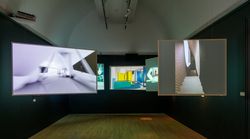
Archaeology of the Digital: Complexity and Convention is the third exhibition related to the development of a strategy for collecting and preserving digital archives at the CCA. The Archaeology of the Digital program comprises twenty-five projects for which digital materials are integral to an understanding of the design process. For projects included in the first two(...)
Archaeology of the Digital: Complexity and Convention is the third exhibition related to the development of a strategy for collecting and preserving digital archives at the CCA. The Archaeology of the Digital program comprises twenty-five projects for which digital materials are integral to an understanding of the design process. For projects included in the first two(...)
Date:
11 May 2016 to 16 October 2016
11 May 2016 to 16 October 2016
Title:
Archaeology of the Digital: Complexity and Convention
Actions:
Description:
Archaeology of the Digital: Complexity and Convention is the third exhibition related to the development of a strategy for collecting and preserving digital archives at the CCA. The Archaeology of the Digital program comprises twenty-five projects for which digital materials are integral to an understanding of the design process. For projects included in the first two(...)
Archaeology of the Digital: Complexity and Convention
Actions:
Description:
Archaeology of the Digital: Complexity and Convention is the third exhibition related to the development of a strategy for collecting and preserving digital archives at the CCA. The Archaeology of the Digital program comprises twenty-five projects for which digital materials are integral to an understanding of the design process. For projects included in the first two(...)
Form:
exhibitions
exhibitions
Date:
11 May 2016 to
16 October 2016
11 May 2016 to
16 October 2016
Form:
archives
Level of archival description:
Fonds
archives
Level of archival description:
Fonds
Title:
Myron Goldsmith fonds
Myron Goldsmith fonds
Reference number:
AP032
Synopsis:
The Myron Goldsmith fonds consists primarily of 30.4 metres of textual documents, including notebooks, research and reading notes, travel journals, documentation files, correspondence, sketchbooks and personal and office papers. There are also 2,800 original drawings and prints, 10,000 photographs and slides, and 5 architectural models. The material ranges in date from c.1933 to 1996. In shedding light on Goldsmith's student years and working career, the fonds' rich collection of documents also provides material on activities in the architectural profession, architectural education, and architectural and engineering theory and building techniques through the 1940s to the 1990s.
AP032
Synopsis:
The Myron Goldsmith fonds consists primarily of 30.4 metres of textual documents, including notebooks, research and reading notes, travel journals, documentation files, correspondence, sketchbooks and personal and office papers. There are also 2,800 original drawings and prints, 10,000 photographs and slides, and 5 architectural models. The material ranges in date from c.1933 to 1996. In shedding light on Goldsmith's student years and working career, the fonds' rich collection of documents also provides material on activities in the architectural profession, architectural education, and architectural and engineering theory and building techniques through the 1940s to the 1990s.
People:
Date:
1933-1996
1933-1996
Title:
Myron Goldsmith fonds
Actions:
AP032
Synopsis:
The Myron Goldsmith fonds consists primarily of 30.4 metres of textual documents, including notebooks, research and reading notes, travel journals, documentation files, correspondence, sketchbooks and personal and office papers. There are also 2,800 original drawings and prints, 10,000 photographs and slides, and 5 architectural models. The material ranges in date from c.1933 to 1996. In shedding light on Goldsmith's student years and working career, the fonds' rich collection of documents also provides material on activities in the architectural profession, architectural education, and architectural and engineering theory and building techniques through the 1940s to the 1990s.
Myron Goldsmith fonds
Actions:
AP032
Synopsis:
The Myron Goldsmith fonds consists primarily of 30.4 metres of textual documents, including notebooks, research and reading notes, travel journals, documentation files, correspondence, sketchbooks and personal and office papers. There are also 2,800 original drawings and prints, 10,000 photographs and slides, and 5 architectural models. The material ranges in date from c.1933 to 1996. In shedding light on Goldsmith's student years and working career, the fonds' rich collection of documents also provides material on activities in the architectural profession, architectural education, and architectural and engineering theory and building techniques through the 1940s to the 1990s.
Form:
archives
Level of archival description:
Fonds
archives
Level of archival description:
Fonds
Date:
1933-1996
1933-1996
People:
Form:
textual records
textual records
Actions:
Reference number:
AP197.S2.037
Description:
This box includes architect and building research files as well as various texts written by others. This box contains architect and building research files as well as various texts written by others. Publications in this box include Albums de la jeune architecture (circa 1980); XII Master en restauracion arquitectonica, Universidad politecnica de Madrid (2002); the Skyline article "Swiss Transmissions and Exaggerations: an Interview with Mario Botta (1980); articles on architectural education; and more
AP197.S2.037
Description:
This box includes architect and building research files as well as various texts written by others. This box contains architect and building research files as well as various texts written by others. Publications in this box include Albums de la jeune architecture (circa 1980); XII Master en restauracion arquitectonica, Universidad politecnica de Madrid (2002); the Skyline article "Swiss Transmissions and Exaggerations: an Interview with Mario Botta (1980); articles on architectural education; and more
People:
Date:
circa 1960-2011
circa 1960-2011
Title:
Architect files, building files and texts by others
Actions:
AP197.S2.037
Description:
This box includes architect and building research files as well as various texts written by others. This box contains architect and building research files as well as various texts written by others. Publications in this box include Albums de la jeune architecture (circa 1980); XII Master en restauracion arquitectonica, Universidad politecnica de Madrid (2002); the Skyline article "Swiss Transmissions and Exaggerations: an Interview with Mario Botta (1980); articles on architectural education; and more
Architect files, building files and texts by others
Actions:
AP197.S2.037
Description:
This box includes architect and building research files as well as various texts written by others. This box contains architect and building research files as well as various texts written by others. Publications in this box include Albums de la jeune architecture (circa 1980); XII Master en restauracion arquitectonica, Universidad politecnica de Madrid (2002); the Skyline article "Swiss Transmissions and Exaggerations: an Interview with Mario Botta (1980); articles on architectural education; and more
Form:
textual records
textual records
Date:
circa 1960-2011
circa 1960-2011
People:


