


4053 Results
Form:
journals and magazines
journals and magazines
Actions:
Price:
$35.95
(available to order)
Summary:
Technically innovative architectural projects featured here include the Chiswick Park Urban Workplace, London by Richard Rogers, the RS + Yellow Furniture Store in Munster by Bolles + Wilson, and Springtecture B in Shiga by Shuhei Endo. Included, an article on the interaction between ethics and engineering, a review of the Italian design exhibition Salone del Mobile 2003(...)
$35.95
(available to order)
Summary:
Technically innovative architectural projects featured here include the Chiswick Park Urban Workplace, London by Richard Rogers, the RS + Yellow Furniture Store in Munster by Bolles + Wilson, and Springtecture B in Shiga by Shuhei Endo. Included, an article on the interaction between ethics and engineering, a review of the Italian design exhibition Salone del Mobile 2003(...)
Subject:
Magazines
Magazines
Publication:
January 1900, Bologna
January 1900, Bologna
Title:
The plan 003 : architecture and technologies in detail
Actions:
Price:
$35.95
(available to order)
Summary:
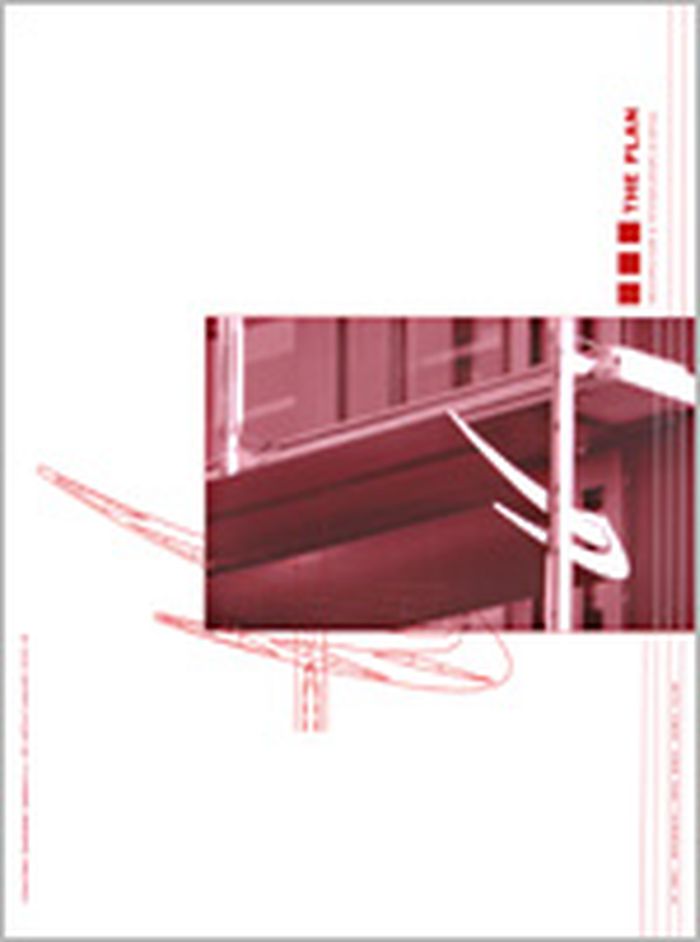
Technically innovative architectural projects featured here include the Chiswick Park Urban Workplace, London by Richard Rogers, the RS + Yellow Furniture Store in Munster by Bolles + Wilson, and Springtecture B in Shiga by Shuhei Endo. Included, an article on the interaction between ethics and engineering, a review of the Italian design exhibition Salone del Mobile 2003 and a discussion of what is public art.
The plan 003 : architecture and technologies in detail
Actions:
Price:
$35.95
(available to order)
Summary:
Technically innovative architectural projects featured here include the Chiswick Park Urban Workplace, London by Richard Rogers, the RS + Yellow Furniture Store in Munster by Bolles + Wilson, and Springtecture B in Shiga by Shuhei Endo. Included, an article on the interaction between ethics and engineering, a review of the Italian design exhibition Salone del Mobile 2003 and a discussion of what is public art.
Form:
journals and magazines
journals and magazines
Publication:
January 1900, Bologna
January 1900, Bologna
Subject:
Magazines
Magazines
Form:
books
books
Actions:
Holdings:
Description:
32 pages : color illustrations, portrait ; 29 cm
Description:
32 pages : color illustrations, portrait ; 29 cm
Author:
Subject:
Publication:
Paris : Beaux-Arts, ©1990.
Paris : Beaux-Arts, ©1990.
Title:
La Grande Arche / [comité éditorial, Claudine Colin [and others] ; directeur de la publication, Jean-Noël Beyler ; rédacteur en chef, Jérôme Coignard].
Actions:
Holdings:
Description:
32 pages : color illustrations, portrait ; 29 cm
La Grande Arche / [comité éditorial, Claudine Colin [and others] ; directeur de la publication, Jean-Noël Beyler ; rédacteur en chef, Jérôme Coignard].
Actions:
Holdings:
Description:
32 pages : color illustrations, portrait ; 29 cm
Form:
books
books
Publication:
Paris : Beaux-Arts, ©1990.
Paris : Beaux-Arts, ©1990.
Author:
Subject:
Form:
audio
audio
Actions:
Description:
1 online resource.
Author:
Subject:
Publication:
[Place of publication not identified] : The Funambulist, 2015.
[Place of publication not identified] : The Funambulist, 2015.
Title:
Politics of Street Objects : The 1001 Chairs of Cairo.
Actions:
Description:
1 online resource.
Politics of Street Objects : The 1001 Chairs of Cairo.
Actions:
Description:
1 online resource.
Form:
audio
audio
Publication:
[Place of publication not identified] : The Funambulist, 2015.
[Place of publication not identified] : The Funambulist, 2015.
Author:
Subject:
Form:
books
books
Actions:
Price:
$99.00
(available in store)
Summary:
Hermann & Valentiny first came to public attention in the 1980s with their villa in the Rauchstrasse, a part of the International Building Exhibition in Berlin, when postmodernism was at its peak in Europe. Since then the office which is based in Vienna and Remerschen has built in Austria, Luxembourg and Germany, and its architecture has progressed in both form and(...)
$99.00
(available in store)
Summary:
Hermann & Valentiny first came to public attention in the 1980s with their villa in the Rauchstrasse, a part of the International Building Exhibition in Berlin, when postmodernism was at its peak in Europe. Since then the office which is based in Vienna and Remerschen has built in Austria, Luxembourg and Germany, and its architecture has progressed in both form and(...)
Subject:
Architecture Monographs
Architecture Monographs
Publication:
May 2001, Basel / Boston / Berlin
May 2001, Basel / Boston / Berlin
Title:
Hermann & Valentiny and partners : jetz / now
Actions:
Price:
$99.00
(available in store)
Summary:
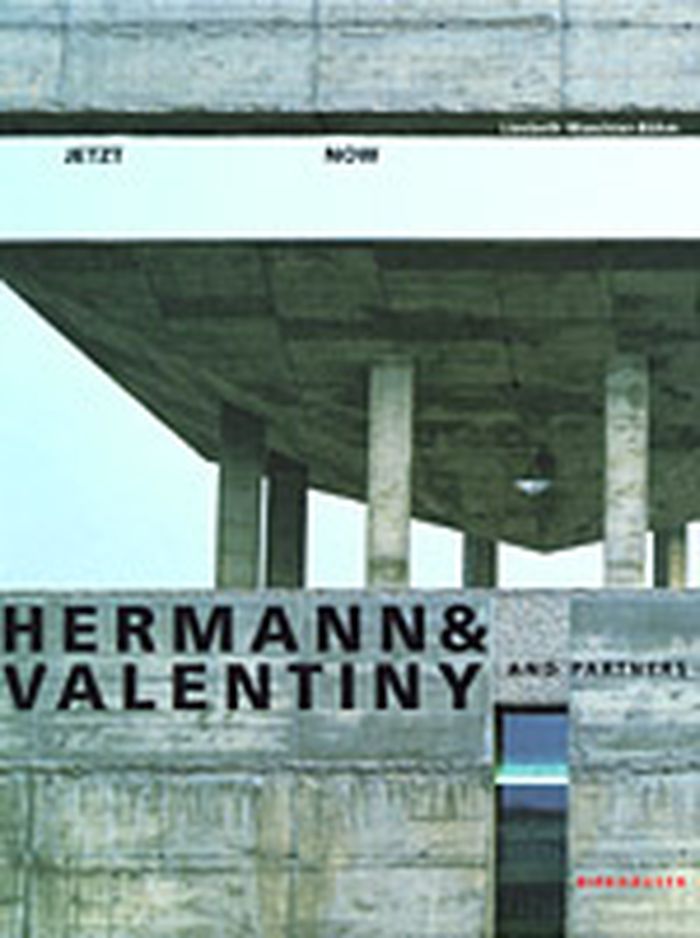
Hermann & Valentiny first came to public attention in the 1980s with their villa in the Rauchstrasse, a part of the International Building Exhibition in Berlin, when postmodernism was at its peak in Europe. Since then the office which is based in Vienna and Remerschen has built in Austria, Luxembourg and Germany, and its architecture has progressed in both form and content. Representing Luxembourg at the architecture biennale in Venice, Hermann & Valentiny reveal how architecture and art can be successfully combined. This up-to-date report "Now" illustrates how conceptual questions and a comparatively restricted choice of materials dominate the work of Hermann & Valentiny. Wherever possible they use concrete to replace plaster; glass maintains its unique role; metal mesh acts as a membrane, allowing historical architecture to shimmer through. Moreover, colour has a special function in their architecture. Not just black and white, but also tomato red, melon yellow, peppermint green... Finally, the book reveals the architects' general concepts which incorporate the living, the natural surroundings in the plans.
Hermann & Valentiny and partners : jetz / now
Actions:
Price:
$99.00
(available in store)
Summary:
Hermann & Valentiny first came to public attention in the 1980s with their villa in the Rauchstrasse, a part of the International Building Exhibition in Berlin, when postmodernism was at its peak in Europe. Since then the office which is based in Vienna and Remerschen has built in Austria, Luxembourg and Germany, and its architecture has progressed in both form and content. Representing Luxembourg at the architecture biennale in Venice, Hermann & Valentiny reveal how architecture and art can be successfully combined. This up-to-date report "Now" illustrates how conceptual questions and a comparatively restricted choice of materials dominate the work of Hermann & Valentiny. Wherever possible they use concrete to replace plaster; glass maintains its unique role; metal mesh acts as a membrane, allowing historical architecture to shimmer through. Moreover, colour has a special function in their architecture. Not just black and white, but also tomato red, melon yellow, peppermint green... Finally, the book reveals the architects' general concepts which incorporate the living, the natural surroundings in the plans.
Form:
books
books
Publication:
May 2001, Basel / Boston / Berlin
May 2001, Basel / Boston / Berlin
Subject:
Architecture Monographs
Architecture Monographs
Form:
books
books
Actions:
Subject:
Publication:
LOUDREADERS 2025
LOUDREADERS 2025
Form:
books
books
Publication:
LOUDREADERS 2025
LOUDREADERS 2025
Subject:
Form:
books
books
Price:
$26.95
(available in store)
Summary:
In 2006, even though he could barely type, China's most famous artist started blogging. For more than three years, Ai Weiwei turned out a steady stream of scathing social commentary, criticism of government policy, thoughts on art and architecture, and autobiographical writings. He wrote about the Sichuan earthquake (and posted a list of the schoolchildren who died(...)
$26.95
(available in store)
Summary:
In 2006, even though he could barely type, China's most famous artist started blogging. For more than three years, Ai Weiwei turned out a steady stream of scathing social commentary, criticism of government policy, thoughts on art and architecture, and autobiographical writings. He wrote about the Sichuan earthquake (and posted a list of the schoolchildren who died(...)
Title:
Ai Weiwei's blog : writings, interviews, and digital rants, 2006-2009
Actions:
Price:
$26.95
(available in store)
Summary:
In 2006, even though he could barely type, China's most famous artist started blogging. For more than three years, Ai Weiwei turned out a steady stream of scathing social commentary, criticism of government policy, thoughts on art and architecture, and autobiographical writings. He wrote about the Sichuan earthquake (and posted a list of the schoolchildren who died because of the government’s "tofu-dregs engineering"), reminisced about Andy Warhol and the East Village art scene, described the irony of being investigated for "fraud" by the Ministry of Public Security, made a modest proposal for tax collection. Then, on June 1, 2009, Chinese authorities shut down the blog. This book offers a collection of Ai's online writings translated into English - the most complete, public documentation of the original Chinese blog available in any language. The New York Times has called Ai "a figure of Warholian celebrity." He is a leading figure on the international art scene, a regular in museums and biennials, but in China he is a manifold and controversial presence : artist, architect, curator, social critic, justice-seeker. He was a consultant on the design of the famous "Bird’s Nest" stadium but called for an Olympic boycott; he received a Chinese Contemporary Art "lifetime achievement award" in 2008 but was beaten by the police in connection with his "citizen investigation" of earthquake casualties in 2009. This publication documents Ai's passion, his genius, his hubris, his righteous anger, and his vision for China.
Ai Weiwei's blog : writings, interviews, and digital rants, 2006-2009
Actions:
Price:
$26.95
(available in store)
Summary:
In 2006, even though he could barely type, China's most famous artist started blogging. For more than three years, Ai Weiwei turned out a steady stream of scathing social commentary, criticism of government policy, thoughts on art and architecture, and autobiographical writings. He wrote about the Sichuan earthquake (and posted a list of the schoolchildren who died because of the government’s "tofu-dregs engineering"), reminisced about Andy Warhol and the East Village art scene, described the irony of being investigated for "fraud" by the Ministry of Public Security, made a modest proposal for tax collection. Then, on June 1, 2009, Chinese authorities shut down the blog. This book offers a collection of Ai's online writings translated into English - the most complete, public documentation of the original Chinese blog available in any language. The New York Times has called Ai "a figure of Warholian celebrity." He is a leading figure on the international art scene, a regular in museums and biennials, but in China he is a manifold and controversial presence : artist, architect, curator, social critic, justice-seeker. He was a consultant on the design of the famous "Bird’s Nest" stadium but called for an Olympic boycott; he received a Chinese Contemporary Art "lifetime achievement award" in 2008 but was beaten by the police in connection with his "citizen investigation" of earthquake casualties in 2009. This publication documents Ai's passion, his genius, his hubris, his righteous anger, and his vision for China.
Form:
books
books
Publication:
March 2011
March 2011
Subject:
Contemporary Art Monographs
Contemporary Art Monographs
Form:
books
books
Title:
Landscape gardening in Japan. With the Supplement of 40 plates & a new pref. by Clay Lancaster.
Landscape gardening in Japan. With the Supplement of 40 plates & a new pref. by Clay Lancaster.
Actions:
Holdings:
Description:
xv, 251 pages illustrations, plans 29 cm.
Description:
xv, 251 pages illustrations, plans 29 cm.
Author:
Subject:
Publication:
New York, Dover Publications [1964]
New York, Dover Publications [1964]
Title:
Landscape gardening in Japan. With the Supplement of 40 plates & a new pref. by Clay Lancaster.
Actions:
Holdings:
Description:
xv, 251 pages illustrations, plans 29 cm.
Landscape gardening in Japan. With the Supplement of 40 plates & a new pref. by Clay Lancaster.
Actions:
Holdings:
Description:
xv, 251 pages illustrations, plans 29 cm.
Form:
books
books
Publication:
New York, Dover Publications [1964]
New York, Dover Publications [1964]
Author:
Subject:
Form:
books
books
Actions:
Holdings:
Description:
x, 653 pages : illustrations (chiefly color) ; 32 cm
Description:
x, 653 pages : illustrations (chiefly color) ; 32 cm
Author:
Subject:
Publication:
New York : Barnett Newman Foundation ; New Haven, Conn. : Yale University Press, 2004.
New York : Barnett Newman Foundation ; New Haven, Conn. : Yale University Press, 2004.
Title:
Barnett Newman : a catalogue raisonné / Richard Shiff, Carol C. Mancusi-Ungaro, Heidi Colsman-Freyberger ; photography by Bruce White ; edited by Ellyn Childs Allison.
Actions:
Holdings:
Description:
x, 653 pages : illustrations (chiefly color) ; 32 cm
Barnett Newman : a catalogue raisonné / Richard Shiff, Carol C. Mancusi-Ungaro, Heidi Colsman-Freyberger ; photography by Bruce White ; edited by Ellyn Childs Allison.
Actions:
Holdings:
Description:
x, 653 pages : illustrations (chiefly color) ; 32 cm
Form:
books
books
Publication:
New York : Barnett Newman Foundation ; New Haven, Conn. : Yale University Press, 2004.
New York : Barnett Newman Foundation ; New Haven, Conn. : Yale University Press, 2004.
Author:
Subject:
Form:
books
books
Actions:
Holdings:
Description:
320 pages plates, plans 30 cm
Description:
320 pages plates, plans 30 cm
Author:
Subject:
Publication:
New York, Published for the Museum of Modern Art by Horizon Press ©1962.
New York, Published for the Museum of Modern Art by Horizon Press ©1962.
Title:
The drawings of Frank Lloyd Wright [by] Arthur Drexler.
Actions:
Holdings:
Description:
320 pages plates, plans 30 cm
The drawings of Frank Lloyd Wright [by] Arthur Drexler.
Actions:
Holdings:
Description:
320 pages plates, plans 30 cm
Form:
books
books
Publication:
New York, Published for the Museum of Modern Art by Horizon Press ©1962.
New York, Published for the Museum of Modern Art by Horizon Press ©1962.
Author:
Subject:
Form:
books
books
Actions:
Price:
$49.95
(available in store)
Summary:
The publication features essays by twelve authors grouped in four parts. It represents a major advance in the study of nineteenth century photographic representations of Indian architecture and a benchmark in the study of post-colonial history. Collectively, the authors demonstrate how photographs can be read not just as records of an architectural past, but as complex(...)
$49.95
(available in store)
Summary:
The publication features essays by twelve authors grouped in four parts. It represents a major advance in the study of nineteenth century photographic representations of Indian architecture and a benchmark in the study of post-colonial history. Collectively, the authors demonstrate how photographs can be read not just as records of an architectural past, but as complex(...)
Title:
Traces of India: photography, architecture, and the politics of representation, 1850-1900
Actions:
Price:
$49.95
(available in store)
Summary:
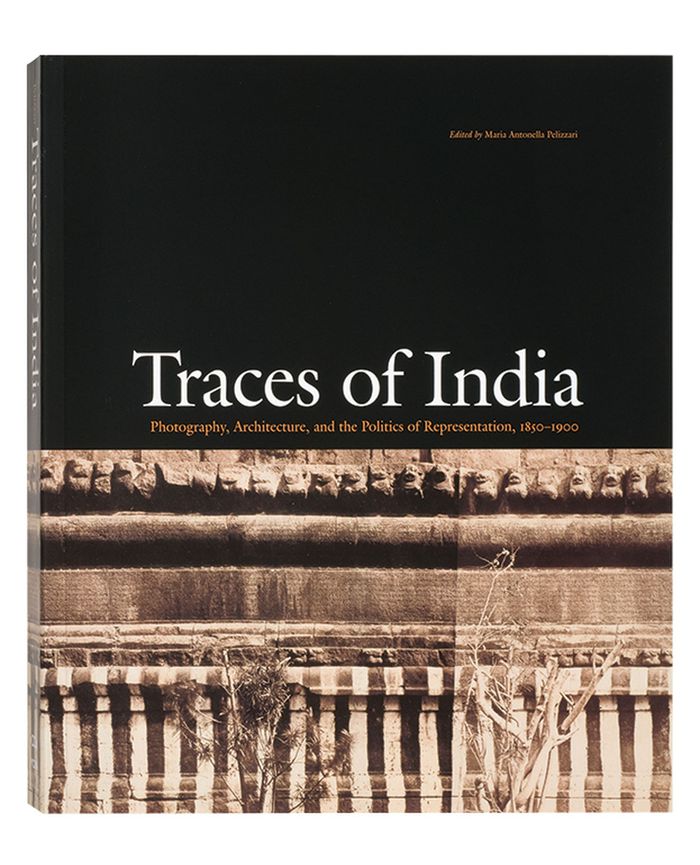
The publication features essays by twelve authors grouped in four parts. It represents a major advance in the study of nineteenth century photographic representations of Indian architecture and a benchmark in the study of post-colonial history. Collectively, the authors demonstrate how photographs can be read not just as records of an architectural past, but as complex artefacts of the cultural and political forces shaping colonial India. Contributors include CCA Associate Curator Maria Antonella Pelizzari; art historian Stephen Bann; historians of photography Julia Ballerini, John Falconer and Janet Dewan; historical anthropologist Nicholas Dirks; political theorist Partha Chatterjee; colonial historians Tapati Guha-Thakurta and Peter H. Hoffenberg, Narayani Gupta and Thomas R. Metcalf; and anthropologist Christopher Pinney.
Traces of India: photography, architecture, and the politics of representation, 1850-1900
Actions:
Price:
$49.95
(available in store)
Summary:
The publication features essays by twelve authors grouped in four parts. It represents a major advance in the study of nineteenth century photographic representations of Indian architecture and a benchmark in the study of post-colonial history. Collectively, the authors demonstrate how photographs can be read not just as records of an architectural past, but as complex artefacts of the cultural and political forces shaping colonial India. Contributors include CCA Associate Curator Maria Antonella Pelizzari; art historian Stephen Bann; historians of photography Julia Ballerini, John Falconer and Janet Dewan; historical anthropologist Nicholas Dirks; political theorist Partha Chatterjee; colonial historians Tapati Guha-Thakurta and Peter H. Hoffenberg, Narayani Gupta and Thomas R. Metcalf; and anthropologist Christopher Pinney.
Form:
books
books
Publication:
May 2003, Montréal
May 2003, Montréal
Subject:
CCA Publications
CCA Publications


