


3928 Results
Form:
books
books
Actions:
Price:
$25.95
(available to order)
Summary:
In "Black elegies", Kimberly Juanita Brown examines the form of the elegy and its unique capacity to convey the elongated grief borne of sustained racial violence. Structured around the sensorial, the book moves through sight, sound, and touch to reveal what Okwui Enwezor calls the "national emergency of black grief." With her characteristic literary skill, Brown analyzes(...)
$25.95
(available to order)
Summary:
In "Black elegies", Kimberly Juanita Brown examines the form of the elegy and its unique capacity to convey the elongated grief borne of sustained racial violence. Structured around the sensorial, the book moves through sight, sound, and touch to reveal what Okwui Enwezor calls the "national emergency of black grief." With her characteristic literary skill, Brown analyzes(...)
Title:
Black elegies: meditations on the art of mourning
Actions:
Price:
$25.95
(available to order)
Summary:
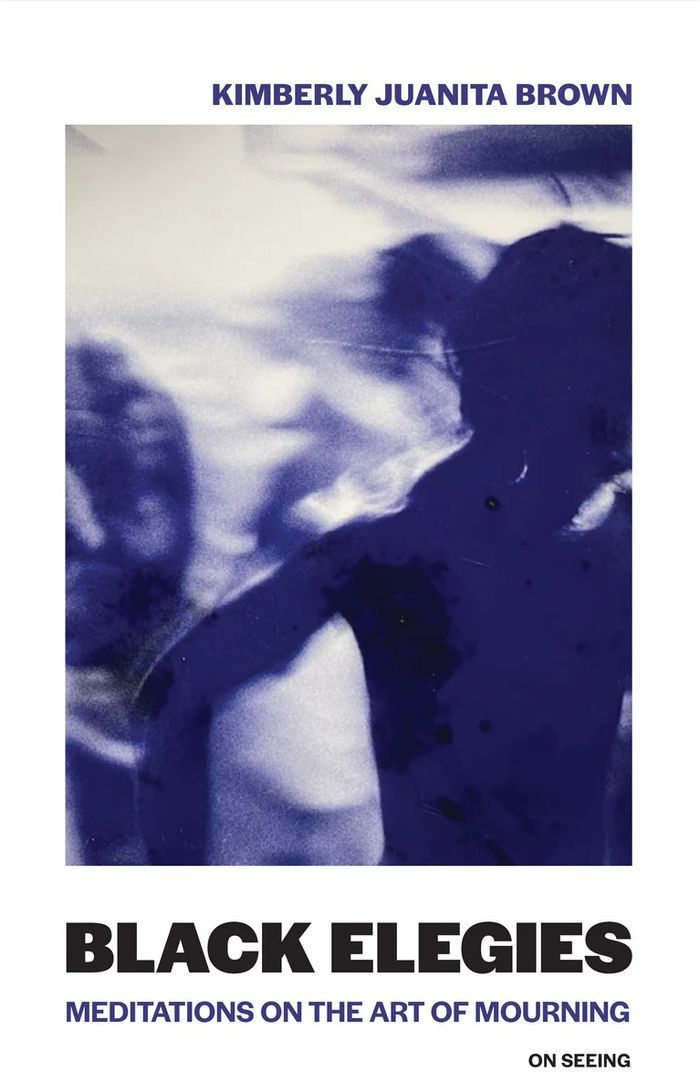
In "Black elegies", Kimberly Juanita Brown examines the form of the elegy and its unique capacity to convey the elongated grief borne of sustained racial violence. Structured around the sensorial, the book moves through sight, sound, and touch to reveal what Okwui Enwezor calls the "national emergency of black grief." With her characteristic literary skill, Brown analyzes the work of major figures including Toni Morrison, Carrie Mae Weems, Audre Lorde, and Marvin Gaye, among others. Brown contemplates recognizable sites of mourning: forced migration and enslavement, bodily violations, imprisonment and death. And she examines sites that do not register immediately as archives of grief: the landscape of southern U.S. slave plantations, a spontaneous street party, a quilt constructed out of the clothing worn by a loved one, a dance performance to hold the memory of history, and an aeolian harp installed at an institute of European art, among others. In this, the book offers a framework of mourning while black, within the parameters of contemporary artistic production.
Black elegies: meditations on the art of mourning
Actions:
Price:
$25.95
(available to order)
Summary:
In "Black elegies", Kimberly Juanita Brown examines the form of the elegy and its unique capacity to convey the elongated grief borne of sustained racial violence. Structured around the sensorial, the book moves through sight, sound, and touch to reveal what Okwui Enwezor calls the "national emergency of black grief." With her characteristic literary skill, Brown analyzes the work of major figures including Toni Morrison, Carrie Mae Weems, Audre Lorde, and Marvin Gaye, among others. Brown contemplates recognizable sites of mourning: forced migration and enslavement, bodily violations, imprisonment and death. And she examines sites that do not register immediately as archives of grief: the landscape of southern U.S. slave plantations, a spontaneous street party, a quilt constructed out of the clothing worn by a loved one, a dance performance to hold the memory of history, and an aeolian harp installed at an institute of European art, among others. In this, the book offers a framework of mourning while black, within the parameters of contemporary artistic production.
Form:
books
books
Publication:
February 2025
February 2025
Subject:
Critical Theory
Critical Theory
Form:
books
books
Actions:
Price:
$52.00
(available to order)
Summary:
Foreword by Ann Philbin. Edited and with text by Russell Ferguson. The Politics of Rehearsal accompanies the first large-scale American museum exhibit on Francis Alys, one of the most acclaimed artists working today. The centerpiece of the book is Alys' Rehearsal (Ensayo) series, but a number of related earlier works are included. "Ensayo 1, 1999-2000" shows a red(...)
$52.00
(available to order)
Summary:
Foreword by Ann Philbin. Edited and with text by Russell Ferguson. The Politics of Rehearsal accompanies the first large-scale American museum exhibit on Francis Alys, one of the most acclaimed artists working today. The centerpiece of the book is Alys' Rehearsal (Ensayo) series, but a number of related earlier works are included. "Ensayo 1, 1999-2000" shows a red(...)
Subject:
Contemporary Art Monographs
Contemporary Art Monographs
Publication:
February 2008, Los Angeles
February 2008, Los Angeles
Title:
Francis Alys. The politics of rehearsal
Actions:
Price:
$52.00
(available to order)
Summary:
Foreword by Ann Philbin. Edited and with text by Russell Ferguson. The Politics of Rehearsal accompanies the first large-scale American museum exhibit on Francis Alys, one of the most acclaimed artists working today. The centerpiece of the book is Alys' Rehearsal (Ensayo) series, but a number of related earlier works are included. "Ensayo 1, 1999-2000" shows a red Volkswagen Beetle attempting to ascend a steep hill in Tijuana: its attempts are synchronized with the sound track of Mexican danzon musicians rehearsing. "Ensayo 2, 2005" follows the rehearsal of a dancer practicing a striptease, and "Ensayo 3" will be produced by Alys specifically for the exhibition. Other works include "When Faith Moves Mountains" and "Song for Lupita," as well as many paintings, photographs and drawings. This significant new publication contains a DVD and an in-depth exploration of Alys's oeuvre by Russell Ferguson, organizer of the exhibition, focusing on the theme of rehearsal, which is so characteristic of Alys' work.
Francis Alys. The politics of rehearsal
Actions:
Price:
$52.00
(available to order)
Summary:
Foreword by Ann Philbin. Edited and with text by Russell Ferguson. The Politics of Rehearsal accompanies the first large-scale American museum exhibit on Francis Alys, one of the most acclaimed artists working today. The centerpiece of the book is Alys' Rehearsal (Ensayo) series, but a number of related earlier works are included. "Ensayo 1, 1999-2000" shows a red Volkswagen Beetle attempting to ascend a steep hill in Tijuana: its attempts are synchronized with the sound track of Mexican danzon musicians rehearsing. "Ensayo 2, 2005" follows the rehearsal of a dancer practicing a striptease, and "Ensayo 3" will be produced by Alys specifically for the exhibition. Other works include "When Faith Moves Mountains" and "Song for Lupita," as well as many paintings, photographs and drawings. This significant new publication contains a DVD and an in-depth exploration of Alys's oeuvre by Russell Ferguson, organizer of the exhibition, focusing on the theme of rehearsal, which is so characteristic of Alys' work.
Form:
books
books
Publication:
February 2008, Los Angeles
February 2008, Los Angeles
Subject:
Contemporary Art Monographs
Contemporary Art Monographs
Form:
books
books

Title:
Sugar in the air
Sugar in the air
Actions:
Price:
$48.95
(available to order)
Summary:
First published by Jonathan Cape, London, in 1937. Reprinted in 2008 by Hyphen Press, layout by Stuart Bailey. "The title of Mr Large's novel is a strange one: SUGAR IN THE AIR. It was published in this country (England) by Scribner's and had a considerable success. It is the story of a hard-working and serious-minded chemist who devotes himself to the problem of making(...)
$48.95
(available to order)
Summary:
First published by Jonathan Cape, London, in 1937. Reprinted in 2008 by Hyphen Press, layout by Stuart Bailey. "The title of Mr Large's novel is a strange one: SUGAR IN THE AIR. It was published in this country (England) by Scribner's and had a considerable success. It is the story of a hard-working and serious-minded chemist who devotes himself to the problem of making(...)
Title:
Sugar in the air
Actions:
Price:
$48.95
(available to order)
Summary:
First published by Jonathan Cape, London, in 1937. Reprinted in 2008 by Hyphen Press, layout by Stuart Bailey. "The title of Mr Large's novel is a strange one: SUGAR IN THE AIR. It was published in this country (England) by Scribner's and had a considerable success. It is the story of a hard-working and serious-minded chemist who devotes himself to the problem of making synthetic sugar. Not being a chemist myself, I do not know how plausible Mr Large's formulas and processes would sound to a technical man, but they are convincing to the lay reader, and by the time we see the first supply of "Sunsap" coming out of the vats we believe in it, and are prepared to see the food industry revolutionized. But we have forgotten the profit-takers. Mr Large's hard-working chemist finds himself and his process tied into knots by the financiers." Upton Sinclair
Sugar in the air
Actions:
Price:
$48.95
(available to order)
Summary:
First published by Jonathan Cape, London, in 1937. Reprinted in 2008 by Hyphen Press, layout by Stuart Bailey. "The title of Mr Large's novel is a strange one: SUGAR IN THE AIR. It was published in this country (England) by Scribner's and had a considerable success. It is the story of a hard-working and serious-minded chemist who devotes himself to the problem of making synthetic sugar. Not being a chemist myself, I do not know how plausible Mr Large's formulas and processes would sound to a technical man, but they are convincing to the lay reader, and by the time we see the first supply of "Sunsap" coming out of the vats we believe in it, and are prepared to see the food industry revolutionized. But we have forgotten the profit-takers. Mr Large's hard-working chemist finds himself and his process tied into knots by the financiers." Upton Sinclair
Form:
books
books
Publication:
November 2008, New York
November 2008, New York
Subject:
Architectural Theory
Architectural Theory
Form:
books
books
Actions:
Price:
$27.00
(available to order)
Summary:
In the fall of 2009, The Museum of Modern Art and MoMA PS1 selected five interdisciplinary teams of architects, engineers and landscape designers to propose solutions to the effects of climate change on New York's waterfront. The resulting proposals, exhibited at MoMA in 2010 in the exhibition "Rising Currents: Projects for New York's Waterfront," emphasize "soft"(...)
$27.00
(available to order)
Summary:
In the fall of 2009, The Museum of Modern Art and MoMA PS1 selected five interdisciplinary teams of architects, engineers and landscape designers to propose solutions to the effects of climate change on New York's waterfront. The resulting proposals, exhibited at MoMA in 2010 in the exhibition "Rising Currents: Projects for New York's Waterfront," emphasize "soft"(...)
Title:
Rising currents : projects for New York's waterfront
Actions:
Price:
$27.00
(available to order)
Summary:
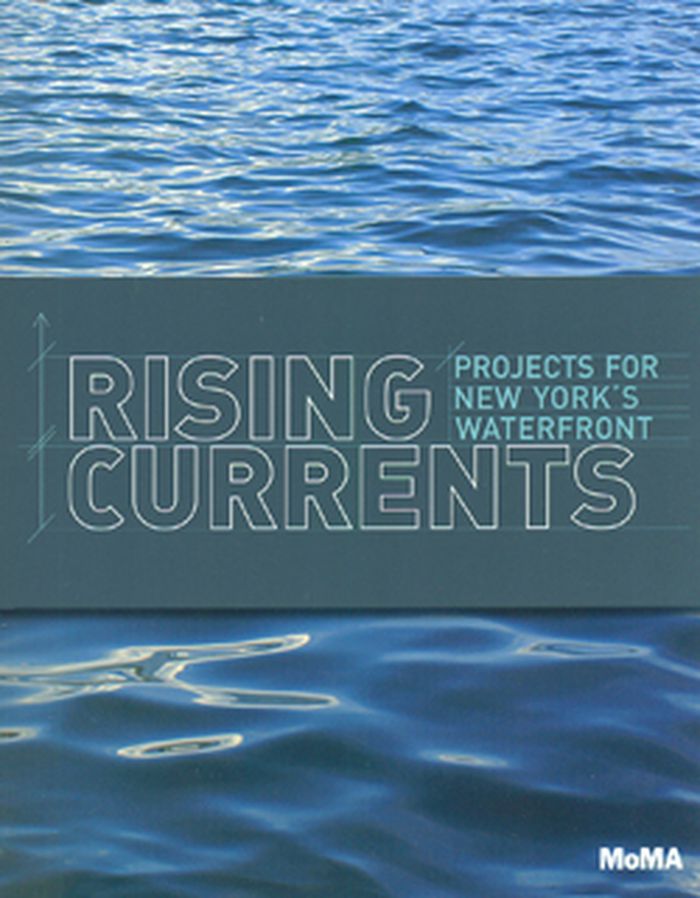
In the fall of 2009, The Museum of Modern Art and MoMA PS1 selected five interdisciplinary teams of architects, engineers and landscape designers to propose solutions to the effects of climate change on New York's waterfront. The resulting proposals, exhibited at MoMA in 2010 in the exhibition "Rising Currents: Projects for New York's Waterfront," emphasize "soft" infrastructure interventions that would make New York City and its surrounding areas more ecologically sound and more resilient in responding to rising sea levels and storm surges. These innovative projects include the creation of salt- and freshwater wetlands, a Venice-like aqueous landscape, habitable piers and man-made islands, and a protective reef of living oysters. Published to document the exhibition, "Rising Currents: Projects for New York's Waterfront" presents these five projects in detail through essays that summarize the innovative workshop and exhibition, the dialogues they engendered with outside experts and political figures involved in regional planning, and the climate change and urban planning implications of the proposed solutions.
Rising currents : projects for New York's waterfront
Actions:
Price:
$27.00
(available to order)
Summary:
In the fall of 2009, The Museum of Modern Art and MoMA PS1 selected five interdisciplinary teams of architects, engineers and landscape designers to propose solutions to the effects of climate change on New York's waterfront. The resulting proposals, exhibited at MoMA in 2010 in the exhibition "Rising Currents: Projects for New York's Waterfront," emphasize "soft" infrastructure interventions that would make New York City and its surrounding areas more ecologically sound and more resilient in responding to rising sea levels and storm surges. These innovative projects include the creation of salt- and freshwater wetlands, a Venice-like aqueous landscape, habitable piers and man-made islands, and a protective reef of living oysters. Published to document the exhibition, "Rising Currents: Projects for New York's Waterfront" presents these five projects in detail through essays that summarize the innovative workshop and exhibition, the dialogues they engendered with outside experts and political figures involved in regional planning, and the climate change and urban planning implications of the proposed solutions.
Form:
books
books
Publication:
June 2011
June 2011
Subject:
Green Architecture
Green Architecture
Form:
books
books
Title:
Pro Eto: That's What
Pro Eto: That's What
Actions:
Price:
$26.95
(available in store)
Summary:
Vladimir Mayakovsky was one of the towering literary figures of pre- and post-revolutionary Russia, speaking as much to the working man (he often employed the rough talk of the streets and revolutionary rhetoric in his poetry) as to other poets (his creative fascination with sound and form, linguistic metamorphosis and variation made him a sort of 'poet's poet', the(...)
$26.95
(available in store)
Summary:
Vladimir Mayakovsky was one of the towering literary figures of pre- and post-revolutionary Russia, speaking as much to the working man (he often employed the rough talk of the streets and revolutionary rhetoric in his poetry) as to other poets (his creative fascination with sound and form, linguistic metamorphosis and variation made him a sort of 'poet's poet', the(...)
Title:
Pro Eto: That's What
Actions:
Price:
$26.95
(available in store)
Summary:
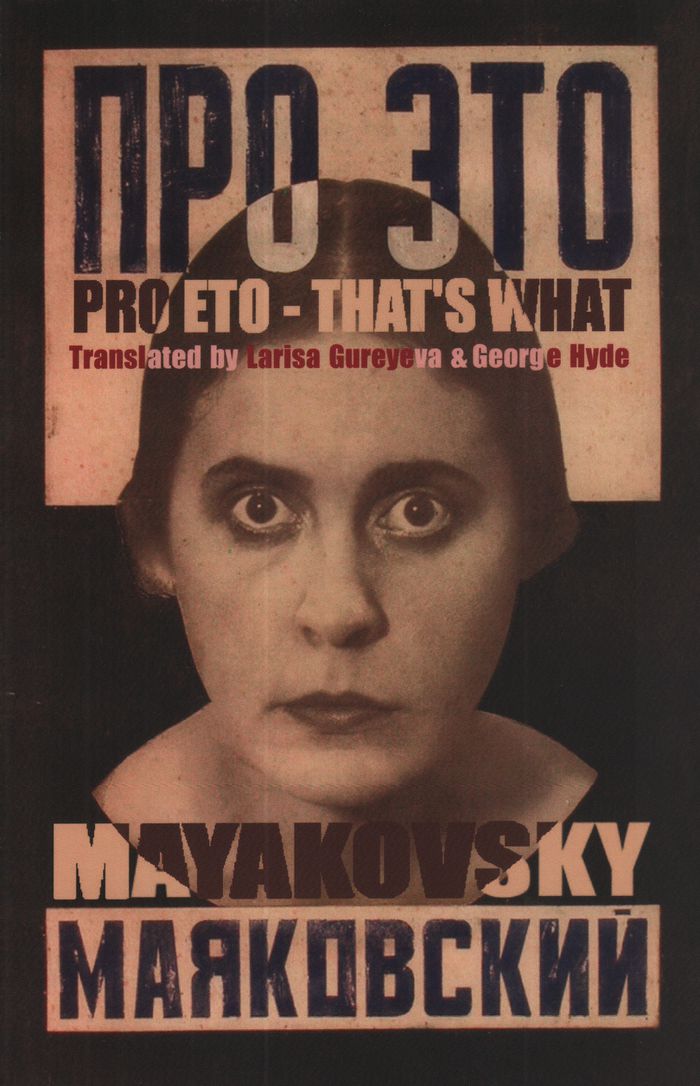
Vladimir Mayakovsky was one of the towering literary figures of pre- and post-revolutionary Russia, speaking as much to the working man (he often employed the rough talk of the streets and revolutionary rhetoric in his poetry) as to other poets (his creative fascination with sound and form, linguistic metamorphosis and variation made him a sort of 'poet's poet', the doyen, if not the envy, of his contemporaries, Pasternak among them). His poetry, influenced by Whitman and Verhaeren and strangely akin to modern rock poetry in its erotic thrust, bluesy complaints and cries of pain, not to mention its sardonic humour, is at once aggressive, mocking and tender, and often fantastic or grotesque. "Pro Eto - That's What" is a long love poem detailing the pain and suffering inflicted on the poet by his lover and her final rejection of him. But as well as being an agonising parable of separation and betrayal, it is also a political work, highly critical of Lenin's reforms of Soviet Socialism.
Pro Eto: That's What
Actions:
Price:
$26.95
(available in store)
Summary:
Vladimir Mayakovsky was one of the towering literary figures of pre- and post-revolutionary Russia, speaking as much to the working man (he often employed the rough talk of the streets and revolutionary rhetoric in his poetry) as to other poets (his creative fascination with sound and form, linguistic metamorphosis and variation made him a sort of 'poet's poet', the doyen, if not the envy, of his contemporaries, Pasternak among them). His poetry, influenced by Whitman and Verhaeren and strangely akin to modern rock poetry in its erotic thrust, bluesy complaints and cries of pain, not to mention its sardonic humour, is at once aggressive, mocking and tender, and often fantastic or grotesque. "Pro Eto - That's What" is a long love poem detailing the pain and suffering inflicted on the poet by his lover and her final rejection of him. But as well as being an agonising parable of separation and betrayal, it is also a political work, highly critical of Lenin's reforms of Soviet Socialism.
Form:
books
books
Publication:
May 2009
May 2009
Subject:
Literature and poetry
Literature and poetry
Form:
books
books
Actions:
Price:
$25.00
(available to order)
Summary:
Perhaps the only postwar classical composer to invest avant-garde music with overt eroticism, Luc Ferrari (1929-2005) was one of France's leading composers of the twentieth century, relentlessly experimental while always preserving his keen sense of humor. Ferrari was a first-generation exponent of musique concrète, and made brilliant use of field recordings to develop(...)
$25.00
(available to order)
Summary:
Perhaps the only postwar classical composer to invest avant-garde music with overt eroticism, Luc Ferrari (1929-2005) was one of France's leading composers of the twentieth century, relentlessly experimental while always preserving his keen sense of humor. Ferrari was a first-generation exponent of musique concrète, and made brilliant use of field recordings to develop(...)
Title:
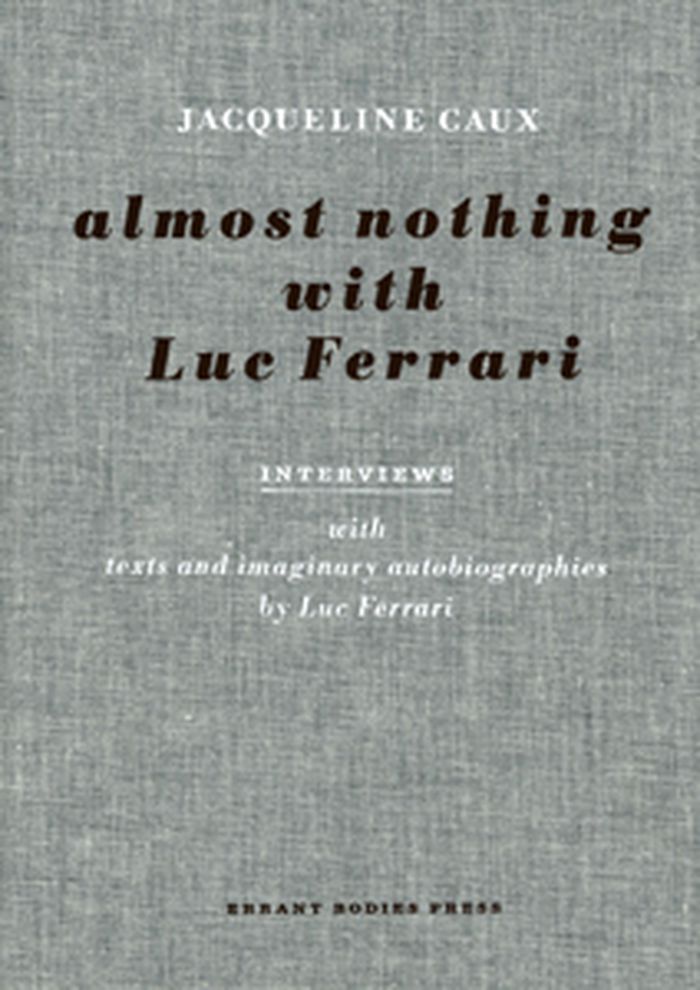
Almost nothing with Luc Ferrari
Actions:
Price:
$25.00
(available to order)
Summary:
Perhaps the only postwar classical composer to invest avant-garde music with overt eroticism, Luc Ferrari (1929-2005) was one of France's leading composers of the twentieth century, relentlessly experimental while always preserving his keen sense of humor. Ferrari was a first-generation exponent of musique concrète, and made brilliant use of field recordings to develop sensual, proto-ambient narrative that he termed "anecdotal music" or "cinema for the ear." Perhaps the most notorious instance of this approach was Danses Organiques (1973), for which Ferrari recorded the meeting and sexual encounter of two young women, cut with other ambient and music sound. In his final decades Ferrari was championed by David Grubbs (of Gastr del Sol), who brought his music to a postrock audience. Almost Nothing is the first publication on this composer. It alternates Jacqueline Caux's interviews with 14 "imaginary autobiographies" by the composer, offering a lively account of new music's most revolutionary era.
Almost nothing with Luc Ferrari
Actions:
Price:
$25.00
(available to order)
Summary:
Perhaps the only postwar classical composer to invest avant-garde music with overt eroticism, Luc Ferrari (1929-2005) was one of France's leading composers of the twentieth century, relentlessly experimental while always preserving his keen sense of humor. Ferrari was a first-generation exponent of musique concrète, and made brilliant use of field recordings to develop sensual, proto-ambient narrative that he termed "anecdotal music" or "cinema for the ear." Perhaps the most notorious instance of this approach was Danses Organiques (1973), for which Ferrari recorded the meeting and sexual encounter of two young women, cut with other ambient and music sound. In his final decades Ferrari was championed by David Grubbs (of Gastr del Sol), who brought his music to a postrock audience. Almost Nothing is the first publication on this composer. It alternates Jacqueline Caux's interviews with 14 "imaginary autobiographies" by the composer, offering a lively account of new music's most revolutionary era.
Form:
books
books
Publication:
March 2012
March 2012
Subject:
Acoustics
Acoustics
Form:
books
books
Actions:
Price:
$72.00
(available to order)
Summary:
The design of infrastructural networks—that is, roads, railways and any system that enables flow within a structure such as a city—is among urban design's foremost tasks. Around the globe, the awareness of enhanced infrastructure fluidity as a catalyst for economic development is rising. The Landscape of Contemporary Infrastructure investigates how infrastructure design(...)
$72.00
(available to order)
Summary:
The design of infrastructural networks—that is, roads, railways and any system that enables flow within a structure such as a city—is among urban design's foremost tasks. Around the globe, the awareness of enhanced infrastructure fluidity as a catalyst for economic development is rising. The Landscape of Contemporary Infrastructure investigates how infrastructure design(...)
Title:
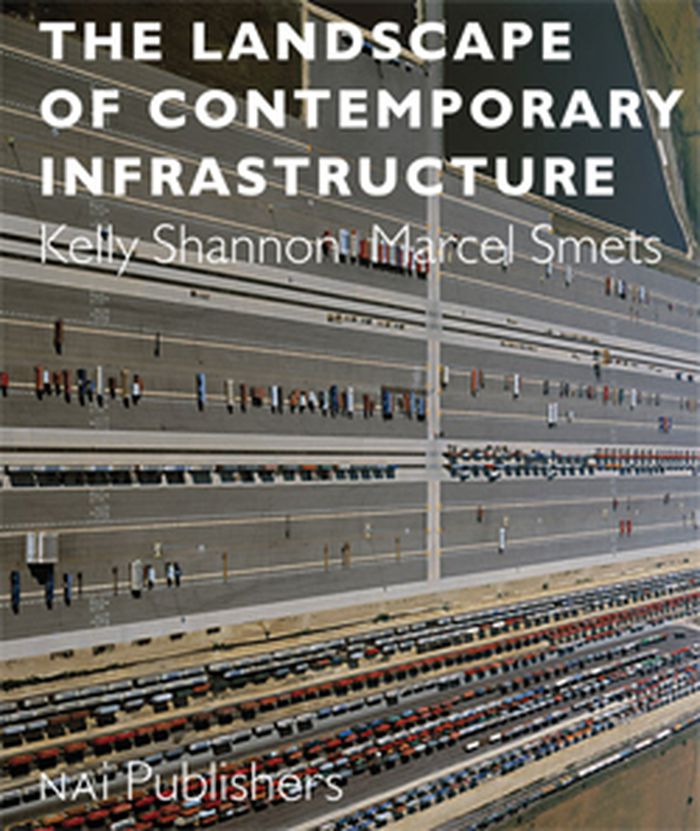
The landscape of contemporary infrastructure
Actions:
Price:
$72.00
(available to order)
Summary:
The design of infrastructural networks—that is, roads, railways and any system that enables flow within a structure such as a city—is among urban design's foremost tasks. Around the globe, the awareness of enhanced infrastructure fluidity as a catalyst for economic development is rising. The Landscape of Contemporary Infrastructure investigates how infrastructure design determines the organization and flow of the inhabited landscape—as an agency of enhanced mobility, as a design feature contributing to the character of a city and as a sound theoretical approach to a positive experience of collective space. These issues are explored in four chapters that catalogue these approaches, each chapter buttressed with key projects from the world's most important designers in this field, including Arata Isozaki, Paul Andreu, Xaveer De Geyter, Jean Nouvel and Ricardo Bofill. The authors demonstrate how the creative potential of architecture, landscape architecture and urban design is essential to the effective flow of infrastructural networks.
The landscape of contemporary infrastructure
Actions:
Price:
$72.00
(available to order)
Summary:
The design of infrastructural networks—that is, roads, railways and any system that enables flow within a structure such as a city—is among urban design's foremost tasks. Around the globe, the awareness of enhanced infrastructure fluidity as a catalyst for economic development is rising. The Landscape of Contemporary Infrastructure investigates how infrastructure design determines the organization and flow of the inhabited landscape—as an agency of enhanced mobility, as a design feature contributing to the character of a city and as a sound theoretical approach to a positive experience of collective space. These issues are explored in four chapters that catalogue these approaches, each chapter buttressed with key projects from the world's most important designers in this field, including Arata Isozaki, Paul Andreu, Xaveer De Geyter, Jean Nouvel and Ricardo Bofill. The authors demonstrate how the creative potential of architecture, landscape architecture and urban design is essential to the effective flow of infrastructural networks.
Form:
books
books
Publication:
March 2010
March 2010
Subject:
Engineering Structures
Engineering Structures
Form:
books
books
Price:
$54.95
(available to order)
Summary:
Façades determine the appearance of a building. Hence, they constitute a major element in architecture. At the same time, the building’s envelope has important functions to fulfil, such as lighting, weatherproofing, thermal insulation, load transfer and sound insulation. Over the past 15 years, façades have become increasingly complex – ‘intelligent’ facades, for(...)
$54.95
(available to order)
Summary:
Façades determine the appearance of a building. Hence, they constitute a major element in architecture. At the same time, the building’s envelope has important functions to fulfil, such as lighting, weatherproofing, thermal insulation, load transfer and sound insulation. Over the past 15 years, façades have become increasingly complex – ‘intelligent’ facades, for(...)
Title:
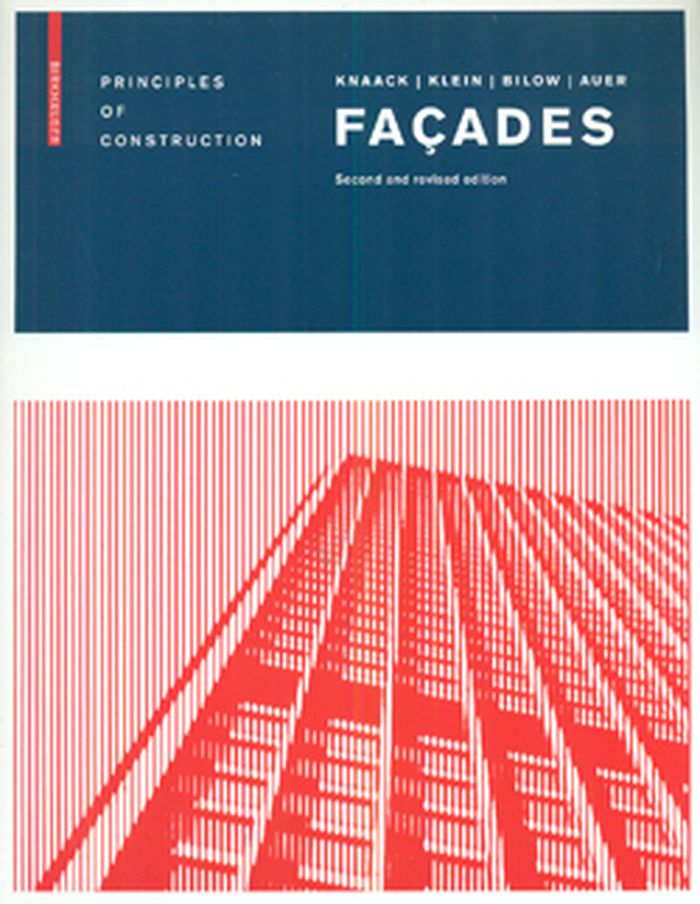
Façades : principles of construction, second and revised edition
Actions:
Price:
$54.95
(available to order)
Summary:
Façades determine the appearance of a building. Hence, they constitute a major element in architecture. At the same time, the building’s envelope has important functions to fulfil, such as lighting, weatherproofing, thermal insulation, load transfer and sound insulation. Over the past 15 years, façades have become increasingly complex – ‘intelligent’ facades, for instance, adapt to changing climate and lighting conditions. Newly developed materials and technologies have broadened the scope of façade functions. This book demonstrates the principles of façade construction. It systematically describes the most common types, such as post-and-beam façade, curtain wall, corridor façade or double façade, and provides guidelines for appropriate detailing. Numerous drawings made especially for the book explain the principles of different types of facades, which are then illustrated with built examples. For this second edition, all chapters were revised and all four examples in the case studies chapter were replaced by new material. The new chapter “Future Façades” offers insights into what’s next.
Façades : principles of construction, second and revised edition
Actions:
Price:
$54.95
(available to order)
Summary:
Façades determine the appearance of a building. Hence, they constitute a major element in architecture. At the same time, the building’s envelope has important functions to fulfil, such as lighting, weatherproofing, thermal insulation, load transfer and sound insulation. Over the past 15 years, façades have become increasingly complex – ‘intelligent’ facades, for instance, adapt to changing climate and lighting conditions. Newly developed materials and technologies have broadened the scope of façade functions. This book demonstrates the principles of façade construction. It systematically describes the most common types, such as post-and-beam façade, curtain wall, corridor façade or double façade, and provides guidelines for appropriate detailing. Numerous drawings made especially for the book explain the principles of different types of facades, which are then illustrated with built examples. For this second edition, all chapters were revised and all four examples in the case studies chapter were replaced by new material. The new chapter “Future Façades” offers insights into what’s next.
Form:
books
books
Publication:
November 2014
November 2014
Subject:
Engineering Structures
Engineering Structures
Form:
books
books
Actions:
Price:
$120.00
(available to order)
Summary:
From Futurism to Fluxus, virtually every twentieth-century avant-garde produced art multiples of some kind, whether to defuse the auratic power of the unique artwork, or to foster a more democratic art culture. The Small Utopia provides a thorough overview of this tendency, looking at Malevich’s tea sets, Bauhaus textiles and toys, early audio multiples, Duchamp’s(...)
$120.00
(available to order)
Summary:
From Futurism to Fluxus, virtually every twentieth-century avant-garde produced art multiples of some kind, whether to defuse the auratic power of the unique artwork, or to foster a more democratic art culture. The Small Utopia provides a thorough overview of this tendency, looking at Malevich’s tea sets, Bauhaus textiles and toys, early audio multiples, Duchamp’s(...)
Title:
The small utopia : ars multiplicata
Actions:
Price:
$120.00
(available to order)
Summary:
From Futurism to Fluxus, virtually every twentieth-century avant-garde produced art multiples of some kind, whether to defuse the auratic power of the unique artwork, or to foster a more democratic art culture. The Small Utopia provides a thorough overview of this tendency, looking at Malevich’s tea sets, Bauhaus textiles and toys, early audio multiples, Duchamp’s readymades, films by Fischinger and Moholy-Nagy, Maciunas’ Fluxus kits, Minimalist and Pop art multiples, artist’s books and small press magazines, among other examples. The scholars who contributed to this volume include Maria Gough on Russian Productivism; Elena Gigli on Giacomo Balla; Annette Malochet on Sonia Delaunay’s Atelier Simultané; Karen Koehler on Bauhaus; Antonio Somaini on early sound art; Adina Kamien-Kazhdan on readymades; Marie Rebecchi on abstract cinema; Nicholas Fox Weber on Josef and Anni Albers; and Julia Robinson on Nouveau Realisme and Fluxus multiples. An illustrated chronology rounds out this essential and handsome publication.
The small utopia : ars multiplicata
Actions:
Price:
$120.00
(available to order)
Summary:
From Futurism to Fluxus, virtually every twentieth-century avant-garde produced art multiples of some kind, whether to defuse the auratic power of the unique artwork, or to foster a more democratic art culture. The Small Utopia provides a thorough overview of this tendency, looking at Malevich’s tea sets, Bauhaus textiles and toys, early audio multiples, Duchamp’s readymades, films by Fischinger and Moholy-Nagy, Maciunas’ Fluxus kits, Minimalist and Pop art multiples, artist’s books and small press magazines, among other examples. The scholars who contributed to this volume include Maria Gough on Russian Productivism; Elena Gigli on Giacomo Balla; Annette Malochet on Sonia Delaunay’s Atelier Simultané; Karen Koehler on Bauhaus; Antonio Somaini on early sound art; Adina Kamien-Kazhdan on readymades; Marie Rebecchi on abstract cinema; Nicholas Fox Weber on Josef and Anni Albers; and Julia Robinson on Nouveau Realisme and Fluxus multiples. An illustrated chronology rounds out this essential and handsome publication.
Form:
books
books
Publication:
October 2012
October 2012
Form:
books
books
Actions:
Price:
$37.95
(available to order)
Summary:
Bringing together media studies and environmental humanities, the contributors to ''Saturation'' develop saturation as a heuristic to analyze phenomena in which the elements involved are difficult or impossible to separate. In ordinary language, saturation describes the condition of being thoroughly soaked, while in chemistry it is the threshold at which something can be(...)
$37.95
(available to order)
Summary:
Bringing together media studies and environmental humanities, the contributors to ''Saturation'' develop saturation as a heuristic to analyze phenomena in which the elements involved are difficult or impossible to separate. In ordinary language, saturation describes the condition of being thoroughly soaked, while in chemistry it is the threshold at which something can be(...)
Subject:
Environment and environmental theory
Environment and environmental theory
Publication:
November 2021
November 2021
Title:
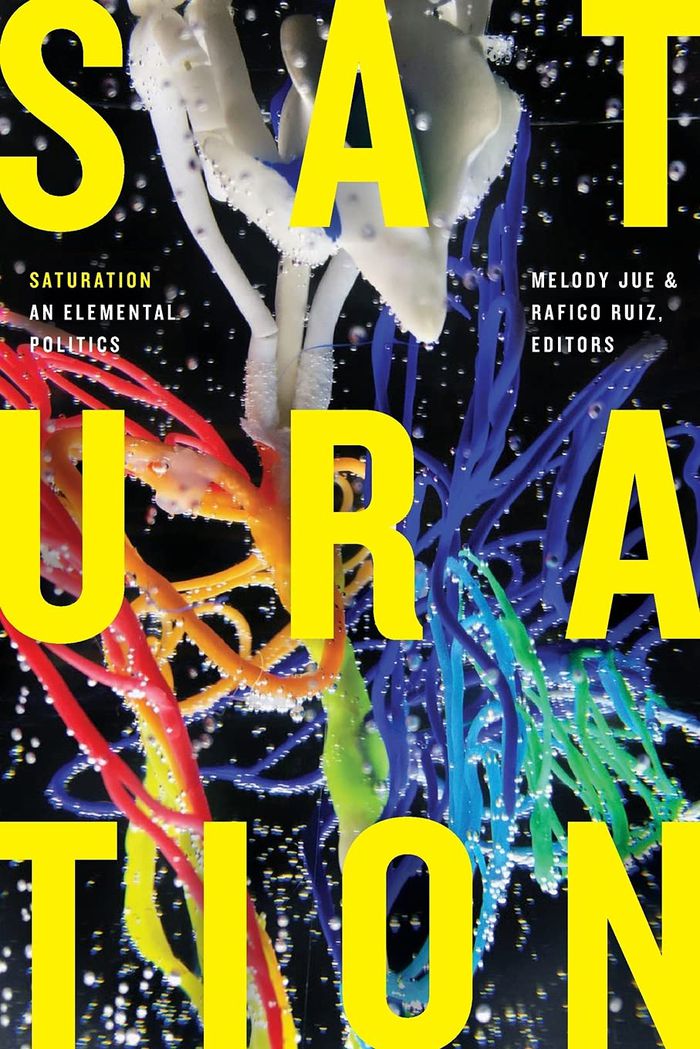
Saturation: an elemental politics
Actions:
Price:
$37.95
(available to order)
Summary:
Bringing together media studies and environmental humanities, the contributors to ''Saturation'' develop saturation as a heuristic to analyze phenomena in which the elements involved are difficult or impossible to separate. In ordinary language, saturation describes the condition of being thoroughly soaked, while in chemistry it is the threshold at which something can be maximally dissolved or absorbed in a solution. Contributors to this collection expand notions of saturation beyond water to consider saturation in sound, infrastructure, media, Big Data, capitalism, and visual culture. Essays include analyses of the thresholds of HIV detectability in bloodwork, militarism's saturation of oceans, and the deleterious effects of the saturation of cellphone and wi-fi signals into the human body. By channeling saturation to explore the relationship between media, the environment, technology, capital, and the legacies of settler colonialism, ''Saturation'' illuminates how elements, the natural world, and anthropogenic infrastructures, politics, and processes exist in and through each other.
Saturation: an elemental politics
Actions:
Price:
$37.95
(available to order)
Summary:
Bringing together media studies and environmental humanities, the contributors to ''Saturation'' develop saturation as a heuristic to analyze phenomena in which the elements involved are difficult or impossible to separate. In ordinary language, saturation describes the condition of being thoroughly soaked, while in chemistry it is the threshold at which something can be maximally dissolved or absorbed in a solution. Contributors to this collection expand notions of saturation beyond water to consider saturation in sound, infrastructure, media, Big Data, capitalism, and visual culture. Essays include analyses of the thresholds of HIV detectability in bloodwork, militarism's saturation of oceans, and the deleterious effects of the saturation of cellphone and wi-fi signals into the human body. By channeling saturation to explore the relationship between media, the environment, technology, capital, and the legacies of settler colonialism, ''Saturation'' illuminates how elements, the natural world, and anthropogenic infrastructures, politics, and processes exist in and through each other.
Form:
books
books
Publication:
November 2021
November 2021
Subject:
Environment and environmental theory
Environment and environmental theory


