


418 Results
Form:
books
books
Actions:
Holdings:
Description:
373 pages : illustrations ; 33 cm
Description:
373 pages : illustrations ; 33 cm
Author:
Subject:
Publication:
London ; New York : Phaidon Press, 2013.
London ; New York : Phaidon Press, 2013.
Title:
Art & place : site-specific art of the Americas.
Actions:
Holdings:
Description:
373 pages : illustrations ; 33 cm
Art & place : site-specific art of the Americas.
Actions:
Holdings:
Description:
373 pages : illustrations ; 33 cm
Form:
books
books
Publication:
London ; New York : Phaidon Press, 2013.
London ; New York : Phaidon Press, 2013.
Author:
Subject:
Form:
books
books
Title:
Destination art
Destination art
Actions:
Price:
$49.95
(available to order)
Summary:
This is the first critical guide to the two hundred most important modern and contemporary art sites around the world. Designed for the international art tourist as a critical reference, "Destination Art" provides an accessible chronological survey of important large-scale and public works of twentieth- and twenty-first-century art. Encompassing land and environmental(...)
$49.95
(available to order)
Summary:
This is the first critical guide to the two hundred most important modern and contemporary art sites around the world. Designed for the international art tourist as a critical reference, "Destination Art" provides an accessible chronological survey of important large-scale and public works of twentieth- and twenty-first-century art. Encompassing land and environmental(...)
Title:
Destination art
Actions:
Price:
$49.95
(available to order)
Summary:
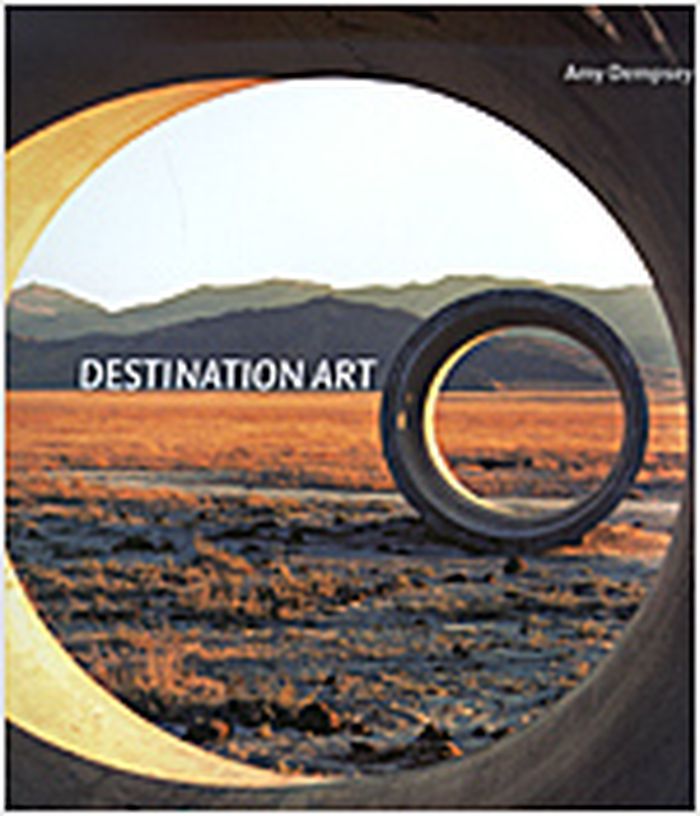
This is the first critical guide to the two hundred most important modern and contemporary art sites around the world. Designed for the international art tourist as a critical reference, "Destination Art" provides an accessible chronological survey of important large-scale and public works of twentieth- and twenty-first-century art. Encompassing land and environmental works, sculpture parks, architectural follies, site-specific installations, and entire towns turned over to the display of art, this book chronicles works that have achieved near-mythical status since they were created. Among the artists included are Henri Matisse, Antoni Gaudí, Jean Tinguely, Constantin Brancusi, James Turrell, Richard Serra, Robert Smithson, and Antony Gormley. The book provides visitor information, including hours and admission fees, directions, contact details and websites, and further reading. Fifty art destinations are featured in substantial essays, with accounts of their histories and descriptions of their sites.
Destination art
Actions:
Price:
$49.95
(available to order)
Summary:
This is the first critical guide to the two hundred most important modern and contemporary art sites around the world. Designed for the international art tourist as a critical reference, "Destination Art" provides an accessible chronological survey of important large-scale and public works of twentieth- and twenty-first-century art. Encompassing land and environmental works, sculpture parks, architectural follies, site-specific installations, and entire towns turned over to the display of art, this book chronicles works that have achieved near-mythical status since they were created. Among the artists included are Henri Matisse, Antoni Gaudí, Jean Tinguely, Constantin Brancusi, James Turrell, Richard Serra, Robert Smithson, and Antony Gormley. The book provides visitor information, including hours and admission fees, directions, contact details and websites, and further reading. Fifty art destinations are featured in substantial essays, with accounts of their histories and descriptions of their sites.
Form:
books
books
Publication:
January 1900, Berkeley / Los Angeles
January 1900, Berkeley / Los Angeles
Subject:
Land Art
Land Art
Form:
books
books
Actions:
Price:
$25.00
(available in store)
Summary:
This book presents the transcript of a conference held at the Nova Scotia College of Art and Design on October 5–6, 1970, organized by Seth Siegelaub. Attendees at the event included Carl Andre, Joseph Beuys, Ronald Bladen, Daniel Buren, John Chamberlain, Jan Dibbets, Al Held, Robert Irwin, Mario Merz, Robert Morris, Robert Murray, The N.E. Thing Company (Iain and Ingrid(...)
$25.00
(available in store)
Summary:
This book presents the transcript of a conference held at the Nova Scotia College of Art and Design on October 5–6, 1970, organized by Seth Siegelaub. Attendees at the event included Carl Andre, Joseph Beuys, Ronald Bladen, Daniel Buren, John Chamberlain, Jan Dibbets, Al Held, Robert Irwin, Mario Merz, Robert Morris, Robert Murray, The N.E. Thing Company (Iain and Ingrid(...)
Title:
The Halifax Conference: October 5th and 6th, 1970
Actions:
Price:
$25.00
(available in store)
Summary:
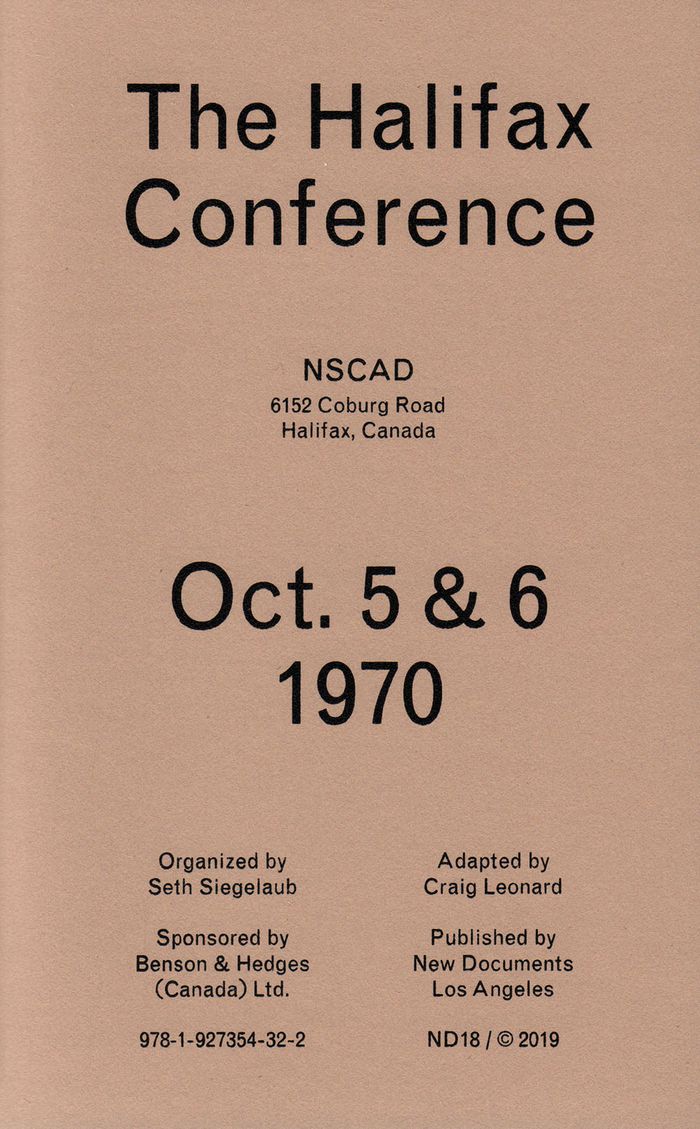
This book presents the transcript of a conference held at the Nova Scotia College of Art and Design on October 5–6, 1970, organized by Seth Siegelaub. Attendees at the event included Carl Andre, Joseph Beuys, Ronald Bladen, Daniel Buren, John Chamberlain, Jan Dibbets, Al Held, Robert Irwin, Mario Merz, Robert Morris, Robert Murray, The N.E. Thing Company (Iain and Ingrid Baxter), Richard Serra, Richard Smith, Robert Smithson, Michael Snow and Lawrence Weiner. The Halifax Conference was conceived as a means of bringing about a meeting of recognized artists representing diverse kinds of art from different parts of the world, in as general a situation as possible. Infamously, the conference was held in the college's boardroom, while students and other interested parties watched the proceedings on a video monitor in a separate space. The result was a conversation that devolved—technologically and ideologically—into quasi-tragicomic farce.
The Halifax Conference: October 5th and 6th, 1970
Actions:
Price:
$25.00
(available in store)
Summary:
This book presents the transcript of a conference held at the Nova Scotia College of Art and Design on October 5–6, 1970, organized by Seth Siegelaub. Attendees at the event included Carl Andre, Joseph Beuys, Ronald Bladen, Daniel Buren, John Chamberlain, Jan Dibbets, Al Held, Robert Irwin, Mario Merz, Robert Morris, Robert Murray, The N.E. Thing Company (Iain and Ingrid Baxter), Richard Serra, Richard Smith, Robert Smithson, Michael Snow and Lawrence Weiner. The Halifax Conference was conceived as a means of bringing about a meeting of recognized artists representing diverse kinds of art from different parts of the world, in as general a situation as possible. Infamously, the conference was held in the college's boardroom, while students and other interested parties watched the proceedings on a video monitor in a separate space. The result was a conversation that devolved—technologically and ideologically—into quasi-tragicomic farce.
Form:
books
books
Publication:
September 2019
September 2019
Subject:
Canadian art
Canadian art
Form:
journals and magazines
journals and magazines
Actions:
Price:
$42.95
(available to order)
Summary:
Breuer was extremely prolific and produced a wide-ranging output that extends from large-scale projects to furniture. A major part of his oeuvre consists of single-family dwellings, many of which are found in the United States. This issue of "2G" brings together a selection of his more important houses: from the first examples at the end of the 1930s, in which (...)
$42.95
(available to order)
Summary:
Breuer was extremely prolific and produced a wide-ranging output that extends from large-scale projects to furniture. A major part of his oeuvre consists of single-family dwellings, many of which are found in the United States. This issue of "2G" brings together a selection of his more important houses: from the first examples at the end of the 1930s, in which (...)
Subject:
Magazines
Magazines
Publication:
June 2001, Barcelona
June 2001, Barcelona
Title:
2G 17 : Marcel Breuer, American houses
Actions:
Price:
$42.95
(available to order)
Summary:
Breuer was extremely prolific and produced a wide-ranging output that extends from large-scale projects to furniture. A major part of his oeuvre consists of single-family dwellings, many of which are found in the United States. This issue of "2G" brings together a selection of his more important houses: from the first examples at the end of the 1930s, in which the influence of the Bauhaus is still very strong, to those of the 1960s in which Breuer has encountered his own highly original language. Works and projects include: Hagerty House, Cohasset; Breuer I House, Lincoln; Robinson House, Williamstown; Breuer II House, New Canaan; Breuer Cottage, Wellfleet; Kepes Cottage, Wellfleet; Stillman Beach Cottage, Wellfleet; Wise Cottage, Wellfleet; Exhibition House in the MOMA Garden; Pocantico, Tarrytown; Clark House, Orange; Pack House, Scarsdale; Grieco House, Andover; Hooper House, Baltimore; Starkey House, Duluth; Stillman II House, Lichfield. The nexus section comprises texts by Peter Smithson, Marcel, Breuer, Mathias Klotz, and Amy Lelyveld.
2G 17 : Marcel Breuer, American houses
Actions:
Price:
$42.95
(available to order)
Summary:
Breuer was extremely prolific and produced a wide-ranging output that extends from large-scale projects to furniture. A major part of his oeuvre consists of single-family dwellings, many of which are found in the United States. This issue of "2G" brings together a selection of his more important houses: from the first examples at the end of the 1930s, in which the influence of the Bauhaus is still very strong, to those of the 1960s in which Breuer has encountered his own highly original language. Works and projects include: Hagerty House, Cohasset; Breuer I House, Lincoln; Robinson House, Williamstown; Breuer II House, New Canaan; Breuer Cottage, Wellfleet; Kepes Cottage, Wellfleet; Stillman Beach Cottage, Wellfleet; Wise Cottage, Wellfleet; Exhibition House in the MOMA Garden; Pocantico, Tarrytown; Clark House, Orange; Pack House, Scarsdale; Grieco House, Andover; Hooper House, Baltimore; Starkey House, Duluth; Stillman II House, Lichfield. The nexus section comprises texts by Peter Smithson, Marcel, Breuer, Mathias Klotz, and Amy Lelyveld.
Form:
journals and magazines
journals and magazines
Publication:
June 2001, Barcelona
June 2001, Barcelona
Subject:
Magazines
Magazines
Form:
books
books

Actions:
Price:
$47.25
(available to order)
Summary:
In 1969, House and Garden magazine commissioned one of the first minimalist artists, Patricia Johanson, to propose new directions for American garden art. Having never been exhibited or published before as a whole, the resulting garden proposals reveal an unknown dimension of the New York art world of the late 1960s. Three years of research have brought 146 surviving(...)
$47.25
(available to order)
Summary:
In 1969, House and Garden magazine commissioned one of the first minimalist artists, Patricia Johanson, to propose new directions for American garden art. Having never been exhibited or published before as a whole, the resulting garden proposals reveal an unknown dimension of the New York art world of the late 1960s. Three years of research have brought 146 surviving(...)
Title:
Patricia Johanson's House & Gardens commission: reconstruction of modernity
Actions:
Price:
$47.25
(available to order)
Summary:
In 1969, House and Garden magazine commissioned one of the first minimalist artists, Patricia Johanson, to propose new directions for American garden art. Having never been exhibited or published before as a whole, the resulting garden proposals reveal an unknown dimension of the New York art world of the late 1960s. Three years of research have brought 146 surviving drawings to light. They demonstrate the intimate progress of the artist’s engagement with nature in her quest for an art concerned with ethical relationships between humans and the natural world. Shuttling between the West and the East, and the contemporary and the historical, Johanson takes equal distances from earthworks created by her peer artists such as Robert Smithson, and the environmentalism advocated by landscape architects following Ian McHarg. Her vision of a new modernity is still significant today. The book is divided into 2 volumes, and includes a preface by Stephen Bann and a catalogue of 146 original garden proposals.
Patricia Johanson's House & Gardens commission: reconstruction of modernity
Actions:
Price:
$47.25
(available to order)
Summary:
In 1969, House and Garden magazine commissioned one of the first minimalist artists, Patricia Johanson, to propose new directions for American garden art. Having never been exhibited or published before as a whole, the resulting garden proposals reveal an unknown dimension of the New York art world of the late 1960s. Three years of research have brought 146 surviving drawings to light. They demonstrate the intimate progress of the artist’s engagement with nature in her quest for an art concerned with ethical relationships between humans and the natural world. Shuttling between the West and the East, and the contemporary and the historical, Johanson takes equal distances from earthworks created by her peer artists such as Robert Smithson, and the environmentalism advocated by landscape architects following Ian McHarg. Her vision of a new modernity is still significant today. The book is divided into 2 volumes, and includes a preface by Stephen Bann and a catalogue of 146 original garden proposals.
Form:
books
books
Publication:
March 2008, Dumbarton Oaks
March 2008, Dumbarton Oaks
Subject:
Landscape Architecture, Monographs
Landscape Architecture, Monographs
Form:
books
books
Actions:
Price:
$60.00
(available to order)
Summary:
Shrinking cities have pushed urban design and classical city planning to their limits. This new challenge requires new approaches in which the "hard" tools of construction are joined by the "soft" tools of political, social, cultural, and communicative interventions. This book provides an international overview of experimental concepts for taking action in shrinking(...)
$60.00
(available to order)
Summary:
Shrinking cities have pushed urban design and classical city planning to their limits. This new challenge requires new approaches in which the "hard" tools of construction are joined by the "soft" tools of political, social, cultural, and communicative interventions. This book provides an international overview of experimental concepts for taking action in shrinking(...)
Title:
Shrinking cities, volume 2: interventions
Actions:
Price:
$60.00
(available to order)
Summary:
Shrinking cities have pushed urban design and classical city planning to their limits. This new challenge requires new approaches in which the "hard" tools of construction are joined by the "soft" tools of political, social, cultural, and communicative interventions. This book provides an international overview of experimental concepts for taking action in shrinking cities from the fields of architecture, landscape architecture, urban construction, the media, performance, and art. The approaches range from artistic intercessions and self-empowerment projects to architectural and landscape interventions, and from strategies of media communication and city marketing to new legal regulations and utopian designs. A series of essays provides a critical discussion of both successful and failed projects of recent decades from such countries as the United States, Great Britain, the Netherlands, Austria, Russia, and Japan. Projects featured (selection): William Alsop, Crimson, Jeremy Deller, Gordon Matta-Clark, OMA, Cedric Price, Andreas Siekmann, Robert Smithson, Superflex, O. M. Ungers
Shrinking cities, volume 2: interventions
Actions:
Price:
$60.00
(available to order)
Summary:
Shrinking cities have pushed urban design and classical city planning to their limits. This new challenge requires new approaches in which the "hard" tools of construction are joined by the "soft" tools of political, social, cultural, and communicative interventions. This book provides an international overview of experimental concepts for taking action in shrinking cities from the fields of architecture, landscape architecture, urban construction, the media, performance, and art. The approaches range from artistic intercessions and self-empowerment projects to architectural and landscape interventions, and from strategies of media communication and city marketing to new legal regulations and utopian designs. A series of essays provides a critical discussion of both successful and failed projects of recent decades from such countries as the United States, Great Britain, the Netherlands, Austria, Russia, and Japan. Projects featured (selection): William Alsop, Crimson, Jeremy Deller, Gordon Matta-Clark, OMA, Cedric Price, Andreas Siekmann, Robert Smithson, Superflex, O. M. Ungers
Form:
books
books
Publication:
June 2006, Ostfildern
June 2006, Ostfildern
Subject:
Urban Theory
Urban Theory
Form:
journals and magazines
journals and magazines
Actions:
Price:
$39.95
(available to order)
Summary:
Sommaire : Pratiquement nature, par David Leatherbarrow ; Le Pittoresque généralisé ou de l’unité critique de la fabrique , par Philippe Nys ; Vers un paysage plus global : un “habitat-territoire”, par Bernard Lassus ; Parc d’Alboran, Almería, Espagne, par José Luis Daroca , Pilar Mencia ; Aménagements paysagers, Aéroport de Schiphol, Amsterdam, Pays-Bas, West 8 ; Parc(...)
$39.95
(available to order)
Summary:
Sommaire : Pratiquement nature, par David Leatherbarrow ; Le Pittoresque généralisé ou de l’unité critique de la fabrique , par Philippe Nys ; Vers un paysage plus global : un “habitat-territoire”, par Bernard Lassus ; Parc d’Alboran, Almería, Espagne, par José Luis Daroca , Pilar Mencia ; Aménagements paysagers, Aéroport de Schiphol, Amsterdam, Pays-Bas, West 8 ; Parc(...)
Title:
L'architecture d'aujourd'hui 363 : paysages landscapes
Actions:
Price:
$39.95
(available to order)
Summary:
Sommaire : Pratiquement nature, par David Leatherbarrow ; Le Pittoresque généralisé ou de l’unité critique de la fabrique , par Philippe Nys ; Vers un paysage plus global : un “habitat-territoire”, par Bernard Lassus ; Parc d’Alboran, Almería, Espagne, par José Luis Daroca , Pilar Mencia ; Aménagements paysagers, Aéroport de Schiphol, Amsterdam, Pays-Bas, West 8 ; Parc mfo à Oerlikon, Zürich, Suisse, Burckhardt + Partner ; Esplanade du Forum des cultures, Barcelone, Espagne, Foreign Office Architects (foa ; Aménagements paysagers. Passeig de Garcia Faria, Barcelone, Espagne, Ravetllat , Ribas ; Parc et couverture partielle. Gran Via, Barcelone, Espagne, Fiol, Arriola ; Ile flottante. Manhattan, New York, Etats-Unis, Robert Smithson ; Aménagements paysagers. autoroute sud, Vienne, Autriche, Anna Detzlhofer, Max Rieder ; Observatoire. Nieuw-Terbregge, Rotterdam, Pays-Bas, Groupe Observatorium ; Otium Leinewijk, installation. Hoogezand, Groningue, Pays-Bas, Groupe Observatorium ; Parc de Cabecera, Valence, Espagne, Correl, De Miguel, Muñoz ; Parc de la Fontsanta. Sant Joan Despí, Catalogne, Espagne, Manuel Ruisanchez ; Aménagement littoral. Plage du Ponant, Benidorm, Espagne, Carlos Ferrater. Portfolio : Paysages de l’atome par Mathilde Roman.
L'architecture d'aujourd'hui 363 : paysages landscapes
Actions:
Price:
$39.95
(available to order)
Summary:
Sommaire : Pratiquement nature, par David Leatherbarrow ; Le Pittoresque généralisé ou de l’unité critique de la fabrique , par Philippe Nys ; Vers un paysage plus global : un “habitat-territoire”, par Bernard Lassus ; Parc d’Alboran, Almería, Espagne, par José Luis Daroca , Pilar Mencia ; Aménagements paysagers, Aéroport de Schiphol, Amsterdam, Pays-Bas, West 8 ; Parc mfo à Oerlikon, Zürich, Suisse, Burckhardt + Partner ; Esplanade du Forum des cultures, Barcelone, Espagne, Foreign Office Architects (foa ; Aménagements paysagers. Passeig de Garcia Faria, Barcelone, Espagne, Ravetllat , Ribas ; Parc et couverture partielle. Gran Via, Barcelone, Espagne, Fiol, Arriola ; Ile flottante. Manhattan, New York, Etats-Unis, Robert Smithson ; Aménagements paysagers. autoroute sud, Vienne, Autriche, Anna Detzlhofer, Max Rieder ; Observatoire. Nieuw-Terbregge, Rotterdam, Pays-Bas, Groupe Observatorium ; Otium Leinewijk, installation. Hoogezand, Groningue, Pays-Bas, Groupe Observatorium ; Parc de Cabecera, Valence, Espagne, Correl, De Miguel, Muñoz ; Parc de la Fontsanta. Sant Joan Despí, Catalogne, Espagne, Manuel Ruisanchez ; Aménagement littoral. Plage du Ponant, Benidorm, Espagne, Carlos Ferrater. Portfolio : Paysages de l’atome par Mathilde Roman.
Form:
journals and magazines
journals and magazines
Publication:
March 2006, Paris
March 2006, Paris
Subject:
Magazines
Magazines
Form:
books
books
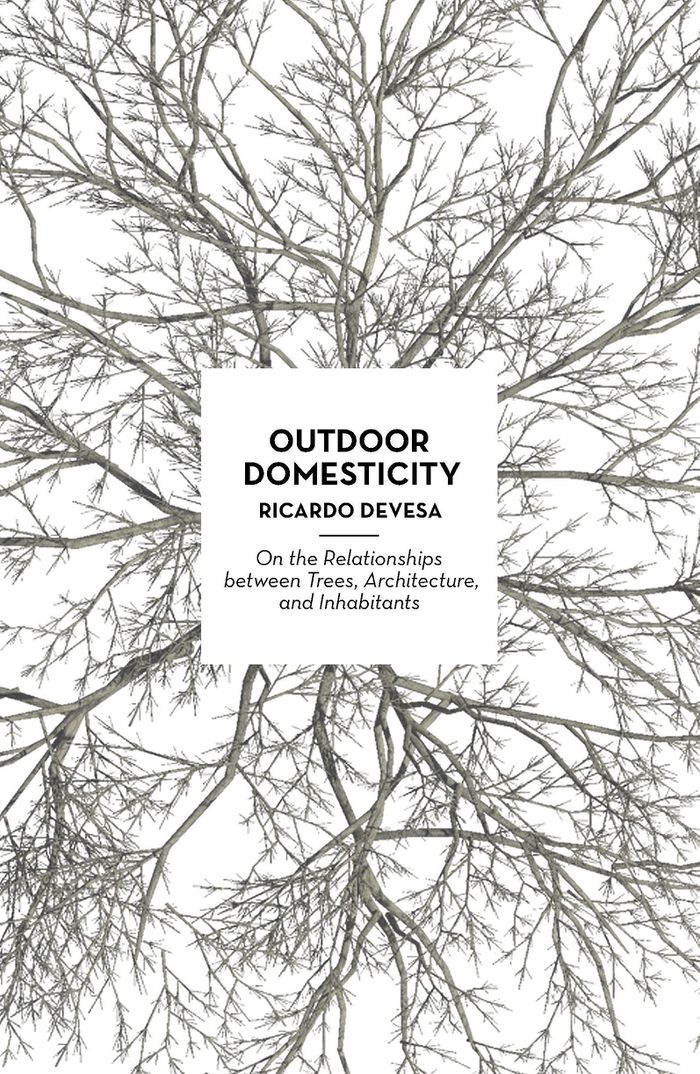
Actions:
Price:
$48.95
(available to order)
Summary:
Trees have been deliberately connected with houses since they were introduced as a prominent part of architectural design. The relationships of contiguity between houses and trees have existed since ancient times. However, at the end of the 19th century those links became explicit in the design process, as the house emerged as one of the fundamental architectural(...)
$48.95
(available to order)
Summary:
Trees have been deliberately connected with houses since they were introduced as a prominent part of architectural design. The relationships of contiguity between houses and trees have existed since ancient times. However, at the end of the 19th century those links became explicit in the design process, as the house emerged as one of the fundamental architectural(...)
Title:
Outdoor domesticity: Houses and trees
Actions:
Price:
$48.95
(available to order)
Summary:
Trees have been deliberately connected with houses since they were introduced as a prominent part of architectural design. The relationships of contiguity between houses and trees have existed since ancient times. However, at the end of the 19th century those links became explicit in the design process, as the house emerged as one of the fundamental architectural programs, and as the result of an increasing sensibility towards environmental aspects and the landscape. The first part of this publication is to present a collection of exemplary five houses that evinced explicit relationships with pre-existing trees. The five twentieth century projects are: La Casa (B. Rudofsky, 1969), Cottage Caesar (M. Breuer, 1951), Ville La Roche (Le Corbusier & P. Jeanneret, 1923), Villa Pepa (J. Navarro Baldeweg, 1994) and Hexenhaus (A. & P. Smithson, 1984-2002). The second part of the book contributes three theoretical concerns for the contemporary project, those ones which are established in the process, with respect to time, place and outdoor domesticity in modern western housing.
Outdoor domesticity: Houses and trees
Actions:
Price:
$48.95
(available to order)
Summary:
Trees have been deliberately connected with houses since they were introduced as a prominent part of architectural design. The relationships of contiguity between houses and trees have existed since ancient times. However, at the end of the 19th century those links became explicit in the design process, as the house emerged as one of the fundamental architectural programs, and as the result of an increasing sensibility towards environmental aspects and the landscape. The first part of this publication is to present a collection of exemplary five houses that evinced explicit relationships with pre-existing trees. The five twentieth century projects are: La Casa (B. Rudofsky, 1969), Cottage Caesar (M. Breuer, 1951), Ville La Roche (Le Corbusier & P. Jeanneret, 1923), Villa Pepa (J. Navarro Baldeweg, 1994) and Hexenhaus (A. & P. Smithson, 1984-2002). The second part of the book contributes three theoretical concerns for the contemporary project, those ones which are established in the process, with respect to time, place and outdoor domesticity in modern western housing.
Form:
books
books
Publication:
May 2022
May 2022
Subject:
Landscape Theory
Landscape Theory
Form:
books
books
Actions:
Price:
$27.95
(available to order)
Summary:
Artists surveyed include: Chantal Akerman, Francis Alÿs, Vladimir Arkhipov, Ian Breakwell, Stanley Brouwn, Sophie Calle, Marcel Duchamp, Fischli & Weiss, Nan Goldin, Dan Graham, Mona Hatoum, Susan Hiller, Ilya and Emilia Kabakov, Mary Kelly, Lettrist International, Jonas Mekas, Annette Messager, Aleksandra Mir, Roman Ondák, Yoko Ono, Gabriel Orozco, Martha Rosler, Allen(...)
$27.95
(available to order)
Summary:
Artists surveyed include: Chantal Akerman, Francis Alÿs, Vladimir Arkhipov, Ian Breakwell, Stanley Brouwn, Sophie Calle, Marcel Duchamp, Fischli & Weiss, Nan Goldin, Dan Graham, Mona Hatoum, Susan Hiller, Ilya and Emilia Kabakov, Mary Kelly, Lettrist International, Jonas Mekas, Annette Messager, Aleksandra Mir, Roman Ondák, Yoko Ono, Gabriel Orozco, Martha Rosler, Allen(...)
Subject:
Contemporary Art Monographs
Contemporary Art Monographs
Publication:
March 2008, London/Massachusetts
March 2008, London/Massachusetts
Title:
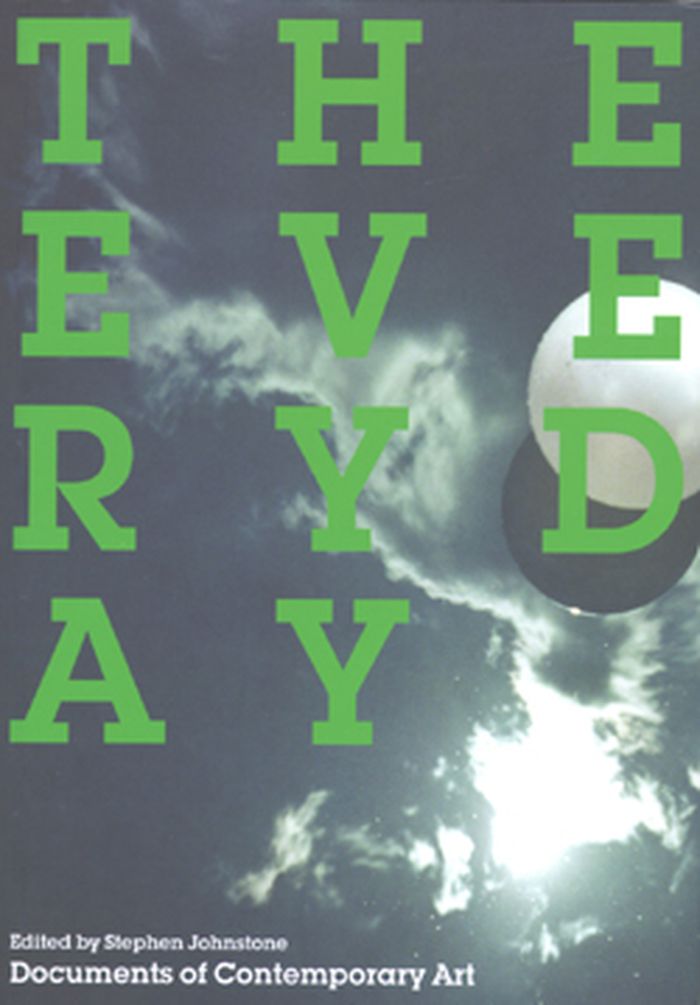
The everyday: Documents on contemporary art
Actions:
Price:
$27.95
(available to order)
Summary:
Artists surveyed include: Chantal Akerman, Francis Alÿs, Vladimir Arkhipov, Ian Breakwell, Stanley Brouwn, Sophie Calle, Marcel Duchamp, Fischli & Weiss, Nan Goldin, Dan Graham, Mona Hatoum, Susan Hiller, Ilya and Emilia Kabakov, Mary Kelly, Lettrist International, Jonas Mekas, Annette Messager, Aleksandra Mir, Roman Ondák, Yoko Ono, Gabriel Orozco, Martha Rosler, Allen Ruppersberg, Daniel Spoerri, Wolfgang Tillmans, Mierle Laderman Ukeles, Andy Warhol, Richard Wentworth, Stephen Willats. Writers include: Paul Auster, Maurice Blanchot, Geoff Dyer, Hal Foster, Suzy Gablik, Ben Highmore, Henri Lefebvre, Lucy R. Lippard, Michel Maffesoli, Helen Molesworth, Nikos Papastergiadis, Georges Perec, John Roberts, David Ross, Nicholas Serota, Michael Sheringham, Alison and Peter Smithson, Abigail Solomon-Godeau, Jeff Wall, Jonathan Watkins. About the Editor: Stephen Johnstone is a London-based artist and filmmaker and a Senior Lecturer in the Department of Art at Goldsmiths College, London. Since 1993, he has worked collaboratively with Graham Ellard, and their film and video work has been exhibited in museums and galleries including the Centre Pompidou, the Tate Liverpool, the Museum of Modern Art, Sydney, and the National Film Theatre, London.
The everyday: Documents on contemporary art
Actions:
Price:
$27.95
(available to order)
Summary:
Artists surveyed include: Chantal Akerman, Francis Alÿs, Vladimir Arkhipov, Ian Breakwell, Stanley Brouwn, Sophie Calle, Marcel Duchamp, Fischli & Weiss, Nan Goldin, Dan Graham, Mona Hatoum, Susan Hiller, Ilya and Emilia Kabakov, Mary Kelly, Lettrist International, Jonas Mekas, Annette Messager, Aleksandra Mir, Roman Ondák, Yoko Ono, Gabriel Orozco, Martha Rosler, Allen Ruppersberg, Daniel Spoerri, Wolfgang Tillmans, Mierle Laderman Ukeles, Andy Warhol, Richard Wentworth, Stephen Willats. Writers include: Paul Auster, Maurice Blanchot, Geoff Dyer, Hal Foster, Suzy Gablik, Ben Highmore, Henri Lefebvre, Lucy R. Lippard, Michel Maffesoli, Helen Molesworth, Nikos Papastergiadis, Georges Perec, John Roberts, David Ross, Nicholas Serota, Michael Sheringham, Alison and Peter Smithson, Abigail Solomon-Godeau, Jeff Wall, Jonathan Watkins. About the Editor: Stephen Johnstone is a London-based artist and filmmaker and a Senior Lecturer in the Department of Art at Goldsmiths College, London. Since 1993, he has worked collaboratively with Graham Ellard, and their film and video work has been exhibited in museums and galleries including the Centre Pompidou, the Tate Liverpool, the Museum of Modern Art, Sydney, and the National Film Theatre, London.
Form:
books
books
Publication:
March 2008, London/Massachusetts
March 2008, London/Massachusetts
Subject:
Contemporary Art Monographs
Contemporary Art Monographs
Form:
books
books

Title:
Carme Pinos : architectures
Carme Pinos : architectures
Actions:
Price:
$65.95
(available to order)
Summary:
Not only a complete monograph of Carme Pis architectural oeuvre, "Carme Pis : architectures" traces the development of her practice over several decades via an in-depth investigation of the recurring themes and concerns that inform her work. Through studies of significant city projects and selected works, critical contributions from Peter Smithson, Daniela Colafranceschi,(...)
$65.95
(available to order)
Summary:
Not only a complete monograph of Carme Pis architectural oeuvre, "Carme Pis : architectures" traces the development of her practice over several decades via an in-depth investigation of the recurring themes and concerns that inform her work. Through studies of significant city projects and selected works, critical contributions from Peter Smithson, Daniela Colafranceschi,(...)
Title:
Carme Pinos : architectures
Actions:
Price:
$65.95
(available to order)
Summary:
Not only a complete monograph of Carme Pis architectural oeuvre, "Carme Pis : architectures" traces the development of her practice over several decades via an in-depth investigation of the recurring themes and concerns that inform her work. Through studies of significant city projects and selected works, critical contributions from Peter Smithson, Daniela Colafranceschi, Rafael Moneo, Pedro Azura, Rafael Argullol, Francis Rambert, Juan Jose Lahuerta, Josep Quetglas, Magdelena Jaume and from Carme Pis herself, come together to elucidate the motivations of one of the most compelling figures currently working in the contemporary architectural landscape. This publication journeys from Pis early collaborations with Enric Miralles, characterised by an exploration of natural materials and forms that merge with their setting, to the evolution of her own emphatic works a striking articulation of complex shapes and spaces that maintain a clear commitment to the quality of construction while perfectly integrating with the environment, whether natural or urban. "Carme Pis : architectures" is a comprehensive overview of the atypical architectural expression of Carme Pis truly unique and intriguing practice.
Carme Pinos : architectures
Actions:
Price:
$65.95
(available to order)
Summary:
Not only a complete monograph of Carme Pis architectural oeuvre, "Carme Pis : architectures" traces the development of her practice over several decades via an in-depth investigation of the recurring themes and concerns that inform her work. Through studies of significant city projects and selected works, critical contributions from Peter Smithson, Daniela Colafranceschi, Rafael Moneo, Pedro Azura, Rafael Argullol, Francis Rambert, Juan Jose Lahuerta, Josep Quetglas, Magdelena Jaume and from Carme Pis herself, come together to elucidate the motivations of one of the most compelling figures currently working in the contemporary architectural landscape. This publication journeys from Pis early collaborations with Enric Miralles, characterised by an exploration of natural materials and forms that merge with their setting, to the evolution of her own emphatic works a striking articulation of complex shapes and spaces that maintain a clear commitment to the quality of construction while perfectly integrating with the environment, whether natural or urban. "Carme Pis : architectures" is a comprehensive overview of the atypical architectural expression of Carme Pis truly unique and intriguing practice.
Form:
books
books
Publication:
March 2016
March 2016
Subject:
Architecture Monographs
Architecture Monographs


