


5707 Results
Form:
articles
articles
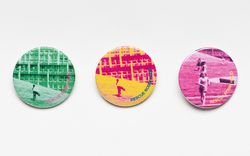
Title:
Rescue Robin Hood
Rescue Robin Hood
Actions:
Lisa Belabed on an anti-demolition effort in the context of a globalized city
Keyword(s):
Robin Hood Gardens, London, Smithson, social housing, demolition, gentrification, 56A Infoshop
Robin Hood Gardens, London, Smithson, social housing, demolition, gentrification, 56A Infoshop
Published:
2 June 2025
2 June 2025
Title:
Rescue Robin Hood
Lisa Belabed on an anti-demolition effort in the context of a globalized city
Actions:
Rescue Robin Hood
Lisa Belabed on an anti-demolition effort in the context of a globalized city
Actions:
Level of archival description:
Project
Project
Title:
Trondcomp.
Trondcomp.
Reference number:
AP144.S2.D86
Description:
File documents a competition proposal by Cedric Price, in collaboration with Archigram, Per Kartvedt, and Tony Dugdale for a combined university / community centre, in Trondheim, Norway. The programme called for a congress centre, hotel rooms, sauna, and swimming pool. The final design proposal is described in the file: "Due to economy achievable in warming and ventilation through large scale air movements it was found possible to enclose 3 conventional partitions within an enormous 'greenhouse'. Giant snow sweepers on the roof combined with heated central 'open' swimming pools are additional artificial environment manipulators'. Conceptual sketches explore the development of the site in section. Relationships between areas are shown in color: "delight" in blue; "servicing" in yellow; and "escape" in orange. Drawings also include diagrammatic plans and sections. Many original conceptual sketches by both Cedric Price and Archigram are included within the textual records. Material in this file was produced between 1967 and 1974, but predominantly between 1972 and 1974. Some drawings and notes in this file are attributed to Archigram, Per Kartvedt, and Tony Dugdale. File contains design development drawings, presentation drawings, photographic materials, models, and textual records.
AP144.S2.D86
Description:
File documents a competition proposal by Cedric Price, in collaboration with Archigram, Per Kartvedt, and Tony Dugdale for a combined university / community centre, in Trondheim, Norway. The programme called for a congress centre, hotel rooms, sauna, and swimming pool. The final design proposal is described in the file: "Due to economy achievable in warming and ventilation through large scale air movements it was found possible to enclose 3 conventional partitions within an enormous 'greenhouse'. Giant snow sweepers on the roof combined with heated central 'open' swimming pools are additional artificial environment manipulators'. Conceptual sketches explore the development of the site in section. Relationships between areas are shown in color: "delight" in blue; "servicing" in yellow; and "escape" in orange. Drawings also include diagrammatic plans and sections. Many original conceptual sketches by both Cedric Price and Archigram are included within the textual records. Material in this file was produced between 1967 and 1974, but predominantly between 1972 and 1974. Some drawings and notes in this file are attributed to Archigram, Per Kartvedt, and Tony Dugdale. File contains design development drawings, presentation drawings, photographic materials, models, and textual records.
People:
Date:
1967-1974, predominant 1972-1974
1967-1974, predominant 1972-1974
Title:
Trondcomp.
Actions:
AP144.S2.D86
Description:
File documents a competition proposal by Cedric Price, in collaboration with Archigram, Per Kartvedt, and Tony Dugdale for a combined university / community centre, in Trondheim, Norway. The programme called for a congress centre, hotel rooms, sauna, and swimming pool. The final design proposal is described in the file: "Due to economy achievable in warming and ventilation through large scale air movements it was found possible to enclose 3 conventional partitions within an enormous 'greenhouse'. Giant snow sweepers on the roof combined with heated central 'open' swimming pools are additional artificial environment manipulators'. Conceptual sketches explore the development of the site in section. Relationships between areas are shown in color: "delight" in blue; "servicing" in yellow; and "escape" in orange. Drawings also include diagrammatic plans and sections. Many original conceptual sketches by both Cedric Price and Archigram are included within the textual records. Material in this file was produced between 1967 and 1974, but predominantly between 1972 and 1974. Some drawings and notes in this file are attributed to Archigram, Per Kartvedt, and Tony Dugdale. File contains design development drawings, presentation drawings, photographic materials, models, and textual records.
Trondcomp.
Actions:
AP144.S2.D86
Description:
File documents a competition proposal by Cedric Price, in collaboration with Archigram, Per Kartvedt, and Tony Dugdale for a combined university / community centre, in Trondheim, Norway. The programme called for a congress centre, hotel rooms, sauna, and swimming pool. The final design proposal is described in the file: "Due to economy achievable in warming and ventilation through large scale air movements it was found possible to enclose 3 conventional partitions within an enormous 'greenhouse'. Giant snow sweepers on the roof combined with heated central 'open' swimming pools are additional artificial environment manipulators'. Conceptual sketches explore the development of the site in section. Relationships between areas are shown in color: "delight" in blue; "servicing" in yellow; and "escape" in orange. Drawings also include diagrammatic plans and sections. Many original conceptual sketches by both Cedric Price and Archigram are included within the textual records. Material in this file was produced between 1967 and 1974, but predominantly between 1972 and 1974. Some drawings and notes in this file are attributed to Archigram, Per Kartvedt, and Tony Dugdale. File contains design development drawings, presentation drawings, photographic materials, models, and textual records.
Level of archival description:
File 86
File 86
Date:
1967-1974, predominant 1972-1974
1967-1974, predominant 1972-1974
People:
Level of archival description:
Project
Project
Actions:
Reference number:
AP164.S1.1999.D6
Description:
The project series documents the commission, design, and construction of the Gordillo studio, neighbouring the client’s house (AP164.S1.1993.D2) on Castilla de Ponferrada Street, in Villanueva de la Cañada, Community of Madrid, Spain. The firm identified this project as number 119. “The Gordillo Studio is a prismatic, serrated volume that occupies the plot’s only available strip of land and minimizes its presence through the use of two materials, translucent polycarbonate and xerophilous plantings, which seek the best adaptation to the site, the program and the client. Using this system, a semi-buried interior is constructed in which the light has been modeled as a solid, expansive material, the aim being to satisfy not only the specific demands of the work space but also the creation of an agreeable atmosphere, as austere as it is sensual.” (ARCH270975) Abalos & Herreros worked with Ángel Jaramillo Sanchez, María Auxiliadora Gálvez, Renata Sentkiewicz, Juan Gómez, Fernando Valero and José Torras. In 2002, the project won the COAM 2000 prize. Documenting this project are conceptual, design development and working drawings, photographic and reference materials, correspondence, notes, budgets, reports, studies, forms, project descriptions, invoices, certifications and trade catalogues.
AP164.S1.1999.D6
Description:
The project series documents the commission, design, and construction of the Gordillo studio, neighbouring the client’s house (AP164.S1.1993.D2) on Castilla de Ponferrada Street, in Villanueva de la Cañada, Community of Madrid, Spain. The firm identified this project as number 119. “The Gordillo Studio is a prismatic, serrated volume that occupies the plot’s only available strip of land and minimizes its presence through the use of two materials, translucent polycarbonate and xerophilous plantings, which seek the best adaptation to the site, the program and the client. Using this system, a semi-buried interior is constructed in which the light has been modeled as a solid, expansive material, the aim being to satisfy not only the specific demands of the work space but also the creation of an agreeable atmosphere, as austere as it is sensual.” (ARCH270975) Abalos & Herreros worked with Ángel Jaramillo Sanchez, María Auxiliadora Gálvez, Renata Sentkiewicz, Juan Gómez, Fernando Valero and José Torras. In 2002, the project won the COAM 2000 prize. Documenting this project are conceptual, design development and working drawings, photographic and reference materials, correspondence, notes, budgets, reports, studies, forms, project descriptions, invoices, certifications and trade catalogues.
People:
Date:
1978, 1992-2002, predominant 1999-2000
1978, 1992-2002, predominant 1999-2000
Title:
Estudio Gordillo, Villanueva de la Cañada, Spain (1999)
Actions:
AP164.S1.1999.D6
Description:
The project series documents the commission, design, and construction of the Gordillo studio, neighbouring the client’s house (AP164.S1.1993.D2) on Castilla de Ponferrada Street, in Villanueva de la Cañada, Community of Madrid, Spain. The firm identified this project as number 119. “The Gordillo Studio is a prismatic, serrated volume that occupies the plot’s only available strip of land and minimizes its presence through the use of two materials, translucent polycarbonate and xerophilous plantings, which seek the best adaptation to the site, the program and the client. Using this system, a semi-buried interior is constructed in which the light has been modeled as a solid, expansive material, the aim being to satisfy not only the specific demands of the work space but also the creation of an agreeable atmosphere, as austere as it is sensual.” (ARCH270975) Abalos & Herreros worked with Ángel Jaramillo Sanchez, María Auxiliadora Gálvez, Renata Sentkiewicz, Juan Gómez, Fernando Valero and José Torras. In 2002, the project won the COAM 2000 prize. Documenting this project are conceptual, design development and working drawings, photographic and reference materials, correspondence, notes, budgets, reports, studies, forms, project descriptions, invoices, certifications and trade catalogues.
Estudio Gordillo, Villanueva de la Cañada, Spain (1999)
Actions:
AP164.S1.1999.D6
Description:
The project series documents the commission, design, and construction of the Gordillo studio, neighbouring the client’s house (AP164.S1.1993.D2) on Castilla de Ponferrada Street, in Villanueva de la Cañada, Community of Madrid, Spain. The firm identified this project as number 119. “The Gordillo Studio is a prismatic, serrated volume that occupies the plot’s only available strip of land and minimizes its presence through the use of two materials, translucent polycarbonate and xerophilous plantings, which seek the best adaptation to the site, the program and the client. Using this system, a semi-buried interior is constructed in which the light has been modeled as a solid, expansive material, the aim being to satisfy not only the specific demands of the work space but also the creation of an agreeable atmosphere, as austere as it is sensual.” (ARCH270975) Abalos & Herreros worked with Ángel Jaramillo Sanchez, María Auxiliadora Gálvez, Renata Sentkiewicz, Juan Gómez, Fernando Valero and José Torras. In 2002, the project won the COAM 2000 prize. Documenting this project are conceptual, design development and working drawings, photographic and reference materials, correspondence, notes, budgets, reports, studies, forms, project descriptions, invoices, certifications and trade catalogues.
Level of archival description:
Project
Project
Date:
1978, 1992-2002, predominant 1999-2000
1978, 1992-2002, predominant 1999-2000
People:
Form:
events
events
Description:
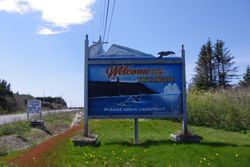
Iceberg Alley is an area that extends from the western coast of Greenland to Baffin Island and further south past the Grand Banks of Newfoundland. Over the past two decades, its icebergs have become a sought after commodity in the production of vodka, beer, and luxury-branded waters. By drawing on historical research and fieldwork across communities in Iceberg Alley,(...)
Iceberg Alley is an area that extends from the western coast of Greenland to Baffin Island and further south past the Grand Banks of Newfoundland. Over the past two decades, its icebergs have become a sought after commodity in the production of vodka, beer, and luxury-branded waters. By drawing on historical research and fieldwork across communities in Iceberg Alley,(...)
Location:
Paul Demarais Theatre
Paul Demarais Theatre
Date:
24 November 2016, 6pm
24 November 2016, 6pm
Title:
Iceberg Alley, Climate Change, and Canada’s Grey Resources
Actions:
Description:
Iceberg Alley is an area that extends from the western coast of Greenland to Baffin Island and further south past the Grand Banks of Newfoundland. Over the past two decades, its icebergs have become a sought after commodity in the production of vodka, beer, and luxury-branded waters. By drawing on historical research and fieldwork across communities in Iceberg Alley,(...)
Iceberg Alley, Climate Change, and Canada’s Grey Resources
Actions:
Description:
Iceberg Alley is an area that extends from the western coast of Greenland to Baffin Island and further south past the Grand Banks of Newfoundland. Over the past two decades, its icebergs have become a sought after commodity in the production of vodka, beer, and luxury-branded waters. By drawing on historical research and fieldwork across communities in Iceberg Alley,(...)
Form:
events
events
Date:
24 November 2016
6pm
24 November 2016
6pm
Location:
Paul Demarais Theatre
Paul Demarais Theatre
Form:
articles
articles
Title:
Desire Paths
Desire Paths
Actions:
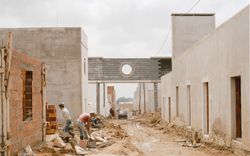
Giovanna Borasi interviews Álvaro Siza on his approach to community engagement in Évora
Published:
19 May 2026
19 May 2026
Title:
Desire Paths
Giovanna Borasi interviews Álvaro Siza on his approach to community engagement in Évora
Actions:
Desire Paths
Giovanna Borasi interviews Álvaro Siza on his approach to community engagement in Évora
Actions:
Form:
events
events
Title:
Learning from… Toronto
Learning from… Toronto
Actions:
Description:
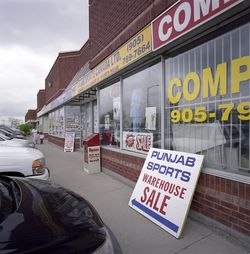
Ian Chodikoff, architect, urban designer, and editor of Canadian Architect magazine, presents his research on the contemporary suburb and how the influences of ethnic diversity and multiculturalism affect architecture and urban design within the suburban landscape across the Greater Toronto Area (GTA). Today’s suburbs are more ethnically diverse, globally connected and(...)
Ian Chodikoff, architect, urban designer, and editor of Canadian Architect magazine, presents his research on the contemporary suburb and how the influences of ethnic diversity and multiculturalism affect architecture and urban design within the suburban landscape across the Greater Toronto Area (GTA). Today’s suburbs are more ethnically diverse, globally connected and(...)
Location:
Paul Desmarais Theatre
Paul Desmarais Theatre
Date:
4 March 2010 , 7pm
4 March 2010 , 7pm
Title:
Learning from… Toronto
Actions:
Description:
Ian Chodikoff, architect, urban designer, and editor of Canadian Architect magazine, presents his research on the contemporary suburb and how the influences of ethnic diversity and multiculturalism affect architecture and urban design within the suburban landscape across the Greater Toronto Area (GTA). Today’s suburbs are more ethnically diverse, globally connected and(...)
Learning from… Toronto
Actions:
Description:
Ian Chodikoff, architect, urban designer, and editor of Canadian Architect magazine, presents his research on the contemporary suburb and how the influences of ethnic diversity and multiculturalism affect architecture and urban design within the suburban landscape across the Greater Toronto Area (GTA). Today’s suburbs are more ethnically diverse, globally connected and(...)
Form:
events
events
Date:
4 March 2010
7pm
4 March 2010
7pm
Location:
Paul Desmarais Theatre
Paul Desmarais Theatre
Form:
exhibitions
exhibitions
Description:
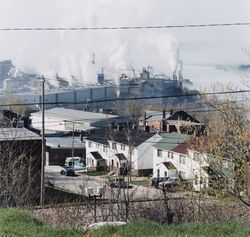
New towns created by private enterprise in the early years of the twentieth century bear witness to the confluence of economic, social, and political forces at work in shaping urban forms. Built quickly and expensively, these towns thoroughly planned to sustain industrial profits, relying on social control to ensure the hegemony of the ruling class. This exhibition traces(...)
New towns created by private enterprise in the early years of the twentieth century bear witness to the confluence of economic, social, and political forces at work in shaping urban forms. Built quickly and expensively, these towns thoroughly planned to sustain industrial profits, relying on social control to ensure the hegemony of the ruling class. This exhibition traces(...)
Location:
Main galleries
Main galleries
Date:
6 March 1996 to 26 May 1996
6 March 1996 to 26 May 1996
Title:
Power and Planning: Industrial Towns in Québec, 1890-1950
Actions:
Description:
New towns created by private enterprise in the early years of the twentieth century bear witness to the confluence of economic, social, and political forces at work in shaping urban forms. Built quickly and expensively, these towns thoroughly planned to sustain industrial profits, relying on social control to ensure the hegemony of the ruling class. This exhibition traces(...)
Power and Planning: Industrial Towns in Québec, 1890-1950
Actions:
Description:
New towns created by private enterprise in the early years of the twentieth century bear witness to the confluence of economic, social, and political forces at work in shaping urban forms. Built quickly and expensively, these towns thoroughly planned to sustain industrial profits, relying on social control to ensure the hegemony of the ruling class. This exhibition traces(...)
Form:
exhibitions
exhibitions
Date:
6 March 1996 to
26 May 1996
6 March 1996 to
26 May 1996
Location:
Main galleries
Main galleries
Level of archival description:
Project
Project
Reference number:
AP164.S1.1997.D4
Description:
The project series documents the design of the “Green House” for Mariano Maqueda and Olga Montón, in Pozuelo de Alarcón, in the Community of Madrid, Spain. The firm identified this project as number 103. “The project is located in a typical bit of middle-class suburbia, in which low-density housing, wasteland, amenities and clumps of pine trees intermingle, giving form to the idea of an urban existence that is in contact with nature. [Abalos & Herreros] decided to be extremely direct and to stress this aspiration by using gardening techniques. In fact, the house as a whole can be understood as an example of a giant ars-topiaria, an idea that is not at odds with the fact that it will be lived in by a landscape architect. The sloping topography is taken advantage of to build a house that has continuity with the natural environment, avoiding differentiation between the house and the terrain: the whole house is garden and the whole garden is house. The project is, then, a topological mechanism for arranging and modeling the land so as to increase and to obtain maximum enjoyment from the landscape’s weaker stimuli: the pine trees, the near-by stream, the setting of the sun over the skyline of Madrid from the house’s highest point… Natural views and artificial views: a green machine.” (ARCH270971) Documenting the project are conceptual, design development and working drawings, forms, invoices and contracts.
AP164.S1.1997.D4
Description:
The project series documents the design of the “Green House” for Mariano Maqueda and Olga Montón, in Pozuelo de Alarcón, in the Community of Madrid, Spain. The firm identified this project as number 103. “The project is located in a typical bit of middle-class suburbia, in which low-density housing, wasteland, amenities and clumps of pine trees intermingle, giving form to the idea of an urban existence that is in contact with nature. [Abalos & Herreros] decided to be extremely direct and to stress this aspiration by using gardening techniques. In fact, the house as a whole can be understood as an example of a giant ars-topiaria, an idea that is not at odds with the fact that it will be lived in by a landscape architect. The sloping topography is taken advantage of to build a house that has continuity with the natural environment, avoiding differentiation between the house and the terrain: the whole house is garden and the whole garden is house. The project is, then, a topological mechanism for arranging and modeling the land so as to increase and to obtain maximum enjoyment from the landscape’s weaker stimuli: the pine trees, the near-by stream, the setting of the sun over the skyline of Madrid from the house’s highest point… Natural views and artificial views: a green machine.” (ARCH270971) Documenting the project are conceptual, design development and working drawings, forms, invoices and contracts.
People:
Date:
1995-1999, predominant 1997-1998
1995-1999, predominant 1997-1998
Title:
Casa Verde, Pozuelo de Alarcón, Madrid, Spain (1997)
Actions:
AP164.S1.1997.D4
Description:
The project series documents the design of the “Green House” for Mariano Maqueda and Olga Montón, in Pozuelo de Alarcón, in the Community of Madrid, Spain. The firm identified this project as number 103. “The project is located in a typical bit of middle-class suburbia, in which low-density housing, wasteland, amenities and clumps of pine trees intermingle, giving form to the idea of an urban existence that is in contact with nature. [Abalos & Herreros] decided to be extremely direct and to stress this aspiration by using gardening techniques. In fact, the house as a whole can be understood as an example of a giant ars-topiaria, an idea that is not at odds with the fact that it will be lived in by a landscape architect. The sloping topography is taken advantage of to build a house that has continuity with the natural environment, avoiding differentiation between the house and the terrain: the whole house is garden and the whole garden is house. The project is, then, a topological mechanism for arranging and modeling the land so as to increase and to obtain maximum enjoyment from the landscape’s weaker stimuli: the pine trees, the near-by stream, the setting of the sun over the skyline of Madrid from the house’s highest point… Natural views and artificial views: a green machine.” (ARCH270971) Documenting the project are conceptual, design development and working drawings, forms, invoices and contracts.
Casa Verde, Pozuelo de Alarcón, Madrid, Spain (1997)
Actions:
AP164.S1.1997.D4
Description:
The project series documents the design of the “Green House” for Mariano Maqueda and Olga Montón, in Pozuelo de Alarcón, in the Community of Madrid, Spain. The firm identified this project as number 103. “The project is located in a typical bit of middle-class suburbia, in which low-density housing, wasteland, amenities and clumps of pine trees intermingle, giving form to the idea of an urban existence that is in contact with nature. [Abalos & Herreros] decided to be extremely direct and to stress this aspiration by using gardening techniques. In fact, the house as a whole can be understood as an example of a giant ars-topiaria, an idea that is not at odds with the fact that it will be lived in by a landscape architect. The sloping topography is taken advantage of to build a house that has continuity with the natural environment, avoiding differentiation between the house and the terrain: the whole house is garden and the whole garden is house. The project is, then, a topological mechanism for arranging and modeling the land so as to increase and to obtain maximum enjoyment from the landscape’s weaker stimuli: the pine trees, the near-by stream, the setting of the sun over the skyline of Madrid from the house’s highest point… Natural views and artificial views: a green machine.” (ARCH270971) Documenting the project are conceptual, design development and working drawings, forms, invoices and contracts.
Level of archival description:
Project
Project
Date:
1995-1999, predominant 1997-1998
1995-1999, predominant 1997-1998
People:
Level of archival description:
Project
Project
Title:
Leal, Porto
Leal, Porto
Actions:
Reference number:
CD034.S1.1974.PR02
Description:
This project series contains eight reproductions of drawings displayed in the exhibit to document the Leal neighbourhood, in Porto, Portugal. The exhibit text explained that the project: ... pioneered the concept of community association, with the first resident activities dating back to the early 1970s. In 1974, immediately after the revolution, the residents opposed the building of a car park that would have involved their relocation and resettlement. The project of the architect Sérgio Fernandez, which originated in a pre-revolutionary resident organization, was conceived through the dynamics of the resident process, and had a project-oriented clarity that came from an economic sense of design, adapting to the needs and political character of the intervention. (The SAAL Process, Housing in Portugal 1974–76) Sérgio Fernandez worked for SAAL/North with António Corte Real, Carlos Delfim, Emídio Fonseca, José Manuel Soares, Vítor Sinde and the residents' association Bairro do Leal, that was founded on April 30th, 1975. The first phase of the project included 16 dwellings and the second, 33 dwellings. The operation began in October 1974, with a construction date in April 1976. This project series contains reproductions of design development drawings, cadastral and implementation plans, and an axonometric view. The original drawings were produced in 1975 and were reproduced in 2015 for the exhibit.
CD034.S1.1974.PR02
Description:
This project series contains eight reproductions of drawings displayed in the exhibit to document the Leal neighbourhood, in Porto, Portugal. The exhibit text explained that the project: ... pioneered the concept of community association, with the first resident activities dating back to the early 1970s. In 1974, immediately after the revolution, the residents opposed the building of a car park that would have involved their relocation and resettlement. The project of the architect Sérgio Fernandez, which originated in a pre-revolutionary resident organization, was conceived through the dynamics of the resident process, and had a project-oriented clarity that came from an economic sense of design, adapting to the needs and political character of the intervention. (The SAAL Process, Housing in Portugal 1974–76) Sérgio Fernandez worked for SAAL/North with António Corte Real, Carlos Delfim, Emídio Fonseca, José Manuel Soares, Vítor Sinde and the residents' association Bairro do Leal, that was founded on April 30th, 1975. The first phase of the project included 16 dwellings and the second, 33 dwellings. The operation began in October 1974, with a construction date in April 1976. This project series contains reproductions of design development drawings, cadastral and implementation plans, and an axonometric view. The original drawings were produced in 1975 and were reproduced in 2015 for the exhibit.
People:
Date:
1975
1975
Title:
Leal, Porto
Actions:
CD034.S1.1974.PR02
Description:
This project series contains eight reproductions of drawings displayed in the exhibit to document the Leal neighbourhood, in Porto, Portugal. The exhibit text explained that the project: ... pioneered the concept of community association, with the first resident activities dating back to the early 1970s. In 1974, immediately after the revolution, the residents opposed the building of a car park that would have involved their relocation and resettlement. The project of the architect Sérgio Fernandez, which originated in a pre-revolutionary resident organization, was conceived through the dynamics of the resident process, and had a project-oriented clarity that came from an economic sense of design, adapting to the needs and political character of the intervention. (The SAAL Process, Housing in Portugal 1974–76) Sérgio Fernandez worked for SAAL/North with António Corte Real, Carlos Delfim, Emídio Fonseca, José Manuel Soares, Vítor Sinde and the residents' association Bairro do Leal, that was founded on April 30th, 1975. The first phase of the project included 16 dwellings and the second, 33 dwellings. The operation began in October 1974, with a construction date in April 1976. This project series contains reproductions of design development drawings, cadastral and implementation plans, and an axonometric view. The original drawings were produced in 1975 and were reproduced in 2015 for the exhibit.
Leal, Porto
Actions:
CD034.S1.1974.PR02
Description:
This project series contains eight reproductions of drawings displayed in the exhibit to document the Leal neighbourhood, in Porto, Portugal. The exhibit text explained that the project: ... pioneered the concept of community association, with the first resident activities dating back to the early 1970s. In 1974, immediately after the revolution, the residents opposed the building of a car park that would have involved their relocation and resettlement. The project of the architect Sérgio Fernandez, which originated in a pre-revolutionary resident organization, was conceived through the dynamics of the resident process, and had a project-oriented clarity that came from an economic sense of design, adapting to the needs and political character of the intervention. (The SAAL Process, Housing in Portugal 1974–76) Sérgio Fernandez worked for SAAL/North with António Corte Real, Carlos Delfim, Emídio Fonseca, José Manuel Soares, Vítor Sinde and the residents' association Bairro do Leal, that was founded on April 30th, 1975. The first phase of the project included 16 dwellings and the second, 33 dwellings. The operation began in October 1974, with a construction date in April 1976. This project series contains reproductions of design development drawings, cadastral and implementation plans, and an axonometric view. The original drawings were produced in 1975 and were reproduced in 2015 for the exhibit.
Level of archival description:
Project
Project
Date:
1975
1975
People:
Level of archival description:
Series
Series
Reference number:
AP075.S3
Description:
This series documents Cornelia Hahn Oberlander's professional activities as a landscape architect, such as her involvement in professional activities, such as associations or committees, her attendance to landscape architecture seminars or conferences, conferences and lectures she gave, and articles and publications she wrote. It also documents her office records for consultancy work, her professional correspondence and the planning of the projects and other activities. It documents also awards and horours she received during her career, for specific projects, her work as landscape architect or for her involvement in the community. The series contains predomimantly administrative records, such as professional correspondence, documents related to her consultant work for private or public projects, promotional material, and articles written about her, documents related to interviews she gave and recordings of these interviews. It also comprises documents related to her involvement in associations or committees, such as correspondence and meetings documents, documents from her participation to conferences and seminars, such as proceedings, and event planning documents, and her research or draft texts for her lectures and publications. The series also contains awards and honours she received, and related documents, and a collection of Oberlander's industry catalogues she used in her office to order supplies, plants or seeds for her landscape projects.
AP075.S3
Description:
This series documents Cornelia Hahn Oberlander's professional activities as a landscape architect, such as her involvement in professional activities, such as associations or committees, her attendance to landscape architecture seminars or conferences, conferences and lectures she gave, and articles and publications she wrote. It also documents her office records for consultancy work, her professional correspondence and the planning of the projects and other activities. It documents also awards and horours she received during her career, for specific projects, her work as landscape architect or for her involvement in the community. The series contains predomimantly administrative records, such as professional correspondence, documents related to her consultant work for private or public projects, promotional material, and articles written about her, documents related to interviews she gave and recordings of these interviews. It also comprises documents related to her involvement in associations or committees, such as correspondence and meetings documents, documents from her participation to conferences and seminars, such as proceedings, and event planning documents, and her research or draft texts for her lectures and publications. The series also contains awards and honours she received, and related documents, and a collection of Oberlander's industry catalogues she used in her office to order supplies, plants or seeds for her landscape projects.
People:
Date:
1949-2019
1949-2019
Title:
Professional activities and office records
Actions:
AP075.S3
Description:
This series documents Cornelia Hahn Oberlander's professional activities as a landscape architect, such as her involvement in professional activities, such as associations or committees, her attendance to landscape architecture seminars or conferences, conferences and lectures she gave, and articles and publications she wrote. It also documents her office records for consultancy work, her professional correspondence and the planning of the projects and other activities. It documents also awards and horours she received during her career, for specific projects, her work as landscape architect or for her involvement in the community. The series contains predomimantly administrative records, such as professional correspondence, documents related to her consultant work for private or public projects, promotional material, and articles written about her, documents related to interviews she gave and recordings of these interviews. It also comprises documents related to her involvement in associations or committees, such as correspondence and meetings documents, documents from her participation to conferences and seminars, such as proceedings, and event planning documents, and her research or draft texts for her lectures and publications. The series also contains awards and honours she received, and related documents, and a collection of Oberlander's industry catalogues she used in her office to order supplies, plants or seeds for her landscape projects.
Professional activities and office records
Actions:
AP075.S3
Description:
This series documents Cornelia Hahn Oberlander's professional activities as a landscape architect, such as her involvement in professional activities, such as associations or committees, her attendance to landscape architecture seminars or conferences, conferences and lectures she gave, and articles and publications she wrote. It also documents her office records for consultancy work, her professional correspondence and the planning of the projects and other activities. It documents also awards and horours she received during her career, for specific projects, her work as landscape architect or for her involvement in the community. The series contains predomimantly administrative records, such as professional correspondence, documents related to her consultant work for private or public projects, promotional material, and articles written about her, documents related to interviews she gave and recordings of these interviews. It also comprises documents related to her involvement in associations or committees, such as correspondence and meetings documents, documents from her participation to conferences and seminars, such as proceedings, and event planning documents, and her research or draft texts for her lectures and publications. The series also contains awards and honours she received, and related documents, and a collection of Oberlander's industry catalogues she used in her office to order supplies, plants or seeds for her landscape projects.
Level of archival description:
Series
Series
Date:
1949-2019
1949-2019
People:


