


6899 Results
Form:
photographs
photographs
Actions:
Reference number:
PH1986:1362
Description:
Commissioned by the Canadian Centre for Architecture, Montréal, for "Lachine Canal," 1985-1986.
PH1986:1362
Description:
Commissioned by the Canadian Centre for Architecture, Montréal, for "Lachine Canal," 1985-1986.
People:
Subject:
architecture
architecture
Date:
August 1985
August 1985
Title:
View of the Sherwin-Williams Company Building at gate 17 looking east from Atwater Avenue and Centre Street, Montréal, Québec
Actions:
PH1986:1362
Description:
Commissioned by the Canadian Centre for Architecture, Montréal, for "Lachine Canal," 1985-1986.
View of the Sherwin-Williams Company Building at gate 17 looking east from Atwater Avenue and Centre Street, Montréal, Québec
Actions:
PH1986:1362
Description:
Commissioned by the Canadian Centre for Architecture, Montréal, for "Lachine Canal," 1985-1986.
Form:
photographs
photographs
Date:
August 1985
August 1985
People:
Subject:
architecture
architecture
Form:
photographs
photographs
Actions:
Reference number:
PH1986:1363
Description:
Commissioned by the Canadian Centre for Architecture, Montréal, for "Lachine Canal," 1985-1986.
PH1986:1363
Description:
Commissioned by the Canadian Centre for Architecture, Montréal, for "Lachine Canal," 1985-1986.
People:
Subject:
architecture
architecture
Date:
August 1985
August 1985
Title:
View of the Sherwin-Williams Company Building from Atwater Avenue, Montréal, Québec
Actions:
PH1986:1363
Description:
Commissioned by the Canadian Centre for Architecture, Montréal, for "Lachine Canal," 1985-1986.
View of the Sherwin-Williams Company Building from Atwater Avenue, Montréal, Québec
Actions:
PH1986:1363
Description:
Commissioned by the Canadian Centre for Architecture, Montréal, for "Lachine Canal," 1985-1986.
Form:
photographs
photographs
Date:
August 1985
August 1985
People:
Subject:
architecture
architecture
Form:
photographs
photographs
Actions:
Reference number:
PH1986:1364
Description:
Commissioned by the Canadian Centre for Architecture, Montréal, for "Lachine Canal," 1985-1986.
PH1986:1364
Description:
Commissioned by the Canadian Centre for Architecture, Montréal, for "Lachine Canal," 1985-1986.
People:
Subject:
architecture
architecture
Date:
April 1985
April 1985
Title:
View of the Sherwin-Williams Company Building at the southeast corner of St. Patrick Street and Atwater Avenue, Montréal, Québec
Actions:
PH1986:1364
Description:
Commissioned by the Canadian Centre for Architecture, Montréal, for "Lachine Canal," 1985-1986.
View of the Sherwin-Williams Company Building at the southeast corner of St. Patrick Street and Atwater Avenue, Montréal, Québec
Actions:
PH1986:1364
Description:
Commissioned by the Canadian Centre for Architecture, Montréal, for "Lachine Canal," 1985-1986.
Form:
photographs
photographs
Date:
April 1985
April 1985
People:
Subject:
architecture
architecture
Form:
photographs
photographs
Actions:
Reference number:
PH1986:1365
Description:
Commissioned by the Canadian Centre for Architecture, Montréal, for "Lachine Canal," 1985-1986.
PH1986:1365
Description:
Commissioned by the Canadian Centre for Architecture, Montréal, for "Lachine Canal," 1985-1986.
People:
Subject:
architecture
architecture
Date:
2 June 1985
2 June 1985
Title:
View of the Sherwin-Williams Company Building from St. Patrick Street and Atwater Avenue, Montréal, Québec
Actions:
PH1986:1365
Description:
Commissioned by the Canadian Centre for Architecture, Montréal, for "Lachine Canal," 1985-1986.
View of the Sherwin-Williams Company Building from St. Patrick Street and Atwater Avenue, Montréal, Québec
Actions:
PH1986:1365
Description:
Commissioned by the Canadian Centre for Architecture, Montréal, for "Lachine Canal," 1985-1986.
Form:
photographs
photographs
Date:
2 June 1985
2 June 1985
People:
Subject:
architecture
architecture
Form:
photographs
photographs
Title:
View of the Sherwin-Williams Company Building at gate 11, 3050 St. Patrick Street, Montréal, Québec
View of the Sherwin-Williams Company Building at gate 11, 3050 St. Patrick Street, Montréal, Québec
Actions:
Reference number:
PH1986:1366
Description:
Commissioned by the Canadian Centre for Architecture, Montréal, for "Lachine Canal," 1985-1986.
PH1986:1366
Description:
Commissioned by the Canadian Centre for Architecture, Montréal, for "Lachine Canal," 1985-1986.
People:
Subject:
architecture
architecture
Date:
August 1985
August 1985
Title:
View of the Sherwin-Williams Company Building at gate 11, 3050 St. Patrick Street, Montréal, Québec
Actions:
PH1986:1366
Description:
Commissioned by the Canadian Centre for Architecture, Montréal, for "Lachine Canal," 1985-1986.
View of the Sherwin-Williams Company Building at gate 11, 3050 St. Patrick Street, Montréal, Québec
Actions:
PH1986:1366
Description:
Commissioned by the Canadian Centre for Architecture, Montréal, for "Lachine Canal," 1985-1986.
Form:
photographs
photographs
Date:
August 1985
August 1985
People:
Subject:
architecture
architecture
Form:
archives
Level of archival description:
Fonds
archives
Level of archival description:
Fonds
Title:
A.D. Thacker fonds
A.D. Thacker fonds
Actions:
Reference number:
AP004
Synopsis:
The A.D. Thacker fonds is comprised of project proposals and documentation dating from around 1913-1938, depicting structures designed by Thacker. Much of Thacker's work was completed in Quebec, but he also completed projects in Halifax, Nova Scotia. Thacker designed many churches for religious institutions that were directly involved in the oppressive, colonial assimilation policies and systems of the Canadian government towards indigenous people. The fonds contains 33 drawings, 16 reprographic copies, 12 photographs and 8 textual documents.
AP004
Synopsis:
The A.D. Thacker fonds is comprised of project proposals and documentation dating from around 1913-1938, depicting structures designed by Thacker. Much of Thacker's work was completed in Quebec, but he also completed projects in Halifax, Nova Scotia. Thacker designed many churches for religious institutions that were directly involved in the oppressive, colonial assimilation policies and systems of the Canadian government towards indigenous people. The fonds contains 33 drawings, 16 reprographic copies, 12 photographs and 8 textual documents.
People:
Date:
1913-1944
1913-1944
Title:
A.D. Thacker fonds
Actions:
AP004
Synopsis:
The A.D. Thacker fonds is comprised of project proposals and documentation dating from around 1913-1938, depicting structures designed by Thacker. Much of Thacker's work was completed in Quebec, but he also completed projects in Halifax, Nova Scotia. Thacker designed many churches for religious institutions that were directly involved in the oppressive, colonial assimilation policies and systems of the Canadian government towards indigenous people. The fonds contains 33 drawings, 16 reprographic copies, 12 photographs and 8 textual documents.
A.D. Thacker fonds
Actions:
AP004
Synopsis:
The A.D. Thacker fonds is comprised of project proposals and documentation dating from around 1913-1938, depicting structures designed by Thacker. Much of Thacker's work was completed in Quebec, but he also completed projects in Halifax, Nova Scotia. Thacker designed many churches for religious institutions that were directly involved in the oppressive, colonial assimilation policies and systems of the Canadian government towards indigenous people. The fonds contains 33 drawings, 16 reprographic copies, 12 photographs and 8 textual documents.
Form:
archives
Level of archival description:
Fonds
archives
Level of archival description:
Fonds
Date:
1913-1944
1913-1944
People:
Form:
textual records
textual records
Actions:
Reference number:
DR2012:0015:021:010
Description:
File containing documents in English (predominant), including correspondence (primarily printouts of emails) and notes regarding the private sale of the following works: - One size fits all / 2: 20th century New York skyscrapers; - The American city: via Saigon; - Fathers and Sons...; - Cities on the run... realignments often are. Original folder inscribed in graphite: NORMAN DAMIANI
DR2012:0015:021:010
Description:
File containing documents in English (predominant), including correspondence (primarily printouts of emails) and notes regarding the private sale of the following works: - One size fits all / 2: 20th century New York skyscrapers; - The American city: via Saigon; - Fathers and Sons...; - Cities on the run... realignments often are. Original folder inscribed in graphite: NORMAN DAMIANI
People:
Date:
2003-2004
2003-2004
Title:
Correspondence related to Melvin Charney's projects
Actions:
DR2012:0015:021:010
Description:
File containing documents in English (predominant), including correspondence (primarily printouts of emails) and notes regarding the private sale of the following works: - One size fits all / 2: 20th century New York skyscrapers; - The American city: via Saigon; - Fathers and Sons...; - Cities on the run... realignments often are. Original folder inscribed in graphite: NORMAN DAMIANI
Correspondence related to Melvin Charney's projects
Actions:
DR2012:0015:021:010
Description:
File containing documents in English (predominant), including correspondence (primarily printouts of emails) and notes regarding the private sale of the following works: - One size fits all / 2: 20th century New York skyscrapers; - The American city: via Saigon; - Fathers and Sons...; - Cities on the run... realignments often are. Original folder inscribed in graphite: NORMAN DAMIANI
Form:
textual records
textual records
Date:
2003-2004
2003-2004
People:
Form:
events
events
Actions:
Description:
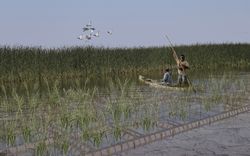
The St. Peter’s Indian Band (now Peguis First Nation) was forcibly removed from their original lands at Netley-Libau Marsh beginning in 1908, after an illegal surrender vote took place. Since then, the health of the area that was once the Peguis’s home has declined due to intense annual flooding and ice jams; the appearance of invasive species such as purple loosestrife,(...)
The St. Peter’s Indian Band (now Peguis First Nation) was forcibly removed from their original lands at Netley-Libau Marsh beginning in 1908, after an illegal surrender vote took place. Since then, the health of the area that was once the Peguis’s home has declined due to intense annual flooding and ice jams; the appearance of invasive species such as purple loosestrife,(...)
Location:
online Keyword(s):
Indigenous-led design, fellow, Peguis First Nation, land rehabilitation
online Keyword(s):
Indigenous-led design, fellow, Peguis First Nation, land rehabilitation
Date:
27 April 2023, 6:00 to 7:30 p.m.
27 April 2023, 6:00 to 7:30 p.m.
Title:
Peguis First Nation and the Netley-Libau Marsh: Documenting Indigenous Land Use and Occupancy at the Mouth of Lake Winnipeg
Actions:
Description:
The St. Peter’s Indian Band (now Peguis First Nation) was forcibly removed from their original lands at Netley-Libau Marsh beginning in 1908, after an illegal surrender vote took place. Since then, the health of the area that was once the Peguis’s home has declined due to intense annual flooding and ice jams; the appearance of invasive species such as purple loosestrife,(...)
Peguis First Nation and the Netley-Libau Marsh: Documenting Indigenous Land Use and Occupancy at the Mouth of Lake Winnipeg
Actions:
Description:
The St. Peter’s Indian Band (now Peguis First Nation) was forcibly removed from their original lands at Netley-Libau Marsh beginning in 1908, after an illegal surrender vote took place. Since then, the health of the area that was once the Peguis’s home has declined due to intense annual flooding and ice jams; the appearance of invasive species such as purple loosestrife,(...)
Form:
events
events
Date:
27 April 2023
6:00 to 7:30 p.m.
27 April 2023
6:00 to 7:30 p.m.
Location:
online Keyword(s):
Indigenous-led design, fellow, Peguis First Nation, land rehabilitation
online Keyword(s):
Indigenous-led design, fellow, Peguis First Nation, land rehabilitation
Form:
events
events
Actions:
Description:
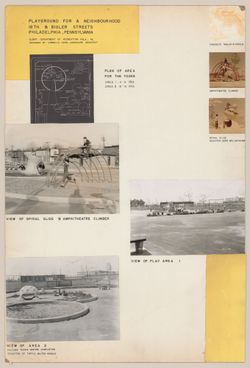
Writing women into the history of architecture requires rethinking both archival practices and historiographical approaches. In this seminar Olga Touloumi will depart from her experience collecting and cataloguing the works of architect and crocheter Christine Benglia-Bevington (1936–2020) to discuss feminist praxis in the archive. Using weaving as a historical method,(...)
Writing women into the history of architecture requires rethinking both archival practices and historiographical approaches. In this seminar Olga Touloumi will depart from her experience collecting and cataloguing the works of architect and crocheter Christine Benglia-Bevington (1936–2020) to discuss feminist praxis in the archive. Using weaving as a historical method,(...)
Location:
Study Room, CCA
Study Room, CCA
Date:
3 July 2025, 6pm to 7:30pm
3 July 2025, 6pm to 7:30pm
Title:
Common Threads: The Craft of a Woman’s Archive
Actions:
Description:
Writing women into the history of architecture requires rethinking both archival practices and historiographical approaches. In this seminar Olga Touloumi will depart from her experience collecting and cataloguing the works of architect and crocheter Christine Benglia-Bevington (1936–2020) to discuss feminist praxis in the archive. Using weaving as a historical method,(...)
Common Threads: The Craft of a Woman’s Archive
Actions:
Description:
Writing women into the history of architecture requires rethinking both archival practices and historiographical approaches. In this seminar Olga Touloumi will depart from her experience collecting and cataloguing the works of architect and crocheter Christine Benglia-Bevington (1936–2020) to discuss feminist praxis in the archive. Using weaving as a historical method,(...)
Form:
events
events
Date:
3 July 2025
6pm to 7:30pm
3 July 2025
6pm to 7:30pm
Location:
Study Room, CCA
Study Room, CCA
Form:
photographs
photographs
Actions:
Reference number:
PH1986:1367
Description:
Commissioned by the Canadian Centre for Architecture, Montréal, for "Lachine Canal," 1985-1986.
PH1986:1367
Description:
Commissioned by the Canadian Centre for Architecture, Montréal, for "Lachine Canal," 1985-1986.
People:
Subject:
architecture
architecture
Date:
28 August 1985
28 August 1985
Title:
View of the Sherwin-Williams Company Building under demolition, 3134 St. Patrick Street, Montréal, Québec
Actions:
PH1986:1367
Description:
Commissioned by the Canadian Centre for Architecture, Montréal, for "Lachine Canal," 1985-1986.
View of the Sherwin-Williams Company Building under demolition, 3134 St. Patrick Street, Montréal, Québec
Actions:
PH1986:1367
Description:
Commissioned by the Canadian Centre for Architecture, Montréal, for "Lachine Canal," 1985-1986.
Form:
photographs
photographs
Date:
28 August 1985
28 August 1985
People:
Subject:
architecture
architecture


