


10590 Results
Level of archival description:
Project
Project
Actions:
Reference number:
AP056.S1.1990.PR04
Description:
This project series documents a competition entry for the Canada Life Assurance building in Toronto in 1990. The office identified the project number as 9007. This project consisted of a proposal to renovate the existing Canada Life Assurance headquarters located in the historic Beaux-Arts style building on the corner of Queen and University Streets. This work would also include the construction of a new, 15 storey mixed-use development with approximately 1,000,000 square feet of commercial office space, retail space and a hotel. The design goal was to create an urban campus while extending the corporate headquarters. This proposal was done in joint-venture with Bregman & Hamann and was headed by Marianne McKenna and Bruce Kuwabara. This was not the winning entry for the competition and the project was eventually realized by Shore Tilbe Henshall Irwin. The project is recorded through drawings, a presentation painting and a model dating from 1988-1990. The drawings are mostly originals and consist of sketches, plans, elevations, perspectives and axonometric drawings.
AP056.S1.1990.PR04
Description:
This project series documents a competition entry for the Canada Life Assurance building in Toronto in 1990. The office identified the project number as 9007. This project consisted of a proposal to renovate the existing Canada Life Assurance headquarters located in the historic Beaux-Arts style building on the corner of Queen and University Streets. This work would also include the construction of a new, 15 storey mixed-use development with approximately 1,000,000 square feet of commercial office space, retail space and a hotel. The design goal was to create an urban campus while extending the corporate headquarters. This proposal was done in joint-venture with Bregman & Hamann and was headed by Marianne McKenna and Bruce Kuwabara. This was not the winning entry for the competition and the project was eventually realized by Shore Tilbe Henshall Irwin. The project is recorded through drawings, a presentation painting and a model dating from 1988-1990. The drawings are mostly originals and consist of sketches, plans, elevations, perspectives and axonometric drawings.
People:
Date:
1988-1990
1988-1990
Title:
Canada Life Assurance Building Competition, Toronto (1990)
Actions:
AP056.S1.1990.PR04
Description:
This project series documents a competition entry for the Canada Life Assurance building in Toronto in 1990. The office identified the project number as 9007. This project consisted of a proposal to renovate the existing Canada Life Assurance headquarters located in the historic Beaux-Arts style building on the corner of Queen and University Streets. This work would also include the construction of a new, 15 storey mixed-use development with approximately 1,000,000 square feet of commercial office space, retail space and a hotel. The design goal was to create an urban campus while extending the corporate headquarters. This proposal was done in joint-venture with Bregman & Hamann and was headed by Marianne McKenna and Bruce Kuwabara. This was not the winning entry for the competition and the project was eventually realized by Shore Tilbe Henshall Irwin. The project is recorded through drawings, a presentation painting and a model dating from 1988-1990. The drawings are mostly originals and consist of sketches, plans, elevations, perspectives and axonometric drawings.
Canada Life Assurance Building Competition, Toronto (1990)
Actions:
AP056.S1.1990.PR04
Description:
This project series documents a competition entry for the Canada Life Assurance building in Toronto in 1990. The office identified the project number as 9007. This project consisted of a proposal to renovate the existing Canada Life Assurance headquarters located in the historic Beaux-Arts style building on the corner of Queen and University Streets. This work would also include the construction of a new, 15 storey mixed-use development with approximately 1,000,000 square feet of commercial office space, retail space and a hotel. The design goal was to create an urban campus while extending the corporate headquarters. This proposal was done in joint-venture with Bregman & Hamann and was headed by Marianne McKenna and Bruce Kuwabara. This was not the winning entry for the competition and the project was eventually realized by Shore Tilbe Henshall Irwin. The project is recorded through drawings, a presentation painting and a model dating from 1988-1990. The drawings are mostly originals and consist of sketches, plans, elevations, perspectives and axonometric drawings.
Level of archival description:
Project
Project
Date:
1988-1990
1988-1990
People:
Form:
textual records
textual records
Actions:
Reference number:
AP206.S2.042
Description:
File was originally housed in a binder labelled "Manuscripts" along with content arranged in AP206.S2.039, AP206.S2.040, AP206.S2.041 and AP206.S2.043. This file includes the following papers: "Chandigarh: Its Trials and Travails," 1978 "Administrative Aspects of Urban and Regional Planning" "Varanasi," 1976
AP206.S2.042
Description:
File was originally housed in a binder labelled "Manuscripts" along with content arranged in AP206.S2.039, AP206.S2.040, AP206.S2.041 and AP206.S2.043. This file includes the following papers: "Chandigarh: Its Trials and Travails," 1978 "Administrative Aspects of Urban and Regional Planning" "Varanasi," 1976
People:
Date:
1975-1980
1975-1980
Title:
Unpublished papers (folder 4 of 5)
Actions:
AP206.S2.042
Description:
File was originally housed in a binder labelled "Manuscripts" along with content arranged in AP206.S2.039, AP206.S2.040, AP206.S2.041 and AP206.S2.043. This file includes the following papers: "Chandigarh: Its Trials and Travails," 1978 "Administrative Aspects of Urban and Regional Planning" "Varanasi," 1976
Unpublished papers (folder 4 of 5)
Actions:
AP206.S2.042
Description:
File was originally housed in a binder labelled "Manuscripts" along with content arranged in AP206.S2.039, AP206.S2.040, AP206.S2.041 and AP206.S2.043. This file includes the following papers: "Chandigarh: Its Trials and Travails," 1978 "Administrative Aspects of Urban and Regional Planning" "Varanasi," 1976
Form:
textual records
textual records
Date:
1975-1980
1975-1980
People:
Form:
textual records
textual records
Actions:
Reference number:
ARCH260021
Description:
Erickson / Massey project proposals labelled 'Permanent Files': British Columbia centennial Urban design project (1958), Simon Fraser Architecture Competition and development plan, Smith House 2, Expo 67 Man in the Community, Calgary Civic Centre, Block 61, Downtown Plan, Federal Office Building, BCRC offices and lab building, Cité des Terrasses, MacMillan Building, Fort Camp UBC traffic study, University of Lethbridge preliminary plan, Capilano College
ARCH260021
Description:
Erickson / Massey project proposals labelled 'Permanent Files': British Columbia centennial Urban design project (1958), Simon Fraser Architecture Competition and development plan, Smith House 2, Expo 67 Man in the Community, Calgary Civic Centre, Block 61, Downtown Plan, Federal Office Building, BCRC offices and lab building, Cité des Terrasses, MacMillan Building, Fort Camp UBC traffic study, University of Lethbridge preliminary plan, Capilano College
People:
Date:
1963-1969
1963-1969
Title:
Permanent files for various projects
Actions:
ARCH260021
Description:
Erickson / Massey project proposals labelled 'Permanent Files': British Columbia centennial Urban design project (1958), Simon Fraser Architecture Competition and development plan, Smith House 2, Expo 67 Man in the Community, Calgary Civic Centre, Block 61, Downtown Plan, Federal Office Building, BCRC offices and lab building, Cité des Terrasses, MacMillan Building, Fort Camp UBC traffic study, University of Lethbridge preliminary plan, Capilano College
Permanent files for various projects
Actions:
ARCH260021
Description:
Erickson / Massey project proposals labelled 'Permanent Files': British Columbia centennial Urban design project (1958), Simon Fraser Architecture Competition and development plan, Smith House 2, Expo 67 Man in the Community, Calgary Civic Centre, Block 61, Downtown Plan, Federal Office Building, BCRC offices and lab building, Cité des Terrasses, MacMillan Building, Fort Camp UBC traffic study, University of Lethbridge preliminary plan, Capilano College
Form:
textual records
textual records
Date:
1963-1969
1963-1969
People:
Level of archival description:
Sub-series
Sub-series
Actions:
Reference number:
AP057.S4.SS3
Description:
Subseries documents the activities of Peter Eisenman as architect and critic. The material in the subseries was produced between 1976 and 1984 Sub-series contains predominantly essays, interviews, diary planners, notes, curriculum vitaes and documents releting to Eisenman's book projects.
AP057.S4.SS3
Description:
Subseries documents the activities of Peter Eisenman as architect and critic. The material in the subseries was produced between 1976 and 1984 Sub-series contains predominantly essays, interviews, diary planners, notes, curriculum vitaes and documents releting to Eisenman's book projects.
People:
Date:
1976-1984
1976-1984
Title:
Peter Eisenman - Personal Work
Actions:
AP057.S4.SS3
Description:
Subseries documents the activities of Peter Eisenman as architect and critic. The material in the subseries was produced between 1976 and 1984 Sub-series contains predominantly essays, interviews, diary planners, notes, curriculum vitaes and documents releting to Eisenman's book projects.
Peter Eisenman - Personal Work
Actions:
AP057.S4.SS3
Description:
Subseries documents the activities of Peter Eisenman as architect and critic. The material in the subseries was produced between 1976 and 1984 Sub-series contains predominantly essays, interviews, diary planners, notes, curriculum vitaes and documents releting to Eisenman's book projects.
Level of archival description:
Subseries
Subseries
Date:
1976-1984
1976-1984
People:
Form:
events
events
Actions:
Description:
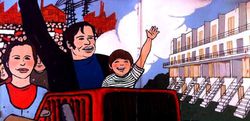
Evoking a provocation famously framed by Le Corbusier, “Architecture ou Révolution,” this conversation will situate the SAAL process in Portugal within international debates during the 1960s and 1970s on social housing and the architect’s social responsibility. Nuno Portas, Secretary of State for Housing and Urbanism of the government established after the 1974 Portuguese(...)
Evoking a provocation famously framed by Le Corbusier, “Architecture ou Révolution,” this conversation will situate the SAAL process in Portugal within international debates during the 1960s and 1970s on social housing and the architect’s social responsibility. Nuno Portas, Secretary of State for Housing and Urbanism of the government established after the 1974 Portuguese(...)
Location:
Paul-Desmarais Theatre
Paul-Desmarais Theatre
Date:
14 May 2015 , 6pm
14 May 2015 , 6pm
Title:
Architecture or Revolution? A Conversation with Nuno Portas and Nuno Grande
Actions:
Description:
Evoking a provocation famously framed by Le Corbusier, “Architecture ou Révolution,” this conversation will situate the SAAL process in Portugal within international debates during the 1960s and 1970s on social housing and the architect’s social responsibility. Nuno Portas, Secretary of State for Housing and Urbanism of the government established after the 1974 Portuguese(...)
Architecture or Revolution? A Conversation with Nuno Portas and Nuno Grande
Actions:
Description:
Evoking a provocation famously framed by Le Corbusier, “Architecture ou Révolution,” this conversation will situate the SAAL process in Portugal within international debates during the 1960s and 1970s on social housing and the architect’s social responsibility. Nuno Portas, Secretary of State for Housing and Urbanism of the government established after the 1974 Portuguese(...)
Form:
events
events
Date:
14 May 2015
6pm
14 May 2015
6pm
Location:
Paul-Desmarais Theatre
Paul-Desmarais Theatre
Level of archival description:
Series
Series
Title:
Office administration
Office administration
Reference number:
AP022.S3
Description:
Series consists of office administration records produced by Erickson / Massey Architects (Vancouver and Toronto, 1963-1972), and Arthur Erickson Architects (Vancouver, Tornoto, and Los Angleles, 1972-1991). The series documents the administration and activities of the Erickson / Massey and Arthur Erickson offices, their public relations and marketing activities, their collaborations with consultants or other firms or design companies, including Francisco Imported Furniture Limited. It contains primarly correspondance, including with suppliers and consultants, clippings, photographs, and promotional material on the firms and their projects, records on offices staff, payrolls and budgets. It also contains reference material and documentation used by the offices, such as press clippings, promotional material and photographs of other architectural firms and their projects, trades and suppliers' catalogues, laws and regulations for construction or urban planning.
AP022.S3
Description:
Series consists of office administration records produced by Erickson / Massey Architects (Vancouver and Toronto, 1963-1972), and Arthur Erickson Architects (Vancouver, Tornoto, and Los Angleles, 1972-1991). The series documents the administration and activities of the Erickson / Massey and Arthur Erickson offices, their public relations and marketing activities, their collaborations with consultants or other firms or design companies, including Francisco Imported Furniture Limited. It contains primarly correspondance, including with suppliers and consultants, clippings, photographs, and promotional material on the firms and their projects, records on offices staff, payrolls and budgets. It also contains reference material and documentation used by the offices, such as press clippings, promotional material and photographs of other architectural firms and their projects, trades and suppliers' catalogues, laws and regulations for construction or urban planning.
People:
Date:
1963-1997
1963-1997
Title:
Office administration
Actions:
AP022.S3
Description:
Series consists of office administration records produced by Erickson / Massey Architects (Vancouver and Toronto, 1963-1972), and Arthur Erickson Architects (Vancouver, Tornoto, and Los Angleles, 1972-1991). The series documents the administration and activities of the Erickson / Massey and Arthur Erickson offices, their public relations and marketing activities, their collaborations with consultants or other firms or design companies, including Francisco Imported Furniture Limited. It contains primarly correspondance, including with suppliers and consultants, clippings, photographs, and promotional material on the firms and their projects, records on offices staff, payrolls and budgets. It also contains reference material and documentation used by the offices, such as press clippings, promotional material and photographs of other architectural firms and their projects, trades and suppliers' catalogues, laws and regulations for construction or urban planning.
Office administration
Actions:
AP022.S3
Description:
Series consists of office administration records produced by Erickson / Massey Architects (Vancouver and Toronto, 1963-1972), and Arthur Erickson Architects (Vancouver, Tornoto, and Los Angleles, 1972-1991). The series documents the administration and activities of the Erickson / Massey and Arthur Erickson offices, their public relations and marketing activities, their collaborations with consultants or other firms or design companies, including Francisco Imported Furniture Limited. It contains primarly correspondance, including with suppliers and consultants, clippings, photographs, and promotional material on the firms and their projects, records on offices staff, payrolls and budgets. It also contains reference material and documentation used by the offices, such as press clippings, promotional material and photographs of other architectural firms and their projects, trades and suppliers' catalogues, laws and regulations for construction or urban planning.
Level of archival description:
Series
Series
Date:
1963-1997
1963-1997
People:
Form:
archives
Level of archival description:
Collection
archives
Level of archival description:
Collection
Title:
J.J.P. Oud Collection
J.J.P. Oud Collection
Reference number:
CI005
Synopsis:
The J.J.P. Oud Collection, 1911-1973, documents J.J.P. Oud's work as an architect between 1911 and 1973. The collection is focussed on Oud’s architectural projects, including work on major exectued and unrealized buildings in the Netherlands, Germany, Czechoslovakia, and the United States. The collection also includes Oud's designs for diverse projects on public housing, war memorials and interior design.
CI005
Synopsis:
The J.J.P. Oud Collection, 1911-1973, documents J.J.P. Oud's work as an architect between 1911 and 1973. The collection is focussed on Oud’s architectural projects, including work on major exectued and unrealized buildings in the Netherlands, Germany, Czechoslovakia, and the United States. The collection also includes Oud's designs for diverse projects on public housing, war memorials and interior design.
People:
Date:
1908-1966 (1911-1963 predominant)
1908-1966 (1911-1963 predominant)
Title:
J.J.P. Oud Collection
CI005
Synopsis:
The J.J.P. Oud Collection, 1911-1973, documents J.J.P. Oud's work as an architect between 1911 and 1973. The collection is focussed on Oud’s architectural projects, including work on major exectued and unrealized buildings in the Netherlands, Germany, Czechoslovakia, and the United States. The collection also includes Oud's designs for diverse projects on public housing, war memorials and interior design.
J.J.P. Oud Collection
CI005
Synopsis:
The J.J.P. Oud Collection, 1911-1973, documents J.J.P. Oud's work as an architect between 1911 and 1973. The collection is focussed on Oud’s architectural projects, including work on major exectued and unrealized buildings in the Netherlands, Germany, Czechoslovakia, and the United States. The collection also includes Oud's designs for diverse projects on public housing, war memorials and interior design.
Form:
archives
Level of archival description:
Collection institutionnelle
archives
Level of archival description:
Collection institutionnelle
Date:
1908-1966 (1911-1963 predominant)
1908-1966 (1911-1963 predominant)
People:
Level of archival description:
Project
Project
Actions:
Reference number:
AP206.S1.1982.PR31
Description:
This project series documents consulting work in the Jharia Coalfields in Jharia, India for the National Thermal Power Corporation, likely sometime in the 1980s or 1990s. The project consisted of reporting on ways to curtail the environmental impacts of the coalfields, but it is not clear if the suggestions were ever implemented.[1] The project is recorded through drawings of an area map and location plans of the coalfields, probably dating from around the 1980s-1990s. [1] Vikramaditya Prakash, One Continuous Line: Art, Architecture and Urbanism of Aditya Prakash (Ahmedabad, India: Mapin Publishing Pvt. Ltd., 2019), 224.
AP206.S1.1982.PR31
Description:
This project series documents consulting work in the Jharia Coalfields in Jharia, India for the National Thermal Power Corporation, likely sometime in the 1980s or 1990s. The project consisted of reporting on ways to curtail the environmental impacts of the coalfields, but it is not clear if the suggestions were ever implemented.[1] The project is recorded through drawings of an area map and location plans of the coalfields, probably dating from around the 1980s-1990s. [1] Vikramaditya Prakash, One Continuous Line: Art, Architecture and Urbanism of Aditya Prakash (Ahmedabad, India: Mapin Publishing Pvt. Ltd., 2019), 224.
People:
Date:
circa 1980s-1990s
circa 1980s-1990s
Title:
Jharia Coalfields, Jharia, India (circa 1980s-1990s)
Actions:
AP206.S1.1982.PR31
Description:
This project series documents consulting work in the Jharia Coalfields in Jharia, India for the National Thermal Power Corporation, likely sometime in the 1980s or 1990s. The project consisted of reporting on ways to curtail the environmental impacts of the coalfields, but it is not clear if the suggestions were ever implemented.[1] The project is recorded through drawings of an area map and location plans of the coalfields, probably dating from around the 1980s-1990s. [1] Vikramaditya Prakash, One Continuous Line: Art, Architecture and Urbanism of Aditya Prakash (Ahmedabad, India: Mapin Publishing Pvt. Ltd., 2019), 224.
Jharia Coalfields, Jharia, India (circa 1980s-1990s)
Actions:
AP206.S1.1982.PR31
Description:
This project series documents consulting work in the Jharia Coalfields in Jharia, India for the National Thermal Power Corporation, likely sometime in the 1980s or 1990s. The project consisted of reporting on ways to curtail the environmental impacts of the coalfields, but it is not clear if the suggestions were ever implemented.[1] The project is recorded through drawings of an area map and location plans of the coalfields, probably dating from around the 1980s-1990s. [1] Vikramaditya Prakash, One Continuous Line: Art, Architecture and Urbanism of Aditya Prakash (Ahmedabad, India: Mapin Publishing Pvt. Ltd., 2019), 224.
Level of archival description:
Project
Project
Date:
circa 1980s-1990s
circa 1980s-1990s
People:
Form:
textual records
textual records
Reference number:
AP206.S2.068
Description:
File was originally housed in a binder along with content arranged in AP206.S2.065, AP206.S2.066 and AP206.S2.067. This file includes the following papers: "The Role of Architects in Urban and Rural Growth" "Spatial Planning of Human Settlements," for seminar on environmental challenges Statement on art exhibition, 1989
AP206.S2.068
Description:
File was originally housed in a binder along with content arranged in AP206.S2.065, AP206.S2.066 and AP206.S2.067. This file includes the following papers: "The Role of Architects in Urban and Rural Growth" "Spatial Planning of Human Settlements," for seminar on environmental challenges Statement on art exhibition, 1989
People:
Date:
1985-1997
1985-1997
Title:
Published and unpublished papers (folder 4 of 4)
Actions:
AP206.S2.068
Description:
File was originally housed in a binder along with content arranged in AP206.S2.065, AP206.S2.066 and AP206.S2.067. This file includes the following papers: "The Role of Architects in Urban and Rural Growth" "Spatial Planning of Human Settlements," for seminar on environmental challenges Statement on art exhibition, 1989
Published and unpublished papers (folder 4 of 4)
Actions:
AP206.S2.068
Description:
File was originally housed in a binder along with content arranged in AP206.S2.065, AP206.S2.066 and AP206.S2.067. This file includes the following papers: "The Role of Architects in Urban and Rural Growth" "Spatial Planning of Human Settlements," for seminar on environmental challenges Statement on art exhibition, 1989
Form:
textual records
textual records
Date:
1985-1997
1985-1997
People:
Level of archival description:
Project
Project
Title:
Casal das Figueiras, Setubal
Casal das Figueiras, Setubal
Actions:
Reference number:
CD034.S1.1975.PR02
Description:
This project series contains seven reproductions of drawings displayed in the exhibit to document the Casal das Figueiras neighbourhood, in Setúbal, south of Lisbon, Portugal. The exhibit text explained that: ... the Setúbal port-city experienced the political vibrations of the revolutionary year with great intensity. The Casal das Figueiras neighbourhood was designed for a fishing community living in a difficult area to build on due to its steep incline. The challenge that the project architect Gonçalo Byrne faced was to maintain the structure of single-family housing with the outhouse or courtyard, the typology that the local populations requested, while making a large urban gesture. The proposal was based on two types of housing (the square and rectangular plans). This overcame the problem of the 36 percent slope in an architecturally striking manner, while it also managed to fulfil the major requirement inherent in any SAAL operation of minimizing costs. (The SAAL Process, Housing in Portugal 1974–76) Gonçalo Byrne worked for SAAL/Lisbon and Central South with Ana Ferreira Rebocho, Berta Sá Caetano and the residents' association Casal das Figueiras, that was founded on October 30th, 1975. The project included 420 dwellings. The operation began in July 1975 , with a construction date in October 1976. This project series contains reproductions of implementation plans and design development drawings. The original drawings were produced in 1978-1979 and were reproduced in 2015 for the exhibit.
CD034.S1.1975.PR02
Description:
This project series contains seven reproductions of drawings displayed in the exhibit to document the Casal das Figueiras neighbourhood, in Setúbal, south of Lisbon, Portugal. The exhibit text explained that: ... the Setúbal port-city experienced the political vibrations of the revolutionary year with great intensity. The Casal das Figueiras neighbourhood was designed for a fishing community living in a difficult area to build on due to its steep incline. The challenge that the project architect Gonçalo Byrne faced was to maintain the structure of single-family housing with the outhouse or courtyard, the typology that the local populations requested, while making a large urban gesture. The proposal was based on two types of housing (the square and rectangular plans). This overcame the problem of the 36 percent slope in an architecturally striking manner, while it also managed to fulfil the major requirement inherent in any SAAL operation of minimizing costs. (The SAAL Process, Housing in Portugal 1974–76) Gonçalo Byrne worked for SAAL/Lisbon and Central South with Ana Ferreira Rebocho, Berta Sá Caetano and the residents' association Casal das Figueiras, that was founded on October 30th, 1975. The project included 420 dwellings. The operation began in July 1975 , with a construction date in October 1976. This project series contains reproductions of implementation plans and design development drawings. The original drawings were produced in 1978-1979 and were reproduced in 2015 for the exhibit.
People:
Date:
1978-1979
1978-1979
Title:
Casal das Figueiras, Setubal
Actions:
CD034.S1.1975.PR02
Description:
This project series contains seven reproductions of drawings displayed in the exhibit to document the Casal das Figueiras neighbourhood, in Setúbal, south of Lisbon, Portugal. The exhibit text explained that: ... the Setúbal port-city experienced the political vibrations of the revolutionary year with great intensity. The Casal das Figueiras neighbourhood was designed for a fishing community living in a difficult area to build on due to its steep incline. The challenge that the project architect Gonçalo Byrne faced was to maintain the structure of single-family housing with the outhouse or courtyard, the typology that the local populations requested, while making a large urban gesture. The proposal was based on two types of housing (the square and rectangular plans). This overcame the problem of the 36 percent slope in an architecturally striking manner, while it also managed to fulfil the major requirement inherent in any SAAL operation of minimizing costs. (The SAAL Process, Housing in Portugal 1974–76) Gonçalo Byrne worked for SAAL/Lisbon and Central South with Ana Ferreira Rebocho, Berta Sá Caetano and the residents' association Casal das Figueiras, that was founded on October 30th, 1975. The project included 420 dwellings. The operation began in July 1975 , with a construction date in October 1976. This project series contains reproductions of implementation plans and design development drawings. The original drawings were produced in 1978-1979 and were reproduced in 2015 for the exhibit.
Casal das Figueiras, Setubal
Actions:
CD034.S1.1975.PR02
Description:
This project series contains seven reproductions of drawings displayed in the exhibit to document the Casal das Figueiras neighbourhood, in Setúbal, south of Lisbon, Portugal. The exhibit text explained that: ... the Setúbal port-city experienced the political vibrations of the revolutionary year with great intensity. The Casal das Figueiras neighbourhood was designed for a fishing community living in a difficult area to build on due to its steep incline. The challenge that the project architect Gonçalo Byrne faced was to maintain the structure of single-family housing with the outhouse or courtyard, the typology that the local populations requested, while making a large urban gesture. The proposal was based on two types of housing (the square and rectangular plans). This overcame the problem of the 36 percent slope in an architecturally striking manner, while it also managed to fulfil the major requirement inherent in any SAAL operation of minimizing costs. (The SAAL Process, Housing in Portugal 1974–76) Gonçalo Byrne worked for SAAL/Lisbon and Central South with Ana Ferreira Rebocho, Berta Sá Caetano and the residents' association Casal das Figueiras, that was founded on October 30th, 1975. The project included 420 dwellings. The operation began in July 1975 , with a construction date in October 1976. This project series contains reproductions of implementation plans and design development drawings. The original drawings were produced in 1978-1979 and were reproduced in 2015 for the exhibit.
Level of archival description:
Project
Project
Date:
1978-1979
1978-1979
People:


