


3935 Results
Form:
books
books
Price:
$39.95
(available to order)
Summary:
We shape ourselves, and are shaped in return, by the walls that contain us. Buildings affect how we sleep, work, socialise and even breathe. They can isolate and endanger us but they can also heal us. We project our hopes and fears onto buildings, while they absorb our histories. In Living With Buildings, Iain Sinclair embarks on a series of expeditions - through(...)
$39.95
(available to order)
Summary:
We shape ourselves, and are shaped in return, by the walls that contain us. Buildings affect how we sleep, work, socialise and even breathe. They can isolate and endanger us but they can also heal us. We project our hopes and fears onto buildings, while they absorb our histories. In Living With Buildings, Iain Sinclair embarks on a series of expeditions - through(...)
Title:
Living with buildings and walking with ghosts: on health and architecture
Actions:
Price:
$39.95
(available to order)
Summary:
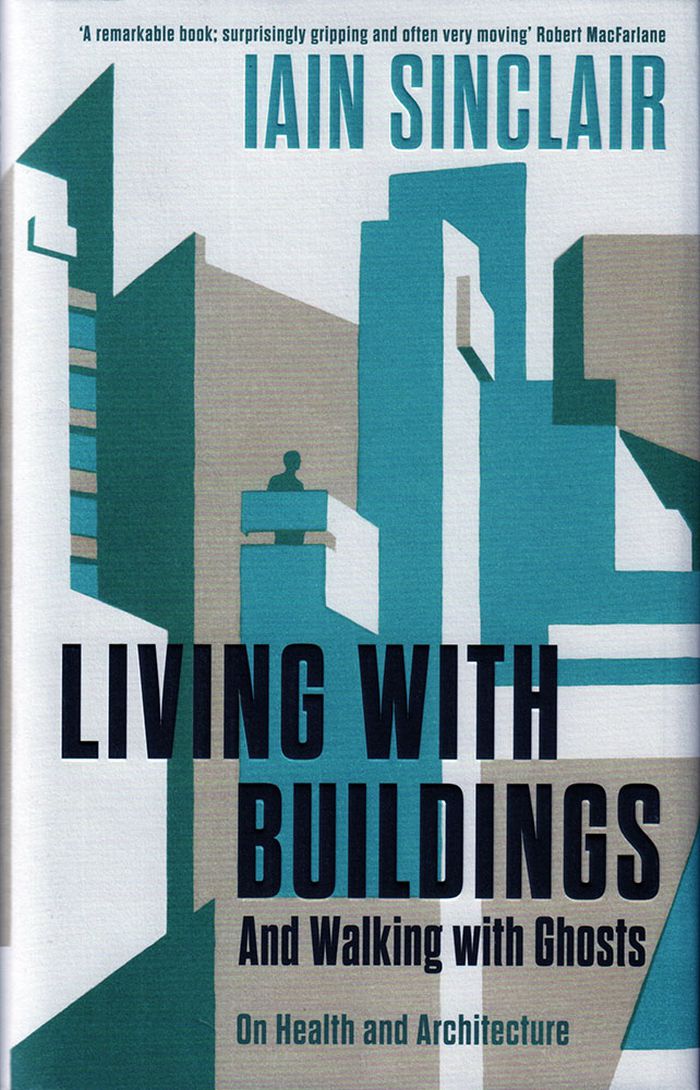
We shape ourselves, and are shaped in return, by the walls that contain us. Buildings affect how we sleep, work, socialise and even breathe. They can isolate and endanger us but they can also heal us. We project our hopes and fears onto buildings, while they absorb our histories. In Living With Buildings, Iain Sinclair embarks on a series of expeditions - through London, Marseille, Mexico and the Outer Hebrides. He explores the relationship between sickness and structure, and between art, architecture, social planning and health, taking plenty of detours along the way. Walking is Sinclair's defensive magic against illness and, as he moves, he observes his surroundings: stacked tower blocks and behemoth estates; halogen-lit glasshouse offices and humming hospitals; the blackened hull of a Spitalfields church and the floating mass of Le Corbusier's radiant city. Sinclair also peels back layers of life. A father and his daughter (who has a rare syndrome) visit the estate where they once lived. Developers clink champagne glasses as residents are 'decanted' from their homes. A box sculpted from whalebone, thought to contain healing properties, is returned to its origins with unexpected consequences. Part investigation, part travelogue, ‘Living with Buildings’ brings the spaces we inhabit to life as never before. Published in association with the Wellcome Collection exhibition Living with Buildings, 4 October 2018- 3 March 2019.
Living with buildings and walking with ghosts: on health and architecture
Actions:
Price:
$39.95
(available to order)
Summary:
We shape ourselves, and are shaped in return, by the walls that contain us. Buildings affect how we sleep, work, socialise and even breathe. They can isolate and endanger us but they can also heal us. We project our hopes and fears onto buildings, while they absorb our histories. In Living With Buildings, Iain Sinclair embarks on a series of expeditions - through London, Marseille, Mexico and the Outer Hebrides. He explores the relationship between sickness and structure, and between art, architecture, social planning and health, taking plenty of detours along the way. Walking is Sinclair's defensive magic against illness and, as he moves, he observes his surroundings: stacked tower blocks and behemoth estates; halogen-lit glasshouse offices and humming hospitals; the blackened hull of a Spitalfields church and the floating mass of Le Corbusier's radiant city. Sinclair also peels back layers of life. A father and his daughter (who has a rare syndrome) visit the estate where they once lived. Developers clink champagne glasses as residents are 'decanted' from their homes. A box sculpted from whalebone, thought to contain healing properties, is returned to its origins with unexpected consequences. Part investigation, part travelogue, ‘Living with Buildings’ brings the spaces we inhabit to life as never before. Published in association with the Wellcome Collection exhibition Living with Buildings, 4 October 2018- 3 March 2019.
Form:
books
books
Publication:
October 2018
October 2018
Subject:
Current Exhibitions
Current Exhibitions
Form:
journals and magazines
journals and magazines
Price:
$35.00
(available to order)
Summary:
The October issue of Domus focuses on the theme of affordable housing, tackling the question of what "minimum subsistence dwelling" could mean in the 21st century. It builds on the investigation started at the Min to Max international architecture symposium in Berlin. Guest edited by Ilka and Andreas Ruby, it starts with Berlin-based architecture studio Something(...)
$35.00
(available to order)
Summary:
The October issue of Domus focuses on the theme of affordable housing, tackling the question of what "minimum subsistence dwelling" could mean in the 21st century. It builds on the investigation started at the Min to Max international architecture symposium in Berlin. Guest edited by Ilka and Andreas Ruby, it starts with Berlin-based architecture studio Something(...)
Title:
Domus 962
Actions:
Price:
$35.00
(available to order)
Summary:
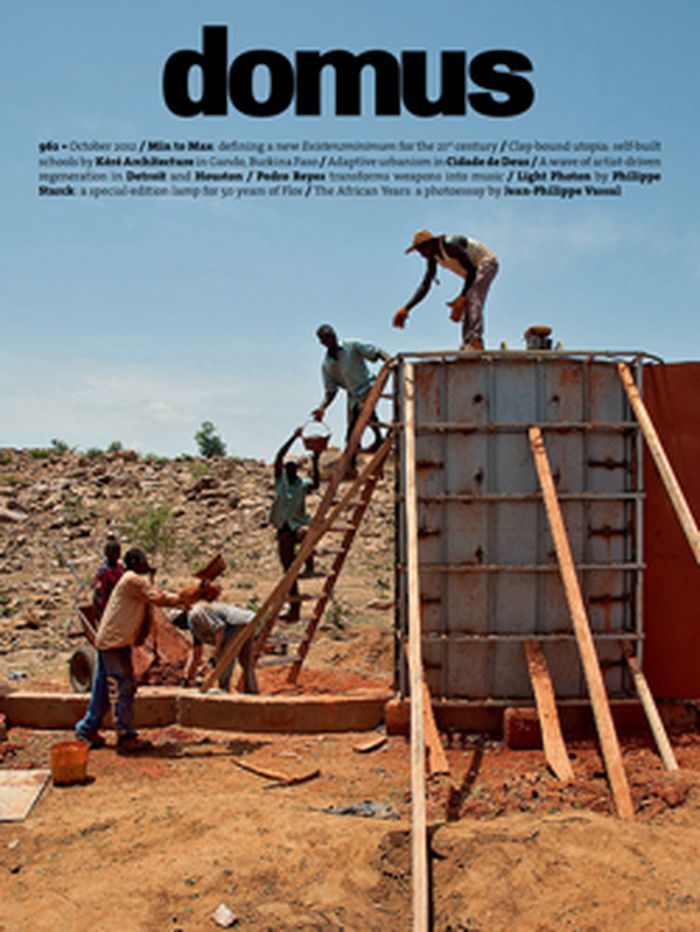
The October issue of Domus focuses on the theme of affordable housing, tackling the question of what "minimum subsistence dwelling" could mean in the 21st century. It builds on the investigation started at the Min to Max international architecture symposium in Berlin. Guest edited by Ilka and Andreas Ruby, it starts with Berlin-based architecture studio Something Fantastic's manifesto on the creative opportunities and innovation allowed by the world recession. Domus then surveys the globe in search of positive strategies where design is subjected to constant experimentation, from Burkina Faso — where, in Gando, Diébédo Francis Kéré runs his experimental architecture workshop —, to Athens — where a group of teachers and researchers finds in the typical Greek polykatoikia the possibility of generating a host of collective and shared spaces —, passing through Detroit, Houston, New York City, Berlin, and Rio de Janeiro. Fresh after the opening of the Venice Architecture Biennale, issue 962 presents Gabriele Basilico's photographic survey of the Biennale's national pavilions, empty and waiting for their annual occupation. Jean-Philippe Vassal's photo essay captures extraordinary moments in the production of everyday space in Africa, and, in Mexico, artist Pedro Reyes transforms agents of death into instruments of life: by converting half a tonne of confiscated weapons into musical instruments, Reyes challenges us to imagine a change for the better.
Domus 962
Actions:
Price:
$35.00
(available to order)
Summary:
The October issue of Domus focuses on the theme of affordable housing, tackling the question of what "minimum subsistence dwelling" could mean in the 21st century. It builds on the investigation started at the Min to Max international architecture symposium in Berlin. Guest edited by Ilka and Andreas Ruby, it starts with Berlin-based architecture studio Something Fantastic's manifesto on the creative opportunities and innovation allowed by the world recession. Domus then surveys the globe in search of positive strategies where design is subjected to constant experimentation, from Burkina Faso — where, in Gando, Diébédo Francis Kéré runs his experimental architecture workshop —, to Athens — where a group of teachers and researchers finds in the typical Greek polykatoikia the possibility of generating a host of collective and shared spaces —, passing through Detroit, Houston, New York City, Berlin, and Rio de Janeiro. Fresh after the opening of the Venice Architecture Biennale, issue 962 presents Gabriele Basilico's photographic survey of the Biennale's national pavilions, empty and waiting for their annual occupation. Jean-Philippe Vassal's photo essay captures extraordinary moments in the production of everyday space in Africa, and, in Mexico, artist Pedro Reyes transforms agents of death into instruments of life: by converting half a tonne of confiscated weapons into musical instruments, Reyes challenges us to imagine a change for the better.
Form:
journals and magazines
journals and magazines
Publication:
November 2012
November 2012
Subject:
Magazines
Magazines
Form:
books
books
Actions:
Price:
$24.00
(available to order)
Summary:
In recent years, Marcel Dzama (born 1974) has expanded his widely acclaimed drawing practice to incorporate theatrical realizations of his magical, myth-laden cosmology in three-dimensional dioramas and films. This publication provides a kind of sketchbook companion or dossier on the making of his latest film, A Game of Chess . This work draws on the importance of chess(...)
$24.00
(available to order)
Summary:
In recent years, Marcel Dzama (born 1974) has expanded his widely acclaimed drawing practice to incorporate theatrical realizations of his magical, myth-laden cosmology in three-dimensional dioramas and films. This publication provides a kind of sketchbook companion or dossier on the making of his latest film, A Game of Chess . This work draws on the importance of chess(...)
Title:
Marcel Dzama : behind every curtain
Actions:
Price:
$24.00
(available to order)
Summary:
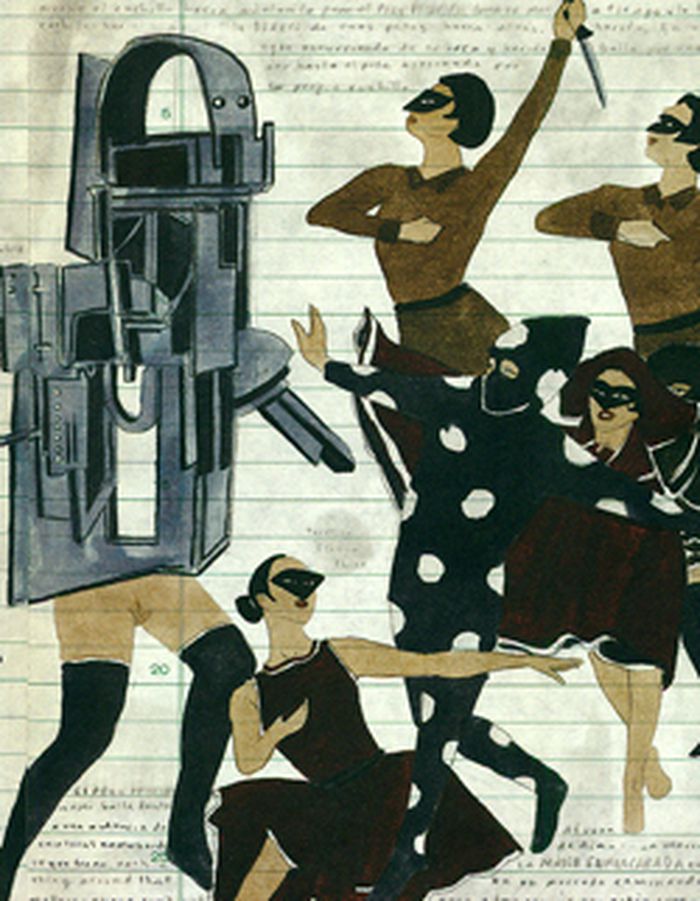
In recent years, Marcel Dzama (born 1974) has expanded his widely acclaimed drawing practice to incorporate theatrical realizations of his magical, myth-laden cosmology in three-dimensional dioramas and films. This publication provides a kind of sketchbook companion or dossier on the making of his latest film, A Game of Chess . This work draws on the importance of chess for the early twentieth-century avant-garde (Man Ray, Duchamp, Picabia) and the game's curious overlap with dance, in films and ballets by René Clair and - of especial significance for Dzama - Oskar Schlemmer, whose 1922 Triadic Ballet included puppet-like masked figures performing on a checkered surface. In Dzama's film, characters based on chess pieces, clad in costumes made from papier-mâché, plaster and fiberglass and wearing elaborate masks, dance across a checkered board to engage their opponents in fatal skirmishes. Distinctions between reality and fiction collapse as both costumed and “real-life” characters in the film are killed. The filming and the creation of the costumes for A Game of Chess were carried out in Guadalajara, Mexico, and the influence of local crafts and religious traditions can also be felt throughout this body of work. Published on the occasion of Dzama's sixth solo exhibition at David Zwirner, this artist's book is packed with full-bleed drawings, sculptures, dioramas and film and production stills that give vivid testimony to the craft and thoroughness of his immensely popular art.
Marcel Dzama : behind every curtain
Actions:
Price:
$24.00
(available to order)
Summary:
In recent years, Marcel Dzama (born 1974) has expanded his widely acclaimed drawing practice to incorporate theatrical realizations of his magical, myth-laden cosmology in three-dimensional dioramas and films. This publication provides a kind of sketchbook companion or dossier on the making of his latest film, A Game of Chess . This work draws on the importance of chess for the early twentieth-century avant-garde (Man Ray, Duchamp, Picabia) and the game's curious overlap with dance, in films and ballets by René Clair and - of especial significance for Dzama - Oskar Schlemmer, whose 1922 Triadic Ballet included puppet-like masked figures performing on a checkered surface. In Dzama's film, characters based on chess pieces, clad in costumes made from papier-mâché, plaster and fiberglass and wearing elaborate masks, dance across a checkered board to engage their opponents in fatal skirmishes. Distinctions between reality and fiction collapse as both costumed and “real-life” characters in the film are killed. The filming and the creation of the costumes for A Game of Chess were carried out in Guadalajara, Mexico, and the influence of local crafts and religious traditions can also be felt throughout this body of work. Published on the occasion of Dzama's sixth solo exhibition at David Zwirner, this artist's book is packed with full-bleed drawings, sculptures, dioramas and film and production stills that give vivid testimony to the craft and thoroughness of his immensely popular art.
Form:
books
books
Publication:
July 2011
July 2011
Subject:
Contemporary Art Monographs
Contemporary Art Monographs
Form:
journals and magazines
journals and magazines
Actions:
Price:
$43.95
(available to order)
Summary:
The new issue is in store ! Forty years on from the first moon landing, architecture in Space is entering a new era. Over the last decade, there has been a fundamental shift in the Space industry from short-term pioneering expeditions to long-term planning for colonisation, and new ventures such as Space tourism. Architects are now involved in designing the interiors of(...)
$43.95
(available to order)
Summary:
The new issue is in store ! Forty years on from the first moon landing, architecture in Space is entering a new era. Over the last decade, there has been a fundamental shift in the Space industry from short-term pioneering expeditions to long-term planning for colonisation, and new ventures such as Space tourism. Architects are now involved in designing the interiors of(...)
Title:
AD Space architecture: the new frontier for design research
Actions:
Price:
$43.95
(available to order)
Summary:
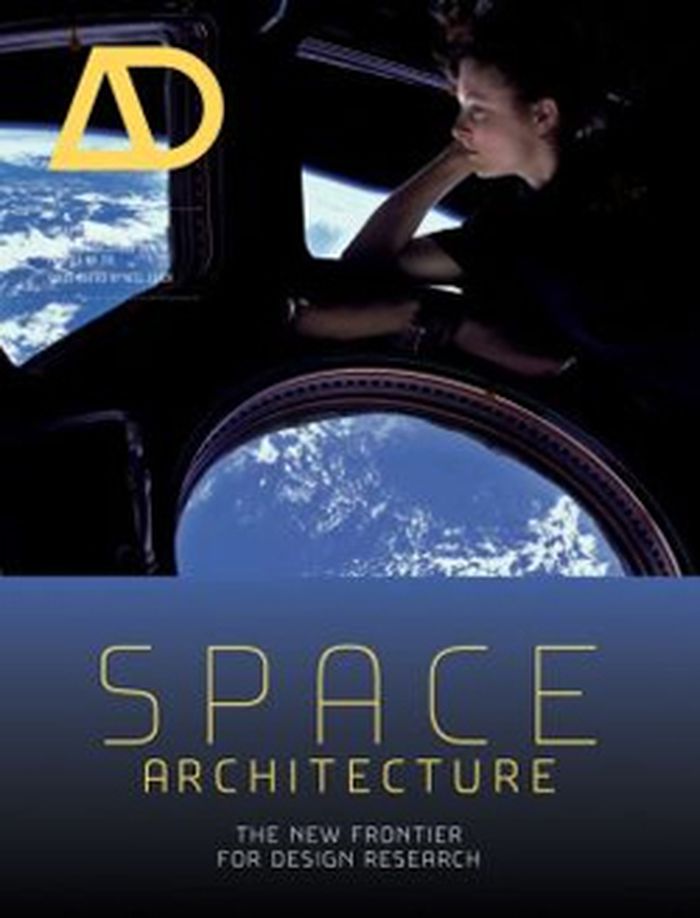
The new issue is in store ! Forty years on from the first moon landing, architecture in Space is entering a new era. Over the last decade, there has been a fundamental shift in the Space industry from short-term pioneering expeditions to long-term planning for colonisation, and new ventures such as Space tourism. Architects are now involved in designing the interiors of long-term habitable structures in Space, such as the International Space Station, researching advanced robotic fabrication technologies for building structures on the Moon and Mars, envisioning new 'space yachts' for the super-rich, and building new facilities, such as the Virgin Galactic 'Spaceport America' in New Mexico designed by Foster + Partners. Meanwhile the mystique of Space remains as alluring as ever, as high-profile designers and educators -- such as Greg Lynn -- are running designs studios drawing upon ever more inventive computational design techniques. This issue of AD features the most significant current projects underway and highlights key areas of research in Space, such as energy, materials, manufacture and robotics. It also looks at how this research and investment in new technologies might transfer to terrestrial design and construction. Contributors include: Anders Carlson, Anita Genupta, Behrokh Khoshnevis. Space architects: Constance Adams, Marc Cohen, Ondrej Doule, Scott Howe, Brent Sherwood, John Spencer, Madhu Thangavelu, Andreas Vogler. Architects: Bevk Perovic Arhitekti, Dekleva Gregoric Arhitekti, Foster + Partners, Neil Leach, Greg Lynn, OFIS architects, SADAR + VUGA.
AD Space architecture: the new frontier for design research
Actions:
Price:
$43.95
(available to order)
Summary:
The new issue is in store ! Forty years on from the first moon landing, architecture in Space is entering a new era. Over the last decade, there has been a fundamental shift in the Space industry from short-term pioneering expeditions to long-term planning for colonisation, and new ventures such as Space tourism. Architects are now involved in designing the interiors of long-term habitable structures in Space, such as the International Space Station, researching advanced robotic fabrication technologies for building structures on the Moon and Mars, envisioning new 'space yachts' for the super-rich, and building new facilities, such as the Virgin Galactic 'Spaceport America' in New Mexico designed by Foster + Partners. Meanwhile the mystique of Space remains as alluring as ever, as high-profile designers and educators -- such as Greg Lynn -- are running designs studios drawing upon ever more inventive computational design techniques. This issue of AD features the most significant current projects underway and highlights key areas of research in Space, such as energy, materials, manufacture and robotics. It also looks at how this research and investment in new technologies might transfer to terrestrial design and construction. Contributors include: Anders Carlson, Anita Genupta, Behrokh Khoshnevis. Space architects: Constance Adams, Marc Cohen, Ondrej Doule, Scott Howe, Brent Sherwood, John Spencer, Madhu Thangavelu, Andreas Vogler. Architects: Bevk Perovic Arhitekti, Dekleva Gregoric Arhitekti, Foster + Partners, Neil Leach, Greg Lynn, OFIS architects, SADAR + VUGA.
Form:
journals and magazines
journals and magazines
Publication:
December 2014
December 2014
Subject:
Magazines
Magazines
Form:
books
books
Actions:
Price:
$130.00
(available to order)
Summary:
For five decades, photographer Gianfranco Gorgoni (1941-2019) built his reputation as the premier documentarian of Land Art in the US and beyond. After leaving Italy, Gorgoni started making portraits of the major artists of the New York scene, including Michael Heizer, Robert Smithson, Nancy Holt, Walter De Maria, Carl Andre, and Richard Serra. It was not long before he(...)
$130.00
(available to order)
Summary:
For five decades, photographer Gianfranco Gorgoni (1941-2019) built his reputation as the premier documentarian of Land Art in the US and beyond. After leaving Italy, Gorgoni started making portraits of the major artists of the New York scene, including Michael Heizer, Robert Smithson, Nancy Holt, Walter De Maria, Carl Andre, and Richard Serra. It was not long before he(...)
Title:
Gianfranco Gorgoni: Land Art photographs
Actions:
Price:
$130.00
(available to order)
Summary:
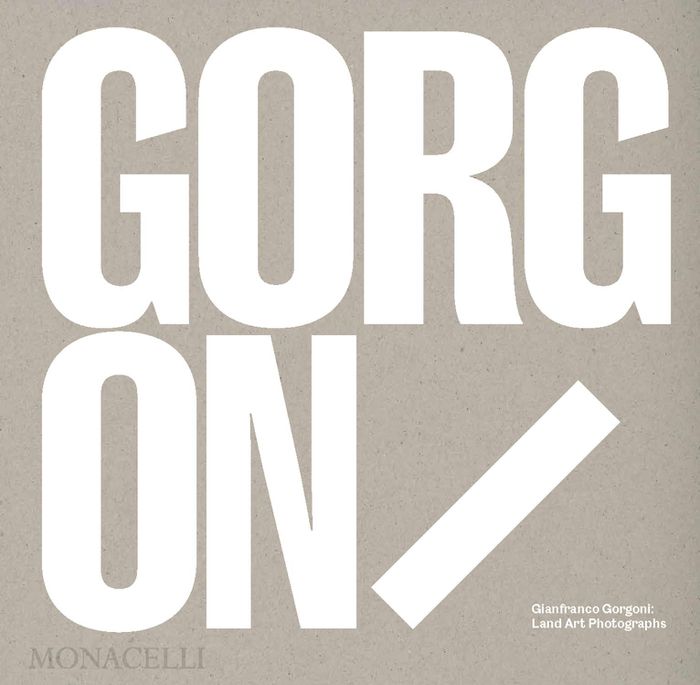
For five decades, photographer Gianfranco Gorgoni (1941-2019) built his reputation as the premier documentarian of Land Art in the US and beyond. After leaving Italy, Gorgoni started making portraits of the major artists of the New York scene, including Michael Heizer, Robert Smithson, Nancy Holt, Walter De Maria, Carl Andre, and Richard Serra. It was not long before he was traveling with Heizer, Smithson, and De Maria to the American West in the late 1960s to plot the works that would famously break art practice out of the confines of the gallery world. In Nevada, New Mexico, and Utah, these artists embarked on major Land Art installations that would redefine contemporary art practice of the era. In many cases, Gorgoni was the only photographer on the ground to document their projects, and his images often serve as the definitive photographic record of the planning and creation of these groundbreaking works. Published to coincide with the first major exhibition of Gorgoni's photographic Land Art images at the Nevada Museum of Art, featuring over fifty of his large-scale photographs, "Gianfranco Gorgoni: Land Art Photographs" includes an introduction by Ann M. Wolfe, Andrea and John C. Deane Family senior curator and deputy director at the Nevada Museum of Art, an essay by the late art historian and critic Germano Celant, whose contribution here is among the last he wrote before his death in 2020, and William L. Fox, the Peter E. Pool Director of the Center for Art + Environment.
Gianfranco Gorgoni: Land Art photographs
Actions:
Price:
$130.00
(available to order)
Summary:
For five decades, photographer Gianfranco Gorgoni (1941-2019) built his reputation as the premier documentarian of Land Art in the US and beyond. After leaving Italy, Gorgoni started making portraits of the major artists of the New York scene, including Michael Heizer, Robert Smithson, Nancy Holt, Walter De Maria, Carl Andre, and Richard Serra. It was not long before he was traveling with Heizer, Smithson, and De Maria to the American West in the late 1960s to plot the works that would famously break art practice out of the confines of the gallery world. In Nevada, New Mexico, and Utah, these artists embarked on major Land Art installations that would redefine contemporary art practice of the era. In many cases, Gorgoni was the only photographer on the ground to document their projects, and his images often serve as the definitive photographic record of the planning and creation of these groundbreaking works. Published to coincide with the first major exhibition of Gorgoni's photographic Land Art images at the Nevada Museum of Art, featuring over fifty of his large-scale photographs, "Gianfranco Gorgoni: Land Art Photographs" includes an introduction by Ann M. Wolfe, Andrea and John C. Deane Family senior curator and deputy director at the Nevada Museum of Art, an essay by the late art historian and critic Germano Celant, whose contribution here is among the last he wrote before his death in 2020, and William L. Fox, the Peter E. Pool Director of the Center for Art + Environment.
Form:
books
books
Publication:
August 2021
August 2021
Subject:
Photography monographs
Photography monographs
Form:
books
books
Title:
Overlook : exploring the internal fringes of America with the Center for land use interpretation
Overlook : exploring the internal fringes of America with the Center for land use interpretation
Actions:
Price:
$42.00
(available to order)
Summary:
The Center for land use interpretation is a research-based educational organization that produces public programs about the built landscape of the United States from its sites in Los Angeles, Utah and the Mojave desert, with an upstate New York location opening in 2006. The Center’s aim is to increase and diffuse information about how the nation’s lands are apportioned,(...)
$42.00
(available to order)
Summary:
The Center for land use interpretation is a research-based educational organization that produces public programs about the built landscape of the United States from its sites in Los Angeles, Utah and the Mojave desert, with an upstate New York location opening in 2006. The Center’s aim is to increase and diffuse information about how the nation’s lands are apportioned,(...)
Title:
Overlook : exploring the internal fringes of America with the Center for land use interpretation
Actions:
Price:
$42.00
(available to order)
Summary:
The Center for land use interpretation is a research-based educational organization that produces public programs about the built landscape of the United States from its sites in Los Angeles, Utah and the Mojave desert, with an upstate New York location opening in 2006. The Center’s aim is to increase and diffuse information about how the nation’s lands are apportioned, utilized and perceived. Recent examples of their work include a two-day "Tour of the monuments of the great American void" by bus and the exhibit "Immersed remains: towns submerged in America". This book takes readers on a tour through the strangely unfamiliar land that Americans live in, demonstrating that we can understand ourselves by examining the clues on display all around us, often clearly visible but ignored. Each chapter explores a different topic, from an in-depth look at Ohio ("the most all-American state"); through scale shifts in model landscapes, exemplified in the three largest hydraulic models in the world; and law-enforcement training environments that "simulate" public space. Readers can dive into the hidden and enchanting world of show caves, where America is on display underground; and come up into the Great Basin, a zone covering most of Nevada, and portions of Utah, California, Oregon, Idaho and Mexico, whose network of watersheds has no outlet to the ocean. Following lines and edges, through cities, suburbs, small towns and wide-open spaces, the Center guides us upstream, toward the heart of another America - the same, but different.
Overlook : exploring the internal fringes of America with the Center for land use interpretation
Actions:
Price:
$42.00
(available to order)
Summary:
The Center for land use interpretation is a research-based educational organization that produces public programs about the built landscape of the United States from its sites in Los Angeles, Utah and the Mojave desert, with an upstate New York location opening in 2006. The Center’s aim is to increase and diffuse information about how the nation’s lands are apportioned, utilized and perceived. Recent examples of their work include a two-day "Tour of the monuments of the great American void" by bus and the exhibit "Immersed remains: towns submerged in America". This book takes readers on a tour through the strangely unfamiliar land that Americans live in, demonstrating that we can understand ourselves by examining the clues on display all around us, often clearly visible but ignored. Each chapter explores a different topic, from an in-depth look at Ohio ("the most all-American state"); through scale shifts in model landscapes, exemplified in the three largest hydraulic models in the world; and law-enforcement training environments that "simulate" public space. Readers can dive into the hidden and enchanting world of show caves, where America is on display underground; and come up into the Great Basin, a zone covering most of Nevada, and portions of Utah, California, Oregon, Idaho and Mexico, whose network of watersheds has no outlet to the ocean. Following lines and edges, through cities, suburbs, small towns and wide-open spaces, the Center guides us upstream, toward the heart of another America - the same, but different.
Form:
books
books
Publication:
June 2006, New York
June 2006, New York
Subject:
Land Art
Land Art
Form:
books
books
Title:
Phyllis Ma: Special nothing
Phyllis Ma: Special nothing
Actions:
Price:
$65.00
(available to order)
Summary:
In a supermarket in Berlin, wandering through aisle after aisle of processed meats, the artist Phyllis Ma conceived of Special Nothing, a collection of travel photos that take the form of still lifes. To Ma, ''special nothings'' are those everyday objects that, on the right day, or in the right moment, are sources of pure delight: a very hairy flower; a block of head(...)
$65.00
(available to order)
Summary:
In a supermarket in Berlin, wandering through aisle after aisle of processed meats, the artist Phyllis Ma conceived of Special Nothing, a collection of travel photos that take the form of still lifes. To Ma, ''special nothings'' are those everyday objects that, on the right day, or in the right moment, are sources of pure delight: a very hairy flower; a block of head(...)
Title:
Phyllis Ma: Special nothing
Actions:
Price:
$65.00
(available to order)
Summary:
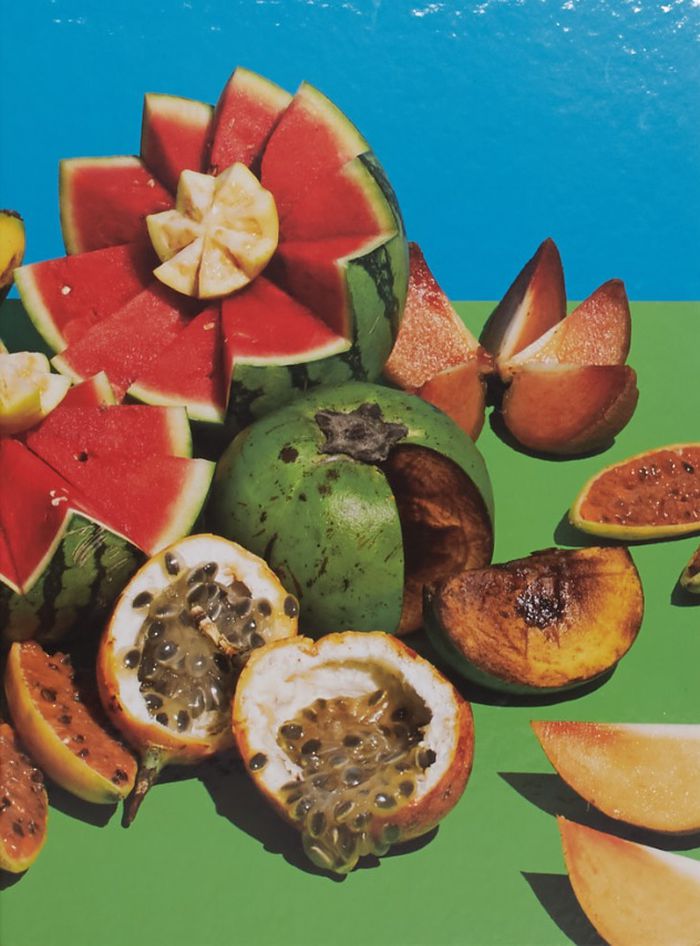
In a supermarket in Berlin, wandering through aisle after aisle of processed meats, the artist Phyllis Ma conceived of Special Nothing, a collection of travel photos that take the form of still lifes. To Ma, ''special nothings'' are those everyday objects that, on the right day, or in the right moment, are sources of pure delight: a very hairy flower; a block of head cheese the size and shape of an iPhone; a gherkin that looks especially perverse. If you pay attention, you can find these special nothings in your home or on your block, but we tend to be more attuned to them when we’re in an unfamiliar place. In a new country, the most mundane sights and tasks are often fascinating, difficult, and strange: doing laundry, boarding a bus, buying groceries. But it’s in supermarkets, with their promise of familiarity — the same bright overhead lighting, neat aisles, and row of checkout counters can be found the world over — where things become most uncanny. In today’s global economy, you can visit a supermarket in any major city and find many of the same goods and brands that you would in your hometown. And yet everything isn’t the same. Refrigeration practices differ, labels confuse. You are seduced by a product’s packaging, want to buy it badly, but then realize you’re not even sure what type of food it is. This feeling of wonderment is at the heart of Ma’s fantastical aesthetic. Created in Berlin, London, Tokyo, Mexico City and New York, ''Special nothing'' is a unique travel diary, a distillation of those moments when the commonplace and the strange coalesce, turn into something magical, surreal.
Phyllis Ma: Special nothing
Actions:
Price:
$65.00
(available to order)
Summary:
In a supermarket in Berlin, wandering through aisle after aisle of processed meats, the artist Phyllis Ma conceived of Special Nothing, a collection of travel photos that take the form of still lifes. To Ma, ''special nothings'' are those everyday objects that, on the right day, or in the right moment, are sources of pure delight: a very hairy flower; a block of head cheese the size and shape of an iPhone; a gherkin that looks especially perverse. If you pay attention, you can find these special nothings in your home or on your block, but we tend to be more attuned to them when we’re in an unfamiliar place. In a new country, the most mundane sights and tasks are often fascinating, difficult, and strange: doing laundry, boarding a bus, buying groceries. But it’s in supermarkets, with their promise of familiarity — the same bright overhead lighting, neat aisles, and row of checkout counters can be found the world over — where things become most uncanny. In today’s global economy, you can visit a supermarket in any major city and find many of the same goods and brands that you would in your hometown. And yet everything isn’t the same. Refrigeration practices differ, labels confuse. You are seduced by a product’s packaging, want to buy it badly, but then realize you’re not even sure what type of food it is. This feeling of wonderment is at the heart of Ma’s fantastical aesthetic. Created in Berlin, London, Tokyo, Mexico City and New York, ''Special nothing'' is a unique travel diary, a distillation of those moments when the commonplace and the strange coalesce, turn into something magical, surreal.
Form:
books
books
Publication:
October 2020
October 2020
Subject:
Photography monographs
Photography monographs
Form:
books
books
Actions:
Price:
$36.95
(available to order)
Summary:
In Miniature Messages, Jack Child analyzes Latin American postage stamps, revealing the messages about history, culture, and politics encoded in their design and disseminated throughout the world. While postage stamps are a sanctioned product of official government agencies, Child argues that they accumulate popular cultural value and take on new meanings as they(...)
$36.95
(available to order)
Summary:
In Miniature Messages, Jack Child analyzes Latin American postage stamps, revealing the messages about history, culture, and politics encoded in their design and disseminated throughout the world. While postage stamps are a sanctioned product of official government agencies, Child argues that they accumulate popular cultural value and take on new meanings as they(...)
Title:
Miniature messages: the semiotics and politics of latin american postage stamps
Actions:
Price:
$36.95
(available to order)
Summary:
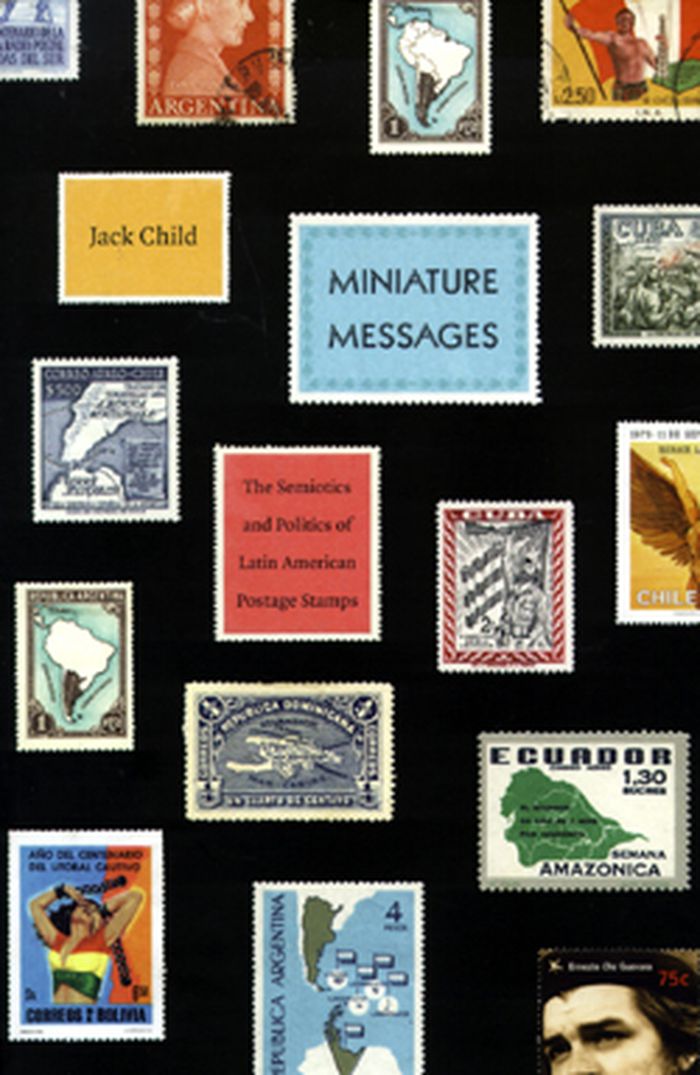
In Miniature Messages, Jack Child analyzes Latin American postage stamps, revealing the messages about history, culture, and politics encoded in their design and disseminated throughout the world. While postage stamps are a sanctioned product of official government agencies, Child argues that they accumulate popular cultural value and take on new meanings as they circulate in the public sphere. As he demonstrates in this richly illustrated study, the postage stamp conveys many of the contestations and triumphs of Latin American history. Child combines history and political science with philatelic research of nearly forty thousand Latin American stamps. He focuses on Argentina and the Southern Cone, highlighting stamps representing the consolidation of the Argentine republic and those produced under its Peronist regime. He compares Chilean stamps issued by the leftist government of Salvador Allende and by Augusto Pinochet’s dictatorship. Considering postage stamps produced under other dictatorial regimes, he examines stamps from the Dominican Republic, Guatemala, Nicaragua, and Paraguay. Child studies how international conflicts have been depicted on the stamps of Argentina, Chile, and Peru, and he pays particular attention to the role of South American and British stamps in establishing claims to the Malvinas/Falkland Islands and to Antarctica. He also covers the cultural and political history of stamps in Bolivia, Brazil, Colombia, Cuba, Grenada, Mexico, Uruguay, Venezuela and elsewhere. In Miniature Messages, Child finds the political history of modern Latin America in its “tiny posters.” Jack Child is a professor in the Department of Language and Foreign Studies at American University in Washington. He is the author of many books and articles on Latin American culture, translation, and geopolitics.
Miniature messages: the semiotics and politics of latin american postage stamps
Actions:
Price:
$36.95
(available to order)
Summary:
In Miniature Messages, Jack Child analyzes Latin American postage stamps, revealing the messages about history, culture, and politics encoded in their design and disseminated throughout the world. While postage stamps are a sanctioned product of official government agencies, Child argues that they accumulate popular cultural value and take on new meanings as they circulate in the public sphere. As he demonstrates in this richly illustrated study, the postage stamp conveys many of the contestations and triumphs of Latin American history. Child combines history and political science with philatelic research of nearly forty thousand Latin American stamps. He focuses on Argentina and the Southern Cone, highlighting stamps representing the consolidation of the Argentine republic and those produced under its Peronist regime. He compares Chilean stamps issued by the leftist government of Salvador Allende and by Augusto Pinochet’s dictatorship. Considering postage stamps produced under other dictatorial regimes, he examines stamps from the Dominican Republic, Guatemala, Nicaragua, and Paraguay. Child studies how international conflicts have been depicted on the stamps of Argentina, Chile, and Peru, and he pays particular attention to the role of South American and British stamps in establishing claims to the Malvinas/Falkland Islands and to Antarctica. He also covers the cultural and political history of stamps in Bolivia, Brazil, Colombia, Cuba, Grenada, Mexico, Uruguay, Venezuela and elsewhere. In Miniature Messages, Child finds the political history of modern Latin America in its “tiny posters.” Jack Child is a professor in the Department of Language and Foreign Studies at American University in Washington. He is the author of many books and articles on Latin American culture, translation, and geopolitics.
Form:
books
books
Publication:
June 2008, Durham
June 2008, Durham
Subject:
Printed Matter
Printed Matter
Form:
audio
audio
Description:
1 online resource.
Author:
Subject:
Publication:
[Place of publication not identified] : Lateral Addition, 2018.
[Place of publication not identified] : Lateral Addition, 2018.
Title:
June 21, 2018 : Listening for Southwest Key in San Diego.
Actions:
Description:
1 online resource.
June 21, 2018 : Listening for Southwest Key in San Diego.
Actions:
Description:
1 online resource.
Form:
audio
audio
Publication:
[Place of publication not identified] : Lateral Addition, 2018.
[Place of publication not identified] : Lateral Addition, 2018.
Author:
Subject:
Form:
books
books

Price:
$26.00
(available to order)
Summary:
«Plomb durci» (2008-2009), «Pilier de défense» (2012), «Bordure protectrice» (2014): les trois dernières offensives militaires d'envergure menées par Israël contre Gaza ont fait des milliers de morts du côté palestinien et donné lieu à de nouvelles expropriations de terres en Cisjordanie. Ces guerres de conquête israélienne ont ravivé, chez les militant.e.s de la justice(...)
$26.00
(available to order)
Summary:
«Plomb durci» (2008-2009), «Pilier de défense» (2012), «Bordure protectrice» (2014): les trois dernières offensives militaires d'envergure menées par Israël contre Gaza ont fait des milliers de morts du côté palestinien et donné lieu à de nouvelles expropriations de terres en Cisjordanie. Ces guerres de conquête israélienne ont ravivé, chez les militant.e.s de la justice(...)
Title:
Palestine
Actions:
Price:
$26.00
(available to order)
Summary:
«Plomb durci» (2008-2009), «Pilier de défense» (2012), «Bordure protectrice» (2014): les trois dernières offensives militaires d'envergure menées par Israël contre Gaza ont fait des milliers de morts du côté palestinien et donné lieu à de nouvelles expropriations de terres en Cisjordanie. Ces guerres de conquête israélienne ont ravivé, chez les militant.e.s de la justice sociale, le besoin d'exprimer leur solidarité avec le peuple palestinien et l'importance de renouveler le vocabulaire politique lié à cette question.Dans cet ouvrage en partie rédigé dans le feu de l'action, à l'été 2014, Noam Chomsky et Ilan Pappé, deux ardents défenseurs de la cause palestinienne, mènent une longue conversation dirigée par Frank Barat, militant des droits de la personne. Pour eux, le problème palestinien est depuis le début un cas évident de colonialisme et de dépossession, même si on préfère le traiter comme une affaire complexe soi-disant difficile à comprendre et, plus encore, à résoudre.Leurs échanges portent à la fois sur le sionisme en tant que phénomène historique, la pertinence d'analyser la situation en Palestine comme un apartheid, l'efficacité de la campagne Boycott, désinvestissement et sanctions (BDS) et la viabilité de la solution à un ou à deux États...Tour d'horizon de la question palestinienne, ce livre a le mérite d'envisager la situation en Palestine comme un baromètre de la répression politique. Car l'injustice qui accable le peuple palestinien a des ramifications partout dans le monde. «De Ferguson à Barcelone, en passant par Mexico, nombreux sont les gouvernements qui calquent les méthodes employées par Israël pour opprimer les Palestiniens. Leur recours aux mêmes tactiques et, souvent, aux mêmes armes démontre que les Palestiniens servent maintenant de cobayes - et que la Palestine est devenue un grand laboratoire» -- Frank Barat.
Palestine
Actions:
Price:
$26.00
(available to order)
Summary:
«Plomb durci» (2008-2009), «Pilier de défense» (2012), «Bordure protectrice» (2014): les trois dernières offensives militaires d'envergure menées par Israël contre Gaza ont fait des milliers de morts du côté palestinien et donné lieu à de nouvelles expropriations de terres en Cisjordanie. Ces guerres de conquête israélienne ont ravivé, chez les militant.e.s de la justice sociale, le besoin d'exprimer leur solidarité avec le peuple palestinien et l'importance de renouveler le vocabulaire politique lié à cette question.Dans cet ouvrage en partie rédigé dans le feu de l'action, à l'été 2014, Noam Chomsky et Ilan Pappé, deux ardents défenseurs de la cause palestinienne, mènent une longue conversation dirigée par Frank Barat, militant des droits de la personne. Pour eux, le problème palestinien est depuis le début un cas évident de colonialisme et de dépossession, même si on préfère le traiter comme une affaire complexe soi-disant difficile à comprendre et, plus encore, à résoudre.Leurs échanges portent à la fois sur le sionisme en tant que phénomène historique, la pertinence d'analyser la situation en Palestine comme un apartheid, l'efficacité de la campagne Boycott, désinvestissement et sanctions (BDS) et la viabilité de la solution à un ou à deux États...Tour d'horizon de la question palestinienne, ce livre a le mérite d'envisager la situation en Palestine comme un baromètre de la répression politique. Car l'injustice qui accable le peuple palestinien a des ramifications partout dans le monde. «De Ferguson à Barcelone, en passant par Mexico, nombreux sont les gouvernements qui calquent les méthodes employées par Israël pour opprimer les Palestiniens. Leur recours aux mêmes tactiques et, souvent, aux mêmes armes démontre que les Palestiniens servent maintenant de cobayes - et que la Palestine est devenue un grand laboratoire» -- Frank Barat.
Form:
books
books
Publication:
February 2016
February 2016
Subject:
Arch Middle East
Arch Middle East


