


5485 Results
Form:
books
books
Actions:
Price:
$47.00
(available in store)
Summary:
Renowned philosopher Susan Buck-Morss collaborates with Kevin McCaughey of Boot Boyz Biz and Adam Michaels of Inventory Press on this experimental image-text renewal of McLuhan, Berger and Benjamin. "Seeing <—> Making: Room for thought" both studies and presents the creative process of constructing ideas with images. By activating the techniques of montage and analogy,(...)
$47.00
(available in store)
Summary:
Renowned philosopher Susan Buck-Morss collaborates with Kevin McCaughey of Boot Boyz Biz and Adam Michaels of Inventory Press on this experimental image-text renewal of McLuhan, Berger and Benjamin. "Seeing <—> Making: Room for thought" both studies and presents the creative process of constructing ideas with images. By activating the techniques of montage and analogy,(...)
Publication:
January 2024
January 2024
Title:
Seeing <—> Making: Room for thought
Actions:
Price:
$47.00
(available in store)
Summary:
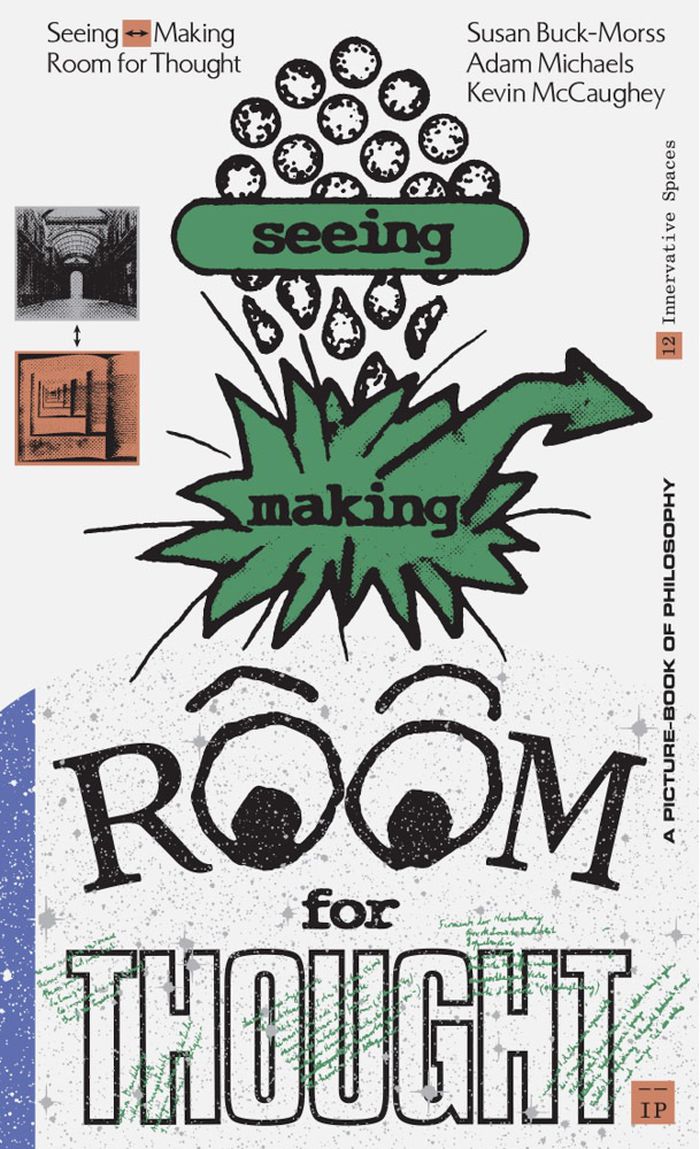
Renowned philosopher Susan Buck-Morss collaborates with Kevin McCaughey of Boot Boyz Biz and Adam Michaels of Inventory Press on this experimental image-text renewal of McLuhan, Berger and Benjamin. "Seeing <—> Making: Room for thought" both studies and presents the creative process of constructing ideas with images. By activating the techniques of montage and analogy, the book reveals a wide field of view and a space to engage new critical connections between a multiplicity of objects from the past and present. Realized through an intergenerational collaboration of three cultural producers committed to making theory visible, a transformative anthology of critical essays by Susan Buck-Morss anchors this kaleidoscopic project. Images and ideas sync with Buck-Morss’ perceptive texts on visual culture, history, politics and aesthetics, fusing criticism with visual play and linking collective imagination and social action. In both design and content, "Seeing <—> Making: Room for thought" builds upon the dynamic sensorium of Marshall McLuhan and Quentin Fiore's book "The medium is the massage", Walter Benjamin's "Arcades" Project and John Berger's "Ways of seeing". This innovative volume brings Buck-Morss’ more experimental, visually engaged work to the fore in a way that has not been available in the usual contexts within which her writing has appeared.
Seeing <—> Making: Room for thought
Actions:
Price:
$47.00
(available in store)
Summary:
Renowned philosopher Susan Buck-Morss collaborates with Kevin McCaughey of Boot Boyz Biz and Adam Michaels of Inventory Press on this experimental image-text renewal of McLuhan, Berger and Benjamin. "Seeing <—> Making: Room for thought" both studies and presents the creative process of constructing ideas with images. By activating the techniques of montage and analogy, the book reveals a wide field of view and a space to engage new critical connections between a multiplicity of objects from the past and present. Realized through an intergenerational collaboration of three cultural producers committed to making theory visible, a transformative anthology of critical essays by Susan Buck-Morss anchors this kaleidoscopic project. Images and ideas sync with Buck-Morss’ perceptive texts on visual culture, history, politics and aesthetics, fusing criticism with visual play and linking collective imagination and social action. In both design and content, "Seeing <—> Making: Room for thought" builds upon the dynamic sensorium of Marshall McLuhan and Quentin Fiore's book "The medium is the massage", Walter Benjamin's "Arcades" Project and John Berger's "Ways of seeing". This innovative volume brings Buck-Morss’ more experimental, visually engaged work to the fore in a way that has not been available in the usual contexts within which her writing has appeared.
Form:
books
books
Publication:
January 2024
January 2024
Form:
books
books

Title:
Whole earth field guide
Whole earth field guide
Actions:
Price:
$46.95
(available to order)
Summary:
The Whole Earth Catalog was a cultural touchstone of the 1960s and 1970s. Between 1968 and 1971, almost two million copies of its various editions were sold, and not just to commune-dwellers and hippies. Millions of mainstream readers turned to the Whole Earth Catalog for practical advice and intellectual stimulation, finding everything from a review of Buckminster Fuller(...)
$46.95
(available to order)
Summary:
The Whole Earth Catalog was a cultural touchstone of the 1960s and 1970s. Between 1968 and 1971, almost two million copies of its various editions were sold, and not just to commune-dwellers and hippies. Millions of mainstream readers turned to the Whole Earth Catalog for practical advice and intellectual stimulation, finding everything from a review of Buckminster Fuller(...)
Publication:
October 2016
October 2016
Title:
Whole earth field guide
Actions:
Price:
$46.95
(available to order)
Summary:
The Whole Earth Catalog was a cultural touchstone of the 1960s and 1970s. Between 1968 and 1971, almost two million copies of its various editions were sold, and not just to commune-dwellers and hippies. Millions of mainstream readers turned to the Whole Earth Catalog for practical advice and intellectual stimulation, finding everything from a review of Buckminster Fuller to recommendations for juicers. This book offers selections from eighty texts from the nearly 1,000 items of "suggested reading" in the Last Whole Earth Catalog. Illustrated and meticulously documented, this fascinating selection of texts cited as 'suggested reading' in the Whole Earth Catalog gives us a fresh, new look at this bible of a generation. Wonderful juxtapositions abound: Buckminster Fuller and Wendell Berry; Timothy Leary and Lao-Tzu; Thoreau and Marshall McLuhan; the Boston Women's Health Collective and Norbert Wiener; Nicholas Negroponte and Kakuzo Okakura; and Margaret Mead and James Baldwin (their A Rap on Race). At once libertarian and communitarian, practical and mystical, scientific and hands-on, Whole Earth Field Guide reveals the astonishing energy and spirit that motivated thousands of young people to challenge the status quo and to grapple, with remarkable prescience, with issues such as ecology and information technology that still confront us today.
Whole earth field guide
Actions:
Price:
$46.95
(available to order)
Summary:
The Whole Earth Catalog was a cultural touchstone of the 1960s and 1970s. Between 1968 and 1971, almost two million copies of its various editions were sold, and not just to commune-dwellers and hippies. Millions of mainstream readers turned to the Whole Earth Catalog for practical advice and intellectual stimulation, finding everything from a review of Buckminster Fuller to recommendations for juicers. This book offers selections from eighty texts from the nearly 1,000 items of "suggested reading" in the Last Whole Earth Catalog. Illustrated and meticulously documented, this fascinating selection of texts cited as 'suggested reading' in the Whole Earth Catalog gives us a fresh, new look at this bible of a generation. Wonderful juxtapositions abound: Buckminster Fuller and Wendell Berry; Timothy Leary and Lao-Tzu; Thoreau and Marshall McLuhan; the Boston Women's Health Collective and Norbert Wiener; Nicholas Negroponte and Kakuzo Okakura; and Margaret Mead and James Baldwin (their A Rap on Race). At once libertarian and communitarian, practical and mystical, scientific and hands-on, Whole Earth Field Guide reveals the astonishing energy and spirit that motivated thousands of young people to challenge the status quo and to grapple, with remarkable prescience, with issues such as ecology and information technology that still confront us today.
Form:
books
books
Publication:
October 2016
October 2016
Form:
books
books
Actions:
Price:
$39.99
(available to order)
Summary:
Why Don't American Cities Burn? traces the collision of urban transformation with the rightward-moving social politics of late twentieth- and early twenty-first-century America. He shows how the bifurcation of black social structures produced a new African American inequality and traces the shift from images of a pathological black "underclass" to praise of the(...)
$39.99
(available to order)
Summary:
Why Don't American Cities Burn? traces the collision of urban transformation with the rightward-moving social politics of late twentieth- and early twenty-first-century America. He shows how the bifurcation of black social structures produced a new African American inequality and traces the shift from images of a pathological black "underclass" to praise of the(...)
Title:
Why don't American cities burn?
Actions:
Price:
$39.99
(available to order)
Summary:
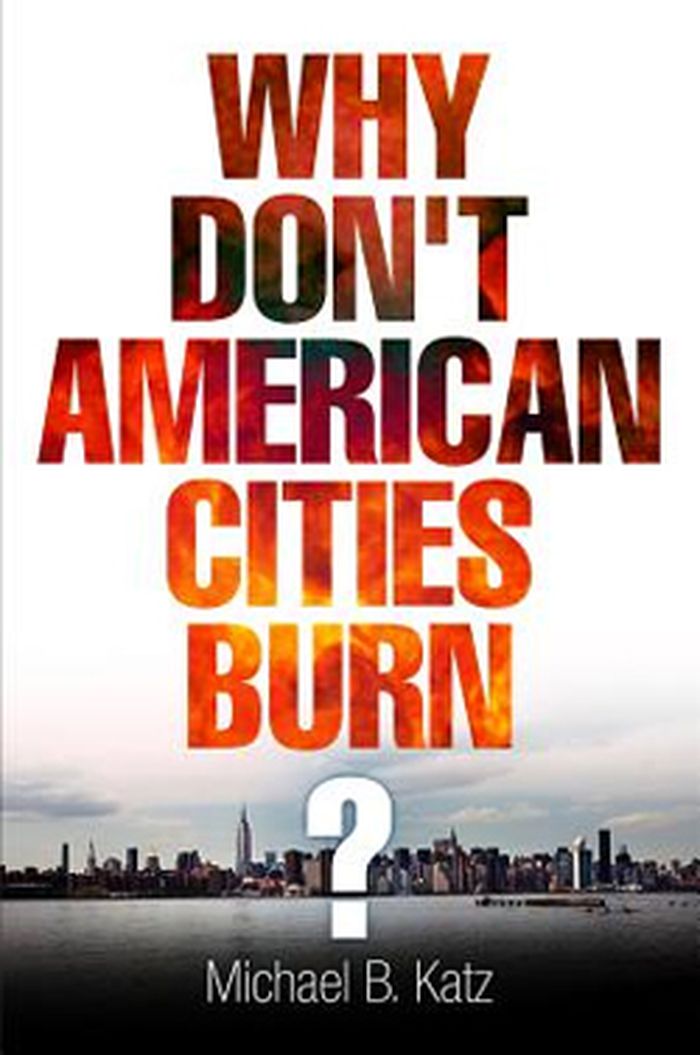
Why Don't American Cities Burn? traces the collision of urban transformation with the rightward-moving social politics of late twentieth- and early twenty-first-century America. He shows how the bifurcation of black social structures produced a new African American inequality and traces the shift from images of a pathological black "underclass" to praise of the entrepreneurial poor who take advantage of new technologies of poverty work to find the beginning of the path to the middle class. He explores the reasons American cities since the early 1970s have remained relatively free of collective violence while black men in bleak inner-city neighborhoods have turned their rage inward on one another rather than on the agents and symbols of a culture and political economy that exclude them. The book ends with a meditation on how the political left and right have come to believe that urban transformation is inevitably one of failure and decline abetted by the response of government to deindustrialization, poverty, and race. How, Katz asks, can we construct a new narrative that acknowledges the dark side of urban history even as it demonstrates the capacity of government to address the problems of cities and their residents? How can we create a politics of modest hope?
Why don't American cities burn?
Actions:
Price:
$39.99
(available to order)
Summary:
Why Don't American Cities Burn? traces the collision of urban transformation with the rightward-moving social politics of late twentieth- and early twenty-first-century America. He shows how the bifurcation of black social structures produced a new African American inequality and traces the shift from images of a pathological black "underclass" to praise of the entrepreneurial poor who take advantage of new technologies of poverty work to find the beginning of the path to the middle class. He explores the reasons American cities since the early 1970s have remained relatively free of collective violence while black men in bleak inner-city neighborhoods have turned their rage inward on one another rather than on the agents and symbols of a culture and political economy that exclude them. The book ends with a meditation on how the political left and right have come to believe that urban transformation is inevitably one of failure and decline abetted by the response of government to deindustrialization, poverty, and race. How, Katz asks, can we construct a new narrative that acknowledges the dark side of urban history even as it demonstrates the capacity of government to address the problems of cities and their residents? How can we create a politics of modest hope?
Form:
books
books
Publication:
October 2011
October 2011
Subject:
Urban Theory
Urban Theory
Form:
books
books
Actions:
Price:
$49.00
(available to order)
Summary:
The analysis of sanitary spaces and places dedicated to personal care, as in a privacy observatory, helps with the in-depth assessment of social changes, allowing us to determine how the lives of users can be improved, how conflicts of use in public places can be resolved between populations of different sexes and ages, and how the quality of public and private health can(...)
$49.00
(available to order)
Summary:
The analysis of sanitary spaces and places dedicated to personal care, as in a privacy observatory, helps with the in-depth assessment of social changes, allowing us to determine how the lives of users can be improved, how conflicts of use in public places can be resolved between populations of different sexes and ages, and how the quality of public and private health can(...)
Subject:
Commercial interiors, Building types
Commercial interiors, Building types
Publication:
January 2023
January 2023
Title:
Intimacy exposed: toilets, bathrooms, restrooms
Actions:
Price:
$49.00
(available to order)
Summary:
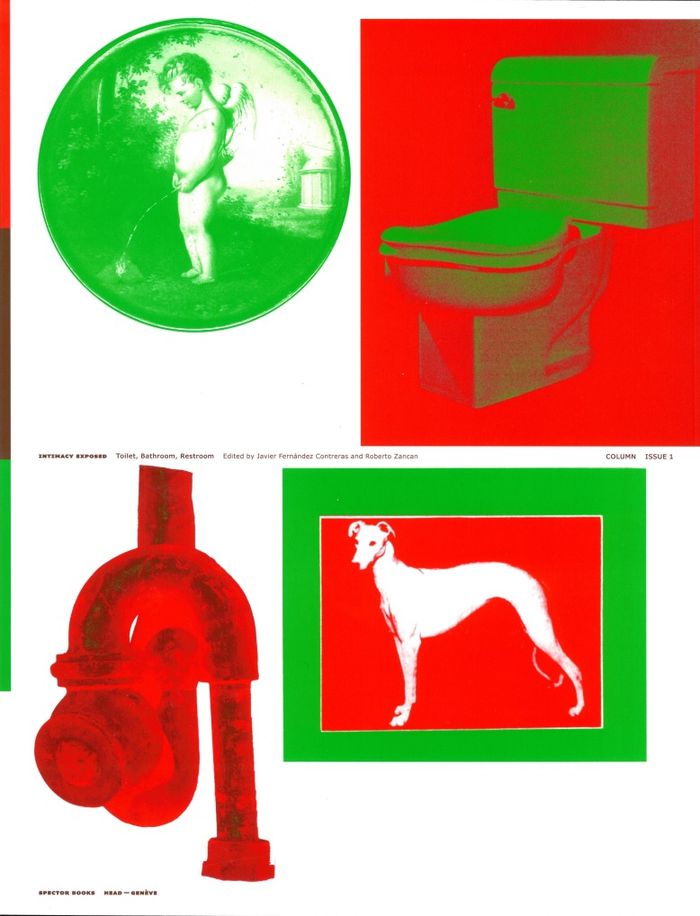
The analysis of sanitary spaces and places dedicated to personal care, as in a privacy observatory, helps with the in-depth assessment of social changes, allowing us to determine how the lives of users can be improved, how conflicts of use in public places can be resolved between populations of different sexes and ages, and how the quality of public and private health can be enhanced. Observing these issues pushes us to explore the forms and meanings of bathrooms and private spaces in relation to their different functions, including those of transgressive and informal meeting places and spaces of inevitable and forced social coexistence. This book constitutes a new step in this field of research, presenting a series of scientific and artistic interventions that proves the diverse range of uses to which ''wet rooms'' can be put in social life, the evolution of the use of furniture, and the new meanings of details and objects in domestic bathrooms and public toilets. The texts, largely written for the 2018 symposium ''Intimacy Exposed: Toilet, Bathroom, Restroom'' (organized by the Department of Interior Architecture at HEAD – Genève) present a practice-based study of the recent past of modernist technologies and a vision of the future of personal and collective practices regarding the realm of the toilet.
Intimacy exposed: toilets, bathrooms, restrooms
Actions:
Price:
$49.00
(available to order)
Summary:
The analysis of sanitary spaces and places dedicated to personal care, as in a privacy observatory, helps with the in-depth assessment of social changes, allowing us to determine how the lives of users can be improved, how conflicts of use in public places can be resolved between populations of different sexes and ages, and how the quality of public and private health can be enhanced. Observing these issues pushes us to explore the forms and meanings of bathrooms and private spaces in relation to their different functions, including those of transgressive and informal meeting places and spaces of inevitable and forced social coexistence. This book constitutes a new step in this field of research, presenting a series of scientific and artistic interventions that proves the diverse range of uses to which ''wet rooms'' can be put in social life, the evolution of the use of furniture, and the new meanings of details and objects in domestic bathrooms and public toilets. The texts, largely written for the 2018 symposium ''Intimacy Exposed: Toilet, Bathroom, Restroom'' (organized by the Department of Interior Architecture at HEAD – Genève) present a practice-based study of the recent past of modernist technologies and a vision of the future of personal and collective practices regarding the realm of the toilet.
Form:
books
books
Publication:
January 2023
January 2023
Subject:
Commercial interiors, Building types
Commercial interiors, Building types
Form:
books
books
Price:
$41.95
(available to order)
Summary:
The Urban Spectator is a lively and utterly fascinating exploration of the ways in which technologies have influenced our collective conception of the American city, as well as our relationship with urban space and architecture. Eric Gordon argues that the city, developing late and in conjunction with a range of modern media, produced a particular way of seeing--what he(...)
$41.95
(available to order)
Summary:
The Urban Spectator is a lively and utterly fascinating exploration of the ways in which technologies have influenced our collective conception of the American city, as well as our relationship with urban space and architecture. Eric Gordon argues that the city, developing late and in conjunction with a range of modern media, produced a particular way of seeing--what he(...)
Title:
The urban spectator: American concept-cities from Kodak to Google
Actions:
Price:
$41.95
(available to order)
Summary:
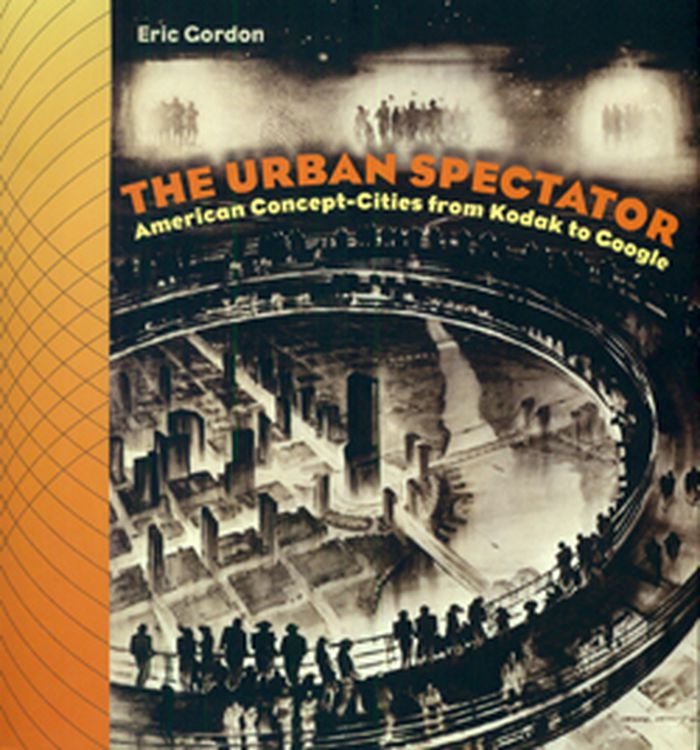
The Urban Spectator is a lively and utterly fascinating exploration of the ways in which technologies have influenced our collective conception of the American city, as well as our relationship with urban space and architecture. Eric Gordon argues that the city, developing late and in conjunction with a range of modern media, produced a particular way of seeing--what he labels "possessive spectatorship." Lacking the historical rootedness of European cities, the American city was open to individual interpretation, definition, and ownership. Beginning with the White City of the Chicago World's Fair of 1893 and the efforts to commodify the concept city through photography, Gordon shows how the American city has always been a product of the collision between the dominant conceptualization, shaped by contemporary media, and the spectator. From the viewfinder of the Kodak camera, to the public display of early cinema, to the speculative desire of network radio, all the way to machine-age utopianism, nostalgia, and America's "rerun" culture, the city is an amalgam of practice and concept. All of this comes to a head in the "database city" where urban spectatorship takes on the characteristics of a Google search. In new urban developments, the spectator searches, retrieves, and combines urban references to construct each experience of the city.
The urban spectator: American concept-cities from Kodak to Google
Actions:
Price:
$41.95
(available to order)
Summary:
The Urban Spectator is a lively and utterly fascinating exploration of the ways in which technologies have influenced our collective conception of the American city, as well as our relationship with urban space and architecture. Eric Gordon argues that the city, developing late and in conjunction with a range of modern media, produced a particular way of seeing--what he labels "possessive spectatorship." Lacking the historical rootedness of European cities, the American city was open to individual interpretation, definition, and ownership. Beginning with the White City of the Chicago World's Fair of 1893 and the efforts to commodify the concept city through photography, Gordon shows how the American city has always been a product of the collision between the dominant conceptualization, shaped by contemporary media, and the spectator. From the viewfinder of the Kodak camera, to the public display of early cinema, to the speculative desire of network radio, all the way to machine-age utopianism, nostalgia, and America's "rerun" culture, the city is an amalgam of practice and concept. All of this comes to a head in the "database city" where urban spectatorship takes on the characteristics of a Google search. In new urban developments, the spectator searches, retrieves, and combines urban references to construct each experience of the city.
Form:
books
books
Publication:
February 2010
February 2010
Subject:
Urban Theory
Urban Theory
Form:
books
books
Title:
Visionary cities
Visionary cities
Actions:
Price:
$25.00
(available to order)
Summary:
Recognizing that our civic responsibilities towards our environments have drastically increased, Visionary Cities ambitiously sets the agenda for the city of the future. Amid crippling bureaucracies and economic crises, present-day thinking on city design remains woefully inadequate, and this first publication in NAi's Future Cities Series announces 12 civic issues that(...)
$25.00
(available to order)
Summary:
Recognizing that our civic responsibilities towards our environments have drastically increased, Visionary Cities ambitiously sets the agenda for the city of the future. Amid crippling bureaucracies and economic crises, present-day thinking on city design remains woefully inadequate, and this first publication in NAi's Future Cities Series announces 12 civic issues that(...)
Title:
Visionary cities
Actions:
Price:
$25.00
(available to order)
Summary:
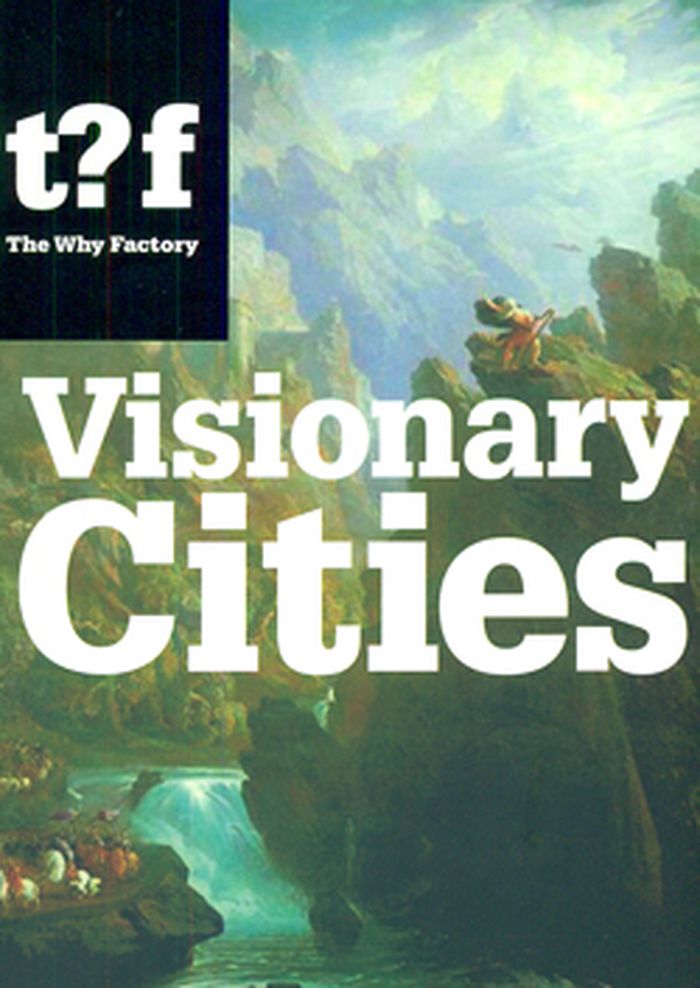
Recognizing that our civic responsibilities towards our environments have drastically increased, Visionary Cities ambitiously sets the agenda for the city of the future. Amid crippling bureaucracies and economic crises, present-day thinking on city design remains woefully inadequate, and this first publication in NAi's Future Cities Series announces 12 civic issues that are in need of transformation through the researches of The Why Factory, a global urban-studies thinktank operated in part by the Delft University of Technology. These issues include: “The Solitary (Our Dreams are Undermining the City)”; “The Iconic (Our Idols Have Been Compromised)”; “The Fun (We Are Having Too Much Fun)”; “The Cautious (Being Careful Is Killing Us)”; “The Poor (Slums Are Growing Bigger Than The Cities They Are Part Of”; and “The Future (Our Future Is Being Imagined Without Us).” A howl against civic impotence and the apathy of citizens in the face of incompetence and decay, Visionary Cities makes a manifesto of these and other topics to loudly demand large-scale change on a collective rather than individual level. In an afterword, Winy Maas, of the innovative Dutch architecture firm MVRDV, argues that architecture possesses a visionary dimension waiting to be applied to the cities of the future.
Visionary cities
Actions:
Price:
$25.00
(available to order)
Summary:
Recognizing that our civic responsibilities towards our environments have drastically increased, Visionary Cities ambitiously sets the agenda for the city of the future. Amid crippling bureaucracies and economic crises, present-day thinking on city design remains woefully inadequate, and this first publication in NAi's Future Cities Series announces 12 civic issues that are in need of transformation through the researches of The Why Factory, a global urban-studies thinktank operated in part by the Delft University of Technology. These issues include: “The Solitary (Our Dreams are Undermining the City)”; “The Iconic (Our Idols Have Been Compromised)”; “The Fun (We Are Having Too Much Fun)”; “The Cautious (Being Careful Is Killing Us)”; “The Poor (Slums Are Growing Bigger Than The Cities They Are Part Of”; and “The Future (Our Future Is Being Imagined Without Us).” A howl against civic impotence and the apathy of citizens in the face of incompetence and decay, Visionary Cities makes a manifesto of these and other topics to loudly demand large-scale change on a collective rather than individual level. In an afterword, Winy Maas, of the innovative Dutch architecture firm MVRDV, argues that architecture possesses a visionary dimension waiting to be applied to the cities of the future.
Form:
books
books
Publication:
March 2010
March 2010
Subject:
Urban Theory
Urban Theory
Form:
books
books

Title:
Olivier Vadro : mêlées
Olivier Vadro : mêlées
Actions:
Price:
$49.95
(available to order)
Summary:
Première monographie consacrée au travail du designer / scénographe, avec un texte de l'historien du design Tony Côme, des entretiens et une importante iconographie. La trajectoire d'Olivier Vadrot (né en 1970 à Semur-en-Auxois) s'est déterminée à la croisée de nombreux domaines : l'architecture, le design, le commissariat et la scénographie d'exposition, la scène(...)
$49.95
(available to order)
Summary:
Première monographie consacrée au travail du designer / scénographe, avec un texte de l'historien du design Tony Côme, des entretiens et une importante iconographie. La trajectoire d'Olivier Vadrot (né en 1970 à Semur-en-Auxois) s'est déterminée à la croisée de nombreux domaines : l'architecture, le design, le commissariat et la scénographie d'exposition, la scène(...)
Title:
Olivier Vadro : mêlées
Actions:
Price:
$49.95
(available to order)
Summary:
Première monographie consacrée au travail du designer / scénographe, avec un texte de l'historien du design Tony Côme, des entretiens et une importante iconographie. La trajectoire d'Olivier Vadrot (né en 1970 à Semur-en-Auxois) s'est déterminée à la croisée de nombreux domaines : l'architecture, le design, le commissariat et la scénographie d'exposition, la scène théâtrale et musicale. En parallèle de ses études en architecture, il se lance dans l'aventure collective du Théâtre Pluzdank. Il cofonde le centre d'art contemporain La Salle de bains à Lyon puis le groupe Cocktail Designers au sein duquel il conçoit plusieurs dispositifs d'écoute pour des labels musicaux. Son séjour à la Villa Médicis (2012-2013) en tant que scénographe marque un important tournant dans son parcours, qui le conduit à faire des relevés dans la plupart des édifices de spectacle antiques. Sa pratique personnelle s'est récemment affirmée en se recentrant autour de micro-architectures permettant de faire assemblée. Si certains de ces dispositifs sont nomades et éphémères, d'autres ont été plus durablement implantés dans l'espace public. Olivier Vadrot porte une attention extrême aux conditions d'existence matérielle des objets qu'il produit : économie de fabrication, multiplicité d'usages incluant le transport, le montage, le stockage, possibles adaptations, entretien et renouvellement.
Olivier Vadro : mêlées
Actions:
Price:
$49.95
(available to order)
Summary:
Première monographie consacrée au travail du designer / scénographe, avec un texte de l'historien du design Tony Côme, des entretiens et une importante iconographie. La trajectoire d'Olivier Vadrot (né en 1970 à Semur-en-Auxois) s'est déterminée à la croisée de nombreux domaines : l'architecture, le design, le commissariat et la scénographie d'exposition, la scène théâtrale et musicale. En parallèle de ses études en architecture, il se lance dans l'aventure collective du Théâtre Pluzdank. Il cofonde le centre d'art contemporain La Salle de bains à Lyon puis le groupe Cocktail Designers au sein duquel il conçoit plusieurs dispositifs d'écoute pour des labels musicaux. Son séjour à la Villa Médicis (2012-2013) en tant que scénographe marque un important tournant dans son parcours, qui le conduit à faire des relevés dans la plupart des édifices de spectacle antiques. Sa pratique personnelle s'est récemment affirmée en se recentrant autour de micro-architectures permettant de faire assemblée. Si certains de ces dispositifs sont nomades et éphémères, d'autres ont été plus durablement implantés dans l'espace public. Olivier Vadrot porte une attention extrême aux conditions d'existence matérielle des objets qu'il produit : économie de fabrication, multiplicité d'usages incluant le transport, le montage, le stockage, possibles adaptations, entretien et renouvellement.
Form:
books
books
Publication:
February 2020
February 2020
Subject:
Design Monographs
Design Monographs
Form:
books
books
Actions:
Price:
$47.95
(available to order)
Summary:
Plastiglomerates, surveillance robot dogs, fordite, artificial grass, antenna trees, COVID-19, decapitated mountains, drone-fighting eagles, standardized bananas: all of these specimens—some more familiar than others—are examples of the hybridity that shapes the current landscapes of science, technology and everyday life. Inspired by medieval bestiaries and the(...)
$47.95
(available to order)
Summary:
Plastiglomerates, surveillance robot dogs, fordite, artificial grass, antenna trees, COVID-19, decapitated mountains, drone-fighting eagles, standardized bananas: all of these specimens—some more familiar than others—are examples of the hybridity that shapes the current landscapes of science, technology and everyday life. Inspired by medieval bestiaries and the(...)
Title:
A bestiary of the Anthropocene. Hybrid plants, animals, minerals, fungi, and other specimens
Actions:
Price:
$47.95
(available to order)
Summary:
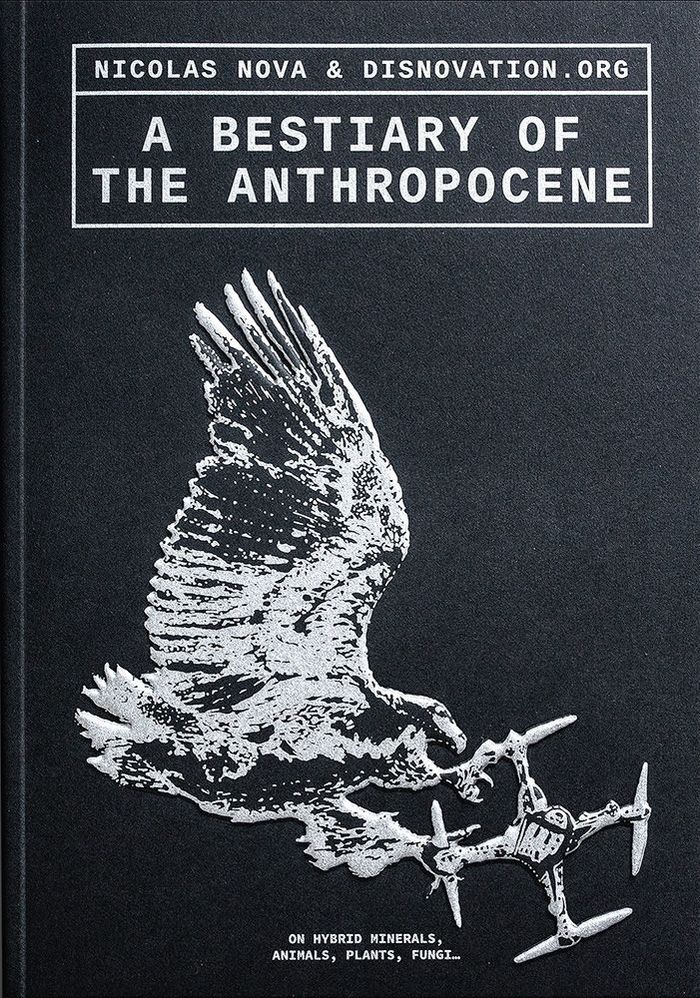
Plastiglomerates, surveillance robot dogs, fordite, artificial grass, antenna trees, COVID-19, decapitated mountains, drone-fighting eagles, standardized bananas: all of these specimens—some more familiar than others—are examples of the hybridity that shapes the current landscapes of science, technology and everyday life. Inspired by medieval bestiaries and the increasingly visible effects of climate change on the planet, French researcher Nicolas Nova & art collective DISNOVATION.ORG provide an ethnographic guide to the ''post-natural'' era in which we live, highlighting the amalgamations of nature and artifice that already co-exist in the 21st century. A sort of field handbook, ''A bestiary of the Anthropocene'' aims to help us orient ourselves within the technosphere and the biosphere. What happens when technologies and their unintended consequences become so ubiquitous that it is difficult to define what is “natural” or not? What does it mean to live in a hybrid environment made of organic and synthetic matter? In order to answer such questions, Nova & DISNOVATION.ORG bring their own research together with contributions from collectives such as the Center for Genomic Gastronomy and Aliens in Green as well as text by scholars and researchers from around the world. Polish graphic designer Maria Roszkowska provides illustrations.
A bestiary of the Anthropocene. Hybrid plants, animals, minerals, fungi, and other specimens
Actions:
Price:
$47.95
(available to order)
Summary:
Plastiglomerates, surveillance robot dogs, fordite, artificial grass, antenna trees, COVID-19, decapitated mountains, drone-fighting eagles, standardized bananas: all of these specimens—some more familiar than others—are examples of the hybridity that shapes the current landscapes of science, technology and everyday life. Inspired by medieval bestiaries and the increasingly visible effects of climate change on the planet, French researcher Nicolas Nova & art collective DISNOVATION.ORG provide an ethnographic guide to the ''post-natural'' era in which we live, highlighting the amalgamations of nature and artifice that already co-exist in the 21st century. A sort of field handbook, ''A bestiary of the Anthropocene'' aims to help us orient ourselves within the technosphere and the biosphere. What happens when technologies and their unintended consequences become so ubiquitous that it is difficult to define what is “natural” or not? What does it mean to live in a hybrid environment made of organic and synthetic matter? In order to answer such questions, Nova & DISNOVATION.ORG bring their own research together with contributions from collectives such as the Center for Genomic Gastronomy and Aliens in Green as well as text by scholars and researchers from around the world. Polish graphic designer Maria Roszkowska provides illustrations.
Form:
books
books
Publication:
May 2021
May 2021
Subject:
Environment and environmental theory
Environment and environmental theory
Form:
books
books
Actions:
Holdings:
Description:
250 pages : color illustrations, color maps ; 32 cm
Description:
250 pages : color illustrations, color maps ; 32 cm
Author:
Subject:
Publication:
Marseille : Parenthèses : Bibliothèque municipale de Marseille, 1998.
Marseille : Parenthèses : Bibliothèque municipale de Marseille, 1998.
Title:
Pascal Coste, toutes les Egypte.
Actions:
Holdings:
Description:
250 pages : color illustrations, color maps ; 32 cm
Pascal Coste, toutes les Egypte.
Actions:
Holdings:
Description:
250 pages : color illustrations, color maps ; 32 cm
Form:
books
books
Publication:
Marseille : Parenthèses : Bibliothèque municipale de Marseille, 1998.
Marseille : Parenthèses : Bibliothèque municipale de Marseille, 1998.
Author:
Subject:
Form:
books
books
Actions:
Holdings:
Description:
223 pages ; 21 cm.
Description:
223 pages ; 21 cm.
Subject:
Publication:
Vincennes (Val-de-Marne) : Éditions Terre urbaine, [2023]
Vincennes (Val-de-Marne) : Éditions Terre urbaine, [2023]
Title:
Territoires submergés : quelles adaptations aux risques côtiers ? / Alexandre K. Magnan, Margot Liebel, Catherine Meur-Ferec, Anne-Solange Muis, Antoine Petitjean, Laurent Pinon.
Actions:
Holdings:
Description:
223 pages ; 21 cm.
Territoires submergés : quelles adaptations aux risques côtiers ? / Alexandre K. Magnan, Margot Liebel, Catherine Meur-Ferec, Anne-Solange Muis, Antoine Petitjean, Laurent Pinon.
Actions:
Holdings:
Description:
223 pages ; 21 cm.
Form:
books
books
Publication:
Vincennes (Val-de-Marne) : Éditions Terre urbaine, [2023]
Vincennes (Val-de-Marne) : Éditions Terre urbaine, [2023]
Subject:


