


4053 Results
Form:
books
books
Title:
Food-water-life
Food-water-life
Actions:
Price:
$45.00
(available to order)
Summary:
Since founding Studio Orta in 1993, the Paris-based husband-and-wife team of Lucy and Jorge Orta has produced an extensive body of work that addresses universal concerns about community, shelter, migration, and sustainable development. Beyond merely addressing these issues artistically, their work suggests solutions by modeling fresh approaches to social dilemmas. Their(...)
$45.00
(available to order)
Summary:
Since founding Studio Orta in 1993, the Paris-based husband-and-wife team of Lucy and Jorge Orta has produced an extensive body of work that addresses universal concerns about community, shelter, migration, and sustainable development. Beyond merely addressing these issues artistically, their work suggests solutions by modeling fresh approaches to social dilemmas. Their(...)
Title:
Food-water-life
Actions:
Price:
$45.00
(available to order)
Summary:
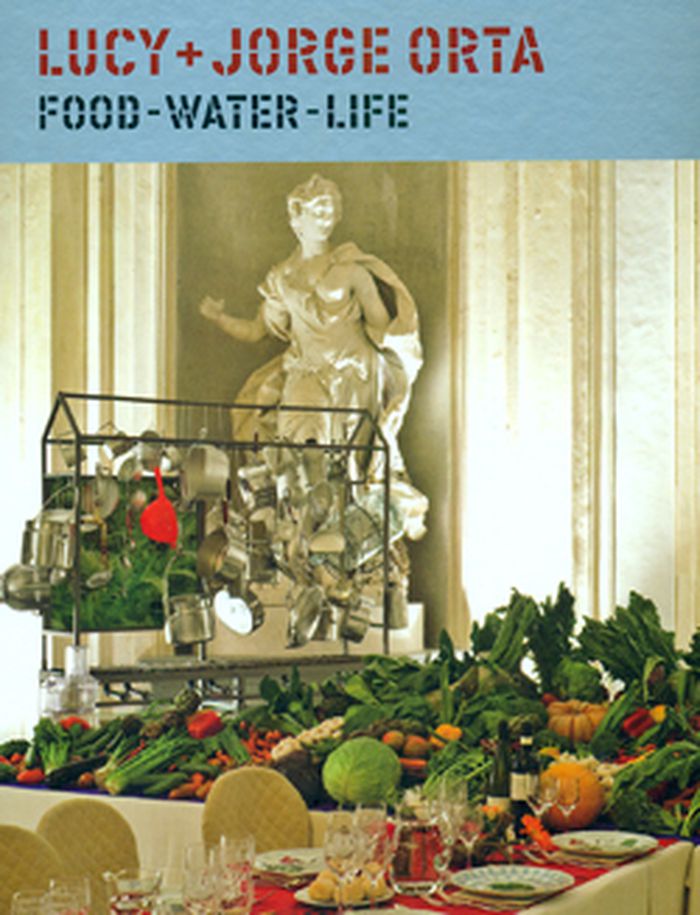
Since founding Studio Orta in 1993, the Paris-based husband-and-wife team of Lucy and Jorge Orta has produced an extensive body of work that addresses universal concerns about community, shelter, migration, and sustainable development. Beyond merely addressing these issues artistically, their work suggests solutions by modeling fresh approaches to social dilemmas. Their often-playful projects incorporate elements of fashion, art, and architecture, which they combine with performances, multimedia events, and public debates. Featuring hundreds of drawings and photographs, Lucy + Jorge Orta: Food, Water, Life presents recent works that fall into the categories of food, water, and the environment. An interview by curator and critic Hou Hanru provides insight into the artists' processes and motivations.
Food-water-life
Actions:
Price:
$45.00
(available to order)
Summary:
Since founding Studio Orta in 1993, the Paris-based husband-and-wife team of Lucy and Jorge Orta has produced an extensive body of work that addresses universal concerns about community, shelter, migration, and sustainable development. Beyond merely addressing these issues artistically, their work suggests solutions by modeling fresh approaches to social dilemmas. Their often-playful projects incorporate elements of fashion, art, and architecture, which they combine with performances, multimedia events, and public debates. Featuring hundreds of drawings and photographs, Lucy + Jorge Orta: Food, Water, Life presents recent works that fall into the categories of food, water, and the environment. An interview by curator and critic Hou Hanru provides insight into the artists' processes and motivations.
Form:
books
books
Publication:
May 2011
May 2011
Form:
books
books
Actions:
Price:
$44.00
(available to order)
Summary:
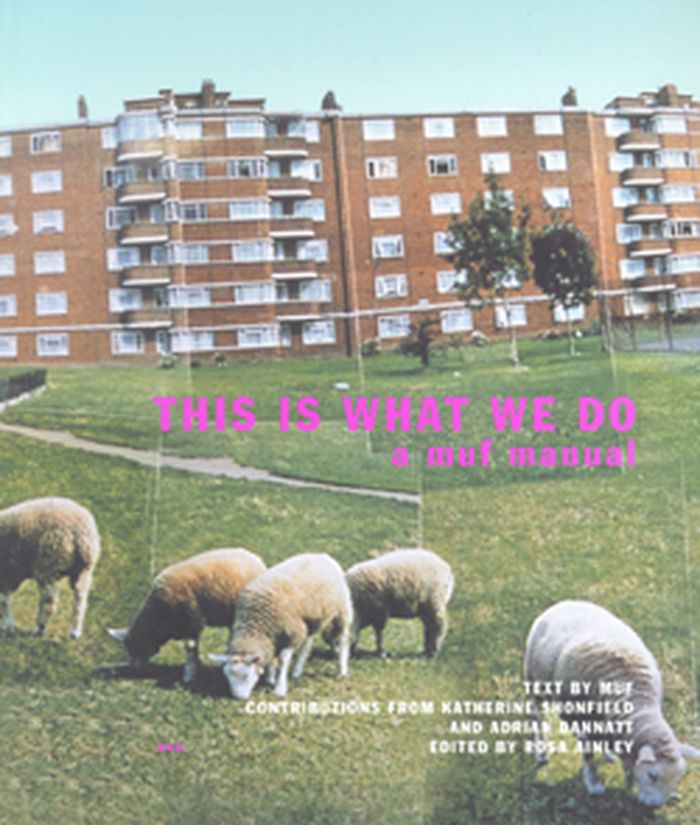
Text by muf. Including an essay by Katherine Shonfield and a contribution by Adrian Dannatt. muf is a London-based all-women art and architecture practice committed to working in public space. This is the only monograph existing on their work so far depicting each of their projects in lavish pictures and informative text.
$44.00
(available to order)
Summary:
Text by muf. Including an essay by Katherine Shonfield and a contribution by Adrian Dannatt. muf is a London-based all-women art and architecture practice committed to working in public space. This is the only monograph existing on their work so far depicting each of their projects in lavish pictures and informative text.
Title:
This is what we do: a muf manual
Actions:
Price:
$44.00
(available to order)
Summary:
Text by muf. Including an essay by Katherine Shonfield and a contribution by Adrian Dannatt. muf is a London-based all-women art and architecture practice committed to working in public space. This is the only monograph existing on their work so far depicting each of their projects in lavish pictures and informative text.
This is what we do: a muf manual
Actions:
Price:
$44.00
(available to order)
Summary:
Text by muf. Including an essay by Katherine Shonfield and a contribution by Adrian Dannatt. muf is a London-based all-women art and architecture practice committed to working in public space. This is the only monograph existing on their work so far depicting each of their projects in lavish pictures and informative text.
Form:
books
books
Publication:
March 2008, London
March 2008, London
Subject:
Landscape Architecture, Monographs
Landscape Architecture, Monographs
Form:
books
books
Actions:
Price:
$50.95
(available to order)
Summary:
Architectural facades now have the potential to be literally kinetic, through automated sunscreens and a range of animated surfaces. This book explores the aesthetic potential of these new types of moving facades. Critique of theory and practice in architecture is combined here with ideas from kinetic art of the 1960's. From this background the basic principles of(...)
$50.95
(available to order)
Summary:
Architectural facades now have the potential to be literally kinetic, through automated sunscreens and a range of animated surfaces. This book explores the aesthetic potential of these new types of moving facades. Critique of theory and practice in architecture is combined here with ideas from kinetic art of the 1960's. From this background the basic principles of(...)
Title:
Designing kinetics for architectural facades: state change
Actions:
Price:
$50.95
(available to order)
Summary:
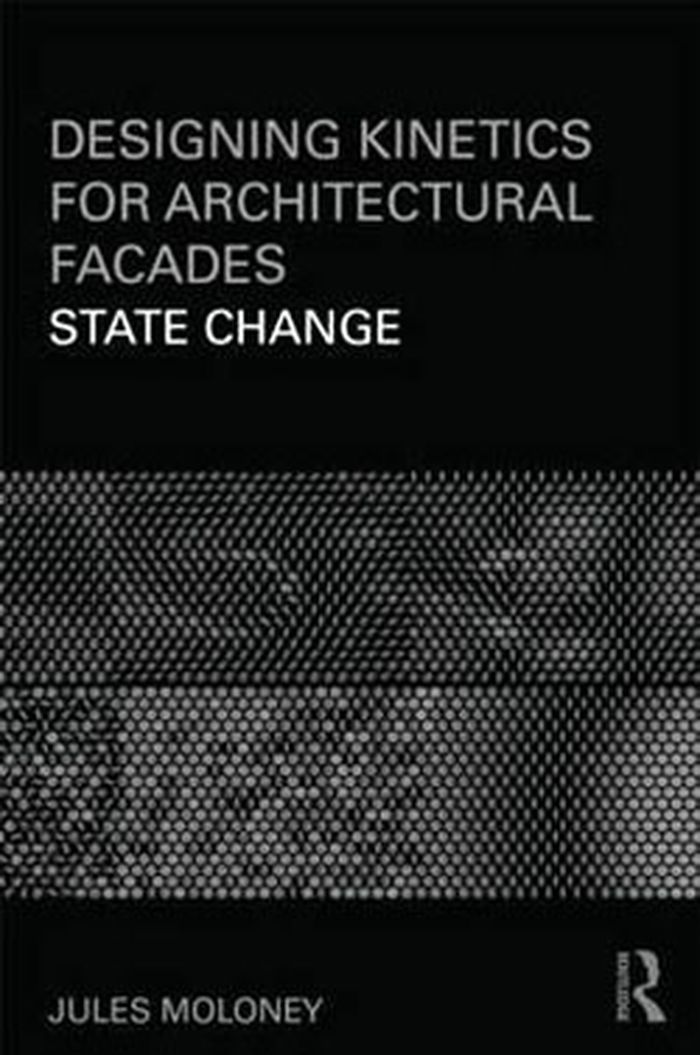
Architectural facades now have the potential to be literally kinetic, through automated sunscreens and a range of animated surfaces. This book explores the aesthetic potential of these new types of moving facades. Critique of theory and practice in architecture is combined here with ideas from kinetic art of the 1960's. From this background the basic principles of kinetics are defined and are used to generate experimental computer animations. By classifying the animations, a theory of kinetic form called 'state change' is developed. This design research provides a resource for those interested in the capacity of kinetics to enliven the public face of architecture.
Designing kinetics for architectural facades: state change
Actions:
Price:
$50.95
(available to order)
Summary:
Architectural facades now have the potential to be literally kinetic, through automated sunscreens and a range of animated surfaces. This book explores the aesthetic potential of these new types of moving facades. Critique of theory and practice in architecture is combined here with ideas from kinetic art of the 1960's. From this background the basic principles of kinetics are defined and are used to generate experimental computer animations. By classifying the animations, a theory of kinetic form called 'state change' is developed. This design research provides a resource for those interested in the capacity of kinetics to enliven the public face of architecture.
Form:
books
books
Publication:
July 2011
July 2011
Subject:
Digital Architecture
Digital Architecture
Form:
books
books
Actions:
Price:
$53.95
(available to order)
Summary:
The Supercrit series revisits some of the most influential architectural projects of the recent past and examines their impact on the way we think and design today. Based on live studio debates between protagonists and critics, the books describe, explore and criticise these major projects. Supercrit #4 Bernard Tschumi: Parc de la Villette examines the groundbreaking(...)
$53.95
(available to order)
Summary:
The Supercrit series revisits some of the most influential architectural projects of the recent past and examines their impact on the way we think and design today. Based on live studio debates between protagonists and critics, the books describe, explore and criticise these major projects. Supercrit #4 Bernard Tschumi: Parc de la Villette examines the groundbreaking(...)
Subject:
Architecture Monographs
Architecture Monographs
Publication:
May 2010
May 2010
Title:
Bernard Tschumi : parc de la Villette, supercrit #4
Actions:
Price:
$53.95
(available to order)
Summary:
The Supercrit series revisits some of the most influential architectural projects of the recent past and examines their impact on the way we think and design today. Based on live studio debates between protagonists and critics, the books describe, explore and criticise these major projects. Supercrit #4 Bernard Tschumi: Parc de la Villette examines the groundbreaking public space with art installations. You can hear the architect's project definition, see the drawings and join in the crit. This innovative and compelling book is an invaluable resource for any architecture student.
Bernard Tschumi : parc de la Villette, supercrit #4
Actions:
Price:
$53.95
(available to order)
Summary:
The Supercrit series revisits some of the most influential architectural projects of the recent past and examines their impact on the way we think and design today. Based on live studio debates between protagonists and critics, the books describe, explore and criticise these major projects. Supercrit #4 Bernard Tschumi: Parc de la Villette examines the groundbreaking public space with art installations. You can hear the architect's project definition, see the drawings and join in the crit. This innovative and compelling book is an invaluable resource for any architecture student.
Form:
books
books
Publication:
May 2010
May 2010
Subject:
Architecture Monographs
Architecture Monographs
Form:
books
books
Price:
$27.95
(available to order)
Summary:
What would it mean today to think or to imagine, to design or to construct, in relation not to things made" but to "things in the making"? This question, first posed by the philosopher William James, was the point of departure for "The Pragmatist Imagination." The volume brings together position statements, theoretical speculations, and critical commentary by 33 leading(...)
$27.95
(available to order)
Summary:
What would it mean today to think or to imagine, to design or to construct, in relation not to things made" but to "things in the making"? This question, first posed by the philosopher William James, was the point of departure for "The Pragmatist Imagination." The volume brings together position statements, theoretical speculations, and critical commentary by 33 leading(...)
Title:
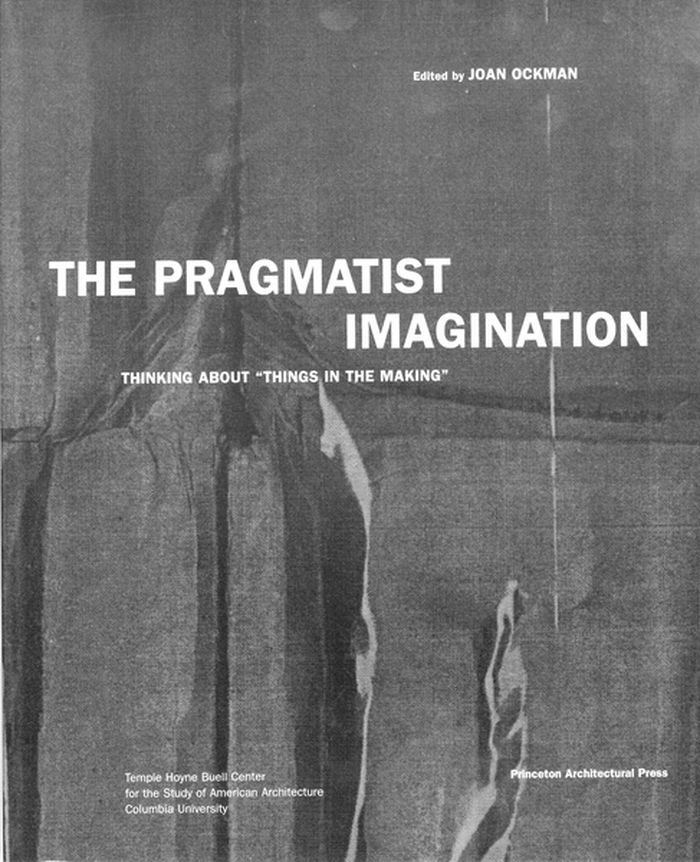
The pragmatist imagination: thinking about things in the making
Actions:
Price:
$27.95
(available to order)
Summary:
What would it mean today to think or to imagine, to design or to construct, in relation not to things made" but to "things in the making"? This question, first posed by the philosopher William James, was the point of departure for "The Pragmatist Imagination." The volume brings together position statements, theoretical speculations, and critical commentary by 33 leading thinkers and makers from over a dozen disciplines. Based on the proceedings of an international workshop held at Columbia University under the auspices of the Buell Center for the Study of American Architecture in spring 2000, a preamble to the much-ballyhooed conference at the Museum of Modern Art in November, 2000, the contributions traverse a set of burning questions about the future, ranging from the relationship between art and experience to the impact of new technologies on human consciousness, from transformations in everyday life to problems of public space, and from the destiny of the nation-state toemergent forms of transnationalism.
The pragmatist imagination: thinking about things in the making
Actions:
Price:
$27.95
(available to order)
Summary:
What would it mean today to think or to imagine, to design or to construct, in relation not to things made" but to "things in the making"? This question, first posed by the philosopher William James, was the point of departure for "The Pragmatist Imagination." The volume brings together position statements, theoretical speculations, and critical commentary by 33 leading thinkers and makers from over a dozen disciplines. Based on the proceedings of an international workshop held at Columbia University under the auspices of the Buell Center for the Study of American Architecture in spring 2000, a preamble to the much-ballyhooed conference at the Museum of Modern Art in November, 2000, the contributions traverse a set of burning questions about the future, ranging from the relationship between art and experience to the impact of new technologies on human consciousness, from transformations in everyday life to problems of public space, and from the destiny of the nation-state toemergent forms of transnationalism.
Form:
books
books
Publication:
September 2001
September 2001
Subject:
Architecture and the imaginary
Architecture and the imaginary
Form:
books
books
Title:
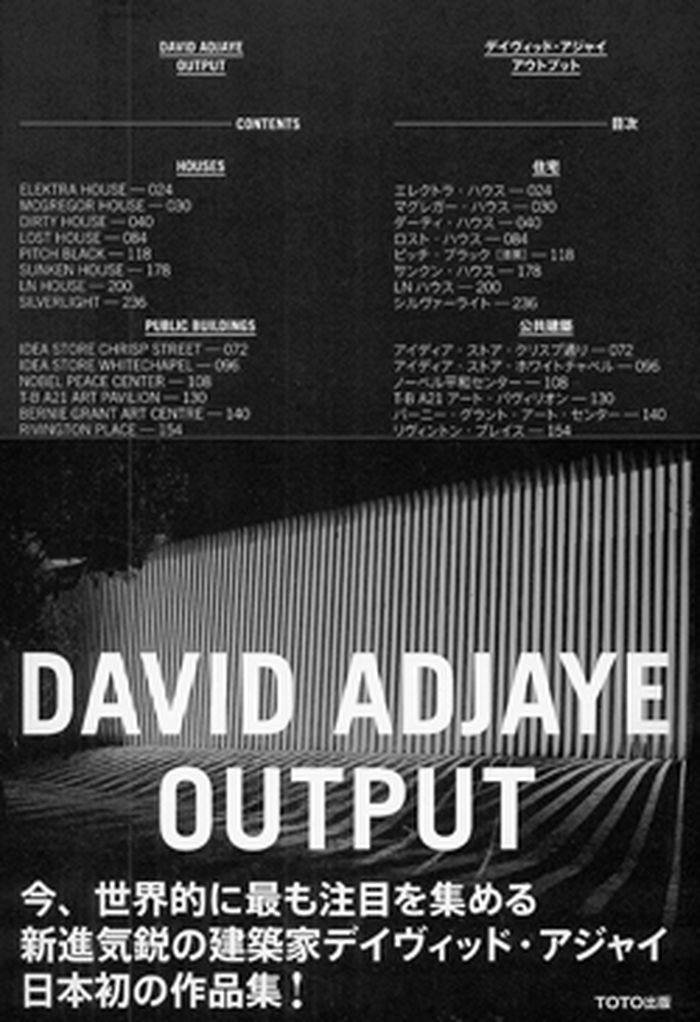
David Adjaye: Output
David Adjaye: Output
Actions:
Price:
$59.99
(available to order)
Summary:
A graduate of London's Royal College of Art, David Adjaye formed Adjaye Associates in 2000, with a multicultural design team dedicated to an international perspective. Adjaye's early residential designs critiqued the Victorian streets around them, and also focused on the society-building aspects of city life – public buildings, commemorative spaces and urban gathering(...)
$59.99
(available to order)
Summary:
A graduate of London's Royal College of Art, David Adjaye formed Adjaye Associates in 2000, with a multicultural design team dedicated to an international perspective. Adjaye's early residential designs critiqued the Victorian streets around them, and also focused on the society-building aspects of city life – public buildings, commemorative spaces and urban gathering(...)
Subject:
Architecture Monographs
Architecture Monographs
Publication:
August 2010
August 2010
Title:
David Adjaye: Output
Actions:
Price:
$59.99
(available to order)
Summary:
A graduate of London's Royal College of Art, David Adjaye formed Adjaye Associates in 2000, with a multicultural design team dedicated to an international perspective. Adjaye's early residential designs critiqued the Victorian streets around them, and also focused on the society-building aspects of city life – public buildings, commemorative spaces and urban gathering places for children. More recently Adjaye has conducted important research into African architecture, and collaborated with Chris Ofili on installations that unite Ofili's paintings with Adjaye's explorations of light and space. Ouput showcases some 25 designs and includes revealing interviews with Adjaye and Aureliusz Kowalczyk.
David Adjaye: Output
Actions:
Price:
$59.99
(available to order)
Summary:
A graduate of London's Royal College of Art, David Adjaye formed Adjaye Associates in 2000, with a multicultural design team dedicated to an international perspective. Adjaye's early residential designs critiqued the Victorian streets around them, and also focused on the society-building aspects of city life – public buildings, commemorative spaces and urban gathering places for children. More recently Adjaye has conducted important research into African architecture, and collaborated with Chris Ofili on installations that unite Ofili's paintings with Adjaye's explorations of light and space. Ouput showcases some 25 designs and includes revealing interviews with Adjaye and Aureliusz Kowalczyk.
Form:
books
books
Publication:
August 2010
August 2010
Subject:
Architecture Monographs
Architecture Monographs
Form:
books
books
Actions:
Price:
$49.95
(available to order)
Summary:
The impact of Walter Gropius can be measured in his buildings—Fagus Factory, Bauhaus Dessau, Pan Am—but no less in his students. I. M. Pei, Paul Rudolph, Anni Albers, Philip Johnson, Fumihiko Maki: countless masters were once disciples at the Bauhaus in Berlin and at Harvard. Between 1910 and 1930, Gropius was at the center of European modernism and avant-garde society(...)
$49.95
(available to order)
Summary:
The impact of Walter Gropius can be measured in his buildings—Fagus Factory, Bauhaus Dessau, Pan Am—but no less in his students. I. M. Pei, Paul Rudolph, Anni Albers, Philip Johnson, Fumihiko Maki: countless masters were once disciples at the Bauhaus in Berlin and at Harvard. Between 1910 and 1930, Gropius was at the center of European modernism and avant-garde society(...)
Title:
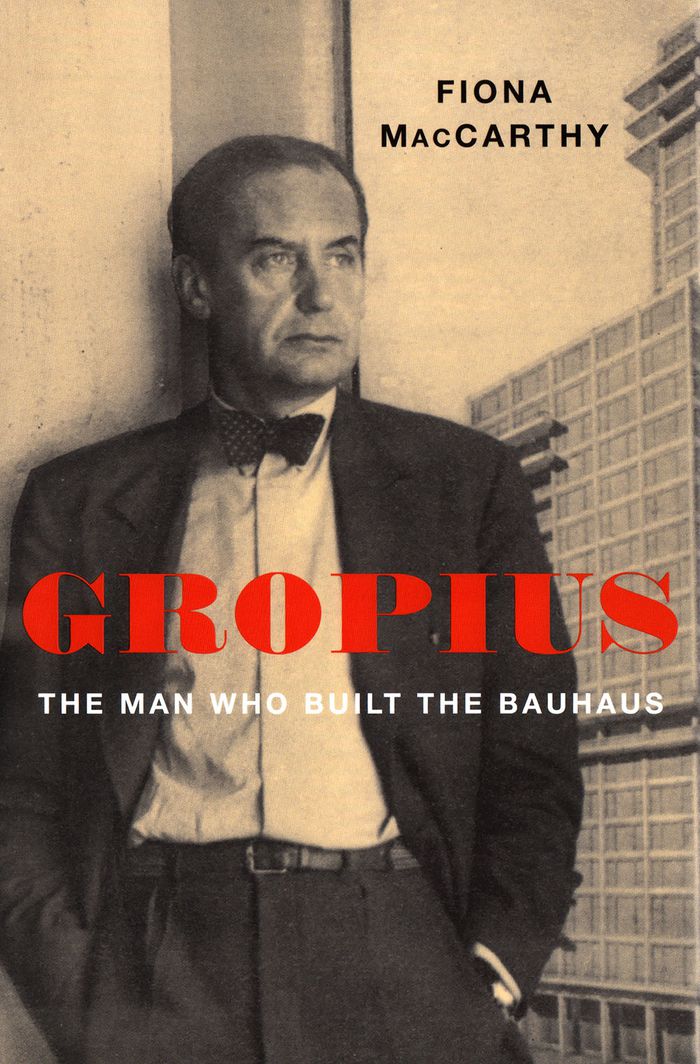
Gropius: the man who built the Bauhaus
Actions:
Price:
$49.95
(available to order)
Summary:
The impact of Walter Gropius can be measured in his buildings—Fagus Factory, Bauhaus Dessau, Pan Am—but no less in his students. I. M. Pei, Paul Rudolph, Anni Albers, Philip Johnson, Fumihiko Maki: countless masters were once disciples at the Bauhaus in Berlin and at Harvard. Between 1910 and 1930, Gropius was at the center of European modernism and avant-garde society glamor, only to be exiled to the antimodernist United Kingdom during the Nazi years. Later, under the democratizing influence of American universities, Gropius became an advocate of public art and cemented a starring role in twentieth-century architecture and design.
Gropius: the man who built the Bauhaus
Actions:
Price:
$49.95
(available to order)
Summary:
The impact of Walter Gropius can be measured in his buildings—Fagus Factory, Bauhaus Dessau, Pan Am—but no less in his students. I. M. Pei, Paul Rudolph, Anni Albers, Philip Johnson, Fumihiko Maki: countless masters were once disciples at the Bauhaus in Berlin and at Harvard. Between 1910 and 1930, Gropius was at the center of European modernism and avant-garde society glamor, only to be exiled to the antimodernist United Kingdom during the Nazi years. Later, under the democratizing influence of American universities, Gropius became an advocate of public art and cemented a starring role in twentieth-century architecture and design.
Form:
books
books
Publication:
April 2019
April 2019
Subject:
Architecture Monographs
Architecture Monographs
Form:
books
books

Actions:
Price:
$79.00
(available to order)
Summary:
This monograph covers more than a decade of work by Japanese architect Hiroshi Naito, known especially for the Toba Sea-Folk Museum. The book details fifteen projects through photos, drawings, texts and a complete chronology. Naito contributes an insightful, personal essay about his search over the years and in times of crisis to become inspired; to give value to people(...)
$79.00
(available to order)
Summary:
This monograph covers more than a decade of work by Japanese architect Hiroshi Naito, known especially for the Toba Sea-Folk Museum. The book details fifteen projects through photos, drawings, texts and a complete chronology. Naito contributes an insightful, personal essay about his search over the years and in times of crisis to become inspired; to give value to people(...)
Title:
Hiroshi Naito (1992-2004): from protoform to protoscape 1
Actions:
Price:
$79.00
(available to order)
Summary:
This monograph covers more than a decade of work by Japanese architect Hiroshi Naito, known especially for the Toba Sea-Folk Museum. The book details fifteen projects through photos, drawings, texts and a complete chronology. Naito contributes an insightful, personal essay about his search over the years and in times of crisis to become inspired; to give value to people through the creation of meaningful architecture able to serve society long into the future. Valuable perspectives on his outlook and craft emerge. Other featured works include private houses, Tokamachi Public Library, Makina Museum of Plants and People, and Chihiro Art Museum in Tokyo.
Hiroshi Naito (1992-2004): from protoform to protoscape 1
Actions:
Price:
$79.00
(available to order)
Summary:
This monograph covers more than a decade of work by Japanese architect Hiroshi Naito, known especially for the Toba Sea-Folk Museum. The book details fifteen projects through photos, drawings, texts and a complete chronology. Naito contributes an insightful, personal essay about his search over the years and in times of crisis to become inspired; to give value to people through the creation of meaningful architecture able to serve society long into the future. Valuable perspectives on his outlook and craft emerge. Other featured works include private houses, Tokamachi Public Library, Makina Museum of Plants and People, and Chihiro Art Museum in Tokyo.
Form:
books
books
Publication:
October 2013
October 2013
Subject:
Architecture Monographs
Architecture Monographs
Form:
books
books
Actions:
Price:
$95.00
(available to order)
Summary:
Zeinstra van Gelderen Architects works on a variety of commissions that include architecture, urbanism, public space and interior design. The practice is drawn towards exploring the issues that somehow are related to architecture, art and society. Subsequently, they try to pursue the realisation the designs that follow from this exploration. It’s not so much the(...)
$95.00
(available to order)
Summary:
Zeinstra van Gelderen Architects works on a variety of commissions that include architecture, urbanism, public space and interior design. The practice is drawn towards exploring the issues that somehow are related to architecture, art and society. Subsequently, they try to pursue the realisation the designs that follow from this exploration. It’s not so much the(...)
Title:
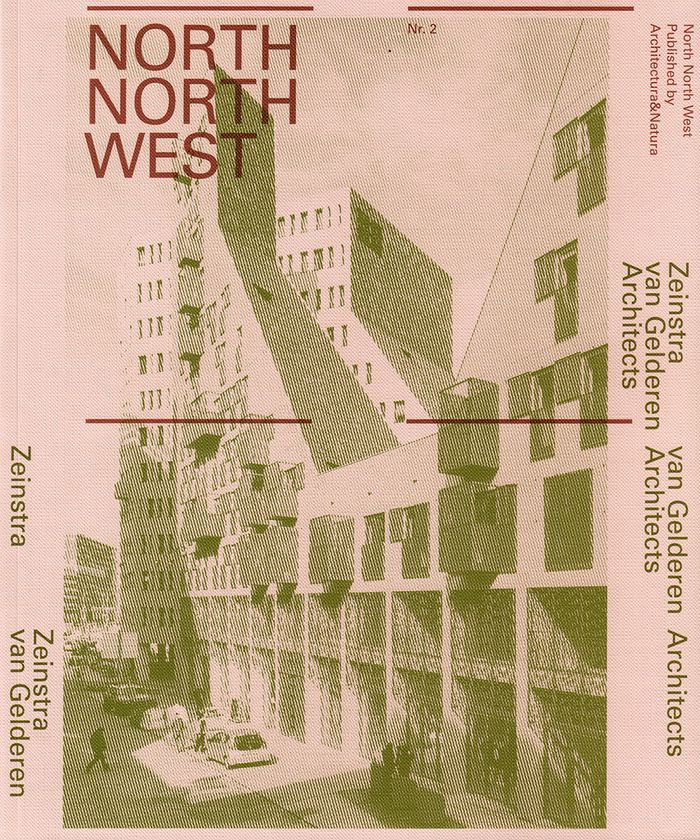
North north west 02 Zeinstra Van Gelderen Architecten
Actions:
Price:
$95.00
(available to order)
Summary:
Zeinstra van Gelderen Architects works on a variety of commissions that include architecture, urbanism, public space and interior design. The practice is drawn towards exploring the issues that somehow are related to architecture, art and society. Subsequently, they try to pursue the realisation the designs that follow from this exploration. It’s not so much the particular scale, but more the experimental challenge they set themselves as designers. The cooperation between Mikel van Gelderen and Jurjen Zeinstra started in 1990, when both were working as editors for the architectural magazine OASE. After winning the Europan competition with their entry 'High-density open space' (1996, together with Ira Koers) this cooperation has become solid and resulted in the design and realisation of many projects.
North north west 02 Zeinstra Van Gelderen Architecten
Actions:
Price:
$95.00
(available to order)
Summary:
Zeinstra van Gelderen Architects works on a variety of commissions that include architecture, urbanism, public space and interior design. The practice is drawn towards exploring the issues that somehow are related to architecture, art and society. Subsequently, they try to pursue the realisation the designs that follow from this exploration. It’s not so much the particular scale, but more the experimental challenge they set themselves as designers. The cooperation between Mikel van Gelderen and Jurjen Zeinstra started in 1990, when both were working as editors for the architectural magazine OASE. After winning the Europan competition with their entry 'High-density open space' (1996, together with Ira Koers) this cooperation has become solid and resulted in the design and realisation of many projects.
Form:
books
books
Publication:
March 2018
March 2018
Subject:
Architecture Monographs
Architecture Monographs
Form:
books
books
Title:
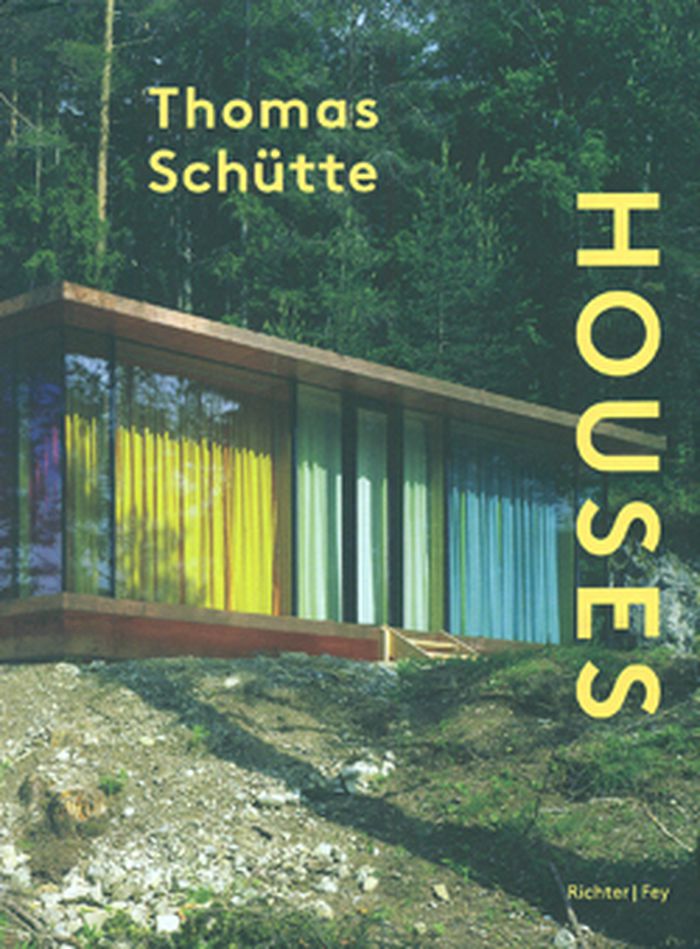
Thomas Schütte : houses
Thomas Schütte : houses
Actions:
Price:
$50.00
(available to order)
Summary:
Düsseldorf-based artist Thomas Schütte first came to prominence in the 1980s with his drawings, watercolors, stage sets and architectural models. Schütte’s first forays into imaginary or utopian architecture were scale models of rooms in which one might live and work. After a gap of 20 years, Schütte returned to the architectural model, producing light pavilions out of(...)
$50.00
(available to order)
Summary:
Düsseldorf-based artist Thomas Schütte first came to prominence in the 1980s with his drawings, watercolors, stage sets and architectural models. Schütte’s first forays into imaginary or utopian architecture were scale models of rooms in which one might live and work. After a gap of 20 years, Schütte returned to the architectural model, producing light pavilions out of(...)
Subject:
Contemporary Art Monographs
Contemporary Art Monographs
Publication:
February 2013
February 2013
Title:
Thomas Schütte : houses
Actions:
Price:
$50.00
(available to order)
Summary:
Düsseldorf-based artist Thomas Schütte first came to prominence in the 1980s with his drawings, watercolors, stage sets and architectural models. Schütte’s first forays into imaginary or utopian architecture were scale models of rooms in which one might live and work. After a gap of 20 years, Schütte returned to the architectural model, producing light pavilions out of wood and studio leftovers, as well as commercial and public buildings. Houses provides a comprehensive survey of Schütte’s architectural models, from his early experiments through to his current design projects.
Thomas Schütte : houses
Actions:
Price:
$50.00
(available to order)
Summary:
Düsseldorf-based artist Thomas Schütte first came to prominence in the 1980s with his drawings, watercolors, stage sets and architectural models. Schütte’s first forays into imaginary or utopian architecture were scale models of rooms in which one might live and work. After a gap of 20 years, Schütte returned to the architectural model, producing light pavilions out of wood and studio leftovers, as well as commercial and public buildings. Houses provides a comprehensive survey of Schütte’s architectural models, from his early experiments through to his current design projects.
Form:
books
books
Publication:
February 2013
February 2013
Subject:
Contemporary Art Monographs
Contemporary Art Monographs


