


582 Results
Form:
drawings
drawings
Actions:
Reference number:
AP173.S1.1997.D1.001
Description:
Group consists of 50 sketches (ink on paper, folded ink on paper and folded inkjet print with ink annotations, some groups of sketched stapled) and notes for the H2Oexpo in Neeltje Jans Island, Netherlands, including sketches of the sensors and interactive devices.
AP173.S1.1997.D1.001
Description:
Group consists of 50 sketches (ink on paper, folded ink on paper and folded inkjet print with ink annotations, some groups of sketched stapled) and notes for the H2Oexpo in Neeltje Jans Island, Netherlands, including sketches of the sensors and interactive devices.
People:
Date:
ca. 1997
ca. 1997
Title:
Sketches for the H2Oexpo in Neeltje Jans Island, Netherlands
Actions:
AP173.S1.1997.D1.001
Description:
Group consists of 50 sketches (ink on paper, folded ink on paper and folded inkjet print with ink annotations, some groups of sketched stapled) and notes for the H2Oexpo in Neeltje Jans Island, Netherlands, including sketches of the sensors and interactive devices.
Sketches for the H2Oexpo in Neeltje Jans Island, Netherlands
Actions:
AP173.S1.1997.D1.001
Description:
Group consists of 50 sketches (ink on paper, folded ink on paper and folded inkjet print with ink annotations, some groups of sketched stapled) and notes for the H2Oexpo in Neeltje Jans Island, Netherlands, including sketches of the sensors and interactive devices.
Form:
drawings
drawings
Date:
ca. 1997
ca. 1997
People:
Level of archival description:
Series
Series
Title:
Project records from Mr. Koz
Project records from Mr. Koz
Actions:
Reference number:
AP168.S2
Description:
The Project records from Mr. Koz series, 1996, consists of records produced by Seiichi Kozu of Studio KOZ, a local architect who managed the physical construction and installation of Denari’s show “Interrupted Projections” at Gallery MA in Tokyo, Japan. The series consists of 20 drawings and/or reprographic copies, 19 layouts, 16 slides, and a small amount of promotional material including three posters and one promotional pamphlet. Records date from 1996. For Interrupted Projections, in collaboration with Tokyo-based architect Seiichi Kozu (Mr. Koz) of Studio KOZ, Denari used traditional construction techniques to build a structure inside the gallery space that blended floor, wall and ceiling into a continuous curved surface. This surface displayed printed logos for fictional corporations, designed specifically for the exhibition. The majority of drawings and reprographic copies in the series relate to the construction of the principal architectural installation built on the third floor of Gallery MA. This includes plans and sections for the third floor, as well as working drawings that detail specifications such as dimensions, materials, layouts, and assembly techniques. The series also contains a set of five drawings that include first and second floor plans and sections of Gallery MA. The majority of writing on the drawings is Japanese, aside from one reprographic copy with third floor plans and sections that contains notes in English about elements of the installation such as lighting and the placement and size of fictional company logos. Photographic materials in the series comprise 16 slides that contain images of the built installation, as well as images of the exhibition open to the public, including slides of visitors interacting with the NaviCam. The series also includes printed layouts of the 3D digital renderings for the Interrupted Projections model alongside a pantone sheet, which were used as a reference during the construction process. Promotional material in the series includes three small posters for the exhibition, as well as a brochure that highlights selected works from the show.
AP168.S2
Description:
The Project records from Mr. Koz series, 1996, consists of records produced by Seiichi Kozu of Studio KOZ, a local architect who managed the physical construction and installation of Denari’s show “Interrupted Projections” at Gallery MA in Tokyo, Japan. The series consists of 20 drawings and/or reprographic copies, 19 layouts, 16 slides, and a small amount of promotional material including three posters and one promotional pamphlet. Records date from 1996. For Interrupted Projections, in collaboration with Tokyo-based architect Seiichi Kozu (Mr. Koz) of Studio KOZ, Denari used traditional construction techniques to build a structure inside the gallery space that blended floor, wall and ceiling into a continuous curved surface. This surface displayed printed logos for fictional corporations, designed specifically for the exhibition. The majority of drawings and reprographic copies in the series relate to the construction of the principal architectural installation built on the third floor of Gallery MA. This includes plans and sections for the third floor, as well as working drawings that detail specifications such as dimensions, materials, layouts, and assembly techniques. The series also contains a set of five drawings that include first and second floor plans and sections of Gallery MA. The majority of writing on the drawings is Japanese, aside from one reprographic copy with third floor plans and sections that contains notes in English about elements of the installation such as lighting and the placement and size of fictional company logos. Photographic materials in the series comprise 16 slides that contain images of the built installation, as well as images of the exhibition open to the public, including slides of visitors interacting with the NaviCam. The series also includes printed layouts of the 3D digital renderings for the Interrupted Projections model alongside a pantone sheet, which were used as a reference during the construction process. Promotional material in the series includes three small posters for the exhibition, as well as a brochure that highlights selected works from the show.
People:
Date:
1996
1996
Title:
Project records from Mr. Koz
Actions:
AP168.S2
Description:
The Project records from Mr. Koz series, 1996, consists of records produced by Seiichi Kozu of Studio KOZ, a local architect who managed the physical construction and installation of Denari’s show “Interrupted Projections” at Gallery MA in Tokyo, Japan. The series consists of 20 drawings and/or reprographic copies, 19 layouts, 16 slides, and a small amount of promotional material including three posters and one promotional pamphlet. Records date from 1996. For Interrupted Projections, in collaboration with Tokyo-based architect Seiichi Kozu (Mr. Koz) of Studio KOZ, Denari used traditional construction techniques to build a structure inside the gallery space that blended floor, wall and ceiling into a continuous curved surface. This surface displayed printed logos for fictional corporations, designed specifically for the exhibition. The majority of drawings and reprographic copies in the series relate to the construction of the principal architectural installation built on the third floor of Gallery MA. This includes plans and sections for the third floor, as well as working drawings that detail specifications such as dimensions, materials, layouts, and assembly techniques. The series also contains a set of five drawings that include first and second floor plans and sections of Gallery MA. The majority of writing on the drawings is Japanese, aside from one reprographic copy with third floor plans and sections that contains notes in English about elements of the installation such as lighting and the placement and size of fictional company logos. Photographic materials in the series comprise 16 slides that contain images of the built installation, as well as images of the exhibition open to the public, including slides of visitors interacting with the NaviCam. The series also includes printed layouts of the 3D digital renderings for the Interrupted Projections model alongside a pantone sheet, which were used as a reference during the construction process. Promotional material in the series includes three small posters for the exhibition, as well as a brochure that highlights selected works from the show.
Project records from Mr. Koz
Actions:
AP168.S2
Description:
The Project records from Mr. Koz series, 1996, consists of records produced by Seiichi Kozu of Studio KOZ, a local architect who managed the physical construction and installation of Denari’s show “Interrupted Projections” at Gallery MA in Tokyo, Japan. The series consists of 20 drawings and/or reprographic copies, 19 layouts, 16 slides, and a small amount of promotional material including three posters and one promotional pamphlet. Records date from 1996. For Interrupted Projections, in collaboration with Tokyo-based architect Seiichi Kozu (Mr. Koz) of Studio KOZ, Denari used traditional construction techniques to build a structure inside the gallery space that blended floor, wall and ceiling into a continuous curved surface. This surface displayed printed logos for fictional corporations, designed specifically for the exhibition. The majority of drawings and reprographic copies in the series relate to the construction of the principal architectural installation built on the third floor of Gallery MA. This includes plans and sections for the third floor, as well as working drawings that detail specifications such as dimensions, materials, layouts, and assembly techniques. The series also contains a set of five drawings that include first and second floor plans and sections of Gallery MA. The majority of writing on the drawings is Japanese, aside from one reprographic copy with third floor plans and sections that contains notes in English about elements of the installation such as lighting and the placement and size of fictional company logos. Photographic materials in the series comprise 16 slides that contain images of the built installation, as well as images of the exhibition open to the public, including slides of visitors interacting with the NaviCam. The series also includes printed layouts of the 3D digital renderings for the Interrupted Projections model alongside a pantone sheet, which were used as a reference during the construction process. Promotional material in the series includes three small posters for the exhibition, as well as a brochure that highlights selected works from the show.
Level of archival description:
Series
Series
Date:
1996
1996
People:
Form:
events
events

Actions:
Description:
In conjunction with the exhibition The Other Architect, Todd Rouhe and Rachel Himmelfarb of common room present the groups collaborative working process: This question—what’s the problem?—is central to how common room works. The question defines a process of searching, experiencing, interacting, and communicating that not only informs how we understand architecture and(...)
In conjunction with the exhibition The Other Architect, Todd Rouhe and Rachel Himmelfarb of common room present the groups collaborative working process: This question—what’s the problem?—is central to how common room works. The question defines a process of searching, experiencing, interacting, and communicating that not only informs how we understand architecture and(...)
Location:
Paul-Desmarais Theatre
Paul-Desmarais Theatre
Date:
19 November 2015
19 November 2015
Title:
common room: What's the Problem?
Actions:
Description:
In conjunction with the exhibition The Other Architect, Todd Rouhe and Rachel Himmelfarb of common room present the groups collaborative working process: This question—what’s the problem?—is central to how common room works. The question defines a process of searching, experiencing, interacting, and communicating that not only informs how we understand architecture and(...)
common room: What's the Problem?
Actions:
Description:
In conjunction with the exhibition The Other Architect, Todd Rouhe and Rachel Himmelfarb of common room present the groups collaborative working process: This question—what’s the problem?—is central to how common room works. The question defines a process of searching, experiencing, interacting, and communicating that not only informs how we understand architecture and(...)
Form:
events
events
Date:
19 November 2015
19 November 2015
Location:
Paul-Desmarais Theatre
Paul-Desmarais Theatre
Level of archival description:
Project
Project
Reference number:
AP056.S1.1999.PR01
Description:
This project series documents the Canadian Embassy in Berlin, Germany from 1999-2005. The office identified the project number as 9903. This project consisted of a new embassy building for Canada in the reunified German capital located at the junction of Leipziger Platz and Potsdamer Platz. The embassy was built in joint venture with Gagnon Letellier Cyr Architects and Smith Carter Architects and Engineers. The firms were selected for the project by the Canadian Department of Foreign Affairs and International Trade after a national competition was held. The competition jury had chosen a different design, by architecture firm Saucier + Perrotte.[1] The embassy, built to follow the original octagonal wall of Leipziger Platz, had a stone exterior punched with windows, as dictated by the District Office of Central Berlin's guidelines.[2] It occupied the first four floors of the Leipziger Platz block and all floors of the Ebertstrasse block. Inside, the Focus Canada Centre off the Ebertstrasse entrance served as the central government information centre and included interactive kiosks. The Embassy Reception Hall, complete was an Inuksuk at its entrance, was a space that greeted guests and provided consular services. The Canada Lounge defined the ground floor and provided a space where visitors could engage with Canadian news through newspapers, radios and televisions. The cylindrical Great Timber Hall pierced through the embassy. This wood-lined space had a sky-light ceiling to allow natural light to flow inside and served as an executive meeting room and a space for special guests, entertainment, events and exhibits. Retail spaces were also provided along Vossstrasse and a residential component made up the upper floors of Leipziger Platz. The project is recorded through a model and drawings dating from 1998-2000. The large part of these drawings are sketches, but plans, elevations, sections, perspectives and details are also included. [1] Adele Weder, "A Berlin Chronicle," The Canadian Architect, June 20, 1999, 20-21. [2] "Canadian Embassy Berlin." KPMB. Accessed April 18, 2019. http://www.kpmb.com/project/canadian-embassy-berlin/
AP056.S1.1999.PR01
Description:
This project series documents the Canadian Embassy in Berlin, Germany from 1999-2005. The office identified the project number as 9903. This project consisted of a new embassy building for Canada in the reunified German capital located at the junction of Leipziger Platz and Potsdamer Platz. The embassy was built in joint venture with Gagnon Letellier Cyr Architects and Smith Carter Architects and Engineers. The firms were selected for the project by the Canadian Department of Foreign Affairs and International Trade after a national competition was held. The competition jury had chosen a different design, by architecture firm Saucier + Perrotte.[1] The embassy, built to follow the original octagonal wall of Leipziger Platz, had a stone exterior punched with windows, as dictated by the District Office of Central Berlin's guidelines.[2] It occupied the first four floors of the Leipziger Platz block and all floors of the Ebertstrasse block. Inside, the Focus Canada Centre off the Ebertstrasse entrance served as the central government information centre and included interactive kiosks. The Embassy Reception Hall, complete was an Inuksuk at its entrance, was a space that greeted guests and provided consular services. The Canada Lounge defined the ground floor and provided a space where visitors could engage with Canadian news through newspapers, radios and televisions. The cylindrical Great Timber Hall pierced through the embassy. This wood-lined space had a sky-light ceiling to allow natural light to flow inside and served as an executive meeting room and a space for special guests, entertainment, events and exhibits. Retail spaces were also provided along Vossstrasse and a residential component made up the upper floors of Leipziger Platz. The project is recorded through a model and drawings dating from 1998-2000. The large part of these drawings are sketches, but plans, elevations, sections, perspectives and details are also included. [1] Adele Weder, "A Berlin Chronicle," The Canadian Architect, June 20, 1999, 20-21. [2] "Canadian Embassy Berlin." KPMB. Accessed April 18, 2019. http://www.kpmb.com/project/canadian-embassy-berlin/
People:
Date:
1998-2000
1998-2000
Title:
Canadian Embassy, Berlin, Germany (1999-2005)
Actions:
AP056.S1.1999.PR01
Description:
This project series documents the Canadian Embassy in Berlin, Germany from 1999-2005. The office identified the project number as 9903. This project consisted of a new embassy building for Canada in the reunified German capital located at the junction of Leipziger Platz and Potsdamer Platz. The embassy was built in joint venture with Gagnon Letellier Cyr Architects and Smith Carter Architects and Engineers. The firms were selected for the project by the Canadian Department of Foreign Affairs and International Trade after a national competition was held. The competition jury had chosen a different design, by architecture firm Saucier + Perrotte.[1] The embassy, built to follow the original octagonal wall of Leipziger Platz, had a stone exterior punched with windows, as dictated by the District Office of Central Berlin's guidelines.[2] It occupied the first four floors of the Leipziger Platz block and all floors of the Ebertstrasse block. Inside, the Focus Canada Centre off the Ebertstrasse entrance served as the central government information centre and included interactive kiosks. The Embassy Reception Hall, complete was an Inuksuk at its entrance, was a space that greeted guests and provided consular services. The Canada Lounge defined the ground floor and provided a space where visitors could engage with Canadian news through newspapers, radios and televisions. The cylindrical Great Timber Hall pierced through the embassy. This wood-lined space had a sky-light ceiling to allow natural light to flow inside and served as an executive meeting room and a space for special guests, entertainment, events and exhibits. Retail spaces were also provided along Vossstrasse and a residential component made up the upper floors of Leipziger Platz. The project is recorded through a model and drawings dating from 1998-2000. The large part of these drawings are sketches, but plans, elevations, sections, perspectives and details are also included. [1] Adele Weder, "A Berlin Chronicle," The Canadian Architect, June 20, 1999, 20-21. [2] "Canadian Embassy Berlin." KPMB. Accessed April 18, 2019. http://www.kpmb.com/project/canadian-embassy-berlin/
Canadian Embassy, Berlin, Germany (1999-2005)
Actions:
AP056.S1.1999.PR01
Description:
This project series documents the Canadian Embassy in Berlin, Germany from 1999-2005. The office identified the project number as 9903. This project consisted of a new embassy building for Canada in the reunified German capital located at the junction of Leipziger Platz and Potsdamer Platz. The embassy was built in joint venture with Gagnon Letellier Cyr Architects and Smith Carter Architects and Engineers. The firms were selected for the project by the Canadian Department of Foreign Affairs and International Trade after a national competition was held. The competition jury had chosen a different design, by architecture firm Saucier + Perrotte.[1] The embassy, built to follow the original octagonal wall of Leipziger Platz, had a stone exterior punched with windows, as dictated by the District Office of Central Berlin's guidelines.[2] It occupied the first four floors of the Leipziger Platz block and all floors of the Ebertstrasse block. Inside, the Focus Canada Centre off the Ebertstrasse entrance served as the central government information centre and included interactive kiosks. The Embassy Reception Hall, complete was an Inuksuk at its entrance, was a space that greeted guests and provided consular services. The Canada Lounge defined the ground floor and provided a space where visitors could engage with Canadian news through newspapers, radios and televisions. The cylindrical Great Timber Hall pierced through the embassy. This wood-lined space had a sky-light ceiling to allow natural light to flow inside and served as an executive meeting room and a space for special guests, entertainment, events and exhibits. Retail spaces were also provided along Vossstrasse and a residential component made up the upper floors of Leipziger Platz. The project is recorded through a model and drawings dating from 1998-2000. The large part of these drawings are sketches, but plans, elevations, sections, perspectives and details are also included. [1] Adele Weder, "A Berlin Chronicle," The Canadian Architect, June 20, 1999, 20-21. [2] "Canadian Embassy Berlin." KPMB. Accessed April 18, 2019. http://www.kpmb.com/project/canadian-embassy-berlin/
Level of archival description:
Project
Project
Date:
1998-2000
1998-2000
People:
Level of archival description:
Project
Project
Title:
Fun Palace Project
Fun Palace Project
Reference number:
AP144.S2.D46
Description:
File documents the various unexecuted proposals for the Fun Palace Project, an interactive and adaptable, educational and cultural complex to be located in London, England. The project was commissioned by Joan Littlewood, to be erected on disused public land slated for redevelopment and intended to be dismantled after 10 years. Conceptual and design development drawings were created for a typical Fun Palace that could be erected on any suitable site, and several sites were considered, some belonging to the Civic Trust. Presentation drawings were elaborated for a Fun Palace in the Lea Valley at Mill Meads and for a later modified Pilot Project in Camden Town. Publication drawings were also created for an article in Price, Cedric. "Fun Palace Project." 'Architectural Review'. (January 1965), 74-75. The Fun Palace Trust was created to oversee the project and the file contains material from related activities of the Trust which was active until the 1970's. Existing conditions drawings begin in 1961 and include regional, zoning, and transportation maps of Greater London and a photocollage of the site. Conceptual and diagrammatic drawings include: perspectives for the structural system; plans for site access; charts for modular systems; axonometrics for modules; preliminary drawings for escalators and service towers; and studies for activity areas. A "Table of Kindred and Affinity" separates modular components physically and visually by means of activity types, circulation, and individual/group accommodations. Design development drawings for the Fun Palace Project include: plans for activity areas, site plans, typical plans, site movement/circulation plans, theatre seating plans, diagrammatic sections, volumetric structural diagrams, perspectives, charts for services for mass activities, typical mass activity enclosure types, charts for required equipment for activities, and "clamp" structural systems and studies for three dimensional versatility and modular feasibility. Design development drawings for the 1963 Camden Town Pilot Project include: site plans; diagrammatic plans showing circulation patterns; drawings showing basic cubes with components and structural panel types; details for component connections; charts for individual activity module requirements; and network analysis charts. Presentation material includes: aerial photographs mounted on board; enlargements of clippings; reprographic copies of photographs of the design models. Material in this file was created between 1961 and 1985 but predominantly between 1961 and 1974. File contains conceptual drawings, design development drawings, presentation drawings and panels, publication drawings, reference drawings, an artefact, a film reel, models, photographic material, and textual records.
AP144.S2.D46
Description:
File documents the various unexecuted proposals for the Fun Palace Project, an interactive and adaptable, educational and cultural complex to be located in London, England. The project was commissioned by Joan Littlewood, to be erected on disused public land slated for redevelopment and intended to be dismantled after 10 years. Conceptual and design development drawings were created for a typical Fun Palace that could be erected on any suitable site, and several sites were considered, some belonging to the Civic Trust. Presentation drawings were elaborated for a Fun Palace in the Lea Valley at Mill Meads and for a later modified Pilot Project in Camden Town. Publication drawings were also created for an article in Price, Cedric. "Fun Palace Project." 'Architectural Review'. (January 1965), 74-75. The Fun Palace Trust was created to oversee the project and the file contains material from related activities of the Trust which was active until the 1970's. Existing conditions drawings begin in 1961 and include regional, zoning, and transportation maps of Greater London and a photocollage of the site. Conceptual and diagrammatic drawings include: perspectives for the structural system; plans for site access; charts for modular systems; axonometrics for modules; preliminary drawings for escalators and service towers; and studies for activity areas. A "Table of Kindred and Affinity" separates modular components physically and visually by means of activity types, circulation, and individual/group accommodations. Design development drawings for the Fun Palace Project include: plans for activity areas, site plans, typical plans, site movement/circulation plans, theatre seating plans, diagrammatic sections, volumetric structural diagrams, perspectives, charts for services for mass activities, typical mass activity enclosure types, charts for required equipment for activities, and "clamp" structural systems and studies for three dimensional versatility and modular feasibility. Design development drawings for the 1963 Camden Town Pilot Project include: site plans; diagrammatic plans showing circulation patterns; drawings showing basic cubes with components and structural panel types; details for component connections; charts for individual activity module requirements; and network analysis charts. Presentation material includes: aerial photographs mounted on board; enlargements of clippings; reprographic copies of photographs of the design models. Material in this file was created between 1961 and 1985 but predominantly between 1961 and 1974. File contains conceptual drawings, design development drawings, presentation drawings and panels, publication drawings, reference drawings, an artefact, a film reel, models, photographic material, and textual records.
People:
Date:
1961-1985, predominant 1961-1974
1961-1985, predominant 1961-1974
Title:
Fun Palace Project
Actions:
AP144.S2.D46
Description:
File documents the various unexecuted proposals for the Fun Palace Project, an interactive and adaptable, educational and cultural complex to be located in London, England. The project was commissioned by Joan Littlewood, to be erected on disused public land slated for redevelopment and intended to be dismantled after 10 years. Conceptual and design development drawings were created for a typical Fun Palace that could be erected on any suitable site, and several sites were considered, some belonging to the Civic Trust. Presentation drawings were elaborated for a Fun Palace in the Lea Valley at Mill Meads and for a later modified Pilot Project in Camden Town. Publication drawings were also created for an article in Price, Cedric. "Fun Palace Project." 'Architectural Review'. (January 1965), 74-75. The Fun Palace Trust was created to oversee the project and the file contains material from related activities of the Trust which was active until the 1970's. Existing conditions drawings begin in 1961 and include regional, zoning, and transportation maps of Greater London and a photocollage of the site. Conceptual and diagrammatic drawings include: perspectives for the structural system; plans for site access; charts for modular systems; axonometrics for modules; preliminary drawings for escalators and service towers; and studies for activity areas. A "Table of Kindred and Affinity" separates modular components physically and visually by means of activity types, circulation, and individual/group accommodations. Design development drawings for the Fun Palace Project include: plans for activity areas, site plans, typical plans, site movement/circulation plans, theatre seating plans, diagrammatic sections, volumetric structural diagrams, perspectives, charts for services for mass activities, typical mass activity enclosure types, charts for required equipment for activities, and "clamp" structural systems and studies for three dimensional versatility and modular feasibility. Design development drawings for the 1963 Camden Town Pilot Project include: site plans; diagrammatic plans showing circulation patterns; drawings showing basic cubes with components and structural panel types; details for component connections; charts for individual activity module requirements; and network analysis charts. Presentation material includes: aerial photographs mounted on board; enlargements of clippings; reprographic copies of photographs of the design models. Material in this file was created between 1961 and 1985 but predominantly between 1961 and 1974. File contains conceptual drawings, design development drawings, presentation drawings and panels, publication drawings, reference drawings, an artefact, a film reel, models, photographic material, and textual records.
Fun Palace Project
Actions:
AP144.S2.D46
Description:
File documents the various unexecuted proposals for the Fun Palace Project, an interactive and adaptable, educational and cultural complex to be located in London, England. The project was commissioned by Joan Littlewood, to be erected on disused public land slated for redevelopment and intended to be dismantled after 10 years. Conceptual and design development drawings were created for a typical Fun Palace that could be erected on any suitable site, and several sites were considered, some belonging to the Civic Trust. Presentation drawings were elaborated for a Fun Palace in the Lea Valley at Mill Meads and for a later modified Pilot Project in Camden Town. Publication drawings were also created for an article in Price, Cedric. "Fun Palace Project." 'Architectural Review'. (January 1965), 74-75. The Fun Palace Trust was created to oversee the project and the file contains material from related activities of the Trust which was active until the 1970's. Existing conditions drawings begin in 1961 and include regional, zoning, and transportation maps of Greater London and a photocollage of the site. Conceptual and diagrammatic drawings include: perspectives for the structural system; plans for site access; charts for modular systems; axonometrics for modules; preliminary drawings for escalators and service towers; and studies for activity areas. A "Table of Kindred and Affinity" separates modular components physically and visually by means of activity types, circulation, and individual/group accommodations. Design development drawings for the Fun Palace Project include: plans for activity areas, site plans, typical plans, site movement/circulation plans, theatre seating plans, diagrammatic sections, volumetric structural diagrams, perspectives, charts for services for mass activities, typical mass activity enclosure types, charts for required equipment for activities, and "clamp" structural systems and studies for three dimensional versatility and modular feasibility. Design development drawings for the 1963 Camden Town Pilot Project include: site plans; diagrammatic plans showing circulation patterns; drawings showing basic cubes with components and structural panel types; details for component connections; charts for individual activity module requirements; and network analysis charts. Presentation material includes: aerial photographs mounted on board; enlargements of clippings; reprographic copies of photographs of the design models. Material in this file was created between 1961 and 1985 but predominantly between 1961 and 1974. File contains conceptual drawings, design development drawings, presentation drawings and panels, publication drawings, reference drawings, an artefact, a film reel, models, photographic material, and textual records.
Level of archival description:
File 46
File 46
Date:
1961-1985, predominant 1961-1974
1961-1985, predominant 1961-1974
People:
Form:
archives
Level of archival description:
Fonds
archives
Level of archival description:
Fonds
Reference number:
AP168
Synopsis:
The Neil Denari Interrupted Projections project records, 1994-2004 (predominant 1994-1996), document the development and installation of Denari’s show “Interrupted Projections” at Gallery MA in Tokyo, Japan. The archive consists of original born-digital files and a small amount of physical material, including drawings, transparencies, slides, and promotional materials.
AP168
Synopsis:
The Neil Denari Interrupted Projections project records, 1994-2004 (predominant 1994-1996), document the development and installation of Denari’s show “Interrupted Projections” at Gallery MA in Tokyo, Japan. The archive consists of original born-digital files and a small amount of physical material, including drawings, transparencies, slides, and promotional materials.
People:
Date:
1994-2004
1994-2004
Title:
Neil Denari Interrupted Projections project records
Actions:
AP168
Synopsis:
The Neil Denari Interrupted Projections project records, 1994-2004 (predominant 1994-1996), document the development and installation of Denari’s show “Interrupted Projections” at Gallery MA in Tokyo, Japan. The archive consists of original born-digital files and a small amount of physical material, including drawings, transparencies, slides, and promotional materials.
Neil Denari Interrupted Projections project records
Actions:
AP168
Synopsis:
The Neil Denari Interrupted Projections project records, 1994-2004 (predominant 1994-1996), document the development and installation of Denari’s show “Interrupted Projections” at Gallery MA in Tokyo, Japan. The archive consists of original born-digital files and a small amount of physical material, including drawings, transparencies, slides, and promotional materials.
Form:
archives
Level of archival description:
Fonds
archives
Level of archival description:
Fonds
Date:
1994-2004
1994-2004
People:
Form:
exhibitions
exhibitions
Actions:
Description:
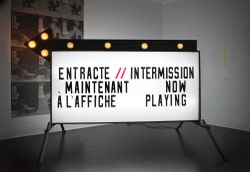
The CCA galleries are transformed into cinematic screening rooms to present a range of artistic, scientific, and experimental films on speed and space. Selected by curators from the archives of NASA, the Smithsonian National Air and Space Museum (NASM), the National Film Board of Canada (NFB), and UbuWeb, the films explore the impact of velocity and technology on our(...)
The CCA galleries are transformed into cinematic screening rooms to present a range of artistic, scientific, and experimental films on speed and space. Selected by curators from the archives of NASA, the Smithsonian National Air and Space Museum (NASM), the National Film Board of Canada (NFB), and UbuWeb, the films explore the impact of velocity and technology on our(...)
Location:
Main galleries
Main galleries
Date:
25 November 2009 to 28 February 2010
25 November 2009 to 28 February 2010
Title:
Intermission: Films From a Heroic Future
Actions:
Description:
The CCA galleries are transformed into cinematic screening rooms to present a range of artistic, scientific, and experimental films on speed and space. Selected by curators from the archives of NASA, the Smithsonian National Air and Space Museum (NASM), the National Film Board of Canada (NFB), and UbuWeb, the films explore the impact of velocity and technology on our(...)
Intermission: Films From a Heroic Future
Actions:
Description:
The CCA galleries are transformed into cinematic screening rooms to present a range of artistic, scientific, and experimental films on speed and space. Selected by curators from the archives of NASA, the Smithsonian National Air and Space Museum (NASM), the National Film Board of Canada (NFB), and UbuWeb, the films explore the impact of velocity and technology on our(...)
Form:
exhibitions
exhibitions
Date:
25 November 2009 to
28 February 2010
25 November 2009 to
28 February 2010
Location:
Main galleries
Main galleries
Form:
born digital
born digital
Actions:
Reference number:
AP167.S2.003
Description:
This directory contains seven video files taken during the exhibit at the Centre Georges Pompidou. The videos document the ONL installation, including the NSA Muscle and the 3D prints of the A2 Cockpit and Soundbarrier projects. Two of the videos cut together additional footage, showing the interior of the Muscle, users interacting with the Muscle sensors, and the Virtools computer station. Original directory name: "4.1 animations". Most common file formats: MPEG-1 Program Stream, Audio/Video Interleaved Format.
AP167.S2.003
Description:
This directory contains seven video files taken during the exhibit at the Centre Georges Pompidou. The videos document the ONL installation, including the NSA Muscle and the 3D prints of the A2 Cockpit and Soundbarrier projects. Two of the videos cut together additional footage, showing the interior of the Muscle, users interacting with the Muscle sensors, and the Virtools computer station. Original directory name: "4.1 animations". Most common file formats: MPEG-1 Program Stream, Audio/Video Interleaved Format.
People:
Date:
2 July 2010
2 July 2010
Title:
Video clips of the NSA Muscle at the Centre George Pompidou
Actions:
AP167.S2.003
Description:
This directory contains seven video files taken during the exhibit at the Centre Georges Pompidou. The videos document the ONL installation, including the NSA Muscle and the 3D prints of the A2 Cockpit and Soundbarrier projects. Two of the videos cut together additional footage, showing the interior of the Muscle, users interacting with the Muscle sensors, and the Virtools computer station. Original directory name: "4.1 animations". Most common file formats: MPEG-1 Program Stream, Audio/Video Interleaved Format.
Video clips of the NSA Muscle at the Centre George Pompidou
Actions:
AP167.S2.003
Description:
This directory contains seven video files taken during the exhibit at the Centre Georges Pompidou. The videos document the ONL installation, including the NSA Muscle and the 3D prints of the A2 Cockpit and Soundbarrier projects. Two of the videos cut together additional footage, showing the interior of the Muscle, users interacting with the Muscle sensors, and the Virtools computer station. Original directory name: "4.1 animations". Most common file formats: MPEG-1 Program Stream, Audio/Video Interleaved Format.
Form:
born digital
born digital
Date:
2 July 2010
2 July 2010
People:
Form:
events
events
Title:
Devices of Design
Devices of Design
Actions:
Description:
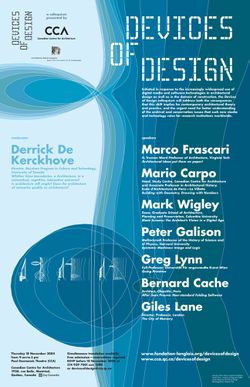
A collaboration between the CCA and the Daniel Langlois Foundation for Art, Science, and Technology, Devices of Design was initiated in response to the increasingly widespread use of digital media and software technologies in architectural design and construction. A colloquium and a subsequent roundtable discussion address both the consequences that this shift implies for(...)
A collaboration between the CCA and the Daniel Langlois Foundation for Art, Science, and Technology, Devices of Design was initiated in response to the increasingly widespread use of digital media and software technologies in architectural design and construction. A colloquium and a subsequent roundtable discussion address both the consequences that this shift implies for(...)
Location:
Paul-Desmarais Theatre
Paul-Desmarais Theatre
Date:
18 November 2004 to 19 November 2004
18 November 2004 to 19 November 2004
Title:
Devices of Design
Actions:
Description:
A collaboration between the CCA and the Daniel Langlois Foundation for Art, Science, and Technology, Devices of Design was initiated in response to the increasingly widespread use of digital media and software technologies in architectural design and construction. A colloquium and a subsequent roundtable discussion address both the consequences that this shift implies for(...)
Devices of Design
Actions:
Description:
A collaboration between the CCA and the Daniel Langlois Foundation for Art, Science, and Technology, Devices of Design was initiated in response to the increasingly widespread use of digital media and software technologies in architectural design and construction. A colloquium and a subsequent roundtable discussion address both the consequences that this shift implies for(...)
Form:
events
events
Date:
18 November 2004 to
19 November 2004
18 November 2004 to
19 November 2004
Location:
Paul-Desmarais Theatre
Paul-Desmarais Theatre
Level of archival description:
Series
Series
Reference number:
AP168.S1
Description:
The Project records from Neil Denari series, 1994 – 2004, consists of records produced by Denari for his show “Interrupted Projections” at Gallery MA in Tokyo, Japan. It documents the development and final design for the principal architectural installation built on the third level of the gallery, as well as related materials displayed on the gallery’s fourth floor. The series also contains photographic and video documentation of the exhibit, the show catalogue, and promotional materials. The series includes 4003 digital files (1 GB), 53 slides, 21 transparencies, seven drawings and/or reprographic copies, two VHS video cassettes, one exhibition catalogue, and a small amount of promotional material comprising one large and two small posters, one postcard, and one t-shirt. The majority of records date from 1994-1996. Denari used a combination of physical drawings and digital modelling to draft the design for Interrupted Projections. The series contains one ink drawing and one transfer print with plans and sections of the third floor gallery space, two reprographic copies of drawings with elevations and plans of existing conditions of the third and fourth floors at Gallery MA, and three graphite hand drawings of the installation. Digital files in the series include two original Softimage databases containing full and partial 3D models of the installation, as well as one forward-migrated database containing models compiled from the two original databases. The original models were created in Softimage ’95 on Windows NT and will not open in contemporary versions of Autodesk Softimage. The forward-migrated model database was created by members of Autodesk’s Montreal office for the Archaeology of the Digital exhibition Complexity and Convention and will open in Softimage 2014. Each Softimage model database is made up of several directories that contain information necessary to render all models and their animation into a “scene” (such as textures, lighting, camera movements, etc.). When the Interrupted Projections models were migrated, the information from all directories in both original databases was compiled into the Scenes directory of a single database. These updated scene files (SCN) contain all the elements needed to render the models without the need for additional directories. Each scene file has a corresponding scene TOC file (scene table of content), which can be used to further modify the information in the scene. Scene files in the migrated database contain full and partial models for Interrupted Projections, including one animated scene that follows a camera path through the interior and exterior of the final model. These files document the various stages of design work for the project, as well as Denari’s use of animation features in Softimage to visualize and study the spatial character of his drawings. Project collaborator Duks Koschitz created additional animations of the model that were edited and shown on the fourth floor of the exhibition. A compilation of his work is included on a VHS tape in the archive. The video, which spans one minute 16 seconds, contains four animations that move around the 3D gallery space. Koschitz attempted to reflect the concerns of the project in the movements of the camera, focusing on details such as the fictional company logos or curvatures in the surface of the model. The majority of photographic materials in the series are digital renderings of the model, comprising 38 slides, 14 diapositives, and seven digital images. Photographic materials also include images of the completed show, including seven diapositives that document the built work from various views on the third floor of Gallery MA, as well as the exhibition of materials on the fourth floor. A small number of slides document the exhibit open to the public, and include images of visitors interacting with the Sony Navicam. Most of the diapositive photographs and a small number of slides were taken by Fujitsuka Mitsumasa, a photographer of architecture based in Tokyo. A second VHS tape in the archive provides in-depth documentation of the Interrupted Projections exhibition, containing 45 minutes of raw video footage that explores Gallery MA and surrounding areas of Tokyo. The Interrupted Projections book contains in print the text and images from the installation and website. It was written by Denari and designed by Michiharu Shimoda, a graphic designer and underground trip-hop artist who was also responsible for the design of the fictional logos used in the exhibit. The book acts as an extension of the content of the show, as well as exhibition catalogue, and covers Denari’s other projects represented in the show. The series also contains a small amount of promotional media for Interrupted Projections, including one large and two small posters, a postcard, and a t-shirt.
AP168.S1
Description:
The Project records from Neil Denari series, 1994 – 2004, consists of records produced by Denari for his show “Interrupted Projections” at Gallery MA in Tokyo, Japan. It documents the development and final design for the principal architectural installation built on the third level of the gallery, as well as related materials displayed on the gallery’s fourth floor. The series also contains photographic and video documentation of the exhibit, the show catalogue, and promotional materials. The series includes 4003 digital files (1 GB), 53 slides, 21 transparencies, seven drawings and/or reprographic copies, two VHS video cassettes, one exhibition catalogue, and a small amount of promotional material comprising one large and two small posters, one postcard, and one t-shirt. The majority of records date from 1994-1996. Denari used a combination of physical drawings and digital modelling to draft the design for Interrupted Projections. The series contains one ink drawing and one transfer print with plans and sections of the third floor gallery space, two reprographic copies of drawings with elevations and plans of existing conditions of the third and fourth floors at Gallery MA, and three graphite hand drawings of the installation. Digital files in the series include two original Softimage databases containing full and partial 3D models of the installation, as well as one forward-migrated database containing models compiled from the two original databases. The original models were created in Softimage ’95 on Windows NT and will not open in contemporary versions of Autodesk Softimage. The forward-migrated model database was created by members of Autodesk’s Montreal office for the Archaeology of the Digital exhibition Complexity and Convention and will open in Softimage 2014. Each Softimage model database is made up of several directories that contain information necessary to render all models and their animation into a “scene” (such as textures, lighting, camera movements, etc.). When the Interrupted Projections models were migrated, the information from all directories in both original databases was compiled into the Scenes directory of a single database. These updated scene files (SCN) contain all the elements needed to render the models without the need for additional directories. Each scene file has a corresponding scene TOC file (scene table of content), which can be used to further modify the information in the scene. Scene files in the migrated database contain full and partial models for Interrupted Projections, including one animated scene that follows a camera path through the interior and exterior of the final model. These files document the various stages of design work for the project, as well as Denari’s use of animation features in Softimage to visualize and study the spatial character of his drawings. Project collaborator Duks Koschitz created additional animations of the model that were edited and shown on the fourth floor of the exhibition. A compilation of his work is included on a VHS tape in the archive. The video, which spans one minute 16 seconds, contains four animations that move around the 3D gallery space. Koschitz attempted to reflect the concerns of the project in the movements of the camera, focusing on details such as the fictional company logos or curvatures in the surface of the model. The majority of photographic materials in the series are digital renderings of the model, comprising 38 slides, 14 diapositives, and seven digital images. Photographic materials also include images of the completed show, including seven diapositives that document the built work from various views on the third floor of Gallery MA, as well as the exhibition of materials on the fourth floor. A small number of slides document the exhibit open to the public, and include images of visitors interacting with the Sony Navicam. Most of the diapositive photographs and a small number of slides were taken by Fujitsuka Mitsumasa, a photographer of architecture based in Tokyo. A second VHS tape in the archive provides in-depth documentation of the Interrupted Projections exhibition, containing 45 minutes of raw video footage that explores Gallery MA and surrounding areas of Tokyo. The Interrupted Projections book contains in print the text and images from the installation and website. It was written by Denari and designed by Michiharu Shimoda, a graphic designer and underground trip-hop artist who was also responsible for the design of the fictional logos used in the exhibit. The book acts as an extension of the content of the show, as well as exhibition catalogue, and covers Denari’s other projects represented in the show. The series also contains a small amount of promotional media for Interrupted Projections, including one large and two small posters, a postcard, and a t-shirt.
People:
Date:
1994 - 2004
1994 - 2004
Title:
Project records from Neil Denari
Actions:
AP168.S1
Description:
The Project records from Neil Denari series, 1994 – 2004, consists of records produced by Denari for his show “Interrupted Projections” at Gallery MA in Tokyo, Japan. It documents the development and final design for the principal architectural installation built on the third level of the gallery, as well as related materials displayed on the gallery’s fourth floor. The series also contains photographic and video documentation of the exhibit, the show catalogue, and promotional materials. The series includes 4003 digital files (1 GB), 53 slides, 21 transparencies, seven drawings and/or reprographic copies, two VHS video cassettes, one exhibition catalogue, and a small amount of promotional material comprising one large and two small posters, one postcard, and one t-shirt. The majority of records date from 1994-1996. Denari used a combination of physical drawings and digital modelling to draft the design for Interrupted Projections. The series contains one ink drawing and one transfer print with plans and sections of the third floor gallery space, two reprographic copies of drawings with elevations and plans of existing conditions of the third and fourth floors at Gallery MA, and three graphite hand drawings of the installation. Digital files in the series include two original Softimage databases containing full and partial 3D models of the installation, as well as one forward-migrated database containing models compiled from the two original databases. The original models were created in Softimage ’95 on Windows NT and will not open in contemporary versions of Autodesk Softimage. The forward-migrated model database was created by members of Autodesk’s Montreal office for the Archaeology of the Digital exhibition Complexity and Convention and will open in Softimage 2014. Each Softimage model database is made up of several directories that contain information necessary to render all models and their animation into a “scene” (such as textures, lighting, camera movements, etc.). When the Interrupted Projections models were migrated, the information from all directories in both original databases was compiled into the Scenes directory of a single database. These updated scene files (SCN) contain all the elements needed to render the models without the need for additional directories. Each scene file has a corresponding scene TOC file (scene table of content), which can be used to further modify the information in the scene. Scene files in the migrated database contain full and partial models for Interrupted Projections, including one animated scene that follows a camera path through the interior and exterior of the final model. These files document the various stages of design work for the project, as well as Denari’s use of animation features in Softimage to visualize and study the spatial character of his drawings. Project collaborator Duks Koschitz created additional animations of the model that were edited and shown on the fourth floor of the exhibition. A compilation of his work is included on a VHS tape in the archive. The video, which spans one minute 16 seconds, contains four animations that move around the 3D gallery space. Koschitz attempted to reflect the concerns of the project in the movements of the camera, focusing on details such as the fictional company logos or curvatures in the surface of the model. The majority of photographic materials in the series are digital renderings of the model, comprising 38 slides, 14 diapositives, and seven digital images. Photographic materials also include images of the completed show, including seven diapositives that document the built work from various views on the third floor of Gallery MA, as well as the exhibition of materials on the fourth floor. A small number of slides document the exhibit open to the public, and include images of visitors interacting with the Sony Navicam. Most of the diapositive photographs and a small number of slides were taken by Fujitsuka Mitsumasa, a photographer of architecture based in Tokyo. A second VHS tape in the archive provides in-depth documentation of the Interrupted Projections exhibition, containing 45 minutes of raw video footage that explores Gallery MA and surrounding areas of Tokyo. The Interrupted Projections book contains in print the text and images from the installation and website. It was written by Denari and designed by Michiharu Shimoda, a graphic designer and underground trip-hop artist who was also responsible for the design of the fictional logos used in the exhibit. The book acts as an extension of the content of the show, as well as exhibition catalogue, and covers Denari’s other projects represented in the show. The series also contains a small amount of promotional media for Interrupted Projections, including one large and two small posters, a postcard, and a t-shirt.
Project records from Neil Denari
Actions:
AP168.S1
Description:
The Project records from Neil Denari series, 1994 – 2004, consists of records produced by Denari for his show “Interrupted Projections” at Gallery MA in Tokyo, Japan. It documents the development and final design for the principal architectural installation built on the third level of the gallery, as well as related materials displayed on the gallery’s fourth floor. The series also contains photographic and video documentation of the exhibit, the show catalogue, and promotional materials. The series includes 4003 digital files (1 GB), 53 slides, 21 transparencies, seven drawings and/or reprographic copies, two VHS video cassettes, one exhibition catalogue, and a small amount of promotional material comprising one large and two small posters, one postcard, and one t-shirt. The majority of records date from 1994-1996. Denari used a combination of physical drawings and digital modelling to draft the design for Interrupted Projections. The series contains one ink drawing and one transfer print with plans and sections of the third floor gallery space, two reprographic copies of drawings with elevations and plans of existing conditions of the third and fourth floors at Gallery MA, and three graphite hand drawings of the installation. Digital files in the series include two original Softimage databases containing full and partial 3D models of the installation, as well as one forward-migrated database containing models compiled from the two original databases. The original models were created in Softimage ’95 on Windows NT and will not open in contemporary versions of Autodesk Softimage. The forward-migrated model database was created by members of Autodesk’s Montreal office for the Archaeology of the Digital exhibition Complexity and Convention and will open in Softimage 2014. Each Softimage model database is made up of several directories that contain information necessary to render all models and their animation into a “scene” (such as textures, lighting, camera movements, etc.). When the Interrupted Projections models were migrated, the information from all directories in both original databases was compiled into the Scenes directory of a single database. These updated scene files (SCN) contain all the elements needed to render the models without the need for additional directories. Each scene file has a corresponding scene TOC file (scene table of content), which can be used to further modify the information in the scene. Scene files in the migrated database contain full and partial models for Interrupted Projections, including one animated scene that follows a camera path through the interior and exterior of the final model. These files document the various stages of design work for the project, as well as Denari’s use of animation features in Softimage to visualize and study the spatial character of his drawings. Project collaborator Duks Koschitz created additional animations of the model that were edited and shown on the fourth floor of the exhibition. A compilation of his work is included on a VHS tape in the archive. The video, which spans one minute 16 seconds, contains four animations that move around the 3D gallery space. Koschitz attempted to reflect the concerns of the project in the movements of the camera, focusing on details such as the fictional company logos or curvatures in the surface of the model. The majority of photographic materials in the series are digital renderings of the model, comprising 38 slides, 14 diapositives, and seven digital images. Photographic materials also include images of the completed show, including seven diapositives that document the built work from various views on the third floor of Gallery MA, as well as the exhibition of materials on the fourth floor. A small number of slides document the exhibit open to the public, and include images of visitors interacting with the Sony Navicam. Most of the diapositive photographs and a small number of slides were taken by Fujitsuka Mitsumasa, a photographer of architecture based in Tokyo. A second VHS tape in the archive provides in-depth documentation of the Interrupted Projections exhibition, containing 45 minutes of raw video footage that explores Gallery MA and surrounding areas of Tokyo. The Interrupted Projections book contains in print the text and images from the installation and website. It was written by Denari and designed by Michiharu Shimoda, a graphic designer and underground trip-hop artist who was also responsible for the design of the fictional logos used in the exhibit. The book acts as an extension of the content of the show, as well as exhibition catalogue, and covers Denari’s other projects represented in the show. The series also contains a small amount of promotional media for Interrupted Projections, including one large and two small posters, a postcard, and a t-shirt.
Level of archival description:
Series
Series
Date:
1994 - 2004
1994 - 2004
People:


