


5485 Results
Form:
books
books
Price:
$38.00
(available to order)
Summary:
Fifty years after the British annexed the Punjab and made Lahore its provincial capital, the city—once a prosperous Mughal center that had long since fallen into ruin—was transformed. British and Indian officials had designed a modern, architecturally distinct city center adjacent to the old walled city, administered under new methods of urban governance. In Making(...)
$38.00
(available to order)
Summary:
Fifty years after the British annexed the Punjab and made Lahore its provincial capital, the city—once a prosperous Mughal center that had long since fallen into ruin—was transformed. British and Indian officials had designed a modern, architecturally distinct city center adjacent to the old walled city, administered under new methods of urban governance. In Making(...)
Title:
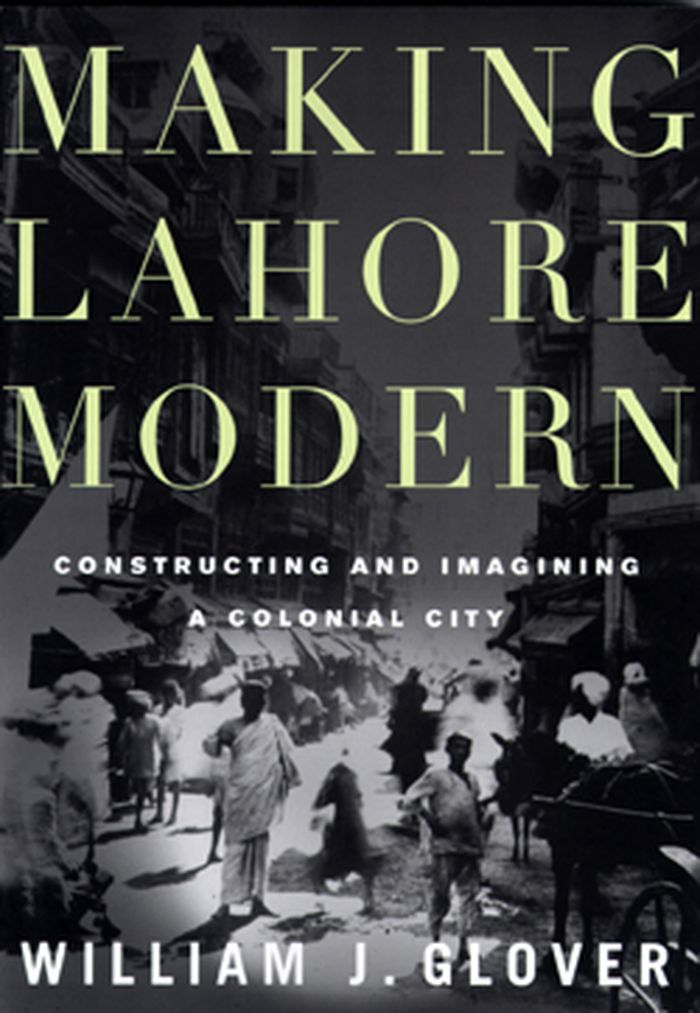
Making Lahore Modern: constructing and imagining a colonial city
Actions:
Price:
$38.00
(available to order)
Summary:
Fifty years after the British annexed the Punjab and made Lahore its provincial capital, the city—once a prosperous Mughal center that had long since fallen into ruin—was transformed. British and Indian officials had designed a modern, architecturally distinct city center adjacent to the old walled city, administered under new methods of urban governance. In Making Lahore Modern, William J. Glover investigates the traditions that shaped colonial Lahore. In particular, he focuses on the conviction that both British and Indian actors who implemented urbanization came to share: that the material fabric of the city could lead to social and moral improvement. This belief in the power of the physical environment to shape individual and collective sentiments, he argues, links the colonial history of Lahore to nineteenth-century urbanization around the world. Glover highlights three aspects of Lahore’s history that show this process unfolding. First, he examines the concepts through which the British understood the Indian city and envisioned its transformation. Second, through a detailed study of new buildings and the adaptation of existing structures, he explores the role of planning, design, and reuse. Finally, he analyzes the changes in urban imagination as evidenced in Indian writings on the city in this period. Throughout, Glover emphasizes that colonial urbanism was not simply imposed; it was a collaborative project between Indian citizens and the British. Offering an in-depth study of a single provincial city, Glover reveals that urban change in colonial India was not a monolithic process and establishes Lahore as a key site for understanding the genealogy of modern global urbanism. William J. Glover is associate professor of architecture at the University of Michigan.
Making Lahore Modern: constructing and imagining a colonial city
Actions:
Price:
$38.00
(available to order)
Summary:
Fifty years after the British annexed the Punjab and made Lahore its provincial capital, the city—once a prosperous Mughal center that had long since fallen into ruin—was transformed. British and Indian officials had designed a modern, architecturally distinct city center adjacent to the old walled city, administered under new methods of urban governance. In Making Lahore Modern, William J. Glover investigates the traditions that shaped colonial Lahore. In particular, he focuses on the conviction that both British and Indian actors who implemented urbanization came to share: that the material fabric of the city could lead to social and moral improvement. This belief in the power of the physical environment to shape individual and collective sentiments, he argues, links the colonial history of Lahore to nineteenth-century urbanization around the world. Glover highlights three aspects of Lahore’s history that show this process unfolding. First, he examines the concepts through which the British understood the Indian city and envisioned its transformation. Second, through a detailed study of new buildings and the adaptation of existing structures, he explores the role of planning, design, and reuse. Finally, he analyzes the changes in urban imagination as evidenced in Indian writings on the city in this period. Throughout, Glover emphasizes that colonial urbanism was not simply imposed; it was a collaborative project between Indian citizens and the British. Offering an in-depth study of a single provincial city, Glover reveals that urban change in colonial India was not a monolithic process and establishes Lahore as a key site for understanding the genealogy of modern global urbanism. William J. Glover is associate professor of architecture at the University of Michigan.
Form:
books
books
Publication:
January 1900, Miineapolis, London
January 1900, Miineapolis, London
Subject:
Urban Theory
Urban Theory
Form:
books
books
Actions:
Price:
$49.95
(available in store)
Summary:
Le schéma directeur de la région d'Île-de-France (SDRIF) a été approuvé récemment par le conseil régional. L'ambition annoncée par son président était de faire de l'Île-de-France «la première éco-région d'Europe». Île-de-France Environnement, fédération des associations de sauvegarde et de mise en valeur de l'environnement, a engagé une réflexion prospective, à l'horizon(...)
$49.95
(available in store)
Summary:
Le schéma directeur de la région d'Île-de-France (SDRIF) a été approuvé récemment par le conseil régional. L'ambition annoncée par son président était de faire de l'Île-de-France «la première éco-région d'Europe». Île-de-France Environnement, fédération des associations de sauvegarde et de mise en valeur de l'environnement, a engagé une réflexion prospective, à l'horizon(...)
Title:
L'éco-région d'île-de-France: une utopie constructive
Actions:
Price:
$49.95
(available in store)
Summary:
Le schéma directeur de la région d'Île-de-France (SDRIF) a été approuvé récemment par le conseil régional. L'ambition annoncée par son président était de faire de l'Île-de-France «la première éco-région d'Europe». Île-de-France Environnement, fédération des associations de sauvegarde et de mise en valeur de l'environnement, a engagé une réflexion prospective, à l'horizon 2050, sur ce que devrait être une telle éco-région. Une éco-région devra s'appuyer sur les trois éléments qui définissent un développement durable: une économie viable à long terme, une organisation sociale équitable, un environnement restauré. Elle sera économe en espace et en énergie (surtout en énergie fossile), réduisant (des trois quarts, soit 3% par an) ses émissions de polluants et de gaz à effet de serre. Cette éco-région sera solidaire (par réduction des inégalités sociales et spatiales), efficace (parce qu'elle fonctionnera bien et que la qualité de vie y sera élevée), propre (par réduction des émissions polluants et de gaz à effet de serre). Un tel avenir n'est certes pas le plus probable, mais ce n'est nullement une utopie: par la volonté conjuguée de ses habitants, de ses élus, de ses administrations et de ses entreprises, l'éco-région d'Île-de-France doit être une région où il fasse bon vivre et travailler, bref une région exemplaire. Ce rapport est le fruit d'une réflexion collective au sein des groupes de travail d'Île-de-France Environnement. Il a été rédigé par son ancien président, Pierre Merlin, qui est président de l'Institut d'urbanisme et d'aménagement de la Sorbonne et auteur d'une soixantaine d'ouvrages sur l'urbanisme, l'aménagement du territoire, les transports, la démographie, le tourisme... et le ski-alpinisme.
L'éco-région d'île-de-France: une utopie constructive
Actions:
Price:
$49.95
(available in store)
Summary:
Le schéma directeur de la région d'Île-de-France (SDRIF) a été approuvé récemment par le conseil régional. L'ambition annoncée par son président était de faire de l'Île-de-France «la première éco-région d'Europe». Île-de-France Environnement, fédération des associations de sauvegarde et de mise en valeur de l'environnement, a engagé une réflexion prospective, à l'horizon 2050, sur ce que devrait être une telle éco-région. Une éco-région devra s'appuyer sur les trois éléments qui définissent un développement durable: une économie viable à long terme, une organisation sociale équitable, un environnement restauré. Elle sera économe en espace et en énergie (surtout en énergie fossile), réduisant (des trois quarts, soit 3% par an) ses émissions de polluants et de gaz à effet de serre. Cette éco-région sera solidaire (par réduction des inégalités sociales et spatiales), efficace (parce qu'elle fonctionnera bien et que la qualité de vie y sera élevée), propre (par réduction des émissions polluants et de gaz à effet de serre). Un tel avenir n'est certes pas le plus probable, mais ce n'est nullement une utopie: par la volonté conjuguée de ses habitants, de ses élus, de ses administrations et de ses entreprises, l'éco-région d'Île-de-France doit être une région où il fasse bon vivre et travailler, bref une région exemplaire. Ce rapport est le fruit d'une réflexion collective au sein des groupes de travail d'Île-de-France Environnement. Il a été rédigé par son ancien président, Pierre Merlin, qui est président de l'Institut d'urbanisme et d'aménagement de la Sorbonne et auteur d'une soixantaine d'ouvrages sur l'urbanisme, l'aménagement du territoire, les transports, la démographie, le tourisme... et le ski-alpinisme.
Form:
books
books
Publication:
January 2007, Paris
January 2007, Paris
Subject:
Green Architecture
Green Architecture
Form:
books
books
Title:
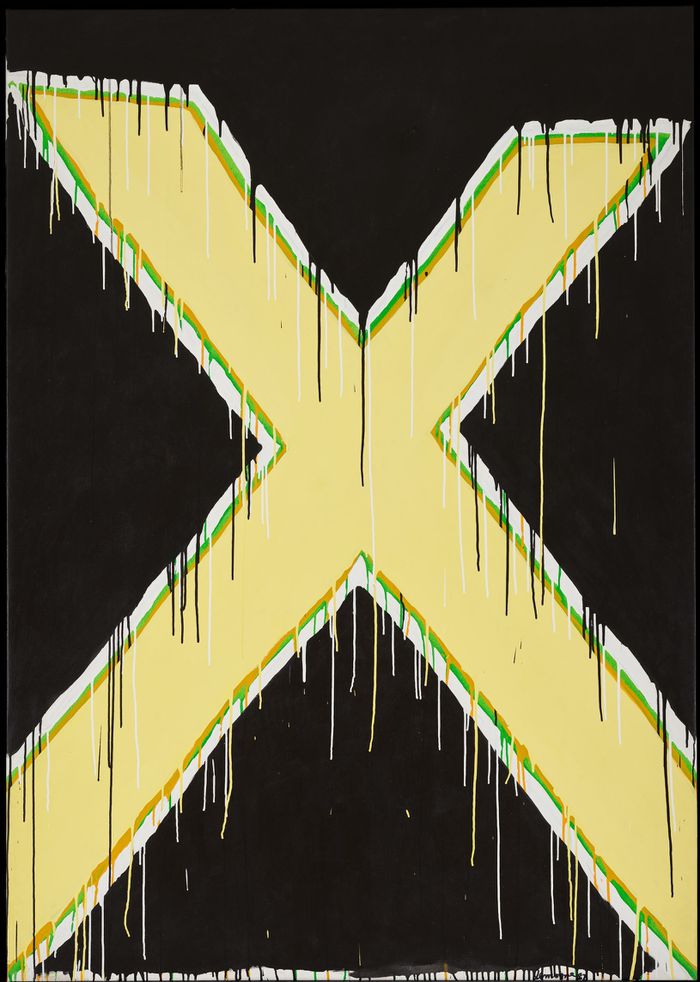
Lemoyne : Hors jeu
Lemoyne : Hors jeu
Actions:
Price:
$59.95
(available to order)
Summary:
Sous la direction d’Eve-Lyne Beaudry, conservatrice de l’art contemporain (1950-2000) du musée national des beaux-arts du Québec, ce livre de 280 pages, largement illustré, contient 5 essais, un entretien avec Ken Dryden et une chronologie détaillée qui n’avait, à ce jour, jamais été compilée. On dit de Serge Lemoyne (1941-1998) qu’il a ébranlé la scène artistique(...)
$59.95
(available to order)
Summary:
Sous la direction d’Eve-Lyne Beaudry, conservatrice de l’art contemporain (1950-2000) du musée national des beaux-arts du Québec, ce livre de 280 pages, largement illustré, contient 5 essais, un entretien avec Ken Dryden et une chronologie détaillée qui n’avait, à ce jour, jamais été compilée. On dit de Serge Lemoyne (1941-1998) qu’il a ébranlé la scène artistique(...)
Title:
Lemoyne : Hors jeu
Actions:
Price:
$59.95
(available to order)
Summary:
Sous la direction d’Eve-Lyne Beaudry, conservatrice de l’art contemporain (1950-2000) du musée national des beaux-arts du Québec, ce livre de 280 pages, largement illustré, contient 5 essais, un entretien avec Ken Dryden et une chronologie détaillée qui n’avait, à ce jour, jamais été compilée. On dit de Serge Lemoyne (1941-1998) qu’il a ébranlé la scène artistique québécoise et contribué de manière significative à une remise en question fondamentale du langage des arts visuels dans le Québec des années 1960, une période parmi les plus effervescentes de notre histoire de l’art. Instigateur des premiers happenings au Québec, à l’instar des artistes new-yorkais dont il admirait le travail, il adopte l’irrévérence esthétique que lui inspirent les Néo-dadaïstes, s’aventure dans l’univers « pop » et s’intéresse à l’art de participation et à la création collective. C’est avec conviction que, sa vie durant, il se porte à la défense de l’accessibilité de l’art pour tous et s’évertue à mieux faire reconnaître le travail des artistes visuels du Québec qu’il considérait comme laissés pour compte. Sa foi était grande envers l’art comme facteur d’émancipation sociale et comme élément fondateur d’une identité québécoise forte et rassembleuse. Si une part considérable de sa production s’est développée autour des éléments de son propre quotidien, il se plaisait aussi à explorer ce qui rassemblait les gens, pour rejoindre un pan plus vaste de la société et faire tomber certaines divisions : la représentation des héros nationaux du Canadien de Montréal – rare trait d’union entre les anglophones et les francophones de l’époque – permet de réunir, encore aujourd’hui, les diverses tranches de la société autour de l’appréciation des arts visuels.
Lemoyne : Hors jeu
Actions:
Price:
$59.95
(available to order)
Summary:
Sous la direction d’Eve-Lyne Beaudry, conservatrice de l’art contemporain (1950-2000) du musée national des beaux-arts du Québec, ce livre de 280 pages, largement illustré, contient 5 essais, un entretien avec Ken Dryden et une chronologie détaillée qui n’avait, à ce jour, jamais été compilée. On dit de Serge Lemoyne (1941-1998) qu’il a ébranlé la scène artistique québécoise et contribué de manière significative à une remise en question fondamentale du langage des arts visuels dans le Québec des années 1960, une période parmi les plus effervescentes de notre histoire de l’art. Instigateur des premiers happenings au Québec, à l’instar des artistes new-yorkais dont il admirait le travail, il adopte l’irrévérence esthétique que lui inspirent les Néo-dadaïstes, s’aventure dans l’univers « pop » et s’intéresse à l’art de participation et à la création collective. C’est avec conviction que, sa vie durant, il se porte à la défense de l’accessibilité de l’art pour tous et s’évertue à mieux faire reconnaître le travail des artistes visuels du Québec qu’il considérait comme laissés pour compte. Sa foi était grande envers l’art comme facteur d’émancipation sociale et comme élément fondateur d’une identité québécoise forte et rassembleuse. Si une part considérable de sa production s’est développée autour des éléments de son propre quotidien, il se plaisait aussi à explorer ce qui rassemblait les gens, pour rejoindre un pan plus vaste de la société et faire tomber certaines divisions : la représentation des héros nationaux du Canadien de Montréal – rare trait d’union entre les anglophones et les francophones de l’époque – permet de réunir, encore aujourd’hui, les diverses tranches de la société autour de l’appréciation des arts visuels.
Form:
books
books
Publication:
November 2021
November 2021
Subject:
Canadian art
Canadian art
Form:
books
books
Actions:
Holdings:
Description:
175 pages : illustrations (some color), maps (some color) ; 24 cm
Description:
175 pages : illustrations (some color), maps (some color) ; 24 cm
Author:
Subject:
Publication:
[Paris] : Mairie du XVIIe et Musée Carnavalet, 1986.
[Paris] : Mairie du XVIIe et Musée Carnavalet, 1986.
Title:
Des Ternes aux Batignolles : promenade historique dans le XVIIe arrondissement / ouvrage collectif présenté par la Délégation à l'action artistique de la ville de Paris, sous la direction de Alain Lemoine et Rodolphe Trouilleux.
Actions:
Holdings:
Description:
175 pages : illustrations (some color), maps (some color) ; 24 cm
Des Ternes aux Batignolles : promenade historique dans le XVIIe arrondissement / ouvrage collectif présenté par la Délégation à l'action artistique de la ville de Paris, sous la direction de Alain Lemoine et Rodolphe Trouilleux.
Actions:
Holdings:
Description:
175 pages : illustrations (some color), maps (some color) ; 24 cm
Form:
books
books
Publication:
[Paris] : Mairie du XVIIe et Musée Carnavalet, 1986.
[Paris] : Mairie du XVIIe et Musée Carnavalet, 1986.
Author:
Subject:
Form:
books
books
Actions:
Holdings:
Description:
350 pages : illustrations (chiefly color) ; 30 cm
Description:
350 pages : illustrations (chiefly color) ; 30 cm
Author:
Subject:
Publication:
Paris : Cité de l'architecture & du patrimoine ; Blou : Le Gac Press, [2013]
Paris : Cité de l'architecture & du patrimoine ; Blou : Le Gac Press, [2013]
Title:
Ricciotti architecte / ouvrage collectif sous la direction de Francis Rambert.
Actions:
Holdings:
Description:
350 pages : illustrations (chiefly color) ; 30 cm
Ricciotti architecte / ouvrage collectif sous la direction de Francis Rambert.
Actions:
Holdings:
Description:
350 pages : illustrations (chiefly color) ; 30 cm
Form:
books
books
Publication:
Paris : Cité de l'architecture & du patrimoine ; Blou : Le Gac Press, [2013]
Paris : Cité de l'architecture & du patrimoine ; Blou : Le Gac Press, [2013]
Author:
Subject:
Form:
journals and magazines
journals and magazines
Actions:
Price:
$45.00
(available to order)
Summary:
Lundi 2 octobre 2006, au matin. Bernard Arnaud, président de Louis Vuitton Moët Hennessy (LVMH), convoque toute la presse française et internationale avenue Montaigne, à Paris. En présence de ses partenaires publics, représentés par le ministre français de la Culture et le maire de Paris, Monsieur Arnaud annonce que Frank Gehry bâtira, sur une parcelle du Jardin(...)
$45.00
(available to order)
Summary:
Lundi 2 octobre 2006, au matin. Bernard Arnaud, président de Louis Vuitton Moët Hennessy (LVMH), convoque toute la presse française et internationale avenue Montaigne, à Paris. En présence de ses partenaires publics, représentés par le ministre français de la Culture et le maire de Paris, Monsieur Arnaud annonce que Frank Gehry bâtira, sur une parcelle du Jardin(...)
Title:
L'architecture d'aujourd'hui 367 : temporaire
Actions:
Price:
$45.00
(available to order)
Summary:
Lundi 2 octobre 2006, au matin. Bernard Arnaud, président de Louis Vuitton Moët Hennessy (LVMH), convoque toute la presse française et internationale avenue Montaigne, à Paris. En présence de ses partenaires publics, représentés par le ministre français de la Culture et le maire de Paris, Monsieur Arnaud annonce que Frank Gehry bâtira, sur une parcelle du Jardin d’acclimatation, un édifice qui accueillera la nouvelle Fondation Louis Vuitton. “Un rêve” s’exclame le maître d’ouvrage. “Un nuage tout en verre”, corrige l’architecte en regrettant publiquement qu’il ne puisse pas “bâtir ses croquis”. Le rêve nuageux, censé séduire et provoquer la curiosité, coûtera 100 millions d’euros. Il y a quarante ans Guy Debord écrivait : “Quand les pseudo-fêtes vulgarisées, parodies du dialogue et du don, incitent à un surplus de dépense économique, elles ne ramènent que la déception toujours compensée par la promesse d’une déception nouvelle. Le temps de la survie moderne doit, dans le spectacle, se vanter d’autant plus hautement que sa valeur d’usage s’est réduite.” Une fois édifiés, tous les rêves et les nuages se calcifient. Et lorsque l’attention du public est lassée, ces bâtisses passent à l’arrière-plan où elles devront affronter changements d’usage et opérations de reconversion. Aucune des œuvres présentées dans ce numéro n’a coûté 100 millions d’euros. Même pas une fraction de cette somme faramineuse. Prometteuses de l’intensité et de présence, elles se veulent fugitives, évanescentes, passagères ou temporaires. Elles assument, jusqu’au bout, la logique de notre temps. Elles sont spectaculaires, mais n’occupent leurs terrains que sur une courte durée. Elles sont, selon une formule de l’agence Kühn Malvezzi, des “monuments momentanés”. Architectures du désir, elles ont su remporter une adhésion spontanée et il est fort probable qu’elles se gravent durablement dans la mémoire collective.
L'architecture d'aujourd'hui 367 : temporaire
Actions:
Price:
$45.00
(available to order)
Summary:
Lundi 2 octobre 2006, au matin. Bernard Arnaud, président de Louis Vuitton Moët Hennessy (LVMH), convoque toute la presse française et internationale avenue Montaigne, à Paris. En présence de ses partenaires publics, représentés par le ministre français de la Culture et le maire de Paris, Monsieur Arnaud annonce que Frank Gehry bâtira, sur une parcelle du Jardin d’acclimatation, un édifice qui accueillera la nouvelle Fondation Louis Vuitton. “Un rêve” s’exclame le maître d’ouvrage. “Un nuage tout en verre”, corrige l’architecte en regrettant publiquement qu’il ne puisse pas “bâtir ses croquis”. Le rêve nuageux, censé séduire et provoquer la curiosité, coûtera 100 millions d’euros. Il y a quarante ans Guy Debord écrivait : “Quand les pseudo-fêtes vulgarisées, parodies du dialogue et du don, incitent à un surplus de dépense économique, elles ne ramènent que la déception toujours compensée par la promesse d’une déception nouvelle. Le temps de la survie moderne doit, dans le spectacle, se vanter d’autant plus hautement que sa valeur d’usage s’est réduite.” Une fois édifiés, tous les rêves et les nuages se calcifient. Et lorsque l’attention du public est lassée, ces bâtisses passent à l’arrière-plan où elles devront affronter changements d’usage et opérations de reconversion. Aucune des œuvres présentées dans ce numéro n’a coûté 100 millions d’euros. Même pas une fraction de cette somme faramineuse. Prometteuses de l’intensité et de présence, elles se veulent fugitives, évanescentes, passagères ou temporaires. Elles assument, jusqu’au bout, la logique de notre temps. Elles sont spectaculaires, mais n’occupent leurs terrains que sur une courte durée. Elles sont, selon une formule de l’agence Kühn Malvezzi, des “monuments momentanés”. Architectures du désir, elles ont su remporter une adhésion spontanée et il est fort probable qu’elles se gravent durablement dans la mémoire collective.
Form:
journals and magazines
journals and magazines
Publication:
January 2007, Paris
January 2007, Paris
Subject:
Magazines
Magazines
Form:
books
books
Price:
$59.99
(available to order)
Summary:
Featuring 40 essays by U.S. and European historians, designers, cultural critics, geographers and social scientists, illustrated with over 250 color images in extensive visual "gazetteers" — including specially-commissioned portfolios by artists and designers — "Else/where mapping" investigates : how new technologies of navigation and location are emerging to chart(...)
$59.99
(available to order)
Summary:
Featuring 40 essays by U.S. and European historians, designers, cultural critics, geographers and social scientists, illustrated with over 250 color images in extensive visual "gazetteers" — including specially-commissioned portfolios by artists and designers — "Else/where mapping" investigates : how new technologies of navigation and location are emerging to chart(...)
Subject:
Architectural Plans and Cartography
Architectural Plans and Cartography
Publication:
October 2005, Minneapolis
October 2005, Minneapolis
Title:
Else/where : mapping new cartographies of networks and territories
Actions:
Price:
$59.99
(available to order)
Summary:
Featuring 40 essays by U.S. and European historians, designers, cultural critics, geographers and social scientists, illustrated with over 250 color images in extensive visual "gazetteers" — including specially-commissioned portfolios by artists and designers — "Else/where mapping" investigates : how new technologies of navigation and location are emerging to chart "virtual" terrain such as social networks and online conversations; how these new mapping strategies borrow and reinvent metaphors adapted from the cartography of physical terrain, considered at various scales — urban, regional, continental, global ; how new modes of representation of spatial data are evolving to explore the potential for collective "bottom-up" (rather than "top-down") mapping ; how cities, communities and social networks are being re-envisioned, as artists and designers use technologies such as GPS, GIS and digital interface design to devise alternative mappings of social and spatial relationships. Authors : Janet Abrams, Ole Bouman, Andrea Codrington, Denis Cosgrove, Steve Dietz, Paul Elliman, Yuri Engelhardt, Peter Hall, Brian Holmes, J.J. King, Cathy Lang Ho, Andrea Moed, David Pescovitz, Rebecca Ross, Ben Schouten, Alex Terzich, Alice Twemlow, Dirk van Weelden, Tom Vanderbilt, Peter Walsh and Stephen Zacks. Featured artists and designers included : Antenna Design New York, Julian Bleecker, Bureau d'Etudes, Sulki Choi, Layla Curtis, Judith Donath, Entropy8Zuper!, Michael Frumin, Ben Fry, De Geuzen, govcom.org, Marti Guixe, Mark Hansen, Robert Horn, Natalie Jeremijenko, Lisa Jevbratt, Nina Katchadourian, Valdis Krebs, Laura Kurgan, Mark Lombardi, The London Particular, Lumeta.org, Barrett Lyon, Brian McGrath, Julie Mehretu, Paul Mijksenaar, Sigi Moeslinger, MUST Architects, MVRDV, Josh On, W. Bradford Paley, Scott Paterson, Esther Polak, Richard Rogers, Ben Rubin, Warren Sack, Mike Silver, Marco Susani, Terraswarm, UN Studio, Urban Tapestries, Waag Society for Old and New Media, Ronald Wall, Kimberlee Whaley, Jeremy Wood and Marina Zurkow. Book design : Deborah Littlejohn.
Else/where : mapping new cartographies of networks and territories
Actions:
Price:
$59.99
(available to order)
Summary:
Featuring 40 essays by U.S. and European historians, designers, cultural critics, geographers and social scientists, illustrated with over 250 color images in extensive visual "gazetteers" — including specially-commissioned portfolios by artists and designers — "Else/where mapping" investigates : how new technologies of navigation and location are emerging to chart "virtual" terrain such as social networks and online conversations; how these new mapping strategies borrow and reinvent metaphors adapted from the cartography of physical terrain, considered at various scales — urban, regional, continental, global ; how new modes of representation of spatial data are evolving to explore the potential for collective "bottom-up" (rather than "top-down") mapping ; how cities, communities and social networks are being re-envisioned, as artists and designers use technologies such as GPS, GIS and digital interface design to devise alternative mappings of social and spatial relationships. Authors : Janet Abrams, Ole Bouman, Andrea Codrington, Denis Cosgrove, Steve Dietz, Paul Elliman, Yuri Engelhardt, Peter Hall, Brian Holmes, J.J. King, Cathy Lang Ho, Andrea Moed, David Pescovitz, Rebecca Ross, Ben Schouten, Alex Terzich, Alice Twemlow, Dirk van Weelden, Tom Vanderbilt, Peter Walsh and Stephen Zacks. Featured artists and designers included : Antenna Design New York, Julian Bleecker, Bureau d'Etudes, Sulki Choi, Layla Curtis, Judith Donath, Entropy8Zuper!, Michael Frumin, Ben Fry, De Geuzen, govcom.org, Marti Guixe, Mark Hansen, Robert Horn, Natalie Jeremijenko, Lisa Jevbratt, Nina Katchadourian, Valdis Krebs, Laura Kurgan, Mark Lombardi, The London Particular, Lumeta.org, Barrett Lyon, Brian McGrath, Julie Mehretu, Paul Mijksenaar, Sigi Moeslinger, MUST Architects, MVRDV, Josh On, W. Bradford Paley, Scott Paterson, Esther Polak, Richard Rogers, Ben Rubin, Warren Sack, Mike Silver, Marco Susani, Terraswarm, UN Studio, Urban Tapestries, Waag Society for Old and New Media, Ronald Wall, Kimberlee Whaley, Jeremy Wood and Marina Zurkow. Book design : Deborah Littlejohn.
Form:
books
books
Publication:
October 2005, Minneapolis
October 2005, Minneapolis
Subject:
Architectural Plans and Cartography
Architectural Plans and Cartography
Form:
books
books
Actions:
Price:
$39.95
(available to order)
Summary:
This publication is based on a thesis that studies global mobility and territories in dispersion. Based in Rotterdam, Diego Barajas concentrates his research on the urban dispersals shaped by migration, looking first at the Cape Verdean Diaspora and its territorial structure, and then focused on the case of the 'belhuis' - 'call-house'. By 'territories in dispersion',(...)
$39.95
(available to order)
Summary:
This publication is based on a thesis that studies global mobility and territories in dispersion. Based in Rotterdam, Diego Barajas concentrates his research on the urban dispersals shaped by migration, looking first at the Cape Verdean Diaspora and its territorial structure, and then focused on the case of the 'belhuis' - 'call-house'. By 'territories in dispersion',(...)
Title:
Dispersion : a study of global mobility and the dynamics of a fictional urbanism
Actions:
Price:
$39.95
(available to order)
Summary:
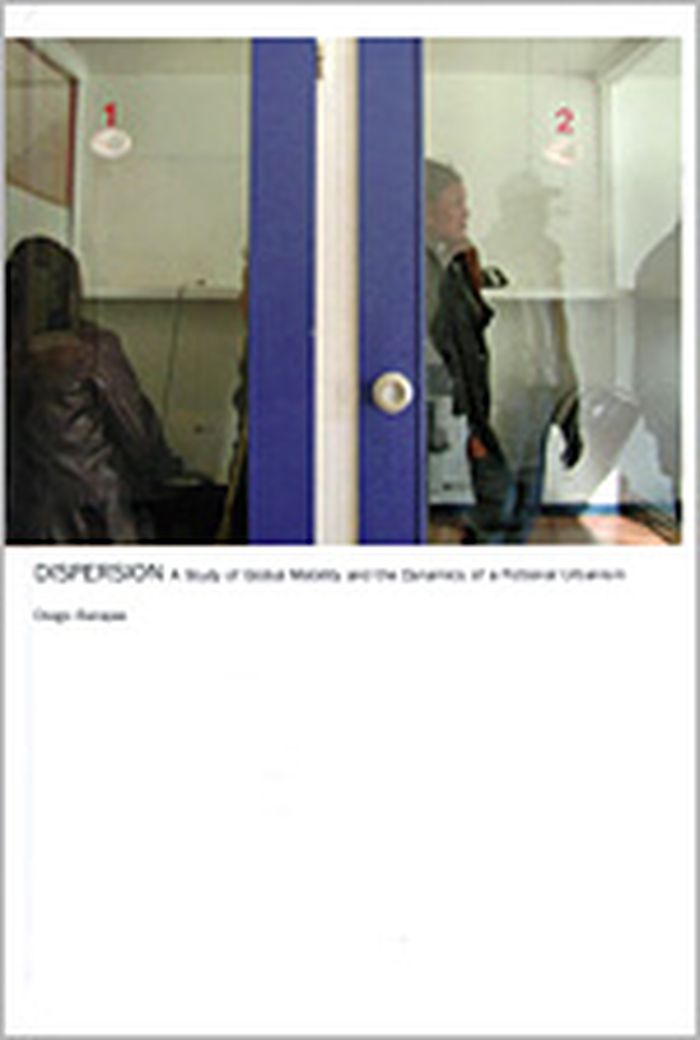
This publication is based on a thesis that studies global mobility and territories in dispersion. Based in Rotterdam, Diego Barajas concentrates his research on the urban dispersals shaped by migration, looking first at the Cape Verdean Diaspora and its territorial structure, and then focused on the case of the 'belhuis' - 'call-house'. By 'territories in dispersion', Barajas refers to social habitats that are no longer physically contained in geographically continuous areas, but have been spread out and re-articulated by artificial means. The de-territorialized condition created by increased mobility - particularly by migration - had led to an urbanism of artificial re-territorializaton. This is a functional urbanism - as based on mental constructions but tangible - that is manifested in the city as fragments, micro environments of global circuits, each of which establishes its own identity, time, rules and aesthetics - its own atmospheres. These fragments are globally connected and articulated by abstract infrastructures like telecommunication systems, as much as by physical places - ethnic shops, religious centers, et cetera - and by the imaginary and idealized realms through which dispersed societies operate. This is an urbanism ruled by traditional values, by intuitive and emotional forces, as much by efficiency and functionality. This research argues that as patterns of dispersion intensify, they generate not just fragmented societies, but a new territorial cohesion - a realm in which 'the collective' has gained a new dimension. Cultural identity is no longer necessarily linked to geographical place, or to traditional territorial structures like the nation-state, but has become a particular concept attached to individual imaginations though subjected to and conditioned by the contradictory pressures of self-determination and commoditization. This research is an attempt to trace the patterns of urban dispersals shaped by migration to the city of Rotterdam. A city whose harbour has made it one of the most concentrated points of settlement for Cape Verdean emigrants.
Dispersion : a study of global mobility and the dynamics of a fictional urbanism
Actions:
Price:
$39.95
(available to order)
Summary:
This publication is based on a thesis that studies global mobility and territories in dispersion. Based in Rotterdam, Diego Barajas concentrates his research on the urban dispersals shaped by migration, looking first at the Cape Verdean Diaspora and its territorial structure, and then focused on the case of the 'belhuis' - 'call-house'. By 'territories in dispersion', Barajas refers to social habitats that are no longer physically contained in geographically continuous areas, but have been spread out and re-articulated by artificial means. The de-territorialized condition created by increased mobility - particularly by migration - had led to an urbanism of artificial re-territorializaton. This is a functional urbanism - as based on mental constructions but tangible - that is manifested in the city as fragments, micro environments of global circuits, each of which establishes its own identity, time, rules and aesthetics - its own atmospheres. These fragments are globally connected and articulated by abstract infrastructures like telecommunication systems, as much as by physical places - ethnic shops, religious centers, et cetera - and by the imaginary and idealized realms through which dispersed societies operate. This is an urbanism ruled by traditional values, by intuitive and emotional forces, as much by efficiency and functionality. This research argues that as patterns of dispersion intensify, they generate not just fragmented societies, but a new territorial cohesion - a realm in which 'the collective' has gained a new dimension. Cultural identity is no longer necessarily linked to geographical place, or to traditional territorial structures like the nation-state, but has become a particular concept attached to individual imaginations though subjected to and conditioned by the contradictory pressures of self-determination and commoditization. This research is an attempt to trace the patterns of urban dispersals shaped by migration to the city of Rotterdam. A city whose harbour has made it one of the most concentrated points of settlement for Cape Verdean emigrants.
Form:
books
books
Publication:
May 2003, Rotterdam
May 2003, Rotterdam
Subject:
Urban Theory
Urban Theory
Form:
books
books
Actions:
Price:
$39.00
(available to order)
Summary:
The present volume offers eloquent testimony that many of the master builders of this century have held passionate convictions regarding the philosophic and social basis of their art. Nearly every important development in the modern architectural movement began with the proclamation of these convictions in the form of a program or manifesto. The most influential of these(...)
$39.00
(available to order)
Summary:
The present volume offers eloquent testimony that many of the master builders of this century have held passionate convictions regarding the philosophic and social basis of their art. Nearly every important development in the modern architectural movement began with the proclamation of these convictions in the form of a program or manifesto. The most influential of these(...)
Subject:
Architectural Theory
Architectural Theory
Publication:
January 1975, Cambridge, Massachusetts
January 1975, Cambridge, Massachusetts
Title:
Programs and manifestos of 20th-century architecture
Actions:
Price:
$39.00
(available to order)
Summary:
The present volume offers eloquent testimony that many of the master builders of this century have held passionate convictions regarding the philosophic and social basis of their art. Nearly every important development in the modern architectural movement began with the proclamation of these convictions in the form of a program or manifesto. The most influential of these are collected here in chronological order from 1903 to 1963. Taken together, they constitute a subjective history of modern architecture; compared with one another, their great diversity of style reveals in many cases the basic differences of attitude and temperament that produced a corresponding divergence in architectural style. The documents, placed in context by the editor, are also international in their range: among them are the seminal and prophetic statements of Henry van de Velde, Adolf Loos, and Bruno Taut from the early years of the century; Frank Lloyd Wright's 1910 annunciation of Organic Architecture; Gropius's original program for the Bauhaus, founded in Weimar in 1919; "Towards a New Architecture, Guiding Principles" by Le Corbusier; the formulation by Naum Gabo and Antoine Pevsner of the basic principles of Constructivism; and articles by R. Buckminster Fuller on universal architecture and the architect as world planner. Other pronouncements, some in flamboyant style, including those of Erich Mendelsohn, Hannes Meyer, Theo van Doesburg, Oskar Schlemmer, Ludwig Mies van der Rohe, El Lissitzky, and Louis I. Kahn. There are also a number of collective or group statements, issued in the name of movements such as CIAM, De Stijl, ABC, the Situationists, and GEAM.Since the dramatic effectiveness of the manifesto form is usually heightened by brevity and conciseness, it has been possible to reproduce most of the documents in their entirety; only a few have been excerpted.
Programs and manifestos of 20th-century architecture
Actions:
Price:
$39.00
(available to order)
Summary:
The present volume offers eloquent testimony that many of the master builders of this century have held passionate convictions regarding the philosophic and social basis of their art. Nearly every important development in the modern architectural movement began with the proclamation of these convictions in the form of a program or manifesto. The most influential of these are collected here in chronological order from 1903 to 1963. Taken together, they constitute a subjective history of modern architecture; compared with one another, their great diversity of style reveals in many cases the basic differences of attitude and temperament that produced a corresponding divergence in architectural style. The documents, placed in context by the editor, are also international in their range: among them are the seminal and prophetic statements of Henry van de Velde, Adolf Loos, and Bruno Taut from the early years of the century; Frank Lloyd Wright's 1910 annunciation of Organic Architecture; Gropius's original program for the Bauhaus, founded in Weimar in 1919; "Towards a New Architecture, Guiding Principles" by Le Corbusier; the formulation by Naum Gabo and Antoine Pevsner of the basic principles of Constructivism; and articles by R. Buckminster Fuller on universal architecture and the architect as world planner. Other pronouncements, some in flamboyant style, including those of Erich Mendelsohn, Hannes Meyer, Theo van Doesburg, Oskar Schlemmer, Ludwig Mies van der Rohe, El Lissitzky, and Louis I. Kahn. There are also a number of collective or group statements, issued in the name of movements such as CIAM, De Stijl, ABC, the Situationists, and GEAM.Since the dramatic effectiveness of the manifesto form is usually heightened by brevity and conciseness, it has been possible to reproduce most of the documents in their entirety; only a few have been excerpted.
Form:
books
books
Publication:
January 1975, Cambridge, Massachusetts
January 1975, Cambridge, Massachusetts
Subject:
Architectural Theory
Architectural Theory
Form:
books
books
Price:
$20.00
(available in store)
Summary:
Subsidy is the title of an intervention and three week displacement enacted by the artist during his year-long residency at the Künstlerhaus Bethanien in Berlin. The artist used the complete funds allotted for his exhibition budget (€3.000) to compensate the normally unpaid interns who work in the KB offices. The artist compensated the interns whose time coincided with(...)
$20.00
(available in store)
Summary:
Subsidy is the title of an intervention and three week displacement enacted by the artist during his year-long residency at the Künstlerhaus Bethanien in Berlin. The artist used the complete funds allotted for his exhibition budget (€3.000) to compensate the normally unpaid interns who work in the KB offices. The artist compensated the interns whose time coincided with(...)
Title:
Subsidy
Actions:
Price:
$20.00
(available in store)
Summary:
Subsidy is the title of an intervention and three week displacement enacted by the artist during his year-long residency at the Künstlerhaus Bethanien in Berlin. The artist used the complete funds allotted for his exhibition budget (€3.000) to compensate the normally unpaid interns who work in the KB offices. The artist compensated the interns whose time coincided with his year in residence. A total of seven interns were paid for their work in the KB office.
Subsidy
Actions:
Price:
$20.00
(available in store)
Summary:
Subsidy is the title of an intervention and three week displacement enacted by the artist during his year-long residency at the Künstlerhaus Bethanien in Berlin. The artist used the complete funds allotted for his exhibition budget (€3.000) to compensate the normally unpaid interns who work in the KB offices. The artist compensated the interns whose time coincided with his year in residence. A total of seven interns were paid for their work in the KB office.
Form:
books
books
Publication:
February 2016
February 2016
Subject:
Canadian art
Canadian art


