


4371 Results
Form:
books
books
Title:
Public photographic spaces, exhibitions of propaganda, from Pressa to the family of man, 1928-55
Public photographic spaces, exhibitions of propaganda, from Pressa to the family of man, 1928-55
Actions:
Price:
$86.95
(available to order)
Summary:
This book focuses from a chronological perspective on photography as a tool for a new visuality and the rupture of the role of the spectator: photographic exhibitions from 1928 to 1955, from the spaces designed by Lissitzky's to The Family of Man; the trajectory of utopian architectural-photographic space and from post-Revolutionary Russia to America during the Cold War.(...)
$86.95
(available to order)
Summary:
This book focuses from a chronological perspective on photography as a tool for a new visuality and the rupture of the role of the spectator: photographic exhibitions from 1928 to 1955, from the spaces designed by Lissitzky's to The Family of Man; the trajectory of utopian architectural-photographic space and from post-Revolutionary Russia to America during the Cold War.(...)
Title:
Public photographic spaces, exhibitions of propaganda, from Pressa to the family of man, 1928-55
Actions:
Price:
$86.95
(available to order)
Summary:
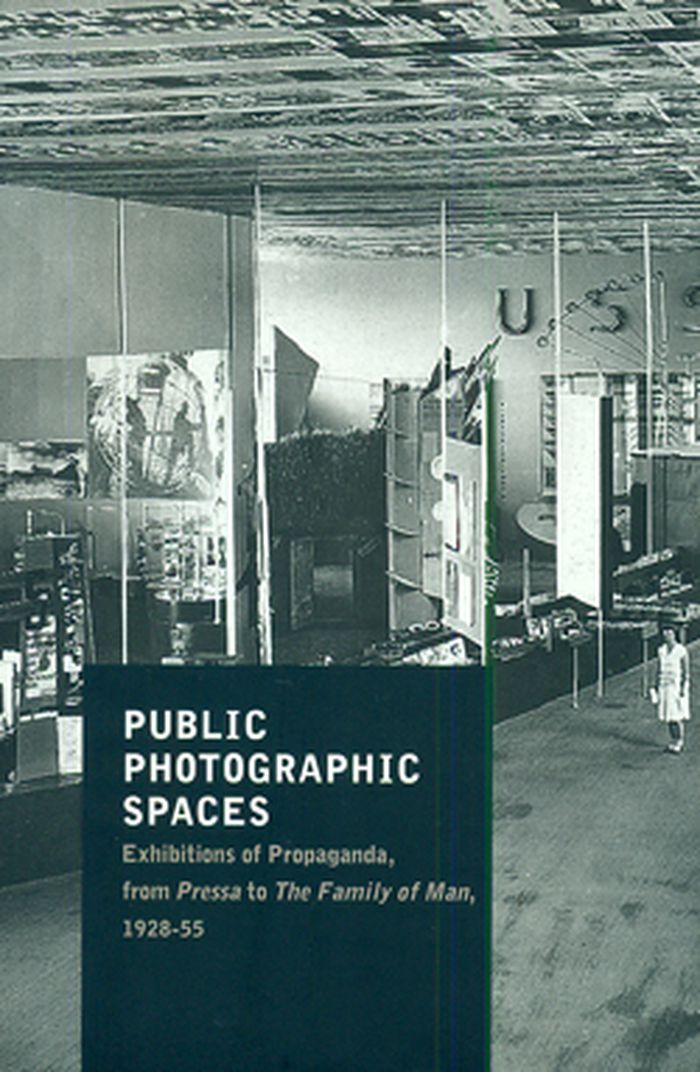
This book focuses from a chronological perspective on photography as a tool for a new visuality and the rupture of the role of the spectator: photographic exhibitions from 1928 to 1955, from the spaces designed by Lissitzky's to The Family of Man; the trajectory of utopian architectural-photographic space and from post-Revolutionary Russia to America during the Cold War. This space documents the exhibitions designed by Lissitzky (Pressa, Film und Foto, etc); German, Italian and Spanish exhibitions in the 1930s, and exhibitions in MOMA during the Second World War.
Public photographic spaces, exhibitions of propaganda, from Pressa to the family of man, 1928-55
Actions:
Price:
$86.95
(available to order)
Summary:
This book focuses from a chronological perspective on photography as a tool for a new visuality and the rupture of the role of the spectator: photographic exhibitions from 1928 to 1955, from the spaces designed by Lissitzky's to The Family of Man; the trajectory of utopian architectural-photographic space and from post-Revolutionary Russia to America during the Cold War. This space documents the exhibitions designed by Lissitzky (Pressa, Film und Foto, etc); German, Italian and Spanish exhibitions in the 1930s, and exhibitions in MOMA during the Second World War.
Form:
books
books
Publication:
June 2009
June 2009
Subject:
Museums and Universal Exhibitions
Museums and Universal Exhibitions
Form:
books
books
Title:
Barbara Kasten: stages
Barbara Kasten: stages
Actions:
Price:
$59.95
(available to order)
Summary:
Since the 1970s, Chicago-based artist Barbara Kasten (born 1936) has developed her expansive practice of photography through the lens of many disciplines, including sculpture, painting, theater, textile and installation. Kasten was one of the first artists to be invited by Polaroid to use its new large-format film, and it was with this that she made many of her best-known(...)
$59.95
(available to order)
Summary:
Since the 1970s, Chicago-based artist Barbara Kasten (born 1936) has developed her expansive practice of photography through the lens of many disciplines, including sculpture, painting, theater, textile and installation. Kasten was one of the first artists to be invited by Polaroid to use its new large-format film, and it was with this that she made many of her best-known(...)
Title:
Barbara Kasten: stages
Actions:
Price:
$59.95
(available to order)
Summary:
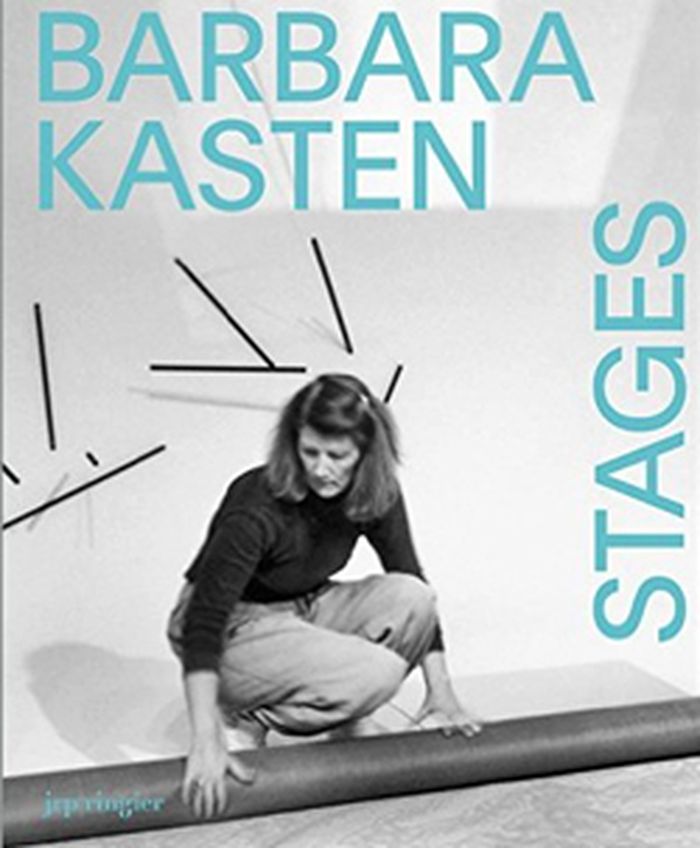
Since the 1970s, Chicago-based artist Barbara Kasten (born 1936) has developed her expansive practice of photography through the lens of many disciplines, including sculpture, painting, theater, textile and installation. Kasten was one of the first artists to be invited by Polaroid to use its new large-format film, and it was with this that she made many of her best-known works. In the mid-1980s she stepped out of the studio and began working with large architectural spaces that were symbolic of both economic and cultural capital.
Barbara Kasten: stages
Actions:
Price:
$59.95
(available to order)
Summary:
Since the 1970s, Chicago-based artist Barbara Kasten (born 1936) has developed her expansive practice of photography through the lens of many disciplines, including sculpture, painting, theater, textile and installation. Kasten was one of the first artists to be invited by Polaroid to use its new large-format film, and it was with this that she made many of her best-known works. In the mid-1980s she stepped out of the studio and began working with large architectural spaces that were symbolic of both economic and cultural capital.
Form:
books
books
Publication:
June 2015
June 2015
Subject:
Contemporary Art Monographs
Contemporary Art Monographs
Form:
books
books
Actions:
Price:
$43.95
(available to order)
Summary:
Why do we have such extraordinarily powerful responses toward the images and pictures we see in everyday life? Why do we behave as if pictures were alive, possessing the power to influence us, to demand things from us, to persuade us, seduce us, or even lead us astray? According to W. J. T. Mitchell, we need to reckon with images not just as inert objects that convey(...)
$43.95
(available to order)
Summary:
Why do we have such extraordinarily powerful responses toward the images and pictures we see in everyday life? Why do we behave as if pictures were alive, possessing the power to influence us, to demand things from us, to persuade us, seduce us, or even lead us astray? According to W. J. T. Mitchell, we need to reckon with images not just as inert objects that convey(...)
Title:
What do pictures want? : the lives and loves of images
Actions:
Price:
$43.95
(available to order)
Summary:
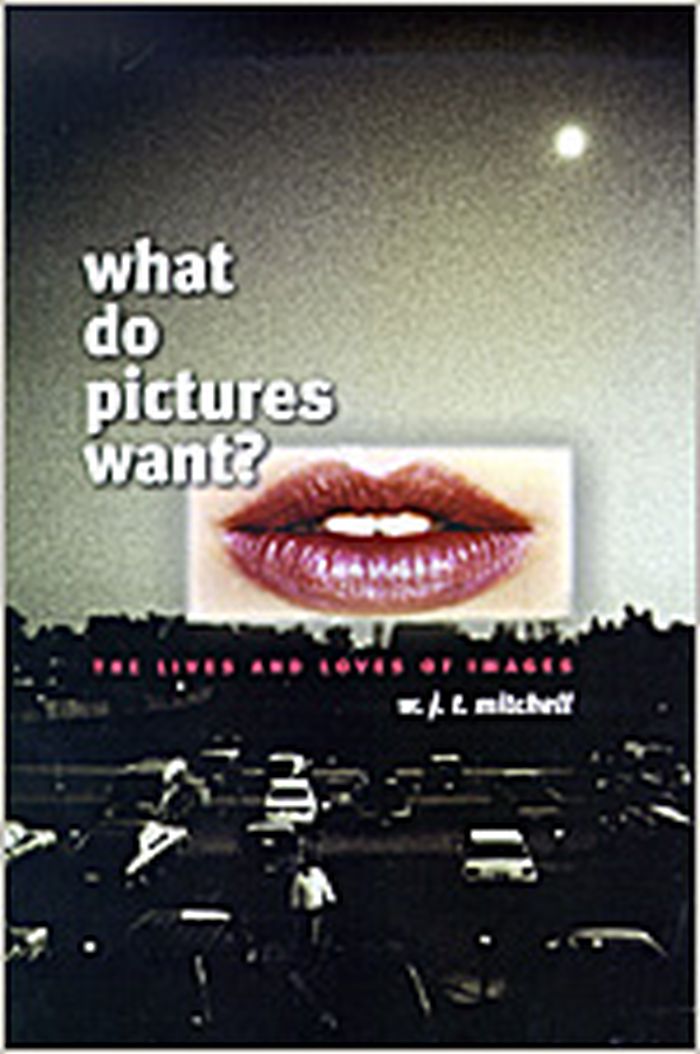
Why do we have such extraordinarily powerful responses toward the images and pictures we see in everyday life? Why do we behave as if pictures were alive, possessing the power to influence us, to demand things from us, to persuade us, seduce us, or even lead us astray? According to W. J. T. Mitchell, we need to reckon with images not just as inert objects that convey meaning but as animated beings with desires, needs, appetites, demands, and drives of their own. "What Do Pictures Want?" explores this idea and highlights Mitchell's innovative and profoundly influential thinking on picture theory and the lives and loves of images. Ranging across the visual arts, literature, and mass media, Mitchell applies characteristically brilliant and wry analyses to Byzantine icons and cyberpunk films, racial stereotypes and public monuments, ancient idols and modern clones, offensive images and found objects, American photography and aboriginal painting. Opening new vistas in iconology and the emergent field of visual culture, he also considers the importance of Dolly the Sheep - who, as a clone, fulfills the ancient dream of creating a living image - and the destruction of the World Trade Center on 9/11, which, among other things, signifies a new and virulent form of iconoclasm. "What Do Pictures Want?" offers an immensely rich and suggestive account of the interplay between the visible and the readable. A work by one of our leading theorists of visual representation, it will be a touchstone for art historians, literary critics, anthropologists, and philosophers alike.
What do pictures want? : the lives and loves of images
Actions:
Price:
$43.95
(available to order)
Summary:
Why do we have such extraordinarily powerful responses toward the images and pictures we see in everyday life? Why do we behave as if pictures were alive, possessing the power to influence us, to demand things from us, to persuade us, seduce us, or even lead us astray? According to W. J. T. Mitchell, we need to reckon with images not just as inert objects that convey meaning but as animated beings with desires, needs, appetites, demands, and drives of their own. "What Do Pictures Want?" explores this idea and highlights Mitchell's innovative and profoundly influential thinking on picture theory and the lives and loves of images. Ranging across the visual arts, literature, and mass media, Mitchell applies characteristically brilliant and wry analyses to Byzantine icons and cyberpunk films, racial stereotypes and public monuments, ancient idols and modern clones, offensive images and found objects, American photography and aboriginal painting. Opening new vistas in iconology and the emergent field of visual culture, he also considers the importance of Dolly the Sheep - who, as a clone, fulfills the ancient dream of creating a living image - and the destruction of the World Trade Center on 9/11, which, among other things, signifies a new and virulent form of iconoclasm. "What Do Pictures Want?" offers an immensely rich and suggestive account of the interplay between the visible and the readable. A work by one of our leading theorists of visual representation, it will be a touchstone for art historians, literary critics, anthropologists, and philosophers alike.
Form:
books
books
Publication:
June 2005, Chicago
June 2005, Chicago
Subject:
Architectural Theory
Architectural Theory
Form:
books
books
Price:
$49.95
(available to order)
Summary:
"Suspensions of Perception" is a major historical study of human attention and its volatile role in modern Western culture. It argues that the ways in which we intently look at or listen to anything result from crucial changes in the nature of perception that can be traced back to(...)
$49.95
(available to order)
Summary:
"Suspensions of Perception" is a major historical study of human attention and its volatile role in modern Western culture. It argues that the ways in which we intently look at or listen to anything result from crucial changes in the nature of perception that can be traced back to(...)
Title:
Suspensions of perception: attention, spectacle, and modern culture
Actions:
Price:
$49.95
(available to order)
Summary:
"Suspensions of Perception" is a major historical study of human attention and its volatile role in modern Western culture. It argues that the ways in which we intently look at or listen to anything result from crucial changes in the nature of perception that can be traced back to the second half of the nineteenth century. Focusing on the period from about 1880 to 1905, Jonathan Crary examines the connections between the modernization of subjectivity and the dramatic expansion and industrialization of visual/auditory culture. At the core of his project is the paradoxical nature of modern attention, which was both a fundamental condition of individual freedom, creativity, and experience and a central element in the efficient functioning of economic and disciplinary institutions as well as the emerging spaces of mass consumption and spectacle. Crary approaches these issues through multiple analyses of single works by three key modernist painters--Manet, Seurat, and Cézanne--who each engaged in a singular confrontation with the disruptions, vacancies, and rifts within a perceptual field. Each in his own way discovered that sustained attentiveness, rather than fixing or securing the world, led to perceptual disintegration and loss of presence, and each used this discovery as the basis for a reinvention of representational practices. Suspensions of Perception decisively relocates the problem of aesthetic contemplation within a broader collective encounter with the unstable nature of perception--in psychology, philosophy, neurology, early cinema, and photography. In doing so, it provides a historical framework for understanding the current social crisis of attention amid the accelerating metamorphoses of our contemporary technological culture.
Suspensions of perception: attention, spectacle, and modern culture
Actions:
Price:
$49.95
(available to order)
Summary:
"Suspensions of Perception" is a major historical study of human attention and its volatile role in modern Western culture. It argues that the ways in which we intently look at or listen to anything result from crucial changes in the nature of perception that can be traced back to the second half of the nineteenth century. Focusing on the period from about 1880 to 1905, Jonathan Crary examines the connections between the modernization of subjectivity and the dramatic expansion and industrialization of visual/auditory culture. At the core of his project is the paradoxical nature of modern attention, which was both a fundamental condition of individual freedom, creativity, and experience and a central element in the efficient functioning of economic and disciplinary institutions as well as the emerging spaces of mass consumption and spectacle. Crary approaches these issues through multiple analyses of single works by three key modernist painters--Manet, Seurat, and Cézanne--who each engaged in a singular confrontation with the disruptions, vacancies, and rifts within a perceptual field. Each in his own way discovered that sustained attentiveness, rather than fixing or securing the world, led to perceptual disintegration and loss of presence, and each used this discovery as the basis for a reinvention of representational practices. Suspensions of Perception decisively relocates the problem of aesthetic contemplation within a broader collective encounter with the unstable nature of perception--in psychology, philosophy, neurology, early cinema, and photography. In doing so, it provides a historical framework for understanding the current social crisis of attention amid the accelerating metamorphoses of our contemporary technological culture.
Form:
books
books
Publication:
August 2001, Cambridge
August 2001, Cambridge
Subject:
Architectural Theory
Architectural Theory
Form:
books
books
Price:
$59.95
(available to order)
Summary:
"Suspensions of Perception" is a major historical study of human attention and its volatile role in modern Western culture. It argues that the ways in which we intently look at or listen to anything result from crucial changes in the nature of perception that can be traced back to(...)
$59.95
(available to order)
Summary:
"Suspensions of Perception" is a major historical study of human attention and its volatile role in modern Western culture. It argues that the ways in which we intently look at or listen to anything result from crucial changes in the nature of perception that can be traced back to(...)
Title:
Suspensions of perception : attention, spectacle, and modern culture
Actions:
Price:
$59.95
(available to order)
Summary:
"Suspensions of Perception" is a major historical study of human attention and its volatile role in modern Western culture. It argues that the ways in which we intently look at or listen to anything result from crucial changes in the nature of perception that can be traced back to the second half of the nineteenth century. Focusing on the period from about 1880 to 1905, Jonathan Crary examines the connections between the modernization of subjectivity and the dramatic expansion and industrialization of visual/auditory culture. At the core of his project is the paradoxical nature of modern attention, which was both a fundamental condition of individual freedom, creativity, and experience and a central element in the efficient functioning of economic and disciplinary institutions as well as the emerging spaces of mass consumption and spectacle. Crary approaches these issues through multiple analyses of single works by three key modernist painters--Manet, Seurat, and Cézanne--who each engaged in a singular confrontation with the disruptions, vacancies, and rifts within a perceptual field. Each in his own way discovered that sustained attentiveness, rather than fixing or securing the world, led to perceptual disintegration and loss of presence, and each used this discovery as the basis for a reinvention of representational practices. Suspensions of Perception decisively relocates the problem of aesthetic contemplation within a broader collective encounter with the unstable nature of perception--in psychology, philosophy, neurology, early cinema, and photography. In doing so, it provides a historical framework for understanding the current social crisis of attention amid the accelerating metamorphoses of our contemporary technological culture.
Suspensions of perception : attention, spectacle, and modern culture
Actions:
Price:
$59.95
(available to order)
Summary:
"Suspensions of Perception" is a major historical study of human attention and its volatile role in modern Western culture. It argues that the ways in which we intently look at or listen to anything result from crucial changes in the nature of perception that can be traced back to the second half of the nineteenth century. Focusing on the period from about 1880 to 1905, Jonathan Crary examines the connections between the modernization of subjectivity and the dramatic expansion and industrialization of visual/auditory culture. At the core of his project is the paradoxical nature of modern attention, which was both a fundamental condition of individual freedom, creativity, and experience and a central element in the efficient functioning of economic and disciplinary institutions as well as the emerging spaces of mass consumption and spectacle. Crary approaches these issues through multiple analyses of single works by three key modernist painters--Manet, Seurat, and Cézanne--who each engaged in a singular confrontation with the disruptions, vacancies, and rifts within a perceptual field. Each in his own way discovered that sustained attentiveness, rather than fixing or securing the world, led to perceptual disintegration and loss of presence, and each used this discovery as the basis for a reinvention of representational practices. Suspensions of Perception decisively relocates the problem of aesthetic contemplation within a broader collective encounter with the unstable nature of perception--in psychology, philosophy, neurology, early cinema, and photography. In doing so, it provides a historical framework for understanding the current social crisis of attention amid the accelerating metamorphoses of our contemporary technological culture.
Form:
books
books
Publication:
October 1999, Cambridge
October 1999, Cambridge
Subject:
Architectural Theory
Architectural Theory
Form:
books
books
Actions:
Holdings:
Description:
64 pages : illustrations (some color) ; 23 cm.
Description:
64 pages : illustrations (some color) ; 23 cm.
Author:
Subject:
Publication:
[Paris] : [APPIF], [2003]
[Paris] : [APPIF], [2003]
Title:
Le logement social en Seine-Saint-Denis, 1850-1999 / [textes Benoit Pouvreau ; photographies Stéphane Asseline].
Actions:
Holdings:
Description:
64 pages : illustrations (some color) ; 23 cm.
Le logement social en Seine-Saint-Denis, 1850-1999 / [textes Benoit Pouvreau ; photographies Stéphane Asseline].
Actions:
Holdings:
Description:
64 pages : illustrations (some color) ; 23 cm.
Form:
books
books
Publication:
[Paris] : [APPIF], [2003]
[Paris] : [APPIF], [2003]
Author:
Subject:
Form:
books
books

Price:
$47.95
(available to order)
Summary:
The NAi Prize is to be awarded every two years to the best building by a young Dutch architectural practice. This book documents the five short-listed buildings by VMX Architecten, NL Architects, Korteknie Stuhlmacher Architecten, MVRDV and René van Zuuk Architekten and analyses the current position held by young Dutch architects. Are they following in the footsteps of(...)
$47.95
(available to order)
Summary:
The NAi Prize is to be awarded every two years to the best building by a young Dutch architectural practice. This book documents the five short-listed buildings by VMX Architecten, NL Architects, Korteknie Stuhlmacher Architecten, MVRDV and René van Zuuk Architekten and analyses the current position held by young Dutch architects. Are they following in the footsteps of(...)
Subject:
Architecture since 1900, Europe
Architecture since 1900, Europe
Publication:
March 2003, Rotterdam
March 2003, Rotterdam
Title:
Fresh facts : the best buildings by young architects in the Netherlands
Actions:
Price:
$47.95
(available to order)
Summary:
The NAi Prize is to be awarded every two years to the best building by a young Dutch architectural practice. This book documents the five short-listed buildings by VMX Architecten, NL Architects, Korteknie Stuhlmacher Architecten, MVRDV and René van Zuuk Architekten and analyses the current position held by young Dutch architects. Are they following in the footsteps of their forebears or blazing a trail of their own? Is there greater leeway in the Netherlands for experiment or can comparable architecture be found elsewhere? And can these five practices be regarded as a barometer for the latest generation of designers? The short-listed projects were presented during the Venice Biennale 2002. Photography: Ralph Kämena, design: Coppens en Alberts.
Fresh facts : the best buildings by young architects in the Netherlands
Actions:
Price:
$47.95
(available to order)
Summary:
The NAi Prize is to be awarded every two years to the best building by a young Dutch architectural practice. This book documents the five short-listed buildings by VMX Architecten, NL Architects, Korteknie Stuhlmacher Architecten, MVRDV and René van Zuuk Architekten and analyses the current position held by young Dutch architects. Are they following in the footsteps of their forebears or blazing a trail of their own? Is there greater leeway in the Netherlands for experiment or can comparable architecture be found elsewhere? And can these five practices be regarded as a barometer for the latest generation of designers? The short-listed projects were presented during the Venice Biennale 2002. Photography: Ralph Kämena, design: Coppens en Alberts.
Form:
books
books
Publication:
March 2003, Rotterdam
March 2003, Rotterdam
Subject:
Architecture since 1900, Europe
Architecture since 1900, Europe
Form:
books
books
Actions:
Holdings:
Description:
128 pages : illustrations (chiefly color), plans ; 27 cm
Description:
128 pages : illustrations (chiefly color), plans ; 27 cm
Author:
Subject:
Publication:
[Paris] : Manuella, [2019], ©2019
[Paris] : Manuella, [2019], ©2019
Title:
IP_a : Ignacio Prego, Rémi Souleau architectes / direction de l'ouvrage, Ignacio Prego et Nicolas Rouvière ; texte, Jean-Marie Durand.
Actions:
Holdings:
Description:
128 pages : illustrations (chiefly color), plans ; 27 cm
IP_a : Ignacio Prego, Rémi Souleau architectes / direction de l'ouvrage, Ignacio Prego et Nicolas Rouvière ; texte, Jean-Marie Durand.
Actions:
Holdings:
Description:
128 pages : illustrations (chiefly color), plans ; 27 cm
Form:
books
books
Publication:
[Paris] : Manuella, [2019], ©2019
[Paris] : Manuella, [2019], ©2019
Author:
Subject:
Form:
books
books
Actions:
Holdings:
Description:
23 pages : color illustrations, plans, portraits ; 23 cm
Description:
23 pages : color illustrations, plans, portraits ; 23 cm
Author:
Subject:
Publication:
[Lyon] : Inventaire général SPADEM, 1996.
[Lyon] : Inventaire général SPADEM, 1996.
Title:
La villa Lumière : Hôtel de Ville, Évian-les-Bains / [textes, Marie-Reine Jazé-Charvolin ; photographies, Alain Franchella].
Actions:
Holdings:
Description:
23 pages : color illustrations, plans, portraits ; 23 cm
La villa Lumière : Hôtel de Ville, Évian-les-Bains / [textes, Marie-Reine Jazé-Charvolin ; photographies, Alain Franchella].
Actions:
Holdings:
Description:
23 pages : color illustrations, plans, portraits ; 23 cm
Form:
books
books
Publication:
[Lyon] : Inventaire général SPADEM, 1996.
[Lyon] : Inventaire général SPADEM, 1996.
Author:
Subject:
Form:
books
books
Actions:
Holdings:
Description:
18 pages : color illustrations, map ; 23 cm.
Description:
18 pages : color illustrations, map ; 23 cm.
Author:
Subject:
Publication:
[Paris?] : Inventaire général, ©1998.
[Paris?] : Inventaire général, ©1998.
Title:
Le canton d'Arzacq-Arraziguet, Pyrénées-Atlantiques / [textes, Barbara Pécheux ; photographies, Bernard Chabot].
Actions:
Holdings:
Description:
18 pages : color illustrations, map ; 23 cm.
Le canton d'Arzacq-Arraziguet, Pyrénées-Atlantiques / [textes, Barbara Pécheux ; photographies, Bernard Chabot].
Actions:
Holdings:
Description:
18 pages : color illustrations, map ; 23 cm.
Form:
books
books
Publication:
[Paris?] : Inventaire général, ©1998.
[Paris?] : Inventaire général, ©1998.
Author:
Subject:


