


4173 Results
Form:
books
books
Actions:
Holdings:
Description:
48 pages : illustrations (some color), maps, portraits ; 20 x 22 cm
Description:
48 pages : illustrations (some color), maps, portraits ; 20 x 22 cm
Author:
Subject:
Publication:
Erin, Ont. : Boston Mills Press, ©1990.
Erin, Ont. : Boston Mills Press, ©1990.
Title:
Dundurn Castle / Donalda Badone.
Actions:
Holdings:
Description:
48 pages : illustrations (some color), maps, portraits ; 20 x 22 cm
Dundurn Castle / Donalda Badone.
Actions:
Holdings:
Description:
48 pages : illustrations (some color), maps, portraits ; 20 x 22 cm
Form:
books
books
Publication:
Erin, Ont. : Boston Mills Press, ©1990.
Erin, Ont. : Boston Mills Press, ©1990.
Author:
Subject:
Form:
books
books
Holdings:
Description:
159 pages : illustrations ; 24 cm.
Description:
159 pages : illustrations ; 24 cm.
Author:
Subject:
Publication:
Roma : Officina, ©1997.
Roma : Officina, ©1997.
Title:
Bramante e Urbino : il problema della formazione / Stefano Borsi.
Actions:
Holdings:
Description:
159 pages : illustrations ; 24 cm.
Bramante e Urbino : il problema della formazione / Stefano Borsi.
Actions:
Holdings:
Description:
159 pages : illustrations ; 24 cm.
Form:
books
books
Publication:
Roma : Officina, ©1997.
Roma : Officina, ©1997.
Author:
Subject:
Form:
books
books
Actions:
Holdings:
Description:
479 pages : illustrations, plans ; 23 cm.
Description:
479 pages : illustrations, plans ; 23 cm.
Author:
Subject:
Publication:
Catania : G. Maimone, ©1997.
Catania : G. Maimone, ©1997.
Title:
Federico II e la Sicilia : i castelli dell'imperatore / Ferdinando Maurici.
Actions:
Holdings:
Description:
479 pages : illustrations, plans ; 23 cm.
Federico II e la Sicilia : i castelli dell'imperatore / Ferdinando Maurici.
Actions:
Holdings:
Description:
479 pages : illustrations, plans ; 23 cm.
Form:
books
books
Publication:
Catania : G. Maimone, ©1997.
Catania : G. Maimone, ©1997.
Author:
Subject:
Form:
books
books
Holdings:
Description:
353 pages, [3] folded pages of plates : illustrations ; 28 cm.
Description:
353 pages, [3] folded pages of plates : illustrations ; 28 cm.
Author:
Subject:
Publication:
Ottawa : National Historic Parks and Sites Branch, Parks Canada, Environment Canada, 1983.
Ottawa : National Historic Parks and Sites Branch, Parks Canada, Environment Canada, 1983.
Title:
Motherwell Historic Park / Ian Clarke, Lyle Dick, and Sarah Carter.
Actions:
Holdings:
Description:
353 pages, [3] folded pages of plates : illustrations ; 28 cm.
Motherwell Historic Park / Ian Clarke, Lyle Dick, and Sarah Carter.
Actions:
Holdings:
Description:
353 pages, [3] folded pages of plates : illustrations ; 28 cm.
Form:
books
books
Publication:
Ottawa : National Historic Parks and Sites Branch, Parks Canada, Environment Canada, 1983.
Ottawa : National Historic Parks and Sites Branch, Parks Canada, Environment Canada, 1983.
Author:
Subject:
Form:
books
books
Actions:
Holdings:
Description:
216 pages : illustrations (some color), color maps ; 30 cm
Description:
216 pages : illustrations (some color), color maps ; 30 cm
Author:
Subject:
Publication:
New Haven : Published for the Paul Mellon Centre for Studies in British Art by Yale University Press, ©2000.
New Haven : Published for the Paul Mellon Centre for Studies in British Art by Yale University Press, ©2000.
Title:
Whistler's Venice / Alastair Grieve.
Actions:
Holdings:
Description:
216 pages : illustrations (some color), color maps ; 30 cm
Whistler's Venice / Alastair Grieve.
Actions:
Holdings:
Description:
216 pages : illustrations (some color), color maps ; 30 cm
Form:
books
books
Publication:
New Haven : Published for the Paul Mellon Centre for Studies in British Art by Yale University Press, ©2000.
New Haven : Published for the Paul Mellon Centre for Studies in British Art by Yale University Press, ©2000.
Author:
Subject:
Form:
books
books
Actions:
Price:
$54.00
(available to order)
Summary:
In this new approach to the history of colour, Kelly Grovier takes readers on a search for the intriguing and unusual. In Grovier’s telling, a colour’s connotations are never fixed but are endlessly evolving. Knowledge of a pigment and its history can unlock meaning in the works that feature it. Grovier employs the term ''artymology'' to suggest that colour is a(...)
$54.00
(available to order)
Summary:
In this new approach to the history of colour, Kelly Grovier takes readers on a search for the intriguing and unusual. In Grovier’s telling, a colour’s connotations are never fixed but are endlessly evolving. Knowledge of a pigment and its history can unlock meaning in the works that feature it. Grovier employs the term ''artymology'' to suggest that colour is a(...)
Title:
The art of colour: a history in 39 pigments
Actions:
Price:
$54.00
(available to order)
Summary:
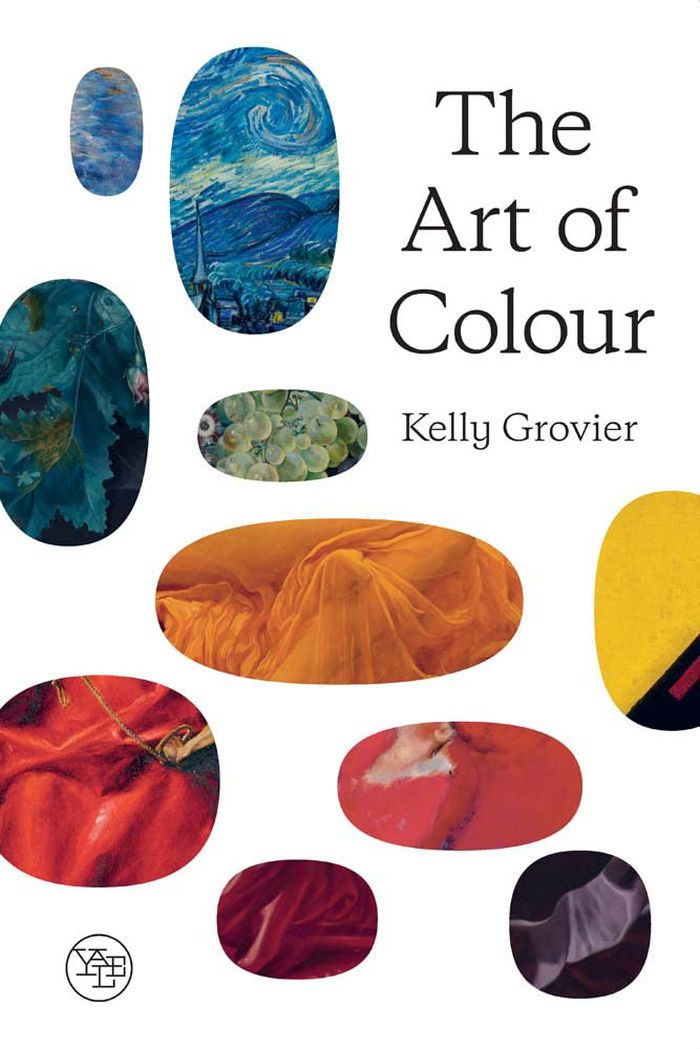
In this new approach to the history of colour, Kelly Grovier takes readers on a search for the intriguing and unusual. In Grovier’s telling, a colour’s connotations are never fixed but are endlessly evolving. Knowledge of a pigment and its history can unlock meaning in the works that feature it. Grovier employs the term ''artymology'' to suggest that colour is a linguistic device, where pigments stand in for syllables in art’s language. Colour is the site of invigorating conflict—a battleground where past and present, influence and originality, and superstition and science merge into meanings that complicate and intensify our appreciation of a given work. How might it change our understanding of a well-known masterpiece like Vincent van Gogh’s ''Starry Night'' to know that the intense yellow moon in that painting was sculpted from clumps of dehydrated urine from cows that were fed nothing but mango leaves? Or that the cobalt blue pigment in Van Gogh’s sky shares a material bloodline with the glaze of Ming Dynasty porcelain? Consisting of ten chapters, each presenting a biography of a family of colours, this volume mines a rich vein of pigmentation from prehistoric cave painting to art of the present day. The book also includes features exploring important milestones in the history of colour theory from the Enlightenment to the twentieth century.
The art of colour: a history in 39 pigments
Actions:
Price:
$54.00
(available to order)
Summary:
In this new approach to the history of colour, Kelly Grovier takes readers on a search for the intriguing and unusual. In Grovier’s telling, a colour’s connotations are never fixed but are endlessly evolving. Knowledge of a pigment and its history can unlock meaning in the works that feature it. Grovier employs the term ''artymology'' to suggest that colour is a linguistic device, where pigments stand in for syllables in art’s language. Colour is the site of invigorating conflict—a battleground where past and present, influence and originality, and superstition and science merge into meanings that complicate and intensify our appreciation of a given work. How might it change our understanding of a well-known masterpiece like Vincent van Gogh’s ''Starry Night'' to know that the intense yellow moon in that painting was sculpted from clumps of dehydrated urine from cows that were fed nothing but mango leaves? Or that the cobalt blue pigment in Van Gogh’s sky shares a material bloodline with the glaze of Ming Dynasty porcelain? Consisting of ten chapters, each presenting a biography of a family of colours, this volume mines a rich vein of pigmentation from prehistoric cave painting to art of the present day. The book also includes features exploring important milestones in the history of colour theory from the Enlightenment to the twentieth century.
Form:
books
books
Publication:
May 2023
May 2023
Subject:
Colour Theory and Design
Colour Theory and Design
Form:
books
books
Actions:
Price:
$54.00
(available to order)
Summary:
The British-born artist and writer Leonora Carrington (1917–2011) is one of the vanguards in the history of women artists and the history of Surrealism. The interests of this visionary—feminism, ecology, the arcane and the mystical, the interconnectedness of everything—are now shared by many. Challenging the conventions of her time, Carrington abandoned family, society,(...)
$54.00
(available to order)
Summary:
The British-born artist and writer Leonora Carrington (1917–2011) is one of the vanguards in the history of women artists and the history of Surrealism. The interests of this visionary—feminism, ecology, the arcane and the mystical, the interconnectedness of everything—are now shared by many. Challenging the conventions of her time, Carrington abandoned family, society,(...)
Title:
Surreal spaces: The life and art of Leonora Carrington
Actions:
Price:
$54.00
(available to order)
Summary:
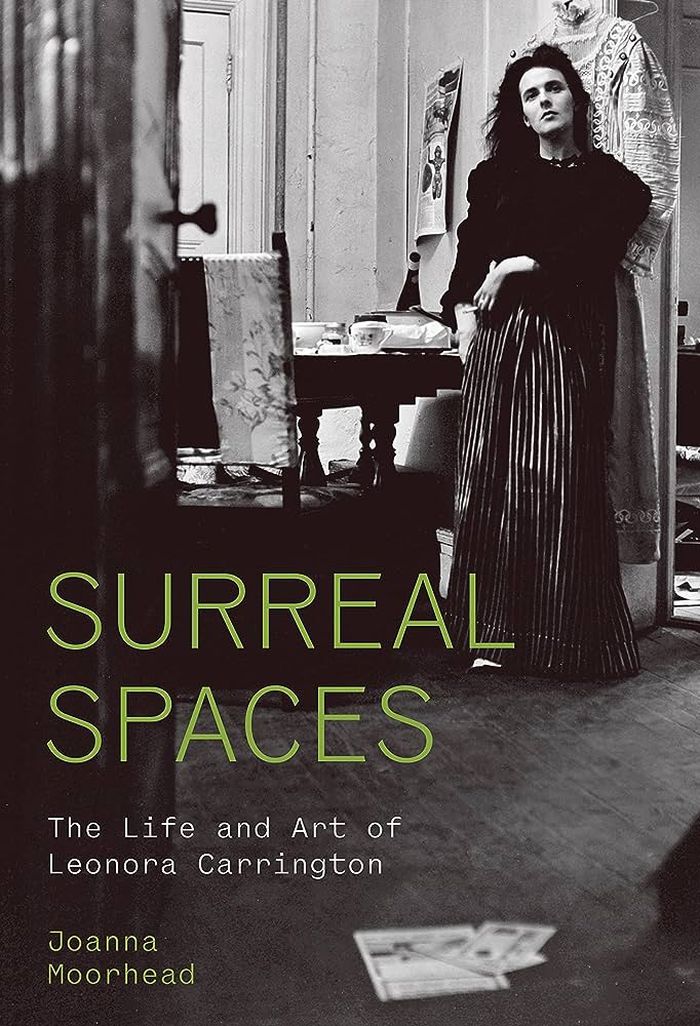
The British-born artist and writer Leonora Carrington (1917–2011) is one of the vanguards in the history of women artists and the history of Surrealism. The interests of this visionary—feminism, ecology, the arcane and the mystical, the interconnectedness of everything—are now shared by many. Challenging the conventions of her time, Carrington abandoned family, society, and England to embrace new experiences and forge a unique artistic style in Europe and the Americas. In this evocative illustrated biography, writer and journalist Joanna Moorhead traces her cousin’s footsteps, exploring the artist’s life, loves, friendships, and work. Leading readers on a personal journey across Britain, Ireland, France, Italy, Spain, Portugal, the United States, and Mexico, ''Surreal spaces'' describes the places and experiences that would become etched in Carrington’s memory and be echoed, sometimes decades later, in her art and writing—whether her grandmother’s kitchen with its giant stove; a remote Cornish hideaway where she holidayed with Max Ernst, Lee Miller, and Man Ray; the Left Bank of Paris; an asylum in Santander, Spain; New York, where she lived among other European exiles; or Mexico City, her final sanctuary. 'Houses are really bodies,' Carrington wrote in her novella ''The Hearing Trumpet''. 'We connect ourselves with walls, roofs and objects just as we hang on to our livers, skeletons, flesh and blood streams.'
Surreal spaces: The life and art of Leonora Carrington
Actions:
Price:
$54.00
(available to order)
Summary:
The British-born artist and writer Leonora Carrington (1917–2011) is one of the vanguards in the history of women artists and the history of Surrealism. The interests of this visionary—feminism, ecology, the arcane and the mystical, the interconnectedness of everything—are now shared by many. Challenging the conventions of her time, Carrington abandoned family, society, and England to embrace new experiences and forge a unique artistic style in Europe and the Americas. In this evocative illustrated biography, writer and journalist Joanna Moorhead traces her cousin’s footsteps, exploring the artist’s life, loves, friendships, and work. Leading readers on a personal journey across Britain, Ireland, France, Italy, Spain, Portugal, the United States, and Mexico, ''Surreal spaces'' describes the places and experiences that would become etched in Carrington’s memory and be echoed, sometimes decades later, in her art and writing—whether her grandmother’s kitchen with its giant stove; a remote Cornish hideaway where she holidayed with Max Ernst, Lee Miller, and Man Ray; the Left Bank of Paris; an asylum in Santander, Spain; New York, where she lived among other European exiles; or Mexico City, her final sanctuary. 'Houses are really bodies,' Carrington wrote in her novella ''The Hearing Trumpet''. 'We connect ourselves with walls, roofs and objects just as we hang on to our livers, skeletons, flesh and blood streams.'
Form:
books
books
Publication:
August 2023
August 2023
Subject:
Contemporary Art Monographs
Contemporary Art Monographs
Form:
books
books
Title:
Sprawl and suburbia
Sprawl and suburbia
Actions:
Price:
$28.95
(available to order)
Summary:
Sprawl is the single most significant and urgent issue in American land use at the turn of the twenty-first century. Efforts to limit and reform sprawl through legislative “Smart Growth” initiatives have been enacted around the country while the neotraditionalist New Urbanism has been embraced by many architects and urban planners. Yet most Americans persist in their(...)
$28.95
(available to order)
Summary:
Sprawl is the single most significant and urgent issue in American land use at the turn of the twenty-first century. Efforts to limit and reform sprawl through legislative “Smart Growth” initiatives have been enacted around the country while the neotraditionalist New Urbanism has been embraced by many architects and urban planners. Yet most Americans persist in their(...)
Title:
Sprawl and suburbia
Actions:
Price:
$28.95
(available to order)
Summary:
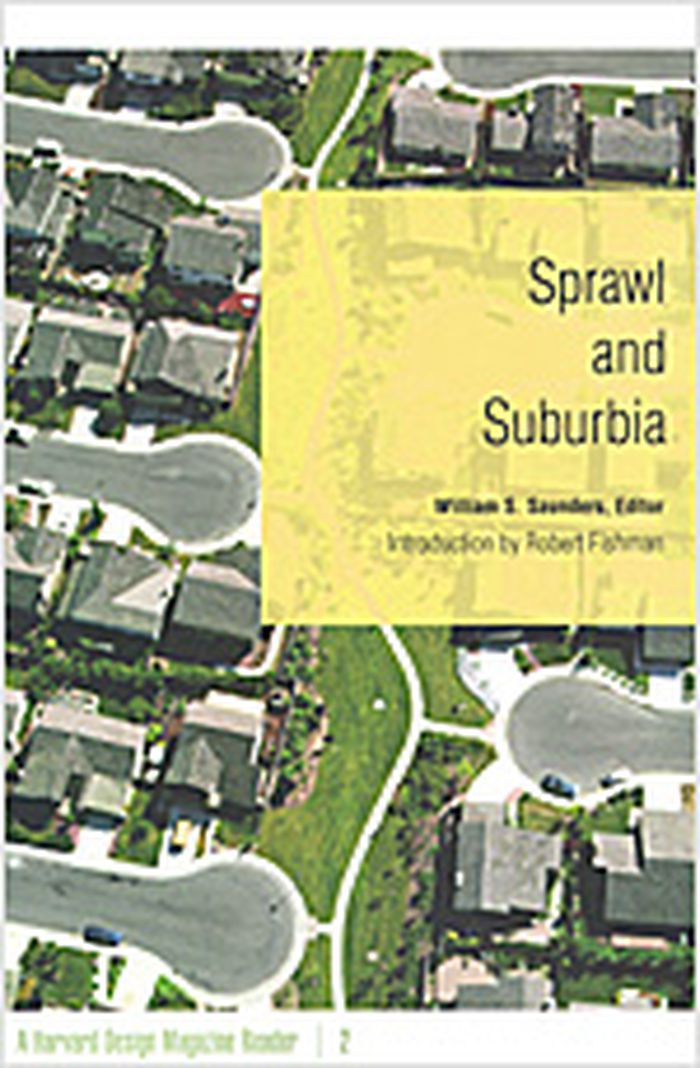
Sprawl is the single most significant and urgent issue in American land use at the turn of the twenty-first century. Efforts to limit and reform sprawl through legislative “Smart Growth” initiatives have been enacted around the country while the neotraditionalist New Urbanism has been embraced by many architects and urban planners. Yet most Americans persist in their desire to live farther and farther away from urban centers, moving to exurbs made up almost entirely of single-family residential houses and stand-alone shopping areas. "Sprawl and suburbia" brings together some of the foremost thinkers in the field to present in-depth diagnosis and critical analysis of the physical and social realities of exurban sprawl. Along with an introduction by Robert Fishman, these essays call for architects, urban planners, and landscape designers to work at mitigating the impact of sprawl on land and resources and improving the residential and commercial built environment as a whole. In place of vast residential exurbs, these writers offer visions of a fresh urbanism—appealing and persuasive models of life at greater density, with greater diversity, and within genuine communities. With sprawl losing the support of suburban citizens themselves as economic, environmental, and social costs are being paid, "Sprawl and suburbia" appears at a moment when design might achieve some critical influence over development—if architects and planners accept the challenge.
Sprawl and suburbia
Actions:
Price:
$28.95
(available to order)
Summary:
Sprawl is the single most significant and urgent issue in American land use at the turn of the twenty-first century. Efforts to limit and reform sprawl through legislative “Smart Growth” initiatives have been enacted around the country while the neotraditionalist New Urbanism has been embraced by many architects and urban planners. Yet most Americans persist in their desire to live farther and farther away from urban centers, moving to exurbs made up almost entirely of single-family residential houses and stand-alone shopping areas. "Sprawl and suburbia" brings together some of the foremost thinkers in the field to present in-depth diagnosis and critical analysis of the physical and social realities of exurban sprawl. Along with an introduction by Robert Fishman, these essays call for architects, urban planners, and landscape designers to work at mitigating the impact of sprawl on land and resources and improving the residential and commercial built environment as a whole. In place of vast residential exurbs, these writers offer visions of a fresh urbanism—appealing and persuasive models of life at greater density, with greater diversity, and within genuine communities. With sprawl losing the support of suburban citizens themselves as economic, environmental, and social costs are being paid, "Sprawl and suburbia" appears at a moment when design might achieve some critical influence over development—if architects and planners accept the challenge.
Form:
books
books
Publication:
November 2005, Minneapolis
November 2005, Minneapolis
Subject:
Suburbs
Suburbs
Form:
books
books
Title:
e-flux Index #2
e-flux Index #2
Actions:
Price:
$65.00
(available in store)
Summary:
"It’s always too late, whenever you take a photograph." This laconic remark, which I heard during a recent artist’s talk in Berlin, bubbled up from a discussion upon the often-tragic indexicality or nonindexicality of contemporary photographic practice. JPEGs taken for wonders. Smoke plumes without embers. Footprints crossing the beaches of abandoned resorts. Hands that(...)
$65.00
(available in store)
Summary:
"It’s always too late, whenever you take a photograph." This laconic remark, which I heard during a recent artist’s talk in Berlin, bubbled up from a discussion upon the often-tragic indexicality or nonindexicality of contemporary photographic practice. JPEGs taken for wonders. Smoke plumes without embers. Footprints crossing the beaches of abandoned resorts. Hands that(...)
Title:
e-flux Index #2
Actions:
Price:
$65.00
(available in store)
Summary:
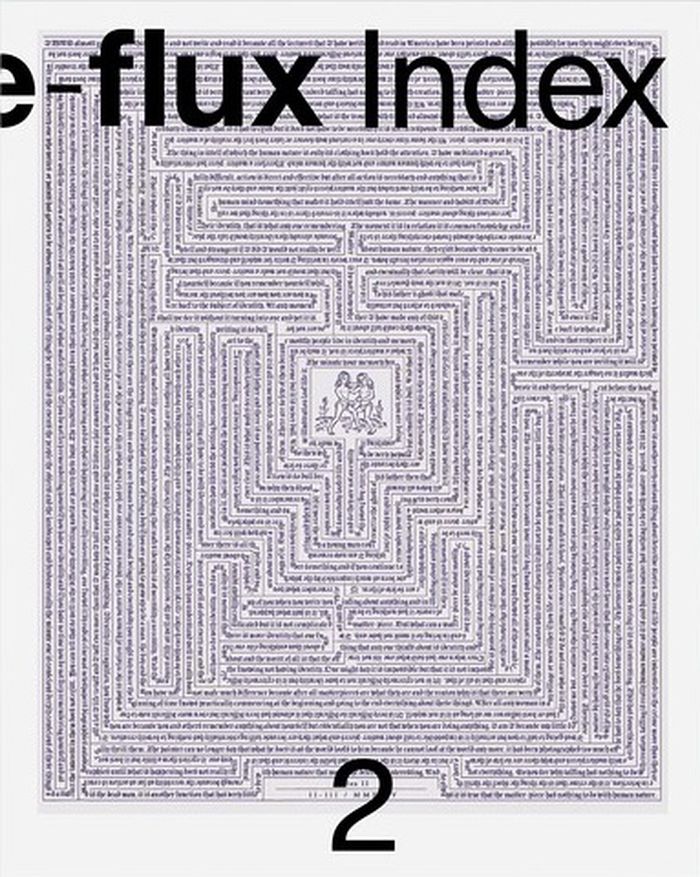
"It’s always too late, whenever you take a photograph." This laconic remark, which I heard during a recent artist’s talk in Berlin, bubbled up from a discussion upon the often-tragic indexicality or nonindexicality of contemporary photographic practice. JPEGs taken for wonders. Smoke plumes without embers. Footprints crossing the beaches of abandoned resorts. Hands that point at nothing in particular, and the gullible eyes that follow the lead of pointing index fingers. There is indeed something awkward to the snapshot’s belatedness. Its untimeliness. The ways in which, the second the shutter clicks—or that our thumb melds with the appropriate region of our phone’s liquid plasma displays and the resultant file is uploaded to a distant server—the instant we sought to "capture" has passed by and something else enters the frame. Someone blinks, the rubble dust envelopes the scene, the light changes, the hoodie we saw underground bearing the phrase "THEIR DESTINIES WOULD INTERTWINE" disappears behind an arriving subway’s blur, the wind cajoles a neighboring branch we hadn’t before noticed into the family portrait. Photography then remains, contrary to the terms in which it is sold to us by Silicon Valley manufacturers who stress its total immediacy as an instrument for perceiving the world, a stubbornly untimely pursuit. Can we not also say, "It’s always too late, whenever you start to index"?
e-flux Index #2
Actions:
Price:
$65.00
(available in store)
Summary:
"It’s always too late, whenever you take a photograph." This laconic remark, which I heard during a recent artist’s talk in Berlin, bubbled up from a discussion upon the often-tragic indexicality or nonindexicality of contemporary photographic practice. JPEGs taken for wonders. Smoke plumes without embers. Footprints crossing the beaches of abandoned resorts. Hands that point at nothing in particular, and the gullible eyes that follow the lead of pointing index fingers. There is indeed something awkward to the snapshot’s belatedness. Its untimeliness. The ways in which, the second the shutter clicks—or that our thumb melds with the appropriate region of our phone’s liquid plasma displays and the resultant file is uploaded to a distant server—the instant we sought to "capture" has passed by and something else enters the frame. Someone blinks, the rubble dust envelopes the scene, the light changes, the hoodie we saw underground bearing the phrase "THEIR DESTINIES WOULD INTERTWINE" disappears behind an arriving subway’s blur, the wind cajoles a neighboring branch we hadn’t before noticed into the family portrait. Photography then remains, contrary to the terms in which it is sold to us by Silicon Valley manufacturers who stress its total immediacy as an instrument for perceiving the world, a stubbornly untimely pursuit. Can we not also say, "It’s always too late, whenever you start to index"?
Form:
books
books
Publication:
July 2024
July 2024
Subject:
Magazines
Magazines
Form:
books
books
Price:
$49.95
(available to order)
Summary:
Born into a large French-Canadian family in 1926, Mariette Rousseau embraced her passion for creative expression through wool and weaving at an early age. She studied art and weaving at l'École des beaux-arts in Quebec City and then worked at the California studio of ground-breaking American textile designer Dorothy Liebes. Back in Canada after an art-inspired trip to(...)
$49.95
(available to order)
Summary:
Born into a large French-Canadian family in 1926, Mariette Rousseau embraced her passion for creative expression through wool and weaving at an early age. She studied art and weaving at l'École des beaux-arts in Quebec City and then worked at the California studio of ground-breaking American textile designer Dorothy Liebes. Back in Canada after an art-inspired trip to(...)
Title:
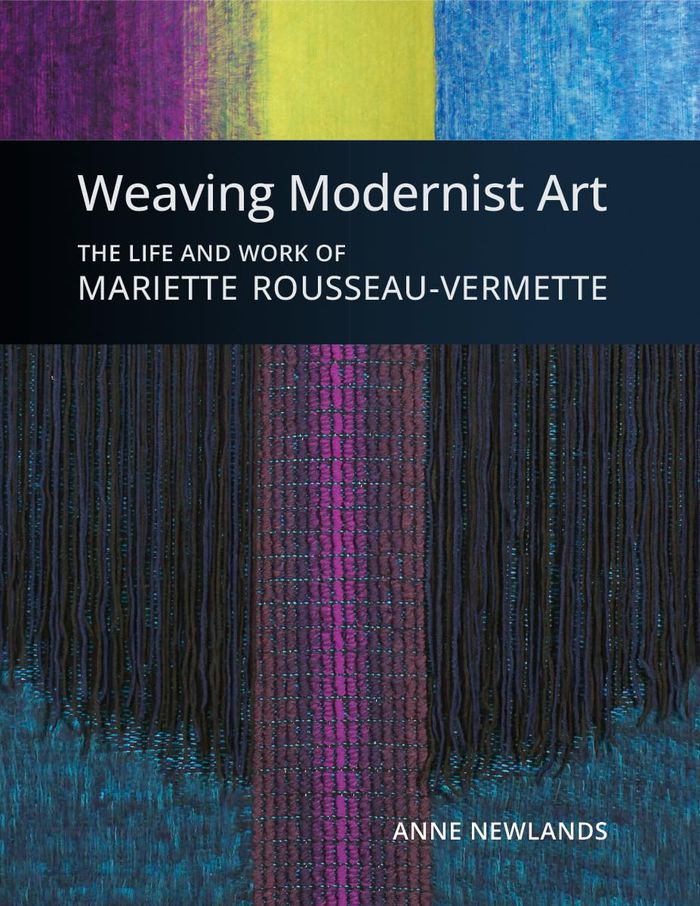
Weaving modernist art: The life and work of Mariette Rousseau-Vermette
Actions:
Price:
$49.95
(available to order)
Summary:
Born into a large French-Canadian family in 1926, Mariette Rousseau embraced her passion for creative expression through wool and weaving at an early age. She studied art and weaving at l'École des beaux-arts in Quebec City and then worked at the California studio of ground-breaking American textile designer Dorothy Liebes. Back in Canada after an art-inspired trip to Europe, she and her husband, artist and ceramist Claude Vermette, joined the growing movement of young French-Canadian artists in their embrace of abstraction and new forms of art and their rejection of the conservatism of Maurice Duplessis' mid-century Quebec. By the early 1960s, Rousseau-Vermette had forged collaborations with fellow artists, designers and architects with like ideas about public art. Over the next 40 years, she scaled the heights of her profession, weaving hundreds of radiant large-scale tapestries that complemented the cool interiors of modern architecture. She exhibited across Canada and internationally and attracted prestigious commissions from the private and public sectors, including commissions for theater curtains at the National Arts Centre, Ottawa and the Kennedy Center in Washington, DC. Yet three years after Rousseau-Vermette's death in 2006, Newlands discovered there wasn't a single book that told her story as a pioneer of modernist tapestry and one of Canada's most prolific and influential artist-weavers.
Weaving modernist art: The life and work of Mariette Rousseau-Vermette
Actions:
Price:
$49.95
(available to order)
Summary:
Born into a large French-Canadian family in 1926, Mariette Rousseau embraced her passion for creative expression through wool and weaving at an early age. She studied art and weaving at l'École des beaux-arts in Quebec City and then worked at the California studio of ground-breaking American textile designer Dorothy Liebes. Back in Canada after an art-inspired trip to Europe, she and her husband, artist and ceramist Claude Vermette, joined the growing movement of young French-Canadian artists in their embrace of abstraction and new forms of art and their rejection of the conservatism of Maurice Duplessis' mid-century Quebec. By the early 1960s, Rousseau-Vermette had forged collaborations with fellow artists, designers and architects with like ideas about public art. Over the next 40 years, she scaled the heights of her profession, weaving hundreds of radiant large-scale tapestries that complemented the cool interiors of modern architecture. She exhibited across Canada and internationally and attracted prestigious commissions from the private and public sectors, including commissions for theater curtains at the National Arts Centre, Ottawa and the Kennedy Center in Washington, DC. Yet three years after Rousseau-Vermette's death in 2006, Newlands discovered there wasn't a single book that told her story as a pioneer of modernist tapestry and one of Canada's most prolific and influential artist-weavers.
Form:
books
books
Publication:
March 2023
March 2023
Subject:
Current Exhibitions
Current Exhibitions


