


435 Results
Form:
books
books
Actions:
Price:
$37.95
(available to order)
Summary:
Bringing together media studies and environmental humanities, the contributors to ''Saturation'' develop saturation as a heuristic to analyze phenomena in which the elements involved are difficult or impossible to separate. In ordinary language, saturation describes the condition of being thoroughly soaked, while in chemistry it is the threshold at which something can be(...)
$37.95
(available to order)
Summary:
Bringing together media studies and environmental humanities, the contributors to ''Saturation'' develop saturation as a heuristic to analyze phenomena in which the elements involved are difficult or impossible to separate. In ordinary language, saturation describes the condition of being thoroughly soaked, while in chemistry it is the threshold at which something can be(...)
Subject:
Environment and environmental theory
Environment and environmental theory
Publication:
November 2021
November 2021
Title:
Saturation: an elemental politics
Actions:
Price:
$37.95
(available to order)
Summary:
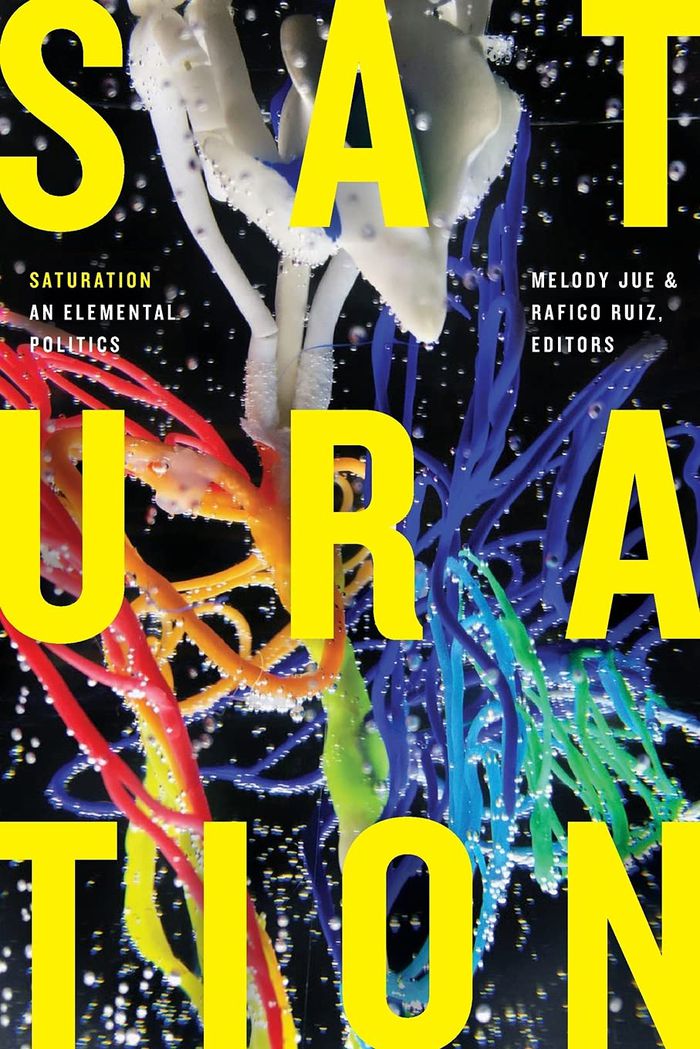
Bringing together media studies and environmental humanities, the contributors to ''Saturation'' develop saturation as a heuristic to analyze phenomena in which the elements involved are difficult or impossible to separate. In ordinary language, saturation describes the condition of being thoroughly soaked, while in chemistry it is the threshold at which something can be maximally dissolved or absorbed in a solution. Contributors to this collection expand notions of saturation beyond water to consider saturation in sound, infrastructure, media, Big Data, capitalism, and visual culture. Essays include analyses of the thresholds of HIV detectability in bloodwork, militarism's saturation of oceans, and the deleterious effects of the saturation of cellphone and wi-fi signals into the human body. By channeling saturation to explore the relationship between media, the environment, technology, capital, and the legacies of settler colonialism, ''Saturation'' illuminates how elements, the natural world, and anthropogenic infrastructures, politics, and processes exist in and through each other.
Saturation: an elemental politics
Actions:
Price:
$37.95
(available to order)
Summary:
Bringing together media studies and environmental humanities, the contributors to ''Saturation'' develop saturation as a heuristic to analyze phenomena in which the elements involved are difficult or impossible to separate. In ordinary language, saturation describes the condition of being thoroughly soaked, while in chemistry it is the threshold at which something can be maximally dissolved or absorbed in a solution. Contributors to this collection expand notions of saturation beyond water to consider saturation in sound, infrastructure, media, Big Data, capitalism, and visual culture. Essays include analyses of the thresholds of HIV detectability in bloodwork, militarism's saturation of oceans, and the deleterious effects of the saturation of cellphone and wi-fi signals into the human body. By channeling saturation to explore the relationship between media, the environment, technology, capital, and the legacies of settler colonialism, ''Saturation'' illuminates how elements, the natural world, and anthropogenic infrastructures, politics, and processes exist in and through each other.
Form:
books
books
Publication:
November 2021
November 2021
Subject:
Environment and environmental theory
Environment and environmental theory
Form:
books
books

Title:
Orwell's roses
Orwell's roses
Actions:
Price:
$37.00
(available to order)
Summary:
Sparked by her unexpected encounter with the surviving roses he planted in 1936, Solnit’s account of this understudied aspect of Orwell’s life explores his writing and his actions—from going deep into the coal mines of England, fighting in the Spanish Civil War, critiquing Stalin when much of the international left still supported him (and then critiquing that left), to(...)
$37.00
(available to order)
Summary:
Sparked by her unexpected encounter with the surviving roses he planted in 1936, Solnit’s account of this understudied aspect of Orwell’s life explores his writing and his actions—from going deep into the coal mines of England, fighting in the Spanish Civil War, critiquing Stalin when much of the international left still supported him (and then critiquing that left), to(...)
Title:
Orwell's roses
Actions:
Price:
$37.00
(available to order)
Summary:
Sparked by her unexpected encounter with the surviving roses he planted in 1936, Solnit’s account of this understudied aspect of Orwell’s life explores his writing and his actions—from going deep into the coal mines of England, fighting in the Spanish Civil War, critiquing Stalin when much of the international left still supported him (and then critiquing that left), to his analysis of the relationship between lies and authoritarianism. Through Solnit’s celebrated ability to draw unexpected connections, readers encounter the photographer Tina Modotti’s roses and her Stalinism, Stalin’s obsession with forcing lemons to grow in impossibly cold conditions, Orwell’s slave-owning ancestors in Jamaica, Jamaica Kincaid’s critique of colonialism and imperialism in the flower garden, and the brutal rose industry in Colombia that supplies the American market. The book draws to a close with a rereading of ''Nineteen Eighty-Four'' that completes her portrait of a more hopeful Orwell, as well as a reflection on pleasure, beauty, and joy as acts of resistance.
Orwell's roses
Actions:
Price:
$37.00
(available to order)
Summary:
Sparked by her unexpected encounter with the surviving roses he planted in 1936, Solnit’s account of this understudied aspect of Orwell’s life explores his writing and his actions—from going deep into the coal mines of England, fighting in the Spanish Civil War, critiquing Stalin when much of the international left still supported him (and then critiquing that left), to his analysis of the relationship between lies and authoritarianism. Through Solnit’s celebrated ability to draw unexpected connections, readers encounter the photographer Tina Modotti’s roses and her Stalinism, Stalin’s obsession with forcing lemons to grow in impossibly cold conditions, Orwell’s slave-owning ancestors in Jamaica, Jamaica Kincaid’s critique of colonialism and imperialism in the flower garden, and the brutal rose industry in Colombia that supplies the American market. The book draws to a close with a rereading of ''Nineteen Eighty-Four'' that completes her portrait of a more hopeful Orwell, as well as a reflection on pleasure, beauty, and joy as acts of resistance.
Form:
books
books
Publication:
October 2021
October 2021
Subject:
Literature and poetry
Literature and poetry
Form:
books
books
Title:
The Black geographic
The Black geographic
Actions:
Price:
$38.95
(available to order)
Summary:
The contributors to ''The Black geographic'' explore the theoretical innovations of Black Geographies scholarship and how it approaches Blackness as historically and spatially situated. In studies that span from Oakland to the Alabama Black Belt to Senegal to Brazil, the contributors draw on ethnography, archival records, digital humanities, literary criticism, and art to(...)
$38.95
(available to order)
Summary:
The contributors to ''The Black geographic'' explore the theoretical innovations of Black Geographies scholarship and how it approaches Blackness as historically and spatially situated. In studies that span from Oakland to the Alabama Black Belt to Senegal to Brazil, the contributors draw on ethnography, archival records, digital humanities, literary criticism, and art to(...)
Title:
The Black geographic
Actions:
Price:
$38.95
(available to order)
Summary:
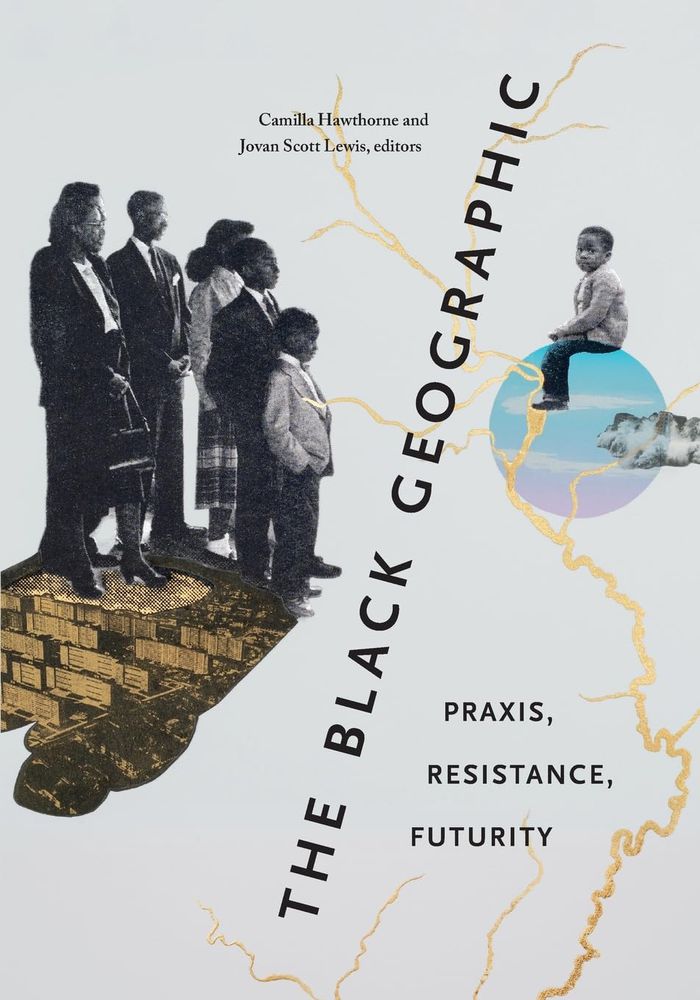
The contributors to ''The Black geographic'' explore the theoretical innovations of Black Geographies scholarship and how it approaches Blackness as historically and spatially situated. In studies that span from Oakland to the Alabama Black Belt to Senegal to Brazil, the contributors draw on ethnography, archival records, digital humanities, literary criticism, and art to show how understanding the spatial dimensions of Black life contributes to a broader understanding of race and space. They examine key sites of inquiry: Black spatial imaginaries, resistance to racial violence, the geographies of racial capitalism, and struggles over urban space. Throughout, the contributors demonstrate that Blackness is itself a situating and place-making force, even as it is shaped by spatial processes and diasporic routes. Whether discussing eighteenth- and nineteenth-century abolitionist print records or migration and surveillance in Niger, this volume demonstrates that Black Geographies is a mode of analyzing Blackness that fundamentally challenges the very foundations of the field of geography and its historical entwinement with colonialism, enslavement, and imperialism. In short, it marks a new step in the evolution of the field.
The Black geographic
Actions:
Price:
$38.95
(available to order)
Summary:
The contributors to ''The Black geographic'' explore the theoretical innovations of Black Geographies scholarship and how it approaches Blackness as historically and spatially situated. In studies that span from Oakland to the Alabama Black Belt to Senegal to Brazil, the contributors draw on ethnography, archival records, digital humanities, literary criticism, and art to show how understanding the spatial dimensions of Black life contributes to a broader understanding of race and space. They examine key sites of inquiry: Black spatial imaginaries, resistance to racial violence, the geographies of racial capitalism, and struggles over urban space. Throughout, the contributors demonstrate that Blackness is itself a situating and place-making force, even as it is shaped by spatial processes and diasporic routes. Whether discussing eighteenth- and nineteenth-century abolitionist print records or migration and surveillance in Niger, this volume demonstrates that Black Geographies is a mode of analyzing Blackness that fundamentally challenges the very foundations of the field of geography and its historical entwinement with colonialism, enslavement, and imperialism. In short, it marks a new step in the evolution of the field.
Form:
books
books
Publication:
October 2023
October 2023
Subject:
Social
Social
Form:
books
books

Price:
$32.00
(available to order)
Summary:
''Resisting eviction'' centres tenant organizing in its investigation of gentrification, eviction and the financialization of rental housing. Andrew Crosby argues that racial discrimination, property relations and settler colonialism inform contemporary urban (re)development efforts and impacts affordable housing loss. How can the City of Ottawa aspire to become ''North(...)
$32.00
(available to order)
Summary:
''Resisting eviction'' centres tenant organizing in its investigation of gentrification, eviction and the financialization of rental housing. Andrew Crosby argues that racial discrimination, property relations and settler colonialism inform contemporary urban (re)development efforts and impacts affordable housing loss. How can the City of Ottawa aspire to become ''North(...)
Title:
Resisting eviction: Domicide and the financialization of rental housing
Actions:
Price:
$32.00
(available to order)
Summary:
''Resisting eviction'' centres tenant organizing in its investigation of gentrification, eviction and the financialization of rental housing. Andrew Crosby argues that racial discrimination, property relations and settler colonialism inform contemporary urban (re)development efforts and impacts affordable housing loss. How can the City of Ottawa aspire to become ''North America’s most liveable mid-sized city'' while large-scale, demolition-driven evictions displace hundreds of people and destroy a community? Troubling discourses of urban liveability, revitalization and improvement, Crosby examines the deliberate destruction of home—domicide—and tenant resistance in the Heron Gate neighbourhood in Ottawa, on unceded Algonquin land. Heron Gate is a large rental neighbourhood owned by one multi-billion-dollar real estate investment firm. Around 800 people—predominantly lower-income, racialized households—have been demovicted and displaced from the neighbourhood since 2016, leading to the emergence of the Herongate Tenant Coalition to fight the evictions and confront the landlord-developer. This case study is meticulously documented through political activist ethnography, making this book a brilliant example of ethical engagement and methodological integrity.
Resisting eviction: Domicide and the financialization of rental housing
Actions:
Price:
$32.00
(available to order)
Summary:
''Resisting eviction'' centres tenant organizing in its investigation of gentrification, eviction and the financialization of rental housing. Andrew Crosby argues that racial discrimination, property relations and settler colonialism inform contemporary urban (re)development efforts and impacts affordable housing loss. How can the City of Ottawa aspire to become ''North America’s most liveable mid-sized city'' while large-scale, demolition-driven evictions displace hundreds of people and destroy a community? Troubling discourses of urban liveability, revitalization and improvement, Crosby examines the deliberate destruction of home—domicide—and tenant resistance in the Heron Gate neighbourhood in Ottawa, on unceded Algonquin land. Heron Gate is a large rental neighbourhood owned by one multi-billion-dollar real estate investment firm. Around 800 people—predominantly lower-income, racialized households—have been demovicted and displaced from the neighbourhood since 2016, leading to the emergence of the Herongate Tenant Coalition to fight the evictions and confront the landlord-developer. This case study is meticulously documented through political activist ethnography, making this book a brilliant example of ethical engagement and methodological integrity.
Form:
books
books
Publication:
October 2023
October 2023
Subject:
Humans and cities
Humans and cities
Form:
books
books

Title:
The beauty of impermanence: An architecture of adaptability from the Sharjah Architecture Triennial
The beauty of impermanence: An architecture of adaptability from the Sharjah Architecture Triennial
Actions:
Price:
$85.00
(available in store)
Summary:
''The Beauty of Impermanence'' is a scholarly documentation of the 2023 Sharjah Architecture Triennial. It explores architectural responses to sustainability, resource scarcity, and adaptability, highlighting the contrasting resource management strategies of the global North and South over the last four hundred years. The North exploited resources through a belief in(...)
$85.00
(available in store)
Summary:
''The Beauty of Impermanence'' is a scholarly documentation of the 2023 Sharjah Architecture Triennial. It explores architectural responses to sustainability, resource scarcity, and adaptability, highlighting the contrasting resource management strategies of the global North and South over the last four hundred years. The North exploited resources through a belief in(...)
Title:
The beauty of impermanence: An architecture of adaptability from the Sharjah Architecture Triennial
Actions:
Price:
$85.00
(available in store)
Summary:
''The Beauty of Impermanence'' is a scholarly documentation of the 2023 Sharjah Architecture Triennial. It explores architectural responses to sustainability, resource scarcity, and adaptability, highlighting the contrasting resource management strategies of the global North and South over the last four hundred years. The North exploited resources through a belief in endless abundance and technological advances, underpinned by religious and mythological justifications for colonialism and slavery. The South, characterized by resource scarcity, has innovated within these constraints, developing adaptable, sustainable solutions that may offer a blueprint for future global resource management. The book advocates for a shift away from a consumption-driven approach to one that is ecologically and ethically responsible, urging a collective resolve to create systemic change for a sustainable future. It is structured around the thematic strands of “Renewed Contextual,” “Extraction Politics,” and “Intangible Bodies” and features essays by noted scholars and practitioners. Detailed project spreads from Triennial participants, showcasing innovative practices that integrate environmentally friendly methods and materials, round off this volume that serves as a vital resource for those engaged in the fields of architecture, sustainability, and urban planning.
The beauty of impermanence: An architecture of adaptability from the Sharjah Architecture Triennial
Actions:
Price:
$85.00
(available in store)
Summary:
''The Beauty of Impermanence'' is a scholarly documentation of the 2023 Sharjah Architecture Triennial. It explores architectural responses to sustainability, resource scarcity, and adaptability, highlighting the contrasting resource management strategies of the global North and South over the last four hundred years. The North exploited resources through a belief in endless abundance and technological advances, underpinned by religious and mythological justifications for colonialism and slavery. The South, characterized by resource scarcity, has innovated within these constraints, developing adaptable, sustainable solutions that may offer a blueprint for future global resource management. The book advocates for a shift away from a consumption-driven approach to one that is ecologically and ethically responsible, urging a collective resolve to create systemic change for a sustainable future. It is structured around the thematic strands of “Renewed Contextual,” “Extraction Politics,” and “Intangible Bodies” and features essays by noted scholars and practitioners. Detailed project spreads from Triennial participants, showcasing innovative practices that integrate environmentally friendly methods and materials, round off this volume that serves as a vital resource for those engaged in the fields of architecture, sustainability, and urban planning.
Form:
books
books
Publication:
July 2025
July 2025
Subject:
Biennial
Biennial
Form:
books
books
Price:
$37.95
(available to order)
Summary:
In "The politics of collecting," Eunsong Kim traces how racial capitalism and colonialism situated the rise of US museum collections and conceptual art forms. Investigating historical legal and property claims, she argues that regimes of expropriation--rather than merit or good taste--are responsible for popular ideas of formal innovation and artistic genius. In doing so,(...)
$37.95
(available to order)
Summary:
In "The politics of collecting," Eunsong Kim traces how racial capitalism and colonialism situated the rise of US museum collections and conceptual art forms. Investigating historical legal and property claims, she argues that regimes of expropriation--rather than merit or good taste--are responsible for popular ideas of formal innovation and artistic genius. In doing so,(...)
Title:
The politics of collecting: Race and the aestheticization of property
Actions:
Price:
$37.95
(available to order)
Summary:
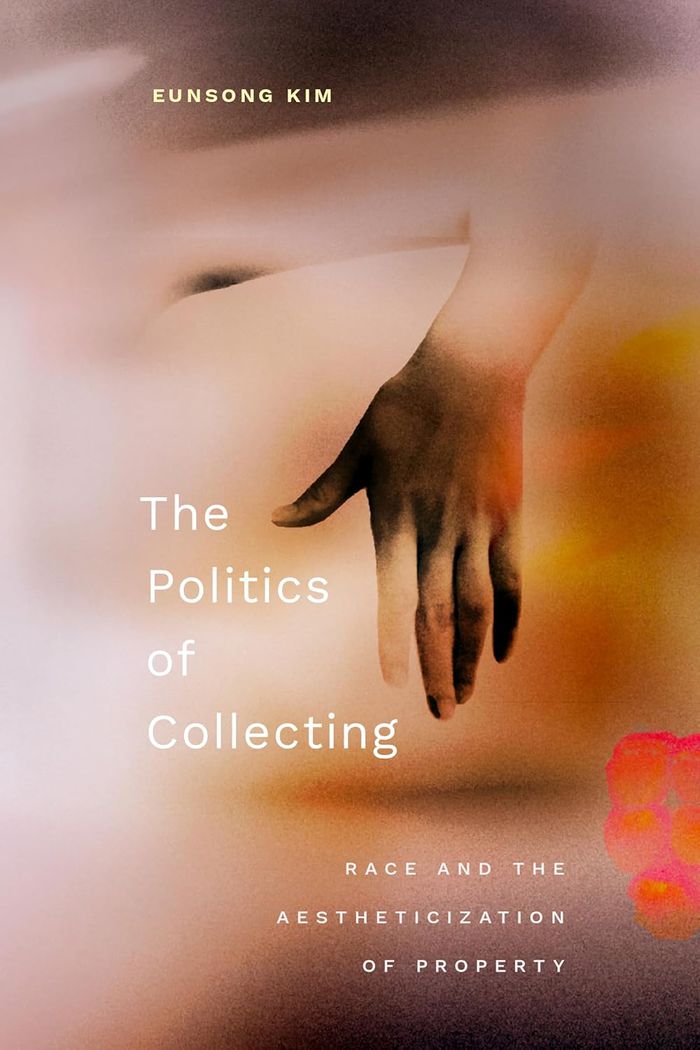
In "The politics of collecting," Eunsong Kim traces how racial capitalism and colonialism situated the rise of US museum collections and conceptual art forms. Investigating historical legal and property claims, she argues that regimes of expropriation--rather than merit or good taste--are responsible for popular ideas of formal innovation and artistic genius. In doing so, she details how Marcel Duchamp's canonization has more to do with his patron's donations to museums than it does the quality of Duchamp's work, and she uncovers the racialized and financialized logic behind the Archive of New Poetry's collecting practices. Ranging from the conception of philanthropy devised by the robber barons of the late nineteenth century to ongoing digitization projects, Kim provides a new history of contemporary art that accounts for the complicated entanglement of race, capital, and labor behind storied art institutions and artists. Drawing on history, theory, and economics, Kim challenges received notions of artistic success and talent and calls for a new vision of art beyond the cultural institution.
The politics of collecting: Race and the aestheticization of property
Actions:
Price:
$37.95
(available to order)
Summary:
In "The politics of collecting," Eunsong Kim traces how racial capitalism and colonialism situated the rise of US museum collections and conceptual art forms. Investigating historical legal and property claims, she argues that regimes of expropriation--rather than merit or good taste--are responsible for popular ideas of formal innovation and artistic genius. In doing so, she details how Marcel Duchamp's canonization has more to do with his patron's donations to museums than it does the quality of Duchamp's work, and she uncovers the racialized and financialized logic behind the Archive of New Poetry's collecting practices. Ranging from the conception of philanthropy devised by the robber barons of the late nineteenth century to ongoing digitization projects, Kim provides a new history of contemporary art that accounts for the complicated entanglement of race, capital, and labor behind storied art institutions and artists. Drawing on history, theory, and economics, Kim challenges received notions of artistic success and talent and calls for a new vision of art beyond the cultural institution.
Form:
books
books
Publication:
August 2024
August 2024
Subject:
Archive, library and the digital
Archive, library and the digital
Form:
books
books

Actions:
Price:
$32.95
(available in store)
Summary:
There have been many things written about Canada’s violent siege of Kanehsatà:ke and Kahnawà:ke in the summer of 1990, but "When the pine needles fall: Indigenous acts of resistance" is the first book from the perspective of Katsi’tsakwas Ellen Gabriel, who was the Kanien’kehá:ka (Mohawk) spokesperson during the siege. "When the pine needles fall," written in a(...)
$32.95
(available in store)
Summary:
There have been many things written about Canada’s violent siege of Kanehsatà:ke and Kahnawà:ke in the summer of 1990, but "When the pine needles fall: Indigenous acts of resistance" is the first book from the perspective of Katsi’tsakwas Ellen Gabriel, who was the Kanien’kehá:ka (Mohawk) spokesperson during the siege. "When the pine needles fall," written in a(...)
Title:
When the pine needles fall: Indigenous acts of resistance
Actions:
Price:
$32.95
(available in store)
Summary:
There have been many things written about Canada’s violent siege of Kanehsatà:ke and Kahnawà:ke in the summer of 1990, but "When the pine needles fall: Indigenous acts of resistance" is the first book from the perspective of Katsi’tsakwas Ellen Gabriel, who was the Kanien’kehá:ka (Mohawk) spokesperson during the siege. "When the pine needles fall," written in a conversational style by Gabriel with historian Sean Carleton, offers an intimate look at Gabriel’s life leading up to the 1990 siege, her experiences as spokesperson for her community, and her work since then as an Indigenous land defender, human rights activist, and feminist leader. More than just the memoir of an extraordinary individual, "When the pine needles fall" offers insight into Indigenous language, history, and philosophy, reflections on our relationship with the land, and calls to action against both colonialism and capitalism as we face the climate crisis. Gabriel’s hopes for a decolonial future make clear why protecting Indigenous homelands is vital not only for the survival of Indigenous peoples, but for all who live on this planet.
When the pine needles fall: Indigenous acts of resistance
Actions:
Price:
$32.95
(available in store)
Summary:
There have been many things written about Canada’s violent siege of Kanehsatà:ke and Kahnawà:ke in the summer of 1990, but "When the pine needles fall: Indigenous acts of resistance" is the first book from the perspective of Katsi’tsakwas Ellen Gabriel, who was the Kanien’kehá:ka (Mohawk) spokesperson during the siege. "When the pine needles fall," written in a conversational style by Gabriel with historian Sean Carleton, offers an intimate look at Gabriel’s life leading up to the 1990 siege, her experiences as spokesperson for her community, and her work since then as an Indigenous land defender, human rights activist, and feminist leader. More than just the memoir of an extraordinary individual, "When the pine needles fall" offers insight into Indigenous language, history, and philosophy, reflections on our relationship with the land, and calls to action against both colonialism and capitalism as we face the climate crisis. Gabriel’s hopes for a decolonial future make clear why protecting Indigenous homelands is vital not only for the survival of Indigenous peoples, but for all who live on this planet.
Form:
books
books
Publication:
September 2024
September 2024
Subject:
indigenous
indigenous
Form:
books
books
Actions:
Price:
$39.95
(available to order)
Summary:
Photography is one of the principal filters through which we engage the world. The contributors to this volume focus on Walter Benjamin's concept of the optical unconscious to investigate how photography has shaped history, modernity, perception, lived experience, politics, race, and human agency. In essays that range from examinations of Benjamin's and Sigmund Freud's(...)
$39.95
(available to order)
Summary:
Photography is one of the principal filters through which we engage the world. The contributors to this volume focus on Walter Benjamin's concept of the optical unconscious to investigate how photography has shaped history, modernity, perception, lived experience, politics, race, and human agency. In essays that range from examinations of Benjamin's and Sigmund Freud's(...)
Title:
Photography and the optical unconscious
Actions:
Price:
$39.95
(available to order)
Summary:
Photography is one of the principal filters through which we engage the world. The contributors to this volume focus on Walter Benjamin's concept of the optical unconscious to investigate how photography has shaped history, modernity, perception, lived experience, politics, race, and human agency. In essays that range from examinations of Benjamin's and Sigmund Freud's writings to the work of Kara Walker and Roland Barthes's famous Winter Garden photograph, the contributors explore what photography can teach us about the nature of the unconscious. They attend to side perceptions, develop latent images, discover things hidden in plain sight, focus on the disavowed, and perceive the slow. Of particular note are the ways race and colonialism have informed photography from its beginning. The volume also contains photographic portfolios by Zoe Leonard, Kelly Wood, and Kristan Horton, whose work speaks to the optical unconscious while demonstrating how photographs communicate on their own terms. The essays and portfolios in Photography and the Optical Unconscious create a collective and sustained assessment of Benjamin's influential concept, opening up new avenues for thinking about photography and the human psyche.
Photography and the optical unconscious
Actions:
Price:
$39.95
(available to order)
Summary:
Photography is one of the principal filters through which we engage the world. The contributors to this volume focus on Walter Benjamin's concept of the optical unconscious to investigate how photography has shaped history, modernity, perception, lived experience, politics, race, and human agency. In essays that range from examinations of Benjamin's and Sigmund Freud's writings to the work of Kara Walker and Roland Barthes's famous Winter Garden photograph, the contributors explore what photography can teach us about the nature of the unconscious. They attend to side perceptions, develop latent images, discover things hidden in plain sight, focus on the disavowed, and perceive the slow. Of particular note are the ways race and colonialism have informed photography from its beginning. The volume also contains photographic portfolios by Zoe Leonard, Kelly Wood, and Kristan Horton, whose work speaks to the optical unconscious while demonstrating how photographs communicate on their own terms. The essays and portfolios in Photography and the Optical Unconscious create a collective and sustained assessment of Benjamin's influential concept, opening up new avenues for thinking about photography and the human psyche.
Form:
books
books
Publication:
May 2017
May 2017
Subject:
Theory of Photography
Theory of Photography
Form:
books
books
Price:
$31.50
(available to order)
Summary:
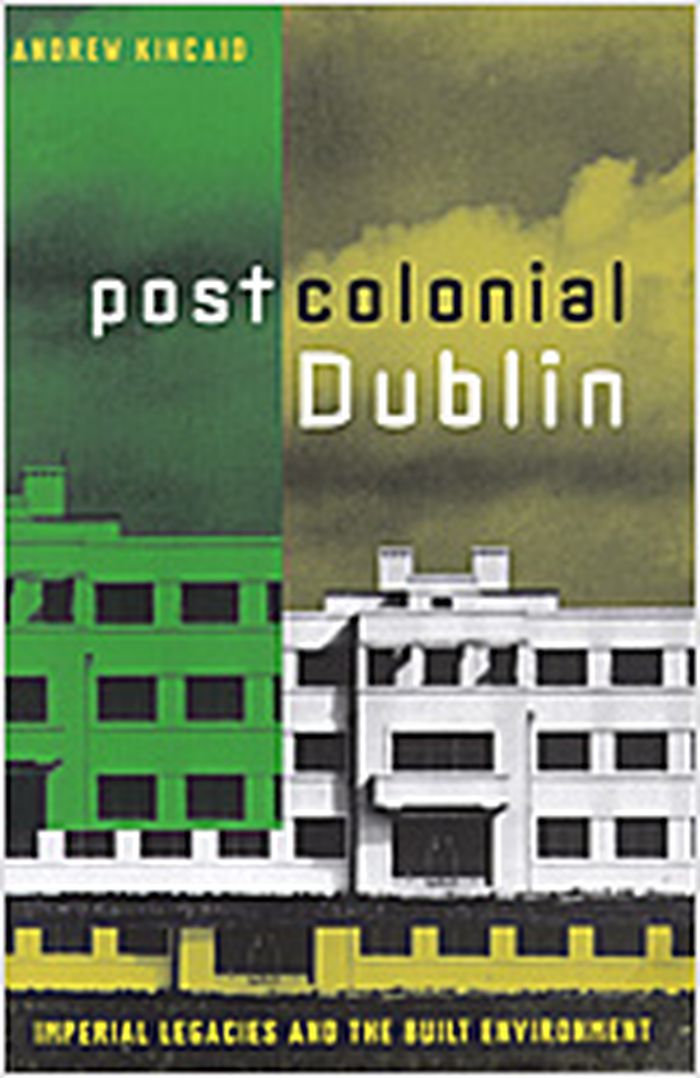
For hundreds of years, Ireland has been a testing ground for colonizing techniques. Postcolonial Dublin shows how perpetrators of colonialism have made use of urban planning and architecture to underscore and legitimate ideologies. From suburban development to building facades, the conflict between nationalists and colonialists has inscribed itself on Dublin’s landscape.(...)
$31.50
(available to order)
Summary:
For hundreds of years, Ireland has been a testing ground for colonizing techniques. Postcolonial Dublin shows how perpetrators of colonialism have made use of urban planning and architecture to underscore and legitimate ideologies. From suburban development to building facades, the conflict between nationalists and colonialists has inscribed itself on Dublin’s landscape.(...)
Title:
Postcolonial Dublin : imperial legacies and the built environment
Actions:
Price:
$31.50
(available to order)
Summary:
For hundreds of years, Ireland has been a testing ground for colonizing techniques. Postcolonial Dublin shows how perpetrators of colonialism have made use of urban planning and architecture to underscore and legitimate ideologies. From suburban development to building facades, the conflict between nationalists and colonialists has inscribed itself on Dublin’s landscape. Andrew Kincaid illustrates how the architecture and urban planning of Dublin have been integral to debates about nationalism, modernism, and Ireland’s relationship to the rest of the world. Looking at objects such as Londonderry’s Market House, Patrick Abercrombie’s Dublin of the Future, and the urban renewal project of today’s Temple Bar, Kincaid highlights Ireland’s colonial history and the significance of architecture in the evolution of national identity. In doing so, he demonstrates how ideology “spatializes” itself. Postcolonial Dublin engages the prevailing historical representations of Irish nationalism, arguing that the evolving city reflected a debate over who would hold the reins of power. Bringing the tools of literary criticism and postcolonial theory to bear on the field of urban studies, Kincaid places Dublin at the forefront of debates over modernism, modernity, and globalization.
Postcolonial Dublin : imperial legacies and the built environment
Actions:
Price:
$31.50
(available to order)
Summary:
For hundreds of years, Ireland has been a testing ground for colonizing techniques. Postcolonial Dublin shows how perpetrators of colonialism have made use of urban planning and architecture to underscore and legitimate ideologies. From suburban development to building facades, the conflict between nationalists and colonialists has inscribed itself on Dublin’s landscape. Andrew Kincaid illustrates how the architecture and urban planning of Dublin have been integral to debates about nationalism, modernism, and Ireland’s relationship to the rest of the world. Looking at objects such as Londonderry’s Market House, Patrick Abercrombie’s Dublin of the Future, and the urban renewal project of today’s Temple Bar, Kincaid highlights Ireland’s colonial history and the significance of architecture in the evolution of national identity. In doing so, he demonstrates how ideology “spatializes” itself. Postcolonial Dublin engages the prevailing historical representations of Irish nationalism, arguing that the evolving city reflected a debate over who would hold the reins of power. Bringing the tools of literary criticism and postcolonial theory to bear on the field of urban studies, Kincaid places Dublin at the forefront of debates over modernism, modernity, and globalization.
Form:
books
books
Publication:
May 2006, Minneapolis
May 2006, Minneapolis
Subject:
Architecture since 1900, Europe
Architecture since 1900, Europe
Form:
books
books

Title:
Movements & moments
Movements & moments
Actions:
Price:
$34.95
(available to order)
Summary:
In 1930s Bolivia, self-described Anarchist Cholas form a libertarian trade union. In the Northern Highlands of Vietnam, the songs of one girl’s youth lead her to a life of activism. In the Philippines, female elders from Kalinga blaze a trail when pushed into impromptu protest. Equally striking accounts from Brazil, Chile, Ecuador, India, Nepal, Peru and Thailand weave a(...)
$34.95
(available to order)
Summary:
In 1930s Bolivia, self-described Anarchist Cholas form a libertarian trade union. In the Northern Highlands of Vietnam, the songs of one girl’s youth lead her to a life of activism. In the Philippines, female elders from Kalinga blaze a trail when pushed into impromptu protest. Equally striking accounts from Brazil, Chile, Ecuador, India, Nepal, Peru and Thailand weave a(...)
Title:
Movements & moments
Actions:
Price:
$34.95
(available to order)
Summary:
In 1930s Bolivia, self-described Anarchist Cholas form a libertarian trade union. In the Northern Highlands of Vietnam, the songs of one girl’s youth lead her to a life of activism. In the Philippines, female elders from Kalinga blaze a trail when pushed into impromptu protest. Equally striking accounts from Brazil, Chile, Ecuador, India, Nepal, Peru and Thailand weave a tapestry of trauma and triumph, shedding light on not-too-distant histories otherwise overlooked. Indigenous Peoples all over the world have always had to stand their ground in the face of colonialism. While the details may differ, what these stories have in common is their commitment to resistance in a world that puts profit before respect, and western notions of progress before their own. Movements and Moments is an introductory glimpse into how Indegenous Peoples tell these stories in their own words. From Southeast Asia to South America, vibrant communities must grapple with colonial realities to assert ownership over their lands and traditions. This project was undertaken in cooperation with the Goethe-Institut Indonesien in Jakarta. These stories were selected from an open call across 42 countries to spotlight feminist movements and advocacies in the Global South.
Movements & moments
Actions:
Price:
$34.95
(available to order)
Summary:
In 1930s Bolivia, self-described Anarchist Cholas form a libertarian trade union. In the Northern Highlands of Vietnam, the songs of one girl’s youth lead her to a life of activism. In the Philippines, female elders from Kalinga blaze a trail when pushed into impromptu protest. Equally striking accounts from Brazil, Chile, Ecuador, India, Nepal, Peru and Thailand weave a tapestry of trauma and triumph, shedding light on not-too-distant histories otherwise overlooked. Indigenous Peoples all over the world have always had to stand their ground in the face of colonialism. While the details may differ, what these stories have in common is their commitment to resistance in a world that puts profit before respect, and western notions of progress before their own. Movements and Moments is an introductory glimpse into how Indegenous Peoples tell these stories in their own words. From Southeast Asia to South America, vibrant communities must grapple with colonial realities to assert ownership over their lands and traditions. This project was undertaken in cooperation with the Goethe-Institut Indonesien in Jakarta. These stories were selected from an open call across 42 countries to spotlight feminist movements and advocacies in the Global South.
Form:
books
books
Publication:
November 2022
November 2022
Subject:
Illustration
Illustration


