


415 Results
Form:
books
books
Price:
$59.95
(available in store)
Summary:
After World War II, America’s religious denominations spent billions on church architecture as they spread into the suburbs. In this illustrated history of midcentury modern churches in the Midwest, Gretchen Buggeln shows how architects and suburban congregations joined forces to work out a vision of how modernist churches might help reinvigorate Protestant worship and(...)
$59.95
(available in store)
Summary:
After World War II, America’s religious denominations spent billions on church architecture as they spread into the suburbs. In this illustrated history of midcentury modern churches in the Midwest, Gretchen Buggeln shows how architects and suburban congregations joined forces to work out a vision of how modernist churches might help reinvigorate Protestant worship and(...)
Title:
The suburban church: modernism and community in postwar America
Actions:
Price:
$59.95
(available in store)
Summary:
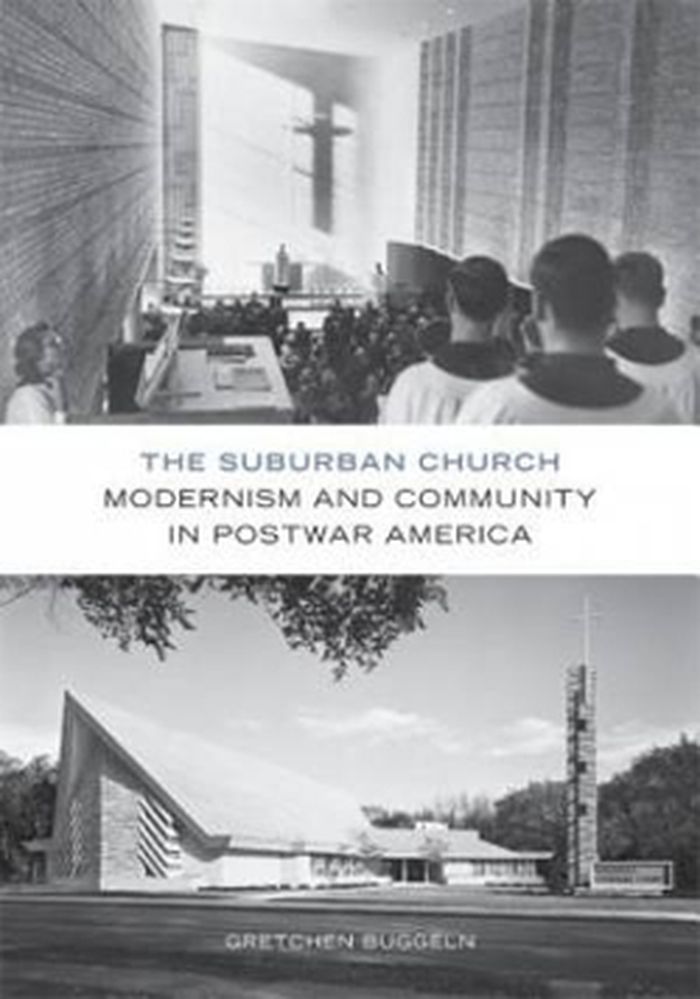
After World War II, America’s religious denominations spent billions on church architecture as they spread into the suburbs. In this illustrated history of midcentury modern churches in the Midwest, Gretchen Buggeln shows how architects and suburban congregations joined forces to work out a vision of how modernist churches might help reinvigorate Protestant worship and community. The result offers a new perspective on postwar architecture, religion, and society. Drawing on the architectural record, church archives, and oral histories, The Suburban Church focuses on collaborations between architects Edward D. Dart, Edward A. Sövik, Charles E. Stade, and seventy-five congregations. By telling the stories behind their modernist churches, the book describes how the buildings both reflected and shaped developments in postwar religion—its ecumenism, optimism, and liturgical innovation, as well as its fears about staying relevant during a time of vast cultural, social, and demographic change.
The suburban church: modernism and community in postwar America
Actions:
Price:
$59.95
(available in store)
Summary:
After World War II, America’s religious denominations spent billions on church architecture as they spread into the suburbs. In this illustrated history of midcentury modern churches in the Midwest, Gretchen Buggeln shows how architects and suburban congregations joined forces to work out a vision of how modernist churches might help reinvigorate Protestant worship and community. The result offers a new perspective on postwar architecture, religion, and society. Drawing on the architectural record, church archives, and oral histories, The Suburban Church focuses on collaborations between architects Edward D. Dart, Edward A. Sövik, Charles E. Stade, and seventy-five congregations. By telling the stories behind their modernist churches, the book describes how the buildings both reflected and shaped developments in postwar religion—its ecumenism, optimism, and liturgical innovation, as well as its fears about staying relevant during a time of vast cultural, social, and demographic change.
Form:
books
books
Publication:
December 2015
December 2015
Subject:
Architectural Theory
Architectural Theory
Form:
books
books

Price:
$59.99
(available to order)
Summary:
The North is changing at an unprecedented rate as industrial development and the climate crisis disrupt not only the environment but also long-standing relationships to the land and traditional means of livelihood. This publication explores the ways in which Indigenous peoples in the Arctic have adapted to challenging circumstances, including past cultural and(...)
$59.99
(available to order)
Summary:
The North is changing at an unprecedented rate as industrial development and the climate crisis disrupt not only the environment but also long-standing relationships to the land and traditional means of livelihood. This publication explores the ways in which Indigenous peoples in the Arctic have adapted to challenging circumstances, including past cultural and(...)
Title:
Memory and landscape: Indigenous responses to a changing North
Actions:
Price:
$59.99
(available to order)
Summary:
The North is changing at an unprecedented rate as industrial development and the climate crisis disrupt not only the environment but also long-standing relationships to the land and traditional means of livelihood. This publication explores the ways in which Indigenous peoples in the Arctic have adapted to challenging circumstances, including past cultural and environmental changes. Contributors document how Indigenous communities in Alaska, northern Canada, Greenland, and Siberia are seeking ways to maintain and strengthen their cultural identity while also embracing forces of disruption. Indigenous and non-Indigenous contributors bring together oral history and scholarly research from disciplines such as linguistics, archaeology, and ethnohistory. With an emphasis on Indigenous place names, this volume illuminates how the land—and the memories that are inextricably tied to it—continue to define Indigenous identity. The perspectives presented here also serve to underscore the value of Indigenous knowledge and its essential place in future studies of the Arctic.
Memory and landscape: Indigenous responses to a changing North
Actions:
Price:
$59.99
(available to order)
Summary:
The North is changing at an unprecedented rate as industrial development and the climate crisis disrupt not only the environment but also long-standing relationships to the land and traditional means of livelihood. This publication explores the ways in which Indigenous peoples in the Arctic have adapted to challenging circumstances, including past cultural and environmental changes. Contributors document how Indigenous communities in Alaska, northern Canada, Greenland, and Siberia are seeking ways to maintain and strengthen their cultural identity while also embracing forces of disruption. Indigenous and non-Indigenous contributors bring together oral history and scholarly research from disciplines such as linguistics, archaeology, and ethnohistory. With an emphasis on Indigenous place names, this volume illuminates how the land—and the memories that are inextricably tied to it—continue to define Indigenous identity. The perspectives presented here also serve to underscore the value of Indigenous knowledge and its essential place in future studies of the Arctic.
Form:
books
books
Publication:
July 2022
July 2022
Subject:
Current Exhibitions
Current Exhibitions
Form:
books
books

Actions:
Price:
$27.00
(available to order)
Summary:
New spatial notational systems for protecting and regaining Indigenous lands in the United States. Nina Valerie Kolowratnik challenges the conditions under which Indigenous rights to protect and regain traditional lands are currently negotiated in United States legal frameworks. This tenth volume in the Critical Spatial Practice series responds to the urgent need for(...)
$27.00
(available to order)
Summary:
New spatial notational systems for protecting and regaining Indigenous lands in the United States. Nina Valerie Kolowratnik challenges the conditions under which Indigenous rights to protect and regain traditional lands are currently negotiated in United States legal frameworks. This tenth volume in the Critical Spatial Practice series responds to the urgent need for(...)
Title:
The language of secret proof: indigenous truth and representation. Critical spatial practice
Actions:
Price:
$27.00
(available to order)
Summary:
New spatial notational systems for protecting and regaining Indigenous lands in the United States. Nina Valerie Kolowratnik challenges the conditions under which Indigenous rights to protect and regain traditional lands are currently negotiated in United States legal frameworks. This tenth volume in the Critical Spatial Practice series responds to the urgent need for alternative modes of evidentiary production by introducing an innovative system of architectural drawing and notation. Kolowratnik focuses on the double bind in which Native Pueblo communities in the United States find themselves when they become involved in a legal effort to reclaim and protect ancestral lands; the process of producing evidence runs counter to their structural organization around oral history and cultural secrecy. The spatial notational systems developed by Kolowratnik with Hemish tribal members from northern New Mexico and presented in this volume are an attempt to produce evidentiary documentation that speaks Native truths while respecting demands on secrecy. These systems also attempt to instigate a dialogue where there currently is none, working to deconstruct the fixed opposition between secrecy and disclosure within Western legal systems.
The language of secret proof: indigenous truth and representation. Critical spatial practice
Actions:
Price:
$27.00
(available to order)
Summary:
New spatial notational systems for protecting and regaining Indigenous lands in the United States. Nina Valerie Kolowratnik challenges the conditions under which Indigenous rights to protect and regain traditional lands are currently negotiated in United States legal frameworks. This tenth volume in the Critical Spatial Practice series responds to the urgent need for alternative modes of evidentiary production by introducing an innovative system of architectural drawing and notation. Kolowratnik focuses on the double bind in which Native Pueblo communities in the United States find themselves when they become involved in a legal effort to reclaim and protect ancestral lands; the process of producing evidence runs counter to their structural organization around oral history and cultural secrecy. The spatial notational systems developed by Kolowratnik with Hemish tribal members from northern New Mexico and presented in this volume are an attempt to produce evidentiary documentation that speaks Native truths while respecting demands on secrecy. These systems also attempt to instigate a dialogue where there currently is none, working to deconstruct the fixed opposition between secrecy and disclosure within Western legal systems.
Form:
books
books
Publication:
March 2020
March 2020
Subject:
Architectural Theory
Architectural Theory
Form:
books
books
Actions:
Price:
$31.95
(available in store)
Summary:
The Tree of Meaning is a collection of thirteen lectures given by internationally-renowned poet, linguist and typographer Robert Bringhurst. Together these lectures present a superbly grounded approach to the study of language, focusing on storytelling, mythology, comparative literature, humanity and the breadth of oral culture. Bringhurst’s commitment to what he calls(...)
$31.95
(available in store)
Summary:
The Tree of Meaning is a collection of thirteen lectures given by internationally-renowned poet, linguist and typographer Robert Bringhurst. Together these lectures present a superbly grounded approach to the study of language, focusing on storytelling, mythology, comparative literature, humanity and the breadth of oral culture. Bringhurst’s commitment to what he calls(...)
Title:
The tree of meaning: thirteen talks
Actions:
Price:
$31.95
(available in store)
Summary:
The Tree of Meaning is a collection of thirteen lectures given by internationally-renowned poet, linguist and typographer Robert Bringhurst. Together these lectures present a superbly grounded approach to the study of language, focusing on storytelling, mythology, comparative literature, humanity and the breadth of oral culture. Bringhurst’s commitment to what he calls ‘ecological linguistics’ emerges in his studies of Native American art and storytelling, his understanding of poetry, and his championing of a more truly universal conception of what constitutes literature. The collection features a sustained focus on Haida culture (including the work of storytellers Skaay and Ghandl, and artist Bill Reid), on the process of translation, and on the relationship between beings and language. Spanning ten years of lecturing, The Tree of Meaning is remarkable not only for the cohesion of its author’s own ideas but for the synthesis of such wide-ranging perspectives and examples of cultures both human and non-human. These thirteen lectures draw together a highly personalized and active study of Native American art and literature, world languages, philosophy and natural history. To each subject Bringhurst brings an ecologically conscious, humanitarian approach and an enthusiastic interest in the world around him.
The tree of meaning: thirteen talks
Actions:
Price:
$31.95
(available in store)
Summary:
The Tree of Meaning is a collection of thirteen lectures given by internationally-renowned poet, linguist and typographer Robert Bringhurst. Together these lectures present a superbly grounded approach to the study of language, focusing on storytelling, mythology, comparative literature, humanity and the breadth of oral culture. Bringhurst’s commitment to what he calls ‘ecological linguistics’ emerges in his studies of Native American art and storytelling, his understanding of poetry, and his championing of a more truly universal conception of what constitutes literature. The collection features a sustained focus on Haida culture (including the work of storytellers Skaay and Ghandl, and artist Bill Reid), on the process of translation, and on the relationship between beings and language. Spanning ten years of lecturing, The Tree of Meaning is remarkable not only for the cohesion of its author’s own ideas but for the synthesis of such wide-ranging perspectives and examples of cultures both human and non-human. These thirteen lectures draw together a highly personalized and active study of Native American art and literature, world languages, philosophy and natural history. To each subject Bringhurst brings an ecologically conscious, humanitarian approach and an enthusiastic interest in the world around him.
Form:
books
books
Publication:
November 2008
November 2008
Subject:
Art Theory
Art Theory
Form:
books
books
Title:
The tenants of East Harlem
The tenants of East Harlem
Actions:
Price:
$24.95
(available to order)
Summary:
Rich with the textures and rhythms of street life, "The tenants of East Harlem" is an unconventional biography of a neighborhood told through the life stories of seven residents whose experiences there span nearly a century. Modeled on the ethnic distinctions that divide the community, the book portrays the old guard of East Harlem: Pete, one of the last Italian(...)
$24.95
(available to order)
Summary:
Rich with the textures and rhythms of street life, "The tenants of East Harlem" is an unconventional biography of a neighborhood told through the life stories of seven residents whose experiences there span nearly a century. Modeled on the ethnic distinctions that divide the community, the book portrays the old guard of East Harlem: Pete, one of the last Italian(...)
Subject:
Urban Theory
Urban Theory
Publication:
August 2006, Berkeley, Los Angeles, London
August 2006, Berkeley, Los Angeles, London
Title:
The tenants of East Harlem
Actions:
Price:
$24.95
(available to order)
Summary:
Rich with the textures and rhythms of street life, "The tenants of East Harlem" is an unconventional biography of a neighborhood told through the life stories of seven residents whose experiences there span nearly a century. Modeled on the ethnic distinctions that divide the community, the book portrays the old guard of East Harlem: Pete, one of the last Italian holdouts; José, a Puerto Rican; and Lucille, an African American. Side by side with these representatives of a century of ethnic succession are the newcomers: Maria, an undocumented Mexican; Mohamed, a West African entrepreneur; Si Zhi, a Chinese immigrant and landlord; and, finally, the author himself, a reluctant beneficiary of urban renewal. Russell Leigh Sharman weaves these oral histories together with fine-grained ethnographic observations and urban history to examine the ways that immigration, housing, ethnic change, gentrification, race, class, and gender have affected the neighborhood over time. Providing access to the nuances of inner-city life, "The tenants of East Harlem" shows how roots sink so quickly in a community that has always hosted the transient, how new immigrants are challenging the claims of the old, and how that cycle is threatened as never before by the specter of gentrification.
The tenants of East Harlem
Actions:
Price:
$24.95
(available to order)
Summary:
Rich with the textures and rhythms of street life, "The tenants of East Harlem" is an unconventional biography of a neighborhood told through the life stories of seven residents whose experiences there span nearly a century. Modeled on the ethnic distinctions that divide the community, the book portrays the old guard of East Harlem: Pete, one of the last Italian holdouts; José, a Puerto Rican; and Lucille, an African American. Side by side with these representatives of a century of ethnic succession are the newcomers: Maria, an undocumented Mexican; Mohamed, a West African entrepreneur; Si Zhi, a Chinese immigrant and landlord; and, finally, the author himself, a reluctant beneficiary of urban renewal. Russell Leigh Sharman weaves these oral histories together with fine-grained ethnographic observations and urban history to examine the ways that immigration, housing, ethnic change, gentrification, race, class, and gender have affected the neighborhood over time. Providing access to the nuances of inner-city life, "The tenants of East Harlem" shows how roots sink so quickly in a community that has always hosted the transient, how new immigrants are challenging the claims of the old, and how that cycle is threatened as never before by the specter of gentrification.
Form:
books
books
Publication:
August 2006, Berkeley, Los Angeles, London
August 2006, Berkeley, Los Angeles, London
Subject:
Urban Theory
Urban Theory


