


422 Results
Form:
books
books
Actions:
Price:
$70.00
(available to order)
Summary:
Since the time of ancient Rome, architects, engineers, and builders have struggled with the problem of building domed ceilings over large spaces. No one was more skilled at this than the Rafael Guastavino family, a father and son team of Spanish immigrants who oversaw the construction of thousands of spectacular thin-tile vaults across the United States between the 1880s(...)
$70.00
(available to order)
Summary:
Since the time of ancient Rome, architects, engineers, and builders have struggled with the problem of building domed ceilings over large spaces. No one was more skilled at this than the Rafael Guastavino family, a father and son team of Spanish immigrants who oversaw the construction of thousands of spectacular thin-tile vaults across the United States between the 1880s(...)
Title:
Guastavino Vaulting: The art of structural tile
Actions:
Price:
$70.00
(available to order)
Summary:
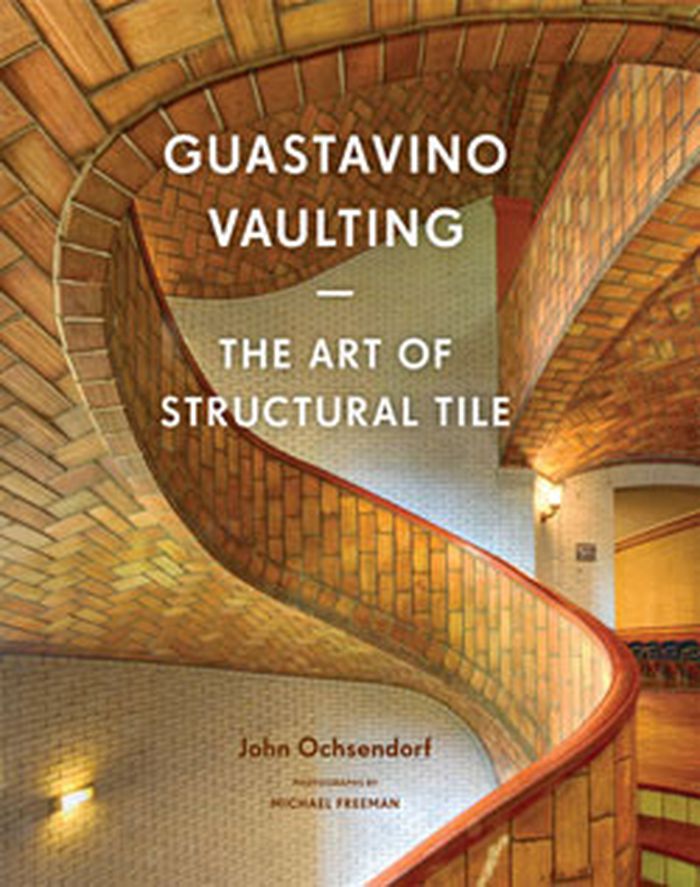
Since the time of ancient Rome, architects, engineers, and builders have struggled with the problem of building domed ceilings over large spaces. No one was more skilled at this than the Rafael Guastavino family, a father and son team of Spanish immigrants who oversaw the construction of thousands of spectacular thin-tile vaults across the United States between the 1880s and the 1950s. These versatile, strong, and fireproof vaults were built by Guastavino in more than two hundred major buildings in Manhattan, and in hundreds more across the country, including Grand Central Terminal, Carnegie Hall, and many major university buildings. Because the Guastavinos served only as contractors on these projects, their firm's accomplishments have remained relatively unknown to the public. Guastavino Vaulting traces the development of the remarkable construction technology from its Mediterranean roots to its highest achievements in the United States. This long overdue first monograph features archival images, drawings, and beautiful new color photography showcasing the most incredible Guastavino vaulted spaces.
Guastavino Vaulting: The art of structural tile
Actions:
Price:
$70.00
(available to order)
Summary:
Since the time of ancient Rome, architects, engineers, and builders have struggled with the problem of building domed ceilings over large spaces. No one was more skilled at this than the Rafael Guastavino family, a father and son team of Spanish immigrants who oversaw the construction of thousands of spectacular thin-tile vaults across the United States between the 1880s and the 1950s. These versatile, strong, and fireproof vaults were built by Guastavino in more than two hundred major buildings in Manhattan, and in hundreds more across the country, including Grand Central Terminal, Carnegie Hall, and many major university buildings. Because the Guastavinos served only as contractors on these projects, their firm's accomplishments have remained relatively unknown to the public. Guastavino Vaulting traces the development of the remarkable construction technology from its Mediterranean roots to its highest achievements in the United States. This long overdue first monograph features archival images, drawings, and beautiful new color photography showcasing the most incredible Guastavino vaulted spaces.
Form:
books
books
Publication:
October 2010
October 2010
Subject:
Engineering Structures
Engineering Structures
Form:
books
books
Title:
Eero Saarinen
Eero Saarinen
Actions:
Price:
$110.00
(available to order)
Summary:
This book is a timely portrait of the work of an architect who expanded the vocabulary of modern architecture. Eero Saarinen and Balthazar Korab constitute a unique team in the history of architecture: Saarinen, the mid-twentieth-century architect who challenged the architectural conventions of his time, and Korab, an architect in Saarinen's office whose perceptive(...)
$110.00
(available to order)
Summary:
This book is a timely portrait of the work of an architect who expanded the vocabulary of modern architecture. Eero Saarinen and Balthazar Korab constitute a unique team in the history of architecture: Saarinen, the mid-twentieth-century architect who challenged the architectural conventions of his time, and Korab, an architect in Saarinen's office whose perceptive(...)
Subject:
Architecture Monographs
Architecture Monographs
Publication:
November 2007, New York, London
November 2007, New York, London
Title:
Eero Saarinen
Actions:
Price:
$110.00
(available to order)
Summary:
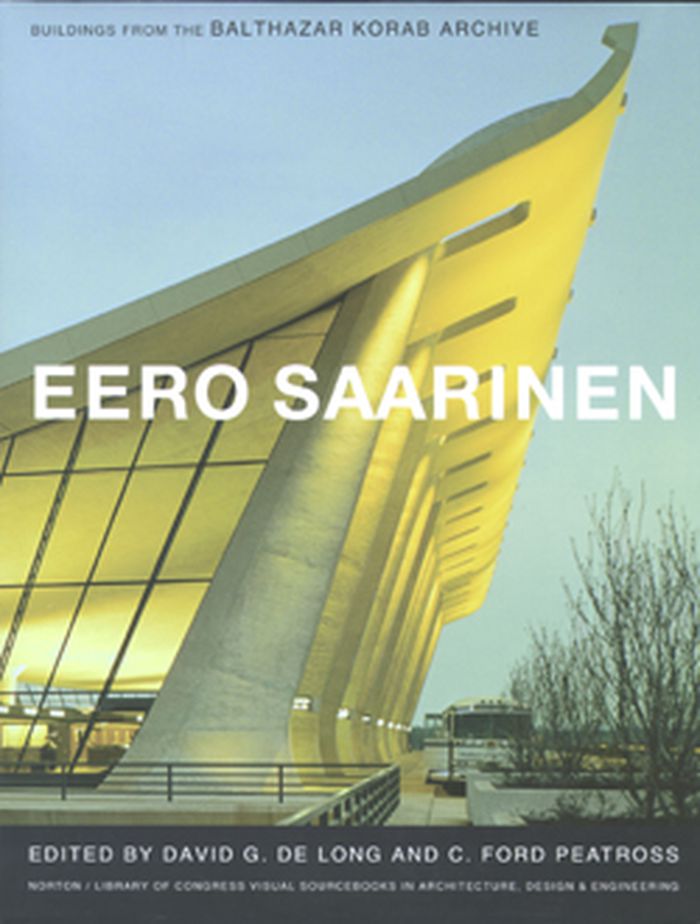
This book is a timely portrait of the work of an architect who expanded the vocabulary of modern architecture. Eero Saarinen and Balthazar Korab constitute a unique team in the history of architecture: Saarinen, the mid-twentieth-century architect who challenged the architectural conventions of his time, and Korab, an architect in Saarinen's office whose perceptive photographs reveal the brilliance of Saarinen's work. This visual sourcebook illustrates nineteen Saarinen commissions in photographs drawn from Korab's archive, providing multiple views of the buildings themselves as well as views of their construction and of architectural models that were critical to their design. Images of Saarinen's office and home provide personal ambience, and an introductory essay positions Saarinen's work within the broader context of his time. Seen in detail, such earlier work as the General Motors Technical Center (1948-56) or the Miller house (1953-57) show departures from orthodox modernism. Saarinen's assured handling of new materials and new building functions impart lasting value to his work, as exemplified by the iconic Trans World Airlines Terminal (1956-62) and Dulles International Airport (1958-63).
Eero Saarinen
Actions:
Price:
$110.00
(available to order)
Summary:
This book is a timely portrait of the work of an architect who expanded the vocabulary of modern architecture. Eero Saarinen and Balthazar Korab constitute a unique team in the history of architecture: Saarinen, the mid-twentieth-century architect who challenged the architectural conventions of his time, and Korab, an architect in Saarinen's office whose perceptive photographs reveal the brilliance of Saarinen's work. This visual sourcebook illustrates nineteen Saarinen commissions in photographs drawn from Korab's archive, providing multiple views of the buildings themselves as well as views of their construction and of architectural models that were critical to their design. Images of Saarinen's office and home provide personal ambience, and an introductory essay positions Saarinen's work within the broader context of his time. Seen in detail, such earlier work as the General Motors Technical Center (1948-56) or the Miller house (1953-57) show departures from orthodox modernism. Saarinen's assured handling of new materials and new building functions impart lasting value to his work, as exemplified by the iconic Trans World Airlines Terminal (1956-62) and Dulles International Airport (1958-63).
Form:
books
books
Publication:
November 2007, New York, London
November 2007, New York, London
Subject:
Architecture Monographs
Architecture Monographs
Form:
books
books
Title:
The Monocle book of homes
The Monocle book of homes
Actions:
Price:
$86.00
(available to order)
Summary:
Good homes are places where lives unfold, families grow up, dogs jump on sofas, and friends share meals. They’re also spaces to find some solitude—a quiet corner to read a book or have a Saturday afternoon nap. Homes need to do it all—they sustain you, inspire you, and tell your story through architecture, design, and collections. Monocle has always celebrated everything(...)
$86.00
(available to order)
Summary:
Good homes are places where lives unfold, families grow up, dogs jump on sofas, and friends share meals. They’re also spaces to find some solitude—a quiet corner to read a book or have a Saturday afternoon nap. Homes need to do it all—they sustain you, inspire you, and tell your story through architecture, design, and collections. Monocle has always celebrated everything(...)
Title:
The Monocle book of homes
Actions:
Price:
$86.00
(available to order)
Summary:
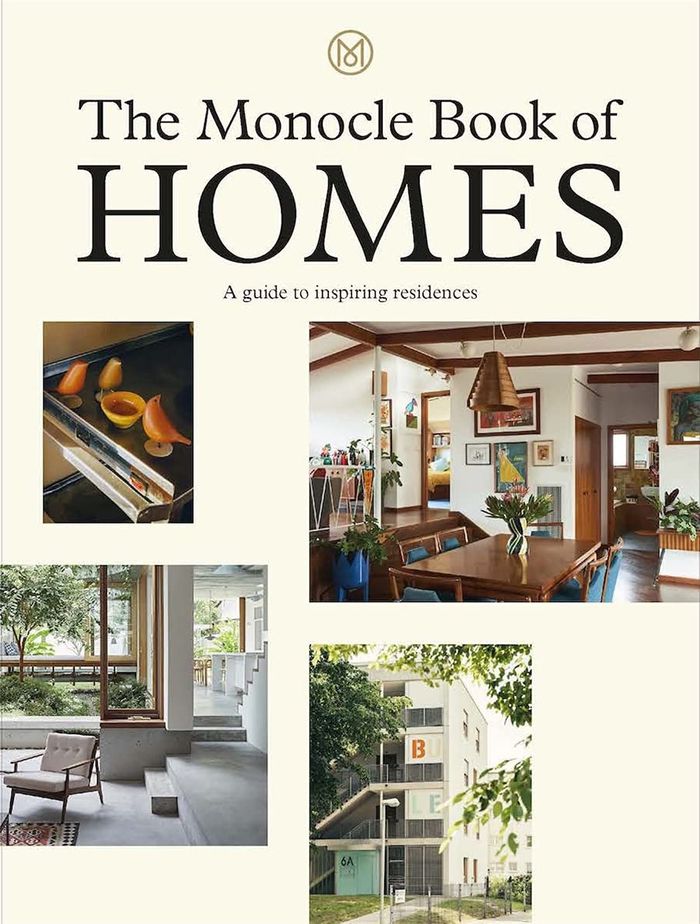
Good homes are places where lives unfold, families grow up, dogs jump on sofas, and friends share meals. They’re also spaces to find some solitude—a quiet corner to read a book or have a Saturday afternoon nap. Homes need to do it all—they sustain you, inspire you, and tell your story through architecture, design, and collections. Monocle has always celebrated everything that makes a space a home when covering residences—whether featuring a city hideaway, a modernist seaside residence, or a summer outpost in a forest. The Monocle team brings this all together in one volume that explores individual homes, housing projects old and new, communities of self-builders, even whole neighborhoods where a simple philosophy of building well has created quality of life for many. "The Monocle book of homes" is packed with great photography that delivers the bigger picture and the smallest details alongside fascinating essays full of advice by key thinkers, writers, and designers. As we spend more time at home than ever, this is a book that could change how you live.
The Monocle book of homes
Actions:
Price:
$86.00
(available to order)
Summary:
Good homes are places where lives unfold, families grow up, dogs jump on sofas, and friends share meals. They’re also spaces to find some solitude—a quiet corner to read a book or have a Saturday afternoon nap. Homes need to do it all—they sustain you, inspire you, and tell your story through architecture, design, and collections. Monocle has always celebrated everything that makes a space a home when covering residences—whether featuring a city hideaway, a modernist seaside residence, or a summer outpost in a forest. The Monocle team brings this all together in one volume that explores individual homes, housing projects old and new, communities of self-builders, even whole neighborhoods where a simple philosophy of building well has created quality of life for many. "The Monocle book of homes" is packed with great photography that delivers the bigger picture and the smallest details alongside fascinating essays full of advice by key thinkers, writers, and designers. As we spend more time at home than ever, this is a book that could change how you live.
Form:
books
books
Publication:
August 2021
August 2021
Subject:
Residential Architecture
Residential Architecture
Form:
audio
audio
Actions:
Description:
1 online resource.
Author:
Subject:
Publication:
[Place of publication not identified] : Lateral Addition, 2016.
[Place of publication not identified] : Lateral Addition, 2016.
Title:
A Partial Exegesis of Cricket, its Laws and Rituals.
Actions:
Description:
1 online resource.
A Partial Exegesis of Cricket, its Laws and Rituals.
Actions:
Description:
1 online resource.
Form:
audio
audio
Publication:
[Place of publication not identified] : Lateral Addition, 2016.
[Place of publication not identified] : Lateral Addition, 2016.
Author:
Subject:
Form:
books
books
Actions:
Price:
$28.00
(available in store)
Summary:
A cloth edition of this book has been published by Yale University Press at $ 90,00. This engaging book presents the first critical retrospective look at the extraordinary architectural achievement of Robert Venturi, Denise Scott Brown, and their firm. Known for such prominent buildings as the Sainsbury Wing at the National Gallery in London and the Seattle Art Museum as(...)
$28.00
(available in store)
Summary:
A cloth edition of this book has been published by Yale University Press at $ 90,00. This engaging book presents the first critical retrospective look at the extraordinary architectural achievement of Robert Venturi, Denise Scott Brown, and their firm. Known for such prominent buildings as the Sainsbury Wing at the National Gallery in London and the Seattle Art Museum as(...)
Subject:
Architecture Monographs
Architecture Monographs
Publication:
June 2001, Philadelphia
June 2001, Philadelphia
Title:
Venturi, Brown and associates: out of the ordinary
Actions:
Price:
$28.00
(available in store)
Summary:
A cloth edition of this book has been published by Yale University Press at $ 90,00. This engaging book presents the first critical retrospective look at the extraordinary architectural achievement of Robert Venturi, Denise Scott Brown, and their firm. Known for such prominent buildings as the Sainsbury Wing at the National Gallery in London and the Seattle Art Museum as well as such major urban revitalization plans as Washington Avenue in Miami and South Street in Philadelphia, Venturi, Scott Brown and Associates changed the face of architectural history. This husband and wife team rejected the universality of modernist design for a particularized contextual and associational approach to building, lauding the “complexity and contradictions” in the historic cityscape and “learning from Las Vegas” the value and vitality of the everyday environment. The book, which combines both biography and critical analysis, includes essays on the firm’s early and later architectural works and on their lesser-known decorative arts. It also features handsome color plates of the firm’s buildings, architectural drawings, and furniture and other decorative arts, as well as a checklist of all their buildings and projects.
Venturi, Brown and associates: out of the ordinary
Actions:
Price:
$28.00
(available in store)
Summary:
A cloth edition of this book has been published by Yale University Press at $ 90,00. This engaging book presents the first critical retrospective look at the extraordinary architectural achievement of Robert Venturi, Denise Scott Brown, and their firm. Known for such prominent buildings as the Sainsbury Wing at the National Gallery in London and the Seattle Art Museum as well as such major urban revitalization plans as Washington Avenue in Miami and South Street in Philadelphia, Venturi, Scott Brown and Associates changed the face of architectural history. This husband and wife team rejected the universality of modernist design for a particularized contextual and associational approach to building, lauding the “complexity and contradictions” in the historic cityscape and “learning from Las Vegas” the value and vitality of the everyday environment. The book, which combines both biography and critical analysis, includes essays on the firm’s early and later architectural works and on their lesser-known decorative arts. It also features handsome color plates of the firm’s buildings, architectural drawings, and furniture and other decorative arts, as well as a checklist of all their buildings and projects.
Form:
books
books
Publication:
June 2001, Philadelphia
June 2001, Philadelphia
Subject:
Architecture Monographs
Architecture Monographs
Form:
books
books
Title:
The Reichstag graffiti
The Reichstag graffiti
Actions:
Price:
$52.50
(available to order)
Summary:
The walls of the Reichstag are covered with graffiti, written by victorious Soviet soldiers in 1945. Hidden for 30 years, the Reichstag graffiti were rediscovered by Norman Foster and his team when they began work on the building in 1995. They were preserved as part of Foster’s concept of the Reichstag as a ‘living museum’ of German history. Published at a time when the(...)
$52.50
(available to order)
Summary:
The walls of the Reichstag are covered with graffiti, written by victorious Soviet soldiers in 1945. Hidden for 30 years, the Reichstag graffiti were rediscovered by Norman Foster and his team when they began work on the building in 1995. They were preserved as part of Foster’s concept of the Reichstag as a ‘living museum’ of German history. Published at a time when the(...)
Publication:
March 2003, Berlin
March 2003, Berlin
Title:
The Reichstag graffiti
Actions:
Price:
$52.50
(available to order)
Summary:
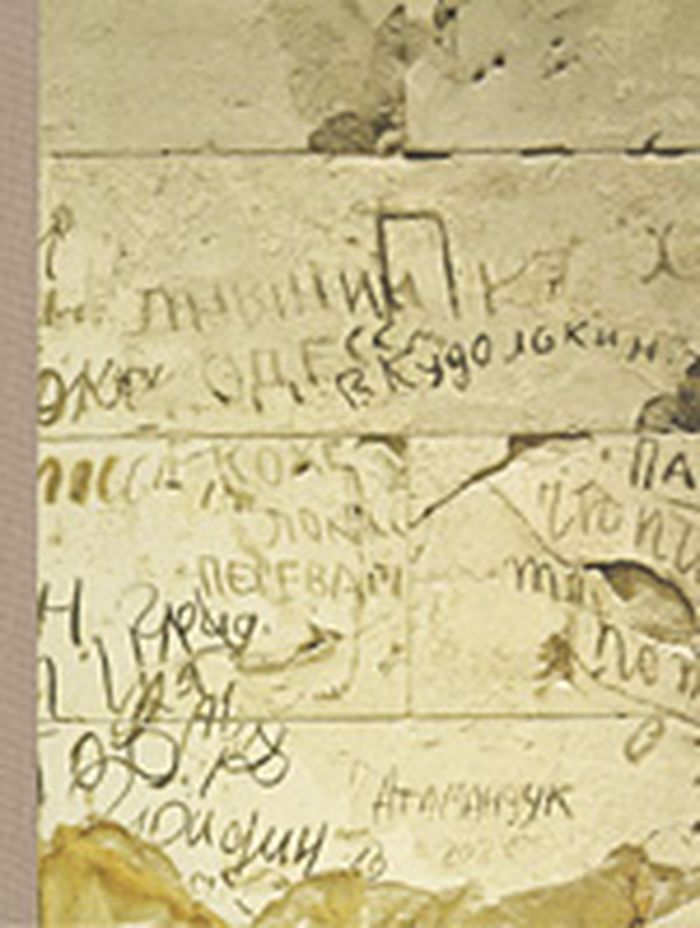
The walls of the Reichstag are covered with graffiti, written by victorious Soviet soldiers in 1945. Hidden for 30 years, the Reichstag graffiti were rediscovered by Norman Foster and his team when they began work on the building in 1995. They were preserved as part of Foster’s concept of the Reichstag as a ‘living museum’ of German history. Published at a time when the graffiti are threatened with eradication, this book offers an important visual and literary record. Deborah Lipstadt considers the arguments for and against the preservation of the graffiti: is the preservation, as some charge, "morally offensive" and "masochistic" or does it indicate a brave determination not to forget the tragedies of the past? And what does it mean and say about Germany today? Frederick Baker considers the graffiti as a monument to the individual and offers an historical account of the Battle of Berlin through the eyes of Red Army soldiers as they approached their ultimate goal, including the soldier who first raised the Red Flag above the Reichstag. This illustrated volume allows the inscriptions to be made accessible and understandable to a wider public for the first time.
The Reichstag graffiti
Actions:
Price:
$52.50
(available to order)
Summary:
The walls of the Reichstag are covered with graffiti, written by victorious Soviet soldiers in 1945. Hidden for 30 years, the Reichstag graffiti were rediscovered by Norman Foster and his team when they began work on the building in 1995. They were preserved as part of Foster’s concept of the Reichstag as a ‘living museum’ of German history. Published at a time when the graffiti are threatened with eradication, this book offers an important visual and literary record. Deborah Lipstadt considers the arguments for and against the preservation of the graffiti: is the preservation, as some charge, "morally offensive" and "masochistic" or does it indicate a brave determination not to forget the tragedies of the past? And what does it mean and say about Germany today? Frederick Baker considers the graffiti as a monument to the individual and offers an historical account of the Battle of Berlin through the eyes of Red Army soldiers as they approached their ultimate goal, including the soldier who first raised the Red Flag above the Reichstag. This illustrated volume allows the inscriptions to be made accessible and understandable to a wider public for the first time.
Form:
books
books
Publication:
March 2003, Berlin
March 2003, Berlin
Form:
books
books
Actions:
Price:
$107.00
(available to order)
Summary:
Helmut Jahn´s latest buildings are the result of interdisciplinary thinking taken a step further: they represent a symbiotic collaboration between architecture, engineering and building technology. The credo of this form of architecture engineering is transparency, openness and inner flexibility, and instrumental in its development are among others, Helmut Jahn, Werner(...)
$107.00
(available to order)
Summary:
Helmut Jahn´s latest buildings are the result of interdisciplinary thinking taken a step further: they represent a symbiotic collaboration between architecture, engineering and building technology. The credo of this form of architecture engineering is transparency, openness and inner flexibility, and instrumental in its development are among others, Helmut Jahn, Werner(...)
Subject:
Architecture Monographs
Architecture Monographs
Publication:
September 2002, Basel
September 2002, Basel
Title:
Helmut Jahn : architecture engineering
Actions:
Price:
$107.00
(available to order)
Summary:
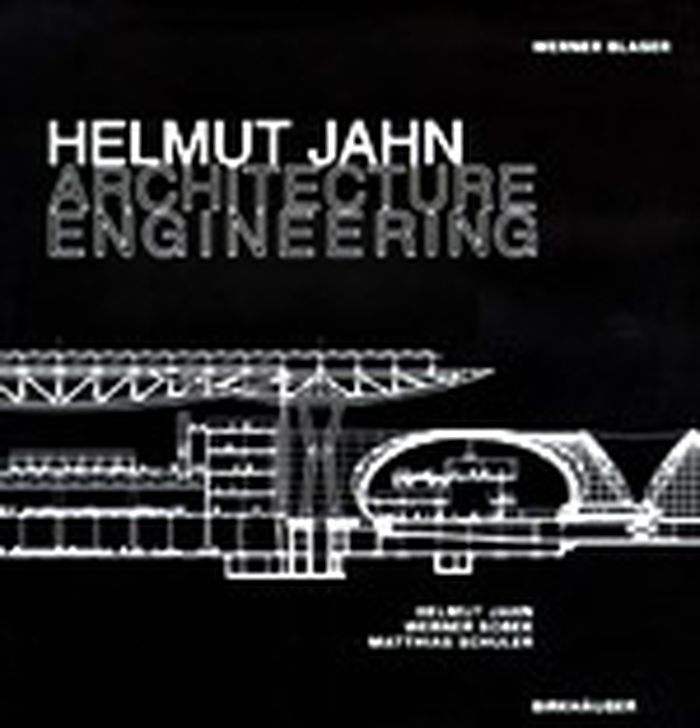
Helmut Jahn´s latest buildings are the result of interdisciplinary thinking taken a step further: they represent a symbiotic collaboration between architecture, engineering and building technology. The credo of this form of architecture engineering is transparency, openness and inner flexibility, and instrumental in its development are among others, Helmut Jahn, Werner Sobek and Matthias Schuler. This innovative team has taken up the challenge of turning optimum technical solutions into intelligent and resource-saving constructions, creating internationally acclaimed architecture of the very highest technical and aesthetical quality: "Modern buildings make the highest demands of technology. And it is not the architect who fulfils them but the engineer" (Helmut Jahn) This volume documents in detail a large number of recent projects in Europe, the USA and Asia by Helmut Jahn, Werner Sobek and Matthias Schuler including the European Union Headquarters in Charlemagne, Munich Airport Center, the Sony Centre in Berlin, the airport Cologne/Bonn, office buildings for the Deutsch Post in Bonn, Shanghai International Expo Centre, Bishopsgate (London), MANN (Chicago), New Bangkok International Airport, Illinois Institute of Technology Campus Center, and Shenzhen Convention and Exhibit Center.
Helmut Jahn : architecture engineering
Actions:
Price:
$107.00
(available to order)
Summary:
Helmut Jahn´s latest buildings are the result of interdisciplinary thinking taken a step further: they represent a symbiotic collaboration between architecture, engineering and building technology. The credo of this form of architecture engineering is transparency, openness and inner flexibility, and instrumental in its development are among others, Helmut Jahn, Werner Sobek and Matthias Schuler. This innovative team has taken up the challenge of turning optimum technical solutions into intelligent and resource-saving constructions, creating internationally acclaimed architecture of the very highest technical and aesthetical quality: "Modern buildings make the highest demands of technology. And it is not the architect who fulfils them but the engineer" (Helmut Jahn) This volume documents in detail a large number of recent projects in Europe, the USA and Asia by Helmut Jahn, Werner Sobek and Matthias Schuler including the European Union Headquarters in Charlemagne, Munich Airport Center, the Sony Centre in Berlin, the airport Cologne/Bonn, office buildings for the Deutsch Post in Bonn, Shanghai International Expo Centre, Bishopsgate (London), MANN (Chicago), New Bangkok International Airport, Illinois Institute of Technology Campus Center, and Shenzhen Convention and Exhibit Center.
Form:
books
books
Publication:
September 2002, Basel
September 2002, Basel
Subject:
Architecture Monographs
Architecture Monographs
Form:
books
books
Actions:
Price:
$45.00
(available in store)
Summary:
Mouna Andraos and Melissa Mongiat—together with their team at Daily tous les jours—have been creating celebrated interactive art and narrative experiences for public spaces around the world for over 15 years. Their groundbreaking work is part of an emergent practice that combines technology, storytelling, performance, and placemaking to build a new infrastructure for the(...)
$45.00
(available in store)
Summary:
Mouna Andraos and Melissa Mongiat—together with their team at Daily tous les jours—have been creating celebrated interactive art and narrative experiences for public spaces around the world for over 15 years. Their groundbreaking work is part of an emergent practice that combines technology, storytelling, performance, and placemaking to build a new infrastructure for the(...)
Publication:
August 2025
August 2025
Title:
Strangers need strange moments together: Designing interaction for public spaces
Actions:
Price:
$45.00
(available in store)
Summary:
Mouna Andraos and Melissa Mongiat—together with their team at Daily tous les jours—have been creating celebrated interactive art and narrative experiences for public spaces around the world for over 15 years. Their groundbreaking work is part of an emergent practice that combines technology, storytelling, performance, and placemaking to build a new infrastructure for the human spirit. In ''Strangers Need Strange Moments Together'', Andraos and Mongiat invite a broad range of readers—fellow practitioners, urbanists, policy makers, educators, and engaged citizens—to take a joyful approach to building resilient urban communities and re-enchanting public space. In times of unprecedented pace of urban growth, with increasing loneliness and division, they shed light on the importance of moving beyond purely data-driven urban planning methodologies—which prioritize productivity, efficiency, and automation—and forging new modes of public interaction. Cities must be spaces for the whimsical, unexpected, and weird, and for the wasted time and strange moments of serendipitous encounter. Andraos and Mongiat use the raw material of the “daily everyday” to propose new models of living together in the 21st century, and to foreground the dimensions of life that characterize what it means to be human in the first place.
Strangers need strange moments together: Designing interaction for public spaces
Actions:
Price:
$45.00
(available in store)
Summary:
Mouna Andraos and Melissa Mongiat—together with their team at Daily tous les jours—have been creating celebrated interactive art and narrative experiences for public spaces around the world for over 15 years. Their groundbreaking work is part of an emergent practice that combines technology, storytelling, performance, and placemaking to build a new infrastructure for the human spirit. In ''Strangers Need Strange Moments Together'', Andraos and Mongiat invite a broad range of readers—fellow practitioners, urbanists, policy makers, educators, and engaged citizens—to take a joyful approach to building resilient urban communities and re-enchanting public space. In times of unprecedented pace of urban growth, with increasing loneliness and division, they shed light on the importance of moving beyond purely data-driven urban planning methodologies—which prioritize productivity, efficiency, and automation—and forging new modes of public interaction. Cities must be spaces for the whimsical, unexpected, and weird, and for the wasted time and strange moments of serendipitous encounter. Andraos and Mongiat use the raw material of the “daily everyday” to propose new models of living together in the 21st century, and to foreground the dimensions of life that characterize what it means to be human in the first place.
Form:
books
books
Publication:
August 2025
August 2025
Form:
books
books
Title:
Minka, my farmhouse in Japan
Minka, my farmhouse in Japan
Actions:
Price:
$27.95
(available to order)
Summary:
In 1959 the journalist John Roderick joined the Tokyo bureau of the Associated Press. There, he befriended a Japanese family, the Takishitas. After musing offhandedly that he would like to one day have his own house in Japan, the family unbeknownst to John set out to grant his wish. They found Roderick a 250-year-old minka, or hand-built farmhouse, with a thatched roof(...)
$27.95
(available to order)
Summary:
In 1959 the journalist John Roderick joined the Tokyo bureau of the Associated Press. There, he befriended a Japanese family, the Takishitas. After musing offhandedly that he would like to one day have his own house in Japan, the family unbeknownst to John set out to grant his wish. They found Roderick a 250-year-old minka, or hand-built farmhouse, with a thatched roof(...)
Title:
Minka, my farmhouse in Japan
Actions:
Price:
$27.95
(available to order)
Summary:
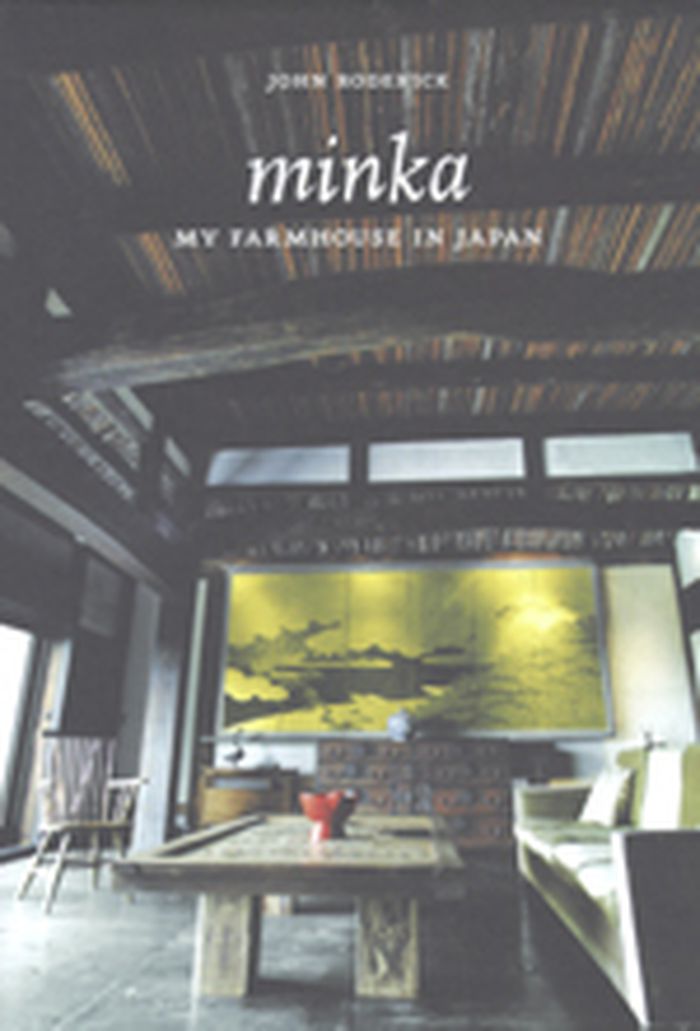
In 1959 the journalist John Roderick joined the Tokyo bureau of the Associated Press. There, he befriended a Japanese family, the Takishitas. After musing offhandedly that he would like to one day have his own house in Japan, the family unbeknownst to John set out to grant his wish. They found Roderick a 250-year-old minka, or hand-built farmhouse, with a thatched roof and held together entirely by wooden pegs and joinery. It was about to be washed away by flooding and was being offered for only fourteen dollars. Roderick graciously bought the house, but was privately dismayed at the prospect of living in this enormous old relic lacking heating, bathing, plumbing, and proper kitchen facilities. So the minka was dismantled and stored, where Roderick secretly hoped it would stay, as it did for several years. But Roderick's reverence for natural materials and his appreciation of traditional Japanese and Shinto craftsmanship eventually got the better of him. Before long a team of experienced carpenters were hoisting massive beams, laying wide wooden floors, and attaching the split-bamboo ceiling. In just forty days they rebuilt the house on a hill overlooking Kamakura, the ancient capital of Japan. Working together, they renovated the farmhouse, adding features such as floor-to-ceiling sliding glass doors and a modern kitchen, bath, and toilet. From these humble beginnings, Roderick's minka has become internationally known and has hosted such luminaries as Senator Hillary Clinton. John Roderick's architectural memoir "Minka" tells the compelling and often poignant story of how one man fell in love with the people, culture, and ancient building traditions of Japan, and reminds us all about the importance of craftsmanship and the meaning of place and home in the process.
Minka, my farmhouse in Japan
Actions:
Price:
$27.95
(available to order)
Summary:
In 1959 the journalist John Roderick joined the Tokyo bureau of the Associated Press. There, he befriended a Japanese family, the Takishitas. After musing offhandedly that he would like to one day have his own house in Japan, the family unbeknownst to John set out to grant his wish. They found Roderick a 250-year-old minka, or hand-built farmhouse, with a thatched roof and held together entirely by wooden pegs and joinery. It was about to be washed away by flooding and was being offered for only fourteen dollars. Roderick graciously bought the house, but was privately dismayed at the prospect of living in this enormous old relic lacking heating, bathing, plumbing, and proper kitchen facilities. So the minka was dismantled and stored, where Roderick secretly hoped it would stay, as it did for several years. But Roderick's reverence for natural materials and his appreciation of traditional Japanese and Shinto craftsmanship eventually got the better of him. Before long a team of experienced carpenters were hoisting massive beams, laying wide wooden floors, and attaching the split-bamboo ceiling. In just forty days they rebuilt the house on a hill overlooking Kamakura, the ancient capital of Japan. Working together, they renovated the farmhouse, adding features such as floor-to-ceiling sliding glass doors and a modern kitchen, bath, and toilet. From these humble beginnings, Roderick's minka has become internationally known and has hosted such luminaries as Senator Hillary Clinton. John Roderick's architectural memoir "Minka" tells the compelling and often poignant story of how one man fell in love with the people, culture, and ancient building traditions of Japan, and reminds us all about the importance of craftsmanship and the meaning of place and home in the process.
Form:
books
books
Publication:
November 2007, New York
November 2007, New York
Subject:
Contemporary Asian Architecture
Contemporary Asian Architecture
Form:
books
books

Actions:
Price:
$20.00
(available in store)
Summary:
Almost ten years ago, Canary architectural practice AmP with its founders Felipe Artengo Rufino and José Pastrana (and their former partner Fernando Menis / Today: Menis Arquitectos) received acclaim far beyond their own country of Spain with their government building for the Canary Islands. A decisive factor for the international success of the team, which can be(...)
$20.00
(available in store)
Summary:
Almost ten years ago, Canary architectural practice AmP with its founders Felipe Artengo Rufino and José Pastrana (and their former partner Fernando Menis / Today: Menis Arquitectos) received acclaim far beyond their own country of Spain with their government building for the Canary Islands. A decisive factor for the international success of the team, which can be(...)
Title:
Amp - the mark of the volcano : artengo + pastrana
Actions:
Price:
$20.00
(available in store)
Summary:
Almost ten years ago, Canary architectural practice AmP with its founders Felipe Artengo Rufino and José Pastrana (and their former partner Fernando Menis / Today: Menis Arquitectos) received acclaim far beyond their own country of Spain with their government building for the Canary Islands. A decisive factor for the international success of the team, which can be considered neither minimalist nor traditionalist, was the congenial mixture of four elements: their expressionist creative impulse, their deep roots in their home environment, the Canary Islands, their sculptural approach to architecture and the creative use of concrete as design element in combination with local materials. These vital aspects of their architecture also characterize the latest works of AmP, which are always the result of exact observations of space and locality. The Aedes exhibition’s focus is on the athletics stadium in Tenerife which was completed this year. Fitted like a giant earth and stone embankment into the suburban context, it represents at the same time a master piece of modern high-tech architecture. The two residential towers in Añaza, 2007, which have already gained landmark character and are an example of an offbeat approach to council housing in Spain, appear like giant concrete sculptures with their slightly bent shape and their odd-sized windows irregularly dispersed throughout the façade. Other projects are the court house in Santa Cruz, 2007 (competition entry), the extension building Cabildo, 2007 and a school in Orotawa, 2005. The competition entry for the harbour area in Los Cristianos, 2007, illustrates the sensitive approach of Felipe Artengo Rufino und José Pastrana within the urban context, achieving a user- friendly transformation of this area where the city meets the sea, for residents as well as for tourist. A fundamental principle of AmP would be to understand a place as a sediment of geological and climatic forces, of industrial, agrarian and urban residue, permeated by sociological and cultural components. Closeness to their environment and the means at their disposal enable Felipe Artengo Rufino and José Pastrana to do research in situ and thus create a clearly defined architecture. The scenic variety of the islands, in which light plays an essential role, has a strong influence on their design process. The effects of time on their work are vital to AmP. The aging process of their favourite materials concrete, stone and timber fosters a continuous natural change which accentuates the power of architecture and makes the formal and structural aspects become even more evident in the course of time.
Amp - the mark of the volcano : artengo + pastrana
Actions:
Price:
$20.00
(available in store)
Summary:
Almost ten years ago, Canary architectural practice AmP with its founders Felipe Artengo Rufino and José Pastrana (and their former partner Fernando Menis / Today: Menis Arquitectos) received acclaim far beyond their own country of Spain with their government building for the Canary Islands. A decisive factor for the international success of the team, which can be considered neither minimalist nor traditionalist, was the congenial mixture of four elements: their expressionist creative impulse, their deep roots in their home environment, the Canary Islands, their sculptural approach to architecture and the creative use of concrete as design element in combination with local materials. These vital aspects of their architecture also characterize the latest works of AmP, which are always the result of exact observations of space and locality. The Aedes exhibition’s focus is on the athletics stadium in Tenerife which was completed this year. Fitted like a giant earth and stone embankment into the suburban context, it represents at the same time a master piece of modern high-tech architecture. The two residential towers in Añaza, 2007, which have already gained landmark character and are an example of an offbeat approach to council housing in Spain, appear like giant concrete sculptures with their slightly bent shape and their odd-sized windows irregularly dispersed throughout the façade. Other projects are the court house in Santa Cruz, 2007 (competition entry), the extension building Cabildo, 2007 and a school in Orotawa, 2005. The competition entry for the harbour area in Los Cristianos, 2007, illustrates the sensitive approach of Felipe Artengo Rufino und José Pastrana within the urban context, achieving a user- friendly transformation of this area where the city meets the sea, for residents as well as for tourist. A fundamental principle of AmP would be to understand a place as a sediment of geological and climatic forces, of industrial, agrarian and urban residue, permeated by sociological and cultural components. Closeness to their environment and the means at their disposal enable Felipe Artengo Rufino and José Pastrana to do research in situ and thus create a clearly defined architecture. The scenic variety of the islands, in which light plays an essential role, has a strong influence on their design process. The effects of time on their work are vital to AmP. The aging process of their favourite materials concrete, stone and timber fosters a continuous natural change which accentuates the power of architecture and makes the formal and structural aspects become even more evident in the course of time.
Form:
books
books
Publication:
July 2007, Berlin
July 2007, Berlin
Subject:
small format
small format


