


4193 Results
Form:
books
books
Actions:
Price:
$65.00
(available to order)
Summary:
The volume, realized in co-operation with the Vitra Design Museum is both the catalogue of an internationally travelling exhibition and one of the first monographical studies entirely devoted to the subject of children’s games and furniture. Furniture and games for children, irrespective of culture or period, can be perceived as vehicles for communicating society’s(...)
$65.00
(available to order)
Summary:
The volume, realized in co-operation with the Vitra Design Museum is both the catalogue of an internationally travelling exhibition and one of the first monographical studies entirely devoted to the subject of children’s games and furniture. Furniture and games for children, irrespective of culture or period, can be perceived as vehicles for communicating society’s(...)
Subject:
Zines
Zines
Publication:
December 1998, Milano
December 1998, Milano
Title:
Kid size : the material world of childhood
Actions:
Price:
$65.00
(available to order)
Summary:
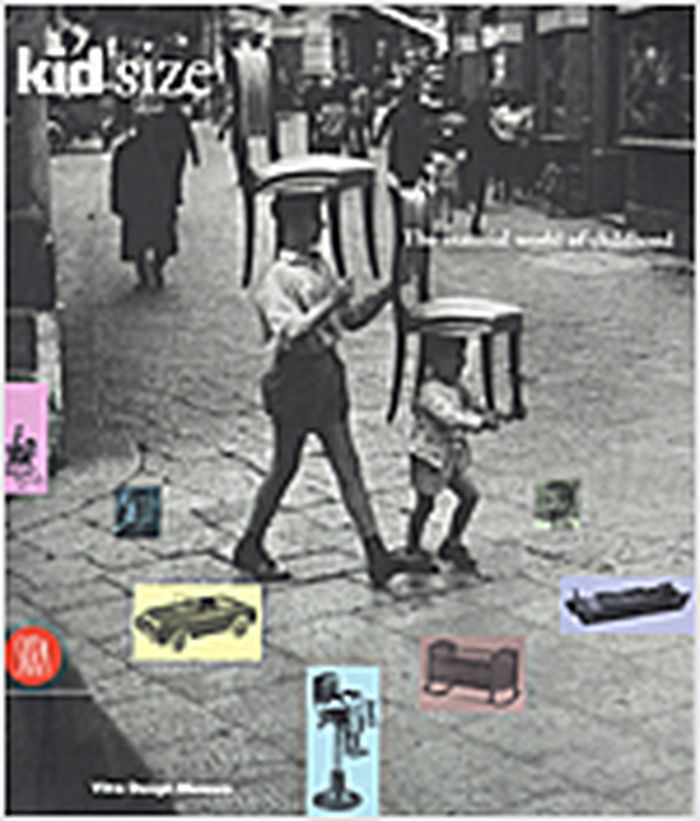
The volume, realized in co-operation with the Vitra Design Museum is both the catalogue of an internationally travelling exhibition and one of the first monographical studies entirely devoted to the subject of children’s games and furniture. Furniture and games for children, irrespective of culture or period, can be perceived as vehicles for communicating society’s attitudes towards learning, the child’s physical and phychological development, safety, order in the family, territory, the place of play and patterns of social behaviour; although the child, by contrast, regards them as largely interchangeable objects in the serious work of play, the organization of modern society tends to give them always more importance, changing them into real products of design. The volume aims to explore the world of childhood throughout the different types of furniture artefacts and games from various periods and cultures in the world which illuminate the changing relationship between children and adults, the growing attention to child-centred provision and educational values and the fundamental role of playing in the history of childhood of different countries. The catalogue essays are written by chilhood specialists, social historians, ethnologists, educationalists, industrials designers (specialist in playground and play equipment) and experts on children living in the various cultures of the world: Lucy Bullivant, Mike Scaife, Linda Pollock, Eileen Adams, Günter Beltzig, Ingeborg Weber-Kellermann, Gerhard Kubik, Tina Wodiung and Sally Kevill-Davies.
Kid size : the material world of childhood
Actions:
Price:
$65.00
(available to order)
Summary:
The volume, realized in co-operation with the Vitra Design Museum is both the catalogue of an internationally travelling exhibition and one of the first monographical studies entirely devoted to the subject of children’s games and furniture. Furniture and games for children, irrespective of culture or period, can be perceived as vehicles for communicating society’s attitudes towards learning, the child’s physical and phychological development, safety, order in the family, territory, the place of play and patterns of social behaviour; although the child, by contrast, regards them as largely interchangeable objects in the serious work of play, the organization of modern society tends to give them always more importance, changing them into real products of design. The volume aims to explore the world of childhood throughout the different types of furniture artefacts and games from various periods and cultures in the world which illuminate the changing relationship between children and adults, the growing attention to child-centred provision and educational values and the fundamental role of playing in the history of childhood of different countries. The catalogue essays are written by chilhood specialists, social historians, ethnologists, educationalists, industrials designers (specialist in playground and play equipment) and experts on children living in the various cultures of the world: Lucy Bullivant, Mike Scaife, Linda Pollock, Eileen Adams, Günter Beltzig, Ingeborg Weber-Kellermann, Gerhard Kubik, Tina Wodiung and Sally Kevill-Davies.
Form:
books
books
Publication:
December 1998, Milano
December 1998, Milano
Subject:
Zines
Zines
Form:
books
books
Actions:
Price:
$12.50
(available to order)
Summary:
Sally Stein reconsiders Dorothea Lange’s iconic portrait of maternity and modern emblem of family values in light of Lange’s long-overlooked ‘Padonna’ pictures and proposes that ‘Migrant Mother’ should in fact be seen as a disruptive image of women’s conflictual relation to home, and the world. Stein is an American academic and cultural theorist living in Los Angeles. The(...)
$12.50
(available to order)
Summary:
Sally Stein reconsiders Dorothea Lange’s iconic portrait of maternity and modern emblem of family values in light of Lange’s long-overlooked ‘Padonna’ pictures and proposes that ‘Migrant Mother’ should in fact be seen as a disruptive image of women’s conflictual relation to home, and the world. Stein is an American academic and cultural theorist living in Los Angeles. The(...)
Title:
Dorothea Lange: Migrant mother, Migrant gender
Actions:
Price:
$12.50
(available to order)
Summary:
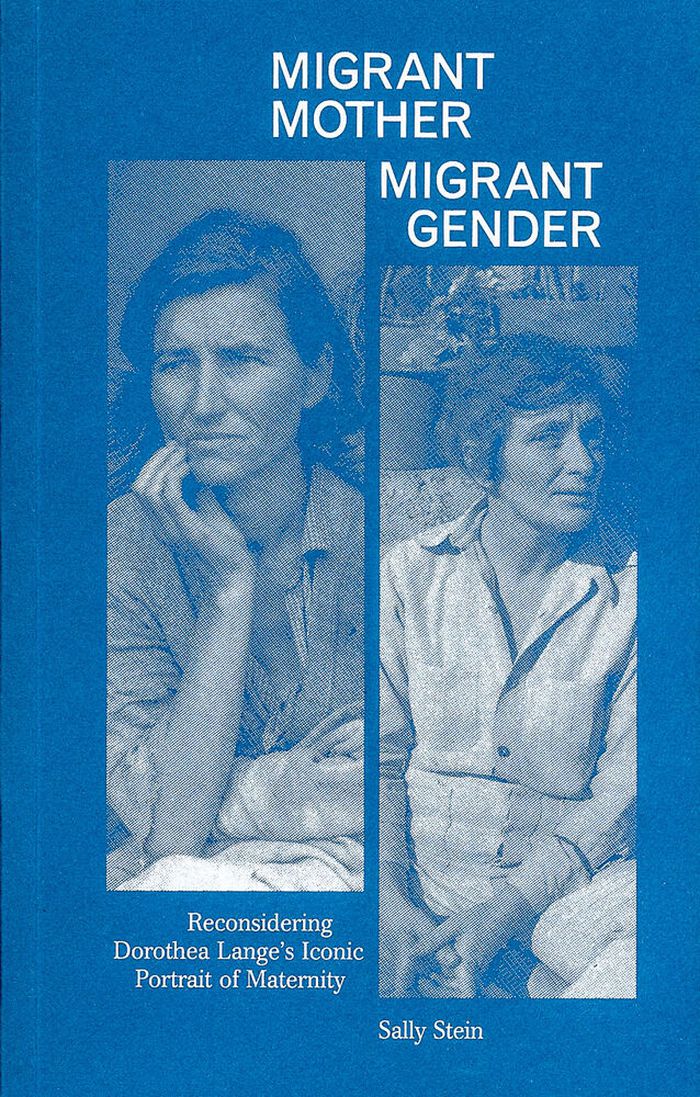
Sally Stein reconsiders Dorothea Lange’s iconic portrait of maternity and modern emblem of family values in light of Lange’s long-overlooked ‘Padonna’ pictures and proposes that ‘Migrant Mother’ should in fact be seen as a disruptive image of women’s conflictual relation to home, and the world. Stein is an American academic and cultural theorist living in Los Angeles. The interrelated topics she most often engages concern the multiple effects of documentary imagery, the politics of gender, and the status and meaning of black and white and color imagery on our perceptions, beliefs, even actions as consumers and citizens. Dr. Stein, Professor Emerita, UC Irvine, is an independent scholar based in Los Angeles who continues to research and write about 20thcentury photography in the U.S. and its relation to broader questions of culture and society. She has written about New Deal FSA photographers—particularly Dorothea Lange, Marion Post Wolcott, Jack Delano—as well as the contested image of FDR. Her numerous essays about popular mass media – Ladies Home Journal, Life and Look – extend her ongoing study of the various aspects of the rise of color photography. The interrelated topics she most often engages concern the multiple effects of documentary imagery, the politics of gender, and the status and meaning of black and white and color imagery on our perceptions, beliefs, even actions as consumers and citizens.
Dorothea Lange: Migrant mother, Migrant gender
Actions:
Price:
$12.50
(available to order)
Summary:
Sally Stein reconsiders Dorothea Lange’s iconic portrait of maternity and modern emblem of family values in light of Lange’s long-overlooked ‘Padonna’ pictures and proposes that ‘Migrant Mother’ should in fact be seen as a disruptive image of women’s conflictual relation to home, and the world. Stein is an American academic and cultural theorist living in Los Angeles. The interrelated topics she most often engages concern the multiple effects of documentary imagery, the politics of gender, and the status and meaning of black and white and color imagery on our perceptions, beliefs, even actions as consumers and citizens. Dr. Stein, Professor Emerita, UC Irvine, is an independent scholar based in Los Angeles who continues to research and write about 20thcentury photography in the U.S. and its relation to broader questions of culture and society. She has written about New Deal FSA photographers—particularly Dorothea Lange, Marion Post Wolcott, Jack Delano—as well as the contested image of FDR. Her numerous essays about popular mass media – Ladies Home Journal, Life and Look – extend her ongoing study of the various aspects of the rise of color photography. The interrelated topics she most often engages concern the multiple effects of documentary imagery, the politics of gender, and the status and meaning of black and white and color imagery on our perceptions, beliefs, even actions as consumers and citizens.
Form:
books
books
Publication:
February 2020
February 2020
Subject:
Theory of Photography
Theory of Photography
Form:
books
books
Holdings:
Description:
xxviii, 1139 pages : illustrations ; 25 cm
Description:
xxviii, 1139 pages : illustrations ; 25 cm
Author:
Subject:
Publication:
New York : Carroll & Graf, 1998.
New York : Carroll & Graf, 1998.
Title:
Faust's metropolis : a history of Berlin / Alexandra Richie.
Actions:
Holdings:
Description:
xxviii, 1139 pages : illustrations ; 25 cm
Faust's metropolis : a history of Berlin / Alexandra Richie.
Actions:
Holdings:
Description:
xxviii, 1139 pages : illustrations ; 25 cm
Form:
books
books
Publication:
New York : Carroll & Graf, 1998.
New York : Carroll & Graf, 1998.
Author:
Subject:
Form:
books
books
Title:
Working-class utopias : a history of cooperative housing in New York City / Robert M. Fogelson.
Working-class utopias : a history of cooperative housing in New York City / Robert M. Fogelson.
Actions:
Holdings:
Description:
384 pages, 16 unnumbered pages of plates : illustrations (black and white) ; 25 cm
Description:
384 pages, 16 unnumbered pages of plates : illustrations (black and white) ; 25 cm
Author:
Subject:
Publication:
Princeton : Princeton University Press, [2022]
Princeton : Princeton University Press, [2022]
Title:
Working-class utopias : a history of cooperative housing in New York City / Robert M. Fogelson.
Actions:
Holdings:
Description:
384 pages, 16 unnumbered pages of plates : illustrations (black and white) ; 25 cm
Working-class utopias : a history of cooperative housing in New York City / Robert M. Fogelson.
Actions:
Holdings:
Description:
384 pages, 16 unnumbered pages of plates : illustrations (black and white) ; 25 cm
Form:
books
books
Publication:
Princeton : Princeton University Press, [2022]
Princeton : Princeton University Press, [2022]
Author:
Subject:
Form:
books
books
Actions:
Holdings:
Description:
240 pages : illustrations (some color) ; 31 cm
Description:
240 pages : illustrations (some color) ; 31 cm
Author:
Subject:
Publication:
Cambridge, Mass. : MIT Press, ©1994.
Cambridge, Mass. : MIT Press, ©1994.
Title:
Ludwig Wittgenstein, architect / Paul Wijdeveld.
Actions:
Holdings:
Description:
240 pages : illustrations (some color) ; 31 cm
Ludwig Wittgenstein, architect / Paul Wijdeveld.
Actions:
Holdings:
Description:
240 pages : illustrations (some color) ; 31 cm
Form:
books
books
Publication:
Cambridge, Mass. : MIT Press, ©1994.
Cambridge, Mass. : MIT Press, ©1994.
Author:
Subject:
Form:
books
books
Actions:
Holdings:
Description:
160 pages : illustrations (some color) ; 26 cm
Description:
160 pages : illustrations (some color) ; 26 cm
Author:
Subject:
Publication:
New York : Stewart, Tabori & Chang, 1999.
New York : Stewart, Tabori & Chang, 1999.
Title:
The gardens of William Morris / Jill, Duchess of Hamilton, Penny Hart & John Simmons ; foreword by Roy Strong.
Actions:
Holdings:
Description:
160 pages : illustrations (some color) ; 26 cm
The gardens of William Morris / Jill, Duchess of Hamilton, Penny Hart & John Simmons ; foreword by Roy Strong.
Actions:
Holdings:
Description:
160 pages : illustrations (some color) ; 26 cm
Form:
books
books
Publication:
New York : Stewart, Tabori & Chang, 1999.
New York : Stewart, Tabori & Chang, 1999.
Author:
Subject:
Form:
books
books

Actions:
Price:
$52.00
(available to order)
Summary:
Romare Bearden (1911-1988) had a true Renaissance sensibility. He was a fine artist who also successfully turned his hand to printmaking, writing, costume and set design, as well as composing jazz music. In addition, he helped to found the Studio Museum in Harlem, New York's Cinque Gallery and the Black Academy of Arts and Letters, and was once even offered an opportunity(...)
$52.00
(available to order)
Summary:
Romare Bearden (1911-1988) had a true Renaissance sensibility. He was a fine artist who also successfully turned his hand to printmaking, writing, costume and set design, as well as composing jazz music. In addition, he helped to found the Studio Museum in Harlem, New York's Cinque Gallery and the Black Academy of Arts and Letters, and was once even offered an opportunity(...)
Subject:
Contemporary Art Monographs
Contemporary Art Monographs
Publication:
February 2008, New York
February 2008, New York
Title:
Romare Bearden a black odyssey
Actions:
Price:
$52.00
(available to order)
Summary:
Romare Bearden (1911-1988) had a true Renaissance sensibility. He was a fine artist who also successfully turned his hand to printmaking, writing, costume and set design, as well as composing jazz music. In addition, he helped to found the Studio Museum in Harlem, New York's Cinque Gallery and the Black Academy of Arts and Letters, and was once even offered an opportunity to play professional baseball for the Philadelphia Athletics. But it is for his rich and textured collages that Bearden is best known today. In 1977, Bearden created a sequence of 20 collages based on episodes from Homer's Odyssey. It may come as a surprise to even his most avid followers that this devoted chronicler of African American culture and the Harlem Renaissance would gravitate to such a canonical text. But in the essay accompanying Romare Bearden: A Black Odyssey, scholar Robert G. O'Meally argues for their thematic consistency and suggests that, in the figures of Odysseus, Penelope, Poseidon, Nausicca and others, Bearden found themes sympathetic to the African American experience. These motifs of wandering, mourning and the questing for home--considering Bearden's scores of interiors and exteriors, country and city life and depictions of family love--emerge as the central themes of all his art. Romare Bearden: A Black Odyssey, the first in-depth consideration of these collages since they were originally exhibited 30 years ago, will prove a surprise to Bearden fans and newcomers alike.
Romare Bearden a black odyssey
Actions:
Price:
$52.00
(available to order)
Summary:
Romare Bearden (1911-1988) had a true Renaissance sensibility. He was a fine artist who also successfully turned his hand to printmaking, writing, costume and set design, as well as composing jazz music. In addition, he helped to found the Studio Museum in Harlem, New York's Cinque Gallery and the Black Academy of Arts and Letters, and was once even offered an opportunity to play professional baseball for the Philadelphia Athletics. But it is for his rich and textured collages that Bearden is best known today. In 1977, Bearden created a sequence of 20 collages based on episodes from Homer's Odyssey. It may come as a surprise to even his most avid followers that this devoted chronicler of African American culture and the Harlem Renaissance would gravitate to such a canonical text. But in the essay accompanying Romare Bearden: A Black Odyssey, scholar Robert G. O'Meally argues for their thematic consistency and suggests that, in the figures of Odysseus, Penelope, Poseidon, Nausicca and others, Bearden found themes sympathetic to the African American experience. These motifs of wandering, mourning and the questing for home--considering Bearden's scores of interiors and exteriors, country and city life and depictions of family love--emerge as the central themes of all his art. Romare Bearden: A Black Odyssey, the first in-depth consideration of these collages since they were originally exhibited 30 years ago, will prove a surprise to Bearden fans and newcomers alike.
Form:
books
books
Publication:
February 2008, New York
February 2008, New York
Subject:
Contemporary Art Monographs
Contemporary Art Monographs
Form:
books
books
Price:
$18.95
(available to order)
Summary:
Artifacts (including works of architecture) play dual roles; they simultaneously perform functions and carry meaning. Columns support roofs, but while the sturdy Tuscan and Doric types traditionally signify masculinity, the slim and elegant Ionic and Corinthian kinds read as feminine. Words are often inscribed on objects. (On a door: "push" or "pull.") Today, information(...)
$18.95
(available to order)
Summary:
Artifacts (including works of architecture) play dual roles; they simultaneously perform functions and carry meaning. Columns support roofs, but while the sturdy Tuscan and Doric types traditionally signify masculinity, the slim and elegant Ionic and Corinthian kinds read as feminine. Words are often inscribed on objects. (On a door: "push" or "pull.") Today, information(...)
Title:
World's greatest architect: making, meaning, and network culture: 0
Actions:
Price:
$18.95
(available to order)
Summary:
Artifacts (including works of architecture) play dual roles; they simultaneously perform functions and carry meaning. Columns support roofs, but while the sturdy Tuscan and Doric types traditionally signify masculinity, the slim and elegant Ionic and Corinthian kinds read as feminine. Words are often inscribed on objects. (On a door: "push" or "pull.") Today, information is digitally encoded (dematerialized) and displayed (rematerialized) to become part of many different objects, at one moment appearing on a laptop screen and at another, perhaps, on a building facade (as in Times Square). Well-designed artifacts succeed in being both useful and meaningful. In "World's Greatest Architect", William Mitchell offers a series of snapshots - short essays and analyses - that examine the systems of function and meaning currently operating in our buildings, cities, and global networks.In his writing, Mitchell makes connections that aren't necessarily obvious but are always illuminating, moving in one essay from Bush-Cheney's abuse of language to Robert Venturi's argument against rigid ideology and in favor of graceful pragmatism. He traces the evolution of Las Vegas from Sin/Sign City to family-friendly resort and residential real estate boomtown. A purchase of chips leads not only to a complementary purchase of beer but to thoughts of Eames chairs (like Pringles) and Gehry (fun to imitate with tortilla chips in refried beans). As for who the world's greatest architect might be, here's a hint: he's also the oldest.
World's greatest architect: making, meaning, and network culture: 0
Actions:
Price:
$18.95
(available to order)
Summary:
Artifacts (including works of architecture) play dual roles; they simultaneously perform functions and carry meaning. Columns support roofs, but while the sturdy Tuscan and Doric types traditionally signify masculinity, the slim and elegant Ionic and Corinthian kinds read as feminine. Words are often inscribed on objects. (On a door: "push" or "pull.") Today, information is digitally encoded (dematerialized) and displayed (rematerialized) to become part of many different objects, at one moment appearing on a laptop screen and at another, perhaps, on a building facade (as in Times Square). Well-designed artifacts succeed in being both useful and meaningful. In "World's Greatest Architect", William Mitchell offers a series of snapshots - short essays and analyses - that examine the systems of function and meaning currently operating in our buildings, cities, and global networks.In his writing, Mitchell makes connections that aren't necessarily obvious but are always illuminating, moving in one essay from Bush-Cheney's abuse of language to Robert Venturi's argument against rigid ideology and in favor of graceful pragmatism. He traces the evolution of Las Vegas from Sin/Sign City to family-friendly resort and residential real estate boomtown. A purchase of chips leads not only to a complementary purchase of beer but to thoughts of Eames chairs (like Pringles) and Gehry (fun to imitate with tortilla chips in refried beans). As for who the world's greatest architect might be, here's a hint: he's also the oldest.
Form:
books
books
Publication:
September 2008, Boston
September 2008, Boston
Subject:
Architectural Theory
Architectural Theory
Form:
books
books

Actions:
Price:
$36.00
(available to order)
Summary:
Riverside, Illinois, was designed in 1869 by landscape architect Frederick Law Olmsted and his architect partner Calvert Vaux. Their unique design, which followed the contours of the landscape and emphasized open spaces, inspired the greatest architects of the time to undertake projects in Riverside. Among those projects was the Avery Coonley Estate, a rare joint effort(...)
$36.00
(available to order)
Summary:
Riverside, Illinois, was designed in 1869 by landscape architect Frederick Law Olmsted and his architect partner Calvert Vaux. Their unique design, which followed the contours of the landscape and emphasized open spaces, inspired the greatest architects of the time to undertake projects in Riverside. Among those projects was the Avery Coonley Estate, a rare joint effort(...)
Title:
The gardener's cottage in Riverside, Illinois: Living in a
Actions:
Price:
$36.00
(available to order)
Summary:
Riverside, Illinois, was designed in 1869 by landscape architect Frederick Law Olmsted and his architect partner Calvert Vaux. Their unique design, which followed the contours of the landscape and emphasized open spaces, inspired the greatest architects of the time to undertake projects in Riverside. Among those projects was the Avery Coonley Estate, a rare joint effort by Frank Lloyd Wright and landscape architect Jens Jensen. At the center of the estate, itself a National Historic Landmark, sits the Gardener’s Cottage, a small but unassuming masterpiece built for the estate’s gardener and his wife. The cottage matches the architectural aesthetic of the estate, and its naturalistic, stunning gardens reflect the overall emphasis on landscape and nature in Riverside. But what is it truly like to live within a historic work of architectural art? Current owner and gardening writer Cathy Jean Maloney here records her discoveries and personal reflections on living in the Gardener’s Cottage with her family. In The Gardener’s Cottage in Riverside, Illinois, Maloney describes the cottage’s beginnings, providing biographical background and design insight into the house itself and Riverside’s key creators. She also highlights the often overlooked beauty of the cottage and illustrates how it is emblematic of Wright and Jensen’s holistic Prairie Style approach to building and landscape architecture. The size of the Gardener’s Cottage allows us to witness Wright’s aesthetic concerns in small detail and to understand his ideas on a more accessible and livable scale.
The gardener's cottage in Riverside, Illinois: Living in a
Actions:
Price:
$36.00
(available to order)
Summary:
Riverside, Illinois, was designed in 1869 by landscape architect Frederick Law Olmsted and his architect partner Calvert Vaux. Their unique design, which followed the contours of the landscape and emphasized open spaces, inspired the greatest architects of the time to undertake projects in Riverside. Among those projects was the Avery Coonley Estate, a rare joint effort by Frank Lloyd Wright and landscape architect Jens Jensen. At the center of the estate, itself a National Historic Landmark, sits the Gardener’s Cottage, a small but unassuming masterpiece built for the estate’s gardener and his wife. The cottage matches the architectural aesthetic of the estate, and its naturalistic, stunning gardens reflect the overall emphasis on landscape and nature in Riverside. But what is it truly like to live within a historic work of architectural art? Current owner and gardening writer Cathy Jean Maloney here records her discoveries and personal reflections on living in the Gardener’s Cottage with her family. In The Gardener’s Cottage in Riverside, Illinois, Maloney describes the cottage’s beginnings, providing biographical background and design insight into the house itself and Riverside’s key creators. She also highlights the often overlooked beauty of the cottage and illustrates how it is emblematic of Wright and Jensen’s holistic Prairie Style approach to building and landscape architecture. The size of the Gardener’s Cottage allows us to witness Wright’s aesthetic concerns in small detail and to understand his ideas on a more accessible and livable scale.
Form:
books
books
Publication:
February 2009
February 2009
Subject:
Architecture Monographs
Architecture Monographs
Form:
books
books
Actions:
Price:
$31.95
(available to order)
Summary:
German artist Kurt Schwitters' Hannover Merzbau, a combination of collage, sculpture, and architecture, began, according to Schwitters, in 1923 with a small construction in a corner of the artist's studio, a room contained within the apartment he shared with (...)
$31.95
(available to order)
Summary:
German artist Kurt Schwitters' Hannover Merzbau, a combination of collage, sculpture, and architecture, began, according to Schwitters, in 1923 with a small construction in a corner of the artist's studio, a room contained within the apartment he shared with (...)
Title:
Kurt Schwitters' Merzbau : the cathedral of erotic misery
Actions:
Price:
$31.95
(available to order)
Summary:
German artist Kurt Schwitters' Hannover Merzbau, a combination of collage, sculpture, and architecture, began, according to Schwitters, in 1923 with a small construction in a corner of the artist's studio, a room contained within the apartment he shared with members of his family. Also called "The Cathedral of Erotic Misery" or KdeE, the project eventually took over many of the spaces of his living quarters, filling the rooms with grottoes and caves dedicated to friends, artists, and cultural events. Left unfinished when Schwitters fled Hannover in early 1938, the Merzbau was completely destroyed during an Allied bombing raid over Hannover in 1943. While the project is usually listed as a marginal episode in the annals of Modern art and architecture, the Merzbau is of seminal importance in understanding the complex relationships between several European Avant-garde movements, including Expressionism, Dada, Constructivism, and Merz, the one-man movement Schwitters insisted was available to anyone. The project also provides information supporting the belief that artists such as Joseph Beuys and Robert Rauschenberg consciously extend the project of Merz. In delving into Schwitters' creative 'principles,' as well as the influences of prominent artists and architects on the Merzbau and vice versa, Elizabeth Burns Gamard discusses the project's physical evolution, its hidden meanings, and its significance within the artist's entire oeuvre. She also focusses on the relationship between Schwitters' ideas and those of German nature mysticism and German Romanticism, thus providing an extensive genealogy of the project as well.
Kurt Schwitters' Merzbau : the cathedral of erotic misery
Actions:
Price:
$31.95
(available to order)
Summary:
German artist Kurt Schwitters' Hannover Merzbau, a combination of collage, sculpture, and architecture, began, according to Schwitters, in 1923 with a small construction in a corner of the artist's studio, a room contained within the apartment he shared with members of his family. Also called "The Cathedral of Erotic Misery" or KdeE, the project eventually took over many of the spaces of his living quarters, filling the rooms with grottoes and caves dedicated to friends, artists, and cultural events. Left unfinished when Schwitters fled Hannover in early 1938, the Merzbau was completely destroyed during an Allied bombing raid over Hannover in 1943. While the project is usually listed as a marginal episode in the annals of Modern art and architecture, the Merzbau is of seminal importance in understanding the complex relationships between several European Avant-garde movements, including Expressionism, Dada, Constructivism, and Merz, the one-man movement Schwitters insisted was available to anyone. The project also provides information supporting the belief that artists such as Joseph Beuys and Robert Rauschenberg consciously extend the project of Merz. In delving into Schwitters' creative 'principles,' as well as the influences of prominent artists and architects on the Merzbau and vice versa, Elizabeth Burns Gamard discusses the project's physical evolution, its hidden meanings, and its significance within the artist's entire oeuvre. She also focusses on the relationship between Schwitters' ideas and those of German nature mysticism and German Romanticism, thus providing an extensive genealogy of the project as well.
Form:
books
books
Publication:
January 1960, New York
January 1960, New York
Subject:
Architectural Theory
Architectural Theory


