


4430 Results
Form:
books
books
Title:
James Welling : glass house
James Welling : glass house
Actions:
Price:
$55.00
(available to order)
Summary:
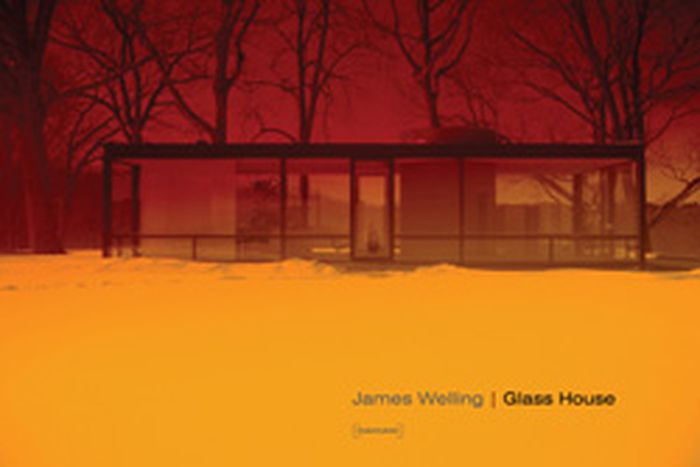
Over the course of three years, from 2006 to 2009, James Welling (born 1951) photographed the Glass House, the architectural landmark estate that Philip Johnson built in New Canaan, Connecticut, in 1949. Welling's photos offer a decided departure from the familiar views of the house and grounds: using digital cameras set on a tripod and holding a variety of filters in(...)
Title:
James Welling : glass house
Actions:
Price:
$55.00
(available to order)
Summary:
Over the course of three years, from 2006 to 2009, James Welling (born 1951) photographed the Glass House, the architectural landmark estate that Philip Johnson built in New Canaan, Connecticut, in 1949. Welling's photos offer a decided departure from the familiar views of the house and grounds: using digital cameras set on a tripod and holding a variety of filters in front of the lens, he created tinted veils and distortions that transformed the image at the moment of exposure, endowing it with swells of glowing color. As Welling described it in an interview with Artforum, the use of filters enabled his project to become "a laboratory for ideas about transparency, reflectivity and color." The 45 images presented here, which invite the viewer to draw associations between the camera's lens and the glass surfaces of the house itself, oscillate before our very eyes between photographic abstraction - a recurrent preoccupation for Welling - and depictions of architecture. With this body of work, Welling has located a wholly new approach to, and blend of, both genres.
Form:
books
books
Publication:
March 2011
March 2011
Subject:
Photography monographs
Photography monographs
Form:
books
books
Title:
1972: Nakagin Capsule Tower
1972: Nakagin Capsule Tower
Actions:
Price:
$66.50
(available to order)
Summary:
In the city of Tokyo, a building stands as an anachronism in relation to the surrounding urban landscape. The building in question is the Nakagin Capsule Tower designed by Kisho Kurokawa (1934 – 2007), one of the founders of an influential architectural movement in the 1960s called Metabolism. The movement’s aim was to formulate flexible designs that facilitate continual(...)
Title:
1972: Nakagin Capsule Tower
Actions:
Price:
$66.50
(available to order)
Summary:
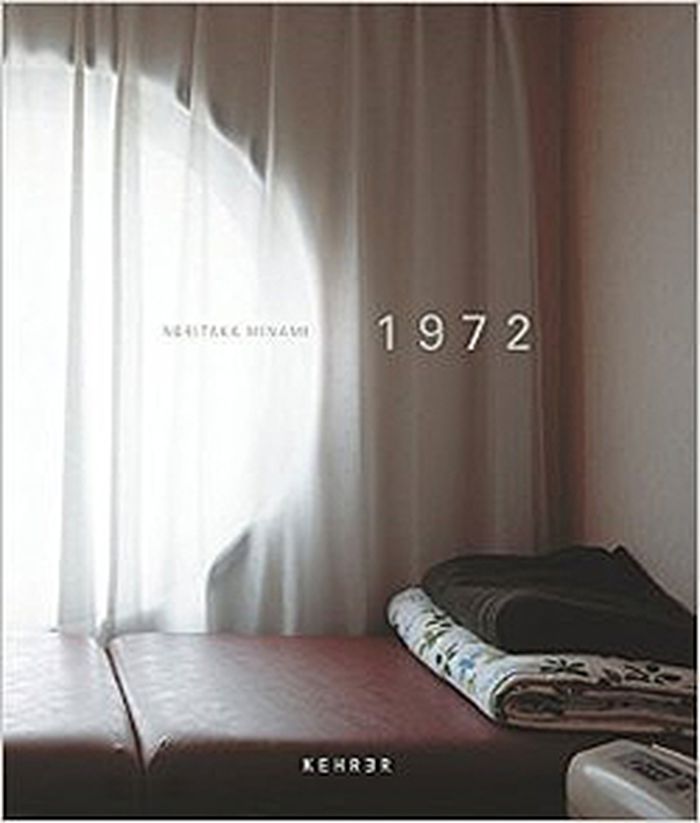
In the city of Tokyo, a building stands as an anachronism in relation to the surrounding urban landscape. The building in question is the Nakagin Capsule Tower designed by Kisho Kurokawa (1934 – 2007), one of the founders of an influential architectural movement in the 1960s called Metabolism. The movement’s aim was to formulate flexible designs that facilitate continual growth and renewal of architecture. As the first capsule apartment in history constructed for everyday use, the Nakagin Capsule Tower is considered the most ambitious attempt in implementing the principles of Metabolism. Kurokawa attached the building with 140 removable capsules to promote modifications to the structure over time, theoretically improving its capacity to adjust to the rapidly changing conditions of the post-industrial society. When the building first opened in March of 1972, it was advertised in the media to signal “the dawn of the capsule age.” At the time, Kurokawa had additional capsule projects planned in the coming years and predicted the mass production of these living unit. Noritaka Minami has been photographing the Nakagin Capsule Tower in Tokyo for the past four years.
Form:
books
books
Publication:
August 2015
August 2015
Subject:
Photography monographs
Photography monographs
Form:
books
books
Actions:
Holdings:
Description:
114 pages : color illustrations, color maps ; 30 cm.
Description:
114 pages : color illustrations, color maps ; 30 cm.
Author:
Subject:
Publication:
[Paris] : Association pour le patrimoine de l'Ile-de-France ; [Boulogne-Billancourt] : Commune de Boulogne-Billancourt, [1997]
[Paris] : Association pour le patrimoine de l'Ile-de-France ; [Boulogne-Billancourt] : Commune de Boulogne-Billancourt, [1997]
Title:
Boulogne-Billancourt : ville d'art et d'essai, 1800-2000 : Hauts-de-Seine / par Antoine Le Bas ; avant-propos, Jean-Pierre Fourcade ; préface, Bruno Foucart ; photographies, Philippe Ayrault ; cartographie, Pascal Pissot.
Actions:
Holdings:
Description:
114 pages : color illustrations, color maps ; 30 cm.
Form:
books
books
Publication:
[Paris] : Association pour le patrimoine de l'Ile-de-France ; [Boulogne-Billancourt] : Commune de Boulogne-Billancourt, [1997]
[Paris] : Association pour le patrimoine de l'Ile-de-France ; [Boulogne-Billancourt] : Commune de Boulogne-Billancourt, [1997]
Author:
Subject:
Form:
books
books
Actions:
Holdings:
Description:
255 pages : illustrations (chiefly color), maps ; 30 cm
Description:
255 pages : illustrations (chiefly color), maps ; 30 cm
Author:
Subject:
Publication:
Lyon : Editions lyonnaises d'art et d'histoire ; Armées : Association des amis du musée d'histoire militaire de Lyon et sa région, 2010.
Lyon : Editions lyonnaises d'art et d'histoire ; Armées : Association des amis du musée d'histoire militaire de Lyon et sa région, 2010.
Title:
Les défenses de Lyon : enceintes et fortifications / François Dallemagne ; photographies de Georges Fessy ; avec la collaboration de Bernard Billier, Roger Bonijoly [and others].
Actions:
Holdings:
Description:
255 pages : illustrations (chiefly color), maps ; 30 cm
Les défenses de Lyon : enceintes et fortifications / François Dallemagne ; photographies de Georges Fessy ; avec la collaboration de Bernard Billier, Roger Bonijoly [and others].
Actions:
Holdings:
Description:
255 pages : illustrations (chiefly color), maps ; 30 cm
Form:
books
books
Publication:
Lyon : Editions lyonnaises d'art et d'histoire ; Armées : Association des amis du musée d'histoire militaire de Lyon et sa région, 2010.
Lyon : Editions lyonnaises d'art et d'histoire ; Armées : Association des amis du musée d'histoire militaire de Lyon et sa région, 2010.
Author:
Subject:
Form:
books
books
Actions:
Holdings:
Description:
104 pages : illustrations ; 30 cm.
Description:
104 pages : illustrations ; 30 cm.
Author:
Subject:
Publication:
[Lyon] : Éditions Lieux dits, [2015]
[Lyon] : Éditions Lieux dits, [2015]
Title:
Sainte-Maxime : station balnéaire des années folles : Var, Provence-Alpes-Côte d'Azur / textes, Geneviève Négrel ; photographies, Françoise Baussan, Frédéric Pauvarel ; cartes, Sarah Bossy.
Actions:
Holdings:
Description:
104 pages : illustrations ; 30 cm.
Sainte-Maxime : station balnéaire des années folles : Var, Provence-Alpes-Côte d'Azur / textes, Geneviève Négrel ; photographies, Françoise Baussan, Frédéric Pauvarel ; cartes, Sarah Bossy.
Actions:
Holdings:
Description:
104 pages : illustrations ; 30 cm.
Form:
books
books
Publication:
[Lyon] : Éditions Lieux dits, [2015]
[Lyon] : Éditions Lieux dits, [2015]
Author:
Subject:
Form:
books
books
Actions:
Price:
$32.50
(available to order)
Summary:
Who are you? And how can you prove it? How were individuals described and identified by people who had never seen them before, in the centuries before photography and fingerprinting, in a world without centralized administrations, where names and addresses were constantly changing? In "Who are you?", Valentin Groebner traces the early modern European history of(...)
Title:
Who are you? : identification, deception, and surveillance in early modern Europe
Actions:
Price:
$32.50
(available to order)
Summary:
Who are you? And how can you prove it? How were individuals described and identified by people who had never seen them before, in the centuries before photography and fingerprinting, in a world without centralized administrations, where names and addresses were constantly changing? In "Who are you?", Valentin Groebner traces the early modern European history of identification practices and identity papers. The documents, seals, stamps, and signatures were — and are — powerful tools that created the double of a person in writ and bore the indelible signs of bureaucratic authenticity. Ultimately, as Groebner lucidly explains, they revealed as much about their makers’ illustory fantasies as they did about their bearers’ actual identity. The bureaucratic desire to register and control the population created, from the sixteenth century onward, an intricate administrative system for tracking individual identities. Most important, the proof of one’s identity was intimately linked and determined by the identification papers the authorities demanded and endlessly supplied. At the same time, these papers and practices gave birth to two uncanny doppelgängers of administrative identity procedures : the spy who craftily forged official documents and passports, and the impostor who dissimulated and mimed any individual he so disired. Through careful research and powerful narrative, Groebner recounts the complicated and bizarre stories of the many ways in which identities were stolen, created, and doubled. Groebner argues that identity papers cannot be interpreted literally as pure and simple documents. They are themselves pieces of history, histories of individuals and individuality, papers that both document and transform their owner’s identity — from Renaissance vagrants and gypsies to the illegal immigrants of today who remain "sans papiers", without papers.
Form:
books
books
Publication:
March 2007, New York
March 2007, New York
Subject:
Architectural Theory
Architectural Theory
Form:
books
books
Actions:
Holdings:
Description:
287 pages : color illustrations ; 31 cm.
Description:
287 pages : color illustrations ; 31 cm.
Author:
Subject:
Publication:
Amiens : Association pour la généralisation de l'Inventaire régional en Picardie, 2001.
Amiens : Association pour la généralisation de l'Inventaire régional en Picardie, 2001.
Title:
La Thiérache, Aisne : sur une frontière de la France / textes, Pierre-Yves Brest [and others] ; photographies, Franck Bürjes [and others] ; cartographie Joëlle Désiré ; sous la direction de Martine Plouvier.
Actions:
Holdings:
Description:
287 pages : color illustrations ; 31 cm.
La Thiérache, Aisne : sur une frontière de la France / textes, Pierre-Yves Brest [and others] ; photographies, Franck Bürjes [and others] ; cartographie Joëlle Désiré ; sous la direction de Martine Plouvier.
Actions:
Holdings:
Description:
287 pages : color illustrations ; 31 cm.
Form:
books
books
Publication:
Amiens : Association pour la généralisation de l'Inventaire régional en Picardie, 2001.
Amiens : Association pour la généralisation de l'Inventaire régional en Picardie, 2001.
Author:
Subject:
Form:
books
books
Actions:
Holdings:
Description:
367 pages : illustrations (some color), color maps, plans ; 27 cm.
Description:
367 pages : illustrations (some color), color maps, plans ; 27 cm.
Author:
Subject:
Publication:
Lyon : Libel, [2019]
Lyon : Libel, [2019]
Title:
DiversCités : les grands ensembles : Bourgogne & Chalon-sur-Saône / textes, Julien Defillon ; avec la collaboration de: Gwenaëlle Le Goullon, Christelle Morin-Dufoix, Estelle François ; photographies, Thierry Kuntz ; coordination éditoriale, Aurélie Lallement.
Actions:
Holdings:
Description:
367 pages : illustrations (some color), color maps, plans ; 27 cm.
Form:
books
books
Publication:
Lyon : Libel, [2019]
Lyon : Libel, [2019]
Author:
Subject:
Form:
books
books
Actions:
Holdings:
Description:
554 pages : illustrations ; 24 cm.
Description:
554 pages : illustrations ; 24 cm.
Author:
Subject:
Publication:
Turnhout, Belgium : Brepols, ©2003.
Turnhout, Belgium : Brepols, ©2003.
Title:
Les chapiteaux romans de Bourgogne : thèmes et programmes / Marcello Angheben ; photographies, Ivan Verzar.
Actions:
Holdings:
Description:
554 pages : illustrations ; 24 cm.
Les chapiteaux romans de Bourgogne : thèmes et programmes / Marcello Angheben ; photographies, Ivan Verzar.
Actions:
Holdings:
Description:
554 pages : illustrations ; 24 cm.
Form:
books
books
Publication:
Turnhout, Belgium : Brepols, ©2003.
Turnhout, Belgium : Brepols, ©2003.
Author:
Subject:
Form:
books
books
Actions:
Price:
$36.00
(available to order)
Summary:
In the tradition of "Paris, Texas" and "Faraway, So Close", the texts and pictures in this publication weave ambiguous and moving narratives in fits of rhythmic prose and inventive imagery. Prefaced by Wenders' poetic meditations on the metaphysics of photography and film, the book consists of short, autobiographical sketches relating Wenders' experiences — both(...)
Publication:
October 2010
October 2010
Title:
Wim Wenders : once, pictures and stories
Actions:
Price:
$36.00
(available to order)
Summary:
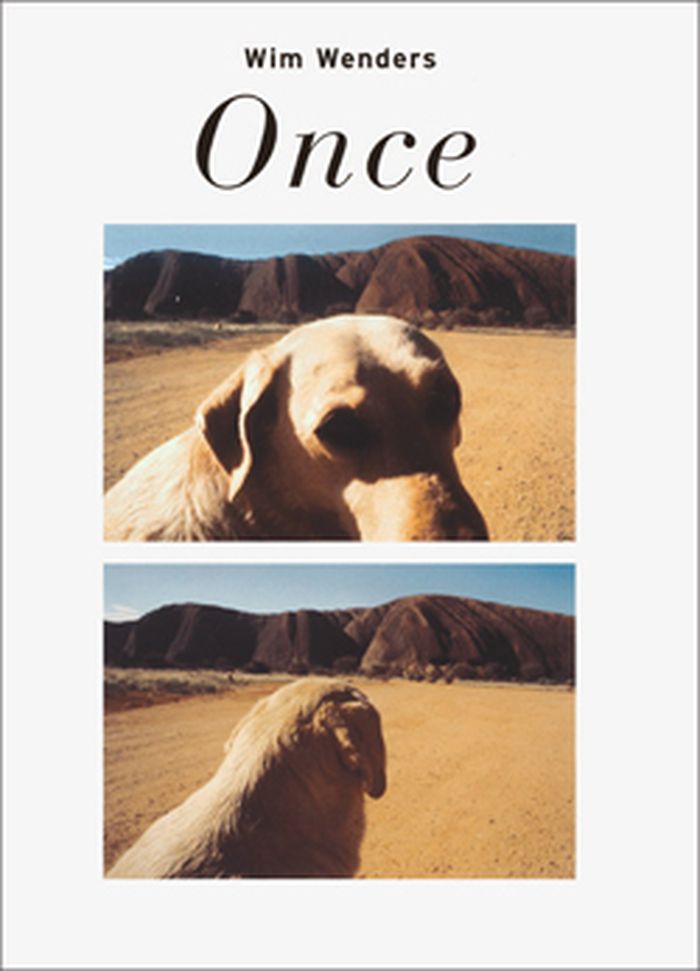
In the tradition of "Paris, Texas" and "Faraway, So Close", the texts and pictures in this publication weave ambiguous and moving narratives in fits of rhythmic prose and inventive imagery. Prefaced by Wenders' poetic meditations on the metaphysics of photography and film, the book consists of short, autobiographical sketches relating Wenders' experiences — both meaningful and apparently trivial — on his trips across the world scouting locations for his films, as well as photographs taken during these excursions. The result is at once travel diary, photo album, and a series of short films or short stories — revealing the views and sentiments of an auteur inspired by the poetry of the eye and the melody of speech.
Form:
books
books
Publication:
October 2010
October 2010


