


4843 Results
Form:
books
books
Price:
$105.00
(available to order)
Summary:
This catalogue is published in conjunction with "Il modo italian - Italian design and avant-garde in the 20th century", an exhibition produced by the Montreal Museum of Fine Arts in collaboration with the Royal Ontario Museum, Toronto, and the Mart – Museo di Arte Moderna e Contemporanea di Trento e Rovereto. Italian design has spanned the whole of the twentieth century,(...)
$105.00
(available to order)
Summary:
This catalogue is published in conjunction with "Il modo italian - Italian design and avant-garde in the 20th century", an exhibition produced by the Montreal Museum of Fine Arts in collaboration with the Royal Ontario Museum, Toronto, and the Mart – Museo di Arte Moderna e Contemporanea di Trento e Rovereto. Italian design has spanned the whole of the twentieth century,(...)
Title:
Il modo italiaono - Italian design and avant-garde in the 20th Century
Actions:
Price:
$105.00
(available to order)
Summary:
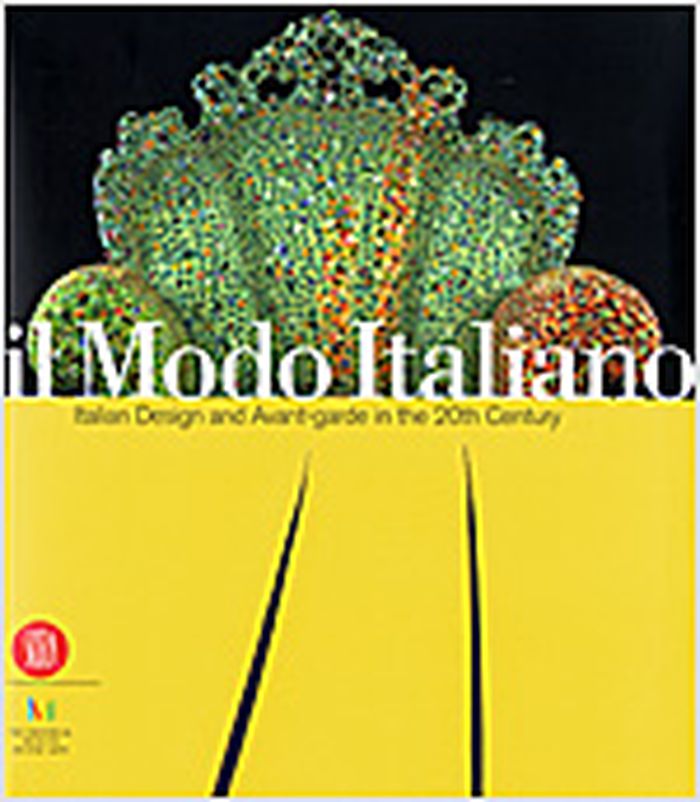
This catalogue is published in conjunction with "Il modo italian - Italian design and avant-garde in the 20th century", an exhibition produced by the Montreal Museum of Fine Arts in collaboration with the Royal Ontario Museum, Toronto, and the Mart – Museo di Arte Moderna e Contemporanea di Trento e Rovereto. Italian design has spanned the whole of the twentieth century, leaving a highly distinctive mark on the way that the form of objects of everyday use is perceived in industrial and contemporary society. This “Italian way” has succeeded, through a complex and hesitant process of industrial innovation and technological updating, in developing an independent and multifaceted culture of design capable of marrying the country’s rich craft tradition with an often fiercely resisted aspiration to modernity made up of flashes of improvisation and irony, and associated with an arduous bent for experimentation. The exhibition, with around 400 works chosen from among the most representative of artistic research and the culture of design in Italy in the twentieth century, is arranged chronologically, with four sections that define the different periods in the philosophical, economic, and aesthetic discourse that has accompanied the recent history of art and design in Italy. The survey brings to light the “philosophies” of design and the “aesthetics” that found a strong and dialectical expression right through the last century in Italy, and that are at the root of the country’s characteristic and lively cultural debate between art and design.
Il modo italiaono - Italian design and avant-garde in the 20th Century
Actions:
Price:
$105.00
(available to order)
Summary:
This catalogue is published in conjunction with "Il modo italian - Italian design and avant-garde in the 20th century", an exhibition produced by the Montreal Museum of Fine Arts in collaboration with the Royal Ontario Museum, Toronto, and the Mart – Museo di Arte Moderna e Contemporanea di Trento e Rovereto. Italian design has spanned the whole of the twentieth century, leaving a highly distinctive mark on the way that the form of objects of everyday use is perceived in industrial and contemporary society. This “Italian way” has succeeded, through a complex and hesitant process of industrial innovation and technological updating, in developing an independent and multifaceted culture of design capable of marrying the country’s rich craft tradition with an often fiercely resisted aspiration to modernity made up of flashes of improvisation and irony, and associated with an arduous bent for experimentation. The exhibition, with around 400 works chosen from among the most representative of artistic research and the culture of design in Italy in the twentieth century, is arranged chronologically, with four sections that define the different periods in the philosophical, economic, and aesthetic discourse that has accompanied the recent history of art and design in Italy. The survey brings to light the “philosophies” of design and the “aesthetics” that found a strong and dialectical expression right through the last century in Italy, and that are at the root of the country’s characteristic and lively cultural debate between art and design.
Form:
books
books
Publication:
May 2006, Milano / Montreal
May 2006, Milano / Montreal
Subject:
Interior Design
Interior Design
Form:
books
books

Actions:
Price:
$62.50
(available in store)
Summary:
In "LAB – Building a home for scientists" Mark C. Fishman describes how to build labs as homes for scientists, to accommodate not just their fancy tools, but also their personalities. Laboratories are both monasteries and space stations, redolent of the great ideas of generations past and of technologies to propel the future. Yet standard lab design has changed only(...)
$62.50
(available in store)
Summary:
In "LAB – Building a home for scientists" Mark C. Fishman describes how to build labs as homes for scientists, to accommodate not just their fancy tools, but also their personalities. Laboratories are both monasteries and space stations, redolent of the great ideas of generations past and of technologies to propel the future. Yet standard lab design has changed only(...)
Title:
LAB: building a home for scientists
Actions:
Price:
$62.50
(available in store)
Summary:
In "LAB – Building a home for scientists" Mark C. Fishman describes how to build labs as homes for scientists, to accommodate not just their fancy tools, but also their personalities. Laboratories are both monasteries and space stations, redolent of the great ideas of generations past and of technologies to propel the future. Yet standard lab design has changed only little over recent years. Since a lab becomes a scientist's home for most of their waking hours, the question arises if design and aesthetics of a lab can influence the creativity and effectiveness of its inhabitants. Although the support of the creative process is a compelling feature of a contemporary lab, it also has to be built flexibly enough to accommodate introvert solo researchers as well as large interdisciplinary teams, while an immediate connection to fellow researchers across the globe has to be at disposal as well. Anyone who works in, or plans to build a lab, will enjoy this book, which will encourage them to think about how this special environment drives or impedes their important work. This richly illustrated publication explores the roles of labs through history, from the alchemists of the Middle Ages to the chemists of the 19th and 20th centuries and to the geneticists and structural biologists of today, and then turns to the special features of the laboratories Fishman helped to design in Cambridge, Shanghai and Basel.
LAB: building a home for scientists
Actions:
Price:
$62.50
(available in store)
Summary:
In "LAB – Building a home for scientists" Mark C. Fishman describes how to build labs as homes for scientists, to accommodate not just their fancy tools, but also their personalities. Laboratories are both monasteries and space stations, redolent of the great ideas of generations past and of technologies to propel the future. Yet standard lab design has changed only little over recent years. Since a lab becomes a scientist's home for most of their waking hours, the question arises if design and aesthetics of a lab can influence the creativity and effectiveness of its inhabitants. Although the support of the creative process is a compelling feature of a contemporary lab, it also has to be built flexibly enough to accommodate introvert solo researchers as well as large interdisciplinary teams, while an immediate connection to fellow researchers across the globe has to be at disposal as well. Anyone who works in, or plans to build a lab, will enjoy this book, which will encourage them to think about how this special environment drives or impedes their important work. This richly illustrated publication explores the roles of labs through history, from the alchemists of the Middle Ages to the chemists of the 19th and 20th centuries and to the geneticists and structural biologists of today, and then turns to the special features of the laboratories Fishman helped to design in Cambridge, Shanghai and Basel.
Form:
books
books
Publication:
April 2017
April 2017
Subject:
Commercial interiors, Building types
Commercial interiors, Building types
Form:
books
books
Title:
One-way street
One-way street
Actions:
Price:
$19.95
(available to order)
Summary:
One-Way Street is a thoroughfare unlike anything else in literature?by turns exhilarating and bewildering, requiring mental agility and a special kind of urban literacy. Presented here in a new edition with expanded notes, this genre-defying meditation on the semiotics of late-1920s Weimar culture offers a fresh opportunity to encounter Walter Benjamin at his most(...)
$19.95
(available to order)
Summary:
One-Way Street is a thoroughfare unlike anything else in literature?by turns exhilarating and bewildering, requiring mental agility and a special kind of urban literacy. Presented here in a new edition with expanded notes, this genre-defying meditation on the semiotics of late-1920s Weimar culture offers a fresh opportunity to encounter Walter Benjamin at his most(...)
Title:
One-way street
Actions:
Price:
$19.95
(available to order)
Summary:
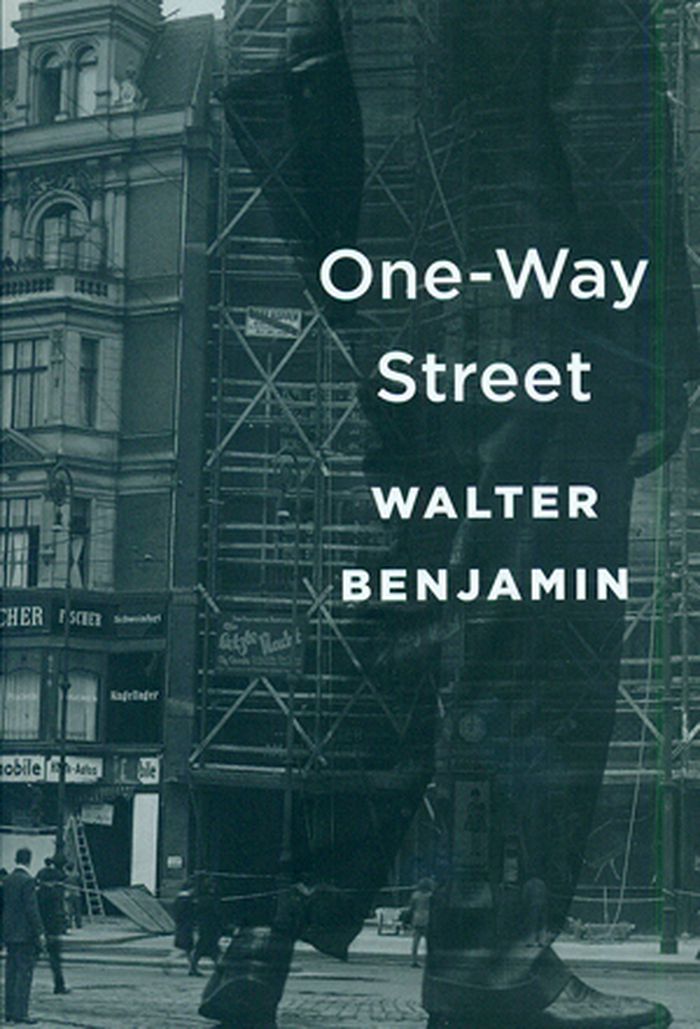
One-Way Street is a thoroughfare unlike anything else in literature?by turns exhilarating and bewildering, requiring mental agility and a special kind of urban literacy. Presented here in a new edition with expanded notes, this genre-defying meditation on the semiotics of late-1920s Weimar culture offers a fresh opportunity to encounter Walter Benjamin at his most virtuosic and experimental, writing in a vein that anticipates later masterpieces such as “On the Concept of History” and The Arcades Project. Composed of sixty short prose pieces that vary wildly in style and theme, One-Way Street evokes a dense cityscape of shops, cafes, and apartments, alive with the hubbub of social interactions and papered over with public inscriptions of all kinds: advertisements, signs, posters, slogans. Benjamin avoids all semblance of linear narrative, enticing readers with a seemingly random sequence of aphorisms, reminiscences, jokes, off-the-cuff observations, dreamlike fantasias, serious philosophical inquiries, apparently unserious philosophical parodies, and trenchant political commentaries. Providing remarkable insight into the occluded meanings of everyday things, Benjamin time and again proves himself the unrivalled interpreter of what he called “the soul of the commodity.” Despite the diversity of its individual sections, Benjamin’s text is far from formless. Drawing on the avant-garde aesthetics of Dada, Constructivism, and Surrealism, its unusual construction implies a practice of reading that cannot be reduced to simple formulas. Still refractory, still radical, One-Way Street is a work in perpetual progress.
One-way street
Actions:
Price:
$19.95
(available to order)
Summary:
One-Way Street is a thoroughfare unlike anything else in literature?by turns exhilarating and bewildering, requiring mental agility and a special kind of urban literacy. Presented here in a new edition with expanded notes, this genre-defying meditation on the semiotics of late-1920s Weimar culture offers a fresh opportunity to encounter Walter Benjamin at his most virtuosic and experimental, writing in a vein that anticipates later masterpieces such as “On the Concept of History” and The Arcades Project. Composed of sixty short prose pieces that vary wildly in style and theme, One-Way Street evokes a dense cityscape of shops, cafes, and apartments, alive with the hubbub of social interactions and papered over with public inscriptions of all kinds: advertisements, signs, posters, slogans. Benjamin avoids all semblance of linear narrative, enticing readers with a seemingly random sequence of aphorisms, reminiscences, jokes, off-the-cuff observations, dreamlike fantasias, serious philosophical inquiries, apparently unserious philosophical parodies, and trenchant political commentaries. Providing remarkable insight into the occluded meanings of everyday things, Benjamin time and again proves himself the unrivalled interpreter of what he called “the soul of the commodity.” Despite the diversity of its individual sections, Benjamin’s text is far from formless. Drawing on the avant-garde aesthetics of Dada, Constructivism, and Surrealism, its unusual construction implies a practice of reading that cannot be reduced to simple formulas. Still refractory, still radical, One-Way Street is a work in perpetual progress.
Form:
books
books
Publication:
May 2016
May 2016
Subject:
Critical Theory
Critical Theory
Form:
books
books
Actions:
Price:
$43.95
(available to order)
Summary:
This third volume in the Chora series continues to explore diverse historical and critical issues in architecture. Attempting to discover architectural alternatives based on concepts of aesthetics, technology, or sociology, the contributors offer refreshing interdisciplinary explorations of architectural tradition. The thirteen essays in(...)
$43.95
(available to order)
Summary:
This third volume in the Chora series continues to explore diverse historical and critical issues in architecture. Attempting to discover architectural alternatives based on concepts of aesthetics, technology, or sociology, the contributors offer refreshing interdisciplinary explorations of architectural tradition. The thirteen essays in(...)
Subject:
Architectural Theory
Architectural Theory
Publication:
February 1999, Montréal
February 1999, Montréal
Title:
Chora 3 : intervals in the philosophy of architecture
Actions:
Price:
$43.95
(available to order)
Summary:
This third volume in the Chora series continues to explore diverse historical and critical issues in architecture. Attempting to discover architectural alternatives based on concepts of aesthetics, technology, or sociology, the contributors offer refreshing interdisciplinary explorations of architectural tradition. The thirteen essays in this collection include historical subjects as well as speculative theoretical "projects" that blur conventional boundaries between history and fiction. Ricardo Castro provides an original reading of the Kogi culture in Colombia; Maria Karvouni explores philological and architectonic connections between the Greek demas (the political individual) and domus (the house); Mark Rozahegy speculates on relationships between architecture and memory; Myriam Blais discusses technical inventions by sixteenth-century French architect Philibert de l'Orme; Alberto Pérez-Gómez examines the late sixteenth-century reconstruction of the Temple of Jerusalem by Juan Bautista Villalpando; Janine Debanné offers a new perspective on Guarino Guarini's Chapel of the Holy Shroud in Turin; Katja Grillner examines the early seventeenth-century writings of Salomon de Caus and his built work in Heidelberg; David Winterton reflects on Charles-François Viel's "Letters"; Franca Trubiano looks at Jean-Jacques Lequeu's controversial Civil Architecture; Henrik Reeh considers the work of Sigfried Kracauer, a disciple of Walter Benjamin; Irena Zantovská Murray reflects on work by artist Jana Sterbak; artist Ellen Zweig presents a textual project that demonstrates the charged poetic space created by film makers such as Antonioni and Hitchcock; and Swedish writer and architect Sören Thurell asks a riddle about architecture and its mimetic origins.
Chora 3 : intervals in the philosophy of architecture
Actions:
Price:
$43.95
(available to order)
Summary:
This third volume in the Chora series continues to explore diverse historical and critical issues in architecture. Attempting to discover architectural alternatives based on concepts of aesthetics, technology, or sociology, the contributors offer refreshing interdisciplinary explorations of architectural tradition. The thirteen essays in this collection include historical subjects as well as speculative theoretical "projects" that blur conventional boundaries between history and fiction. Ricardo Castro provides an original reading of the Kogi culture in Colombia; Maria Karvouni explores philological and architectonic connections between the Greek demas (the political individual) and domus (the house); Mark Rozahegy speculates on relationships between architecture and memory; Myriam Blais discusses technical inventions by sixteenth-century French architect Philibert de l'Orme; Alberto Pérez-Gómez examines the late sixteenth-century reconstruction of the Temple of Jerusalem by Juan Bautista Villalpando; Janine Debanné offers a new perspective on Guarino Guarini's Chapel of the Holy Shroud in Turin; Katja Grillner examines the early seventeenth-century writings of Salomon de Caus and his built work in Heidelberg; David Winterton reflects on Charles-François Viel's "Letters"; Franca Trubiano looks at Jean-Jacques Lequeu's controversial Civil Architecture; Henrik Reeh considers the work of Sigfried Kracauer, a disciple of Walter Benjamin; Irena Zantovská Murray reflects on work by artist Jana Sterbak; artist Ellen Zweig presents a textual project that demonstrates the charged poetic space created by film makers such as Antonioni and Hitchcock; and Swedish writer and architect Sören Thurell asks a riddle about architecture and its mimetic origins.
Form:
books
books
Publication:
February 1999, Montréal
February 1999, Montréal
Subject:
Architectural Theory
Architectural Theory
Form:
books
books
Actions:
Price:
$58.95
(available to order)
Summary:
Bathing in antiquity elevates a prosaic function to the level of a civic institution for which there is no counterpart in contemporary culture. Enriched by over 500 illustrations, many of them by the author, "Baths and bathing in classical antiquity" is an important sourcebook for this ancient institution. Through hundreds of examples, it reviews and analyzes the(...)
$58.95
(available to order)
Summary:
Bathing in antiquity elevates a prosaic function to the level of a civic institution for which there is no counterpart in contemporary culture. Enriched by over 500 illustrations, many of them by the author, "Baths and bathing in classical antiquity" is an important sourcebook for this ancient institution. Through hundreds of examples, it reviews and analyzes the(...)
Title:
Baths and bathing in classical antiquity
Actions:
Price:
$58.95
(available to order)
Summary:
Bathing in antiquity elevates a prosaic function to the level of a civic institution for which there is no counterpart in contemporary culture. Enriched by over 500 illustrations, many of them by the author, "Baths and bathing in classical antiquity" is an important sourcebook for this ancient institution. Through hundreds of examples, it reviews and analyzes the structure, function, and design of baths, seeking to integrate their architecture with the wider social and cultural custom of bathing, and examining in particular the changes this custom underwent in Late Antiquity and in Byzantine and Islamic cultures. Yegul explores the complexities of ancient bathing from several points of view. Sociologically, the baths with their vast appeal for all levels of society - were seen as the epitome of democratic ideals and institutions. Politically, they provided the perfect vehicle of propaganda : their lavish and magnificent interiors reflected the might and prosperity of the Roman empire and the apparent generosity of the emperor himself. Architecturally, baths are at the vanguard in the development of Roman building technology. Some of the earliest uses of concrete as a building material and the most innovative applications of the aesthetics of concrete - bold, curvilinear forms, vaults, and domes involved bath buildings. Because of their status as transition between purely utilitarian structures and the more conservative, traditional forms of public and religious architecture, the baths helped to propagate and make acceptable new ideas and new styles in architecture.
Baths and bathing in classical antiquity
Actions:
Price:
$58.95
(available to order)
Summary:
Bathing in antiquity elevates a prosaic function to the level of a civic institution for which there is no counterpart in contemporary culture. Enriched by over 500 illustrations, many of them by the author, "Baths and bathing in classical antiquity" is an important sourcebook for this ancient institution. Through hundreds of examples, it reviews and analyzes the structure, function, and design of baths, seeking to integrate their architecture with the wider social and cultural custom of bathing, and examining in particular the changes this custom underwent in Late Antiquity and in Byzantine and Islamic cultures. Yegul explores the complexities of ancient bathing from several points of view. Sociologically, the baths with their vast appeal for all levels of society - were seen as the epitome of democratic ideals and institutions. Politically, they provided the perfect vehicle of propaganda : their lavish and magnificent interiors reflected the might and prosperity of the Roman empire and the apparent generosity of the emperor himself. Architecturally, baths are at the vanguard in the development of Roman building technology. Some of the earliest uses of concrete as a building material and the most innovative applications of the aesthetics of concrete - bold, curvilinear forms, vaults, and domes involved bath buildings. Because of their status as transition between purely utilitarian structures and the more conservative, traditional forms of public and religious architecture, the baths helped to propagate and make acceptable new ideas and new styles in architecture.
Form:
books
books
Publication:
August 1995, Cambridge
August 1995, Cambridge
Subject:
History until 1900, Classicism
History until 1900, Classicism
Form:
books
books
Actions:
Price:
$17.95
(available to order)
Summary:
Almost a half-century after Yayoi Kusama debuted her landmark installation Infinity Mirror Room - Phalli's Field (1965) in New York, the work remains challenging and unclassifiable. Shifting between the Pop-like and the Surreal, the Minimal and the metaphorical, the figurative and the abstract, the psychotic and the erotic, with references to "free love" and psychedelia,(...)
$17.95
(available to order)
Summary:
Almost a half-century after Yayoi Kusama debuted her landmark installation Infinity Mirror Room - Phalli's Field (1965) in New York, the work remains challenging and unclassifiable. Shifting between the Pop-like and the Surreal, the Minimal and the metaphorical, the figurative and the abstract, the psychotic and the erotic, with references to "free love" and psychedelia,(...)
Title:
Yayoi Kusuma : Infinity mirror room - Phalli's Field
Actions:
Price:
$17.95
(available to order)
Summary:
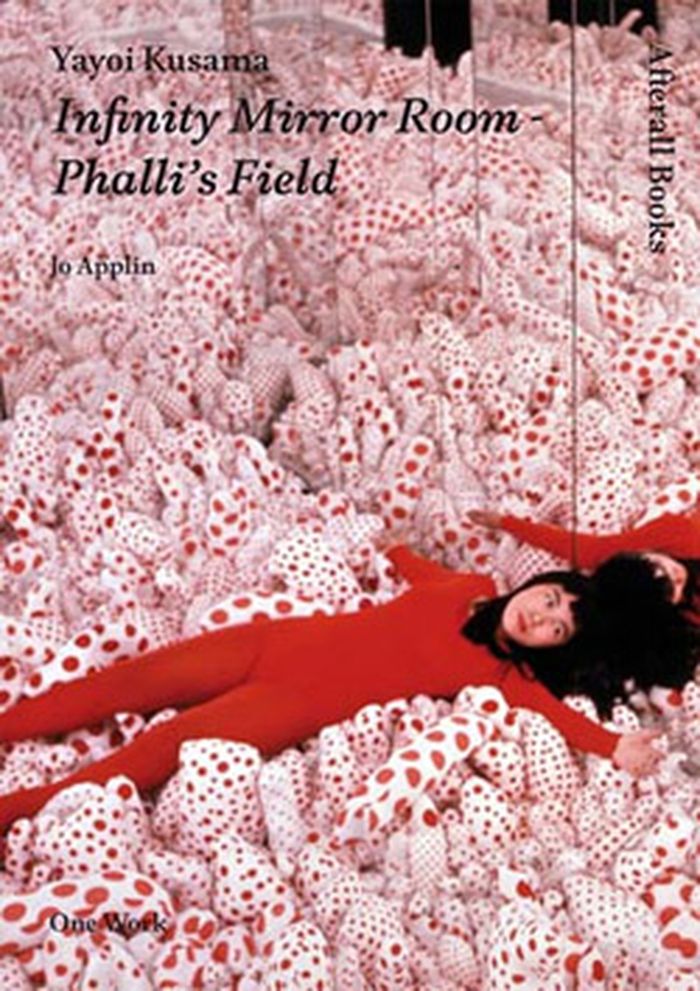
Almost a half-century after Yayoi Kusama debuted her landmark installation Infinity Mirror Room - Phalli's Field (1965) in New York, the work remains challenging and unclassifiable. Shifting between the Pop-like and the Surreal, the Minimal and the metaphorical, the figurative and the abstract, the psychotic and the erotic, with references to "free love" and psychedelia, it seemed to embody all that the 1960s was about, while at the same time denying the prevailing aesthetics of its time. The installation itself was a room lined with mirrored panels and carpeted with several hundred brightly polka-dotted soft fabric protrusions into which the visitor was completely absorbed. Kusama simply called it "a sublime, miraculous field of phalluses." A precursor of performance-based feminist art practice, media pranksterism, and "Occupy" movements, Kusama (born in 1929) was once as well known as her admirers - Andy Warhol, Donald Judd, and Joseph Cornell. In this first monograph on an epoch-defining work, Jo Applin looks at the installation in detail and places it in the context of subsequent art practice and theory as well as Kusama's own (as she called it) "obsessional art." Applin also discusses Kusama's relationship to her contemporaries, particularly those working with environments, abstract-erotic sculpture, and mirrors, and those grappling with such issues as abstraction, eroticism, sexuality, and softness. The work of Lee Lozano, Claes Oldenburg, Louise Bourgeois, and Eva Hesse is seen anew when considered in relation to Yayoi Kusama's.
Yayoi Kusuma : Infinity mirror room - Phalli's Field
Actions:
Price:
$17.95
(available to order)
Summary:
Almost a half-century after Yayoi Kusama debuted her landmark installation Infinity Mirror Room - Phalli's Field (1965) in New York, the work remains challenging and unclassifiable. Shifting between the Pop-like and the Surreal, the Minimal and the metaphorical, the figurative and the abstract, the psychotic and the erotic, with references to "free love" and psychedelia, it seemed to embody all that the 1960s was about, while at the same time denying the prevailing aesthetics of its time. The installation itself was a room lined with mirrored panels and carpeted with several hundred brightly polka-dotted soft fabric protrusions into which the visitor was completely absorbed. Kusama simply called it "a sublime, miraculous field of phalluses." A precursor of performance-based feminist art practice, media pranksterism, and "Occupy" movements, Kusama (born in 1929) was once as well known as her admirers - Andy Warhol, Donald Judd, and Joseph Cornell. In this first monograph on an epoch-defining work, Jo Applin looks at the installation in detail and places it in the context of subsequent art practice and theory as well as Kusama's own (as she called it) "obsessional art." Applin also discusses Kusama's relationship to her contemporaries, particularly those working with environments, abstract-erotic sculpture, and mirrors, and those grappling with such issues as abstraction, eroticism, sexuality, and softness. The work of Lee Lozano, Claes Oldenburg, Louise Bourgeois, and Eva Hesse is seen anew when considered in relation to Yayoi Kusama's.
Form:
books
books
Publication:
November 2012
November 2012
Subject:
Art Theory
Art Theory
Form:
books
books
Price:
$75.95
(available to order)
Summary:
Valerio Olgiati has worked as an architect in Los Angeles, Zurich, and, since 2008, in Flims. He has been a visiting professor at the Eidgenössische Technische Hochschule (Swiss Federal Institute of Technology) in Zurich, the AA in London, and at Cornell University in Ithaca, New York. Since 2002 he has been professor at the Accademia di architettura in Mendrisio and(...)
$75.95
(available to order)
Summary:
Valerio Olgiati has worked as an architect in Los Angeles, Zurich, and, since 2008, in Flims. He has been a visiting professor at the Eidgenössische Technische Hochschule (Swiss Federal Institute of Technology) in Zurich, the AA in London, and at Cornell University in Ithaca, New York. Since 2002 he has been professor at the Accademia di architettura in Mendrisio and(...)
Title:
Dado : built and inhabited by Rudolph Olgiati and Valerio Olgiati
Actions:
Price:
$75.95
(available to order)
Summary:
Valerio Olgiati has worked as an architect in Los Angeles, Zurich, and, since 2008, in Flims. He has been a visiting professor at the Eidgenössische Technische Hochschule (Swiss Federal Institute of Technology) in Zurich, the AA in London, and at Cornell University in Ithaca, New York. Since 2002 he has been professor at the Accademia di architettura in Mendrisio and since autumn 2009 he has held the Kenzo Tange Chair at Harvard. The unmistakable straight lines and independence of his buildings has brought him international attention. The Olgiati’s family estate is located in the historical town center of Flims. Rudolf Olgiati (1910–95) purchased the property, known as Dado, in 1930 and throughout his life used it to realize his architectural thoughts and ideas. Today, the son is living in his father’s house, and in 2008 he set up his much-admired architectural firm on the former site of the barn. This publication portrays the life and work of both architects using the example of the house and studio - that is, through the transformations they have undergone at the hands of their residents over a period of nearly eighty years. It shows personal furniture and objects, the individual layout and design of the spaces, and hence the penchants and attitudes of the two architects. At the same time this unusual portrait documents not only the relationship between father and son but also the characters of two generations and their understanding of architecture and aesthetics.
Dado : built and inhabited by Rudolph Olgiati and Valerio Olgiati
Actions:
Price:
$75.95
(available to order)
Summary:
Valerio Olgiati has worked as an architect in Los Angeles, Zurich, and, since 2008, in Flims. He has been a visiting professor at the Eidgenössische Technische Hochschule (Swiss Federal Institute of Technology) in Zurich, the AA in London, and at Cornell University in Ithaca, New York. Since 2002 he has been professor at the Accademia di architettura in Mendrisio and since autumn 2009 he has held the Kenzo Tange Chair at Harvard. The unmistakable straight lines and independence of his buildings has brought him international attention. The Olgiati’s family estate is located in the historical town center of Flims. Rudolf Olgiati (1910–95) purchased the property, known as Dado, in 1930 and throughout his life used it to realize his architectural thoughts and ideas. Today, the son is living in his father’s house, and in 2008 he set up his much-admired architectural firm on the former site of the barn. This publication portrays the life and work of both architects using the example of the house and studio - that is, through the transformations they have undergone at the hands of their residents over a period of nearly eighty years. It shows personal furniture and objects, the individual layout and design of the spaces, and hence the penchants and attitudes of the two architects. At the same time this unusual portrait documents not only the relationship between father and son but also the characters of two generations and their understanding of architecture and aesthetics.
Form:
books
books
Publication:
March 2010
March 2010
Subject:
Architecture Monographs
Architecture Monographs
Form:
books
books
Actions:
Price:
$32.95
(available to order)
Summary:
Bay by the turn of the century. But in 1912, backed by some of the country’s leading financiers and industrialists, MIT officials purchased an undeveloped tract of land in Cambridge, launching a long and complex review of proposals for a new quadrangle. Based largely on the recommendation of John D. Rockefeller Jr., the commission was awarded to MIT and the École des(...)
$32.95
(available to order)
Summary:
Bay by the turn of the century. But in 1912, backed by some of the country’s leading financiers and industrialists, MIT officials purchased an undeveloped tract of land in Cambridge, launching a long and complex review of proposals for a new quadrangle. Based largely on the recommendation of John D. Rockefeller Jr., the commission was awarded to MIT and the École des(...)
Title:
Designing MIT: Bosworth's new tech
Actions:
Price:
$32.95
(available to order)
Summary:
Bay by the turn of the century. But in 1912, backed by some of the country’s leading financiers and industrialists, MIT officials purchased an undeveloped tract of land in Cambridge, launching a long and complex review of proposals for a new quadrangle. Based largely on the recommendation of John D. Rockefeller Jr., the commission was awarded to MIT and the École des Beaux-Arts-trained architect William Welles Bosworth, known for his AT Building in Manhattan, and Kykuit, the Rockefeller mansion in Tarrytown, New York. Designing MIT is the first book to detail Bosworth’s challenges in the planning and construction of the Institute’s unique Cambridge campus. Beginning with an examination of the competing project proposals—from Steven Child, an emerging landscape designer and student of Frederick Law Olmstead; Desiré Despradelle, Chairman of the Department of Architecture at MIT and a leading Beaux-Arts stylist; Ralph Adams Cram, noted for his gothic West Point campus; and John Freeman, one of the country’s leading civil engineers—Mark M. Jarzombek provides a captivating cross-section of the architectural debates of the time. Though Bosworth’s considerable social and political finesse enabled him to land the commission and balance varied competing interests, he found his classically oriented vision challenged by engineer John Freeman, proponent of Frederick W. Taylor’s new principle of Scientific Management. However strained, the conflict ultimately resulted in a far more innovative design than either individual approach, employing new European concepts of industrialism, efficiency, and aesthetics in academic structures.
Designing MIT: Bosworth's new tech
Actions:
Price:
$32.95
(available to order)
Summary:
Bay by the turn of the century. But in 1912, backed by some of the country’s leading financiers and industrialists, MIT officials purchased an undeveloped tract of land in Cambridge, launching a long and complex review of proposals for a new quadrangle. Based largely on the recommendation of John D. Rockefeller Jr., the commission was awarded to MIT and the École des Beaux-Arts-trained architect William Welles Bosworth, known for his AT Building in Manhattan, and Kykuit, the Rockefeller mansion in Tarrytown, New York. Designing MIT is the first book to detail Bosworth’s challenges in the planning and construction of the Institute’s unique Cambridge campus. Beginning with an examination of the competing project proposals—from Steven Child, an emerging landscape designer and student of Frederick Law Olmstead; Desiré Despradelle, Chairman of the Department of Architecture at MIT and a leading Beaux-Arts stylist; Ralph Adams Cram, noted for his gothic West Point campus; and John Freeman, one of the country’s leading civil engineers—Mark M. Jarzombek provides a captivating cross-section of the architectural debates of the time. Though Bosworth’s considerable social and political finesse enabled him to land the commission and balance varied competing interests, he found his classically oriented vision challenged by engineer John Freeman, proponent of Frederick W. Taylor’s new principle of Scientific Management. However strained, the conflict ultimately resulted in a far more innovative design than either individual approach, employing new European concepts of industrialism, efficiency, and aesthetics in academic structures.
Form:
books
books
Publication:
November 2004
November 2004
Subject:
Commercial interiors, Building types
Commercial interiors, Building types
Form:
books
books

Actions:
Price:
$86.00
(available in store)
Summary:
Album covers, concert posters, flyers, fanzines, comics and photographs by Swiss graphic designers, musicians and photographers from the past 50 years of rock and pop history make The Swiss Art of Rock a terrific graphic design document and resource. Lurker Grand’s third and most recent book project in a trilogy published by Edition Patrick Frey, Die Not hat Ein Ende(...)
$86.00
(available in store)
Summary:
Album covers, concert posters, flyers, fanzines, comics and photographs by Swiss graphic designers, musicians and photographers from the past 50 years of rock and pop history make The Swiss Art of Rock a terrific graphic design document and resource. Lurker Grand’s third and most recent book project in a trilogy published by Edition Patrick Frey, Die Not hat Ein Ende(...)
Title:
Die not hat ein ende: the Swiss art of rock
Actions:
Price:
$86.00
(available in store)
Summary:
Album covers, concert posters, flyers, fanzines, comics and photographs by Swiss graphic designers, musicians and photographers from the past 50 years of rock and pop history make The Swiss Art of Rock a terrific graphic design document and resource. Lurker Grand’s third and most recent book project in a trilogy published by Edition Patrick Frey, Die Not hat Ein Ende (Need Comes to an End) is packed with images and interwoven with texts on both musical and graphic history. Here the focus is not so much on a musical era and its protagonists as on the visualization of the subcultures. In addition to visualizing the music, much space is devoted to the history of the music itself. Music journalist, collector and curator Samuel Mumenthaler, co-author of this book, offers a detailed chronology of the development of rock music in Switzerland. Roland Fischbacher, Director of the Visual Communications Program at the Bern School for the Arts, and Robert Lzicar, design researcher and designer, discuss the roots of Swiss rock graphics. Additional essays cover international influences, montage and image construction, sampling, remix and craft. Also featured is an extensive artist index including works by contemporary greats from H. R. Geiger and Peter Fischli to R. Crumb and Roy Lichtenstein, plus an index of bands from Aerosmith to Frank Zappa. This is a pioneering work that no one in Switzerland has undertaken to date, making for a fascinating and comprehensive study of the aesthetics of an artistic avant-garde.
Die not hat ein ende: the Swiss art of rock
Actions:
Price:
$86.00
(available in store)
Summary:
Album covers, concert posters, flyers, fanzines, comics and photographs by Swiss graphic designers, musicians and photographers from the past 50 years of rock and pop history make The Swiss Art of Rock a terrific graphic design document and resource. Lurker Grand’s third and most recent book project in a trilogy published by Edition Patrick Frey, Die Not hat Ein Ende (Need Comes to an End) is packed with images and interwoven with texts on both musical and graphic history. Here the focus is not so much on a musical era and its protagonists as on the visualization of the subcultures. In addition to visualizing the music, much space is devoted to the history of the music itself. Music journalist, collector and curator Samuel Mumenthaler, co-author of this book, offers a detailed chronology of the development of rock music in Switzerland. Roland Fischbacher, Director of the Visual Communications Program at the Bern School for the Arts, and Robert Lzicar, design researcher and designer, discuss the roots of Swiss rock graphics. Additional essays cover international influences, montage and image construction, sampling, remix and craft. Also featured is an extensive artist index including works by contemporary greats from H. R. Geiger and Peter Fischli to R. Crumb and Roy Lichtenstein, plus an index of bands from Aerosmith to Frank Zappa. This is a pioneering work that no one in Switzerland has undertaken to date, making for a fascinating and comprehensive study of the aesthetics of an artistic avant-garde.
Form:
books
books
Publication:
July 2015
July 2015
Subject:
Printed Matter
Printed Matter
Form:
books
books
Actions:
Subject:
Publication:
Clinamen 2017
Clinamen 2017
Form:
books
books
Publication:
Clinamen 2017
Clinamen 2017
Subject:


