


462 Results
Form:
books
books
Actions:
Price:
$37.99
(available in store)
Summary:
Not all weeds are ugly uncontrollable brutes. Yes, they can be difficult and intimidating, but by learning how to grow weeds in unexpected ways you will become a better gardener with a more interesting garden. This book profiles over 50 weeds and shows you surprising ways to grow them, no matter what your garden type: from borders to boxes, sunny to shady, poor soil to(...)
$37.99
(available in store)
Summary:
Not all weeds are ugly uncontrollable brutes. Yes, they can be difficult and intimidating, but by learning how to grow weeds in unexpected ways you will become a better gardener with a more interesting garden. This book profiles over 50 weeds and shows you surprising ways to grow them, no matter what your garden type: from borders to boxes, sunny to shady, poor soil to(...)
Title:
Wild about weeds: garden design with rebel plants
Actions:
Price:
$37.99
(available in store)
Summary:
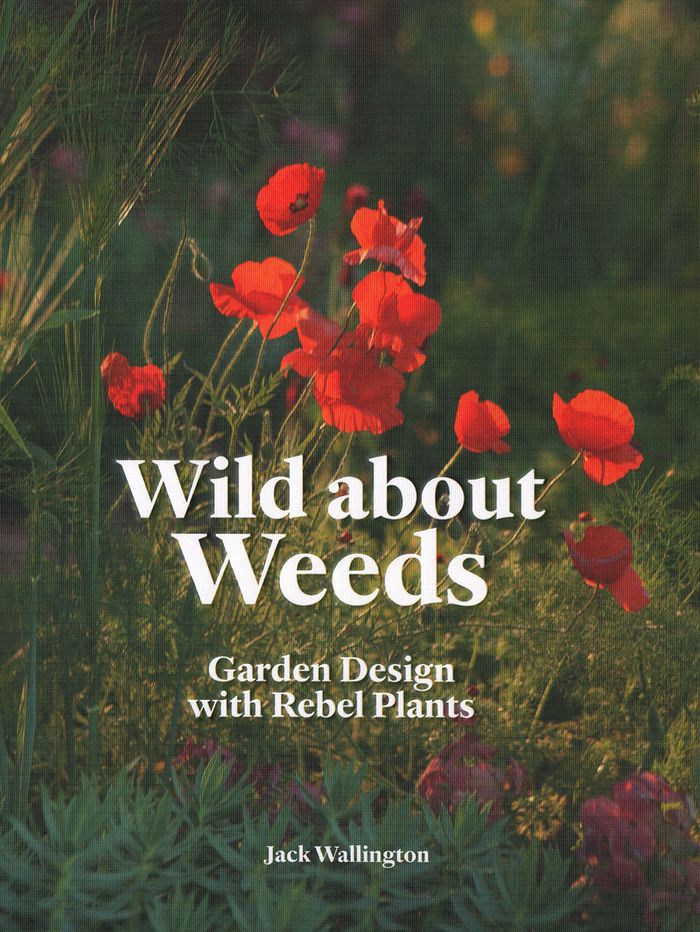
Not all weeds are ugly uncontrollable brutes. Yes, they can be difficult and intimidating, but by learning how to grow weeds in unexpected ways you will become a better gardener with a more interesting garden. This book profiles over 50 weeds and shows you surprising ways to grow them, no matter what your garden type: from borders to boxes, sunny to shady, poor soil to rich, tropical to formal, Japanese-style to prairies. With interviews, tips, and advice from celebrated gardeners, learn how to let weeds flourish without taking control.
Wild about weeds: garden design with rebel plants
Actions:
Price:
$37.99
(available in store)
Summary:
Not all weeds are ugly uncontrollable brutes. Yes, they can be difficult and intimidating, but by learning how to grow weeds in unexpected ways you will become a better gardener with a more interesting garden. This book profiles over 50 weeds and shows you surprising ways to grow them, no matter what your garden type: from borders to boxes, sunny to shady, poor soil to rich, tropical to formal, Japanese-style to prairies. With interviews, tips, and advice from celebrated gardeners, learn how to let weeds flourish without taking control.
Form:
books
books
Publication:
October 2019
October 2019
Subject:
Gardens
Gardens
Form:
books
books
Actions:
Price:
$112.50
(available to order)
Summary:
Landscape architecture creates and shapes open spaces for human beings. It combines nature and architecture and links grown and planned environments. It depends on local factors such as the climate, type of soil, as well as varying local traditions much more than structural design. This book presents the whole wealth of this fascinating sector featuring projects from(...)
$112.50
(available to order)
Summary:
Landscape architecture creates and shapes open spaces for human beings. It combines nature and architecture and links grown and planned environments. It depends on local factors such as the climate, type of soil, as well as varying local traditions much more than structural design. This book presents the whole wealth of this fascinating sector featuring projects from(...)
Title:
Collection: Landscape architecture, landschaftsarchitektur, architecture de paysage
Actions:
Price:
$112.50
(available to order)
Summary:
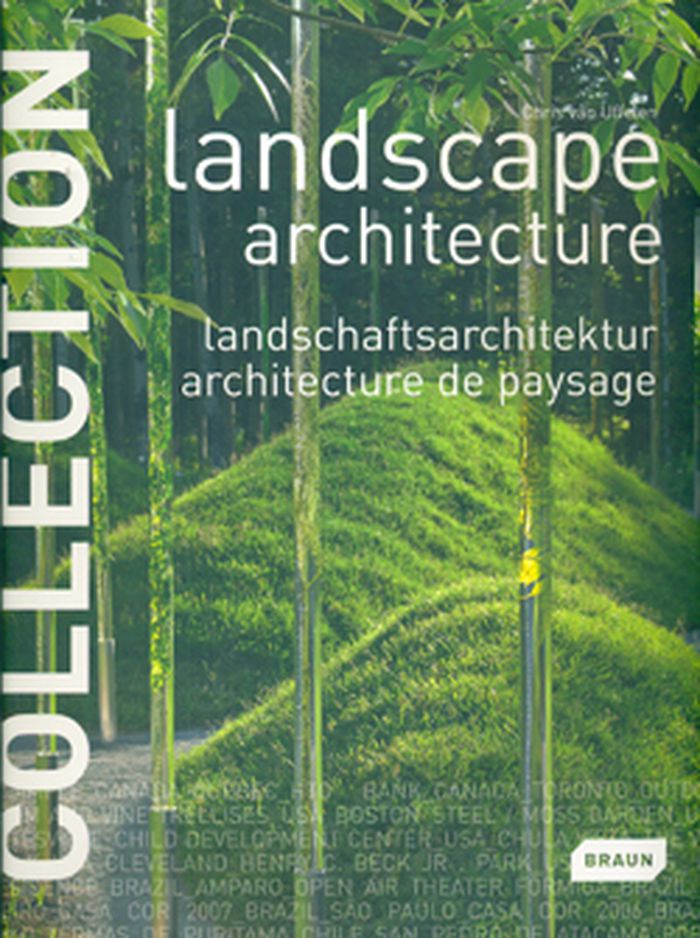
Landscape architecture creates and shapes open spaces for human beings. It combines nature and architecture and links grown and planned environments. It depends on local factors such as the climate, type of soil, as well as varying local traditions much more than structural design. This book presents the whole wealth of this fascinating sector featuring projects from around the world–from the classic fields of horticulture and park design, to LandArt and urban outdoor design, which make do without grass and trees entirely, up to the current ecological themes of interior gardens and façade greening.
Collection: Landscape architecture, landschaftsarchitektur, architecture de paysage
Actions:
Price:
$112.50
(available to order)
Summary:
Landscape architecture creates and shapes open spaces for human beings. It combines nature and architecture and links grown and planned environments. It depends on local factors such as the climate, type of soil, as well as varying local traditions much more than structural design. This book presents the whole wealth of this fascinating sector featuring projects from around the world–from the classic fields of horticulture and park design, to LandArt and urban outdoor design, which make do without grass and trees entirely, up to the current ecological themes of interior gardens and façade greening.
Form:
books
books
Publication:
December 2009
December 2009
Subject:
Gardens
Gardens
Form:
journals and magazines
journals and magazines

Price:
$28.95
(available to order)
Summary:
GEO- Earth- is a word that simultaneously signifies something vast and elemental. It refers to both the planet on which we live and the soil that sustains us. GEO is the physical and representational bedrock of landscape architecture- the foundation of many disciplines from which we draw our knowledge. Geography, Geology, and Geometry, in particular, are fundamental to(...)
$28.95
(available to order)
Summary:
GEO- Earth- is a word that simultaneously signifies something vast and elemental. It refers to both the planet on which we live and the soil that sustains us. GEO is the physical and representational bedrock of landscape architecture- the foundation of many disciplines from which we draw our knowledge. Geography, Geology, and Geometry, in particular, are fundamental to(...)
Title:
LA+ GEO
Actions:
Price:
$28.95
(available to order)
Summary:
GEO- Earth- is a word that simultaneously signifies something vast and elemental. It refers to both the planet on which we live and the soil that sustains us. GEO is the physical and representational bedrock of landscape architecture- the foundation of many disciplines from which we draw our knowledge. Geography, Geology, and Geometry, in particular, are fundamental to our discipline’s intellectual core. And now, we seem ever more entangled in GEO as some scholars across the sciences and humanities argue that humans should be recognized as agents of change at geologic time scales.
LA+ GEO
Actions:
Price:
$28.95
(available to order)
Summary:
GEO- Earth- is a word that simultaneously signifies something vast and elemental. It refers to both the planet on which we live and the soil that sustains us. GEO is the physical and representational bedrock of landscape architecture- the foundation of many disciplines from which we draw our knowledge. Geography, Geology, and Geometry, in particular, are fundamental to our discipline’s intellectual core. And now, we seem ever more entangled in GEO as some scholars across the sciences and humanities argue that humans should be recognized as agents of change at geologic time scales.
Form:
journals and magazines
journals and magazines
Publication:
January 2021
January 2021
Subject:
Magazines
Magazines
Form:
books
books

Actions:
Price:
$38.50
(available to order)
Summary:
This book brings together ideas and projects that seek to define a new role for design based on empathy. As a mediator of emotions and feelings, design is presented here as a practice that takes care as its main purpose. Designers adopt sensitive, diplomatic, sometimes therapeutic functions, with the aim of connecting us with one another but also with the world around us,(...)
$38.50
(available to order)
Summary:
This book brings together ideas and projects that seek to define a new role for design based on empathy. As a mediator of emotions and feelings, design is presented here as a practice that takes care as its main purpose. Designers adopt sensitive, diplomatic, sometimes therapeutic functions, with the aim of connecting us with one another but also with the world around us,(...)
Title:
Empathy revisited: Designs for more than one
Actions:
Price:
$38.50
(available to order)
Summary:
This book brings together ideas and projects that seek to define a new role for design based on empathy. As a mediator of emotions and feelings, design is presented here as a practice that takes care as its main purpose. Designers adopt sensitive, diplomatic, sometimes therapeutic functions, with the aim of connecting us with one another but also with the world around us, with other species, with soil, water and even the universe. In this book, the reader will find new ideas, utopian propositions but also practical solutions for reinterpreting and reconnecting with the world around them.
Empathy revisited: Designs for more than one
Actions:
Price:
$38.50
(available to order)
Summary:
This book brings together ideas and projects that seek to define a new role for design based on empathy. As a mediator of emotions and feelings, design is presented here as a practice that takes care as its main purpose. Designers adopt sensitive, diplomatic, sometimes therapeutic functions, with the aim of connecting us with one another but also with the world around us, with other species, with soil, water and even the universe. In this book, the reader will find new ideas, utopian propositions but also practical solutions for reinterpreting and reconnecting with the world around them.
Form:
books
books
Publication:
January 2021
January 2021
Subject:
Design Theory
Design Theory
Form:
books
books

Price:
$39.95
(available to order)
Summary:
Architect John van de Water set off in 2004 to a China that was modernizing at a furious pace. His intention was to put the European, conceptual way of thinking of NEXT architects into practice in China. Five turbulent years ensued, with projects being built on Chinese soil. A whole range of emotions sprang up in the space between Western and Chinese architectural(...)
$39.95
(available to order)
Summary:
Architect John van de Water set off in 2004 to a China that was modernizing at a furious pace. His intention was to put the European, conceptual way of thinking of NEXT architects into practice in China. Five turbulent years ensued, with projects being built on Chinese soil. A whole range of emotions sprang up in the space between Western and Chinese architectural(...)
Title:
John Van de Water : You can't change China, China changes you
Actions:
Price:
$39.95
(available to order)
Summary:
Architect John van de Water set off in 2004 to a China that was modernizing at a furious pace. His intention was to put the European, conceptual way of thinking of NEXT architects into practice in China. Five turbulent years ensued, with projects being built on Chinese soil. A whole range of emotions sprang up in the space between Western and Chinese architectural thinking: incomprehension, confrontation, misunderstanding, acceptance, awareness, understanding and, eventually, advantage. You Can't Change China, China Changes You is a personal reflection of his experience. In it, the development of architectural thinking is described, researched and tested.
John Van de Water : You can't change China, China changes you
Actions:
Price:
$39.95
(available to order)
Summary:
Architect John van de Water set off in 2004 to a China that was modernizing at a furious pace. His intention was to put the European, conceptual way of thinking of NEXT architects into practice in China. Five turbulent years ensued, with projects being built on Chinese soil. A whole range of emotions sprang up in the space between Western and Chinese architectural thinking: incomprehension, confrontation, misunderstanding, acceptance, awareness, understanding and, eventually, advantage. You Can't Change China, China Changes You is a personal reflection of his experience. In it, the development of architectural thinking is described, researched and tested.
Form:
books
books
Publication:
December 2011
December 2011
Subject:
Contemporary Asian Architecture
Contemporary Asian Architecture
Form:
books
books
Actions:
Price:
$79.95
(available to order)
Summary:
In the Netherlands, climate change has brought more frequent and extreme rainfall causing pluvial flooding. Though the Dutch have dealt with water for centuries, since the Industrial Revolution urban water systems have become very inflexible and are now unable to deal with these new conditions. Despite the long tradition of building in wet and soft soil conditions, there(...)
$79.95
(available to order)
Summary:
In the Netherlands, climate change has brought more frequent and extreme rainfall causing pluvial flooding. Though the Dutch have dealt with water for centuries, since the Industrial Revolution urban water systems have become very inflexible and are now unable to deal with these new conditions. Despite the long tradition of building in wet and soft soil conditions, there(...)
Title:
The making of polder cities : a fine Dutch tradition
Actions:
Price:
$79.95
(available to order)
Summary:
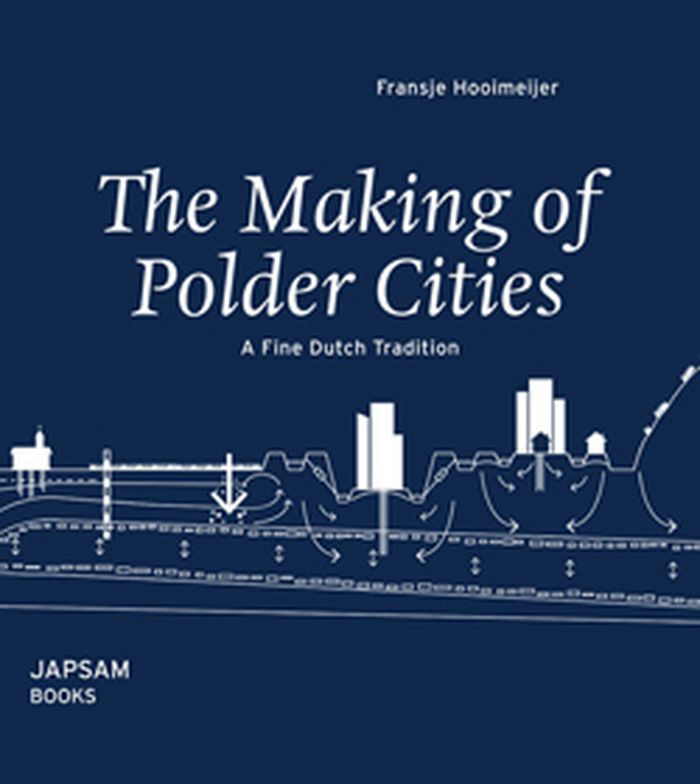
In the Netherlands, climate change has brought more frequent and extreme rainfall causing pluvial flooding. Though the Dutch have dealt with water for centuries, since the Industrial Revolution urban water systems have become very inflexible and are now unable to deal with these new conditions. Despite the long tradition of building in wet and soft soil conditions, there has been little systematic research on building-site preparation and its relation to urban development and design. This book addresses this issue by investigating the relation between the available technology, the attitude towards the natural conditions and the urban design.
The making of polder cities : a fine Dutch tradition
Actions:
Price:
$79.95
(available to order)
Summary:
In the Netherlands, climate change has brought more frequent and extreme rainfall causing pluvial flooding. Though the Dutch have dealt with water for centuries, since the Industrial Revolution urban water systems have become very inflexible and are now unable to deal with these new conditions. Despite the long tradition of building in wet and soft soil conditions, there has been little systematic research on building-site preparation and its relation to urban development and design. This book addresses this issue by investigating the relation between the available technology, the attitude towards the natural conditions and the urban design.
Form:
books
books
Publication:
March 2015
March 2015
Subject:
Urban Theory
Urban Theory
Form:
books
books
Price:
$67.95
(available to order)
Summary:
The Sustainable Urban Dwelling Unit (SUDU), which emerged out of a summer workshop in Addis Ababa, Ethiopia, is a new, sustainable housing alternative that can be self-constructed with minimal technical ability, low start-up costs, and local materials (such as soil). This publication documents the building process in two parts: the first part narratively records the(...)
$67.95
(available to order)
Summary:
The Sustainable Urban Dwelling Unit (SUDU), which emerged out of a summer workshop in Addis Ababa, Ethiopia, is a new, sustainable housing alternative that can be self-constructed with minimal technical ability, low start-up costs, and local materials (such as soil). This publication documents the building process in two parts: the first part narratively records the(...)
Title:
SUDU : the sustainable urban dwelling unit in Ethiopia, 2 volumes
Actions:
Price:
$67.95
(available to order)
Summary:
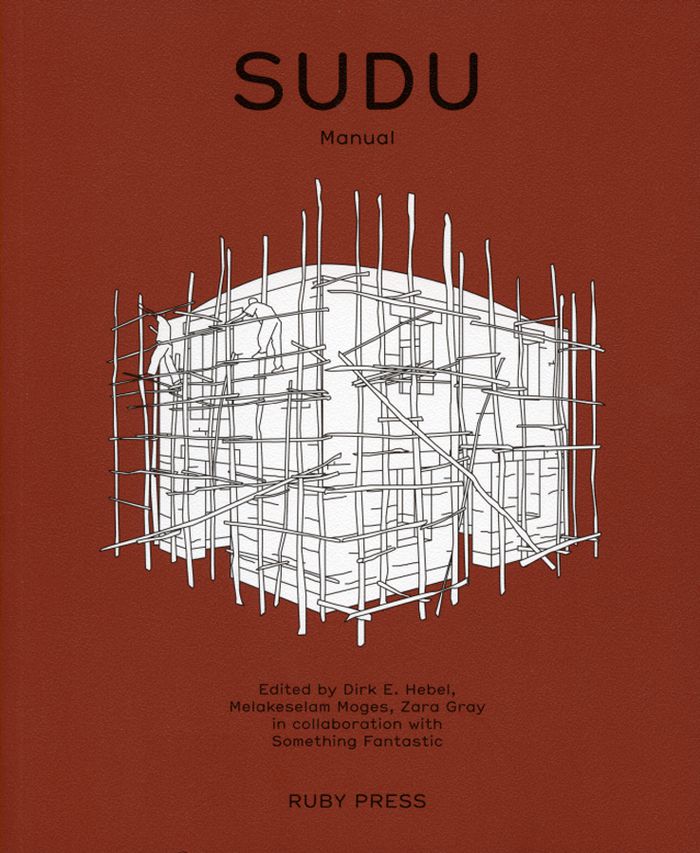
The Sustainable Urban Dwelling Unit (SUDU), which emerged out of a summer workshop in Addis Ababa, Ethiopia, is a new, sustainable housing alternative that can be self-constructed with minimal technical ability, low start-up costs, and local materials (such as soil). This publication documents the building process in two parts: the first part narratively records the construction process itself while providing historical and technical context. The second part functions as a manual, providing a detailed list of tools, materials, and step-by-step instructions that can be used by readers to carry out their own SUDU project.
SUDU : the sustainable urban dwelling unit in Ethiopia, 2 volumes
Actions:
Price:
$67.95
(available to order)
Summary:
The Sustainable Urban Dwelling Unit (SUDU), which emerged out of a summer workshop in Addis Ababa, Ethiopia, is a new, sustainable housing alternative that can be self-constructed with minimal technical ability, low start-up costs, and local materials (such as soil). This publication documents the building process in two parts: the first part narratively records the construction process itself while providing historical and technical context. The second part functions as a manual, providing a detailed list of tools, materials, and step-by-step instructions that can be used by readers to carry out their own SUDU project.
Form:
books
books
Publication:
June 2015
June 2015
Subject:
Architecture since 1900, Africa
Architecture since 1900, Africa
Form:
books
books

Actions:
Price:
$64.50
(available to order)
Summary:
Photographer Takashi Homma takes us on a journey deep into densely wooded areas in search of the many different types of fungus that grow there. More the collection of a curious wanderer than a serious hobbyist, the unidentified mushrooms are photographed against sterile white backgrounds as if recently plucked from the forest floor, with soil, bark and even small(...)
$64.50
(available to order)
Summary:
Photographer Takashi Homma takes us on a journey deep into densely wooded areas in search of the many different types of fungus that grow there. More the collection of a curious wanderer than a serious hobbyist, the unidentified mushrooms are photographed against sterile white backgrounds as if recently plucked from the forest floor, with soil, bark and even small(...)
Title:
Takashi Homma: mushrooms from the forest 2011
Actions:
Price:
$64.50
(available to order)
Summary:
Photographer Takashi Homma takes us on a journey deep into densely wooded areas in search of the many different types of fungus that grow there. More the collection of a curious wanderer than a serious hobbyist, the unidentified mushrooms are photographed against sterile white backgrounds as if recently plucked from the forest floor, with soil, bark and even small creatures still attached. The fungal portraits are interspersed with images of the forest itself, as if providing a natural context – a sense of actually being there – with surroundings of lichen covered trees, dense leafage, and the natural interplay of shadow and light.
Takashi Homma: mushrooms from the forest 2011
Actions:
Price:
$64.50
(available to order)
Summary:
Photographer Takashi Homma takes us on a journey deep into densely wooded areas in search of the many different types of fungus that grow there. More the collection of a curious wanderer than a serious hobbyist, the unidentified mushrooms are photographed against sterile white backgrounds as if recently plucked from the forest floor, with soil, bark and even small creatures still attached. The fungal portraits are interspersed with images of the forest itself, as if providing a natural context – a sense of actually being there – with surroundings of lichen covered trees, dense leafage, and the natural interplay of shadow and light.
Form:
books
books
Publication:
December 2012
December 2012
Subject:
Contemporary Art Monographs
Contemporary Art Monographs
Form:
books
books
Actions:
Price:
$43.95
(available to order)
Summary:
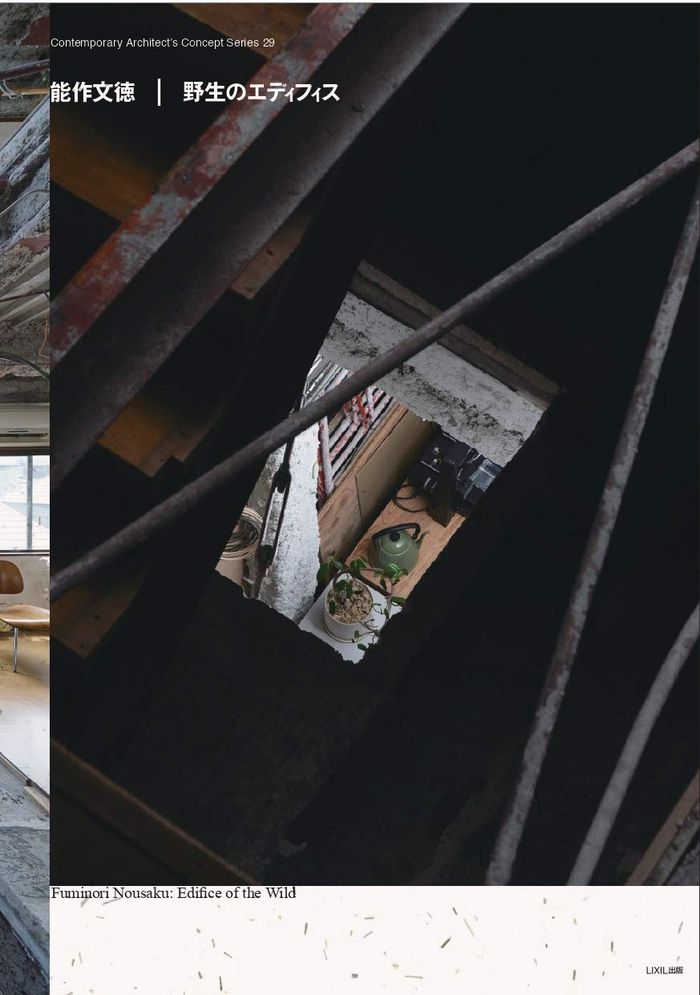
Fuminori Nousaku strives to make architecture a new kind of ecosystem that incorporates an extensive range of design requirements on the topics of land and its history, materials and resources, lifestyles, the housing industry, and social system. With 16 chapters brimming with grand scales and detailed thought, this series probes the young Japanese architect's mind for(...)
$43.95
(available to order)
Summary:
Fuminori Nousaku strives to make architecture a new kind of ecosystem that incorporates an extensive range of design requirements on the topics of land and its history, materials and resources, lifestyles, the housing industry, and social system. With 16 chapters brimming with grand scales and detailed thought, this series probes the young Japanese architect's mind for(...)
Title:
Fuminori Nousaku: Edifice of the wild
Actions:
Price:
$43.95
(available to order)
Summary:
Fuminori Nousaku strives to make architecture a new kind of ecosystem that incorporates an extensive range of design requirements on the topics of land and its history, materials and resources, lifestyles, the housing industry, and social system. With 16 chapters brimming with grand scales and detailed thought, this series probes the young Japanese architect's mind for architectural methods concerned with topical issues: residential and urban development that factors in ecosystems and the global environment, off-grid homes powered by solar energy, architecture and landscaping that restore soil health, and ecological design that plans for circulation of materials from production to disposal.
Fuminori Nousaku: Edifice of the wild
Actions:
Price:
$43.95
(available to order)
Summary:
Fuminori Nousaku strives to make architecture a new kind of ecosystem that incorporates an extensive range of design requirements on the topics of land and its history, materials and resources, lifestyles, the housing industry, and social system. With 16 chapters brimming with grand scales and detailed thought, this series probes the young Japanese architect's mind for architectural methods concerned with topical issues: residential and urban development that factors in ecosystems and the global environment, off-grid homes powered by solar energy, architecture and landscaping that restore soil health, and ecological design that plans for circulation of materials from production to disposal.
Form:
books
books
Publication:
March 2021
March 2021
Subject:
Architecture Monographs
Architecture Monographs
Form:
books
books
Title:
Urban wild ecology
Urban wild ecology
Actions:
Price:
$85.00
(available in store)
Summary:
Following the calamitous events of 2011 in Japan, Fuminori Nousaku and Mio Tsuneyama began to look at the link between materials and energy related to daily life, such as household goods, homes, food, and waste. They sought ways to reinvent how we live, from dependence on infrastructure and industry to another relationship: off-grid homes that generate solar power,(...)
$85.00
(available in store)
Summary:
Following the calamitous events of 2011 in Japan, Fuminori Nousaku and Mio Tsuneyama began to look at the link between materials and energy related to daily life, such as household goods, homes, food, and waste. They sought ways to reinvent how we live, from dependence on infrastructure and industry to another relationship: off-grid homes that generate solar power,(...)
Title:
Urban wild ecology
Actions:
Price:
$85.00
(available in store)
Summary:
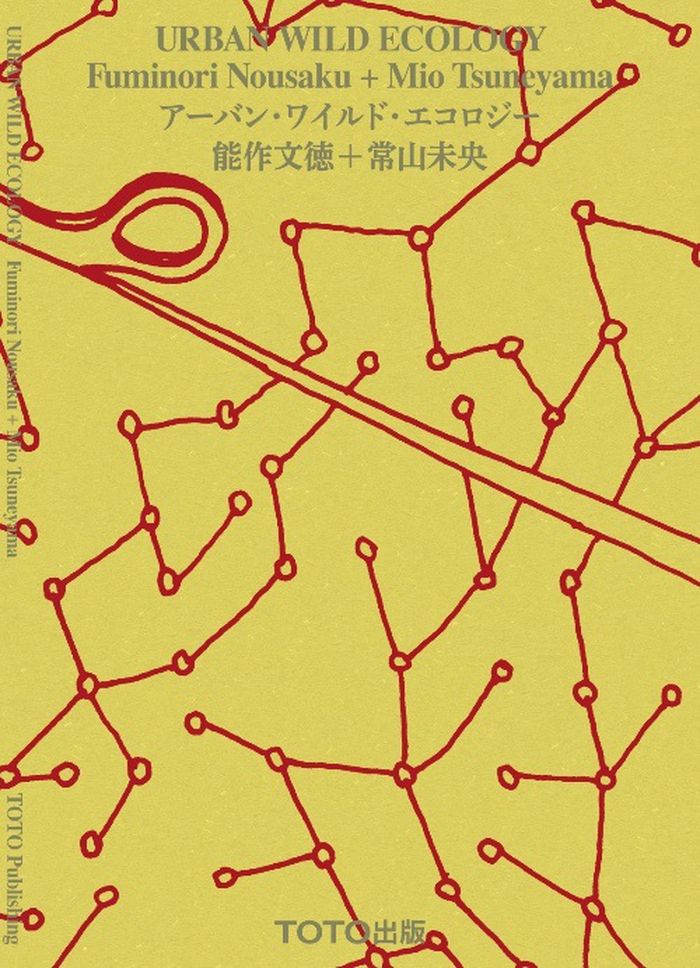
Following the calamitous events of 2011 in Japan, Fuminori Nousaku and Mio Tsuneyama began to look at the link between materials and energy related to daily life, such as household goods, homes, food, and waste. They sought ways to reinvent how we live, from dependence on infrastructure and industry to another relationship: off-grid homes that generate solar power, gardens that harness the power of microbes in the soil, shared homes in vacant buildings, and construction using discarded materials. The wildness that survives the city enjoys fluctuation and overcomes inconvenience. This book introduces the collectives involved in these activities along with practices and resources.
Urban wild ecology
Actions:
Price:
$85.00
(available in store)
Summary:
Following the calamitous events of 2011 in Japan, Fuminori Nousaku and Mio Tsuneyama began to look at the link between materials and energy related to daily life, such as household goods, homes, food, and waste. They sought ways to reinvent how we live, from dependence on infrastructure and industry to another relationship: off-grid homes that generate solar power, gardens that harness the power of microbes in the soil, shared homes in vacant buildings, and construction using discarded materials. The wildness that survives the city enjoys fluctuation and overcomes inconvenience. This book introduces the collectives involved in these activities along with practices and resources.
Form:
books
books
Publication:
January 2024
January 2024
Subject:
Urban Landscapes
Urban Landscapes


