


450 Results
Form:
books
books
Title:
Forest first
Forest first
Actions:
Price:
$55.95
(available in store)
Summary:
How might we design and build in a non-extractive manner? To address that question this book considers a recursive relationship between forests and timber building. It puts the forest first and offers a detailed immersion into forest history, forest stand dynamics, forest ecology, forest-building carbon dynamics, and possible future forest trajectories as the pretext for(...)
$55.95
(available in store)
Summary:
How might we design and build in a non-extractive manner? To address that question this book considers a recursive relationship between forests and timber building. It puts the forest first and offers a detailed immersion into forest history, forest stand dynamics, forest ecology, forest-building carbon dynamics, and possible future forest trajectories as the pretext for(...)
Title:
Forest first
Actions:
Price:
$55.95
(available in store)
Summary:
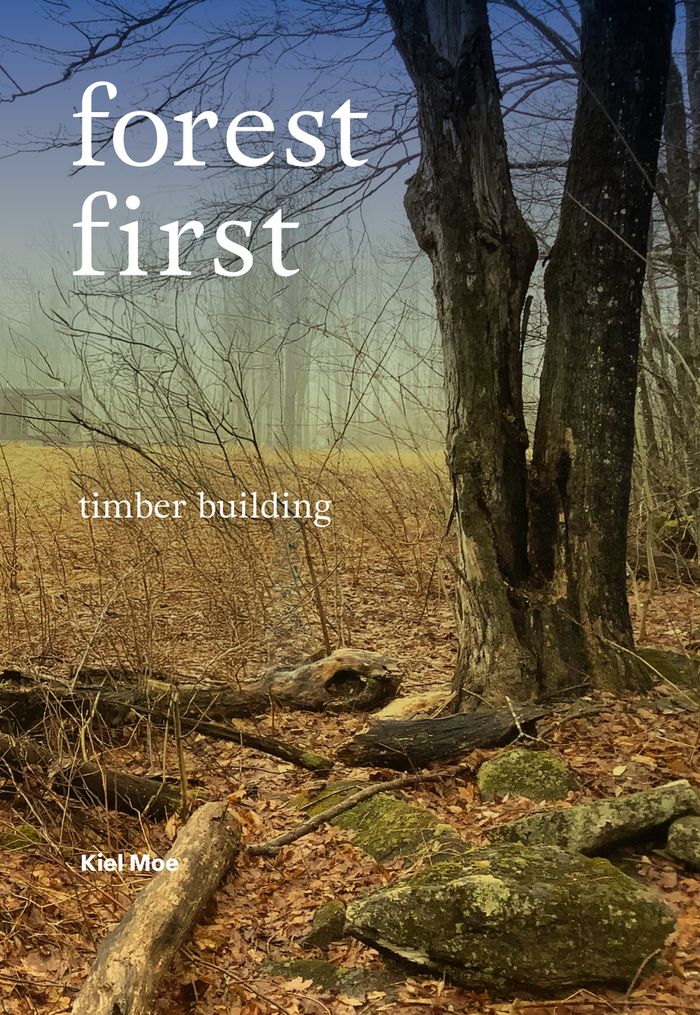
How might we design and build in a non-extractive manner? To address that question this book considers a recursive relationship between forests and timber building. It puts the forest first and offers a detailed immersion into forest history, forest stand dynamics, forest ecology, forest-building carbon dynamics, and possible future forest trajectories as the pretext for thinking about timber technics. The specificity of regional forests suggests much about the prospect of non-extractive building design: building that tends and mends its terrestrial basis rather than takes, makes, and breaks it. Building activity can augment and improve forest conditions as an instance of regenerative design and as a path towards reconciliation, but only if conceived and practiced in ways distinct from normative design and construction practices. The future should no longer be a colony of present design practices that treat building as an art and science of extraction. By putting the forest first its conception of timber building technics, this book develops a more regenerative approach to the terrestrial relations of forest-building.
Forest first
Actions:
Price:
$55.95
(available in store)
Summary:
How might we design and build in a non-extractive manner? To address that question this book considers a recursive relationship between forests and timber building. It puts the forest first and offers a detailed immersion into forest history, forest stand dynamics, forest ecology, forest-building carbon dynamics, and possible future forest trajectories as the pretext for thinking about timber technics. The specificity of regional forests suggests much about the prospect of non-extractive building design: building that tends and mends its terrestrial basis rather than takes, makes, and breaks it. Building activity can augment and improve forest conditions as an instance of regenerative design and as a path towards reconciliation, but only if conceived and practiced in ways distinct from normative design and construction practices. The future should no longer be a colony of present design practices that treat building as an art and science of extraction. By putting the forest first its conception of timber building technics, this book develops a more regenerative approach to the terrestrial relations of forest-building.
Form:
books
books
Publication:
December 2025
December 2025
Subject:
Environment and environmental theory
Environment and environmental theory
Form:
books
books
Price:
$103.00
(available to order)
Summary:
Current design of apartment buildings is facing challenges of philosophy and form. Past approaches no longer sustain new demands and require innovative thinking. The need for a new outlook is propelled by fundamental changes that touch upon environmental, economic, cultural and social aspects that led to the writing of this book. The depletion of non-renewable natural(...)
$103.00
(available to order)
Summary:
Current design of apartment buildings is facing challenges of philosophy and form. Past approaches no longer sustain new demands and require innovative thinking. The need for a new outlook is propelled by fundamental changes that touch upon environmental, economic, cultural and social aspects that led to the writing of this book. The depletion of non-renewable natural(...)
Title:
Innovative apartment buildings. New directions in sustainable design
Actions:
Price:
$103.00
(available to order)
Summary:
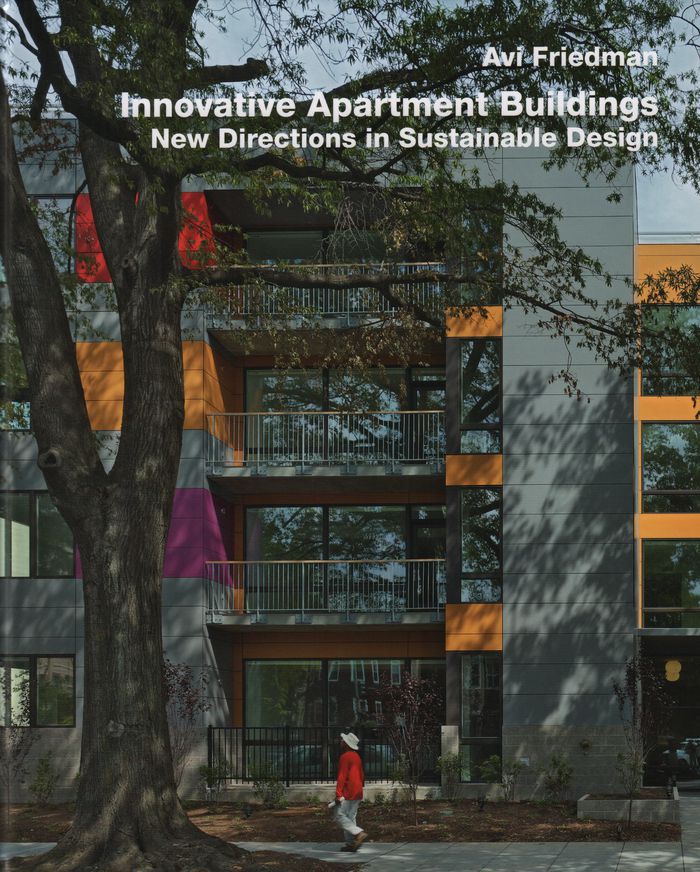
Current design of apartment buildings is facing challenges of philosophy and form. Past approaches no longer sustain new demands and require innovative thinking. The need for a new outlook is propelled by fundamental changes that touch upon environmental, economic, cultural and social aspects that led to the writing of this book. The depletion of non-renewable natural resources and climate change are a few of the environmental challenges that prompted designers to reconsider conceptual approaches in favour of ones that promote a better suitability between buildings and their environments. Concepts that minimize the building?s carbon footprint, passive solar gain, net-zero structures and water harvesting system are some of the contemporary strategies that architects and builders are integrating into their thought processes and design. Increasing costs of material, labour, land and infrastructure have posed economic challenges with affordability being paramount among them. The need to do with less brings about concepts that include adaptable dwellings, and smaller-sized yet quality-designed housing. Social challenges are also drawing attention.
Innovative apartment buildings. New directions in sustainable design
Actions:
Price:
$103.00
(available to order)
Summary:
Current design of apartment buildings is facing challenges of philosophy and form. Past approaches no longer sustain new demands and require innovative thinking. The need for a new outlook is propelled by fundamental changes that touch upon environmental, economic, cultural and social aspects that led to the writing of this book. The depletion of non-renewable natural resources and climate change are a few of the environmental challenges that prompted designers to reconsider conceptual approaches in favour of ones that promote a better suitability between buildings and their environments. Concepts that minimize the building?s carbon footprint, passive solar gain, net-zero structures and water harvesting system are some of the contemporary strategies that architects and builders are integrating into their thought processes and design. Increasing costs of material, labour, land and infrastructure have posed economic challenges with affordability being paramount among them. The need to do with less brings about concepts that include adaptable dwellings, and smaller-sized yet quality-designed housing. Social challenges are also drawing attention.
Form:
books
books
Publication:
April 2017
April 2017
Subject:
Collective Housing
Collective Housing
Form:
books
books
Price:
$36.95
(available to order)
Summary:
Place de la Madeleine, synonyme de l'alliance entre gatronomie et chic, mais aussi théâtre d'obsèques d'envergure nationale. Avec un budget serré et de nombreuses contraintes, L'agence h2o opère un changement majeur sur cet espace engorgé: la restitution de 4500 mètres carrés de sol aux piétons, un gain massif de 40 % accompli presque furtivement, en grapillant de(...)
$36.95
(available to order)
Summary:
Place de la Madeleine, synonyme de l'alliance entre gatronomie et chic, mais aussi théâtre d'obsèques d'envergure nationale. Avec un budget serré et de nombreuses contraintes, L'agence h2o opère un changement majeur sur cet espace engorgé: la restitution de 4500 mètres carrés de sol aux piétons, un gain massif de 40 % accompli presque furtivement, en grapillant de(...)
Title:
H2O Architects: Faire place, Madeleine / Place-making at the Madeleine
Actions:
Price:
$36.95
(available to order)
Summary:
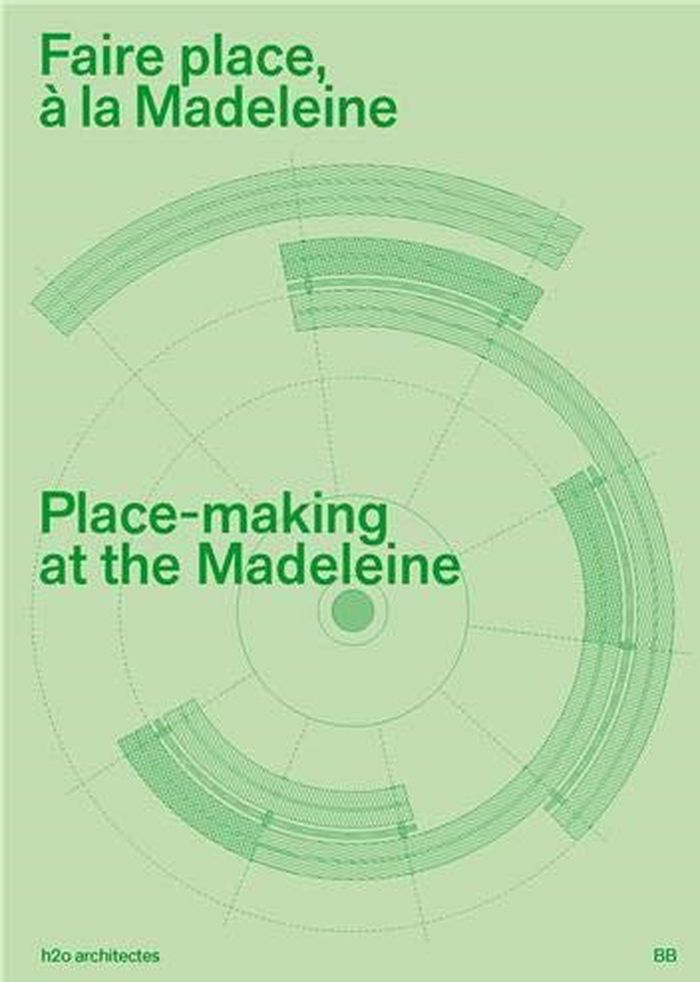
Place de la Madeleine, synonyme de l'alliance entre gatronomie et chic, mais aussi théâtre d'obsèques d'envergure nationale. Avec un budget serré et de nombreuses contraintes, L'agence h2o opère un changement majeur sur cet espace engorgé: la restitution de 4500 mètres carrés de sol aux piétons, un gain massif de 40 % accompli presque furtivement, en grapillant de l'espace partout ou l'occasion se présente. Quoi de plus luxueux à offrir aux Paridiens que ce dont ils ne jouissent que si peu : de l'espace non programmé, de la place, purement et simplement... / This is the first book of a monographic collection on the projects of h2o architectes. It showcases the construction of a residential building in Paris that features ashlar masonry facades. Requiring neither firing nor the addition of other products, stone material allows a 60% reduction in carbon emissions during the construction phase, in comparison to concrete, and a 35% reduction over a period of 50 years. The architects successfully demonstrate how load-bearing stone represents an economical alternative and lends a higher-quality standard of finish.
H2O Architects: Faire place, Madeleine / Place-making at the Madeleine
Actions:
Price:
$36.95
(available to order)
Summary:
Place de la Madeleine, synonyme de l'alliance entre gatronomie et chic, mais aussi théâtre d'obsèques d'envergure nationale. Avec un budget serré et de nombreuses contraintes, L'agence h2o opère un changement majeur sur cet espace engorgé: la restitution de 4500 mètres carrés de sol aux piétons, un gain massif de 40 % accompli presque furtivement, en grapillant de l'espace partout ou l'occasion se présente. Quoi de plus luxueux à offrir aux Paridiens que ce dont ils ne jouissent que si peu : de l'espace non programmé, de la place, purement et simplement... / This is the first book of a monographic collection on the projects of h2o architectes. It showcases the construction of a residential building in Paris that features ashlar masonry facades. Requiring neither firing nor the addition of other products, stone material allows a 60% reduction in carbon emissions during the construction phase, in comparison to concrete, and a 35% reduction over a period of 50 years. The architects successfully demonstrate how load-bearing stone represents an economical alternative and lends a higher-quality standard of finish.
Form:
books
books
Publication:
March 2021
March 2021
Subject:
Architecture Monographs
Architecture Monographs
Form:
books
books
Actions:
Price:
$36.95
(available to order)
Summary:
The term 'geoengineering' refers to technologies that counteract the effects of anthropogenic climate change by deliberately intervening in Earth systems. In the midst of a climate crisis, and with disparate views on whether planetary-scale design is the appropriate response at all, 'The Planet After Geoengineering' employs a speculative fiction approach to think with and(...)
$36.95
(available to order)
Summary:
The term 'geoengineering' refers to technologies that counteract the effects of anthropogenic climate change by deliberately intervening in Earth systems. In the midst of a climate crisis, and with disparate views on whether planetary-scale design is the appropriate response at all, 'The Planet After Geoengineering' employs a speculative fiction approach to think with and(...)
Subject:
Environment and environmental theory
Environment and environmental theory
Publication:
July 2021
July 2021
Title:
The planet after geoengineering
Actions:
Price:
$36.95
(available to order)
Summary:
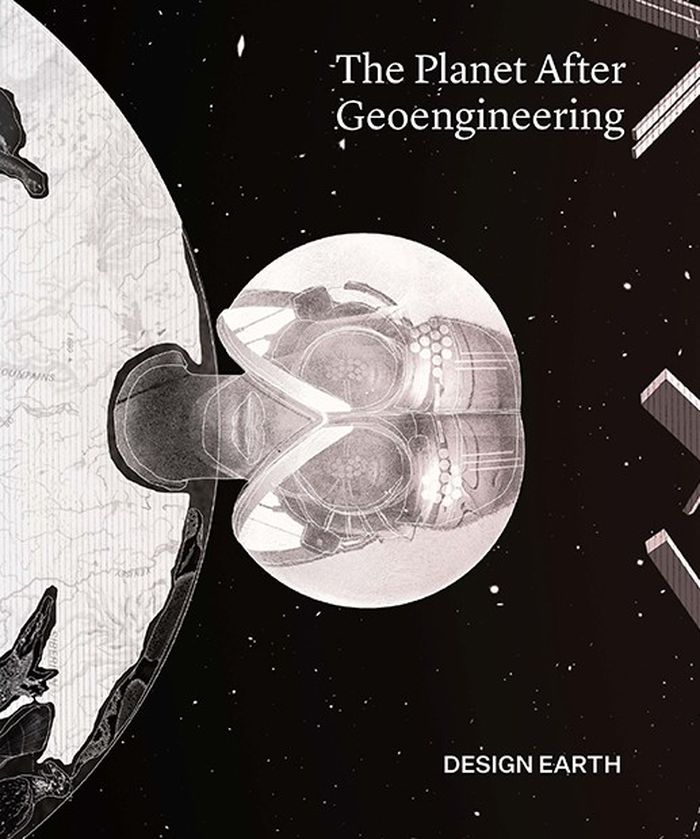
The term 'geoengineering' refers to technologies that counteract the effects of anthropogenic climate change by deliberately intervening in Earth systems. In the midst of a climate crisis, and with disparate views on whether planetary-scale design is the appropriate response at all, 'The Planet After Geoengineering' employs a speculative fiction approach to think with and against geoengineering as a form of planetary management. The graphic novel makes climate engineering and its controversies visible in a series of five stories that are collectively assembled into a planetary section from the deep underground to outer space. Each geostory - Petrified Carbon, Arctic Albedo, Sky River, Sulfur Storm, and Dust Cloud - depicts possible future Earths that we come to inhabit on the heels of a geoengineering intervention all while situating such promisory visions within a genealogy of climate-control projects from nineteenth-century rainmaking machines and volcanic eruptions to Cold War military plans. Such fabrications of an engineerable earth open a space to forge a new geo-politics that includes the actual Earth - its dimensions, processes, and lifeforms - as constitutive of design and the planet.
The planet after geoengineering
Actions:
Price:
$36.95
(available to order)
Summary:
The term 'geoengineering' refers to technologies that counteract the effects of anthropogenic climate change by deliberately intervening in Earth systems. In the midst of a climate crisis, and with disparate views on whether planetary-scale design is the appropriate response at all, 'The Planet After Geoengineering' employs a speculative fiction approach to think with and against geoengineering as a form of planetary management. The graphic novel makes climate engineering and its controversies visible in a series of five stories that are collectively assembled into a planetary section from the deep underground to outer space. Each geostory - Petrified Carbon, Arctic Albedo, Sky River, Sulfur Storm, and Dust Cloud - depicts possible future Earths that we come to inhabit on the heels of a geoengineering intervention all while situating such promisory visions within a genealogy of climate-control projects from nineteenth-century rainmaking machines and volcanic eruptions to Cold War military plans. Such fabrications of an engineerable earth open a space to forge a new geo-politics that includes the actual Earth - its dimensions, processes, and lifeforms - as constitutive of design and the planet.
Form:
books
books
Publication:
July 2021
July 2021
Subject:
Environment and environmental theory
Environment and environmental theory
Form:
books
books
Price:
$41.99
(available to order)
Summary:
The current epoch is one of accumulation: not only of capital but also of raw, often unruly material, from plastic in the ocean and carbon in the atmosphere to people, buildings, and cities. Alongside this material growth, image-making practices embedded within the fields of art and architecture have proven to be fertile, mobile, and capacious. Images of accumulation help(...)
$41.99
(available to order)
Summary:
The current epoch is one of accumulation: not only of capital but also of raw, often unruly material, from plastic in the ocean and carbon in the atmosphere to people, buildings, and cities. Alongside this material growth, image-making practices embedded within the fields of art and architecture have proven to be fertile, mobile, and capacious. Images of accumulation help(...)
Subject:
Architectural Theory
Architectural Theory
Publication:
April 2022
April 2022
Title:
Accumulation: the art, architecture and media of climate change
Actions:
Price:
$41.99
(available to order)
Summary:
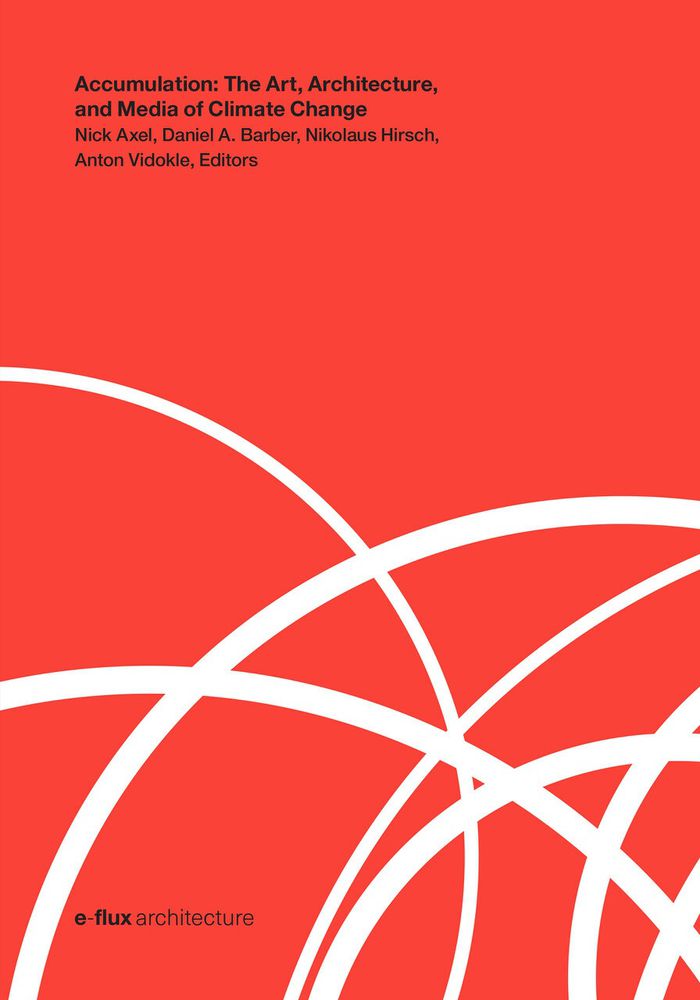
The current epoch is one of accumulation: not only of capital but also of raw, often unruly material, from plastic in the ocean and carbon in the atmosphere to people, buildings, and cities. Alongside this material growth, image-making practices embedded within the fields of art and architecture have proven to be fertile, mobile, and capacious. Images of accumulation help open up the climate to cultural inquiry and political mobilization and have formed a cultural infrastructure focused on the relationships between humans, other species, and their environments. The essays in ''Accumulation'' address this cultural infrastructure and the methodological challenges of its analysis. They offer a response to the relative invisibility of the climate now seen as material manifestations of social behavior. Contributors outline opportunities and ambitions of visual scholarship as a means to encounter the challenges emergent in the current moment: how can climate become visible, culturally and politically? Knowledge of climatic instability can change collective behavior and offer other trajectories, counteraccumulations that draw the present into a different, more livable, future.
Accumulation: the art, architecture and media of climate change
Actions:
Price:
$41.99
(available to order)
Summary:
The current epoch is one of accumulation: not only of capital but also of raw, often unruly material, from plastic in the ocean and carbon in the atmosphere to people, buildings, and cities. Alongside this material growth, image-making practices embedded within the fields of art and architecture have proven to be fertile, mobile, and capacious. Images of accumulation help open up the climate to cultural inquiry and political mobilization and have formed a cultural infrastructure focused on the relationships between humans, other species, and their environments. The essays in ''Accumulation'' address this cultural infrastructure and the methodological challenges of its analysis. They offer a response to the relative invisibility of the climate now seen as material manifestations of social behavior. Contributors outline opportunities and ambitions of visual scholarship as a means to encounter the challenges emergent in the current moment: how can climate become visible, culturally and politically? Knowledge of climatic instability can change collective behavior and offer other trajectories, counteraccumulations that draw the present into a different, more livable, future.
Form:
books
books
Publication:
April 2022
April 2022
Subject:
Architectural Theory
Architectural Theory
Form:
books
books
Actions:
Holdings:
Description:
xv, 304 pages : illustrations (chiefly color) ; 23 cm
Description:
xv, 304 pages : illustrations (chiefly color) ; 23 cm
Author:
Subject:
Publication:
Chicago : Society of American Archivists, [2020], ©2020
Chicago : Society of American Archivists, [2020], ©2020
Title:
Defining a discipline : archival research and practice in the twenty-first century : essays in honor of Richard J. Cox / edited by Jeannette A. Bastian & Elizabeth Yakel.
Actions:
Holdings:
Description:
xv, 304 pages : illustrations (chiefly color) ; 23 cm
Defining a discipline : archival research and practice in the twenty-first century : essays in honor of Richard J. Cox / edited by Jeannette A. Bastian & Elizabeth Yakel.
Actions:
Holdings:
Description:
xv, 304 pages : illustrations (chiefly color) ; 23 cm
Form:
books
books
Publication:
Chicago : Society of American Archivists, [2020], ©2020
Chicago : Society of American Archivists, [2020], ©2020
Author:
Subject:
Form:
books
books
Actions:
Price:
$57.95
(available to order)
Summary:
Architecture and environmental design are among the last professional fields to develop a sustained and nuanced discussion concerning ethics. Hemmed in by politics and powerful clients on one side and the often unscrupulous practices of the construction industry on the other, environmental designers have been traditionally reluctant to address ethical issues head on. And(...)
$57.95
(available to order)
Summary:
Architecture and environmental design are among the last professional fields to develop a sustained and nuanced discussion concerning ethics. Hemmed in by politics and powerful clients on one side and the often unscrupulous practices of the construction industry on the other, environmental designers have been traditionally reluctant to address ethical issues head on. And(...)
Subject:
Architectural Theory
Architectural Theory
Publication:
September 2007, Hanover and London
September 2007, Hanover and London
Title:
Architecture, ethics, and the personhood of place
Actions:
Price:
$57.95
(available to order)
Summary:
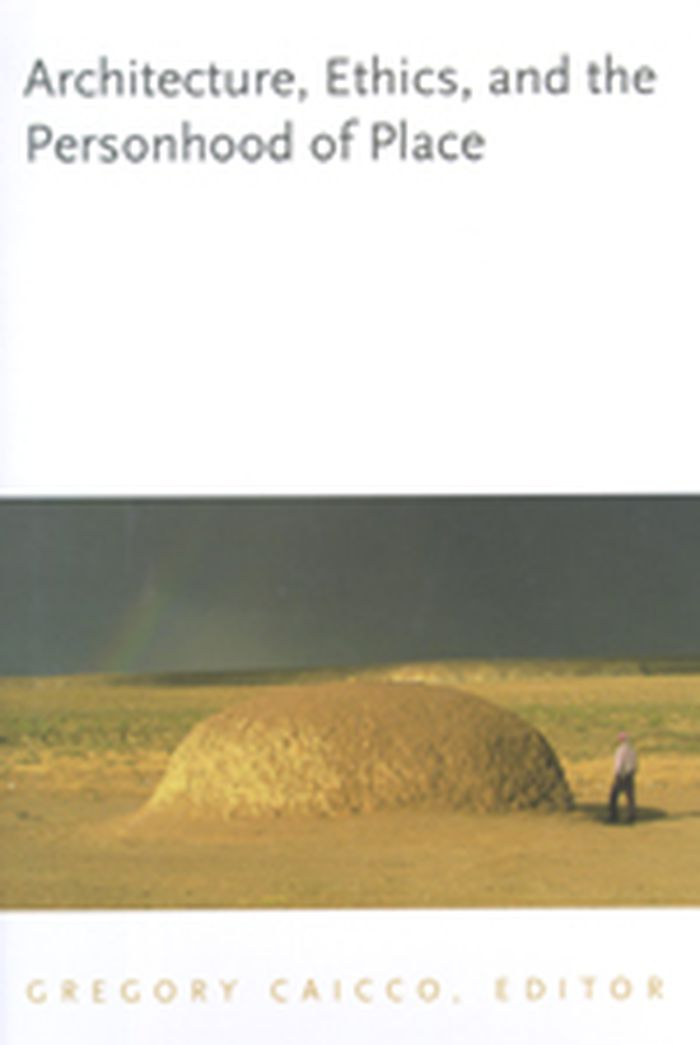
Architecture and environmental design are among the last professional fields to develop a sustained and nuanced discussion concerning ethics. Hemmed in by politics and powerful clients on one side and the often unscrupulous practices of the construction industry on the other, environmental designers have been traditionally reluctant to address ethical issues head on. And yet the rapid urbanization of the world's population continues to swell into new megacities, each less healthy, welcoming, secure, or environmentally sustainable than the next. Green, carbon-reduced, and sustainable building practices are important ways architects have recently responded to the symptoms of the crisis, but are these efforts really addressing the core issues? Taking the Din� (Navajo) "Hogan Song"�a song used to protect and nourish the personhood of newly constructed dwellings�as their inspiration, the architects, philosophers, poets, and other contemporary scholars contributing to this volume demonstrate that a deeper, more radical change in our relationship to the built world needs to occur. While offering a careful critique of modernist, corporate, or techno-enthralled design practices, these essays investigate an alternative "relational ecology" whose wisdom draws from ancient and often-marginalized voices, if not the whisperings of the earth itself.
Architecture, ethics, and the personhood of place
Actions:
Price:
$57.95
(available to order)
Summary:
Architecture and environmental design are among the last professional fields to develop a sustained and nuanced discussion concerning ethics. Hemmed in by politics and powerful clients on one side and the often unscrupulous practices of the construction industry on the other, environmental designers have been traditionally reluctant to address ethical issues head on. And yet the rapid urbanization of the world's population continues to swell into new megacities, each less healthy, welcoming, secure, or environmentally sustainable than the next. Green, carbon-reduced, and sustainable building practices are important ways architects have recently responded to the symptoms of the crisis, but are these efforts really addressing the core issues? Taking the Din� (Navajo) "Hogan Song"�a song used to protect and nourish the personhood of newly constructed dwellings�as their inspiration, the architects, philosophers, poets, and other contemporary scholars contributing to this volume demonstrate that a deeper, more radical change in our relationship to the built world needs to occur. While offering a careful critique of modernist, corporate, or techno-enthralled design practices, these essays investigate an alternative "relational ecology" whose wisdom draws from ancient and often-marginalized voices, if not the whisperings of the earth itself.
Form:
books
books
Publication:
September 2007, Hanover and London
September 2007, Hanover and London
Subject:
Architectural Theory
Architectural Theory
Form:
books
books
Title:
Don't build, rebuild
Don't build, rebuild
Actions:
Price:
$43.95
(available to order)
Summary:
As climate change has escalated into a crisis, the reuse of existing structures is the only way to even begin to preserve our wood, sand, silicon, and iron, let alone stop belching carbon monoxide into the air. Our housing crisis means that we need usable buildings now more than ever, but architect and critic Aaron Betsky shows that new construction—often seeking to(...)
$43.95
(available to order)
Summary:
As climate change has escalated into a crisis, the reuse of existing structures is the only way to even begin to preserve our wood, sand, silicon, and iron, let alone stop belching carbon monoxide into the air. Our housing crisis means that we need usable buildings now more than ever, but architect and critic Aaron Betsky shows that new construction—often seeking to(...)
Title:
Don't build, rebuild
Actions:
Price:
$43.95
(available to order)
Summary:
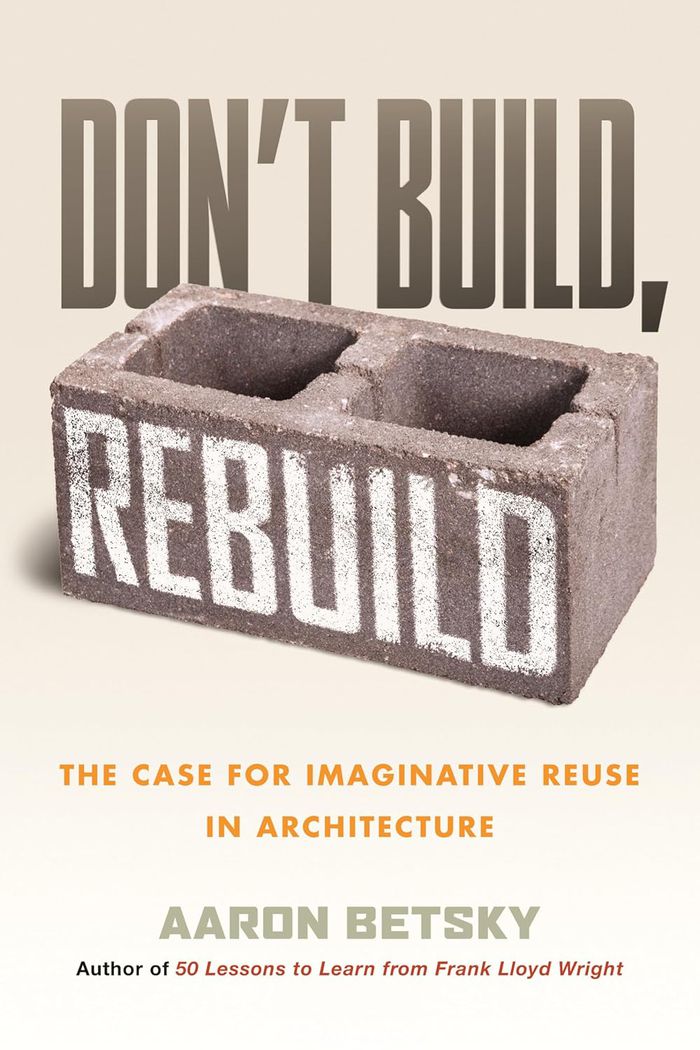
As climate change has escalated into a crisis, the reuse of existing structures is the only way to even begin to preserve our wood, sand, silicon, and iron, let alone stop belching carbon monoxide into the air. Our housing crisis means that we need usable buildings now more than ever, but architect and critic Aaron Betsky shows that new construction—often seeking to maximize profits rather than resources, often soulless in its feel—is not the answer. Whenever possible, it is better to repair, recycle, renovate, and reuse—not only from an environmental perspective, but culturally and artistically as well. Architectural reuse is as old as civilization itself. In the streets of Europe, you can find fragments from the Roman Empire. More recently, marginalized communities from New York to Detroit—queer people looking for places to gather or cruise, punks looking to make loud music, artists and displaced people looking for space to work and live—have taken over industrial spaces created then abandoned by capitalism, forging a unique style in the process. Their methods—from urban mining to dumpster diving—now inform architects transforming old structures today.
Don't build, rebuild
Actions:
Price:
$43.95
(available to order)
Summary:
As climate change has escalated into a crisis, the reuse of existing structures is the only way to even begin to preserve our wood, sand, silicon, and iron, let alone stop belching carbon monoxide into the air. Our housing crisis means that we need usable buildings now more than ever, but architect and critic Aaron Betsky shows that new construction—often seeking to maximize profits rather than resources, often soulless in its feel—is not the answer. Whenever possible, it is better to repair, recycle, renovate, and reuse—not only from an environmental perspective, but culturally and artistically as well. Architectural reuse is as old as civilization itself. In the streets of Europe, you can find fragments from the Roman Empire. More recently, marginalized communities from New York to Detroit—queer people looking for places to gather or cruise, punks looking to make loud music, artists and displaced people looking for space to work and live—have taken over industrial spaces created then abandoned by capitalism, forging a unique style in the process. Their methods—from urban mining to dumpster diving—now inform architects transforming old structures today.
Form:
books
books
Publication:
November 2024
November 2024
Subject:
Architectural Theory
Architectural Theory
Form:
books
books

Title:
Big, Formgiving
Big, Formgiving
Actions:
Price:
$70.00
(available to order)
Summary:
''Formgiving : an architectural future history,'' the new book by BIG (Bjarke Ingels Group), is a visionary attempt to look at the horizon of time. With ''Formgiving,'' BIG presents the third part of its TASCHEN trilogy, which began with ''Yes is More,'' one of the most successful architectural books of its generation, and continued with ''Hot to Cold.'' The book is(...)
$70.00
(available to order)
Summary:
''Formgiving : an architectural future history,'' the new book by BIG (Bjarke Ingels Group), is a visionary attempt to look at the horizon of time. With ''Formgiving,'' BIG presents the third part of its TASCHEN trilogy, which began with ''Yes is More,'' one of the most successful architectural books of its generation, and continued with ''Hot to Cold.'' The book is(...)
Title:
Big, Formgiving
Actions:
Price:
$70.00
(available to order)
Summary:
''Formgiving : an architectural future history,'' the new book by BIG (Bjarke Ingels Group), is a visionary attempt to look at the horizon of time. With ''Formgiving,'' BIG presents the third part of its TASCHEN trilogy, which began with ''Yes is More,'' one of the most successful architectural books of its generation, and continued with ''Hot to Cold.'' The book is presented in a timeline, stretching from the Big Bang into the most distant future. Projects are structured around six strands of evolution- ''Making,'' ''Sensing,'' ''Sustaining,'' ''Thinking,'' ''Healing,'' and ''Moving''- the multimedia-based, interdisciplinary concepts encompassing the building industry. Culture, climate, and landscape, as well as all the energies derived from the elements- the thermal mass of the ocean, the dynamics of currents, the energy and warmth of the sun, the power of the wind- are incorporated into these projects. Throughout more than 700 pages, Bjarke Ingels presents his personal selection of projects, including the 12,000-square-meter LEGO House in Denmark, the human-made ecosystems floating on oceans, the redesign of a World War II bunker into a contemplative museum, and the ski slope-infused power plant celebrating Copenhagen’s commitment to carbon neutrality. Through architecture and design, BIG gives shape to a sustainable and simultaneously colorful world.
Big, Formgiving
Actions:
Price:
$70.00
(available to order)
Summary:
''Formgiving : an architectural future history,'' the new book by BIG (Bjarke Ingels Group), is a visionary attempt to look at the horizon of time. With ''Formgiving,'' BIG presents the third part of its TASCHEN trilogy, which began with ''Yes is More,'' one of the most successful architectural books of its generation, and continued with ''Hot to Cold.'' The book is presented in a timeline, stretching from the Big Bang into the most distant future. Projects are structured around six strands of evolution- ''Making,'' ''Sensing,'' ''Sustaining,'' ''Thinking,'' ''Healing,'' and ''Moving''- the multimedia-based, interdisciplinary concepts encompassing the building industry. Culture, climate, and landscape, as well as all the energies derived from the elements- the thermal mass of the ocean, the dynamics of currents, the energy and warmth of the sun, the power of the wind- are incorporated into these projects. Throughout more than 700 pages, Bjarke Ingels presents his personal selection of projects, including the 12,000-square-meter LEGO House in Denmark, the human-made ecosystems floating on oceans, the redesign of a World War II bunker into a contemplative museum, and the ski slope-infused power plant celebrating Copenhagen’s commitment to carbon neutrality. Through architecture and design, BIG gives shape to a sustainable and simultaneously colorful world.
Form:
books
books
Publication:
December 2020
December 2020
Subject:
Architecture Monographs
Architecture Monographs
Form:
books
books
Actions:
Price:
$49.95
(available in store)
Summary:
If you were asked to close your eyes and envision where you are happiest, would you picture somewhere inside a building? North Americans are inside buildings for more than 90% of the day. Meanwhile, the indoors are stifling us, sometimes even killing us. Buildings, and the materials that make them up, expose us to materials linked to negative health impacts. The(...)
$49.95
(available in store)
Summary:
If you were asked to close your eyes and envision where you are happiest, would you picture somewhere inside a building? North Americans are inside buildings for more than 90% of the day. Meanwhile, the indoors are stifling us, sometimes even killing us. Buildings, and the materials that make them up, expose us to materials linked to negative health impacts. The(...)
Title:
People, planet, design: A practical guide to realizing architecture's potential
Actions:
Price:
$49.95
(available in store)
Summary:
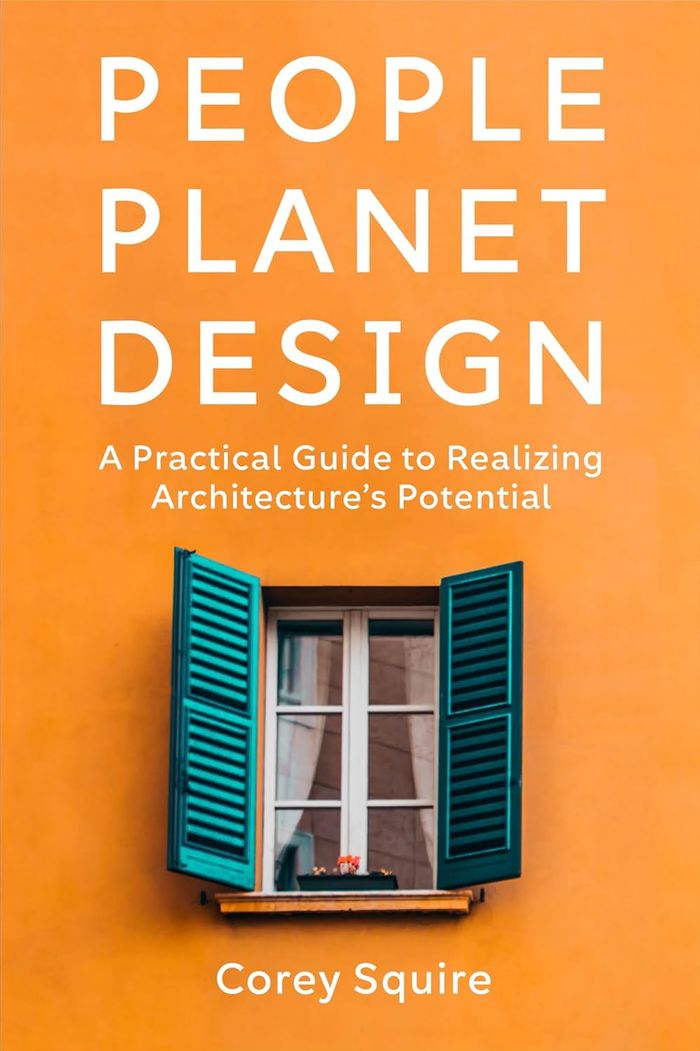
If you were asked to close your eyes and envision where you are happiest, would you picture somewhere inside a building? North Americans are inside buildings for more than 90% of the day. Meanwhile, the indoors are stifling us, sometimes even killing us. Buildings, and the materials that make them up, expose us to materials linked to negative health impacts. The construction and operation of buildings is responsible for 40% of climate-changing carbon emissions. In the US, the design choices made by the typical architecture firm employee each year can reduce emissions by about 300 times that of an average American. But the promise of sustainable architecture will not be realized if sustainability remains a secondary consideration for architects. What if great design were defined by its ability to cool the planet, heal communities, enhance ecological functioning, and advance justice? In "People, planet, design," architect Corey Squire builds the case, provides the data, and lays out the practical tools for a transformative human-centered architecture. This approach integrates beauty and delight with an awareness of how every design choice impacts the community, the planet, and the people who will use the building. Outcome-focused with a deep dive into practical design strategies, the book showcases ten building systems that embody design excellence.
People, planet, design: A practical guide to realizing architecture's potential
Actions:
Price:
$49.95
(available in store)
Summary:
If you were asked to close your eyes and envision where you are happiest, would you picture somewhere inside a building? North Americans are inside buildings for more than 90% of the day. Meanwhile, the indoors are stifling us, sometimes even killing us. Buildings, and the materials that make them up, expose us to materials linked to negative health impacts. The construction and operation of buildings is responsible for 40% of climate-changing carbon emissions. In the US, the design choices made by the typical architecture firm employee each year can reduce emissions by about 300 times that of an average American. But the promise of sustainable architecture will not be realized if sustainability remains a secondary consideration for architects. What if great design were defined by its ability to cool the planet, heal communities, enhance ecological functioning, and advance justice? In "People, planet, design," architect Corey Squire builds the case, provides the data, and lays out the practical tools for a transformative human-centered architecture. This approach integrates beauty and delight with an awareness of how every design choice impacts the community, the planet, and the people who will use the building. Outcome-focused with a deep dive into practical design strategies, the book showcases ten building systems that embody design excellence.
Form:
books
books
Publication:
November 2023
November 2023
Subject:
Green Architecture
Green Architecture


