


2294 Results
Level of archival description:
Project
Project
Actions:
Reference number:
AP207.S1.1989.PR02
Description:
The project series documents "Mappe Recinti Itinerari Territori", a rug made of eleven small tapestries hand-woven together. Pettena designed this rug for a special production for "Megalopoli" in 1989. Each of the tapestries represent four subjects: itineraries, territories, maps and enclosures. These subjects "are the means required for the definition of space inside or outside those “magic circles” that are the walls of a city, the beginning of a construction, as the rituals that are performed inside any enclosure take on a unique quality and role, different from whatever lies beyond this boundary." [1] The project series contains a reference photograph and photo montages of the eleven small tapestries forming the rug. Source: [1] Gianni Pettena website, https://www.giannipettena.it/italiano/opere-1/design-itineraries-territories-1989/ (last accessed 11 December 2019).
AP207.S1.1989.PR02
Description:
The project series documents "Mappe Recinti Itinerari Territori", a rug made of eleven small tapestries hand-woven together. Pettena designed this rug for a special production for "Megalopoli" in 1989. Each of the tapestries represent four subjects: itineraries, territories, maps and enclosures. These subjects "are the means required for the definition of space inside or outside those “magic circles” that are the walls of a city, the beginning of a construction, as the rituals that are performed inside any enclosure take on a unique quality and role, different from whatever lies beyond this boundary." [1] The project series contains a reference photograph and photo montages of the eleven small tapestries forming the rug. Source: [1] Gianni Pettena website, https://www.giannipettena.it/italiano/opere-1/design-itineraries-territories-1989/ (last accessed 11 December 2019).
People:
Date:
circa 1989-2015
circa 1989-2015
Title:
Mappe Recinti Itinerari Territori [Itineraires Territoires Maps Enclosures] (1989)
Actions:
AP207.S1.1989.PR02
Description:
The project series documents "Mappe Recinti Itinerari Territori", a rug made of eleven small tapestries hand-woven together. Pettena designed this rug for a special production for "Megalopoli" in 1989. Each of the tapestries represent four subjects: itineraries, territories, maps and enclosures. These subjects "are the means required for the definition of space inside or outside those “magic circles” that are the walls of a city, the beginning of a construction, as the rituals that are performed inside any enclosure take on a unique quality and role, different from whatever lies beyond this boundary." [1] The project series contains a reference photograph and photo montages of the eleven small tapestries forming the rug. Source: [1] Gianni Pettena website, https://www.giannipettena.it/italiano/opere-1/design-itineraries-territories-1989/ (last accessed 11 December 2019).
Mappe Recinti Itinerari Territori [Itineraires Territoires Maps Enclosures] (1989)
Actions:
AP207.S1.1989.PR02
Description:
The project series documents "Mappe Recinti Itinerari Territori", a rug made of eleven small tapestries hand-woven together. Pettena designed this rug for a special production for "Megalopoli" in 1989. Each of the tapestries represent four subjects: itineraries, territories, maps and enclosures. These subjects "are the means required for the definition of space inside or outside those “magic circles” that are the walls of a city, the beginning of a construction, as the rituals that are performed inside any enclosure take on a unique quality and role, different from whatever lies beyond this boundary." [1] The project series contains a reference photograph and photo montages of the eleven small tapestries forming the rug. Source: [1] Gianni Pettena website, https://www.giannipettena.it/italiano/opere-1/design-itineraries-territories-1989/ (last accessed 11 December 2019).
Level of archival description:
Project
Project
Date:
circa 1989-2015
circa 1989-2015
People:
Form:
exhibitions
exhibitions
Actions:
Description:
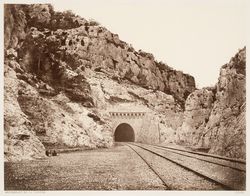
Édouard Baldus, more than any other photographer, defined the modern landscape and established the standard for architectural photography. The Photographs of Édouard Baldus: Landscapes and Monuments of France chronicles the Golden Age of France as seen by the photographer. The Photographs of Édouard Baldus is organized by chronological sections to reveal the evolution of(...)
Édouard Baldus, more than any other photographer, defined the modern landscape and established the standard for architectural photography. The Photographs of Édouard Baldus: Landscapes and Monuments of France chronicles the Golden Age of France as seen by the photographer. The Photographs of Édouard Baldus is organized by chronological sections to reveal the evolution of(...)
Location:
Main galleries
Main galleries
Date:
25 January 1995 to 23 April 1995
25 January 1995 to 23 April 1995
Title:
The Photographs of Édouard Baldus: Landscapes and Monuments of France
Actions:
Description:
Édouard Baldus, more than any other photographer, defined the modern landscape and established the standard for architectural photography. The Photographs of Édouard Baldus: Landscapes and Monuments of France chronicles the Golden Age of France as seen by the photographer. The Photographs of Édouard Baldus is organized by chronological sections to reveal the evolution of(...)
The Photographs of Édouard Baldus: Landscapes and Monuments of France
Actions:
Description:
Édouard Baldus, more than any other photographer, defined the modern landscape and established the standard for architectural photography. The Photographs of Édouard Baldus: Landscapes and Monuments of France chronicles the Golden Age of France as seen by the photographer. The Photographs of Édouard Baldus is organized by chronological sections to reveal the evolution of(...)
Form:
exhibitions
exhibitions
Date:
25 January 1995 to
23 April 1995
25 January 1995 to
23 April 1995
Location:
Main galleries
Main galleries
Level of archival description:
Project
Project
Actions:
Reference number:
AP207.S1.1987.PR01
Description:
The project series documents "Paesaggi Della Memoria", an installation presented at the Castello Aragonese, in Otranto in 1987. The installation consists of a small mound of sand on which is placed a plastic open suitcase and plastic cuttings that represent the mountains from Pettena's childhood landscape. This work by Pettena is a "metaphor for any possible personal interpretation of the universal theme of the landscape, bestow on it an artistic significance, the charge carried by the values of poetry, of the memory of a space and a time that here also acquire, thanks to the context, the “Mediterranean” dimension, reinforced by the presence of sand and the essential character of the setting." [1] The project series contains sketches and installation photographs and videos. Source: [1] Gianni Pettena website, https://www.giannipettena.it/italiano/opere-1/inst-landscapes-of-memory-1987/ (last accessed 11 December 2019).
AP207.S1.1987.PR01
Description:
The project series documents "Paesaggi Della Memoria", an installation presented at the Castello Aragonese, in Otranto in 1987. The installation consists of a small mound of sand on which is placed a plastic open suitcase and plastic cuttings that represent the mountains from Pettena's childhood landscape. This work by Pettena is a "metaphor for any possible personal interpretation of the universal theme of the landscape, bestow on it an artistic significance, the charge carried by the values of poetry, of the memory of a space and a time that here also acquire, thanks to the context, the “Mediterranean” dimension, reinforced by the presence of sand and the essential character of the setting." [1] The project series contains sketches and installation photographs and videos. Source: [1] Gianni Pettena website, https://www.giannipettena.it/italiano/opere-1/inst-landscapes-of-memory-1987/ (last accessed 11 December 2019).
People:
Date:
circa 1987-2015
circa 1987-2015
Title:
Paesaggi Della Memoria [Landscapes of Memory] (1987)
Actions:
AP207.S1.1987.PR01
Description:
The project series documents "Paesaggi Della Memoria", an installation presented at the Castello Aragonese, in Otranto in 1987. The installation consists of a small mound of sand on which is placed a plastic open suitcase and plastic cuttings that represent the mountains from Pettena's childhood landscape. This work by Pettena is a "metaphor for any possible personal interpretation of the universal theme of the landscape, bestow on it an artistic significance, the charge carried by the values of poetry, of the memory of a space and a time that here also acquire, thanks to the context, the “Mediterranean” dimension, reinforced by the presence of sand and the essential character of the setting." [1] The project series contains sketches and installation photographs and videos. Source: [1] Gianni Pettena website, https://www.giannipettena.it/italiano/opere-1/inst-landscapes-of-memory-1987/ (last accessed 11 December 2019).
Paesaggi Della Memoria [Landscapes of Memory] (1987)
Actions:
AP207.S1.1987.PR01
Description:
The project series documents "Paesaggi Della Memoria", an installation presented at the Castello Aragonese, in Otranto in 1987. The installation consists of a small mound of sand on which is placed a plastic open suitcase and plastic cuttings that represent the mountains from Pettena's childhood landscape. This work by Pettena is a "metaphor for any possible personal interpretation of the universal theme of the landscape, bestow on it an artistic significance, the charge carried by the values of poetry, of the memory of a space and a time that here also acquire, thanks to the context, the “Mediterranean” dimension, reinforced by the presence of sand and the essential character of the setting." [1] The project series contains sketches and installation photographs and videos. Source: [1] Gianni Pettena website, https://www.giannipettena.it/italiano/opere-1/inst-landscapes-of-memory-1987/ (last accessed 11 December 2019).
Level of archival description:
Project
Project
Date:
circa 1987-2015
circa 1987-2015
People:
Form:
events
events
Location:
Shaughnessy House
Shaughnessy House
Date:
15 August 2018 to 21 August 2018
15 August 2018 to 21 August 2018
Form:
events
events
Date:
15 August 2018 to
21 August 2018
15 August 2018 to
21 August 2018
Location:
Shaughnessy House
Shaughnessy House
Level of archival description:
Series
Series
Title:
Weaver software
Weaver software
Actions:
Reference number:
AP174.S2
Description:
This series contains records relating to Weaver, a software script developed by the Emergent Design Group at the Massachusetts Institute of Technology (MIT) and written in Maya Embedded Language (MEL) for Alias|Wavefront Maya. Weaver algorithmically generates woven strands and applies these strands to a surface within a 3D design model. The resulting weaves “can be complex, and depend on both the description of the weaver pattern and the topology of any user-defined surface or scaffolding in Maya on which Weaver is applied.”[1] The records in this series date from approximately 2001-2004 and include the script in Maya Executable Language (MEL) and standalone executable formats, annotated source code, tutorials, and file outputs such as images and Maya 3D models. Sources: [1] Testa, Peter and Devyn Weiser. “Material Agency,” in Network Practices: New Strategies in Architecture and Design. New York: Princeton Architectural Press (2007): 128.
AP174.S2
Description:
This series contains records relating to Weaver, a software script developed by the Emergent Design Group at the Massachusetts Institute of Technology (MIT) and written in Maya Embedded Language (MEL) for Alias|Wavefront Maya. Weaver algorithmically generates woven strands and applies these strands to a surface within a 3D design model. The resulting weaves “can be complex, and depend on both the description of the weaver pattern and the topology of any user-defined surface or scaffolding in Maya on which Weaver is applied.”[1] The records in this series date from approximately 2001-2004 and include the script in Maya Executable Language (MEL) and standalone executable formats, annotated source code, tutorials, and file outputs such as images and Maya 3D models. Sources: [1] Testa, Peter and Devyn Weiser. “Material Agency,” in Network Practices: New Strategies in Architecture and Design. New York: Princeton Architectural Press (2007): 128.
People:
Date:
ca. 2001-2004
ca. 2001-2004
Title:
Weaver software
Actions:
AP174.S2
Description:
This series contains records relating to Weaver, a software script developed by the Emergent Design Group at the Massachusetts Institute of Technology (MIT) and written in Maya Embedded Language (MEL) for Alias|Wavefront Maya. Weaver algorithmically generates woven strands and applies these strands to a surface within a 3D design model. The resulting weaves “can be complex, and depend on both the description of the weaver pattern and the topology of any user-defined surface or scaffolding in Maya on which Weaver is applied.”[1] The records in this series date from approximately 2001-2004 and include the script in Maya Executable Language (MEL) and standalone executable formats, annotated source code, tutorials, and file outputs such as images and Maya 3D models. Sources: [1] Testa, Peter and Devyn Weiser. “Material Agency,” in Network Practices: New Strategies in Architecture and Design. New York: Princeton Architectural Press (2007): 128.
Weaver software
Actions:
AP174.S2
Description:
This series contains records relating to Weaver, a software script developed by the Emergent Design Group at the Massachusetts Institute of Technology (MIT) and written in Maya Embedded Language (MEL) for Alias|Wavefront Maya. Weaver algorithmically generates woven strands and applies these strands to a surface within a 3D design model. The resulting weaves “can be complex, and depend on both the description of the weaver pattern and the topology of any user-defined surface or scaffolding in Maya on which Weaver is applied.”[1] The records in this series date from approximately 2001-2004 and include the script in Maya Executable Language (MEL) and standalone executable formats, annotated source code, tutorials, and file outputs such as images and Maya 3D models. Sources: [1] Testa, Peter and Devyn Weiser. “Material Agency,” in Network Practices: New Strategies in Architecture and Design. New York: Princeton Architectural Press (2007): 128.
Level of archival description:
Series
Series
Date:
ca. 2001-2004
ca. 2001-2004
People:
Quantity:
5 file
5 file
Actions:
Reference number:
ARCH240659
Description:
Any Exhibition - textual file Eavesdropping on Architecture exhibition tapes (4 video cassettes) [Tape 1] - Eavesdropping on Architecture exhibition tape June 3 - July 10, 2000 / Anyone: Derrida, Unger, Gehry, Gibson / Party Tape 2 - Eavesdropping on Architecture exhibition tape / Anywhere: Kipnis, Libeskind, Diller, Sola-Morales, Isozaki Tape 3 - Eavesdropping on Architecture exhibition tape / Koolhaas, von Berke, Sassen, Tschumi (Anyway), Grosz (Anyplace) Tape 4 - Eavesdropping on Architecture exhibition tape / Anyhow: Kwinter, Eisenman / Anymore: Lynn, Krauss, Vidler
ARCH240659
Description:
Any Exhibition - textual file Eavesdropping on Architecture exhibition tapes (4 video cassettes) [Tape 1] - Eavesdropping on Architecture exhibition tape June 3 - July 10, 2000 / Anyone: Derrida, Unger, Gehry, Gibson / Party Tape 2 - Eavesdropping on Architecture exhibition tape / Anywhere: Kipnis, Libeskind, Diller, Sola-Morales, Isozaki Tape 3 - Eavesdropping on Architecture exhibition tape / Koolhaas, von Berke, Sassen, Tschumi (Anyway), Grosz (Anyplace) Tape 4 - Eavesdropping on Architecture exhibition tape / Anyhow: Kwinter, Eisenman / Anymore: Lynn, Krauss, Vidler
People:
Date:
1999 - 2000
1999 - 2000
Title:
Video recordings of Eavesdropping on Architecture Exhibition
Actions:
ARCH240659
Description:
Any Exhibition - textual file Eavesdropping on Architecture exhibition tapes (4 video cassettes) [Tape 1] - Eavesdropping on Architecture exhibition tape June 3 - July 10, 2000 / Anyone: Derrida, Unger, Gehry, Gibson / Party Tape 2 - Eavesdropping on Architecture exhibition tape / Anywhere: Kipnis, Libeskind, Diller, Sola-Morales, Isozaki Tape 3 - Eavesdropping on Architecture exhibition tape / Koolhaas, von Berke, Sassen, Tschumi (Anyway), Grosz (Anyplace) Tape 4 - Eavesdropping on Architecture exhibition tape / Anyhow: Kwinter, Eisenman / Anymore: Lynn, Krauss, Vidler
Video recordings of Eavesdropping on Architecture Exhibition
Actions:
ARCH240659
Description:
Any Exhibition - textual file Eavesdropping on Architecture exhibition tapes (4 video cassettes) [Tape 1] - Eavesdropping on Architecture exhibition tape June 3 - July 10, 2000 / Anyone: Derrida, Unger, Gehry, Gibson / Party Tape 2 - Eavesdropping on Architecture exhibition tape / Anywhere: Kipnis, Libeskind, Diller, Sola-Morales, Isozaki Tape 3 - Eavesdropping on Architecture exhibition tape / Koolhaas, von Berke, Sassen, Tschumi (Anyway), Grosz (Anyplace) Tape 4 - Eavesdropping on Architecture exhibition tape / Anyhow: Kwinter, Eisenman / Anymore: Lynn, Krauss, Vidler
Quantity:
5 file
5 file
Date:
1999 - 2000
1999 - 2000
People:
Form:
textual records, born digital
Quantity:
14 file
textual records, born digital
Quantity:
14 file
Actions:
Reference number:
ARCH242986
Description:
[Sanford] Kwinter - FFE "Mach 1" Forster on Rudolf - drafts of article by Kurt Forster on Paul Rudolph Eisenman on Serra - draft of article by Peter Eisenman about Richard Serra Davidson, Cynthia Lavin, Sylvia Whiting, Sarah Somol, Robert Frampton on Banham - text by Kennth Frampton about Reyner Banham Galiano, Luis Fernández Mirko Zardini - text and computer diskette Letter from Kassel - Miyoshi - drafts of article by Masao Miyoshi Michael Speaks Muschamp - transcripts of Herbert Muschamp interviewed by Cynthia Davidson Discussion - transcript from ANY Event
ARCH242986
Description:
[Sanford] Kwinter - FFE "Mach 1" Forster on Rudolf - drafts of article by Kurt Forster on Paul Rudolph Eisenman on Serra - draft of article by Peter Eisenman about Richard Serra Davidson, Cynthia Lavin, Sylvia Whiting, Sarah Somol, Robert Frampton on Banham - text by Kennth Frampton about Reyner Banham Galiano, Luis Fernández Mirko Zardini - text and computer diskette Letter from Kassel - Miyoshi - drafts of article by Masao Miyoshi Michael Speaks Muschamp - transcripts of Herbert Muschamp interviewed by Cynthia Davidson Discussion - transcript from ANY Event
People:
Date:
1997
1997
Title:
Anyone Corporation Article Texts, 1997
Actions:
ARCH242986
Description:
[Sanford] Kwinter - FFE "Mach 1" Forster on Rudolf - drafts of article by Kurt Forster on Paul Rudolph Eisenman on Serra - draft of article by Peter Eisenman about Richard Serra Davidson, Cynthia Lavin, Sylvia Whiting, Sarah Somol, Robert Frampton on Banham - text by Kennth Frampton about Reyner Banham Galiano, Luis Fernández Mirko Zardini - text and computer diskette Letter from Kassel - Miyoshi - drafts of article by Masao Miyoshi Michael Speaks Muschamp - transcripts of Herbert Muschamp interviewed by Cynthia Davidson Discussion - transcript from ANY Event
Anyone Corporation Article Texts, 1997
Actions:
ARCH242986
Description:
[Sanford] Kwinter - FFE "Mach 1" Forster on Rudolf - drafts of article by Kurt Forster on Paul Rudolph Eisenman on Serra - draft of article by Peter Eisenman about Richard Serra Davidson, Cynthia Lavin, Sylvia Whiting, Sarah Somol, Robert Frampton on Banham - text by Kennth Frampton about Reyner Banham Galiano, Luis Fernández Mirko Zardini - text and computer diskette Letter from Kassel - Miyoshi - drafts of article by Masao Miyoshi Michael Speaks Muschamp - transcripts of Herbert Muschamp interviewed by Cynthia Davidson Discussion - transcript from ANY Event
Form:
textual records, born digital
Quantity:
14 file
textual records, born digital
Quantity:
14 file
Date:
1997
1997
People:
Level of archival description:
Project
Project
Title:
House 11a
House 11a
Reference number:
AP143.S4.D23
Description:
File documents an unexecuted project for House 11a, designed for Mr. and Mrs. Kurt Forster, Palo Alto, California, United States. File also includes one drawing for the International Seminary of Design in the Area of Cannaregio-West in Venice, Italy. Material in this file was produced in 1978. File does not contain any conceptual drawings by Eisenman. Freehand diagrams explain the series of "topological" operations at the origin of the design (DR1994:0139:001-008). The original presentation drawings are published in 'Progressive Architecture' (DR1994:0139:283-301). File contains conceptual drawings, design development drawings, and presentation drawings. - Conceptual drawings include elevations, sections, and axonometrics - mostly black and coloured felt-tip pen on tracing vellum. Design development drawings include plans and axonometrics - some black felt-tip pen and some graphite on yellow tracing paper; and reprographic copies include - one photocopy on wove paper. Presentation drawings include plans, elevations, and axonometrics - mostly pen and black ink on tracing vellum. Copies include a stat of an axonometric of House 11a and a photocopy of part of the Cannaregio site plan.
AP143.S4.D23
Description:
File documents an unexecuted project for House 11a, designed for Mr. and Mrs. Kurt Forster, Palo Alto, California, United States. File also includes one drawing for the International Seminary of Design in the Area of Cannaregio-West in Venice, Italy. Material in this file was produced in 1978. File does not contain any conceptual drawings by Eisenman. Freehand diagrams explain the series of "topological" operations at the origin of the design (DR1994:0139:001-008). The original presentation drawings are published in 'Progressive Architecture' (DR1994:0139:283-301). File contains conceptual drawings, design development drawings, and presentation drawings. - Conceptual drawings include elevations, sections, and axonometrics - mostly black and coloured felt-tip pen on tracing vellum. Design development drawings include plans and axonometrics - some black felt-tip pen and some graphite on yellow tracing paper; and reprographic copies include - one photocopy on wove paper. Presentation drawings include plans, elevations, and axonometrics - mostly pen and black ink on tracing vellum. Copies include a stat of an axonometric of House 11a and a photocopy of part of the Cannaregio site plan.
People:
Date:
1978
1978
Title:
House 11a
Actions:
AP143.S4.D23
Description:
File documents an unexecuted project for House 11a, designed for Mr. and Mrs. Kurt Forster, Palo Alto, California, United States. File also includes one drawing for the International Seminary of Design in the Area of Cannaregio-West in Venice, Italy. Material in this file was produced in 1978. File does not contain any conceptual drawings by Eisenman. Freehand diagrams explain the series of "topological" operations at the origin of the design (DR1994:0139:001-008). The original presentation drawings are published in 'Progressive Architecture' (DR1994:0139:283-301). File contains conceptual drawings, design development drawings, and presentation drawings. - Conceptual drawings include elevations, sections, and axonometrics - mostly black and coloured felt-tip pen on tracing vellum. Design development drawings include plans and axonometrics - some black felt-tip pen and some graphite on yellow tracing paper; and reprographic copies include - one photocopy on wove paper. Presentation drawings include plans, elevations, and axonometrics - mostly pen and black ink on tracing vellum. Copies include a stat of an axonometric of House 11a and a photocopy of part of the Cannaregio site plan.
House 11a
Actions:
AP143.S4.D23
Description:
File documents an unexecuted project for House 11a, designed for Mr. and Mrs. Kurt Forster, Palo Alto, California, United States. File also includes one drawing for the International Seminary of Design in the Area of Cannaregio-West in Venice, Italy. Material in this file was produced in 1978. File does not contain any conceptual drawings by Eisenman. Freehand diagrams explain the series of "topological" operations at the origin of the design (DR1994:0139:001-008). The original presentation drawings are published in 'Progressive Architecture' (DR1994:0139:283-301). File contains conceptual drawings, design development drawings, and presentation drawings. - Conceptual drawings include elevations, sections, and axonometrics - mostly black and coloured felt-tip pen on tracing vellum. Design development drawings include plans and axonometrics - some black felt-tip pen and some graphite on yellow tracing paper; and reprographic copies include - one photocopy on wove paper. Presentation drawings include plans, elevations, and axonometrics - mostly pen and black ink on tracing vellum. Copies include a stat of an axonometric of House 11a and a photocopy of part of the Cannaregio site plan.
Level of archival description:
File 23
File 23
Date:
1978
1978
People:
Level of archival description:
Project
Project
Actions:
Reference number:
AP018.S1.1982.PR07
Description:
This project series documents the design and construction of the Hamilton Trade Centre and Arena in Hamilton, Ontario from 1982-1985. The office identified the project number as 8207. The project consisted of a 60,000 square foot exhibition hall and arena, which had a capacity of 18,000. Opening in November 1985, the building was designed to host sports events (primarily hockey) and concerts. The project was reported to have cost $42 million. Along with Parkin Partnership as the architecture firm, John C. Parkin’s engineering company Parkin Engineers Ltd. worked as structural engineers on the project. The building, commissioned by the city of Hamilton, was officially called Copps Coliseum after the former Hamilton mayor, Victor Copps, who pushed for its creation throughout his career. In 2014, the name was changed to FirstOntario Centre. The project is recorded through reprographic copies of construction drawings, research, construction and presentation photographs, and textual records dating from 1982-1987. The textual records show design research, client correspondence, contractor work, specifications, publicity, and financial records. Any original drawings for this project are arranged within the textual records.
AP018.S1.1982.PR07
Description:
This project series documents the design and construction of the Hamilton Trade Centre and Arena in Hamilton, Ontario from 1982-1985. The office identified the project number as 8207. The project consisted of a 60,000 square foot exhibition hall and arena, which had a capacity of 18,000. Opening in November 1985, the building was designed to host sports events (primarily hockey) and concerts. The project was reported to have cost $42 million. Along with Parkin Partnership as the architecture firm, John C. Parkin’s engineering company Parkin Engineers Ltd. worked as structural engineers on the project. The building, commissioned by the city of Hamilton, was officially called Copps Coliseum after the former Hamilton mayor, Victor Copps, who pushed for its creation throughout his career. In 2014, the name was changed to FirstOntario Centre. The project is recorded through reprographic copies of construction drawings, research, construction and presentation photographs, and textual records dating from 1982-1987. The textual records show design research, client correspondence, contractor work, specifications, publicity, and financial records. Any original drawings for this project are arranged within the textual records.
People:
Date:
1982-1987
1982-1987
Title:
Hamilton Trade Centre and Arena, Hamilton, Ontario (1982-1985)
Actions:
AP018.S1.1982.PR07
Description:
This project series documents the design and construction of the Hamilton Trade Centre and Arena in Hamilton, Ontario from 1982-1985. The office identified the project number as 8207. The project consisted of a 60,000 square foot exhibition hall and arena, which had a capacity of 18,000. Opening in November 1985, the building was designed to host sports events (primarily hockey) and concerts. The project was reported to have cost $42 million. Along with Parkin Partnership as the architecture firm, John C. Parkin’s engineering company Parkin Engineers Ltd. worked as structural engineers on the project. The building, commissioned by the city of Hamilton, was officially called Copps Coliseum after the former Hamilton mayor, Victor Copps, who pushed for its creation throughout his career. In 2014, the name was changed to FirstOntario Centre. The project is recorded through reprographic copies of construction drawings, research, construction and presentation photographs, and textual records dating from 1982-1987. The textual records show design research, client correspondence, contractor work, specifications, publicity, and financial records. Any original drawings for this project are arranged within the textual records.
Hamilton Trade Centre and Arena, Hamilton, Ontario (1982-1985)
Actions:
AP018.S1.1982.PR07
Description:
This project series documents the design and construction of the Hamilton Trade Centre and Arena in Hamilton, Ontario from 1982-1985. The office identified the project number as 8207. The project consisted of a 60,000 square foot exhibition hall and arena, which had a capacity of 18,000. Opening in November 1985, the building was designed to host sports events (primarily hockey) and concerts. The project was reported to have cost $42 million. Along with Parkin Partnership as the architecture firm, John C. Parkin’s engineering company Parkin Engineers Ltd. worked as structural engineers on the project. The building, commissioned by the city of Hamilton, was officially called Copps Coliseum after the former Hamilton mayor, Victor Copps, who pushed for its creation throughout his career. In 2014, the name was changed to FirstOntario Centre. The project is recorded through reprographic copies of construction drawings, research, construction and presentation photographs, and textual records dating from 1982-1987. The textual records show design research, client correspondence, contractor work, specifications, publicity, and financial records. Any original drawings for this project are arranged within the textual records.
Level of archival description:
Project
Project
Date:
1982-1987
1982-1987
People:
Level of archival description:
Project
Project
Actions:
Reference number:
AP207.S1.2001.PR01
Description:
The project series documents "Achipensierio" a series of installations designed by Pettena from 2001 to 2018. The installation consists of variations of a building frame either made of metal beams or trellis covered in plants or straw. The building frame is designed to change form and appears deconstructed depending on the point of view. "Described by Gianni Pettena as “a contemporary Stonehenge,” but also as “a lesson in spatial perception,” this work metaphorically reaffirms the idea that there are no longer any frontiers today, when one is referring to themes relating to physical space, between the sensibility of the architect and that of the environmental artist." [1] The "Archipensierio" installations were presented in various venues from 2001 to 2018, including: "Archipensierio 2" at the Manifesta 7 in Rovereto, in 2008; "Archipensierio 5" at the Court Carrée du Louvre, in Parigi, for FIAC 2009; and "Archipensierio 6" at the UMOCA, in Salt Lake City, in 2013. The project series contains sketches, elevations, plans, drawings and photographs of the installations. It also includes a small model for the Archipensierio I, 2001 installation. Source: [1] Gianni Pettena website, https://www.giannipettena.it/italiano/opere-1/inst-archithoughts-2001/ (last accessed 22 January 2020).
AP207.S1.2001.PR01
Description:
The project series documents "Achipensierio" a series of installations designed by Pettena from 2001 to 2018. The installation consists of variations of a building frame either made of metal beams or trellis covered in plants or straw. The building frame is designed to change form and appears deconstructed depending on the point of view. "Described by Gianni Pettena as “a contemporary Stonehenge,” but also as “a lesson in spatial perception,” this work metaphorically reaffirms the idea that there are no longer any frontiers today, when one is referring to themes relating to physical space, between the sensibility of the architect and that of the environmental artist." [1] The "Archipensierio" installations were presented in various venues from 2001 to 2018, including: "Archipensierio 2" at the Manifesta 7 in Rovereto, in 2008; "Archipensierio 5" at the Court Carrée du Louvre, in Parigi, for FIAC 2009; and "Archipensierio 6" at the UMOCA, in Salt Lake City, in 2013. The project series contains sketches, elevations, plans, drawings and photographs of the installations. It also includes a small model for the Archipensierio I, 2001 installation. Source: [1] Gianni Pettena website, https://www.giannipettena.it/italiano/opere-1/inst-archithoughts-2001/ (last accessed 22 January 2020).
People:
Date:
2001-2018
2001-2018
Title:
Archipensierio [Architoughts] 2001
Actions:
AP207.S1.2001.PR01
Description:
The project series documents "Achipensierio" a series of installations designed by Pettena from 2001 to 2018. The installation consists of variations of a building frame either made of metal beams or trellis covered in plants or straw. The building frame is designed to change form and appears deconstructed depending on the point of view. "Described by Gianni Pettena as “a contemporary Stonehenge,” but also as “a lesson in spatial perception,” this work metaphorically reaffirms the idea that there are no longer any frontiers today, when one is referring to themes relating to physical space, between the sensibility of the architect and that of the environmental artist." [1] The "Archipensierio" installations were presented in various venues from 2001 to 2018, including: "Archipensierio 2" at the Manifesta 7 in Rovereto, in 2008; "Archipensierio 5" at the Court Carrée du Louvre, in Parigi, for FIAC 2009; and "Archipensierio 6" at the UMOCA, in Salt Lake City, in 2013. The project series contains sketches, elevations, plans, drawings and photographs of the installations. It also includes a small model for the Archipensierio I, 2001 installation. Source: [1] Gianni Pettena website, https://www.giannipettena.it/italiano/opere-1/inst-archithoughts-2001/ (last accessed 22 January 2020).
Archipensierio [Architoughts] 2001
Actions:
AP207.S1.2001.PR01
Description:
The project series documents "Achipensierio" a series of installations designed by Pettena from 2001 to 2018. The installation consists of variations of a building frame either made of metal beams or trellis covered in plants or straw. The building frame is designed to change form and appears deconstructed depending on the point of view. "Described by Gianni Pettena as “a contemporary Stonehenge,” but also as “a lesson in spatial perception,” this work metaphorically reaffirms the idea that there are no longer any frontiers today, when one is referring to themes relating to physical space, between the sensibility of the architect and that of the environmental artist." [1] The "Archipensierio" installations were presented in various venues from 2001 to 2018, including: "Archipensierio 2" at the Manifesta 7 in Rovereto, in 2008; "Archipensierio 5" at the Court Carrée du Louvre, in Parigi, for FIAC 2009; and "Archipensierio 6" at the UMOCA, in Salt Lake City, in 2013. The project series contains sketches, elevations, plans, drawings and photographs of the installations. It also includes a small model for the Archipensierio I, 2001 installation. Source: [1] Gianni Pettena website, https://www.giannipettena.it/italiano/opere-1/inst-archithoughts-2001/ (last accessed 22 January 2020).
Level of archival description:
Project
Project
Date:
2001-2018
2001-2018
People:


