


4347 Results
Form:
books
books
Actions:
Price:
$22.99
(available to order)
Summary:
In 1923, a group of young radical German thinkers and intellectuals came together to at Victoria Alle 7, Frankfurt, determined to explain the workings of the modern world. Among the most prominent members of what became the Frankfurt School were the philosophers Walter Benjamin, Theodor Adorno, Max Horkheimer, and Herbert Marcuse. Not only would they change the way we(...)
$22.99
(available to order)
Summary:
In 1923, a group of young radical German thinkers and intellectuals came together to at Victoria Alle 7, Frankfurt, determined to explain the workings of the modern world. Among the most prominent members of what became the Frankfurt School were the philosophers Walter Benjamin, Theodor Adorno, Max Horkheimer, and Herbert Marcuse. Not only would they change the way we(...)
Title:
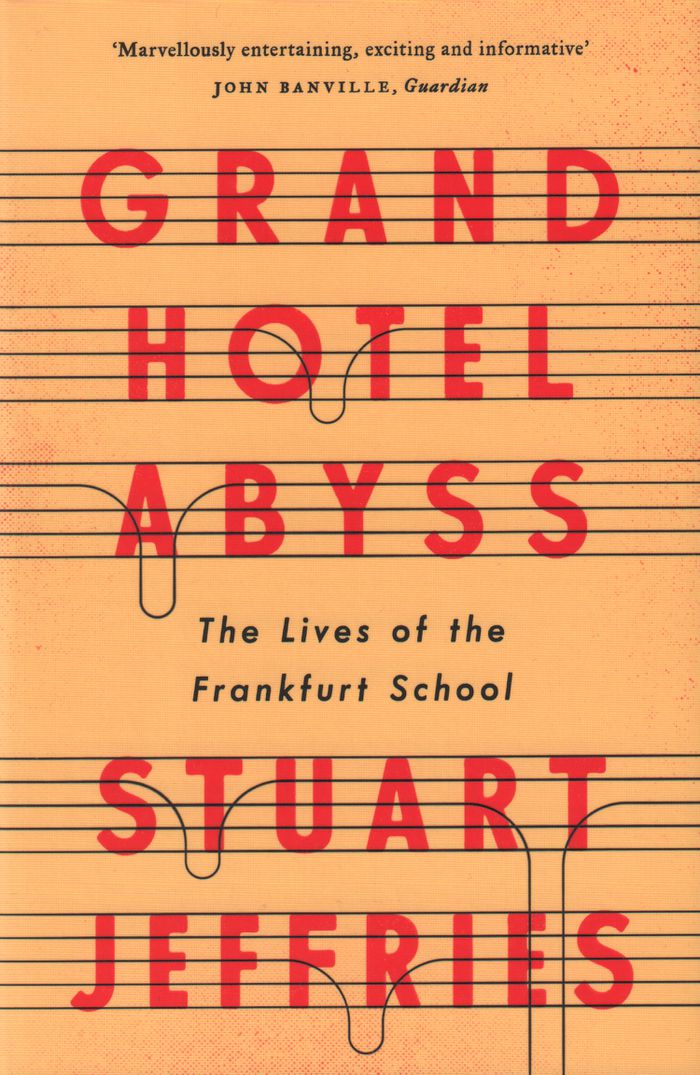
Grand Hotel Abyss: the lives of the Frankfurt school
Actions:
Price:
$22.99
(available to order)
Summary:
In 1923, a group of young radical German thinkers and intellectuals came together to at Victoria Alle 7, Frankfurt, determined to explain the workings of the modern world. Among the most prominent members of what became the Frankfurt School were the philosophers Walter Benjamin, Theodor Adorno, Max Horkheimer, and Herbert Marcuse. Not only would they change the way we think, but also the subjects we deem worthy of intellectual investigation. Their lives, like their ideas, profoundly, sometimes tragically, reflected and shaped the shattering events of the twentieth century. "Grand Hotel Abyss" combines biography, philosophy, and storytelling to reveal how the Frankfurt thinkers gathered in hopes of understanding the politics of culture during the rise of fascism. Some of them, forced to escape the horrors of Nazi Germany, later found exile in the United States. Benjamin, with his last great work—the incomplete Arcades Project—in his suitcase, was arrested in Spain and committed suicide when threatened with deportation to Nazi-occupied France. On the other side of the Atlantic, Adorno failed in his bid to become a Hollywood screenwriter, denounced jazz, and even met Charlie Chaplin in Malibu. After the war, there was a resurgence of interest in the School. From the relative comfort of sun-drenched California, Herbert Marcuse wrote the classic One Dimensional Man, which influenced the 1960s counterculture and thinkers such as Angela Davis; while in a tragic coda, Adorno died from a heart attack following confrontations with student radicals in Berlin. By taking popular culture seriously as an object of study—whether it was film, music, ideas, or consumerism—the Frankfurt School elaborated upon the nature and crisis of our mass-produced, mechanised society. Grand Hotel Abyss shows how much these ideas still tell us about our age of social media and runaway consumption.
Grand Hotel Abyss: the lives of the Frankfurt school
Actions:
Price:
$22.99
(available to order)
Summary:
In 1923, a group of young radical German thinkers and intellectuals came together to at Victoria Alle 7, Frankfurt, determined to explain the workings of the modern world. Among the most prominent members of what became the Frankfurt School were the philosophers Walter Benjamin, Theodor Adorno, Max Horkheimer, and Herbert Marcuse. Not only would they change the way we think, but also the subjects we deem worthy of intellectual investigation. Their lives, like their ideas, profoundly, sometimes tragically, reflected and shaped the shattering events of the twentieth century. "Grand Hotel Abyss" combines biography, philosophy, and storytelling to reveal how the Frankfurt thinkers gathered in hopes of understanding the politics of culture during the rise of fascism. Some of them, forced to escape the horrors of Nazi Germany, later found exile in the United States. Benjamin, with his last great work—the incomplete Arcades Project—in his suitcase, was arrested in Spain and committed suicide when threatened with deportation to Nazi-occupied France. On the other side of the Atlantic, Adorno failed in his bid to become a Hollywood screenwriter, denounced jazz, and even met Charlie Chaplin in Malibu. After the war, there was a resurgence of interest in the School. From the relative comfort of sun-drenched California, Herbert Marcuse wrote the classic One Dimensional Man, which influenced the 1960s counterculture and thinkers such as Angela Davis; while in a tragic coda, Adorno died from a heart attack following confrontations with student radicals in Berlin. By taking popular culture seriously as an object of study—whether it was film, music, ideas, or consumerism—the Frankfurt School elaborated upon the nature and crisis of our mass-produced, mechanised society. Grand Hotel Abyss shows how much these ideas still tell us about our age of social media and runaway consumption.
Form:
books
books
Publication:
September 2017
September 2017
Subject:
Critical Theory
Critical Theory
Form:
books
books
Actions:
Price:
$39.95
(available to order)
Summary:
In postwar France, the aesthetics of appropriation and collage gave cultural form to a struggle over meaning. A new wave of avant-garde experimentation used - or stole, plagiarized, and expropriated - elements from advertising, journalism, literature, art, and other sources of common discourse (the ironically named "beautiful language" of this book's title, itself an(...)
$39.95
(available to order)
Summary:
In postwar France, the aesthetics of appropriation and collage gave cultural form to a struggle over meaning. A new wave of avant-garde experimentation used - or stole, plagiarized, and expropriated - elements from advertising, journalism, literature, art, and other sources of common discourse (the ironically named "beautiful language" of this book's title, itself an(...)
Publication:
February 2007, Cambridge (MA)
February 2007, Cambridge (MA)
Title:
The beautiful language of my century : reinventing the language of contestation in postwar France, 1945-1968
Actions:
Price:
$39.95
(available to order)
Summary:
In postwar France, the aesthetics of appropriation and collage gave cultural form to a struggle over meaning. A new wave of avant-garde experimentation used - or stole, plagiarized, and expropriated - elements from advertising, journalism, literature, art, and other sources of common discourse (the ironically named "beautiful language" of this book's title, itself an appropriation from Guy Debord's collaged Mémoires). Redeployed, often in startling or pointed juxtapositions, these elements took on newly oppositional meanings. A famous photograph taken inside the occupied Sorbonne in May 1968, for example, shows a massive academic painting altered by a clever cartoonish speech bubble that transforms the painting into a parody of itself and memorializes an event very different from the one captured by the original artist."The beautiful language of my century" describes the various forms of critical culture that culminated in the events of May 1968, and investigates the ways those forms have come down to us today. McDonough explores the montage practice developed by Guy Debord and his situationist colleagues under the name of détournement and its expression in the later fifties as a form of cultural theft. He addresses the influence of colonialism on these practices, examining a 1961 exhibit of torn posters of the Algerian War ("La France déchirée"), Godard's early film Le Petit Soldat, and Christo's Project for a Temporary Wall of Steel Drums. He discusses the French left's adoption in the mid-sixties of the "end of art" as a theoretical position and describes the leftist idea of the fête as a Rabelaisian and revolutionary upwelling of everything that is low. This influential conception, inspired equally by the American urban revolts of the sixties and the writings of theorists Marcel Mauss and Georges Bataille, coalesced into a new image of revolution, a new model of contestation, in the events of May 1968 - when the struggle over language and culture merged with a broader resistance to capitalist modernization.
The beautiful language of my century : reinventing the language of contestation in postwar France, 1945-1968
Actions:
Price:
$39.95
(available to order)
Summary:
In postwar France, the aesthetics of appropriation and collage gave cultural form to a struggle over meaning. A new wave of avant-garde experimentation used - or stole, plagiarized, and expropriated - elements from advertising, journalism, literature, art, and other sources of common discourse (the ironically named "beautiful language" of this book's title, itself an appropriation from Guy Debord's collaged Mémoires). Redeployed, often in startling or pointed juxtapositions, these elements took on newly oppositional meanings. A famous photograph taken inside the occupied Sorbonne in May 1968, for example, shows a massive academic painting altered by a clever cartoonish speech bubble that transforms the painting into a parody of itself and memorializes an event very different from the one captured by the original artist."The beautiful language of my century" describes the various forms of critical culture that culminated in the events of May 1968, and investigates the ways those forms have come down to us today. McDonough explores the montage practice developed by Guy Debord and his situationist colleagues under the name of détournement and its expression in the later fifties as a form of cultural theft. He addresses the influence of colonialism on these practices, examining a 1961 exhibit of torn posters of the Algerian War ("La France déchirée"), Godard's early film Le Petit Soldat, and Christo's Project for a Temporary Wall of Steel Drums. He discusses the French left's adoption in the mid-sixties of the "end of art" as a theoretical position and describes the leftist idea of the fête as a Rabelaisian and revolutionary upwelling of everything that is low. This influential conception, inspired equally by the American urban revolts of the sixties and the writings of theorists Marcel Mauss and Georges Bataille, coalesced into a new image of revolution, a new model of contestation, in the events of May 1968 - when the struggle over language and culture merged with a broader resistance to capitalist modernization.
Form:
books
books
Publication:
February 2007, Cambridge (MA)
February 2007, Cambridge (MA)
Form:
books
books
Actions:
Price:
$99.95
(available to order)
Summary:
While the history of photography is a well-established canon, much less critical attention has been directed at the phenomenon of the photobook, which for many photographers is perhaps the most significant vehicle for the display of their work and the communication of their vision to a mass audience. In the first of two volumes, both co-edited by Martin Parr and Gerry(...)
$99.95
(available to order)
Summary:
While the history of photography is a well-established canon, much less critical attention has been directed at the phenomenon of the photobook, which for many photographers is perhaps the most significant vehicle for the display of their work and the communication of their vision to a mass audience. In the first of two volumes, both co-edited by Martin Parr and Gerry(...)
Subject:
Photography Collections
Photography Collections
Publication:
November 2004, London
November 2004, London
Title:
The photobook : a history, volume 1
Actions:
Price:
$99.95
(available to order)
Summary:
While the history of photography is a well-established canon, much less critical attention has been directed at the phenomenon of the photobook, which for many photographers is perhaps the most significant vehicle for the display of their work and the communication of their vision to a mass audience. In the first of two volumes, both co-edited by Martin Parr and Gerry Badger, "The Photobook" provides a comprehensive overview of the development of the photobook, from its inception at the dawn of photography in the early nineteenth century through to the radical Japanese photobooks of the 1960s and 70s, by way of the modernist and propaganda books of the 1930s and 40s. In his introduction, Badger argues that the photobook is one of the most significant photographic genres due to the extent of its distribution and level of availability, and contests the traditional notion that the history of photography is best represented by the original print. This study provides an important corrective to the traditional history of photography. The selection of photographers made by Badger and Parr challenges the popular canon, and their survey of the history of the photobook reveals a secret web of influence and interrelationships between photographers and photographic movements around the world. The book is divided into a series of thematic and broadly chronological chapters, each featuring a general introductory text providing background information and highlighting the dominant political and artistic influences on the photobook in the period, followed by more detailed discussion of the individual photobooks. The chapter texts are followed by spreads and images from over 200 books, which provide the central means of telling the history of the photobook. Chosen by Parr and Badger, these illustrations show around 200 of the most artistically and culturally important photobooks in three dimensions, with the cover or jacket and a selection of spreads from the book shown. Volume One also features an illuminating and provocative introduction, ‘The Photobook: Between the Film and the Novel’ by Badger, which is accompanied by a preface written by Parr.
The photobook : a history, volume 1
Actions:
Price:
$99.95
(available to order)
Summary:
While the history of photography is a well-established canon, much less critical attention has been directed at the phenomenon of the photobook, which for many photographers is perhaps the most significant vehicle for the display of their work and the communication of their vision to a mass audience. In the first of two volumes, both co-edited by Martin Parr and Gerry Badger, "The Photobook" provides a comprehensive overview of the development of the photobook, from its inception at the dawn of photography in the early nineteenth century through to the radical Japanese photobooks of the 1960s and 70s, by way of the modernist and propaganda books of the 1930s and 40s. In his introduction, Badger argues that the photobook is one of the most significant photographic genres due to the extent of its distribution and level of availability, and contests the traditional notion that the history of photography is best represented by the original print. This study provides an important corrective to the traditional history of photography. The selection of photographers made by Badger and Parr challenges the popular canon, and their survey of the history of the photobook reveals a secret web of influence and interrelationships between photographers and photographic movements around the world. The book is divided into a series of thematic and broadly chronological chapters, each featuring a general introductory text providing background information and highlighting the dominant political and artistic influences on the photobook in the period, followed by more detailed discussion of the individual photobooks. The chapter texts are followed by spreads and images from over 200 books, which provide the central means of telling the history of the photobook. Chosen by Parr and Badger, these illustrations show around 200 of the most artistically and culturally important photobooks in three dimensions, with the cover or jacket and a selection of spreads from the book shown. Volume One also features an illuminating and provocative introduction, ‘The Photobook: Between the Film and the Novel’ by Badger, which is accompanied by a preface written by Parr.
Form:
books
books
Publication:
November 2004, London
November 2004, London
Subject:
Photography Collections
Photography Collections
Form:
books
books
Actions:
Price:
$45.00
(available to order)
Summary:
November 2009 marks the 100th anniversary of the Grand Boulevard and Concourse, the Bronx’s crown jewel of urban planning, which stretches over four miles from 138th Street to the Mosholu Parkway. This famous roadway represents Art Deco and Art Moderne architecture at its grandest, including a cornucopia of apartment complexes, the Concourse Plaza Hotel, the Loews(...)
$45.00
(available to order)
Summary:
November 2009 marks the 100th anniversary of the Grand Boulevard and Concourse, the Bronx’s crown jewel of urban planning, which stretches over four miles from 138th Street to the Mosholu Parkway. This famous roadway represents Art Deco and Art Moderne architecture at its grandest, including a cornucopia of apartment complexes, the Concourse Plaza Hotel, the Loews(...)
Title:
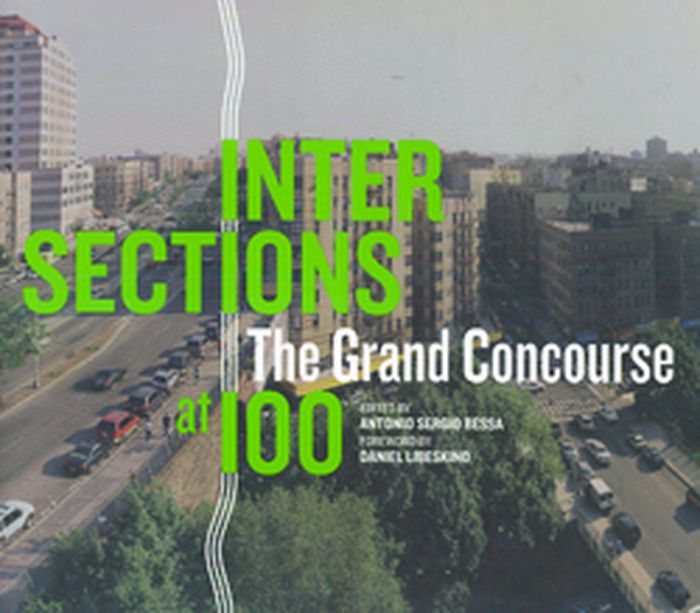
Intersections : the grand concourse at 100
Actions:
Price:
$45.00
(available to order)
Summary:
November 2009 marks the 100th anniversary of the Grand Boulevard and Concourse, the Bronx’s crown jewel of urban planning, which stretches over four miles from 138th Street to the Mosholu Parkway. This famous roadway represents Art Deco and Art Moderne architecture at its grandest, including a cornucopia of apartment complexes, the Concourse Plaza Hotel, the Loews Paradise Theater, the Bronx County Courthouse, and, of course, Yankee Stadium. Modeled on the Champs Élysées in Paris and described in the 1939 WPA Guide to New York as “the Park Avenue of the middle-class,” it offered residents amenities not seen before in the city, such as private bathrooms and central heating. This publication examines the rich history of the Bronx’s most famous thoroughfare through a collection of pieces — written by historians and contemporary museum curators, and accompanied by two original texts by Alsatian-born engineer Louis Risse, who designed and oversaw the construction of the Grand Concourse — on the context that informed its planning and construction, along with a vast collection of photographs that bring this period back to life. The book also features six art projects especially commissioned for the occasion : a series of large-scale color photographs by Jeff Liao; a time line by Skowmon Hastanan; The Tree Museum, a project by Katie Holten on the green spaces along the Concourse; a documentary film by Pablo Helguera on three buildings along the Concourse, namely, Poe’s cottage, the Paradise Theater, and the Freedman Home; a project by Kabir Carter about capturing sounds from different areas along the Concourse; and a special lobby installation by Acconci Studio. Traveling the Concourse today offers a lesson in architecture, history, and sociology as you see the faces and places that call it home. It is truly New York, but more important, authentically the Bronx. You can’t experience the Bronx until you travel the Grand Boulevard and Concourse. Foreword by Daniel Libeskind.
Intersections : the grand concourse at 100
Actions:
Price:
$45.00
(available to order)
Summary:
November 2009 marks the 100th anniversary of the Grand Boulevard and Concourse, the Bronx’s crown jewel of urban planning, which stretches over four miles from 138th Street to the Mosholu Parkway. This famous roadway represents Art Deco and Art Moderne architecture at its grandest, including a cornucopia of apartment complexes, the Concourse Plaza Hotel, the Loews Paradise Theater, the Bronx County Courthouse, and, of course, Yankee Stadium. Modeled on the Champs Élysées in Paris and described in the 1939 WPA Guide to New York as “the Park Avenue of the middle-class,” it offered residents amenities not seen before in the city, such as private bathrooms and central heating. This publication examines the rich history of the Bronx’s most famous thoroughfare through a collection of pieces — written by historians and contemporary museum curators, and accompanied by two original texts by Alsatian-born engineer Louis Risse, who designed and oversaw the construction of the Grand Concourse — on the context that informed its planning and construction, along with a vast collection of photographs that bring this period back to life. The book also features six art projects especially commissioned for the occasion : a series of large-scale color photographs by Jeff Liao; a time line by Skowmon Hastanan; The Tree Museum, a project by Katie Holten on the green spaces along the Concourse; a documentary film by Pablo Helguera on three buildings along the Concourse, namely, Poe’s cottage, the Paradise Theater, and the Freedman Home; a project by Kabir Carter about capturing sounds from different areas along the Concourse; and a special lobby installation by Acconci Studio. Traveling the Concourse today offers a lesson in architecture, history, and sociology as you see the faces and places that call it home. It is truly New York, but more important, authentically the Bronx. You can’t experience the Bronx until you travel the Grand Boulevard and Concourse. Foreword by Daniel Libeskind.
Form:
books
books
Publication:
September 2009
September 2009
Subject:
Urban Theory
Urban Theory
Form:
books
books
Actions:
Price:
$58.50
(available to order)
Summary:
One of the premier institutions of contemporary art in the country, the Walker Art Center also holds an important collection of over 11,000 objects from the early 20th century to the present. These holdings reflect the Center's renowned multidisciplinary program, and include paintings, sculpture, prints, photography, film, video, installations, and digital arts that range(...)
$58.50
(available to order)
Summary:
One of the premier institutions of contemporary art in the country, the Walker Art Center also holds an important collection of over 11,000 objects from the early 20th century to the present. These holdings reflect the Center's renowned multidisciplinary program, and include paintings, sculpture, prints, photography, film, video, installations, and digital arts that range(...)
Publication:
April 2005, Minneapolis
April 2005, Minneapolis
Title:
Bits & pieces put together to present a semblance of a whole : Walker Art Center collections
Actions:
Price:
$58.50
(available to order)
Summary:
One of the premier institutions of contemporary art in the country, the Walker Art Center also holds an important collection of over 11,000 objects from the early 20th century to the present. These holdings reflect the Center's renowned multidisciplinary program, and include paintings, sculpture, prints, photography, film, video, installations, and digital arts that range in date from classic early modernist to cutting edge contemporary. While aiming to represent the immense diversity in art-making around the world, the collection also is known for several areas of specialty including Minimalism, Arte Povera, Fluxus, and contemporary printmaking. In-depth representations of work by individual artists, including Matthew Barney, Joseph Beuys, Merce Cunningham, Jasper Johns, William Klein, Robert Motherwell, and Kara Walker reflect the Center's long and close relationships with many of the century's most creative minds. Showcased in this stunning, expansive, well-designed volume are more than 650 beautifully reproduced works of art. Co-authored by the Walker's curators and staff, and more than 30 Walker alumni, this book draws heavily on Walker archival material to serve as both a history of the institution and a primer on modern and contemporary art. Adding further dimension to the polyvocal, multifaceted rendition of this dynamic public art centre are contributions from a select group of acclaimed writers including, A.S. Byatt, Joshua Clover, Arthur Danto, Dave Eggers, Darby English, Annie Proulx, David Shapiro, and others. The catalogue is published in conjunction with the Spring 2005 re-opening of the newly expanded Walker Art Center. Artists include Matthew Barney, Chuck Close, Bruce Conner, Joseph Cornell, Merce Cummingham, Dan Flavin, Robert Gober, Dan Graham, David Hockney, Donald Judd, Ellsworth Kelly, William Klein, Sherrie Levine, Sol Lewitt, Roy Lichtenstein, Sharon Lockhart, Kerry James Marshall, Bruce Nauman, Isamu Noguchi, Claes Oldenburg, Raymond Pettibon, Richard Prince, Charles Ray, Edward Ruscha, Cindy Sherman, Lorna Simpson, Kiki Smith, Frank Stella, Kara Walker, Andy Warhol, and many others. Edited by Joan Rothfuss and Elizabeth Carpenter. Essays by Elizabeth Alexander, A.S. Byatt, Dave Eggers, Arthur C. Danto, Wayne Koestenbaum, James Lingwood, Linda Nochlin, Annie Proulx, David Shapiro, Charles Simic, Howard Singerman, Hamza Walker et al.
Bits & pieces put together to present a semblance of a whole : Walker Art Center collections
Actions:
Price:
$58.50
(available to order)
Summary:
One of the premier institutions of contemporary art in the country, the Walker Art Center also holds an important collection of over 11,000 objects from the early 20th century to the present. These holdings reflect the Center's renowned multidisciplinary program, and include paintings, sculpture, prints, photography, film, video, installations, and digital arts that range in date from classic early modernist to cutting edge contemporary. While aiming to represent the immense diversity in art-making around the world, the collection also is known for several areas of specialty including Minimalism, Arte Povera, Fluxus, and contemporary printmaking. In-depth representations of work by individual artists, including Matthew Barney, Joseph Beuys, Merce Cunningham, Jasper Johns, William Klein, Robert Motherwell, and Kara Walker reflect the Center's long and close relationships with many of the century's most creative minds. Showcased in this stunning, expansive, well-designed volume are more than 650 beautifully reproduced works of art. Co-authored by the Walker's curators and staff, and more than 30 Walker alumni, this book draws heavily on Walker archival material to serve as both a history of the institution and a primer on modern and contemporary art. Adding further dimension to the polyvocal, multifaceted rendition of this dynamic public art centre are contributions from a select group of acclaimed writers including, A.S. Byatt, Joshua Clover, Arthur Danto, Dave Eggers, Darby English, Annie Proulx, David Shapiro, and others. The catalogue is published in conjunction with the Spring 2005 re-opening of the newly expanded Walker Art Center. Artists include Matthew Barney, Chuck Close, Bruce Conner, Joseph Cornell, Merce Cummingham, Dan Flavin, Robert Gober, Dan Graham, David Hockney, Donald Judd, Ellsworth Kelly, William Klein, Sherrie Levine, Sol Lewitt, Roy Lichtenstein, Sharon Lockhart, Kerry James Marshall, Bruce Nauman, Isamu Noguchi, Claes Oldenburg, Raymond Pettibon, Richard Prince, Charles Ray, Edward Ruscha, Cindy Sherman, Lorna Simpson, Kiki Smith, Frank Stella, Kara Walker, Andy Warhol, and many others. Edited by Joan Rothfuss and Elizabeth Carpenter. Essays by Elizabeth Alexander, A.S. Byatt, Dave Eggers, Arthur C. Danto, Wayne Koestenbaum, James Lingwood, Linda Nochlin, Annie Proulx, David Shapiro, Charles Simic, Howard Singerman, Hamza Walker et al.
Form:
books
books
Publication:
April 2005, Minneapolis
April 2005, Minneapolis
Form:
books
books
Actions:
Price:
$32.95
(available in store)
Summary:
Ce sont sans doute ses contradictions qui rendent fascinante Los Angeles, l’anti-ville qui est pourtant la deuxième ville des États-Unis. Il n’est que de voir la pléiade d’auteurs qui en ont fait la toile de fond de leur roman ou de leur film. Ses défauts majeurs - le paroxysme de l’étalement urbain, une ville-banlieue impraticable sans voiture - portent paradoxalement(...)
$32.95
(available in store)
Summary:
Ce sont sans doute ses contradictions qui rendent fascinante Los Angeles, l’anti-ville qui est pourtant la deuxième ville des États-Unis. Il n’est que de voir la pléiade d’auteurs qui en ont fait la toile de fond de leur roman ou de leur film. Ses défauts majeurs - le paroxysme de l’étalement urbain, une ville-banlieue impraticable sans voiture - portent paradoxalement(...)
Title:
Portrait de ville : Los Angeles
Actions:
Price:
$32.95
(available in store)
Summary:
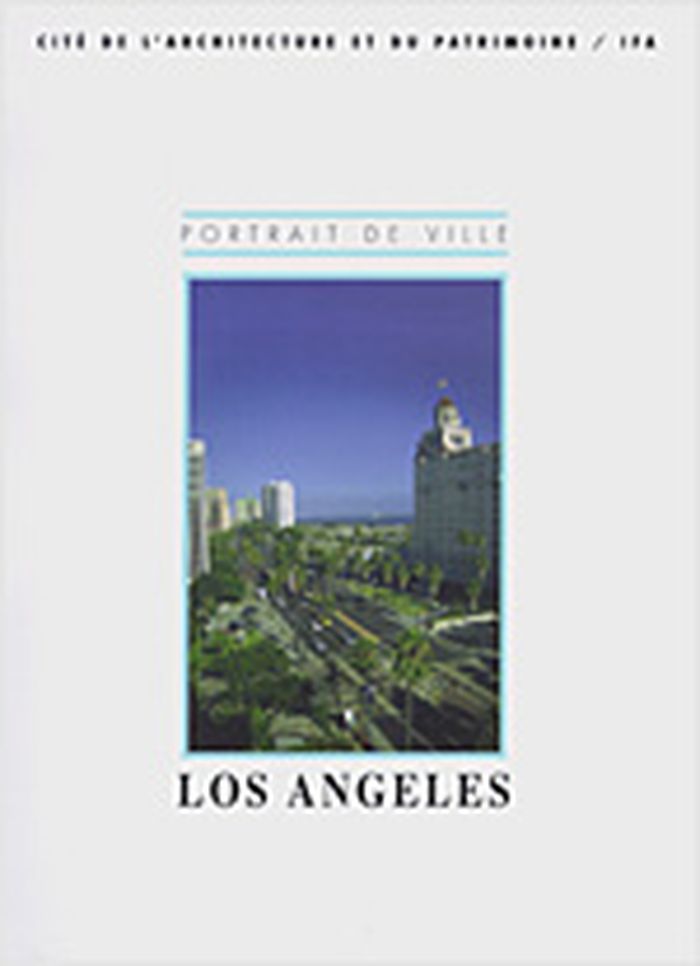
Ce sont sans doute ses contradictions qui rendent fascinante Los Angeles, l’anti-ville qui est pourtant la deuxième ville des États-Unis. Il n’est que de voir la pléiade d’auteurs qui en ont fait la toile de fond de leur roman ou de leur film. Ses défauts majeurs - le paroxysme de l’étalement urbain, une ville-banlieue impraticable sans voiture - portent paradoxalement une part statistique de rêve : celui de la maison individuelle ; celui aussi des strass et paillettes de l’univers hollywoodien... Quand on évoque le paysage de Los Angeles, une plaine côtière entre mer et montagnes (jusqu’à plus de 3000 m), gigantesque oasis suburbaine dans le désert californien, surgissent de multiples clichés : le soleil sur l’océan Pacifique et les grandes plages de sable fin où s’ébrouent les pulpeuses coast-guards en maillot rouge des séries américaines ; les autoroutes urbaines avec leurs échangeurs qui sillonnent les quelque 100 km d’étendue de l’agglomération ; les nappes de lotissements pavillonnaires noyés dans une végétation plus ou moins dense s’étendant à l’infini au fil de tracés viaires en damiers ; l’émergence des tours de Downtown qui, à l’échelle métropolitaine, a plutôt valeur de monument que de centre-ville, ou celle de plusieurs vagues de collines entre montagne et mer. Autre paradoxe, si l’on s’intéresse plus spécialement à l’architecture : Los Angeles est à la fois un océan de banalité - celle de l’habitation ordinaire, des centres commerciaux standards et des stations-service - et un musée d’architecture de plein air où plusieurs générations de grands architectes modernes et contemporains ont laissé leur signature, notamment pour des maisons particulières, comme Frank Lloyd Wright, Rudolf Schindler et Richard Neutra, puis Charles Eames, Pierre Koenig, John Lautner, Craig Ellwood et Cesar Pelli, ou plus récemment Charles Moore, Frank Gehry, ou Morphosis... Enfin, l’apparente tranquillité des lieux est violemment contredite à divers égards. Chacun sait que la faille de San Andrea est là et qu’un jour ou l’autre surviendra un cataclysme majeur. De plus, contrairement aux idées reçues qui veulent que les conflits sociaux s’expriment sur les lieux de travail ou dans les ghettos urbains denses, Los Angeles a connu il n’y a pas si longtemps des émeutes dans des quartiers noirs pavillonnaires qui ont révélé qu’elle était sous haute tension sociale autant que géologique. Fondée à l’heure de la colonisation espagnole (1781), elle n’est alors qu’un village agricole à main d’œuvre indienne. Après l’annexion de la Californie par les États-Unis (1848), la ville se développe sous la houlette des Anglo-américains protestants, même si d’autres communautés s’y installent : Mexicains, Chinois, Noirs, puis Japonais. La ségrégation ethnico-sociale, aussi spontanée qu’affirmée, est aussi spatiale. Bien que la communauté hispanique soit depuis longtemps la plus importante (plus de 45%, principalement dans East Los Angeles), aucun maire chicano n’avait été élu depuis 1872, lorsque La n’avait encore que 6000 habitants, contre 3,8 millions aujourd’hui et plus de 15 millions pour l’aire métropolitaine. La toute récente élection (mai 2005) du nouveau maire de la ville, Antonio Villaraigosa, est donc un événement. Ancien député du parlement californien, il est le fils d’immigrés mexicains pauvres, et il a bénéficié cette fois de l’appui de la communauté noire. Parmi les dossiers les plus chauds qu’il aura à traiter figurent les tensions raciales, la pénurie de logements, la pollution et la congestion du trafic.
Portrait de ville : Los Angeles
Actions:
Price:
$32.95
(available in store)
Summary:
Ce sont sans doute ses contradictions qui rendent fascinante Los Angeles, l’anti-ville qui est pourtant la deuxième ville des États-Unis. Il n’est que de voir la pléiade d’auteurs qui en ont fait la toile de fond de leur roman ou de leur film. Ses défauts majeurs - le paroxysme de l’étalement urbain, une ville-banlieue impraticable sans voiture - portent paradoxalement une part statistique de rêve : celui de la maison individuelle ; celui aussi des strass et paillettes de l’univers hollywoodien... Quand on évoque le paysage de Los Angeles, une plaine côtière entre mer et montagnes (jusqu’à plus de 3000 m), gigantesque oasis suburbaine dans le désert californien, surgissent de multiples clichés : le soleil sur l’océan Pacifique et les grandes plages de sable fin où s’ébrouent les pulpeuses coast-guards en maillot rouge des séries américaines ; les autoroutes urbaines avec leurs échangeurs qui sillonnent les quelque 100 km d’étendue de l’agglomération ; les nappes de lotissements pavillonnaires noyés dans une végétation plus ou moins dense s’étendant à l’infini au fil de tracés viaires en damiers ; l’émergence des tours de Downtown qui, à l’échelle métropolitaine, a plutôt valeur de monument que de centre-ville, ou celle de plusieurs vagues de collines entre montagne et mer. Autre paradoxe, si l’on s’intéresse plus spécialement à l’architecture : Los Angeles est à la fois un océan de banalité - celle de l’habitation ordinaire, des centres commerciaux standards et des stations-service - et un musée d’architecture de plein air où plusieurs générations de grands architectes modernes et contemporains ont laissé leur signature, notamment pour des maisons particulières, comme Frank Lloyd Wright, Rudolf Schindler et Richard Neutra, puis Charles Eames, Pierre Koenig, John Lautner, Craig Ellwood et Cesar Pelli, ou plus récemment Charles Moore, Frank Gehry, ou Morphosis... Enfin, l’apparente tranquillité des lieux est violemment contredite à divers égards. Chacun sait que la faille de San Andrea est là et qu’un jour ou l’autre surviendra un cataclysme majeur. De plus, contrairement aux idées reçues qui veulent que les conflits sociaux s’expriment sur les lieux de travail ou dans les ghettos urbains denses, Los Angeles a connu il n’y a pas si longtemps des émeutes dans des quartiers noirs pavillonnaires qui ont révélé qu’elle était sous haute tension sociale autant que géologique. Fondée à l’heure de la colonisation espagnole (1781), elle n’est alors qu’un village agricole à main d’œuvre indienne. Après l’annexion de la Californie par les États-Unis (1848), la ville se développe sous la houlette des Anglo-américains protestants, même si d’autres communautés s’y installent : Mexicains, Chinois, Noirs, puis Japonais. La ségrégation ethnico-sociale, aussi spontanée qu’affirmée, est aussi spatiale. Bien que la communauté hispanique soit depuis longtemps la plus importante (plus de 45%, principalement dans East Los Angeles), aucun maire chicano n’avait été élu depuis 1872, lorsque La n’avait encore que 6000 habitants, contre 3,8 millions aujourd’hui et plus de 15 millions pour l’aire métropolitaine. La toute récente élection (mai 2005) du nouveau maire de la ville, Antonio Villaraigosa, est donc un événement. Ancien député du parlement californien, il est le fils d’immigrés mexicains pauvres, et il a bénéficié cette fois de l’appui de la communauté noire. Parmi les dossiers les plus chauds qu’il aura à traiter figurent les tensions raciales, la pénurie de logements, la pollution et la congestion du trafic.
Form:
books
books
Publication:
September 2005, Paris
September 2005, Paris
Subject:
Urban Theory
Urban Theory
Form:
audio
audio
Description:
1 online resource.
Author:
Subject:
Publication:
[Place of publication not identified] : Lateral Addition, 2018.
[Place of publication not identified] : Lateral Addition, 2018.
Title:
June 21, 2018 : Listening for Southwest Key in San Diego.
Actions:
Description:
1 online resource.
June 21, 2018 : Listening for Southwest Key in San Diego.
Actions:
Description:
1 online resource.
Form:
audio
audio
Publication:
[Place of publication not identified] : Lateral Addition, 2018.
[Place of publication not identified] : Lateral Addition, 2018.
Author:
Subject:


