


4471 Results
Form:
books
books
Title:
Alexander Rodchenko, design
Alexander Rodchenko, design
Actions:
Price:
$29.95
(available to order)
Summary:
This book gives an introduction to the life and work of this versatile Russian artist Alexander Mikhailovich Rodchenko. He was a central figure in the Russian Constructivist art movement; a radical activist, a pioneer of photomontage, a theorist, and a teacher. He was an active force in the organization of the first museums of modern art that arose in Russia in the first(...)
$29.95
(available to order)
Summary:
This book gives an introduction to the life and work of this versatile Russian artist Alexander Mikhailovich Rodchenko. He was a central figure in the Russian Constructivist art movement; a radical activist, a pioneer of photomontage, a theorist, and a teacher. He was an active force in the organization of the first museums of modern art that arose in Russia in the first(...)
Publication:
November 2009
November 2009
Title:
Alexander Rodchenko, design
Actions:
Price:
$29.95
(available to order)
Summary:
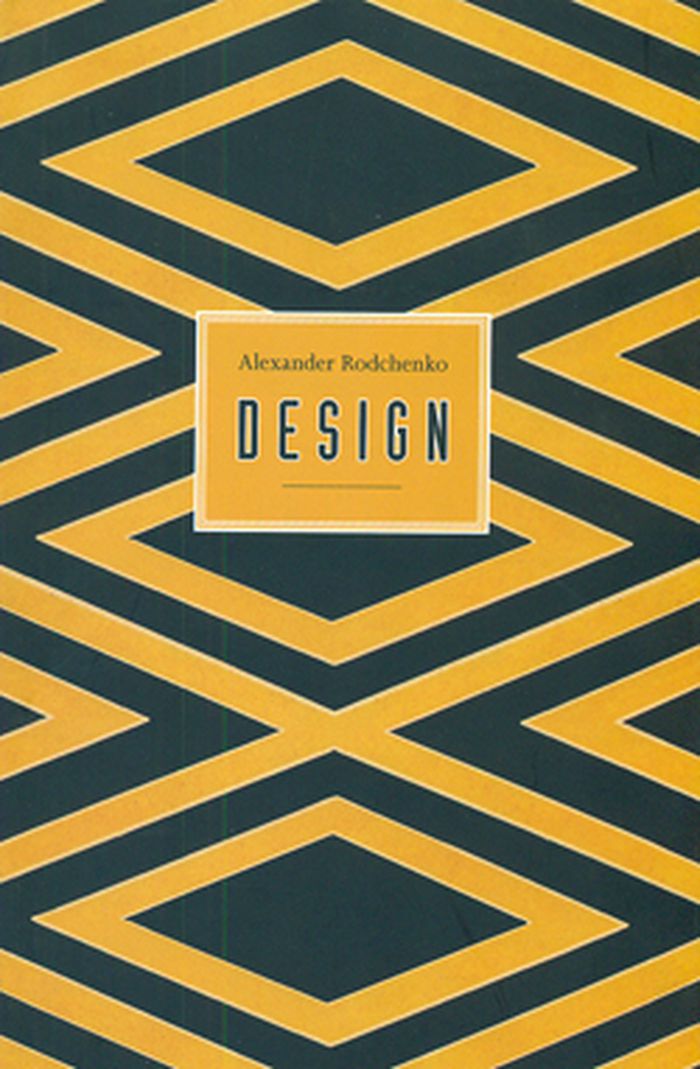
This book gives an introduction to the life and work of this versatile Russian artist Alexander Mikhailovich Rodchenko. He was a central figure in the Russian Constructivist art movement; a radical activist, a pioneer of photomontage, a theorist, and a teacher. He was an active force in the organization of the first museums of modern art that arose in Russia in the first years after the Russian Revolution of 1917. Attending art school in 1914 in Kazan was to be a defining influence: that year Russian Futurists performed in the town, and Rodchenko saw their leading figures in action. It transformed his vision and he was still working with Futurist artists and their ideas twenty-five years later. And it was at art school where Rodchenko first met the artist Varvara Stepanova, with whom he collaborated extensively, and who would become his life-long partner. Central in the re-examination of art and its place in society after the Revolution, and in the search for a new culture without the class implications of the past, Rodchenko's radical approach proposed a new understanding of a constructed, rather than a tastefully composed, culture. This concise, comprehensive and informative work focuses largely on Rodchenko's graphic work in the form of book jackets, posters and advertising. Abbemuseumr is Visiting Professor at The Courtauld Institute of Art in London.
Alexander Rodchenko, design
Actions:
Price:
$29.95
(available to order)
Summary:
This book gives an introduction to the life and work of this versatile Russian artist Alexander Mikhailovich Rodchenko. He was a central figure in the Russian Constructivist art movement; a radical activist, a pioneer of photomontage, a theorist, and a teacher. He was an active force in the organization of the first museums of modern art that arose in Russia in the first years after the Russian Revolution of 1917. Attending art school in 1914 in Kazan was to be a defining influence: that year Russian Futurists performed in the town, and Rodchenko saw their leading figures in action. It transformed his vision and he was still working with Futurist artists and their ideas twenty-five years later. And it was at art school where Rodchenko first met the artist Varvara Stepanova, with whom he collaborated extensively, and who would become his life-long partner. Central in the re-examination of art and its place in society after the Revolution, and in the search for a new culture without the class implications of the past, Rodchenko's radical approach proposed a new understanding of a constructed, rather than a tastefully composed, culture. This concise, comprehensive and informative work focuses largely on Rodchenko's graphic work in the form of book jackets, posters and advertising. Abbemuseumr is Visiting Professor at The Courtauld Institute of Art in London.
Form:
books
books
Publication:
November 2009
November 2009
Form:
books
books
Actions:
Price:
$56.50
(available to order)
Summary:
In this illustrated volume, Bernard Herman provides a history of urban dwellings and the people who built and lived in them in early America. In the eighteenth century, cities were constant objects of idealization, often viewed as the outward manifestations of an organized, civil society. As the physical objects that composed the largest portion of urban settings, town(...)
$56.50
(available to order)
Summary:
In this illustrated volume, Bernard Herman provides a history of urban dwellings and the people who built and lived in them in early America. In the eighteenth century, cities were constant objects of idealization, often viewed as the outward manifestations of an organized, civil society. As the physical objects that composed the largest portion of urban settings, town(...)
Subject:
History until 1900, North America
History until 1900, North America
Publication:
November 2005, Chapel Hill, North Carolina
November 2005, Chapel Hill, North Carolina
Title:
Town house : architecture and material life in the early american city, 1780-1830
Actions:
Price:
$56.50
(available to order)
Summary:
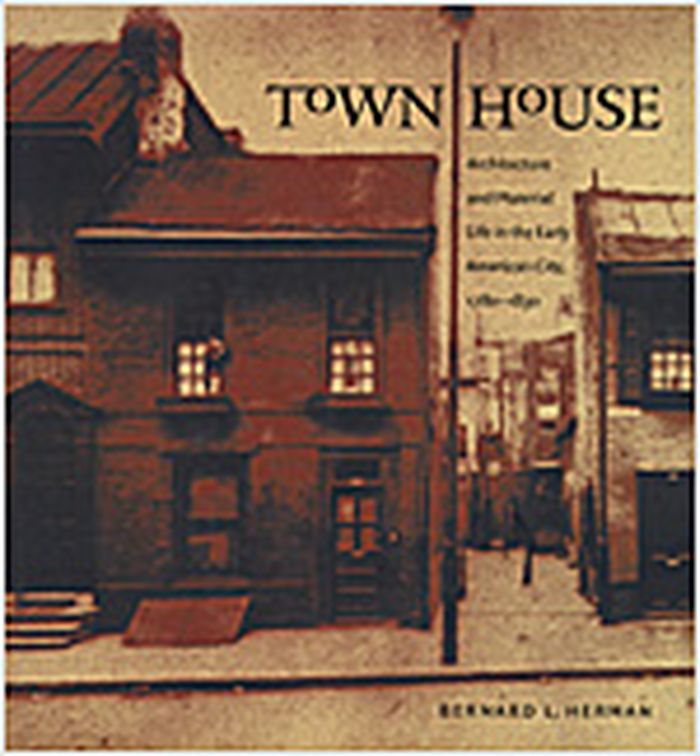
In this illustrated volume, Bernard Herman provides a history of urban dwellings and the people who built and lived in them in early America. In the eighteenth century, cities were constant objects of idealization, often viewed as the outward manifestations of an organized, civil society. As the physical objects that composed the largest portion of urban settings, town houses contained and signified different aspects of city life, argues Herman. Taking a material culture approach, Herman examines urban domestic buildings from Charleston, South Carolina, to Portsmouth, New Hampshire, as well as those in English cities and towns, to better understand why people built the houses they did and how their homes informed everyday city life. Working with buildings and documentary sources as diverse as court cases and recipes, Herman interprets town houses as lived experience. Chapters consider an array of domestic spaces, including the merchant family's house, the servant's quarter, and the widow's dower. Herman demonstrates that city houses served as sites of power as well as complex and often conflicted artifacts mapping the everyday negotiations of social identity and the display of sociability.
Town house : architecture and material life in the early american city, 1780-1830
Actions:
Price:
$56.50
(available to order)
Summary:
In this illustrated volume, Bernard Herman provides a history of urban dwellings and the people who built and lived in them in early America. In the eighteenth century, cities were constant objects of idealization, often viewed as the outward manifestations of an organized, civil society. As the physical objects that composed the largest portion of urban settings, town houses contained and signified different aspects of city life, argues Herman. Taking a material culture approach, Herman examines urban domestic buildings from Charleston, South Carolina, to Portsmouth, New Hampshire, as well as those in English cities and towns, to better understand why people built the houses they did and how their homes informed everyday city life. Working with buildings and documentary sources as diverse as court cases and recipes, Herman interprets town houses as lived experience. Chapters consider an array of domestic spaces, including the merchant family's house, the servant's quarter, and the widow's dower. Herman demonstrates that city houses served as sites of power as well as complex and often conflicted artifacts mapping the everyday negotiations of social identity and the display of sociability.
Form:
books
books
Publication:
November 2005, Chapel Hill, North Carolina
November 2005, Chapel Hill, North Carolina
Subject:
History until 1900, North America
History until 1900, North America
Form:
books
books
Actions:
Price:
$34.00
(available to order)
Summary:
Since September 11, the war on terrorism, and the war in Iraq, it has been almost impossible to dissociate architecture from its social context. Add to this the massive influence of capitalism on architecture, disturbing demographic developments, and associated political, social, and ecological catastrophes, and the result is a robotic snapshot of a society dominated by(...)
$34.00
(available to order)
Summary:
Since September 11, the war on terrorism, and the war in Iraq, it has been almost impossible to dissociate architecture from its social context. Add to this the massive influence of capitalism on architecture, disturbing demographic developments, and associated political, social, and ecological catastrophes, and the result is a robotic snapshot of a society dominated by(...)
Title:
The capsular civilization : on the city in the age of fear
Actions:
Price:
$34.00
(available to order)
Summary:
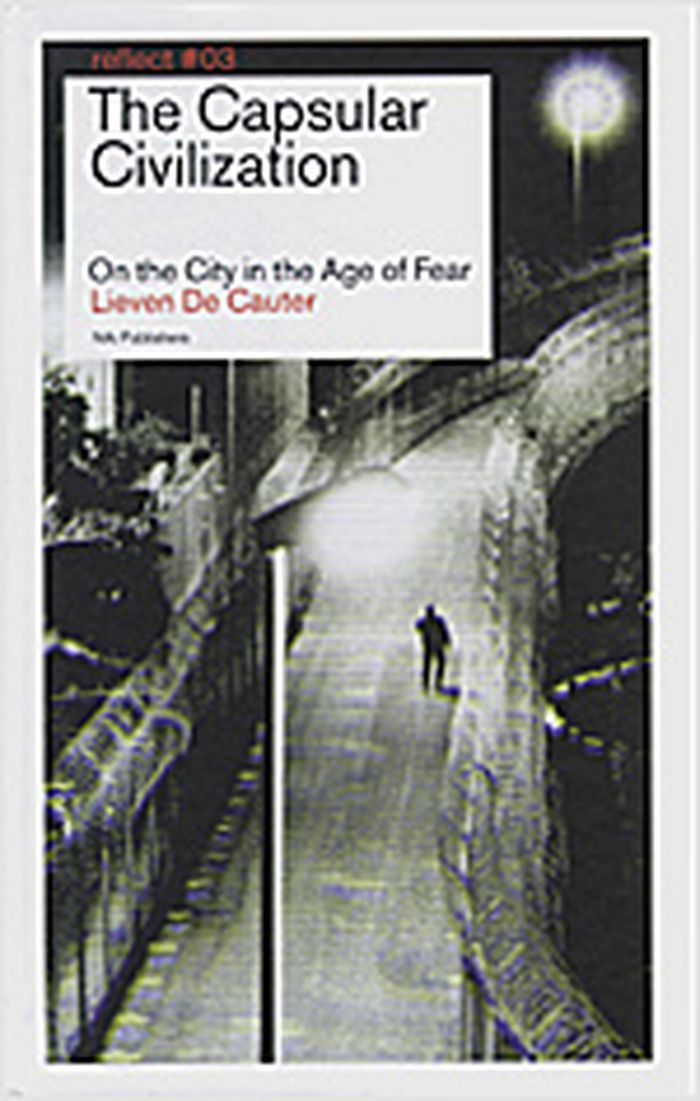
Since September 11, the war on terrorism, and the war in Iraq, it has been almost impossible to dissociate architecture from its social context. Add to this the massive influence of capitalism on architecture, disturbing demographic developments, and associated political, social, and ecological catastrophes, and the result is a robotic snapshot of a society dominated by fear, exclusion, and simulation. Lieven De Cauter, a leading theoretician on the subject of capsularisation, has worked over the past six years on the essays and articles contained in this book, and has documented and analyzed our changing societies before and after 9/11. For the first time, the link between the global economy, demographic changes, world terror, and the role played by the United States under the Bush admisinstration, are examined in detail in a single publication. De Cauter sketches a realistic and alarming account of the new world order that is an everyday concern for the architects and planners of the contemporary city as well as for its inhabitants and users.
The capsular civilization : on the city in the age of fear
Actions:
Price:
$34.00
(available to order)
Summary:
Since September 11, the war on terrorism, and the war in Iraq, it has been almost impossible to dissociate architecture from its social context. Add to this the massive influence of capitalism on architecture, disturbing demographic developments, and associated political, social, and ecological catastrophes, and the result is a robotic snapshot of a society dominated by fear, exclusion, and simulation. Lieven De Cauter, a leading theoretician on the subject of capsularisation, has worked over the past six years on the essays and articles contained in this book, and has documented and analyzed our changing societies before and after 9/11. For the first time, the link between the global economy, demographic changes, world terror, and the role played by the United States under the Bush admisinstration, are examined in detail in a single publication. De Cauter sketches a realistic and alarming account of the new world order that is an everyday concern for the architects and planners of the contemporary city as well as for its inhabitants and users.
Form:
books
books
Publication:
January 1900, Rotterdam
January 1900, Rotterdam
Subject:
Urban Theory
Urban Theory
Form:
books
books

Price:
$27.95
(available to order)
Summary:
Cemeteries are virtual encyclopaedias of symbolism. Engravings on tombstones, mausoleums and memorials tell us just about everything there is to know about a person- date of birth and death as well as religion, ethnicity, occupation, community interests, and much more. In the fascinating new book "Stories in Stone: A Field Guide to Cemetery Symbolism and Iconography" by(...)
$27.95
(available to order)
Summary:
Cemeteries are virtual encyclopaedias of symbolism. Engravings on tombstones, mausoleums and memorials tell us just about everything there is to know about a person- date of birth and death as well as religion, ethnicity, occupation, community interests, and much more. In the fascinating new book "Stories in Stone: A Field Guide to Cemetery Symbolism and Iconography" by(...)
Title:
Stories in stone : a field guide to cemetery symbolism and iconography
Actions:
Price:
$27.95
(available to order)
Summary:
Cemeteries are virtual encyclopaedias of symbolism. Engravings on tombstones, mausoleums and memorials tell us just about everything there is to know about a person- date of birth and death as well as religion, ethnicity, occupation, community interests, and much more. In the fascinating new book "Stories in Stone: A Field Guide to Cemetery Symbolism and Iconography" by noted author Douglas Keister, the secrets of cemetery symbolism are finally revealed. "Stories in Stone" provides history along with images of a wide variety of common and not-so-common cemetery symbols, and offers an in-depth examination of stone relics and the personal and intimate details they display - flora and fauna, religious icons, society symbols, and final impressions of how the deceased wished to be remembered. Douglas Keister has created a practical field guide that is compact and portable, perfect for those interested in family histories and genealogical research, and is the only book of its kind that unlocks the language of symbols in a comprehensive and easy-to-understand manner.
Stories in stone : a field guide to cemetery symbolism and iconography
Actions:
Price:
$27.95
(available to order)
Summary:
Cemeteries are virtual encyclopaedias of symbolism. Engravings on tombstones, mausoleums and memorials tell us just about everything there is to know about a person- date of birth and death as well as religion, ethnicity, occupation, community interests, and much more. In the fascinating new book "Stories in Stone: A Field Guide to Cemetery Symbolism and Iconography" by noted author Douglas Keister, the secrets of cemetery symbolism are finally revealed. "Stories in Stone" provides history along with images of a wide variety of common and not-so-common cemetery symbols, and offers an in-depth examination of stone relics and the personal and intimate details they display - flora and fauna, religious icons, society symbols, and final impressions of how the deceased wished to be remembered. Douglas Keister has created a practical field guide that is compact and portable, perfect for those interested in family histories and genealogical research, and is the only book of its kind that unlocks the language of symbols in a comprehensive and easy-to-understand manner.
Form:
books
books
Publication:
April 2004, Salt Lake City
April 2004, Salt Lake City
Subject:
Food
Food
Form:
books
books
Actions:
Price:
$44.00
(available to order)
Summary:
This new survey covers the rich and varied history of participatory art, from early happenings and performances to current practices that demand audience interaction. As the hallmarks of Web 2.0—browsing, sharing, collecting, producing—increasingly permeate every aspect of society, this timely project reveals the ways in which artists and viewers have approached the(...)
$44.00
(available to order)
Summary:
This new survey covers the rich and varied history of participatory art, from early happenings and performances to current practices that demand audience interaction. As the hallmarks of Web 2.0—browsing, sharing, collecting, producing—increasingly permeate every aspect of society, this timely project reveals the ways in which artists and viewers have approached the(...)
Publication:
November 2008, New York, London, San Francisco
November 2008, New York, London, San Francisco
Title:
The art of participation: 1950 to now
Actions:
Price:
$44.00
(available to order)
Summary:
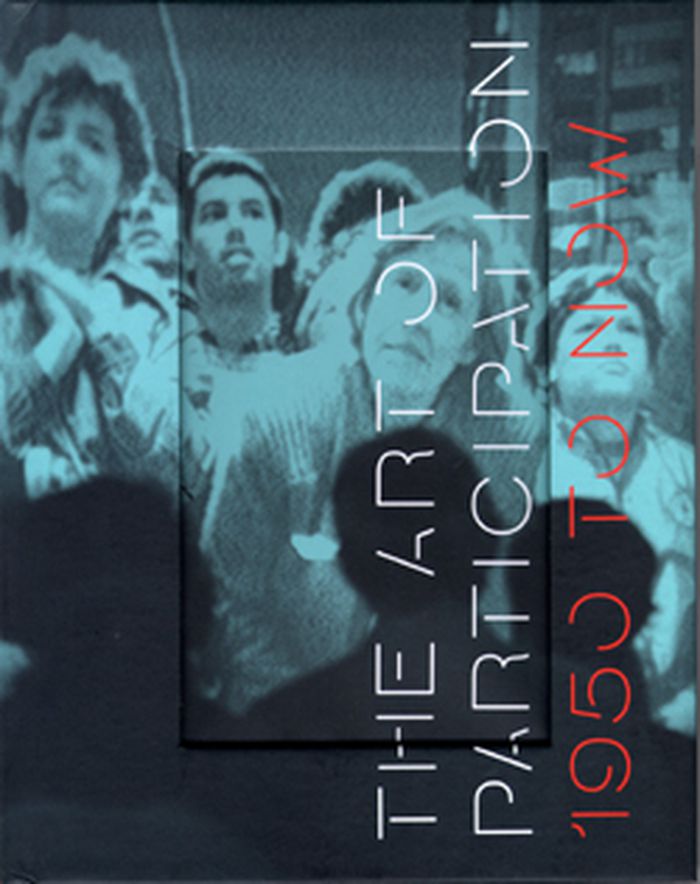
This new survey covers the rich and varied history of participatory art, from early happenings and performances to current practices that demand audience interaction. As the hallmarks of Web 2.0—browsing, sharing, collecting, producing—increasingly permeate every aspect of society, this timely project reveals the ways in which artists and viewers have approached the creation of open works of art. The featured artists include Marina Abramovic and Ulay, Vito Acconci, Joseph Beuys, John Cage, Janet Cardiff, Lygia Clark, Kit Galloway and Sherrie Rabinowitz, Dan Graham, Hans Haacke, Allan Kaprow, Lynn Hershman Leeson, Antoni Muntadas, Yoko Ono, Nam June Paik, and Erwin Wurm. Original essays by Rudolf Frieling, Boris Groys, Robert Atkins, and Lev Manovich identify seminal moments in participatory practice from the 1950s to the present day. A rich array of plates introduce work by all the artists in the accompanying exhibition, with reproductions of significant projects by other major figures—from Helio Oiticica, Joan Jonas, and Gordon Matta-Clark to Rirkrit Tiravanija and SUPERFLEX—rounding out the survey.
The art of participation: 1950 to now
Actions:
Price:
$44.00
(available to order)
Summary:
This new survey covers the rich and varied history of participatory art, from early happenings and performances to current practices that demand audience interaction. As the hallmarks of Web 2.0—browsing, sharing, collecting, producing—increasingly permeate every aspect of society, this timely project reveals the ways in which artists and viewers have approached the creation of open works of art. The featured artists include Marina Abramovic and Ulay, Vito Acconci, Joseph Beuys, John Cage, Janet Cardiff, Lygia Clark, Kit Galloway and Sherrie Rabinowitz, Dan Graham, Hans Haacke, Allan Kaprow, Lynn Hershman Leeson, Antoni Muntadas, Yoko Ono, Nam June Paik, and Erwin Wurm. Original essays by Rudolf Frieling, Boris Groys, Robert Atkins, and Lev Manovich identify seminal moments in participatory practice from the 1950s to the present day. A rich array of plates introduce work by all the artists in the accompanying exhibition, with reproductions of significant projects by other major figures—from Helio Oiticica, Joan Jonas, and Gordon Matta-Clark to Rirkrit Tiravanija and SUPERFLEX—rounding out the survey.
Form:
books
books
Publication:
November 2008, New York, London, San Francisco
November 2008, New York, London, San Francisco
Form:
books
books
Actions:
Price:
$79.95
(available to order)
Summary:
Edited by Professor Maia Engeli and with a contribution by Professor Gerhard Schmitt, both of the Swiss Federal Institute of Technology (ETH Zürich), this book presents 33 exciting new(...)
$79.95
(available to order)
Summary:
Edited by Professor Maia Engeli and with a contribution by Professor Gerhard Schmitt, both of the Swiss Federal Institute of Technology (ETH Zürich), this book presents 33 exciting new(...)
Title:
Bits and spaces : architecture and computing for physical, virtual, hybrid realms
Actions:
Price:
$79.95
(available to order)
Summary:
Edited by Professor Maia Engeli and with a contribution by Professor Gerhard Schmitt, both of the Swiss Federal Institute of Technology (ETH Zürich), this book presents 33 exciting new projects which demonstrate the growing significance of CAAD for today's architects. Divided into 5 main chapters: Design in Space and Time; Learning and Creative Collaboration; Virtual Environments; IT and Practice; and Blurring Boundaries, the projects illustrate how computers can be used innovatively and creatively in designing physical, virtual and hybrid architecture. Particular emphasis is placed on the interaction between man and computer, and also on the aesthetic aspects. The book is accompanied by a CD-Rom which documents the design processes through animation sequences, demonstrating the dynamic features of the projects. Whilst these tools, installations and multi-media projects have arisen out of the field of architecture, they exceed the narrow confines of this discipline to touch upon areas such as interior design, graphic design and information technology. The designs presented are colourful and complex, seeking to fire the imagination in creating a fitting environment for today's society.
Bits and spaces : architecture and computing for physical, virtual, hybrid realms
Actions:
Price:
$79.95
(available to order)
Summary:
Edited by Professor Maia Engeli and with a contribution by Professor Gerhard Schmitt, both of the Swiss Federal Institute of Technology (ETH Zürich), this book presents 33 exciting new projects which demonstrate the growing significance of CAAD for today's architects. Divided into 5 main chapters: Design in Space and Time; Learning and Creative Collaboration; Virtual Environments; IT and Practice; and Blurring Boundaries, the projects illustrate how computers can be used innovatively and creatively in designing physical, virtual and hybrid architecture. Particular emphasis is placed on the interaction between man and computer, and also on the aesthetic aspects. The book is accompanied by a CD-Rom which documents the design processes through animation sequences, demonstrating the dynamic features of the projects. Whilst these tools, installations and multi-media projects have arisen out of the field of architecture, they exceed the narrow confines of this discipline to touch upon areas such as interior design, graphic design and information technology. The designs presented are colourful and complex, seeking to fire the imagination in creating a fitting environment for today's society.
Form:
books
books
Publication:
March 2001, Basel
March 2001, Basel
Subject:
Architectural Theory
Architectural Theory
Form:
books
books
Price:
$115.00
(available in store)
Summary:
"S,M,L,XL" combines a critical selection of the remarkable visionary design work produced over the past 20 years by the Dutch firm Office for Metropolitan Architecture (O.M.A.) and its acclaimed founder, Rem Koolhaas, with a wide variety of startling and poetic writings. The inventive collaboration between Koolhaas and designer Bruce Mau is a graphic overture that weaves(...)
$115.00
(available in store)
Summary:
"S,M,L,XL" combines a critical selection of the remarkable visionary design work produced over the past 20 years by the Dutch firm Office for Metropolitan Architecture (O.M.A.) and its acclaimed founder, Rem Koolhaas, with a wide variety of startling and poetic writings. The inventive collaboration between Koolhaas and designer Bruce Mau is a graphic overture that weaves(...)
Subject:
Architecture Monographs
Architecture Monographs
Publication:
November 1997, New York
November 1997, New York
Title:
S,M,L,XL
Actions:
Price:
$115.00
(available in store)
Summary:
"S,M,L,XL" combines a critical selection of the remarkable visionary design work produced over the past 20 years by the Dutch firm Office for Metropolitan Architecture (O.M.A.) and its acclaimed founder, Rem Koolhaas, with a wide variety of startling and poetic writings. The inventive collaboration between Koolhaas and designer Bruce Mau is a graphic overture that weaves together architectural projects, photos and sketches, diary excerpts, personal travelogues, fairy tales, and fables, as well as critical essays on contemporary architecture and society. The book’s title is also its framework: projects and essays are arranged according to scale. While Small and Medium address issues ranging from the domestic to the public, Large focuses on what Koolhaas calls 'the architecture of Bigness.' Extra Large features projects at the urban scale, along with the seminal essay 'What Ever Happened to Urbanism?' and other studies of the contemporary city. Running throughout the book is a 'dictionary' of an adventurous new Koolhaasian language - an assemblage of definitions, commentaries, and quotes from hundreds of literary, cultural, artistic, and architectural references.
S,M,L,XL
Actions:
Price:
$115.00
(available in store)
Summary:
"S,M,L,XL" combines a critical selection of the remarkable visionary design work produced over the past 20 years by the Dutch firm Office for Metropolitan Architecture (O.M.A.) and its acclaimed founder, Rem Koolhaas, with a wide variety of startling and poetic writings. The inventive collaboration between Koolhaas and designer Bruce Mau is a graphic overture that weaves together architectural projects, photos and sketches, diary excerpts, personal travelogues, fairy tales, and fables, as well as critical essays on contemporary architecture and society. The book’s title is also its framework: projects and essays are arranged according to scale. While Small and Medium address issues ranging from the domestic to the public, Large focuses on what Koolhaas calls 'the architecture of Bigness.' Extra Large features projects at the urban scale, along with the seminal essay 'What Ever Happened to Urbanism?' and other studies of the contemporary city. Running throughout the book is a 'dictionary' of an adventurous new Koolhaasian language - an assemblage of definitions, commentaries, and quotes from hundreds of literary, cultural, artistic, and architectural references.
Form:
books
books
Publication:
November 1997, New York
November 1997, New York
Subject:
Architecture Monographs
Architecture Monographs
Form:
books
books
Actions:
Price:
$23.00
(available to order)
Summary:
Space influences us and we influence space. Within the infinite ''space of possibilities'' of architecture, PPAG architects are permanently searching for relevance and social utility, tracking down the architectural expression of the respective society, the ''necessary new'' in all its complexity. The exhibition is a plea for an unbiased, brave look at architecture and(...)
$23.00
(available to order)
Summary:
Space influences us and we influence space. Within the infinite ''space of possibilities'' of architecture, PPAG architects are permanently searching for relevance and social utility, tracking down the architectural expression of the respective society, the ''necessary new'' in all its complexity. The exhibition is a plea for an unbiased, brave look at architecture and(...)
Title:
PPAG architects: making space for possibilities
Actions:
Price:
$23.00
(available to order)
Summary:
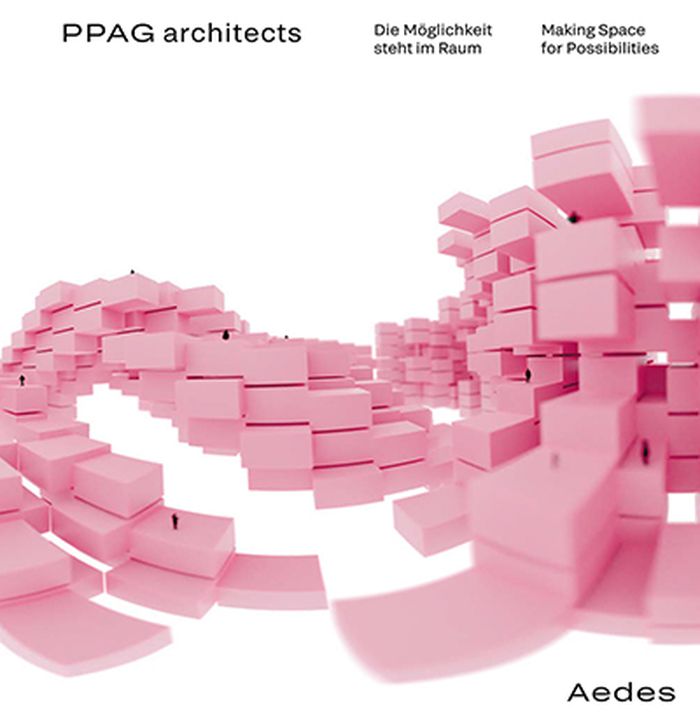
Space influences us and we influence space. Within the infinite ''space of possibilities'' of architecture, PPAG architects are permanently searching for relevance and social utility, tracking down the architectural expression of the respective society, the ''necessary new'' in all its complexity. The exhibition is a plea for an unbiased, brave look at architecture and urban development. A view that sees development as a necessity, even if it surprises and irritates at first glance. Especially in view of the current global challenges, we need the courage to take alternative paths. The office's work is based on trust in the collective planning abilities; on the fact that through intensive engagement and thinking ahead, solutions can be found for a good future for all of us. The diversity of the''‘space of possibilities'' is presented in a special way in the exhibition of PPAG architects at the Aedes Architecture Forum. The projects presented push the boundaries and exhaust their realm, regardless of typology, scale, age, price range or realisation – in Ecuador, Northern Macedonia, Norway, Yakutsk, Vienna or Berlin.
PPAG architects: making space for possibilities
Actions:
Price:
$23.00
(available to order)
Summary:
Space influences us and we influence space. Within the infinite ''space of possibilities'' of architecture, PPAG architects are permanently searching for relevance and social utility, tracking down the architectural expression of the respective society, the ''necessary new'' in all its complexity. The exhibition is a plea for an unbiased, brave look at architecture and urban development. A view that sees development as a necessity, even if it surprises and irritates at first glance. Especially in view of the current global challenges, we need the courage to take alternative paths. The office's work is based on trust in the collective planning abilities; on the fact that through intensive engagement and thinking ahead, solutions can be found for a good future for all of us. The diversity of the''‘space of possibilities'' is presented in a special way in the exhibition of PPAG architects at the Aedes Architecture Forum. The projects presented push the boundaries and exhaust their realm, regardless of typology, scale, age, price range or realisation – in Ecuador, Northern Macedonia, Norway, Yakutsk, Vienna or Berlin.
Form:
books
books
Publication:
December 2021
December 2021
Subject:
Architecture Monographs
Architecture Monographs
Form:
books
books
Actions:
Price:
$35.95
(available to order)
Summary:
In this publication, Marcus Boon explores music as a material practice of vibration. Focusing on the work of three contemporary musicians—Hindustani classical vocalist Pandit Pran Nath, Swedish drone composer and philosopher Catherine Christer Hennix, and Houston-based hip-hop musician DJ Screw—Boon outlines how music constructs a vibrational space of individual and(...)
$35.95
(available to order)
Summary:
In this publication, Marcus Boon explores music as a material practice of vibration. Focusing on the work of three contemporary musicians—Hindustani classical vocalist Pandit Pran Nath, Swedish drone composer and philosopher Catherine Christer Hennix, and Houston-based hip-hop musician DJ Screw—Boon outlines how music constructs a vibrational space of individual and(...)
Title:
The politics of vibration: Music as cosmopolitical practice
Actions:
Price:
$35.95
(available to order)
Summary:
In this publication, Marcus Boon explores music as a material practice of vibration. Focusing on the work of three contemporary musicians—Hindustani classical vocalist Pandit Pran Nath, Swedish drone composer and philosopher Catherine Christer Hennix, and Houston-based hip-hop musician DJ Screw—Boon outlines how music constructs a vibrational space of individual and collective transformation. Contributing to a new interdisciplinary field of vibration studies, he understands vibration as a mathematical and a physical concept, as a religious or ontological force, and as a psychological determinant of subjectivity. Boon contends that music, as a shaping of vibration, needs to be recognized as a cosmopolitical practice—in the sense introduced by Isabelle Stengers—in which what music is within a society depends on what kinds of access to vibration are permitted, and to whom. This politics of vibration constitutes the hidden ontology of contemporary music because the organization of vibration shapes individual music scenes as well as the ethical choices that participants in these scenes make about how they want to live in the world.
The politics of vibration: Music as cosmopolitical practice
Actions:
Price:
$35.95
(available to order)
Summary:
In this publication, Marcus Boon explores music as a material practice of vibration. Focusing on the work of three contemporary musicians—Hindustani classical vocalist Pandit Pran Nath, Swedish drone composer and philosopher Catherine Christer Hennix, and Houston-based hip-hop musician DJ Screw—Boon outlines how music constructs a vibrational space of individual and collective transformation. Contributing to a new interdisciplinary field of vibration studies, he understands vibration as a mathematical and a physical concept, as a religious or ontological force, and as a psychological determinant of subjectivity. Boon contends that music, as a shaping of vibration, needs to be recognized as a cosmopolitical practice—in the sense introduced by Isabelle Stengers—in which what music is within a society depends on what kinds of access to vibration are permitted, and to whom. This politics of vibration constitutes the hidden ontology of contemporary music because the organization of vibration shapes individual music scenes as well as the ethical choices that participants in these scenes make about how they want to live in the world.
Form:
books
books
Publication:
August 2022
August 2022
Subject:
Acoustics
Acoustics
Form:
journals and magazines
journals and magazines
Title:
Bracket 4: Takes action
Bracket 4: Takes action
Actions:
Price:
$49.95
(available to order)
Summary:
The rise of several divisive leaders within contemporary politics, has once again brought action to the foreground. As a new generation makes their voices heard, they are also grappling to find effective platforms for action through design. The notion of action simultaneously evokes a discussion on what we are acting for and value. This is particularly important to(...)
$49.95
(available to order)
Summary:
The rise of several divisive leaders within contemporary politics, has once again brought action to the foreground. As a new generation makes their voices heard, they are also grappling to find effective platforms for action through design. The notion of action simultaneously evokes a discussion on what we are acting for and value. This is particularly important to(...)
Title:
Bracket 4: Takes action
Actions:
Price:
$49.95
(available to order)
Summary:
The rise of several divisive leaders within contemporary politics, has once again brought action to the foreground. As a new generation makes their voices heard, they are also grappling to find effective platforms for action through design. The notion of action simultaneously evokes a discussion on what we are acting for and value. This is particularly important to consider at a moment when the authoritative systems- Governments and corporations- appear more divergent to the voices on the ground. At the same time, within an increasingly pluralistic society, what we collectively value is increasingly unclear, which presents a primary challenge on action. ''Bracket [takes action]'' is situated at a critical point in history where the who, what, where, and how of action need to be re-conceptualized to relate to who we are, how we live, and how we communicate today. The role of design and the agency of the designer are at stake in facilitating or stifling action. This book] contains over 28 essays and 15 design projects that are structured into six sub-themes: ReAction, CounterAction, InterAction, FAction, InAction, and RetroAction.
Bracket 4: Takes action
Actions:
Price:
$49.95
(available to order)
Summary:
The rise of several divisive leaders within contemporary politics, has once again brought action to the foreground. As a new generation makes their voices heard, they are also grappling to find effective platforms for action through design. The notion of action simultaneously evokes a discussion on what we are acting for and value. This is particularly important to consider at a moment when the authoritative systems- Governments and corporations- appear more divergent to the voices on the ground. At the same time, within an increasingly pluralistic society, what we collectively value is increasingly unclear, which presents a primary challenge on action. ''Bracket [takes action]'' is situated at a critical point in history where the who, what, where, and how of action need to be re-conceptualized to relate to who we are, how we live, and how we communicate today. The role of design and the agency of the designer are at stake in facilitating or stifling action. This book] contains over 28 essays and 15 design projects that are structured into six sub-themes: ReAction, CounterAction, InterAction, FAction, InAction, and RetroAction.
Form:
journals and magazines
journals and magazines
Publication:
June 2020
June 2020
Subject:
Magazines
Magazines


