


458 Results
Form:
books
books
Actions:
Price:
$75.00
(available to order)
Summary:
Designers and advertisers continually have to interpret design briefs, produce new solutions to familiar problems and work to keep their clients’ brands high in the public consciousness. This highly informative guide brings together for the first time discussions and case studies that illustrate the working methods of major advertising and graphic design firms. Each(...)
$75.00
(available to order)
Summary:
Designers and advertisers continually have to interpret design briefs, produce new solutions to familiar problems and work to keep their clients’ brands high in the public consciousness. This highly informative guide brings together for the first time discussions and case studies that illustrate the working methods of major advertising and graphic design firms. Each(...)
Title:
Problem solved : a primer in design and communication
Actions:
Price:
$75.00
(available to order)
Summary:
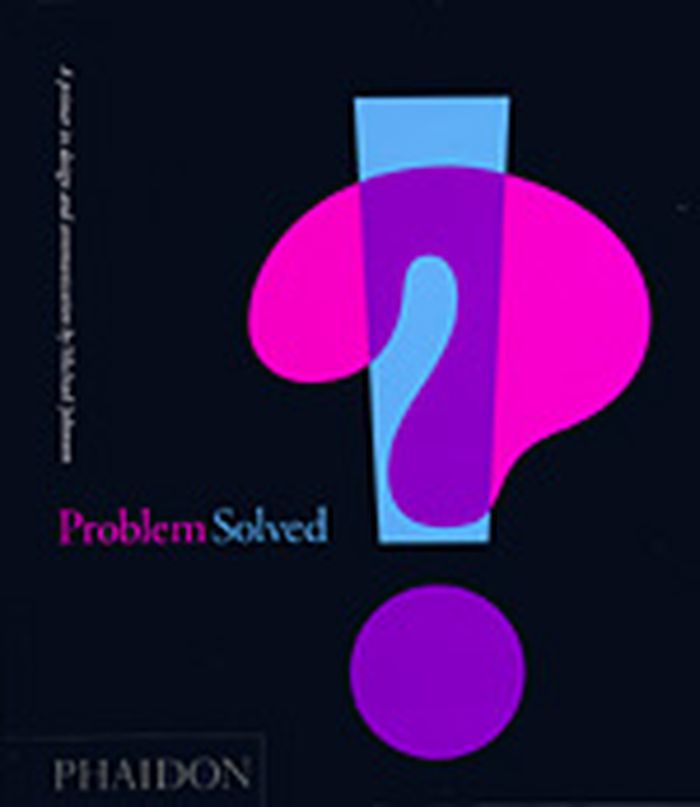
Designers and advertisers continually have to interpret design briefs, produce new solutions to familiar problems and work to keep their clients’ brands high in the public consciousness. This highly informative guide brings together for the first time discussions and case studies that illustrate the working methods of major advertising and graphic design firms. Each chapter explores a different theme of ‘problem solving’, and concludes with a case study to illustrate a particular solution in detail. Themes include: producing innovative work, avoiding repetition, standing out in the market place, reinventing a tired brand, communicating essential facts in a culture of information overload, keeping a brand young and trendy, dealing sensitively with propaganda, the use of shock tactics, and word-based advertising in a world over-run with images and sound-bites. Examples featured are taken from classic and contemporary international advertising. Designers and agencies whose work is discussed in the book include Chermayeff and Geismar, Saatchi and Saatchi, BMP, Minale Tattersfield, Derek Birdsall, Niklaus Troxler, Bob Gill, Wieslan Walkuski, Makoto Saito, Paul Fishlock, and Pentagram.
Problem solved : a primer in design and communication
Actions:
Price:
$75.00
(available to order)
Summary:
Designers and advertisers continually have to interpret design briefs, produce new solutions to familiar problems and work to keep their clients’ brands high in the public consciousness. This highly informative guide brings together for the first time discussions and case studies that illustrate the working methods of major advertising and graphic design firms. Each chapter explores a different theme of ‘problem solving’, and concludes with a case study to illustrate a particular solution in detail. Themes include: producing innovative work, avoiding repetition, standing out in the market place, reinventing a tired brand, communicating essential facts in a culture of information overload, keeping a brand young and trendy, dealing sensitively with propaganda, the use of shock tactics, and word-based advertising in a world over-run with images and sound-bites. Examples featured are taken from classic and contemporary international advertising. Designers and agencies whose work is discussed in the book include Chermayeff and Geismar, Saatchi and Saatchi, BMP, Minale Tattersfield, Derek Birdsall, Niklaus Troxler, Bob Gill, Wieslan Walkuski, Makoto Saito, Paul Fishlock, and Pentagram.
Form:
books
books
Publication:
October 2002, London
October 2002, London
Subject:
Graphic Design and Typography
Graphic Design and Typography
Form:
books
books
Title:
Communist posters
Communist posters
Actions:
Price:
$79.95
(available to order)
Summary:
One of the common features of communist regimes is the use of art for revolutionary means. Posters in particular have served as beacons of propaganda – vehicles of coercion, instruction, censure and debate – in every communist nation. They have promoted the authority of state and revolution, but have also been used as an effective means of protest. By their nature posters(...)
$79.95
(available to order)
Summary:
One of the common features of communist regimes is the use of art for revolutionary means. Posters in particular have served as beacons of propaganda – vehicles of coercion, instruction, censure and debate – in every communist nation. They have promoted the authority of state and revolution, but have also been used as an effective means of protest. By their nature posters(...)
Title:
Communist posters
Actions:
Price:
$79.95
(available to order)
Summary:
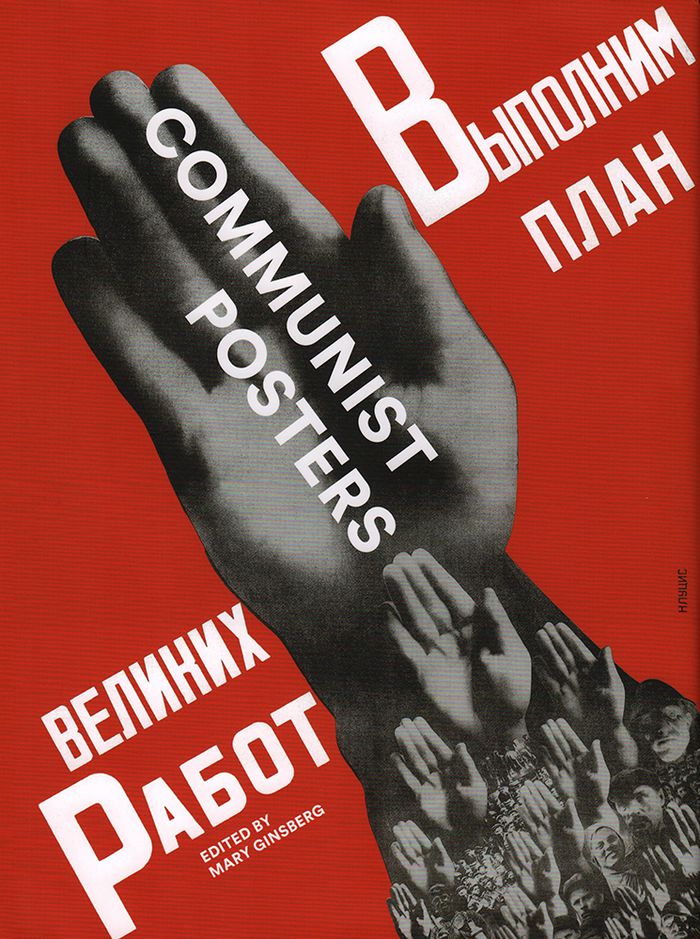
One of the common features of communist regimes is the use of art for revolutionary means. Posters in particular have served as beacons of propaganda – vehicles of coercion, instruction, censure and debate – in every communist nation. They have promoted the authority of state and revolution, but have also been used as an effective means of protest. By their nature posters are ephemeral, tied to time and place, but many have had far-reaching, long-lasting impact. They are imbued with both artistic integrity and personal conviction – Bolshevik posters, for example, are among the most vibrant, passionate graphics in art history. This is the first truly global survey of the history and variety of communist poster art. Each chapter is written by an expert in the field, and examines a different region of the world: Russia, China, Mongolia, Eastern Europe, North Korea, Vietnam and Cuba. This beautifully illustrated, comprehensive survey examines the broad range of political and visual cultures of communist posters, and will appeal to a wide audience interested in art, history and politics.
Communist posters
Actions:
Price:
$79.95
(available to order)
Summary:
One of the common features of communist regimes is the use of art for revolutionary means. Posters in particular have served as beacons of propaganda – vehicles of coercion, instruction, censure and debate – in every communist nation. They have promoted the authority of state and revolution, but have also been used as an effective means of protest. By their nature posters are ephemeral, tied to time and place, but many have had far-reaching, long-lasting impact. They are imbued with both artistic integrity and personal conviction – Bolshevik posters, for example, are among the most vibrant, passionate graphics in art history. This is the first truly global survey of the history and variety of communist poster art. Each chapter is written by an expert in the field, and examines a different region of the world: Russia, China, Mongolia, Eastern Europe, North Korea, Vietnam and Cuba. This beautifully illustrated, comprehensive survey examines the broad range of political and visual cultures of communist posters, and will appeal to a wide audience interested in art, history and politics.
Form:
books
books
Publication:
May 2017
May 2017
Subject:
Printed Matter
Printed Matter
Form:
books
books
Actions:
Price:
$40.00
(available to order)
Summary:
For most North Americans and Europeans, the Bosnian War was played out in the brief, flickering images of television news. But another set of images, more permanent and more profound, played an active role in this war, molding public sentiment and calling attention to the plight of the Bosnian people. For three hellish years, Bosnians plastered the walls of their towns(...)
$40.00
(available to order)
Summary:
For most North Americans and Europeans, the Bosnian War was played out in the brief, flickering images of television news. But another set of images, more permanent and more profound, played an active role in this war, molding public sentiment and calling attention to the plight of the Bosnian people. For three hellish years, Bosnians plastered the walls of their towns(...)
Subject:
Graphic Design and Typography
Graphic Design and Typography
Publication:
May 2001, New York
May 2001, New York
Title:
Evil doesn't live here : posters from the Bosnian war
Actions:
Price:
$40.00
(available to order)
Summary:
For most North Americans and Europeans, the Bosnian War was played out in the brief, flickering images of television news. But another set of images, more permanent and more profound, played an active role in this war, molding public sentiment and calling attention to the plight of the Bosnian people. For three hellish years, Bosnians plastered the walls of their towns with messages of anger, frustration, desperation, resistance, and hope. These extraordinary images, the focus of this book, are juxtaposed with the hateful, divisive works of propaganda that served the most vicious practitioners of 'ethnic cleansing'. "Evil Doesn't Live Here" presents this visual battle to the rest of the world for the first time. Former Bosnian aid workers Daoud Sarhandi and Alina Boboc have gathered over 180 of the most dramatic wartime posters, largely created by Bosnian artists and graphic designers at the height of the war. Fascinating on both political and artistic levels, they provide a harrowing account of the war and put a human face on this seemingly incomprehensible conflict.
Evil doesn't live here : posters from the Bosnian war
Actions:
Price:
$40.00
(available to order)
Summary:
For most North Americans and Europeans, the Bosnian War was played out in the brief, flickering images of television news. But another set of images, more permanent and more profound, played an active role in this war, molding public sentiment and calling attention to the plight of the Bosnian people. For three hellish years, Bosnians plastered the walls of their towns with messages of anger, frustration, desperation, resistance, and hope. These extraordinary images, the focus of this book, are juxtaposed with the hateful, divisive works of propaganda that served the most vicious practitioners of 'ethnic cleansing'. "Evil Doesn't Live Here" presents this visual battle to the rest of the world for the first time. Former Bosnian aid workers Daoud Sarhandi and Alina Boboc have gathered over 180 of the most dramatic wartime posters, largely created by Bosnian artists and graphic designers at the height of the war. Fascinating on both political and artistic levels, they provide a harrowing account of the war and put a human face on this seemingly incomprehensible conflict.
Form:
books
books
Publication:
May 2001, New York
May 2001, New York
Subject:
Graphic Design and Typography
Graphic Design and Typography
Form:
books
books
Actions:
Price:
$37.50
(available to order)
Summary:
Art, Culture, and Media Under the Third Reich explores the ways in which Nazi Germany used art and media to portray their country as a champion of Kultur and civilization. Rather than focusing strictly on the role of the arts in state-supported propaganda as other studies do, this volume reveals how multiple domains of cultural activity served to conceptually dehumanize(...)
$37.50
(available to order)
Summary:
Art, Culture, and Media Under the Third Reich explores the ways in which Nazi Germany used art and media to portray their country as a champion of Kultur and civilization. Rather than focusing strictly on the role of the arts in state-supported propaganda as other studies do, this volume reveals how multiple domains of cultural activity served to conceptually dehumanize(...)
Title:
Art, culture, and media under the Third Reich
Actions:
Price:
$37.50
(available to order)
Summary:
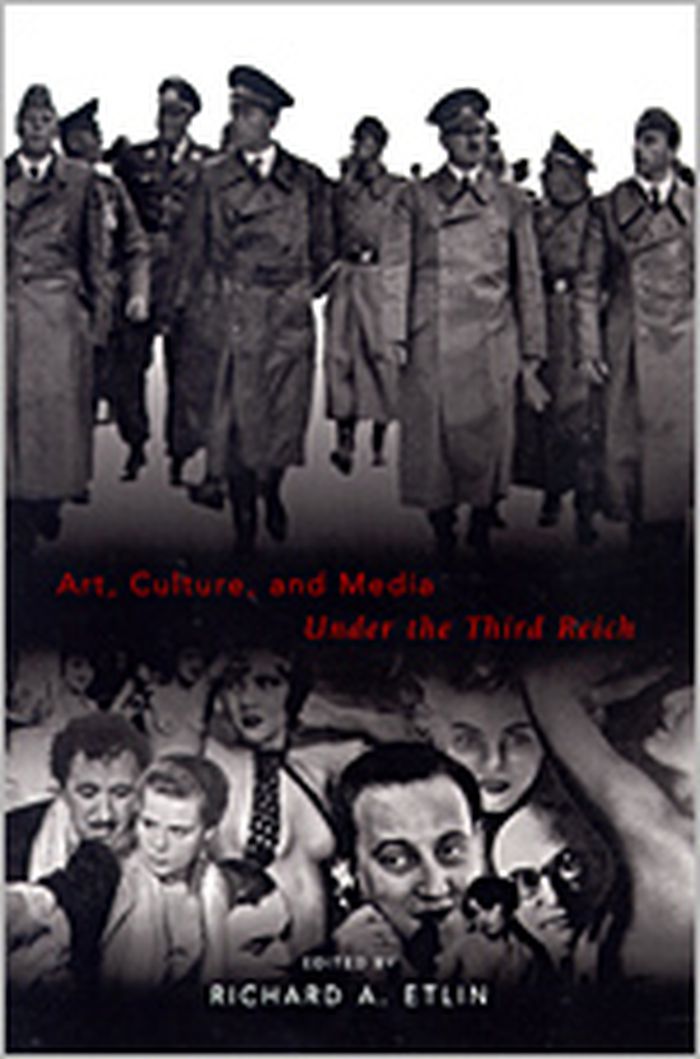
Art, Culture, and Media Under the Third Reich explores the ways in which Nazi Germany used art and media to portray their country as a champion of Kultur and civilization. Rather than focusing strictly on the role of the arts in state-supported propaganda as other studies do, this volume reveals how multiple domains of cultural activity served to conceptually dehumanize Jews and other groups, sowing the psychological seeds for the Holocaust to come. Topics covered by the essays range from the design of the Nuremberg Party Rally Grounds to Nazi experiments with radio. Contributors address nearly every facet of the arts and mass media under the Third Reich-efforts to define degenerate music; the promotion of race hatred and warfare through film, architecture, and public assemblies; visual iconography and style; views of the racially ideal garden and landscape; portrayal and reception of art and culture abroad; the treatment of exiled artists; and issues of territory, conquest, and cult. Anyone studying the history of Nazi Germany or the role of the arts in nationalist projects will benefit from this book.
Art, culture, and media under the Third Reich
Actions:
Price:
$37.50
(available to order)
Summary:
Art, Culture, and Media Under the Third Reich explores the ways in which Nazi Germany used art and media to portray their country as a champion of Kultur and civilization. Rather than focusing strictly on the role of the arts in state-supported propaganda as other studies do, this volume reveals how multiple domains of cultural activity served to conceptually dehumanize Jews and other groups, sowing the psychological seeds for the Holocaust to come. Topics covered by the essays range from the design of the Nuremberg Party Rally Grounds to Nazi experiments with radio. Contributors address nearly every facet of the arts and mass media under the Third Reich-efforts to define degenerate music; the promotion of race hatred and warfare through film, architecture, and public assemblies; visual iconography and style; views of the racially ideal garden and landscape; portrayal and reception of art and culture abroad; the treatment of exiled artists; and issues of territory, conquest, and cult. Anyone studying the history of Nazi Germany or the role of the arts in nationalist projects will benefit from this book.
Form:
books
books
Publication:
October 2002, Chicago
October 2002, Chicago
Subject:
Architectural Theory
Architectural Theory
Form:
books
books

Actions:
Price:
$38.95
(available to order)
Summary:
In August 1968, the Pakistani foreign minister visited Beijing and presented Chairman Mao Zedong with a crate of mangoes as a diplomatic gesture. The next day, Mao sent the mangoes to the “Worker-Peasant Mao Zedong though Propaganda Teams,” who had been stationed at Quinghua University to put down warring factions of Red Guards ten days previously. The message of this(...)
$38.95
(available to order)
Summary:
In August 1968, the Pakistani foreign minister visited Beijing and presented Chairman Mao Zedong with a crate of mangoes as a diplomatic gesture. The next day, Mao sent the mangoes to the “Worker-Peasant Mao Zedong though Propaganda Teams,” who had been stationed at Quinghua University to put down warring factions of Red Guards ten days previously. The message of this(...)
Title:
Mao's Golden Mangoes, and the cultural revolution
Actions:
Price:
$38.95
(available to order)
Summary:
In August 1968, the Pakistani foreign minister visited Beijing and presented Chairman Mao Zedong with a crate of mangoes as a diplomatic gesture. The next day, Mao sent the mangoes to the “Worker-Peasant Mao Zedong though Propaganda Teams,” who had been stationed at Quinghua University to put down warring factions of Red Guards ten days previously. The message of this gift was to dismiss the Student Red Guards, who had been leaders of the proletarian movement in China, and in their stead to install workers as the permanent guardians of China’s education system. During the following weeks, the mangoes were distributed to several factories, where they were treated as though they were religious relics. The golden mango was thus a powerful emblem of the power and respect accorded to the proletariat under Mao’s rule. Mao’s Gold Mangoes and the Cultural Revolution is the catalog for an exhibition of the same title at the Museum Rietberg in Zürich, which explores the golden mangoes’ reverberations throughout Chinese culture for years to come.
Mao's Golden Mangoes, and the cultural revolution
Actions:
Price:
$38.95
(available to order)
Summary:
In August 1968, the Pakistani foreign minister visited Beijing and presented Chairman Mao Zedong with a crate of mangoes as a diplomatic gesture. The next day, Mao sent the mangoes to the “Worker-Peasant Mao Zedong though Propaganda Teams,” who had been stationed at Quinghua University to put down warring factions of Red Guards ten days previously. The message of this gift was to dismiss the Student Red Guards, who had been leaders of the proletarian movement in China, and in their stead to install workers as the permanent guardians of China’s education system. During the following weeks, the mangoes were distributed to several factories, where they were treated as though they were religious relics. The golden mango was thus a powerful emblem of the power and respect accorded to the proletariat under Mao’s rule. Mao’s Gold Mangoes and the Cultural Revolution is the catalog for an exhibition of the same title at the Museum Rietberg in Zürich, which explores the golden mangoes’ reverberations throughout Chinese culture for years to come.
Form:
books
books
Publication:
May 2013
May 2013
Form:
books
books

Actions:
Price:
$100.00
(available in store)
Summary:
After the wall between East and West Germany was destroyed in 1989, the rapid political reunification of the country was greeted with euphoria. However, psychological and cultural reunification has proved to be a much slower and more difficult process. Michael Schmidt, a lifelong Berlin resident, approaches that anxious process in part by reflecting on Germany’s past.(...)
$100.00
(available in store)
Summary:
After the wall between East and West Germany was destroyed in 1989, the rapid political reunification of the country was greeted with euphoria. However, psychological and cultural reunification has proved to be a much slower and more difficult process. Michael Schmidt, a lifelong Berlin resident, approaches that anxious process in part by reflecting on Germany’s past.(...)
Title:
Michael Schmidt: Ein heit (u-ni-ty)
Actions:
Price:
$100.00
(available in store)
Summary:
After the wall between East and West Germany was destroyed in 1989, the rapid political reunification of the country was greeted with euphoria. However, psychological and cultural reunification has proved to be a much slower and more difficult process. Michael Schmidt, a lifelong Berlin resident, approaches that anxious process in part by reflecting on Germany’s past. About half of the works are Schmidt’s own photographs; the remainder are photographs he made from other photographs culled from newspapers, magazines, propaganda pamphlets, and other such sources. The meanings of historical monuments and political symbols, of particular gestures and facial expressions and styles of clothing, are left open to interpretation. Each viewer is challenged to judge whether a given image represents East or West Germany, a villain or a victim, a moment in 1935, 1965, or 1995. This project merges two artistic traditions, treating photography both as a medium for describing personal experience and as a vast, impersonal resource created by the mass media. The book explores the emotional weight of history, the power of ideological symbols, and the relationship of the individual to the body politic.
Michael Schmidt: Ein heit (u-ni-ty)
Actions:
Price:
$100.00
(available in store)
Summary:
After the wall between East and West Germany was destroyed in 1989, the rapid political reunification of the country was greeted with euphoria. However, psychological and cultural reunification has proved to be a much slower and more difficult process. Michael Schmidt, a lifelong Berlin resident, approaches that anxious process in part by reflecting on Germany’s past. About half of the works are Schmidt’s own photographs; the remainder are photographs he made from other photographs culled from newspapers, magazines, propaganda pamphlets, and other such sources. The meanings of historical monuments and political symbols, of particular gestures and facial expressions and styles of clothing, are left open to interpretation. Each viewer is challenged to judge whether a given image represents East or West Germany, a villain or a victim, a moment in 1935, 1965, or 1995. This project merges two artistic traditions, treating photography both as a medium for describing personal experience and as a vast, impersonal resource created by the mass media. The book explores the emotional weight of history, the power of ideological symbols, and the relationship of the individual to the body politic.
Form:
books
books
Publication:
March 2023
March 2023
Subject:
Photography monographs
Photography monographs
Form:
books
books
Title:
Domesticity at War
Domesticity at War
Actions:
Price:
$54.95
(available to order)
Summary:
In the years immediately following World War II, America embraced modern architecture--not as something imported from Europe, but as an entirely new mode of operation, with original and captivating designs made in the USA. Beatriz Colomina shows how postwar American architecture adapted the techniques and materials that were developed for military applications to domestic(...)
$54.95
(available to order)
Summary:
In the years immediately following World War II, America embraced modern architecture--not as something imported from Europe, but as an entirely new mode of operation, with original and captivating designs made in the USA. Beatriz Colomina shows how postwar American architecture adapted the techniques and materials that were developed for military applications to domestic(...)
Title:
Domesticity at War
Actions:
Price:
$54.95
(available to order)
Summary:
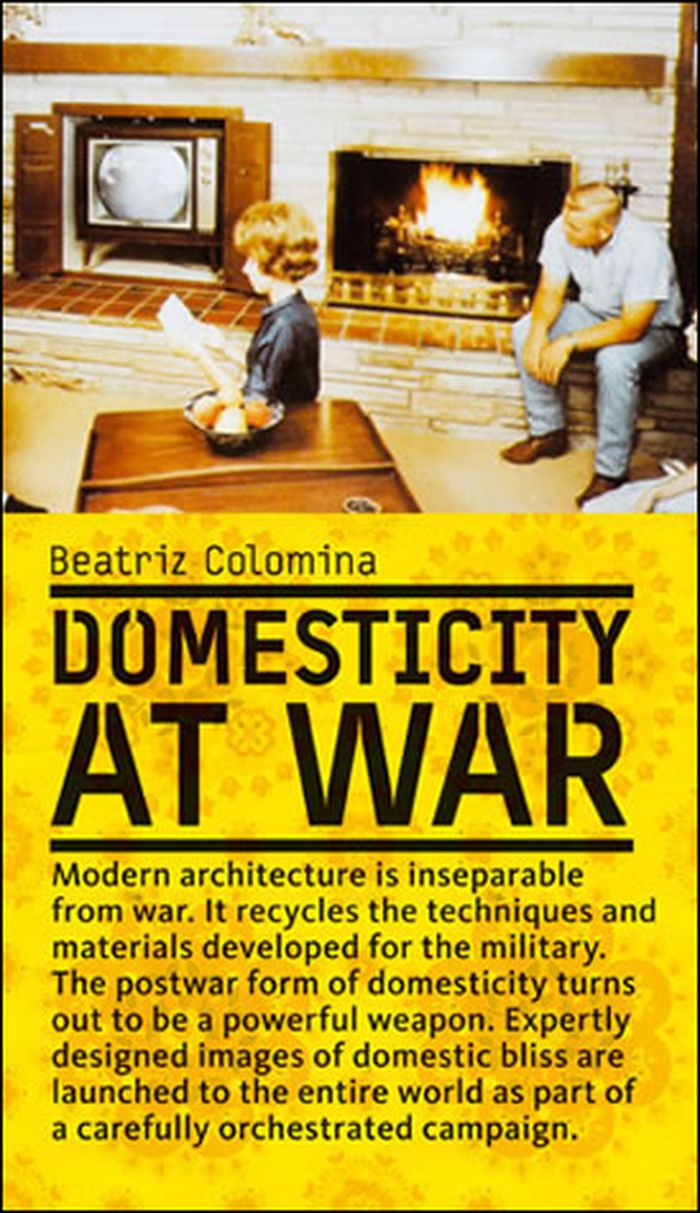
In the years immediately following World War II, America embraced modern architecture--not as something imported from Europe, but as an entirely new mode of operation, with original and captivating designs made in the USA. Beatriz Colomina shows how postwar American architecture adapted the techniques and materials that were developed for military applications to domestic use. Just as manufacturers were turning wartime industry to peacetime productivity--going from missiles to washing machines--American architects and cultural institutions were, in Buckminster Fuller’s words, turning "weaponry into livingry." This new form of domesticity itself turned out to be a powerful weapon. Images of American domestic bliss--suburban homes, manicured lawns, kitchen accessories--went around the world as an effective propaganda campaign. Cold War anxieties were masked by endlessly repeated images of a picture-perfect domestic environment. Even the popular conception of the architect became domesticated, changing from that of an austere modernist to a plaid-shirt wearing homebody. Domesticity at War itself has a distinctive architecture. Housed within the case are two units: one book of text, and one book of illustrations--most of them in color, including advertisements, newspaper and magazine articles, architectural photographs, and more.
Domesticity at War
Actions:
Price:
$54.95
(available to order)
Summary:
In the years immediately following World War II, America embraced modern architecture--not as something imported from Europe, but as an entirely new mode of operation, with original and captivating designs made in the USA. Beatriz Colomina shows how postwar American architecture adapted the techniques and materials that were developed for military applications to domestic use. Just as manufacturers were turning wartime industry to peacetime productivity--going from missiles to washing machines--American architects and cultural institutions were, in Buckminster Fuller’s words, turning "weaponry into livingry." This new form of domesticity itself turned out to be a powerful weapon. Images of American domestic bliss--suburban homes, manicured lawns, kitchen accessories--went around the world as an effective propaganda campaign. Cold War anxieties were masked by endlessly repeated images of a picture-perfect domestic environment. Even the popular conception of the architect became domesticated, changing from that of an austere modernist to a plaid-shirt wearing homebody. Domesticity at War itself has a distinctive architecture. Housed within the case are two units: one book of text, and one book of illustrations--most of them in color, including advertisements, newspaper and magazine articles, architectural photographs, and more.
Form:
books
books
Publication:
March 2007, Cambridge / London
March 2007, Cambridge / London
Subject:
Architectural Theory
Architectural Theory
Form:
books
books
Price:
$15.00
(available to order)
Summary:
A rising star in the Russian literary firmament Pelevin, winner of the 1993 Russian Booker Prize for short stories, has written a parody of life under Communism refracted through the prism of the Soviet space program. This clever parable about a young cosmonaut ordered to make the ultimate sacrifice? Killing himself after secretly piloting a supposedly unmanned lunar(...)
$15.00
(available to order)
Summary:
A rising star in the Russian literary firmament Pelevin, winner of the 1993 Russian Booker Prize for short stories, has written a parody of life under Communism refracted through the prism of the Soviet space program. This clever parable about a young cosmonaut ordered to make the ultimate sacrifice? Killing himself after secretly piloting a supposedly unmanned lunar(...)
Title:
Omon Ra
Actions:
Price:
$15.00
(available to order)
Summary:
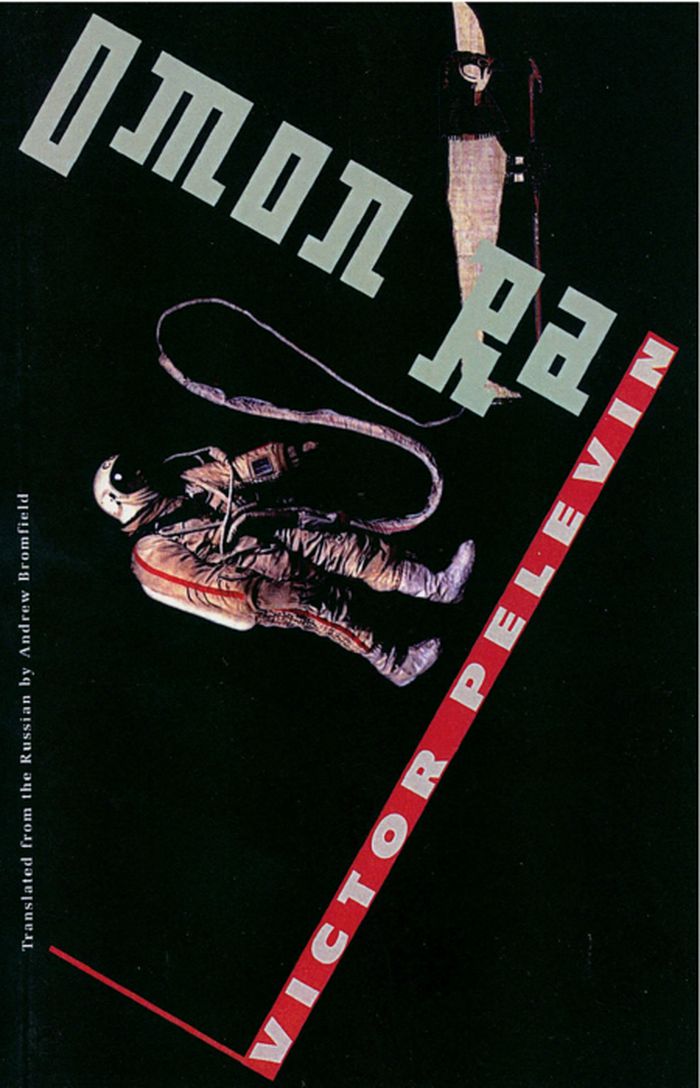
A rising star in the Russian literary firmament Pelevin, winner of the 1993 Russian Booker Prize for short stories, has written a parody of life under Communism refracted through the prism of the Soviet space program. This clever parable about a young cosmonaut ordered to make the ultimate sacrifice? Killing himself after secretly piloting a supposedly unmanned lunar expedition? is sprinkled with throwaway gags, absurdist humor and wickedly ironic touches, as well as with the eerie beauty of space exploration. Obsessed with space travel since early childhood, Omon Krivomazov identifies with Ra, the ancient Egyptian falcon-headed sun god, a fixation that reflects his desire to escape the gray conformity of Soviet life and his yearning for a soul. Omon learns that more than 100 of his fellow cosmonauts have already been sacrificed as guinea pigs after taking part in supposedly automated, manless launches. Pelevin portrays the Russian space program as a vast propaganda enterprise, a distraction to paper over the tawdriness and fear of everyday life. Many allusions will be lost on American readers. And, in light of the truth-is-stranger-than-fiction state of contemporary Russian society, some of the Soviet-era satire seems oddly tame.
Omon Ra
Actions:
Price:
$15.00
(available to order)
Summary:
A rising star in the Russian literary firmament Pelevin, winner of the 1993 Russian Booker Prize for short stories, has written a parody of life under Communism refracted through the prism of the Soviet space program. This clever parable about a young cosmonaut ordered to make the ultimate sacrifice? Killing himself after secretly piloting a supposedly unmanned lunar expedition? is sprinkled with throwaway gags, absurdist humor and wickedly ironic touches, as well as with the eerie beauty of space exploration. Obsessed with space travel since early childhood, Omon Krivomazov identifies with Ra, the ancient Egyptian falcon-headed sun god, a fixation that reflects his desire to escape the gray conformity of Soviet life and his yearning for a soul. Omon learns that more than 100 of his fellow cosmonauts have already been sacrificed as guinea pigs after taking part in supposedly automated, manless launches. Pelevin portrays the Russian space program as a vast propaganda enterprise, a distraction to paper over the tawdriness and fear of everyday life. Many allusions will be lost on American readers. And, in light of the truth-is-stranger-than-fiction state of contemporary Russian society, some of the Soviet-era satire seems oddly tame.
Form:
books
books
Publication:
February 1998
February 1998
Subject:
Architecture and the imaginary
Architecture and the imaginary
Form:
books
books

Price:
$74.00
(available to order)
Summary:
TASS posters were created by a large collective of Soviet writers, printers, and artists, including such notables as Mikhail Cheremnykh, Nikolai Denisovskii, the Kukryniksy, and Pavel Sokolov-Skalia. Often six feet tall and always striking and bold, these stenciled posters were printed and placed daily in windows for the public to see. They were also sent abroad to serve(...)
$74.00
(available to order)
Summary:
TASS posters were created by a large collective of Soviet writers, printers, and artists, including such notables as Mikhail Cheremnykh, Nikolai Denisovskii, the Kukryniksy, and Pavel Sokolov-Skalia. Often six feet tall and always striking and bold, these stenciled posters were printed and placed daily in windows for the public to see. They were also sent abroad to serve(...)
Title:
Windows on the war: soviet TASS posters at home and abroad 1941-1945
Actions:
Price:
$74.00
(available to order)
Summary:
TASS posters were created by a large collective of Soviet writers, printers, and artists, including such notables as Mikhail Cheremnykh, Nikolai Denisovskii, the Kukryniksy, and Pavel Sokolov-Skalia. Often six feet tall and always striking and bold, these stenciled posters were printed and placed daily in windows for the public to see. They were also sent abroad to serve as international cultural "ambassadors," rallying Allied and neutral nations to the Soviet cause. Drawn from the Art Institute of Chicago''s collection, as well as other private and public holdings, these TASS posters have not been seen since World War II. An international team of scholars presents the TASS posters both as unique historical objects and as artworks that reveal how preeminent artists of the day used unconventional technical and visual means to contribute to the war effort, marking a major chapter in the history of design and propaganda. Generously illustrated, the book presents photographs, documentary materials, and memorabilia in meaningful juxtapositions with images of the TASS posters. Also included are documents illuminating the expression of Russian cultural life in the United States during the war, opening a fascinating window onto the war along the Eastern Front.
Windows on the war: soviet TASS posters at home and abroad 1941-1945
Actions:
Price:
$74.00
(available to order)
Summary:
TASS posters were created by a large collective of Soviet writers, printers, and artists, including such notables as Mikhail Cheremnykh, Nikolai Denisovskii, the Kukryniksy, and Pavel Sokolov-Skalia. Often six feet tall and always striking and bold, these stenciled posters were printed and placed daily in windows for the public to see. They were also sent abroad to serve as international cultural "ambassadors," rallying Allied and neutral nations to the Soviet cause. Drawn from the Art Institute of Chicago''s collection, as well as other private and public holdings, these TASS posters have not been seen since World War II. An international team of scholars presents the TASS posters both as unique historical objects and as artworks that reveal how preeminent artists of the day used unconventional technical and visual means to contribute to the war effort, marking a major chapter in the history of design and propaganda. Generously illustrated, the book presents photographs, documentary materials, and memorabilia in meaningful juxtapositions with images of the TASS posters. Also included are documents illuminating the expression of Russian cultural life in the United States during the war, opening a fascinating window onto the war along the Eastern Front.
Form:
books
books
Publication:
August 2011
August 2011
Subject:
Printed Matter
Printed Matter
Form:
books
books
Actions:
Price:
$27.95
(available to order)
Summary:
Our culture is dominated by the visual. Yet most writing on design reflects a narrow preoccupation with products, biographies, and design influences. Maud Lavin approaches design from the broader field of visual culture criticism, asking challenging questions about about who really has a voice in the culture and what unseen influences affect the look of things designers(...)
$27.95
(available to order)
Summary:
Our culture is dominated by the visual. Yet most writing on design reflects a narrow preoccupation with products, biographies, and design influences. Maud Lavin approaches design from the broader field of visual culture criticism, asking challenging questions about about who really has a voice in the culture and what unseen influences affect the look of things designers(...)
Subject:
Graphic Design and Typography
Graphic Design and Typography
Publication:
October 2002, Cambridge, Massachusetts
October 2002, Cambridge, Massachusetts
Title:
Clean new world : culture, politics, and graphic design
Actions:
Price:
$27.95
(available to order)
Summary:
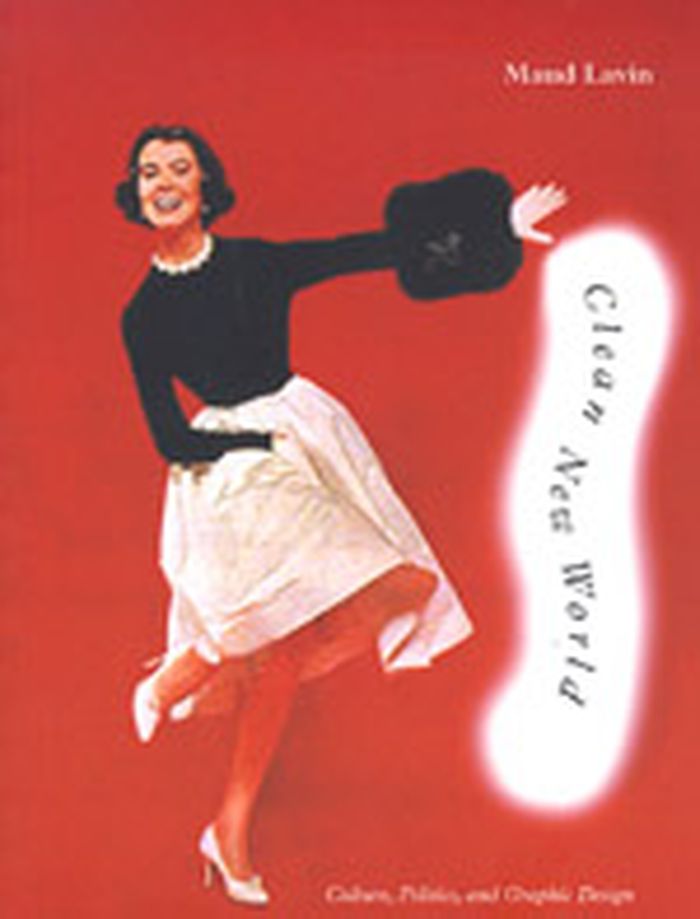
Our culture is dominated by the visual. Yet most writing on design reflects a narrow preoccupation with products, biographies, and design influences. Maud Lavin approaches design from the broader field of visual culture criticism, asking challenging questions about about who really has a voice in the culture and what unseen influences affect the look of things designers produce. Lavin shows how design fits into larger questions of power, democracy, and communication. Many corporate clients instruct designers to convey order and clarity in order to give their companies the look of a clean new world. But since designers cannot clean up messy reality, Lavin shows, they often end up simply veiling it. Lacking the power to influence the content of their commercial work, many designers work simultaneously on other, more fulfilling projects. Lavin is especially interested in the graphic designer’s role in shaping cultural norms. She examines the anti-Nazi propaganda of John Heartfield, the modernist utopian design of Kurt Schwitters and the neue ring werbegestalter, the alternative images of women by studio ringl + pit, the activist work of such contemporary designers as Marlene McCarty and Sheila Levrant de Bretteville, and the Internet innovations of David Steuer and others. Throughout the book, Lavin asks how designers can expand the pleasure, democracy, and vitality of communication.
Clean new world : culture, politics, and graphic design
Actions:
Price:
$27.95
(available to order)
Summary:
Our culture is dominated by the visual. Yet most writing on design reflects a narrow preoccupation with products, biographies, and design influences. Maud Lavin approaches design from the broader field of visual culture criticism, asking challenging questions about about who really has a voice in the culture and what unseen influences affect the look of things designers produce. Lavin shows how design fits into larger questions of power, democracy, and communication. Many corporate clients instruct designers to convey order and clarity in order to give their companies the look of a clean new world. But since designers cannot clean up messy reality, Lavin shows, they often end up simply veiling it. Lacking the power to influence the content of their commercial work, many designers work simultaneously on other, more fulfilling projects. Lavin is especially interested in the graphic designer’s role in shaping cultural norms. She examines the anti-Nazi propaganda of John Heartfield, the modernist utopian design of Kurt Schwitters and the neue ring werbegestalter, the alternative images of women by studio ringl + pit, the activist work of such contemporary designers as Marlene McCarty and Sheila Levrant de Bretteville, and the Internet innovations of David Steuer and others. Throughout the book, Lavin asks how designers can expand the pleasure, democracy, and vitality of communication.
Form:
books
books
Publication:
October 2002, Cambridge, Massachusetts
October 2002, Cambridge, Massachusetts
Subject:
Graphic Design and Typography
Graphic Design and Typography


