


4472 Results
Form:
books
books
Actions:
Price:
$39.95
(available to order)
Summary:
The preservation enterprise helps fashion the physical contours of memory in public space, and thus has the power to curate a multidimensional and inclusive representation of societal values and narratives. Increasingly, the field of preservation is being challenged to consider questions of social inclusion, of how multiple publics are—or are not—represented in heritage(...)
$39.95
(available to order)
Summary:
The preservation enterprise helps fashion the physical contours of memory in public space, and thus has the power to curate a multidimensional and inclusive representation of societal values and narratives. Increasingly, the field of preservation is being challenged to consider questions of social inclusion, of how multiple publics are—or are not—represented in heritage(...)
Title:
Preservation and social exclusion
Actions:
Price:
$39.95
(available to order)
Summary:
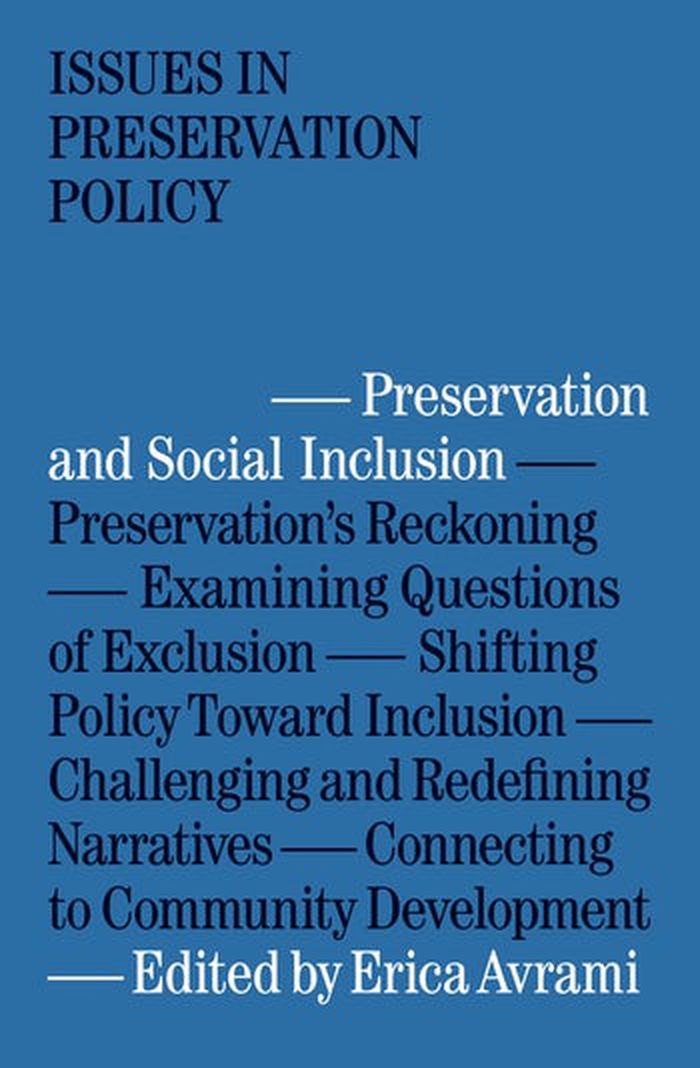
The preservation enterprise helps fashion the physical contours of memory in public space, and thus has the power to curate a multidimensional and inclusive representation of societal values and narratives. Increasingly, the field of preservation is being challenged to consider questions of social inclusion, of how multiple publics are—or are not—represented in heritage decision-making, geographies, and governance structures. Community engagement is increasingly being integrated into project-based preservation practice, but the policy toolbox has been slower to evolve. Recognizing how preservation and other land use decisions can both empower and marginalize publics compels greater reflection on preservation’s past and future and collective action beyond the project level. This requires professionals and institutions to consider systemic policy change with integrity, sensitivity, and intentionality. Bringing together a broad range of academics, historians, and practitioners, this second volume in the Issues in Preservation Policy series documents historic preservation’s progress toward inclusivity and explores further steps to be taken.
Preservation and social exclusion
Actions:
Price:
$39.95
(available to order)
Summary:
The preservation enterprise helps fashion the physical contours of memory in public space, and thus has the power to curate a multidimensional and inclusive representation of societal values and narratives. Increasingly, the field of preservation is being challenged to consider questions of social inclusion, of how multiple publics are—or are not—represented in heritage decision-making, geographies, and governance structures. Community engagement is increasingly being integrated into project-based preservation practice, but the policy toolbox has been slower to evolve. Recognizing how preservation and other land use decisions can both empower and marginalize publics compels greater reflection on preservation’s past and future and collective action beyond the project level. This requires professionals and institutions to consider systemic policy change with integrity, sensitivity, and intentionality. Bringing together a broad range of academics, historians, and practitioners, this second volume in the Issues in Preservation Policy series documents historic preservation’s progress toward inclusivity and explores further steps to be taken.
Form:
books
books
Publication:
March 2020
March 2020
Subject:
Architectural Theory
Architectural Theory
Form:
books
books
Title:
What is co-dividuality?: post-individual architecture, shared houses and other stories of openness
What is co-dividuality?: post-individual architecture, shared houses and other stories of openness
Actions:
Price:
$48.95
(available to order)
Summary:
This book explores the concept of co-dividuality, an architecture that expresses a new response to joint living in the age of postindividualism, social media, and the sharing economy. The focus lies on current experimentation in Japanese architecture and presents thematic homes with shared spaces designed as a result of warm, simple, fun and contemporary design(...)
$48.95
(available to order)
Summary:
This book explores the concept of co-dividuality, an architecture that expresses a new response to joint living in the age of postindividualism, social media, and the sharing economy. The focus lies on current experimentation in Japanese architecture and presents thematic homes with shared spaces designed as a result of warm, simple, fun and contemporary design(...)
Publication:
June 2020
June 2020
Title:
What is co-dividuality?: post-individual architecture, shared houses and other stories of openness
Actions:
Price:
$48.95
(available to order)
Summary:
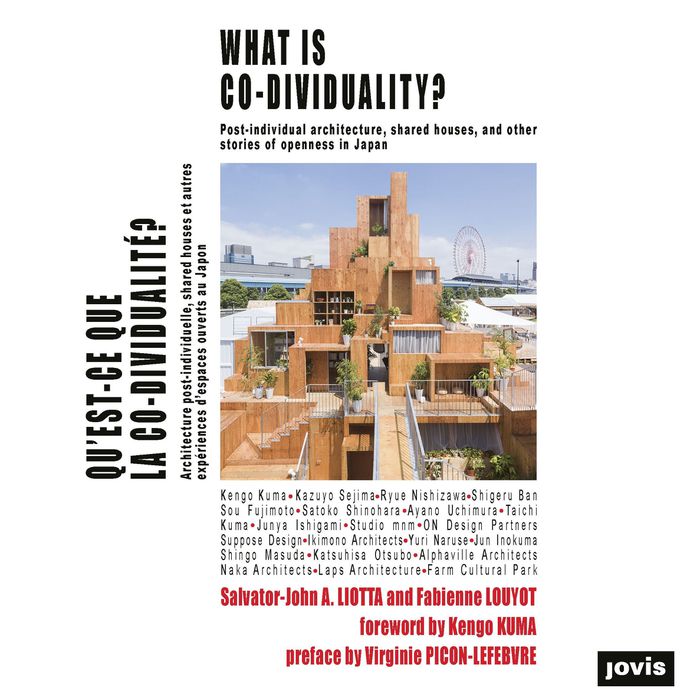
This book explores the concept of co-dividuality, an architecture that expresses a new response to joint living in the age of postindividualism, social media, and the sharing economy. The focus lies on current experimentation in Japanese architecture and presents thematic homes with shared spaces designed as a result of warm, simple, fun and contemporary design reflections. In addition to their private room, the co-tenants have large common areas where they can practice urban farming, create a start-up, cook together, or experience new spatial ergonomics. The book offers an overview not only on domestic space but also on projects characterized by a multifarious mix between public and private spheres. 'What Is Co-dividuality?' reflects on how we might want to live tomorrow. The book includes projects by Kengo Kuma, Kazuyo Sejima, Ryue Nishizawa, Shigeru Ban, Sou Fujimoto, Satoko Shinohara, Ayano Uchimura, Taichi Kuma, Junya Ishigami, Suppose Design, Naruse Inokuma, and Masuda + Otsubo, among others.
What is co-dividuality?: post-individual architecture, shared houses and other stories of openness
Actions:
Price:
$48.95
(available to order)
Summary:
This book explores the concept of co-dividuality, an architecture that expresses a new response to joint living in the age of postindividualism, social media, and the sharing economy. The focus lies on current experimentation in Japanese architecture and presents thematic homes with shared spaces designed as a result of warm, simple, fun and contemporary design reflections. In addition to their private room, the co-tenants have large common areas where they can practice urban farming, create a start-up, cook together, or experience new spatial ergonomics. The book offers an overview not only on domestic space but also on projects characterized by a multifarious mix between public and private spheres. 'What Is Co-dividuality?' reflects on how we might want to live tomorrow. The book includes projects by Kengo Kuma, Kazuyo Sejima, Ryue Nishizawa, Shigeru Ban, Sou Fujimoto, Satoko Shinohara, Ayano Uchimura, Taichi Kuma, Junya Ishigami, Suppose Design, Naruse Inokuma, and Masuda + Otsubo, among others.
Form:
books
books
Publication:
June 2020
June 2020
Form:
journals and magazines
journals and magazines
Price:
$20.00
(available to order)
Summary:
''Pairs'' is a student-led journal at the Harvard GSD dedicated to conversations about design that are down to earth and unguarded. Each issue is conceptualized by an editorial team that proposes guests and objects to be in dialogue with one another. ''Pairs'' is non-thematic, meant instead for provisional thoughts and ideas in progress. Each issue seeks to organize a(...)
$20.00
(available to order)
Summary:
''Pairs'' is a student-led journal at the Harvard GSD dedicated to conversations about design that are down to earth and unguarded. Each issue is conceptualized by an editorial team that proposes guests and objects to be in dialogue with one another. ''Pairs'' is non-thematic, meant instead for provisional thoughts and ideas in progress. Each issue seeks to organize a(...)
Title:
Pairs 01
Actions:
Price:
$20.00
(available to order)
Summary:
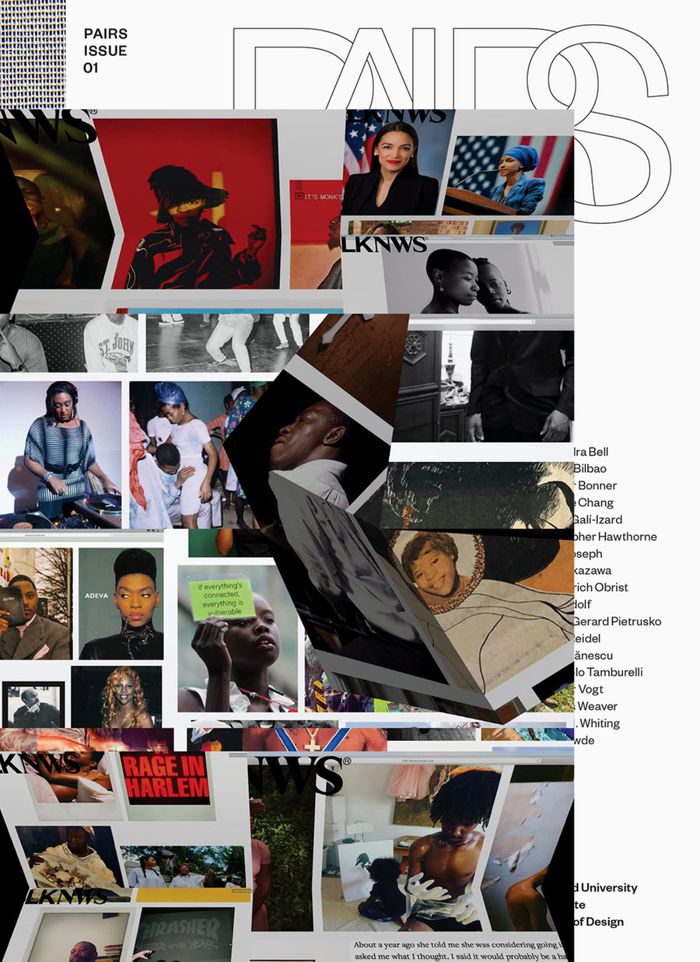
''Pairs'' is a student-led journal at the Harvard GSD dedicated to conversations about design that are down to earth and unguarded. Each issue is conceptualized by an editorial team that proposes guests and objects to be in dialogue with one another. ''Pairs'' is non-thematic, meant instead for provisional thoughts and ideas in progress. Each issue seeks to organize a diversity of threads and concerns that are perceived to be relevant to our moment. Thus, ''Pairs'' creates a space for understanding and a greater degree of exchange, both between the design disciplines and with a larger public. This inaugural issue of ''Pairs'' contains conversations with designers, academics and critics that take on the present from a variety of perspectives. There are reflections on major personal, disciplinary, or political turning points. There are reevaluations of moments in the past that shed light on social questions at the top of our minds. There are also discussions on gardening, book-making, publishing, and the conversation itself.
Pairs 01
Actions:
Price:
$20.00
(available to order)
Summary:
''Pairs'' is a student-led journal at the Harvard GSD dedicated to conversations about design that are down to earth and unguarded. Each issue is conceptualized by an editorial team that proposes guests and objects to be in dialogue with one another. ''Pairs'' is non-thematic, meant instead for provisional thoughts and ideas in progress. Each issue seeks to organize a diversity of threads and concerns that are perceived to be relevant to our moment. Thus, ''Pairs'' creates a space for understanding and a greater degree of exchange, both between the design disciplines and with a larger public. This inaugural issue of ''Pairs'' contains conversations with designers, academics and critics that take on the present from a variety of perspectives. There are reflections on major personal, disciplinary, or political turning points. There are reevaluations of moments in the past that shed light on social questions at the top of our minds. There are also discussions on gardening, book-making, publishing, and the conversation itself.
Form:
journals and magazines
journals and magazines
Publication:
February 2021
February 2021
Subject:
Magazines
Magazines
Form:
books
books

Price:
$100.00
(available to order)
Summary:
Parks are essential to our well-being; this has never been clearer than it is today, and a recent surge of park development offers us much to celebrate. "Parks of the 21st century" presents 52 parks in the U.S., Mexico, Canada, Europe, and China that have turned despoiled and polluted land (including former factories, railroads, and industrial waterfronts) into beneficial(...)
$100.00
(available to order)
Summary:
Parks are essential to our well-being; this has never been clearer than it is today, and a recent surge of park development offers us much to celebrate. "Parks of the 21st century" presents 52 parks in the U.S., Mexico, Canada, Europe, and China that have turned despoiled and polluted land (including former factories, railroads, and industrial waterfronts) into beneficial(...)
Title:
Parks of the 21st Century: reinvented landscapes, reclaimed territories
Actions:
Price:
$100.00
(available to order)
Summary:
Parks are essential to our well-being; this has never been clearer than it is today, and a recent surge of park development offers us much to celebrate. "Parks of the 21st century" presents 52 parks in the U.S., Mexico, Canada, Europe, and China that have turned despoiled and polluted land (including former factories, railroads, and industrial waterfronts) into beneficial landscapes. Landscape architects have been referred to as "the first environmentalists," and "Parks of the 21st century" shows how parks are being designed as proactive, dynamic green spaces. The High Line in New York is an early example of how an obsolete railroad could be transformed. Opened in 2009, it now attracts nearly 8 million visitors a year. In addition to providing public open space, these renewed landscapes offer economic revitalization and large-scale environmental improvement. Among the parks featured in this book are designs by well-known professionals such as James Corner Field Operations, Michael Van Valkenburgh Associates, Kongjian Yu/Turenscape, and Catherine Mosbach.
Parks of the 21st Century: reinvented landscapes, reclaimed territories
Actions:
Price:
$100.00
(available to order)
Summary:
Parks are essential to our well-being; this has never been clearer than it is today, and a recent surge of park development offers us much to celebrate. "Parks of the 21st century" presents 52 parks in the U.S., Mexico, Canada, Europe, and China that have turned despoiled and polluted land (including former factories, railroads, and industrial waterfronts) into beneficial landscapes. Landscape architects have been referred to as "the first environmentalists," and "Parks of the 21st century" shows how parks are being designed as proactive, dynamic green spaces. The High Line in New York is an early example of how an obsolete railroad could be transformed. Opened in 2009, it now attracts nearly 8 million visitors a year. In addition to providing public open space, these renewed landscapes offer economic revitalization and large-scale environmental improvement. Among the parks featured in this book are designs by well-known professionals such as James Corner Field Operations, Michael Van Valkenburgh Associates, Kongjian Yu/Turenscape, and Catherine Mosbach.
Form:
books
books
Publication:
September 2021
September 2021
Subject:
Gardens
Gardens
Form:
books
books
Actions:
Price:
$78.00
(available to order)
Summary:
This book presents innovative examples of hidden architecture: buildings that are designed to disappear into their surroundings or hide in plain sight. In the city, hidden buildings are often designed to provide the occupants with privacy and protection from the busy world outside or they can be incorporated into the streetscape to free up space for public use. In the(...)
$78.00
(available to order)
Summary:
This book presents innovative examples of hidden architecture: buildings that are designed to disappear into their surroundings or hide in plain sight. In the city, hidden buildings are often designed to provide the occupants with privacy and protection from the busy world outside or they can be incorporated into the streetscape to free up space for public use. In the(...)
Title:
Hidden architecture: buildings that blend in
Actions:
Price:
$78.00
(available to order)
Summary:
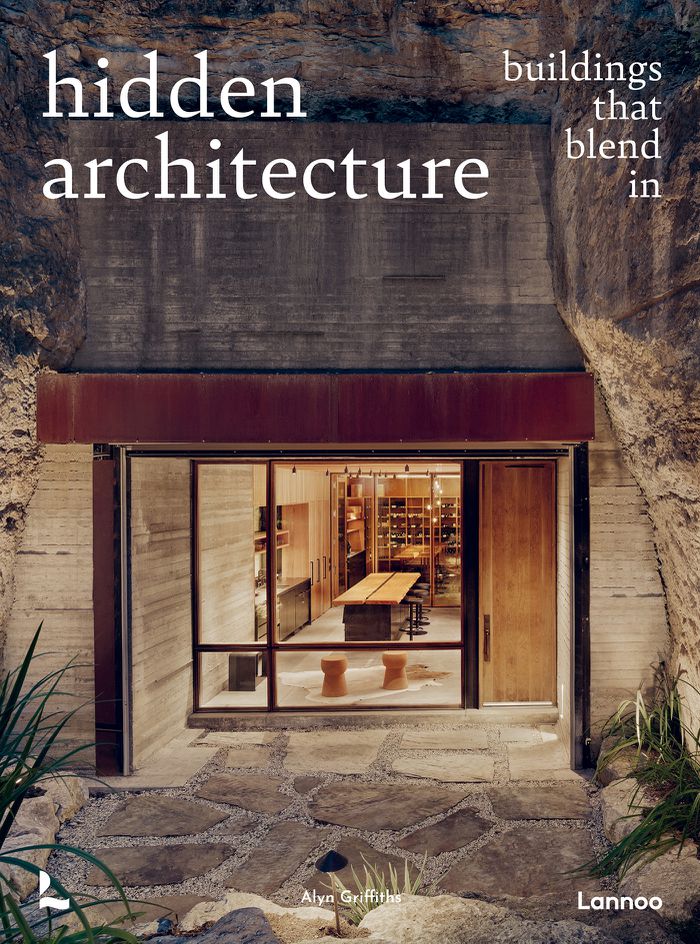
This book presents innovative examples of hidden architecture: buildings that are designed to disappear into their surroundings or hide in plain sight. In the city, hidden buildings are often designed to provide the occupants with privacy and protection from the busy world outside or they can be incorporated into the streetscape to free up space for public use. In the countryside, buildings should not spoil a scenic landscape, so they can be designed to become a part of it. Buildings can be buried underground, hidden amongst trees, covered with greenery or even sunk into the sea. They can be clad in mirrors to reflect their surroundings, disappear beneath an urban plaza or be hidden from view on top of another building. Each of these imaginative solutions offers a way for architecture to blend in rather than stand out. ''Hidden architecture'' tells the stories of projects from around the world that are cleverly disguised but still beautifully detailed and outstanding in their execution.
Hidden architecture: buildings that blend in
Actions:
Price:
$78.00
(available to order)
Summary:
This book presents innovative examples of hidden architecture: buildings that are designed to disappear into their surroundings or hide in plain sight. In the city, hidden buildings are often designed to provide the occupants with privacy and protection from the busy world outside or they can be incorporated into the streetscape to free up space for public use. In the countryside, buildings should not spoil a scenic landscape, so they can be designed to become a part of it. Buildings can be buried underground, hidden amongst trees, covered with greenery or even sunk into the sea. They can be clad in mirrors to reflect their surroundings, disappear beneath an urban plaza or be hidden from view on top of another building. Each of these imaginative solutions offers a way for architecture to blend in rather than stand out. ''Hidden architecture'' tells the stories of projects from around the world that are cleverly disguised but still beautifully detailed and outstanding in their execution.
Form:
books
books
Publication:
October 2022
October 2022
Subject:
Contemporary Architecture
Contemporary Architecture
Form:
books
books
Title:
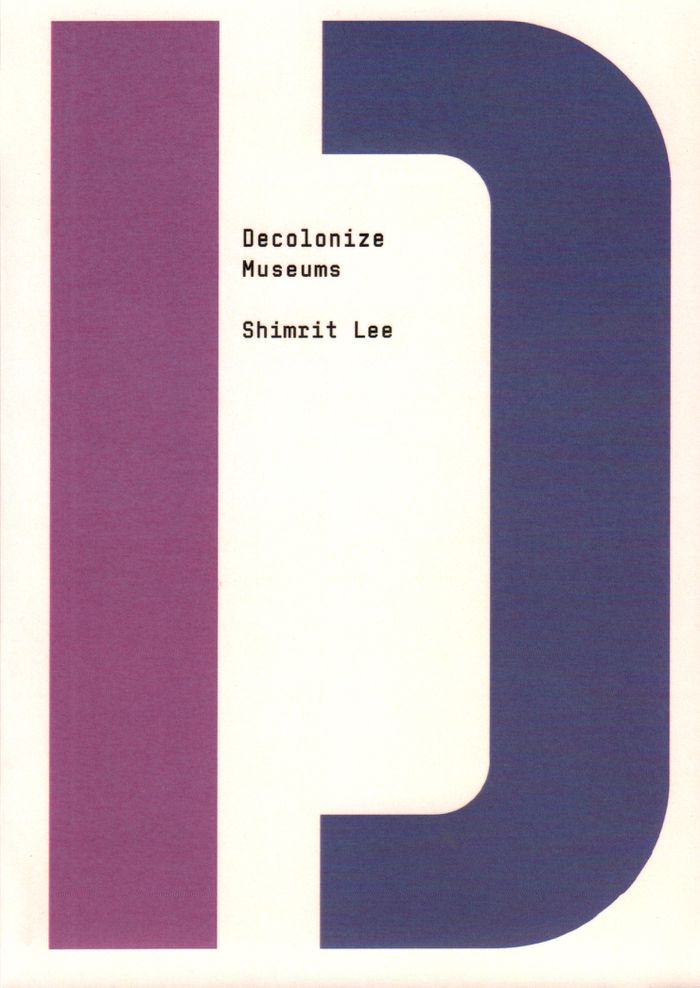
Decolonize museums
Decolonize museums
Actions:
Price:
$29.95
(available to order)
Summary:
The idealized Western museum, as typified by the Metropolitan Museum of Art, the British Museum, and the Museum of Natural History, has remained much the same for over a century: a rarified space of cool stone, providing an experience of leisure and education for the general public while carefully preserving fragile artifacts from distant lands. As questions about(...)
$29.95
(available to order)
Summary:
The idealized Western museum, as typified by the Metropolitan Museum of Art, the British Museum, and the Museum of Natural History, has remained much the same for over a century: a rarified space of cool stone, providing an experience of leisure and education for the general public while carefully preserving fragile artifacts from distant lands. As questions about(...)
Title:
Decolonize museums
Actions:
Price:
$29.95
(available to order)
Summary:
The idealized Western museum, as typified by the Metropolitan Museum of Art, the British Museum, and the Museum of Natural History, has remained much the same for over a century: a rarified space of cool stone, providing an experience of leisure and education for the general public while carefully preserving fragile artifacts from distant lands. As questions about representation and ethics have increasingly arisen, these institutions have proclaimed their interest in diversity and responsible conservation, asserting both their adaptability and their immovably essential role in a flourishing society. With this book, Shimrit Lee punctures this fantasy, tracing the colonial origins of the concept of the museum. White Europeans’ atrocities were reimagined through narratives of benign curiosity and abundant respect for the occupied or annihilated culture, and these racist narratives, Lee argues, remain integral to the authority—and even the aesthetics—of the contemporary museum. This volume argues that we must face a dismantling of these seemingly eternal edifices, and consider what, if anything, might take their place.
Decolonize museums
Actions:
Price:
$29.95
(available to order)
Summary:
The idealized Western museum, as typified by the Metropolitan Museum of Art, the British Museum, and the Museum of Natural History, has remained much the same for over a century: a rarified space of cool stone, providing an experience of leisure and education for the general public while carefully preserving fragile artifacts from distant lands. As questions about representation and ethics have increasingly arisen, these institutions have proclaimed their interest in diversity and responsible conservation, asserting both their adaptability and their immovably essential role in a flourishing society. With this book, Shimrit Lee punctures this fantasy, tracing the colonial origins of the concept of the museum. White Europeans’ atrocities were reimagined through narratives of benign curiosity and abundant respect for the occupied or annihilated culture, and these racist narratives, Lee argues, remain integral to the authority—and even the aesthetics—of the contemporary museum. This volume argues that we must face a dismantling of these seemingly eternal edifices, and consider what, if anything, might take their place.
Form:
books
books
Publication:
June 2022
June 2022
Subject:
Museology
Museology
Form:
audio
audio
Title:
Lattina.
Lattina.
Actions:
Description:
1 online resource.
Author:
Subject:
Publication:
[Place of publication not identified] : Lateral Addition, 2015.
[Place of publication not identified] : Lateral Addition, 2015.
Form:
audio
audio
Publication:
[Place of publication not identified] : Lateral Addition, 2015.
[Place of publication not identified] : Lateral Addition, 2015.
Author:
Subject:
Form:
books
books
Actions:
Holdings:
Description:
432 pages : illustrations (chiefly colour), portraits ; 27 x 20 cm
Description:
432 pages : illustrations (chiefly colour), portraits ; 27 x 20 cm
Author:
Subject:
Publication:
San Francisco : Letterform Archive, [2024], ©2024
San Francisco : Letterform Archive, [2024], ©2024
Title:
The complete commercial artist : making modern design in Japan, 1928-1930 / with text by Gennifer Weisenfeld.
Actions:
Holdings:
Description:
432 pages : illustrations (chiefly colour), portraits ; 27 x 20 cm
The complete commercial artist : making modern design in Japan, 1928-1930 / with text by Gennifer Weisenfeld.
Actions:
Holdings:
Description:
432 pages : illustrations (chiefly colour), portraits ; 27 x 20 cm
Form:
books
books
Publication:
San Francisco : Letterform Archive, [2024], ©2024
San Francisco : Letterform Archive, [2024], ©2024
Author:
Subject:
Form:
books
books
Actions:
Holdings:
Description:
251 pages, 1 unnumbered page : illustrations (some color), portraits ; 29 cm
Description:
251 pages, 1 unnumbered page : illustrations (some color), portraits ; 29 cm
Author:
Subject:
Publication:
Berlin : Berlinische Galerie ; Leipzig : Spector Books, [2024], ©2024
Berlin : Berlinische Galerie ; Leipzig : Spector Books, [2024], ©2024
Title:
Akinbode Akinbiyi : being, seeing, wandering : Hannah-Höch-Preis 2024 = Hannah Höch Prize 2024 / herausgegeben von = edited by Thomas Köhler, Katia Reich.
Actions:
Holdings:
Description:
251 pages, 1 unnumbered page : illustrations (some color), portraits ; 29 cm
Akinbode Akinbiyi : being, seeing, wandering : Hannah-Höch-Preis 2024 = Hannah Höch Prize 2024 / herausgegeben von = edited by Thomas Köhler, Katia Reich.
Actions:
Holdings:
Description:
251 pages, 1 unnumbered page : illustrations (some color), portraits ; 29 cm
Form:
books
books
Publication:
Berlin : Berlinische Galerie ; Leipzig : Spector Books, [2024], ©2024
Berlin : Berlinische Galerie ; Leipzig : Spector Books, [2024], ©2024
Author:
Subject:
Form:
books
books
Title:
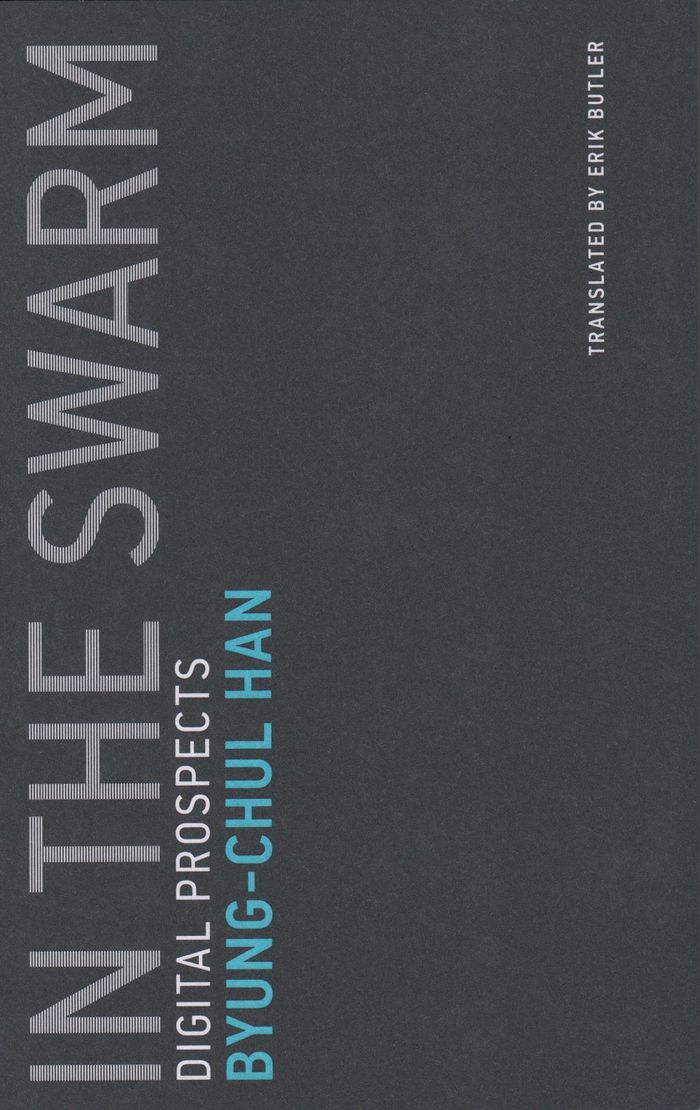
In the swarm
In the swarm
Actions:
Price:
$18.95
(available to order)
Summary:
Digital communication and social media have taken over our lives. In this contrarian reflection on digitized life, Byung-Chul Han counters the cheerleaders for Twitter revolutions and Facebook activism by arguing that digital communication is in fact responsible for the disintegration of community and public space and is slowly eroding any possibility for real political(...)
$18.95
(available to order)
Summary:
Digital communication and social media have taken over our lives. In this contrarian reflection on digitized life, Byung-Chul Han counters the cheerleaders for Twitter revolutions and Facebook activism by arguing that digital communication is in fact responsible for the disintegration of community and public space and is slowly eroding any possibility for real political(...)
Title:
In the swarm
Actions:
Price:
$18.95
(available to order)
Summary:
Digital communication and social media have taken over our lives. In this contrarian reflection on digitized life, Byung-Chul Han counters the cheerleaders for Twitter revolutions and Facebook activism by arguing that digital communication is in fact responsible for the disintegration of community and public space and is slowly eroding any possibility for real political action and meaningful political discourse. In the predigital, analog era, by the time an angry letter to the editor had been composed, mailed, and received, the immediate agitation had passed. Today, digital communication enables instantaneous, impulsive reaction, meant to express and stir up outrage on the spot. “The shitstorm,” writes Han, ”represents an authentic phenomenon of digital communication.” Meanwhile, the public, the senders and receivers of these communications have become a digital swarm—not a mass, or a crowd, or Negri and Hardt’s antiquated notion of a “multitude,” but a set of isolated individuals incapable of forming a “we,” incapable of calling dominant power relations into question, incapable of formulating a future because of an obsession with the present. The digital swarm is a fragmented entity that can focus on individual persons only in order to make them an object of scandal. Han, one of the most widely read philosophers in Europe today, describes a society in which information has overrun thought, in which the same algorithms are employed by Facebook, the stock market, and the intelligence services. Democracy is under threat because digital communication has made freedom and control indistinguishable. Big Brother has been succeeded by Big Data.
In the swarm
Actions:
Price:
$18.95
(available to order)
Summary:
Digital communication and social media have taken over our lives. In this contrarian reflection on digitized life, Byung-Chul Han counters the cheerleaders for Twitter revolutions and Facebook activism by arguing that digital communication is in fact responsible for the disintegration of community and public space and is slowly eroding any possibility for real political action and meaningful political discourse. In the predigital, analog era, by the time an angry letter to the editor had been composed, mailed, and received, the immediate agitation had passed. Today, digital communication enables instantaneous, impulsive reaction, meant to express and stir up outrage on the spot. “The shitstorm,” writes Han, ”represents an authentic phenomenon of digital communication.” Meanwhile, the public, the senders and receivers of these communications have become a digital swarm—not a mass, or a crowd, or Negri and Hardt’s antiquated notion of a “multitude,” but a set of isolated individuals incapable of forming a “we,” incapable of calling dominant power relations into question, incapable of formulating a future because of an obsession with the present. The digital swarm is a fragmented entity that can focus on individual persons only in order to make them an object of scandal. Han, one of the most widely read philosophers in Europe today, describes a society in which information has overrun thought, in which the same algorithms are employed by Facebook, the stock market, and the intelligence services. Democracy is under threat because digital communication has made freedom and control indistinguishable. Big Brother has been succeeded by Big Data.
Form:
books
books
Publication:
April 2017
April 2017
Subject:
Archive, library and the digital
Archive, library and the digital


