


4472 Results
Form:
books
books
Title:
Revues d'architecture dans les années 1960 et 1970/ Architectural periodicals in the 1960s and 1970s
Revues d'architecture dans les années 1960 et 1970/ Architectural periodicals in the 1960s and 1970s
Actions:
Price:
$25.95
(available in store)
Summary:
The 1960s and 1970s were the heroic age of the architectural "little magazine". During this period even commercial periodicals were willing to include theoretical discourse as they catered to a profession confronted by radical social change. These essays by nine international architectural scholars are from the Proceedings of the International Colloquium held in 2004 at(...)
$25.95
(available in store)
Summary:
The 1960s and 1970s were the heroic age of the architectural "little magazine". During this period even commercial periodicals were willing to include theoretical discourse as they catered to a profession confronted by radical social change. These essays by nine international architectural scholars are from the Proceedings of the International Colloquium held in 2004 at(...)
Publication:
September 2008, Montreal
September 2008, Montreal
Title:
Revues d'architecture dans les années 1960 et 1970/ Architectural periodicals in the 1960s and 1970s
Actions:
Price:
$25.95
(available in store)
Summary:
The 1960s and 1970s were the heroic age of the architectural "little magazine". During this period even commercial periodicals were willing to include theoretical discourse as they catered to a profession confronted by radical social change. These essays by nine international architectural scholars are from the Proceedings of the International Colloquium held in 2004 at the Canadian Centre for Architecture. They enrich our understanding of a format which monopolized the space for professional debate about what mattered most in architecture at the time. These contributions give architectural periodicals a central place in the historical debates on the period with particular emphasis on material production, intellectual contribution, and critical reception. Six essays in English and three essays in French with a bilingual introduction. Neuf historiens en architecture examinent l’architecture radicale dans la presse parallèle des années 1960 et 1970. Ces périodiques novateurs ont été marqués par les idées expérimentales et les designs avant-gardistes qui ont grandement influencées le discours architectural de la période. Actes du colloque tenu en 2004 au Centre Canadien d'Architecture. Six textes en anglais, trois textes en français avec une introduction bilingue.
Revues d'architecture dans les années 1960 et 1970/ Architectural periodicals in the 1960s and 1970s
Actions:
Price:
$25.95
(available in store)
Summary:
The 1960s and 1970s were the heroic age of the architectural "little magazine". During this period even commercial periodicals were willing to include theoretical discourse as they catered to a profession confronted by radical social change. These essays by nine international architectural scholars are from the Proceedings of the International Colloquium held in 2004 at the Canadian Centre for Architecture. They enrich our understanding of a format which monopolized the space for professional debate about what mattered most in architecture at the time. These contributions give architectural periodicals a central place in the historical debates on the period with particular emphasis on material production, intellectual contribution, and critical reception. Six essays in English and three essays in French with a bilingual introduction. Neuf historiens en architecture examinent l’architecture radicale dans la presse parallèle des années 1960 et 1970. Ces périodiques novateurs ont été marqués par les idées expérimentales et les designs avant-gardistes qui ont grandement influencées le discours architectural de la période. Actes du colloque tenu en 2004 au Centre Canadien d'Architecture. Six textes en anglais, trois textes en français avec une introduction bilingue.
Form:
books
books
Publication:
September 2008, Montreal
September 2008, Montreal
Form:
books
books
Actions:
Price:
$26.95
(available to order)
Summary:
There are an estimated 600,000,000 passenger cars in the world, and that number is increasing every day. So too is Earth’s supply of parking spaces. In some cities, parking lots cover more than one-third of the metropolitan footprint. It’s official:we have paved paradise and put up a parking lot. In this publication,author Eran Ben-Joseph shares a different vision for(...)
$26.95
(available to order)
Summary:
There are an estimated 600,000,000 passenger cars in the world, and that number is increasing every day. So too is Earth’s supply of parking spaces. In some cities, parking lots cover more than one-third of the metropolitan footprint. It’s official:we have paved paradise and put up a parking lot. In this publication,author Eran Ben-Joseph shares a different vision for(...)
Title:
Rethinking a lot : the design and culture of parking
Actions:
Price:
$26.95
(available to order)
Summary:
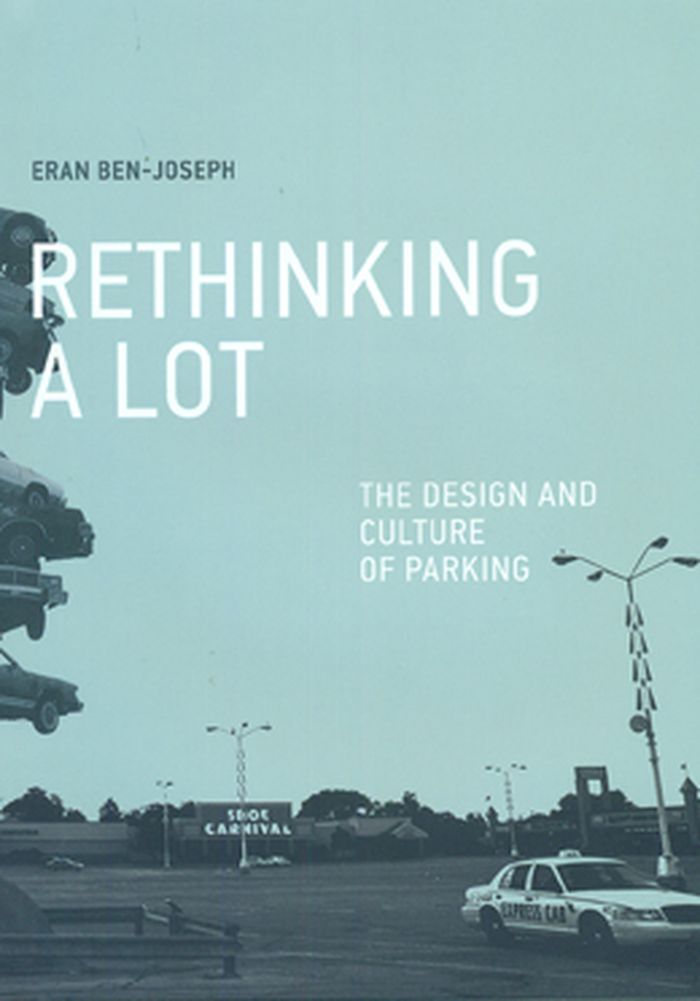
There are an estimated 600,000,000 passenger cars in the world, and that number is increasing every day. So too is Earth’s supply of parking spaces. In some cities, parking lots cover more than one-third of the metropolitan footprint. It’s official:we have paved paradise and put up a parking lot. In this publication,author Eran Ben-Joseph shares a different vision for parking’s future. Parking lots, he writes, are ripe for transformation. After all, as he points out, their design and function has not been rethought since the 1950s. With this book, Ben-Joseph pushes the parking lot into the twenty-first century. Can’t parking lots be aesthetically pleasing, environmentally and architecturally responsible? Used for something other than car storage? Ben-Joseph shows us that they can. He provides a visual history of this often ignored urban space, introducing us to some of the many alternative and nonparking purposes that parking lots have served - from RV campgrounds to stages for “Shakespeare in the Parking Lot.” He shows us parking lots that are not concrete wastelands but lushly planted with trees and flowers and beautifully integrated with the rest of the built environment. With purposeful design, Ben-Joseph argues, parking lots could be significant public places, contributing as much to their communities as great boulevards, parks, or plazas. For all the acreage they cover, parking lots have received scant attention. It’s time to change that; it’s time to rethink the lot.
Rethinking a lot : the design and culture of parking
Actions:
Price:
$26.95
(available to order)
Summary:
There are an estimated 600,000,000 passenger cars in the world, and that number is increasing every day. So too is Earth’s supply of parking spaces. In some cities, parking lots cover more than one-third of the metropolitan footprint. It’s official:we have paved paradise and put up a parking lot. In this publication,author Eran Ben-Joseph shares a different vision for parking’s future. Parking lots, he writes, are ripe for transformation. After all, as he points out, their design and function has not been rethought since the 1950s. With this book, Ben-Joseph pushes the parking lot into the twenty-first century. Can’t parking lots be aesthetically pleasing, environmentally and architecturally responsible? Used for something other than car storage? Ben-Joseph shows us that they can. He provides a visual history of this often ignored urban space, introducing us to some of the many alternative and nonparking purposes that parking lots have served - from RV campgrounds to stages for “Shakespeare in the Parking Lot.” He shows us parking lots that are not concrete wastelands but lushly planted with trees and flowers and beautifully integrated with the rest of the built environment. With purposeful design, Ben-Joseph argues, parking lots could be significant public places, contributing as much to their communities as great boulevards, parks, or plazas. For all the acreage they cover, parking lots have received scant attention. It’s time to change that; it’s time to rethink the lot.
Form:
books
books
Publication:
March 2012
March 2012
Subject:
Transportation, Tourism, Migration
Transportation, Tourism, Migration
Form:
books
books
Actions:
Price:
$53.95
(available to order)
Summary:
What is it about Times Square that has inspired such attention for well over a century? And how is it that, despite its many changes of character, the place has maintained a unique hold on our collective imagination? In this book, which comes twenty years after her widely acclaimed Times Square Roulette, Lynne Sagalyn masterfully tells the story of profound urban change(...)
$53.95
(available to order)
Summary:
What is it about Times Square that has inspired such attention for well over a century? And how is it that, despite its many changes of character, the place has maintained a unique hold on our collective imagination? In this book, which comes twenty years after her widely acclaimed Times Square Roulette, Lynne Sagalyn masterfully tells the story of profound urban change(...)
Title:
Times Square remade: The dynamics of urban change
Actions:
Price:
$53.95
(available to order)
Summary:
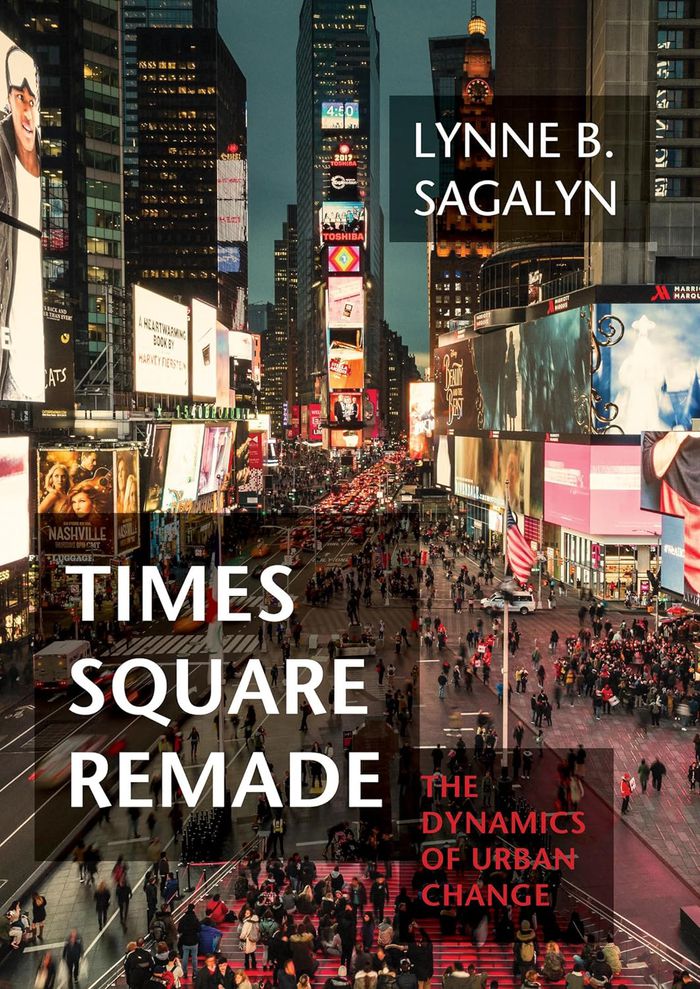
What is it about Times Square that has inspired such attention for well over a century? And how is it that, despite its many changes of character, the place has maintained a unique hold on our collective imagination? In this book, which comes twenty years after her widely acclaimed Times Square Roulette, Lynne Sagalyn masterfully tells the story of profound urban change over decades in the symbolic space that is New York City’s Times Square. Drawing on the history, sociology, and political economy of the place, ''Times Square remade'' examines how the public-private transformation of 42nd Street at Times Square impacted the entertainment district and adjacent neighborhoods, particularly Hell’s Kitchen. Sagalyn chronicles the earliest halcyon days of 42nd Street and Times Square as the nexus of speculation and competitive theater building as well as its darkest days as vice central, and on to the years of aggressive government intervention to cleanse West 42nd Street of pornography and crime. Thematically, the author analyzes the three main forces that have shaped and reshaped Times Square—theater, real estate, and pornography—and explains the politics and economics of what got built and what has been restored or preserved. Accompanied by nearly 160 images, more than half in color, ''Times Square remade'' is a deftly woven narrative of urban transformation that will appeal as much to the general reader and New York City enthusiast as to urbanists, city planners, architects, urban designers, and policymakers.
Times Square remade: The dynamics of urban change
Actions:
Price:
$53.95
(available to order)
Summary:
What is it about Times Square that has inspired such attention for well over a century? And how is it that, despite its many changes of character, the place has maintained a unique hold on our collective imagination? In this book, which comes twenty years after her widely acclaimed Times Square Roulette, Lynne Sagalyn masterfully tells the story of profound urban change over decades in the symbolic space that is New York City’s Times Square. Drawing on the history, sociology, and political economy of the place, ''Times Square remade'' examines how the public-private transformation of 42nd Street at Times Square impacted the entertainment district and adjacent neighborhoods, particularly Hell’s Kitchen. Sagalyn chronicles the earliest halcyon days of 42nd Street and Times Square as the nexus of speculation and competitive theater building as well as its darkest days as vice central, and on to the years of aggressive government intervention to cleanse West 42nd Street of pornography and crime. Thematically, the author analyzes the three main forces that have shaped and reshaped Times Square—theater, real estate, and pornography—and explains the politics and economics of what got built and what has been restored or preserved. Accompanied by nearly 160 images, more than half in color, ''Times Square remade'' is a deftly woven narrative of urban transformation that will appeal as much to the general reader and New York City enthusiast as to urbanists, city planners, architects, urban designers, and policymakers.
Form:
books
books
Publication:
October 2023
October 2023
Subject:
Urban Theory
Urban Theory
Form:
books
books
Actions:
Price:
$44.95
(available to order)
Summary:
"Worldchanging : a User's guide for the 21st century " proposes innovative solutions, ideas and inventions emerging today for building a sustainable, livable, prosperous future. From consumer consciousness to a new vision for industry; non-toxic homes to refugee shelters; microfinance to effective philanthropy; socially responsible investing to starting a green business;(...)
$44.95
(available to order)
Summary:
"Worldchanging : a User's guide for the 21st century " proposes innovative solutions, ideas and inventions emerging today for building a sustainable, livable, prosperous future. From consumer consciousness to a new vision for industry; non-toxic homes to refugee shelters; microfinance to effective philanthropy; socially responsible investing to starting a green business;(...)
Title:
Worldchanging : a user's guide for the 21st century
Actions:
Price:
$44.95
(available to order)
Summary:
"Worldchanging : a User's guide for the 21st century " proposes innovative solutions, ideas and inventions emerging today for building a sustainable, livable, prosperous future. From consumer consciousness to a new vision for industry; non-toxic homes to refugee shelters; microfinance to effective philanthropy; socially responsible investing to starting a green business; citizen media to human rights; ecological economics to climate change, this is a comprehensive, cutting-edge overview. The book contains 7 sections which include those topics - from eco-building to responsible shopping, political action to humanitarian relief : stuff : green design, biomimicry, sustainable food, clothing, trade and technology ; shelter : green building and landscaping, clean energy, water, disaster relief and humanitarian design ; cities : smart growth, sustainable communities, transportation, greening infrastructure, product-service systems, leapfrogging and megacity challenges ; community : education, women's rights, public health, holistic approaches to community development, South-South science, social entrepreneurship and micro-lending, and philanthropy ; business : socially responsible investment, worldchanging start-ups, ecological economics, corporate social responsibility and green business ; politics : networked politics, new media, transparency, human rights, non-violent revolution and peacemaking ; planet : big picture -- everything from placing oneself in a bioregion to climate foresight to environmental history to green space exploration. Brought together by Alex Steffen, co-founder of the web site Worldchanging.com, this team of writers includes Cameron Sinclair, founder of Architecture for Humanity, Geekcorps founder Ethan Zuckerman, sustainable food expert Anna Lappé, and many others. With foreword by Al Gore. Design by Sagmeister.
Worldchanging : a user's guide for the 21st century
Actions:
Price:
$44.95
(available to order)
Summary:
"Worldchanging : a User's guide for the 21st century " proposes innovative solutions, ideas and inventions emerging today for building a sustainable, livable, prosperous future. From consumer consciousness to a new vision for industry; non-toxic homes to refugee shelters; microfinance to effective philanthropy; socially responsible investing to starting a green business; citizen media to human rights; ecological economics to climate change, this is a comprehensive, cutting-edge overview. The book contains 7 sections which include those topics - from eco-building to responsible shopping, political action to humanitarian relief : stuff : green design, biomimicry, sustainable food, clothing, trade and technology ; shelter : green building and landscaping, clean energy, water, disaster relief and humanitarian design ; cities : smart growth, sustainable communities, transportation, greening infrastructure, product-service systems, leapfrogging and megacity challenges ; community : education, women's rights, public health, holistic approaches to community development, South-South science, social entrepreneurship and micro-lending, and philanthropy ; business : socially responsible investment, worldchanging start-ups, ecological economics, corporate social responsibility and green business ; politics : networked politics, new media, transparency, human rights, non-violent revolution and peacemaking ; planet : big picture -- everything from placing oneself in a bioregion to climate foresight to environmental history to green space exploration. Brought together by Alex Steffen, co-founder of the web site Worldchanging.com, this team of writers includes Cameron Sinclair, founder of Architecture for Humanity, Geekcorps founder Ethan Zuckerman, sustainable food expert Anna Lappé, and many others. With foreword by Al Gore. Design by Sagmeister.
Form:
books
books
Publication:
January 2007, New York
January 2007, New York
Subject:
Green Architecture
Green Architecture
Form:
books
books

Actions:
Price:
$44.95
(available to order)
Summary:
New ideas and concepts for urban architecture and landscape architecture from the Netherlands: this survey takes stock of the current situation. In any discussion on contemporary landscape architecture, visionary urban development or revolutionary building, it is impossible to overlook the Netherlands. The experts look to this small, flat country which constantly(...)
$44.95
(available to order)
Summary:
New ideas and concepts for urban architecture and landscape architecture from the Netherlands: this survey takes stock of the current situation. In any discussion on contemporary landscape architecture, visionary urban development or revolutionary building, it is impossible to overlook the Netherlands. The experts look to this small, flat country which constantly(...)
Title:
The Netherlands in focus : exemplary ideas and concepts for town and landscape
Actions:
Price:
$44.95
(available to order)
Summary:
New ideas and concepts for urban architecture and landscape architecture from the Netherlands: this survey takes stock of the current situation. In any discussion on contemporary landscape architecture, visionary urban development or revolutionary building, it is impossible to overlook the Netherlands. The experts look to this small, flat country which constantly seeks to exceed its narrow boundaries by creating new space. The Netherlands is crowded and so it is hardly surprising that architects endeavour to "stack" landscapes and functions as the Dutch pavilion in the Expo 2000, designed by MVRDV demonstrated. Here, new ideas and concepts in architecture and landscape design fall on the fertile ground. Rem Koolhaas had prepared the way: nothing must stay as it is, even the open countryside and the towns can be changed, moulded, shaped. The Dutch are experts at building in the sea, on polders, on man-made islands, and on former harbour areas as in Rotterdam Kop van Zuid. Architecture and landscape architecture are not only a matter of public interest but they are ongoing processes in the Netherlands, and this is reflected in many of the projects in this book which include the gardens and squares of West 8, the Museumsplein in Amsterdam, the town planning in Zutphen or Apeldoorn. The examples have all been published in different contexts in Topos, but this is the first time that they have been collated to provide an illuminating overview of contemporary Dutch landscape architecture.
The Netherlands in focus : exemplary ideas and concepts for town and landscape
Actions:
Price:
$44.95
(available to order)
Summary:
New ideas and concepts for urban architecture and landscape architecture from the Netherlands: this survey takes stock of the current situation. In any discussion on contemporary landscape architecture, visionary urban development or revolutionary building, it is impossible to overlook the Netherlands. The experts look to this small, flat country which constantly seeks to exceed its narrow boundaries by creating new space. The Netherlands is crowded and so it is hardly surprising that architects endeavour to "stack" landscapes and functions as the Dutch pavilion in the Expo 2000, designed by MVRDV demonstrated. Here, new ideas and concepts in architecture and landscape design fall on the fertile ground. Rem Koolhaas had prepared the way: nothing must stay as it is, even the open countryside and the towns can be changed, moulded, shaped. The Dutch are experts at building in the sea, on polders, on man-made islands, and on former harbour areas as in Rotterdam Kop van Zuid. Architecture and landscape architecture are not only a matter of public interest but they are ongoing processes in the Netherlands, and this is reflected in many of the projects in this book which include the gardens and squares of West 8, the Museumsplein in Amsterdam, the town planning in Zutphen or Apeldoorn. The examples have all been published in different contexts in Topos, but this is the first time that they have been collated to provide an illuminating overview of contemporary Dutch landscape architecture.
Form:
books
books
Publication:
March 2002, Munich / Basel
March 2002, Munich / Basel
Subject:
Gardens
Gardens
Form:
books
books
Title:
Roman Signer
Roman Signer
Actions:
Price:
$59.95
(available to order)
Summary:
Since the mid 1970s Roman Signer has examined the forces of the elements – air, fire, earth and water – in a combination of performance (documented by photography and video) and sculpture (the physical remains of his acts). With a Dadaist love for the absurd, his artworks include Race (1981), in which the artist races a rocket across a field (hopelessly behind from the(...)
$59.95
(available to order)
Summary:
Since the mid 1970s Roman Signer has examined the forces of the elements – air, fire, earth and water – in a combination of performance (documented by photography and video) and sculpture (the physical remains of his acts). With a Dadaist love for the absurd, his artworks include Race (1981), in which the artist races a rocket across a field (hopelessly behind from the(...)
Subject:
Contemporary Art Monographs
Contemporary Art Monographs
Publication:
June 2006, London
June 2006, London
Title:
Roman Signer
Actions:
Price:
$59.95
(available to order)
Summary:
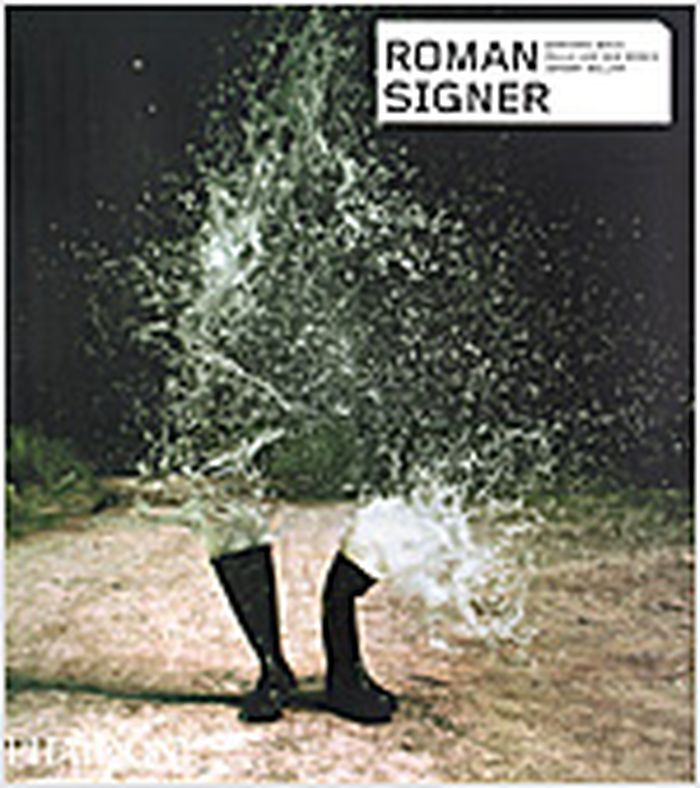
Since the mid 1970s Roman Signer has examined the forces of the elements – air, fire, earth and water – in a combination of performance (documented by photography and video) and sculpture (the physical remains of his acts). With a Dadaist love for the absurd, his artworks include Race (1981), in which the artist races a rocket across a field (hopelessly behind from the outset, the artist loses by nearly the entire length); Action at Hotel Weissbad (1992), in which an ordinary table is shot out a hotel window, the resulting photographs showing a table flying incongruously over a sleepy Swiss village; Power of Rain (1974), in which rainwater gathers slowly in a funnel until its force shatters a block of plaster; and Bicycle with Rockets (1991), the photographs of which show a fiery bicycle flying through the gallery like a demon comet. Often Signer will exhibit in the gallery the remains of an event not witnessed by the public, such as four empty barrels and a violently splattered wall, the remains of an explosion of paint in the gallery space (Portrait Gallery, 1993), or four sand piles with perfectly round craters on each, the neat result of four simultaneous explosions at their peaks (Cones of Sand, 1988). Roman Signer’s work has been exhibited at major venues across Europe and North America, as well as important international exhibitions such as Documenta 8 (1987), Skulptur Projekte in Munster (1997) and the 48th Venice Biennale (1999), in which he represented Switzerland.
Roman Signer
Actions:
Price:
$59.95
(available to order)
Summary:
Since the mid 1970s Roman Signer has examined the forces of the elements – air, fire, earth and water – in a combination of performance (documented by photography and video) and sculpture (the physical remains of his acts). With a Dadaist love for the absurd, his artworks include Race (1981), in which the artist races a rocket across a field (hopelessly behind from the outset, the artist loses by nearly the entire length); Action at Hotel Weissbad (1992), in which an ordinary table is shot out a hotel window, the resulting photographs showing a table flying incongruously over a sleepy Swiss village; Power of Rain (1974), in which rainwater gathers slowly in a funnel until its force shatters a block of plaster; and Bicycle with Rockets (1991), the photographs of which show a fiery bicycle flying through the gallery like a demon comet. Often Signer will exhibit in the gallery the remains of an event not witnessed by the public, such as four empty barrels and a violently splattered wall, the remains of an explosion of paint in the gallery space (Portrait Gallery, 1993), or four sand piles with perfectly round craters on each, the neat result of four simultaneous explosions at their peaks (Cones of Sand, 1988). Roman Signer’s work has been exhibited at major venues across Europe and North America, as well as important international exhibitions such as Documenta 8 (1987), Skulptur Projekte in Munster (1997) and the 48th Venice Biennale (1999), in which he represented Switzerland.
Form:
books
books
Publication:
June 2006, London
June 2006, London
Subject:
Contemporary Art Monographs
Contemporary Art Monographs
Form:
books
books
Actions:
Price:
$29.99
(available to order)
Summary:
Architect Stanley Saitowitz, based in San Francisco, is known for a practice that unites the qualities of early modern architecture with the construction techniques, materials, and urban and social attributes of the twenty-first century. Recurring themes in his work include the careful connection to time and place; the construction of spaces that allow fields of(...)
$29.99
(available to order)
Summary:
Architect Stanley Saitowitz, based in San Francisco, is known for a practice that unites the qualities of early modern architecture with the construction techniques, materials, and urban and social attributes of the twenty-first century. Recurring themes in his work include the careful connection to time and place; the construction of spaces that allow fields of(...)
Publication:
October 2005, New York
October 2005, New York
Title:
Stanley Saitowitz : buildings and projects
Actions:
Price:
$29.99
(available to order)
Summary:
Architect Stanley Saitowitz, based in San Francisco, is known for a practice that unites the qualities of early modern architecture with the construction techniques, materials, and urban and social attributes of the twenty-first century. Recurring themes in his work include the careful connection to time and place; the construction of spaces that allow fields of opportunity; the use of generative systems; the role of architecture as a support for human activity; and the visible trace of building techniques. This monograph, the first on Stanley Saitowitz office, presents fifty projects from more than thirty years of practice. The projects, divided by building type, are accompanied by a personal text in which Saitowitz plainly discusses his influences and interests. Landscape houses, often built on spectacular sites in Marin, Napa, and Sonoma, have evolved to include the noted "bar houses." Urban houses, while compact and dense, incorporate a sense of volume; similarly, multifamily housing provides indeterminate space to allow for personalization. Buildings for schools range from the riverside campus of the Oxbow School in Napa to the structurally innovative Building 23B at UCSF Mission Bay. Among the public landscapes is Mill Race Park in Columbus, Indiana, an assemblage of constructions specific to both place and function. Finally, Saitowitz has developed a series of designs that explore the formation of a Jewish architecture, notably synagogues in San Francisco and La Jolla and the Holocaust Memorial in Boston. Principal photography by Richard Barnes and Tim Griffith.
Stanley Saitowitz : buildings and projects
Actions:
Price:
$29.99
(available to order)
Summary:
Architect Stanley Saitowitz, based in San Francisco, is known for a practice that unites the qualities of early modern architecture with the construction techniques, materials, and urban and social attributes of the twenty-first century. Recurring themes in his work include the careful connection to time and place; the construction of spaces that allow fields of opportunity; the use of generative systems; the role of architecture as a support for human activity; and the visible trace of building techniques. This monograph, the first on Stanley Saitowitz office, presents fifty projects from more than thirty years of practice. The projects, divided by building type, are accompanied by a personal text in which Saitowitz plainly discusses his influences and interests. Landscape houses, often built on spectacular sites in Marin, Napa, and Sonoma, have evolved to include the noted "bar houses." Urban houses, while compact and dense, incorporate a sense of volume; similarly, multifamily housing provides indeterminate space to allow for personalization. Buildings for schools range from the riverside campus of the Oxbow School in Napa to the structurally innovative Building 23B at UCSF Mission Bay. Among the public landscapes is Mill Race Park in Columbus, Indiana, an assemblage of constructions specific to both place and function. Finally, Saitowitz has developed a series of designs that explore the formation of a Jewish architecture, notably synagogues in San Francisco and La Jolla and the Holocaust Memorial in Boston. Principal photography by Richard Barnes and Tim Griffith.
Form:
books
books
Publication:
October 2005, New York
October 2005, New York
Form:
books
books
Price:
$41.50
(available to order)
Summary:
What would it mean today to think or to imagine, to design or to construct, in relation not to "things made" but to "things in the making"? This question, first posed by the philosopher William James, was the point of departure for "The Pragmatist Imagination". The volume brings together position statements, theoretical speculations, and critical commentary by 33 leading(...)
$41.50
(available to order)
Summary:
What would it mean today to think or to imagine, to design or to construct, in relation not to "things made" but to "things in the making"? This question, first posed by the philosopher William James, was the point of departure for "The Pragmatist Imagination". The volume brings together position statements, theoretical speculations, and critical commentary by 33 leading(...)
Subject:
Contemporary Art Monographs
Contemporary Art Monographs
Publication:
November 2001, New York
November 2001, New York
Title:
The pragmatist imagination : thinking about things in the making
Actions:
Price:
$41.50
(available to order)
Summary:
What would it mean today to think or to imagine, to design or to construct, in relation not to "things made" but to "things in the making"? This question, first posed by the philosopher William James, was the point of departure for "The Pragmatist Imagination". The volume brings together position statements, theoretical speculations, and critical commentary by 33 leading thinkers and makers from over a dozen disciplines. Based on the proceedings of an international workshop held at Columbia University under the auspices of the Buell Center for the Study of American Architecture in spring 2000, a preamble to the much-ballyhooed conference at the Museum of Modern Art in November, 2000, the contributions traverse a set of burning questions about the future, ranging from the relationship between art and experience to the impact of new technologies on human consciousness, from transformations in everyday life to problems of public space, and from the destiny of the nation-state to emergent forms of transnationalism. The authors include Stanley Aronowitz, Marshall Berman, Casey Nelson Blake, Sandra Buckley, Teresa Caldeira, Jean-Louis Cohen, Jonathan Crary, Rosalyn Deutsche, Kenneth Frampton, Gerald E. Frug, Peter Galison, Elizabeth Grosz, Andreas Huyssen, Isaac Joseph, David Lapoujade, Reinhold Martin, Brian Massumi, Mary McLeod, Paul Miller a.k.a. DJ Spooky, Chantal Mouffe, Joan Ockman, John Rajchman, Martha Rosler, Hashim Sarkis, Saskia Sassen, Sandhya Shukla, Richard Shusterman, Abdoumaliq Simone, Anders Stephanson, Bernard Tschumi, Nadia Urbinati, Mabel Wilson, and Gwendolyn Wright. The book includes an introduction by John Rajchman and an afterword by Casey Nelson Blake.
The pragmatist imagination : thinking about things in the making
Actions:
Price:
$41.50
(available to order)
Summary:
What would it mean today to think or to imagine, to design or to construct, in relation not to "things made" but to "things in the making"? This question, first posed by the philosopher William James, was the point of departure for "The Pragmatist Imagination". The volume brings together position statements, theoretical speculations, and critical commentary by 33 leading thinkers and makers from over a dozen disciplines. Based on the proceedings of an international workshop held at Columbia University under the auspices of the Buell Center for the Study of American Architecture in spring 2000, a preamble to the much-ballyhooed conference at the Museum of Modern Art in November, 2000, the contributions traverse a set of burning questions about the future, ranging from the relationship between art and experience to the impact of new technologies on human consciousness, from transformations in everyday life to problems of public space, and from the destiny of the nation-state to emergent forms of transnationalism. The authors include Stanley Aronowitz, Marshall Berman, Casey Nelson Blake, Sandra Buckley, Teresa Caldeira, Jean-Louis Cohen, Jonathan Crary, Rosalyn Deutsche, Kenneth Frampton, Gerald E. Frug, Peter Galison, Elizabeth Grosz, Andreas Huyssen, Isaac Joseph, David Lapoujade, Reinhold Martin, Brian Massumi, Mary McLeod, Paul Miller a.k.a. DJ Spooky, Chantal Mouffe, Joan Ockman, John Rajchman, Martha Rosler, Hashim Sarkis, Saskia Sassen, Sandhya Shukla, Richard Shusterman, Abdoumaliq Simone, Anders Stephanson, Bernard Tschumi, Nadia Urbinati, Mabel Wilson, and Gwendolyn Wright. The book includes an introduction by John Rajchman and an afterword by Casey Nelson Blake.
Form:
books
books
Publication:
November 2001, New York
November 2001, New York
Subject:
Contemporary Art Monographs
Contemporary Art Monographs
Form:
books
books
Price:
$22.50
(available in store)
Summary:
When architect Rafael Vinoly was commissioned to design a major new centre for the arts at Duke University, he set about creating his first museum in North America and the first stand-alone museum in Duke's eighty-year history. The resulting 65,000-square-foot building has changed the cultural landscape of the university and indeed the Southeast. This book(...)
$22.50
(available in store)
Summary:
When architect Rafael Vinoly was commissioned to design a major new centre for the arts at Duke University, he set about creating his first museum in North America and the first stand-alone museum in Duke's eighty-year history. The resulting 65,000-square-foot building has changed the cultural landscape of the university and indeed the Southeast. This book(...)
Subject:
Architecture Monographs
Architecture Monographs
Publication:
October 2005, Durham, North Carolina
October 2005, Durham, North Carolina
Title:
The Nasher Museum of Art at Duke University : Rafael Vinoly Architects
Actions:
Price:
$22.50
(available in store)
Summary:
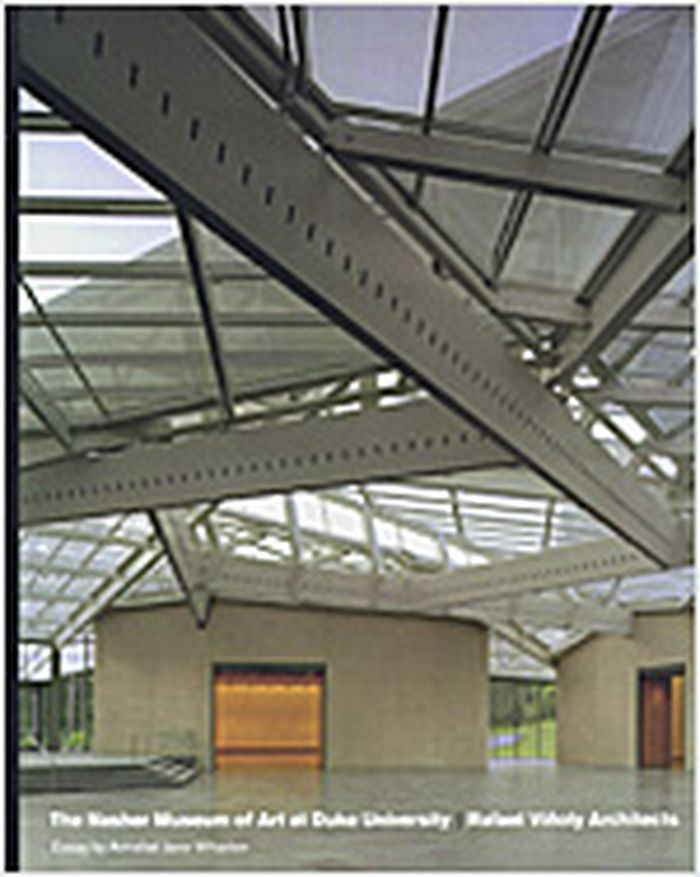
When architect Rafael Vinoly was commissioned to design a major new centre for the arts at Duke University, he set about creating his first museum in North America and the first stand-alone museum in Duke's eighty-year history. The resulting 65,000-square-foot building has changed the cultural landscape of the university and indeed the Southeast. This book documents the genesis and design of the new museum, which opens on October 2, 2005. The building is named in honor of the family of Raymond D. Nasher, an internationally prominent art collector who graduated from Duke in 1943. The brilliant core of the Nasher at Duke is a 13,000-square-foot glass and steel canopy rising to a height of 45 feet above the central gallery space. The faceted roof soars above the irregular pentagonal great hall, where five concrete pavilions fan out at different angles. The pavilions will house three large gallery spaces, an auditorium, offices, university and community classrooms, a museum shop, and a café with outdoor seating overlooking a sculpture garden. Set in the forest on Duke's campus, the museum's full-height glass walls and green slate floor connect the pavilions and further blur the division between building and nature. With an essay by art historian Annabel Jane Wharton, a design statement by architect Rafael Vinoly, a foreword by museum namesake Raymond D. Nasher, and photographs by Brad Feinknopf and Jerry Blow, this book documents the building that will become a cornerstone for cultural activities for the university and the public.
The Nasher Museum of Art at Duke University : Rafael Vinoly Architects
Actions:
Price:
$22.50
(available in store)
Summary:
When architect Rafael Vinoly was commissioned to design a major new centre for the arts at Duke University, he set about creating his first museum in North America and the first stand-alone museum in Duke's eighty-year history. The resulting 65,000-square-foot building has changed the cultural landscape of the university and indeed the Southeast. This book documents the genesis and design of the new museum, which opens on October 2, 2005. The building is named in honor of the family of Raymond D. Nasher, an internationally prominent art collector who graduated from Duke in 1943. The brilliant core of the Nasher at Duke is a 13,000-square-foot glass and steel canopy rising to a height of 45 feet above the central gallery space. The faceted roof soars above the irregular pentagonal great hall, where five concrete pavilions fan out at different angles. The pavilions will house three large gallery spaces, an auditorium, offices, university and community classrooms, a museum shop, and a café with outdoor seating overlooking a sculpture garden. Set in the forest on Duke's campus, the museum's full-height glass walls and green slate floor connect the pavilions and further blur the division between building and nature. With an essay by art historian Annabel Jane Wharton, a design statement by architect Rafael Vinoly, a foreword by museum namesake Raymond D. Nasher, and photographs by Brad Feinknopf and Jerry Blow, this book documents the building that will become a cornerstone for cultural activities for the university and the public.
Form:
books
books
Publication:
October 2005, Durham, North Carolina
October 2005, Durham, North Carolina
Subject:
Architecture Monographs
Architecture Monographs
Form:
books
books
Price:
$40.95
(available to order)
Summary:
Vast interior spaces have become ubiquitous in the contemporary city. The soaring atriums and concourses of mega-hotels, shopping malls and transport interchanges define an increasingly normal experience of being 'inside' in a city. Yet such spaces are also subject to intense criticism and claims that they can destroy the quality of a city's authentic life 'on the(...)
$40.95
(available to order)
Summary:
Vast interior spaces have become ubiquitous in the contemporary city. The soaring atriums and concourses of mega-hotels, shopping malls and transport interchanges define an increasingly normal experience of being 'inside' in a city. Yet such spaces are also subject to intense criticism and claims that they can destroy the quality of a city's authentic life 'on the(...)
Title:
Interior urbanism: architecture, John Portman and downtown America
Actions:
Price:
$40.95
(available to order)
Summary:
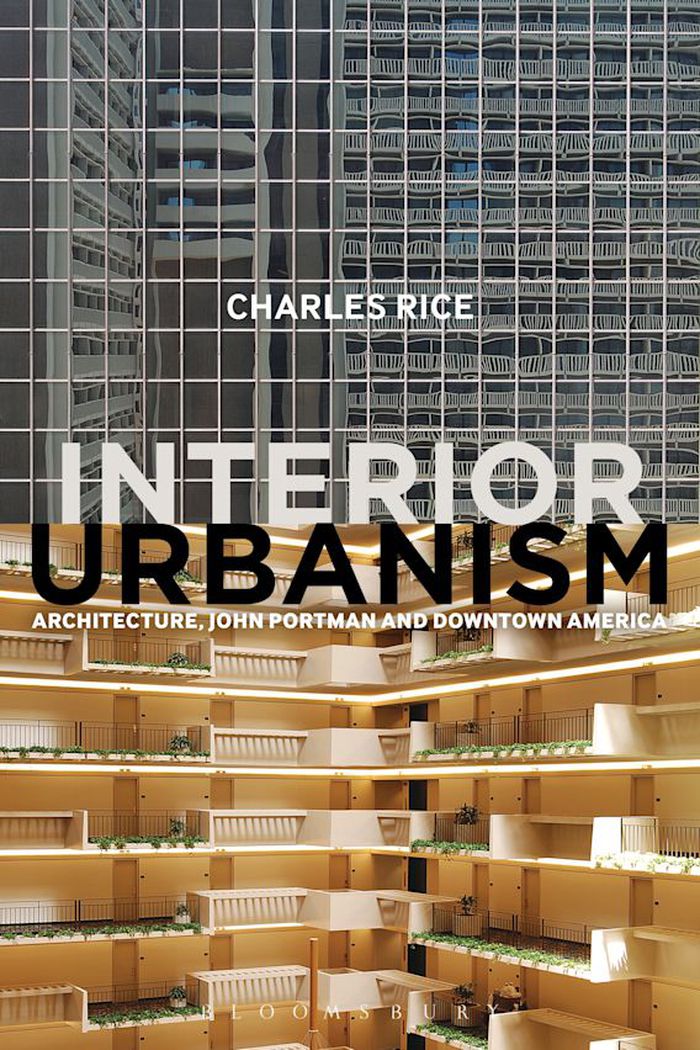
Vast interior spaces have become ubiquitous in the contemporary city. The soaring atriums and concourses of mega-hotels, shopping malls and transport interchanges define an increasingly normal experience of being 'inside' in a city. Yet such spaces are also subject to intense criticism and claims that they can destroy the quality of a city's authentic life 'on the outside'. ''Interior Urbanism'' explores the roots of this contemporary tension between inside and outside, identifying and analysing the concept of interior urbanism and tracing its history back to the works of John Portman and Associates in 1960s and 70s America. Portman – increasingly recognised as an influential yet understudied figure – was responsible for projects such as Peachtree Center in Atlanta and the Los Angeles Bonaventure Hotel, developments that employed vast internal atriums to define a world of possibilities not just for hotels and commercial spaces, but for the future of the American downtown amid the upheavals of the 1960s and 70s. The book analyses Portman's architecture in order to reconsider major contexts of debate in architecture and urbanism in this period, including the massive expansion of a commercial imperative in architecture, shifts in the governance and development of cities amid social and economic instability, the rise of postmodernism and critical urban studies, and the defence of the street and public space amid the continual upheavals of urban development. In this way the book reconsiders the American city at a crucial time in its development, identifying lessons for how we consider the forces at work, and the spaces produced, in cities in the present.
Interior urbanism: architecture, John Portman and downtown America
Actions:
Price:
$40.95
(available to order)
Summary:
Vast interior spaces have become ubiquitous in the contemporary city. The soaring atriums and concourses of mega-hotels, shopping malls and transport interchanges define an increasingly normal experience of being 'inside' in a city. Yet such spaces are also subject to intense criticism and claims that they can destroy the quality of a city's authentic life 'on the outside'. ''Interior Urbanism'' explores the roots of this contemporary tension between inside and outside, identifying and analysing the concept of interior urbanism and tracing its history back to the works of John Portman and Associates in 1960s and 70s America. Portman – increasingly recognised as an influential yet understudied figure – was responsible for projects such as Peachtree Center in Atlanta and the Los Angeles Bonaventure Hotel, developments that employed vast internal atriums to define a world of possibilities not just for hotels and commercial spaces, but for the future of the American downtown amid the upheavals of the 1960s and 70s. The book analyses Portman's architecture in order to reconsider major contexts of debate in architecture and urbanism in this period, including the massive expansion of a commercial imperative in architecture, shifts in the governance and development of cities amid social and economic instability, the rise of postmodernism and critical urban studies, and the defence of the street and public space amid the continual upheavals of urban development. In this way the book reconsiders the American city at a crucial time in its development, identifying lessons for how we consider the forces at work, and the spaces produced, in cities in the present.
Form:
books
books
Publication:
August 2016
August 2016
Subject:
Architectural Theory
Architectural Theory


