


4476 Results
Form:
books
books
Title:
Sprawl : a compact history
Sprawl : a compact history
Actions:
Price:
$34.50
(available to order)
Summary:
As anyone who has flown into Los Angeles at dusk or Houston at midday knows, urban areas today defy traditional notions of what a city is. Our old definitions of urban, suburban, and rural fail to capture the complexity of these vast regions with their superhighways, subdivisions, industrial areas, office parks, and resort areas pushing far out into the countryside.(...)
$34.50
(available to order)
Summary:
As anyone who has flown into Los Angeles at dusk or Houston at midday knows, urban areas today defy traditional notions of what a city is. Our old definitions of urban, suburban, and rural fail to capture the complexity of these vast regions with their superhighways, subdivisions, industrial areas, office parks, and resort areas pushing far out into the countryside.(...)
Title:
Sprawl : a compact history
Actions:
Price:
$34.50
(available to order)
Summary:
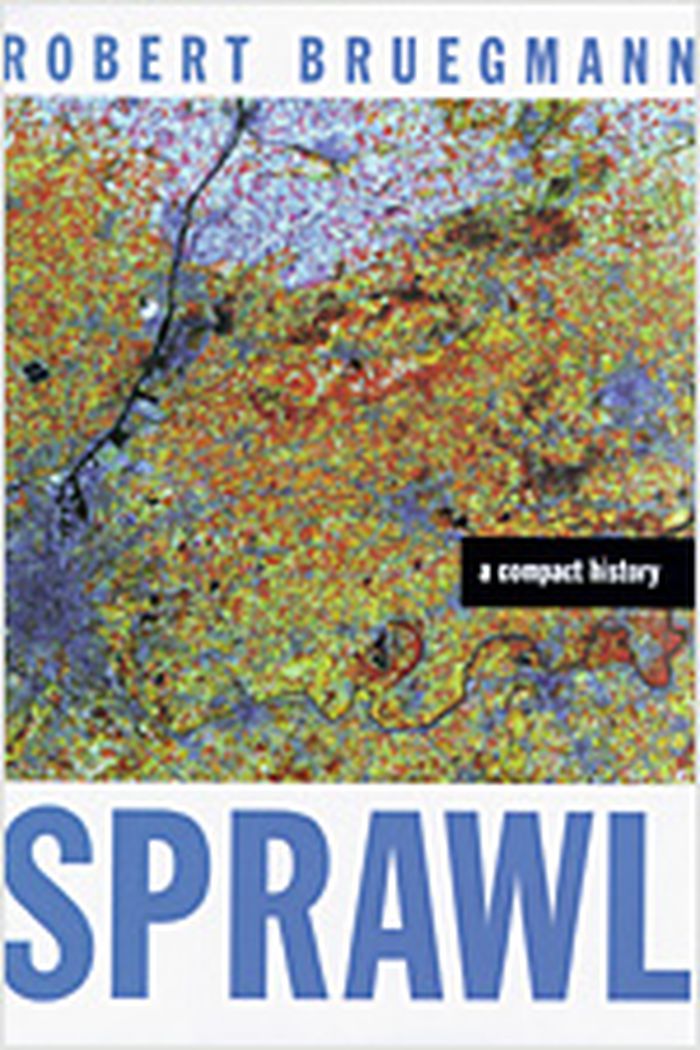
As anyone who has flown into Los Angeles at dusk or Houston at midday knows, urban areas today defy traditional notions of what a city is. Our old definitions of urban, suburban, and rural fail to capture the complexity of these vast regions with their superhighways, subdivisions, industrial areas, office parks, and resort areas pushing far out into the countryside. Detractors call it sprawl and assert that it is economically inefficient, socially inequitable, environmentally irresponsible, and aesthetically ugly. Robert Bruegmann calls it a logical consequence of economic growth and the democratization of society, with benefits that urban planners have failed to recognize. In his history of the expanded city, Bruegmann overturns every assumption we have about sprawl. Taking a long view of urban development, he demonstrates that sprawl is neither recent nor particularly American but as old as cities themselves, just as characteristic of ancient Rome and eighteenth-century Paris as it is of Atlanta or Los Angeles. Nor is sprawl the disaster claimed by many contemporary observers. Although sprawl, like any settlement pattern, has undoubtedly produced problems that must be addressed, it has also provided millions of people with the kinds of mobility, privacy, and choice that were once the exclusive prerogatives of the rich and powerful. The first major book to strip urban sprawl of its pejorative connotations, Sprawl offers a completely new vision of the city and its growth. Bruegmann leads readers to the powerful conclusion that ''in its immense complexity and constant change, the city-whether dense and concentrated at its core, looser and more sprawling in suburbia, or in the vast tracts of exurban penumbra that extend dozens, even hundreds, of miles-is the grandest and most marvelous work of mankind.''
Sprawl : a compact history
Actions:
Price:
$34.50
(available to order)
Summary:
As anyone who has flown into Los Angeles at dusk or Houston at midday knows, urban areas today defy traditional notions of what a city is. Our old definitions of urban, suburban, and rural fail to capture the complexity of these vast regions with their superhighways, subdivisions, industrial areas, office parks, and resort areas pushing far out into the countryside. Detractors call it sprawl and assert that it is economically inefficient, socially inequitable, environmentally irresponsible, and aesthetically ugly. Robert Bruegmann calls it a logical consequence of economic growth and the democratization of society, with benefits that urban planners have failed to recognize. In his history of the expanded city, Bruegmann overturns every assumption we have about sprawl. Taking a long view of urban development, he demonstrates that sprawl is neither recent nor particularly American but as old as cities themselves, just as characteristic of ancient Rome and eighteenth-century Paris as it is of Atlanta or Los Angeles. Nor is sprawl the disaster claimed by many contemporary observers. Although sprawl, like any settlement pattern, has undoubtedly produced problems that must be addressed, it has also provided millions of people with the kinds of mobility, privacy, and choice that were once the exclusive prerogatives of the rich and powerful. The first major book to strip urban sprawl of its pejorative connotations, Sprawl offers a completely new vision of the city and its growth. Bruegmann leads readers to the powerful conclusion that ''in its immense complexity and constant change, the city-whether dense and concentrated at its core, looser and more sprawling in suburbia, or in the vast tracts of exurban penumbra that extend dozens, even hundreds, of miles-is the grandest and most marvelous work of mankind.''
Form:
books
books
Publication:
October 2005, Chicago, London
October 2005, Chicago, London
Subject:
Urban Theory
Urban Theory
Form:
books
books
Actions:
Price:
$44.95
(available to order)
Summary:
Essays, plans and projects by various artists,including Max Bill, Heinrich Dunst, Helmut Federle, Per Kirkeby, Katarina Fritsch, Erwin Heerich, Gerhard Merz, Gottfried Honegger, Walther Pichler, Ulrich Rückriem, Bernar Venet, Daniel Buren, Christoph Haerle, Peter Wigglesworth, Donald Judd, Markus Lüpertz, Arnulf Rainer, Richard Serra among others showing their ideas for(...)
$44.95
(available to order)
Summary:
Essays, plans and projects by various artists,including Max Bill, Heinrich Dunst, Helmut Federle, Per Kirkeby, Katarina Fritsch, Erwin Heerich, Gerhard Merz, Gottfried Honegger, Walther Pichler, Ulrich Rückriem, Bernar Venet, Daniel Buren, Christoph Haerle, Peter Wigglesworth, Donald Judd, Markus Lüpertz, Arnulf Rainer, Richard Serra among others showing their ideas for(...)
Title:
Museum architecture : texts and projects by artists
Actions:
Price:
$44.95
(available to order)
Summary:
Essays, plans and projects by various artists,including Max Bill, Heinrich Dunst, Helmut Federle, Per Kirkeby, Katarina Fritsch, Erwin Heerich, Gerhard Merz, Gottfried Honegger, Walther Pichler, Ulrich Rückriem, Bernar Venet, Daniel Buren, Christoph Haerle, Peter Wigglesworth, Donald Judd, Markus Lüpertz, Arnulf Rainer, Richard Serra among others showing their ideas for how museums should be constructed. When discussing the increasing number of museums and exhibition spaces for modern art which have come into being in recent years, the deep-seated differences of opinion between architects and artists keep coming to the fore. The discussion seems to be almost exclusively dominated by the point of view of the architect and defined by his/her interests. The needs of the art itself are being widely neglected and the voice of the artist is simply not being heard. Donald Judd, the American sculptor and minimalist artist, once noted that museums are so rarely built on functional lines these days, the trend being more towards the creation of a showpiece for the architect. Why are painters and sculptors not asked for their input? The very obvious question was addressed by the Espace de l’art concret when in 1997, it asked a number of well-known artists to come up with ideas and projects for a museum for concrete art. They were invited to submit their ideal utopian suggestions as well as very concrete and architectural proposals and written statements. These are documented in this publication, supplemented with the material for the collection owned by the Kunsthaus in Bregenz and expanded with an extensive anthology of texts by artists on this subject. The résumé of the contributions presents a searing criticism of contemporary museum architecture by its most important users. Their voice will at last find an ear in the current architectural discussion about the new cathedrals of the post-industrial society.
Museum architecture : texts and projects by artists
Actions:
Price:
$44.95
(available to order)
Summary:
Essays, plans and projects by various artists,including Max Bill, Heinrich Dunst, Helmut Federle, Per Kirkeby, Katarina Fritsch, Erwin Heerich, Gerhard Merz, Gottfried Honegger, Walther Pichler, Ulrich Rückriem, Bernar Venet, Daniel Buren, Christoph Haerle, Peter Wigglesworth, Donald Judd, Markus Lüpertz, Arnulf Rainer, Richard Serra among others showing their ideas for how museums should be constructed. When discussing the increasing number of museums and exhibition spaces for modern art which have come into being in recent years, the deep-seated differences of opinion between architects and artists keep coming to the fore. The discussion seems to be almost exclusively dominated by the point of view of the architect and defined by his/her interests. The needs of the art itself are being widely neglected and the voice of the artist is simply not being heard. Donald Judd, the American sculptor and minimalist artist, once noted that museums are so rarely built on functional lines these days, the trend being more towards the creation of a showpiece for the architect. Why are painters and sculptors not asked for their input? The very obvious question was addressed by the Espace de l’art concret when in 1997, it asked a number of well-known artists to come up with ideas and projects for a museum for concrete art. They were invited to submit their ideal utopian suggestions as well as very concrete and architectural proposals and written statements. These are documented in this publication, supplemented with the material for the collection owned by the Kunsthaus in Bregenz and expanded with an extensive anthology of texts by artists on this subject. The résumé of the contributions presents a searing criticism of contemporary museum architecture by its most important users. Their voice will at last find an ear in the current architectural discussion about the new cathedrals of the post-industrial society.
Form:
books
books
Publication:
January 1900, Cologne
January 1900, Cologne
Subject:
Museology
Museology
Form:
books
books
Actions:
Price:
$66.50
(available to order)
Summary:
From the moment it opened on the first of May in the Crystal Palace in Hyde Park, London, the Great Exhibition of 1851 was one of the defining events of the Victorian period. It stood not only as a visible symbol of British industrial and technological progress but as a figure for modernity—a figure that has often been thought to convey one coherent message and vision of(...)
$66.50
(available to order)
Summary:
From the moment it opened on the first of May in the Crystal Palace in Hyde Park, London, the Great Exhibition of 1851 was one of the defining events of the Victorian period. It stood not only as a visible symbol of British industrial and technological progress but as a figure for modernity—a figure that has often been thought to convey one coherent message and vision of(...)
Subject:
History until 1900, Great Britain
History until 1900, Great Britain
Publication:
July 2007, Charlottesville - London
July 2007, Charlottesville - London
Title:
Victorian prism : refractions of the crystal palace
Actions:
Price:
$66.50
(available to order)
Summary:
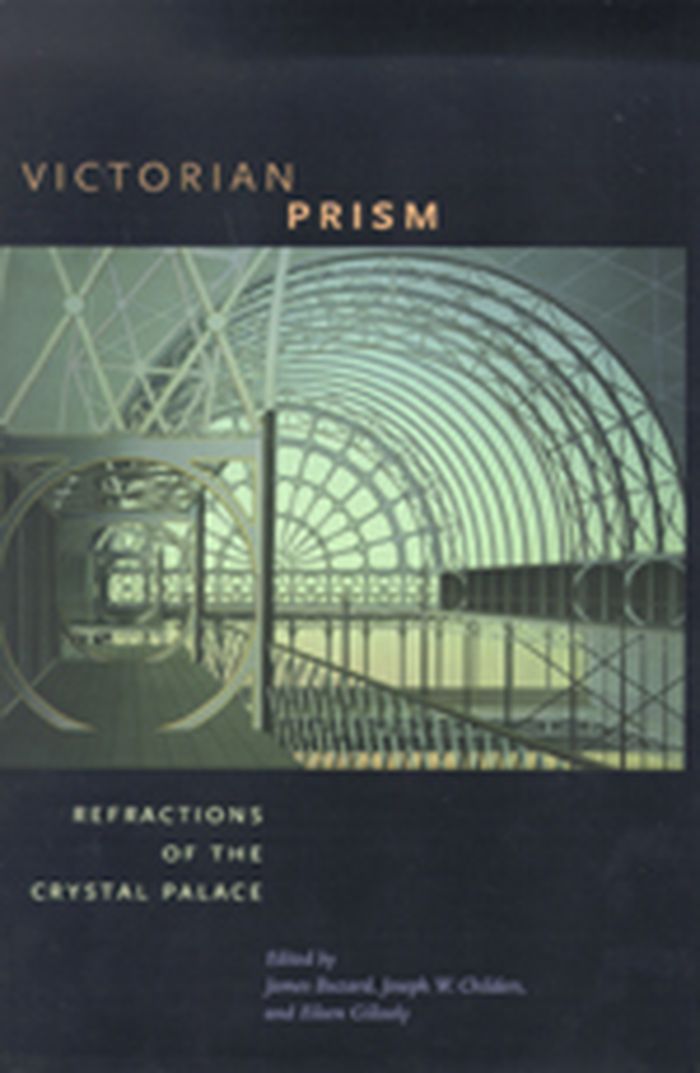
From the moment it opened on the first of May in the Crystal Palace in Hyde Park, London, the Great Exhibition of 1851 was one of the defining events of the Victorian period. It stood not only as a visible symbol of British industrial and technological progress but as a figure for modernity—a figure that has often been thought to convey one coherent message and vision of culture and society. This volume examines the place occupied both materially and discursively by the Crystal Palace and other nineteenth- and twentieth-century exhibitions in the struggle to understand what it means to be modern. Initiated in part by a number of conferences held in 2001 to commemorate the 150th anniversary of the Crystal Palace, Victorian Prism provides new perspectives to historians, literary critics, art historians, and others interested in how a large glass building in a London park could refract meaning from Caracas to Calcutta. In its investigations of the ways of knowing and shaping the world that emerged during the planning and execution of this first "world's fair," Victorian Prism not only restores the multiplicity of experiences and other determining factors to our picture of the Great Exhibition; it makes reevaluation of the exhibition and its legacies the occasion for reevaluating modernity itself in its broadest sense—as the cultures, potentialities, and liabilities of the Enlightenment. With essays by a number of leading scholars in their fields, the collection as a whole focuses on how these exhibitions, in attempting to define the cultures of their day, incorporated a range of conflicting ideologies and agendas. In doing so, it offers a richer, more complex understanding of the experience of modernity than we have previously acknowledged. The volume also addresses the ways in which the cultural processes and tendencies brought together in these exhibitions have been refracted down to the present, thus informing and complicating our own relationship to both modernity and postmodernity.
Victorian prism : refractions of the crystal palace
Actions:
Price:
$66.50
(available to order)
Summary:
From the moment it opened on the first of May in the Crystal Palace in Hyde Park, London, the Great Exhibition of 1851 was one of the defining events of the Victorian period. It stood not only as a visible symbol of British industrial and technological progress but as a figure for modernity—a figure that has often been thought to convey one coherent message and vision of culture and society. This volume examines the place occupied both materially and discursively by the Crystal Palace and other nineteenth- and twentieth-century exhibitions in the struggle to understand what it means to be modern. Initiated in part by a number of conferences held in 2001 to commemorate the 150th anniversary of the Crystal Palace, Victorian Prism provides new perspectives to historians, literary critics, art historians, and others interested in how a large glass building in a London park could refract meaning from Caracas to Calcutta. In its investigations of the ways of knowing and shaping the world that emerged during the planning and execution of this first "world's fair," Victorian Prism not only restores the multiplicity of experiences and other determining factors to our picture of the Great Exhibition; it makes reevaluation of the exhibition and its legacies the occasion for reevaluating modernity itself in its broadest sense—as the cultures, potentialities, and liabilities of the Enlightenment. With essays by a number of leading scholars in their fields, the collection as a whole focuses on how these exhibitions, in attempting to define the cultures of their day, incorporated a range of conflicting ideologies and agendas. In doing so, it offers a richer, more complex understanding of the experience of modernity than we have previously acknowledged. The volume also addresses the ways in which the cultural processes and tendencies brought together in these exhibitions have been refracted down to the present, thus informing and complicating our own relationship to both modernity and postmodernity.
Form:
books
books
Publication:
July 2007, Charlottesville - London
July 2007, Charlottesville - London
Subject:
History until 1900, Great Britain
History until 1900, Great Britain
Form:
books
books
Actions:
Price:
$39.95
(available to order)
Summary:
In "The Geography of Nowhere", James Howard Kunstler declared suburbia "a tragic landscape of cartoon architecture, junked cities, and ravaged countryside" and put himself at the heart of a fierce debate over how we will live in twenty-first century America. Now, Kunstler turns his eye on urban life both in America and across the world. From classical Rome to the(...)
$39.95
(available to order)
Summary:
In "The Geography of Nowhere", James Howard Kunstler declared suburbia "a tragic landscape of cartoon architecture, junked cities, and ravaged countryside" and put himself at the heart of a fierce debate over how we will live in twenty-first century America. Now, Kunstler turns his eye on urban life both in America and across the world. From classical Rome to the(...)
Title:
The city in mind : notes on the urban condition
Actions:
Price:
$39.95
(available to order)
Summary:
In "The Geography of Nowhere", James Howard Kunstler declared suburbia "a tragic landscape of cartoon architecture, junked cities, and ravaged countryside" and put himself at the heart of a fierce debate over how we will live in twenty-first century America. Now, Kunstler turns his eye on urban life both in America and across the world. From classical Rome to the "gigantic hairball" of contemporary Atlanta, he offers a far-reaching discourse on the history and current state of urban life. "The City in Mind" tells the story of urban design and how the architectural makeup of a city directly influences its culture as well as its success. From the ingenious architectural design of Louis-Napoleon's renovation of Paris to the bloody collision of cultures that occurred when Cortés conquered the Aztec capital Tenochtitlan, from the grandiose architectural schemes of Hitler and Albert Speer to the meanings behind the ludicrous spectacle of Las Vegas, Kunstler opens up a new dialogue on the development and effects of urban construction. In his investigations, he discovers American communities in the Sunbelt and Southwest alienated from each other and themselves, Northeastern cities caught between their initial civic construction and our current car-obsessed society, and a disparate Europe with its mix of pre-industrial creativity, and war-marked reminders of the twentieth century. Expanding on ideas first discussed in Jane Jacobs' seminal work, "The Death and Life of Great American Cities", Kunstler looks to Europe to discover what is constant and enduring in cities at their greatest, and at the same time, how a city's design can be directly linked to its decline. In these excursions he finds the reasons that America got lost in its suburban wilderness and locates the pathways in culture that might lead to a civic revival here. Kunstler's examination of these cities is at once a concise history of their urban lives and a detailed criticism of how those histories have either aided or hindered the social and civil progress of the cities' occupants. By turns dramatic and comic, and always authoritative, "The City in Mind", is an exceptional glimpse into the urban condition.
The city in mind : notes on the urban condition
Actions:
Price:
$39.95
(available to order)
Summary:
In "The Geography of Nowhere", James Howard Kunstler declared suburbia "a tragic landscape of cartoon architecture, junked cities, and ravaged countryside" and put himself at the heart of a fierce debate over how we will live in twenty-first century America. Now, Kunstler turns his eye on urban life both in America and across the world. From classical Rome to the "gigantic hairball" of contemporary Atlanta, he offers a far-reaching discourse on the history and current state of urban life. "The City in Mind" tells the story of urban design and how the architectural makeup of a city directly influences its culture as well as its success. From the ingenious architectural design of Louis-Napoleon's renovation of Paris to the bloody collision of cultures that occurred when Cortés conquered the Aztec capital Tenochtitlan, from the grandiose architectural schemes of Hitler and Albert Speer to the meanings behind the ludicrous spectacle of Las Vegas, Kunstler opens up a new dialogue on the development and effects of urban construction. In his investigations, he discovers American communities in the Sunbelt and Southwest alienated from each other and themselves, Northeastern cities caught between their initial civic construction and our current car-obsessed society, and a disparate Europe with its mix of pre-industrial creativity, and war-marked reminders of the twentieth century. Expanding on ideas first discussed in Jane Jacobs' seminal work, "The Death and Life of Great American Cities", Kunstler looks to Europe to discover what is constant and enduring in cities at their greatest, and at the same time, how a city's design can be directly linked to its decline. In these excursions he finds the reasons that America got lost in its suburban wilderness and locates the pathways in culture that might lead to a civic revival here. Kunstler's examination of these cities is at once a concise history of their urban lives and a detailed criticism of how those histories have either aided or hindered the social and civil progress of the cities' occupants. By turns dramatic and comic, and always authoritative, "The City in Mind", is an exceptional glimpse into the urban condition.
Form:
books
books
Publication:
January 2002, New York
January 2002, New York
Subject:
Urban Theory
Urban Theory
Form:
audio
audio
Title:
These are They.
These are They.
Actions:
Description:
1 online resource.
Author:
Subject:
Publication:
[Place of publication not identified] : Lateral Addition, 2019.
[Place of publication not identified] : Lateral Addition, 2019.
Form:
audio
audio
Publication:
[Place of publication not identified] : Lateral Addition, 2019.
[Place of publication not identified] : Lateral Addition, 2019.
Author:
Subject:
Form:
books
books
Actions:
Price:
$32.95
(available in store)
Summary:
Le 6 avril 1909, l’exporateur blanc Robert Peary a conduit une expédition qui, pour la première fois, a atteint le pôle Nord en traîneau à chiens. Dès son retour, il suscite la polémique avec Frederick Cook, un autre explorateur qui, lui aussi affirmait avoir atteint le pôle nord, le 21 avril 1908. La controverse sera tranchée par le congrès des États-Unis, qui fait(...)
$32.95
(available in store)
Summary:
Le 6 avril 1909, l’exporateur blanc Robert Peary a conduit une expédition qui, pour la première fois, a atteint le pôle Nord en traîneau à chiens. Dès son retour, il suscite la polémique avec Frederick Cook, un autre explorateur qui, lui aussi affirmait avoir atteint le pôle nord, le 21 avril 1908. La controverse sera tranchée par le congrès des États-Unis, qui fait(...)
Title:
Journal d’un explorateur noir au pôle Nord
Actions:
Price:
$32.95
(available in store)
Summary:
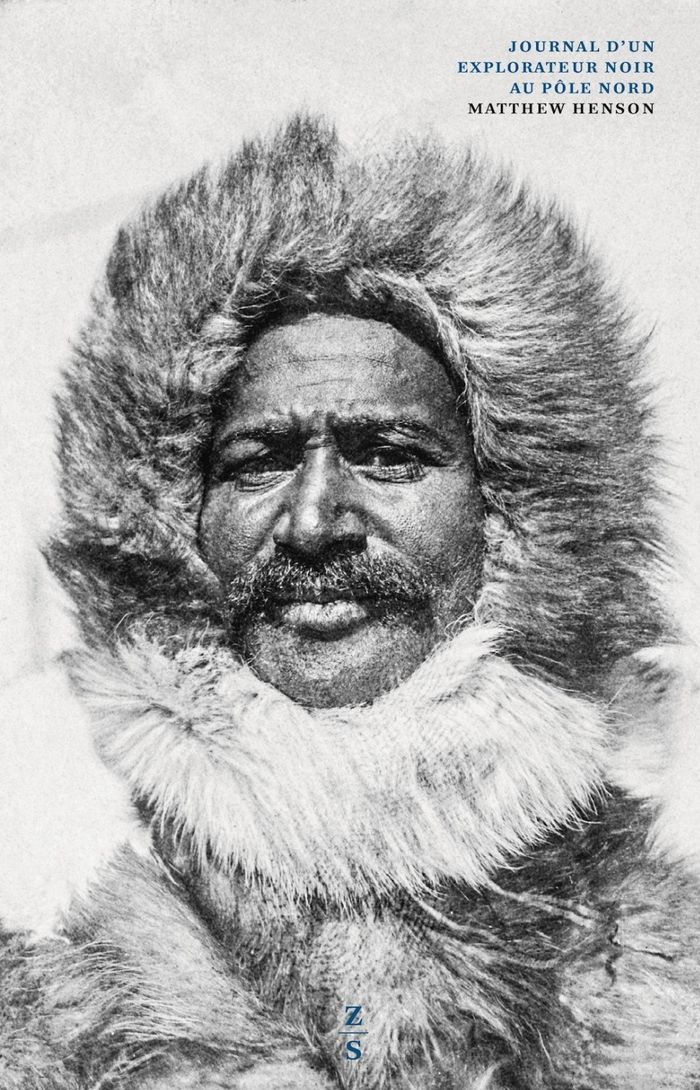
Le 6 avril 1909, l’exporateur blanc Robert Peary a conduit une expédition qui, pour la première fois, a atteint le pôle Nord en traîneau à chiens. Dès son retour, il suscite la polémique avec Frederick Cook, un autre explorateur qui, lui aussi affirmait avoir atteint le pôle nord, le 21 avril 1908. La controverse sera tranchée par le congrès des États-Unis, qui fait officiellement de Peary le premier vainqueur du pôle Nord. Mais l’histoire est tout autre, car ni Cook, ni Peary ne furent les premiers à fouler le sol du « toit du monde ». Matthew Henson est né en 1866 dans l’état du Maryland et décède en 1955 à New York. Fils d’esclaves, après avoir passé plusieurs années à Baltimore, une ville « noire », il fut l’accompagnateur de Peary lors de sept expéditions dans l’Arctique, y compris lors de l’expédition de 1908-1909 qui a atteint le pôle Nord géographique le 6 avril 1909. Après bien des débats, il a été établi que Matthew Henson a bel et bien été le premier homme à atteindre le pôle Nord en 1909. Il faudra attendre 1988 pour que Henson soit officiellement reconnu comme étant le premier à avoir atteint le toit du monde, et l’année 2000 pour qu’il soit récipiendaire de la médaille Hubbard, décernée à titre posthume, une récompense remise par la National Geographic Society pour des distinctions dans les domaines de l’exploration, de la découverte et de la recherche. Pourquoi cette reconnaissance tardive? Pourquoi, pendant longtemps, Peary reçut seul tous les honneurs, alors que la présence de Matthew fut occultée (quand il est cité, il est réduit à n’être qu’un porteur)? Pourquoi Peary, à son retour du pôle Nord, fut nommé à des postes prestigieux, alors qu’Henson devint gardien de parking? Parce que Henson était noir, et les préjugés racistes de l’époque firent douter qu’un Afro-Américain ait pu vivre dans le froid polaire…
Journal d’un explorateur noir au pôle Nord
Actions:
Price:
$32.95
(available in store)
Summary:
Le 6 avril 1909, l’exporateur blanc Robert Peary a conduit une expédition qui, pour la première fois, a atteint le pôle Nord en traîneau à chiens. Dès son retour, il suscite la polémique avec Frederick Cook, un autre explorateur qui, lui aussi affirmait avoir atteint le pôle nord, le 21 avril 1908. La controverse sera tranchée par le congrès des États-Unis, qui fait officiellement de Peary le premier vainqueur du pôle Nord. Mais l’histoire est tout autre, car ni Cook, ni Peary ne furent les premiers à fouler le sol du « toit du monde ». Matthew Henson est né en 1866 dans l’état du Maryland et décède en 1955 à New York. Fils d’esclaves, après avoir passé plusieurs années à Baltimore, une ville « noire », il fut l’accompagnateur de Peary lors de sept expéditions dans l’Arctique, y compris lors de l’expédition de 1908-1909 qui a atteint le pôle Nord géographique le 6 avril 1909. Après bien des débats, il a été établi que Matthew Henson a bel et bien été le premier homme à atteindre le pôle Nord en 1909. Il faudra attendre 1988 pour que Henson soit officiellement reconnu comme étant le premier à avoir atteint le toit du monde, et l’année 2000 pour qu’il soit récipiendaire de la médaille Hubbard, décernée à titre posthume, une récompense remise par la National Geographic Society pour des distinctions dans les domaines de l’exploration, de la découverte et de la recherche. Pourquoi cette reconnaissance tardive? Pourquoi, pendant longtemps, Peary reçut seul tous les honneurs, alors que la présence de Matthew fut occultée (quand il est cité, il est réduit à n’être qu’un porteur)? Pourquoi Peary, à son retour du pôle Nord, fut nommé à des postes prestigieux, alors qu’Henson devint gardien de parking? Parce que Henson était noir, et les préjugés racistes de l’époque firent douter qu’un Afro-Américain ait pu vivre dans le froid polaire…
Form:
books
books
Publication:
April 2021
April 2021
Subject:
Literature and poetry
Literature and poetry


