


4528 Results
Form:
books
books
Price:
$29.95
(available to order)
Summary:
When Richard Reynolds began planting flowers secretly at night outside his tower block in South London, he had no idea that he was part of a growing global movement committed to combating the forces of neglect, land shortage and apathy towards public spaces. But before long, his blog had attracted other guerrillas from around the world to share their experiences of the(...)
$29.95
(available to order)
Summary:
When Richard Reynolds began planting flowers secretly at night outside his tower block in South London, he had no idea that he was part of a growing global movement committed to combating the forces of neglect, land shortage and apathy towards public spaces. But before long, his blog had attracted other guerrillas from around the world to share their experiences of the(...)
Title:
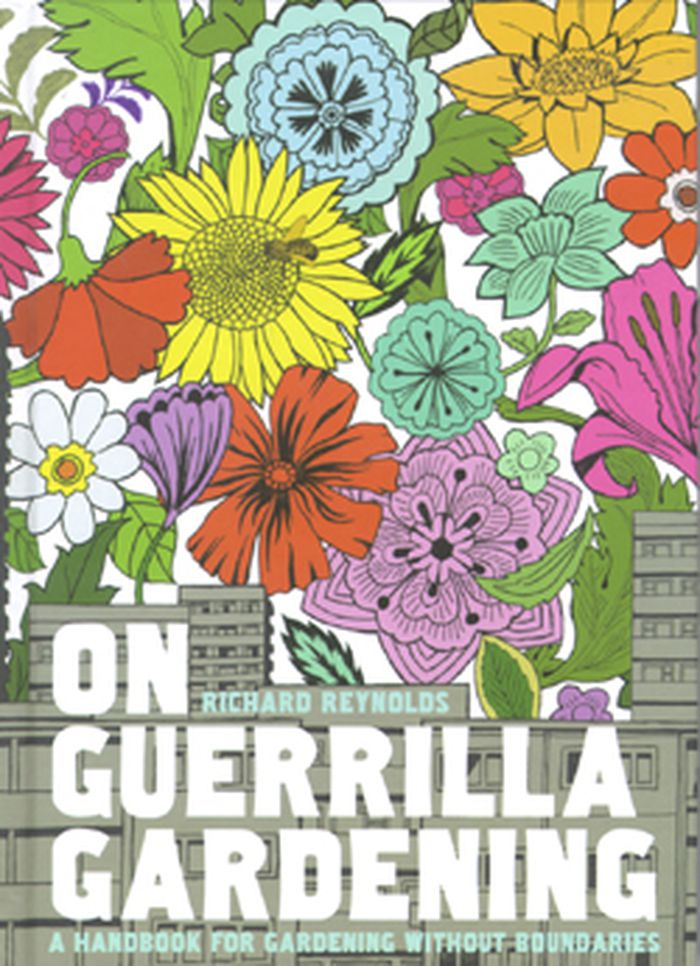
On guerrilla gardening : a handbook for gardening without boundaries
Actions:
Price:
$29.95
(available to order)
Summary:
When Richard Reynolds began planting flowers secretly at night outside his tower block in South London, he had no idea that he was part of a growing global movement committed to combating the forces of neglect, land shortage and apathy towards public spaces. But before long, his blog had attracted other guerrillas from around the world to share their experiences of the horticultural frontline, and is now a focal point for guerrilla gardeners everywhere, with over 4,000 people enlisted as recruits. "On Guerrilla Gardening" is Reynolds' lively, colourful treatise on why people illicitly cultivate land and how to do it yourself. From discreetly beautifying corners of Montreal to striving for green communal space in Berlin and sustainable food production in San Francisco, from Christmas trees on London roundabouts to the political agitations of landless workers in Brazil, Reynolds charts a battle that people worldwide are fighting on many different fronts. Along the way he unearths the movement's notable historic advances by seventeenth-century English radicals, a nineteenth-century American entrepreneur and public-spirited artists in 1970s New York. Reynolds has researched the subject with guerrilla gardeners from thirty different countries, and compiles their advice on what to grow where, how to cope with adverse environmental conditions, how to seed-bomb effectively, how to harness propaganda to win support and even how to handle anti-terror police. "On Guerrilla Gardening" informs, entertains and inspires. Packed with photographs, anecdotes and sound horticultural advice, it is an irresistible invitation to shoulder your shovel and join the revolution that is blooming in the world's shared spaces.
On guerrilla gardening : a handbook for gardening without boundaries
Actions:
Price:
$29.95
(available to order)
Summary:
When Richard Reynolds began planting flowers secretly at night outside his tower block in South London, he had no idea that he was part of a growing global movement committed to combating the forces of neglect, land shortage and apathy towards public spaces. But before long, his blog had attracted other guerrillas from around the world to share their experiences of the horticultural frontline, and is now a focal point for guerrilla gardeners everywhere, with over 4,000 people enlisted as recruits. "On Guerrilla Gardening" is Reynolds' lively, colourful treatise on why people illicitly cultivate land and how to do it yourself. From discreetly beautifying corners of Montreal to striving for green communal space in Berlin and sustainable food production in San Francisco, from Christmas trees on London roundabouts to the political agitations of landless workers in Brazil, Reynolds charts a battle that people worldwide are fighting on many different fronts. Along the way he unearths the movement's notable historic advances by seventeenth-century English radicals, a nineteenth-century American entrepreneur and public-spirited artists in 1970s New York. Reynolds has researched the subject with guerrilla gardeners from thirty different countries, and compiles their advice on what to grow where, how to cope with adverse environmental conditions, how to seed-bomb effectively, how to harness propaganda to win support and even how to handle anti-terror police. "On Guerrilla Gardening" informs, entertains and inspires. Packed with photographs, anecdotes and sound horticultural advice, it is an irresistible invitation to shoulder your shovel and join the revolution that is blooming in the world's shared spaces.
Form:
books
books
Publication:
May 2008, London
May 2008, London
Subject:
Landscape Theory
Landscape Theory
Form:
journals and magazines
journals and magazines
Title:
Open 6 (in)security
Open 6 (in)security
Actions:
Price:
$36.00
(available to order)
Summary:
There is a yearning for security in today's public domain. The individual and the community are increasingly demanding protection from and control over the space, themselves and others. A society of control is looming, but one lacking a clear idea about the nature and the origin of its underlying fears. This cahier examines the consequences of the current preoccupation(...)
$36.00
(available to order)
Summary:
There is a yearning for security in today's public domain. The individual and the community are increasingly demanding protection from and control over the space, themselves and others. A society of control is looming, but one lacking a clear idea about the nature and the origin of its underlying fears. This cahier examines the consequences of the current preoccupation(...)
Subject:
Magazines
Magazines
Publication:
August 2004, Rotterdam
August 2004, Rotterdam
Title:
Open 6 (in)security
Actions:
Price:
$36.00
(available to order)
Summary:
There is a yearning for security in today's public domain. The individual and the community are increasingly demanding protection from and control over the space, themselves and others. A society of control is looming, but one lacking a clear idea about the nature and the origin of its underlying fears. This cahier examines the consequences of the current preoccupation with security for the public space and the visual arts. What are the implications for the functioning of the public domain, for its arrangement, design and experience? And how does this influence the task and perception of art? From art, architecture, philosophy and politics come theoretical and practical scenarios, proposals and visions that expose something of today's security paradigm, advocate alternative (conceptual) models or offer insights into the current ethics and aesthetics of security. Gijs van Oenen subjects the 'new securityscape' to a critical analysis. Lieven De Cauter digs into the various strata of the new fear. Sean Snyder presents images from his Temporary Occupation project. Thomas Y. Levin looks at how artists deal with surveillance in the public space. Sven Lütticken reflects on the concept of a 'human park' in philosophy, art and media. Harm Tilman focuses on architecture in a society of control. Mark Wigley analyses the issue of security in relation to the World Trade Center buildings in New York. Hans Boutellier wishes art would apply the brakes to the security Utopia. Jouke Kleerebezem calls for vigilance in the information society. Willem van Weelden discusses the project in Kanaleneiland, Utrecht. Q.S. Serafijn shows multiple dimensions of the interactive D-Tower in Doetinchem. Mark Wigley dissects the abode of the Unabomber.
Open 6 (in)security
Actions:
Price:
$36.00
(available to order)
Summary:
There is a yearning for security in today's public domain. The individual and the community are increasingly demanding protection from and control over the space, themselves and others. A society of control is looming, but one lacking a clear idea about the nature and the origin of its underlying fears. This cahier examines the consequences of the current preoccupation with security for the public space and the visual arts. What are the implications for the functioning of the public domain, for its arrangement, design and experience? And how does this influence the task and perception of art? From art, architecture, philosophy and politics come theoretical and practical scenarios, proposals and visions that expose something of today's security paradigm, advocate alternative (conceptual) models or offer insights into the current ethics and aesthetics of security. Gijs van Oenen subjects the 'new securityscape' to a critical analysis. Lieven De Cauter digs into the various strata of the new fear. Sean Snyder presents images from his Temporary Occupation project. Thomas Y. Levin looks at how artists deal with surveillance in the public space. Sven Lütticken reflects on the concept of a 'human park' in philosophy, art and media. Harm Tilman focuses on architecture in a society of control. Mark Wigley analyses the issue of security in relation to the World Trade Center buildings in New York. Hans Boutellier wishes art would apply the brakes to the security Utopia. Jouke Kleerebezem calls for vigilance in the information society. Willem van Weelden discusses the project in Kanaleneiland, Utrecht. Q.S. Serafijn shows multiple dimensions of the interactive D-Tower in Doetinchem. Mark Wigley dissects the abode of the Unabomber.
Form:
journals and magazines
journals and magazines
Publication:
August 2004, Rotterdam
August 2004, Rotterdam
Subject:
Magazines
Magazines
Form:
books
books
Actions:
Price:
$39.99
(available to order)
Summary:
Event-Cities 4 is the latest in the Event-Cities series from Bernard Tschumi, documenting recent built and theoretical projects in the context of his evolving views on architecture, urbanism, and design. Event-Cities 4 follows directly from the work of Event-Cities 3, which examined the interaction of architectural content, concept, and context. This volume takes the(...)
$39.99
(available to order)
Summary:
Event-Cities 4 is the latest in the Event-Cities series from Bernard Tschumi, documenting recent built and theoretical projects in the context of his evolving views on architecture, urbanism, and design. Event-Cities 4 follows directly from the work of Event-Cities 3, which examined the interaction of architectural content, concept, and context. This volume takes the(...)
Title:
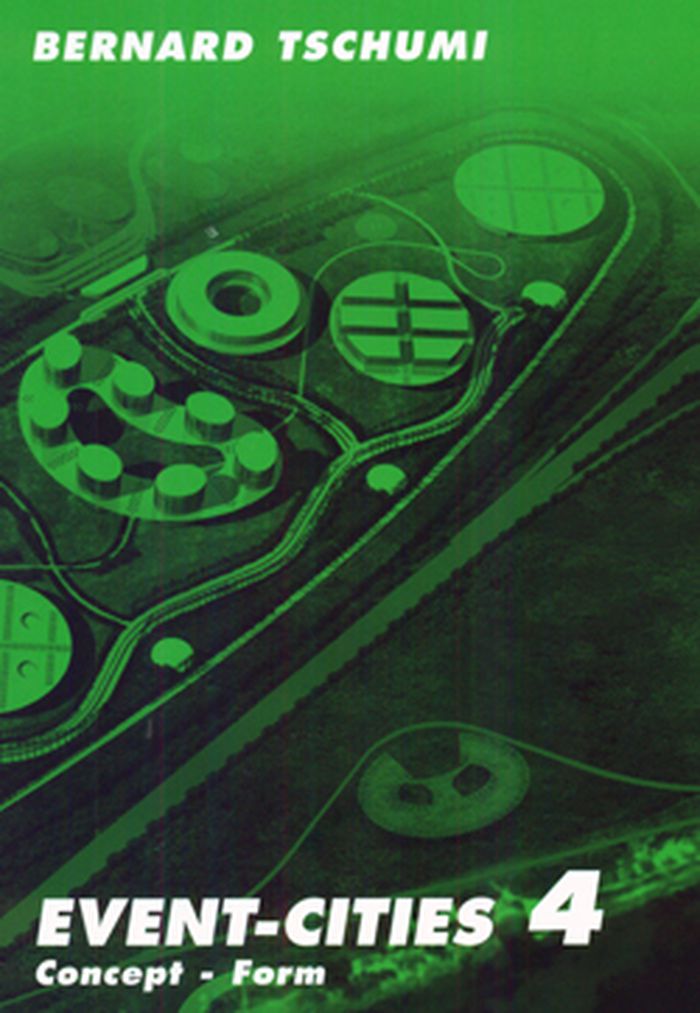
Bernard Tschumi : event-cities 4, concept - form
Actions:
Price:
$39.99
(available to order)
Summary:
Event-Cities 4 is the latest in the Event-Cities series from Bernard Tschumi, documenting recent built and theoretical projects in the context of his evolving views on architecture, urbanism, and design. Event-Cities 4 follows directly from the work of Event-Cities 3, which examined the interaction of architectural content, concept, and context. This volume takes the interaction a step further, looking at a series of projects for which program or context are insufficient as a generative conceptual strategy, hence requiring a different approach. Tschumi has said, "Over the past years, there is one word I have almost never used, except in order to attack it: 'form.'" In Event-Cities 4, Tschumi introduces the "concept-form": a concept generating a form, or a form generating a concept, so that one reinforces the other. The concept may be programmatic, technological, or social. The form may be singular or multiple, regular or irregular. Concept-forms act as organizing devices or common denominators for the multiple dimensions of programs and their evolution over time, and drive the projects featured in this book. Highlights include master plans for a pair of media-based work spaces and cultural campuses in Singapore and Abu Dhabi; a major master plan for a financial center with 40,000 projected inhabitants in the Dominican Republic; the innovative Blue Residential Tower in New York City; a group of museums and cultural buildings in France, Abu Dhabi, Dubai, and South Korea; a pedestrian bridge in France; and a "multi-programmatic" furniture piece, the TypoLounger. The book contains more than twenty of the Tschumi firm's recent projects.
Bernard Tschumi : event-cities 4, concept - form
Actions:
Price:
$39.99
(available to order)
Summary:
Event-Cities 4 is the latest in the Event-Cities series from Bernard Tschumi, documenting recent built and theoretical projects in the context of his evolving views on architecture, urbanism, and design. Event-Cities 4 follows directly from the work of Event-Cities 3, which examined the interaction of architectural content, concept, and context. This volume takes the interaction a step further, looking at a series of projects for which program or context are insufficient as a generative conceptual strategy, hence requiring a different approach. Tschumi has said, "Over the past years, there is one word I have almost never used, except in order to attack it: 'form.'" In Event-Cities 4, Tschumi introduces the "concept-form": a concept generating a form, or a form generating a concept, so that one reinforces the other. The concept may be programmatic, technological, or social. The form may be singular or multiple, regular or irregular. Concept-forms act as organizing devices or common denominators for the multiple dimensions of programs and their evolution over time, and drive the projects featured in this book. Highlights include master plans for a pair of media-based work spaces and cultural campuses in Singapore and Abu Dhabi; a major master plan for a financial center with 40,000 projected inhabitants in the Dominican Republic; the innovative Blue Residential Tower in New York City; a group of museums and cultural buildings in France, Abu Dhabi, Dubai, and South Korea; a pedestrian bridge in France; and a "multi-programmatic" furniture piece, the TypoLounger. The book contains more than twenty of the Tschumi firm's recent projects.
Form:
books
books
Publication:
September 2010
September 2010
Subject:
Architecture Monographs
Architecture Monographs
Form:
books
books
Price:
$44.95
(available to order)
Summary:
Why does technology change over time, how does it change, and what difference does it make? In this sweeping, ambitious look at a thousand years of Western experience, Robert Friedel argues that technological change comes largely through the pursuit of improvement--the deep-rooted belief that things could be done in a better way. What Friedel calls the "culture of(...)
$44.95
(available to order)
Summary:
Why does technology change over time, how does it change, and what difference does it make? In this sweeping, ambitious look at a thousand years of Western experience, Robert Friedel argues that technological change comes largely through the pursuit of improvement--the deep-rooted belief that things could be done in a better way. What Friedel calls the "culture of(...)
Title:
A culture of improvement : technology and the western millennium
Actions:
Price:
$44.95
(available to order)
Summary:
Why does technology change over time, how does it change, and what difference does it make? In this sweeping, ambitious look at a thousand years of Western experience, Robert Friedel argues that technological change comes largely through the pursuit of improvement--the deep-rooted belief that things could be done in a better way. What Friedel calls the "culture of improvement" is manifested every day in the ways people carry out their tasks in life--from tilling fields and raising children to waging war. Improvements can be ephemeral or lasting, and one person’s improvement may not always be viewed as such by others. Friedel stresses the social processes by which we define what improvements are and decide which improvements will last and which will not. These processes, he emphasizes, have created both winners and losers in history. Friedel presents a series of narratives of Western technology that begin in the eleventh century and stretch into the twenty-first. Familiar figures from the history of invention are joined by others--the Italian preacher who described the first eyeglasses, the dairywomen displaced from their control over cheesemaking, and the little-known engineer who first suggested a grand tower to Gustav Eiffel. Friedel traces technology from the plow and the printing press to the internal combustion engine, the transistor, and the space shuttle. Friedel also reminds us that faith in improvement can sometimes have horrific consequences: improved weaponry makes warfare ever more deadly and the drive for improving human beings can lead to eugenics and even genocide. The most comprehensive attempt to tell the story of Western technology in many years, engagingly written and lavishly illustrated, A Culture of Improvement documents the ways in which the drive for improvement has shaped our modern world.
A culture of improvement : technology and the western millennium
Actions:
Price:
$44.95
(available to order)
Summary:
Why does technology change over time, how does it change, and what difference does it make? In this sweeping, ambitious look at a thousand years of Western experience, Robert Friedel argues that technological change comes largely through the pursuit of improvement--the deep-rooted belief that things could be done in a better way. What Friedel calls the "culture of improvement" is manifested every day in the ways people carry out their tasks in life--from tilling fields and raising children to waging war. Improvements can be ephemeral or lasting, and one person’s improvement may not always be viewed as such by others. Friedel stresses the social processes by which we define what improvements are and decide which improvements will last and which will not. These processes, he emphasizes, have created both winners and losers in history. Friedel presents a series of narratives of Western technology that begin in the eleventh century and stretch into the twenty-first. Familiar figures from the history of invention are joined by others--the Italian preacher who described the first eyeglasses, the dairywomen displaced from their control over cheesemaking, and the little-known engineer who first suggested a grand tower to Gustav Eiffel. Friedel traces technology from the plow and the printing press to the internal combustion engine, the transistor, and the space shuttle. Friedel also reminds us that faith in improvement can sometimes have horrific consequences: improved weaponry makes warfare ever more deadly and the drive for improving human beings can lead to eugenics and even genocide. The most comprehensive attempt to tell the story of Western technology in many years, engagingly written and lavishly illustrated, A Culture of Improvement documents the ways in which the drive for improvement has shaped our modern world.
Form:
books
books
Publication:
May 2007, Cambridge / London
May 2007, Cambridge / London
Subject:
Engineering Structures
Engineering Structures
Form:
books
books
Price:
$49.00
(available to order)
Summary:
Buildings are more like us than we realize. They can be born into wealth or poverty, enjoying every privilege or struggling to make ends meet. They have parents - gods, kings and emperors, governments, visionaries and madmen - as well as friends and enemies. They have duties and responsibilities. They can endure crises of faith and purpose. They can succeed or fail. They(...)
$49.00
(available to order)
Summary:
Buildings are more like us than we realize. They can be born into wealth or poverty, enjoying every privilege or struggling to make ends meet. They have parents - gods, kings and emperors, governments, visionaries and madmen - as well as friends and enemies. They have duties and responsibilities. They can endure crises of faith and purpose. They can succeed or fail. They(...)
Title:
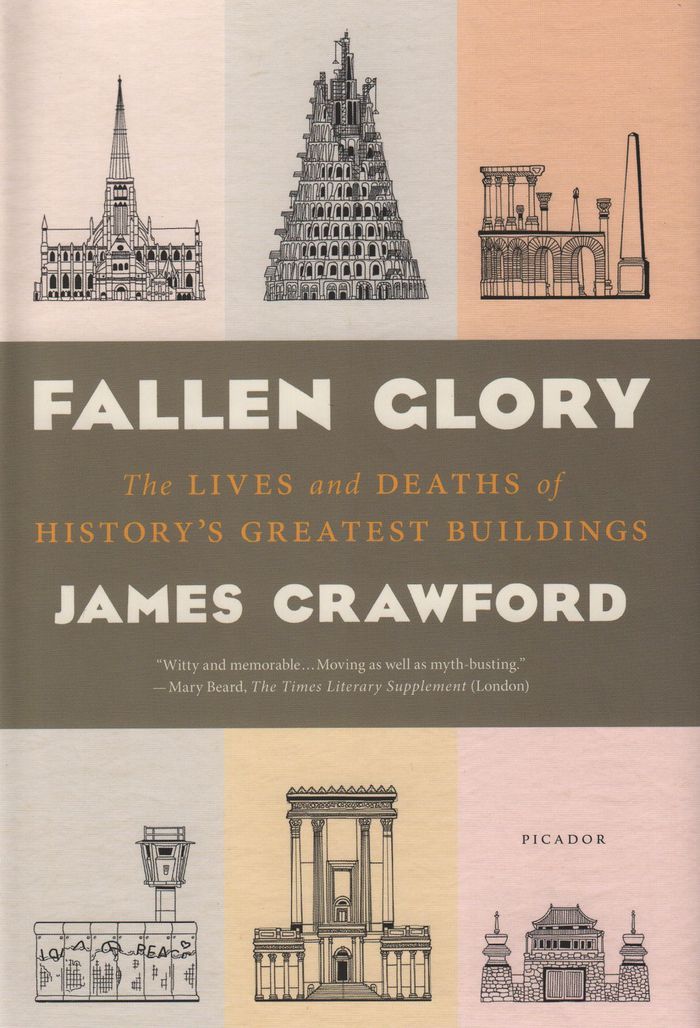
Fallen glory: the lives and deaths of history's greatest buildings
Actions:
Price:
$49.00
(available to order)
Summary:
Buildings are more like us than we realize. They can be born into wealth or poverty, enjoying every privilege or struggling to make ends meet. They have parents - gods, kings and emperors, governments, visionaries and madmen - as well as friends and enemies. They have duties and responsibilities. They can endure crises of faith and purpose. They can succeed or fail. They can live. And, sooner or later, they die. In "Fallen glory", James Crawford uncovers the biographies of some of the world's most fascinating lost and ruined buildings, from the dawn of civilization to the cyber era. The lives of these iconic structures are packed with drama and intrigue. Soap operas on the grandest scale, they feature war and religion, politics and art, love and betrayal, catastrophe and hope. Frequently their afterlives have been no less dramatic - their memories used and abused down the millennia for purposes both sacred and profane. They provide the stage for a startling array of characters, including Gilgamesh, the Cretan Minotaur, Agamemnon, Nefertiti, Genghis Khan, Henry VIII, Catherine the Great, Adolf Hitler, and even Bruce Springsteen. The twenty-one structures Crawford focuses on include The Tower of Babel, The Temple of Jerusalem, The Library of Alexandria, The Bastille, Kowloon Walled City, the Berlin Wall, and the Twin Towers of the World Trade Center. Ranging from the deserts of Iraq, the banks of the Nile and the cloud forests of Peru, to the great cities of Jerusalem, Istanbul, Paris, Rome, London and New York, Fallen Glory is a unique guide to a world of vanished architecture. And, by picking through the fragments of our past, it asks what history's scattered ruins can tell us about our own future.
Fallen glory: the lives and deaths of history's greatest buildings
Actions:
Price:
$49.00
(available to order)
Summary:
Buildings are more like us than we realize. They can be born into wealth or poverty, enjoying every privilege or struggling to make ends meet. They have parents - gods, kings and emperors, governments, visionaries and madmen - as well as friends and enemies. They have duties and responsibilities. They can endure crises of faith and purpose. They can succeed or fail. They can live. And, sooner or later, they die. In "Fallen glory", James Crawford uncovers the biographies of some of the world's most fascinating lost and ruined buildings, from the dawn of civilization to the cyber era. The lives of these iconic structures are packed with drama and intrigue. Soap operas on the grandest scale, they feature war and religion, politics and art, love and betrayal, catastrophe and hope. Frequently their afterlives have been no less dramatic - their memories used and abused down the millennia for purposes both sacred and profane. They provide the stage for a startling array of characters, including Gilgamesh, the Cretan Minotaur, Agamemnon, Nefertiti, Genghis Khan, Henry VIII, Catherine the Great, Adolf Hitler, and even Bruce Springsteen. The twenty-one structures Crawford focuses on include The Tower of Babel, The Temple of Jerusalem, The Library of Alexandria, The Bastille, Kowloon Walled City, the Berlin Wall, and the Twin Towers of the World Trade Center. Ranging from the deserts of Iraq, the banks of the Nile and the cloud forests of Peru, to the great cities of Jerusalem, Istanbul, Paris, Rome, London and New York, Fallen Glory is a unique guide to a world of vanished architecture. And, by picking through the fragments of our past, it asks what history's scattered ruins can tell us about our own future.
Form:
books
books
Publication:
March 2017
March 2017
Subject:
Architectural Theory
Architectural Theory
Form:
books
books
Title:
The Cambridge Illustrated History of Warfare : the Triumph of the West / edited by Geoffrey Parker.
The Cambridge Illustrated History of Warfare : the Triumph of the West / edited by Geoffrey Parker.
Actions:
Holdings:
Description:
vi, 408 pages : illustrations, maps (some color) ; 26 cm.
Description:
vi, 408 pages : illustrations, maps (some color) ; 26 cm.
Author:
Subject:
Publication:
Cambridge [England] ; New York, NY, USA : Cambridge University Press, [1995], ©1995
Cambridge [England] ; New York, NY, USA : Cambridge University Press, [1995], ©1995
Title:
The Cambridge Illustrated History of Warfare : the Triumph of the West / edited by Geoffrey Parker.
Actions:
Holdings:
Description:
vi, 408 pages : illustrations, maps (some color) ; 26 cm.
The Cambridge Illustrated History of Warfare : the Triumph of the West / edited by Geoffrey Parker.
Actions:
Holdings:
Description:
vi, 408 pages : illustrations, maps (some color) ; 26 cm.
Form:
books
books
Publication:
Cambridge [England] ; New York, NY, USA : Cambridge University Press, [1995], ©1995
Cambridge [England] ; New York, NY, USA : Cambridge University Press, [1995], ©1995
Author:
Subject:
Form:
books
books
Actions:
Holdings:
Description:
480 pages illustrations, maps (1 folded) 44 color plates 32 cm
Description:
480 pages illustrations, maps (1 folded) 44 color plates 32 cm
Author:
Subject:
Publication:
New York, H.N. Abrams [1964]
New York, H.N. Abrams [1964]
Title:
5000 years of the art of Mesopotamia / Eva Strommenger, photographs by Max Hirmer. [Translated by Christina Haglund].
Actions:
Holdings:
Description:
480 pages illustrations, maps (1 folded) 44 color plates 32 cm
5000 years of the art of Mesopotamia / Eva Strommenger, photographs by Max Hirmer. [Translated by Christina Haglund].
Actions:
Holdings:
Description:
480 pages illustrations, maps (1 folded) 44 color plates 32 cm
Form:
books
books
Publication:
New York, H.N. Abrams [1964]
New York, H.N. Abrams [1964]
Author:
Subject:
Form:
books
books
Title:
English travellers abroad, 1604-1667 : their influence in English society and politics / John Stoye.
English travellers abroad, 1604-1667 : their influence in English society and politics / John Stoye.
Actions:
Holdings:
Description:
xiv, 382 pages : illustrations ; 24 cm
Description:
xiv, 382 pages : illustrations ; 24 cm
Author:
Subject:
Publication:
New Haven : Yale University Press, 1989.
New Haven : Yale University Press, 1989.
Title:
English travellers abroad, 1604-1667 : their influence in English society and politics / John Stoye.
Actions:
Holdings:
Description:
xiv, 382 pages : illustrations ; 24 cm
English travellers abroad, 1604-1667 : their influence in English society and politics / John Stoye.
Actions:
Holdings:
Description:
xiv, 382 pages : illustrations ; 24 cm
Form:
books
books
Publication:
New Haven : Yale University Press, 1989.
New Haven : Yale University Press, 1989.
Author:
Subject:


