


5688 Results
Form:
books
books
Title:
Moscow: the fourth Rome
Moscow: the fourth Rome
Actions:
Price:
$56.50
(available to order)
Summary:
In Moscow, the Fourth Rome , Katerina Clark shows how Soviet officials and intellectuals, in seeking to capture the imagination of leftist and anti-fascist intellectuals throughout the world, sought to establish their capital as the cosmopolitan center of a post-Christian confederation and to rebuild it to become a beacon for the rest of the world. Clark provides an(...)
$56.50
(available to order)
Summary:
In Moscow, the Fourth Rome , Katerina Clark shows how Soviet officials and intellectuals, in seeking to capture the imagination of leftist and anti-fascist intellectuals throughout the world, sought to establish their capital as the cosmopolitan center of a post-Christian confederation and to rebuild it to become a beacon for the rest of the world. Clark provides an(...)
Publication:
November 2011
November 2011
Title:
Moscow: the fourth Rome
Actions:
Price:
$56.50
(available to order)
Summary:
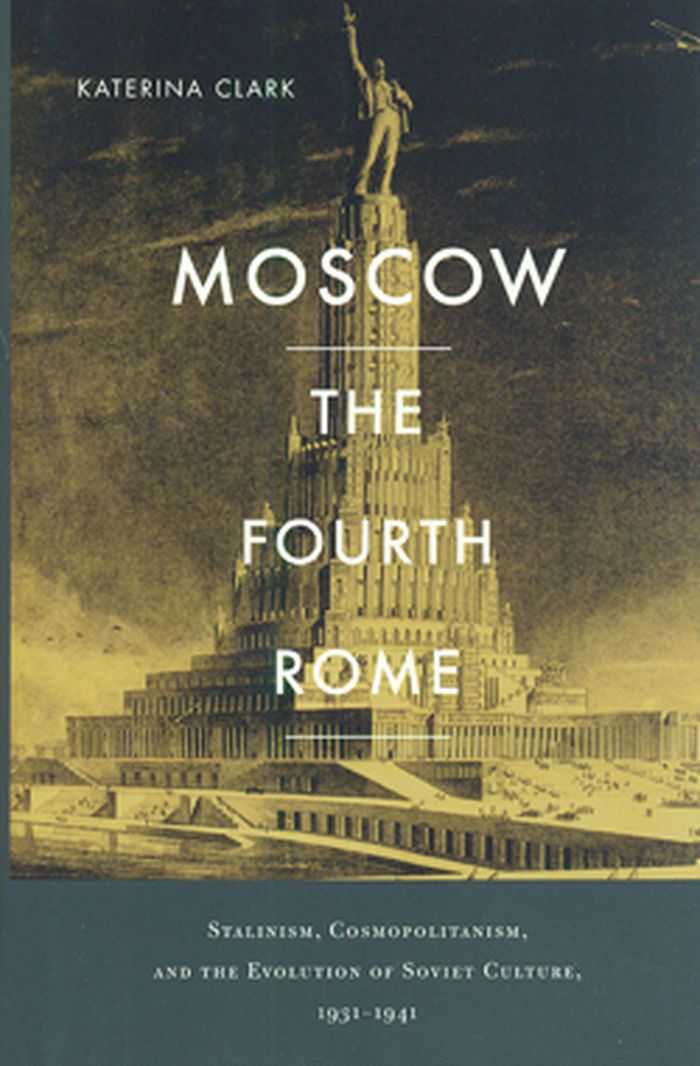
In Moscow, the Fourth Rome , Katerina Clark shows how Soviet officials and intellectuals, in seeking to capture the imagination of leftist and anti-fascist intellectuals throughout the world, sought to establish their capital as the cosmopolitan center of a post-Christian confederation and to rebuild it to become a beacon for the rest of the world. Clark provides an interpretative cultural history of the city during the crucial 1930s, the decade of the Great Purge. She draws on the work of intellectuals such as Sergei Eisenstein, Sergei Tretiakov, Mikhail Koltsov, and Ilya Ehrenburg to shed light on the singular Zeitgeist of that most Stalinist of periods. In her account, the decade emerges as an important moment in the prehistory of key concepts in literary and cultural studies today—transnationalism, cosmopolitanism, and world literature. By bringing to light neglected antecedents, she provides a new polemical and political context for understanding canonical works of writers such as Brecht, Benjamin, Lukacs, and Bakhtin.
Moscow: the fourth Rome
Actions:
Price:
$56.50
(available to order)
Summary:
In Moscow, the Fourth Rome , Katerina Clark shows how Soviet officials and intellectuals, in seeking to capture the imagination of leftist and anti-fascist intellectuals throughout the world, sought to establish their capital as the cosmopolitan center of a post-Christian confederation and to rebuild it to become a beacon for the rest of the world. Clark provides an interpretative cultural history of the city during the crucial 1930s, the decade of the Great Purge. She draws on the work of intellectuals such as Sergei Eisenstein, Sergei Tretiakov, Mikhail Koltsov, and Ilya Ehrenburg to shed light on the singular Zeitgeist of that most Stalinist of periods. In her account, the decade emerges as an important moment in the prehistory of key concepts in literary and cultural studies today—transnationalism, cosmopolitanism, and world literature. By bringing to light neglected antecedents, she provides a new polemical and political context for understanding canonical works of writers such as Brecht, Benjamin, Lukacs, and Bakhtin.
Form:
books
books
Publication:
November 2011
November 2011
Form:
books
books
Price:
$50.95
(available to order)
Summary:
Countering the standard view of Futurism as naïvely bellicose, author Christine Poggi argues that Futurist artists and writers were far more ambivalent in their responses to the shocks of industrial modernity than Marinetti's incendiary pronouncements would suggest. She closely examines Futurist literature, art, and politics within the broader context of Italian social(...)
$50.95
(available to order)
Summary:
Countering the standard view of Futurism as naïvely bellicose, author Christine Poggi argues that Futurist artists and writers were far more ambivalent in their responses to the shocks of industrial modernity than Marinetti's incendiary pronouncements would suggest. She closely examines Futurist literature, art, and politics within the broader context of Italian social(...)
Title:
Inventing Futurism : the art and politics of artificial optimism
Actions:
Price:
$50.95
(available to order)
Summary:
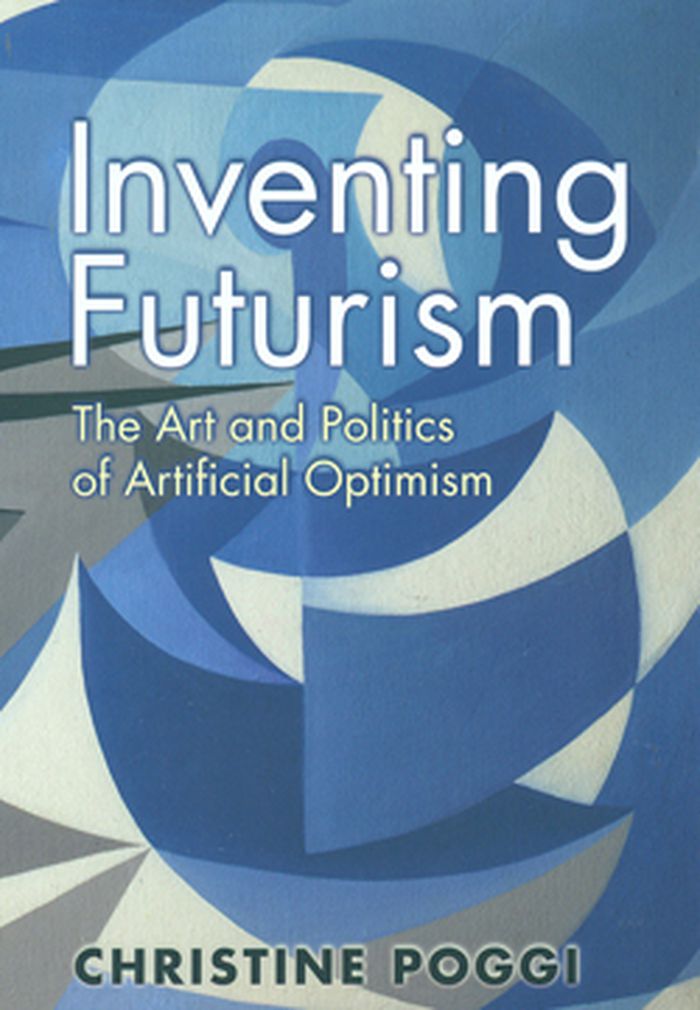
Countering the standard view of Futurism as naïvely bellicose, author Christine Poggi argues that Futurist artists and writers were far more ambivalent in their responses to the shocks of industrial modernity than Marinetti's incendiary pronouncements would suggest. She closely examines Futurist literature, art, and politics within the broader context of Italian social history, revealing a surprisingly powerful undercurrent of anxiety among the Futurists -toward the accelerated rhythms of urban life, the rising influence of the masses, changing gender roles, and the destructiveness of war. Poggi traces the movement from its explosive beginnings through its transformations under Fascism to offer completely new insights into familiar Futurist themes, such as the thrill and trauma of velocity, the psychology of urban crowds, and the fantasy of flesh fused with metal, among others. Lavishly illustrated and unparalleled in scope, Inventing Futurism demonstrates that beneath Futurism's belligerent avant-garde posturing lay complex and contradictory attitudes toward an always-deferred utopian future.
Inventing Futurism : the art and politics of artificial optimism
Actions:
Price:
$50.95
(available to order)
Summary:
Countering the standard view of Futurism as naïvely bellicose, author Christine Poggi argues that Futurist artists and writers were far more ambivalent in their responses to the shocks of industrial modernity than Marinetti's incendiary pronouncements would suggest. She closely examines Futurist literature, art, and politics within the broader context of Italian social history, revealing a surprisingly powerful undercurrent of anxiety among the Futurists -toward the accelerated rhythms of urban life, the rising influence of the masses, changing gender roles, and the destructiveness of war. Poggi traces the movement from its explosive beginnings through its transformations under Fascism to offer completely new insights into familiar Futurist themes, such as the thrill and trauma of velocity, the psychology of urban crowds, and the fantasy of flesh fused with metal, among others. Lavishly illustrated and unparalleled in scope, Inventing Futurism demonstrates that beneath Futurism's belligerent avant-garde posturing lay complex and contradictory attitudes toward an always-deferred utopian future.
Form:
books
books
Publication:
July 2009
July 2009
Subject:
Art Theory
Art Theory
Form:
books
books
Title:
The infinity of lists
The infinity of lists
Actions:
Price:
$54.00
(available to order)
Summary:
Author and philosopher Umberto Eco is currently resident at the Louvre, and his chosen theme of study is "the vertigo of lists." Reflecting on this enormous trove of human achievements, he has embarked on an investigation of the phenomenon of cataloging and collecting. This book, featuring lavish reproductions of artworks from the Louvre and other world-famous(...)
$54.00
(available to order)
Summary:
Author and philosopher Umberto Eco is currently resident at the Louvre, and his chosen theme of study is "the vertigo of lists." Reflecting on this enormous trove of human achievements, he has embarked on an investigation of the phenomenon of cataloging and collecting. This book, featuring lavish reproductions of artworks from the Louvre and other world-famous(...)
Title:
The infinity of lists
Actions:
Price:
$54.00
(available to order)
Summary:
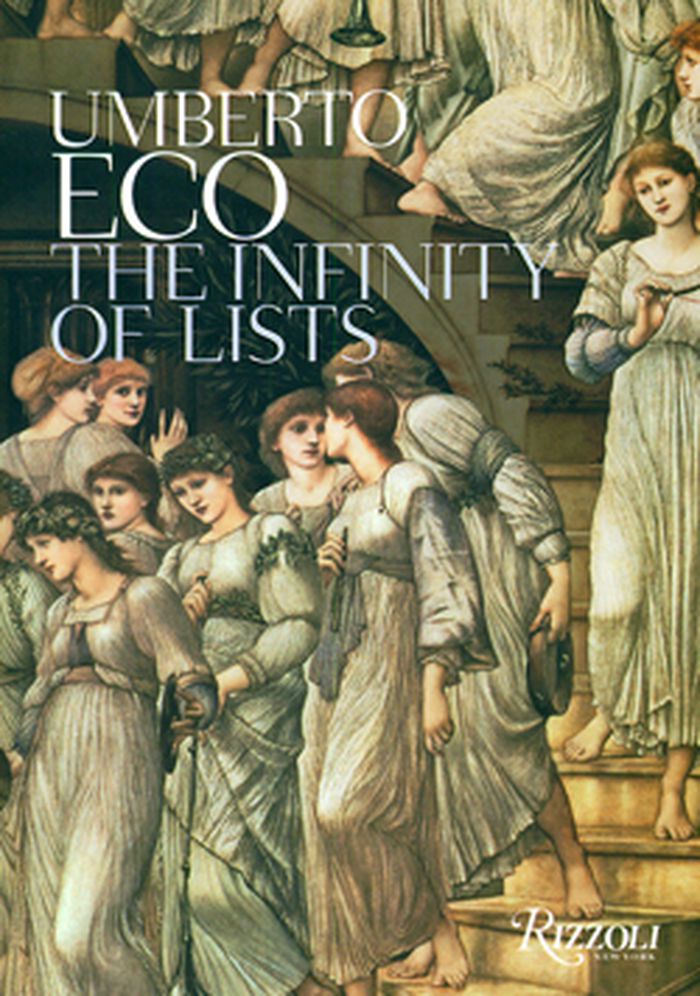
Author and philosopher Umberto Eco is currently resident at the Louvre, and his chosen theme of study is "the vertigo of lists." Reflecting on this enormous trove of human achievements, he has embarked on an investigation of the phenomenon of cataloging and collecting. This book, featuring lavish reproductions of artworks from the Louvre and other world-famous collections, is a philosophical and artistic sequel to Eco’s recent acclaimed books, History of Beauty and On Ugliness, books in which he delved into the psychology, philosophy, history, and art of human forms. Here he examines the Western mind’s predilection for list-making and the encyclopedic. His central thesis is that in Western culture a passion for accumulation is recurring: lists of saints, catalogues of plants, collections of art. This impulse has recurred through the ages from music to literature to art.From medieval reliquaries to Andy Warhol’s compulsive collecting, Umberto Eco reflects in his inimitably inspiring way on how such catalogues mirror the spirit of their times.
The infinity of lists
Actions:
Price:
$54.00
(available to order)
Summary:
Author and philosopher Umberto Eco is currently resident at the Louvre, and his chosen theme of study is "the vertigo of lists." Reflecting on this enormous trove of human achievements, he has embarked on an investigation of the phenomenon of cataloging and collecting. This book, featuring lavish reproductions of artworks from the Louvre and other world-famous collections, is a philosophical and artistic sequel to Eco’s recent acclaimed books, History of Beauty and On Ugliness, books in which he delved into the psychology, philosophy, history, and art of human forms. Here he examines the Western mind’s predilection for list-making and the encyclopedic. His central thesis is that in Western culture a passion for accumulation is recurring: lists of saints, catalogues of plants, collections of art. This impulse has recurred through the ages from music to literature to art.From medieval reliquaries to Andy Warhol’s compulsive collecting, Umberto Eco reflects in his inimitably inspiring way on how such catalogues mirror the spirit of their times.
Form:
books
books
Publication:
November 2009
November 2009
Form:
books
books
Actions:
Price:
$27.95
(available to order)
Summary:
For all of the scholarship done on postcolonial literatures, little has been applied to Scandinavian writing. Yet, beginning with the onset of tourism beyond Scandinavia in the 1840s, a compelling body of prose works documents Scandinavian attitudes toward foreign countries and further shows how these Scandinavian travelers sought to portray themselves to uncharted(...)
$27.95
(available to order)
Summary:
For all of the scholarship done on postcolonial literatures, little has been applied to Scandinavian writing. Yet, beginning with the onset of tourism beyond Scandinavia in the 1840s, a compelling body of prose works documents Scandinavian attitudes toward foreign countries and further shows how these Scandinavian travelers sought to portray themselves to uncharted(...)
Title:
Journeys from Scandinavia : travelogues of Africa, Asia, and South America, 1840- 2000
Actions:
Price:
$27.95
(available to order)
Summary:
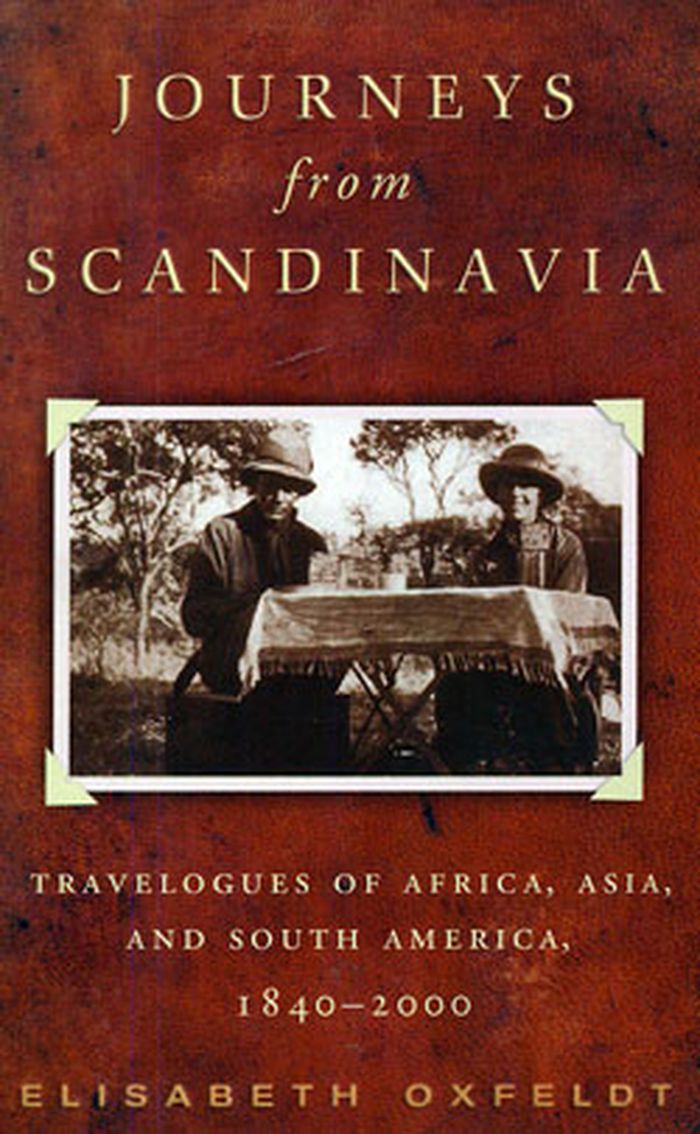
For all of the scholarship done on postcolonial literatures, little has been applied to Scandinavian writing. Yet, beginning with the onset of tourism beyond Scandinavia in the 1840s, a compelling body of prose works documents Scandinavian attitudes toward foreign countries and further shows how these Scandinavian travelers sought to portray themselves to uncharted cultures. Focusing on Danish and Norwegian travelogues, Elisabeth Oxfeldt traces the evolution of Scandinavian travel writing over two centuries using pivotal texts from each era, including works by Hans Christian Andersen, Knut Hamsun, and Karen Blixen (Isak Dinesen). Oxfeldt situates each one in its historical and geopolitical context, and her close readings delineate how each travelogue reflects Scandinavia’s ongoing confrontation between Self and the non-European cultural Other. A long-overdue examination of travel literature produced by some of Denmark and Norway’s greatest writers, this publication unpacks the unstable constructions of Scandinavian cultural and national identity and, in doing so, complicates the common assumption of a homogeneous, hegemonic Scandinavia.
Journeys from Scandinavia : travelogues of Africa, Asia, and South America, 1840- 2000
Actions:
Price:
$27.95
(available to order)
Summary:
For all of the scholarship done on postcolonial literatures, little has been applied to Scandinavian writing. Yet, beginning with the onset of tourism beyond Scandinavia in the 1840s, a compelling body of prose works documents Scandinavian attitudes toward foreign countries and further shows how these Scandinavian travelers sought to portray themselves to uncharted cultures. Focusing on Danish and Norwegian travelogues, Elisabeth Oxfeldt traces the evolution of Scandinavian travel writing over two centuries using pivotal texts from each era, including works by Hans Christian Andersen, Knut Hamsun, and Karen Blixen (Isak Dinesen). Oxfeldt situates each one in its historical and geopolitical context, and her close readings delineate how each travelogue reflects Scandinavia’s ongoing confrontation between Self and the non-European cultural Other. A long-overdue examination of travel literature produced by some of Denmark and Norway’s greatest writers, this publication unpacks the unstable constructions of Scandinavian cultural and national identity and, in doing so, complicates the common assumption of a homogeneous, hegemonic Scandinavia.
Form:
books
books
Publication:
May 2010
May 2010
Subject:
Transportation, Tourism, Migration
Transportation, Tourism, Migration
Form:
books
books
Actions:
Price:
$27.95
(available to order)
Summary:
Rethinking the significance of films including "Pillow Talk," "Rear Window," and "The Seven Year Itch," Pamela Robertson Wojcik examines the popularity of the "apartment plot," her term for stories in which the apartment functions as a central narrative device. From the baby boom years into the 1970s, the apartment plot was not only key to films; it also surfaced in TV(...)
$27.95
(available to order)
Summary:
Rethinking the significance of films including "Pillow Talk," "Rear Window," and "The Seven Year Itch," Pamela Robertson Wojcik examines the popularity of the "apartment plot," her term for stories in which the apartment functions as a central narrative device. From the baby boom years into the 1970s, the apartment plot was not only key to films; it also surfaced in TV(...)
Subject:
Architecture and Film, Set Design
Architecture and Film, Set Design
Publication:
November 2010
November 2010
Title:
The apartment plot : urban living in American film and popular culture, 1945 to 1975
Actions:
Price:
$27.95
(available to order)
Summary:
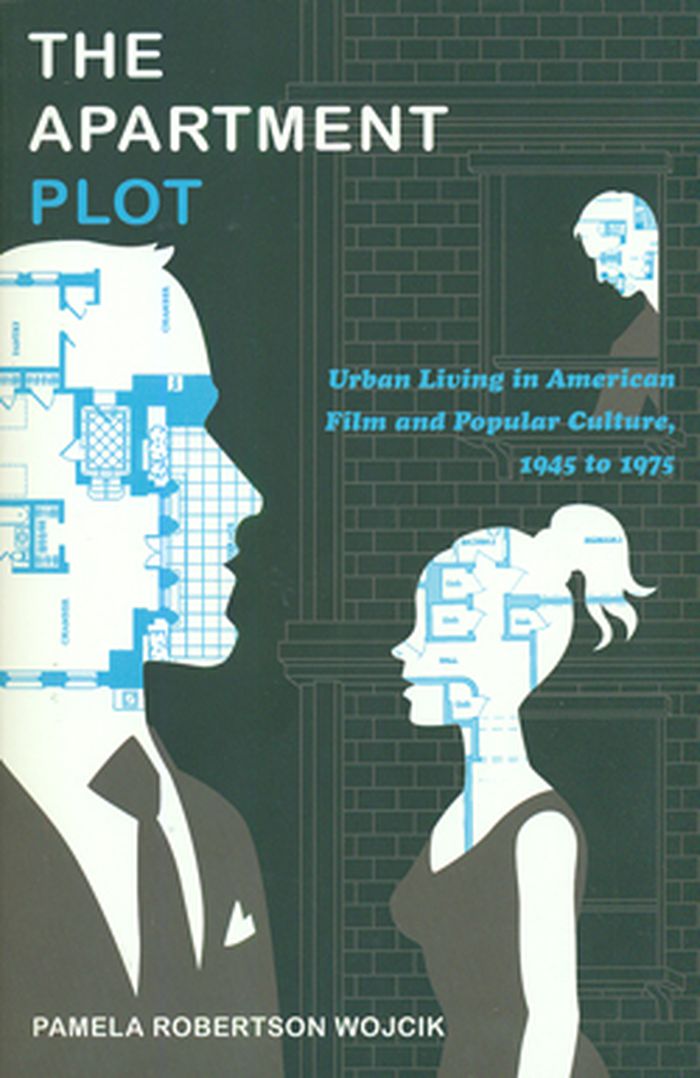
Rethinking the significance of films including "Pillow Talk," "Rear Window," and "The Seven Year Itch," Pamela Robertson Wojcik examines the popularity of the "apartment plot," her term for stories in which the apartment functions as a central narrative device. From the baby boom years into the 1970s, the apartment plot was not only key to films; it also surfaced in TV shows, Broadway plays, literature, and comic strips, from "The Honeymooners" and" The Mary Tyler Moore Show "to" Subways are for Sleeping "and" Apartment 3-G." By identifying the apartment plot as a film genre, Wojcik reveals affinities between movies generally viewed as belonging to such distinct genres as film noir, romantic comedy, and melodrama. She analyzes the apartment plot as part of a mid-twentieth-century urban discourse, showing how it offers a vision of home centered on values of community, visibility, contact, mobility, impermanence, and porousness that contrasts with views of home as private, stable, and family-based.
The apartment plot : urban living in American film and popular culture, 1945 to 1975
Actions:
Price:
$27.95
(available to order)
Summary:
Rethinking the significance of films including "Pillow Talk," "Rear Window," and "The Seven Year Itch," Pamela Robertson Wojcik examines the popularity of the "apartment plot," her term for stories in which the apartment functions as a central narrative device. From the baby boom years into the 1970s, the apartment plot was not only key to films; it also surfaced in TV shows, Broadway plays, literature, and comic strips, from "The Honeymooners" and" The Mary Tyler Moore Show "to" Subways are for Sleeping "and" Apartment 3-G." By identifying the apartment plot as a film genre, Wojcik reveals affinities between movies generally viewed as belonging to such distinct genres as film noir, romantic comedy, and melodrama. She analyzes the apartment plot as part of a mid-twentieth-century urban discourse, showing how it offers a vision of home centered on values of community, visibility, contact, mobility, impermanence, and porousness that contrasts with views of home as private, stable, and family-based.
Form:
books
books
Publication:
November 2010
November 2010
Subject:
Architecture and Film, Set Design
Architecture and Film, Set Design
Form:
books
books
Title:
Why architects still draw
Why architects still draw
Actions:
Price:
$26.95
(available to order)
Summary:
Why would an architect reach for a pencil when drawing software and AutoCAD are a click away? Use a ruler when 3D-scanners and GPS devices are close at hand? In Why Architects Still Draw, Paolo Belardi offers an elegant and ardent defense of drawing by hand as a way of thinking. Belardi is no Luddite; he doesn't urge architects to give up digital devices for watercolors(...)
$26.95
(available to order)
Summary:
Why would an architect reach for a pencil when drawing software and AutoCAD are a click away? Use a ruler when 3D-scanners and GPS devices are close at hand? In Why Architects Still Draw, Paolo Belardi offers an elegant and ardent defense of drawing by hand as a way of thinking. Belardi is no Luddite; he doesn't urge architects to give up digital devices for watercolors(...)
Title:
Why architects still draw
Actions:
Price:
$26.95
(available to order)
Summary:
Why would an architect reach for a pencil when drawing software and AutoCAD are a click away? Use a ruler when 3D-scanners and GPS devices are close at hand? In Why Architects Still Draw, Paolo Belardi offers an elegant and ardent defense of drawing by hand as a way of thinking. Belardi is no Luddite; he doesn't urge architects to give up digital devices for watercolors and a measuring tape. Rather, he makes a case for drawing as the interface between the idea and the work itself. A drawing, Belardi argues, holds within it the entire final design. It is the paradox of the acorn: a project emerges from a drawing-even from a sketch, rough and inchoate-just as an oak tree emerges from an acorn. Citing examples not just from architecture but also from literature, chemistry, music, archaeology, and art, Belardi shows how drawing is not a passive recording but a moment of invention pregnant with creative possibilities.
Why architects still draw
Actions:
Price:
$26.95
(available to order)
Summary:
Why would an architect reach for a pencil when drawing software and AutoCAD are a click away? Use a ruler when 3D-scanners and GPS devices are close at hand? In Why Architects Still Draw, Paolo Belardi offers an elegant and ardent defense of drawing by hand as a way of thinking. Belardi is no Luddite; he doesn't urge architects to give up digital devices for watercolors and a measuring tape. Rather, he makes a case for drawing as the interface between the idea and the work itself. A drawing, Belardi argues, holds within it the entire final design. It is the paradox of the acorn: a project emerges from a drawing-even from a sketch, rough and inchoate-just as an oak tree emerges from an acorn. Citing examples not just from architecture but also from literature, chemistry, music, archaeology, and art, Belardi shows how drawing is not a passive recording but a moment of invention pregnant with creative possibilities.
Form:
books
books
Publication:
March 2014
March 2014
Subject:
Architectural Theory
Architectural Theory
Form:
books
books
Actions:
Price:
$65.00
(available to order)
Summary:
After World War II, the American road trip began appearing prominently in literature, music, movies and photography. As Stephen Shore has written, “Our country is made for long trips. Since the 1940s, the dream of the road trip, and the sense of possibility and freedom that it represents, has taken its own important place within our culture.” Many photographers(...)
$65.00
(available to order)
Summary:
After World War II, the American road trip began appearing prominently in literature, music, movies and photography. As Stephen Shore has written, “Our country is made for long trips. Since the 1940s, the dream of the road trip, and the sense of possibility and freedom that it represents, has taken its own important place within our culture.” Many photographers(...)
Title:
The open road : photography and the American road trip
Actions:
Price:
$65.00
(available to order)
Summary:
After World War II, the American road trip began appearing prominently in literature, music, movies and photography. As Stephen Shore has written, “Our country is made for long trips. Since the 1940s, the dream of the road trip, and the sense of possibility and freedom that it represents, has taken its own important place within our culture.” Many photographers purposefully embarked on journeys across the U.S. in order to create work. Hundreds of them have continued the tradition of the photographic road trip on down to the present, from Stephen Shore to Taiyo Onorato, Nico Krebs, Alec Soth and Ryan McGinley. The Open Road considers the photographic road trip as a genre in and of itself, and presents the story of photographers for whom the American road is muse. The book features David Campany’s introduction to the genre and 18 chapters presented chronologically, each exploring one American road trip in depth through a portfolio of images and informative texts.
The open road : photography and the American road trip
Actions:
Price:
$65.00
(available to order)
Summary:
After World War II, the American road trip began appearing prominently in literature, music, movies and photography. As Stephen Shore has written, “Our country is made for long trips. Since the 1940s, the dream of the road trip, and the sense of possibility and freedom that it represents, has taken its own important place within our culture.” Many photographers purposefully embarked on journeys across the U.S. in order to create work. Hundreds of them have continued the tradition of the photographic road trip on down to the present, from Stephen Shore to Taiyo Onorato, Nico Krebs, Alec Soth and Ryan McGinley. The Open Road considers the photographic road trip as a genre in and of itself, and presents the story of photographers for whom the American road is muse. The book features David Campany’s introduction to the genre and 18 chapters presented chronologically, each exploring one American road trip in depth through a portfolio of images and informative texts.
Form:
books
books
Publication:
August 2014
August 2014
Subject:
Photography by Region
Photography by Region
Form:
books
books
Actions:
Price:
$45.00
(available to order)
Summary:
The first treatise ever written on the sociology of cities, On the Causes of the Greatness and Magnificence of Cities (1588) marked a radical departure from previous literature on urban centres. It provided a revolutionary analysis of how cities function, and of the political, economic, demographic and geographic factors that cause their growth and decline. Noteworthy too(...)
$45.00
(available to order)
Summary:
The first treatise ever written on the sociology of cities, On the Causes of the Greatness and Magnificence of Cities (1588) marked a radical departure from previous literature on urban centres. It provided a revolutionary analysis of how cities function, and of the political, economic, demographic and geographic factors that cause their growth and decline. Noteworthy too(...)
Title:
On the causes of the greatness and magnificence of cities
Actions:
Price:
$45.00
(available to order)
Summary:
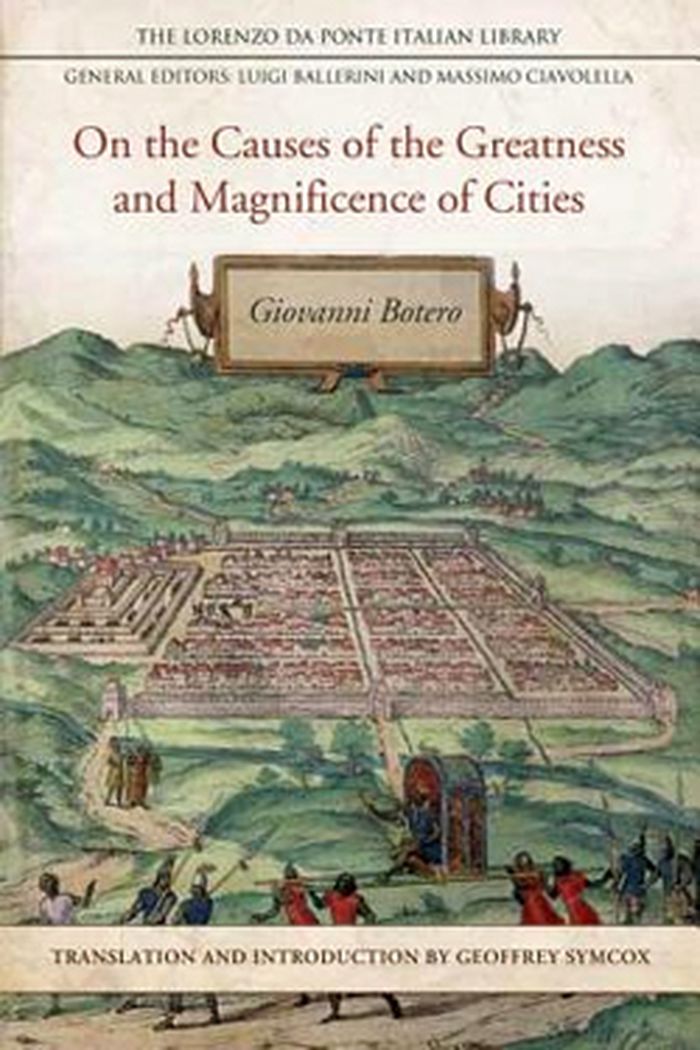
The first treatise ever written on the sociology of cities, On the Causes of the Greatness and Magnificence of Cities (1588) marked a radical departure from previous literature on urban centres. It provided a revolutionary analysis of how cities function, and of the political, economic, demographic and geographic factors that cause their growth and decline. Noteworthy too is Botero’s strikingly original use of sources in his analysis: moving beyond familiar classical and biblical references, he drew groundbreaking insights from reports by travelers and missionaries about cities in the non-European world, especially in China. Though seminally important to the history of urban studies, this book has not been available in a modern translation until now. This edition of the treatise – which includes an introduction by Geoffrey W. Symcox on the intellectual context within which it was conceived – is a must-read for anyone interested in the life of cities both historical and contemporary.
On the causes of the greatness and magnificence of cities
Actions:
Price:
$45.00
(available to order)
Summary:
The first treatise ever written on the sociology of cities, On the Causes of the Greatness and Magnificence of Cities (1588) marked a radical departure from previous literature on urban centres. It provided a revolutionary analysis of how cities function, and of the political, economic, demographic and geographic factors that cause their growth and decline. Noteworthy too is Botero’s strikingly original use of sources in his analysis: moving beyond familiar classical and biblical references, he drew groundbreaking insights from reports by travelers and missionaries about cities in the non-European world, especially in China. Though seminally important to the history of urban studies, this book has not been available in a modern translation until now. This edition of the treatise – which includes an introduction by Geoffrey W. Symcox on the intellectual context within which it was conceived – is a must-read for anyone interested in the life of cities both historical and contemporary.
Form:
books
books
Publication:
December 2012
December 2012
Subject:
Urban Theory
Urban Theory
Form:
books
books
Actions:
Price:
$44.00
(available to order)
Summary:
This book - the paperback edition of a milestone work that has been unavailable for several years - documents the short but influential life of Black Mountain College. Nearly 500 images, many in color and published for the first time in this book, show important works of art created by Black Mountain College faculty and students as well as snapshots of campus life. Four(...)
$44.00
(available to order)
Summary:
This book - the paperback edition of a milestone work that has been unavailable for several years - documents the short but influential life of Black Mountain College. Nearly 500 images, many in color and published for the first time in this book, show important works of art created by Black Mountain College faculty and students as well as snapshots of campus life. Four(...)
Title:
Black Mountain College: experiment in art
Actions:
Price:
$44.00
(available to order)
Summary:
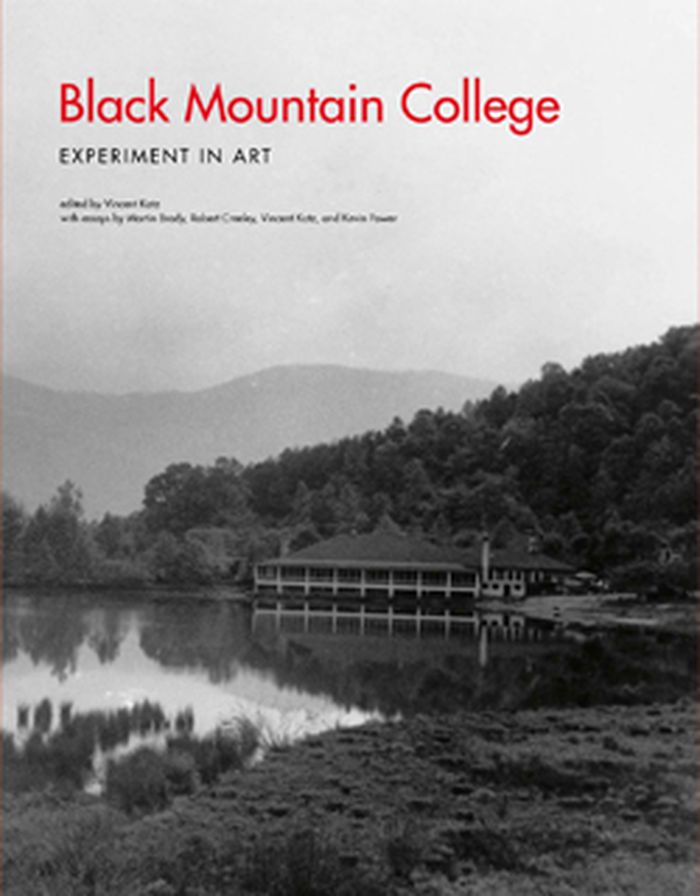
This book - the paperback edition of a milestone work that has been unavailable for several years - documents the short but influential life of Black Mountain College. Nearly 500 images, many in color and published for the first time in this book, show important works of art created by Black Mountain College faculty and students as well as snapshots of campus life. Four essays, all commissioned for the book, offer closer looks at the world of Black Mountain. Poet Robert Creeley recounts his first meeting with his mentor and friend Charles Olson. Composer Martin Brody offers a history of the musical world of the 1930s to 1950s, in which Black Mountain played a significant role.Faculty members included Josef Albers, Ilya Bolotowsky, Willem de Kooning, Buckminster Fuller, Franz Kline, Robert Motherwell, John Cage, and Merce Cunningham. Among their students were Kenneth Noland, Robert Rauschenberg, and Cy Twombly. Literature teachers and students included Robert Creeley, Fielding Dawson, Robert Duncan, Francine du Plessix Gray, and Charles Olson.
Black Mountain College: experiment in art
Actions:
Price:
$44.00
(available to order)
Summary:
This book - the paperback edition of a milestone work that has been unavailable for several years - documents the short but influential life of Black Mountain College. Nearly 500 images, many in color and published for the first time in this book, show important works of art created by Black Mountain College faculty and students as well as snapshots of campus life. Four essays, all commissioned for the book, offer closer looks at the world of Black Mountain. Poet Robert Creeley recounts his first meeting with his mentor and friend Charles Olson. Composer Martin Brody offers a history of the musical world of the 1930s to 1950s, in which Black Mountain played a significant role.Faculty members included Josef Albers, Ilya Bolotowsky, Willem de Kooning, Buckminster Fuller, Franz Kline, Robert Motherwell, John Cage, and Merce Cunningham. Among their students were Kenneth Noland, Robert Rauschenberg, and Cy Twombly. Literature teachers and students included Robert Creeley, Fielding Dawson, Robert Duncan, Francine du Plessix Gray, and Charles Olson.
Form:
books
books
Publication:
March 2013
March 2013
Form:
books
books
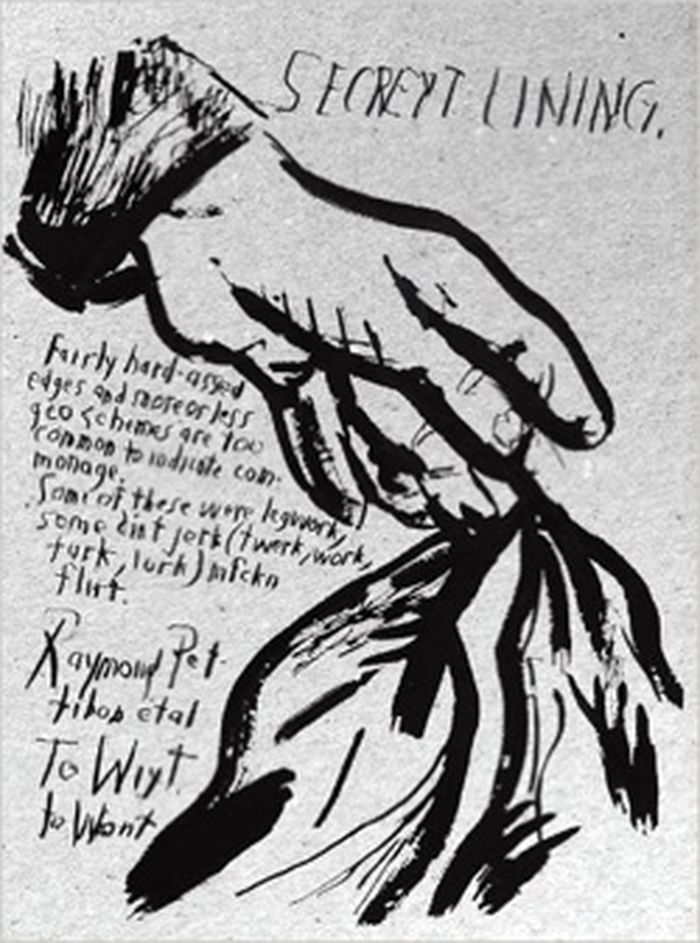
Title:
Raymond Pettibon: to Wit
Raymond Pettibon: to Wit
Actions:
Price:
$55.00
(available to order)
Summary:
In the summer of 2013, Raymond Pettibon (born 1957) converted the David Zwirner exhibition space into an improvised studio, in order to prepare the drawings and collages for his critically acclaimed show at the gallery. The works ranged from depictions of Joe DiMaggio as a young boy, Bob Dylan and the comic strip character Bazooka Joe to pieces dovetailing popular imagery(...)
$55.00
(available to order)
Summary:
In the summer of 2013, Raymond Pettibon (born 1957) converted the David Zwirner exhibition space into an improvised studio, in order to prepare the drawings and collages for his critically acclaimed show at the gallery. The works ranged from depictions of Joe DiMaggio as a young boy, Bob Dylan and the comic strip character Bazooka Joe to pieces dovetailing popular imagery(...)
Title:
Raymond Pettibon: to Wit
Actions:
Price:
$55.00
(available to order)
Summary:
In the summer of 2013, Raymond Pettibon (born 1957) converted the David Zwirner exhibition space into an improvised studio, in order to prepare the drawings and collages for his critically acclaimed show at the gallery. The works ranged from depictions of Joe DiMaggio as a young boy, Bob Dylan and the comic strip character Bazooka Joe to pieces dovetailing popular imagery with quotations from Marcel Proust, William Faulkner, Henry James, Gustave Flaubert or the Bible, and addressing themes of violence, humor, sex, evolution, religion, politics, literature, youth, art history and sports. This volume documents both the making of these works during Pettibon's intensive tenure in the space and the finished works themselves. Boasting a drawing made especially for the cover, Raymond Pettibon: To Wit includes an essay by Lucas Zwirner titled "A Month with Raymond" that describes the show's making and offers fresh observations on the relationship between word and image, and reading and writing, in Pettibon's art.
Raymond Pettibon: to Wit
Actions:
Price:
$55.00
(available to order)
Summary:
In the summer of 2013, Raymond Pettibon (born 1957) converted the David Zwirner exhibition space into an improvised studio, in order to prepare the drawings and collages for his critically acclaimed show at the gallery. The works ranged from depictions of Joe DiMaggio as a young boy, Bob Dylan and the comic strip character Bazooka Joe to pieces dovetailing popular imagery with quotations from Marcel Proust, William Faulkner, Henry James, Gustave Flaubert or the Bible, and addressing themes of violence, humor, sex, evolution, religion, politics, literature, youth, art history and sports. This volume documents both the making of these works during Pettibon's intensive tenure in the space and the finished works themselves. Boasting a drawing made especially for the cover, Raymond Pettibon: To Wit includes an essay by Lucas Zwirner titled "A Month with Raymond" that describes the show's making and offers fresh observations on the relationship between word and image, and reading and writing, in Pettibon's art.
Form:
books
books
Publication:
June 2015
June 2015
Subject:
Illustration
Illustration


