


4906 Results
Form:
books
books
Price:
$26.95
(available to order)
Summary:
In this first full-length study of a largely forgotten optical device from the eighteenth century, Arnaud Maillet reconfigures our historical understanding of visual experience and meaning in relation to notions of opacity, transparency, and imagination. Many are familiar with the Claude glass as a small black convex mirror used by artists and spectators of landscape to(...)
$26.95
(available to order)
Summary:
In this first full-length study of a largely forgotten optical device from the eighteenth century, Arnaud Maillet reconfigures our historical understanding of visual experience and meaning in relation to notions of opacity, transparency, and imagination. Many are familiar with the Claude glass as a small black convex mirror used by artists and spectators of landscape to(...)
Title:
The Claude glass: use and meaning of the black mirror in western art
Actions:
Price:
$26.95
(available to order)
Summary:
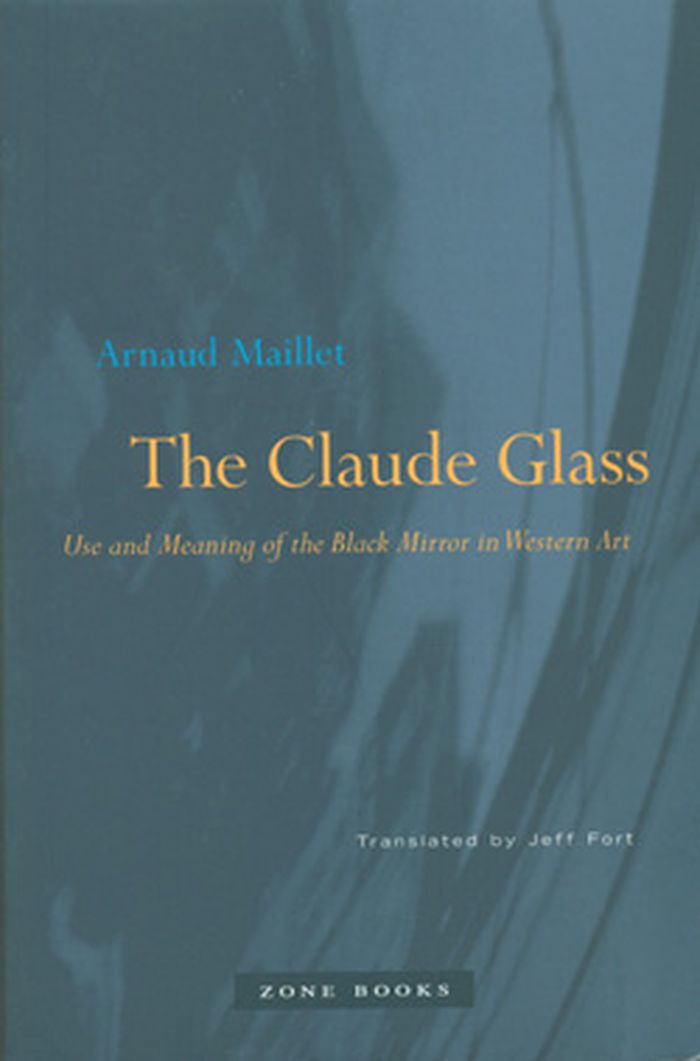
In this first full-length study of a largely forgotten optical device from the eighteenth century, Arnaud Maillet reconfigures our historical understanding of visual experience and meaning in relation to notions of opacity, transparency, and imagination. Many are familiar with the Claude glass as a small black convex mirror used by artists and spectators of landscape to reflect a view and make tonal values and areas of light and shade visible. In a groundbreaking account, Maillet goes well beyond this particular function of the glass and situates it within a richer archaeology of Western thought, exploring the uncertainties and anxieties about mirrors, reflections, and their potential distortions. He takes us from the magical and occult background of the 'black mirror', through a full evaluation of its importance in the age of the picturesque, to its persistence in a range of technological and representational practices, including photography, film, and contemporary art. "The Claude Glass" is a lasting contribution to the history of Western visual culture.
The Claude glass: use and meaning of the black mirror in western art
Actions:
Price:
$26.95
(available to order)
Summary:
In this first full-length study of a largely forgotten optical device from the eighteenth century, Arnaud Maillet reconfigures our historical understanding of visual experience and meaning in relation to notions of opacity, transparency, and imagination. Many are familiar with the Claude glass as a small black convex mirror used by artists and spectators of landscape to reflect a view and make tonal values and areas of light and shade visible. In a groundbreaking account, Maillet goes well beyond this particular function of the glass and situates it within a richer archaeology of Western thought, exploring the uncertainties and anxieties about mirrors, reflections, and their potential distortions. He takes us from the magical and occult background of the 'black mirror', through a full evaluation of its importance in the age of the picturesque, to its persistence in a range of technological and representational practices, including photography, film, and contemporary art. "The Claude Glass" is a lasting contribution to the history of Western visual culture.
Form:
books
books
Publication:
January 1900, New York
January 1900, New York
Subject:
Art Theory
Art Theory
Form:
books
books
Actions:
Price:
$62.00
(available to order)
Summary:
This book presents an essential selection from the portfolio of Emilio Duhart H. (1917-2006), a pivotal figure in Chilean architecture. Interweaving episodes from his life and work with the expansion of the modern movement as a global phenomenon, this chronicle places Duhart at the center of an ongoing dialogue between the universal precepts of modernism and the(...)
$62.00
(available to order)
Summary:
This book presents an essential selection from the portfolio of Emilio Duhart H. (1917-2006), a pivotal figure in Chilean architecture. Interweaving episodes from his life and work with the expansion of the modern movement as a global phenomenon, this chronicle places Duhart at the center of an ongoing dialogue between the universal precepts of modernism and the(...)
Title:
Re-imagining modern architecture: Emilio Duhart, 1940-1970
Actions:
Price:
$62.00
(available to order)
Summary:
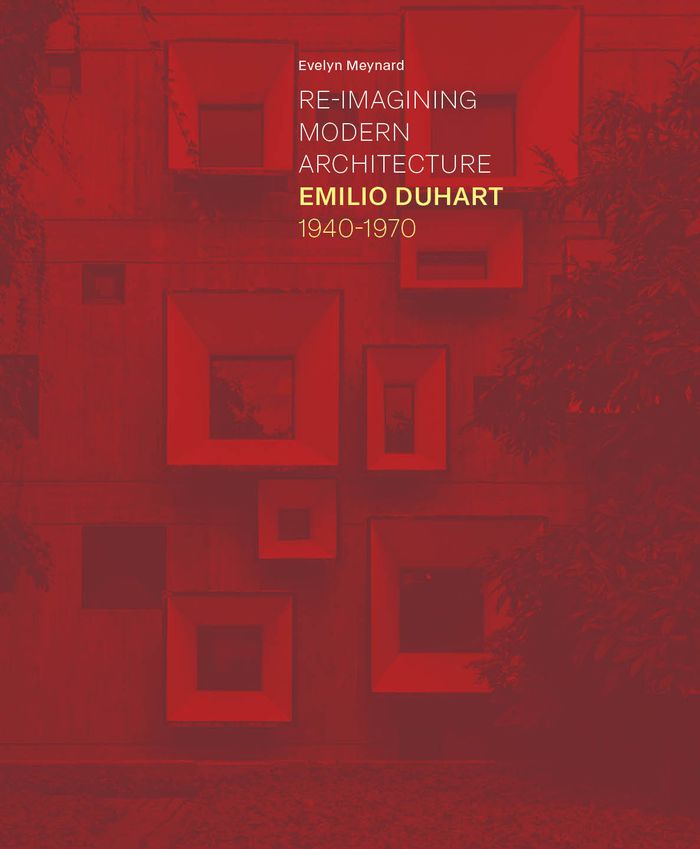
This book presents an essential selection from the portfolio of Emilio Duhart H. (1917-2006), a pivotal figure in Chilean architecture. Interweaving episodes from his life and work with the expansion of the modern movement as a global phenomenon, this chronicle places Duhart at the center of an ongoing dialogue between the universal precepts of modernism and the specificities of the Chilean cultural landscape. From his early contact with Walter Gropius in the 1940s to his collaboration with Le Corbusier in the 1950s, Duhart crafted an architectural narrative that not only adopted the ideas of modernism but transformed them, translating them into a language deeply tied to the local circumstances. Duhart’s personal and professional trajectory offers a fascinating perspective for understanding the global expansion of modern architecture, exploring themes central to its dissemination, such as migration, education, social class, housing, and urban challenges. In this light, his life and work are presented as a matrix rich in connections, capable of dialogue with other emblematic cases worldwide.
Re-imagining modern architecture: Emilio Duhart, 1940-1970
Actions:
Price:
$62.00
(available to order)
Summary:
This book presents an essential selection from the portfolio of Emilio Duhart H. (1917-2006), a pivotal figure in Chilean architecture. Interweaving episodes from his life and work with the expansion of the modern movement as a global phenomenon, this chronicle places Duhart at the center of an ongoing dialogue between the universal precepts of modernism and the specificities of the Chilean cultural landscape. From his early contact with Walter Gropius in the 1940s to his collaboration with Le Corbusier in the 1950s, Duhart crafted an architectural narrative that not only adopted the ideas of modernism but transformed them, translating them into a language deeply tied to the local circumstances. Duhart’s personal and professional trajectory offers a fascinating perspective for understanding the global expansion of modern architecture, exploring themes central to its dissemination, such as migration, education, social class, housing, and urban challenges. In this light, his life and work are presented as a matrix rich in connections, capable of dialogue with other emblematic cases worldwide.
Form:
books
books
Publication:
September 2025
September 2025
Subject:
Architecture Monographs
Architecture Monographs
Form:
books
books
Actions:
Price:
$43.00
(available in store)
Summary:
The architecture of the Soviet Union in the 1920s and 1930s was integral to shaping 20th-century modernism. Russian architect Konstantin Melnikov (1890–1974) was a key figure of this movement, with many of his realized projects, such as his cylindrical residential house completed in 1929, becoming modernist icons. Because he refused to conform to architectural standards(...)
$43.00
(available in store)
Summary:
The architecture of the Soviet Union in the 1920s and 1930s was integral to shaping 20th-century modernism. Russian architect Konstantin Melnikov (1890–1974) was a key figure of this movement, with many of his realized projects, such as his cylindrical residential house completed in 1929, becoming modernist icons. Because he refused to conform to architectural standards(...)
Title:
Konstantin Melnikov: The master of the architectural form
Actions:
Price:
$43.00
(available in store)
Summary:
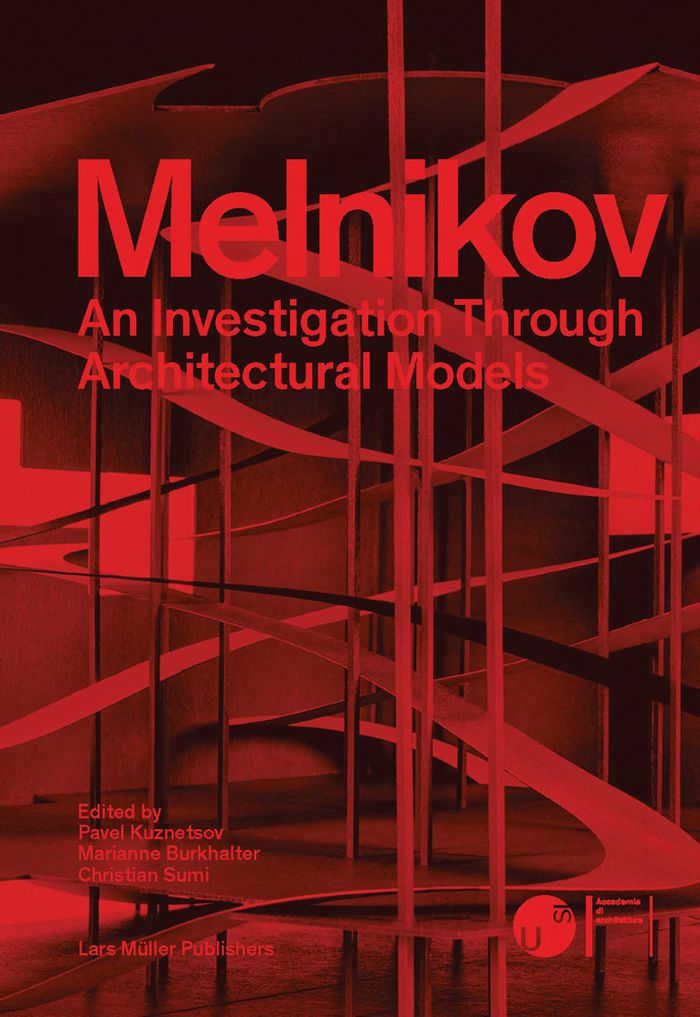
The architecture of the Soviet Union in the 1920s and 1930s was integral to shaping 20th-century modernism. Russian architect Konstantin Melnikov (1890–1974) was a key figure of this movement, with many of his realized projects, such as his cylindrical residential house completed in 1929, becoming modernist icons. Because he refused to conform to architectural standards after Stalin's cultural turn in 1932, his works were largely forgotten for several decades. He was rehabilitated and received public recognition for his imaginative constructions only a few years prior to his death in 1974. This publication presents models of Melnikov's built and unbuilt works, created under the direction of scholar Pavel Kuznetsov by the students of the Accademia di Architettura in Mendrisio. The models are accompanied by photographs, sketches and project descriptions expanding on Melnikov's work. An essay by Kuznetsov situates the architect in his historical context, shedding light on an underappreciated figure of architectural history.
Konstantin Melnikov: The master of the architectural form
Actions:
Price:
$43.00
(available in store)
Summary:
The architecture of the Soviet Union in the 1920s and 1930s was integral to shaping 20th-century modernism. Russian architect Konstantin Melnikov (1890–1974) was a key figure of this movement, with many of his realized projects, such as his cylindrical residential house completed in 1929, becoming modernist icons. Because he refused to conform to architectural standards after Stalin's cultural turn in 1932, his works were largely forgotten for several decades. He was rehabilitated and received public recognition for his imaginative constructions only a few years prior to his death in 1974. This publication presents models of Melnikov's built and unbuilt works, created under the direction of scholar Pavel Kuznetsov by the students of the Accademia di Architettura in Mendrisio. The models are accompanied by photographs, sketches and project descriptions expanding on Melnikov's work. An essay by Kuznetsov situates the architect in his historical context, shedding light on an underappreciated figure of architectural history.
Form:
books
books
Publication:
January 2026
January 2026
Subject:
Architecture Monographs
Architecture Monographs
Form:
books
books
Actions:
Price:
$84.00
(available to order)
Summary:
Museums have become the preeminent building type for the expression of new architectural ideas. Holl's expansion of the Nelson Atkins Museum of Art achieves a fusion of architecture with landscape that redefines the boundaries of the museum-going experience while creating one of the most unorthodox and breathtakingly beautiful examples of recent museum design. Holl's(...)
$84.00
(available to order)
Summary:
Museums have become the preeminent building type for the expression of new architectural ideas. Holl's expansion of the Nelson Atkins Museum of Art achieves a fusion of architecture with landscape that redefines the boundaries of the museum-going experience while creating one of the most unorthodox and breathtakingly beautiful examples of recent museum design. Holl's(...)
Subject:
Architecture Monographs
Architecture Monographs
Publication:
June 2007, Munich Berlin London New York
June 2007, Munich Berlin London New York
Title:
Stone & feather : Steven Holl architects / The Nelson-Atkins museum expansion
Actions:
Price:
$84.00
(available to order)
Summary:
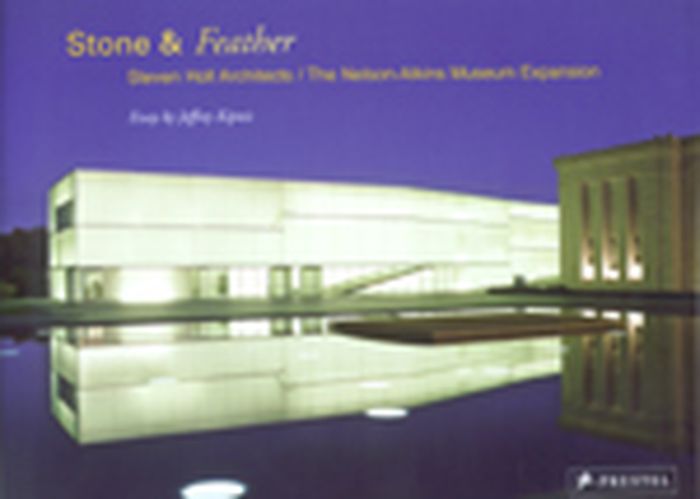
Museums have become the preeminent building type for the expression of new architectural ideas. Holl's expansion of the Nelson Atkins Museum of Art achieves a fusion of architecture with landscape that redefines the boundaries of the museum-going experience while creating one of the most unorthodox and breathtakingly beautiful examples of recent museum design. Holl's structure emerges from the landscape as five interconnected glass structures or "lenses," which both draw light into the building and serve to accentuate the museum's sculpture garden, providing both new spaces and angles of vision. Executed through close collaboration with museum curators and artists, the building achieves a dynamic and supportive relationship between art and architecture. Combining an in-depth critical assessment by the eminent architectural historian Jeffrey Kipnis, a generous selection of the architect's preliminary watercolor studies for the museum expansion, and breathtaking photography, this volume will be an essential reference for anyone concerned with the future of architecture and museum design.
Stone & feather : Steven Holl architects / The Nelson-Atkins museum expansion
Actions:
Price:
$84.00
(available to order)
Summary:
Museums have become the preeminent building type for the expression of new architectural ideas. Holl's expansion of the Nelson Atkins Museum of Art achieves a fusion of architecture with landscape that redefines the boundaries of the museum-going experience while creating one of the most unorthodox and breathtakingly beautiful examples of recent museum design. Holl's structure emerges from the landscape as five interconnected glass structures or "lenses," which both draw light into the building and serve to accentuate the museum's sculpture garden, providing both new spaces and angles of vision. Executed through close collaboration with museum curators and artists, the building achieves a dynamic and supportive relationship between art and architecture. Combining an in-depth critical assessment by the eminent architectural historian Jeffrey Kipnis, a generous selection of the architect's preliminary watercolor studies for the museum expansion, and breathtaking photography, this volume will be an essential reference for anyone concerned with the future of architecture and museum design.
Form:
books
books
Publication:
June 2007, Munich Berlin London New York
June 2007, Munich Berlin London New York
Subject:
Architecture Monographs
Architecture Monographs
Form:
books
books

Title:
in detail : Building skins
in detail : Building skins
Actions:
Price:
$94.00
(available to order)
Summary:
The external facades of a building are more than a protective mantle, or an intelligent skin regulating temperature and light, they also determine its very appearance. By unusual choices of materials and the use of complex technology, facades have become increasingly significant in recent years. External surfaces are being perceived as an integral part of the building and(...)
$94.00
(available to order)
Summary:
The external facades of a building are more than a protective mantle, or an intelligent skin regulating temperature and light, they also determine its very appearance. By unusual choices of materials and the use of complex technology, facades have become increasingly significant in recent years. External surfaces are being perceived as an integral part of the building and(...)
Subject:
Materials and Lighting
Materials and Lighting
Publication:
June 2006, Basel - Boston - Berlin
June 2006, Basel - Boston - Berlin
Title:
in detail : Building skins
Actions:
Price:
$94.00
(available to order)
Summary:
The external facades of a building are more than a protective mantle, or an intelligent skin regulating temperature and light, they also determine its very appearance. By unusual choices of materials and the use of complex technology, facades have become increasingly significant in recent years. External surfaces are being perceived as an integral part of the building and are therefore being designed as such. This volume focuses on the wide-ranging aspects of facade design, from the selection and use of materials to the advanced technical possibilities now open to the architect. A wide array of carefully selected international examples show the theory in the practice. All plans, details, and large scale sections of the facades have been researched with the high degree of competence typical of the editorial staff from the review Detail. Expert authors provide the essential information needed to plan and design facades and elucidate on the latest developments in technology and materials.
in detail : Building skins
Actions:
Price:
$94.00
(available to order)
Summary:
The external facades of a building are more than a protective mantle, or an intelligent skin regulating temperature and light, they also determine its very appearance. By unusual choices of materials and the use of complex technology, facades have become increasingly significant in recent years. External surfaces are being perceived as an integral part of the building and are therefore being designed as such. This volume focuses on the wide-ranging aspects of facade design, from the selection and use of materials to the advanced technical possibilities now open to the architect. A wide array of carefully selected international examples show the theory in the practice. All plans, details, and large scale sections of the facades have been researched with the high degree of competence typical of the editorial staff from the review Detail. Expert authors provide the essential information needed to plan and design facades and elucidate on the latest developments in technology and materials.
Form:
books
books
Publication:
June 2006, Basel - Boston - Berlin
June 2006, Basel - Boston - Berlin
Subject:
Materials and Lighting
Materials and Lighting
Form:
books
books
Price:
$42.00
(available in store)
Summary:
Roberto Burle Marx (1909-1994) remains one of the most important landscape architects in the history of the field. His distinctive and widely acclaimed work has been featured and referenced in numerous sources, yet few of Burle Marx's own words have been published. This collection of a dozen of Burle Marx's lectures, most of which have never before been available in(...)
$42.00
(available in store)
Summary:
Roberto Burle Marx (1909-1994) remains one of the most important landscape architects in the history of the field. His distinctive and widely acclaimed work has been featured and referenced in numerous sources, yet few of Burle Marx's own words have been published. This collection of a dozen of Burle Marx's lectures, most of which have never before been available in(...)
Title:
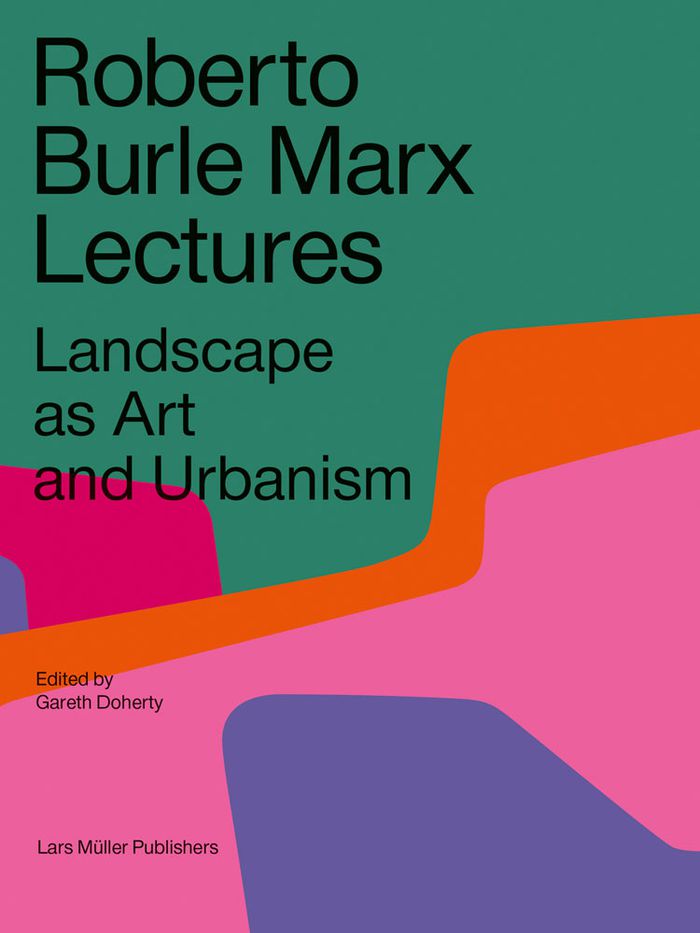
Roberto Burle Marx lectures: Landscape as art and urbanism, revised
Actions:
Price:
$42.00
(available in store)
Summary:
Roberto Burle Marx (1909-1994) remains one of the most important landscape architects in the history of the field. His distinctive and widely acclaimed work has been featured and referenced in numerous sources, yet few of Burle Marx's own words have been published. This collection of a dozen of Burle Marx's lectures, most of which have never before been available in English, fills that void. Delivered on international speaking tours, they address topics such as Concepts in Landscape Composition, Gardens and Ecology, and The Problem of Garden Lighting. Their publi- cation sheds light on Burle Marx's distinctive ethic and aesthetic of landscape, as "the real art of living." The lectures paint a picture of Burle Marx not just as a gardener, artist, and botanist, but as a land- scape architect whose ambition was to bring radical change to cities and society. The lectures are framed by photographs, by Leonardo Finotti, of a selection of Burle Marx's realized projects.
Roberto Burle Marx lectures: Landscape as art and urbanism, revised
Actions:
Price:
$42.00
(available in store)
Summary:
Roberto Burle Marx (1909-1994) remains one of the most important landscape architects in the history of the field. His distinctive and widely acclaimed work has been featured and referenced in numerous sources, yet few of Burle Marx's own words have been published. This collection of a dozen of Burle Marx's lectures, most of which have never before been available in English, fills that void. Delivered on international speaking tours, they address topics such as Concepts in Landscape Composition, Gardens and Ecology, and The Problem of Garden Lighting. Their publi- cation sheds light on Burle Marx's distinctive ethic and aesthetic of landscape, as "the real art of living." The lectures paint a picture of Burle Marx not just as a gardener, artist, and botanist, but as a land- scape architect whose ambition was to bring radical change to cities and society. The lectures are framed by photographs, by Leonardo Finotti, of a selection of Burle Marx's realized projects.
Form:
books
books
Publication:
March 2020
March 2020
Subject:
Landscape Theory
Landscape Theory
Form:
journals and magazines
journals and magazines
Price:
$20.00
(available to order)
Summary:
''Pairs'' is a student-led journal at the Harvard GSD dedicated to conversations about design that are down to earth and unguarded. Each issue is conceptualized by an editorial team that proposes guests and objects to be in dialogue with one another. ''Pairs'' is non-thematic, meant instead for provisional thoughts and ideas in progress. Each issue seeks to organize a(...)
$20.00
(available to order)
Summary:
''Pairs'' is a student-led journal at the Harvard GSD dedicated to conversations about design that are down to earth and unguarded. Each issue is conceptualized by an editorial team that proposes guests and objects to be in dialogue with one another. ''Pairs'' is non-thematic, meant instead for provisional thoughts and ideas in progress. Each issue seeks to organize a(...)
Title:
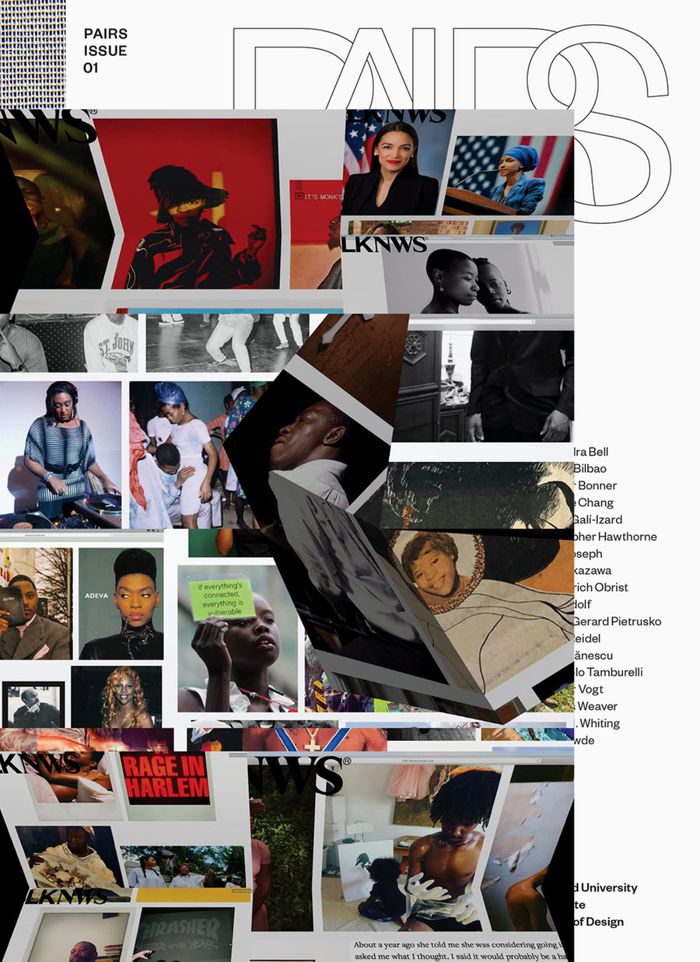
Pairs 01
Actions:
Price:
$20.00
(available to order)
Summary:
''Pairs'' is a student-led journal at the Harvard GSD dedicated to conversations about design that are down to earth and unguarded. Each issue is conceptualized by an editorial team that proposes guests and objects to be in dialogue with one another. ''Pairs'' is non-thematic, meant instead for provisional thoughts and ideas in progress. Each issue seeks to organize a diversity of threads and concerns that are perceived to be relevant to our moment. Thus, ''Pairs'' creates a space for understanding and a greater degree of exchange, both between the design disciplines and with a larger public. This inaugural issue of ''Pairs'' contains conversations with designers, academics and critics that take on the present from a variety of perspectives. There are reflections on major personal, disciplinary, or political turning points. There are reevaluations of moments in the past that shed light on social questions at the top of our minds. There are also discussions on gardening, book-making, publishing, and the conversation itself.
Pairs 01
Actions:
Price:
$20.00
(available to order)
Summary:
''Pairs'' is a student-led journal at the Harvard GSD dedicated to conversations about design that are down to earth and unguarded. Each issue is conceptualized by an editorial team that proposes guests and objects to be in dialogue with one another. ''Pairs'' is non-thematic, meant instead for provisional thoughts and ideas in progress. Each issue seeks to organize a diversity of threads and concerns that are perceived to be relevant to our moment. Thus, ''Pairs'' creates a space for understanding and a greater degree of exchange, both between the design disciplines and with a larger public. This inaugural issue of ''Pairs'' contains conversations with designers, academics and critics that take on the present from a variety of perspectives. There are reflections on major personal, disciplinary, or political turning points. There are reevaluations of moments in the past that shed light on social questions at the top of our minds. There are also discussions on gardening, book-making, publishing, and the conversation itself.
Form:
journals and magazines
journals and magazines
Publication:
February 2021
February 2021
Subject:
Magazines
Magazines
Form:
books
books
Price:
$23.00
(available in store)
Summary:
"Birdpedia" is an illustrated compendium of bird facts and birding lore. Featuring nearly 200 entries—on topics ranging from plumage and migration to birds in art, literature, and folklore—this collection is brimming with wisdom and wit about all things avian. Christopher Leahy sheds light on 'hawk-watching,' 'twitching,' and other rituals from the sometimes mystifying(...)
$23.00
(available in store)
Summary:
"Birdpedia" is an illustrated compendium of bird facts and birding lore. Featuring nearly 200 entries—on topics ranging from plumage and migration to birds in art, literature, and folklore—this collection is brimming with wisdom and wit about all things avian. Christopher Leahy sheds light on 'hawk-watching,' 'twitching,' and other rituals from the sometimes mystifying(...)
Title:
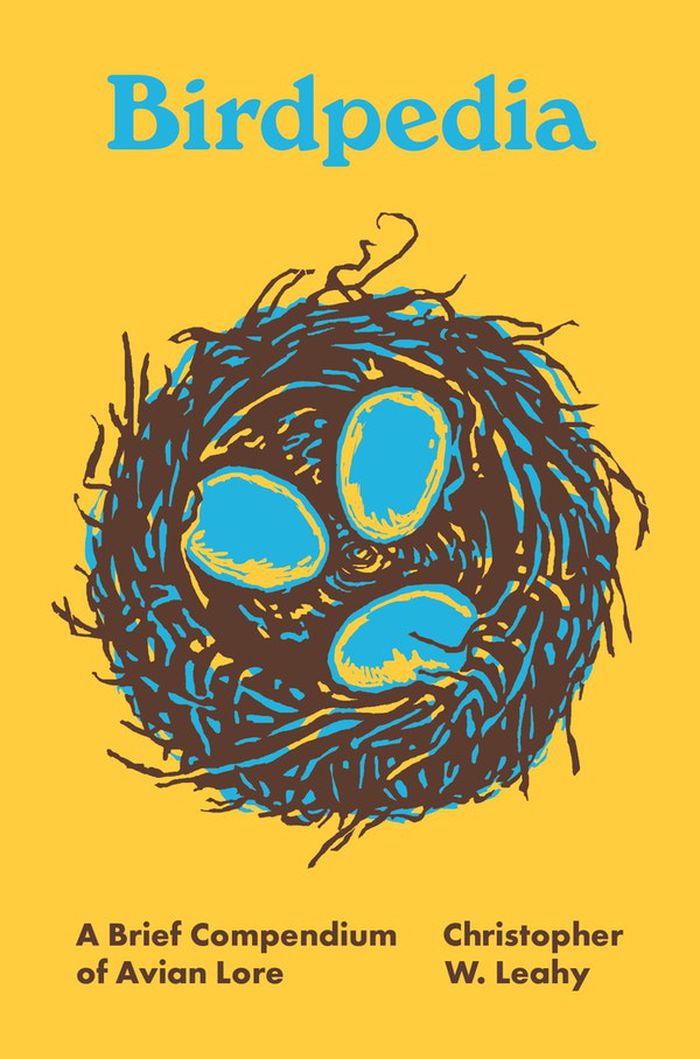
Birdpedia
Actions:
Price:
$23.00
(available in store)
Summary:
"Birdpedia" is an illustrated compendium of bird facts and birding lore. Featuring nearly 200 entries—on topics ranging from plumage and migration to birds in art, literature, and folklore—this collection is brimming with wisdom and wit about all things avian. Christopher Leahy sheds light on 'hawk-watching,' 'twitching,' and other rituals from the sometimes mystifying world of birding that entail a good deal more than their names imply. He explains what kind of bird’s nests you can eat, why mocking birds mock, and many other curiosities that have induced otherwise sane people to peer into treetops using outrageously expensive optical equipment. Leahy shares illuminating insights about pioneering ornithologists such as John James Audubon and Florence Bailey, and describes unique bird behaviors such as anting, caching, duetting, and mobbing. He discusses avian fossils, the colloquial naming of birds, the science and history of ornithology, and more. The book’s convenient size makes it the perfect traveling companion to take along on your own avian adventures.
Birdpedia
Actions:
Price:
$23.00
(available in store)
Summary:
"Birdpedia" is an illustrated compendium of bird facts and birding lore. Featuring nearly 200 entries—on topics ranging from plumage and migration to birds in art, literature, and folklore—this collection is brimming with wisdom and wit about all things avian. Christopher Leahy sheds light on 'hawk-watching,' 'twitching,' and other rituals from the sometimes mystifying world of birding that entail a good deal more than their names imply. He explains what kind of bird’s nests you can eat, why mocking birds mock, and many other curiosities that have induced otherwise sane people to peer into treetops using outrageously expensive optical equipment. Leahy shares illuminating insights about pioneering ornithologists such as John James Audubon and Florence Bailey, and describes unique bird behaviors such as anting, caching, duetting, and mobbing. He discusses avian fossils, the colloquial naming of birds, the science and history of ornithology, and more. The book’s convenient size makes it the perfect traveling companion to take along on your own avian adventures.
Form:
books
books
Publication:
June 2021
June 2021
Subject:
Fauna and flora
Fauna and flora
Form:
books
books
Title:
Madrid architectural guide
Madrid architectural guide
Actions:
Price:
$39.95
(available to order)
Summary:
This guidebook showcases 150 buildings from the past 100 years starting with one of the most influential urban projects ever: the Gran Vía. This main avenue marked a milestone for Madrid which went from being a historic city to the modern capital that it is today. This intervention had been ongoing for almost two decades with the initial phase of construction reaching(...)
$39.95
(available to order)
Summary:
This guidebook showcases 150 buildings from the past 100 years starting with one of the most influential urban projects ever: the Gran Vía. This main avenue marked a milestone for Madrid which went from being a historic city to the modern capital that it is today. This intervention had been ongoing for almost two decades with the initial phase of construction reaching(...)
Title:
Madrid architectural guide
Actions:
Price:
$39.95
(available to order)
Summary:
This guidebook showcases 150 buildings from the past 100 years starting with one of the most influential urban projects ever: the Gran Vía. This main avenue marked a milestone for Madrid which went from being a historic city to the modern capital that it is today. This intervention had been ongoing for almost two decades with the initial phase of construction reaching completion circa. 1917. A selection of the most relevant buildings thereafter until the present day sheds light on Madrid’s architecture in relation to its inherent historical context, including the need for the reconstruction of built heritage after the Spanish Civil War, the influence of the Franco dictatorship lasting for almost forty years, and the new materials and collaborative architecture that have arisen during the current economic crisis, among other aspects. Seven proposed routes lead us through the different districts that make up the city, as well as those historic epochs that have made Madrid the city it is today.
Madrid architectural guide
Actions:
Price:
$39.95
(available to order)
Summary:
This guidebook showcases 150 buildings from the past 100 years starting with one of the most influential urban projects ever: the Gran Vía. This main avenue marked a milestone for Madrid which went from being a historic city to the modern capital that it is today. This intervention had been ongoing for almost two decades with the initial phase of construction reaching completion circa. 1917. A selection of the most relevant buildings thereafter until the present day sheds light on Madrid’s architecture in relation to its inherent historical context, including the need for the reconstruction of built heritage after the Spanish Civil War, the influence of the Franco dictatorship lasting for almost forty years, and the new materials and collaborative architecture that have arisen during the current economic crisis, among other aspects. Seven proposed routes lead us through the different districts that make up the city, as well as those historic epochs that have made Madrid the city it is today.
Form:
books
books
Publication:
March 2017
March 2017
Subject:
City Guides
City Guides
Form:
books
books

Title:
Fear, reverence, terror
Fear, reverence, terror
Actions:
Price:
$55.50
(available to order)
Summary:
We are surrounded by images, fairly drowning in them. From our cell phones to our computers, from our televisions at home to the screens that light up while we wait in the grocery store checkout line, images of all kinds are seducing us, commanding us to buy!, scaring us, dazzling us. "Fear, reverence, terror" invites us to look at images slowly, with the help of a few(...)
$55.50
(available to order)
Summary:
We are surrounded by images, fairly drowning in them. From our cell phones to our computers, from our televisions at home to the screens that light up while we wait in the grocery store checkout line, images of all kinds are seducing us, commanding us to buy!, scaring us, dazzling us. "Fear, reverence, terror" invites us to look at images slowly, with the help of a few(...)
Title:
Fear, reverence, terror
Actions:
Price:
$55.50
(available to order)
Summary:
We are surrounded by images, fairly drowning in them. From our cell phones to our computers, from our televisions at home to the screens that light up while we wait in the grocery store checkout line, images of all kinds are seducing us, commanding us to buy!, scaring us, dazzling us. "Fear, reverence, terror" invites us to look at images slowly, with the help of a few examples: Picasso’s Guernica, the “Lord Kitchener wants you” World War I recruitment poster, Jacques-Louis David’s Marat, the frontispiece of Thomas Hobbes’s Leviathan, a cup of gilded silver with scenes from the conquest of the New World. Are these political images, Carlo Ginzburg asks? Yes, because every image is, in a sense, political—an instrument of power. Tacitus once wrote, unforgettably, that we are enslaved by lies of which we ourselves are the authors. Is it possible to break this bond? Fear, Reverence, Terror will answer this question.
Fear, reverence, terror
Actions:
Price:
$55.50
(available to order)
Summary:
We are surrounded by images, fairly drowning in them. From our cell phones to our computers, from our televisions at home to the screens that light up while we wait in the grocery store checkout line, images of all kinds are seducing us, commanding us to buy!, scaring us, dazzling us. "Fear, reverence, terror" invites us to look at images slowly, with the help of a few examples: Picasso’s Guernica, the “Lord Kitchener wants you” World War I recruitment poster, Jacques-Louis David’s Marat, the frontispiece of Thomas Hobbes’s Leviathan, a cup of gilded silver with scenes from the conquest of the New World. Are these political images, Carlo Ginzburg asks? Yes, because every image is, in a sense, political—an instrument of power. Tacitus once wrote, unforgettably, that we are enslaved by lies of which we ourselves are the authors. Is it possible to break this bond? Fear, Reverence, Terror will answer this question.
Form:
books
books
Publication:
August 2017
August 2017
Subject:
Art Theory
Art Theory


