


5689 Results
Form:
books
books
Price:
$35.95
(available to order)
Summary:
The city is one of the greatest unsung heroes in cinema -- a modernist inspiration for silent classics such as Metropolis (1926) and a dense urban jungle in The Matrix (1999) -- yet there have been few attempts to grasp the cultural and aesthetic nature of its role in film. This volume is an ambitious collection of writings and photo-essays discussing this complex yet(...)
$35.95
(available to order)
Summary:
The city is one of the greatest unsung heroes in cinema -- a modernist inspiration for silent classics such as Metropolis (1926) and a dense urban jungle in The Matrix (1999) -- yet there have been few attempts to grasp the cultural and aesthetic nature of its role in film. This volume is an ambitious collection of writings and photo-essays discussing this complex yet(...)
Subject:
Architecture and Film, Set Design
Architecture and Film, Set Design
Publication:
August 2008, London, New York
August 2008, London, New York
Title:
Cities in transition: the moving image and the modern metropolis
Actions:
Price:
$35.95
(available to order)
Summary:
The city is one of the greatest unsung heroes in cinema -- a modernist inspiration for silent classics such as Metropolis (1926) and a dense urban jungle in The Matrix (1999) -- yet there have been few attempts to grasp the cultural and aesthetic nature of its role in film. This volume is an ambitious collection of writings and photo-essays discussing this complex yet enduring relationship, and how early cinema, digital technology and changing urban geographies have all impacted upon notions and representations of the modern city. Amongst the films discussed are Peeping Tom (1960), Performance (1970), Sans Soleil (1983) and Amores perros (2000). Contributions come from the fields of film studies, cultural theory, architecture and design, as well as filmmakers Patrick Keiller and Chris Petit. Andrew Webber is Reader in Modern German and Comparative Culture at Churchill College, University of Cambridge. He is the author of The European Avant-garde (2004). Emma Wilson is Reader in Contemporary French Literature and Film at Corpus Christi College, University of Cambridge. She is the author of Cinema's Missing Children (2003) and Alain Resnais (2006).
Cities in transition: the moving image and the modern metropolis
Actions:
Price:
$35.95
(available to order)
Summary:
The city is one of the greatest unsung heroes in cinema -- a modernist inspiration for silent classics such as Metropolis (1926) and a dense urban jungle in The Matrix (1999) -- yet there have been few attempts to grasp the cultural and aesthetic nature of its role in film. This volume is an ambitious collection of writings and photo-essays discussing this complex yet enduring relationship, and how early cinema, digital technology and changing urban geographies have all impacted upon notions and representations of the modern city. Amongst the films discussed are Peeping Tom (1960), Performance (1970), Sans Soleil (1983) and Amores perros (2000). Contributions come from the fields of film studies, cultural theory, architecture and design, as well as filmmakers Patrick Keiller and Chris Petit. Andrew Webber is Reader in Modern German and Comparative Culture at Churchill College, University of Cambridge. He is the author of The European Avant-garde (2004). Emma Wilson is Reader in Contemporary French Literature and Film at Corpus Christi College, University of Cambridge. She is the author of Cinema's Missing Children (2003) and Alain Resnais (2006).
Form:
books
books
Publication:
August 2008, London, New York
August 2008, London, New York
Subject:
Architecture and Film, Set Design
Architecture and Film, Set Design
Form:
books
books
Price:
$102.00
(available in store)
Summary:
Since the late 1970s, Canadian photographer Jeff Wall has made significant contributions to establishing photography as an autonomous medium. He is considered the founder of "staged" photography and generates mostly large-format photographs—often inspired by literature, film and art history—composed in a multilayered and subtle way from a multitude of individual shots.(...)
$102.00
(available in store)
Summary:
Since the late 1970s, Canadian photographer Jeff Wall has made significant contributions to establishing photography as an autonomous medium. He is considered the founder of "staged" photography and generates mostly large-format photographs—often inspired by literature, film and art history—composed in a multilayered and subtle way from a multitude of individual shots.(...)
Title:
Jeff Wall
Actions:
Price:
$102.00
(available in store)
Summary:
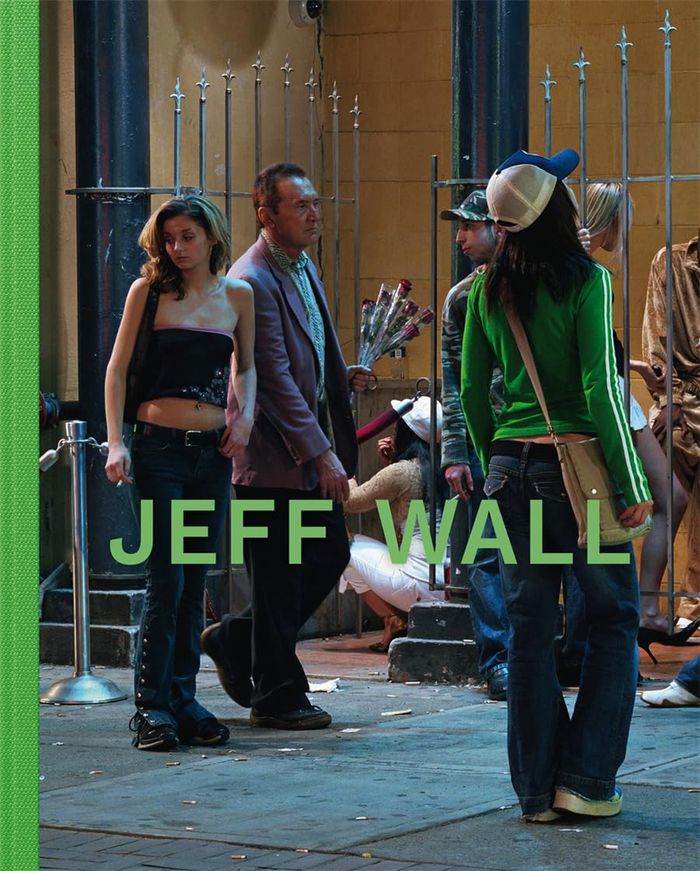
Since the late 1970s, Canadian photographer Jeff Wall has made significant contributions to establishing photography as an autonomous medium. He is considered the founder of "staged" photography and generates mostly large-format photographs—often inspired by literature, film and art history—composed in a multilayered and subtle way from a multitude of individual shots. Wall makes a distinction between his documentary still life photos and his "cinematographic" pictures, the latter of which take months or even years to complete. His contemporary genre scenes invoke famous works by Hokusai, Manet, Kafka, Ellison and others.Among the more than 50 works collected in the catalog of the large-scale solo exhibition at the Fondation Beyeler are Wall’s iconic large-format slides in light boxes, black-and-white photographs and color photographic prints. His most recent images, representing the entire spectrum of his oeuvre, enter into a dialogue with works from the time of Wall’s beginnings as an artist and reveal a wide range of references in terms of content and form.
Jeff Wall
Actions:
Price:
$102.00
(available in store)
Summary:
Since the late 1970s, Canadian photographer Jeff Wall has made significant contributions to establishing photography as an autonomous medium. He is considered the founder of "staged" photography and generates mostly large-format photographs—often inspired by literature, film and art history—composed in a multilayered and subtle way from a multitude of individual shots. Wall makes a distinction between his documentary still life photos and his "cinematographic" pictures, the latter of which take months or even years to complete. His contemporary genre scenes invoke famous works by Hokusai, Manet, Kafka, Ellison and others.Among the more than 50 works collected in the catalog of the large-scale solo exhibition at the Fondation Beyeler are Wall’s iconic large-format slides in light boxes, black-and-white photographs and color photographic prints. His most recent images, representing the entire spectrum of his oeuvre, enter into a dialogue with works from the time of Wall’s beginnings as an artist and reveal a wide range of references in terms of content and form.
Form:
books
books
Publication:
April 2024
April 2024
Subject:
Photography monographs
Photography monographs
Form:
books
books
Actions:
Price:
$5.95
(available to order)
Summary:
In this first English-language edition of Oscar Niemeyer’s memoirs, the architect reveals how his many passions – among them his large family, many friends, the sensuous landscape of Brazil, women, communism, art and literature – have influenced his life and in turn inspired his architecture. Born in Rio de Janeiro, Niemeyer graduated from the National School of Fine Arts(...)
$5.95
(available to order)
Summary:
In this first English-language edition of Oscar Niemeyer’s memoirs, the architect reveals how his many passions – among them his large family, many friends, the sensuous landscape of Brazil, women, communism, art and literature – have influenced his life and in turn inspired his architecture. Born in Rio de Janeiro, Niemeyer graduated from the National School of Fine Arts(...)
Title:
The curves of time : the memoirs of Oscar Niemeyer
Actions:
Price:
$5.95
(available to order)
Summary:
In this first English-language edition of Oscar Niemeyer’s memoirs, the architect reveals how his many passions – among them his large family, many friends, the sensuous landscape of Brazil, women, communism, art and literature – have influenced his life and in turn inspired his architecture. Born in Rio de Janeiro, Niemeyer graduated from the National School of Fine Arts in 1934. As a student he worked in the office of Lucio Costa, and on graduation he began collaborating with Le Corbusier on a new Ministry of Education and Health Building in Rio. Yet in contrast to the International Style, Niemeyer’s curvilinear forms reflected Brazil’s lush, undulating landscape and the emotive style of its music and dance. Here Niemeyer recounts his life in an informal, fluid narrative that moves from his childhood in Rio to friendships with intellectuals and politicians such as Jean-Paul Sartre and Fidel Castro, to tales of adventurous road trips. The book includes forty sketches by Niemeyer executed specially for these memoirs, a chronology of his life and career, notes and an index.
The curves of time : the memoirs of Oscar Niemeyer
Actions:
Price:
$5.95
(available to order)
Summary:
In this first English-language edition of Oscar Niemeyer’s memoirs, the architect reveals how his many passions – among them his large family, many friends, the sensuous landscape of Brazil, women, communism, art and literature – have influenced his life and in turn inspired his architecture. Born in Rio de Janeiro, Niemeyer graduated from the National School of Fine Arts in 1934. As a student he worked in the office of Lucio Costa, and on graduation he began collaborating with Le Corbusier on a new Ministry of Education and Health Building in Rio. Yet in contrast to the International Style, Niemeyer’s curvilinear forms reflected Brazil’s lush, undulating landscape and the emotive style of its music and dance. Here Niemeyer recounts his life in an informal, fluid narrative that moves from his childhood in Rio to friendships with intellectuals and politicians such as Jean-Paul Sartre and Fidel Castro, to tales of adventurous road trips. The book includes forty sketches by Niemeyer executed specially for these memoirs, a chronology of his life and career, notes and an index.
Form:
books
books
Publication:
October 2000, London
October 2000, London
Subject:
sale books
sale books
Form:
books
books
Title:
Art & Histories: Volume 1
Art & Histories: Volume 1
Actions:
Price:
$45.00
(available in store)
Summary:
Each essay in this groundbreaking volume—the first in an exciting new series from the ''Center for Advanced Study in the Visual Arts'' —engages aesthetic and cultural debates that situate research on the arts at the intersection of various disciplines, including architecture, film, literature, curatorial and museum studies, and the arts of performance. Reflecting the(...)
$45.00
(available in store)
Summary:
Each essay in this groundbreaking volume—the first in an exciting new series from the ''Center for Advanced Study in the Visual Arts'' —engages aesthetic and cultural debates that situate research on the arts at the intersection of various disciplines, including architecture, film, literature, curatorial and museum studies, and the arts of performance. Reflecting the(...)
Title:
Art & Histories: Volume 1
Actions:
Price:
$45.00
(available in store)
Summary:
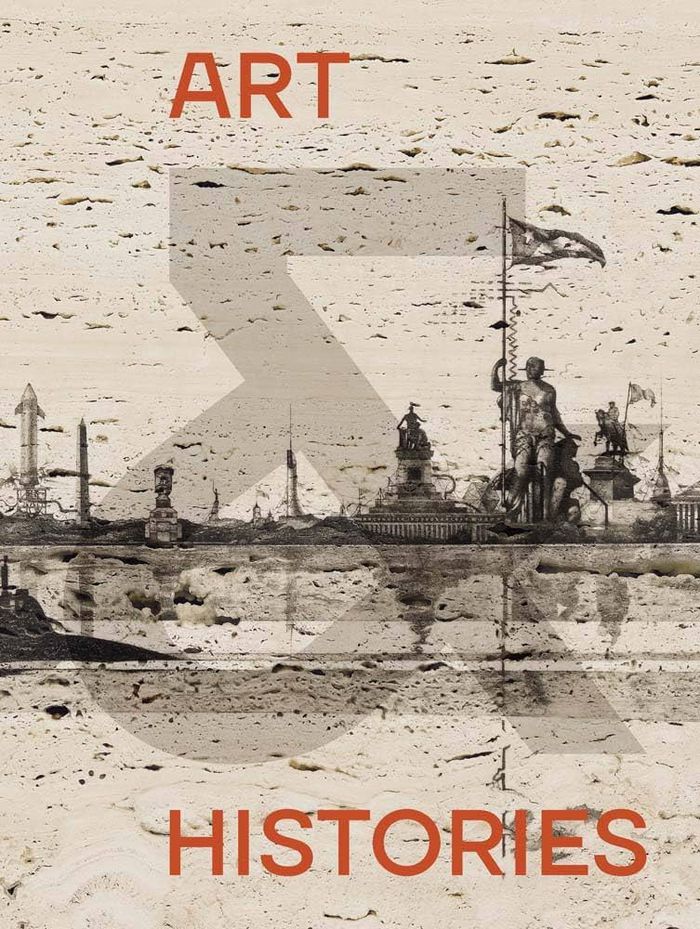
Each essay in this groundbreaking volume—the first in an exciting new series from the ''Center for Advanced Study in the Visual Arts'' —engages aesthetic and cultural debates that situate research on the arts at the intersection of various disciplines, including architecture, film, literature, curatorial and museum studies, and the arts of performance. Reflecting the series’ goal to engage with different cultural contexts and time periods, newly commissioned essays from emerging and established scholars address subjects ranging from medieval dance and ancient Assyrian reliefs to expressions of gender embodiment and the art of the Afro-Atlantic. First-person narratives ground theoretical considerations of the theme. Reflecting a commitment to embracing the book form as a space for art itself, ''Art & Histories'' includes a detachable accordion-fold insert with a work from Miami-based artist Glexis Novoa. One of his signature horizon lines unites Washington, DC, and the artist’s native Havana. Meticulous drawings executed on travertine marble entangle the two cities and their monuments, symbolizing both violent and triumphant histories and their ideological reversals.
Art & Histories: Volume 1
Actions:
Price:
$45.00
(available in store)
Summary:
Each essay in this groundbreaking volume—the first in an exciting new series from the ''Center for Advanced Study in the Visual Arts'' —engages aesthetic and cultural debates that situate research on the arts at the intersection of various disciplines, including architecture, film, literature, curatorial and museum studies, and the arts of performance. Reflecting the series’ goal to engage with different cultural contexts and time periods, newly commissioned essays from emerging and established scholars address subjects ranging from medieval dance and ancient Assyrian reliefs to expressions of gender embodiment and the art of the Afro-Atlantic. First-person narratives ground theoretical considerations of the theme. Reflecting a commitment to embracing the book form as a space for art itself, ''Art & Histories'' includes a detachable accordion-fold insert with a work from Miami-based artist Glexis Novoa. One of his signature horizon lines unites Washington, DC, and the artist’s native Havana. Meticulous drawings executed on travertine marble entangle the two cities and their monuments, symbolizing both violent and triumphant histories and their ideological reversals.
Form:
books
books
Publication:
January 2026
January 2026
Subject:
Art Theory
Art Theory
Form:
books
books
Actions:
Price:
$22.95
(available to order)
Summary:
At the turn of the last century, Adolf Loos wrote: "The evolution of culture is synonymous with the removal of ornament from objects of daily use." Ornament had exhausted its purpose, and the persistence of it, Loos argued, was indicative of a degenerative culture. The simple, undecorated form was celebrated as a signal of the movement of modern man toward some truer,(...)
$22.95
(available to order)
Summary:
At the turn of the last century, Adolf Loos wrote: "The evolution of culture is synonymous with the removal of ornament from objects of daily use." Ornament had exhausted its purpose, and the persistence of it, Loos argued, was indicative of a degenerative culture. The simple, undecorated form was celebrated as a signal of the movement of modern man toward some truer,(...)
Title:
Crime and ornament : the arts and popular culture in the shadow of Adolf Loos
Actions:
Price:
$22.95
(available to order)
Summary:
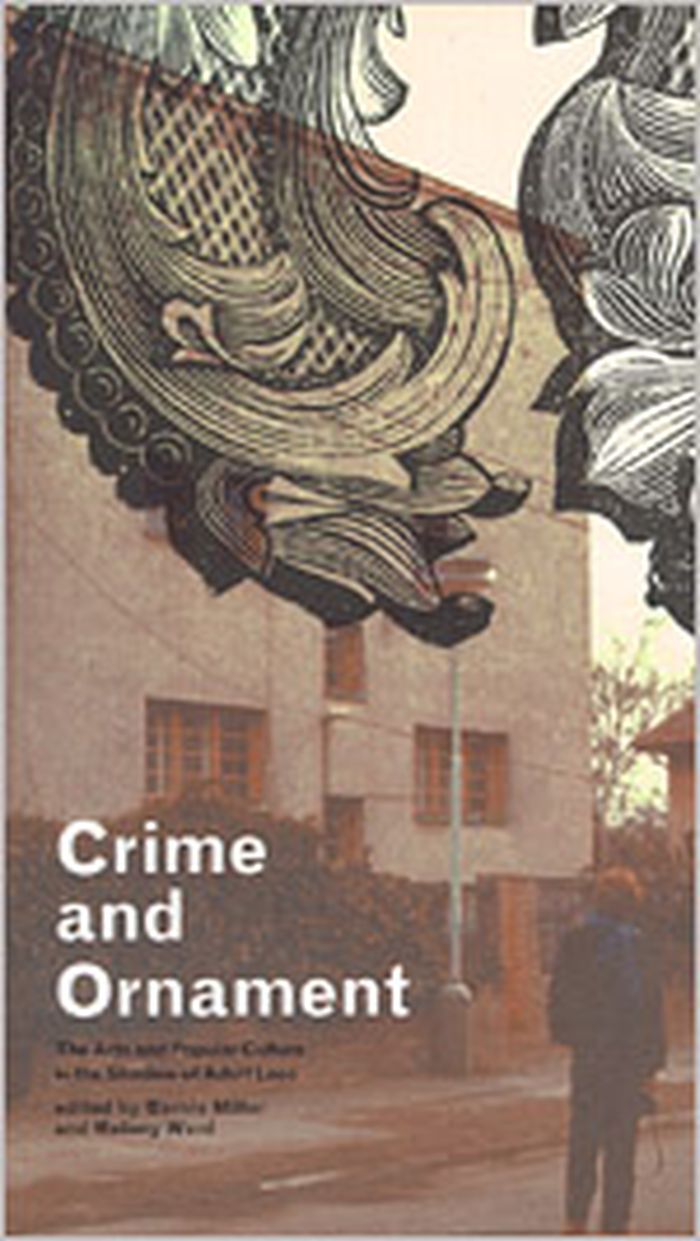
At the turn of the last century, Adolf Loos wrote: "The evolution of culture is synonymous with the removal of ornament from objects of daily use." Ornament had exhausted its purpose, and the persistence of it, Loos argued, was indicative of a degenerative culture. The simple, undecorated form was celebrated as a signal of the movement of modern man toward some truer, more powerful expression of his self. Debates about ornament have returned: recent thinking questions the assumption that ornament is inessential, and its artistic and political implications continue to be hotly debated. The writers in "Crime and Ornament" bring these debates together by addressing the role of ornament in a variety of disciplines: film, visual art, video, literature, fashion, sports, gay imagery and, of course, architecture are explored in relation to this key concept. With a distinguished group of contributors including Felicity Scott, Brian Pronger, Jeanne Randolph, Ignasi de Solà-Morales, Graham Ramsay, Katherine Milligan, Jan Zwicky, Jim Drobnick, "Crime and Ornament" provides a diverse, multi-disciplinary approach to a salient concern in architectural, artistic and aesthetic discourse.
Crime and ornament : the arts and popular culture in the shadow of Adolf Loos
Actions:
Price:
$22.95
(available to order)
Summary:
At the turn of the last century, Adolf Loos wrote: "The evolution of culture is synonymous with the removal of ornament from objects of daily use." Ornament had exhausted its purpose, and the persistence of it, Loos argued, was indicative of a degenerative culture. The simple, undecorated form was celebrated as a signal of the movement of modern man toward some truer, more powerful expression of his self. Debates about ornament have returned: recent thinking questions the assumption that ornament is inessential, and its artistic and political implications continue to be hotly debated. The writers in "Crime and Ornament" bring these debates together by addressing the role of ornament in a variety of disciplines: film, visual art, video, literature, fashion, sports, gay imagery and, of course, architecture are explored in relation to this key concept. With a distinguished group of contributors including Felicity Scott, Brian Pronger, Jeanne Randolph, Ignasi de Solà-Morales, Graham Ramsay, Katherine Milligan, Jan Zwicky, Jim Drobnick, "Crime and Ornament" provides a diverse, multi-disciplinary approach to a salient concern in architectural, artistic and aesthetic discourse.
Form:
books
books
Publication:
January 1900, Toronto
January 1900, Toronto
Subject:
Architectural Theory
Architectural Theory
Form:
books
books
Price:
$21.95
(available in store)
Summary:
Black gold. Liquid sunlight. Texas tea. Oil remains the ur-commodity of our global era, having been distilled from ancient algae and marine life to turn modernity's wheels. Wars are fought over it. Some communities are displaced by its extraction, so that others may reap its benefits. But despite its heated history, few will ever see oil on the ground. Shrouded within a(...)
$21.95
(available in store)
Summary:
Black gold. Liquid sunlight. Texas tea. Oil remains the ur-commodity of our global era, having been distilled from ancient algae and marine life to turn modernity's wheels. Wars are fought over it. Some communities are displaced by its extraction, so that others may reap its benefits. But despite its heated history, few will ever see oil on the ground. Shrouded within a(...)
Title:
Oil
Actions:
Price:
$21.95
(available in store)
Summary:
Black gold. Liquid sunlight. Texas tea. Oil remains the ur-commodity of our global era, having been distilled from ancient algae and marine life to turn modernity's wheels. Wars are fought over it. Some communities are displaced by its extraction, so that others may reap its benefits. But despite its heated history, few will ever see oil on the ground. Shrouded within a labyrinth of oil fields, pipelines, and manufacturies, it tends to be known only through its magical effects: the thrill of the road, the euphoria of flight, and the metamorphic allure of everything from vinyl records to celluloid film and synthetic clothing. Michael Tondre shows how hydrocarbon became today's pre-eminent power. How did oil come to structure selfhood and social relations? And to what extent is oil not only a commercial product but a cultural one-something shaped by widely imagined dreams and desires? Amid a warming world unleashed by fossil fuels, oil appears as a rich resource for thinking about histories of globalization and technology no less than the energetic underpinnings of literature, film, and art.
Oil
Actions:
Price:
$21.95
(available in store)
Summary:
Black gold. Liquid sunlight. Texas tea. Oil remains the ur-commodity of our global era, having been distilled from ancient algae and marine life to turn modernity's wheels. Wars are fought over it. Some communities are displaced by its extraction, so that others may reap its benefits. But despite its heated history, few will ever see oil on the ground. Shrouded within a labyrinth of oil fields, pipelines, and manufacturies, it tends to be known only through its magical effects: the thrill of the road, the euphoria of flight, and the metamorphic allure of everything from vinyl records to celluloid film and synthetic clothing. Michael Tondre shows how hydrocarbon became today's pre-eminent power. How did oil come to structure selfhood and social relations? And to what extent is oil not only a commercial product but a cultural one-something shaped by widely imagined dreams and desires? Amid a warming world unleashed by fossil fuels, oil appears as a rich resource for thinking about histories of globalization and technology no less than the energetic underpinnings of literature, film, and art.
Form:
books
books
Publication:
November 2024
November 2024
Subject:
Critical Theory
Critical Theory
Form:
books
books
Actions:
Price:
$44.95
(available in store)
Summary:
Indigenous relations are often described in anthropological terms, or as expressions of timeless, unchanging kinship ties. In ''Speculative Relations'', Joseph M. Pierce challenges this view, considering the potential of these relations as a means of repairing the damages of history. Pierce approaches Indigenous art and culture not as objects of study, but through(...)
$44.95
(available in store)
Summary:
Indigenous relations are often described in anthropological terms, or as expressions of timeless, unchanging kinship ties. In ''Speculative Relations'', Joseph M. Pierce challenges this view, considering the potential of these relations as a means of repairing the damages of history. Pierce approaches Indigenous art and culture not as objects of study, but through(...)
Title:
Speculative relations: Indigenous worling and repair
Actions:
Price:
$44.95
(available in store)
Summary:
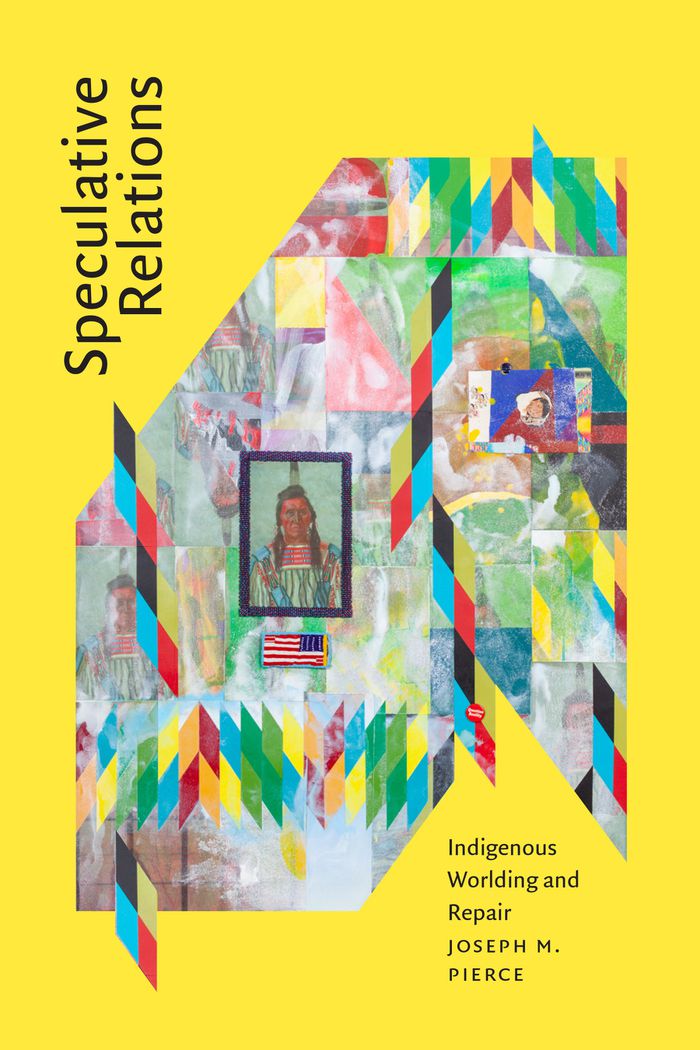
Indigenous relations are often described in anthropological terms, or as expressions of timeless, unchanging kinship ties. In ''Speculative Relations'', Joseph M. Pierce challenges this view, considering the potential of these relations as a means of repairing the damages of history. Pierce approaches Indigenous art and culture not as objects of study, but through relations committed to reciprocity and care for human and more-than-human beings. Drawing on Cherokee thinking, Indigenous queer theory, literary and cultural studies, and art criticism, he illuminates pathways for understanding and resisting the ongoing damages of colonialism while pointing to future worlds and imaginaries that breathe life into Indigenous thought and practice. Analyzing a range of materials—from photography, literature, and sculpture to film and ethnography—Pierce reveals how speculation, as a form of situated knowledge production, can repair and reimagine the worlds that colonialism sought to destroy. In doing so, Pierce highlights how gestures, poetics, and embodiment can uphold tradition and harness the imaginative power of speculation to create pathways for living in good relations.
Speculative relations: Indigenous worling and repair
Actions:
Price:
$44.95
(available in store)
Summary:
Indigenous relations are often described in anthropological terms, or as expressions of timeless, unchanging kinship ties. In ''Speculative Relations'', Joseph M. Pierce challenges this view, considering the potential of these relations as a means of repairing the damages of history. Pierce approaches Indigenous art and culture not as objects of study, but through relations committed to reciprocity and care for human and more-than-human beings. Drawing on Cherokee thinking, Indigenous queer theory, literary and cultural studies, and art criticism, he illuminates pathways for understanding and resisting the ongoing damages of colonialism while pointing to future worlds and imaginaries that breathe life into Indigenous thought and practice. Analyzing a range of materials—from photography, literature, and sculpture to film and ethnography—Pierce reveals how speculation, as a form of situated knowledge production, can repair and reimagine the worlds that colonialism sought to destroy. In doing so, Pierce highlights how gestures, poetics, and embodiment can uphold tradition and harness the imaginative power of speculation to create pathways for living in good relations.
Form:
books
books
Publication:
August 2025
August 2025
Subject:
indigenous
indigenous
Form:
books
books
Title:
Katso Koota/ Look at K
Katso Koota/ Look at K
Actions:
Price:
$26.00
(available to order)
Summary:
Olavi Laiho (1907-1944) was a writer, political organiser, and communist agitator, who was first imprisoned in 1932—a time when "communist laws" were in effect in Finland—for producing political material and running an illegal printing press in his home. He opposed Finland's WW2 era fighting alongside Nazi Germany against the Soviet Union, edited illegal journals, but(...)
$26.00
(available to order)
Summary:
Olavi Laiho (1907-1944) was a writer, political organiser, and communist agitator, who was first imprisoned in 1932—a time when "communist laws" were in effect in Finland—for producing political material and running an illegal printing press in his home. He opposed Finland's WW2 era fighting alongside Nazi Germany against the Soviet Union, edited illegal journals, but(...)
Title:
Katso Koota/ Look at K
Actions:
Price:
$26.00
(available to order)
Summary:
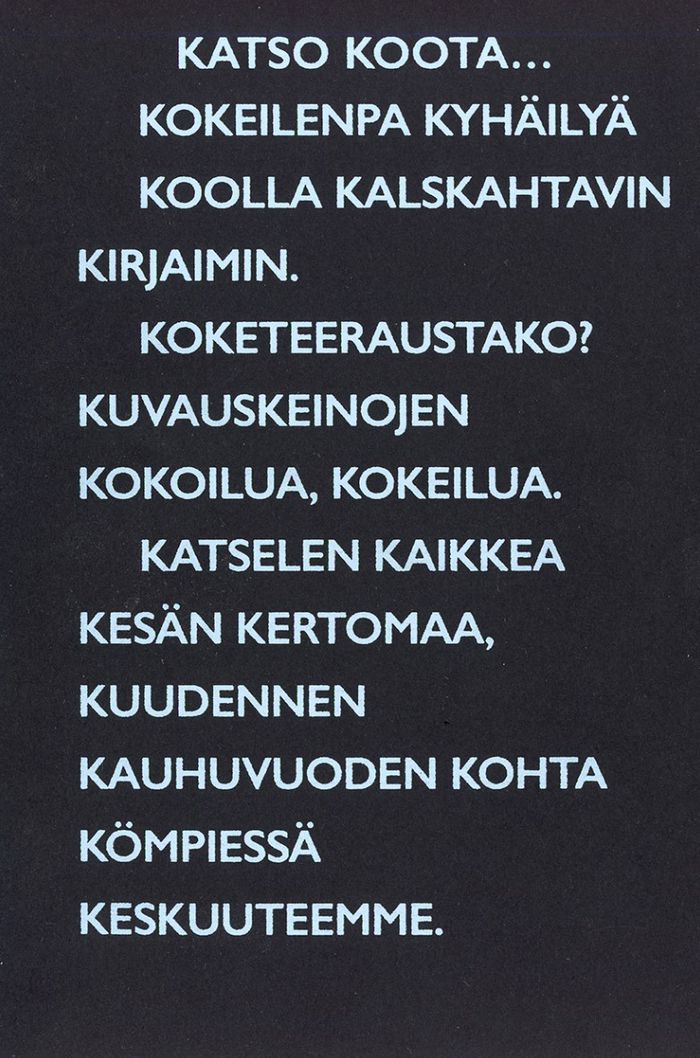
Olavi Laiho (1907-1944) was a writer, political organiser, and communist agitator, who was first imprisoned in 1932—a time when "communist laws" were in effect in Finland—for producing political material and running an illegal printing press in his home. He opposed Finland's WW2 era fighting alongside Nazi Germany against the Soviet Union, edited illegal journals, but also planned armed resistance and facilitated correspondence between the party's leadership in Helsinki and the Soviet embassy in Stockholm. Just a couple of weeks before his execution, Laiho wrote a remarkable essay "Katso Koota" [Look at K], using only words starting with the letter K. "Katso Koota" is an early example of Finnish modern alliterative writing, a lipogram, a literary technique in which every word must start with the same letter. Laiho's "Katso Koota" predates the French Oulipo ("workshop of potential literature") of the 1960s. Considering that he produced his "constrained writing" under conditions of extreme political and cultural confinement, it can be considered a true form of avant-garde subversion.
Katso Koota/ Look at K
Actions:
Price:
$26.00
(available to order)
Summary:
Olavi Laiho (1907-1944) was a writer, political organiser, and communist agitator, who was first imprisoned in 1932—a time when "communist laws" were in effect in Finland—for producing political material and running an illegal printing press in his home. He opposed Finland's WW2 era fighting alongside Nazi Germany against the Soviet Union, edited illegal journals, but also planned armed resistance and facilitated correspondence between the party's leadership in Helsinki and the Soviet embassy in Stockholm. Just a couple of weeks before his execution, Laiho wrote a remarkable essay "Katso Koota" [Look at K], using only words starting with the letter K. "Katso Koota" is an early example of Finnish modern alliterative writing, a lipogram, a literary technique in which every word must start with the same letter. Laiho's "Katso Koota" predates the French Oulipo ("workshop of potential literature") of the 1960s. Considering that he produced his "constrained writing" under conditions of extreme political and cultural confinement, it can be considered a true form of avant-garde subversion.
Form:
books
books
Publication:
December 2025
December 2025
Subject:
Critical Theory
Critical Theory
Form:
books
books
Actions:
Price:
$39.00
(available to order)
Summary:
Visiting the villas of Renaissance architect Andrea Palladio (1508-80), one inevitably asks oneself how people actually occupied them. Palladio conceived his villas as ''small towns'' (piccole città) that formed a single unit with adjacent service buildings and farm fields. Within their walls lived people of all ages, social backgrounds and skills. These buildings were(...)
$39.00
(available to order)
Summary:
Visiting the villas of Renaissance architect Andrea Palladio (1508-80), one inevitably asks oneself how people actually occupied them. Palladio conceived his villas as ''small towns'' (piccole città) that formed a single unit with adjacent service buildings and farm fields. Within their walls lived people of all ages, social backgrounds and skills. These buildings were(...)
Title:
Living with Palladio in the sixteenth century
Actions:
Price:
$39.00
(available to order)
Summary:
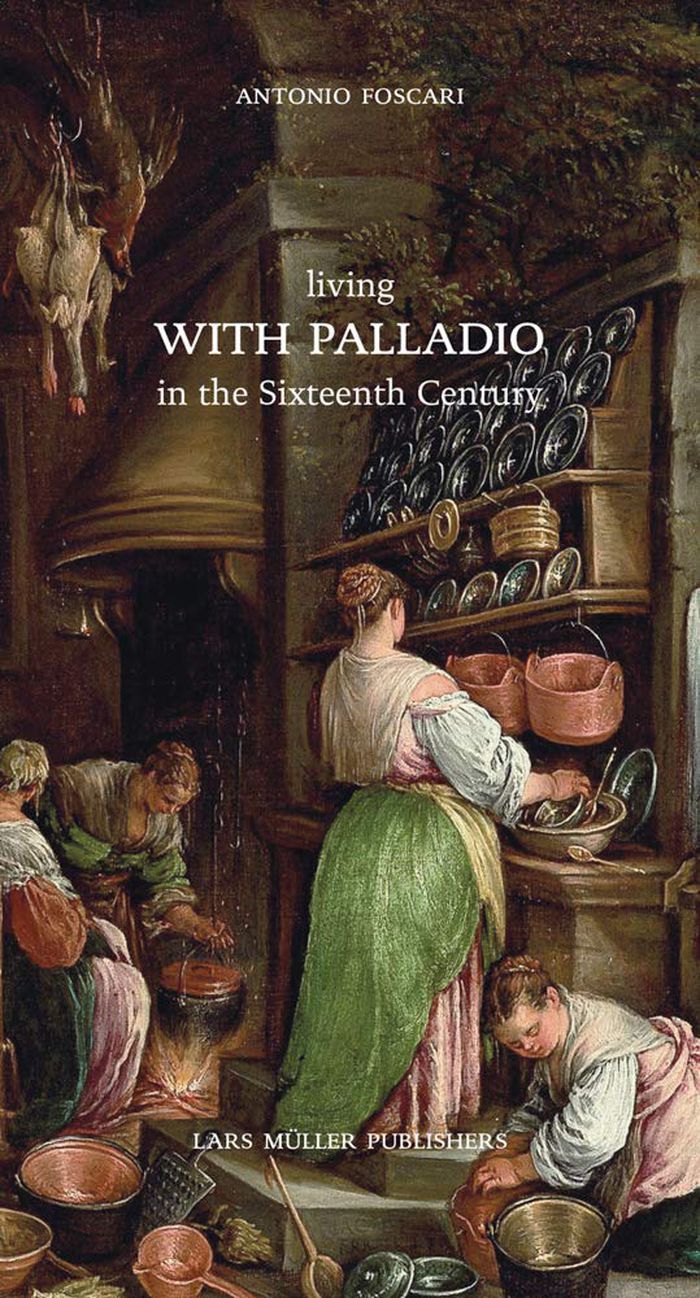
Visiting the villas of Renaissance architect Andrea Palladio (1508-80), one inevitably asks oneself how people actually occupied them. Palladio conceived his villas as ''small towns'' (piccole città) that formed a single unit with adjacent service buildings and farm fields. Within their walls lived people of all ages, social backgrounds and skills. These buildings were the venue for significant moments of public life, and the principles of hygiene, privacy and comfort, which we consider so defining and essential today, did not apply- in a sense furniture as such did not exist. ''Living with Palladio in the sixteenth century'' investigates how Palladio’s houses, their floors, rooms and measurements, were designed to structure the life of such a heterogeneous family of people. It analyses their hierarchical structure with the owner (padrone) at the top and everyone involved in the everyday running of the household (famiglia minuta) at the bottom. This book fills a decisive gap in research literature on the famous Italian architect by looking at how Palladio prioritized the domestic functions of his private buildings.
Living with Palladio in the sixteenth century
Actions:
Price:
$39.00
(available to order)
Summary:
Visiting the villas of Renaissance architect Andrea Palladio (1508-80), one inevitably asks oneself how people actually occupied them. Palladio conceived his villas as ''small towns'' (piccole città) that formed a single unit with adjacent service buildings and farm fields. Within their walls lived people of all ages, social backgrounds and skills. These buildings were the venue for significant moments of public life, and the principles of hygiene, privacy and comfort, which we consider so defining and essential today, did not apply- in a sense furniture as such did not exist. ''Living with Palladio in the sixteenth century'' investigates how Palladio’s houses, their floors, rooms and measurements, were designed to structure the life of such a heterogeneous family of people. It analyses their hierarchical structure with the owner (padrone) at the top and everyone involved in the everyday running of the household (famiglia minuta) at the bottom. This book fills a decisive gap in research literature on the famous Italian architect by looking at how Palladio prioritized the domestic functions of his private buildings.
Form:
books
books
Publication:
June 2020
June 2020
Subject:
Architecture Monographs
Architecture Monographs
Form:
books
books
Price:
$32.50
(available to order)
Summary:
The modern world is dominated by flat surfaces. We write, print and project on flat paper or flat screens, which we stare at all day. We inhabit spaces constructed from flat materials. We play sport on level fields. Engineered planar surfaces have become so pervasive and fundamental to behaviour and thought that we barely notice their existence. But flat landscapes are(...)
$32.50
(available to order)
Summary:
The modern world is dominated by flat surfaces. We write, print and project on flat paper or flat screens, which we stare at all day. We inhabit spaces constructed from flat materials. We play sport on level fields. Engineered planar surfaces have become so pervasive and fundamental to behaviour and thought that we barely notice their existence. But flat landscapes are(...)
Title:
Flatness
Actions:
Price:
$32.50
(available to order)
Summary:
The modern world is dominated by flat surfaces. We write, print and project on flat paper or flat screens, which we stare at all day. We inhabit spaces constructed from flat materials. We play sport on level fields. Engineered planar surfaces have become so pervasive and fundamental to behaviour and thought that we barely notice their existence. But flat landscapes are also often disparaged, viewed as featureless, empty and monotonous. Metaphorically, to ‘feel flat’ is to be bored, dull, lacking energy or inspiration. So what is it about flatness that makes it so desirable and practical in everyday life, yet so unattractive in landscape and as an idea? How has the construction of flat surfaces contributed to a degradation of visual diversity? "Flatness" attacks these questions by looking first at the ways humans have perceived the natural world around them, from Flat Earth theories to abstract geometric concepts and the Flatness Problem in modern cosmology. It also traces the long historical trajectory of flatness as an engineering ideal, and the representation of the concept in art, music and literature.
Flatness
Actions:
Price:
$32.50
(available to order)
Summary:
The modern world is dominated by flat surfaces. We write, print and project on flat paper or flat screens, which we stare at all day. We inhabit spaces constructed from flat materials. We play sport on level fields. Engineered planar surfaces have become so pervasive and fundamental to behaviour and thought that we barely notice their existence. But flat landscapes are also often disparaged, viewed as featureless, empty and monotonous. Metaphorically, to ‘feel flat’ is to be bored, dull, lacking energy or inspiration. So what is it about flatness that makes it so desirable and practical in everyday life, yet so unattractive in landscape and as an idea? How has the construction of flat surfaces contributed to a degradation of visual diversity? "Flatness" attacks these questions by looking first at the ways humans have perceived the natural world around them, from Flat Earth theories to abstract geometric concepts and the Flatness Problem in modern cosmology. It also traces the long historical trajectory of flatness as an engineering ideal, and the representation of the concept in art, music and literature.
Form:
books
books
Publication:
February 2017
February 2017
Subject:
Critical Theory
Critical Theory


