


11284 Results
Level of archival description:
Sub-series
Sub-series
Reference number:
AP178.S1.2002.PR05.SS3
Description:
This project subseries documents the Clubhouse de Vidago in Vidago, Portugal. While the records were held in the office’s archives this project was assigned the number 49/00. The office assigned the dates 2007-2010 to this project. The project, part of larger renovations to the Vidago Palace Hotel, consisted of the conversion of an old building into the new golf clubhouse. Originally constructed in 1886, the stone building was first used for bottling the Vidago spring water. The clubhouse consisted of a large restaurant and bar space, with white walls, high ceilings and a central skylight to illuminate its spacious interior. A golf shop and dressing room were also part of the clubhouse. Siza designed two other buildings for the new 18-hole golf course, the golf academy and the maintenance building, but neither of these was ever realized. This project subseries is recorded through photographic materials, drawings, study models and textual records dating from 2002-2015. These records document the clubhouse, the golf academy and the maintenance building. The photographic materials are mostly printed digital photos showing the site, construction work, the model and reference images. The drawings include studies, plans, elevations, sections, details, and structural, mechanical and electrical drawings. The textual records include furniture documentation, records for permits, budgets, supplier catalogues, correspondence and meeting minutes. There are also a number of records documenting various mechanical, electrical and structural systems.
AP178.S1.2002.PR05.SS3
Description:
This project subseries documents the Clubhouse de Vidago in Vidago, Portugal. While the records were held in the office’s archives this project was assigned the number 49/00. The office assigned the dates 2007-2010 to this project. The project, part of larger renovations to the Vidago Palace Hotel, consisted of the conversion of an old building into the new golf clubhouse. Originally constructed in 1886, the stone building was first used for bottling the Vidago spring water. The clubhouse consisted of a large restaurant and bar space, with white walls, high ceilings and a central skylight to illuminate its spacious interior. A golf shop and dressing room were also part of the clubhouse. Siza designed two other buildings for the new 18-hole golf course, the golf academy and the maintenance building, but neither of these was ever realized. This project subseries is recorded through photographic materials, drawings, study models and textual records dating from 2002-2015. These records document the clubhouse, the golf academy and the maintenance building. The photographic materials are mostly printed digital photos showing the site, construction work, the model and reference images. The drawings include studies, plans, elevations, sections, details, and structural, mechanical and electrical drawings. The textual records include furniture documentation, records for permits, budgets, supplier catalogues, correspondence and meeting minutes. There are also a number of records documenting various mechanical, electrical and structural systems.
People:
Date:
2002-2015
2002-2015
Title:
Clubhouse de Vidago [Vidago Palace Hotel Club House], Vidago, Portugal (2007-2010)
Actions:
AP178.S1.2002.PR05.SS3
Description:
This project subseries documents the Clubhouse de Vidago in Vidago, Portugal. While the records were held in the office’s archives this project was assigned the number 49/00. The office assigned the dates 2007-2010 to this project. The project, part of larger renovations to the Vidago Palace Hotel, consisted of the conversion of an old building into the new golf clubhouse. Originally constructed in 1886, the stone building was first used for bottling the Vidago spring water. The clubhouse consisted of a large restaurant and bar space, with white walls, high ceilings and a central skylight to illuminate its spacious interior. A golf shop and dressing room were also part of the clubhouse. Siza designed two other buildings for the new 18-hole golf course, the golf academy and the maintenance building, but neither of these was ever realized. This project subseries is recorded through photographic materials, drawings, study models and textual records dating from 2002-2015. These records document the clubhouse, the golf academy and the maintenance building. The photographic materials are mostly printed digital photos showing the site, construction work, the model and reference images. The drawings include studies, plans, elevations, sections, details, and structural, mechanical and electrical drawings. The textual records include furniture documentation, records for permits, budgets, supplier catalogues, correspondence and meeting minutes. There are also a number of records documenting various mechanical, electrical and structural systems.
Clubhouse de Vidago [Vidago Palace Hotel Club House], Vidago, Portugal (2007-2010)
Actions:
AP178.S1.2002.PR05.SS3
Description:
This project subseries documents the Clubhouse de Vidago in Vidago, Portugal. While the records were held in the office’s archives this project was assigned the number 49/00. The office assigned the dates 2007-2010 to this project. The project, part of larger renovations to the Vidago Palace Hotel, consisted of the conversion of an old building into the new golf clubhouse. Originally constructed in 1886, the stone building was first used for bottling the Vidago spring water. The clubhouse consisted of a large restaurant and bar space, with white walls, high ceilings and a central skylight to illuminate its spacious interior. A golf shop and dressing room were also part of the clubhouse. Siza designed two other buildings for the new 18-hole golf course, the golf academy and the maintenance building, but neither of these was ever realized. This project subseries is recorded through photographic materials, drawings, study models and textual records dating from 2002-2015. These records document the clubhouse, the golf academy and the maintenance building. The photographic materials are mostly printed digital photos showing the site, construction work, the model and reference images. The drawings include studies, plans, elevations, sections, details, and structural, mechanical and electrical drawings. The textual records include furniture documentation, records for permits, budgets, supplier catalogues, correspondence and meeting minutes. There are also a number of records documenting various mechanical, electrical and structural systems.
Level of archival description:
Subseries
Subseries
Date:
2002-2015
2002-2015
People:
Level of archival description:
Project
Project
Reference number:
AP178.S1.2002.PR06
Description:
This project series documents the Parque de Pedras Salgadas in Pedras Salgadas, Portugal. While the records were held in the office’s archives this project was assigned the number 50/00. The office assigned the date 2002 to this project. The project consisted of extensive work to the spa resort located in Pedras Salgadas Park for owner VMPS - Águas & Turismo, S.A, part of Unicer (now Super Bock Group). The work included the demolition of many buildings, the restauration and alterations of others and the construction of new buildings. Work on the Hotel Avelames, the thermal spa, the public pools and the Casa de Chá were the primary focus of the site for Siza. These four components of the project were divided by the office, with the Hotel Avelames, spa and Casa de Chá arranged together under AP178.S1.2002.PR06.SS1 and the public pools arranged under AP178.S1.2002.PR06.SS2. Architect Luís Rebelo de Andrade also constructed eco-houses and treehouses on the site later on. This project was realized in tandem with a similar project by Siza, the Parque de Vidago (AP178.S1.2002.PR05), also owned by Unicer. For this reason, the materials for both projects are mixed together. A large number of materials for this project can be found in project subseries AP178.S1.2002.PR05.SS1. These files have been identified at the file level in the Parque de Vidago project subseries.
AP178.S1.2002.PR06
Description:
This project series documents the Parque de Pedras Salgadas in Pedras Salgadas, Portugal. While the records were held in the office’s archives this project was assigned the number 50/00. The office assigned the date 2002 to this project. The project consisted of extensive work to the spa resort located in Pedras Salgadas Park for owner VMPS - Águas & Turismo, S.A, part of Unicer (now Super Bock Group). The work included the demolition of many buildings, the restauration and alterations of others and the construction of new buildings. Work on the Hotel Avelames, the thermal spa, the public pools and the Casa de Chá were the primary focus of the site for Siza. These four components of the project were divided by the office, with the Hotel Avelames, spa and Casa de Chá arranged together under AP178.S1.2002.PR06.SS1 and the public pools arranged under AP178.S1.2002.PR06.SS2. Architect Luís Rebelo de Andrade also constructed eco-houses and treehouses on the site later on. This project was realized in tandem with a similar project by Siza, the Parque de Vidago (AP178.S1.2002.PR05), also owned by Unicer. For this reason, the materials for both projects are mixed together. A large number of materials for this project can be found in project subseries AP178.S1.2002.PR05.SS1. These files have been identified at the file level in the Parque de Vidago project subseries.
People:
Date:
2002-2010
2002-2010
Title:
Parque de Pedras Salgadas, Pedras Salgadas, Portugal (2002-2010)
Actions:
AP178.S1.2002.PR06
Description:
This project series documents the Parque de Pedras Salgadas in Pedras Salgadas, Portugal. While the records were held in the office’s archives this project was assigned the number 50/00. The office assigned the date 2002 to this project. The project consisted of extensive work to the spa resort located in Pedras Salgadas Park for owner VMPS - Águas & Turismo, S.A, part of Unicer (now Super Bock Group). The work included the demolition of many buildings, the restauration and alterations of others and the construction of new buildings. Work on the Hotel Avelames, the thermal spa, the public pools and the Casa de Chá were the primary focus of the site for Siza. These four components of the project were divided by the office, with the Hotel Avelames, spa and Casa de Chá arranged together under AP178.S1.2002.PR06.SS1 and the public pools arranged under AP178.S1.2002.PR06.SS2. Architect Luís Rebelo de Andrade also constructed eco-houses and treehouses on the site later on. This project was realized in tandem with a similar project by Siza, the Parque de Vidago (AP178.S1.2002.PR05), also owned by Unicer. For this reason, the materials for both projects are mixed together. A large number of materials for this project can be found in project subseries AP178.S1.2002.PR05.SS1. These files have been identified at the file level in the Parque de Vidago project subseries.
Parque de Pedras Salgadas, Pedras Salgadas, Portugal (2002-2010)
Actions:
AP178.S1.2002.PR06
Description:
This project series documents the Parque de Pedras Salgadas in Pedras Salgadas, Portugal. While the records were held in the office’s archives this project was assigned the number 50/00. The office assigned the date 2002 to this project. The project consisted of extensive work to the spa resort located in Pedras Salgadas Park for owner VMPS - Águas & Turismo, S.A, part of Unicer (now Super Bock Group). The work included the demolition of many buildings, the restauration and alterations of others and the construction of new buildings. Work on the Hotel Avelames, the thermal spa, the public pools and the Casa de Chá were the primary focus of the site for Siza. These four components of the project were divided by the office, with the Hotel Avelames, spa and Casa de Chá arranged together under AP178.S1.2002.PR06.SS1 and the public pools arranged under AP178.S1.2002.PR06.SS2. Architect Luís Rebelo de Andrade also constructed eco-houses and treehouses on the site later on. This project was realized in tandem with a similar project by Siza, the Parque de Vidago (AP178.S1.2002.PR05), also owned by Unicer. For this reason, the materials for both projects are mixed together. A large number of materials for this project can be found in project subseries AP178.S1.2002.PR05.SS1. These files have been identified at the file level in the Parque de Vidago project subseries.
Level of archival description:
Project
Project
Date:
2002-2010
2002-2010
People:
Form:
archives
Level of archival description:
Fonds
archives
Level of archival description:
Fonds
Title:
Lars Spuybroek fonds
Lars Spuybroek fonds
Reference number:
AP173
Synopsis:
The Lars Spuybroek fonds documents the professional practice of architect Lars Spuybroek from his early projects in the 1990s to projects undertaken with his firm NOX from 1995 to 2010. The majority of the documents in the fonds consist of photographic materials, drawings and textual records relating to over 70 projects, such as the H2Oexpo in Neeltje Jans Island, Netherlands (1997), the Maison Folie in Nantes, France (2001) and the D-Tower in Doetinchem, Netherlands (2004).
AP173
Synopsis:
The Lars Spuybroek fonds documents the professional practice of architect Lars Spuybroek from his early projects in the 1990s to projects undertaken with his firm NOX from 1995 to 2010. The majority of the documents in the fonds consist of photographic materials, drawings and textual records relating to over 70 projects, such as the H2Oexpo in Neeltje Jans Island, Netherlands (1997), the Maison Folie in Nantes, France (2001) and the D-Tower in Doetinchem, Netherlands (2004).
People:
Date:
1980s-2010
1980s-2010
Title:
Lars Spuybroek fonds
Actions:
AP173
Synopsis:
The Lars Spuybroek fonds documents the professional practice of architect Lars Spuybroek from his early projects in the 1990s to projects undertaken with his firm NOX from 1995 to 2010. The majority of the documents in the fonds consist of photographic materials, drawings and textual records relating to over 70 projects, such as the H2Oexpo in Neeltje Jans Island, Netherlands (1997), the Maison Folie in Nantes, France (2001) and the D-Tower in Doetinchem, Netherlands (2004).
Lars Spuybroek fonds
Actions:
AP173
Synopsis:
The Lars Spuybroek fonds documents the professional practice of architect Lars Spuybroek from his early projects in the 1990s to projects undertaken with his firm NOX from 1995 to 2010. The majority of the documents in the fonds consist of photographic materials, drawings and textual records relating to over 70 projects, such as the H2Oexpo in Neeltje Jans Island, Netherlands (1997), the Maison Folie in Nantes, France (2001) and the D-Tower in Doetinchem, Netherlands (2004).
Form:
archives
Level of archival description:
Fonds
archives
Level of archival description:
Fonds
Date:
1980s-2010
1980s-2010
People:
Form:
events
events
Title:
The Unschool
The Unschool
Actions:
Description:
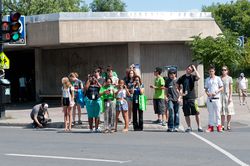
What could a school be? For a week over summer 2012, students of The Unschool explored the spaces in and around schools and pushed the limits of the camera as a social instrument with guest curator Monica Nouwens. Participants compared how people live in schools and cities, and how design can encourage and limit behaviours, relationships, and activities. “Could(...)
What could a school be? For a week over summer 2012, students of The Unschool explored the spaces in and around schools and pushed the limits of the camera as a social instrument with guest curator Monica Nouwens. Participants compared how people live in schools and cities, and how design can encourage and limit behaviours, relationships, and activities. “Could(...)
Date:
30 July 2012 to 3 August 2012
30 July 2012 to 3 August 2012
Title:
The Unschool
Actions:
Description:
What could a school be? For a week over summer 2012, students of The Unschool explored the spaces in and around schools and pushed the limits of the camera as a social instrument with guest curator Monica Nouwens. Participants compared how people live in schools and cities, and how design can encourage and limit behaviours, relationships, and activities. “Could(...)
The Unschool
Actions:
Description:
What could a school be? For a week over summer 2012, students of The Unschool explored the spaces in and around schools and pushed the limits of the camera as a social instrument with guest curator Monica Nouwens. Participants compared how people live in schools and cities, and how design can encourage and limit behaviours, relationships, and activities. “Could(...)
Form:
events
events
Date:
30 July 2012 to
3 August 2012
30 July 2012 to
3 August 2012
Level of archival description:
Project
Project
Reference number:
AP178.S1.1983.PR02
Description:
The project series documents the 1983 design entry for the competition of the Prinz-Albrecht-Palais Monument to Gestapo victims. While the records were held in the office’s archives this project was assigned the number 18/80. The office assigned the date 1983 for this project. This project was submitted to the International Architectural Exhibition Berlin competition (International Bauaustellung, IBA, circa 1979-1987), an urban renewal strategy for West Berlin, Germany. Siza had previously submitted four other projects to this competition: the Görtlitzer Bad swimming pool, Block 70 and 89 (Fränkelufer residential complex), Bonjour Tristesse (Block 121), and Block 11-12. He would also submit a design proposal to the IBA competition for the Kulturforum. According to the documentation from the IBA competition, entries for the memorial were to include a pedestrian walkway that cut through the memorial parallel to Schöneberger strasse leading to Kochstrasse. Entries were also to include a playground and along Stresemann strasse there was to be the addition of a two storey building and a corner building. Other requested components included a parking lot and a partial reconstruction of the Fine Arts School. Documenting the design proposal are conceptual and design development drawings, including studies, a site axonometric drawing, ground plan, site plan and north, south, and east elevations. Also included is textual documentation on the competition as well as correspondence from IBA officials such as Marion Wilbert. Photographic materials consist of slides of plans, sections and elevations.
AP178.S1.1983.PR02
Description:
The project series documents the 1983 design entry for the competition of the Prinz-Albrecht-Palais Monument to Gestapo victims. While the records were held in the office’s archives this project was assigned the number 18/80. The office assigned the date 1983 for this project. This project was submitted to the International Architectural Exhibition Berlin competition (International Bauaustellung, IBA, circa 1979-1987), an urban renewal strategy for West Berlin, Germany. Siza had previously submitted four other projects to this competition: the Görtlitzer Bad swimming pool, Block 70 and 89 (Fränkelufer residential complex), Bonjour Tristesse (Block 121), and Block 11-12. He would also submit a design proposal to the IBA competition for the Kulturforum. According to the documentation from the IBA competition, entries for the memorial were to include a pedestrian walkway that cut through the memorial parallel to Schöneberger strasse leading to Kochstrasse. Entries were also to include a playground and along Stresemann strasse there was to be the addition of a two storey building and a corner building. Other requested components included a parking lot and a partial reconstruction of the Fine Arts School. Documenting the design proposal are conceptual and design development drawings, including studies, a site axonometric drawing, ground plan, site plan and north, south, and east elevations. Also included is textual documentation on the competition as well as correspondence from IBA officials such as Marion Wilbert. Photographic materials consist of slides of plans, sections and elevations.
People:
Date:
1983-1984
1983-1984
Title:
Monumento às vítimas da Gestapo [Monument to Gestapo victims], Prinz-Albrecht-Palais, Berlin, Germany (1983)
Actions:
AP178.S1.1983.PR02
Description:
The project series documents the 1983 design entry for the competition of the Prinz-Albrecht-Palais Monument to Gestapo victims. While the records were held in the office’s archives this project was assigned the number 18/80. The office assigned the date 1983 for this project. This project was submitted to the International Architectural Exhibition Berlin competition (International Bauaustellung, IBA, circa 1979-1987), an urban renewal strategy for West Berlin, Germany. Siza had previously submitted four other projects to this competition: the Görtlitzer Bad swimming pool, Block 70 and 89 (Fränkelufer residential complex), Bonjour Tristesse (Block 121), and Block 11-12. He would also submit a design proposal to the IBA competition for the Kulturforum. According to the documentation from the IBA competition, entries for the memorial were to include a pedestrian walkway that cut through the memorial parallel to Schöneberger strasse leading to Kochstrasse. Entries were also to include a playground and along Stresemann strasse there was to be the addition of a two storey building and a corner building. Other requested components included a parking lot and a partial reconstruction of the Fine Arts School. Documenting the design proposal are conceptual and design development drawings, including studies, a site axonometric drawing, ground plan, site plan and north, south, and east elevations. Also included is textual documentation on the competition as well as correspondence from IBA officials such as Marion Wilbert. Photographic materials consist of slides of plans, sections and elevations.
Monumento às vítimas da Gestapo [Monument to Gestapo victims], Prinz-Albrecht-Palais, Berlin, Germany (1983)
Actions:
AP178.S1.1983.PR02
Description:
The project series documents the 1983 design entry for the competition of the Prinz-Albrecht-Palais Monument to Gestapo victims. While the records were held in the office’s archives this project was assigned the number 18/80. The office assigned the date 1983 for this project. This project was submitted to the International Architectural Exhibition Berlin competition (International Bauaustellung, IBA, circa 1979-1987), an urban renewal strategy for West Berlin, Germany. Siza had previously submitted four other projects to this competition: the Görtlitzer Bad swimming pool, Block 70 and 89 (Fränkelufer residential complex), Bonjour Tristesse (Block 121), and Block 11-12. He would also submit a design proposal to the IBA competition for the Kulturforum. According to the documentation from the IBA competition, entries for the memorial were to include a pedestrian walkway that cut through the memorial parallel to Schöneberger strasse leading to Kochstrasse. Entries were also to include a playground and along Stresemann strasse there was to be the addition of a two storey building and a corner building. Other requested components included a parking lot and a partial reconstruction of the Fine Arts School. Documenting the design proposal are conceptual and design development drawings, including studies, a site axonometric drawing, ground plan, site plan and north, south, and east elevations. Also included is textual documentation on the competition as well as correspondence from IBA officials such as Marion Wilbert. Photographic materials consist of slides of plans, sections and elevations.
Level of archival description:
Project
Project
Date:
1983-1984
1983-1984
People:
Level of archival description:
Project
Project
Reference number:
AP178.S1.1965.PR06
Description:
This project series documents the Plano Urbanistico para a Marginal de Leça e Zona da Boa Nova in Matosinhos, Portugal. While the records were held in the office’s archives this project was assigned the number 22/60. In the past the office identified the project as number 113. The office assigned the dates 1965-1974 for this project. This project was part of an urban renewal program of Matosinhos. Originally, the Avenida Marginal de Leça da Palmeira was a ring road mainly used to access the beaches but it later became a central road to access north and east parts of the city. Traffic and lack of parking spaces became problematic. The project consisted of an urbanization plan for Leça da Palmeira and Boa Nova, a new design for the layout of the pipelines between the Port of Leixões and SACOR Refinery, and a new design for da Marginal street that improve access to the Ocean swimming pool and others facilities of the area. Drawings include topographic surveys, studies, sketches, plans and profiles. Textual materials include a building program, notes and correspondence between Siza, the city of Matosinhos, and SACOR. Photographic materials and slides document the project site and model. It is also important to note that several Siza's projects were built in this area and are present in some sketches of this project, including the Casa de Chá, Restaurante da Boa Nova, Ocean swimming pool, and Monumento ao poeta António Nobre.
AP178.S1.1965.PR06
Description:
This project series documents the Plano Urbanistico para a Marginal de Leça e Zona da Boa Nova in Matosinhos, Portugal. While the records were held in the office’s archives this project was assigned the number 22/60. In the past the office identified the project as number 113. The office assigned the dates 1965-1974 for this project. This project was part of an urban renewal program of Matosinhos. Originally, the Avenida Marginal de Leça da Palmeira was a ring road mainly used to access the beaches but it later became a central road to access north and east parts of the city. Traffic and lack of parking spaces became problematic. The project consisted of an urbanization plan for Leça da Palmeira and Boa Nova, a new design for the layout of the pipelines between the Port of Leixões and SACOR Refinery, and a new design for da Marginal street that improve access to the Ocean swimming pool and others facilities of the area. Drawings include topographic surveys, studies, sketches, plans and profiles. Textual materials include a building program, notes and correspondence between Siza, the city of Matosinhos, and SACOR. Photographic materials and slides document the project site and model. It is also important to note that several Siza's projects were built in this area and are present in some sketches of this project, including the Casa de Chá, Restaurante da Boa Nova, Ocean swimming pool, and Monumento ao poeta António Nobre.
People:
Date:
1960-1984
1960-1984
Title:
Plano Urbanístico para a Marginal de Leça e Zona da Boa Nova [Leça and Boa Nova coastal development plan], Leça da Palmeira, Matosinhos, Portugal (1966)
Actions:
AP178.S1.1965.PR06
Description:
This project series documents the Plano Urbanistico para a Marginal de Leça e Zona da Boa Nova in Matosinhos, Portugal. While the records were held in the office’s archives this project was assigned the number 22/60. In the past the office identified the project as number 113. The office assigned the dates 1965-1974 for this project. This project was part of an urban renewal program of Matosinhos. Originally, the Avenida Marginal de Leça da Palmeira was a ring road mainly used to access the beaches but it later became a central road to access north and east parts of the city. Traffic and lack of parking spaces became problematic. The project consisted of an urbanization plan for Leça da Palmeira and Boa Nova, a new design for the layout of the pipelines between the Port of Leixões and SACOR Refinery, and a new design for da Marginal street that improve access to the Ocean swimming pool and others facilities of the area. Drawings include topographic surveys, studies, sketches, plans and profiles. Textual materials include a building program, notes and correspondence between Siza, the city of Matosinhos, and SACOR. Photographic materials and slides document the project site and model. It is also important to note that several Siza's projects were built in this area and are present in some sketches of this project, including the Casa de Chá, Restaurante da Boa Nova, Ocean swimming pool, and Monumento ao poeta António Nobre.
Plano Urbanístico para a Marginal de Leça e Zona da Boa Nova [Leça and Boa Nova coastal development plan], Leça da Palmeira, Matosinhos, Portugal (1966)
Actions:
AP178.S1.1965.PR06
Description:
This project series documents the Plano Urbanistico para a Marginal de Leça e Zona da Boa Nova in Matosinhos, Portugal. While the records were held in the office’s archives this project was assigned the number 22/60. In the past the office identified the project as number 113. The office assigned the dates 1965-1974 for this project. This project was part of an urban renewal program of Matosinhos. Originally, the Avenida Marginal de Leça da Palmeira was a ring road mainly used to access the beaches but it later became a central road to access north and east parts of the city. Traffic and lack of parking spaces became problematic. The project consisted of an urbanization plan for Leça da Palmeira and Boa Nova, a new design for the layout of the pipelines between the Port of Leixões and SACOR Refinery, and a new design for da Marginal street that improve access to the Ocean swimming pool and others facilities of the area. Drawings include topographic surveys, studies, sketches, plans and profiles. Textual materials include a building program, notes and correspondence between Siza, the city of Matosinhos, and SACOR. Photographic materials and slides document the project site and model. It is also important to note that several Siza's projects were built in this area and are present in some sketches of this project, including the Casa de Chá, Restaurante da Boa Nova, Ocean swimming pool, and Monumento ao poeta António Nobre.
Level of archival description:
Project
Project
Date:
1960-1984
1960-1984
People:
Level of archival description:
Project
Project
Reference number:
AP178.S1.1998.PR03
Description:
This project series documents the Edifício Zaida Habitação e Comércio in Granada, Spain. While the records were held in the office’s archives this project was assigned the number 98/90. The office assigned the dates 1998-2006 to this project. The project was divided in three components, each represented in the following project subseries: the Zaida building (AP178.S1.1998.PR03.SS1), the Caja Rural de Granada (AP178.S1.1998.PR03.SS2) and the Casa Pátio (AP178.S1.1998.PR03.SS3). The project, realized with local architect Juan Domingo Santos, redeveloped three ajacent parcels of land that faced the Plaza Puerta Real. This included the demolition of the nineteenth century Zaida Hotel that existed on the site and the incorporation of an existing nineteenth century courtyard style home (Casa Pátio). The project was built in two phases, beginning with the Zaida building in phase 1 and continuing with the Casa Pátio in phase 2. The Zaida building was six-storeys with commerical and office spaces on the first three levels and residential dwellings on the upper three. The two bottom floors of the building's exterior were constructed from grey stone, while the top four storeys were white stucco. The bank branch Caja Rural de Granada was located on the ground level of the building. While the architect sought to save and preserve the Casa Pátio, eventually it had to be reinterpretted and attached to the main volume. It was integrated with the main building using the same white stucco exterior.
AP178.S1.1998.PR03
Description:
This project series documents the Edifício Zaida Habitação e Comércio in Granada, Spain. While the records were held in the office’s archives this project was assigned the number 98/90. The office assigned the dates 1998-2006 to this project. The project was divided in three components, each represented in the following project subseries: the Zaida building (AP178.S1.1998.PR03.SS1), the Caja Rural de Granada (AP178.S1.1998.PR03.SS2) and the Casa Pátio (AP178.S1.1998.PR03.SS3). The project, realized with local architect Juan Domingo Santos, redeveloped three ajacent parcels of land that faced the Plaza Puerta Real. This included the demolition of the nineteenth century Zaida Hotel that existed on the site and the incorporation of an existing nineteenth century courtyard style home (Casa Pátio). The project was built in two phases, beginning with the Zaida building in phase 1 and continuing with the Casa Pátio in phase 2. The Zaida building was six-storeys with commerical and office spaces on the first three levels and residential dwellings on the upper three. The two bottom floors of the building's exterior were constructed from grey stone, while the top four storeys were white stucco. The bank branch Caja Rural de Granada was located on the ground level of the building. While the architect sought to save and preserve the Casa Pátio, eventually it had to be reinterpretted and attached to the main volume. It was integrated with the main building using the same white stucco exterior.
People:
Date:
1989-2006
1989-2006
Title:
Edifício Zaida [Zaida Building and Courtyard House], Granada, Spain (1998-2006)
Actions:
AP178.S1.1998.PR03
Description:
This project series documents the Edifício Zaida Habitação e Comércio in Granada, Spain. While the records were held in the office’s archives this project was assigned the number 98/90. The office assigned the dates 1998-2006 to this project. The project was divided in three components, each represented in the following project subseries: the Zaida building (AP178.S1.1998.PR03.SS1), the Caja Rural de Granada (AP178.S1.1998.PR03.SS2) and the Casa Pátio (AP178.S1.1998.PR03.SS3). The project, realized with local architect Juan Domingo Santos, redeveloped three ajacent parcels of land that faced the Plaza Puerta Real. This included the demolition of the nineteenth century Zaida Hotel that existed on the site and the incorporation of an existing nineteenth century courtyard style home (Casa Pátio). The project was built in two phases, beginning with the Zaida building in phase 1 and continuing with the Casa Pátio in phase 2. The Zaida building was six-storeys with commerical and office spaces on the first three levels and residential dwellings on the upper three. The two bottom floors of the building's exterior were constructed from grey stone, while the top four storeys were white stucco. The bank branch Caja Rural de Granada was located on the ground level of the building. While the architect sought to save and preserve the Casa Pátio, eventually it had to be reinterpretted and attached to the main volume. It was integrated with the main building using the same white stucco exterior.
Edifício Zaida [Zaida Building and Courtyard House], Granada, Spain (1998-2006)
Actions:
AP178.S1.1998.PR03
Description:
This project series documents the Edifício Zaida Habitação e Comércio in Granada, Spain. While the records were held in the office’s archives this project was assigned the number 98/90. The office assigned the dates 1998-2006 to this project. The project was divided in three components, each represented in the following project subseries: the Zaida building (AP178.S1.1998.PR03.SS1), the Caja Rural de Granada (AP178.S1.1998.PR03.SS2) and the Casa Pátio (AP178.S1.1998.PR03.SS3). The project, realized with local architect Juan Domingo Santos, redeveloped three ajacent parcels of land that faced the Plaza Puerta Real. This included the demolition of the nineteenth century Zaida Hotel that existed on the site and the incorporation of an existing nineteenth century courtyard style home (Casa Pátio). The project was built in two phases, beginning with the Zaida building in phase 1 and continuing with the Casa Pátio in phase 2. The Zaida building was six-storeys with commerical and office spaces on the first three levels and residential dwellings on the upper three. The two bottom floors of the building's exterior were constructed from grey stone, while the top four storeys were white stucco. The bank branch Caja Rural de Granada was located on the ground level of the building. While the architect sought to save and preserve the Casa Pátio, eventually it had to be reinterpretted and attached to the main volume. It was integrated with the main building using the same white stucco exterior.
Level of archival description:
Project
Project
Date:
1989-2006
1989-2006
People:
Form:
events
events
Title:
Visiting Scholar Seminar: Gregorio Carboni Maestri
Portugal: Architecture, Tendenza, Revolution
Visiting Scholar Seminar: Gregorio Carboni Maestri
Portugal: Architecture, Tendenza, Revolution
Actions:
Description:
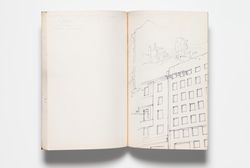
Visiting Scholar Gregorio Carboni Maestri presents his research. From the 1930s to the late 1980s, Portuguese architecture was formed through a frustrated relationship with modernity and through a crucial dialogue with Italy. This talk addresses how Portuguese architecture observed and reacted to Italian models such as rationalism in the 1930s, postwar neorealism, and(...)
Visiting Scholar Gregorio Carboni Maestri presents his research. From the 1930s to the late 1980s, Portuguese architecture was formed through a frustrated relationship with modernity and through a crucial dialogue with Italy. This talk addresses how Portuguese architecture observed and reacted to Italian models such as rationalism in the 1930s, postwar neorealism, and(...)
Location:
Shaughnessy House Keyword(s):
Gregorio Carboni Maestri, Visiting Scholar, Portugal, Tendenza
Shaughnessy House Keyword(s):
Gregorio Carboni Maestri, Visiting Scholar, Portugal, Tendenza
Date:
3 August 2017, 6pm
3 August 2017, 6pm
Title:
Visiting Scholar Seminar: Gregorio Carboni Maestri
Actions:
Description:
Visiting Scholar Gregorio Carboni Maestri presents his research. From the 1930s to the late 1980s, Portuguese architecture was formed through a frustrated relationship with modernity and through a crucial dialogue with Italy. This talk addresses how Portuguese architecture observed and reacted to Italian models such as rationalism in the 1930s, postwar neorealism, and(...)
Visiting Scholar Seminar: Gregorio Carboni Maestri
Actions:
Description:
Visiting Scholar Gregorio Carboni Maestri presents his research. From the 1930s to the late 1980s, Portuguese architecture was formed through a frustrated relationship with modernity and through a crucial dialogue with Italy. This talk addresses how Portuguese architecture observed and reacted to Italian models such as rationalism in the 1930s, postwar neorealism, and(...)
Form:
events
events
Date:
3 August 2017
6pm
3 August 2017
6pm
Location:
Shaughnessy House Keyword(s):
Gregorio Carboni Maestri, Visiting Scholar, Portugal, Tendenza
Shaughnessy House Keyword(s):
Gregorio Carboni Maestri, Visiting Scholar, Portugal, Tendenza
Form:
born digital
born digital
Actions:
Reference number:
AP167.S1.SS3.007
Description:
This directory chiefly contains JPEGs and Photoshop files created to be used by the NSA Muscle computer interface. It also contains licensing information for an unidentified software, possibly related to the NSA Muscle computer interface. Original directory name: "MUSCLE interface". Most common file formats: JPEG File Interchange Format, Unidentified, Adobe Photoshop, Plain Text File, RAR Archive.
AP167.S1.SS3.007
Description:
This directory chiefly contains JPEGs and Photoshop files created to be used by the NSA Muscle computer interface. It also contains licensing information for an unidentified software, possibly related to the NSA Muscle computer interface. Original directory name: "MUSCLE interface". Most common file formats: JPEG File Interchange Format, Unidentified, Adobe Photoshop, Plain Text File, RAR Archive.
People:
Date:
25 January 2002 - 8 December 2003
25 January 2002 - 8 December 2003
Title:
Computer interface design for the NSA Muscle (2 of 2)
Actions:
AP167.S1.SS3.007
Description:
This directory chiefly contains JPEGs and Photoshop files created to be used by the NSA Muscle computer interface. It also contains licensing information for an unidentified software, possibly related to the NSA Muscle computer interface. Original directory name: "MUSCLE interface". Most common file formats: JPEG File Interchange Format, Unidentified, Adobe Photoshop, Plain Text File, RAR Archive.
Computer interface design for the NSA Muscle (2 of 2)
Actions:
AP167.S1.SS3.007
Description:
This directory chiefly contains JPEGs and Photoshop files created to be used by the NSA Muscle computer interface. It also contains licensing information for an unidentified software, possibly related to the NSA Muscle computer interface. Original directory name: "MUSCLE interface". Most common file formats: JPEG File Interchange Format, Unidentified, Adobe Photoshop, Plain Text File, RAR Archive.
Form:
born digital
born digital
Date:
25 January 2002 - 8 December 2003
25 January 2002 - 8 December 2003
People:
Form:
born digital
born digital
Actions:
Reference number:
AP184.S1.032
Description:
Complete contents of CD-R ARCH268241, labeled “TF3DV Phase 2.32 SGI Databases (Nov 18)”. File includes an .iso disk image of the dual-formatted ISO-9660/HFS disk and digital files exported from the disk image using FTK Imager. Most common file formats: Unidentified, Plain Text File, 3D Studio Shapes, Tape Archive Format, Adobe Photoshop.
AP184.S1.032
Description:
Complete contents of CD-R ARCH268241, labeled “TF3DV Phase 2.32 SGI Databases (Nov 18)”. File includes an .iso disk image of the dual-formatted ISO-9660/HFS disk and digital files exported from the disk image using FTK Imager. Most common file formats: Unidentified, Plain Text File, 3D Studio Shapes, Tape Archive Format, Adobe Photoshop.
People:
Date:
17 November 1997 - 18 November 1997
17 November 1997 - 18 November 1997
Title:
SGI databases for Three Dimensional Trading Floor, Phase 2.32
Actions:
AP184.S1.032
Description:
Complete contents of CD-R ARCH268241, labeled “TF3DV Phase 2.32 SGI Databases (Nov 18)”. File includes an .iso disk image of the dual-formatted ISO-9660/HFS disk and digital files exported from the disk image using FTK Imager. Most common file formats: Unidentified, Plain Text File, 3D Studio Shapes, Tape Archive Format, Adobe Photoshop.
SGI databases for Three Dimensional Trading Floor, Phase 2.32
Actions:
AP184.S1.032
Description:
Complete contents of CD-R ARCH268241, labeled “TF3DV Phase 2.32 SGI Databases (Nov 18)”. File includes an .iso disk image of the dual-formatted ISO-9660/HFS disk and digital files exported from the disk image using FTK Imager. Most common file formats: Unidentified, Plain Text File, 3D Studio Shapes, Tape Archive Format, Adobe Photoshop.
Form:
born digital
born digital
Date:
17 November 1997 - 18 November 1997
17 November 1997 - 18 November 1997
People:


