


4671 Results
Form:
journals and magazines
journals and magazines
Actions:
Price:
$7.50
(available to order)
Summary:
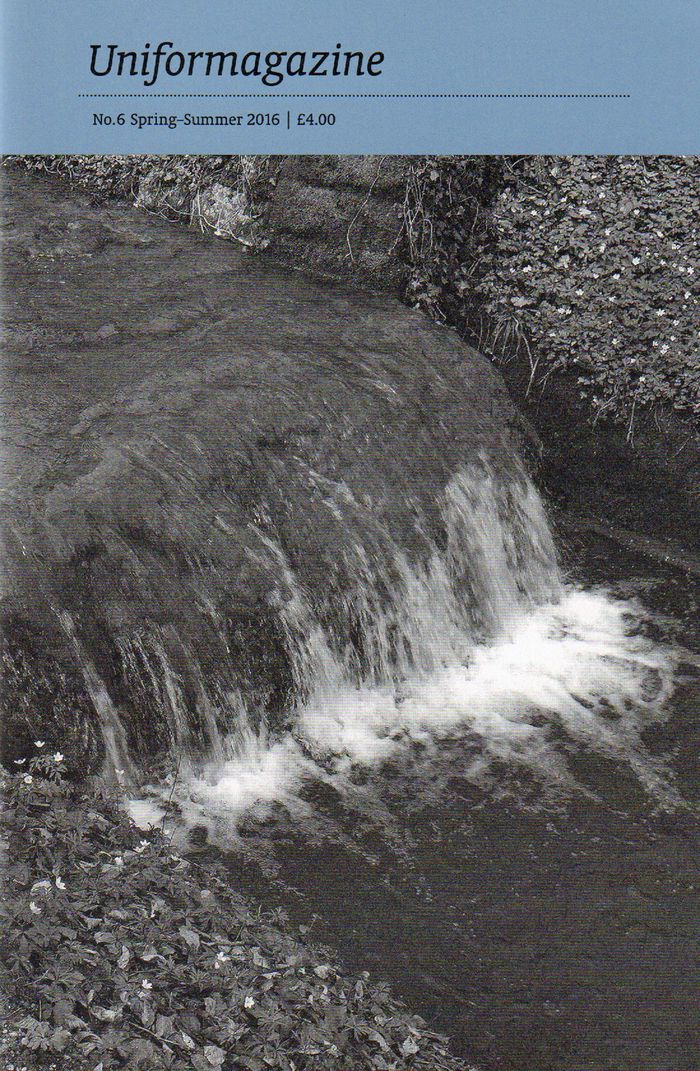
No.6. John Bevis’s definitive study of the pioneering natural history photographers "The Keartons : inventing nature photography", illustrated throughout with their original images. The first essay in this issue, by Angus Carlyle, reflects on the sequence of one hundred short runs that comprise "A downland index", which will be out in early summer. Other projects in(...)
$7.50
(available to order)
Summary:
No.6. John Bevis’s definitive study of the pioneering natural history photographers "The Keartons : inventing nature photography", illustrated throughout with their original images. The first essay in this issue, by Angus Carlyle, reflects on the sequence of one hundred short runs that comprise "A downland index", which will be out in early summer. Other projects in(...)
Title:
Uniformagazine no.6 Spring-Summer 2016
Actions:
Price:
$7.50
(available to order)
Summary:
No.6. John Bevis’s definitive study of the pioneering natural history photographers "The Keartons : inventing nature photography", illustrated throughout with their original images. The first essay in this issue, by Angus Carlyle, reflects on the sequence of one hundred short runs that comprise "A downland index", which will be out in early summer. Other projects in progress include a new book in collaboration with geographers Hannah Neate and Ruth Craggs which will highlight the diversity of current responses to modernist architecture; a survey of the work of Michael Gibbs whose activities included poetry, performance, film, and publishing, and his immersion in what he called “a genuinely ‘underground’ culture… which owed nothing to the official art establishment”; and a book with the sound poet and performance artist Nathan Walker from his residency in June at the Armitt Museum in Cumbria.
Uniformagazine no.6 Spring-Summer 2016
Actions:
Price:
$7.50
(available to order)
Summary:
No.6. John Bevis’s definitive study of the pioneering natural history photographers "The Keartons : inventing nature photography", illustrated throughout with their original images. The first essay in this issue, by Angus Carlyle, reflects on the sequence of one hundred short runs that comprise "A downland index", which will be out in early summer. Other projects in progress include a new book in collaboration with geographers Hannah Neate and Ruth Craggs which will highlight the diversity of current responses to modernist architecture; a survey of the work of Michael Gibbs whose activities included poetry, performance, film, and publishing, and his immersion in what he called “a genuinely ‘underground’ culture… which owed nothing to the official art establishment”; and a book with the sound poet and performance artist Nathan Walker from his residency in June at the Armitt Museum in Cumbria.
Form:
journals and magazines
journals and magazines
Publication:
May 2016
May 2016
Subject:
Magazines
Magazines
Form:
books
books
Title:
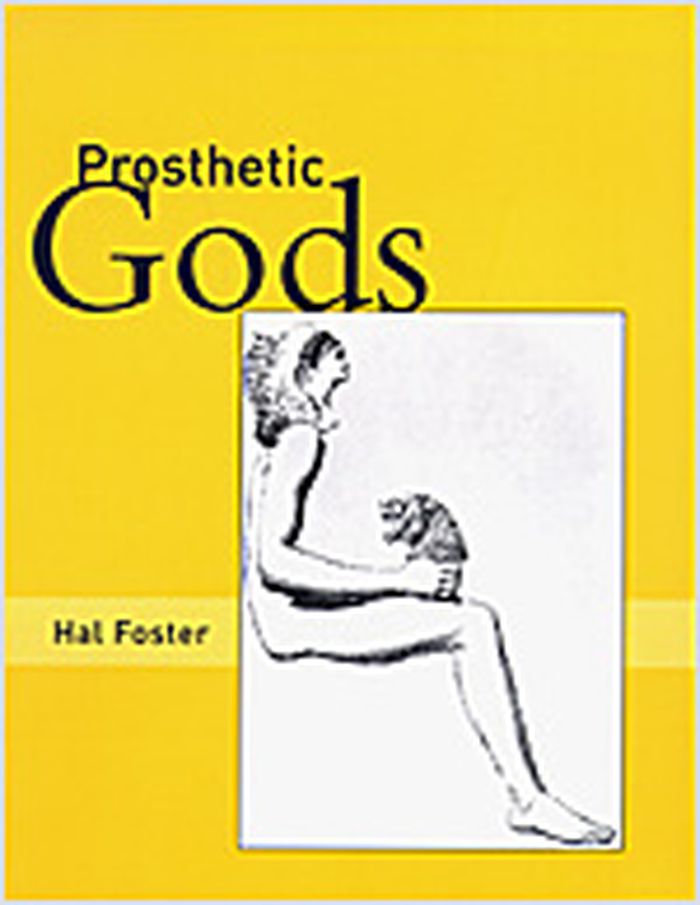
Prosthetic gods
Prosthetic gods
Actions:
Price:
$24.95
(available to order)
Summary:
How to imagine not only a new art or architecture but a new self or subject equal to them? In "Prosthetic gods", Hal Foster explores this question through the works and writings of such key modernists as Gauguin and Picasso, F. T. Marinetti and Wyndham Lewis, Adolf Loos and Max Ernst. These diverse figures were all fascinated by fictions of origin, either primordial and(...)
$24.95
(available to order)
Summary:
How to imagine not only a new art or architecture but a new self or subject equal to them? In "Prosthetic gods", Hal Foster explores this question through the works and writings of such key modernists as Gauguin and Picasso, F. T. Marinetti and Wyndham Lewis, Adolf Loos and Max Ernst. These diverse figures were all fascinated by fictions of origin, either primordial and(...)
Title:
Prosthetic gods
Actions:
Price:
$24.95
(available to order)
Summary:
How to imagine not only a new art or architecture but a new self or subject equal to them? In "Prosthetic gods", Hal Foster explores this question through the works and writings of such key modernists as Gauguin and Picasso, F. T. Marinetti and Wyndham Lewis, Adolf Loos and Max Ernst. These diverse figures were all fascinated by fictions of origin, either primordial and tribal or futuristic and technological. In this way, Foster argues, two forms came to dominate modernist art above all others: the primitive and the machine. Foster begins with the primitivist fantasies of Gauguin and Picasso, which he examines through the Freudian lens of the primal scene. He then turns to the purist obsessions of the Viennese architect Loos, who abhorred all things primitive. Next Foster considers the technophilic subjects propounded by the futurist Marinetti and the vorticist Lewis. These "new egos" are further contrasted with the "bachelor machines" proposed by the dadaist Ernst. Foster also explores extrapolations from the art of the mentally ill in the aesthetic models of Ernst, Paul Klee, and Jean Dubuffet, as well as manipulations of the female body in the surrealist photography of Brassai, Man Ray, and Hans Bellmer. Finally, he examines the impulse to dissolve the conventions of art altogether in the drip paintings of Jackson Pollock, the scatter pieces of Robert Morris, and the earthworks of Robert Smithson, and traces the evocation of lost objects of desire in sculptural work from Marcel Duchamp and Alberto Giacometti to Robert Gober. Although its title is drawn from Freud, "Prosthetic gods" does not impose psychoanalytic theory on modernist art; rather, it sets the two into critical relation and scans the greater historical field that they share.
Prosthetic gods
Actions:
Price:
$24.95
(available to order)
Summary:
How to imagine not only a new art or architecture but a new self or subject equal to them? In "Prosthetic gods", Hal Foster explores this question through the works and writings of such key modernists as Gauguin and Picasso, F. T. Marinetti and Wyndham Lewis, Adolf Loos and Max Ernst. These diverse figures were all fascinated by fictions of origin, either primordial and tribal or futuristic and technological. In this way, Foster argues, two forms came to dominate modernist art above all others: the primitive and the machine. Foster begins with the primitivist fantasies of Gauguin and Picasso, which he examines through the Freudian lens of the primal scene. He then turns to the purist obsessions of the Viennese architect Loos, who abhorred all things primitive. Next Foster considers the technophilic subjects propounded by the futurist Marinetti and the vorticist Lewis. These "new egos" are further contrasted with the "bachelor machines" proposed by the dadaist Ernst. Foster also explores extrapolations from the art of the mentally ill in the aesthetic models of Ernst, Paul Klee, and Jean Dubuffet, as well as manipulations of the female body in the surrealist photography of Brassai, Man Ray, and Hans Bellmer. Finally, he examines the impulse to dissolve the conventions of art altogether in the drip paintings of Jackson Pollock, the scatter pieces of Robert Morris, and the earthworks of Robert Smithson, and traces the evocation of lost objects of desire in sculptural work from Marcel Duchamp and Alberto Giacometti to Robert Gober. Although its title is drawn from Freud, "Prosthetic gods" does not impose psychoanalytic theory on modernist art; rather, it sets the two into critical relation and scans the greater historical field that they share.
Form:
books
books
Publication:
April 2006, Cambridge (MA), London
April 2006, Cambridge (MA), London
Subject:
Architectural Theory
Architectural Theory
Form:
books
books
Actions:
Price:
$33.95
(available to order)
Summary:
Since its publication in 1936, Walter Benjamin's "Artwork" essay has become a canonical text about the status and place of the fine arts in modern mass culture. Benjamin was especially concerned with the ability of new technologies--notably film, sound recording, and photography--to reproduce works of art in great number. Benjamin could not have foreseen the explosion of(...)
$33.95
(available to order)
Summary:
Since its publication in 1936, Walter Benjamin's "Artwork" essay has become a canonical text about the status and place of the fine arts in modern mass culture. Benjamin was especially concerned with the ability of new technologies--notably film, sound recording, and photography--to reproduce works of art in great number. Benjamin could not have foreseen the explosion of(...)
Subject:
Architectural Theory
Architectural Theory
Publication:
July 2003, Stanford
July 2003, Stanford
Title:
Mapping Benjamin : the work of art in the digital age
Actions:
Price:
$33.95
(available to order)
Summary:
Since its publication in 1936, Walter Benjamin's "Artwork" essay has become a canonical text about the status and place of the fine arts in modern mass culture. Benjamin was especially concerned with the ability of new technologies--notably film, sound recording, and photography--to reproduce works of art in great number. Benjamin could not have foreseen the explosion of imagery and media that has occurred during the past fifty years. Does Benjamin's famous essay still speak to this new situation? That is the question posed by the editors of this book to a wide range of leading scholars and thinkers across a spectrum of disciplines in the humanities. The essays gathered here do not hazard a univocal reply to that question; rather they offer a rich, wide-ranging critique of Benjamin's position that refracts and reflects contemporary thinking about the ethical, political, and aesthetic implications of life in the digital age.
Mapping Benjamin : the work of art in the digital age
Actions:
Price:
$33.95
(available to order)
Summary:
Since its publication in 1936, Walter Benjamin's "Artwork" essay has become a canonical text about the status and place of the fine arts in modern mass culture. Benjamin was especially concerned with the ability of new technologies--notably film, sound recording, and photography--to reproduce works of art in great number. Benjamin could not have foreseen the explosion of imagery and media that has occurred during the past fifty years. Does Benjamin's famous essay still speak to this new situation? That is the question posed by the editors of this book to a wide range of leading scholars and thinkers across a spectrum of disciplines in the humanities. The essays gathered here do not hazard a univocal reply to that question; rather they offer a rich, wide-ranging critique of Benjamin's position that refracts and reflects contemporary thinking about the ethical, political, and aesthetic implications of life in the digital age.
Form:
books
books
Publication:
July 2003, Stanford
July 2003, Stanford
Subject:
Architectural Theory
Architectural Theory
Form:
books
books
Actions:
Holdings:
Description:
1 volume (76 pages) : illustrations ; 35 x 28 cm.
Description:
1 volume (76 pages) : illustrations ; 35 x 28 cm.
Author:
Subject:
Publication:
[Lyon] : Éditions Deux-Cent-Cinq, [2024], ©2023
[Lyon] : Éditions Deux-Cent-Cinq, [2024], ©2023
Title:
Pierre Faucheux : espaces de lectures, lectures d'espaces / une (ré)édition par Catherine Guiral avec Brice Domingues ; avant-propos, Emmanuël Souchier ; essai visuel, Officeabc ; photographies, Anna-George Lopez ; traductions, Derek Byrne = Pierre Faucheux : spaces of readings, readings of spaces / (re)edited by Catherine Guiral with Brice Domingues ; foreword, Emmanuël Souchier ; visual essay, Officeabc ; photographs, Anna-George Lopez ; translations, Derek Byrne.
Actions:
Holdings:
Description:
1 volume (76 pages) : illustrations ; 35 x 28 cm.
Pierre Faucheux : espaces de lectures, lectures d'espaces / une (ré)édition par Catherine Guiral avec Brice Domingues ; avant-propos, Emmanuël Souchier ; essai visuel, Officeabc ; photographies, Anna-George Lopez ; traductions, Derek Byrne = Pierre Faucheux : spaces of readings, readings of spaces / (re)edited by Catherine Guiral with Brice Domingues ; foreword, Emmanuël Souchier ; visual essay, Officeabc ; photographs, Anna-George Lopez ; translations, Derek Byrne.
Actions:
Holdings:
Description:
1 volume (76 pages) : illustrations ; 35 x 28 cm.
Form:
books
books
Publication:
[Lyon] : Éditions Deux-Cent-Cinq, [2024], ©2023
[Lyon] : Éditions Deux-Cent-Cinq, [2024], ©2023
Author:
Subject:
Form:
books
books

Actions:
Price:
$42.00
(available to order)
Summary:
In the late fifteenth century, clocks acquired minute hands. A century later, second hands appeared. But it wasn't until the 1850s that instruments could recognize a tenth of a second, and, once they did, their impact on modern science and society was profound. Tracing debates about the nature of time, causality, and free will, as well as the introduction of modern(...)
$42.00
(available to order)
Summary:
In the late fifteenth century, clocks acquired minute hands. A century later, second hands appeared. But it wasn't until the 1850s that instruments could recognize a tenth of a second, and, once they did, their impact on modern science and society was profound. Tracing debates about the nature of time, causality, and free will, as well as the introduction of modern(...)
Publication:
September 2011
September 2011
Title:
A tenth of a second: a history
Actions:
Price:
$42.00
(available to order)
Summary:
In the late fifteenth century, clocks acquired minute hands. A century later, second hands appeared. But it wasn't until the 1850s that instruments could recognize a tenth of a second, and, once they did, their impact on modern science and society was profound. Tracing debates about the nature of time, causality, and free will, as well as the introduction of modern technologies - telegraphy, photography, cinematography - Jimena Canales locates the reverberations of this "perceptual moment" throughout culture. Revealing the history behind this infinitesimal interval, Revealing the history behind this infinitesimal interval, A Tenth of a Second sheds new light on modernity and illuminates the work of important thinkers of the last two centuries.
A tenth of a second: a history
Actions:
Price:
$42.00
(available to order)
Summary:
In the late fifteenth century, clocks acquired minute hands. A century later, second hands appeared. But it wasn't until the 1850s that instruments could recognize a tenth of a second, and, once they did, their impact on modern science and society was profound. Tracing debates about the nature of time, causality, and free will, as well as the introduction of modern technologies - telegraphy, photography, cinematography - Jimena Canales locates the reverberations of this "perceptual moment" throughout culture. Revealing the history behind this infinitesimal interval, Revealing the history behind this infinitesimal interval, A Tenth of a Second sheds new light on modernity and illuminates the work of important thinkers of the last two centuries.
Form:
books
books
Publication:
September 2011
September 2011
Form:
books
books
Actions:
Price:
$35.95
(available to order)
Summary:
In "Punctuations" Michael J. Shapiro examines how punctuation—conceived not as a series of marks but as a metaphor for the ways in which artists engage with intelligibility—opens pathways for thinking through the possibilities for oppositional politics. Drawing on Theodor Adorno, Alain Robbe-Grillet, and Roland Barthes, Shapiro demonstrates how punctuation's capacity to(...)
$35.95
(available to order)
Summary:
In "Punctuations" Michael J. Shapiro examines how punctuation—conceived not as a series of marks but as a metaphor for the ways in which artists engage with intelligibility—opens pathways for thinking through the possibilities for oppositional politics. Drawing on Theodor Adorno, Alain Robbe-Grillet, and Roland Barthes, Shapiro demonstrates how punctuation's capacity to(...)
Title:
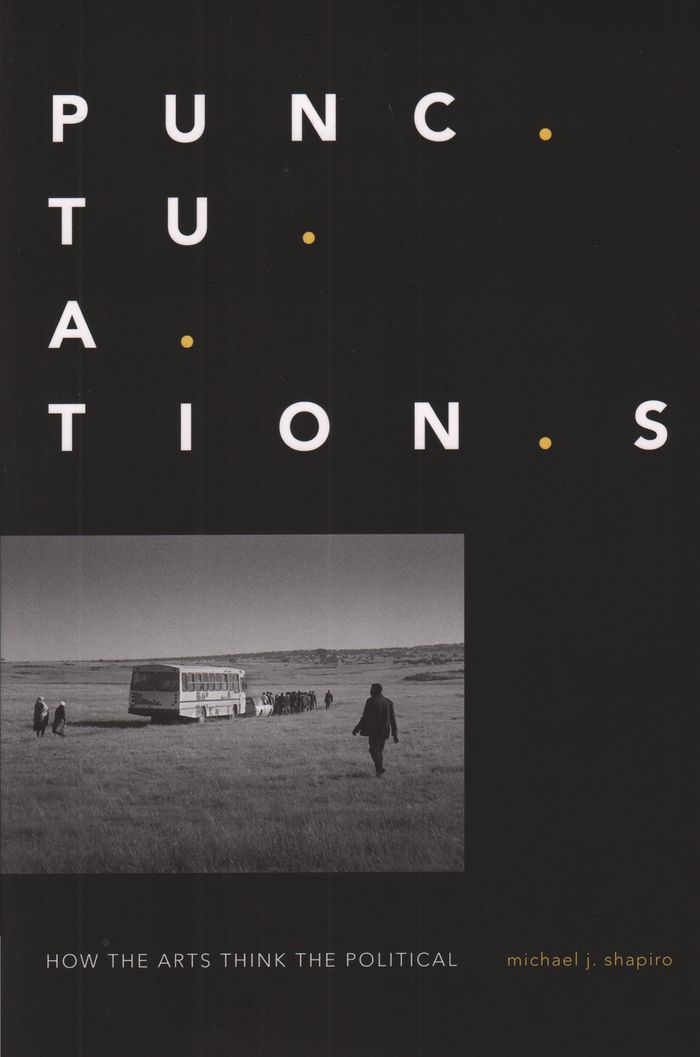
Punctuations: how the arts think the political
Actions:
Price:
$35.95
(available to order)
Summary:
In "Punctuations" Michael J. Shapiro examines how punctuation—conceived not as a series of marks but as a metaphor for the ways in which artists engage with intelligibility—opens pathways for thinking through the possibilities for oppositional politics. Drawing on Theodor Adorno, Alain Robbe-Grillet, and Roland Barthes, Shapiro demonstrates how punctuation's capacity to create unexpected rhythmic pacing makes it an ideal tool for writers, musicians, filmmakers, and artists to challenge structures of power. In works ranging from film scores and jazz compositions to literature, architecture, and photography, Shapiro shows how the use of punctuation reveals the contestability of dominant narratives in ways that prompt readers, viewers, and listeners to reflect on their acceptance of those narratives. Such uses of punctuation, he theorizes, offer models for disrupting structures of authority, thereby fostering the creation of alternative communities of sense from which to base political mobilization.
Punctuations: how the arts think the political
Actions:
Price:
$35.95
(available to order)
Summary:
In "Punctuations" Michael J. Shapiro examines how punctuation—conceived not as a series of marks but as a metaphor for the ways in which artists engage with intelligibility—opens pathways for thinking through the possibilities for oppositional politics. Drawing on Theodor Adorno, Alain Robbe-Grillet, and Roland Barthes, Shapiro demonstrates how punctuation's capacity to create unexpected rhythmic pacing makes it an ideal tool for writers, musicians, filmmakers, and artists to challenge structures of power. In works ranging from film scores and jazz compositions to literature, architecture, and photography, Shapiro shows how the use of punctuation reveals the contestability of dominant narratives in ways that prompt readers, viewers, and listeners to reflect on their acceptance of those narratives. Such uses of punctuation, he theorizes, offer models for disrupting structures of authority, thereby fostering the creation of alternative communities of sense from which to base political mobilization.
Form:
books
books
Publication:
November 2019
November 2019
Subject:
Art Theory
Art Theory
Form:
books
books
Actions:
Price:
$33.95
(available in store)
Summary:
With the many additions to the campus of Stanford university since the publication of this book, including the Frances Arrillaga alumni center by Hoover Associates / The SWA Group, the James H. Clark center for bio sciences – bio engineering by Foster and Partners / Peter Walker and Partners, and the Carnegie institution by Esherik Homsey Dodge and Davis, it is time for(...)
$33.95
(available in store)
Summary:
With the many additions to the campus of Stanford university since the publication of this book, including the Frances Arrillaga alumni center by Hoover Associates / The SWA Group, the James H. Clark center for bio sciences – bio engineering by Foster and Partners / Peter Walker and Partners, and the Carnegie institution by Esherik Homsey Dodge and Davis, it is time for(...)
Subject:
Commercial interiors, Building types
Commercial interiors, Building types
Publication:
February 2006, New York
February 2006, New York
Title:
Stanford university, second edition
Actions:
Price:
$33.95
(available in store)
Summary:
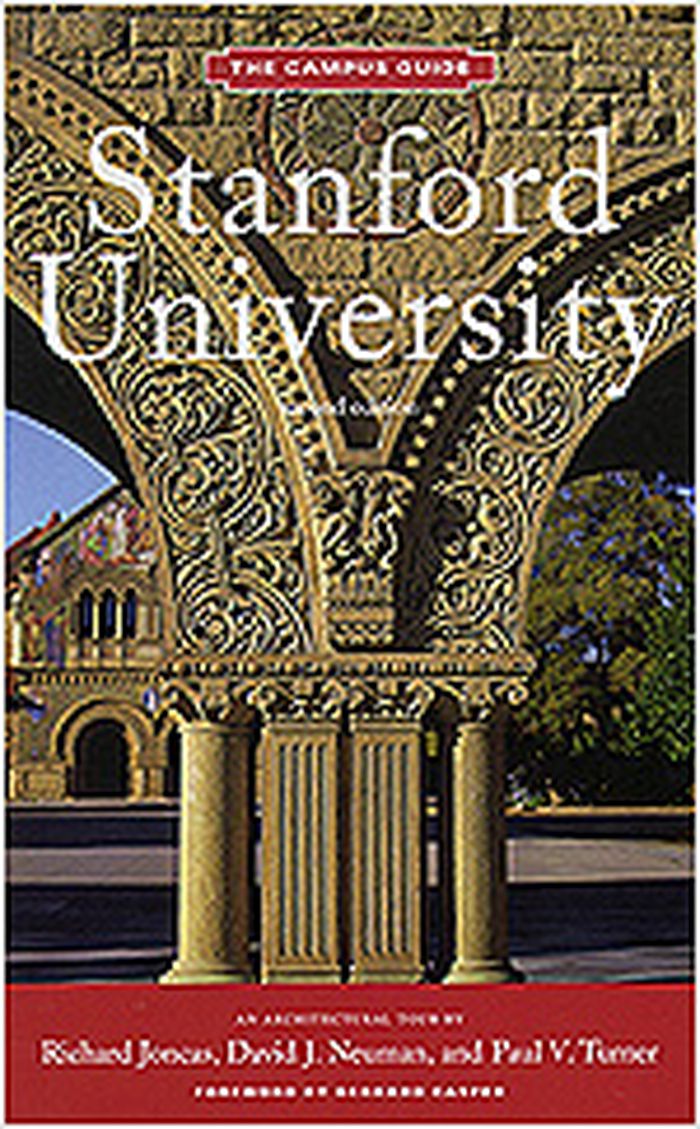
With the many additions to the campus of Stanford university since the publication of this book, including the Frances Arrillaga alumni center by Hoover Associates / The SWA Group, the James H. Clark center for bio sciences – bio engineering by Foster and Partners / Peter Walker and Partners, and the Carnegie institution by Esherik Homsey Dodge and Davis, it is time for a revised edition of this guide. The original 1891 campus, conceived by Frederick Law Olmsted and executed by architects Shepley, Rutan and Coolidge, balances architecture, landscapes, and the natural surroundings in a composition of classic formal beauty. Stanford is a model of university design, from the nineteenth-century Memorial court and Main quad to twentieth-century buildings and restorations that respect the historic campus while contributing to modern design. This revised edition features 16 new pages on the additions to the campus and many updated entries with new photography.
Stanford university, second edition
Actions:
Price:
$33.95
(available in store)
Summary:
With the many additions to the campus of Stanford university since the publication of this book, including the Frances Arrillaga alumni center by Hoover Associates / The SWA Group, the James H. Clark center for bio sciences – bio engineering by Foster and Partners / Peter Walker and Partners, and the Carnegie institution by Esherik Homsey Dodge and Davis, it is time for a revised edition of this guide. The original 1891 campus, conceived by Frederick Law Olmsted and executed by architects Shepley, Rutan and Coolidge, balances architecture, landscapes, and the natural surroundings in a composition of classic formal beauty. Stanford is a model of university design, from the nineteenth-century Memorial court and Main quad to twentieth-century buildings and restorations that respect the historic campus while contributing to modern design. This revised edition features 16 new pages on the additions to the campus and many updated entries with new photography.
Form:
books
books
Publication:
February 2006, New York
February 2006, New York
Subject:
Commercial interiors, Building types
Commercial interiors, Building types
Form:
books
books
Title:
Ultimate restaurant design
Ultimate restaurant design
Actions:
Price:
$45.50
(available to order)
Summary:
Within the large number of places that comprise the fabric of today’s contemporary urban landscape, public interior venues are taking on an ever growing significance in the face of exterior spaces. Whether in terms of climate, security, leisure or well-being, interiors have naturally incorporated themselves into the daily urban itinerary as part of public(...)
$45.50
(available to order)
Summary:
Within the large number of places that comprise the fabric of today’s contemporary urban landscape, public interior venues are taking on an ever growing significance in the face of exterior spaces. Whether in terms of climate, security, leisure or well-being, interiors have naturally incorporated themselves into the daily urban itinerary as part of public(...)
Subject:
Commercial interiors, Building types
Commercial interiors, Building types
Publication:
October 2004, New York
October 2004, New York
Title:
Ultimate restaurant design
Actions:
Price:
$45.50
(available to order)
Summary:
Within the large number of places that comprise the fabric of today’s contemporary urban landscape, public interior venues are taking on an ever growing significance in the face of exterior spaces. Whether in terms of climate, security, leisure or well-being, interiors have naturally incorporated themselves into the daily urban itinerary as part of public activity. The intense social interaction that takes place within these public spaces is concentrated within bars and restaurants, home to flirtations and friendships, entertainment and relaxation, observers and the observed. “Ultimate Restaurant Design” presents over seventy contemporary venues that have been chosen for their innovative interior architecture. Taking in venues from North and South America, Europe, Asia and Australia, the projects are accompanied by full colour photography, detailed plans and insightful descriptions, making this a truly comprehensive survey of some of the most striking restaurant and bar interiors in the world today.
Ultimate restaurant design
Actions:
Price:
$45.50
(available to order)
Summary:
Within the large number of places that comprise the fabric of today’s contemporary urban landscape, public interior venues are taking on an ever growing significance in the face of exterior spaces. Whether in terms of climate, security, leisure or well-being, interiors have naturally incorporated themselves into the daily urban itinerary as part of public activity. The intense social interaction that takes place within these public spaces is concentrated within bars and restaurants, home to flirtations and friendships, entertainment and relaxation, observers and the observed. “Ultimate Restaurant Design” presents over seventy contemporary venues that have been chosen for their innovative interior architecture. Taking in venues from North and South America, Europe, Asia and Australia, the projects are accompanied by full colour photography, detailed plans and insightful descriptions, making this a truly comprehensive survey of some of the most striking restaurant and bar interiors in the world today.
Form:
books
books
Publication:
October 2004, New York
October 2004, New York
Subject:
Commercial interiors, Building types
Commercial interiors, Building types
Form:
books
books
Actions:
Price:
$32.95
(available in store)
Summary:
n 1950, a young Vancouver architectural apprentice was handed a small house project that his boss was too busy to take on. The apprentice, Ron Thom, took the simple plan and rectangular foundation that had been roughed in, and transformed it into a groundbreaking work of architecture that gained national fame. Inspired by Frank Lloyd Wright and Richard Neutra, but using(...)
$32.95
(available in store)
Summary:
n 1950, a young Vancouver architectural apprentice was handed a small house project that his boss was too busy to take on. The apprentice, Ron Thom, took the simple plan and rectangular foundation that had been roughed in, and transformed it into a groundbreaking work of architecture that gained national fame. Inspired by Frank Lloyd Wright and Richard Neutra, but using(...)
Title:
Ron Thom: Copp House. West Coast Modern houses series
Actions:
Price:
$32.95
(available in store)
Summary:
n 1950, a young Vancouver architectural apprentice was handed a small house project that his boss was too busy to take on. The apprentice, Ron Thom, took the simple plan and rectangular foundation that had been roughed in, and transformed it into a groundbreaking work of architecture that gained national fame. Inspired by Frank Lloyd Wright and Richard Neutra, but using local wood and paying careful attention to its verdant oceanside setting, Thom created a landmark for the new architectural movement known as West Coast Modernism. The client, Dr. Harold Copp, was himself a trailblazer, the first head of the physiology department in the University of British Columbia’s new Faculty of Medicine and a research pioneer. Generously illustrated with both vintage and contemporary architectural photography, line drawings, and photographs of the architect and residents, The Copp House is the story of a cultural landmark on the shores of Vancouver.
Ron Thom: Copp House. West Coast Modern houses series
Actions:
Price:
$32.95
(available in store)
Summary:
n 1950, a young Vancouver architectural apprentice was handed a small house project that his boss was too busy to take on. The apprentice, Ron Thom, took the simple plan and rectangular foundation that had been roughed in, and transformed it into a groundbreaking work of architecture that gained national fame. Inspired by Frank Lloyd Wright and Richard Neutra, but using local wood and paying careful attention to its verdant oceanside setting, Thom created a landmark for the new architectural movement known as West Coast Modernism. The client, Dr. Harold Copp, was himself a trailblazer, the first head of the physiology department in the University of British Columbia’s new Faculty of Medicine and a research pioneer. Generously illustrated with both vintage and contemporary architectural photography, line drawings, and photographs of the architect and residents, The Copp House is the story of a cultural landmark on the shores of Vancouver.
Form:
books
books
Publication:
October 2017
October 2017
Subject:
Canadian Architects
Canadian Architects
Form:
books
books
Actions:
Price:
$75.00
(available to order)
Summary:
Produced in close collaboration with Eames estate, this publication presents the husband-and-wife team from both personal and professional perspectives, as well as the lively interplay of their public and private lives. This monograph charts the history of their inspiring and prolific world and brings together key works and ideas explored at the Eames Office throughout(...)
$75.00
(available to order)
Summary:
Produced in close collaboration with Eames estate, this publication presents the husband-and-wife team from both personal and professional perspectives, as well as the lively interplay of their public and private lives. This monograph charts the history of their inspiring and prolific world and brings together key works and ideas explored at the Eames Office throughout(...)
Title:
The world of Charles and Ray Eames
Actions:
Price:
$75.00
(available to order)
Summary:
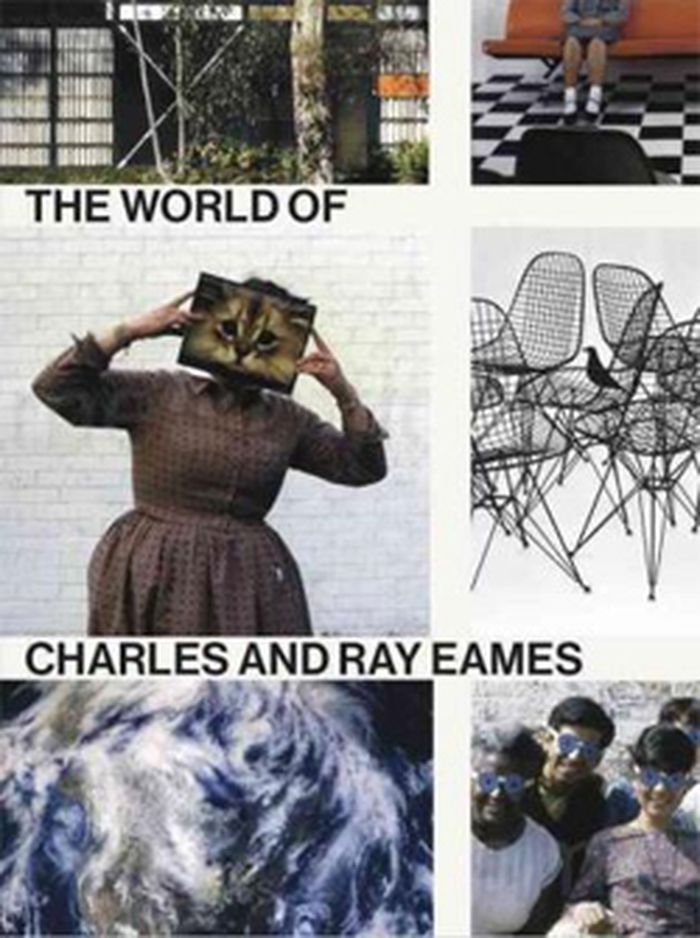
Produced in close collaboration with Eames estate, this publication presents the husband-and-wife team from both personal and professional perspectives, as well as the lively interplay of their public and private lives. This monograph charts the history of their inspiring and prolific world and brings together key works and ideas explored at the Eames Office throughout its extraordinary history. Published in connection to a major exhibition developed in partnership with the Eames Estate opening at London's Barbican Art Gallery in October 2015, the book features a broad range of visual material, enriched by recent archival research and new discoveries. It explores the era-defining work of the Eames Office, a 'laboratory' active for over four decades that produced a vast array of pioneering and influential projects - from architecture, furniture and product design to film, photography, multi-media installation and exhibitions, as well as new models for arts education.
The world of Charles and Ray Eames
Actions:
Price:
$75.00
(available to order)
Summary:
Produced in close collaboration with Eames estate, this publication presents the husband-and-wife team from both personal and professional perspectives, as well as the lively interplay of their public and private lives. This monograph charts the history of their inspiring and prolific world and brings together key works and ideas explored at the Eames Office throughout its extraordinary history. Published in connection to a major exhibition developed in partnership with the Eames Estate opening at London's Barbican Art Gallery in October 2015, the book features a broad range of visual material, enriched by recent archival research and new discoveries. It explores the era-defining work of the Eames Office, a 'laboratory' active for over four decades that produced a vast array of pioneering and influential projects - from architecture, furniture and product design to film, photography, multi-media installation and exhibitions, as well as new models for arts education.
Form:
books
books
Publication:
February 2016
February 2016
Subject:
Design Monographs
Design Monographs


