


4671 Results
Form:
books
books
Actions:
Price:
$46.95
(available in store)
Summary:
Over a creative career of more than thirty years, Victor Burgin has established an international reputation as an artist and theoretician in the field of both moving and stationary images. Burgin became known in the late 1960s as one of the founders of Conceptual art. During the 1970s, his works consisted mainly of large-format photographic sequences that often involved(...)
$46.95
(available in store)
Summary:
Over a creative career of more than thirty years, Victor Burgin has established an international reputation as an artist and theoretician in the field of both moving and stationary images. Burgin became known in the late 1960s as one of the founders of Conceptual art. During the 1970s, his works consisted mainly of large-format photographic sequences that often involved(...)
Publication:
September 2006, Ostfildern
September 2006, Ostfildern
Title:
Victor Burgin : voyage to Italy
Actions:
Price:
$46.95
(available in store)
Summary:
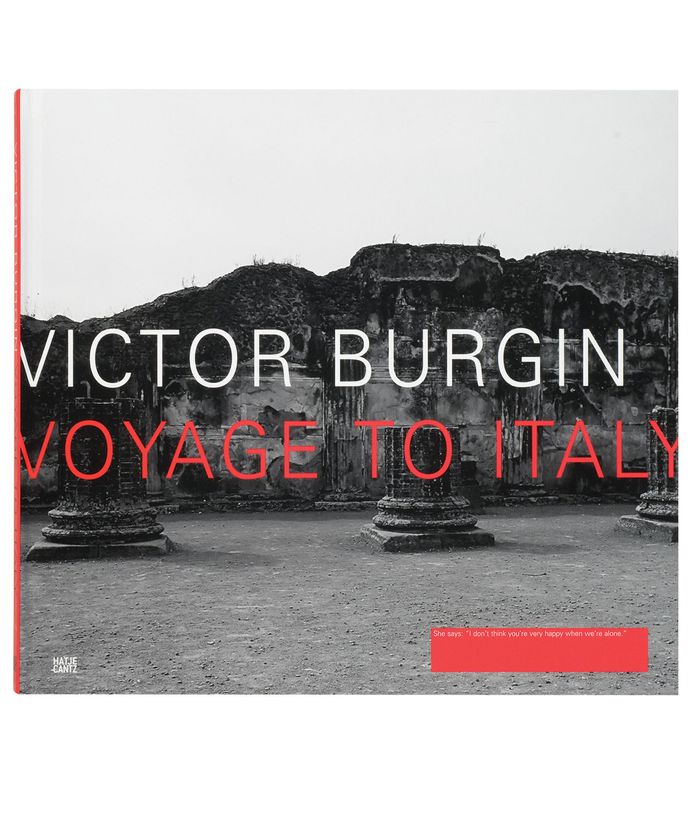
Over a creative career of more than thirty years, Victor Burgin has established an international reputation as an artist and theoretician in the field of both moving and stationary images. Burgin became known in the late 1960s as one of the founders of Conceptual art. During the 1970s, his works consisted mainly of large-format photographic sequences that often involved text. At the beginning of the 1990s he turned to digital video art. This volume documents the many perspectives of the British artist’s reflections on Pompeii. Burgin created this series of images in 2006, while examining a nineteenth-century photograph of Pompeii from the collection of the Canadian Centre for Architecture in Montreal.
Victor Burgin : voyage to Italy
Actions:
Price:
$46.95
(available in store)
Summary:
Over a creative career of more than thirty years, Victor Burgin has established an international reputation as an artist and theoretician in the field of both moving and stationary images. Burgin became known in the late 1960s as one of the founders of Conceptual art. During the 1970s, his works consisted mainly of large-format photographic sequences that often involved text. At the beginning of the 1990s he turned to digital video art. This volume documents the many perspectives of the British artist’s reflections on Pompeii. Burgin created this series of images in 2006, while examining a nineteenth-century photograph of Pompeii from the collection of the Canadian Centre for Architecture in Montreal.
Form:
books
books
Publication:
September 2006, Ostfildern
September 2006, Ostfildern
Form:
books
books
Title:
The spirit of the Bauhaus
The spirit of the Bauhaus
Actions:
Price:
$66.00
(available to order)
Summary:
“Architects, sculptors, painters, we all must return to the crafts!” declared architect Walter Gropius in his Bauhaus manifesto. Founded in 1919 as an art school in Weimar, the Bauhaus established itself as a major influence on twentieth- century art and design. Bauhaus students were taught by some of the most celebrated artists of the time, including Paul Klee, Lyonel(...)
$66.00
(available to order)
Summary:
“Architects, sculptors, painters, we all must return to the crafts!” declared architect Walter Gropius in his Bauhaus manifesto. Founded in 1919 as an art school in Weimar, the Bauhaus established itself as a major influence on twentieth- century art and design. Bauhaus students were taught by some of the most celebrated artists of the time, including Paul Klee, Lyonel(...)
Title:
The spirit of the Bauhaus
Actions:
Price:
$66.00
(available to order)
Summary:
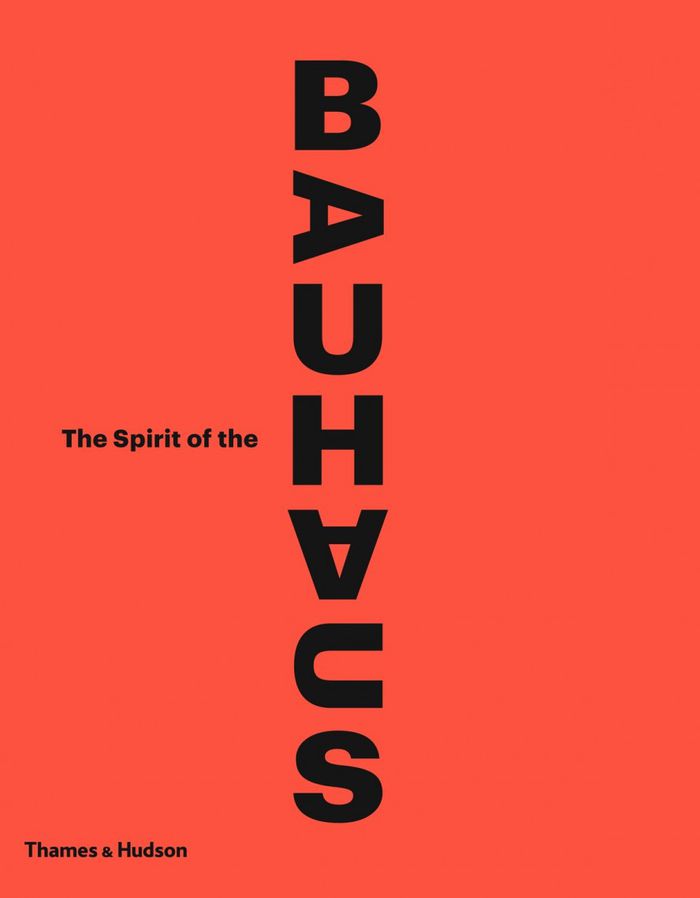
“Architects, sculptors, painters, we all must return to the crafts!” declared architect Walter Gropius in his Bauhaus manifesto. Founded in 1919 as an art school in Weimar, the Bauhaus established itself as a major influence on twentieth- century art and design. Bauhaus students were taught by some of the most celebrated artists of the time, including Paul Klee, Lyonel Feininger, and Wassily Kandinsky. Having moved to Berlin in 1932 under architect Ludwig Mies van der Rohe, it was forced to close for good by the Gestapo in 1933. Uncovering the sources of inspiration that brought the Bauhaus into existence, from medieval cathedrals of Europe and Hokusai prints to William Morris and Arts and Crafts, The Spirit of the Bauhaus explores workshops and courses in detail, illustrating the extraordinary wealth of experimentation in every medium: ceramics, wood and metalwork, textiles, glass- painting, sculpture, mural, printing and binding, theater, architecture, and photography. This essential and accessible guide to the Bauhaus, published in time for the 100th anniversary of the school in 2019, celebrates a school that continues to be recognized as the most durable and influential source of modern ideas about art, design, and craft.
The spirit of the Bauhaus
Actions:
Price:
$66.00
(available to order)
Summary:
“Architects, sculptors, painters, we all must return to the crafts!” declared architect Walter Gropius in his Bauhaus manifesto. Founded in 1919 as an art school in Weimar, the Bauhaus established itself as a major influence on twentieth- century art and design. Bauhaus students were taught by some of the most celebrated artists of the time, including Paul Klee, Lyonel Feininger, and Wassily Kandinsky. Having moved to Berlin in 1932 under architect Ludwig Mies van der Rohe, it was forced to close for good by the Gestapo in 1933. Uncovering the sources of inspiration that brought the Bauhaus into existence, from medieval cathedrals of Europe and Hokusai prints to William Morris and Arts and Crafts, The Spirit of the Bauhaus explores workshops and courses in detail, illustrating the extraordinary wealth of experimentation in every medium: ceramics, wood and metalwork, textiles, glass- painting, sculpture, mural, printing and binding, theater, architecture, and photography. This essential and accessible guide to the Bauhaus, published in time for the 100th anniversary of the school in 2019, celebrates a school that continues to be recognized as the most durable and influential source of modern ideas about art, design, and craft.
Form:
books
books
Publication:
May 2018
May 2018
Subject:
Modernism
Modernism
Form:
books
books
Actions:
Price:
$88.00
(available in store)
Summary:
Architectones, a monumental undertaking of seven exhibitions installed across three continents over a two year period, unites Veilhan's diverse interests in modernity, its histories of technology, and its cult of genius figures. Collectively titled after Kazimir Malevich's volumetric-spatial models, the art and architectural works partake in the revolutionary idealism of(...)
$88.00
(available in store)
Summary:
Architectones, a monumental undertaking of seven exhibitions installed across three continents over a two year period, unites Veilhan's diverse interests in modernity, its histories of technology, and its cult of genius figures. Collectively titled after Kazimir Malevich's volumetric-spatial models, the art and architectural works partake in the revolutionary idealism of(...)
Title:
Xavier Veilhan: Architectones, art in the living environment
Actions:
Price:
$88.00
(available in store)
Summary:
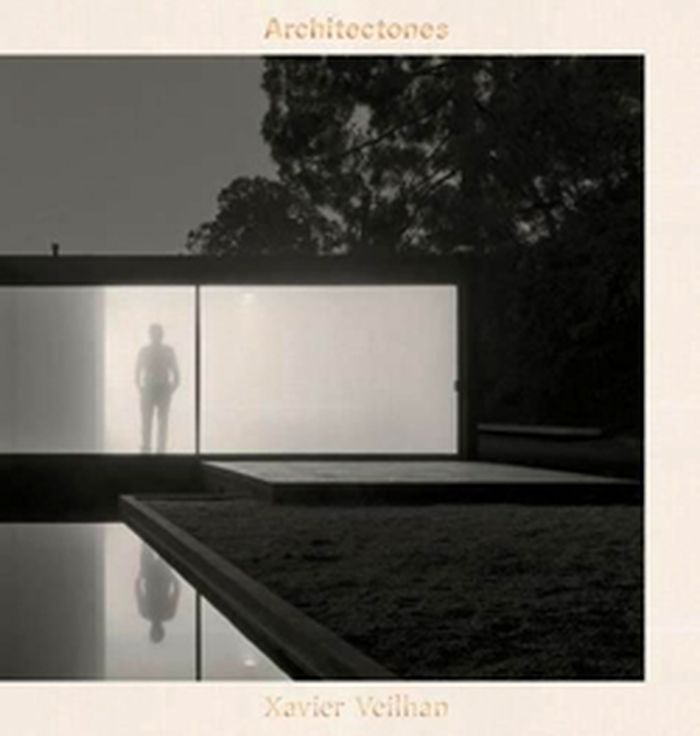
Architectones, a monumental undertaking of seven exhibitions installed across three continents over a two year period, unites Veilhan's diverse interests in modernity, its histories of technology, and its cult of genius figures. Collectively titled after Kazimir Malevich's volumetric-spatial models, the art and architectural works partake in the revolutionary idealism of a period in which it was possible to imagine transforming society from the ground up by way of a new form of building. Between 2012 and 2014, Veilhan used music, light, and sculpture to activate Richard Neutra's VDL Research House in Silver Lake, Pierre Koenig's Case Study House No. 21 in the Hollywood Hills, and buildings designed by Le Corbusier and Mies Van Der Rohe, among others. The histories and legacies of the architects themselves played a prominent role in these installations, with figural sculptures and die-cut silhouettes of the looming personalities of the architects populating his installations. Architectones: Art in the Living Environment tells both a story of present and past, archiving exhibition photography as well as anecdotal and historical documents of many of the greatest domestic and private spaces of modern architecture.
Xavier Veilhan: Architectones, art in the living environment
Actions:
Price:
$88.00
(available in store)
Summary:
Architectones, a monumental undertaking of seven exhibitions installed across three continents over a two year period, unites Veilhan's diverse interests in modernity, its histories of technology, and its cult of genius figures. Collectively titled after Kazimir Malevich's volumetric-spatial models, the art and architectural works partake in the revolutionary idealism of a period in which it was possible to imagine transforming society from the ground up by way of a new form of building. Between 2012 and 2014, Veilhan used music, light, and sculpture to activate Richard Neutra's VDL Research House in Silver Lake, Pierre Koenig's Case Study House No. 21 in the Hollywood Hills, and buildings designed by Le Corbusier and Mies Van Der Rohe, among others. The histories and legacies of the architects themselves played a prominent role in these installations, with figural sculptures and die-cut silhouettes of the looming personalities of the architects populating his installations. Architectones: Art in the Living Environment tells both a story of present and past, archiving exhibition photography as well as anecdotal and historical documents of many of the greatest domestic and private spaces of modern architecture.
Form:
books
books
Publication:
July 2015
July 2015
Subject:
Contemporary Art Monographs
Contemporary Art Monographs
Form:
books
books
Actions:
Price:
$60.00
(available to order)
Summary:
What are the unique characteristics that make a house Colonial or Craftsman, Modern or Deco, or any of the other approximately 20 styles of domestic architecture common in the United States? At a time of near-obsessive attention to home design and renovation, this compact, easily accessible guide - the only book of its kind with all colour photography - makes the(...)
$60.00
(available to order)
Summary:
What are the unique characteristics that make a house Colonial or Craftsman, Modern or Deco, or any of the other approximately 20 styles of domestic architecture common in the United States? At a time of near-obsessive attention to home design and renovation, this compact, easily accessible guide - the only book of its kind with all colour photography - makes the(...)
Title:
The Abrams guide to American house styles
Actions:
Price:
$60.00
(available to order)
Summary:
What are the unique characteristics that make a house Colonial or Craftsman, Modern or Deco, or any of the other approximately 20 styles of domestic architecture common in the United States? At a time of near-obsessive attention to home design and renovation, this compact, easily accessible guide - the only book of its kind with all colour photography - makes the identification of house styles a breeze. Each style is described by author William Morgan, a Pulitzer Prize-nominated architectural historian, in a short historical summary, alongside a list of its distinguishing features. Multiple examples of each house style are provided - the book includes 350 houses from more than 40 states - so the reader can see the region-specific variations. Complementing the beautiful colour photographs is a selection of line drawings highlighting each style's key attributes. Both at the desk and in the field, for a wide audience of discerning house hunters, homeowners, and realtors; architects, builders, and students; and the ever-increasing public with a seemingly insatiable curiosity about residential design, this elegant, informative, portable volume will be an invaluable resource for years to come.
The Abrams guide to American house styles
Actions:
Price:
$60.00
(available to order)
Summary:
What are the unique characteristics that make a house Colonial or Craftsman, Modern or Deco, or any of the other approximately 20 styles of domestic architecture common in the United States? At a time of near-obsessive attention to home design and renovation, this compact, easily accessible guide - the only book of its kind with all colour photography - makes the identification of house styles a breeze. Each style is described by author William Morgan, a Pulitzer Prize-nominated architectural historian, in a short historical summary, alongside a list of its distinguishing features. Multiple examples of each house style are provided - the book includes 350 houses from more than 40 states - so the reader can see the region-specific variations. Complementing the beautiful colour photographs is a selection of line drawings highlighting each style's key attributes. Both at the desk and in the field, for a wide audience of discerning house hunters, homeowners, and realtors; architects, builders, and students; and the ever-increasing public with a seemingly insatiable curiosity about residential design, this elegant, informative, portable volume will be an invaluable resource for years to come.
Form:
books
books
Publication:
November 2004, New York
November 2004, New York
Subject:
History until 1900
History until 1900
Form:
books
books
Actions:
Price:
$56.00
(available to order)
Summary:
Robert Smithson (1938–1973), an artist of paramount importance in postwar America, created radical new perspectives for landscape architecture, photography, art criticism, and site-specific installation. His Spiral Jetty - a 1,500-foot-long coil of rock built in 1970 at the edge of the Great Salt Lake - is widely appreciated as one of the most significant art projects of(...)
$56.00
(available to order)
Summary:
Robert Smithson (1938–1973), an artist of paramount importance in postwar America, created radical new perspectives for landscape architecture, photography, art criticism, and site-specific installation. His Spiral Jetty - a 1,500-foot-long coil of rock built in 1970 at the edge of the Great Salt Lake - is widely appreciated as one of the most significant art projects of(...)
Subject:
Contemporary Art Monographs
Contemporary Art Monographs
Publication:
April 2004, New Haven / London
April 2004, New Haven / London
Title:
Mirror-Travels : Robert Smithson and history
Actions:
Price:
$56.00
(available to order)
Summary:
Robert Smithson (1938–1973), an artist of paramount importance in postwar America, created radical new perspectives for landscape architecture, photography, art criticism, and site-specific installation. His Spiral Jetty - a 1,500-foot-long coil of rock built in 1970 at the edge of the Great Salt Lake - is widely appreciated as one of the most significant art projects of the twentieth century. Less well known is the connection between the Jetty and the nearby Golden Spike National Historic Site, location of the completion of the first U.S. transcontinental railroad. The link between these two monuments is but one facet of an entire complex of historical reference and reflection that structures Smithson’s work. Mirror-Travels encompasses the full span of Smithson’s career, offering a close analysis of the artist’s working model of history and featuring comprehensive case studies of three of his most influential works: The Monuments of Passaic, Incidents of Mirror-Travel in the Yucatan, and the Spiral Jetty. Incorporating abundant new material from Smithson’s personal papers and library, Jennifer Roberts offers surprising new interpretations about the artist and his responses to the social, ideological, and material contradictions of his time.
Mirror-Travels : Robert Smithson and history
Actions:
Price:
$56.00
(available to order)
Summary:
Robert Smithson (1938–1973), an artist of paramount importance in postwar America, created radical new perspectives for landscape architecture, photography, art criticism, and site-specific installation. His Spiral Jetty - a 1,500-foot-long coil of rock built in 1970 at the edge of the Great Salt Lake - is widely appreciated as one of the most significant art projects of the twentieth century. Less well known is the connection between the Jetty and the nearby Golden Spike National Historic Site, location of the completion of the first U.S. transcontinental railroad. The link between these two monuments is but one facet of an entire complex of historical reference and reflection that structures Smithson’s work. Mirror-Travels encompasses the full span of Smithson’s career, offering a close analysis of the artist’s working model of history and featuring comprehensive case studies of three of his most influential works: The Monuments of Passaic, Incidents of Mirror-Travel in the Yucatan, and the Spiral Jetty. Incorporating abundant new material from Smithson’s personal papers and library, Jennifer Roberts offers surprising new interpretations about the artist and his responses to the social, ideological, and material contradictions of his time.
Form:
books
books
Publication:
April 2004, New Haven / London
April 2004, New Haven / London
Subject:
Contemporary Art Monographs
Contemporary Art Monographs
Form:
books
books
Actions:
Holdings:
Description:
2 volumes : illustrations (some in color) ; 31 cm + 1 compact disc
Description:
2 volumes : illustrations (some in color) ; 31 cm + 1 compact disc
Author:
Subject:
Publication:
Québec : Musée du Québec, ©1989.
Québec : Musée du Québec, ©1989.
Title:
Territoires d'artistes : paysages verticaux / conception de l'évènement, réalisation et texte de Louise Déry ; photographies de Patrick Altman.
Actions:
Holdings:
Description:
2 volumes : illustrations (some in color) ; 31 cm + 1 compact disc
Territoires d'artistes : paysages verticaux / conception de l'évènement, réalisation et texte de Louise Déry ; photographies de Patrick Altman.
Actions:
Holdings:
Description:
2 volumes : illustrations (some in color) ; 31 cm + 1 compact disc
Form:
books
books
Publication:
Québec : Musée du Québec, ©1989.
Québec : Musée du Québec, ©1989.
Author:
Subject:
Form:
books
books
Actions:
Price:
$43.95
(available to order)
Summary:
Why do we have such extraordinarily powerful responses toward the images and pictures we see in everyday life? Why do we behave as if pictures were alive, possessing the power to influence us, to demand things from us, to persuade us, seduce us, or even lead us astray? According to W. J. T. Mitchell, we need to reckon with images not just as inert objects that convey(...)
$43.95
(available to order)
Summary:
Why do we have such extraordinarily powerful responses toward the images and pictures we see in everyday life? Why do we behave as if pictures were alive, possessing the power to influence us, to demand things from us, to persuade us, seduce us, or even lead us astray? According to W. J. T. Mitchell, we need to reckon with images not just as inert objects that convey(...)
Title:
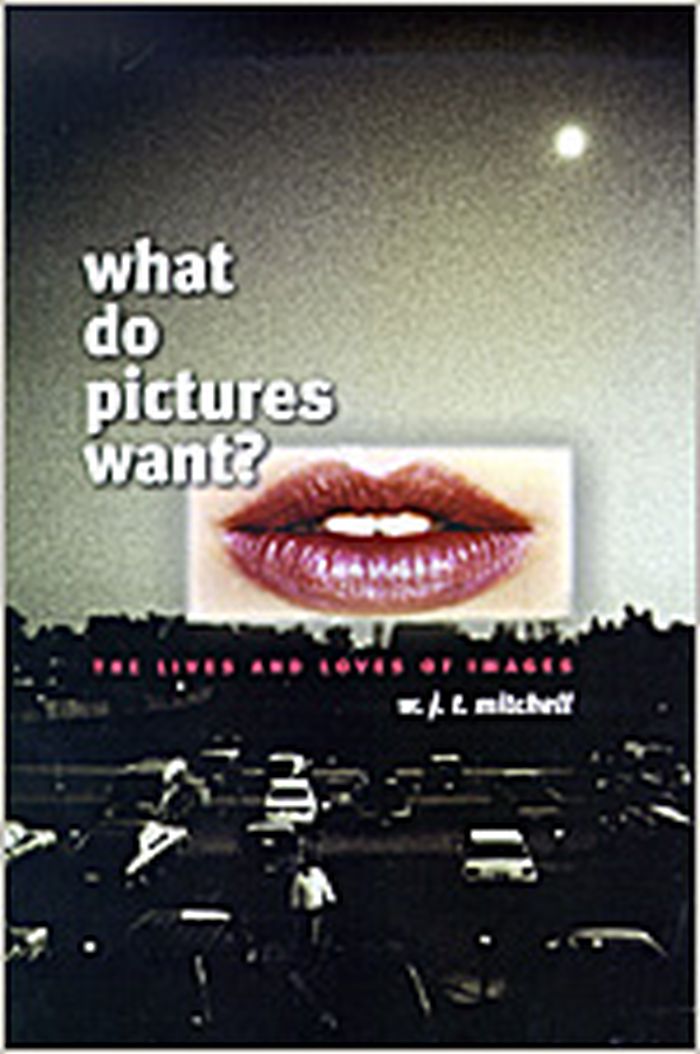
What do pictures want? : the lives and loves of images
Actions:
Price:
$43.95
(available to order)
Summary:
Why do we have such extraordinarily powerful responses toward the images and pictures we see in everyday life? Why do we behave as if pictures were alive, possessing the power to influence us, to demand things from us, to persuade us, seduce us, or even lead us astray? According to W. J. T. Mitchell, we need to reckon with images not just as inert objects that convey meaning but as animated beings with desires, needs, appetites, demands, and drives of their own. "What Do Pictures Want?" explores this idea and highlights Mitchell's innovative and profoundly influential thinking on picture theory and the lives and loves of images. Ranging across the visual arts, literature, and mass media, Mitchell applies characteristically brilliant and wry analyses to Byzantine icons and cyberpunk films, racial stereotypes and public monuments, ancient idols and modern clones, offensive images and found objects, American photography and aboriginal painting. Opening new vistas in iconology and the emergent field of visual culture, he also considers the importance of Dolly the Sheep - who, as a clone, fulfills the ancient dream of creating a living image - and the destruction of the World Trade Center on 9/11, which, among other things, signifies a new and virulent form of iconoclasm. "What Do Pictures Want?" offers an immensely rich and suggestive account of the interplay between the visible and the readable. A work by one of our leading theorists of visual representation, it will be a touchstone for art historians, literary critics, anthropologists, and philosophers alike.
What do pictures want? : the lives and loves of images
Actions:
Price:
$43.95
(available to order)
Summary:
Why do we have such extraordinarily powerful responses toward the images and pictures we see in everyday life? Why do we behave as if pictures were alive, possessing the power to influence us, to demand things from us, to persuade us, seduce us, or even lead us astray? According to W. J. T. Mitchell, we need to reckon with images not just as inert objects that convey meaning but as animated beings with desires, needs, appetites, demands, and drives of their own. "What Do Pictures Want?" explores this idea and highlights Mitchell's innovative and profoundly influential thinking on picture theory and the lives and loves of images. Ranging across the visual arts, literature, and mass media, Mitchell applies characteristically brilliant and wry analyses to Byzantine icons and cyberpunk films, racial stereotypes and public monuments, ancient idols and modern clones, offensive images and found objects, American photography and aboriginal painting. Opening new vistas in iconology and the emergent field of visual culture, he also considers the importance of Dolly the Sheep - who, as a clone, fulfills the ancient dream of creating a living image - and the destruction of the World Trade Center on 9/11, which, among other things, signifies a new and virulent form of iconoclasm. "What Do Pictures Want?" offers an immensely rich and suggestive account of the interplay between the visible and the readable. A work by one of our leading theorists of visual representation, it will be a touchstone for art historians, literary critics, anthropologists, and philosophers alike.
Form:
books
books
Publication:
June 2005, Chicago
June 2005, Chicago
Subject:
Architectural Theory
Architectural Theory
Form:
books
books
Price:
$59.95
(available to order)
Summary:
"Suspensions of Perception" is a major historical study of human attention and its volatile role in modern Western culture. It argues that the ways in which we intently look at or listen to anything result from crucial changes in the nature of perception that can be traced back to(...)
$59.95
(available to order)
Summary:
"Suspensions of Perception" is a major historical study of human attention and its volatile role in modern Western culture. It argues that the ways in which we intently look at or listen to anything result from crucial changes in the nature of perception that can be traced back to(...)
Title:
Suspensions of perception : attention, spectacle, and modern culture
Actions:
Price:
$59.95
(available to order)
Summary:
"Suspensions of Perception" is a major historical study of human attention and its volatile role in modern Western culture. It argues that the ways in which we intently look at or listen to anything result from crucial changes in the nature of perception that can be traced back to the second half of the nineteenth century. Focusing on the period from about 1880 to 1905, Jonathan Crary examines the connections between the modernization of subjectivity and the dramatic expansion and industrialization of visual/auditory culture. At the core of his project is the paradoxical nature of modern attention, which was both a fundamental condition of individual freedom, creativity, and experience and a central element in the efficient functioning of economic and disciplinary institutions as well as the emerging spaces of mass consumption and spectacle. Crary approaches these issues through multiple analyses of single works by three key modernist painters--Manet, Seurat, and Cézanne--who each engaged in a singular confrontation with the disruptions, vacancies, and rifts within a perceptual field. Each in his own way discovered that sustained attentiveness, rather than fixing or securing the world, led to perceptual disintegration and loss of presence, and each used this discovery as the basis for a reinvention of representational practices. Suspensions of Perception decisively relocates the problem of aesthetic contemplation within a broader collective encounter with the unstable nature of perception--in psychology, philosophy, neurology, early cinema, and photography. In doing so, it provides a historical framework for understanding the current social crisis of attention amid the accelerating metamorphoses of our contemporary technological culture.
Suspensions of perception : attention, spectacle, and modern culture
Actions:
Price:
$59.95
(available to order)
Summary:
"Suspensions of Perception" is a major historical study of human attention and its volatile role in modern Western culture. It argues that the ways in which we intently look at or listen to anything result from crucial changes in the nature of perception that can be traced back to the second half of the nineteenth century. Focusing on the period from about 1880 to 1905, Jonathan Crary examines the connections between the modernization of subjectivity and the dramatic expansion and industrialization of visual/auditory culture. At the core of his project is the paradoxical nature of modern attention, which was both a fundamental condition of individual freedom, creativity, and experience and a central element in the efficient functioning of economic and disciplinary institutions as well as the emerging spaces of mass consumption and spectacle. Crary approaches these issues through multiple analyses of single works by three key modernist painters--Manet, Seurat, and Cézanne--who each engaged in a singular confrontation with the disruptions, vacancies, and rifts within a perceptual field. Each in his own way discovered that sustained attentiveness, rather than fixing or securing the world, led to perceptual disintegration and loss of presence, and each used this discovery as the basis for a reinvention of representational practices. Suspensions of Perception decisively relocates the problem of aesthetic contemplation within a broader collective encounter with the unstable nature of perception--in psychology, philosophy, neurology, early cinema, and photography. In doing so, it provides a historical framework for understanding the current social crisis of attention amid the accelerating metamorphoses of our contemporary technological culture.
Form:
books
books
Publication:
October 1999, Cambridge
October 1999, Cambridge
Subject:
Architectural Theory
Architectural Theory
Form:
books
books
Price:
$49.95
(available to order)
Summary:
"Suspensions of Perception" is a major historical study of human attention and its volatile role in modern Western culture. It argues that the ways in which we intently look at or listen to anything result from crucial changes in the nature of perception that can be traced back to(...)
$49.95
(available to order)
Summary:
"Suspensions of Perception" is a major historical study of human attention and its volatile role in modern Western culture. It argues that the ways in which we intently look at or listen to anything result from crucial changes in the nature of perception that can be traced back to(...)
Title:
Suspensions of perception: attention, spectacle, and modern culture
Actions:
Price:
$49.95
(available to order)
Summary:
"Suspensions of Perception" is a major historical study of human attention and its volatile role in modern Western culture. It argues that the ways in which we intently look at or listen to anything result from crucial changes in the nature of perception that can be traced back to the second half of the nineteenth century. Focusing on the period from about 1880 to 1905, Jonathan Crary examines the connections between the modernization of subjectivity and the dramatic expansion and industrialization of visual/auditory culture. At the core of his project is the paradoxical nature of modern attention, which was both a fundamental condition of individual freedom, creativity, and experience and a central element in the efficient functioning of economic and disciplinary institutions as well as the emerging spaces of mass consumption and spectacle. Crary approaches these issues through multiple analyses of single works by three key modernist painters--Manet, Seurat, and Cézanne--who each engaged in a singular confrontation with the disruptions, vacancies, and rifts within a perceptual field. Each in his own way discovered that sustained attentiveness, rather than fixing or securing the world, led to perceptual disintegration and loss of presence, and each used this discovery as the basis for a reinvention of representational practices. Suspensions of Perception decisively relocates the problem of aesthetic contemplation within a broader collective encounter with the unstable nature of perception--in psychology, philosophy, neurology, early cinema, and photography. In doing so, it provides a historical framework for understanding the current social crisis of attention amid the accelerating metamorphoses of our contemporary technological culture.
Suspensions of perception: attention, spectacle, and modern culture
Actions:
Price:
$49.95
(available to order)
Summary:
"Suspensions of Perception" is a major historical study of human attention and its volatile role in modern Western culture. It argues that the ways in which we intently look at or listen to anything result from crucial changes in the nature of perception that can be traced back to the second half of the nineteenth century. Focusing on the period from about 1880 to 1905, Jonathan Crary examines the connections between the modernization of subjectivity and the dramatic expansion and industrialization of visual/auditory culture. At the core of his project is the paradoxical nature of modern attention, which was both a fundamental condition of individual freedom, creativity, and experience and a central element in the efficient functioning of economic and disciplinary institutions as well as the emerging spaces of mass consumption and spectacle. Crary approaches these issues through multiple analyses of single works by three key modernist painters--Manet, Seurat, and Cézanne--who each engaged in a singular confrontation with the disruptions, vacancies, and rifts within a perceptual field. Each in his own way discovered that sustained attentiveness, rather than fixing or securing the world, led to perceptual disintegration and loss of presence, and each used this discovery as the basis for a reinvention of representational practices. Suspensions of Perception decisively relocates the problem of aesthetic contemplation within a broader collective encounter with the unstable nature of perception--in psychology, philosophy, neurology, early cinema, and photography. In doing so, it provides a historical framework for understanding the current social crisis of attention amid the accelerating metamorphoses of our contemporary technological culture.
Form:
books
books
Publication:
August 2001, Cambridge
August 2001, Cambridge
Subject:
Architectural Theory
Architectural Theory
Form:
books
books
Price:
$41.95
(available to order)
Summary:
The Urban Spectator is a lively and utterly fascinating exploration of the ways in which technologies have influenced our collective conception of the American city, as well as our relationship with urban space and architecture. Eric Gordon argues that the city, developing late and in conjunction with a range of modern media, produced a particular way of seeing--what he(...)
$41.95
(available to order)
Summary:
The Urban Spectator is a lively and utterly fascinating exploration of the ways in which technologies have influenced our collective conception of the American city, as well as our relationship with urban space and architecture. Eric Gordon argues that the city, developing late and in conjunction with a range of modern media, produced a particular way of seeing--what he(...)
Title:
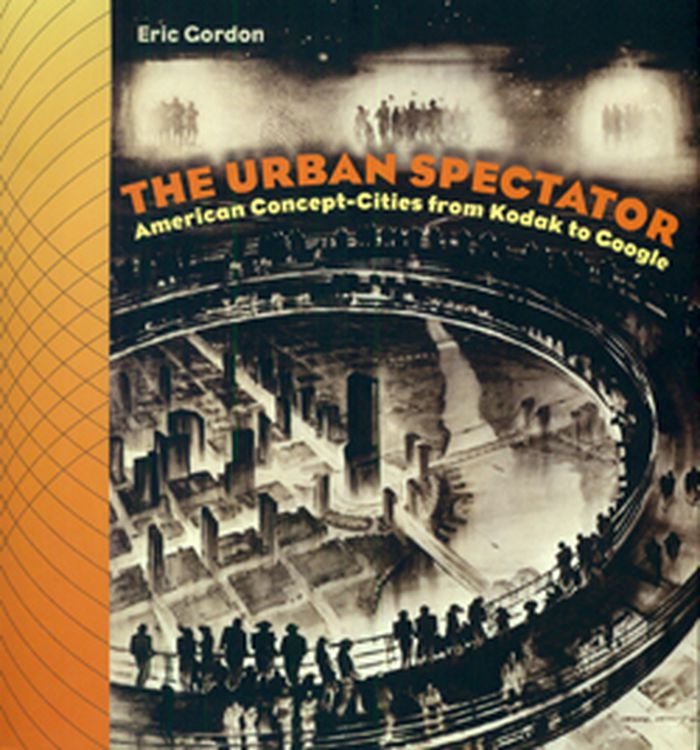
The urban spectator: American concept-cities from Kodak to Google
Actions:
Price:
$41.95
(available to order)
Summary:
The Urban Spectator is a lively and utterly fascinating exploration of the ways in which technologies have influenced our collective conception of the American city, as well as our relationship with urban space and architecture. Eric Gordon argues that the city, developing late and in conjunction with a range of modern media, produced a particular way of seeing--what he labels "possessive spectatorship." Lacking the historical rootedness of European cities, the American city was open to individual interpretation, definition, and ownership. Beginning with the White City of the Chicago World's Fair of 1893 and the efforts to commodify the concept city through photography, Gordon shows how the American city has always been a product of the collision between the dominant conceptualization, shaped by contemporary media, and the spectator. From the viewfinder of the Kodak camera, to the public display of early cinema, to the speculative desire of network radio, all the way to machine-age utopianism, nostalgia, and America's "rerun" culture, the city is an amalgam of practice and concept. All of this comes to a head in the "database city" where urban spectatorship takes on the characteristics of a Google search. In new urban developments, the spectator searches, retrieves, and combines urban references to construct each experience of the city.
The urban spectator: American concept-cities from Kodak to Google
Actions:
Price:
$41.95
(available to order)
Summary:
The Urban Spectator is a lively and utterly fascinating exploration of the ways in which technologies have influenced our collective conception of the American city, as well as our relationship with urban space and architecture. Eric Gordon argues that the city, developing late and in conjunction with a range of modern media, produced a particular way of seeing--what he labels "possessive spectatorship." Lacking the historical rootedness of European cities, the American city was open to individual interpretation, definition, and ownership. Beginning with the White City of the Chicago World's Fair of 1893 and the efforts to commodify the concept city through photography, Gordon shows how the American city has always been a product of the collision between the dominant conceptualization, shaped by contemporary media, and the spectator. From the viewfinder of the Kodak camera, to the public display of early cinema, to the speculative desire of network radio, all the way to machine-age utopianism, nostalgia, and America's "rerun" culture, the city is an amalgam of practice and concept. All of this comes to a head in the "database city" where urban spectatorship takes on the characteristics of a Google search. In new urban developments, the spectator searches, retrieves, and combines urban references to construct each experience of the city.
Form:
books
books
Publication:
February 2010
February 2010
Subject:
Urban Theory
Urban Theory


