


5690 Results
Form:
journals and magazines
journals and magazines
Title:
English journal.
English journal.
Actions:
Description:
1 online resource
Subject:
- English philology Periodicals.,
- English philology Study and teaching Periodicals.,
- Philologie anglaise Périodiques.,
- English philology.,
- English philology Study and teaching.,
- Engels.,
- Taalkunde.,
- Anglais (Langue),
- Enseignement de l'écriture.,
- Enseignement de la lecture.,
- Enseignement primaire.,
- Enseignement secondaire.,
- Littérature.,
- États-Unis.,
- Electronic journals.,
- periodicals.,
- Literatura angielska.,
- Czasopismo literaturoznawcze.,
- Periodicals.,
- Périodique électronique (Descripteur de forme),
- Ressource Internet (Descripteur de forme),
- Périodiques.
(See more)
Publication:
Chicago, Illinois : University of Chicago Press, 1912-, Chicago, Illinois : W. Wilbur Hatfield, Champaign, Illinois : National Council of Teachers of English, Urbana, Illinois : National Council of Teachers of English
Chicago, Illinois : University of Chicago Press, 1912-, Chicago, Illinois : W. Wilbur Hatfield, Champaign, Illinois : National Council of Teachers of English, Urbana, Illinois : National Council of Teachers of English
Form:
journals and magazines
journals and magazines
Publication:
Chicago, Illinois : University of Chicago Press, 1912-, Chicago, Illinois : W. Wilbur Hatfield, Champaign, Illinois : National Council of Teachers of English, Urbana, Illinois : National Council of Teachers of English
Chicago, Illinois : University of Chicago Press, 1912-, Chicago, Illinois : W. Wilbur Hatfield, Champaign, Illinois : National Council of Teachers of English, Urbana, Illinois : National Council of Teachers of English
Subject:
- English philology Periodicals.,
- English philology Study and teaching Periodicals.,
- Philologie anglaise Périodiques.,
- English philology.,
- English philology Study and teaching.,
- Engels.,
- Taalkunde.,
- Anglais (Langue),
- Enseignement de l'écriture.,
- Enseignement de la lecture.,
- Enseignement primaire.,
- Enseignement secondaire.,
- Littérature.,
- États-Unis.,
- Electronic journals.,
- periodicals.,
- Literatura angielska.,
- Czasopismo literaturoznawcze.,
- Periodicals.,
- Périodique électronique (Descripteur de forme),
- Ressource Internet (Descripteur de forme),
- Périodiques.
(See more)
Form:
books
books
Actions:
Holdings:
Description:
215 pages : illustrations ; 25 cm
Description:
215 pages : illustrations ; 25 cm
Subject:
- Accademia Veneziana.,
- Learned institutions and societies Italy.,
- Sociétés savantes et instituts Italie Histoire 16e siècle Congrès.,
- Sociétés savantes et instituts Italie.,
- Learned institutions and societies,
- Academies van wetenschappen.,
- Sociétés savantes et instituts Italie 16e siècle Congrès.,
- Savoir et érudition Italie 16e siècle Congrès.,
- académie art Italie 16e s. congrès.,
- société savante Italie 16e s. congrès.,
- académie littérature Italie 16e s. congrès.,
- Italy,
- Italie Vie intellectuelle 16e siècle Congrès.,
- Learned institutions History,
- Symposia.
(See more)
Publication:
London : Warburg Institute, 1995.
London : Warburg Institute, 1995.
Title:
Italian academies of the sixteenth century / edited by D.S. Chambers and F. Quiviger.
Actions:
Holdings:
Description:
215 pages : illustrations ; 25 cm
Italian academies of the sixteenth century / edited by D.S. Chambers and F. Quiviger.
Actions:
Holdings:
Description:
215 pages : illustrations ; 25 cm
Form:
books
books
Publication:
London : Warburg Institute, 1995.
London : Warburg Institute, 1995.
Subject:
- Accademia Veneziana.,
- Learned institutions and societies Italy.,
- Sociétés savantes et instituts Italie Histoire 16e siècle Congrès.,
- Sociétés savantes et instituts Italie.,
- Learned institutions and societies,
- Academies van wetenschappen.,
- Sociétés savantes et instituts Italie 16e siècle Congrès.,
- Savoir et érudition Italie 16e siècle Congrès.,
- académie art Italie 16e s. congrès.,
- société savante Italie 16e s. congrès.,
- académie littérature Italie 16e s. congrès.,
- Italy,
- Italie Vie intellectuelle 16e siècle Congrès.,
- Learned institutions History,
- Symposia.
(See more)
Form:
journals and magazines
journals and magazines
Actions:
Subject:
- Philology Periodicals.,
- Classical philology Periodicals.,
- Philologie Périodiques.,
- Philologie ancienne Périodiques.,
- Classical philology.,
- Philology.,
- Philologie ancienne.,
- Philologie.,
- Littérature classique.,
- Philosophie.,
- Civilisation ancienne.,
- Electronic journals.,
- Periodical,
- periodicals.,
- Periodicals.,
- Périodique électronique (Descripteur de forme),
- Ressource Internet (Descripteur de forme),
- Périodiques.
(See more)
Publication:
Baltimore, Md. : Johns Hopkins University Press, ©1996-
Baltimore, Md. : Johns Hopkins University Press, ©1996-
Form:
journals and magazines
journals and magazines
Publication:
Baltimore, Md. : Johns Hopkins University Press, ©1996-
Baltimore, Md. : Johns Hopkins University Press, ©1996-
Subject:
- Philology Periodicals.,
- Classical philology Periodicals.,
- Philologie Périodiques.,
- Philologie ancienne Périodiques.,
- Classical philology.,
- Philology.,
- Philologie ancienne.,
- Philologie.,
- Littérature classique.,
- Philosophie.,
- Civilisation ancienne.,
- Electronic journals.,
- Periodical,
- periodicals.,
- Periodicals.,
- Périodique électronique (Descripteur de forme),
- Ressource Internet (Descripteur de forme),
- Périodiques.
(See more)
Form:
books
books
Actions:
Holdings:
Description:
440 pages ; 24 cm
Description:
440 pages ; 24 cm
Author:
Subject:
- Art patronage France History 17th century Congresses.,
- Authors and patrons France History 17th century Congresses.,
- Literary patrons France Congresses.,
- Art patronage History.,
- Mécénat Histoire.,
- Mécénat France Histoire 17e siècle Congrès.,
- Écrivains et mécènes France Histoire 17e siècle Congrès.,
- Mécènes de la littérature France Congrès.,
- Mécénat.,
- patronage.,
- Mecenazgo Europa.,
- Art patronage,
- Authors and patrons,
- Intellectual life,
- Literary patrons,
- Kunst.,
- Kunstbevordering.,
- Mécènes France 17e siècle Recueils d'articles.,
- Mécènes Europe 17e siècle Recueils d'articles.,
- Mécénat France 17e siècle Recueils d'articles.,
- Stiftung,
- Europa,
- Frankreich,
- France Intellectual life 17th century Congresses.,
- France Vie intellectuelle 17e siècle Congrès.,
- France,
- France Politique culturelle 17e siècle Recueils d'articles.,
- Europe Politique culturelle 17e siècle Recueils d'articles.,
- Conference papers and proceedings,
- History
(See more)
Publication:
Paris : Editions du Centre national de la recherche scientifique, 1985.
Paris : Editions du Centre national de la recherche scientifique, 1985.
Title:
L'Age d'or du mécénat (1598-1661) : actes du colloque international CNRS (mars 1983)--Le mécénat en Europe, et particulièrement en France avant Colbert / réunis et publiés pour le compte de la Société d'étude du XVIIe siècle par Roland Mousnier et Jean Mesnard.
Actions:
Holdings:
Description:
440 pages ; 24 cm
L'Age d'or du mécénat (1598-1661) : actes du colloque international CNRS (mars 1983)--Le mécénat en Europe, et particulièrement en France avant Colbert / réunis et publiés pour le compte de la Société d'étude du XVIIe siècle par Roland Mousnier et Jean Mesnard.
Actions:
Holdings:
Description:
440 pages ; 24 cm
Form:
books
books
Publication:
Paris : Editions du Centre national de la recherche scientifique, 1985.
Paris : Editions du Centre national de la recherche scientifique, 1985.
Subject:
- Art patronage France History 17th century Congresses.,
- Authors and patrons France History 17th century Congresses.,
- Literary patrons France Congresses.,
- Art patronage History.,
- Mécénat Histoire.,
- Mécénat France Histoire 17e siècle Congrès.,
- Écrivains et mécènes France Histoire 17e siècle Congrès.,
- Mécènes de la littérature France Congrès.,
- Mécénat.,
- patronage.,
- Mecenazgo Europa.,
- Art patronage,
- Authors and patrons,
- Intellectual life,
- Literary patrons,
- Kunst.,
- Kunstbevordering.,
- Mécènes France 17e siècle Recueils d'articles.,
- Mécènes Europe 17e siècle Recueils d'articles.,
- Mécénat France 17e siècle Recueils d'articles.,
- Stiftung,
- Europa,
- Frankreich,
- France Intellectual life 17th century Congresses.,
- France Vie intellectuelle 17e siècle Congrès.,
- France,
- France Politique culturelle 17e siècle Recueils d'articles.,
- Europe Politique culturelle 17e siècle Recueils d'articles.,
- Conference papers and proceedings,
- History
(See more)
Form:
books
books
Actions:
Price:
$31.50
(available to order)
Summary:
Vladimir Nabokov could hear color. As he described it – "perhaps “hearing” is not quite accurate, since the color sensation seems to be produced by the very act of my orally forming a given letter while I imagine its outline. The long a of the English alphabet . . . has for me the tint of weathered wood, but a French a evokes polished ebony. This black group also includes(...)
$31.50
(available to order)
Summary:
Vladimir Nabokov could hear color. As he described it – "perhaps “hearing” is not quite accurate, since the color sensation seems to be produced by the very act of my orally forming a given letter while I imagine its outline. The long a of the English alphabet . . . has for me the tint of weathered wood, but a French a evokes polished ebony. This black group also includes(...)
Subject:
Graphic Designers, Monographs
Graphic Designers, Monographs
Publication:
October 2005, Corte Madera
October 2005, Corte Madera
Title:
Vladimir Nabokov : alphabet in color
Actions:
Price:
$31.50
(available to order)
Summary:
Vladimir Nabokov could hear color. As he described it – "perhaps “hearing” is not quite accurate, since the color sensation seems to be produced by the very act of my orally forming a given letter while I imagine its outline. The long a of the English alphabet . . . has for me the tint of weathered wood, but a French a evokes polished ebony. This black group also includes hard g (vulcanized rubber) and r (a sooty rag being ripped). Oatmeal n, noodle-limp l, and the ivory-backed hand mirror of o take care of the whites". For anyone who has ever wondered how the colors Nabokov heard might manifest themselves visually, "Alphabet in color" is a remarkable journey of discovery. Jean Holabird’s interpretation of the colored alphabets of one of the twentieth century’s literary greats is a revelation. Nabokov saw rich colors in letters and sounds and noted the deficiency of color in literature, praising Gogol as the first Russian writer to truly appreciate yellow and violet. This book masterfully brings to life the charming and vibrant synesthetic colored letters that until now existed only in Nabokov’s mind. In "Alphabet in color" Jean Holabird’s grasp of form and space blends perfectly with Nabokov’s idea that a subtle interaction exists between sound and shape. He saw q as browner than k, while s is not the light blue of c, but a curious mixture of azure and mother-of-pearl. . . . "Dull green, combined somehow with violet, is the best I can do for w".
Vladimir Nabokov : alphabet in color
Actions:
Price:
$31.50
(available to order)
Summary:
Vladimir Nabokov could hear color. As he described it – "perhaps “hearing” is not quite accurate, since the color sensation seems to be produced by the very act of my orally forming a given letter while I imagine its outline. The long a of the English alphabet . . . has for me the tint of weathered wood, but a French a evokes polished ebony. This black group also includes hard g (vulcanized rubber) and r (a sooty rag being ripped). Oatmeal n, noodle-limp l, and the ivory-backed hand mirror of o take care of the whites". For anyone who has ever wondered how the colors Nabokov heard might manifest themselves visually, "Alphabet in color" is a remarkable journey of discovery. Jean Holabird’s interpretation of the colored alphabets of one of the twentieth century’s literary greats is a revelation. Nabokov saw rich colors in letters and sounds and noted the deficiency of color in literature, praising Gogol as the first Russian writer to truly appreciate yellow and violet. This book masterfully brings to life the charming and vibrant synesthetic colored letters that until now existed only in Nabokov’s mind. In "Alphabet in color" Jean Holabird’s grasp of form and space blends perfectly with Nabokov’s idea that a subtle interaction exists between sound and shape. He saw q as browner than k, while s is not the light blue of c, but a curious mixture of azure and mother-of-pearl. . . . "Dull green, combined somehow with violet, is the best I can do for w".
Form:
books
books
Publication:
October 2005, Corte Madera
October 2005, Corte Madera
Subject:
Graphic Designers, Monographs
Graphic Designers, Monographs
Form:
books
books
Actions:
Price:
$43.95
(available to order)
Summary:
Why do we have such extraordinarily powerful responses toward the images and pictures we see in everyday life? Why do we behave as if pictures were alive, possessing the power to influence us, to demand things from us, to persuade us, seduce us, or even lead us astray? According to W. J. T. Mitchell, we need to reckon with images not just as inert objects that convey(...)
$43.95
(available to order)
Summary:
Why do we have such extraordinarily powerful responses toward the images and pictures we see in everyday life? Why do we behave as if pictures were alive, possessing the power to influence us, to demand things from us, to persuade us, seduce us, or even lead us astray? According to W. J. T. Mitchell, we need to reckon with images not just as inert objects that convey(...)
Title:
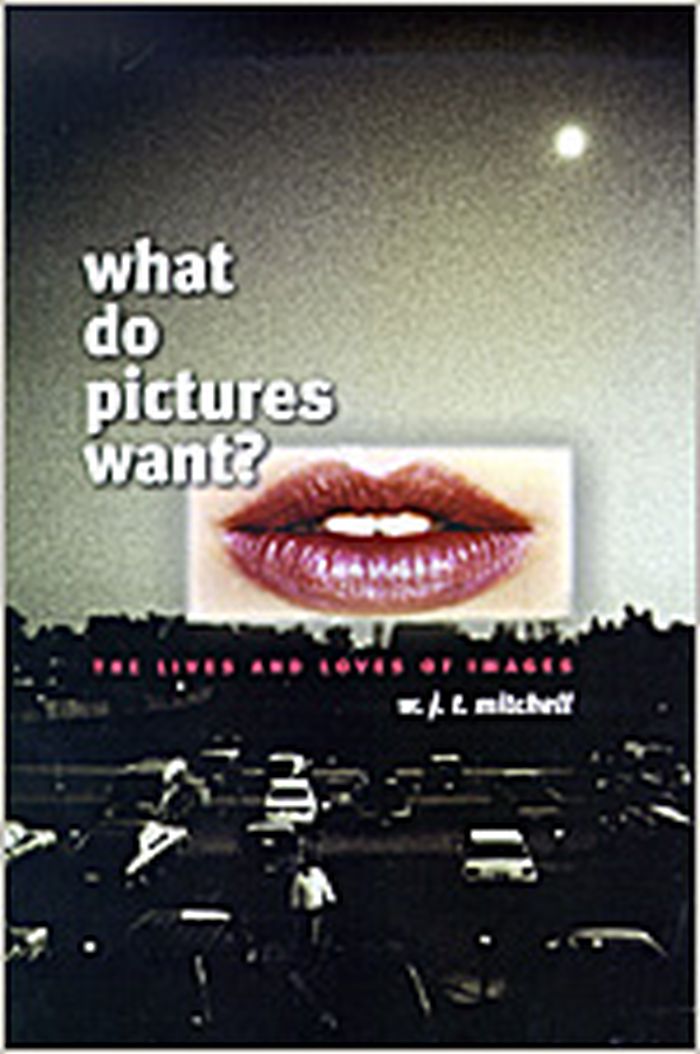
What do pictures want? : the lives and loves of images
Actions:
Price:
$43.95
(available to order)
Summary:
Why do we have such extraordinarily powerful responses toward the images and pictures we see in everyday life? Why do we behave as if pictures were alive, possessing the power to influence us, to demand things from us, to persuade us, seduce us, or even lead us astray? According to W. J. T. Mitchell, we need to reckon with images not just as inert objects that convey meaning but as animated beings with desires, needs, appetites, demands, and drives of their own. "What Do Pictures Want?" explores this idea and highlights Mitchell's innovative and profoundly influential thinking on picture theory and the lives and loves of images. Ranging across the visual arts, literature, and mass media, Mitchell applies characteristically brilliant and wry analyses to Byzantine icons and cyberpunk films, racial stereotypes and public monuments, ancient idols and modern clones, offensive images and found objects, American photography and aboriginal painting. Opening new vistas in iconology and the emergent field of visual culture, he also considers the importance of Dolly the Sheep - who, as a clone, fulfills the ancient dream of creating a living image - and the destruction of the World Trade Center on 9/11, which, among other things, signifies a new and virulent form of iconoclasm. "What Do Pictures Want?" offers an immensely rich and suggestive account of the interplay between the visible and the readable. A work by one of our leading theorists of visual representation, it will be a touchstone for art historians, literary critics, anthropologists, and philosophers alike.
What do pictures want? : the lives and loves of images
Actions:
Price:
$43.95
(available to order)
Summary:
Why do we have such extraordinarily powerful responses toward the images and pictures we see in everyday life? Why do we behave as if pictures were alive, possessing the power to influence us, to demand things from us, to persuade us, seduce us, or even lead us astray? According to W. J. T. Mitchell, we need to reckon with images not just as inert objects that convey meaning but as animated beings with desires, needs, appetites, demands, and drives of their own. "What Do Pictures Want?" explores this idea and highlights Mitchell's innovative and profoundly influential thinking on picture theory and the lives and loves of images. Ranging across the visual arts, literature, and mass media, Mitchell applies characteristically brilliant and wry analyses to Byzantine icons and cyberpunk films, racial stereotypes and public monuments, ancient idols and modern clones, offensive images and found objects, American photography and aboriginal painting. Opening new vistas in iconology and the emergent field of visual culture, he also considers the importance of Dolly the Sheep - who, as a clone, fulfills the ancient dream of creating a living image - and the destruction of the World Trade Center on 9/11, which, among other things, signifies a new and virulent form of iconoclasm. "What Do Pictures Want?" offers an immensely rich and suggestive account of the interplay between the visible and the readable. A work by one of our leading theorists of visual representation, it will be a touchstone for art historians, literary critics, anthropologists, and philosophers alike.
Form:
books
books
Publication:
June 2005, Chicago
June 2005, Chicago
Subject:
Architectural Theory
Architectural Theory
Form:
books
books
Actions:
Price:
$25.95
(available to order)
Summary:
We surround ourselves with material things that are invested with memories but can only stand for what we have lost. Physical objects—such as one’s own body—situate and define us; yet at the same time they are fundamentally indifferent to us. The melancholy of this rift is a rich source of inspiration for artists. Peter Schwenger deftly weaves together philosophical(...)
$25.95
(available to order)
Summary:
We surround ourselves with material things that are invested with memories but can only stand for what we have lost. Physical objects—such as one’s own body—situate and define us; yet at the same time they are fundamentally indifferent to us. The melancholy of this rift is a rich source of inspiration for artists. Peter Schwenger deftly weaves together philosophical(...)
Title:
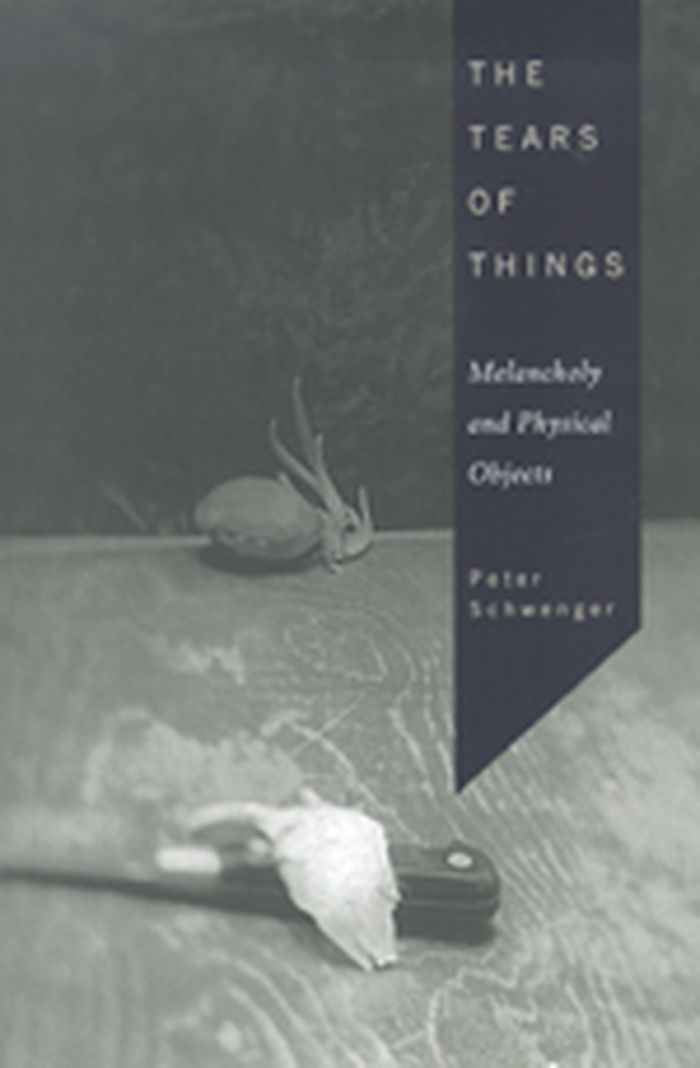
The tears of things : Melancholy and physical objects
Actions:
Price:
$25.95
(available to order)
Summary:
We surround ourselves with material things that are invested with memories but can only stand for what we have lost. Physical objects—such as one’s own body—situate and define us; yet at the same time they are fundamentally indifferent to us. The melancholy of this rift is a rich source of inspiration for artists. Peter Schwenger deftly weaves together philosophical and psychoanalytical theory with artistic practice. Concerned in part with the act of collecting, The Tears of Things is itself a collection of exemplary art objects—literary and cultural attempts to control and possess things—including paintings by Georgia O’Keeffe and René Magritte; sculpture by Louise Bourgeois and Marcel Duchamp; Joseph Cornell’s boxes; Edward Gorey’s graphic art; fiction by Virginia Woolf, Georges Perec, and Louise Erdrich; the hallucinatory encyclopedias of Jorge Luis Borges and Luigi Serafini; and the corpse photographs of Joel Peter Witkin. However, these representations of objects perpetually fall short of our aspirations. Schwenger examines what is left over—debris and waste—and asks what art can make of these. What emerges is not an art that reassembles but one that questions what it means to assemble in the first place. Contained in this catalog of waste is that ultimate still life, the cadaver, where the subject-object dichotomy receives its final ironic reconciliation. Peter Schwenger is professor of English at Mount St. Vincent University in Halifax, Nova Scotia. He is the author of Fantasm and Fiction: On Textual Envisioning, Letter Bomb: Nuclear Holocaust and the Exploding Word, and Phallic Critiques: Masculinity and Twentieth-Century Literature.
The tears of things : Melancholy and physical objects
Actions:
Price:
$25.95
(available to order)
Summary:
We surround ourselves with material things that are invested with memories but can only stand for what we have lost. Physical objects—such as one’s own body—situate and define us; yet at the same time they are fundamentally indifferent to us. The melancholy of this rift is a rich source of inspiration for artists. Peter Schwenger deftly weaves together philosophical and psychoanalytical theory with artistic practice. Concerned in part with the act of collecting, The Tears of Things is itself a collection of exemplary art objects—literary and cultural attempts to control and possess things—including paintings by Georgia O’Keeffe and René Magritte; sculpture by Louise Bourgeois and Marcel Duchamp; Joseph Cornell’s boxes; Edward Gorey’s graphic art; fiction by Virginia Woolf, Georges Perec, and Louise Erdrich; the hallucinatory encyclopedias of Jorge Luis Borges and Luigi Serafini; and the corpse photographs of Joel Peter Witkin. However, these representations of objects perpetually fall short of our aspirations. Schwenger examines what is left over—debris and waste—and asks what art can make of these. What emerges is not an art that reassembles but one that questions what it means to assemble in the first place. Contained in this catalog of waste is that ultimate still life, the cadaver, where the subject-object dichotomy receives its final ironic reconciliation. Peter Schwenger is professor of English at Mount St. Vincent University in Halifax, Nova Scotia. He is the author of Fantasm and Fiction: On Textual Envisioning, Letter Bomb: Nuclear Holocaust and the Exploding Word, and Phallic Critiques: Masculinity and Twentieth-Century Literature.
Form:
books
books
Publication:
May 2006, Minnesota
May 2006, Minnesota
Subject:
Architectural Theory
Architectural Theory
Form:
books
books
Price:
$18.95
(available to order)
Summary:
Why is it so hard to make up our minds? Adam and Eve set the template : do we or don’t we eat the apple? They chose, half-heartedly, and nothing was ever the same again. With this book, Kenneth Weisbrode offers an introduction to the age-old struggle with ambivalence. Ambivalence results from a basic desire to have it both ways. This is only natural - although(...)
$18.95
(available to order)
Summary:
Why is it so hard to make up our minds? Adam and Eve set the template : do we or don’t we eat the apple? They chose, half-heartedly, and nothing was ever the same again. With this book, Kenneth Weisbrode offers an introduction to the age-old struggle with ambivalence. Ambivalence results from a basic desire to have it both ways. This is only natural - although(...)
Title:
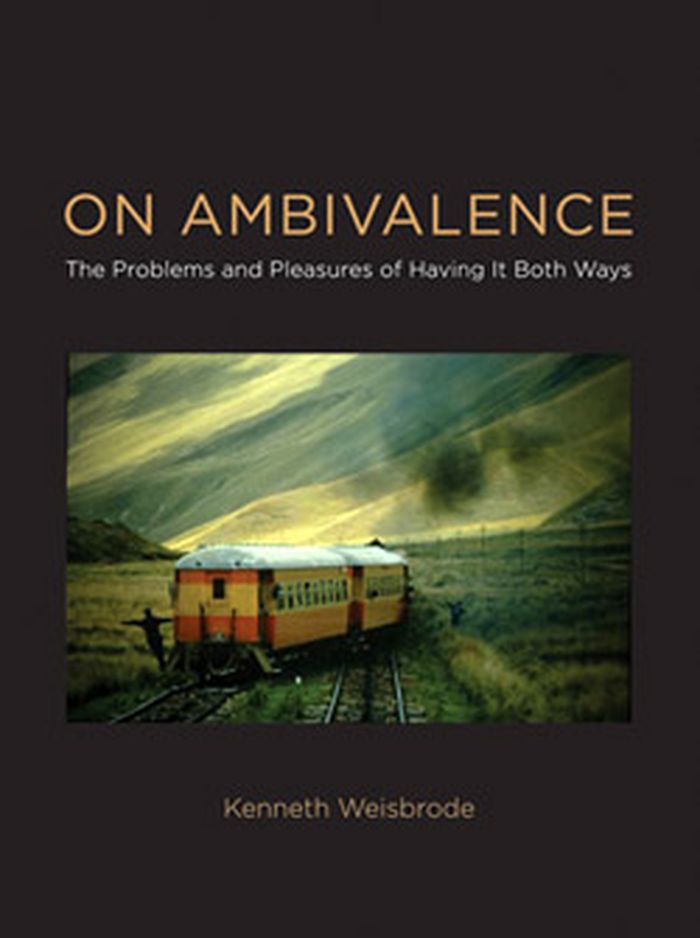
On ambivalence : the problems and pleasures of having it both ways
Actions:
Price:
$18.95
(available to order)
Summary:
Why is it so hard to make up our minds? Adam and Eve set the template : do we or don’t we eat the apple? They chose, half-heartedly, and nothing was ever the same again. With this book, Kenneth Weisbrode offers an introduction to the age-old struggle with ambivalence. Ambivalence results from a basic desire to have it both ways. This is only natural - although insisting upon it against all reason often results not in "both" but in the disappointing "neither." Ambivalence has insinuated itself into our culture as a kind of obligatory reflex, or default position, before practically every choice we make. It affects not only individuals; organizations, societies, and cultures can also be ambivalent. How often have we asked the scornful question, "Are we the Hamlet of nations"? How often have we demanded that our leaders appear decisive, judicious, and stalwart? And how eager have we been to censure them when they hesitate or waver? Weisbrode traces the concept of ambivalence, from the Garden of Eden to Freud and beyond. The Obama era, he says, may be America’s own era of ambivalence: neither red nor blue but a multicolored kaleidoscope. Ambivalence, he argues, need not be destructive. We must learn to distinguish it from its symptoms - selfishness, ambiguity, and indecision - and accept that frustration, guilt, and paralysis felt by individuals need not lead automatically to a collective pathology. Drawing upon examples from philosophy, history, literature, and the social sciences, On Ambivalence is a pocket-sized portrait of a complex human condition.
On ambivalence : the problems and pleasures of having it both ways
Actions:
Price:
$18.95
(available to order)
Summary:
Why is it so hard to make up our minds? Adam and Eve set the template : do we or don’t we eat the apple? They chose, half-heartedly, and nothing was ever the same again. With this book, Kenneth Weisbrode offers an introduction to the age-old struggle with ambivalence. Ambivalence results from a basic desire to have it both ways. This is only natural - although insisting upon it against all reason often results not in "both" but in the disappointing "neither." Ambivalence has insinuated itself into our culture as a kind of obligatory reflex, or default position, before practically every choice we make. It affects not only individuals; organizations, societies, and cultures can also be ambivalent. How often have we asked the scornful question, "Are we the Hamlet of nations"? How often have we demanded that our leaders appear decisive, judicious, and stalwart? And how eager have we been to censure them when they hesitate or waver? Weisbrode traces the concept of ambivalence, from the Garden of Eden to Freud and beyond. The Obama era, he says, may be America’s own era of ambivalence: neither red nor blue but a multicolored kaleidoscope. Ambivalence, he argues, need not be destructive. We must learn to distinguish it from its symptoms - selfishness, ambiguity, and indecision - and accept that frustration, guilt, and paralysis felt by individuals need not lead automatically to a collective pathology. Drawing upon examples from philosophy, history, literature, and the social sciences, On Ambivalence is a pocket-sized portrait of a complex human condition.
Form:
books
books
Publication:
January 2012
January 2012
Subject:
Critical Theory
Critical Theory
Form:
books
books
Holdings:
Description:
xii, 211 pages : illustrations ; 23 cm
Description:
xii, 211 pages : illustrations ; 23 cm
Subject:
- Garnett, Richard, 1835-1906.,
- British Library. Department of Printed Books History.,
- British Library. Department of Printed Books.,
- British Museum. Department of Printed Books History.,
- British Museum. Dept. of Printed Books History.,
- British Library. Department of Printed Books Histoire.,
- Librarians Great Britain Biography.,
- Literary historians Great Britain Biography.,
- Bibliothécaires Grande-Bretagne Biographies.,
- Historiens de la littérature Grande-Bretagne Biographies.,
- Intellectual life,
- Librarians,
- Literary historians,
- Bibliothecarissen.,
- London (England) Intellectual life 19th century.,
- Londres (Angleterre) Vie intellectuelle 19e siècle.,
- England London,
- Great Britain,
- Librarianship.,
- Biographies.,
- collective biographies.,
- History
(See more)
Publication:
Chicago : American Library Association, 1989.
Chicago : American Library Association, 1989.
Title:
Richard Garnett : the scholar as librarian / Barbara McCrimmon.
Actions:
Holdings:
Description:
xii, 211 pages : illustrations ; 23 cm
Richard Garnett : the scholar as librarian / Barbara McCrimmon.
Actions:
Holdings:
Description:
xii, 211 pages : illustrations ; 23 cm
Form:
books
books
Publication:
Chicago : American Library Association, 1989.
Chicago : American Library Association, 1989.
Subject:
- Garnett, Richard, 1835-1906.,
- British Library. Department of Printed Books History.,
- British Library. Department of Printed Books.,
- British Museum. Department of Printed Books History.,
- British Museum. Dept. of Printed Books History.,
- British Library. Department of Printed Books Histoire.,
- Librarians Great Britain Biography.,
- Literary historians Great Britain Biography.,
- Bibliothécaires Grande-Bretagne Biographies.,
- Historiens de la littérature Grande-Bretagne Biographies.,
- Intellectual life,
- Librarians,
- Literary historians,
- Bibliothecarissen.,
- London (England) Intellectual life 19th century.,
- Londres (Angleterre) Vie intellectuelle 19e siècle.,
- England London,
- Great Britain,
- Librarianship.,
- Biographies.,
- collective biographies.,
- History
(See more)
Form:
books
books
Actions:
Holdings:
Description:
xvii, 446 pages : illustrations (some color) ; 29 cm.
Description:
xvii, 446 pages : illustrations (some color) ; 29 cm.
Subject:
- Gardens, English History 18th century.,
- Gardens England History 18th century.,
- Jardins anglais Histoire 18e siècle.,
- Jardins Angleterre Histoire 18e siècle.,
- Gardens.,
- Gardens, English.,
- Bildband,
- Garten,
- Landschaftsgarten,
- Tuinarchitectuur.,
- Landschapsarchitectuur.,
- Tuinbouw.,
- Littérature anglaise 18e siècle Thèmes, motifs.,
- Jardins Grande-Bretagne 18e siècle.,
- Jardins à l'anglaise Histoire Catalogues d'exposition.,
- Paysage Grande-Bretagne 18e siècle.,
- England.,
- Großbritannien,
- Geschichte 1720-1800,
- Landscaping.,
- Horticulture.,
- History.
(See more)
Publication:
Philadelphia : University of Pennsylvania Press, ©1999.
Philadelphia : University of Pennsylvania Press, ©1999.
Title:
The flowering of the landscape garden : English pleasure grounds, 1720-1800 / Mark Laird.
Actions:
Holdings:
Description:
xvii, 446 pages : illustrations (some color) ; 29 cm.
The flowering of the landscape garden : English pleasure grounds, 1720-1800 / Mark Laird.
Actions:
Holdings:
Description:
xvii, 446 pages : illustrations (some color) ; 29 cm.
Form:
books
books
Publication:
Philadelphia : University of Pennsylvania Press, ©1999.
Philadelphia : University of Pennsylvania Press, ©1999.
Subject:
- Gardens, English History 18th century.,
- Gardens England History 18th century.,
- Jardins anglais Histoire 18e siècle.,
- Jardins Angleterre Histoire 18e siècle.,
- Gardens.,
- Gardens, English.,
- Bildband,
- Garten,
- Landschaftsgarten,
- Tuinarchitectuur.,
- Landschapsarchitectuur.,
- Tuinbouw.,
- Littérature anglaise 18e siècle Thèmes, motifs.,
- Jardins Grande-Bretagne 18e siècle.,
- Jardins à l'anglaise Histoire Catalogues d'exposition.,
- Paysage Grande-Bretagne 18e siècle.,
- England.,
- Großbritannien,
- Geschichte 1720-1800,
- Landscaping.,
- Horticulture.,
- History.
(See more)


