


10583 Results
Form:
books
books
Actions:
Price:
$25.95
(available to order)
Summary:
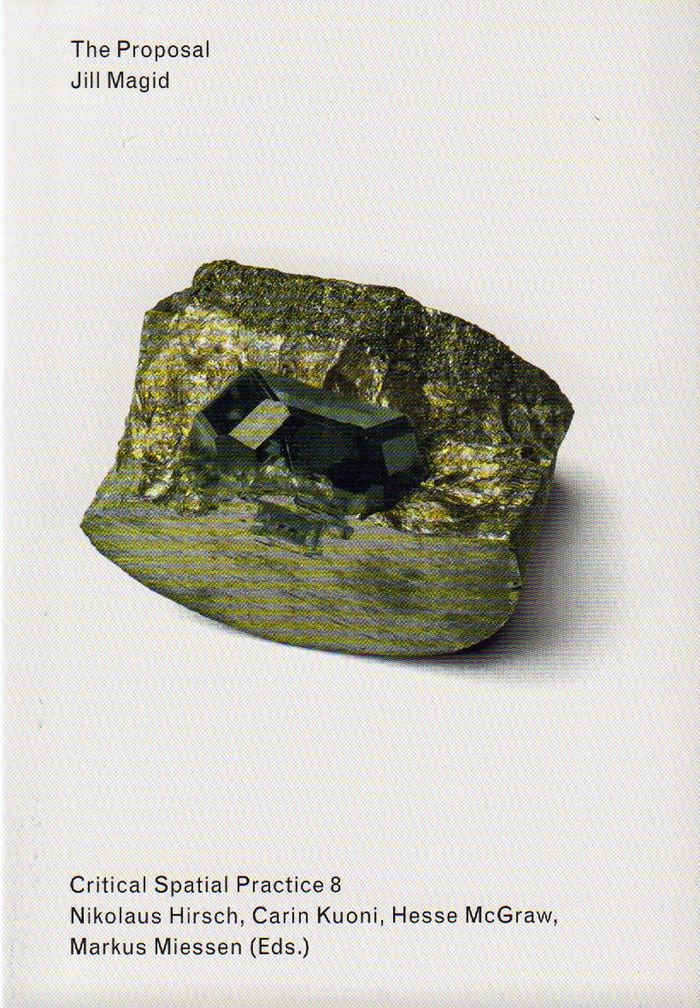
The eighth volume of the “Critical Spatial Practice” series focuses on Jill Magid's “The Barragán Archives,” a multiyear project that examines the legacy of Pritzker Prize—winning architect Luis Barragán (1902-1988), and questions forms of power, public access, and copyright that construct artistic legacy.
$25.95
(available to order)
Summary:
The eighth volume of the “Critical Spatial Practice” series focuses on Jill Magid's “The Barragán Archives,” a multiyear project that examines the legacy of Pritzker Prize—winning architect Luis Barragán (1902-1988), and questions forms of power, public access, and copyright that construct artistic legacy.
Title:
Critical spatial practice 8: the proposal
Actions:
Price:
$25.95
(available to order)
Summary:
The eighth volume of the “Critical Spatial Practice” series focuses on Jill Magid's “The Barragán Archives,” a multiyear project that examines the legacy of Pritzker Prize—winning architect Luis Barragán (1902-1988), and questions forms of power, public access, and copyright that construct artistic legacy.
Critical spatial practice 8: the proposal
Actions:
Price:
$25.95
(available to order)
Summary:
The eighth volume of the “Critical Spatial Practice” series focuses on Jill Magid's “The Barragán Archives,” a multiyear project that examines the legacy of Pritzker Prize—winning architect Luis Barragán (1902-1988), and questions forms of power, public access, and copyright that construct artistic legacy.
Form:
books
books
Publication:
December 2016
December 2016
Subject:
Architectural Theory
Architectural Theory
Form:
books
books
Actions:
Price:
$59.95
(available to order)
Summary:
Le caractère exceptionnel de cette exposition repose sur le prêt de 150 œuvres en provenance de Russie, jusqu’à présent figées dans les collections des galeries nationales (le Musée d'Etat russe à St-Petersbourg, le musée Pouchkine et la Galerie Nationale Tretiakov à Moscou, etc) qui viendront s’ajouter à ceux de différents grands musées européens, dont le Centre Georges(...)
$59.95
(available to order)
Summary:
Le caractère exceptionnel de cette exposition repose sur le prêt de 150 œuvres en provenance de Russie, jusqu’à présent figées dans les collections des galeries nationales (le Musée d'Etat russe à St-Petersbourg, le musée Pouchkine et la Galerie Nationale Tretiakov à Moscou, etc) qui viendront s’ajouter à ceux de différents grands musées européens, dont le Centre Georges(...)
Title:
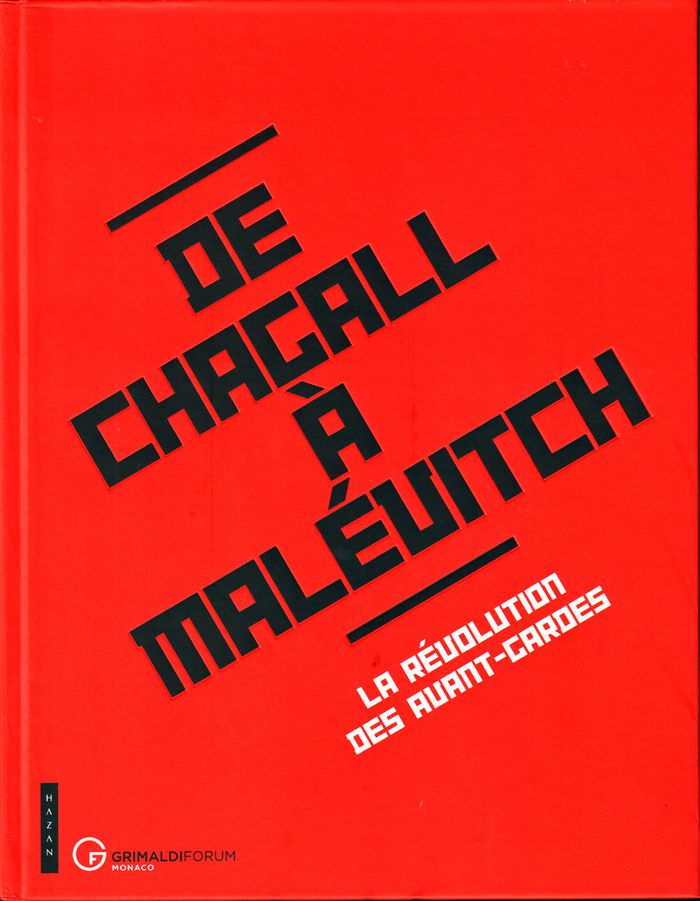
De Chagall à Malévitch: la révolution des avant-gardes
Actions:
Price:
$59.95
(available to order)
Summary:
Le caractère exceptionnel de cette exposition repose sur le prêt de 150 œuvres en provenance de Russie, jusqu’à présent figées dans les collections des galeries nationales (le Musée d'Etat russe à St-Petersbourg, le musée Pouchkine et la Galerie Nationale Tretiakov à Moscou, etc) qui viendront s’ajouter à ceux de différents grands musées européens, dont le Centre Georges Pompidou à Paris.L’exposition réunira plus de 150 œuvres majeures. Le catalogue réunit également des essais de spécialistes sur les avant-gardes, ainsi que des notices et bibliographies sur les artistes et les différents mouvements de cette époque. Coédition Grimaldi Forum de Monaco/Editions Hazan.
De Chagall à Malévitch: la révolution des avant-gardes
Actions:
Price:
$59.95
(available to order)
Summary:
Le caractère exceptionnel de cette exposition repose sur le prêt de 150 œuvres en provenance de Russie, jusqu’à présent figées dans les collections des galeries nationales (le Musée d'Etat russe à St-Petersbourg, le musée Pouchkine et la Galerie Nationale Tretiakov à Moscou, etc) qui viendront s’ajouter à ceux de différents grands musées européens, dont le Centre Georges Pompidou à Paris.L’exposition réunira plus de 150 œuvres majeures. Le catalogue réunit également des essais de spécialistes sur les avant-gardes, ainsi que des notices et bibliographies sur les artistes et les différents mouvements de cette époque. Coédition Grimaldi Forum de Monaco/Editions Hazan.
Form:
books
books
Publication:
July 2015
July 2015
Subject:
Art Theory
Art Theory
Form:
books
books
Title:
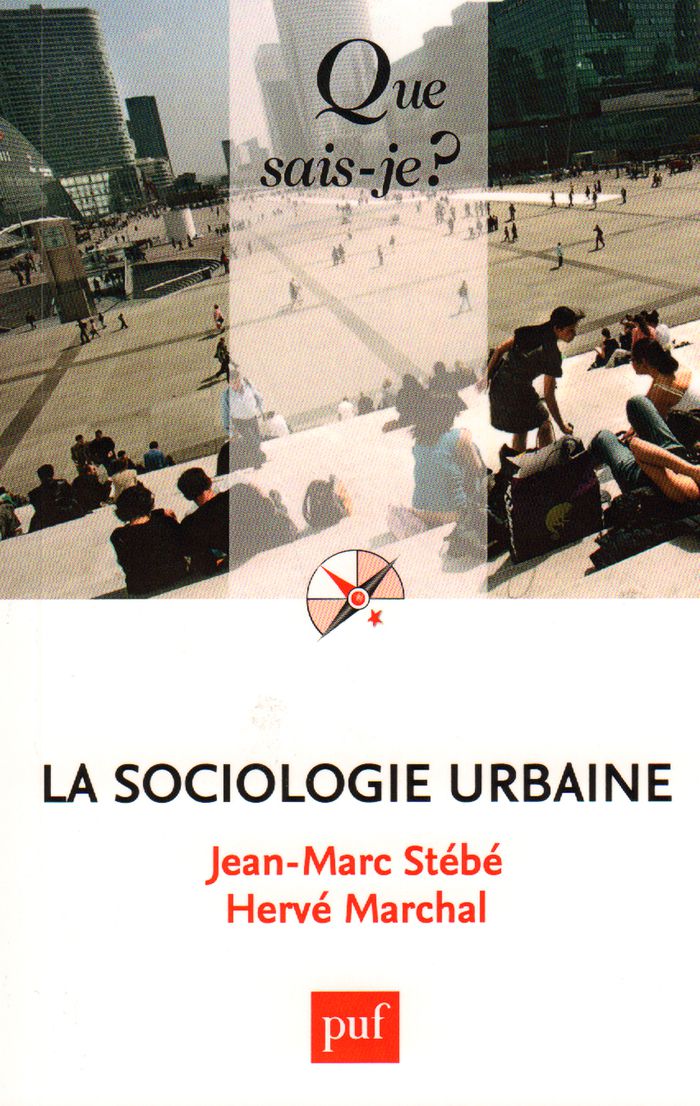
La sociologie urbaine
La sociologie urbaine
Actions:
Price:
$16.95
(available to order)
Summary:
L’hypothèse de Henri Lefebvre, qui envisageait en 1970 une urbanisation totale de la planète, se vérifie de plus en plus. En un siècle, le nombre de citadins au niveau planétaire a en effet été multiplié par douze. La moitié de la population mondiale réside dans une ville, soit près de trois milliards sept cents millions de personnes : il devient plus que nécessaire de(...)
$16.95
(available to order)
Summary:
L’hypothèse de Henri Lefebvre, qui envisageait en 1970 une urbanisation totale de la planète, se vérifie de plus en plus. En un siècle, le nombre de citadins au niveau planétaire a en effet été multiplié par douze. La moitié de la population mondiale réside dans une ville, soit près de trois milliards sept cents millions de personnes : il devient plus que nécessaire de(...)
Title:
La sociologie urbaine
Actions:
Price:
$16.95
(available to order)
Summary:
L’hypothèse de Henri Lefebvre, qui envisageait en 1970 une urbanisation totale de la planète, se vérifie de plus en plus. En un siècle, le nombre de citadins au niveau planétaire a en effet été multiplié par douze. La moitié de la population mondiale réside dans une ville, soit près de trois milliards sept cents millions de personnes : il devient plus que nécessaire de réfléchir à l’urbain, au citadin et aux rapports qu’ils entretiennent. C’est dans cette perpective que la sociologie urbaine apporte, depuis plus d’un siècle, des éléments de compréhension au phénomène urbain.
La sociologie urbaine
Actions:
Price:
$16.95
(available to order)
Summary:
L’hypothèse de Henri Lefebvre, qui envisageait en 1970 une urbanisation totale de la planète, se vérifie de plus en plus. En un siècle, le nombre de citadins au niveau planétaire a en effet été multiplié par douze. La moitié de la population mondiale réside dans une ville, soit près de trois milliards sept cents millions de personnes : il devient plus que nécessaire de réfléchir à l’urbain, au citadin et aux rapports qu’ils entretiennent. C’est dans cette perpective que la sociologie urbaine apporte, depuis plus d’un siècle, des éléments de compréhension au phénomène urbain.
Form:
books
books
Publication:
December 2016
December 2016
Subject:
Urban Theory
Urban Theory
Form:
books
books
Actions:
Price:
$23.95
(available in store)
Summary:
Geomedia offers critical analysis of the new possibilities and power relations emerging in the public space of contemporary cities. As ubiquitous digital networks enable embedded and mobile devices to integrate place-specific data with real-time feedback circuits, everyday experience of public space has become subject to new demands. Looking beyond debates framed by the(...)
$23.95
(available in store)
Summary:
Geomedia offers critical analysis of the new possibilities and power relations emerging in the public space of contemporary cities. As ubiquitous digital networks enable embedded and mobile devices to integrate place-specific data with real-time feedback circuits, everyday experience of public space has become subject to new demands. Looking beyond debates framed by the(...)
Title:
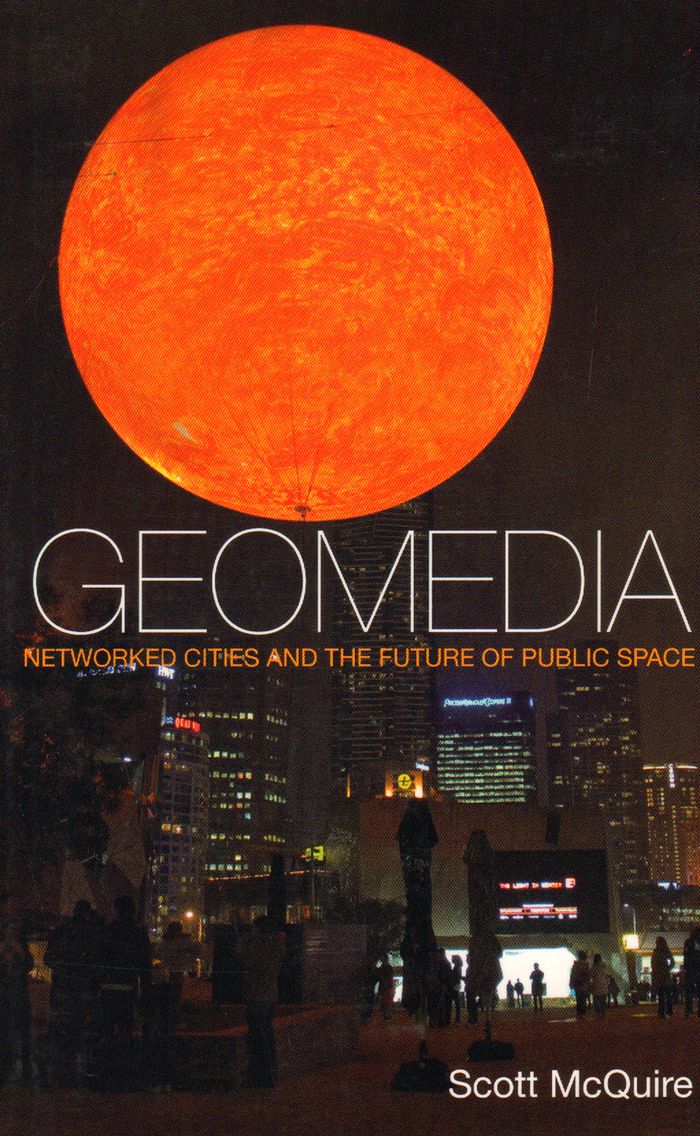
Geomedia: networked cities and the future of public space
Actions:
Price:
$23.95
(available in store)
Summary:
Geomedia offers critical analysis of the new possibilities and power relations emerging in the public space of contemporary cities. As ubiquitous digital networks enable embedded and mobile devices to integrate place-specific data with real-time feedback circuits, everyday experience of public space has become subject to new demands. Looking beyond debates framed by the dominance of surveillance and spectacle, McQuire asks: how might the kind of collaborative practices that have flourished in art and online cultures be translated into urban space? In the urban crisis of the 1960s, Henri Lefebvre argued that the capacity for a city’s inhabitants to actively appropriate the time and space of their surroundings was a critical dimension of modern democracy. What does it mean to speak of ‘the right to the city’ in the context of the networked city? Addressing this question through a series of case studies, this cutting-edge text highlights the tensions between citizen and consumer, communication and surveillance, participation and control, which define contemporary struggles over public space.
Geomedia: networked cities and the future of public space
Actions:
Price:
$23.95
(available in store)
Summary:
Geomedia offers critical analysis of the new possibilities and power relations emerging in the public space of contemporary cities. As ubiquitous digital networks enable embedded and mobile devices to integrate place-specific data with real-time feedback circuits, everyday experience of public space has become subject to new demands. Looking beyond debates framed by the dominance of surveillance and spectacle, McQuire asks: how might the kind of collaborative practices that have flourished in art and online cultures be translated into urban space? In the urban crisis of the 1960s, Henri Lefebvre argued that the capacity for a city’s inhabitants to actively appropriate the time and space of their surroundings was a critical dimension of modern democracy. What does it mean to speak of ‘the right to the city’ in the context of the networked city? Addressing this question through a series of case studies, this cutting-edge text highlights the tensions between citizen and consumer, communication and surveillance, participation and control, which define contemporary struggles over public space.
Form:
books
books
Publication:
December 2016
December 2016
Subject:
Urban Theory
Urban Theory
Form:
books
books
Actions:
Price:
$68.95
(available to order)
Summary:
This publication includes lectures; interviews; articles published in daily newspapers and magazines, and longer essays on a variety of topics. Steiner brings to his work a keen critical acumen that draws on decades of travel, research, and contact with renowned international architects, such as Rob Krier, Hermann Czech, Herzog & de Meuron, Rem Koolhaas, Lacaton + Vassal,(...)
$68.95
(available to order)
Summary:
This publication includes lectures; interviews; articles published in daily newspapers and magazines, and longer essays on a variety of topics. Steiner brings to his work a keen critical acumen that draws on decades of travel, research, and contact with renowned international architects, such as Rob Krier, Hermann Czech, Herzog & de Meuron, Rem Koolhaas, Lacaton + Vassal,(...)
Title:
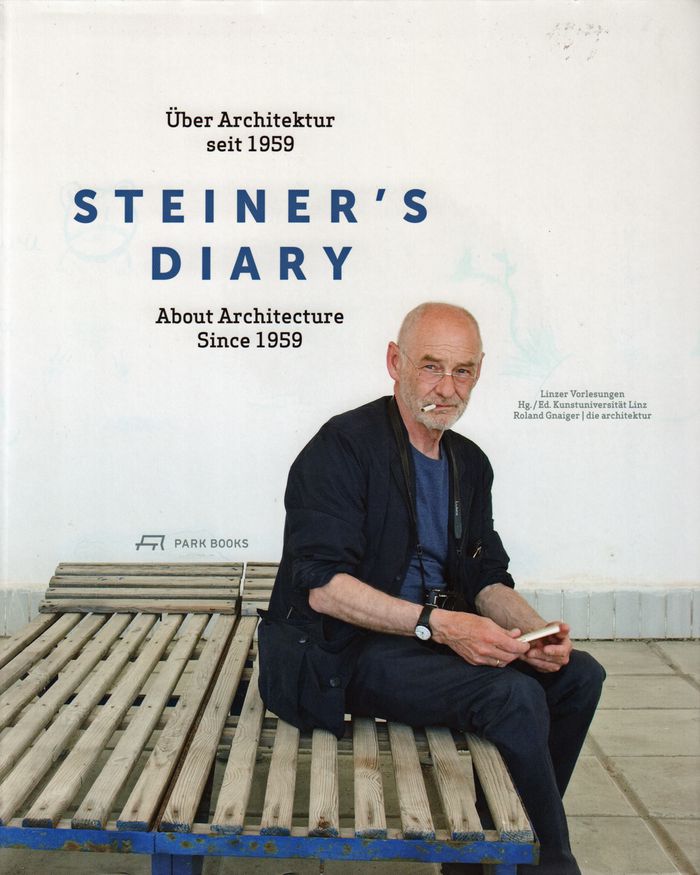
Steiner's Diary: on architecture since 1959
Actions:
Price:
$68.95
(available to order)
Summary:
This publication includes lectures; interviews; articles published in daily newspapers and magazines, and longer essays on a variety of topics. Steiner brings to his work a keen critical acumen that draws on decades of travel, research, and contact with renowned international architects, such as Rob Krier, Hermann Czech, Herzog & de Meuron, Rem Koolhaas, Lacaton + Vassal, Jon Jerde, Rural Studio, Wang Shu, and Alexander Brodsky. At the same time, his articles and essays are often amplified by personal observations and experiences. While paying tribute to a prolific scholar and critic, Steiner’s Diary takes readers through four decades of architectural history that represent some of the discipline’s most fascinating historical developments, and it will be welcomed by architects, architectural historians, and anyone with an interest in architecture’s role in society today.
Steiner's Diary: on architecture since 1959
Actions:
Price:
$68.95
(available to order)
Summary:
This publication includes lectures; interviews; articles published in daily newspapers and magazines, and longer essays on a variety of topics. Steiner brings to his work a keen critical acumen that draws on decades of travel, research, and contact with renowned international architects, such as Rob Krier, Hermann Czech, Herzog & de Meuron, Rem Koolhaas, Lacaton + Vassal, Jon Jerde, Rural Studio, Wang Shu, and Alexander Brodsky. At the same time, his articles and essays are often amplified by personal observations and experiences. While paying tribute to a prolific scholar and critic, Steiner’s Diary takes readers through four decades of architectural history that represent some of the discipline’s most fascinating historical developments, and it will be welcomed by architects, architectural historians, and anyone with an interest in architecture’s role in society today.
Form:
books
books
Publication:
December 2016
December 2016
Subject:
Architectural Theory
Architectural Theory
Form:
books
books
Actions:
Price:
$55.90
(available to order)
Summary:
This previously unpublished work is essential reading for anyone who has followed Marco Frascari’s scholarship and teachings over the last three decades. It also provides the perfect introduction for anyone new to his writings. As ever, Frascari does not offer prescriptive tools and frameworks to enact his theories of drawing and imagination; instead, he teaches how to(...)
$55.90
(available to order)
Summary:
This previously unpublished work is essential reading for anyone who has followed Marco Frascari’s scholarship and teachings over the last three decades. It also provides the perfect introduction for anyone new to his writings. As ever, Frascari does not offer prescriptive tools and frameworks to enact his theories of drawing and imagination; instead, he teaches how to(...)
Title:
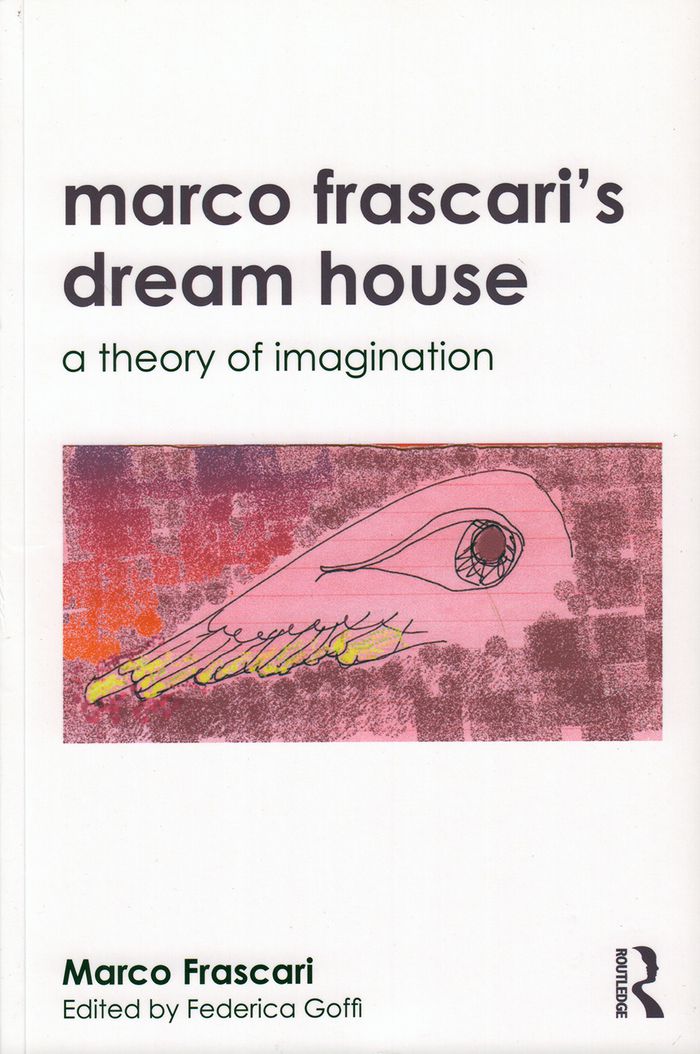
Marco Frascari's dream house: a theory of imagination
Actions:
Price:
$55.90
(available to order)
Summary:
This previously unpublished work is essential reading for anyone who has followed Marco Frascari’s scholarship and teachings over the last three decades. It also provides the perfect introduction for anyone new to his writings. As ever, Frascari does not offer prescriptive tools and frameworks to enact his theories of drawing and imagination; instead, he teaches how to build one’s own through individual practice. An illuminating introduction places the text in a wider context, providing the reader with a fascinating and important context and understanding to this posthumous work. Frascari's sketchbooks are reproduced faithfully in full colour to provide the reader with a remarkable insight into the design process of this influential mind.
Marco Frascari's dream house: a theory of imagination
Actions:
Price:
$55.90
(available to order)
Summary:
This previously unpublished work is essential reading for anyone who has followed Marco Frascari’s scholarship and teachings over the last three decades. It also provides the perfect introduction for anyone new to his writings. As ever, Frascari does not offer prescriptive tools and frameworks to enact his theories of drawing and imagination; instead, he teaches how to build one’s own through individual practice. An illuminating introduction places the text in a wider context, providing the reader with a fascinating and important context and understanding to this posthumous work. Frascari's sketchbooks are reproduced faithfully in full colour to provide the reader with a remarkable insight into the design process of this influential mind.
Form:
books
books
Publication:
April 2017
April 2017
Subject:
Architectural Theory
Architectural Theory
Form:
books
books
Title:
Planet of slums
Planet of slums
Actions:
Price:
$22.99
(available to order)
Summary:
In this book, Mike Davis explores the future of a radically unequal and explosively unstable urban world. From the sprawling barricadas of Lima to the garbage hills of Manila, urbanization has been disconnected from industrialization, and even from economic growth. Davis portrays a vast humanity warehoused in shantytowns and exiled from the formal world economy. He argues(...)
$22.99
(available to order)
Summary:
In this book, Mike Davis explores the future of a radically unequal and explosively unstable urban world. From the sprawling barricadas of Lima to the garbage hills of Manila, urbanization has been disconnected from industrialization, and even from economic growth. Davis portrays a vast humanity warehoused in shantytowns and exiled from the formal world economy. He argues(...)
Title:
Planet of slums
Actions:
Price:
$22.99
(available to order)
Summary:
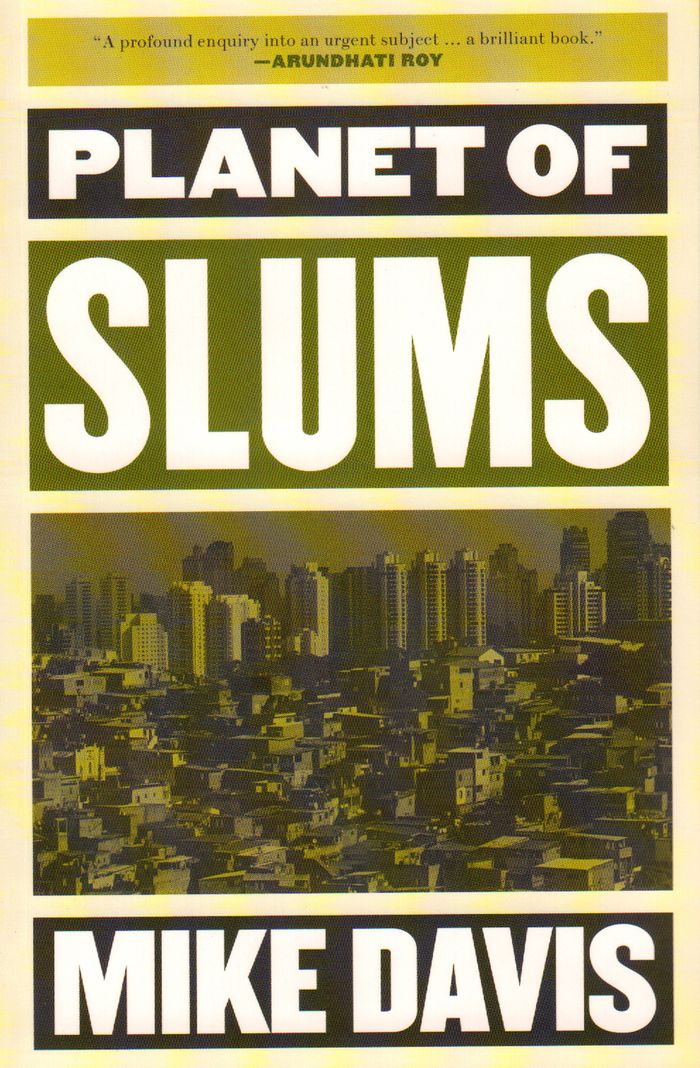
In this book, Mike Davis explores the future of a radically unequal and explosively unstable urban world. From the sprawling barricadas of Lima to the garbage hills of Manila, urbanization has been disconnected from industrialization, and even from economic growth. Davis portrays a vast humanity warehoused in shantytowns and exiled from the formal world economy. He argues that the rise of this informal urban proletariat is a wholly unforeseen development, and asks whether the great slums, as a terrified Victorian middle class once imagined, are volcanoes waiting to erupt.
Planet of slums
Actions:
Price:
$22.99
(available to order)
Summary:
In this book, Mike Davis explores the future of a radically unequal and explosively unstable urban world. From the sprawling barricadas of Lima to the garbage hills of Manila, urbanization has been disconnected from industrialization, and even from economic growth. Davis portrays a vast humanity warehoused in shantytowns and exiled from the formal world economy. He argues that the rise of this informal urban proletariat is a wholly unforeseen development, and asks whether the great slums, as a terrified Victorian middle class once imagined, are volcanoes waiting to erupt.
Form:
books
books
Publication:
January 2017
January 2017
Subject:
Urban Theory
Urban Theory
Form:
books
books
Title:
When site lost the plot
When site lost the plot
Actions:
Price:
$37.95
(available to order)
Summary:
The critical concept of site-specificity once seemed to harbour the potential for disruption. But site-specific work has become increasingly assimilated into the capitalist logic of regeneration and value creation. The materialist critique of the art object has been shortcircuited by the franchised idiosyncrasies of international nomad flâneurs. And on a planet whose(...)
$37.95
(available to order)
Summary:
The critical concept of site-specificity once seemed to harbour the potential for disruption. But site-specific work has become increasingly assimilated into the capitalist logic of regeneration and value creation. The materialist critique of the art object has been shortcircuited by the franchised idiosyncrasies of international nomad flâneurs. And on a planet whose(...)
Title:
When site lost the plot
Actions:
Price:
$37.95
(available to order)
Summary:
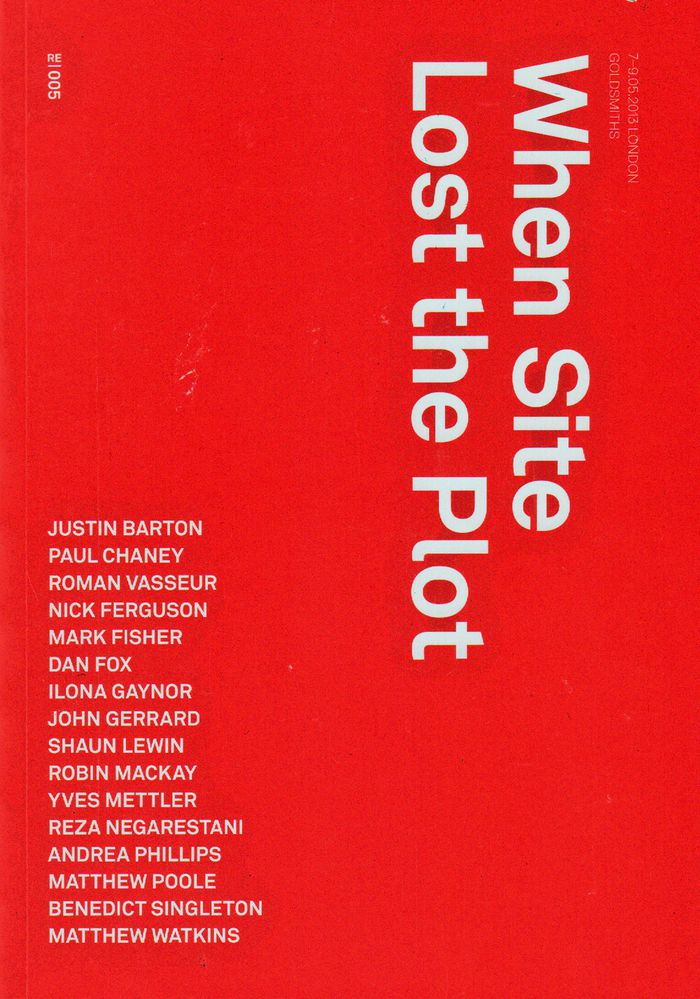
The critical concept of site-specificity once seemed to harbour the potential for disruption. But site-specific work has become increasingly assimilated into the capitalist logic of regeneration and value creation. The materialist critique of the art object has been shortcircuited by the franchised idiosyncrasies of international nomad flâneurs. And on a planet whose entire surface is mapped and apped, the concept of ‘site’ itself becomes ever more problematic. How can we do justice to the particularity of local sites while unearthing their material conditions? What do a contemporary ‘geo-philosophy’ and the historical legacy of site-specific art have to offer each other? Can we develop methods for the controlled unpacking of the local into the global, avoiding trivial reconciliations between local sites and their global conditions? "When site lost the plot" charts some of the ways in which site continues to be a concern for contemporary practice; and introduces the concept of ‘plot’ as an alternative approach. Alongside artists discussing their practice and their approach to site and plot, contributors from various disciplines introduce concepts from cartography, mathematics, film, fiction, design, and philosophy.
When site lost the plot
Actions:
Price:
$37.95
(available to order)
Summary:
The critical concept of site-specificity once seemed to harbour the potential for disruption. But site-specific work has become increasingly assimilated into the capitalist logic of regeneration and value creation. The materialist critique of the art object has been shortcircuited by the franchised idiosyncrasies of international nomad flâneurs. And on a planet whose entire surface is mapped and apped, the concept of ‘site’ itself becomes ever more problematic. How can we do justice to the particularity of local sites while unearthing their material conditions? What do a contemporary ‘geo-philosophy’ and the historical legacy of site-specific art have to offer each other? Can we develop methods for the controlled unpacking of the local into the global, avoiding trivial reconciliations between local sites and their global conditions? "When site lost the plot" charts some of the ways in which site continues to be a concern for contemporary practice; and introduces the concept of ‘plot’ as an alternative approach. Alongside artists discussing their practice and their approach to site and plot, contributors from various disciplines introduce concepts from cartography, mathematics, film, fiction, design, and philosophy.
Form:
books
books
Publication:
March 2015
March 2015
Subject:
Art Theory
Art Theory
Form:
journals and magazines
journals and magazines
Title:
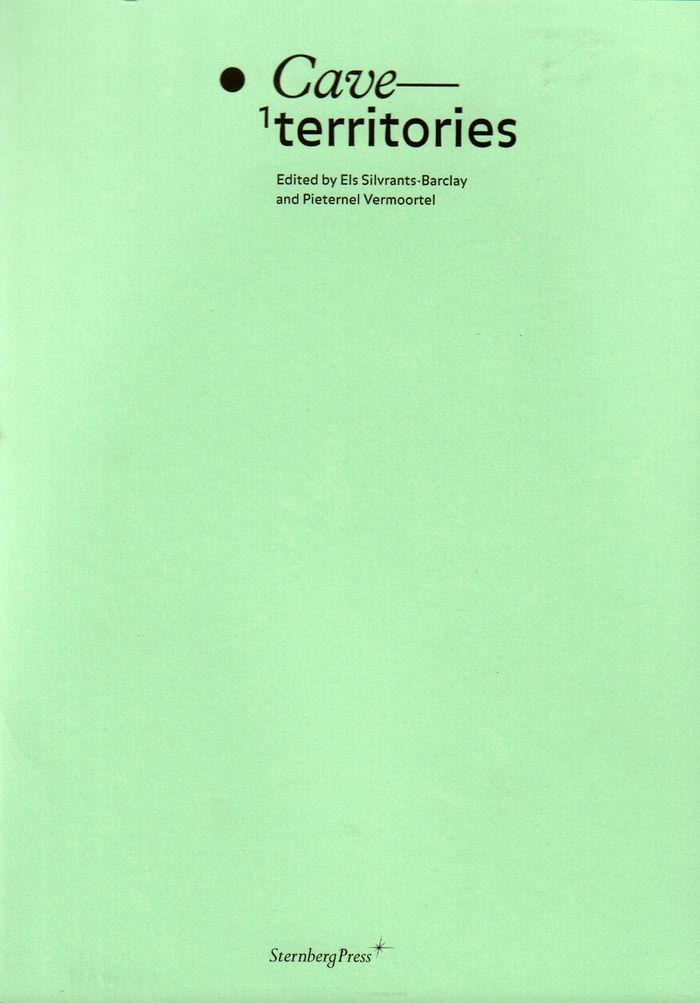
Cave 1: Territories
Cave 1: Territories
Actions:
Price:
$32.00
(available in store)
Summary:
"Cave" is a series of publications dedicated to contemporary collecting. The first issue looks into the territory of the public collection considering it both a semantic ground for institutional collecting as well as political and cultural infrastructure.
$32.00
(available in store)
Summary:
"Cave" is a series of publications dedicated to contemporary collecting. The first issue looks into the territory of the public collection considering it both a semantic ground for institutional collecting as well as political and cultural infrastructure.
Title:
Cave 1: Territories
Actions:
Price:
$32.00
(available in store)
Summary:
"Cave" is a series of publications dedicated to contemporary collecting. The first issue looks into the territory of the public collection considering it both a semantic ground for institutional collecting as well as political and cultural infrastructure.
Cave 1: Territories
Actions:
Price:
$32.00
(available in store)
Summary:
"Cave" is a series of publications dedicated to contemporary collecting. The first issue looks into the territory of the public collection considering it both a semantic ground for institutional collecting as well as political and cultural infrastructure.
Form:
journals and magazines
journals and magazines
Publication:
August 2016
August 2016
Subject:
Art Theory
Art Theory
Form:
books
books
Title:
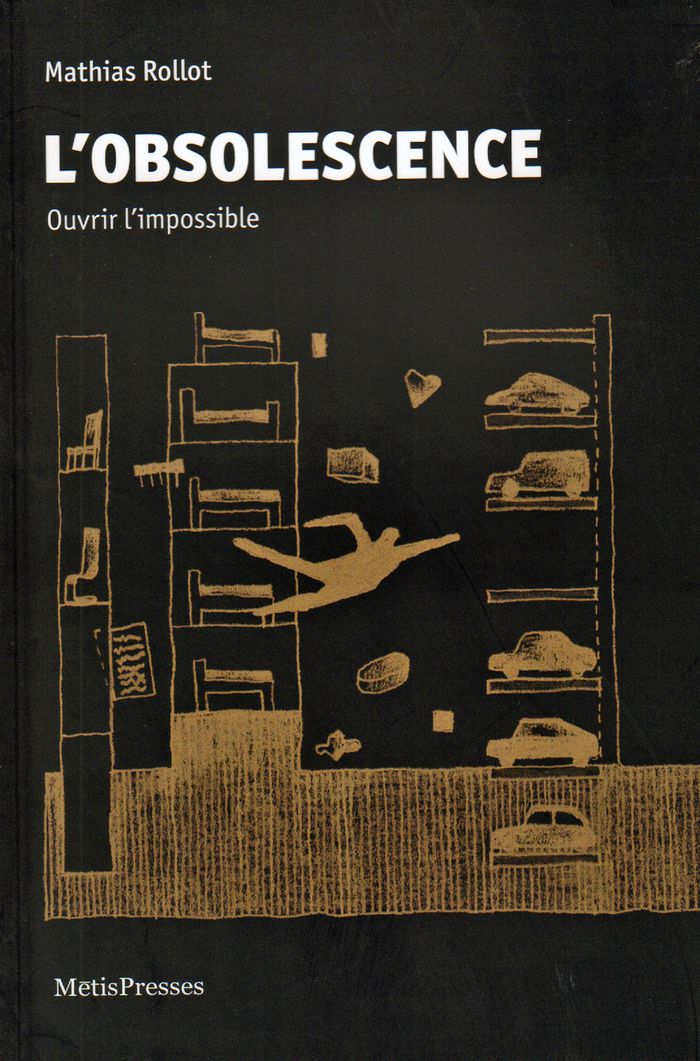
l'Obsolescence
l'Obsolescence
Actions:
Price:
$26.95
(available in store)
Summary:
Qu’est-ce que l’«obsolescence»? Parfois confondue avec l’idée d’inadaptation et parfois envisagée comme synonyme de péremption, citée ici dans un discours contre l’autodestruction programmée et invoquée là pour témoigner du caractère démodé ou désuet des objets… Ces dernières années, on aura entendu parler à tort et à travers de l’obsolescence. Que révèle cette confusion(...)
$26.95
(available in store)
Summary:
Qu’est-ce que l’«obsolescence»? Parfois confondue avec l’idée d’inadaptation et parfois envisagée comme synonyme de péremption, citée ici dans un discours contre l’autodestruction programmée et invoquée là pour témoigner du caractère démodé ou désuet des objets… Ces dernières années, on aura entendu parler à tort et à travers de l’obsolescence. Que révèle cette confusion(...)
Title:
l'Obsolescence
Actions:
Price:
$26.95
(available in store)
Summary:
Qu’est-ce que l’«obsolescence»? Parfois confondue avec l’idée d’inadaptation et parfois envisagée comme synonyme de péremption, citée ici dans un discours contre l’autodestruction programmée et invoquée là pour témoigner du caractère démodé ou désuet des objets… Ces dernières années, on aura entendu parler à tort et à travers de l’obsolescence. Que révèle cette confusion sémantique? Et surtout quel sens attribuer en définitive à ce terme? Cet ouvrage s’attache à fonder la notion d’obsolescence de façon rigoureuse pour en déployer ensuite les potentialités critiques et leurs multiples résonances avec l’actualité. Ainsi, au fil des chapitres, sont envisagés et questionnés des champs et objets d’études variés, de la pensée de Günther Anders aux courants transhumantes, de la critique de l’«obsolescence programmée» à la discipline architecturale. Avec à chaque fois une même hypothèse: l’idée que l’obsolescence, entrevue comme figure de l’impossible, recèle aussi un formidable potentiel: une ressource incomparable pour relire sous un nouvel angle notre contemporain et ses enjeux.
l'Obsolescence
Actions:
Price:
$26.95
(available in store)
Summary:
Qu’est-ce que l’«obsolescence»? Parfois confondue avec l’idée d’inadaptation et parfois envisagée comme synonyme de péremption, citée ici dans un discours contre l’autodestruction programmée et invoquée là pour témoigner du caractère démodé ou désuet des objets… Ces dernières années, on aura entendu parler à tort et à travers de l’obsolescence. Que révèle cette confusion sémantique? Et surtout quel sens attribuer en définitive à ce terme? Cet ouvrage s’attache à fonder la notion d’obsolescence de façon rigoureuse pour en déployer ensuite les potentialités critiques et leurs multiples résonances avec l’actualité. Ainsi, au fil des chapitres, sont envisagés et questionnés des champs et objets d’études variés, de la pensée de Günther Anders aux courants transhumantes, de la critique de l’«obsolescence programmée» à la discipline architecturale. Avec à chaque fois une même hypothèse: l’idée que l’obsolescence, entrevue comme figure de l’impossible, recèle aussi un formidable potentiel: une ressource incomparable pour relire sous un nouvel angle notre contemporain et ses enjeux.
Form:
books
books
Publication:
October 2016
October 2016
Subject:
Architectural Theory
Architectural Theory


