


5690 Results
Form:
books
books
Actions:
Price:
$33.95
(available to order)
Summary:
"Fuel" is an idiosyncratic, speculative dictionary of fuels, real and imagined, historical and futuristic, hopeless and utopian. Drawing on literature, film, and scientific treatises--most produced long before "climate change" was in circulation--"Fuel" argues for a distinction between energy (a system of power) and fuel (a substance, which can be thought of as(...)
$33.95
(available to order)
Summary:
"Fuel" is an idiosyncratic, speculative dictionary of fuels, real and imagined, historical and futuristic, hopeless and utopian. Drawing on literature, film, and scientific treatises--most produced long before "climate change" was in circulation--"Fuel" argues for a distinction between energy (a system of power) and fuel (a substance, which can be thought of as(...)
Title:
Fuel : a speculative dictionary
Actions:
Price:
$33.95
(available to order)
Summary:
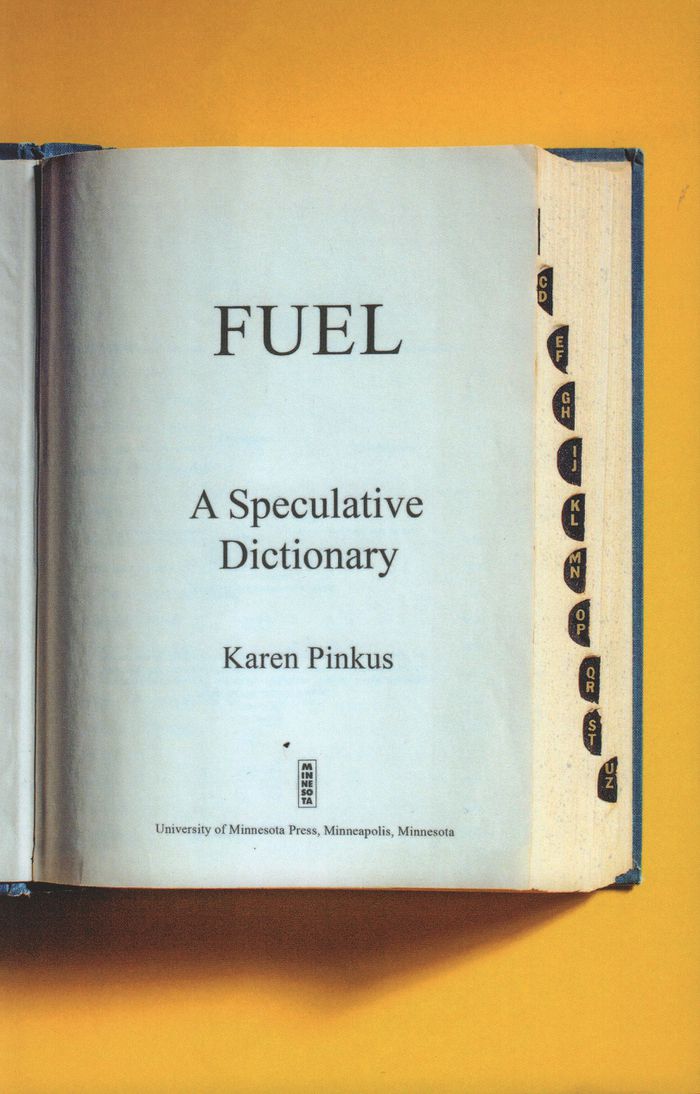
"Fuel" is an idiosyncratic, speculative dictionary of fuels, real and imagined, historical and futuristic, hopeless and utopian. Drawing on literature, film, and scientific treatises--most produced long before "climate change" was in circulation--"Fuel" argues for a distinction between energy (a system of power) and fuel (a substance, which can be thought of as "potentiality") as it endeavors to undo the dream that we can simply switch to renewables and all will be golden. From "Air" to "Zyklon B," entries in this unusual "dictionary" include Algae, Clathrates, Dilithium, Fleece, Goats, Theology, Whale Oil, and many, many more. The tone of the entries ranges as widely as the topics: from historical anecdotes (the Ford Fiesta "boozemobile") to eccentric readings of the classics of "energy lit" ( Germinal and Oil! ); from literary observations (a high octane Odyssey ?) to excursions into literary theory. The dictionary draws from an eccentric canon, including works by Jules Verne, George Eliot's Silas Marner , Paolo Bacigalupi's Windup Girl , and the Tom Cruise vehicle Oblivion , among others. A message from this ambitious project is that energy can be understood as a heterogeneous set of self-mystifying systems or machines that block access to thought as they fascinate us. Fuels emerge as more primal elements that the audience can grasp at various points along the way to consumption/combustion. This dictionary can help scramble our thinking about fuel--not in order to demonize energy and not in order to create a new hierarchy in which certain renewables take over from fossil fuels but instead to open up potential ways of interacting with real and imaginary substances, by wrenching them out of narrative and placing them into an idiosyncratic dictionary to be applied by readers into new narratives.
Fuel : a speculative dictionary
Actions:
Price:
$33.95
(available to order)
Summary:
"Fuel" is an idiosyncratic, speculative dictionary of fuels, real and imagined, historical and futuristic, hopeless and utopian. Drawing on literature, film, and scientific treatises--most produced long before "climate change" was in circulation--"Fuel" argues for a distinction between energy (a system of power) and fuel (a substance, which can be thought of as "potentiality") as it endeavors to undo the dream that we can simply switch to renewables and all will be golden. From "Air" to "Zyklon B," entries in this unusual "dictionary" include Algae, Clathrates, Dilithium, Fleece, Goats, Theology, Whale Oil, and many, many more. The tone of the entries ranges as widely as the topics: from historical anecdotes (the Ford Fiesta "boozemobile") to eccentric readings of the classics of "energy lit" ( Germinal and Oil! ); from literary observations (a high octane Odyssey ?) to excursions into literary theory. The dictionary draws from an eccentric canon, including works by Jules Verne, George Eliot's Silas Marner , Paolo Bacigalupi's Windup Girl , and the Tom Cruise vehicle Oblivion , among others. A message from this ambitious project is that energy can be understood as a heterogeneous set of self-mystifying systems or machines that block access to thought as they fascinate us. Fuels emerge as more primal elements that the audience can grasp at various points along the way to consumption/combustion. This dictionary can help scramble our thinking about fuel--not in order to demonize energy and not in order to create a new hierarchy in which certain renewables take over from fossil fuels but instead to open up potential ways of interacting with real and imaginary substances, by wrenching them out of narrative and placing them into an idiosyncratic dictionary to be applied by readers into new narratives.
Form:
books
books
Publication:
November 2016
November 2016
Subject:
Environment and environmental theory
Environment and environmental theory
Form:
books
books
Actions:
Holdings:
Description:
ix, 265 pages : illustrations ; 25 cm.
Description:
ix, 265 pages : illustrations ; 25 cm.
Author:
Subject:
- Cities and towns, Medieval.,
- Cities and towns Byzantine Empire.,
- Cities and towns Rome.,
- Cities and towns Islamic Empire.,
- Civilization, Medieval.,
- Cities history,
- City Planning history,
- Civilization history,
- Villes médiévales.,
- Civilisation médiévale.,
- Cities and towns,
- Kongress,
- Stadt,
- Stadtforschung,
- Spätantike,
- Stadscultuur.,
- Steden.,
- Villes Moyen âge.,
- Villes Dans l'art.,
- Villes Dans la littérature.,
- Europe History 392-814.,
- Rome (Empire),
- Islamic Empire,
- Europe,
- Byzantine Empire,
- Aufsatzsammlung.,
- Kongress Oxford 1995.,
- History
(See more)
Publication:
Leiden ; Boston : Brill, [1999], ©1999
Leiden ; Boston : Brill, [1999], ©1999
Title:
The idea and ideal of the town between late Antiquity and the early Middle Ages / edited by G.P. Brogiolo and Bryan Ward-Perkins.
Actions:
Holdings:
Description:
ix, 265 pages : illustrations ; 25 cm.
The idea and ideal of the town between late Antiquity and the early Middle Ages / edited by G.P. Brogiolo and Bryan Ward-Perkins.
Actions:
Holdings:
Description:
ix, 265 pages : illustrations ; 25 cm.
Form:
books
books
Publication:
Leiden ; Boston : Brill, [1999], ©1999
Leiden ; Boston : Brill, [1999], ©1999
Subject:
- Cities and towns, Medieval.,
- Cities and towns Byzantine Empire.,
- Cities and towns Rome.,
- Cities and towns Islamic Empire.,
- Civilization, Medieval.,
- Cities history,
- City Planning history,
- Civilization history,
- Villes médiévales.,
- Civilisation médiévale.,
- Cities and towns,
- Kongress,
- Stadt,
- Stadtforschung,
- Spätantike,
- Stadscultuur.,
- Steden.,
- Villes Moyen âge.,
- Villes Dans l'art.,
- Villes Dans la littérature.,
- Europe History 392-814.,
- Rome (Empire),
- Islamic Empire,
- Europe,
- Byzantine Empire,
- Aufsatzsammlung.,
- Kongress Oxford 1995.,
- History
(See more)
Form:
books
books
Actions:
Holdings:
Description:
460 pages : illustrations ; 25 cm.
Description:
460 pages : illustrations ; 25 cm.
Author:
Subject:
- Henry II, King of France, 1519-1559 Congresses.,
- Henry II, King of France, 1519-1559 Portraits Congresses.,
- Henry II, King of France, 1519-1559 Art patronage Congresses.,
- Henri II, roi de France, 1519-1559 Et les arts Congrès.,
- Henri II, roi de France, 1519-1559 Mécénat Congrès.,
- Henry II, King of France, 1519-1559,
- Heinrich II. Frankreich, König 1519-1559,
- Henri II, roi de France, 1519-1559.,
- Heinrich Frankreich, König, II.,
- Art, French 16th century Congresses.,
- Arts France 16th century Congresses.,
- Art français 16e siècle Congrès.,
- Arts France 16e siècle Congrès.,
- Arts,
- Art, French,
- Kunst,
- Beeldende kunsten.,
- 16e siècle.,
- Art français.,
- Littérature française.,
- Thème artistique.,
- Vie artistique.,
- Vie intellectuelle.,
- France,
- Frankreich,
- History of arts 16th century,
- Kongress Ecouen 1997.,
- Proceedings.,
- portraits.,
- Portraits,
- Conference papers and proceedings
(See more)
Publication:
Paris : Ecole du Louvre, ©2003.
Paris : Ecole du Louvre, ©2003.
Title:
Henri II et les arts : actes du colloque international, Ecole du Louvre et Musée national de la Renaissance-Ecouen, 25, 26 et 27 septembre 1997 / publiés sous la direction de Hervé Oursel, Julia Fritsch.
Actions:
Holdings:
Description:
460 pages : illustrations ; 25 cm.
Henri II et les arts : actes du colloque international, Ecole du Louvre et Musée national de la Renaissance-Ecouen, 25, 26 et 27 septembre 1997 / publiés sous la direction de Hervé Oursel, Julia Fritsch.
Actions:
Holdings:
Description:
460 pages : illustrations ; 25 cm.
Form:
books
books
Publication:
Paris : Ecole du Louvre, ©2003.
Paris : Ecole du Louvre, ©2003.
Subject:
- Henry II, King of France, 1519-1559 Congresses.,
- Henry II, King of France, 1519-1559 Portraits Congresses.,
- Henry II, King of France, 1519-1559 Art patronage Congresses.,
- Henri II, roi de France, 1519-1559 Et les arts Congrès.,
- Henri II, roi de France, 1519-1559 Mécénat Congrès.,
- Henry II, King of France, 1519-1559,
- Heinrich II. Frankreich, König 1519-1559,
- Henri II, roi de France, 1519-1559.,
- Heinrich Frankreich, König, II.,
- Art, French 16th century Congresses.,
- Arts France 16th century Congresses.,
- Art français 16e siècle Congrès.,
- Arts France 16e siècle Congrès.,
- Arts,
- Art, French,
- Kunst,
- Beeldende kunsten.,
- 16e siècle.,
- Art français.,
- Littérature française.,
- Thème artistique.,
- Vie artistique.,
- Vie intellectuelle.,
- France,
- Frankreich,
- History of arts 16th century,
- Kongress Ecouen 1997.,
- Proceedings.,
- portraits.,
- Portraits,
- Conference papers and proceedings
(See more)
Form:
books
books
Price:
$25.00
(available to order)
Summary:
The rat has been described as the shadow of the human. From ancient times it spread via the routes of commerce and conquest to eventually inhabit almost every part of the world. Its impact on history has been enormous in terms of the damage done through plague and disease, the destruction of agricultural produce, and the infestations of cities. At the same time the rat(...)
$25.00
(available to order)
Summary:
The rat has been described as the shadow of the human. From ancient times it spread via the routes of commerce and conquest to eventually inhabit almost every part of the world. Its impact on history has been enormous in terms of the damage done through plague and disease, the destruction of agricultural produce, and the infestations of cities. At the same time the rat(...)
Title:
Rat
Actions:
Price:
$25.00
(available to order)
Summary:
The rat has been described as the shadow of the human. From ancient times it spread via the routes of commerce and conquest to eventually inhabit almost every part of the world. Its impact on history has been enormous in terms of the damage done through plague and disease, the destruction of agricultural produce, and the infestations of cities. At the same time the rat has provided science with a huge resource for experimentation. This highly adaptable, fertile and intelligent creature is almost universally loathed, but there are cultures in which it is revered, even deified. This book traces the history of the human relationship with rats from the first archaeological finds to the genetically engineered rats of the present day, describing its role in the arts and sciences, religion and myth, psychoanalysis and medicine. The author includes wide-ranging examples of the rat’s appearance: in literature – 'The Pied Piper'; Beatrix Potter stories, 'The Wind in the Willows'; in culture – Victorian rat-and-dog baiting pits, its popularity as a pet, even the subject of a ’70s pop song; folklore – it was a good luck symbol in ancient Rome, symbol of cunning in Chinese mythology; and psychoanalysis – Freud’s Rat Man, for example. The book also seeks to answer two problems raised by the complexity of human attitudes to the rat. The first concerns how it was that the rat came to be seen not just as verminous, but also as being particularly despised for being so – more so, in fact, than other parasitic animals. The second concerns the manner in which human attitudes to the rat can be so contradictory, when admiration for its abilities are set against this idea of hatred. The rat can be found at the heart of human preoccupations with hygiene, sexuality and appetite, and exists as a perverse totem for the worst excesses of human behaviour. In 'Rat', Jonathan Burt provides a fascinating account of this animal in history, myth and culture.
Rat
Actions:
Price:
$25.00
(available to order)
Summary:
The rat has been described as the shadow of the human. From ancient times it spread via the routes of commerce and conquest to eventually inhabit almost every part of the world. Its impact on history has been enormous in terms of the damage done through plague and disease, the destruction of agricultural produce, and the infestations of cities. At the same time the rat has provided science with a huge resource for experimentation. This highly adaptable, fertile and intelligent creature is almost universally loathed, but there are cultures in which it is revered, even deified. This book traces the history of the human relationship with rats from the first archaeological finds to the genetically engineered rats of the present day, describing its role in the arts and sciences, religion and myth, psychoanalysis and medicine. The author includes wide-ranging examples of the rat’s appearance: in literature – 'The Pied Piper'; Beatrix Potter stories, 'The Wind in the Willows'; in culture – Victorian rat-and-dog baiting pits, its popularity as a pet, even the subject of a ’70s pop song; folklore – it was a good luck symbol in ancient Rome, symbol of cunning in Chinese mythology; and psychoanalysis – Freud’s Rat Man, for example. The book also seeks to answer two problems raised by the complexity of human attitudes to the rat. The first concerns how it was that the rat came to be seen not just as verminous, but also as being particularly despised for being so – more so, in fact, than other parasitic animals. The second concerns the manner in which human attitudes to the rat can be so contradictory, when admiration for its abilities are set against this idea of hatred. The rat can be found at the heart of human preoccupations with hygiene, sexuality and appetite, and exists as a perverse totem for the worst excesses of human behaviour. In 'Rat', Jonathan Burt provides a fascinating account of this animal in history, myth and culture.
Form:
books
books
Publication:
August 2005, London
August 2005, London
Subject:
Fauna and flora
Fauna and flora
Form:
books
books
Actions:
Price:
$39.95
(available to order)
Summary:
In postwar France, the aesthetics of appropriation and collage gave cultural form to a struggle over meaning. A new wave of avant-garde experimentation used - or stole, plagiarized, and expropriated - elements from advertising, journalism, literature, art, and other sources of common discourse (the ironically named "beautiful language" of this book's title, itself an(...)
$39.95
(available to order)
Summary:
In postwar France, the aesthetics of appropriation and collage gave cultural form to a struggle over meaning. A new wave of avant-garde experimentation used - or stole, plagiarized, and expropriated - elements from advertising, journalism, literature, art, and other sources of common discourse (the ironically named "beautiful language" of this book's title, itself an(...)
Publication:
February 2007, Cambridge (MA)
February 2007, Cambridge (MA)
Title:
The beautiful language of my century : reinventing the language of contestation in postwar France, 1945-1968
Actions:
Price:
$39.95
(available to order)
Summary:
In postwar France, the aesthetics of appropriation and collage gave cultural form to a struggle over meaning. A new wave of avant-garde experimentation used - or stole, plagiarized, and expropriated - elements from advertising, journalism, literature, art, and other sources of common discourse (the ironically named "beautiful language" of this book's title, itself an appropriation from Guy Debord's collaged Mémoires). Redeployed, often in startling or pointed juxtapositions, these elements took on newly oppositional meanings. A famous photograph taken inside the occupied Sorbonne in May 1968, for example, shows a massive academic painting altered by a clever cartoonish speech bubble that transforms the painting into a parody of itself and memorializes an event very different from the one captured by the original artist."The beautiful language of my century" describes the various forms of critical culture that culminated in the events of May 1968, and investigates the ways those forms have come down to us today. McDonough explores the montage practice developed by Guy Debord and his situationist colleagues under the name of détournement and its expression in the later fifties as a form of cultural theft. He addresses the influence of colonialism on these practices, examining a 1961 exhibit of torn posters of the Algerian War ("La France déchirée"), Godard's early film Le Petit Soldat, and Christo's Project for a Temporary Wall of Steel Drums. He discusses the French left's adoption in the mid-sixties of the "end of art" as a theoretical position and describes the leftist idea of the fête as a Rabelaisian and revolutionary upwelling of everything that is low. This influential conception, inspired equally by the American urban revolts of the sixties and the writings of theorists Marcel Mauss and Georges Bataille, coalesced into a new image of revolution, a new model of contestation, in the events of May 1968 - when the struggle over language and culture merged with a broader resistance to capitalist modernization.
The beautiful language of my century : reinventing the language of contestation in postwar France, 1945-1968
Actions:
Price:
$39.95
(available to order)
Summary:
In postwar France, the aesthetics of appropriation and collage gave cultural form to a struggle over meaning. A new wave of avant-garde experimentation used - or stole, plagiarized, and expropriated - elements from advertising, journalism, literature, art, and other sources of common discourse (the ironically named "beautiful language" of this book's title, itself an appropriation from Guy Debord's collaged Mémoires). Redeployed, often in startling or pointed juxtapositions, these elements took on newly oppositional meanings. A famous photograph taken inside the occupied Sorbonne in May 1968, for example, shows a massive academic painting altered by a clever cartoonish speech bubble that transforms the painting into a parody of itself and memorializes an event very different from the one captured by the original artist."The beautiful language of my century" describes the various forms of critical culture that culminated in the events of May 1968, and investigates the ways those forms have come down to us today. McDonough explores the montage practice developed by Guy Debord and his situationist colleagues under the name of détournement and its expression in the later fifties as a form of cultural theft. He addresses the influence of colonialism on these practices, examining a 1961 exhibit of torn posters of the Algerian War ("La France déchirée"), Godard's early film Le Petit Soldat, and Christo's Project for a Temporary Wall of Steel Drums. He discusses the French left's adoption in the mid-sixties of the "end of art" as a theoretical position and describes the leftist idea of the fête as a Rabelaisian and revolutionary upwelling of everything that is low. This influential conception, inspired equally by the American urban revolts of the sixties and the writings of theorists Marcel Mauss and Georges Bataille, coalesced into a new image of revolution, a new model of contestation, in the events of May 1968 - when the struggle over language and culture merged with a broader resistance to capitalist modernization.
Form:
books
books
Publication:
February 2007, Cambridge (MA)
February 2007, Cambridge (MA)
Form:
books
books
Title:
Embattled avant-gardes : modernism's resistance to commodity culture in Europe / Walter L. Adamson.
Embattled avant-gardes : modernism's resistance to commodity culture in Europe / Walter L. Adamson.
Actions:
Holdings:
Description:
xii, 435 pages ; 24 cm
Description:
xii, 435 pages ; 24 cm
Subject:
- Avant Garde Musikgruppe,
- Blutiger Jupiter Musikgruppe Europa,
- Arts, European 20th century.,
- Avant-garde (Aesthetics) Europe History 20th century.,
- Modernism (Aesthetics) Europe History 20th century.,
- Arts européens 20e siècle.,
- Modernisme (Esthétique) Europe Histoire 20e siècle.,
- 15.70 history of Europe.,
- 20.70 European art.,
- Arts, European.,
- Avant-garde (Aesthetics),
- Modernism (Aesthetics),
- Kunst,
- Avantgarde,
- Avant-garde.,
- Modernisme (cultuur),
- Intellectuelen.,
- Beeldende kunstenaars.,
- Avant-garde (Aesthetics) Europe 20th century.,
- Art européen 20e siècle.,
- Avant-garde (esthétique) Europe 20e siècle.,
- Modernisme (esthétique) Europe 20e siècle.,
- Modernisme (art) Europe 20e siècle.,
- Modernisme (littérature) Europe 20e siècle.,
- Europe.,
- Europa,
- Europa (geografie),
- History.
(See more)
Publication:
Berkeley : University of California Press, ©2007.
Berkeley : University of California Press, ©2007.
Title:
Embattled avant-gardes : modernism's resistance to commodity culture in Europe / Walter L. Adamson.
Actions:
Holdings:
Description:
xii, 435 pages ; 24 cm
Embattled avant-gardes : modernism's resistance to commodity culture in Europe / Walter L. Adamson.
Actions:
Holdings:
Description:
xii, 435 pages ; 24 cm
Form:
books
books
Publication:
Berkeley : University of California Press, ©2007.
Berkeley : University of California Press, ©2007.
Subject:
- Avant Garde Musikgruppe,
- Blutiger Jupiter Musikgruppe Europa,
- Arts, European 20th century.,
- Avant-garde (Aesthetics) Europe History 20th century.,
- Modernism (Aesthetics) Europe History 20th century.,
- Arts européens 20e siècle.,
- Modernisme (Esthétique) Europe Histoire 20e siècle.,
- 15.70 history of Europe.,
- 20.70 European art.,
- Arts, European.,
- Avant-garde (Aesthetics),
- Modernism (Aesthetics),
- Kunst,
- Avantgarde,
- Avant-garde.,
- Modernisme (cultuur),
- Intellectuelen.,
- Beeldende kunstenaars.,
- Avant-garde (Aesthetics) Europe 20th century.,
- Art européen 20e siècle.,
- Avant-garde (esthétique) Europe 20e siècle.,
- Modernisme (esthétique) Europe 20e siècle.,
- Modernisme (art) Europe 20e siècle.,
- Modernisme (littérature) Europe 20e siècle.,
- Europe.,
- Europa,
- Europa (geografie),
- History.
(See more)
Form:
books
books
Actions:
Holdings:
Description:
x, 310 pages : illustrations ; 24 cm
Description:
x, 310 pages : illustrations ; 24 cm
Subject:
- Gothic revival (Architecture) Great Britain.,
- Romanticism Great Britain.,
- Aesthetics, Modern 19th century.,
- Ut pictura poesis (Aesthetics),
- Néo-gothique (Architecture) Grande-Bretagne.,
- Romanticisme dans la littérature Grande-Bretagne Influence.,
- Esthétique 19e siècle Influence.,
- Ut pictura poesis (Esthétique),
- Romantisme Grande-Bretagne.,
- Esthétique 19e siècle.,
- ut pictura poesis.,
- Aesthetics, Modern,
- Gothic revival (Architecture),
- Romanticism,
- Architekturtheorie,
- Neugotik,
- Bouwkunst.,
- Letterkunde.,
- Esthetica.,
- Gothic Revival (letterkunde),
- Great Britain,
- Großbritannien
(See more)
Publication:
Columbus : Ohio State University Press, ©1984.
Columbus : Ohio State University Press, ©1984.
Title:
Cities Built to Music : Aesthetic Theories of the Victorian Gothic Revival / Michael Bright.
Actions:
Holdings:
Description:
x, 310 pages : illustrations ; 24 cm
Cities Built to Music : Aesthetic Theories of the Victorian Gothic Revival / Michael Bright.
Actions:
Holdings:
Description:
x, 310 pages : illustrations ; 24 cm
Form:
books
books
Publication:
Columbus : Ohio State University Press, ©1984.
Columbus : Ohio State University Press, ©1984.
Subject:
- Gothic revival (Architecture) Great Britain.,
- Romanticism Great Britain.,
- Aesthetics, Modern 19th century.,
- Ut pictura poesis (Aesthetics),
- Néo-gothique (Architecture) Grande-Bretagne.,
- Romanticisme dans la littérature Grande-Bretagne Influence.,
- Esthétique 19e siècle Influence.,
- Ut pictura poesis (Esthétique),
- Romantisme Grande-Bretagne.,
- Esthétique 19e siècle.,
- ut pictura poesis.,
- Aesthetics, Modern,
- Gothic revival (Architecture),
- Romanticism,
- Architekturtheorie,
- Neugotik,
- Bouwkunst.,
- Letterkunde.,
- Esthetica.,
- Gothic Revival (letterkunde),
- Great Britain,
- Großbritannien
(See more)
Form:
books
books
Title:
The afterlife of gardens
The afterlife of gardens
Actions:
Price:
$62.50
(available to order)
Summary:
Most historical and critical discussions of gardens focus on their design. What happens after the completion of the design, however, is largely ignored, which neglects a much larger part of the site's interest and potential. For gardens, John Dixon Hunt contends, are experienced, often by a succession of visitors at different times and often from different cultures; this(...)
$62.50
(available to order)
Summary:
Most historical and critical discussions of gardens focus on their design. What happens after the completion of the design, however, is largely ignored, which neglects a much larger part of the site's interest and potential. For gardens, John Dixon Hunt contends, are experienced, often by a succession of visitors at different times and often from different cultures; this(...)
Title:
The afterlife of gardens
Actions:
Price:
$62.50
(available to order)
Summary:
Most historical and critical discussions of gardens focus on their design. What happens after the completion of the design, however, is largely ignored, which neglects a much larger part of the site's interest and potential. For gardens, John Dixon Hunt contends, are experienced, often by a succession of visitors at different times and often from different cultures; this experience, though determined by the original design and its subsequent modifications, also augments the site's potentialities, and this "afterlife" of gardens comes to enhance the original moment of creation. One way of exploring the experience of designed landscapes is to adapt literary reception theory to the study of gardens. Hunt argues that such an approach via the reception or experience of gardens enlarges how we should understand their significance and meanings. It is generally assumed that the experience of gardens became a prime ingredient of late eighteenth-century landscapes -- picturesque literature especially highlighted how visitors responded to their surroundings, reading inscriptions and recognizing the significance of carefully placed architectural items or fabriqués. But there is considerable evidence for a much earlier interest in how experience came to constitute an essential aspect of a site beyond the intentions of the original designer or patron. Among other early examples, Hunt examines the book “Hypnerotomachia Polifili” (1499) to show how its protagonist is shown exploring and negotiating a series of strange and baffling landscapes. Through other inquiries -- particularly into the role of movement in such different situations as Versailles, and Chiswick or along modern highways – “The Afterlife of Gardens” provides a fresh approach to the study of designed landscapes that goes beyond their production and into how they exist and are understood by their users. In this ambitious new book the author shows how the complete history of a garden must extend beyond the moment of its design and the aims of the designer to record its subsequent reception. He raises questions about the preservation of historical sites, and provides lessons for the contemporary designer, who may perhaps be more attentive to the life of a work after its design and implementation. This book will interest all who have a professional interest in gardens, as well as the wide general audience for gardens and landscapes of past and present.
The afterlife of gardens
Actions:
Price:
$62.50
(available to order)
Summary:
Most historical and critical discussions of gardens focus on their design. What happens after the completion of the design, however, is largely ignored, which neglects a much larger part of the site's interest and potential. For gardens, John Dixon Hunt contends, are experienced, often by a succession of visitors at different times and often from different cultures; this experience, though determined by the original design and its subsequent modifications, also augments the site's potentialities, and this "afterlife" of gardens comes to enhance the original moment of creation. One way of exploring the experience of designed landscapes is to adapt literary reception theory to the study of gardens. Hunt argues that such an approach via the reception or experience of gardens enlarges how we should understand their significance and meanings. It is generally assumed that the experience of gardens became a prime ingredient of late eighteenth-century landscapes -- picturesque literature especially highlighted how visitors responded to their surroundings, reading inscriptions and recognizing the significance of carefully placed architectural items or fabriqués. But there is considerable evidence for a much earlier interest in how experience came to constitute an essential aspect of a site beyond the intentions of the original designer or patron. Among other early examples, Hunt examines the book “Hypnerotomachia Polifili” (1499) to show how its protagonist is shown exploring and negotiating a series of strange and baffling landscapes. Through other inquiries -- particularly into the role of movement in such different situations as Versailles, and Chiswick or along modern highways – “The Afterlife of Gardens” provides a fresh approach to the study of designed landscapes that goes beyond their production and into how they exist and are understood by their users. In this ambitious new book the author shows how the complete history of a garden must extend beyond the moment of its design and the aims of the designer to record its subsequent reception. He raises questions about the preservation of historical sites, and provides lessons for the contemporary designer, who may perhaps be more attentive to the life of a work after its design and implementation. This book will interest all who have a professional interest in gardens, as well as the wide general audience for gardens and landscapes of past and present.
Form:
books
books
Publication:
January 1900, Philadelphia
January 1900, Philadelphia
Subject:
Landscape Theory
Landscape Theory
Form:
books
books
Actions:
Holdings:
Description:
x, 299 pages : illustrations ; 26 cm
Description:
x, 299 pages : illustrations ; 26 cm
Subject:
- Bocchi, Achille, 1488-1562. Symbolicarum quaestionum de universo genere.,
- Bocchi, Achille, 1488-1562 Criticism and interpretation.,
- Bocchi, Achille, 1488-1562.,
- Bocchi, Achille, (1488-1562) Critique et interprétation.,
- Symbolicarum quaestionum de universo genere (Bocchi, Achille),
- Emblems Italy Early works to 1800.,
- Symbolism in art.,
- Symbolism in art Italy.,
- Emblèmes Italie Ouvrages anciens (Avant 1800),
- Symbolisme dans l'art Italie.,
- Emblèmes Italie Ouvrages avant 1800.,
- Symbolisme dans l'art.,
- Emblems.,
- Emblemata.,
- Emblems Early works to 1800.,
- Signes et symboles Dans l'art.,
- Emblèmes Dans la littérature.,
- Symbolisme (ésotérisme) Dans l'art.,
- Livres d'emblèmes.,
- Emblèmes Italie 17e siècle.,
- Italy.,
- Arts Symbolism History,
- Theses.,
- Criticism, interpretation, etc.,
- Early works.
(See more)
Publication:
Cambridge [England] ; New York : Cambridge University Press, 1993.
Cambridge [England] ; New York : Cambridge University Press, 1993.
Title:
Achille Bocchi and the emblem book as symbolic form / Elizabeth See Watson.
Actions:
Holdings:
Description:
x, 299 pages : illustrations ; 26 cm
Achille Bocchi and the emblem book as symbolic form / Elizabeth See Watson.
Actions:
Holdings:
Description:
x, 299 pages : illustrations ; 26 cm
Form:
books
books
Publication:
Cambridge [England] ; New York : Cambridge University Press, 1993.
Cambridge [England] ; New York : Cambridge University Press, 1993.
Subject:
- Bocchi, Achille, 1488-1562. Symbolicarum quaestionum de universo genere.,
- Bocchi, Achille, 1488-1562 Criticism and interpretation.,
- Bocchi, Achille, 1488-1562.,
- Bocchi, Achille, (1488-1562) Critique et interprétation.,
- Symbolicarum quaestionum de universo genere (Bocchi, Achille),
- Emblems Italy Early works to 1800.,
- Symbolism in art.,
- Symbolism in art Italy.,
- Emblèmes Italie Ouvrages anciens (Avant 1800),
- Symbolisme dans l'art Italie.,
- Emblèmes Italie Ouvrages avant 1800.,
- Symbolisme dans l'art.,
- Emblems.,
- Emblemata.,
- Emblems Early works to 1800.,
- Signes et symboles Dans l'art.,
- Emblèmes Dans la littérature.,
- Symbolisme (ésotérisme) Dans l'art.,
- Livres d'emblèmes.,
- Emblèmes Italie 17e siècle.,
- Italy.,
- Arts Symbolism History,
- Theses.,
- Criticism, interpretation, etc.,
- Early works.
(See more)
Form:
books
books
Actions:
Holdings:
Description:
2 volumes (396; 411 pages) : illustrations, portraits ; 28 cm
- Library main 22755 | ID:87-B9677 | v. 1 | Available
- Library main 22754 | ID:87-B9677 | v. 2 | Available
(See more)
Description:
2 volumes (396; 411 pages) : illustrations, portraits ; 28 cm
Subject:
Publication:
Paris : G. Kugelmann, 1844.
Paris : G. Kugelmann, 1844.
Title:
Les rues de Paris : Paris ancien et moderne : origines, histoire, monuments, costumes, mœurs, chroniques et traditions / ouvrage rédigé par l'élite de la littérature contemporaine sous la direction de Louis Lurine ; et illustré de 300 dessins exécutés par les artistes les plus distingués.
Actions:
Holdings:
Description:
2 volumes (396; 411 pages) : illustrations, portraits ; 28 cm
Les rues de Paris : Paris ancien et moderne : origines, histoire, monuments, costumes, mœurs, chroniques et traditions / ouvrage rédigé par l'élite de la littérature contemporaine sous la direction de Louis Lurine ; et illustré de 300 dessins exécutés par les artistes les plus distingués.
Actions:
Holdings:
- Library main 22755 | ID:87-B9677 | v. 1 | Available
- Library main 22754 | ID:87-B9677 | v. 2 | Available
(See more)
Description:
2 volumes (396; 411 pages) : illustrations, portraits ; 28 cm
Form:
books
books
Publication:
Paris : G. Kugelmann, 1844.
Paris : G. Kugelmann, 1844.


