


10583 Results
Form:
books
books
Actions:
Price:
$32.50
(available to order)
Summary:
In this original book, Richard Higgins explores Thoreau’s deep connections to trees: his keen perception of them, the joy they gave him, the poetry he saw in them, his philosophical view of them, and how they fed his soul. His lively essays show that trees were a thread connecting all parts of Thoreau’s being—heart, mind, and spirit. Included are one hundred excerpts from(...)
$32.50
(available to order)
Summary:
In this original book, Richard Higgins explores Thoreau’s deep connections to trees: his keen perception of them, the joy they gave him, the poetry he saw in them, his philosophical view of them, and how they fed his soul. His lively essays show that trees were a thread connecting all parts of Thoreau’s being—heart, mind, and spirit. Included are one hundred excerpts from(...)
Title:
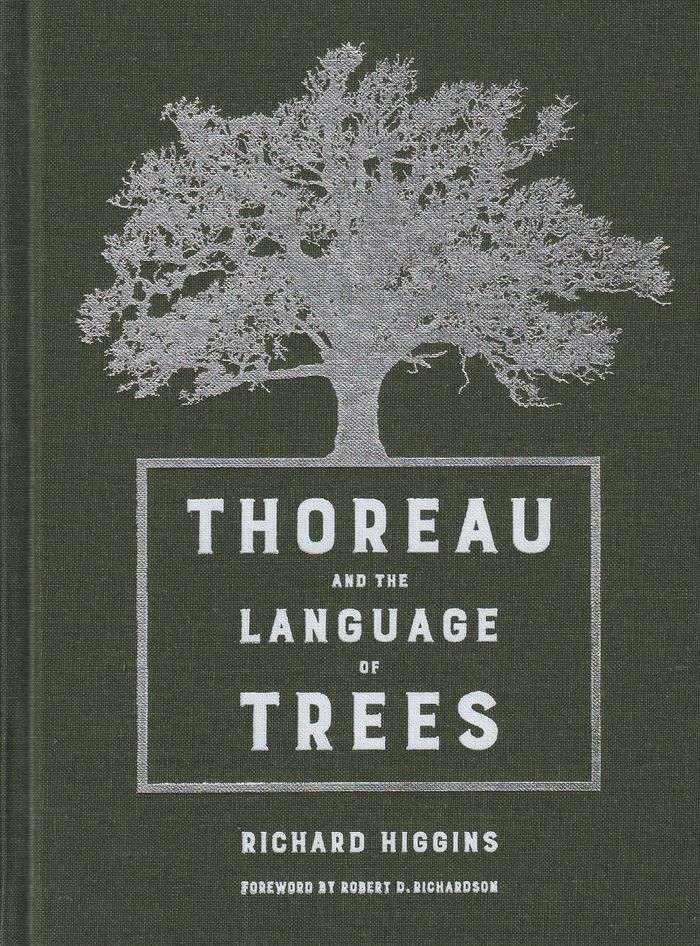
Thoreau and the language of trees
Actions:
Price:
$32.50
(available to order)
Summary:
In this original book, Richard Higgins explores Thoreau’s deep connections to trees: his keen perception of them, the joy they gave him, the poetry he saw in them, his philosophical view of them, and how they fed his soul. His lively essays show that trees were a thread connecting all parts of Thoreau’s being—heart, mind, and spirit. Included are one hundred excerpts from Thoreau’s writings about trees, paired with over sixty of the author’s photographs.
Thoreau and the language of trees
Actions:
Price:
$32.50
(available to order)
Summary:
In this original book, Richard Higgins explores Thoreau’s deep connections to trees: his keen perception of them, the joy they gave him, the poetry he saw in them, his philosophical view of them, and how they fed his soul. His lively essays show that trees were a thread connecting all parts of Thoreau’s being—heart, mind, and spirit. Included are one hundred excerpts from Thoreau’s writings about trees, paired with over sixty of the author’s photographs.
Form:
books
books
Publication:
April 2017
April 2017
Subject:
Landscape Theory
Landscape Theory
Form:
books
books

Title:
Tree (object lessons)
Tree (object lessons)
Actions:
Price:
$21.95
(available in store)
Summary:
Tree explores the forms, uses, and alliances of this living object's entanglement with humanity, from antiquity to the present. Trees tower over us and yet fade into background. Their lifespan outstrips ours, and yet their wisdom remains inscrutable, treasured up in the heartwood. They serve us in many ways-as keel, lodgepole, and execution site-and yet to become human,(...)
$21.95
(available in store)
Summary:
Tree explores the forms, uses, and alliances of this living object's entanglement with humanity, from antiquity to the present. Trees tower over us and yet fade into background. Their lifespan outstrips ours, and yet their wisdom remains inscrutable, treasured up in the heartwood. They serve us in many ways-as keel, lodgepole, and execution site-and yet to become human,(...)
Title:
Tree (object lessons)
Actions:
Price:
$21.95
(available in store)
Summary:
Tree explores the forms, uses, and alliances of this living object's entanglement with humanity, from antiquity to the present. Trees tower over us and yet fade into background. Their lifespan outstrips ours, and yet their wisdom remains inscrutable, treasured up in the heartwood. They serve us in many ways-as keel, lodgepole, and execution site-and yet to become human, we had to come down from their limbs. In this book Matthew Battles follows the tree's branches across art, poetry, and landscape, marking the edges of imagination with wildness and shadow.
Tree (object lessons)
Actions:
Price:
$21.95
(available in store)
Summary:
Tree explores the forms, uses, and alliances of this living object's entanglement with humanity, from antiquity to the present. Trees tower over us and yet fade into background. Their lifespan outstrips ours, and yet their wisdom remains inscrutable, treasured up in the heartwood. They serve us in many ways-as keel, lodgepole, and execution site-and yet to become human, we had to come down from their limbs. In this book Matthew Battles follows the tree's branches across art, poetry, and landscape, marking the edges of imagination with wildness and shadow.
Form:
books
books
Publication:
March 2017
March 2017
Subject:
Landscape Theory
Landscape Theory
Form:
books
books
Price:
$79.95
(available to order)
Summary:
Americans, on average, spend between six and ten seconds with individual artworks in museums or galleries—hardly time enough. But how, in our culture of distraction, might we extend attention? Slow Art models sustained ways of looking, through encounters with various media both present and past—including photography, painting, sculpture, “living pictures,” film, video,(...)
$79.95
(available to order)
Summary:
Americans, on average, spend between six and ten seconds with individual artworks in museums or galleries—hardly time enough. But how, in our culture of distraction, might we extend attention? Slow Art models sustained ways of looking, through encounters with various media both present and past—including photography, painting, sculpture, “living pictures,” film, video,(...)
Title:
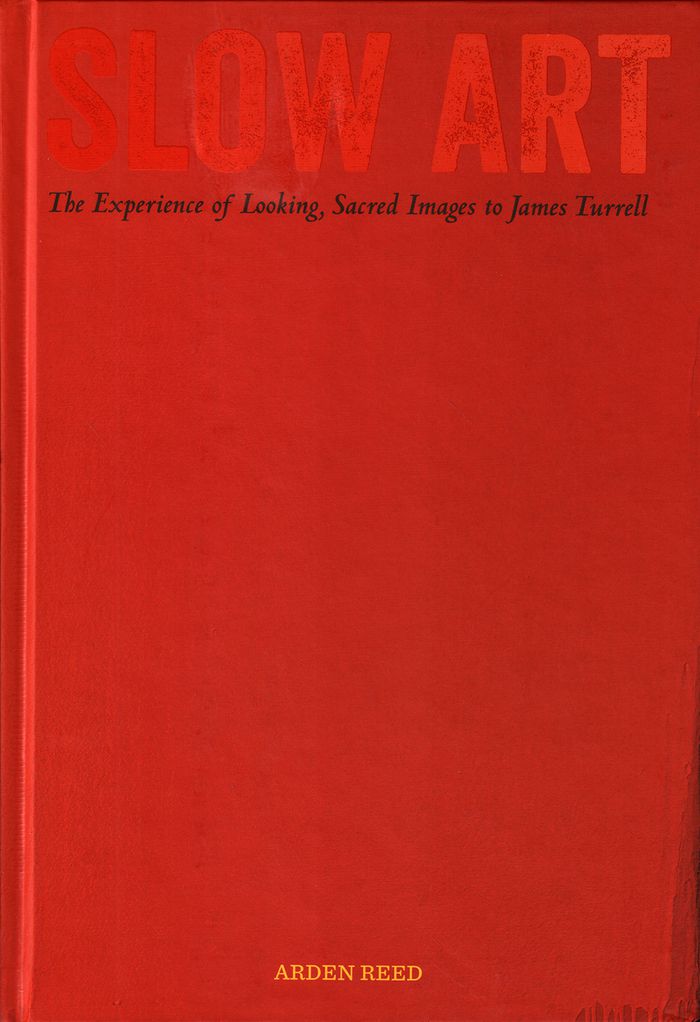
Slow art: the experience of looking, sacred images to James Turrell
Actions:
Price:
$79.95
(available to order)
Summary:
Americans, on average, spend between six and ten seconds with individual artworks in museums or galleries—hardly time enough. But how, in our culture of distraction, might we extend attention? Slow Art models sustained ways of looking, through encounters with various media both present and past—including photography, painting, sculpture, “living pictures,” film, video, digital and performance art—even light and space. Works by Diderot, Emma Hamilton, Oscar Wilde, Jeff Wall, Sam Taylor-Johnson, Andy Warhol, and Richard Serra, among others, shape a new and distinct aesthetic field. But rather than a collection of objects, slow art is participatory—it directly engages beholders to bring artworks to life. Against current orthodoxy, Arden Reed argues that, for contemporary viewers, the contemplation of slow art is akin to religious practices during the ages of faith.
Slow art: the experience of looking, sacred images to James Turrell
Actions:
Price:
$79.95
(available to order)
Summary:
Americans, on average, spend between six and ten seconds with individual artworks in museums or galleries—hardly time enough. But how, in our culture of distraction, might we extend attention? Slow Art models sustained ways of looking, through encounters with various media both present and past—including photography, painting, sculpture, “living pictures,” film, video, digital and performance art—even light and space. Works by Diderot, Emma Hamilton, Oscar Wilde, Jeff Wall, Sam Taylor-Johnson, Andy Warhol, and Richard Serra, among others, shape a new and distinct aesthetic field. But rather than a collection of objects, slow art is participatory—it directly engages beholders to bring artworks to life. Against current orthodoxy, Arden Reed argues that, for contemporary viewers, the contemplation of slow art is akin to religious practices during the ages of faith.
Form:
books
books
Publication:
June 2017
June 2017
Subject:
Art Theory
Art Theory
Form:
books
books
Price:
$209.90
(available in store)
Summary:
The introduction of iron – and later steel – construction and decoration transformed architecture in the nineteenth century. While the structural employment of iron has been a frequent subject of study, this book re-directs scholarly scrutiny on its place in the aesthetics of architecture in the long nineteenth century. Together, its eleven unique and original chapters(...)
$209.90
(available in store)
Summary:
The introduction of iron – and later steel – construction and decoration transformed architecture in the nineteenth century. While the structural employment of iron has been a frequent subject of study, this book re-directs scholarly scrutiny on its place in the aesthetics of architecture in the long nineteenth century. Together, its eleven unique and original chapters(...)
Title:
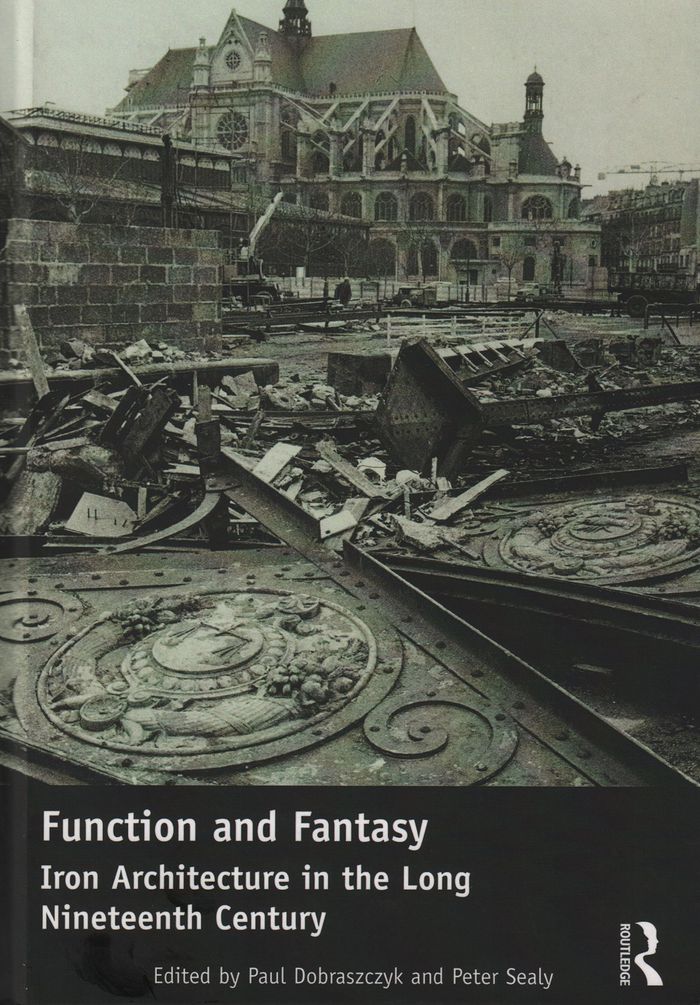
Function and fantasy: iron architecture in the long nineteenth century
Actions:
Price:
$209.90
(available in store)
Summary:
The introduction of iron – and later steel – construction and decoration transformed architecture in the nineteenth century. While the structural employment of iron has been a frequent subject of study, this book re-directs scholarly scrutiny on its place in the aesthetics of architecture in the long nineteenth century. Together, its eleven unique and original chapters chart – for the first time – the global reach of iron’s architectural reception, from the first debates on how iron could be incorporated into architecture’s traditional aesthetics to the modernist cleaving of its structural and ornamental roles.
Function and fantasy: iron architecture in the long nineteenth century
Actions:
Price:
$209.90
(available in store)
Summary:
The introduction of iron – and later steel – construction and decoration transformed architecture in the nineteenth century. While the structural employment of iron has been a frequent subject of study, this book re-directs scholarly scrutiny on its place in the aesthetics of architecture in the long nineteenth century. Together, its eleven unique and original chapters chart – for the first time – the global reach of iron’s architectural reception, from the first debates on how iron could be incorporated into architecture’s traditional aesthetics to the modernist cleaving of its structural and ornamental roles.
Form:
books
books
Publication:
July 2016
July 2016
Subject:
Architectural Theory
Architectural Theory
Form:
books
books
Actions:
Price:
$45.00
(available to order)
Summary:
The essays consider the contemporary architectural scene from a variety of perspectives in theory and practice. They include seminal pieces that framed important debates in the field, such as the introduction to the exhibition catalogue Monolithic Architecture, as well as observations on buildings and practices from around the world, from Santiago, to Beirut and Beijing.
$45.00
(available to order)
Summary:
The essays consider the contemporary architectural scene from a variety of perspectives in theory and practice. They include seminal pieces that framed important debates in the field, such as the introduction to the exhibition catalogue Monolithic Architecture, as well as observations on buildings and practices from around the world, from Santiago, to Beirut and Beijing.
Title:
Figures: essays on contemporary architecture
Actions:
Price:
$45.00
(available to order)
Summary:
The essays consider the contemporary architectural scene from a variety of perspectives in theory and practice. They include seminal pieces that framed important debates in the field, such as the introduction to the exhibition catalogue Monolithic Architecture, as well as observations on buildings and practices from around the world, from Santiago, to Beirut and Beijing.
Figures: essays on contemporary architecture
Actions:
Price:
$45.00
(available to order)
Summary:
The essays consider the contemporary architectural scene from a variety of perspectives in theory and practice. They include seminal pieces that framed important debates in the field, such as the introduction to the exhibition catalogue Monolithic Architecture, as well as observations on buildings and practices from around the world, from Santiago, to Beirut and Beijing.
Form:
books
books
Publication:
August 2015
August 2015
Subject:
Architectural Theory
Architectural Theory
Form:
books
books

Title:
L'Odyssée de l'espace IBM : Eliot Noyes et la logique de 'l'intériorité' à l'ère de l'information
L'Odyssée de l'espace IBM : Eliot Noyes et la logique de 'l'intériorité' à l'ère de l'information
Actions:
Price:
$21.00
(available to order)
Summary:
L'Odyssée de l'espace IBM est d'abord une histoire des années 1950 : celle liant le nouveau PDG d'IBM, Thomas Watson Jr., à ses corporate designers, l'architecte Eliot Noyes et le publiciste Paul Rand. Ensemble, ils feront de la firme le n°1 mondial de l'informatique. Dans son essai, John Harwood retrace cette saga au sein de l'espace moderniste réinventant le rapport(...)
$21.00
(available to order)
Summary:
L'Odyssée de l'espace IBM est d'abord une histoire des années 1950 : celle liant le nouveau PDG d'IBM, Thomas Watson Jr., à ses corporate designers, l'architecte Eliot Noyes et le publiciste Paul Rand. Ensemble, ils feront de la firme le n°1 mondial de l'informatique. Dans son essai, John Harwood retrace cette saga au sein de l'espace moderniste réinventant le rapport(...)
Title:
L'Odyssée de l'espace IBM : Eliot Noyes et la logique de 'l'intériorité' à l'ère de l'information
Actions:
Price:
$21.00
(available to order)
Summary:
L'Odyssée de l'espace IBM est d'abord une histoire des années 1950 : celle liant le nouveau PDG d'IBM, Thomas Watson Jr., à ses corporate designers, l'architecte Eliot Noyes et le publiciste Paul Rand. Ensemble, ils feront de la firme le n°1 mondial de l'informatique. Dans son essai, John Harwood retrace cette saga au sein de l'espace moderniste réinventant le rapport entre intérieur et extérieur, et entre hardware et software. Des bâtiments et machines « IBM » à ses conseils pour le film 2001de Stanley Kubrick, Noyes aura façonné un univers d'entreprise au sens strict, identité homogène et monde clos héritiers du style international et du brutalisme américains, mais augmentés des bunkers SAGE, des tele-computer centers et des white rooms...
L'Odyssée de l'espace IBM : Eliot Noyes et la logique de 'l'intériorité' à l'ère de l'information
Actions:
Price:
$21.00
(available to order)
Summary:
L'Odyssée de l'espace IBM est d'abord une histoire des années 1950 : celle liant le nouveau PDG d'IBM, Thomas Watson Jr., à ses corporate designers, l'architecte Eliot Noyes et le publiciste Paul Rand. Ensemble, ils feront de la firme le n°1 mondial de l'informatique. Dans son essai, John Harwood retrace cette saga au sein de l'espace moderniste réinventant le rapport entre intérieur et extérieur, et entre hardware et software. Des bâtiments et machines « IBM » à ses conseils pour le film 2001de Stanley Kubrick, Noyes aura façonné un univers d'entreprise au sens strict, identité homogène et monde clos héritiers du style international et du brutalisme américains, mais augmentés des bunkers SAGE, des tele-computer centers et des white rooms...
Form:
books
books
Publication:
May 2017
May 2017
Subject:
Architectural Theory
Architectural Theory
Form:
books
books
Actions:
Price:
$34.00
(available in store)
Summary:
De son inauguration à nos jours, quatre décennies d'intrigues et d'"effets-Beaubourg" nous contemplent. Mais les utopies de Mai 68 et de Georges Pompidou semblent avoir vécues. Visages de l'époque, le bâtiment-raffinerie, et l'usine à gaz institutionnelle qu'elle abrite, dévoilent une histoire française des dispositifs de monstration de la création "industrielle" et de(...)
$34.00
(available in store)
Summary:
De son inauguration à nos jours, quatre décennies d'intrigues et d'"effets-Beaubourg" nous contemplent. Mais les utopies de Mai 68 et de Georges Pompidou semblent avoir vécues. Visages de l'époque, le bâtiment-raffinerie, et l'usine à gaz institutionnelle qu'elle abrite, dévoilent une histoire française des dispositifs de monstration de la création "industrielle" et de(...)
Subject:
Architectural Theory
Architectural Theory
Publication:
February 2017
February 2017
Title:
De Beaubourg à Pompidou III, la machine (1977-2017)
Actions:
Price:
$34.00
(available in store)
Summary:
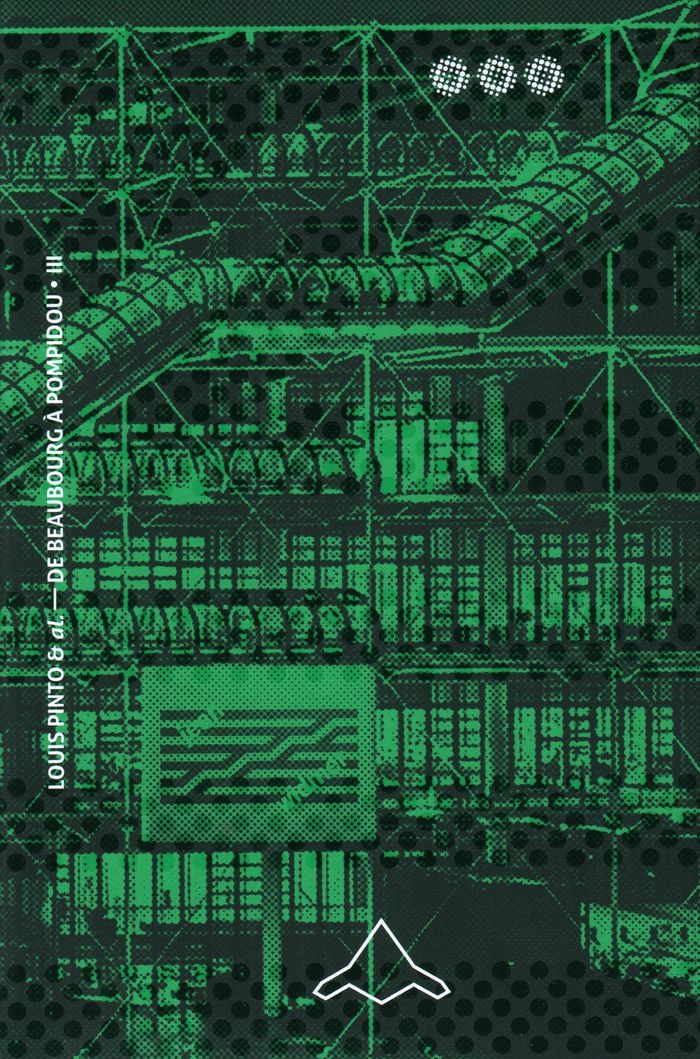
De son inauguration à nos jours, quatre décennies d'intrigues et d'"effets-Beaubourg" nous contemplent. Mais les utopies de Mai 68 et de Georges Pompidou semblent avoir vécues. Visages de l'époque, le bâtiment-raffinerie, et l'usine à gaz institutionnelle qu'elle abrite, dévoilent une histoire française des dispositifs de monstration de la création "industrielle" et de l'art "contemporain". Or le nouvel effet-Beaubourg n'est-il pas devenu que l'ombre d'un "effet-Bilbao" parisien (une cash-machine d'expositions mainstream itinérantes), récemment augmentée d'une agora de l'ère du Global Circus ? Par-delà les impératifs d'une politique du chiffre, ne sommes-nous pas passés de "Beaubourg" à "Pompidou", puis de "Pompidou" à "Georges" ?
De Beaubourg à Pompidou III, la machine (1977-2017)
Actions:
Price:
$34.00
(available in store)
Summary:
De son inauguration à nos jours, quatre décennies d'intrigues et d'"effets-Beaubourg" nous contemplent. Mais les utopies de Mai 68 et de Georges Pompidou semblent avoir vécues. Visages de l'époque, le bâtiment-raffinerie, et l'usine à gaz institutionnelle qu'elle abrite, dévoilent une histoire française des dispositifs de monstration de la création "industrielle" et de l'art "contemporain". Or le nouvel effet-Beaubourg n'est-il pas devenu que l'ombre d'un "effet-Bilbao" parisien (une cash-machine d'expositions mainstream itinérantes), récemment augmentée d'une agora de l'ère du Global Circus ? Par-delà les impératifs d'une politique du chiffre, ne sommes-nous pas passés de "Beaubourg" à "Pompidou", puis de "Pompidou" à "Georges" ?
Form:
books
books
Publication:
February 2017
February 2017
Subject:
Architectural Theory
Architectural Theory
Form:
books
books

Title:
L'univers Playboy
L'univers Playboy
Actions:
Price:
$41.00
(available in store)
Summary:
Né en 1926, Hugh Hefner est à l'origine du magazine Playboy et de sa compagne indissociable : la playmate. Pourtant, en dépit d'un tirage centuplé entre 1953 et 1973, il faut se défaire de ce storytelling de banal self-made-man. Car à mi-chemin de Walt Disney et d'Albert R. Broccoli (le principal producteur des films de James Bond), Hefner est d'abord un authentique(...)
$41.00
(available in store)
Summary:
Né en 1926, Hugh Hefner est à l'origine du magazine Playboy et de sa compagne indissociable : la playmate. Pourtant, en dépit d'un tirage centuplé entre 1953 et 1973, il faut se défaire de ce storytelling de banal self-made-man. Car à mi-chemin de Walt Disney et d'Albert R. Broccoli (le principal producteur des films de James Bond), Hefner est d'abord un authentique(...)
Title:
L'univers Playboy
Actions:
Price:
$41.00
(available in store)
Summary:
Né en 1926, Hugh Hefner est à l'origine du magazine Playboy et de sa compagne indissociable : la playmate. Pourtant, en dépit d'un tirage centuplé entre 1953 et 1973, il faut se défaire de ce storytelling de banal self-made-man. Car à mi-chemin de Walt Disney et d'Albert R. Broccoli (le principal producteur des films de James Bond), Hefner est d'abord un authentique créateur d'univers. Sexy pour les uns, sexiste pour les autres, l'excentricité érotique de ses penthouses cache en réalité une cosmétique bien plus vaste. Avec son jet privé Big Bunny, ses hôtesses, ses clubs, ses Manoirs Est et Ouest, sa Grotte, son zoo, son lit connecté et ses filiales multimédias, Hefner a finalement inventé un monde illusoire à l'image de l'Amérique : le sien.
L'univers Playboy
Actions:
Price:
$41.00
(available in store)
Summary:
Né en 1926, Hugh Hefner est à l'origine du magazine Playboy et de sa compagne indissociable : la playmate. Pourtant, en dépit d'un tirage centuplé entre 1953 et 1973, il faut se défaire de ce storytelling de banal self-made-man. Car à mi-chemin de Walt Disney et d'Albert R. Broccoli (le principal producteur des films de James Bond), Hefner est d'abord un authentique créateur d'univers. Sexy pour les uns, sexiste pour les autres, l'excentricité érotique de ses penthouses cache en réalité une cosmétique bien plus vaste. Avec son jet privé Big Bunny, ses hôtesses, ses clubs, ses Manoirs Est et Ouest, sa Grotte, son zoo, son lit connecté et ses filiales multimédias, Hefner a finalement inventé un monde illusoire à l'image de l'Amérique : le sien.
Form:
books
books
Publication:
November 2016
November 2016
Subject:
Architectural Theory
Architectural Theory
Form:
books
books
Actions:
Price:
$38.00
(available to order)
Summary:
In this title, Daniel M. Abramson investigates this notion of architectural expendability and the logic by which buildings lose their value and utility. The idea that the new necessarily outperforms and makes superfluous the old, Abramson argues, helps people come to terms with modernity and capitalism’s fast-paced change. 'Obsolescence', then, gives an unsettling(...)
$38.00
(available to order)
Summary:
In this title, Daniel M. Abramson investigates this notion of architectural expendability and the logic by which buildings lose their value and utility. The idea that the new necessarily outperforms and makes superfluous the old, Abramson argues, helps people come to terms with modernity and capitalism’s fast-paced change. 'Obsolescence', then, gives an unsettling(...)
Title:
Obsolescence: an architectural history
Actions:
Price:
$38.00
(available to order)
Summary:
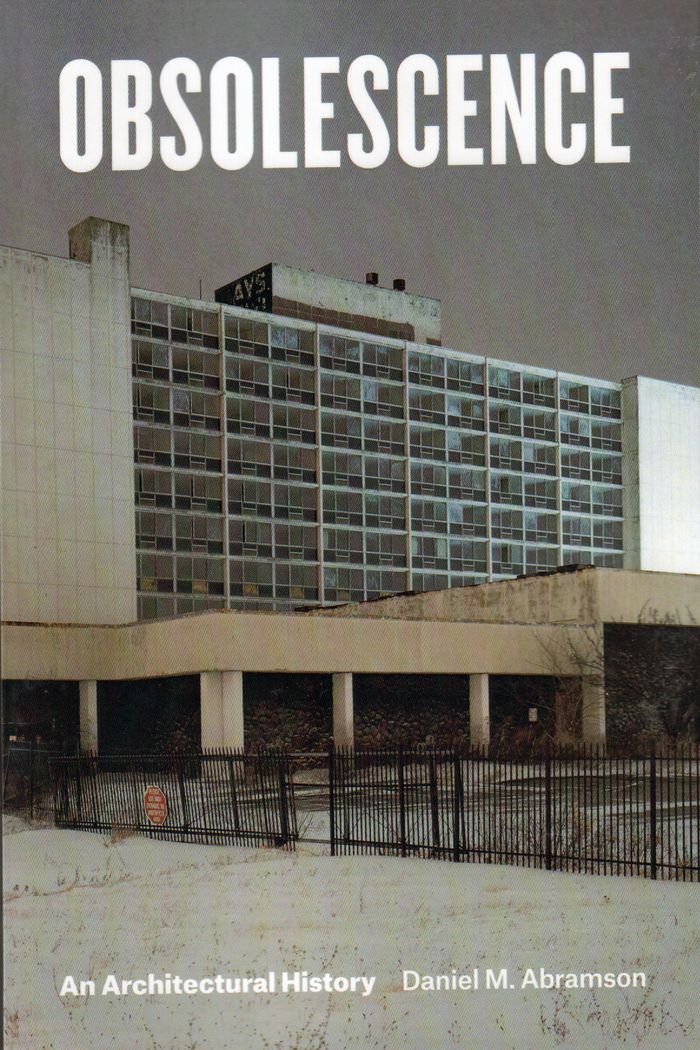
In this title, Daniel M. Abramson investigates this notion of architectural expendability and the logic by which buildings lose their value and utility. The idea that the new necessarily outperforms and makes superfluous the old, Abramson argues, helps people come to terms with modernity and capitalism’s fast-paced change. 'Obsolescence', then, gives an unsettling experience purpose and meaning.
Obsolescence: an architectural history
Actions:
Price:
$38.00
(available to order)
Summary:
In this title, Daniel M. Abramson investigates this notion of architectural expendability and the logic by which buildings lose their value and utility. The idea that the new necessarily outperforms and makes superfluous the old, Abramson argues, helps people come to terms with modernity and capitalism’s fast-paced change. 'Obsolescence', then, gives an unsettling experience purpose and meaning.
Form:
books
books
Publication:
January 2017
January 2017
Subject:
Architectural Theory
Architectural Theory
Form:
books
books
Title:
Seeing like a city
Seeing like a city
Actions:
Price:
$24.95
(available to order)
Summary:
Seeing like a city means recognizing that cities are living things made up of a tangle of networks, built up from the agency of countless actors. Cities must not be considered as expressions of larger paradigms or sites of human effort and organization alone. Within their density, size and sprawl can be found a world of symbols, bodies, buildings, technologies and(...)
$24.95
(available to order)
Summary:
Seeing like a city means recognizing that cities are living things made up of a tangle of networks, built up from the agency of countless actors. Cities must not be considered as expressions of larger paradigms or sites of human effort and organization alone. Within their density, size and sprawl can be found a world of symbols, bodies, buildings, technologies and(...)
Title:
Seeing like a city
Actions:
Price:
$24.95
(available to order)
Summary:
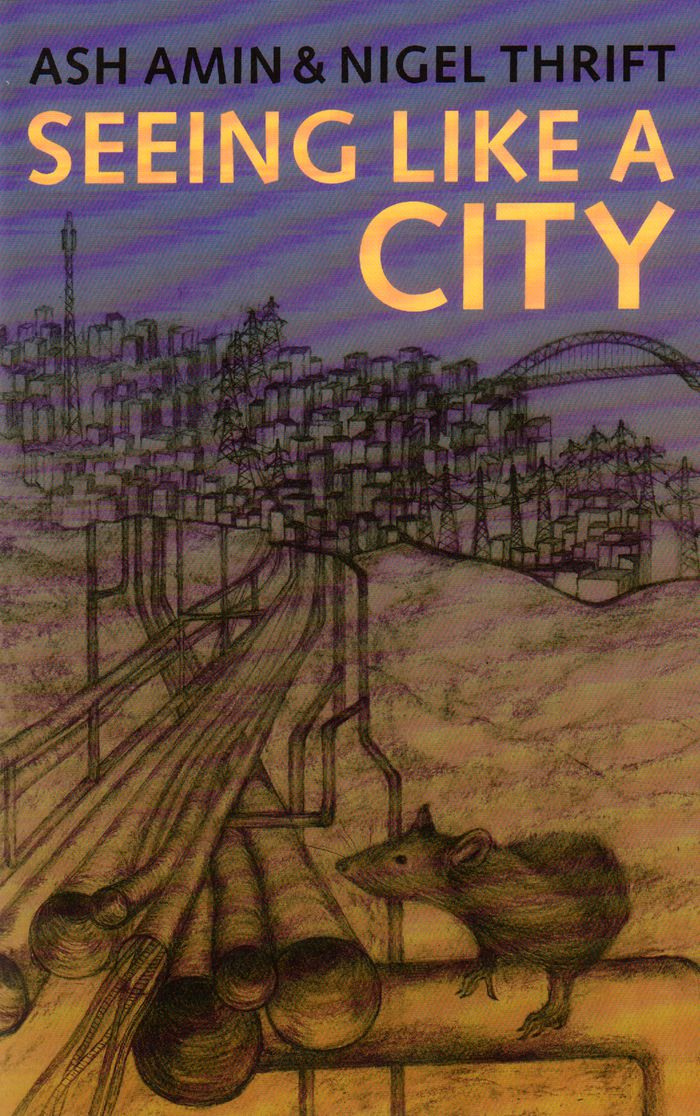
Seeing like a city means recognizing that cities are living things made up of a tangle of networks, built up from the agency of countless actors. Cities must not be considered as expressions of larger paradigms or sites of human effort and organization alone. Within their density, size and sprawl can be found a world of symbols, bodies, buildings, technologies and infrastructures. It is the machine-like combination, interaction and confrontation of these different elements that make a city.
Seeing like a city
Actions:
Price:
$24.95
(available to order)
Summary:
Seeing like a city means recognizing that cities are living things made up of a tangle of networks, built up from the agency of countless actors. Cities must not be considered as expressions of larger paradigms or sites of human effort and organization alone. Within their density, size and sprawl can be found a world of symbols, bodies, buildings, technologies and infrastructures. It is the machine-like combination, interaction and confrontation of these different elements that make a city.
Form:
books
books
Publication:
December 2016
December 2016
Subject:
Urban Theory
Urban Theory


