


520 Results
Form:
books
books
Actions:
Price:
$60.00
(available to order)
Summary:
Au début des années 1980, alors qu'il était jeune photographe, Serge Jauvin a passé un long séjour chez les Innus d'Unamen Shipu (La Romaine) dans la famille d'Hélène et de William-Mathieu Mark. Il a reçu d'eux le témoignage exceptionnel de leur passage du nomadisme à la sédentarité et l'a documenté à travers son journal et ses photographies. Cela lui a permis d'illustrer(...)
$60.00
(available to order)
Summary:
Au début des années 1980, alors qu'il était jeune photographe, Serge Jauvin a passé un long séjour chez les Innus d'Unamen Shipu (La Romaine) dans la famille d'Hélène et de William-Mathieu Mark. Il a reçu d'eux le témoignage exceptionnel de leur passage du nomadisme à la sédentarité et l'a documenté à travers son journal et ses photographies. Cela lui a permis d'illustrer(...)
Title:
Aitnanipan : « C'est ainsi que nous vivions »
Actions:
Price:
$60.00
(available to order)
Summary:
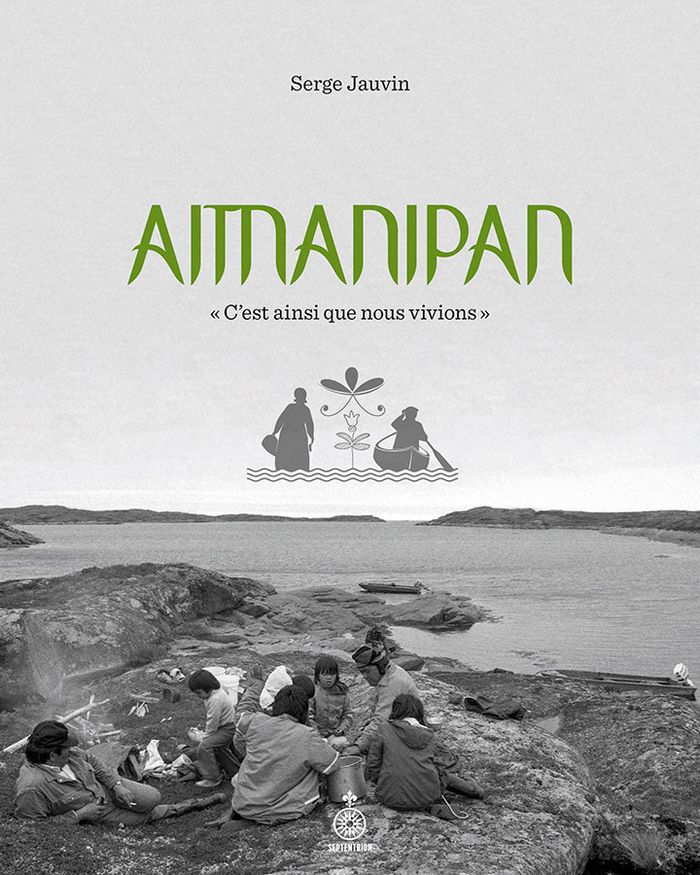
Au début des années 1980, alors qu'il était jeune photographe, Serge Jauvin a passé un long séjour chez les Innus d'Unamen Shipu (La Romaine) dans la famille d'Hélène et de William-Mathieu Mark. Il a reçu d'eux le témoignage exceptionnel de leur passage du nomadisme à la sédentarité et l'a documenté à travers son journal et ses photographies. Cela lui a permis d'illustrer à la fois la vie dans la communauté et celle sur le Nutshimit, le territoire ancestral. Ce récit sur les derniers nomades de la Côte-Nord n'est pas le regard extérieur d'un étranger. Au contraire, il constitue un témoignage intime du savoir-être et du savoir-faire innu. Il est une empreinte indélébile qui témoignera aux générations futures de la contribution d'un peuple millénaire de l'Amérique septentrionale «qui vivait ainsi».
Aitnanipan : « C'est ainsi que nous vivions »
Actions:
Price:
$60.00
(available to order)
Summary:
Au début des années 1980, alors qu'il était jeune photographe, Serge Jauvin a passé un long séjour chez les Innus d'Unamen Shipu (La Romaine) dans la famille d'Hélène et de William-Mathieu Mark. Il a reçu d'eux le témoignage exceptionnel de leur passage du nomadisme à la sédentarité et l'a documenté à travers son journal et ses photographies. Cela lui a permis d'illustrer à la fois la vie dans la communauté et celle sur le Nutshimit, le territoire ancestral. Ce récit sur les derniers nomades de la Côte-Nord n'est pas le regard extérieur d'un étranger. Au contraire, il constitue un témoignage intime du savoir-être et du savoir-faire innu. Il est une empreinte indélébile qui témoignera aux générations futures de la contribution d'un peuple millénaire de l'Amérique septentrionale «qui vivait ainsi».
Form:
books
books
Publication:
April 2024
April 2024
Subject:
indigenous
indigenous
Form:
books
books
Actions:
Price:
$28.95
(available to order)
Summary:
''Framing borders'' addresses a fundamental disjuncture between scholastic portrayals of settler colonialism and what actually takes place in Akwesasne Territory, the largest Indigenous cross-border community in Canada. Whereas most existing portrayals of Indigenous nationalism emphasize border crossing as a site of conflict between officers and Indigenous nationalists,(...)
$28.95
(available to order)
Summary:
''Framing borders'' addresses a fundamental disjuncture between scholastic portrayals of settler colonialism and what actually takes place in Akwesasne Territory, the largest Indigenous cross-border community in Canada. Whereas most existing portrayals of Indigenous nationalism emphasize border crossing as a site of conflict between officers and Indigenous nationalists,(...)
Title:
Framing borders: principle and practicality in the Akwesasne Mohawk territory
Actions:
Price:
$28.95
(available to order)
Summary:
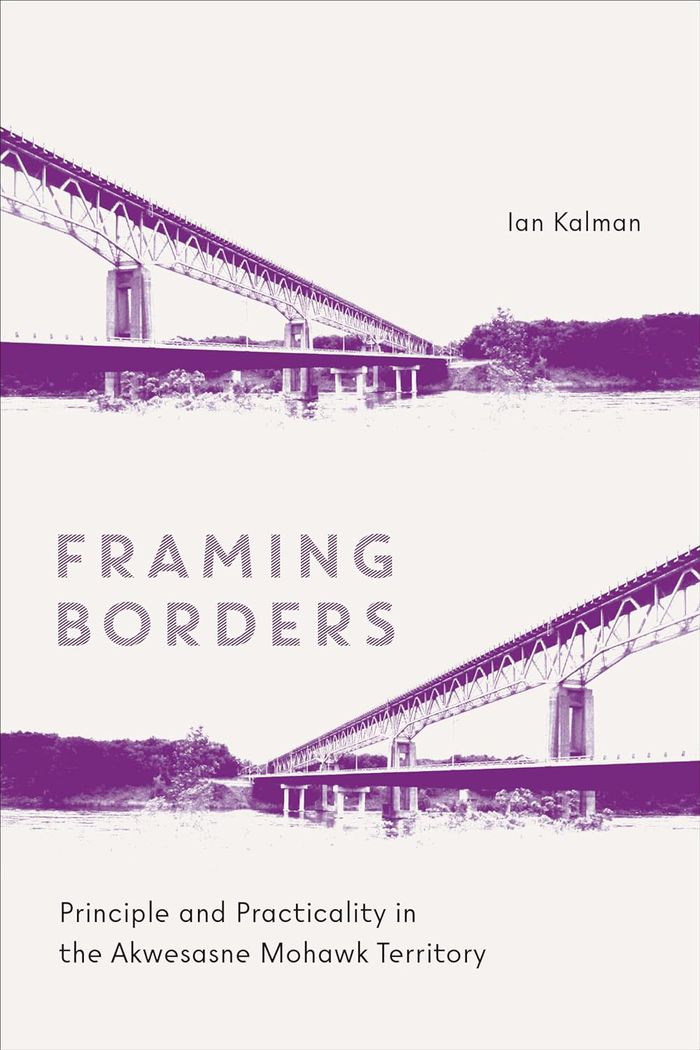
''Framing borders'' addresses a fundamental disjuncture between scholastic portrayals of settler colonialism and what actually takes place in Akwesasne Territory, the largest Indigenous cross-border community in Canada. Whereas most existing portrayals of Indigenous nationalism emphasize border crossing as a site of conflict between officers and Indigenous nationalists, in this book Ian Kalman observes a much more diverse range of interactions, from conflict to banality to joking and camaraderie. ''Framing Borders'' explores how border crossing represents a conversation where different actors "frame" themselves, the law, and the space that they occupy in diverse ways. Written in accessible, lively prose, Kalman addresses what goes on when border officers and Akwesasne residents meet, and what these exchanges tell us about the relationship between Indigenous actors and public servants in Canada. This book provides an ethnographic examination of the experiences of the border by Mohawk community members, the history of local border enforcement, and the paradoxes, self-contradictions, and confusions that underlie the border and its enforcement.
Framing borders: principle and practicality in the Akwesasne Mohawk territory
Actions:
Price:
$28.95
(available to order)
Summary:
''Framing borders'' addresses a fundamental disjuncture between scholastic portrayals of settler colonialism and what actually takes place in Akwesasne Territory, the largest Indigenous cross-border community in Canada. Whereas most existing portrayals of Indigenous nationalism emphasize border crossing as a site of conflict between officers and Indigenous nationalists, in this book Ian Kalman observes a much more diverse range of interactions, from conflict to banality to joking and camaraderie. ''Framing Borders'' explores how border crossing represents a conversation where different actors "frame" themselves, the law, and the space that they occupy in diverse ways. Written in accessible, lively prose, Kalman addresses what goes on when border officers and Akwesasne residents meet, and what these exchanges tell us about the relationship between Indigenous actors and public servants in Canada. This book provides an ethnographic examination of the experiences of the border by Mohawk community members, the history of local border enforcement, and the paradoxes, self-contradictions, and confusions that underlie the border and its enforcement.
Form:
books
books
Publication:
May 2021
May 2021
Subject:
indigenous
indigenous
Form:
books
books

Actions:
Price:
$32.95
(available in store)
Summary:
There have been many things written about Canada’s violent siege of Kanehsatà:ke and Kahnawà:ke in the summer of 1990, but "When the pine needles fall: Indigenous acts of resistance" is the first book from the perspective of Katsi’tsakwas Ellen Gabriel, who was the Kanien’kehá:ka (Mohawk) spokesperson during the siege. "When the pine needles fall," written in a(...)
$32.95
(available in store)
Summary:
There have been many things written about Canada’s violent siege of Kanehsatà:ke and Kahnawà:ke in the summer of 1990, but "When the pine needles fall: Indigenous acts of resistance" is the first book from the perspective of Katsi’tsakwas Ellen Gabriel, who was the Kanien’kehá:ka (Mohawk) spokesperson during the siege. "When the pine needles fall," written in a(...)
Title:
When the pine needles fall: Indigenous acts of resistance
Actions:
Price:
$32.95
(available in store)
Summary:
There have been many things written about Canada’s violent siege of Kanehsatà:ke and Kahnawà:ke in the summer of 1990, but "When the pine needles fall: Indigenous acts of resistance" is the first book from the perspective of Katsi’tsakwas Ellen Gabriel, who was the Kanien’kehá:ka (Mohawk) spokesperson during the siege. "When the pine needles fall," written in a conversational style by Gabriel with historian Sean Carleton, offers an intimate look at Gabriel’s life leading up to the 1990 siege, her experiences as spokesperson for her community, and her work since then as an Indigenous land defender, human rights activist, and feminist leader. More than just the memoir of an extraordinary individual, "When the pine needles fall" offers insight into Indigenous language, history, and philosophy, reflections on our relationship with the land, and calls to action against both colonialism and capitalism as we face the climate crisis. Gabriel’s hopes for a decolonial future make clear why protecting Indigenous homelands is vital not only for the survival of Indigenous peoples, but for all who live on this planet.
When the pine needles fall: Indigenous acts of resistance
Actions:
Price:
$32.95
(available in store)
Summary:
There have been many things written about Canada’s violent siege of Kanehsatà:ke and Kahnawà:ke in the summer of 1990, but "When the pine needles fall: Indigenous acts of resistance" is the first book from the perspective of Katsi’tsakwas Ellen Gabriel, who was the Kanien’kehá:ka (Mohawk) spokesperson during the siege. "When the pine needles fall," written in a conversational style by Gabriel with historian Sean Carleton, offers an intimate look at Gabriel’s life leading up to the 1990 siege, her experiences as spokesperson for her community, and her work since then as an Indigenous land defender, human rights activist, and feminist leader. More than just the memoir of an extraordinary individual, "When the pine needles fall" offers insight into Indigenous language, history, and philosophy, reflections on our relationship with the land, and calls to action against both colonialism and capitalism as we face the climate crisis. Gabriel’s hopes for a decolonial future make clear why protecting Indigenous homelands is vital not only for the survival of Indigenous peoples, but for all who live on this planet.
Form:
books
books
Publication:
September 2024
September 2024
Subject:
indigenous
indigenous
Form:
books
books
Price:
$43.00
(available in store)
Summary:
La culture et les croyances inuites, pratiquées dans un environnement nordique exigeant, offrent des perspectives et des connaissances particulièrement pertinentes pour appréhender le monde moderne. Dans un esprit de transmission, ce livre rassemble les témoignages d'aînés abordant des sujets qui, espèrent-ils, permettront une compréhension plus profonde des pratiques et(...)
$43.00
(available in store)
Summary:
La culture et les croyances inuites, pratiquées dans un environnement nordique exigeant, offrent des perspectives et des connaissances particulièrement pertinentes pour appréhender le monde moderne. Dans un esprit de transmission, ce livre rassemble les témoignages d'aînés abordant des sujets qui, espèrent-ils, permettront une compréhension plus profonde des pratiques et(...)
Title:
Inuit Qaujimajatuqangit : Ce que les Inuits savent depuis toujours
Actions:
Price:
$43.00
(available in store)
Summary:
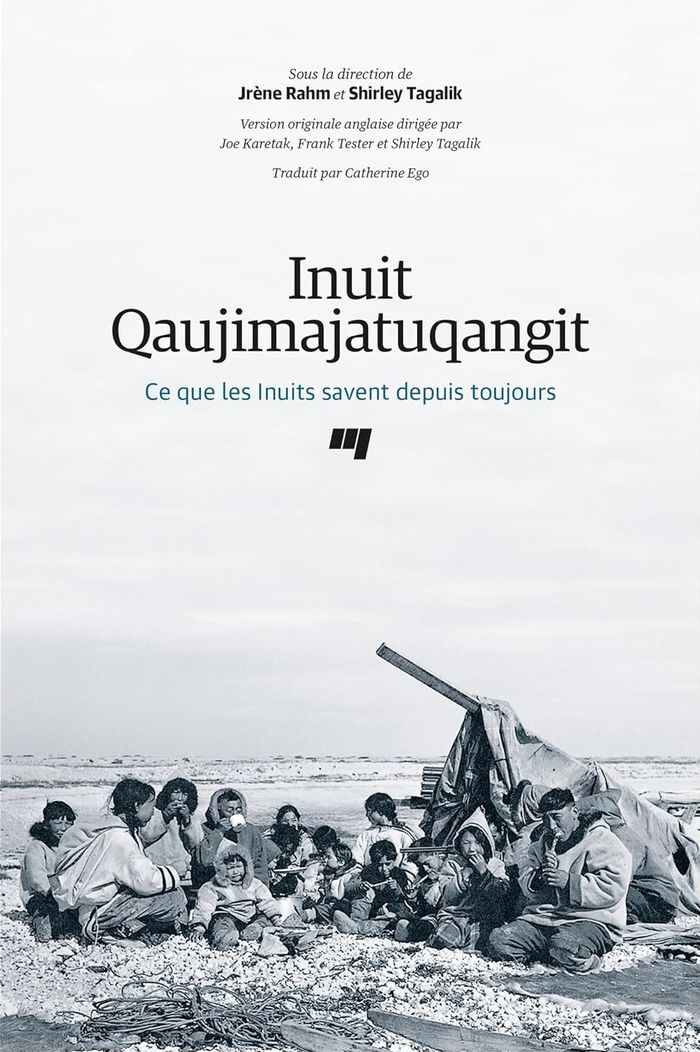
La culture et les croyances inuites, pratiquées dans un environnement nordique exigeant, offrent des perspectives et des connaissances particulièrement pertinentes pour appréhender le monde moderne. Dans un esprit de transmission, ce livre rassemble les témoignages d'aînés abordant des sujets qui, espèrent-ils, permettront une compréhension plus profonde des pratiques et des savoirs inuits. Les enseignements transmis à travers leurs récits guideront le lectorat vers des façons d'être et de penser en vue du bien commun. Inuit Qaujimajatuqangit : ce que les Inuits savent depuis toujours offre une perspective inuite sur la croissance et le développement personnels, sur les relations que nous entretenons les uns avec les autres, avec les autres êtres vivants et avec l'environnement. Il s'adresse aux générations actuelles et futures, inuites comme non inuites.
Inuit Qaujimajatuqangit : Ce que les Inuits savent depuis toujours
Actions:
Price:
$43.00
(available in store)
Summary:
La culture et les croyances inuites, pratiquées dans un environnement nordique exigeant, offrent des perspectives et des connaissances particulièrement pertinentes pour appréhender le monde moderne. Dans un esprit de transmission, ce livre rassemble les témoignages d'aînés abordant des sujets qui, espèrent-ils, permettront une compréhension plus profonde des pratiques et des savoirs inuits. Les enseignements transmis à travers leurs récits guideront le lectorat vers des façons d'être et de penser en vue du bien commun. Inuit Qaujimajatuqangit : ce que les Inuits savent depuis toujours offre une perspective inuite sur la croissance et le développement personnels, sur les relations que nous entretenons les uns avec les autres, avec les autres êtres vivants et avec l'environnement. Il s'adresse aux générations actuelles et futures, inuites comme non inuites.
Form:
books
books
Publication:
June 2024
June 2024
Subject:
indigenous
indigenous
Form:
books
books

Actions:
Price:
$35.00
(available to order)
Summary:
A genre-bending exploration of that most elemental force—water—through Indigenous storytelling, personal memory, and the work of influential artists and writers For many years, Leanne Betasamosake Simpson took solace in skiing—in all kinds of weather, on all kinds of snow across all kinds of terrain, often following the trail beside a beloved creek near her home.(...)
$35.00
(available to order)
Summary:
A genre-bending exploration of that most elemental force—water—through Indigenous storytelling, personal memory, and the work of influential artists and writers For many years, Leanne Betasamosake Simpson took solace in skiing—in all kinds of weather, on all kinds of snow across all kinds of terrain, often following the trail beside a beloved creek near her home.(...)
Title:
Theory of water: Nishnaabe maps to the times ahead
Actions:
Price:
$35.00
(available to order)
Summary:
A genre-bending exploration of that most elemental force—water—through Indigenous storytelling, personal memory, and the work of influential artists and writers For many years, Leanne Betasamosake Simpson took solace in skiing—in all kinds of weather, on all kinds of snow across all kinds of terrain, often following the trail beside a beloved creek near her home. Recently, as she skied on this path against the backdrop of uncertainty, environmental devastation, rising authoritarianism and ongoing social injustice, her mind turned to the water in the creek and an elemental What might it mean to truly listen to water? To know water? To exist with and alongside water? So began a quest to understand her people's historical, cultural, and ongoing interactions with water in all its forms (ice, snow, rain, perspiration, breath). Pulling together these threads, Leanne began to see how a "Theory of Water" might suggest a radical rethinking of relationships between beings and forces in the world today. In this inventive work, Simpson draws on Nishnaabeg origin stories while artfully weaving the work of influential writers and artists alongside her personal memories and experience—and in doing so, reimagines water as a catalyst for radical transformation, capable of birthing a new world.
Theory of water: Nishnaabe maps to the times ahead
Actions:
Price:
$35.00
(available to order)
Summary:
A genre-bending exploration of that most elemental force—water—through Indigenous storytelling, personal memory, and the work of influential artists and writers For many years, Leanne Betasamosake Simpson took solace in skiing—in all kinds of weather, on all kinds of snow across all kinds of terrain, often following the trail beside a beloved creek near her home. Recently, as she skied on this path against the backdrop of uncertainty, environmental devastation, rising authoritarianism and ongoing social injustice, her mind turned to the water in the creek and an elemental What might it mean to truly listen to water? To know water? To exist with and alongside water? So began a quest to understand her people's historical, cultural, and ongoing interactions with water in all its forms (ice, snow, rain, perspiration, breath). Pulling together these threads, Leanne began to see how a "Theory of Water" might suggest a radical rethinking of relationships between beings and forces in the world today. In this inventive work, Simpson draws on Nishnaabeg origin stories while artfully weaving the work of influential writers and artists alongside her personal memories and experience—and in doing so, reimagines water as a catalyst for radical transformation, capable of birthing a new world.
Form:
books
books
Publication:
April 2025
April 2025
Subject:
indigenous
indigenous
Form:
books
books
Actions:
Price:
$28.00
(available in store)
Summary:
Dans cet essai, Marie-Michèle Ouellet-Bernier nous invite à explorer l’hiver à travers le prisme des discours et des récits qui ont façonné notre compréhension de cette saison rigoureuse sur la côte du Labrador. Loin de se limiter aux seules données climatiques, l’autrice y intègre les perceptions humaines, les traditions inuites et les récits d’explorateurs pour(...)
$28.00
(available in store)
Summary:
Dans cet essai, Marie-Michèle Ouellet-Bernier nous invite à explorer l’hiver à travers le prisme des discours et des récits qui ont façonné notre compréhension de cette saison rigoureuse sur la côte du Labrador. Loin de se limiter aux seules données climatiques, l’autrice y intègre les perceptions humaines, les traditions inuites et les récits d’explorateurs pour(...)
Title:
L'hiver dans les discours de la côte du Labrador/Nunatsiavut
Actions:
Price:
$28.00
(available in store)
Summary:
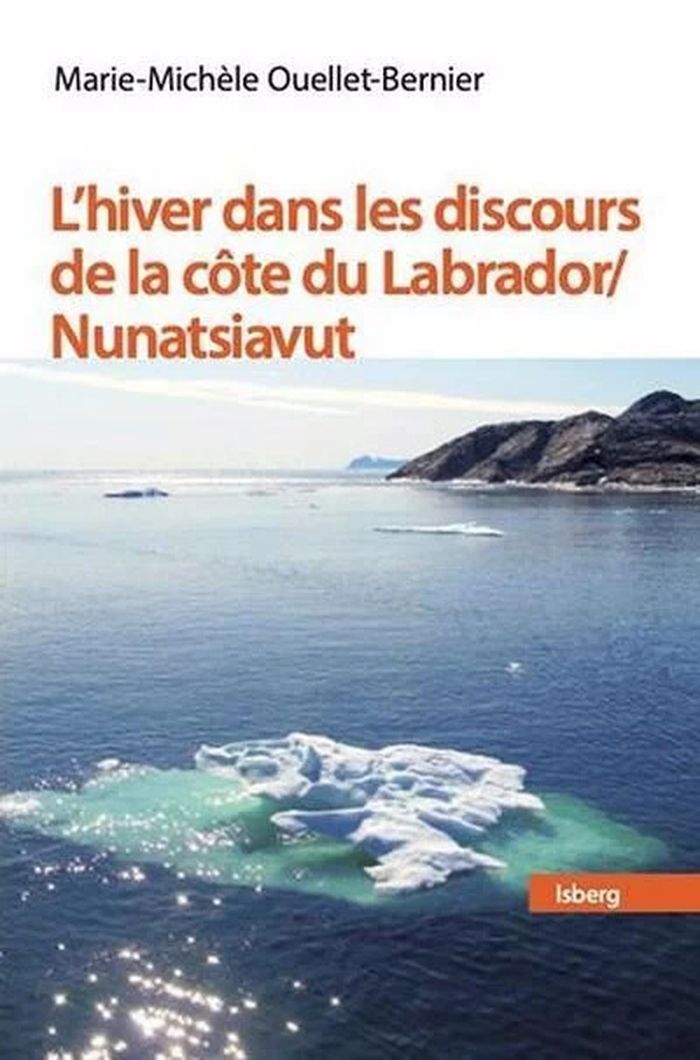
Dans cet essai, Marie-Michèle Ouellet-Bernier nous invite à explorer l’hiver à travers le prisme des discours et des récits qui ont façonné notre compréhension de cette saison rigoureuse sur la côte du Labrador. Loin de se limiter aux seules données climatiques, l’autrice y intègre les perceptions humaines, les traditions inuites et les récits d’explorateurs pour construire une analyse interdisciplinaire qui traverse les frontières de la littérature, de la climatologie et de la culture.
L'hiver dans les discours de la côte du Labrador/Nunatsiavut
Actions:
Price:
$28.00
(available in store)
Summary:
Dans cet essai, Marie-Michèle Ouellet-Bernier nous invite à explorer l’hiver à travers le prisme des discours et des récits qui ont façonné notre compréhension de cette saison rigoureuse sur la côte du Labrador. Loin de se limiter aux seules données climatiques, l’autrice y intègre les perceptions humaines, les traditions inuites et les récits d’explorateurs pour construire une analyse interdisciplinaire qui traverse les frontières de la littérature, de la climatologie et de la culture.
Form:
books
books
Publication:
February 2025
February 2025
Subject:
indigenous
indigenous
Form:
books
books
Price:
$34.95
(available to order)
Summary:
The twenty-first century is a period of great environmental and social transformation as climate change increasingly marks lives at levels that are personal, familial, communal, national, and global. ''A Canadian Climate of Mind'' presents stories that emerge from the waters, lands, and climate of Canada, and which have the potential to renew a compassionate energy for(...)
$34.95
(available to order)
Summary:
The twenty-first century is a period of great environmental and social transformation as climate change increasingly marks lives at levels that are personal, familial, communal, national, and global. ''A Canadian Climate of Mind'' presents stories that emerge from the waters, lands, and climate of Canada, and which have the potential to renew a compassionate energy for(...)
Title:
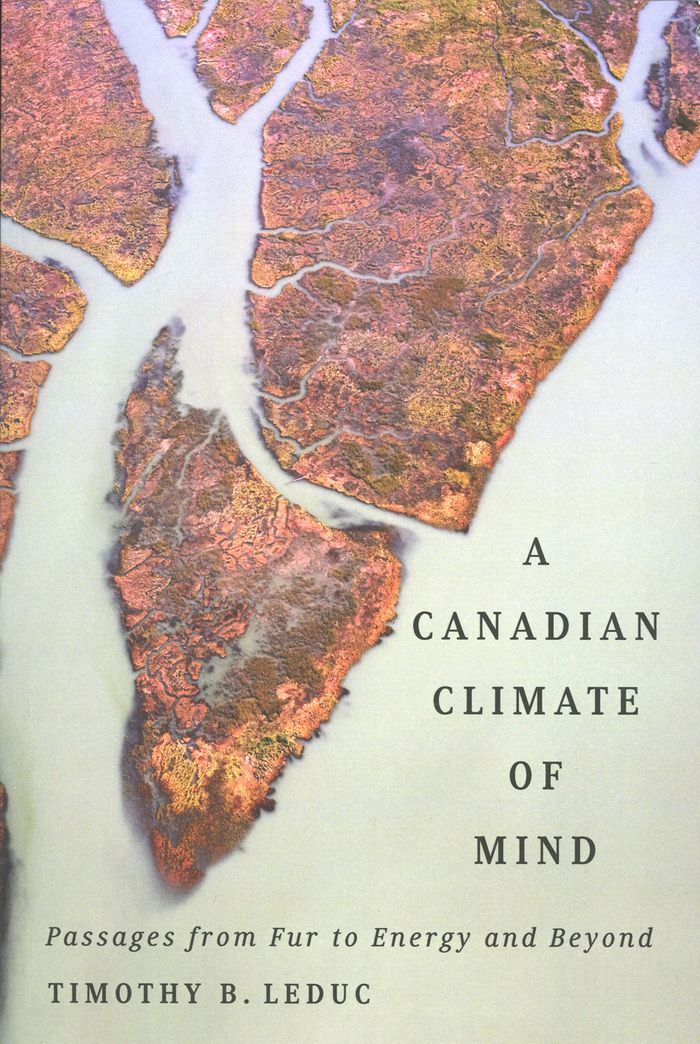
A Canadian climate of mind : passages from fur to energy and beyond
Actions:
Price:
$34.95
(available to order)
Summary:
The twenty-first century is a period of great environmental and social transformation as climate change increasingly marks lives at levels that are personal, familial, communal, national, and global. ''A Canadian Climate of Mind'' presents stories that emerge from the waters, lands, and climate of Canada, and which have the potential to renew a compassionate energy for changing human relations with each other and with our world. Weaving together voices from numerous backgrounds and time periods with Indigenous views on present and past environmental challenges, ''A Canadian Climate of Mind'' illuminates a world that is being shaken to its core while we hesitate to act.
A Canadian climate of mind : passages from fur to energy and beyond
Actions:
Price:
$34.95
(available to order)
Summary:
The twenty-first century is a period of great environmental and social transformation as climate change increasingly marks lives at levels that are personal, familial, communal, national, and global. ''A Canadian Climate of Mind'' presents stories that emerge from the waters, lands, and climate of Canada, and which have the potential to renew a compassionate energy for changing human relations with each other and with our world. Weaving together voices from numerous backgrounds and time periods with Indigenous views on present and past environmental challenges, ''A Canadian Climate of Mind'' illuminates a world that is being shaken to its core while we hesitate to act.
Form:
books
books
Publication:
May 2016
May 2016
Subject:
indigenous
indigenous
Form:
books
books
Title:
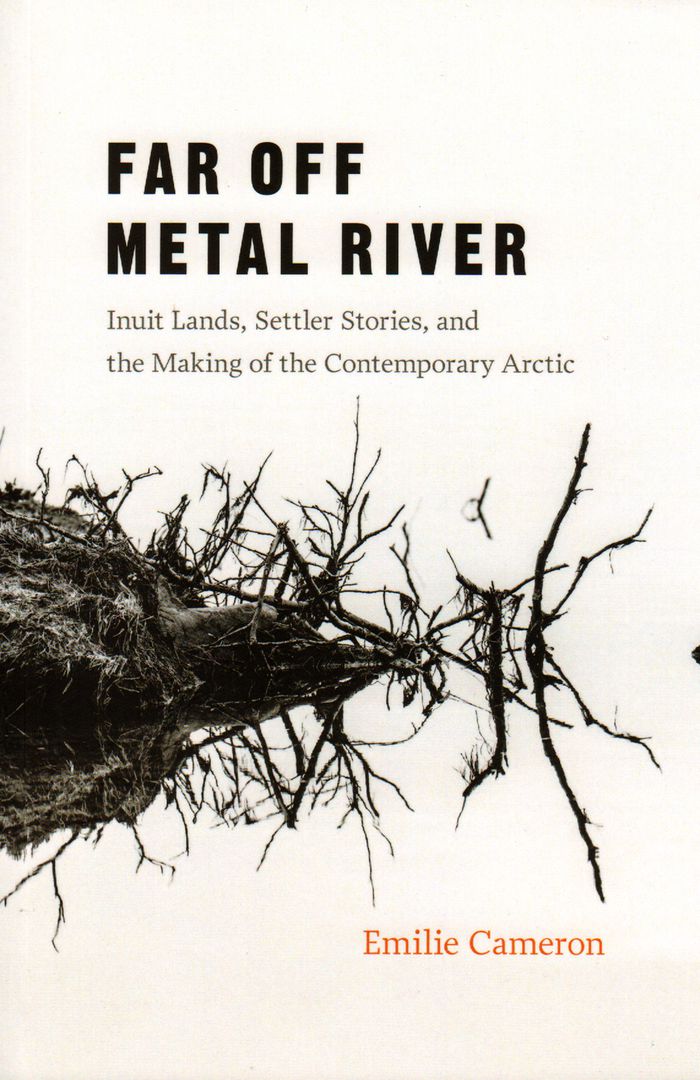
Far off Metal River : Inuit lands. settler stories, and the making of the contemporary Arctic
Far off Metal River : Inuit lands. settler stories, and the making of the contemporary Arctic
Actions:
Price:
$32.95
(available in store)
Summary:
In 1771, Samuel Hearne, an employee of the Hudson's Bay Company, set off with a group of Dene guides to explore part of the Central Arctic. Twenty-four years later, Hearne's gruesome account of what has become known as the Bloody Falls massacre, an alleged attack by his guides on a camp of sleeping Inuit, was published. In ''Far Off Metal River'', author Emilie Cameron(...)
$32.95
(available in store)
Summary:
In 1771, Samuel Hearne, an employee of the Hudson's Bay Company, set off with a group of Dene guides to explore part of the Central Arctic. Twenty-four years later, Hearne's gruesome account of what has become known as the Bloody Falls massacre, an alleged attack by his guides on a camp of sleeping Inuit, was published. In ''Far Off Metal River'', author Emilie Cameron(...)
Title:
Far off Metal River : Inuit lands. settler stories, and the making of the contemporary Arctic
Actions:
Price:
$32.95
(available in store)
Summary:
In 1771, Samuel Hearne, an employee of the Hudson's Bay Company, set off with a group of Dene guides to explore part of the Central Arctic. Twenty-four years later, Hearne's gruesome account of what has become known as the Bloody Falls massacre, an alleged attack by his guides on a camp of sleeping Inuit, was published. In ''Far Off Metal River'', author Emilie Cameron does not concern herself with whether the murders actually took place (as has been debated since 1795) but instead explores how Hearne's account of the massacre has shaped ongoing colonization and economic exploitation of the North.
Far off Metal River : Inuit lands. settler stories, and the making of the contemporary Arctic
Actions:
Price:
$32.95
(available in store)
Summary:
In 1771, Samuel Hearne, an employee of the Hudson's Bay Company, set off with a group of Dene guides to explore part of the Central Arctic. Twenty-four years later, Hearne's gruesome account of what has become known as the Bloody Falls massacre, an alleged attack by his guides on a camp of sleeping Inuit, was published. In ''Far Off Metal River'', author Emilie Cameron does not concern herself with whether the murders actually took place (as has been debated since 1795) but instead explores how Hearne's account of the massacre has shaped ongoing colonization and economic exploitation of the North.
Form:
books
books
Publication:
April 2016
April 2016
Subject:
indigenous
indigenous
Form:
books
books
Actions:
Price:
$12.99
(available in store)
Summary:
In this book, award-winning writer Leanne Betasamosake Simpson uses Michi Saagiig Nishnaabeg stories, storytelling aesthetics, and practices to explore the generative nature of Indigenous blockades through our relative, the beaver—or in Nishnaabemowin, Amik. Moving through genres, shifting through time, amikwag stories become a lens for the life-giving possibilities of(...)
$12.99
(available in store)
Summary:
In this book, award-winning writer Leanne Betasamosake Simpson uses Michi Saagiig Nishnaabeg stories, storytelling aesthetics, and practices to explore the generative nature of Indigenous blockades through our relative, the beaver—or in Nishnaabemowin, Amik. Moving through genres, shifting through time, amikwag stories become a lens for the life-giving possibilities of(...)
Title:
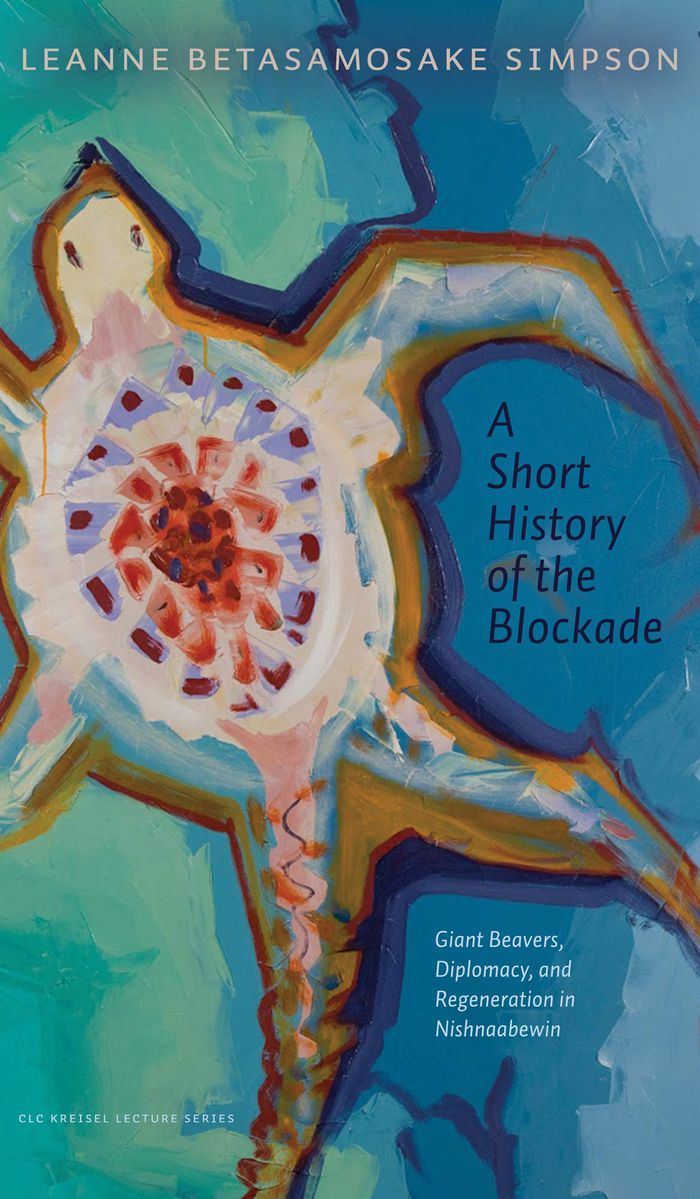
A short history of the blockade: Giant beavers, diplomacy, and regeneration in Nishnaabewin
Actions:
Price:
$12.99
(available in store)
Summary:
In this book, award-winning writer Leanne Betasamosake Simpson uses Michi Saagiig Nishnaabeg stories, storytelling aesthetics, and practices to explore the generative nature of Indigenous blockades through our relative, the beaver—or in Nishnaabemowin, Amik. Moving through genres, shifting through time, amikwag stories become a lens for the life-giving possibilities of dams and the world-building possibilities of blockades, deepening our understanding of Indigenous resistance as both a negation and an affirmation. Widely recognized as one of the most compelling Indigenous voices of her generation, Simpson’s work breaks open the intersections between politics, story, and song, bringing audiences into a rich and layered world of sound, light, and sovereign creativity. This publication reveals how the practice of telling stories is also a culture of listening, “a thinking through together,” and ultimately, like the dam or the blockade, an affirmation of life.
A short history of the blockade: Giant beavers, diplomacy, and regeneration in Nishnaabewin
Actions:
Price:
$12.99
(available in store)
Summary:
In this book, award-winning writer Leanne Betasamosake Simpson uses Michi Saagiig Nishnaabeg stories, storytelling aesthetics, and practices to explore the generative nature of Indigenous blockades through our relative, the beaver—or in Nishnaabemowin, Amik. Moving through genres, shifting through time, amikwag stories become a lens for the life-giving possibilities of dams and the world-building possibilities of blockades, deepening our understanding of Indigenous resistance as both a negation and an affirmation. Widely recognized as one of the most compelling Indigenous voices of her generation, Simpson’s work breaks open the intersections between politics, story, and song, bringing audiences into a rich and layered world of sound, light, and sovereign creativity. This publication reveals how the practice of telling stories is also a culture of listening, “a thinking through together,” and ultimately, like the dam or the blockade, an affirmation of life.
Form:
books
books
Publication:
April 2021
April 2021
Subject:
indigenous
indigenous
Form:
books
books

Title:
Contre le colonialisme dopé aux stéroïdes : le combat des Inuit du Québec pour leurs terres ance
Contre le colonialisme dopé aux stéroïdes : le combat des Inuit du Québec pour leurs terres ance
Actions:
Price:
$18.95
(available in store)
Summary:
Pour les Québécois, le projet hydroélectrique de la Baie-James, lancé en 1971, a marqué le point culminant de la Révolution tranquille. C’était la prise de possession, physique et symbolique, de l’ensemble du territoire sur lequel le peuple du Québec était destiné à connaître enfin son plein épanouissement. Et si ce grand projet avait un côté sombre ? Et si, en affirmant(...)
$18.95
(available in store)
Summary:
Pour les Québécois, le projet hydroélectrique de la Baie-James, lancé en 1971, a marqué le point culminant de la Révolution tranquille. C’était la prise de possession, physique et symbolique, de l’ensemble du territoire sur lequel le peuple du Québec était destiné à connaître enfin son plein épanouissement. Et si ce grand projet avait un côté sombre ? Et si, en affirmant(...)
Title:
Contre le colonialisme dopé aux stéroïdes : le combat des Inuit du Québec pour leurs terres ance
Actions:
Price:
$18.95
(available in store)
Summary:
Pour les Québécois, le projet hydroélectrique de la Baie-James, lancé en 1971, a marqué le point culminant de la Révolution tranquille. C’était la prise de possession, physique et symbolique, de l’ensemble du territoire sur lequel le peuple du Québec était destiné à connaître enfin son plein épanouissement. Et si ce grand projet avait un côté sombre ? Et si, en affirmant notre langue, notre culture et notre emprise sur le territoire, nous avions été sourds et aveugles à l’attachement d’un autre peuple à sa langue, à sa culture et au territoire que ses ancêtres occupaient depuis des millénaires ? Choquant, dérangeant, exprimant des vérités sur lesquelles on préférerait parfois fermer les yeux, ce livre est un document essentiel pour comprendre le point de vue des Inuit dans le bras de fer qui les a opposés à Québec. C’est une occasion unique d’entendre une voix qui a eu bien peu d’échos au Sud et, pour les Québécois, de faire un examen de conscience salutaire quant à la façon dont ils ont, par le passé, transigé avec les Premières Nations.
Contre le colonialisme dopé aux stéroïdes : le combat des Inuit du Québec pour leurs terres ance
Actions:
Price:
$18.95
(available in store)
Summary:
Pour les Québécois, le projet hydroélectrique de la Baie-James, lancé en 1971, a marqué le point culminant de la Révolution tranquille. C’était la prise de possession, physique et symbolique, de l’ensemble du territoire sur lequel le peuple du Québec était destiné à connaître enfin son plein épanouissement. Et si ce grand projet avait un côté sombre ? Et si, en affirmant notre langue, notre culture et notre emprise sur le territoire, nous avions été sourds et aveugles à l’attachement d’un autre peuple à sa langue, à sa culture et au territoire que ses ancêtres occupaient depuis des millénaires ? Choquant, dérangeant, exprimant des vérités sur lesquelles on préférerait parfois fermer les yeux, ce livre est un document essentiel pour comprendre le point de vue des Inuit dans le bras de fer qui les a opposés à Québec. C’est une occasion unique d’entendre une voix qui a eu bien peu d’échos au Sud et, pour les Québécois, de faire un examen de conscience salutaire quant à la façon dont ils ont, par le passé, transigé avec les Premières Nations.
Form:
books
books
Publication:
February 2019
February 2019
Subject:
indigenous
indigenous


